The eye is attracted to a Shan Goshorn basket because of its fine craftsmanship. Then the brain kicks in, recognizing that the splints are more than the structure of the vessel. They are drawn, painted, printed and written on to tell stories of racism and oppression. In an interview with filmmaker Sterlin Harjo (Seminole/Muscogee), Goshorn said, people were drawn to the “very unassuming shape” of a basket. “It’s a domestic container. It’s a vessel. People didn’t like the idea of being confronted with the possibility that they had been engaging or hanging onto racist or bigoted ideas.”
Goshorn (Eastern Band Cherokee, 1957-2018) incorporated bits of history on the paper splints to create an historical context for her political commentaries.
The Gilcrease Museum in Tulsa, Oklahoma, has assembled the exhibition, Weaving History into Art: The Enduring Legacy of Shan Goshorn, which will continue through March 28, 2021. The museum received a grant from the National Endowment for the Arts to support the exhibition.
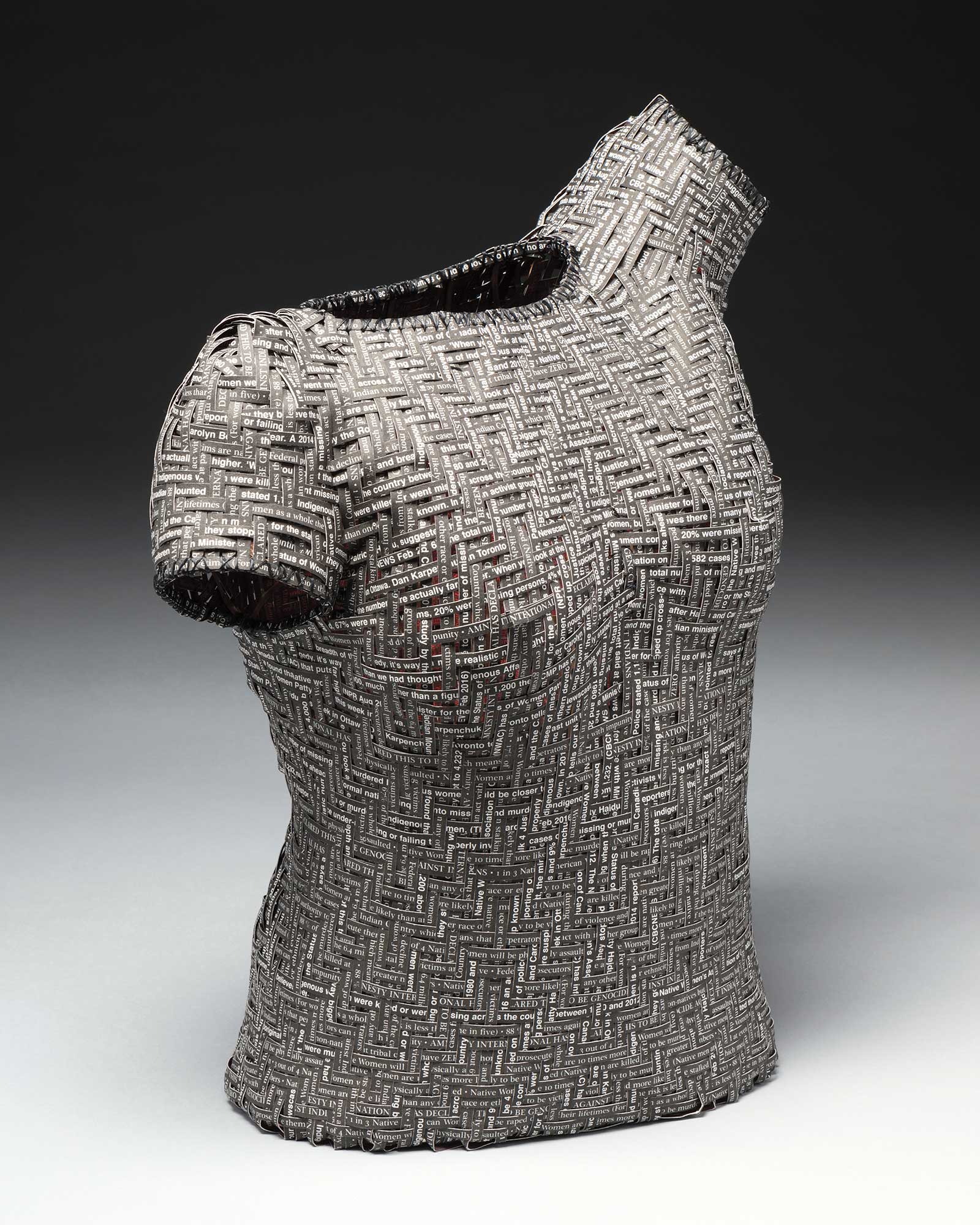 Shan Goshorn (Eastern Band Cherokee, 1957-2018), SQUAW, 2018, 18 x 10 x 22", archival watercolor paper splints printed with archival inks, artificial sinew, copper frame. Loaned to the exhibition by the Goshorn/Pendergraft family. Photo by Scott Miller.
Mark Dolph, the museum’s curator of history, explains, “Goshorn was internationally recognized for her ability to weave baskets using traditional Cherokee techniques to create historical, political and cultural commentary on Native American issues that continue to resonate in the 21st century. Shan’s baskets are catalysts that encourage engaging, empathetic interactions with difficult subjects, including the loss of Native homelands, cultural genocide, violence directed at Native women and inappropriate cultural appropriation in a non-threatening experience that promotes informed dialogue among Native and non-Native audiences alike.”
Goshorn’s own work will be complemented by that of four Native American women whose works reflect her influence and vision: Carol Emarthle-Douglas (Northern Arapahoe/Seminole), Anita Fields (Osage/Muscogee Creek), Lisa Rutherford (Cherokee) and Holly Wilson (Delaware/Cherokee).
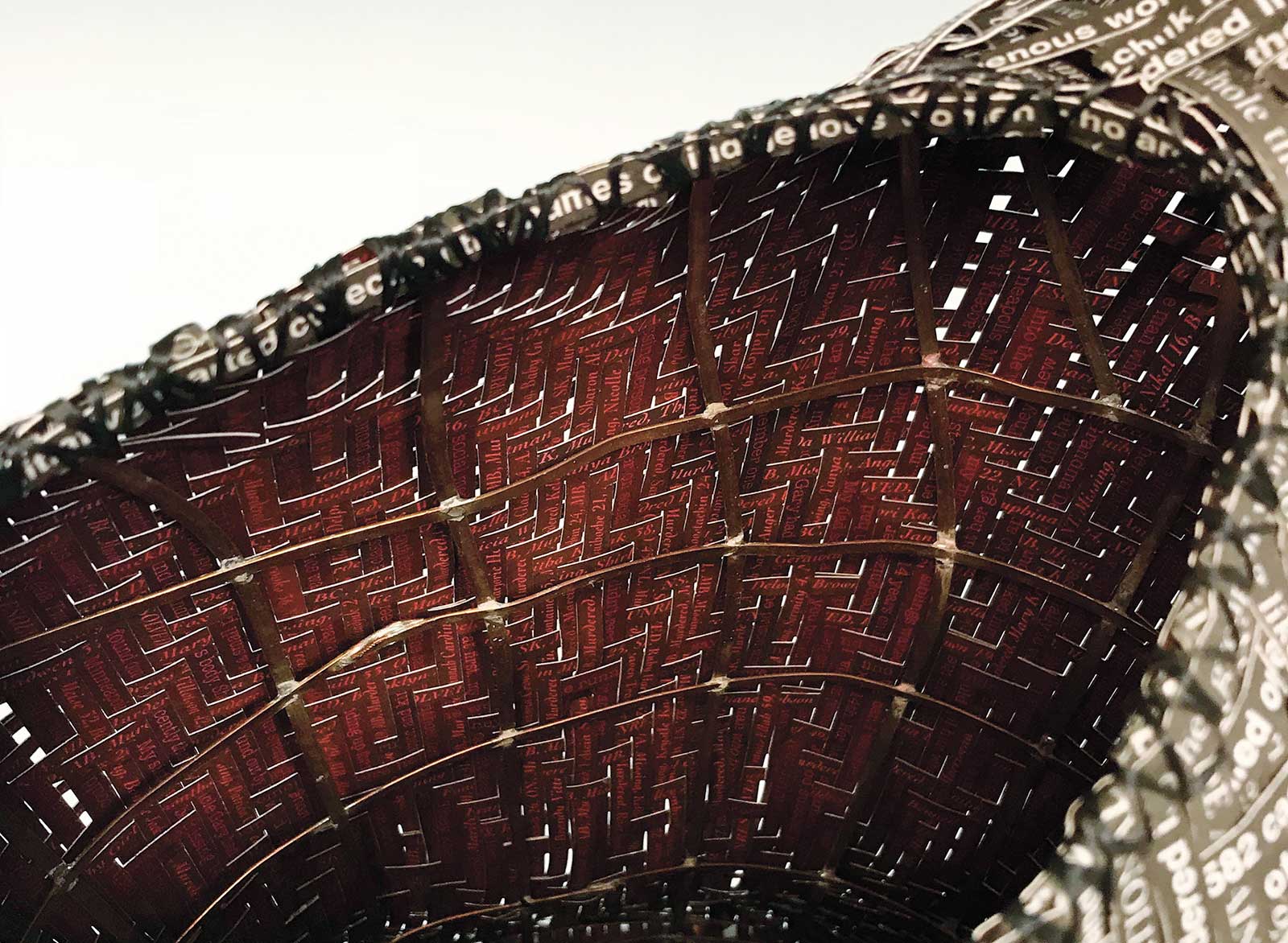 Shan Goshorn (Eastern Band Cherokee, 1957-2018), SQUAW (interior), 2018, archival watercolor paper splints printed with archival inks, artificial sinew, copper frame, 18 x 10 x 22". Loaned to the exhibition by the Goshorn/Pendergraft family. Photo by Scott Miller.
One basket in a traditional shape is Song of Sorrow with splints of blue, white and black commemorates the atrocities of boarding schools where Native children were “whitewashed into the dominant culture,” she wrote. She continued, “Woven into this basket are Navajo, Lakota and Kaw tribal prayers of healing and well being, collected for the healing and well being of generations of boarding school victims. Also included are the words to a Cherokee Memorial Song, ‘We remember your sacrifices. You will not be forgotten.’ In order for race relations in this country to truly be repaired, America has to accept responsibility for this travesty and make amends.”
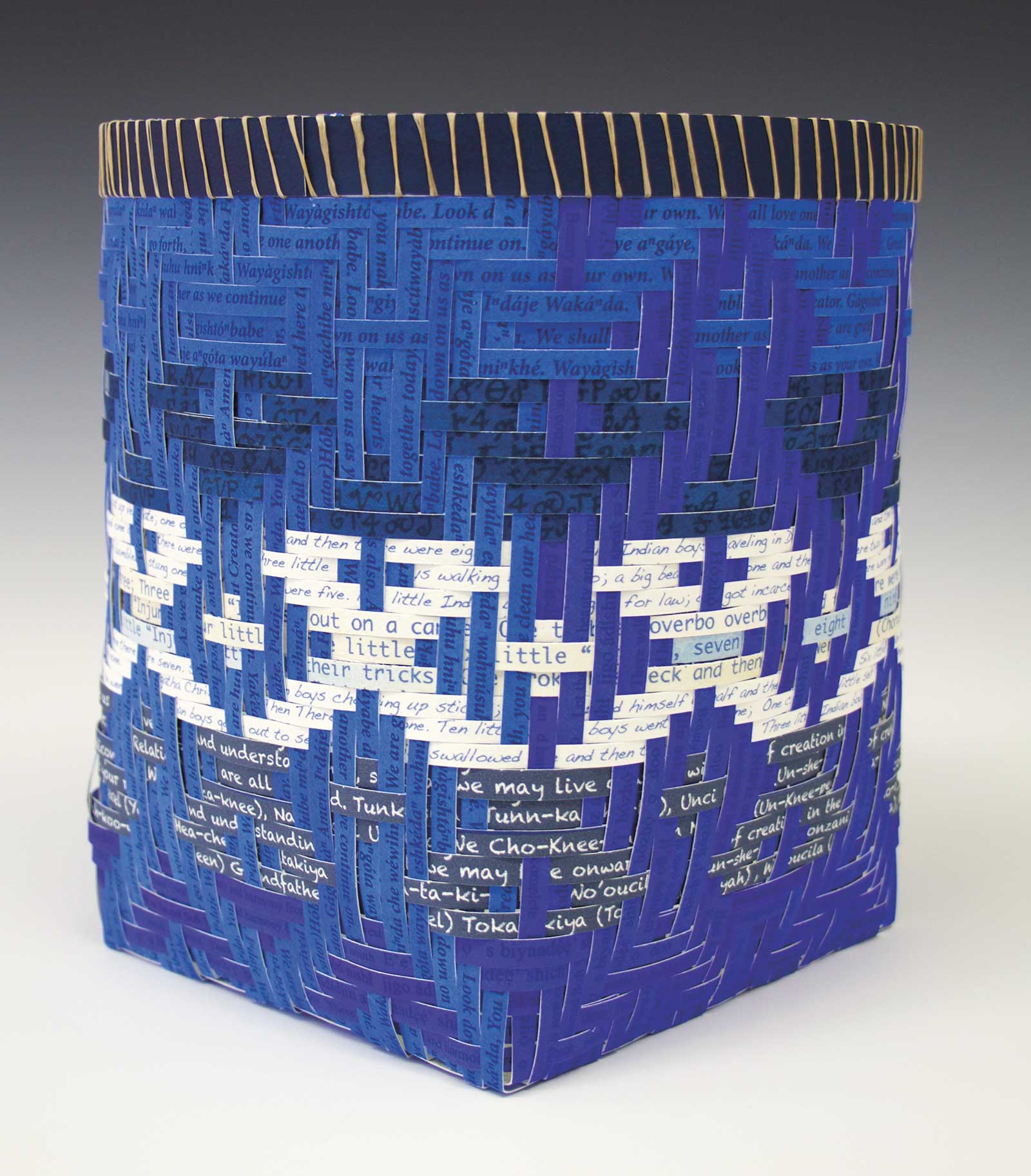 Shan Goshorn (Eastern Band Cherokee, 1957-2018), Song of Sorrow, 2015, archival watercolor paper splints printed with archival inks, acrylic paint, artificial sinew. 8½ x 8½” x 9". Loaned to the exhibition by the Goshorn/Pendergraft family.
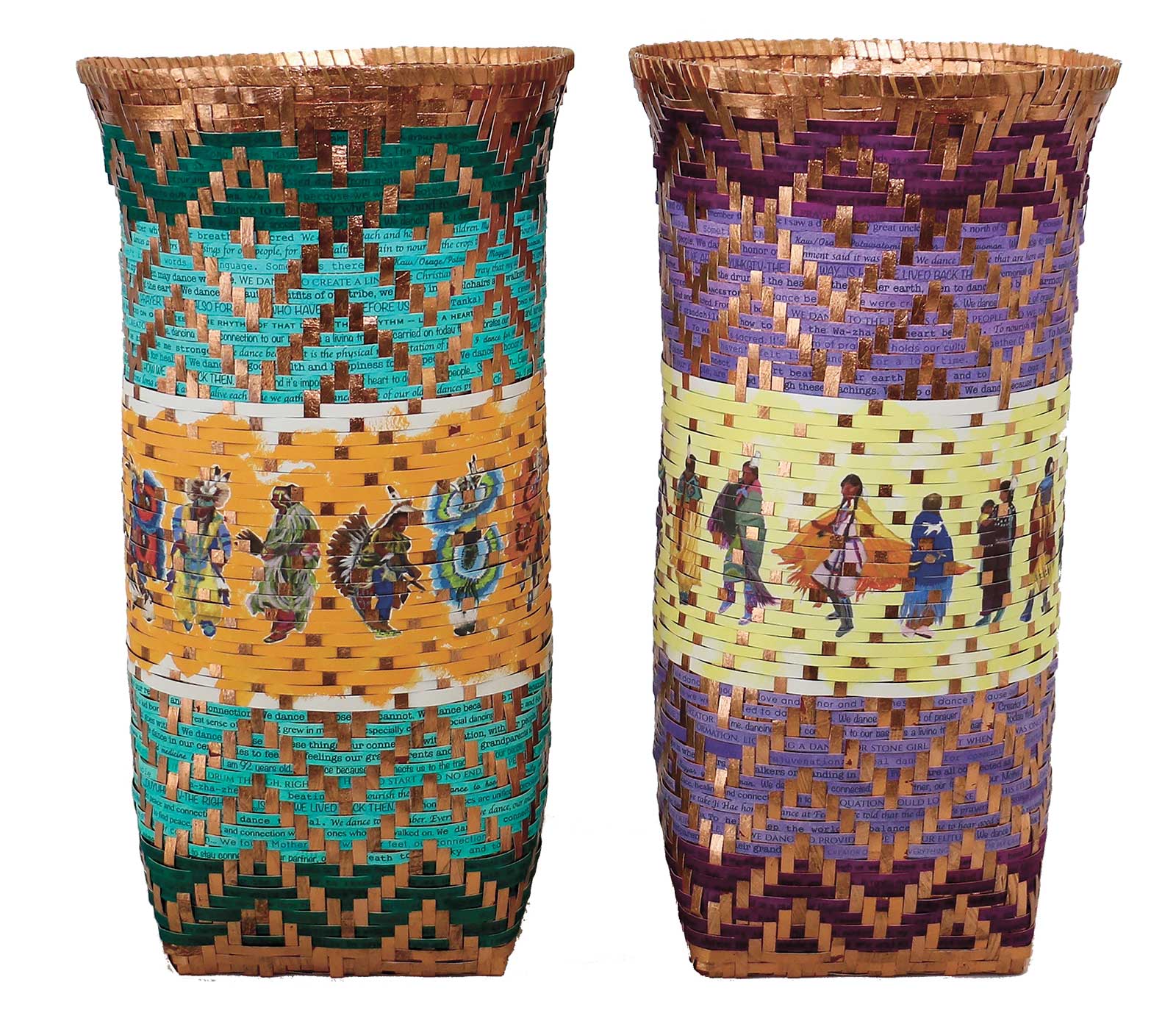 Shan Goshorn (Eastern Band Cherokee, 1957-2018), Why We Dance, 2016, archival watercolor paper splints printed with archival inks, acrylic paint and artificial sinew, 9½ x 9½ x 17½" (each basket). Loaned to the exhibition by the Goshorn/Pendergraft family.
A non-traditional vessel is in the recognizable form of the Venus de Milo, the western icon of feminine beauty from ancient Greece, which she titled Squaw. She wrote, “Juxtaposing this ideal, I’ve included ‘Squaw’ in the title, a term of disparaging connotation regarding Native women—a term of disposable, sexual objectification. Many women around the world suffer the similar fate of being assaulted, raped and murdered, all as a result of men’s perceived ownership over a woman and her body.” The exterior is printed in numbers referring to the number of Native women who experience violence. “The interior is printed in red with the names and tribes of 306 murdered and missing women compiled by the Canadian Broadcasting Corporation,” she explained, “cases the RCMP dismissed as solved but family members have disputed as unsolved or not investigated. I’ve also included first-hand accounts from family members detailing the heartache they’ve endured because it is imperative to remember the women behind the numbers. The piece is woven in a Cherokee single-weave technique using the traditional pattern called ‘Water,’ appropriately chosen since the bodies of so many of our missing and murdered sisters are reclaimed after being dumped in the Red River.”
Through March 28, 2021
Weaving History into Art: The Enduring Legacy of Shan Goshorn
Gilcrease Museum
1400 N. Gilcrease Museum Road, Tulsa, OK 74127
(918) 596-2700, www.gilcrease.org
Powered by Froala Editor