From the antique to the contemporary, Native American jewelry is laden with rich history and lavish beauty. Collectors and enthusiasts will find the highest quality jewelry in this special section, with materials ranging from silver, gold and gemstones, to beadwork and buffalo horn. Whether newly formed or passed down through generations, each piece is fashioned by Native artists, with their stamp of history in the form of necklaces, bracelets, rings and belts—created for a lifetime of enjoyment and a wearable piece of art as a symbol of cultural remembrance of past and present. Read through to experience one-of-a-kind treasures, along with advice for establishing or expanding your Native jewelry collection.
Chipeta Trading
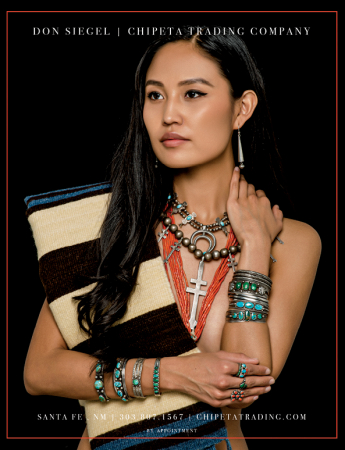
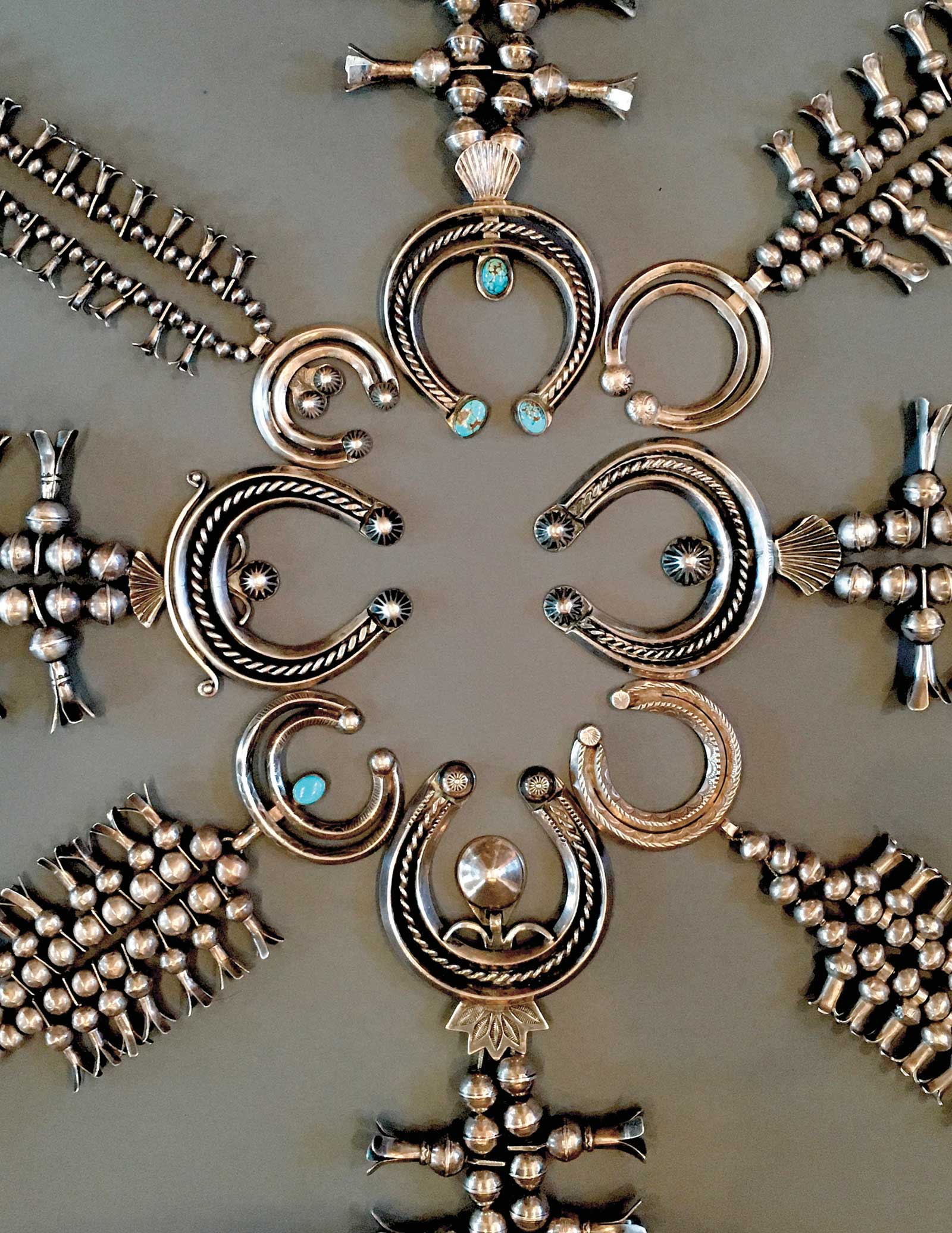
Chipeta Trading has recently received a large collection of circa 1910 to 1930 Navajo silver squash blossom necklaces from a Santa Fe family collection, and are now available to their clients and friends. Pieces include necklaces attributed to the famous Navajo silversmith Eskiesose, who worked with trader CG Wallace and Charles Kelsey at the Zuni Pueblo during the first quarter of the 20th century, and was active from 1910 to the 1940s. These are museum quality pieces and would be a centerpiece to any Southwest jewelry collection.
(303) 807-1567 » don@chipetatrading.com » www.chipetatrading.com
Ancient Nations Indigenous Art
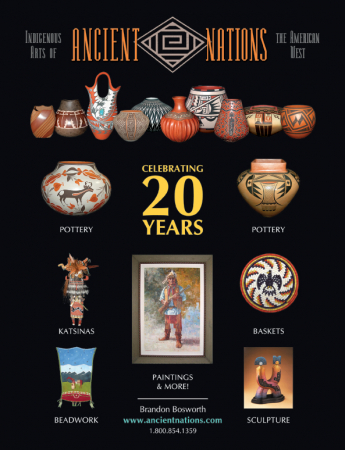
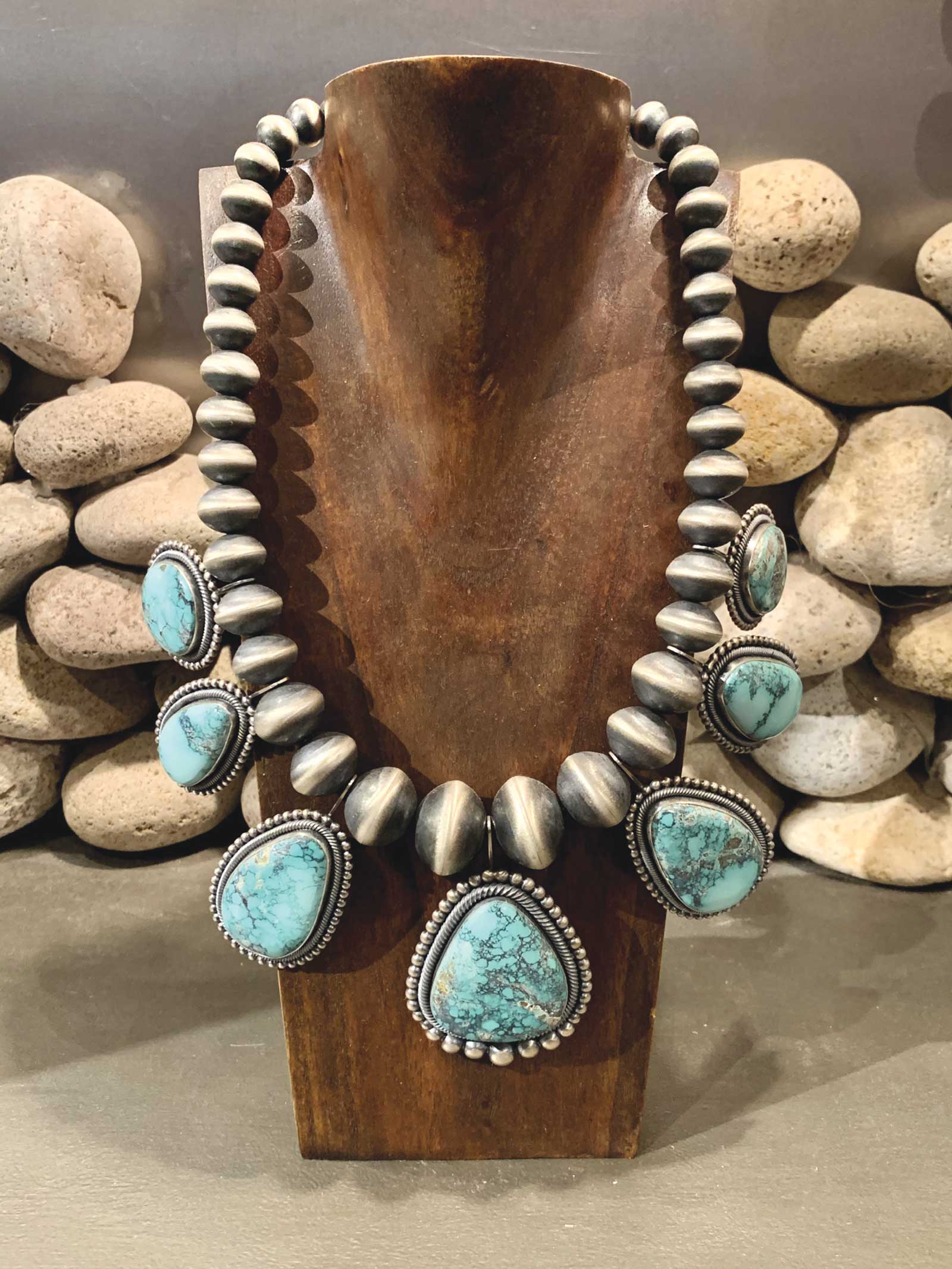
This 24-inch skyhorse turquoise necklace on sterling silver was made by Ernest R. Begay. Born in 1956, near Kayenta, Arizona, Begay is a renowned Navajo silversmith whose lapidary work and silversmithing is second to none. His style is traditional, employing fine stones and heavy gauge silver. His pieces are in fine galleries and collections worldwide, and he has won many major awards. He is known for his coral and turquoise cluster designs with deep, custom stamp work.
1- (800) 854-1359 » www.ancientnations.com
Adobe Gallery
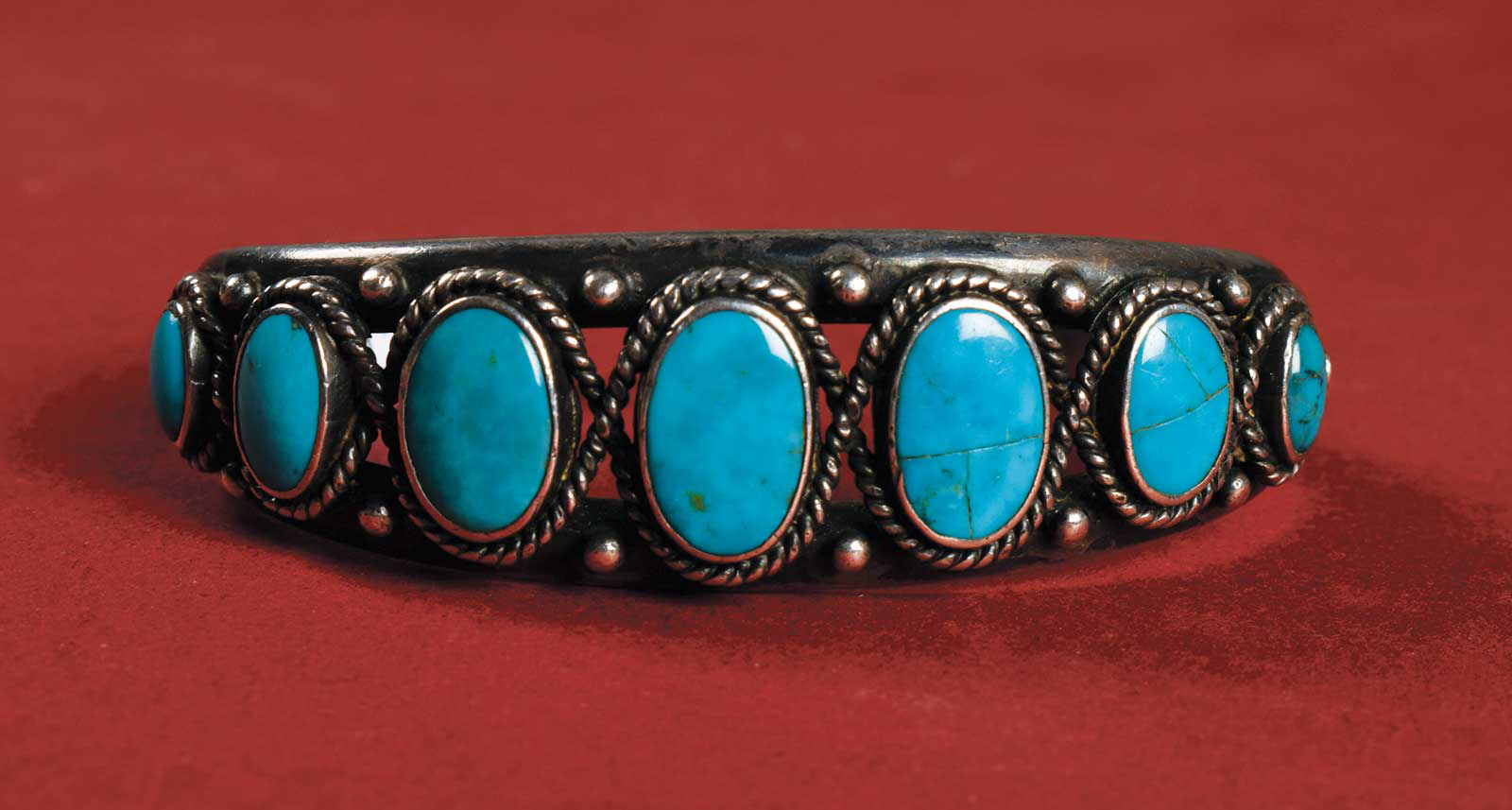
Diné jeweler Fred Peshlakai made this stunning silver bracelet with seven turquoise gemstones. Each beautiful high-grade turquoise cab is secured in a silver bezel. The seven bezels are intertwined in a continuous twisted silver rope, and has two silver bars melding into solid silver near the ends of the bracelet. The solid sections are filled with traditional stamped designs. The row of turquoise cabs is secured to the silver foundations by a silver platform that has a silver rivet as the anchor.However, it appears that the twisted silver wire is what is anchored to the foundation.
(505) 955-0550 » info@adobegallery.com » www.adobegallery.com
Cowboys & Indians Antiques
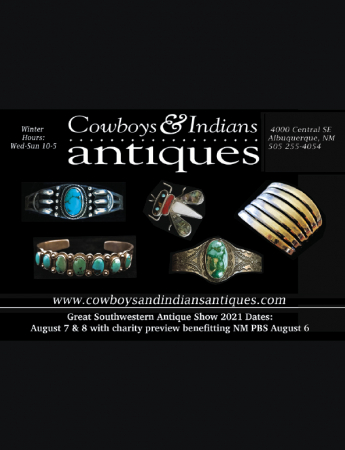
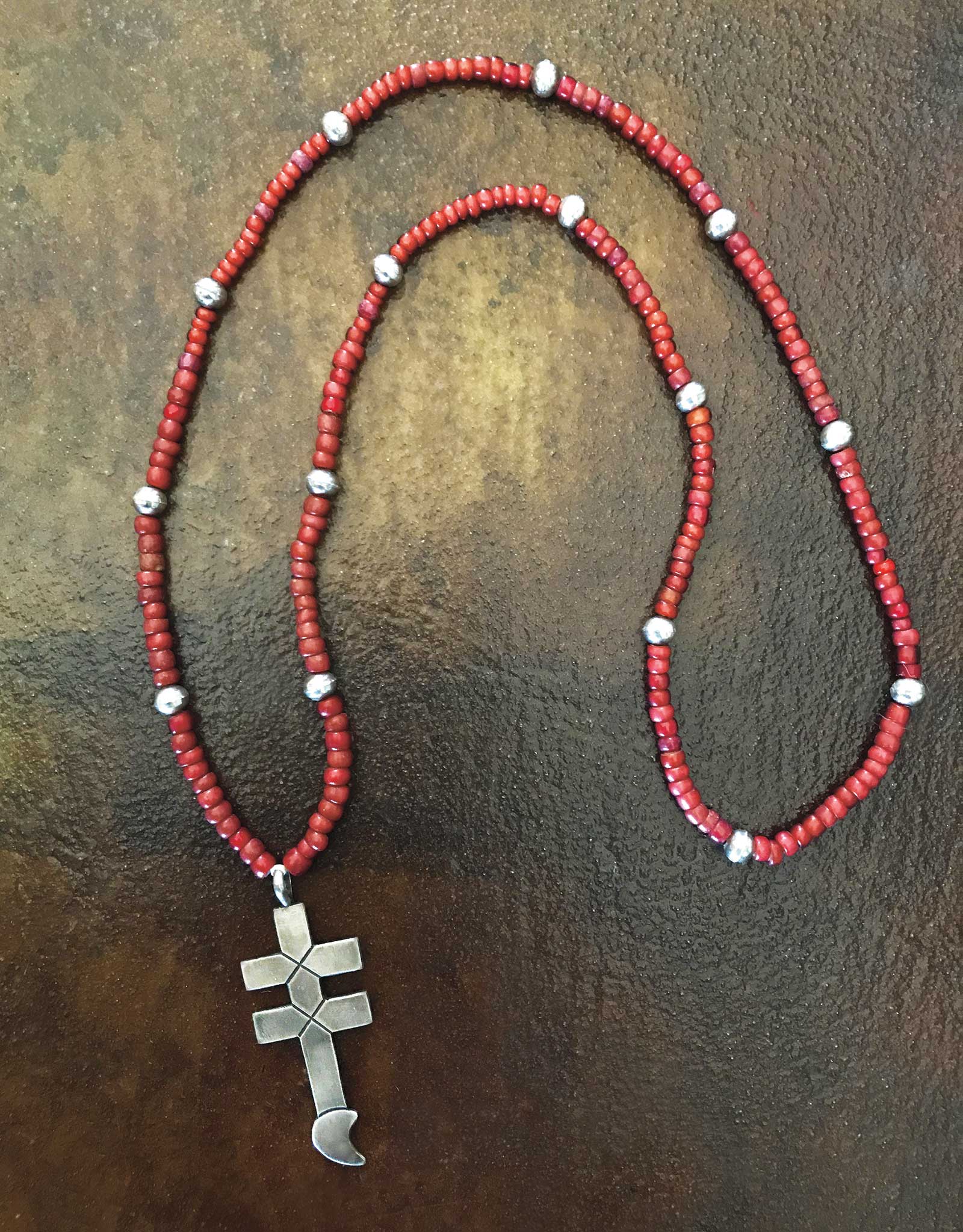
Cowboys & Indians Antiques presents an antique trade bead necklace, made with silver and whiteheart beads. Whiteheart beads were made in Venice, Italy, and traded to the Native American tribes in the late 1700s and 1800s. These red beads are called whitehearts due to their white center. This necklace was made with these vintage beads and the Dragonfly Cross Pendant (also called Isleta Cross), and was made by Navajo silversmith Fritson Toledo, for the shop. Necklace length is 34½ inches and the pendant is 2 by 1 inch.
4000 Central SE, Albuquerque, NM 87108
(505) 255-4054 » www.cowboysandindiansantiques.com
Four Elements Beadwork
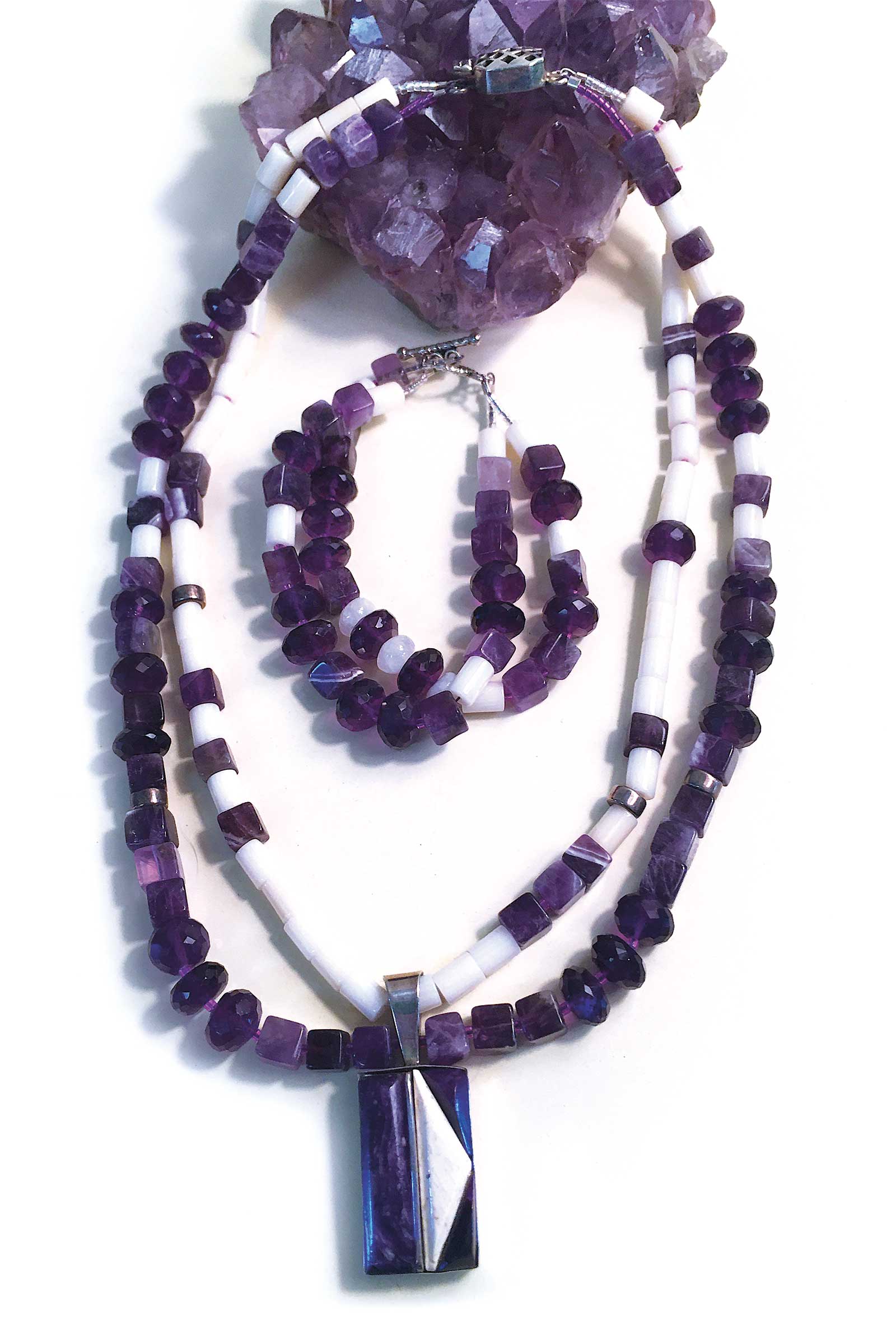
White Arrow is a two-strand necklace and bracelet set that was inspired by and built around the pendant which was made by Native American artist, Abraham Begay. His pendant, set in sterling silver, features sugilite and white coral. Amethyst and white coral beads are displayed in the necklace, and amethyst with white coral and rainbow moonstone beads in the bracelet. The clasps are both sterling silver, with dimensions for the necklace at 16½ inches long and the bracelet is 7½ inches long. Four Elements has bought and sold Begay’s jewelry for over 25 years, and find his work to always be lovely and inventive.
info@fourelementsbeadworks.com » www.fourelementsbeadworks.com
Heritage Auctions
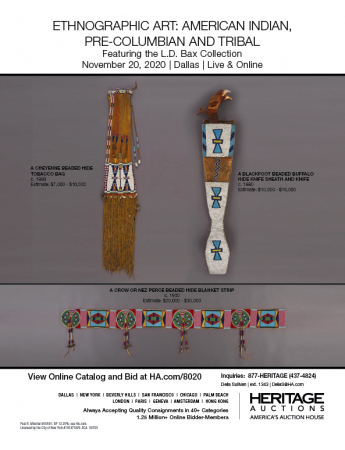
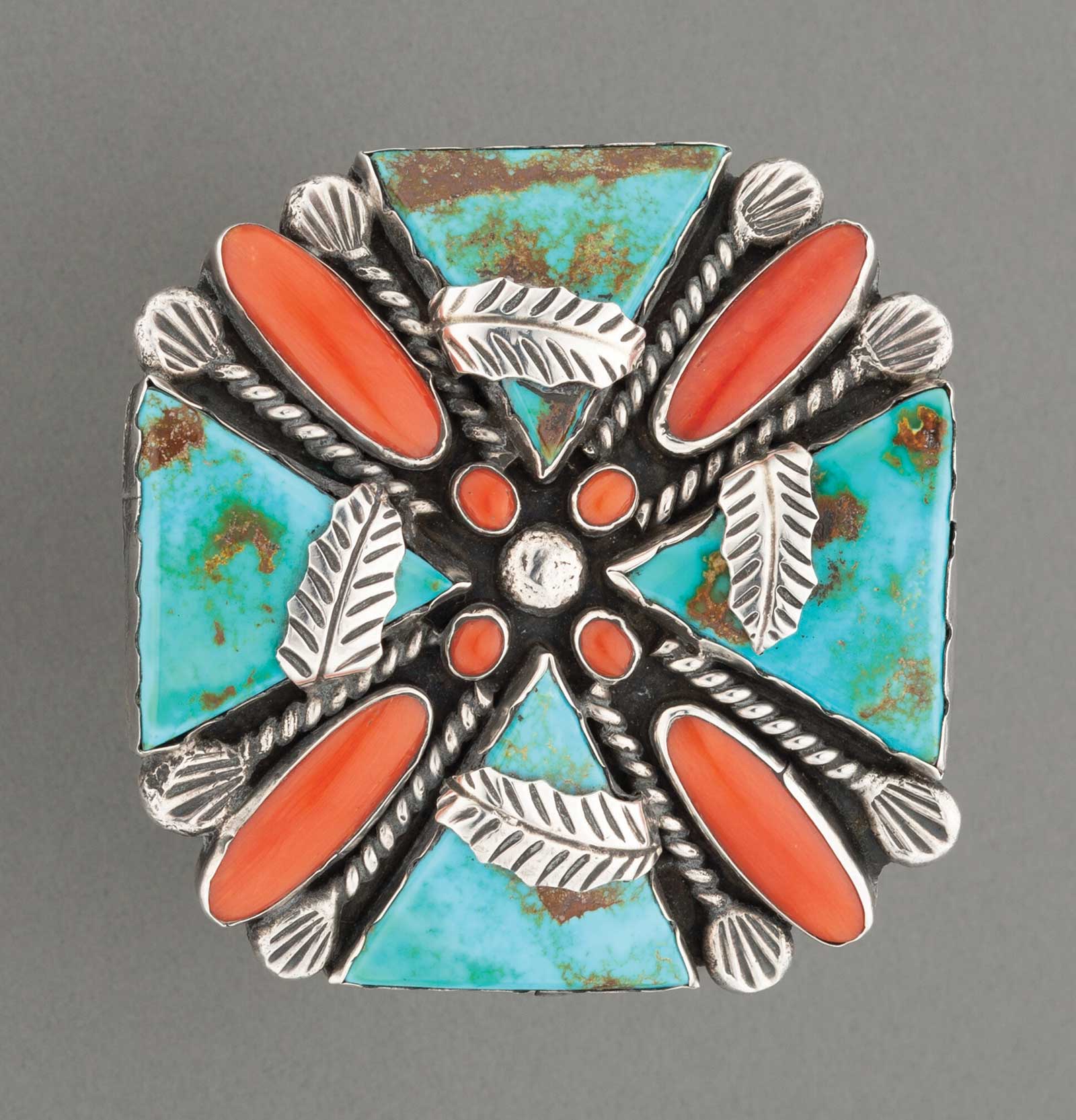
Heritage Auctions presents a Carl Luthey Navajo bracelet made of silver, Royston turquoise and coral, with hallmark. This is just one among many jewelry pieces featured in Heritage Auctions’ November 20, Ethnographic Art: American Indian, Pre-Columbian and Tribal Art sale. This piece is one of the highlights from the 20th-century Native American Indian Art collector L.D. Bax. The bracelet boldly measures 2½ inches across. Bax’s collection in the auction also includes beaded hide blanket strips, clothing, weapons and weavings.
(214) 409-1343 » delias@ha.com
Hindman Auctions
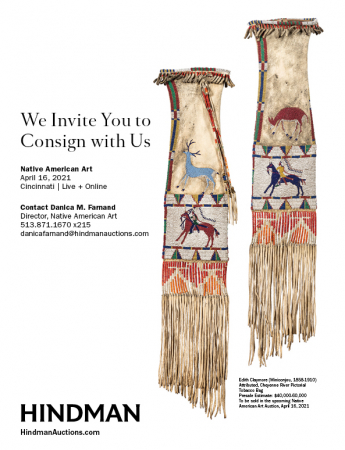
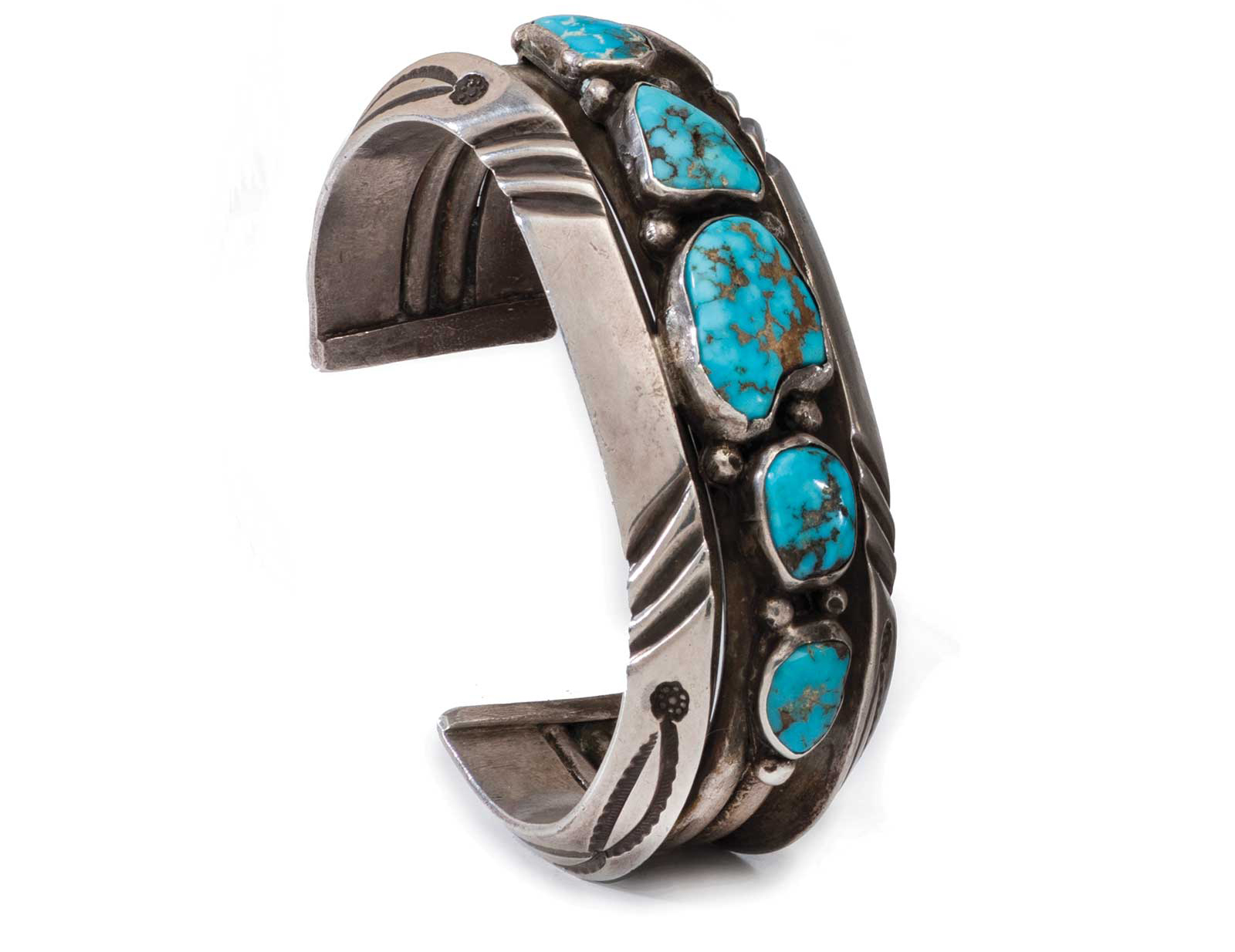
This beautiful cuff bracelet was crafted by the highly collectible artist Mark Chee, who was a prominent silversmith from the Southwest during the 1930s up to the 1970s. The stamped silver cuff is set with a row of five graduating turquoise nuggets, and is signed with an etched “CHEE,” which is an early mark of the artist. The cuff is 1¹/8 inches wide, with an interior circumference of 5½ inches and a gap length of 1¼ inches. It will be offered in Hindman’s January 2021 Modern & Contemporary Native American Art auction.
(513) 871-1670 » erinrust@hindmanauctions.com » www.hindmanauctions.com
Home and Away Gallery
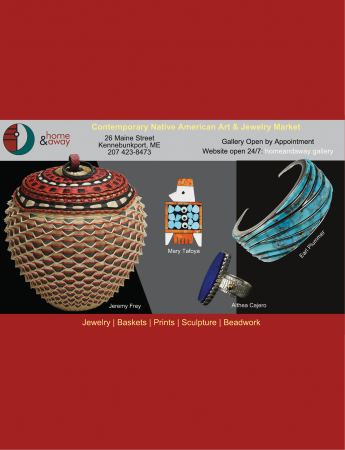
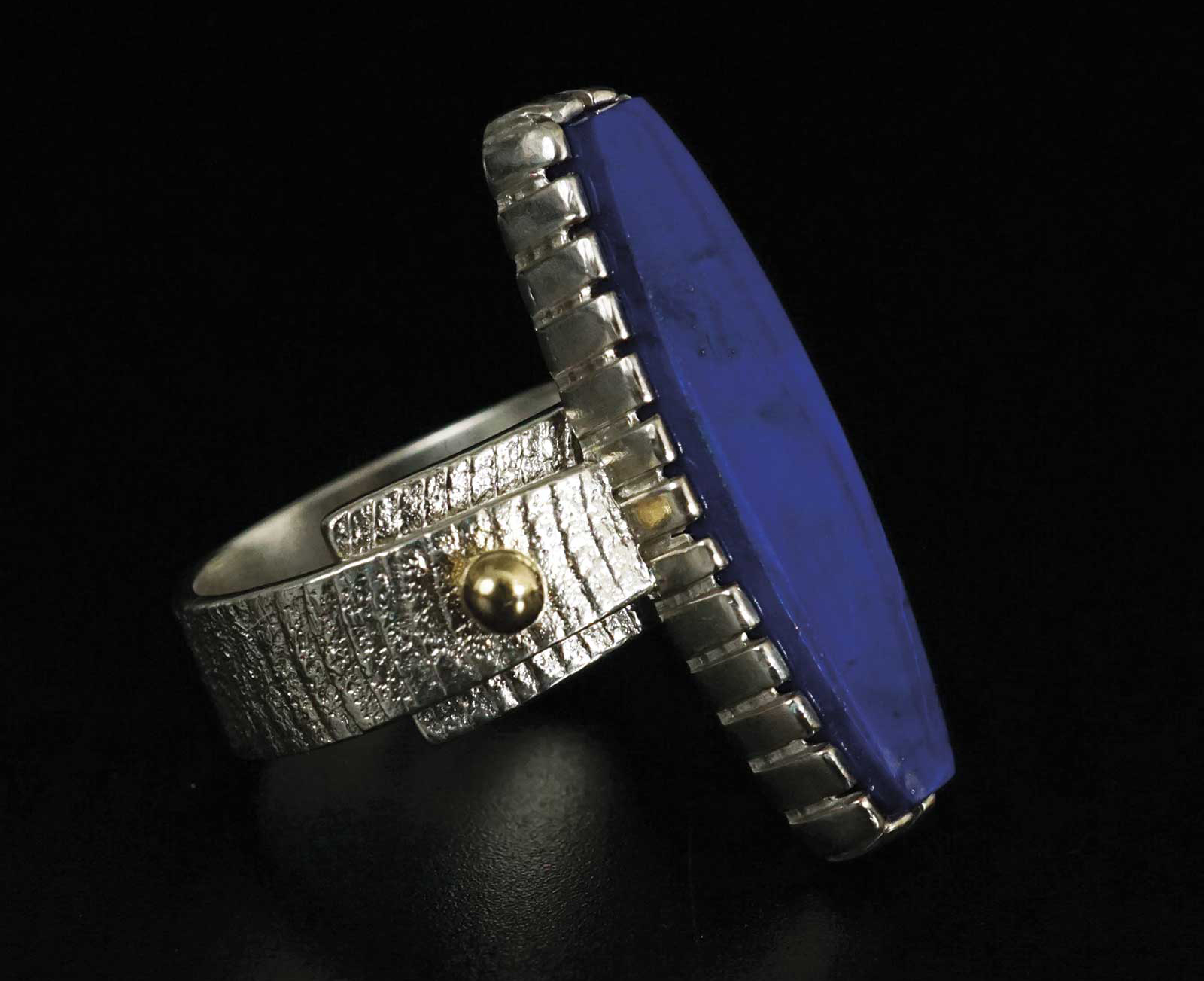
This stunning cuttlefish cast ring was made by Althea Cajero, of Acoma/Santo Domingo Pueblo. It has a deep blue lapis lazuli cabochon set in a castellated handmade bezel. On the side sits a lone but elegant 18K gold bead. The shank is not closed, so there is some adjustment possible to the size. In 2014, Althea Cajero and her husband Joe Cajero, were named Living Treasures by the Museum of Indian Arts and Culture.
26 Maine Street » Kennebunkport, ME 04046 » (207) 423-8473 » www.homeandaway.gallery
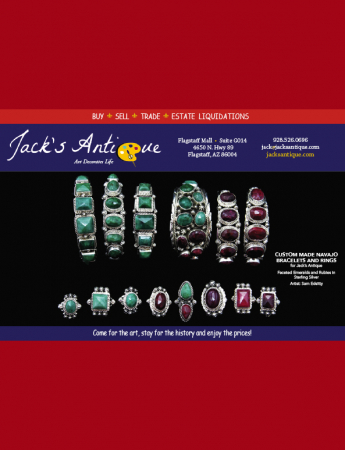
Jack’s Antique
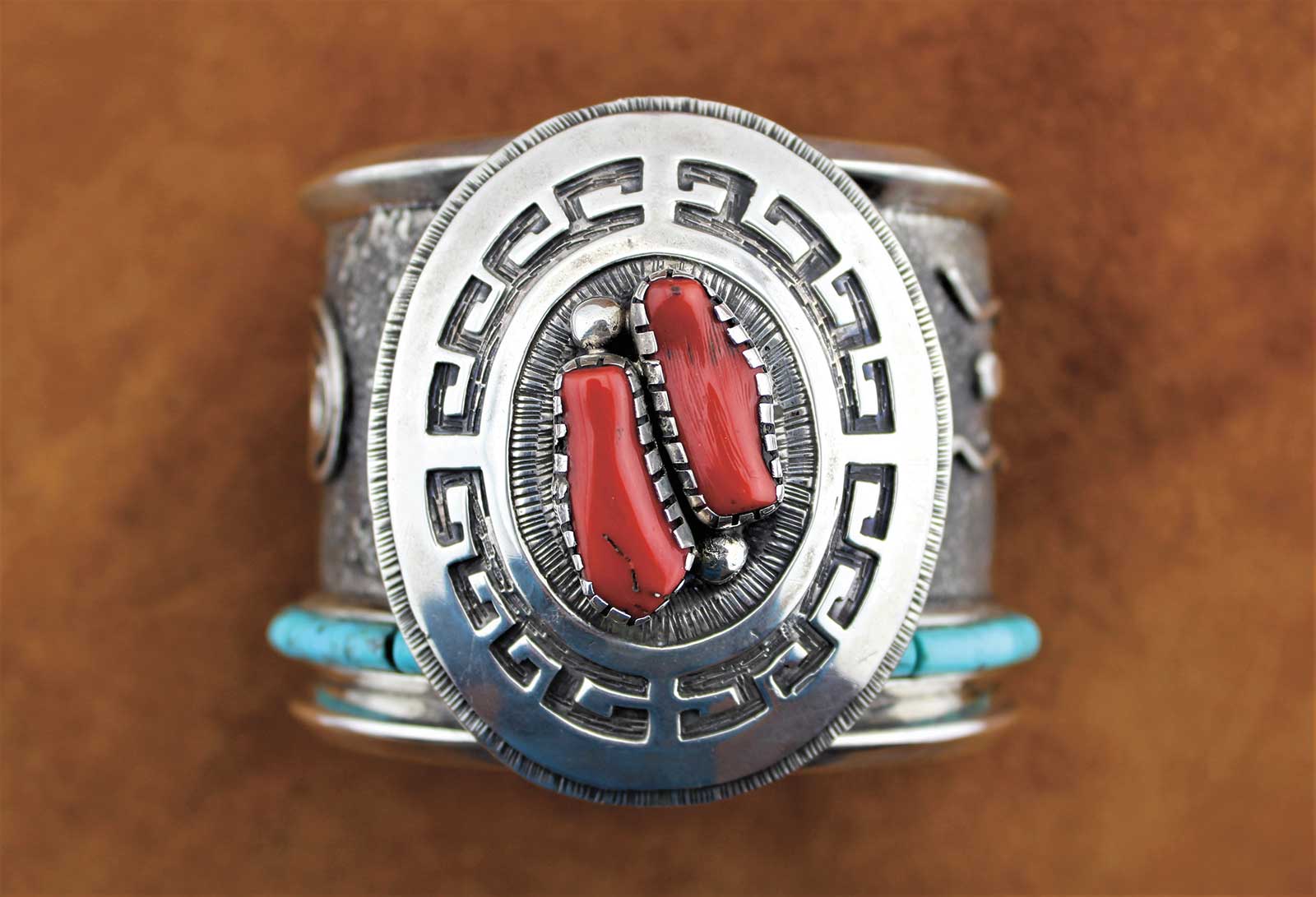
This authentic Hopi sterling silver cuff bracelet, with two central blood coral branches and turquoise beads inlay in a contemporary style, is handmade by master craftsman and silversmith Steve LaRance. This piece shows excellent execution, careful attention to detail, a fine hand and stylistic maturity. LaRance showcases his mastery of various techniques such as Tufa casting, overlay, inlay and filework with this bracelet. The interior of the bracelet is also decorated with overlay designs of a central bear paw and smaller symbols on each side. Purchased from the collection of Merlin Carlson, who is also an appraiser. Dimensions are 5¾ inches inside from end to end, 2¾ inches wide, with a 1½ inch gap or opening.
4650 N. US Hwy 89 » Suite G014 » Flagstaff, AZ 86004 » (928) 5296-0696 » jack@jacksantique.com » www.jacksantique.com
Jennifer Younger
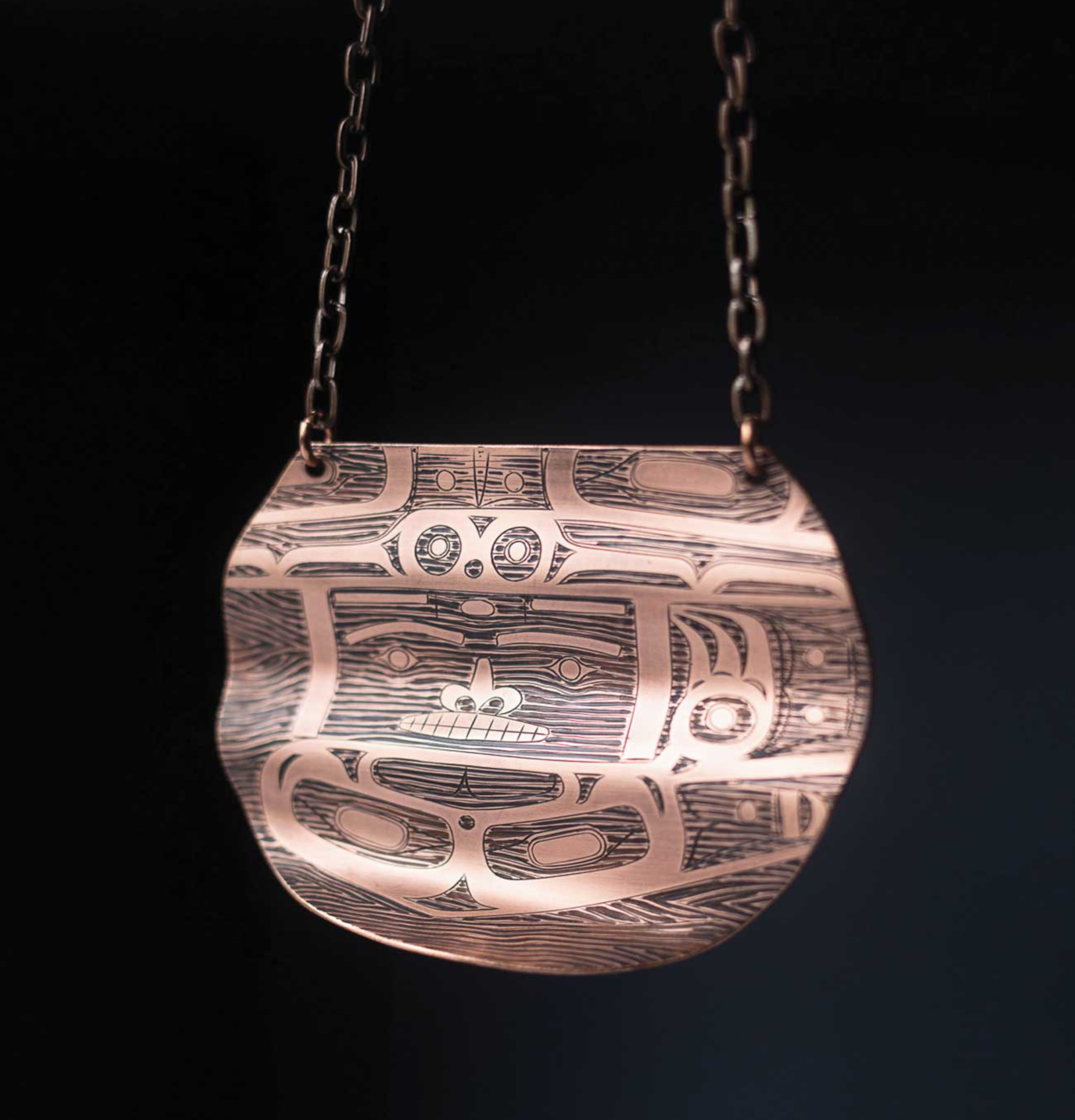
Artist Jennifer Younger draws inspiration from traditional Tlingit formline designs, historic artifacts, spruce root basket weaving patterns, and from the contrast and texture of metals. The pieces she creates start with sheet metal of mostly silver or copper. Everything is cut and shaped by hand. Younger also made the wooden tools she uses to shape the jewelry. The idea behind this particular pendant titled Grandmothers People, is to bring historic designs from Chilkat pattern boards back to life through wearable art. This piece measuring at 3 by 3 inches, is heat-treated, engraved copper.
www.jenniferscopperandsilver.com
King Galleries
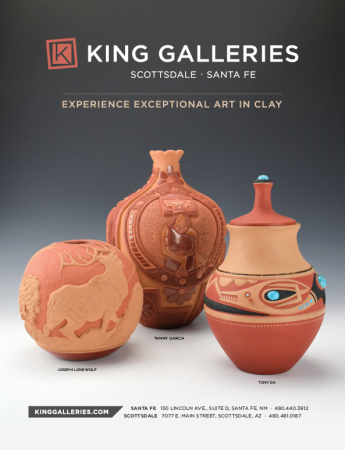
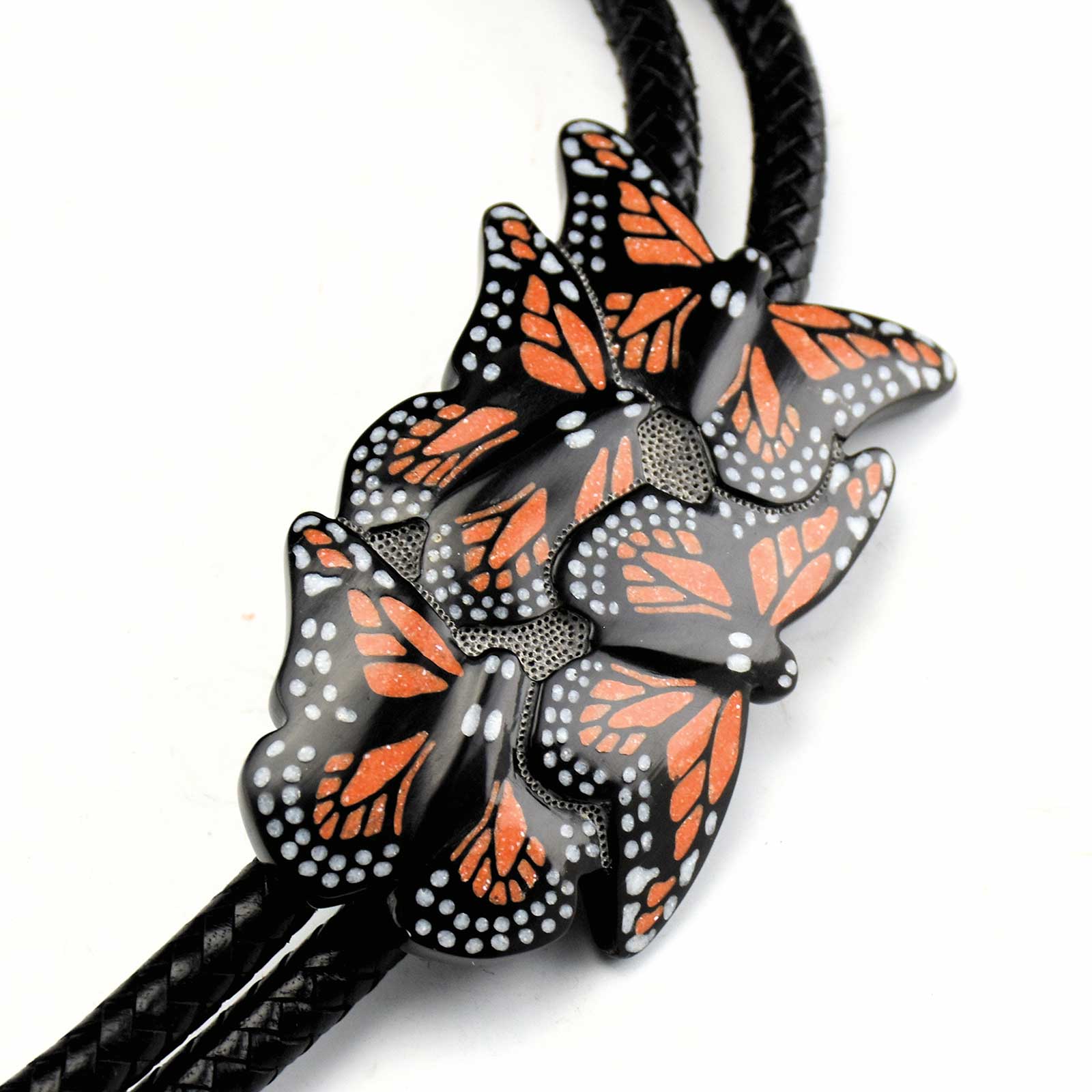
Kevin Pourier (Oglala Sioux), is known for his distinctive buffalo horn jewelry. Each piece is made from hand cut buffalo horn that is then carved and inlaid. His butterfly pieces are inlaid with local sandstone and mother-of-pearl shell. They are inspired by a photo of Sitting Bull with a monarch butterfly wing in his hatband. Pourier won Best of Show at Santa Fe Indian Market in 2018 for one of his buffalo horn inlaid belts.
130 Lincoln Avenue, D » Santa Fe, NM 87501 » (480) 481-0187 » www.kinggalleries.com
John C. Hill – Antique Indian Art Gallery
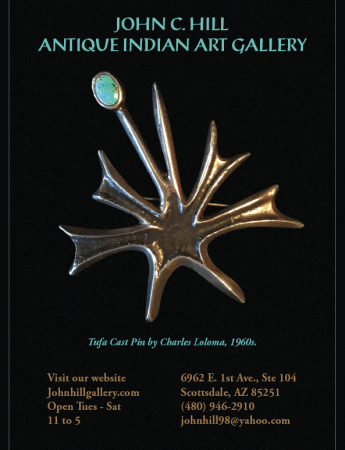
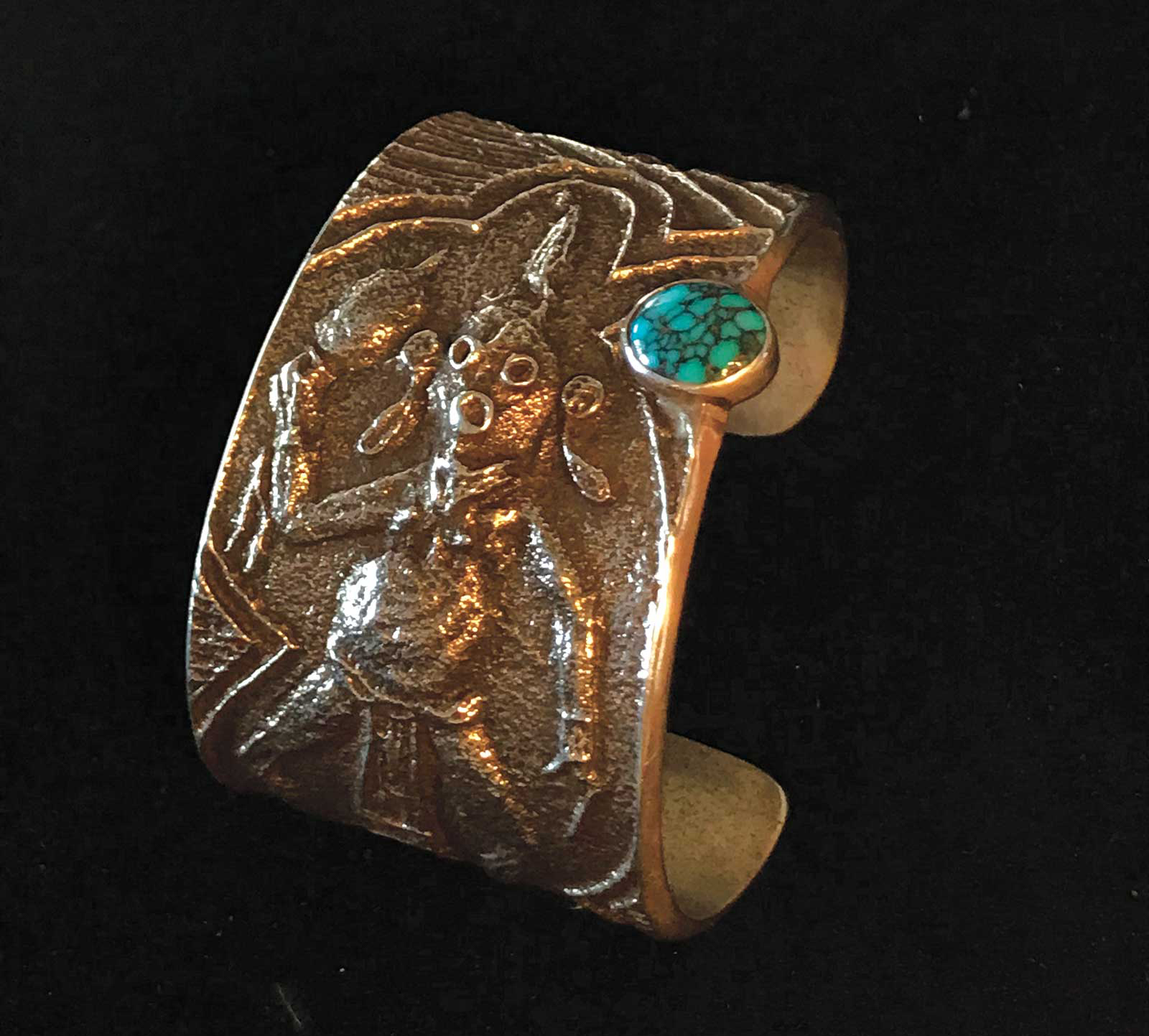
Among the many treasures at John C. Hill, is this Preston Monongye tufa cast, pictorial silver cuff titled Mudhead. This single #8 turquoise spiderweb stone circa 1970, is part of a collection from the Heard Museum Shop in the 1960s and ’70s. Monongye (1927-1987), was adopted by the Hopi at Hotevilla when he was 7. After World War II, he emerged as a top designer of what he called “The New Jewelry.”
6962 E. 1st Avenue » Suite 104 » Scottsdale, AZ 85251 » (480) 946-2910 » www.johnhillgallery.com
Miles and Miles Trading
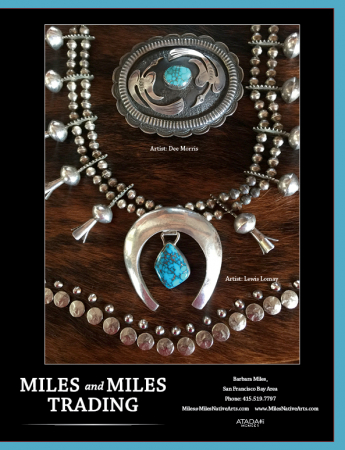
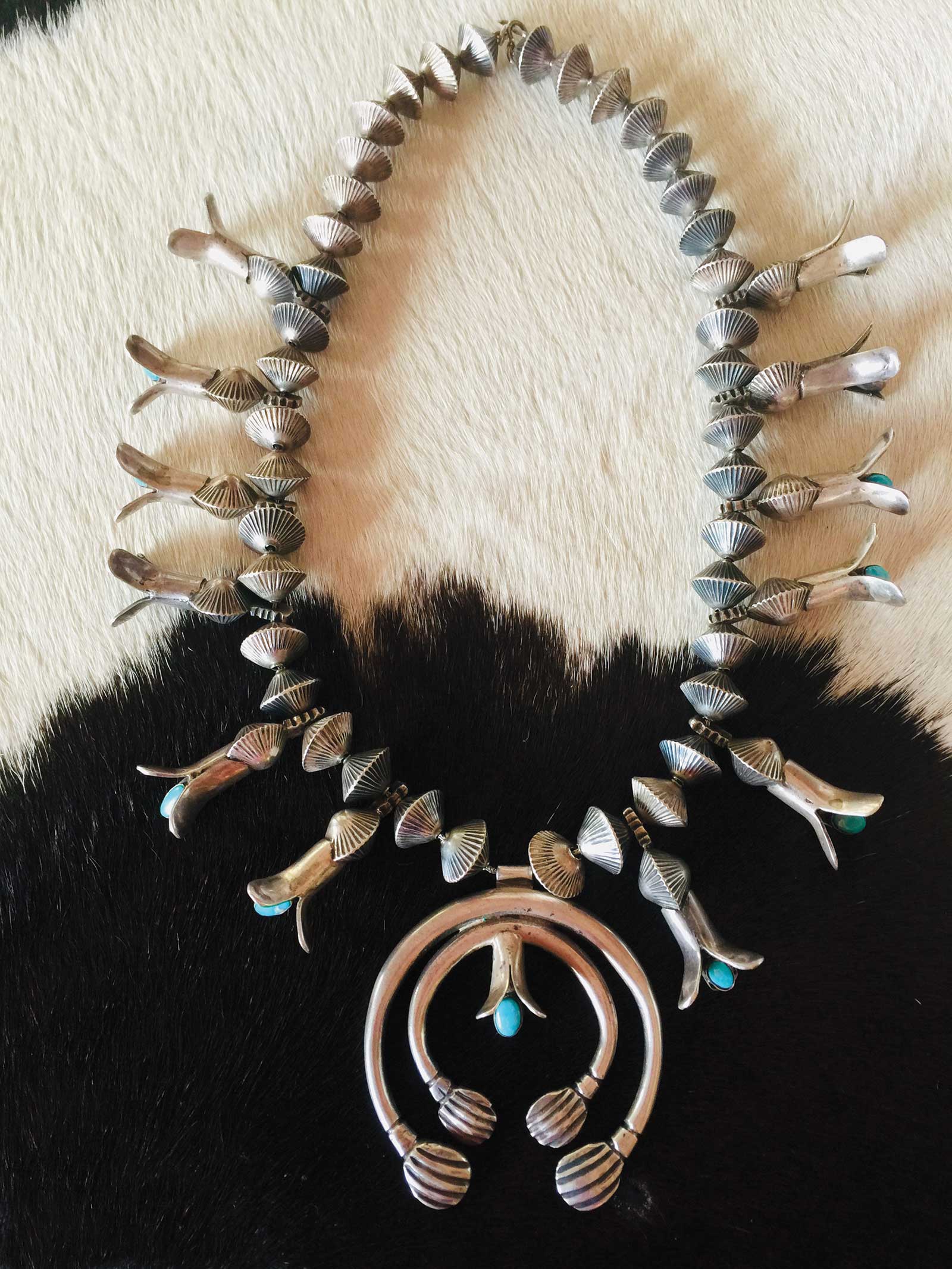
This one-of-a-kind, handmade squash blossom necklace, circa 1930s to the 1940s, is made of ingot silver which includes the blossoms, beads and naja. The turquoise in the blossoms is blue gem and the silver is hand hammered. Notable is that the handmade ingot beads have been hand filed to the blossoms. In addition, Miles and Miles Trading has quite the selection of Native American jewelry from antique historic to contemporary.
San Francisco Bay » (415) 519-7797 » miles@milesnativearts.com » www.milesnativearts.com
Jesse Robbins
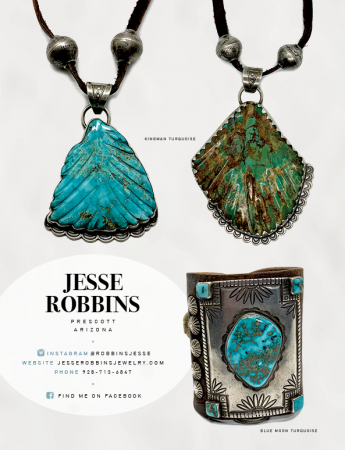
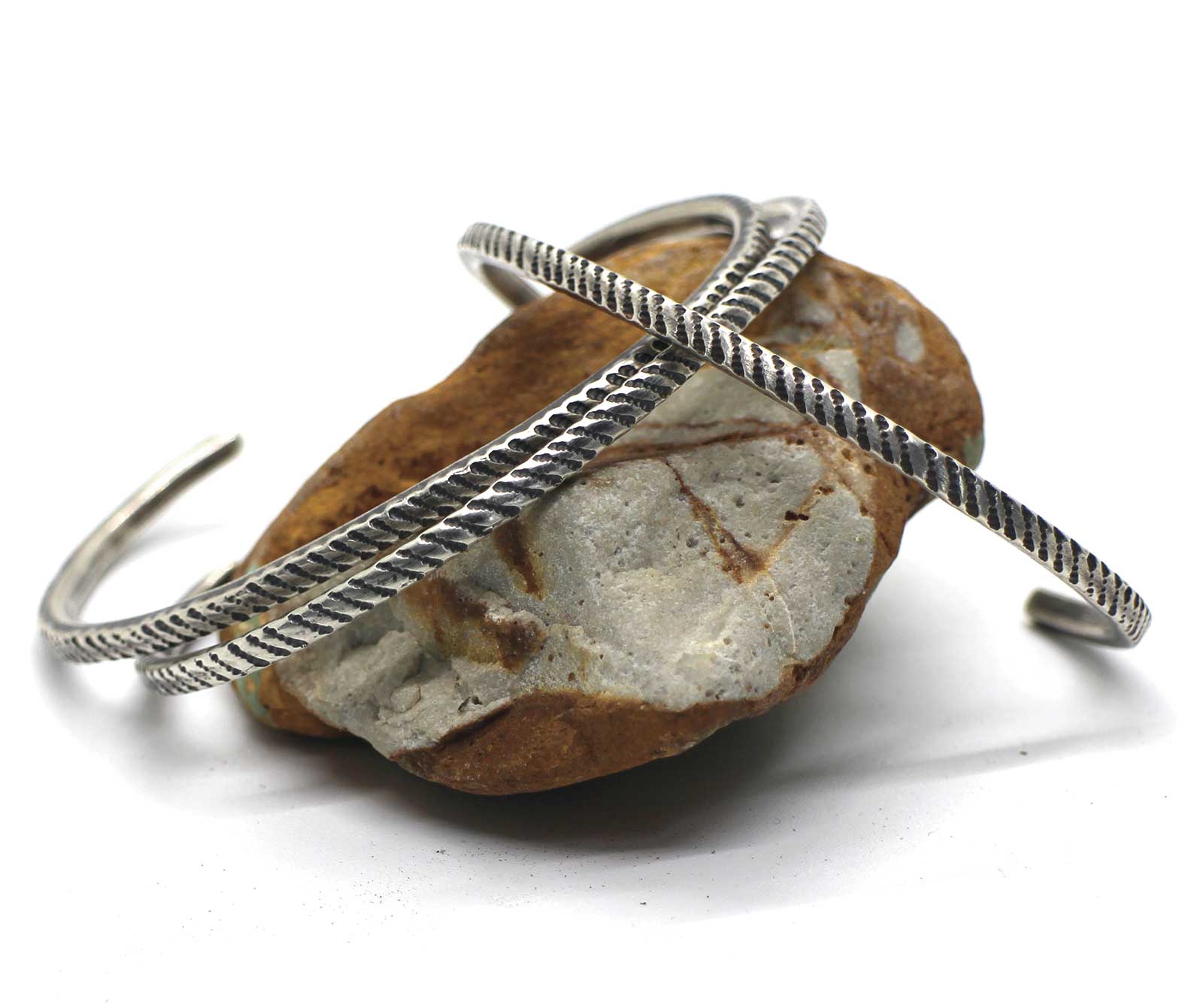
Jesse Robbins introduces the coin silver ingot Toothpick Stackers, named after their small profile. These hand-forged and stamped bracelets are a perfect first bracelet, gift or a tasteful addition to any collection. Take a creative role in combining your own jewelry with the classic look and feel of these stackers. Whether worn alone or in multiples, the Toothpick Stackers are designed to survive your adventures and help tell your story.
(928) 713-6847 » jesserobbinsaz@gmail.com » www.jesserobbinsjewelry.com
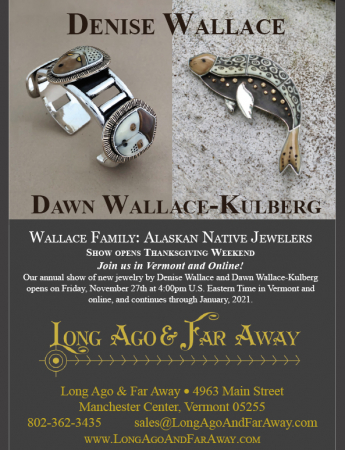
Long Ago & Far Away Native Arts
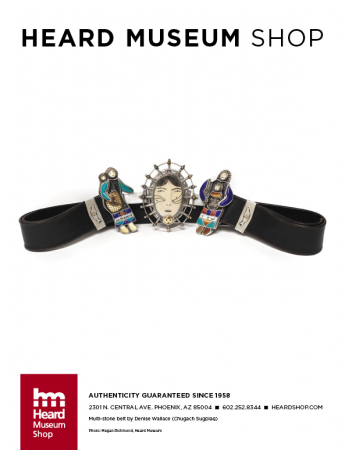
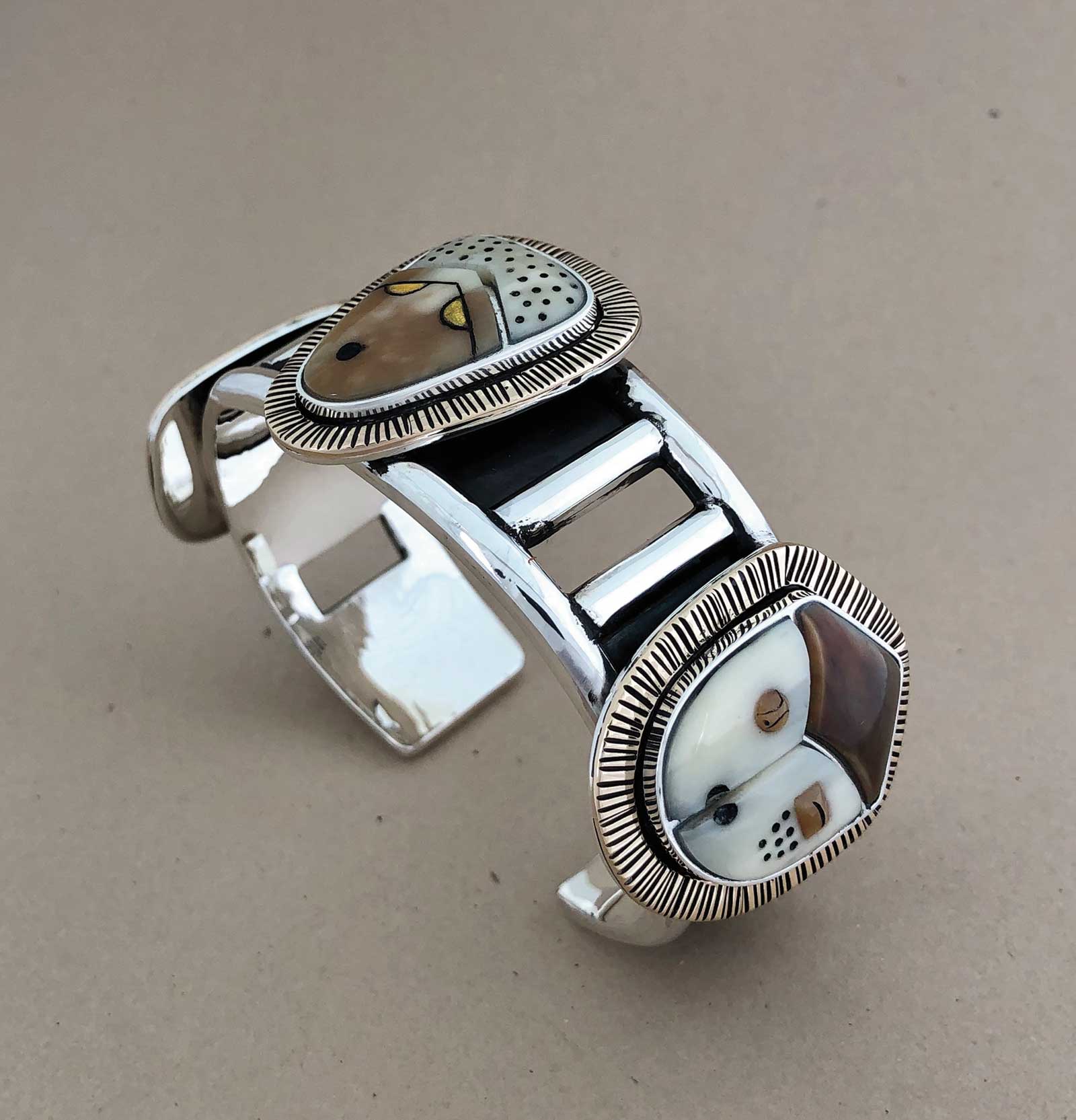
Denise Wallace (Chugach Aleut), is a storyteller who speaks through her unique jewelry, such as in this piece titled Maskette Bracelet. Impeccably rendered in the highest quality materials, Wallace interprets the imagery of her Native Alaskan ancestors and their earliest cultures, and re-tells their stories with her jewelry. The wearer of her visually powerful pieces inevitably ends up telling and retelling the stories to their justifiably impressed admirers.
4963 Main Street » Manchester Center, VT 05255 » (802) 362-3435 » sales@longagoandfaraway.com » www.longagoandfaraway.com
Peregrine Rocks & Trading Post
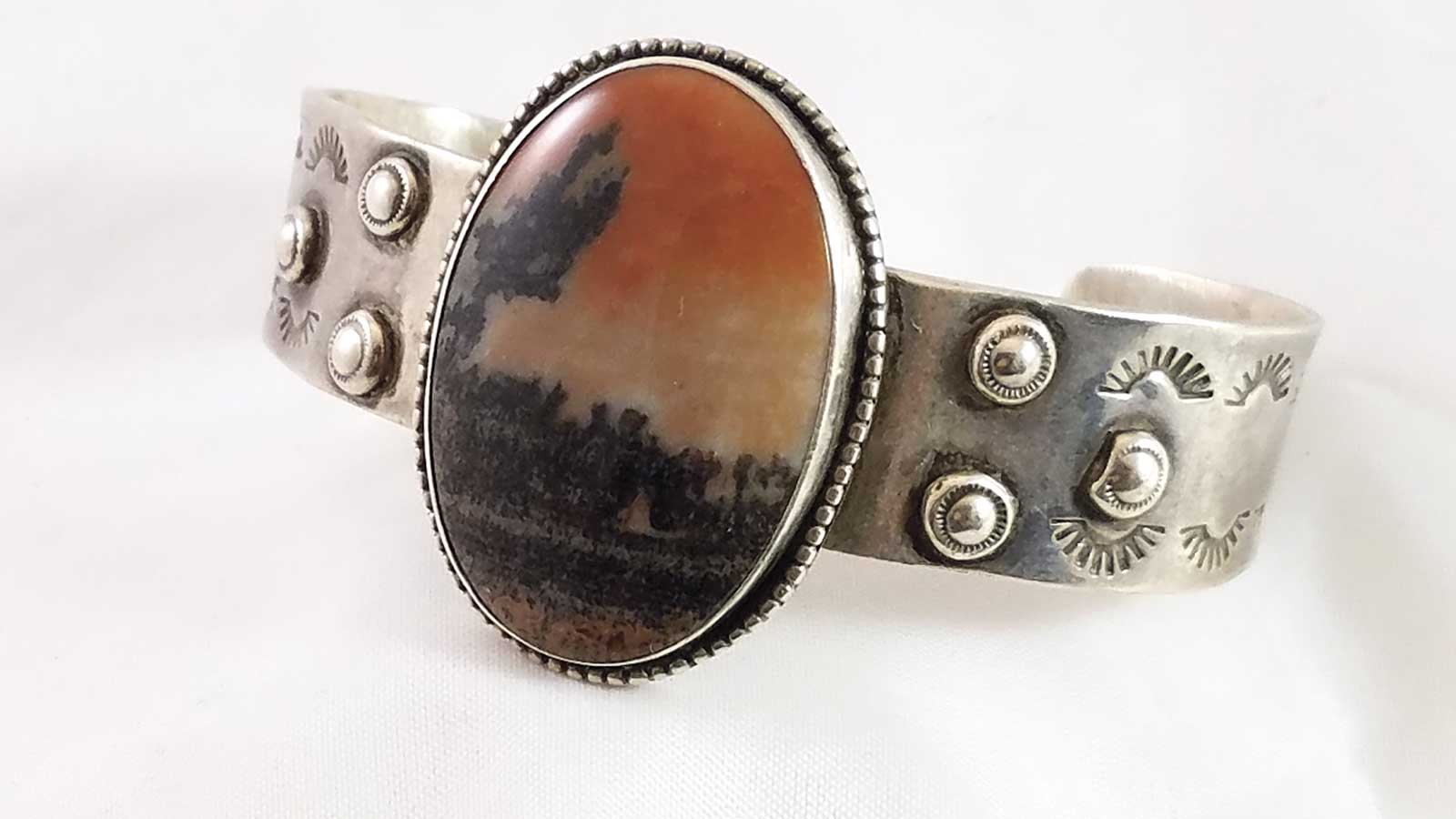
During World War I and World War II, turquoise became more difficult and expensive for the Navajo to find due to war efforts, so they started using other types of stones in their jewelry. Popular options were agate and agatized petrified wood, seen in this bracelet. These stones are typically quite hard, take a very good polish and can be very colorful. Plus, the Southwestern United States has many localities that have these stones available. For these reasons, these stones continue to be used even today. The bracelet is stamped “HooG,” and was made mid-20th century.
Kenneth Johnson Studio
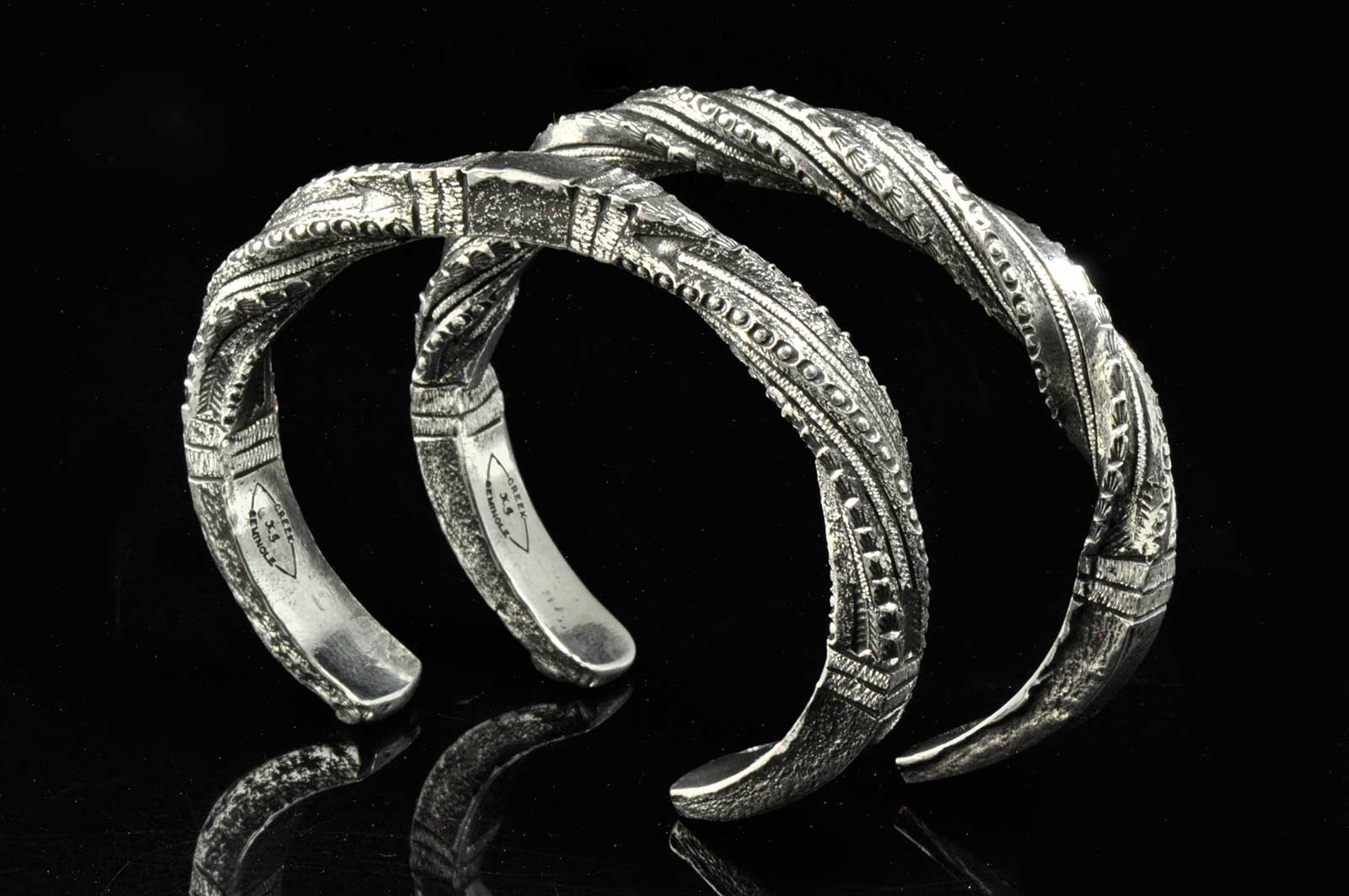
These sterling silver bracelets by Kenneth Johnson, are hand stamped and twisted to create unique patterns. They feature a special coarse texture on the surface created by a process called tufa casting. Each mark on the bracelet is individually stamped on while the piece is still flat to create patterns. The silver bar is twisted and then formed to arrive at the final piece.
P.O. Box 23296 » Santa Fe, NM 87502 » (505) 473-5365 » kenneth@kennethjohnson.com » www.kennethjohnson.com
The Dancing Rabbit Gallery
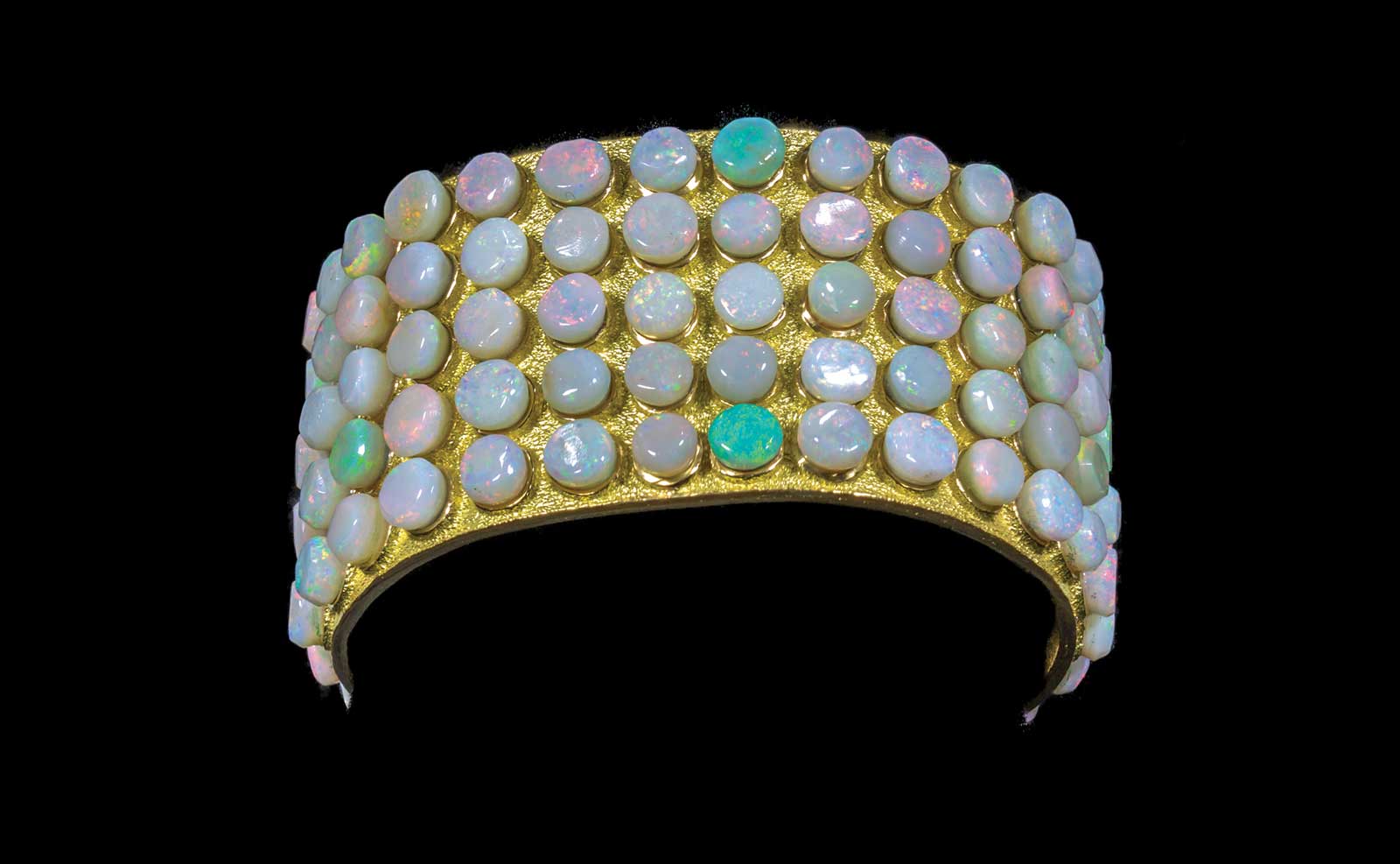
We see the spectacular finished product, but rarely see the considerable effort that goes into the jewelry. Renowned Hopi master jeweler Steve Wikviya LaRance, created this stunning piece in 2018. The cuff is made of 18k gold cast in carved tufa. It was then inlaid with 105 hand-cut Australian fire opals individually set in perfect raised bezels to highlight the deep fire of each stone. The design of the fiery hued opals evokes the look of rows of corn, one of the three sisters for sustaining life on the reservation. The inside of the beautiful cuff is filled with Hopi symbols of corn and the sun.
(817) 337-8576 » katie@thedancingrabbitgallery.com »
Mark Sublette Medicine Man Gallery
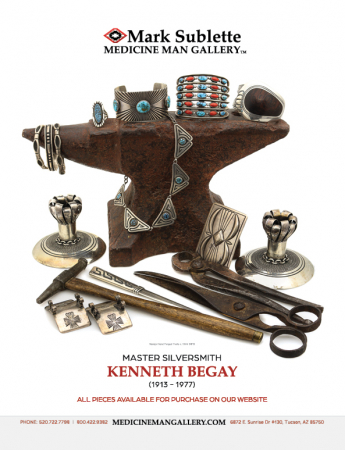
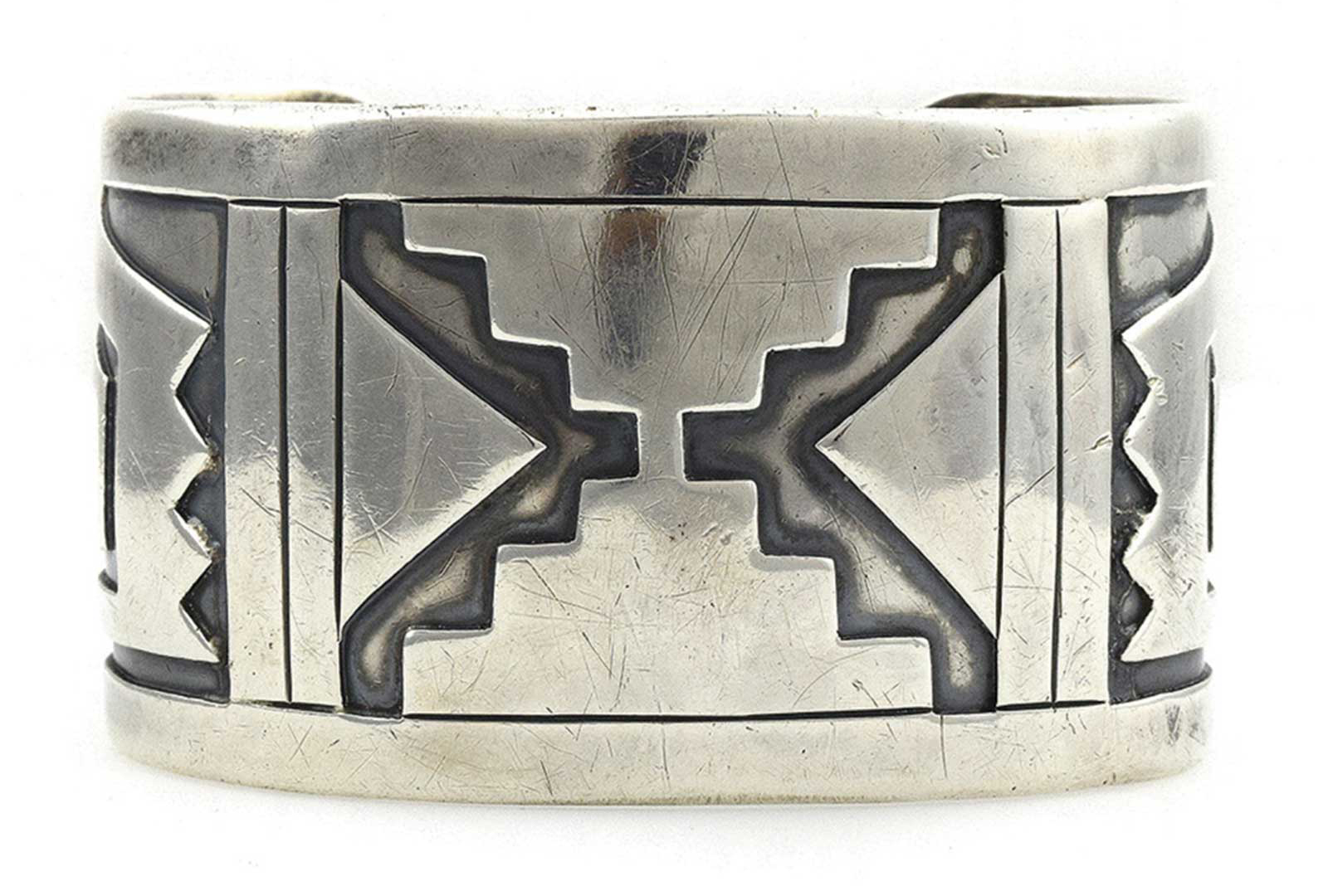
This piece is a rare 1950s bracelet by the famed Hopi silversmith, Victor Coochwytewa. Victor, as most collectors refer to the silversmith, was born at Shungopavi at Second Mesa and started making jewelry in 1940 with Paul Saufkie. After service in the South Pacific during World War II, he returned to Hopi enrolling in the jewelry making course for veterans taught by Paul Saufkie and Fred Kabotie. In 1994, he was recognized by the state of Arizona as an “Arizona Indian Living Treasure.” The artist retired from jewelry making in 2006.
6872 E. Sunrise Drive Suite 130 » Tucson, AZ 85750 » (520) 722-7798 » www.medicinemangallery.com
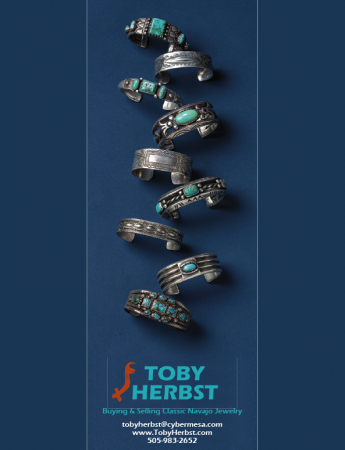
Toby Herbst
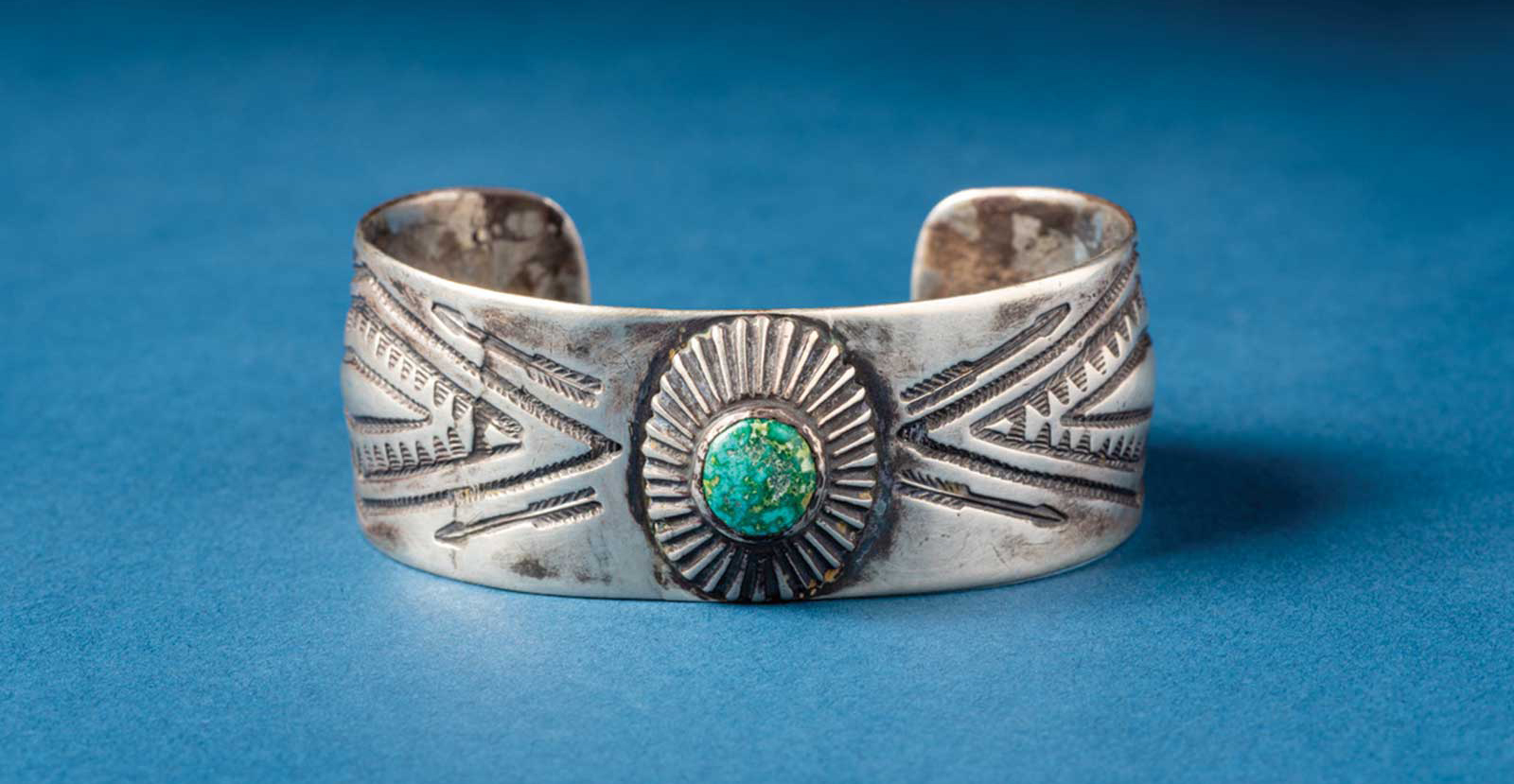
This is a Navajo ingot silver bracelet from the early 20th century, 1900 to 1920. The bracelet, with its long repousse diamonds on the band, is laid out like a late-19th-century bracelet, but the mounted stone suggests it was made in the early 20th century. The stone is hand-cut and the mount/bezel was handmade, with a chisel used to make the radiating rays.
Solder was used to attach the bezel to the band, a technique not in use until the very end of the 19th century and the beginning of the 20th. The use of arrow stamps to decorate the band has often been considered a tourist design. Arrow stamps were certainly used on tourist pieces, but arrow designs are also found on early pieces, both bracelets and bow guards made for Native consumption.
(505) 983-2652 » tobyherbst@cybermesa.com » www.tobyherbst.com
Native American Collections
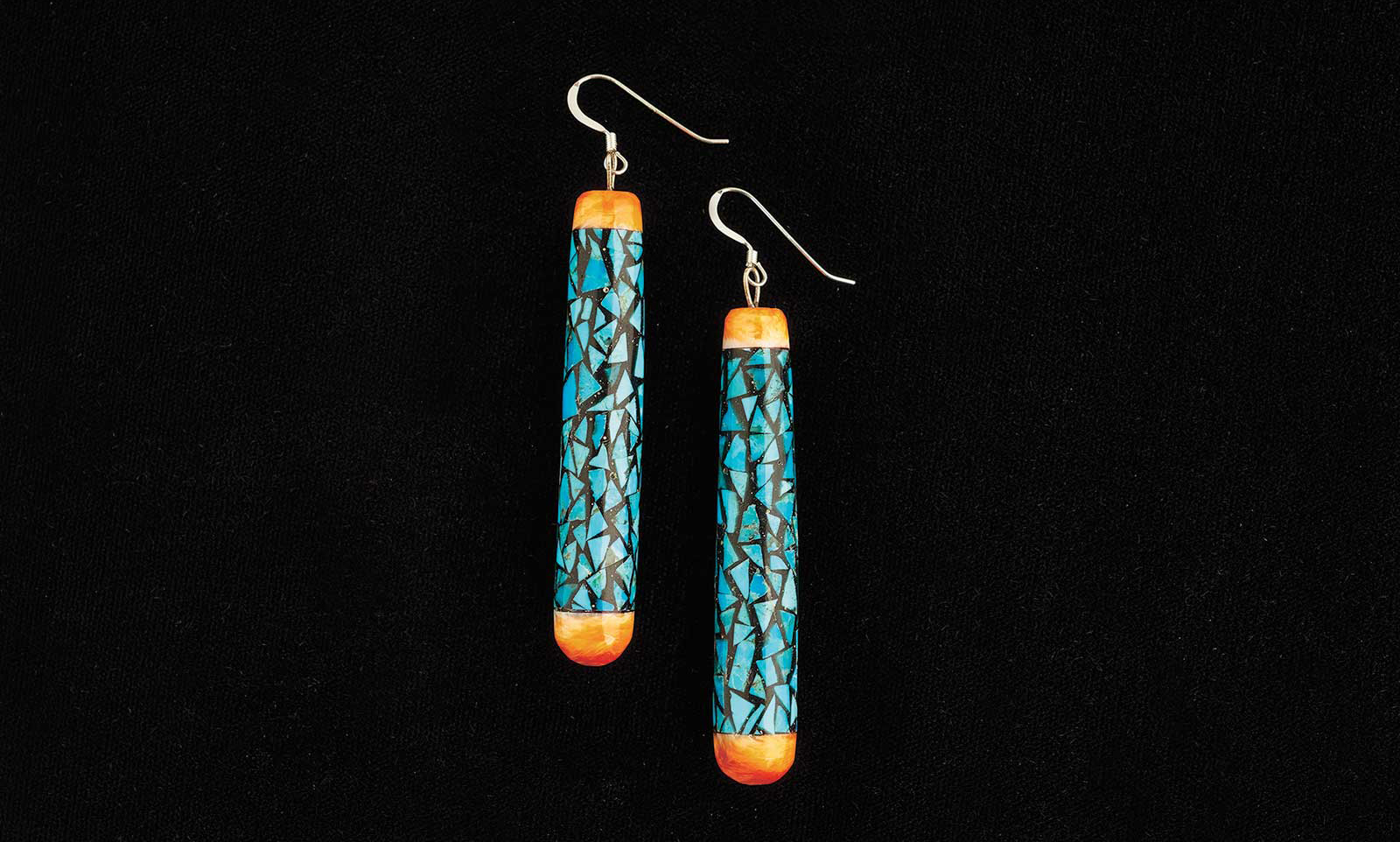
Native American Collections has been working with skilled mosaic jewelry artists Farrell and Rey Pacheco (Santo Domingo/Kewa) for a few years now. This delightful young husband-and-wife team just won the Best of Jewelry award at this year’s virtual Santa Fe Indian Market. In mosaic inlay, each stone is cut and set by hand to sit flush against each other. Farrell and Rey’s earrings are gorgeous and remarkably affordable for the time and materials involved.
Farrell and Rey Pacheco call these stunning 3-inch dangles their Mosaic Baseball Bat earrings. They are made from brilliant Kingman turquoise and orange spiny oyster shell on a bison bone base. The richness of this color combination is spectacular.
Denver, CO » (303) 321-1071 » jillspots@aol.com » www.nativepots.com
The Heard Museum
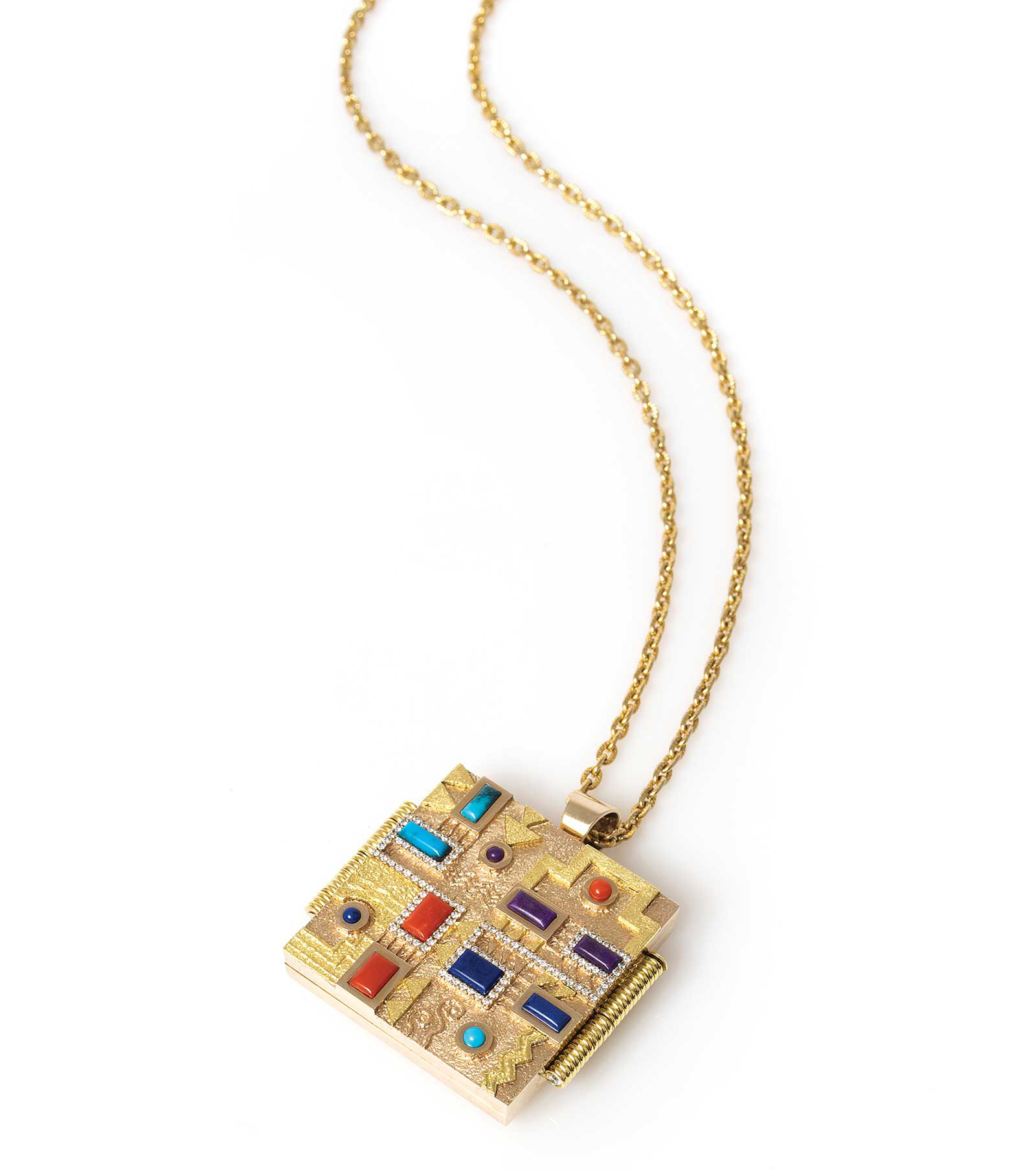
Collectors should be excited about this locket pendant, when it comes to top tier jewelry. The locket features sleek design and gold work that is rarely seen, as lockets are seldomly made in the Native American jewelry scene. It is a double-sided, 18k locket pendant with Yei motifs on each side. With a simple slide of the pin on the side of the pendant, the locket opens to two gold windows where pictures can be placed. The locket is adorned with pave diamonds, turquoise, sugilite, lapis, and coral.
2301 N. Central Avenue » Phoenix, AZ 85004 » (602) 252-8344 » shops@heard.org » www.heardmuseumshop.com
The Rainbow Man
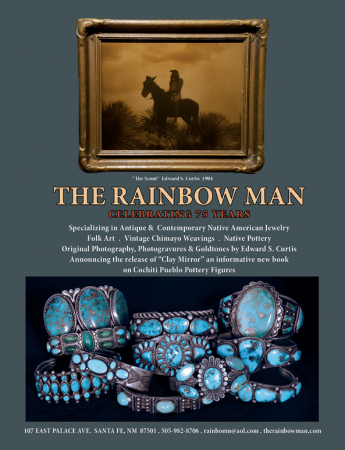
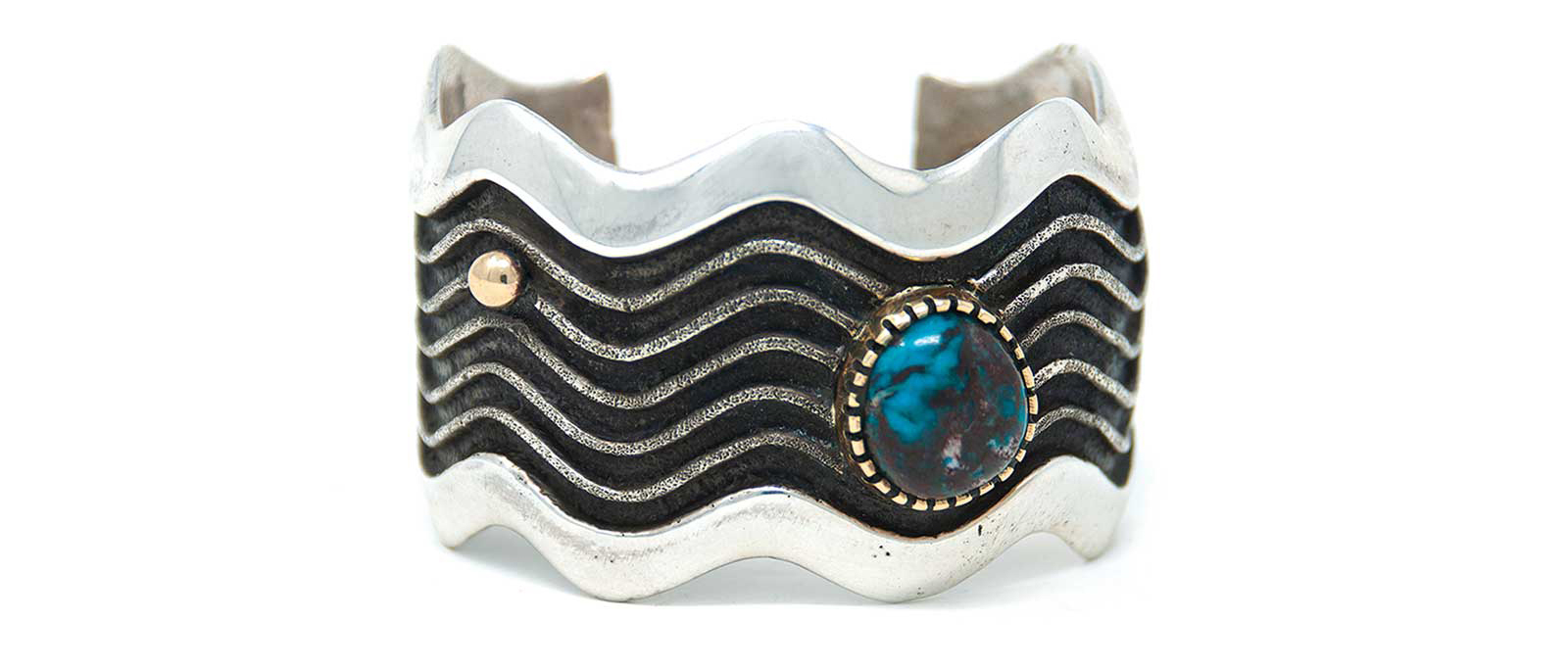
Pictured here is a sterling silver cast bracelet with 14k gold accents and Bisbee turquoise by Edison Cummings, a Navajo silver smith who moved to Santa Fe to study at the Institute of American Indian Arts. Initially, he studied painting, but Cummings began to shift his interests toward three-dimensional art, particularly sculpture, and he also took a few jewelry classes.
In the summer of 1990, he acquired hands-on experience by working at the White Hogan in Scottsdale, Arizona. He continued working there for five years, incorporating his artistic ideas into jewelry making and creating jewelry and flatware. In 2014, Cummings won 1st Place in jewelry at the prestigious Santa Fe Indian Market.
(505) 982-8706 » rainbomn@aol.com » www.rainbowman.com
Waddell Gallery
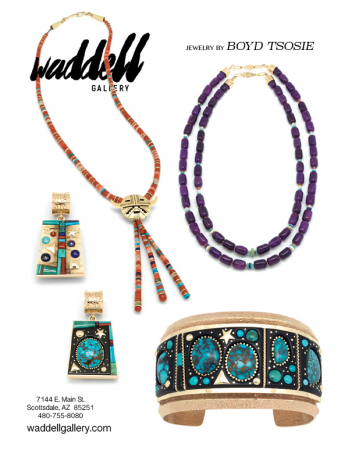
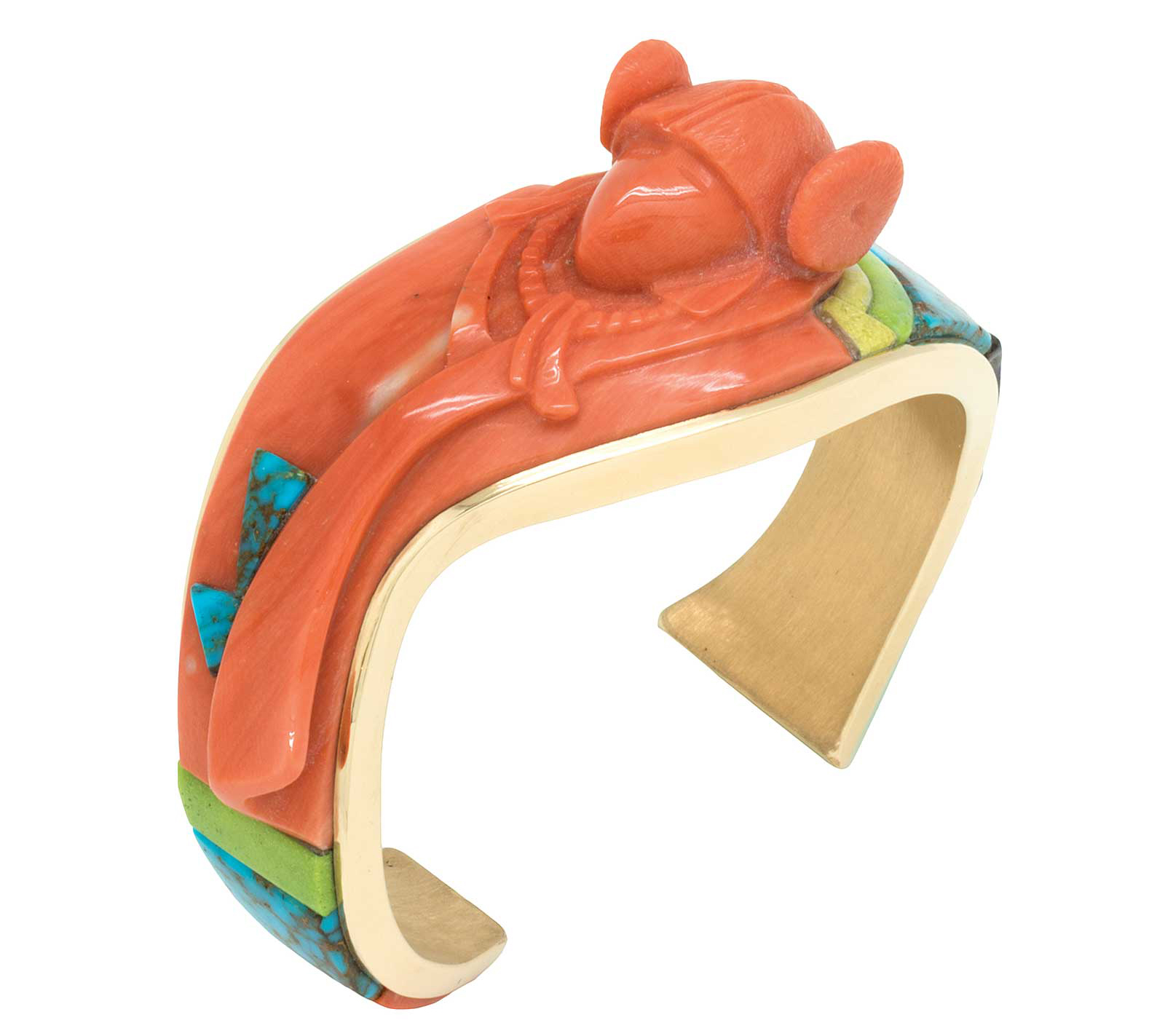
A couple years ago, Waddell Gallery was fortunate enough to acquire Charles Loloma’s collection of high-grade materials. In this collection was a large piece of Sea of Japan coral. Upon showing this amazing coral to Charles Supplee one afternoon, an idea immediately came to his mind.
A few weeks later, Supplee came to the gallery with a rough sketch on the coral of a Hopi Maiden. Although hard to envision exactly what was in his mind, the gallery knew that if Supplee was going to carve it, that it would be spectacular. He suggested making it into an 18k gold bracelet because of the shape and also added accents of sugilite, candelaria and demali turquoise.
7144 E. Main Street » Scottdale, AZ 85249
(480) 755-8080 » watradeco@aol.com » www.waddellgallery.com
Western Trading Post
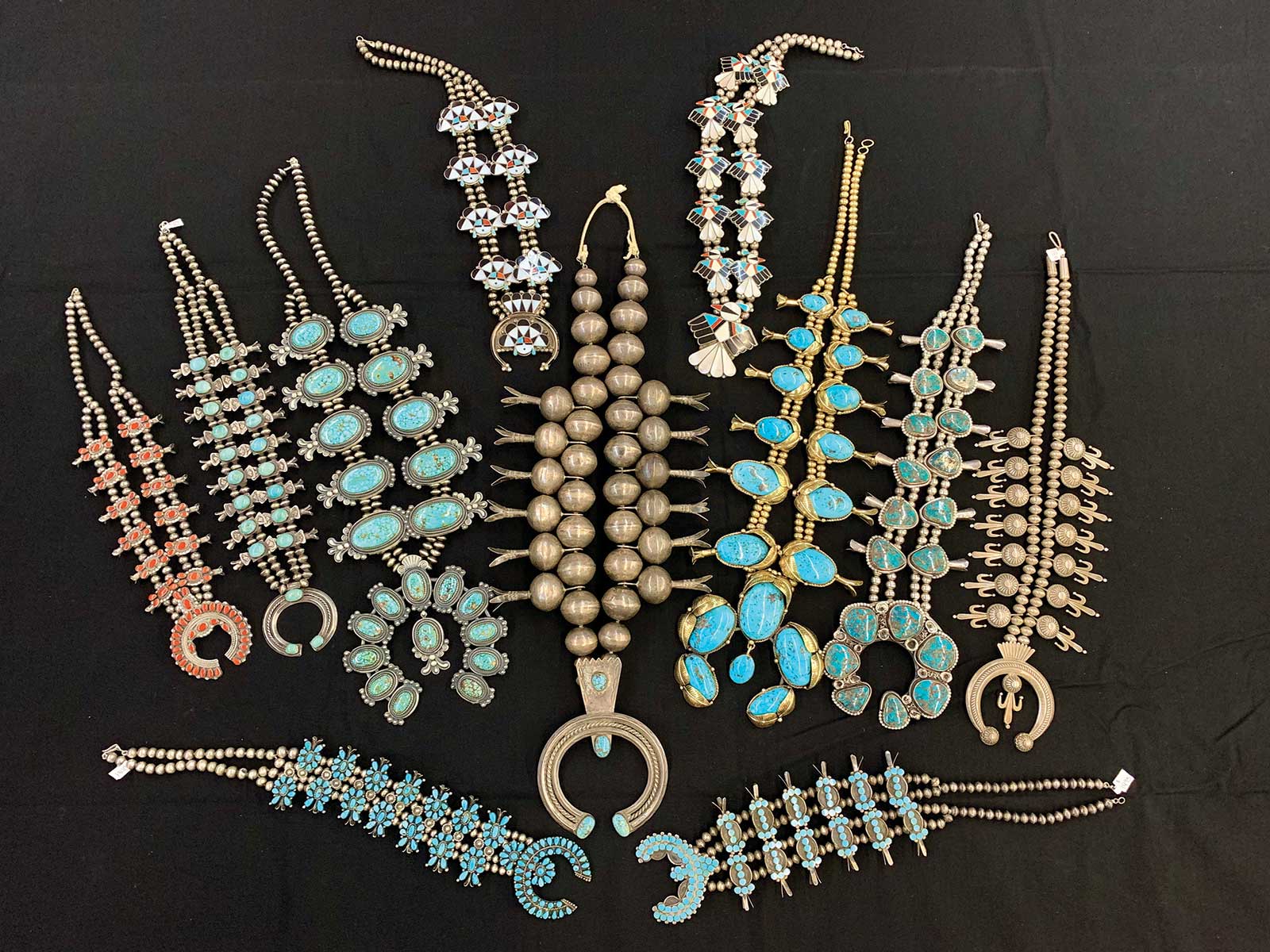
Squash blossom necklaces continue to be very popular. Although they never went out of style in the Southwest, for the last several years they have been seen appearing in other circles as well. Most historians agree the squash blossom style can originally be attributed to the Navajo, who are said to have used a number of other designs and then combined them into this distinct style which is so recognizable today.
The pictured collage of necklaces represents several different styles and eras, ranging from the 1930s to contemporary. These necklaces are scheduled to be in the Advanced Collector’s auction, which will be held at Western Trading Post on January 9, 2021.
403 N. Florence Street » Casa Grande, AZ 85122 » (520) 426-7702 » www.westerntradingpost.com
Powered by Froala Editor