Sometimes it pays to have good neighbors.
In the late 1960s, Boyd Tsosie, then a 13-year-old high school student in Many Farms, Arizona, lived four houses down from famous jeweler Kenneth Begay. “He was teaching in Chinle at the Navajo Community College at the time. I was a freshman who was also going to school in Chinle,” Tsosie remembers. “Every now and then I would see him outside, so I introduced myself and he told me to experiment on anything I could get my hands on. All I had at the time was a one of those butane handheld torches. But whatever Kenneth told me to do that’s what I would do.”
With periodic, and impromptu, instruction from Begay, Tsosie got to work with any materials he could scrape together. The largely self-taught artist proceeded until he was 19 years old and then “it became a desperation to make jewelry,” he says. “That’s when I really started. I didn’t like traditional jewelry and I was very self-conscious, so no one ever saw some of my first pieces. Mostly what I would do was replicate other works. Later, Arizona Highways started making their jewelry issues and that’s where I really discovered what jewelry could be. I would see pieces by Lee Yazzie or Preston [Monongye] or Charles Loloma. This is what I needed to see.”
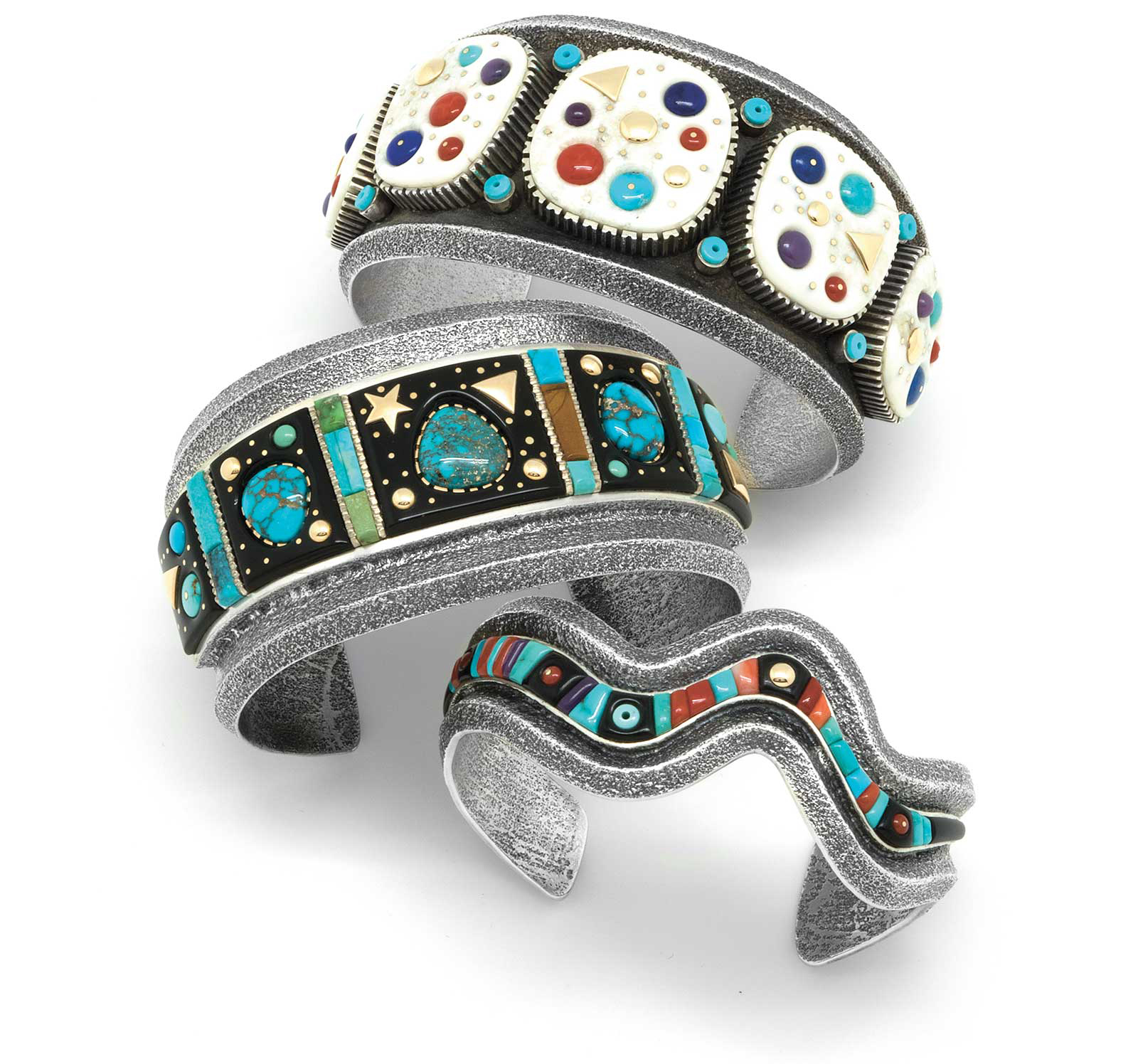
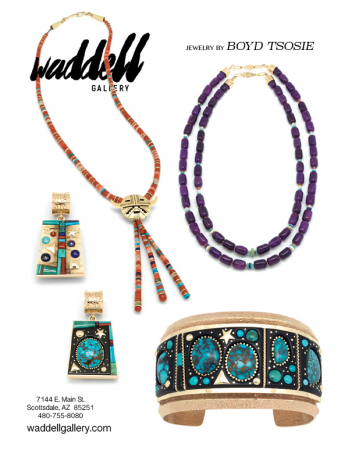
Sterling silver bracelets inlaid with fossil ivory, buffalo horn, coral, turquoise, sugilite, lapis and 14k gold accents.
As his skill progressed, his work was picked up by the late Dennis June, Tanner’s Indian Arts, the Heard Museum Shop and other reputable dealers of Native American jewelry. Beautiful inlay, magnificent leaf work, pieces inspired around gold designs…Tsosie’s work and technique quickly built a reputation for the artist. Now at 65 years old, Tsosie and his work are respected within the jewelry market, and beyond. “I’ve never thought of jewelry as a job, not once. Or even a career,” he adds. “It’s something that was always art to me.”
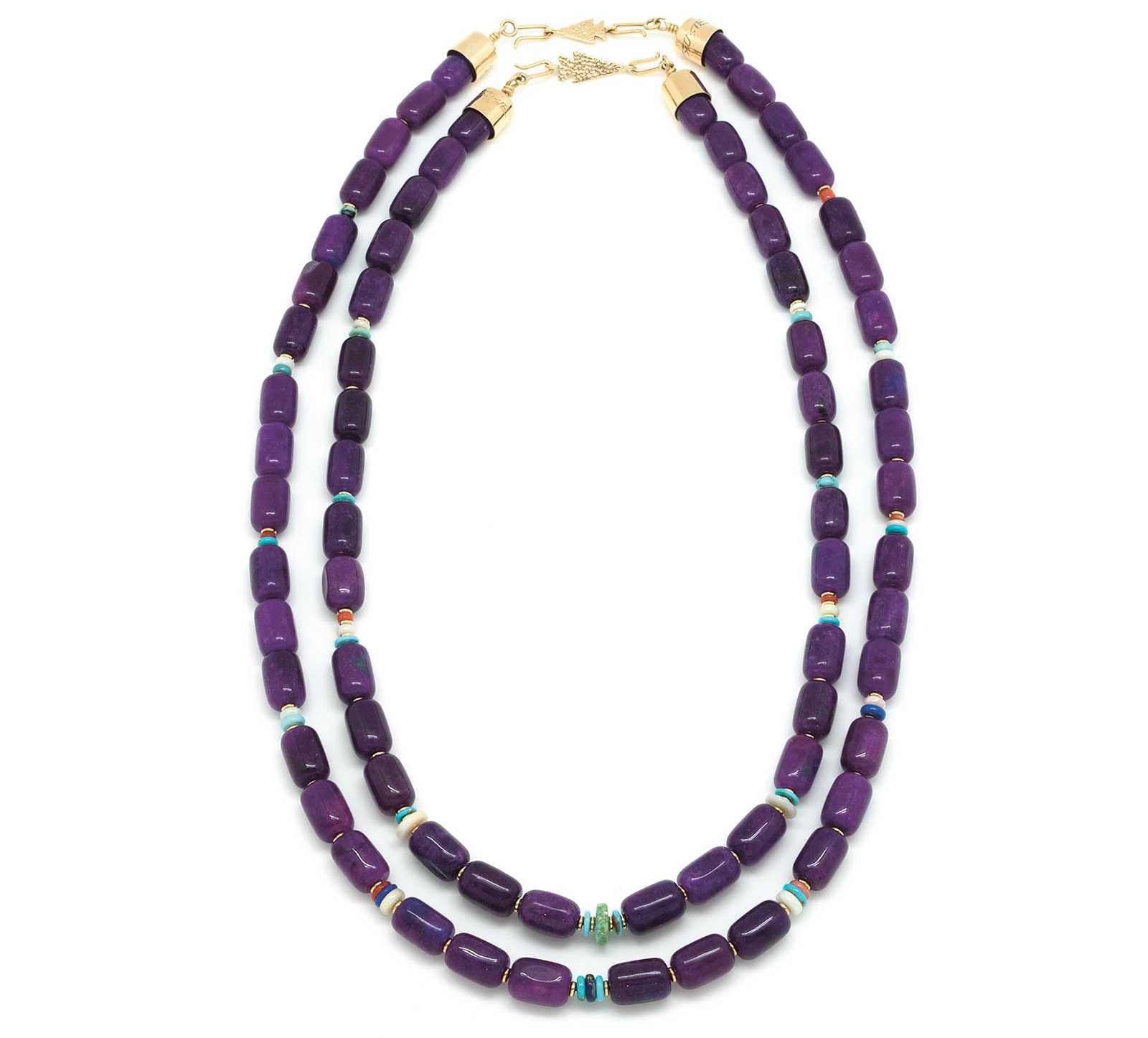 14k gold sugilite necklaces with lapis, coral, turquoise and opal accents.
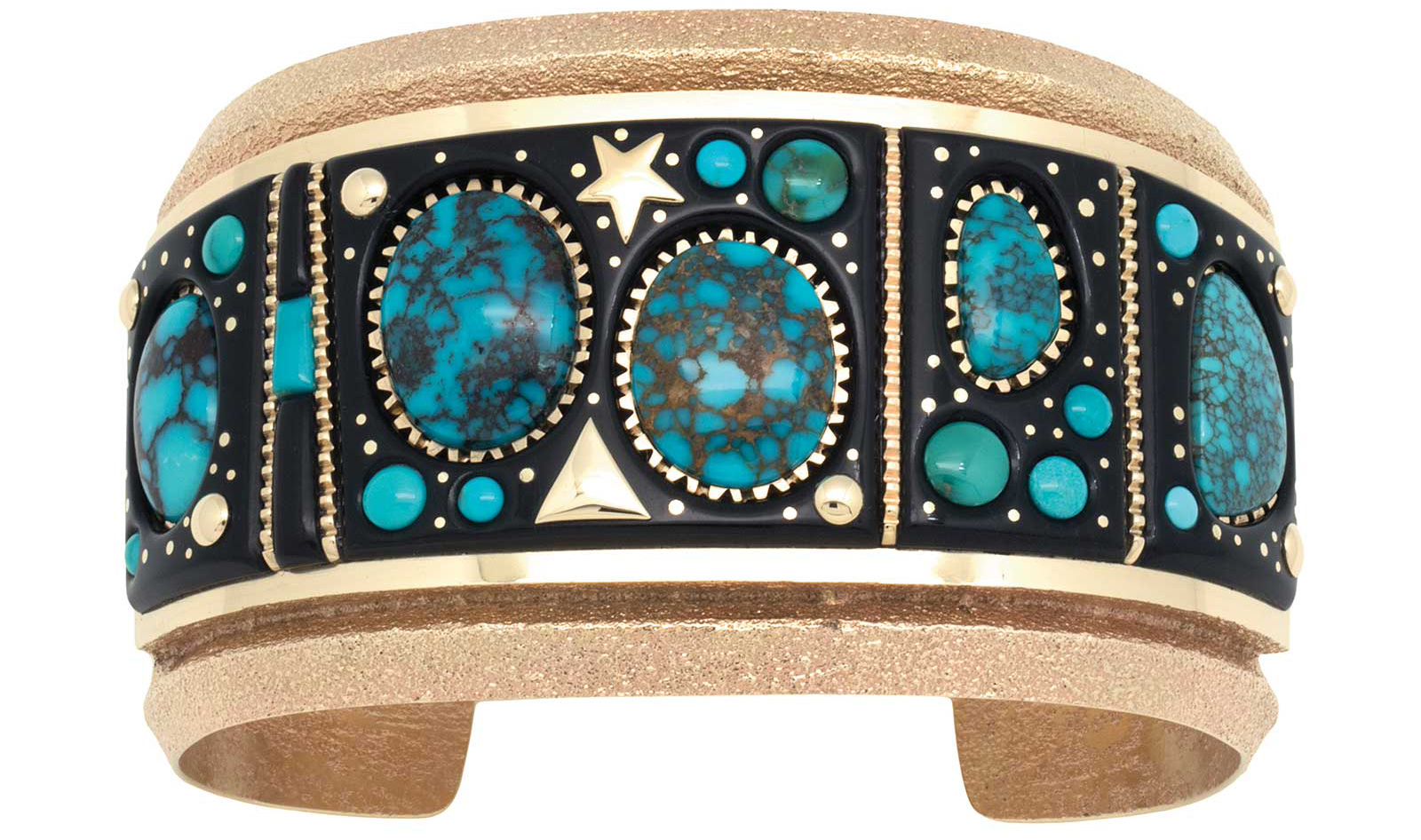 18k gold tufa cast bracelet inlaid with high grade Lone Mountain turquoise and buffalo horn.
Today he lives in Phoenix, and shows in many galleries, including Waddell Gallery in Scottsdale, Arizona. He creates primarily in gold, as well as silver, and still works with inlay and leaf work. He also does lots of bead rolling, which he learned from Larry Vasquez. When it comes to stones, he’ll work with any high-grade stones he can get his hands on. “Bisbee and Morenci are getting scarce. When you do find some it’s often the lower-grade or smaller pieces. Once in a great while you might find some larger pieces in the rough, but not very often anymore,” he says. “I do prefer the rough material because thenI can cut and polish my own work.”
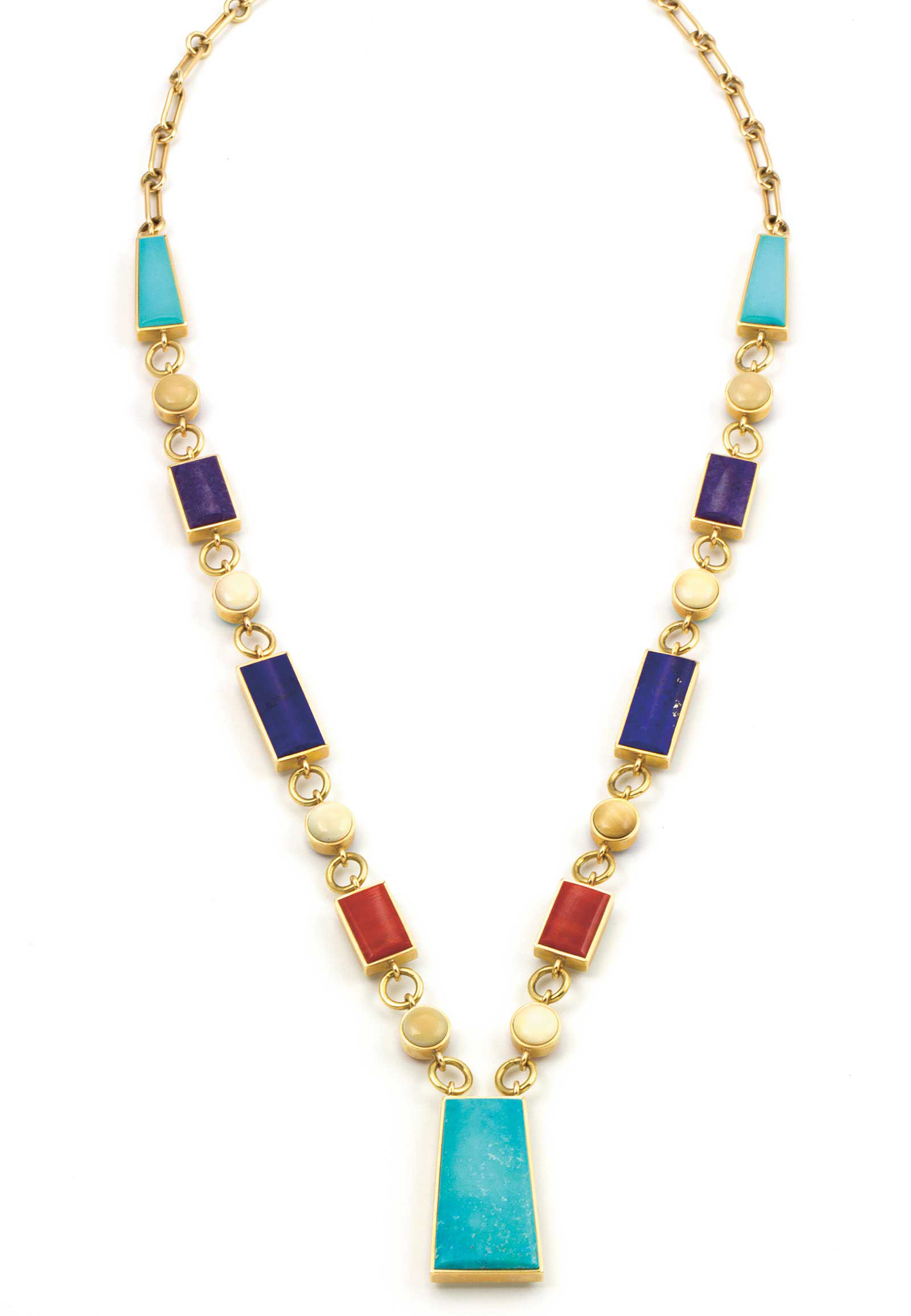 14k gold reversible necklace inlaid with coral, turquoise, sugilite and lapis.
When he’s not working on jewelry, the Navajo artist serves as a counselor and spiritual advisor—“For lack of a better expression, a medicine man,” he adds—as he helps Native Americans of all tribes. He works with displaced children and teens, offers prayers to people and places, and even administers to people who are dying. He used to work for the organization Indians for Wellness, but after that program ran out of funding and closed, he began doing the work on his own time. “So many people in so many different situations ask for help. Maybe they are trying to overcome alcoholism or drug abuse, or maybe they will be spending some time in jail and need to be blessed before they go,” he says. “I’ve been to every hospital in the [Phoenix] Valley over the last 20 years. I’ll give prayers for all kinds of people, including people on their deathbed.”
And although his prayers may be in Diné, it’s his Native American voice and attitude that comforts people, even people in different tribes, as well as Hispanic, Latino and Asian people.
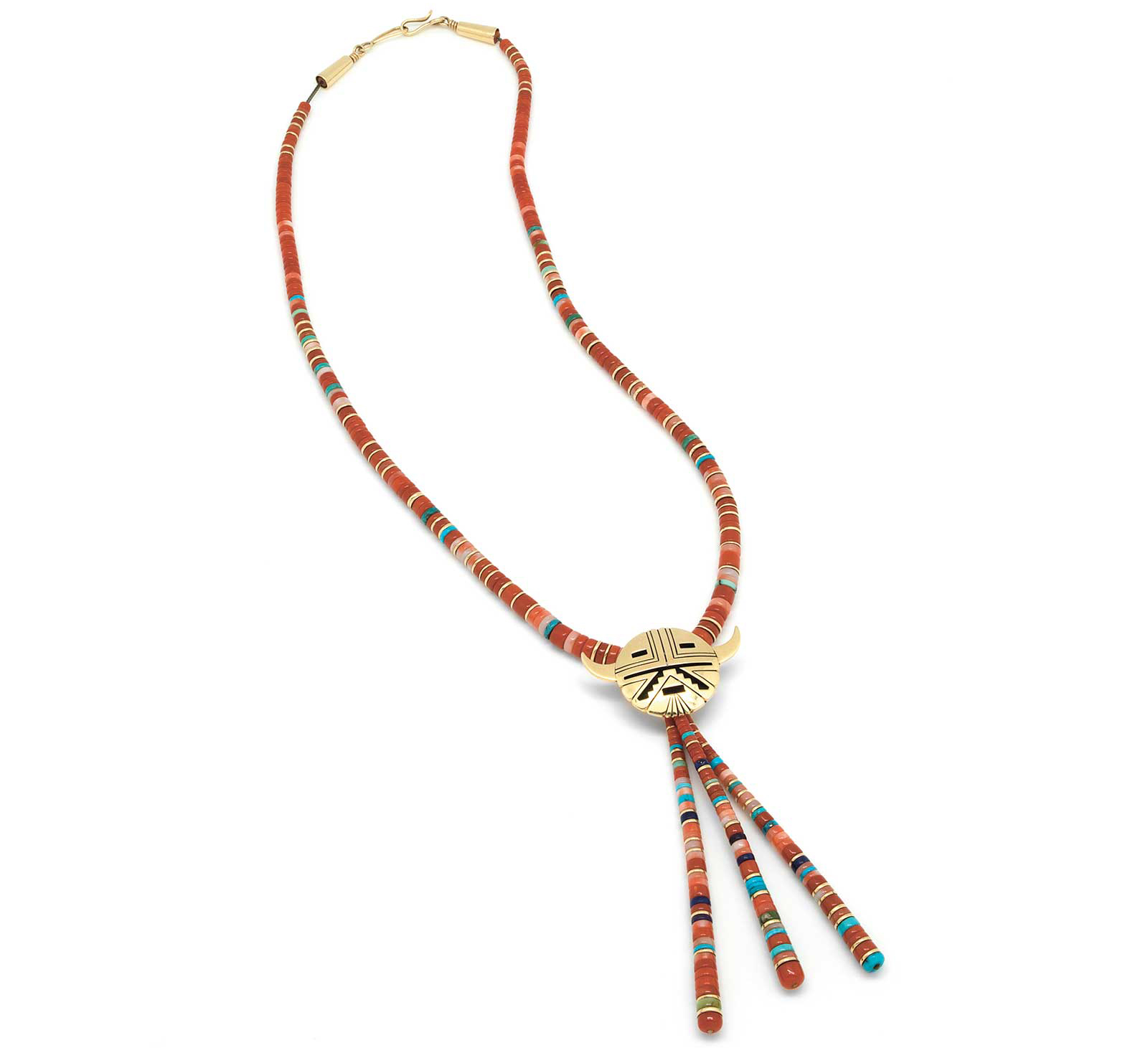 Hand-rolled coral, turquoise, opal, sugilite and lapis bead necklace with 14k gold accents.
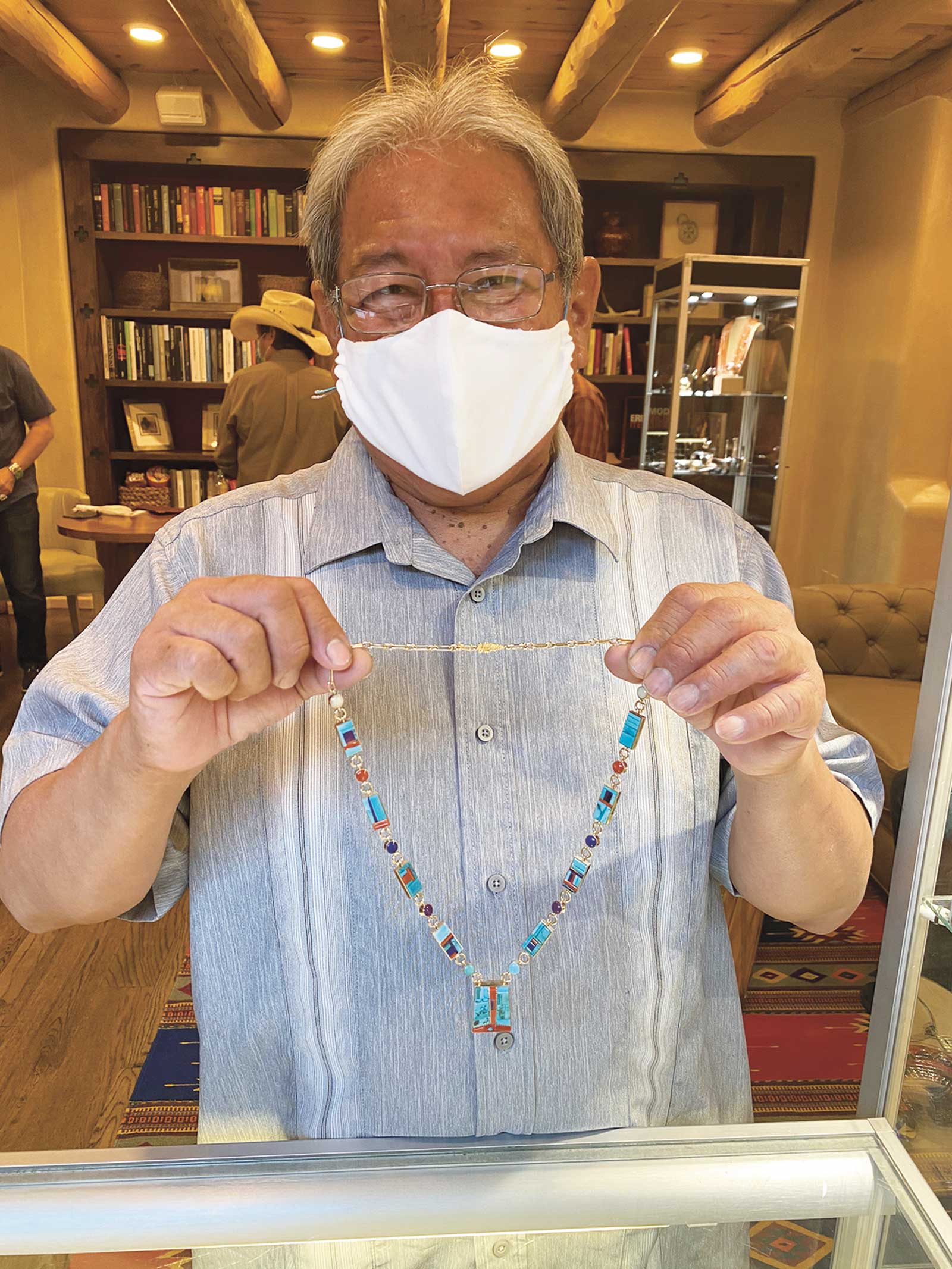 Boyd Tsosie (Navajo) holding up one of his necklaces in Santa Fe, New Mexico.
“There were once 600 nations here in the United States. In the time since 1492 to the Indian Wars, a little over 300 nations are left. Whole nations were annihilated, made extinct and killed off. Some of them don’t have a voice, or even a name, anymore. So I often think about what their songs sound like, what their prayers and practices were. I ask, ‘How did they express themselves to their children?’” Tsosie says. “Here is a simple story. My first granddaughter came into this world, and she was put in my arms and I’m looking at her seeing this little bundle. The first thought I had was, ‘I only halfway know what a dad is supposed to do, and now I’m a grandpa.’ As time went on, another bundle is put in my arms, my great grandson, and then I had a new title, great grandpa. I work at the titles that I hold, and never mind the other things. These titles are more important to me when it comes be being Indigenous. Our voices are forgotten, they are not heard, and over the course of history we are being changed. So whatever little bit of history in the world—our voice, our language and our culture, our way of being, our practice in life, as a dad, a grandpa, great grandpa—that’s what I dedicate my life.”
Tsosie calls this compassionate caring and it transcends much of the everyday world. But it also works its way down into his art. “My artwork is my therapy,” he says. “It also shows me all the color of the world.”
Powered by Froala Editor