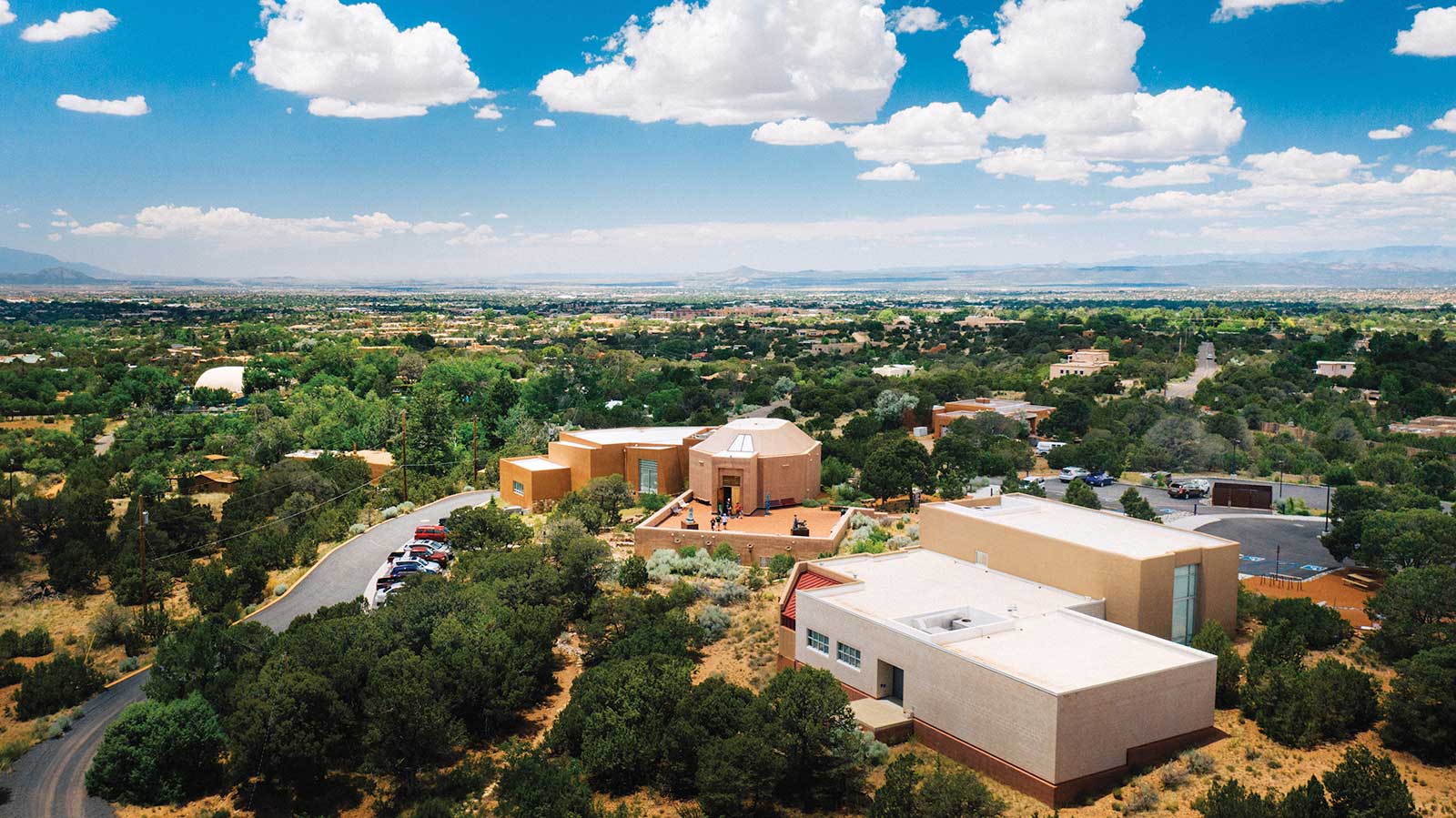
The Wheelwright Museum of the American Indian located in Santa Fe, New Mexico, and known for their contemporary and historic Native American Art, is steeped in history as the oldest non-profit, independent museum. The museum was founded in 1937, but its true origin began years before, starting in 1921 with the introduction of Boston native Mary Cabot Wheelwright, and Navajo singer or “medicine man,” Hastiin Klah. Wheelwright had a strong interest in the study of religions and joined forces with Klah to preserve the Navajo ritual knowledge, during a time when their history was being wiped out by assimilation practices from the Christian church. After also collaborating with Arthur Frances Newcomb, who operated a trading post and was artistically inclined, all three combined their talents to create the unique experience the Wheelwright Museum now embodies.
Featured Exhibition
Beginning November 10, 2019 and running until March 7, 2021, the Wheelwright has offered quite the noteworthy exhibition, Laughter and Resilience: Humor in Native American Art. The show is incredibly unique in that Native artists use laughter as a means to reach the masses on important cultural and social topics.
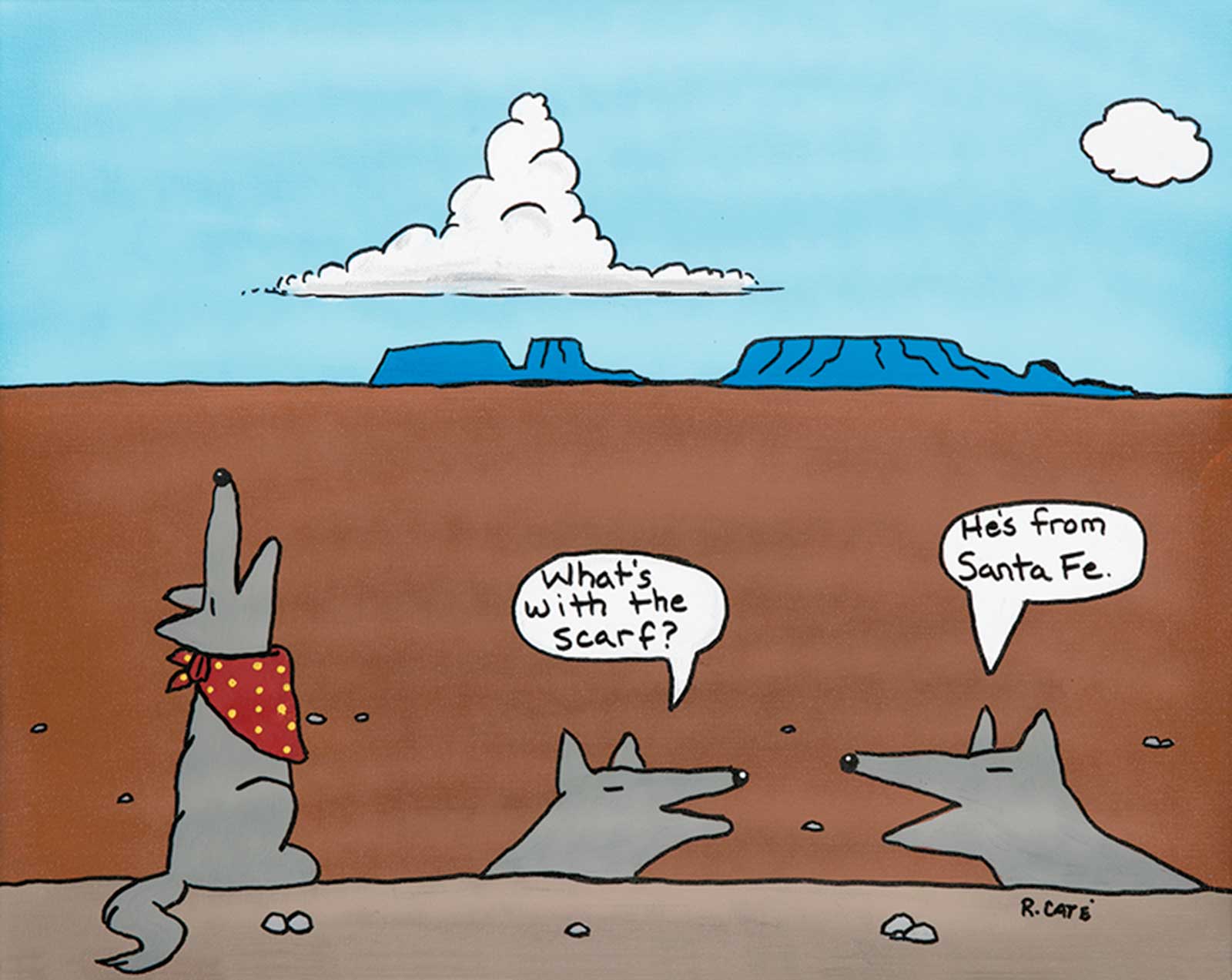 Richard Caté (Santa Domingo), Untitled (Santa Fe Coyote), acrylic on canvas, 18 x 22”
“Humor has always played an important and vital role among all Native American tribes,” says chief curator Andrea Hanley. Art historian Wendy Wick furthers this idea in stating, “Examining humorous art and its full complexity can reveal not only clever manipulations, but also layered meaning and aesthetic sophistication that warrant our attention. Humor in all of its various manifestations can attract attention, soften criticism, delineate social boundaries, and alleviate conflict between people with differing worldviews.”
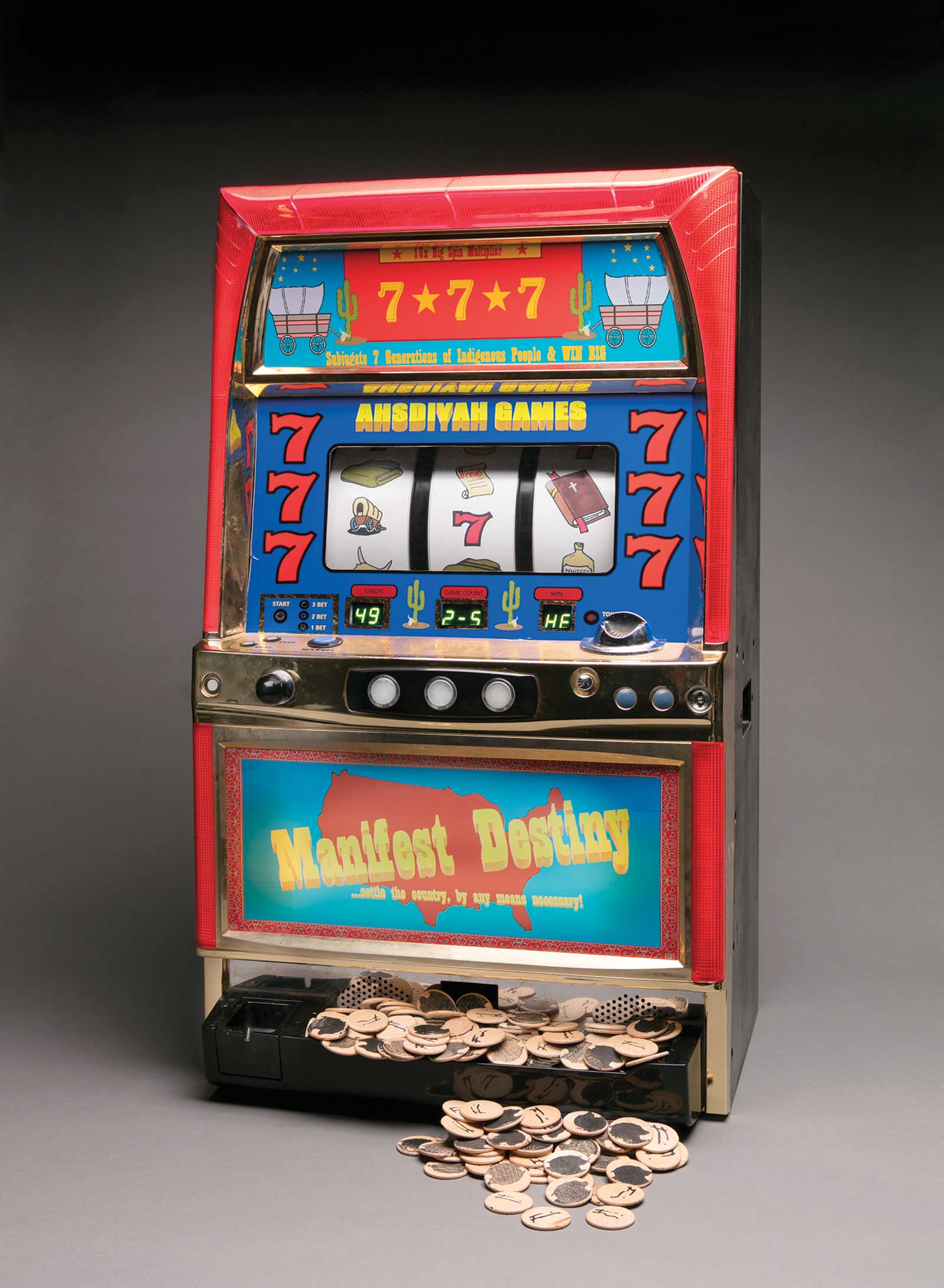 Tom Farris (Otoe-Missouria/Cherokee), Tools of the Trade, 2019, slot machine, paint, coins, 31¾ x 18½ x 14¾”
The many genres in the collection include satire, parody and whimsy. Cartoons are highlighted in the show as well. “Artists have incorporated main stream cartoons like Sponge Bob Square Pants, Tweety Bird, or like the Mickey Mouse 1960s Zuni Pueblo ring in the collection, that reach a broader audience,” says Hanley. “Native Artists do this to connect their experiences with the rest of the world.”
Cartoon work extends to artists such as Vincent Craig (Navajo) in Illegal Aliens, along with Ricardo Caté’s (Santa Domingo) work, Untitled (Santa Fe Coyote). Steven J. Yazzie (Navajo/Laguna) in New Arrivals uses the coyote, considered the ‘trickster’ in Native stories, to comment on population growth.
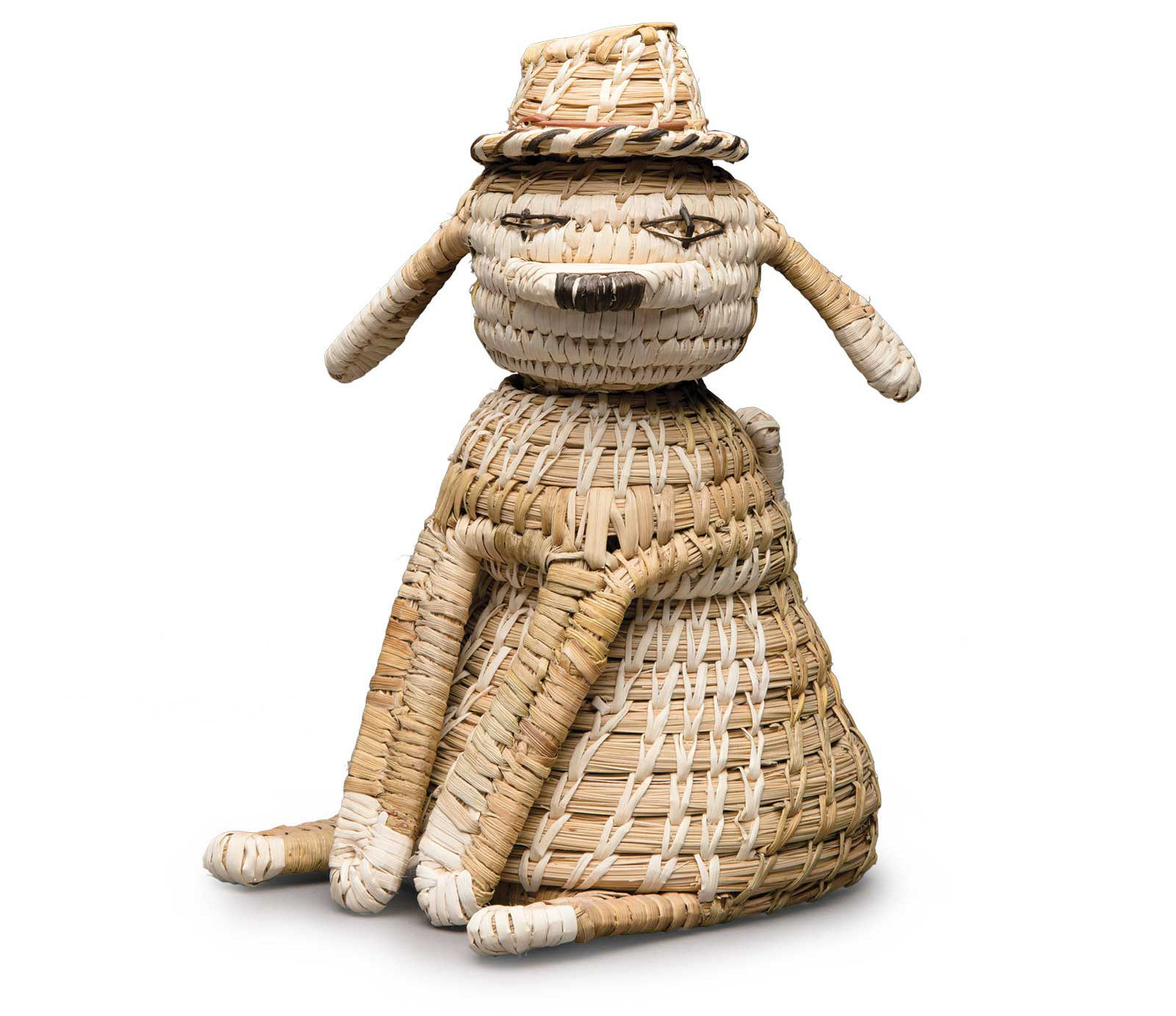 Fredrick Cruz (Tohono O’odham), Untitled (Dog with Hat), ca. 2009, white and green yucca, devil’s claw and beargrass, 10¼ x 8.46”
While there’s lots of social commentary involved with the collection, some work involves a gentle sense of humor, reminding the viewer “the artist embraced the opportunity to smile and laugh. The hope is to bring joy to others,” Hanley says. “At its very essence, the humorous exhibition impacts communities in some ways that traditional work can’t, by poking fun at both Natives and non-Natives.”
Event Calendar
Through spring 2021, Laughter & Resilience: Humor in Native American Art. Native American artists employ humor to combat stereotypes, comment on tribal politics and critique the National scene.
Through spring 2021, Conversations: Artworks in Dialogue – The Daniel E. Prall Collection. The collection includes 320 major Native American artworks, given to the museum by longtime supporter and volunteer, Daniel E. Prall.
Through spring 2021, From Converse to Native Canvas, Native artists turn commercial footwear into a personal treasure and works of art.
Powered by Froala Editor