In the Southwest, pictographs are typically painted on ancestral rocks, often as pigment on basalt, recording important moments of Indigenous presence, migration and history in the area. A new mural installation by the Arrowsoul Art Collective, Indigenous Freeways: Southwest Wildstyle from North to South, is made up of four paintings that blend concepts of the past, present and future of Indigenous pictographic arts.
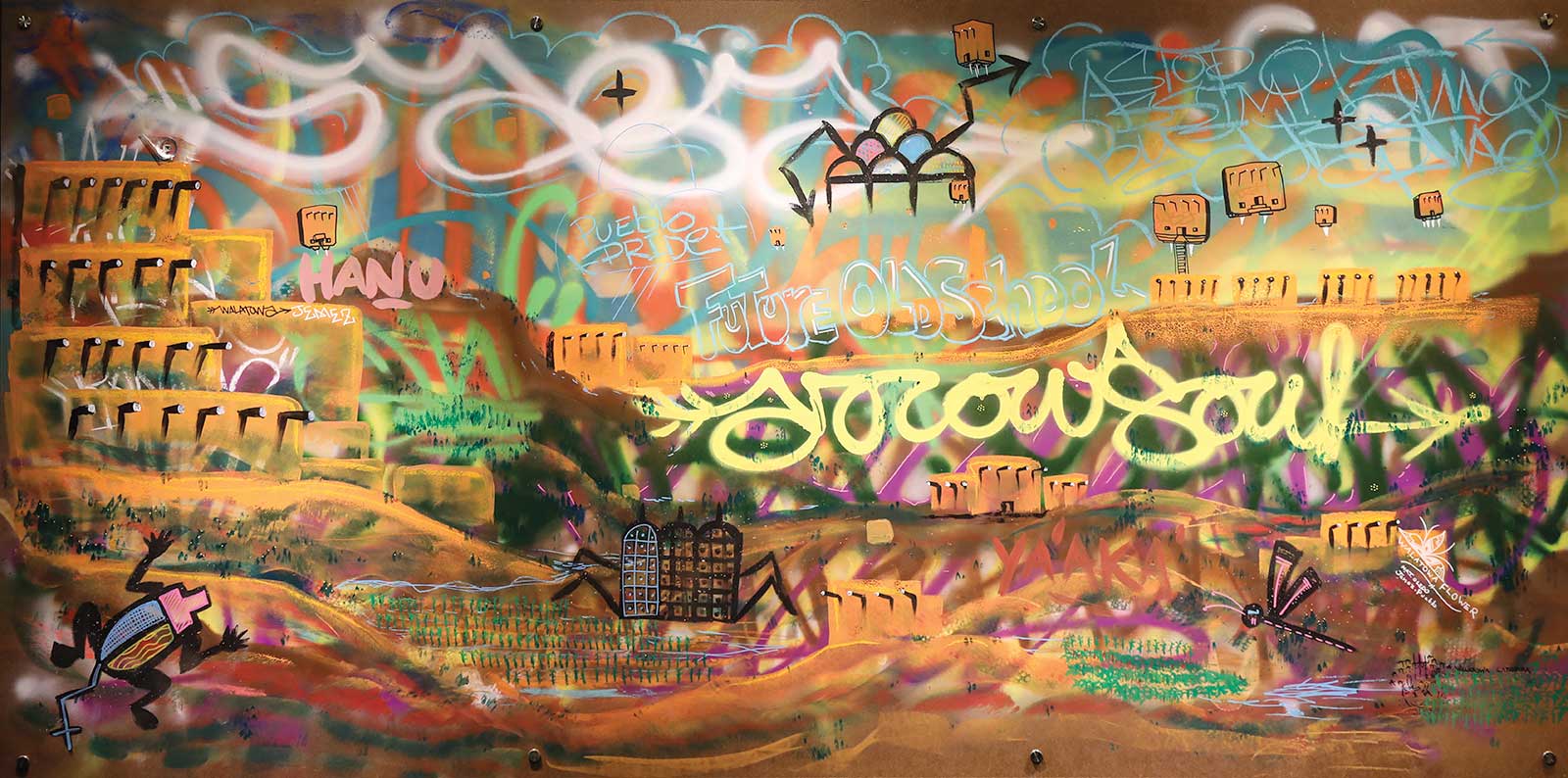
Arrowsoul Art Collective, Indigenous Freeways: Southwest Wildstyle from North to South, Arrowsoul spray paint, acrylic, mixed media mural. Photo courtesy Indian Pueblo Cultural Center.
“Ancestral pictographs remain vital sources of present-day and future relationships for Indigenous peoples with past generations. They offer sites of ongoing inspiration for Native artists of the Southwest region to make new connections with earlier forms of artistic expression in the land,” says Michelle J. Lanteri, head curator at the Indian Pueblo Cultural Center, which is hosting the exhibition. “Ancestral pictographic imagery continues to evoke new rhythms in its presence today. It remains a source of knowledge for Indigenous artists, like the Arrowsoul Art Collective, to imagine futuristic home structures that rely on generational technologies of adobe, pine, and stone architectural elements.”
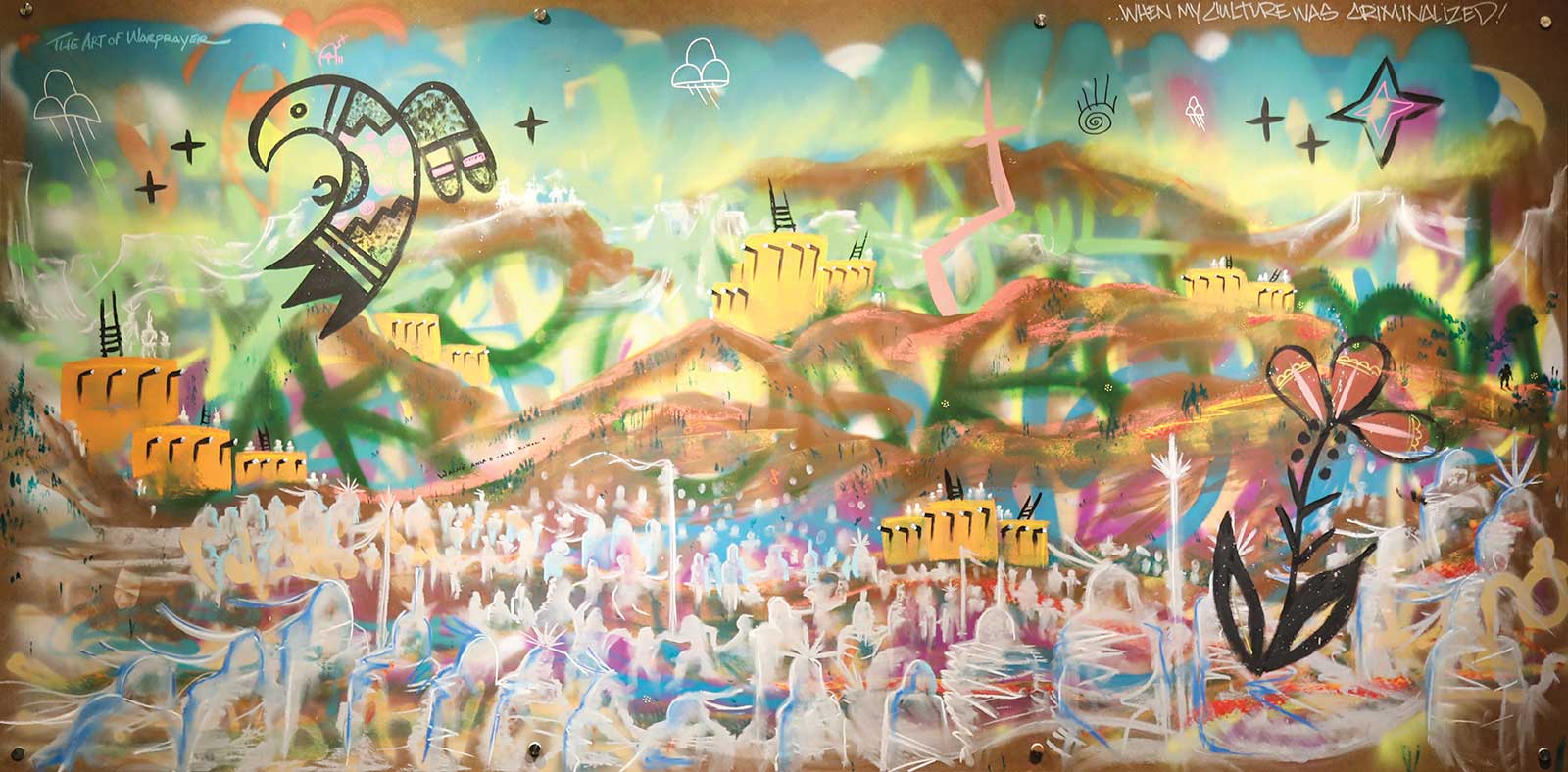
Arrowsoul Art Collective, Indigenous Freeways: Southwest Wildstyle from North to South, Arrowsoul spray paint, acrylic, mixed media mural. Photo courtesy Indian Pueblo Cultural Center
The Arrowsoul Art Collective (“arrowsoul,” as in “aerosol”) is a group of Indigenous artists in the Southwest region who use mural, letter-structure and graffiti-influenced art to facilitate meaningful conversations and healing within the community.
“Their artwork remains rooted in a foundation of mutual understanding and cultural exchange,” says Lanteri. “Based in Albuquerque, New Mexico, the Arrowsoul Art Collective breaks down borders and beautifies public spaces through its Indigenous art shop, associated gatherings and creative convenings…[They] create storied mural paintings on exterior building walls inspired by the evolving meanings of ‘Future Old School’ and ‘Indigenous Freeways.’”
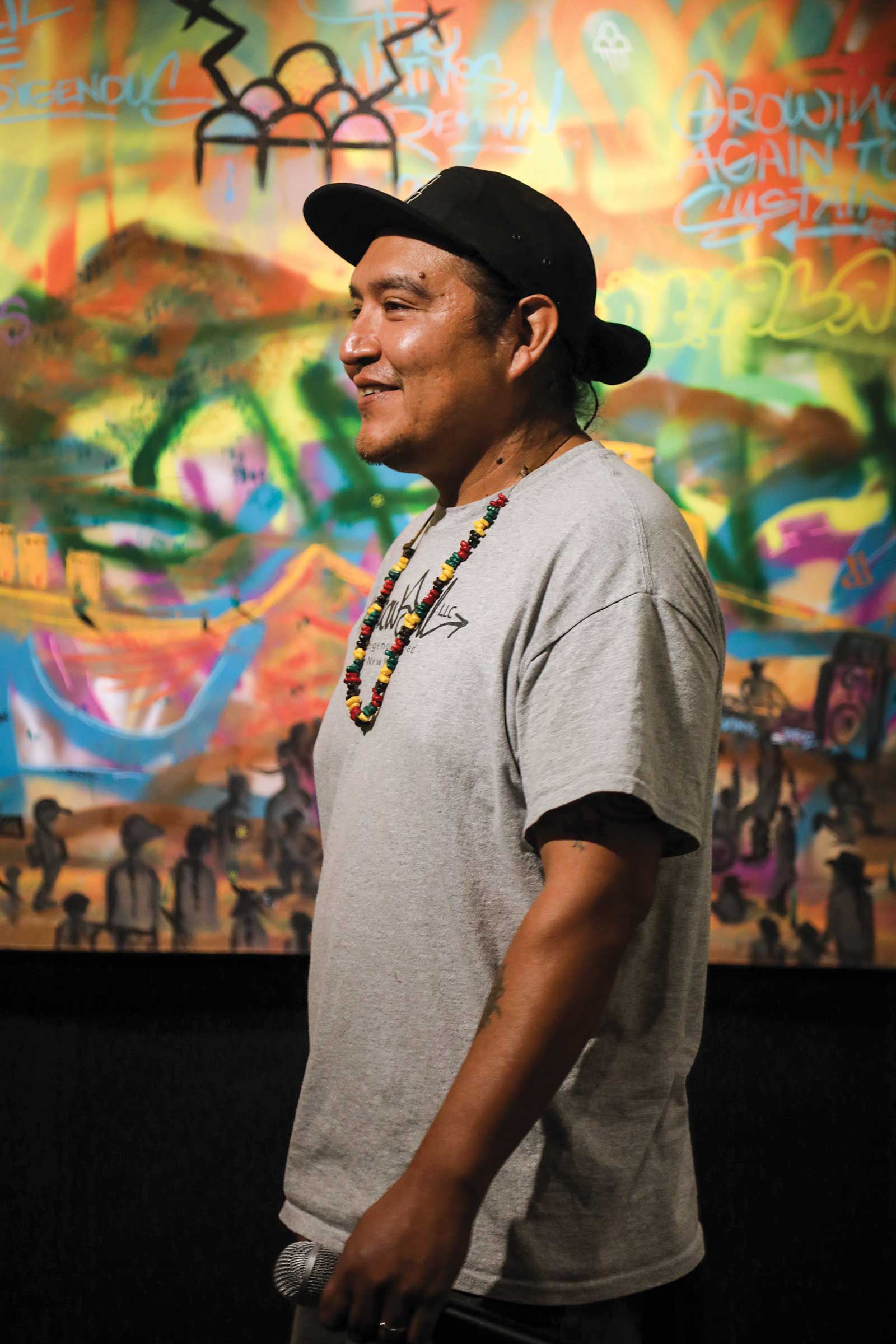
Arrowsoul Art Collective member SABA (Diné/Jemez Pueblo) at the opening reception on September 6, 2025. Photo courtesy Indian Pueblo Cultural Center
The idea of “Indigenous Freeways,” which is the central theme of the exhibition at the Indian Pueblo Cultural Center, reflects the need for cultural reciprocity and openness to ongoing change. “The artists create new visions of the Southwest landscape through blending letter structures, illustrative architecture and textured palettes of places of home,” Lanteri says. “Arrowsoul Art Collective’s projects reunite communities along the Rio Grande through creative participation.”
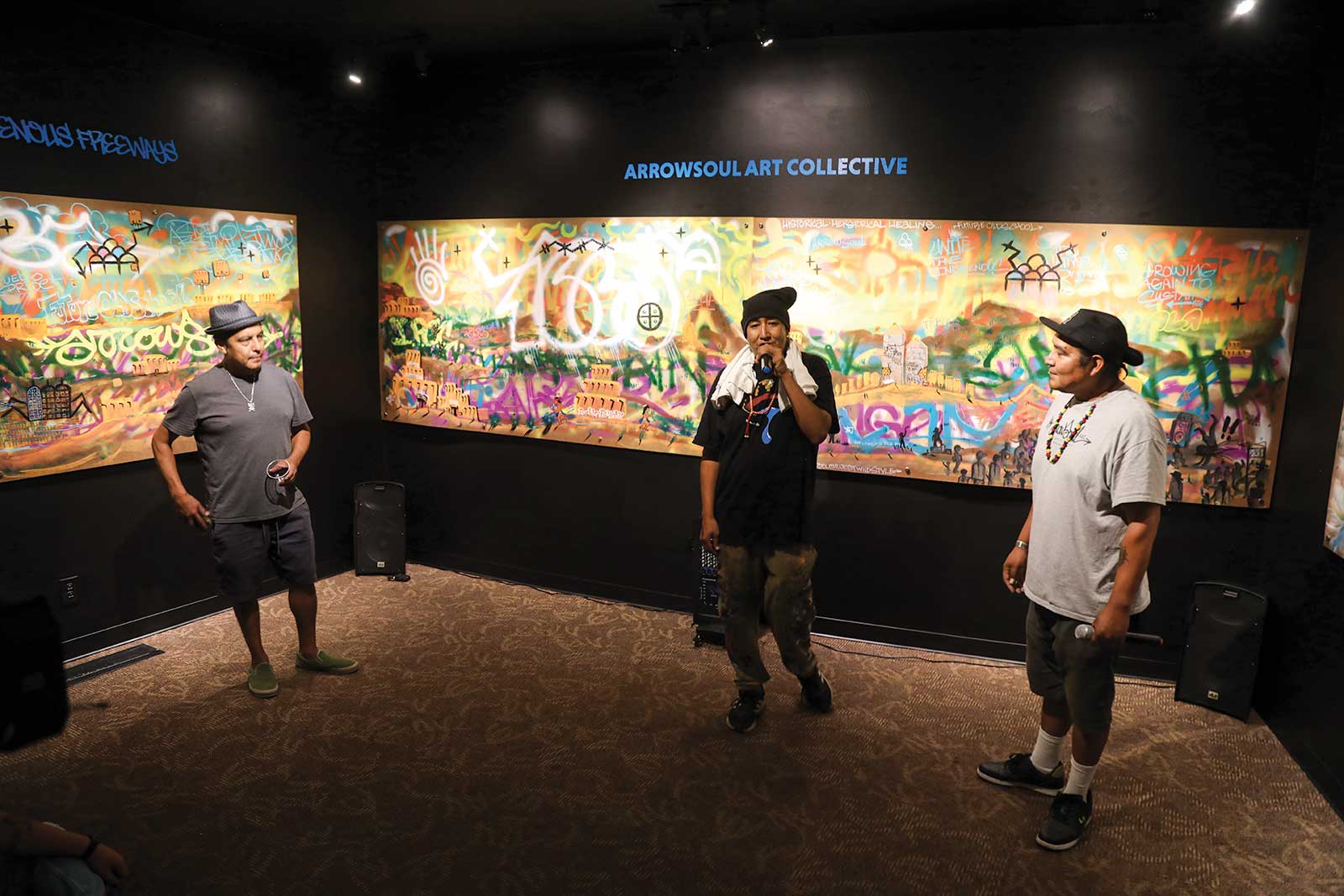
Arrowsoul Art Collective members Joseph Stacey (Hopi/Laguna Pueblo), Jeremy “Native Sun” Johnson (Diné) and SABA (Diné/Jemez Pueblo) at the show’s opening reception. Photo courtesy Indian Pueblo Cultural Center.
Painter and printmaker SABA, of the Diné and Walatowa tribes, is the lead artist for the exhibition. “My artworks reflect a fusion of Southwest ‘Wildstyle’—an improvisational style that’s always changing—from the underground red road along New Mexico’s Indigenous freeways,” he says. Other members of the Arrowsoul Art Collective include Joseph Stacey (Hopi/Laguna Pueblo) and Jeremy “Native Sun” Johnson (Diné).
Indigenous Freeways: Southwest Wildstyle from North to South will be on view at the Indian Pueblo Cultural Center through June 28, 2026. —
Through June 28, 2026
Indigenous Freeways: Southwest Wildstyle from North to South
Indian Pueblo Cultural Center 2401 12th Street NW, Albuquerque, NM 87104
(505) 843-7270, www.indianpueblo.org
Powered by Froala Editor


