Now on view at the IAIA Museum of Contemporary Native Arts in Santa Fe, New Mexico, is the exhibition The Stories We Carry, featuring contemporary jewelry created by Indigenous artists across many decades. The exhibit specifically explores 60 years of Indigenous jewelry and its enduring relationship with the Institute of American Indian Arts (IAIA).

Denise Wallace (Chugach Aleut), Craftsperson Belt, 1992, ivory, gemstones, silver. AT-58; IAIA Museum Purchase, 1993; Courtesy of the IAIA Museum of Contemporary Native Arts, Santa Fe, NM. © Denise Wallace. Photograph by Jason S. Ordaz.
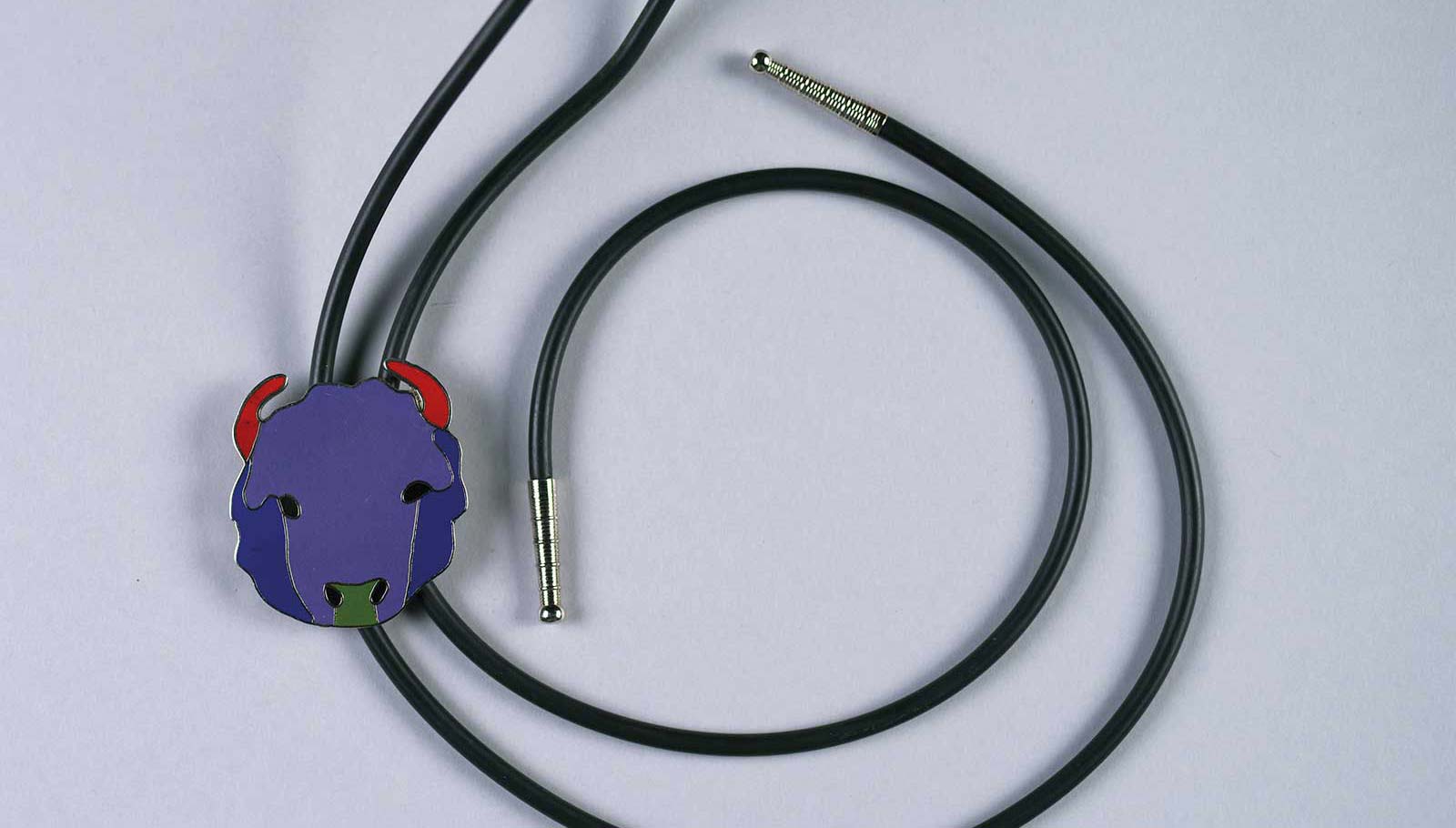
Fritz Scholder (1937-2005, Mission/Luiseño), Untitled Bolo Tie, 1982, stainless steel, enamel paint, rubber cord. MS-75; Gift of Ralph Heimberg, 2010; Courtesy of the IAIA Museum of Contemporary Native Arts, Santa Fe, NM. © Estate of Fritz Scholder. Photograph by Eric Wimmer
Curated by Brian Fleetwood (Mvskoke), The Stories We Carry examines jewelry as a storytelling medium. “The unique format of jewelry has played a large role in storytelling, as it is a deeply human practice that gives people the tools to carry their histories and identities—a powerful reminder to ourselves and to others who we are,” Fleetwood says.

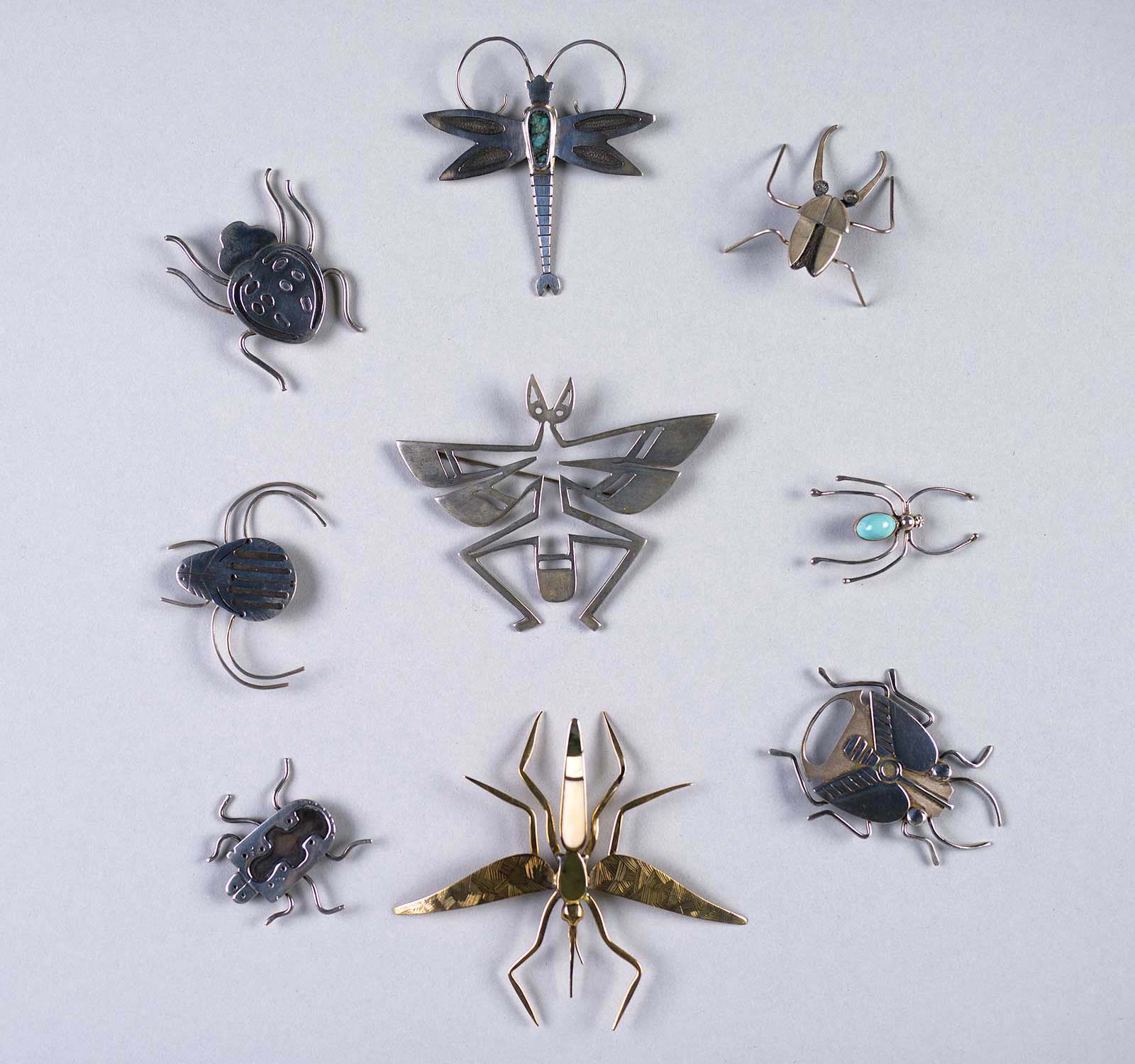
Bug Pins, various mediums and dimensions. [Clockwise from Top Center: Raymond Martinez (Ohkay Owingeh), SJ-19; Sam Leader Charge (Brulé Sioux), S-41; James Tenorio (Santo Domingo), SD-41; Dennis Apple (Sioux), S-89; Veronica Orr (Colville/Lytton), J-7; Christine McHorse (née Nofchissey, Diné), N-270; Peter Mesteth (Sioux), S-54; Carolyn Suina (Chochiti), CO-12; Jack Turquoise (Diné), N-273.] Courtesy of the IAIA Museum of Contemporary Native Arts, Santa Fe, NM. Copyright held by the artists. Photograph by Eric Wimmer
Inside the exhibition there are around 200 objects, including 100 that have not been attributed to an artist. Much of the work comes from the museum’s permanent collection. The exhibition has been a hit for the museum, which is common for jewelry exhibitions. One reading of this is simple: the public enjoys jewelry.
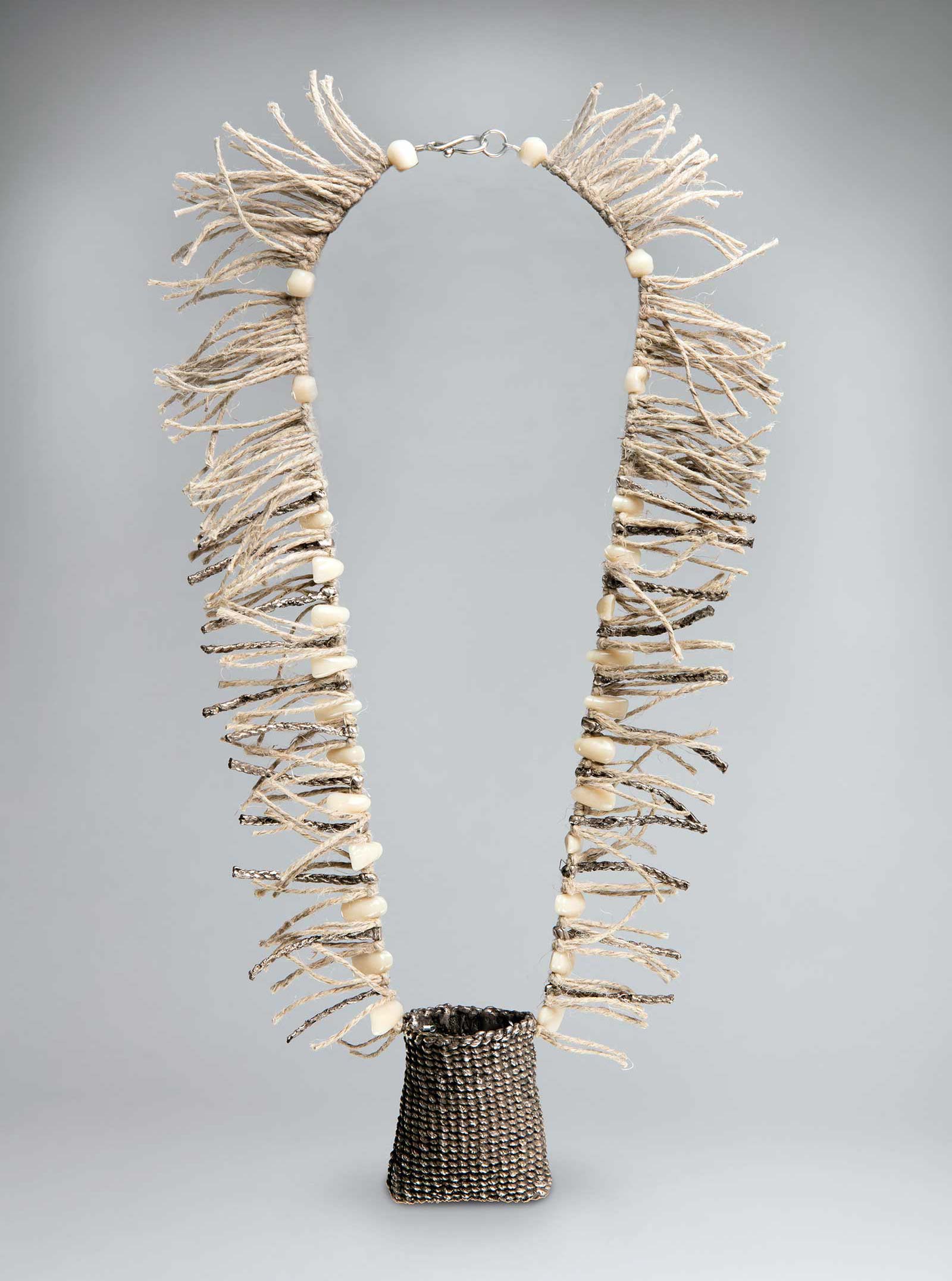
Carly Feddersen (Colville), Tooth & Twine Necklace, 2016, silver, prosthetic teeth, hemp. CLV-55; IAIA Museum Purchase, 2016; Courtesy of the IAIA Museum of Contemporary Native Arts, Santa Fe, NM. © Carly Feddersen. Photograph by Addison Doty.
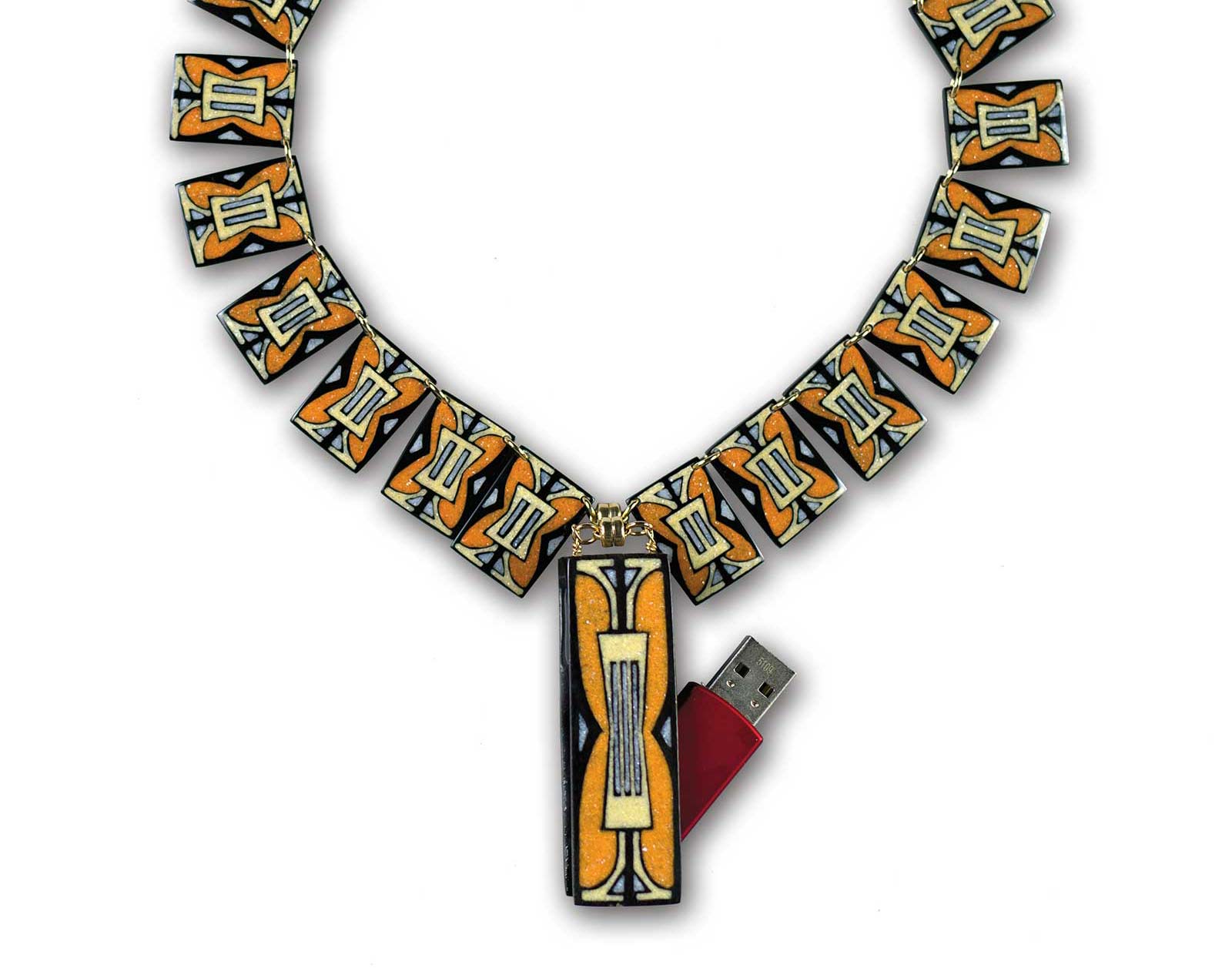
Kevin Pourier (Oglala Lakota), 4 Generations and 4 Gigs of Memory, 2014, buffalo horn inlay with orange sandstone, yellow sandstone, mother-of-pearl; 4 GB flash drive. S-339; IAIA Artist-in-Residence Purchase, 2021; Courtesy of the IAIA Museum of Contemporary Native Arts, Santa Fe, NM. © Kevin Pourier. Photograph by Eric Wimmer.
“I think there are many reasons that people are drawn to Native jewelry. I probably couldn’t list all of them, but there are definitely a few I think are important to note. The first is craft. People love a beautifully made object, and Native American jewelers and metalsmiths include some of the finest artists and craftspeople on the continent. Second, jewelers doing work that incorporates culturally based imagery, aesthetics, processes, materials, etc. are making jewelry objects that aren’t something you can find within the Western metalsmithing canon,” Fleetwood says. “Native jewelry makes a unique statement and when you wear it, you stand out. Last, people love a story. Storytelling is central to a lot of Indigenous practice, and that goes for the making and adornment practices of many Native cultures, a perspective that informs the work of many contemporary jewelers who are members of tribal nations. Wearing the work of those makers allows you to carry a little bit of the story they’re telling with you.”
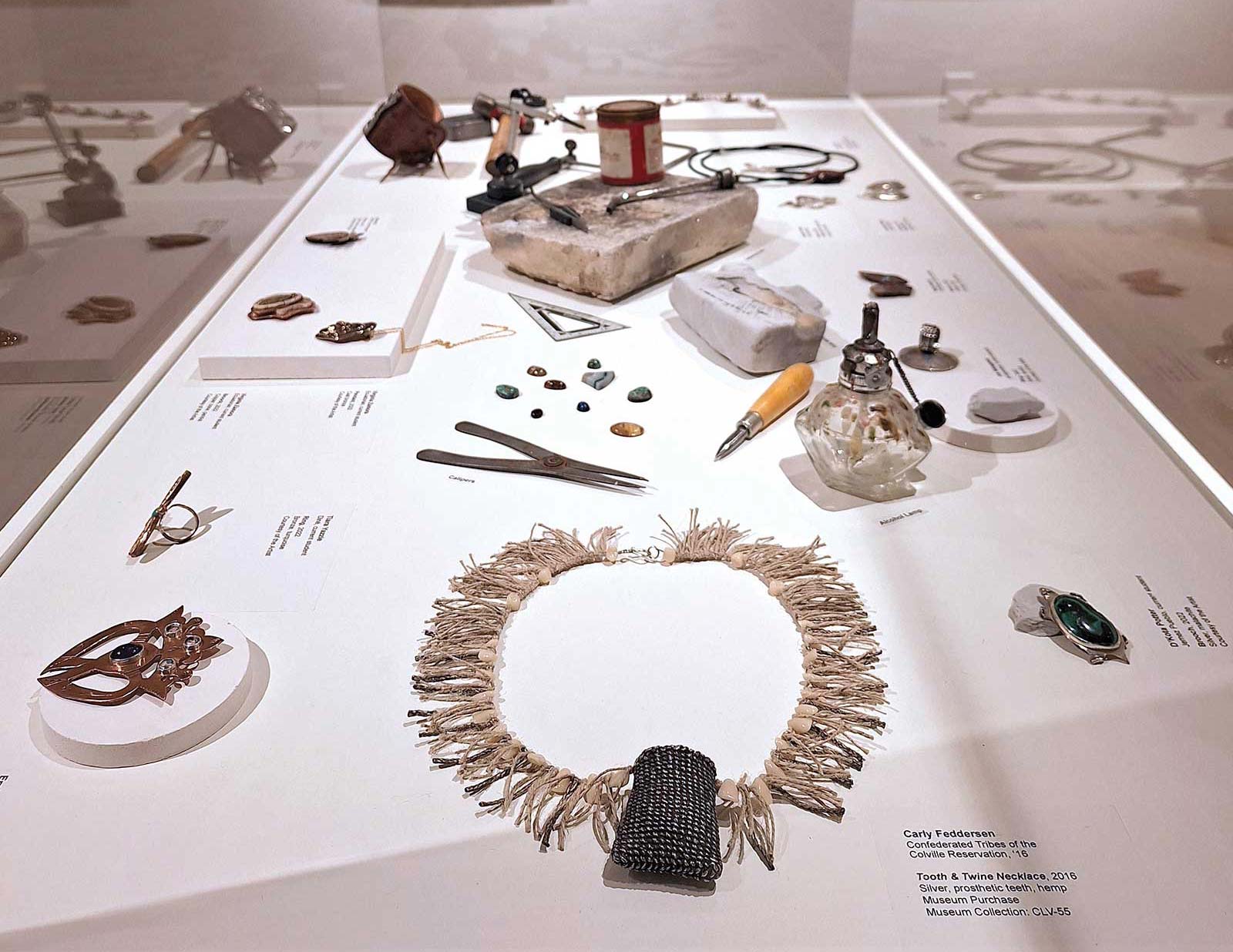
Installation view at the IAIA Museum of Contemporary Native Arts.
The stories that artists bring to their work can be overly broad, about their cultures and traditions, but they can also be hyper specific, including events personal to the artist, their families or their studios. Some of the work speaks about jewelry making itself.
“I’m not sure there is a single thing uniting the folks emerging in the field, except maybe a drive and curiosity that is pretty exciting to see, but I do see a number of trends, and there are a couple that interest me personally,” Fleetwood adds. “First, there’s been an increased adoption of cutting-edge technology—both tools and materials. This tech is being combined with more traditional processes and media in very fascinating ways. Next, there’s more jewelry artists doing conceptual work, what some academics might call ‘art’ jewelry—though I think this kind of a problematic term because all jewelry is art worthy of equal consideration and discourse, but I digress. Some notable examples...with work in this vein are Jodi Webster, Carly Feddersen, Wayne Gaussoin, Nicholas Begay and Heidi BigKnife, who has been doing this kind of work for nearly 30 years but is still worth mentioning.”
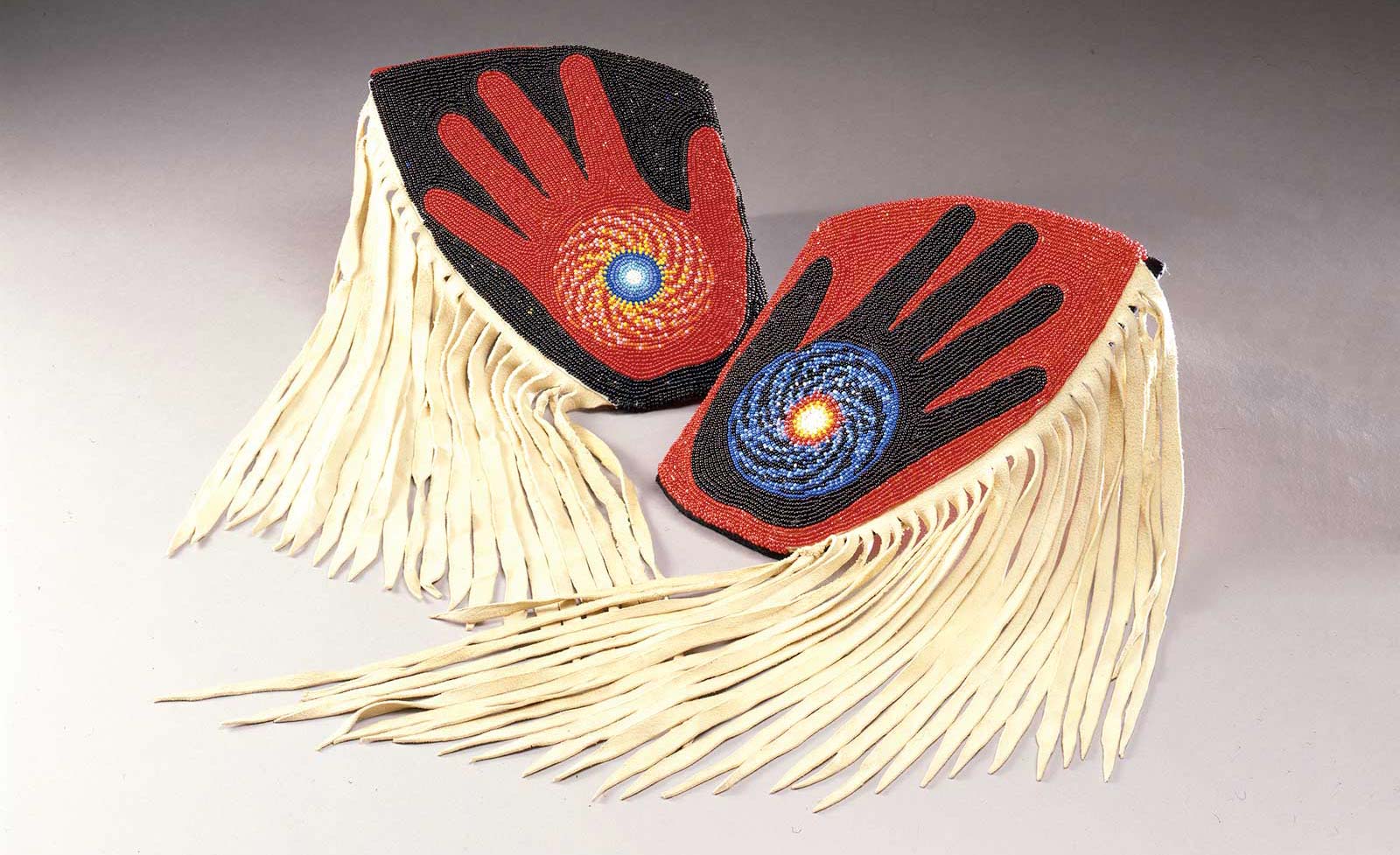
Marcus Amerman (Choctaw), Untitled Fringed and Beaded Cuffs, 1980, beads, wool, buckskin. CHO-33; IAIA Museum Purchase, 1992; Courtesy of the IAIA Museum of Contemporary Native Arts, Santa Fe, NM. © Marcus Amerman. Photograph by Walter Bigbee.
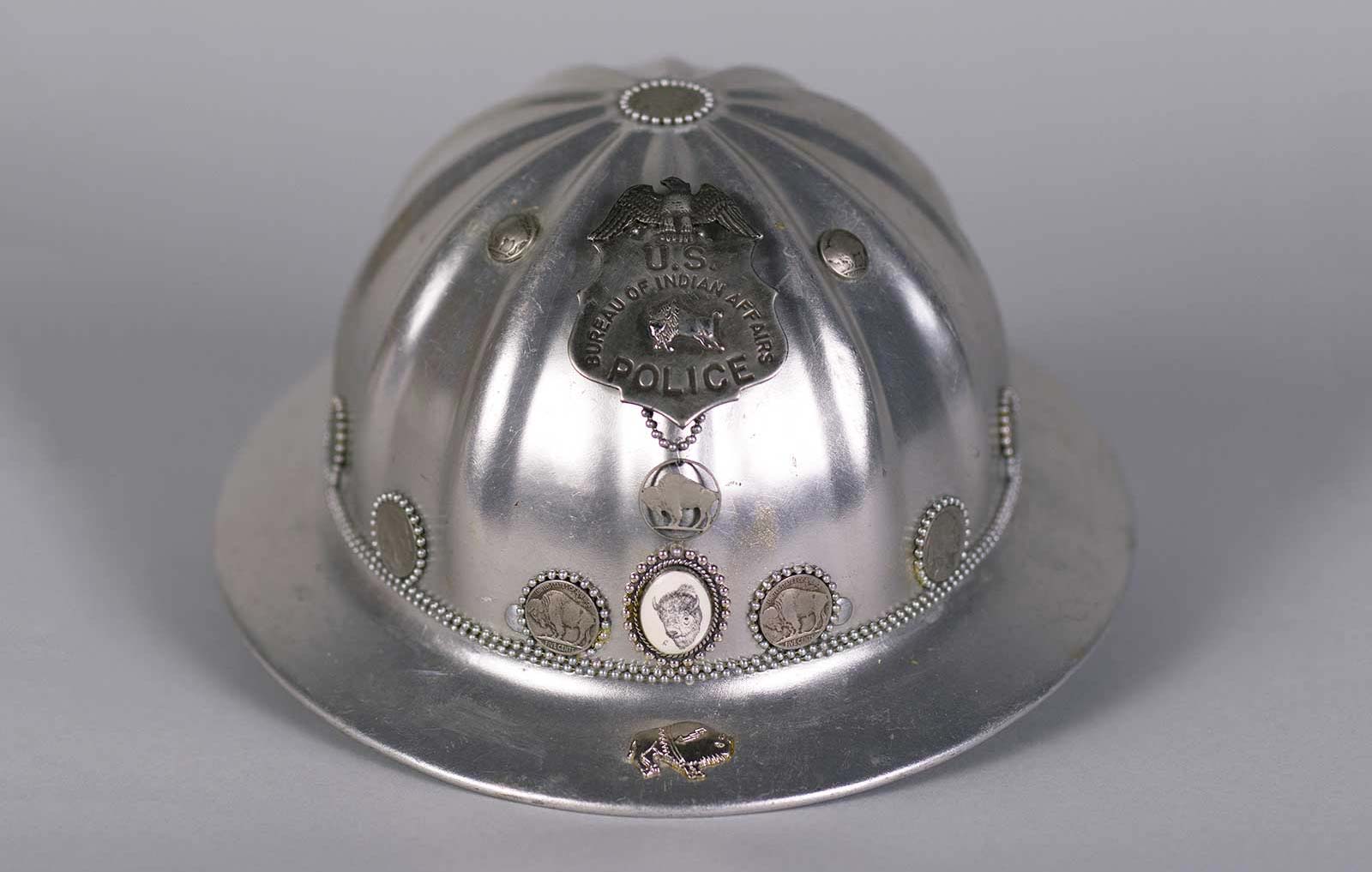
Richard Glazer Danay (Mohawk), Indian Police Headdress, 1999, silver, steel, aluminum. MH-34; Gift of David Bradley, 2019; Courtesy of the IAIA Museum of Contemporary Native Arts, Santa Fe, NM. © Richard Glazer Danay. Photograph by Eric Wimmer.
Although there is much interest in silver and turquoise, the exhibition will highlight other materials within the objects being displayed. “Turquoise and silver are a huge part of the jewelry practices of Native folks in the Southwest U.S. and that isn’t going to change anytime soon. Artists are still creating impeccably made, beautifully designed, innovative and narrative rich work within these traditions, and there’s no sign of this slowing down,” Fleetwood says. “But I do see more awareness of jewelers making gorgeous and meaningful work from tribal nations in other regions. These makers include quillworkers, beaders, shellworkers and many more, working in a variety of materials including stone, fibers, horn, leather, wood and a great deal many others.”
The Stories We Carry continues through September 30, 2026. —
Through September 30, 2026
The Stories We Carry
IAIA Museum of Contemporary Native Arts 108 Cathedral Place, Santa Fe, NM 87501 (505) 424-2300, iaia.edu/mocna
Powered by Froala Editor


