Andrea Carlson (Grand Portage Ojibwe/Scandinavian descent) spoke of the landscape at the time of her exhibition Shimmer on Horizons, which was shown earlier this year at the Museum of Contemporary Art in Chicago. “Historically, landscape painting is violent. It’s about possession of the land. Even though it might be plastered over with beautiful lighting and vast views, it’s based on empty landscape. Well, how did the landscape get emptied? When European folks came over, they were being sold this propaganda of empty landscape, yours for the taking. Those are all tactics. They’re all tactics to make good Christian, European, white folks feel good, or at least neutral about their sense of belonging in a place that was stolen.”
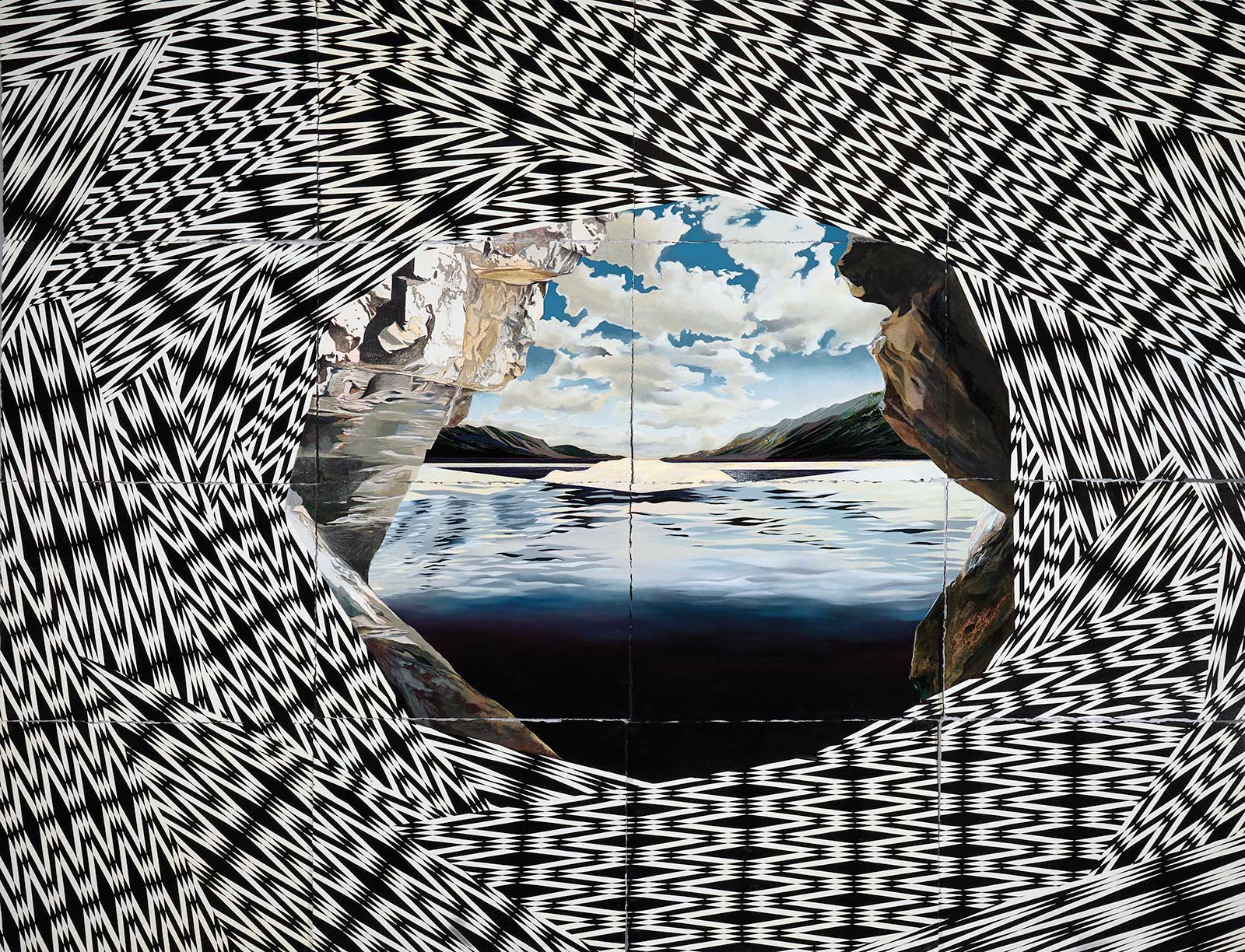
Andrea Carlson (Grand Portage Ojibwe and European descent) The Tempest, 2008, oil, acrylic, ink, color pencil and graphite on paper, 94 x 120 in. Denver Art Museum: Gift of Brian A. Tschumper and Benton Greer, 2023.486A-P. © Andrea Carlson
Her work challenges the narration of European settlers and its violence with the presence of Indigenous resistance.
The Denver Museum of Art is currently hosting her first museum survey with 30 mixed-media works from the past 20 years. Andrea Carlson: A Constant Sky continues through February 16, 2026.
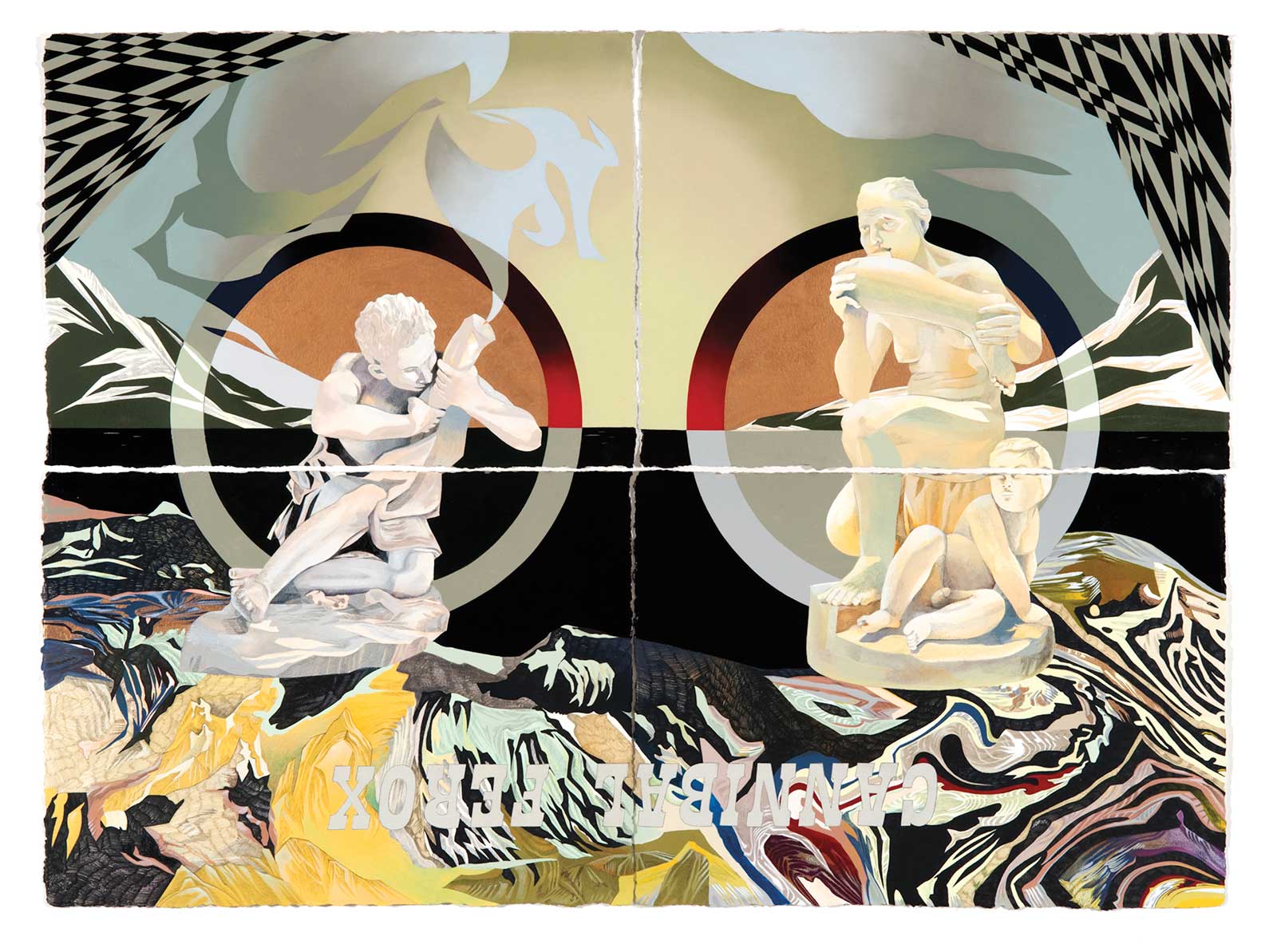
Andrea Carlson (Grand Portage Ojibwe and European descent), Cannibal Ferox, 2008, oil, acrylic, color pencil, graphite on paper, 45½ x 61 in. Denver Art Museum: Native Arts acquisition funds and funds from the Ralph L. & Florence R. Burgess Trust, 2020.886A-D. © Andrea Carlson
Dakota Hoska, the museum’s associate curator of Native arts, writes in the accompanying catalog, “Andrea Carlson’s practice questions established hierarchies, considers who holds the rights of possession, and investigates how those rights overlap and overshadow the lived experiences of those disadvantaged through empirical systems. Her works challenge our sense of complacency and inspire questions about permission and refusal through objects steeped in beauty. The compositions are visually and emotionally complex—they inspire introspection and resist facile interpretations. They strive to upend established power dynamics between museums and Indigenous communities, the viewer and the artwork, the dominant and the othered.”
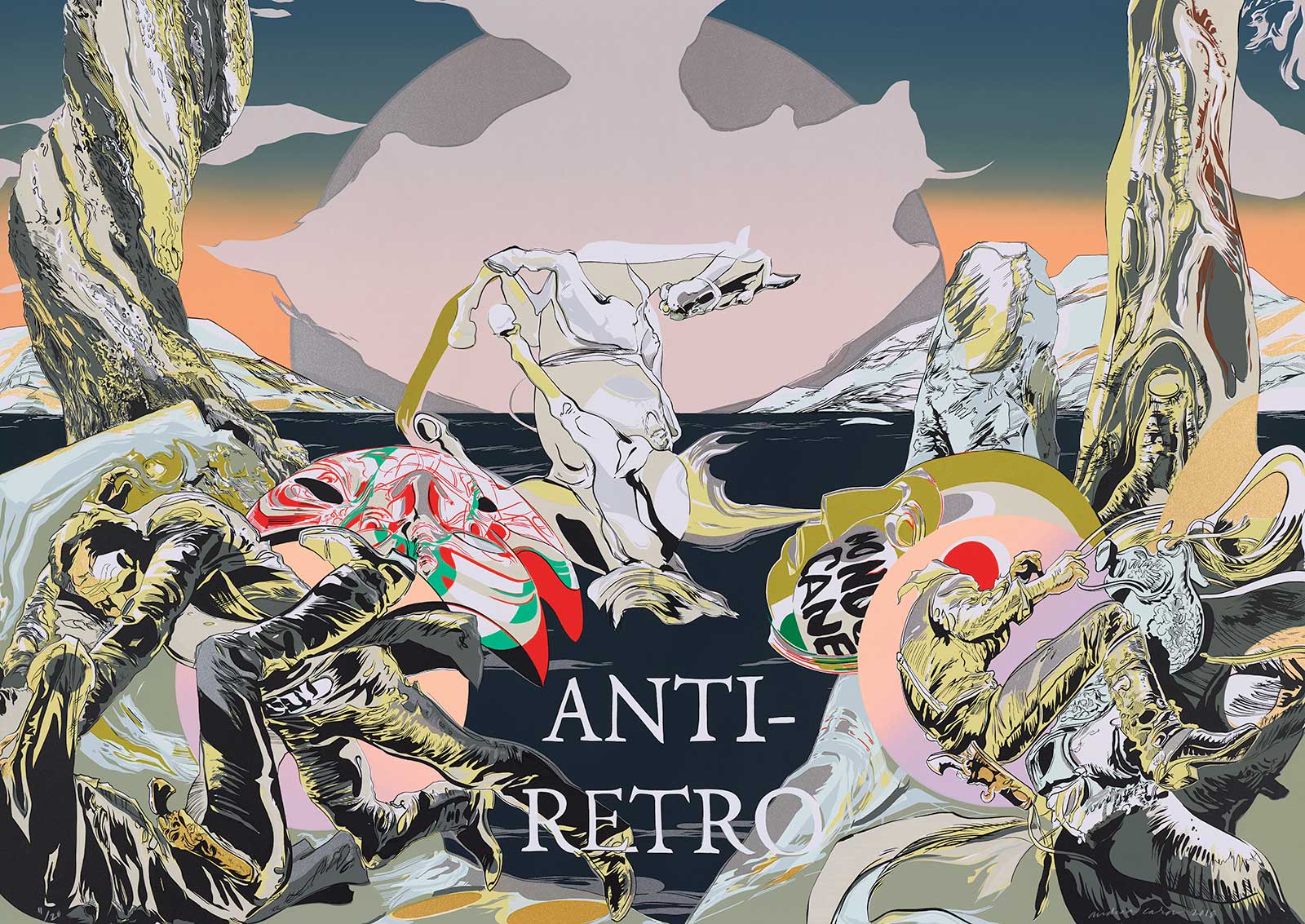
Andrea Carlson (Grand Portage Ojibwe and European descent), Anti-Retro, 2018, 19-layer screenprint on White Coventry Rag paper, 33½ x 47¾ in. Published by Highpoint Editions, Minneapolis. Denver Art Museum: Native Arts acquisition funds and funds from the Ralph L. & Florence R. Burgess Trust, 2020.881. © Andrea Carlson, courtesy of the artist and Highpoint Editions.
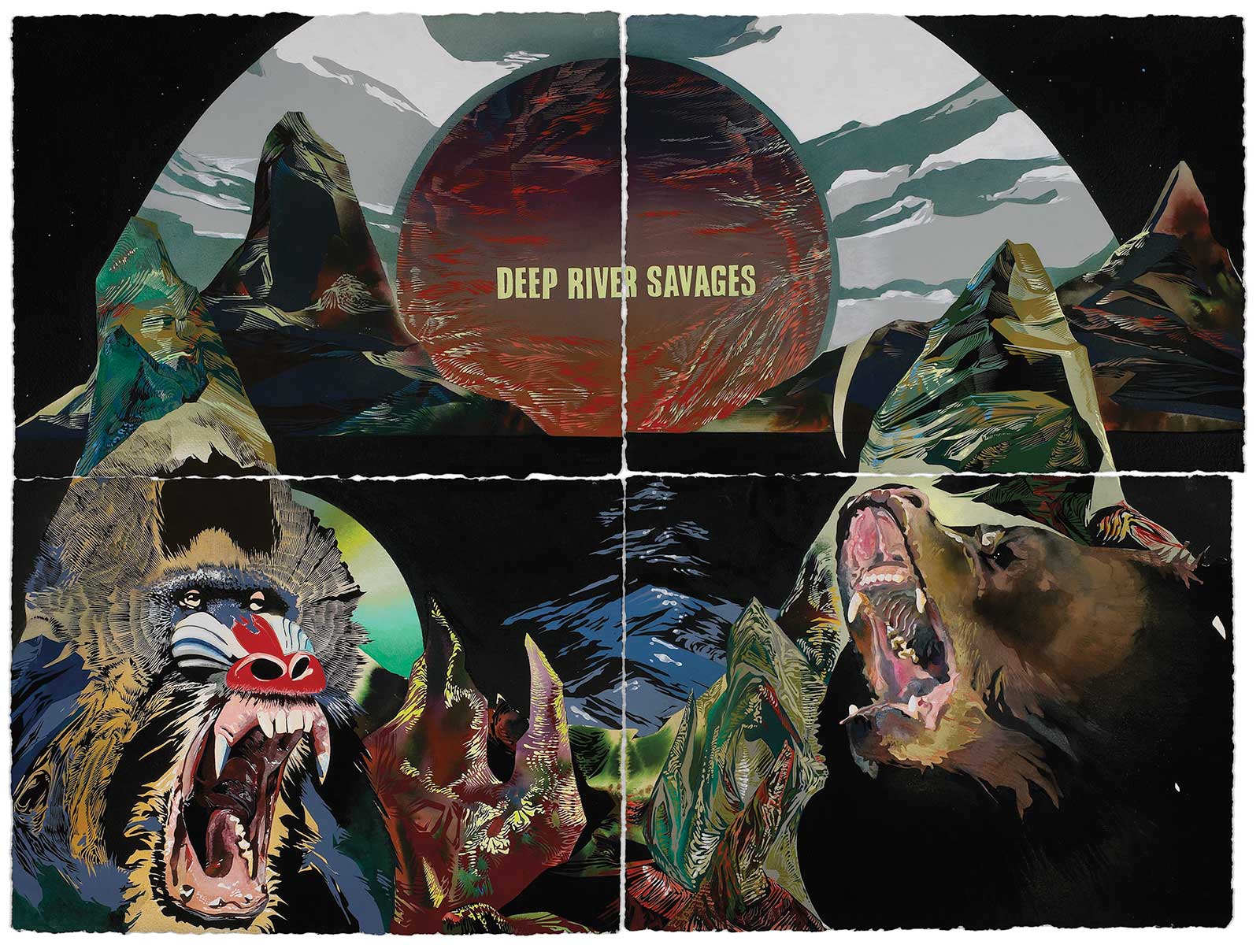
Andrea Carlson (Grand Portage Ojibwe and European descent), Deep River Savages, 2009-2010, mixed media on four sheets of heavy wove paper, 45½ x 60½ in. National Gallery of Canada, Ottawa: Purchased 2011. © Andrea Carlson, courtesy of the artist and Bockley Gallery, Minneapolis. Photo courtesy NGC
She refers to Carlson’s The Tempest, her 94-by-120-inch mixed-media work on paper. “In these 10-foot-wide paintings, audiences are confronted with what the artist refers to as ‘uncolonized landscapes.’ Though we may want to lose ourselves in the beautiful settings, the deckled edges of paper, intentionally left raw, prohibit us from fully escaping into the fantasy. It becomes clear that the ideals of decolonization, while pleasing to contemplate, lay beyond our grasp.”
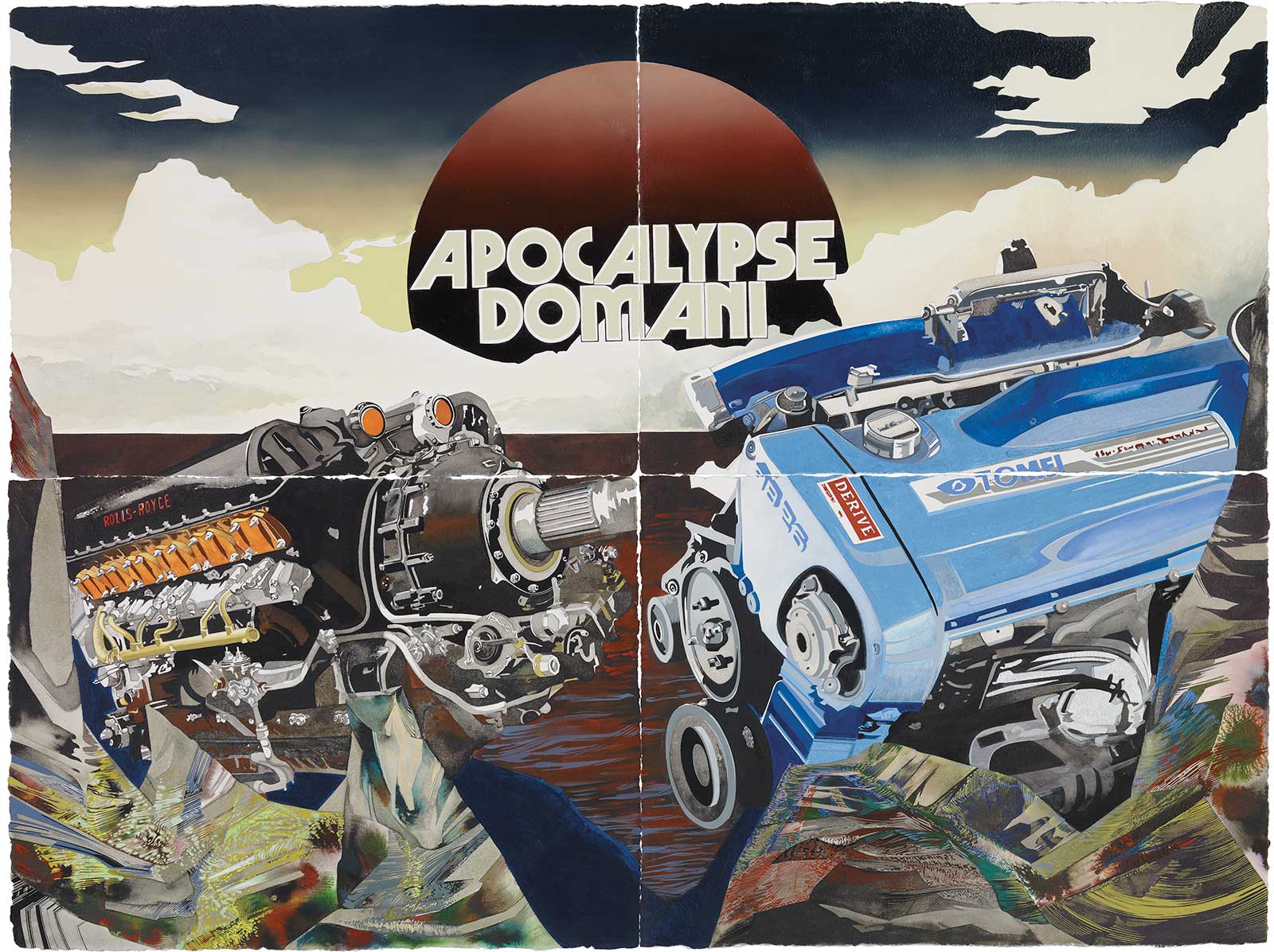
Andrea Carlson (Grand Portage Ojibwe and European descent), Apocalypse Domani, 2010, oil, acrylic, ink, color pencil and graphite on paper, 45½ x 61 in. Collection Bockley Gallery. © Andrea Carlson, courtesy of the artist and Bockley Gallery, Minneapolis
In an interview in the exhibition catalog, Carlson speaks further about her work: “In most of my work, the imagery tends to be washed up on its own shore, in the lower area of the composition. Above that, the seemingly endless horizon line of a large body of water is a plane without a singular vanishing point. When you look across a large body of water, you can’t see the other side, but the absence of that land in our mind doesn’t mean that it isn’t there. That infinite space is a scrying space, a place where we can pull songs from.
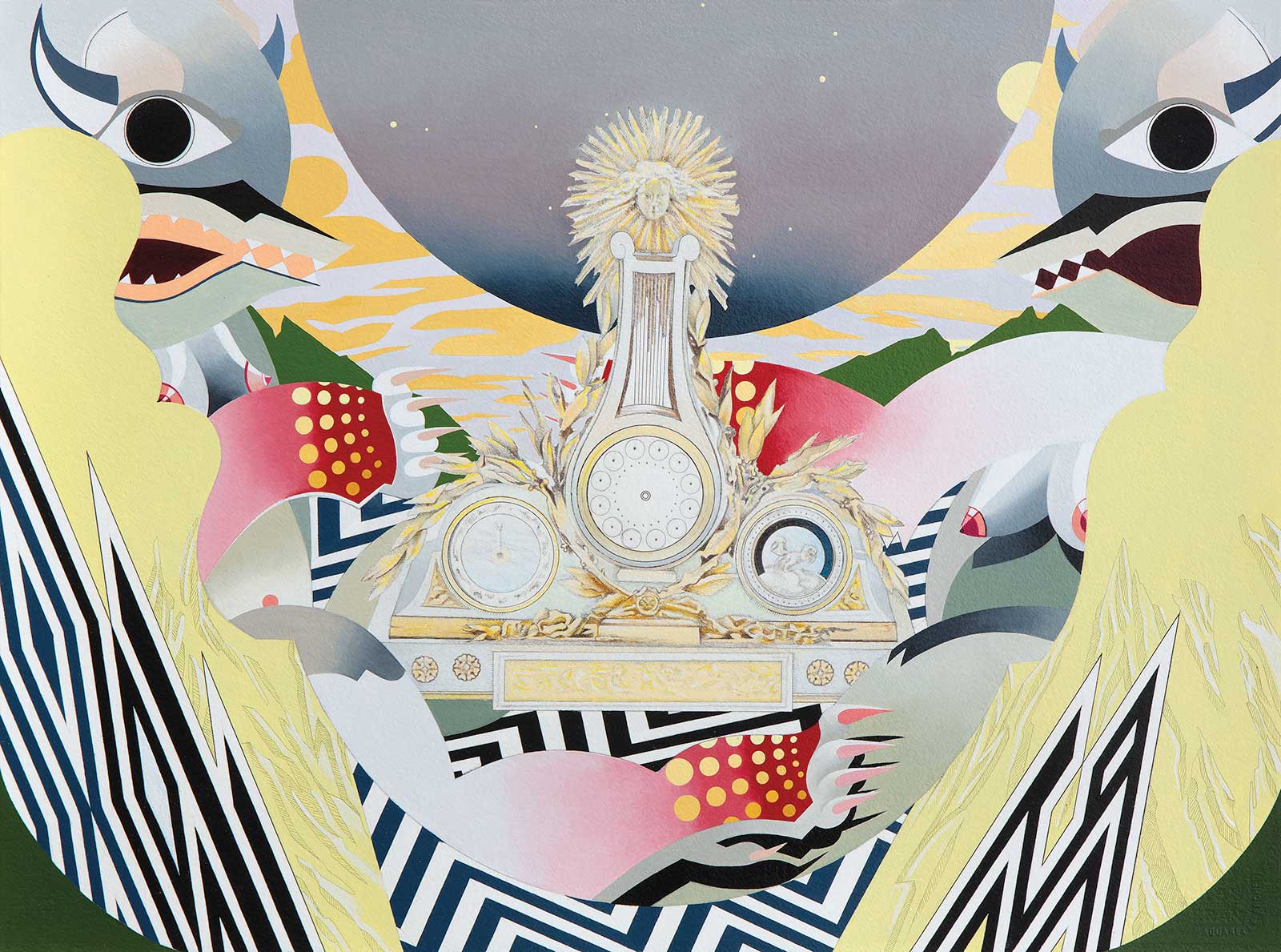
Andrea Carlson (Grand Portage Ojibwe and European descent), The Poison that is its Own Cure, 2007, oil, acrylic, ink, color pencil and graphite on paper, 22 x 30 in. Collection Bockley Gallery, Minneapolis. © Andrea Carlson, courtesy of the artist and Bockley Gallery
But my drawings are drawings, and they don’t let the viewer into that space,” Carlson says. “When I make a series of single-panel works, they often maintain a consistent scale and share a common horizon line that extends from piece to piece. Multipanel works often have multiple horizons. Simply put, it’s all Lake Superior to me, but it could be any large body of water. The late George Morrison was well known for his abstract paintings, but those familiar with Lake Superior might see his paintings as less abstract. We see the rock formations of the Laurentian Shield, driftwood, weavings, and the horizon.
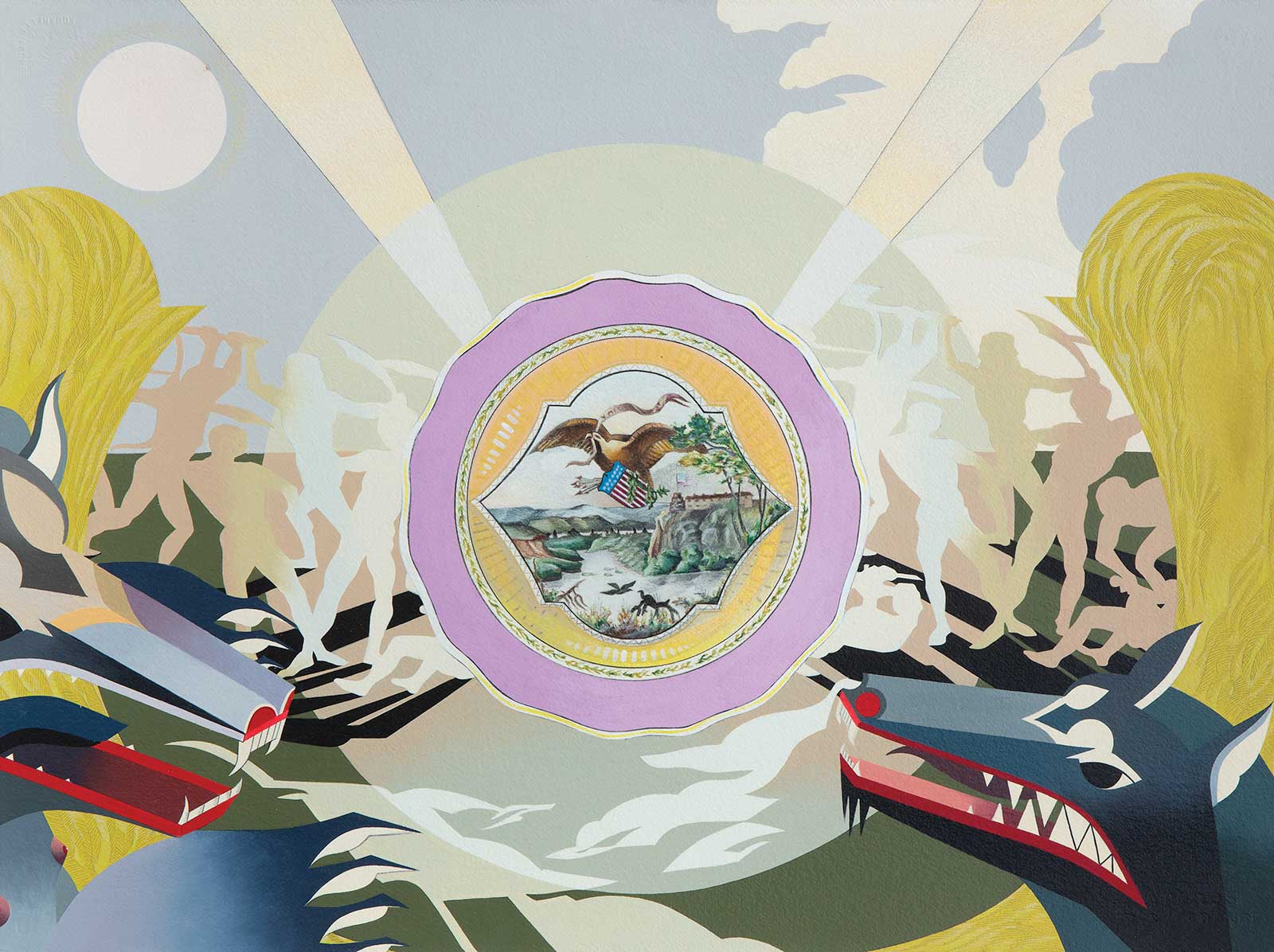
Andrea Carlson (Grand Portage Ojibwe and European descent), Truthiness, 2007, oil, acrylic, ink, color pencil and graphite on paper, 22 x 30 in. Collection Bockley Gallery Minneapolis. © Andrea Carlson, courtesy of the artist and Bockley Gallery.
Morrison had a water-to-sky ratio for where to place the horizon line in his works, and sometimes this line would extend from one painting to the next in a series. I got that idea from his work, but there is a conversation that could be had about liminality and the power of transitional spaces. The joining of images is set upon shores that are the second liminal space of transition where I locate power and confrontation. The shores in my work are filled with information, as if the many elements washed up there are finding balance against or hovering near each other.” —
Through February 16, 2026
Andrea Carlson: A Constant Sky
Denver Art Museum, 100 W. 14th Avenue Parkway, Denver, CO 80204, (720) 865-5000, www.denverartmuseum.org
Powered by Froala Editor


