Cherokee artist and designer Lloyd Kiva New was a revolutionary fashion designer whose career is full of superlatives, including the first Native American ever featured in an international fashion show.
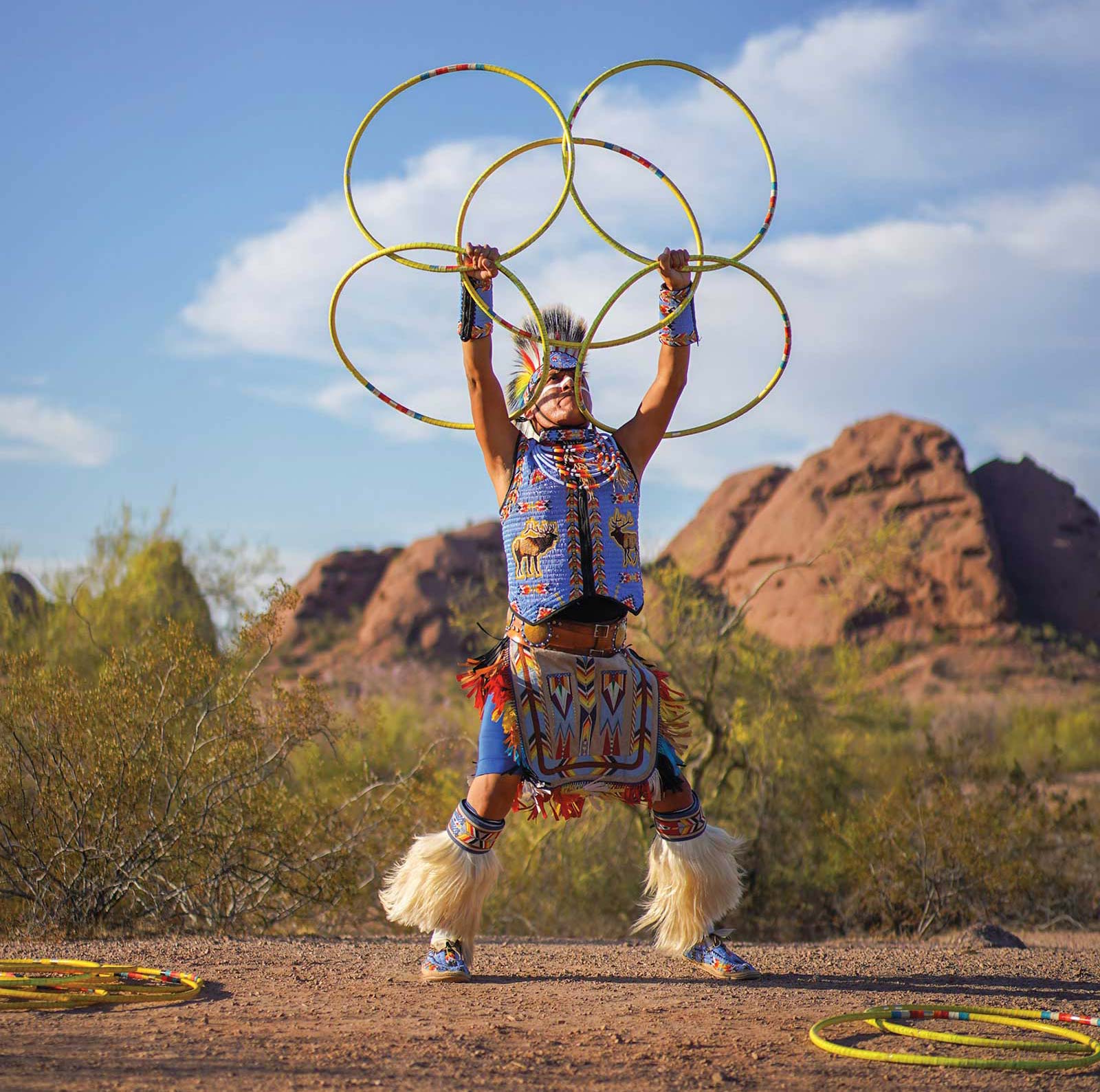
World champion hoop dancer and Arizona resident Tony Duncan does a hoop dance in the Papagos near Scottsdale. Photo courtesy Visit Phoenix.
What’s almost more remarkable about his career, are the dates associated with the milestones. His appearance at that international pivotal runway show, the Atlantic City International Fashion Show, was in 1951. He opened his own design center in 1955. He dressed Miss Arizona in the Miss American Pageant in 1957. He cofounded the Institute of American Indian Arts in Santa Fe, New Mexico, in 1962. In a decade, New had become a prominent voice in the Southwest, and an icon among Native Americans.
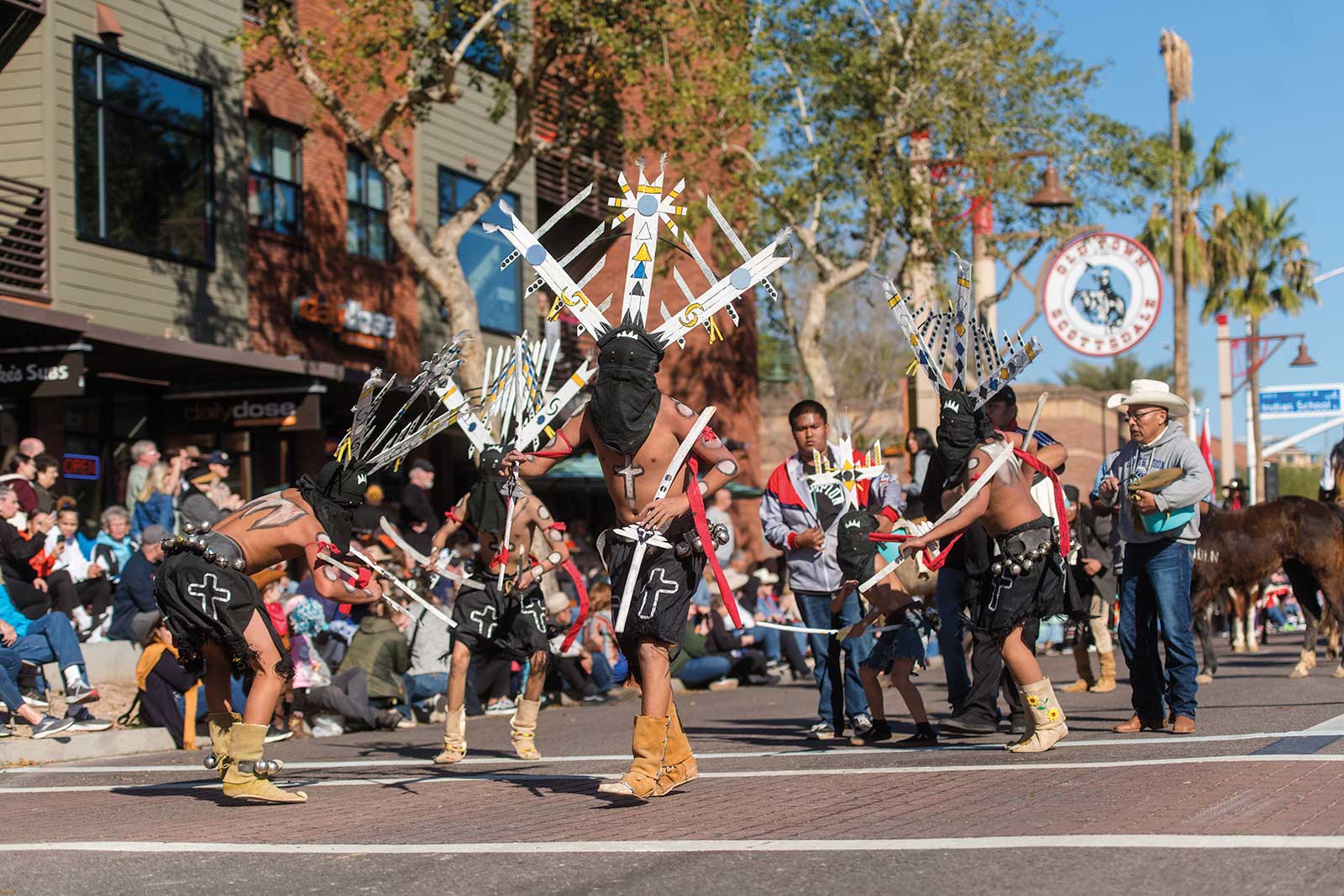
Native American dancers during the Parada del Sol in Scottsdale. Photo courtesy Christine Johnson for City of Scottsdale.
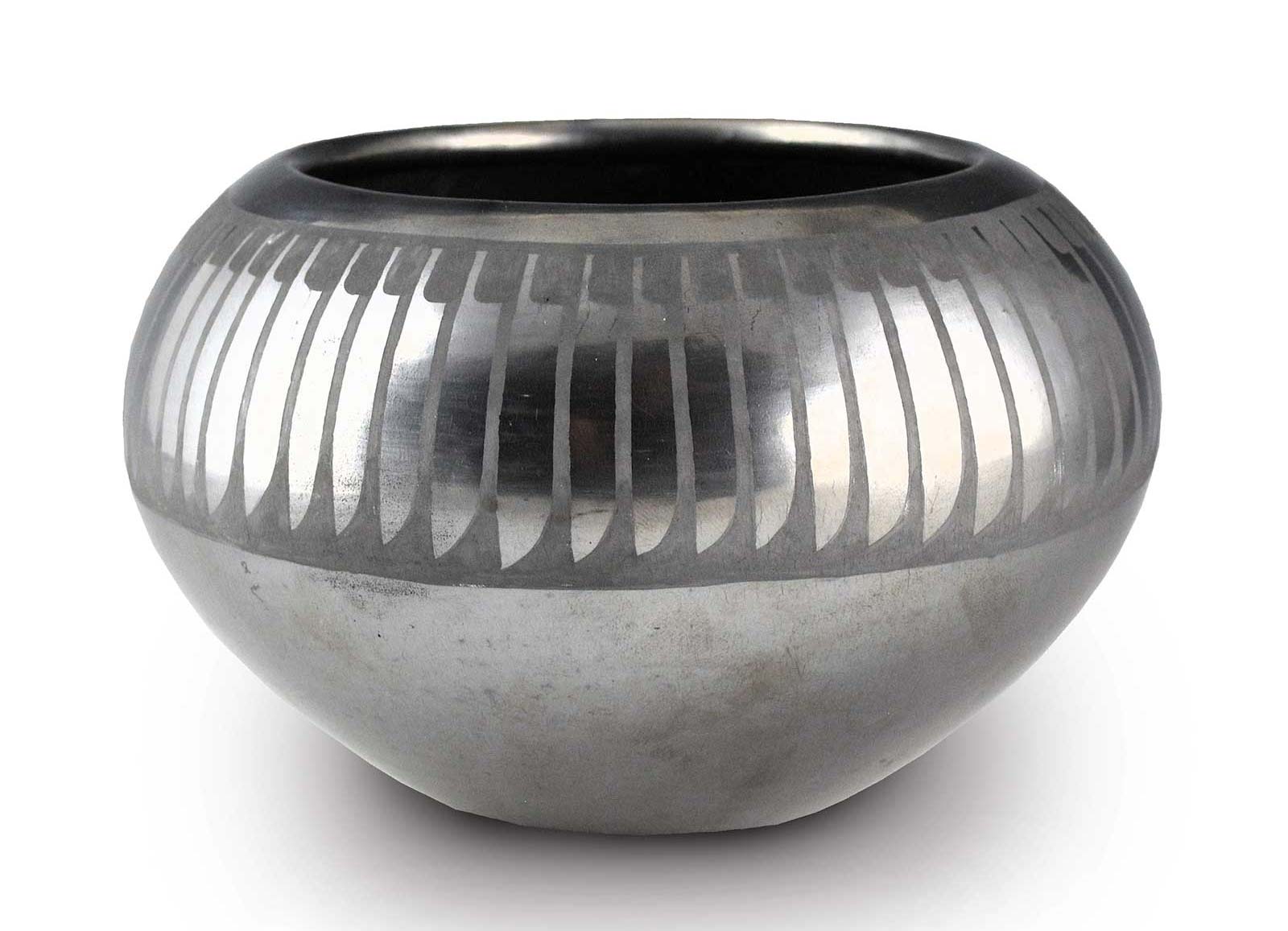
Maria Martinez (1887-1980, San Ildefonso Pueblo), Black-on-black feather bowl, ca 1960s. Courtesy King Galleries.
Consider one final date. In 1945, the year World War II ended, New started his own gallery in Scottsdale, Arizona. At the time, Scottsdale was still very much a cowboy town, with hitching posts outside storefronts and swinging doors on the saloons, including at the Rusty Spur Saloon, New’s neighbor. This was the very beginning of what would become Scottsdale’s flourishing art scene. And Native Americans were there at the very beginning.
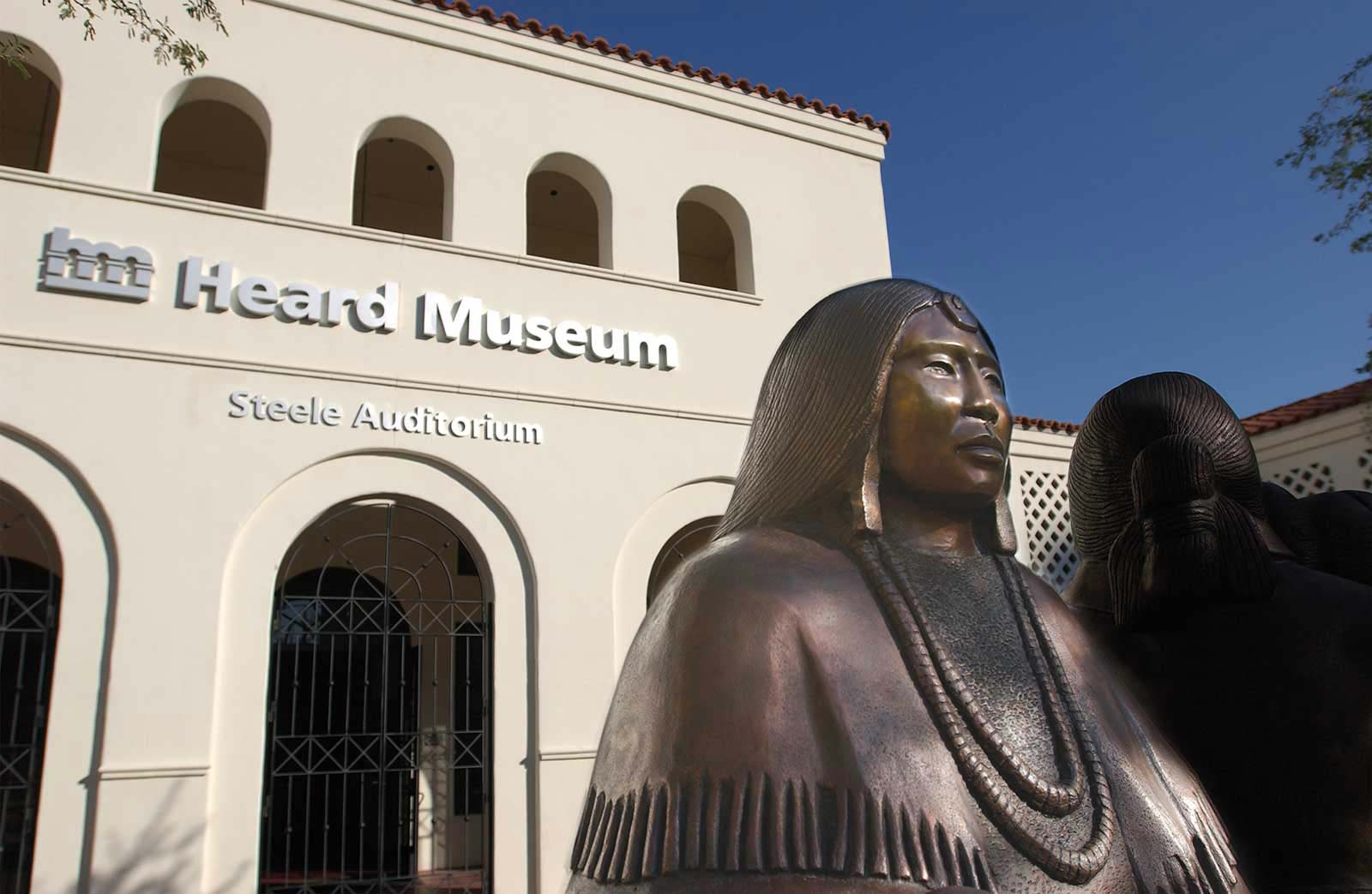
The Heard Museum in Phoenix. Photo courtesy Visit Phoenix.
Today, Scottsdale, now known as “the West’s Most Western Town,” is a thriving city in the massive metropolis of Phoenix. And although Phoenix may be the capital city, Scottsdale is still a major destination for art throughout the Southwest.
Key to its success is a large number of galleries, world-class museums, countless art collectors and a tourist-friendly spring, fall and winter (notice one season was left out?). Much of the action begins on Main Street within Scottsdale’s arts district. Main Street is where Lloyd Kiva New first set up shop, and today it’s home to numerous galleries and art destinations. Key among them are Legacy Gallery, which is also home to the Scottsdale Art Auction; Faust Gallery, which represents artists such as Sheldon Harvey and numerous jewelers; Territorial Indian Arts & Antiques, which specializes in a variety of Native American art and objects; John C. Hill Antique Indian Art, offering stunning historical material from tribes around the country; and other galleries such as the R.C. Gorman Navajo Gallery and The Marshall Gallery, both of which show work by Native American artists.
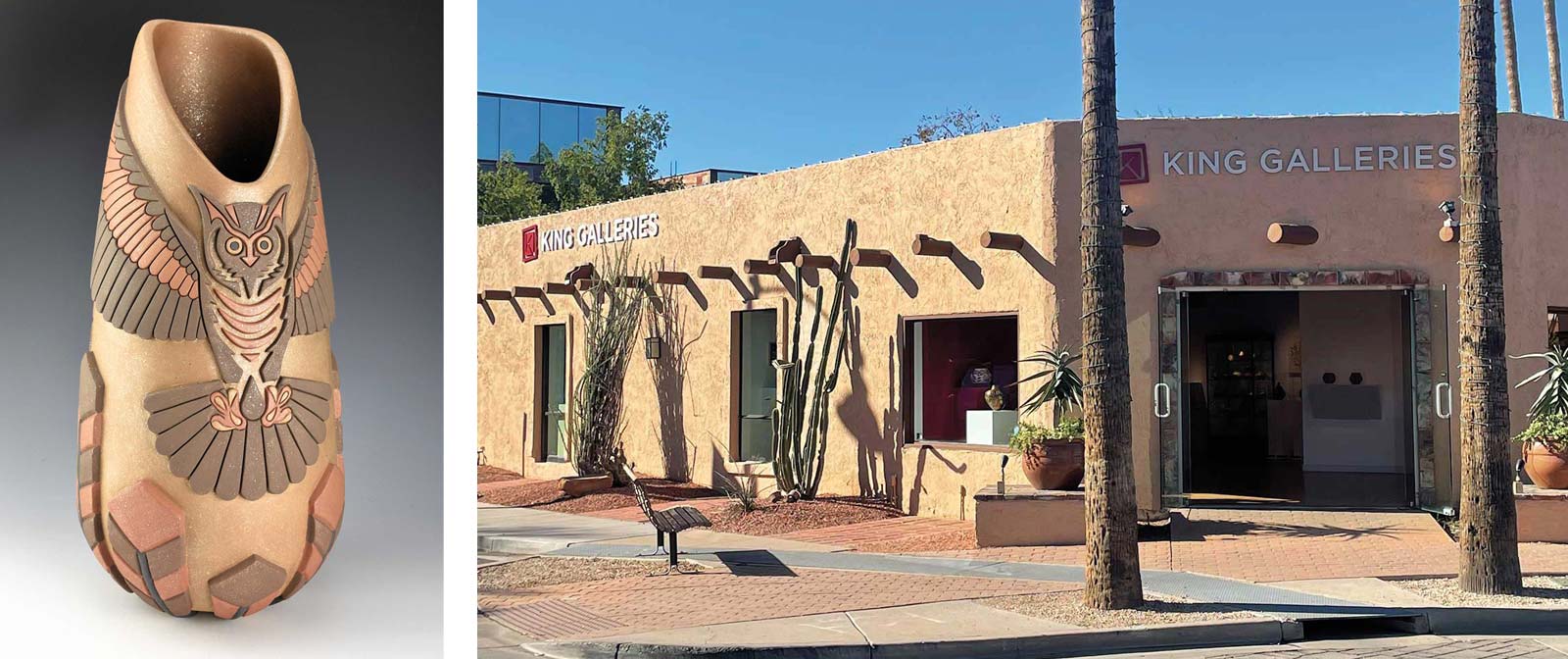
Left: Sergio Lugo (Santa Clara Pueblo), Guardian, polychrome carved jar, 17 in. Courtesy King Galleries. Right: King Galleries in the heart of Scottsdale, Arizona.
At the very heart of Scottsdale’s Old Town area is King Galleries, one of the great destinations for contemporary Native American pottery. The gallery, which is celebrating its 30th year, is owned by Charles King, whose involvement in the art world runs deep—he’s written five books on Native American pottery, and judged pottery at many of the top events, including Santa Fe Indian Market. Although known for contemporary pottery, the gallery’s inventory stretches back to the 1920s with artists such as Maria Martinez, Tony Da and Margaret Tafoya. Living artists include Nancy Youngblood, Tammy Garcia, Al Qöyawayma, Russell Sanchez, Daniel Begay, Jared Tso, Jennifer Tafoya, Chris Youngblood, Chase Kahwinhut Earles, Les Namingha, Jeff Suina and more. “The gallery continues to focus on education and representation of the best in Native pottery,” King says. “Stop in the gallery to experience history in clay and learn about Native pottery in the world of fine art.”
———————————————
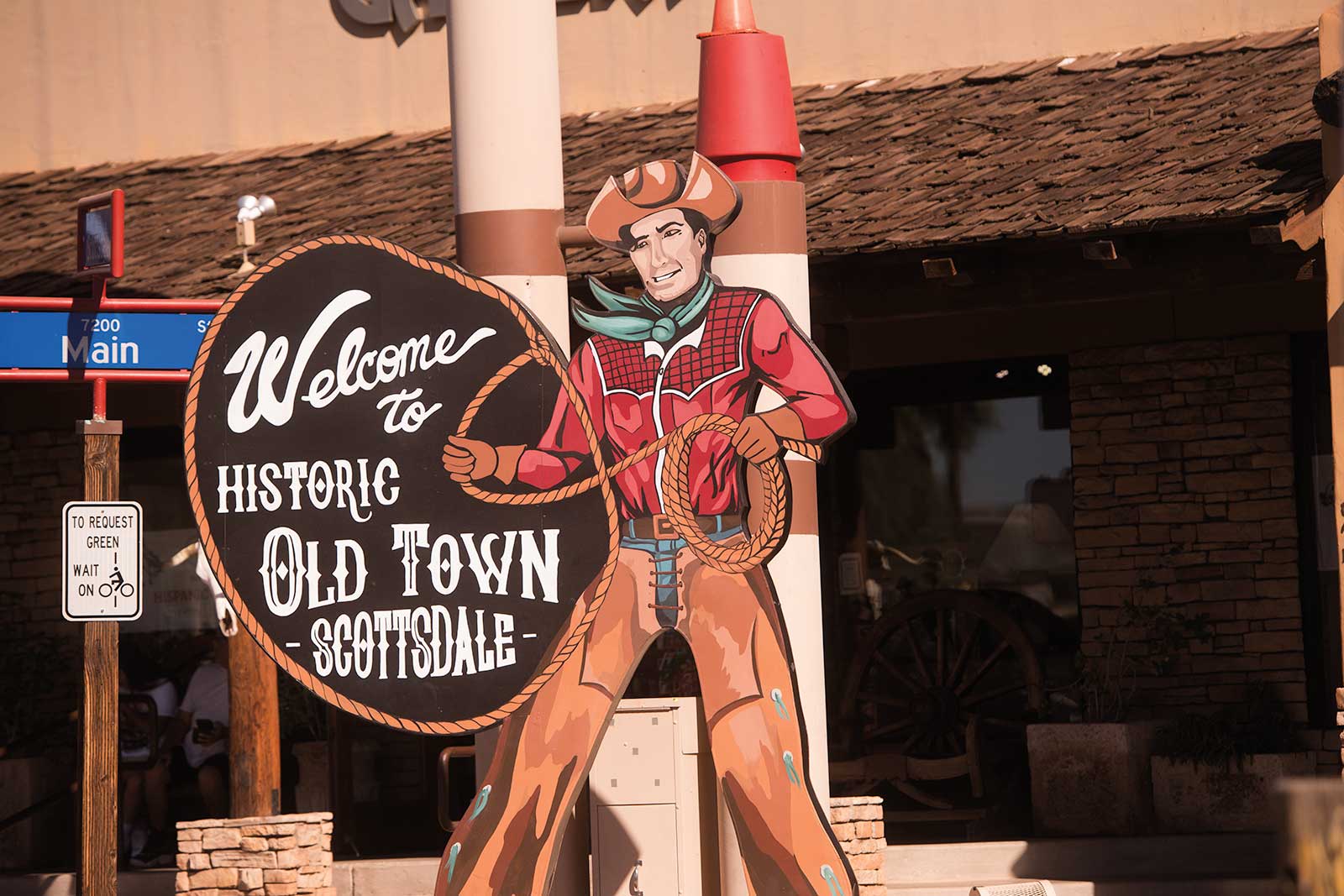
Scottsdale’s famous cowboy sign welcoming visitors into the city. Photo courtesy Christine Johnson for City of Scottsdale.
Mark your Calendar
Heard Museum Guild Indian Fair & Market
One-of-a-kind outdoor art market on the campus of the Heard Museum, where more than 600 artists bring their artwork to compete in a juried competition and sell to collectors. The next market will be held March 7-8, 2026.
www.heard.org
Arizona Indigenous Culinary Experience
A culinary showcase that highlights both traditional and contemporary Native cuisine through diverse tasting stations, live cooking demonstrations and interactive conversations with Indigenous chefs from Arizona’s tribal nations. Held every November.
www.arizonanativeculinary.org
Arizona Indian Festival 2026
Hosted by the Arizona American Indian Tourism Association (AAITA), this event promotes the development of Indian tourism in Arizona while respecting the cultural integrity of the tribes. The next festival will be held January 31-February 1, 2026.
arizonaindiantourism.org/azindianfestival
World Championship Hoop Dance Contest
This world-famous competition has become a cornerstone for cultural preservation, celebrating the profound history of hoop dancing within Indigenous communities. The annual event showcases more than 100 Indigenous dancers from diverse tribal backgrounds throughout North America. It will be held at the Heard Museum, February 14-15, 2026.
www.heard.org
Native Spirit Gold Palette ArtWalk
This Native-themed art walk is presented by the Scottsdale Gallery Association. It features Native American shows, musical performances, culinary events and other activities. It is usually held in February or March, around the Heard Museum Guild Indian Fair & Market.
scottsdalegalleries.com/events
———————————————
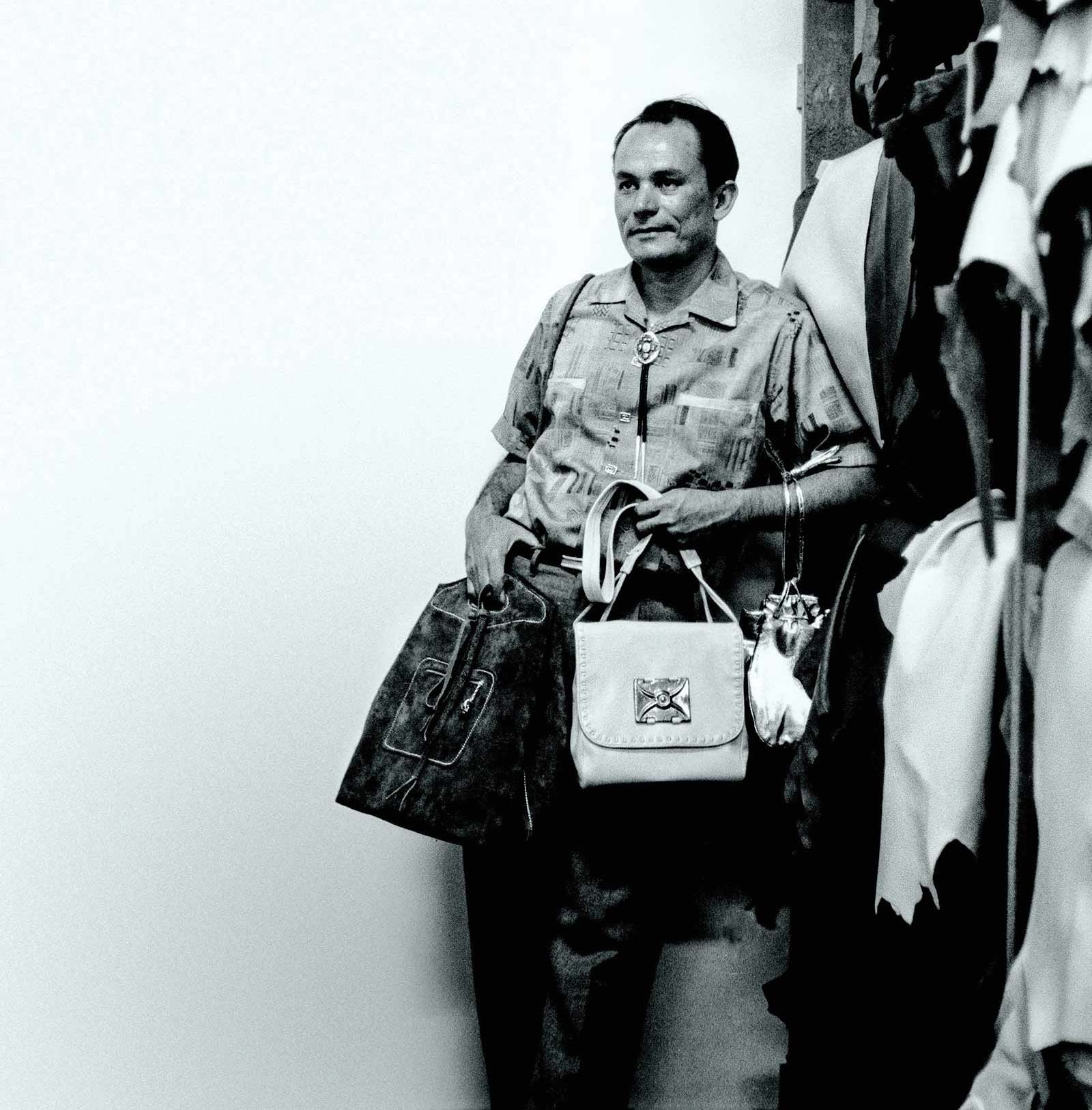
Lloyd Kiva New in Scottsdale, ca. 1960s.
Around the corner from King Gallery is Western Spirit: Scottsdale’s Museum of the West, which brings together Western and Native American art under one roof. Collection highlights include pueblo pottery, Navajo jewelry, basketry from around the Southwest and Hopi katsinam. The museum presently has selections from the Peterson Family Collection, which includes stunning examples of first-, second- and third-phase Navajo chief’s blankets—very few places in the world can you see all three together.
Other museums nearby include S’edav Va’aki Museum (formerly Pueblo Grande Museum) and the Huhugam Ki Museum, both of which feature Native American art, events and exhibitions. A short drive from Scottsdale into Phoenix will bring visitors to the world-famous Heard Museum, dedicated entirely to Native American art. The museum and its sprawling campus offers numerous opportunities to learn, support and appreciate Indigenous art in many forms. The museum hosts two major annual events: the World Championship Hoop Dance Contest every February and the Heard Museum Guild Indian Fair & Market, held the first weekend of March. The market is one of the largest events of its kind in the country, and routinely brings out more than 600 artists a year to offer high-quality artwork to collectors in an outdoor setting. Down the street from the Heard Museum is the Phoenix Art Museum, which will be presenting Cara Romero: Panûpünüwügai (Living Light) in 2026.
Back in Scottsdale, and timed with the Heard Museum Guild Indian Fair & Market, the Scottsdale Gallery Association hosts Native Spirit Gold Palette ArtWalk to coincide with the Phoenix market. Many of the Scottsdale galleries celebrate with shows, events and demonstrations by and for Native American artists. There’s also unique music, dance and food opportunities. And speaking of food, Scottsdale is also the home of the Arizona Indigenous Culinary Experience, held every November.
Another highlight in Scottsdale is Native Art Market, an Indigenous-owned business created in 2016 to give Native American artists a safe avenue to sell their work on their own terms. The venue hosts regular events and fairs, but also has a retail location open seven days a week.
Scottsdale and the larger Valley area are also home to countless artists, including Randy and Rykelle Kemp, Olin Tsingine, Ric Charlie and Thomas “Breeze” Marcus, a painter whose murals and graffiti-like wall pieces are staples on Phoenix-area streets.
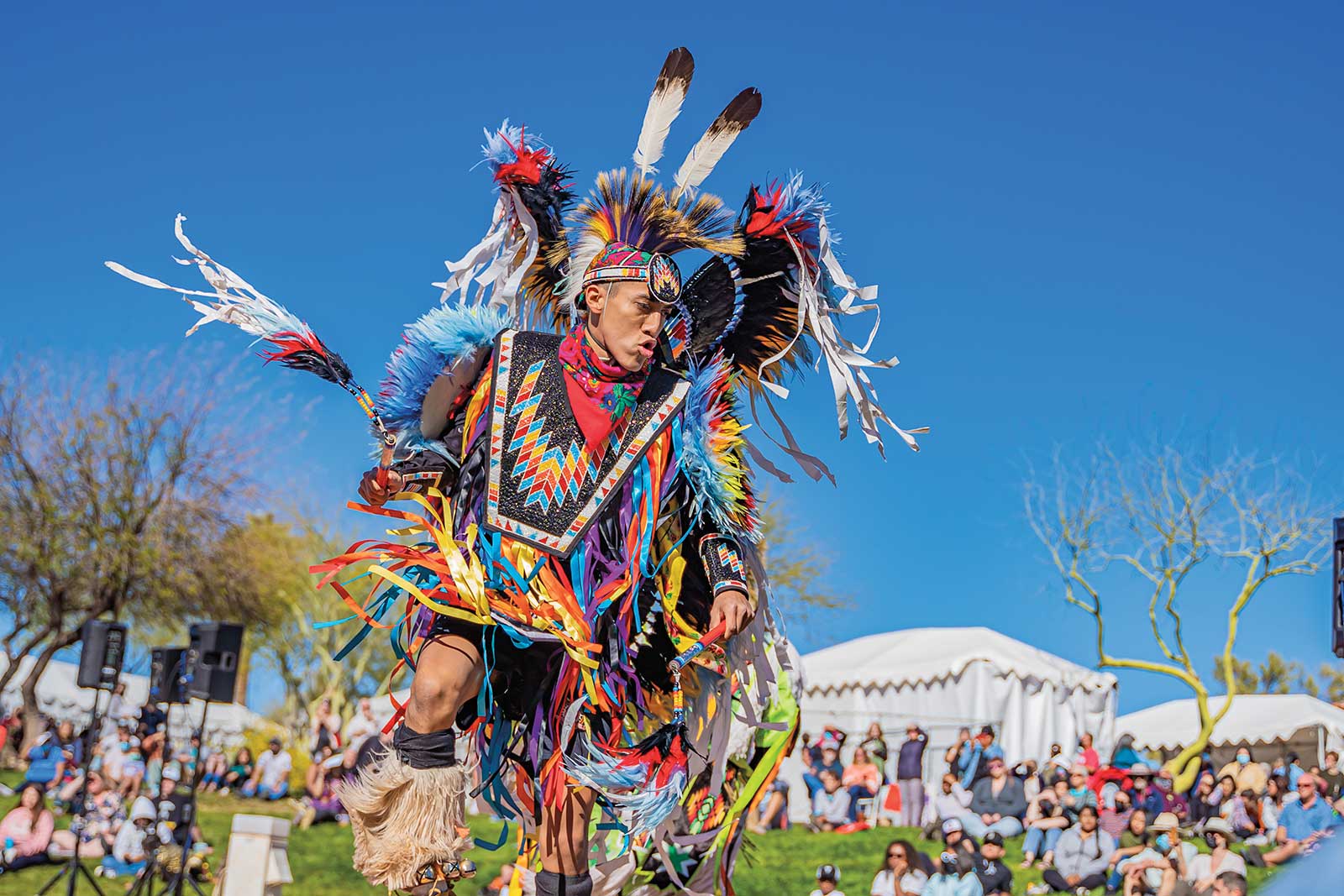
A dancer during the Heard Museum Guild Indian Fair & Market in Phoenix. Photo courtesy Visit Phoenix.
For visitors who want to explore outside of Scottsdale, major cities are not far: Tucson is two hours south, and Flagstaff two hours north. In Tucson, art destinations include the Tucson Museum of Art and Medicine Man Gallery, which is owned by art expert and author Mark Sublette. In Flagstaff, the Museum of Northern Arizona has a stunning collection of Native American material. Flagstaff is also the gateway to more northern destinations, including the Navajo Nation, the Hopi mesas and the Grand Canyon National Park. Near Flagstaff, in Prescott, are the Museum of Indigenous People and the Phippen Museum, both of which feature Native American art and objects. For a shorter adventure, collectors are urged to visit the Litchfield Park Gathering, a Native American show held every January in Litchfield Park in the West Valley of Phoenix.
Additionally, there are small local shows, markets and events happening year-round in Phoenix and surrounding cities, even during the hot summer months—art never sleeps.
Like Santa Fe, New Mexico, Scottsdale is located near many tribes and nations. Not only do Native Americans have easy access to Scottsdale and surrounding cities, but they also live within them, enriching the culture of these communities and their art scenes. To the immediate east of Scottsdale, and largely marked by the Loop 101 freeway—homes on one side, pristine farm land on the other—is the Salt River Pima-Maricopa Indian Community. Near that is the Fort McDowell Yavapai Nation, and further to the east are three Apache tribes: Tonto Apache, White Mountain Apache and San Carlos Apache.
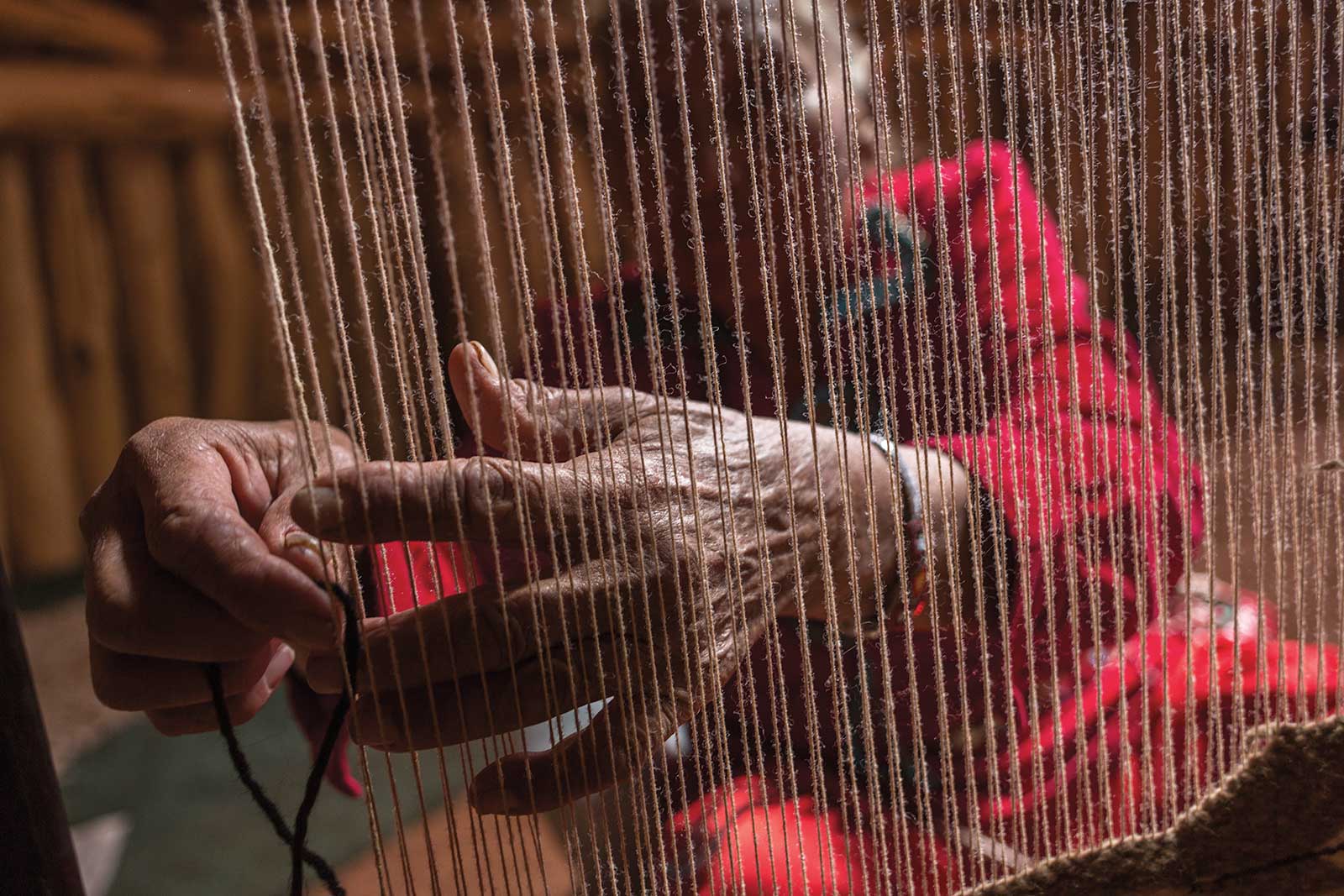
A weaver works on a loom. Photo courtesy Mark W. Lipczynski.
Further north is the massive Navajo Nation, making up almost a quarter of the state and expanding into the Four Corners region, and then within that, the Hopi Tribe. Near and within the Grand Canyon is the Havasupai Tribe and along the Colorado River is the Hualapai Tribe. On the southern edge of Phoenix is the Gila River Indian Community and the Ak Chin Indian Community. Near that is the Tohono O’Odham Nation that extends south to the U.S.-Mexico border. Other tribes and nations include the Cocopah Indian Tribe near Yuma, several Yavapai tribes near Prescott, and three tribes along Arizona’s border with California: Colorado River Indian Tribes, Fort Yuma Quechan Tribe and Fort Mojave Indian Tribe. Each tribe, community and nation has its own governance, customs, heritage, art style and unique attributes. And each one is an important part of the overall culture of the Grand Canyon State.
When booking your next art trip, consider Scottsdale and its rich history of Native American art. —
Destination Scottsdale
Faust Gallery
7100 E. Main Street, Suite 4, Scottsdale, AZ 85251
(480) 200-4290, www.faustgallery.com
Heard Museum
2301 N. Central Avenue, Phoenix, AZ 85004
(602) 252-8840, www.heard.org
Huhugam Ki Museum
10005 E. Osborn Road, Scottsdale, AZ 85256
(480) 362-6320, srpmic-nsn.gov/government/culturalresources/hhkm
John C. Hill Antique Indian Art
6962 E. First Avenue, Suite 104, Scottsdale, AZ 85251
(480) 946-2910, www.johnhillgallery.com
King Galleries
7077 E. Main Street, Suite 20, Scottsdale, AZ 85251
(480) 481-0187, www.kinggalleries.com
Legacy Gallery
7178 Main Street, Scottsdale, Arizona 85251
(480) 945-1113, www.legacygallery.com
The Marshall Gallery
7106 E. Main Street, Scottsdale, AZ 85251
(480) 970-3111, www.themarshallgallery.com
Native Art Market
7215 E. Main Street, Scottsdale, Arizona 85251
(707) 733-6443, www.thenativeartmarket.com
R.C. Gorman Navajo Gallery
7116 E. Main Street, Scottsdale, AZ 85251 www.rcgormannavajogallery.com
S’edav Va’aki Museum
4619 E. Washington Street, Phoenix, AZ 85034
(602) 495-0901, svmfoundation.org
Territorial Indian Arts & Antiques
7100 E. Main Street, Suite 3, Scottsdale, AZ 85251
(480) 945-5432, www.territorialindianarts.com
Western Spirit: Scottsdale’s Museum of the West
3830 N. Marshall Way, Scottsdale, AZ 85251
(480) 686-9539, westernspirit.org
Powered by Froala Editor
Powered by Froala Editor


