Since 1999, the Eiteljorg Museum has offered innovative Native American artists exciting opportunities as part of its biannual fellowship initiative. 2023 marked a new fellowship year, giving rise to a fascinating exhibition titled UNSETTLE/Converge, featuring five U.S. and Canadian artists presenting around 46 works in a variety of mediums. Each artist celebrates and draws upon their Native identity in contemporary artworks while also confronting issues of colonialism—including personal experiences and insights.
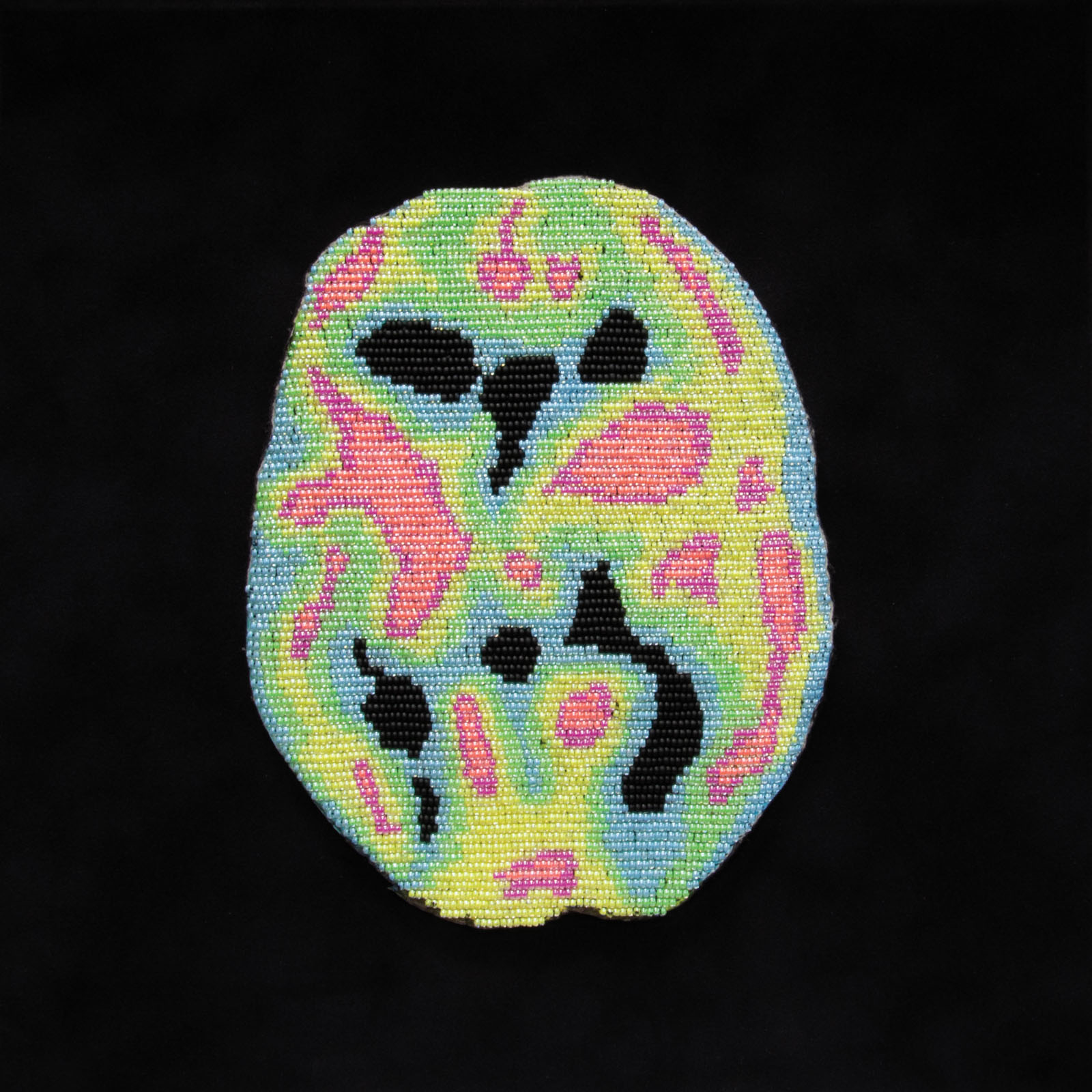 Ruth Cuthand (Plains Cree/Scottish/Irish), Anxiety, 2022, glass beads, thread, backing. Museum Purchase from the Eiteljorg Contemporary Art Fellowship.
“Every fellowship round, an exhibition of five new fellows’ work is created,” explains Dorene Red Cloud, museum curator of Native American art. The title, UNSETTLE/Converge, maintains the thought process of the last two fellowship titles: the defining parameters of contemporary Native art have blurred, shifted boundaries and are now embarking on un-settling or Indigenizing these definitions to present Native voices and visions foremost.”
For each fellowship cycle, four artists are carefully chosen with an advisory committee selecting a fifth under the prestigious title of Invited Fellow, with this cycle highlighting the multidisciplinary artist Ruth Cuthand (Plains Cree/Scottish/Irish). Her recent body of work includes “beaded depictions of various mental health conditions—as shown by brain scans—that embody the intergenerational trauma experienced by many First Nations communities,” Red Cloud notes.
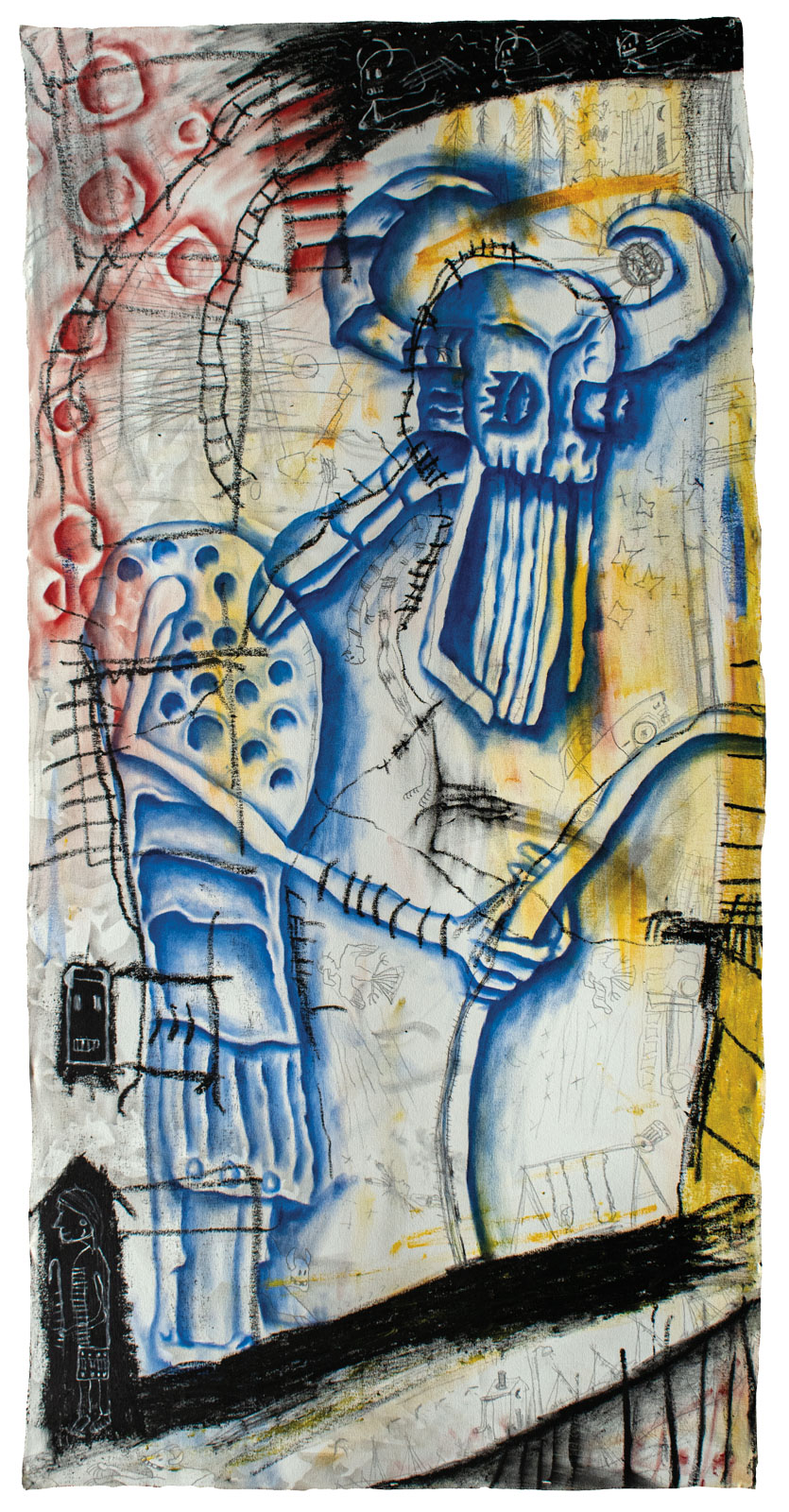 Sean Chandler (Aaniiih [Gros Ventre]), Son of St. Aloysius, 2023, oil, oil paint stick, charcoal. Museum Purchase from the Eiteljorg Contemporary Art Fellowship.
“The Invited Fellow is an artist recognized for their established exhibition history, extensive body of work and distinguished contribution to the field,” continues Red Cloud. The artists selected for the other remaining slots are embodiments of contemporary Native art in both the United States and Canada, and who represent a diverse range of mediums. For 2023, this selection includes Sean Chandler (Aaniiih [Gros Ventre]), Natalie Ball (Klamath Tribes [Klamath/Modoc]) and Mercedes Dorame (Gabrielino Tongva).
For Chandler, a mixed media artist who includes personal narratives of his time growing up in eastern Montana, he shares that his show work reflects his interest in different styles of random layering, a theme running through his body of work for some time. “I am interested in the look of a piece feeling like more than one person has contributed,” he says. “I think that’s right within the overall meaning of what it means to be defined as one thing or another. Just as Natives were defined as one thing and then another by outsiders who knew nothing about us. I also think it’s important to be random but purposely genuine in the marks that I make or ideas that I paint in order to depict the emotions that I am trying to convey or release.”
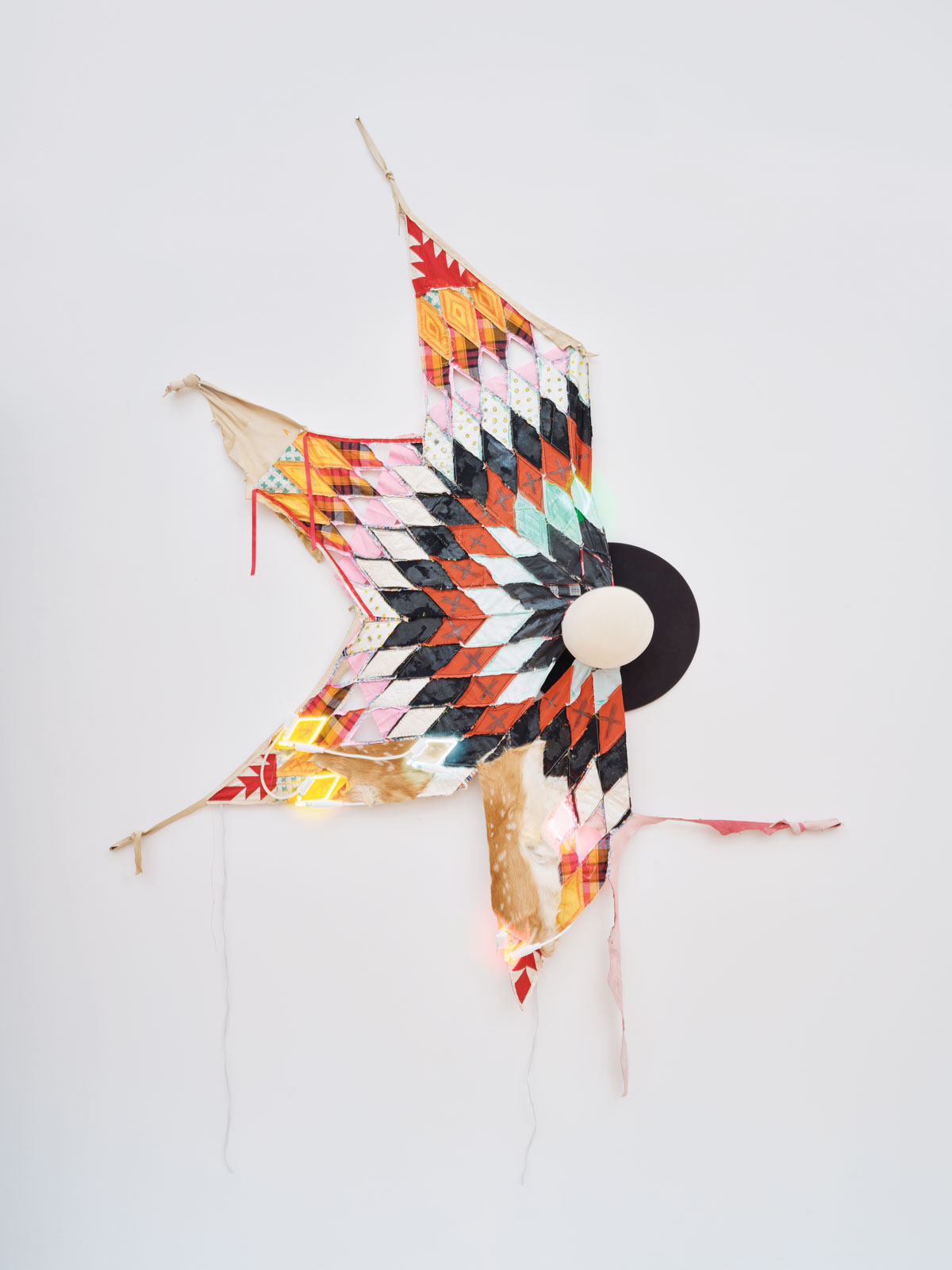 Natalie Ball (Klamath Tribes [Klamath/Modoc]), Sheriff’s Star, 2022, neon glass, textiles, Billy Jack hat, ribbon, paint, deer hide. Loan from Gochman Family Collection. Image courtesy of the artist and Bortolami Gallery, New York. Photographer: Guang Xu.
For his conceptual show piece Son of St. Aloysius, he explains, “This painting refers to how I have experienced a life different, perhaps a bit easier, than previous generations of mine, but I still carry some weight of theirs. Maybe a bit of the obstacles they faced or maybe a bit of the trauma that they handed down. At the same time, I, too, have experienced similar challenges as an Indigenous person living in mainstream society.”
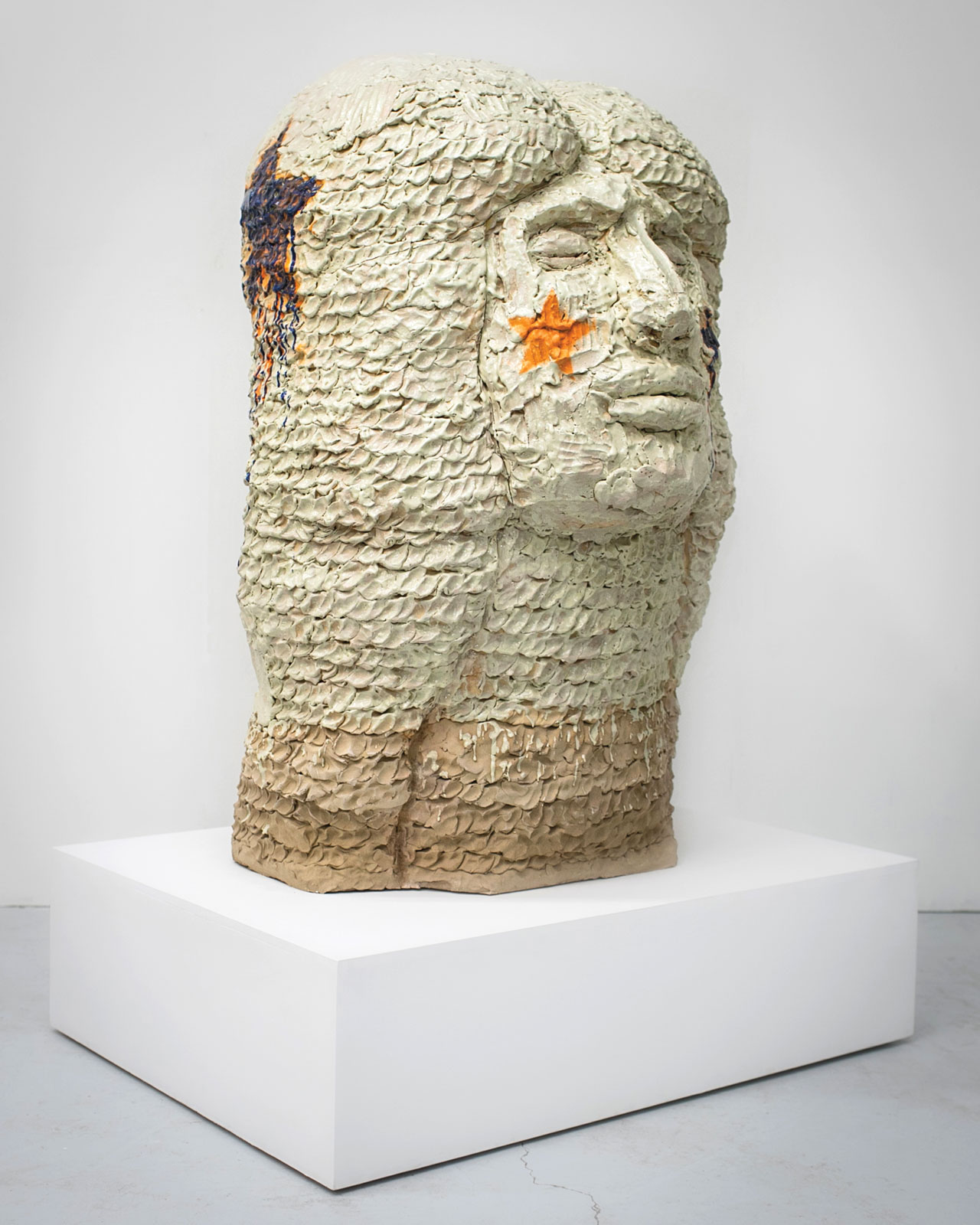 Raven Halfmoon (Caddo Nation/Choctaw/Delaware), Four Doors of Prayer, 2022, clay, glaze. Museum Purchase from the Eiteljorg Contemporary Art Fellowship.
He continues, “[This piece] also talks about identity in terms of a name. I created a similar painting [titled] St. Aloysius. My great grandfather’s name was Istahook or Good Strike in English. In the 1880s Fort Belknap Indian Reservation census documents, he’s recorded as Good Strike, but then later in that decade, he’s listed as Aloysius Chandler. The local Catholic Church renamed him a saint’s name, St. Aloysius, which was one of the ways the church and federal government tried to change our identity. Later on, when my father was born, my grandmother named him after her father, Aloysius.”
Visit the Eiteljorg Museum in Indianapolis, Indiana, through February 25 to view additional thought provoking contemporary Native American works. Please view the museum website for information regarding public events surrounding the exhibition.
Through February 25, 2024
UNSETTLE/Converge: The Eiteljorg Contemporary Art Fellowship 2023
Eiteljorg Museum, 500 W. Washington Street, Indianapolis, IN 46204
(317) 636-9378, www.eiteljorg.org
Powered by Froala Editor