Get the scoop on the market’s eight classifications in our annual Guide to Market section. Each classification represented here has a set of subcategories unique to each classification. The artists compete within each classification, but that does not mean they are bound to just one—some artists are skilled across many disciplines. These eight classifications are a great place to start your art journey. Each one is different, with its own set of skills, materials and nuances. It also goes much deeper, with each art form changing slightly across region, tribe and culture. The artists also add their own spin, creating limitless combinations of artwork. This diversity of material, theme, style and culture is what makes Native American art so exciting, and not just within Native American art, but also within American art as a whole.
Jewelry & Lapidary
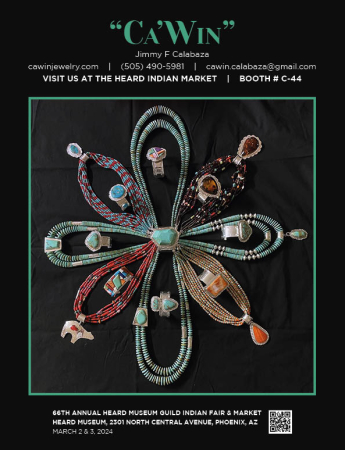
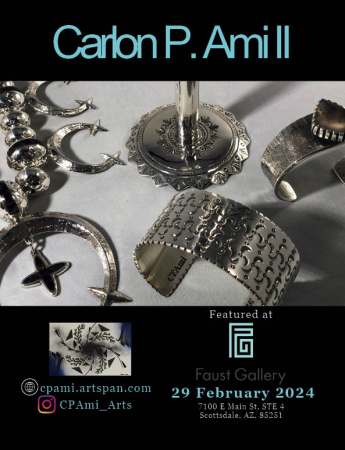
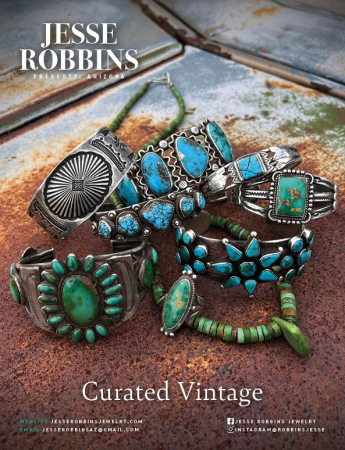
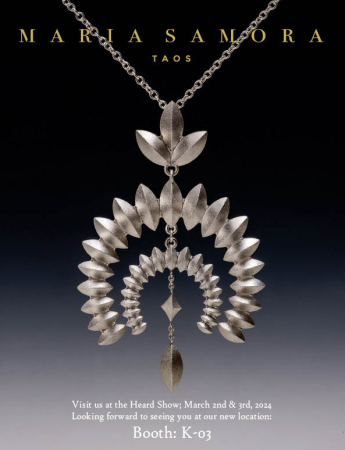
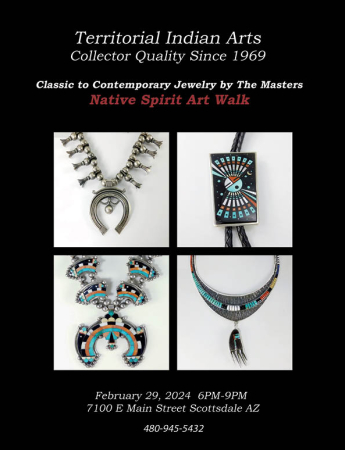
Although Native Americans in the Southwest only began selling jewelry made from silver and turquoise to tourists around 1900, it is now one of the most highly collected styles of American-made jewelry. Rich, boldly colored gemstones and shells set in intricately hand-worked silver are a few of the hallmarks of Native American designs. Although the traditional metalwork of the Southwest has long been recognized for the ubiquitous turquoise and silver squash-blossom necklaces and concho belts, tribes from all parts of North America create their own style of jewelry that reflects their individuality, traditions, beliefs and environment. You will find the whole spectrum represented at this year’s Heard Museum Guild Indian Fair & Market, where nearly 200 artists working in jewelry, lapidary and metalwork will dazzle you with their unique creations.
Artists to Look For
David Gaussoin (Navajo (Diné)/ Picuris Pueblo)
Ronald Striegel (Potawatami Nation)
Adrian Pinnecoose (Navajo (Diné)/ Southern Ute)
Michael Na Na Ping Garcia (Pascua Yaquit)
Darryl Dean Begay (Navajo (Diné))
Piki Wadsworth (Hopi)
Keri Ataumbi (Kiowa)
Dana Chavez (Santo Domingo)
Fritz Casuse (Navajo)
Dina Huntinghorse (Wichita)
Richard Chavez (San Felipe)
Behind the Scenes
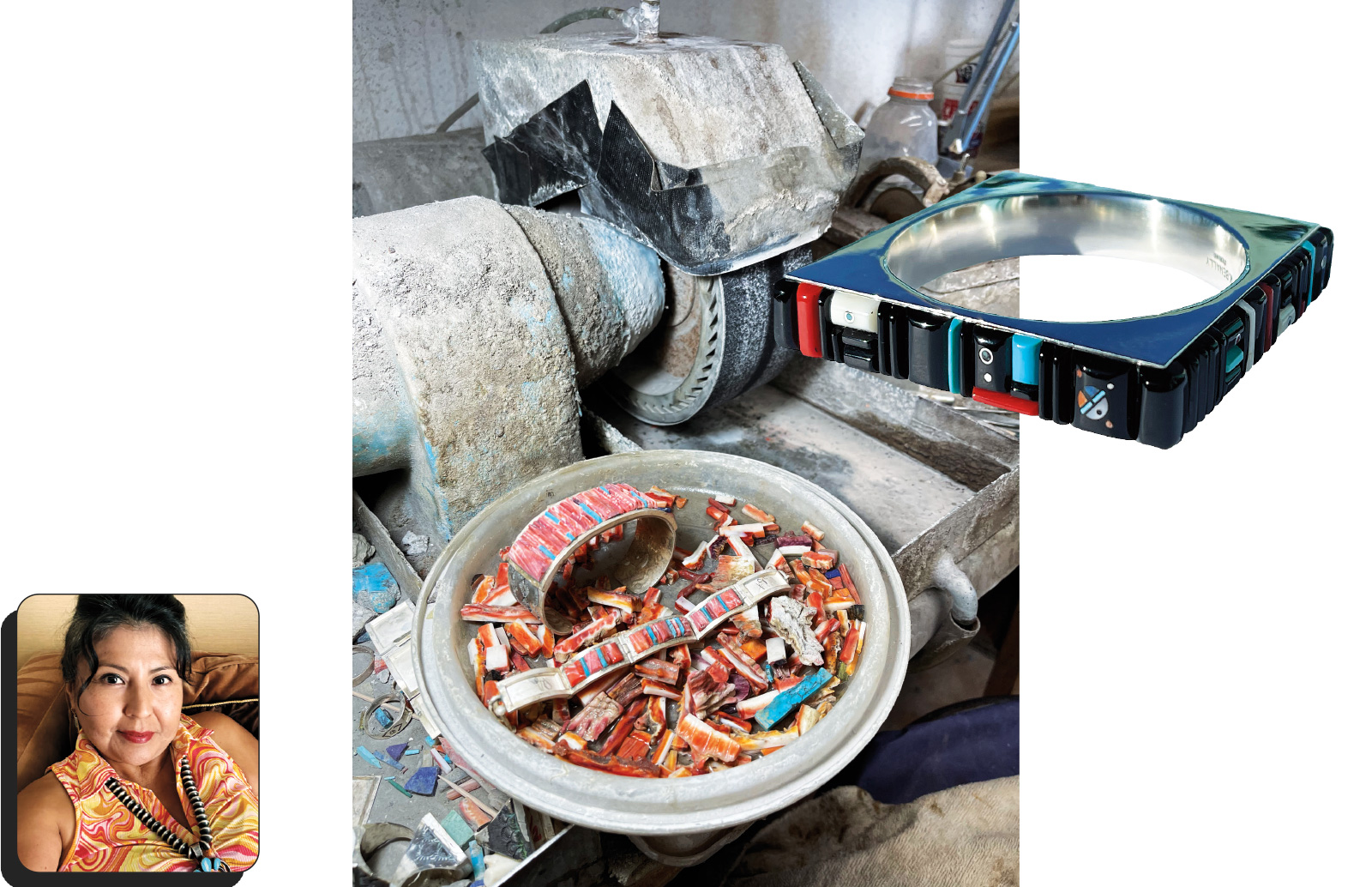
Veronica Bennally (Navajo (Diné))
Booth: C-29
Veronica Benally enjoys working with silver, different stones and sea shells. “I believe each artist has their own unique type of work, their signature style—just like a thumbprint,” says Bennally. “So, when you purchase any of our pieces you take part of us as well.” Here, Bennally is in the process of making a cuff bracelet and a link bracelet with spiny oyster shells and Kingman turquoise. “I use a trim saw to cut the shells into smaller pieces and a grinding machine that has water running through it to keep the dust down and to prevent the shells from cracking or burning,” she explains.
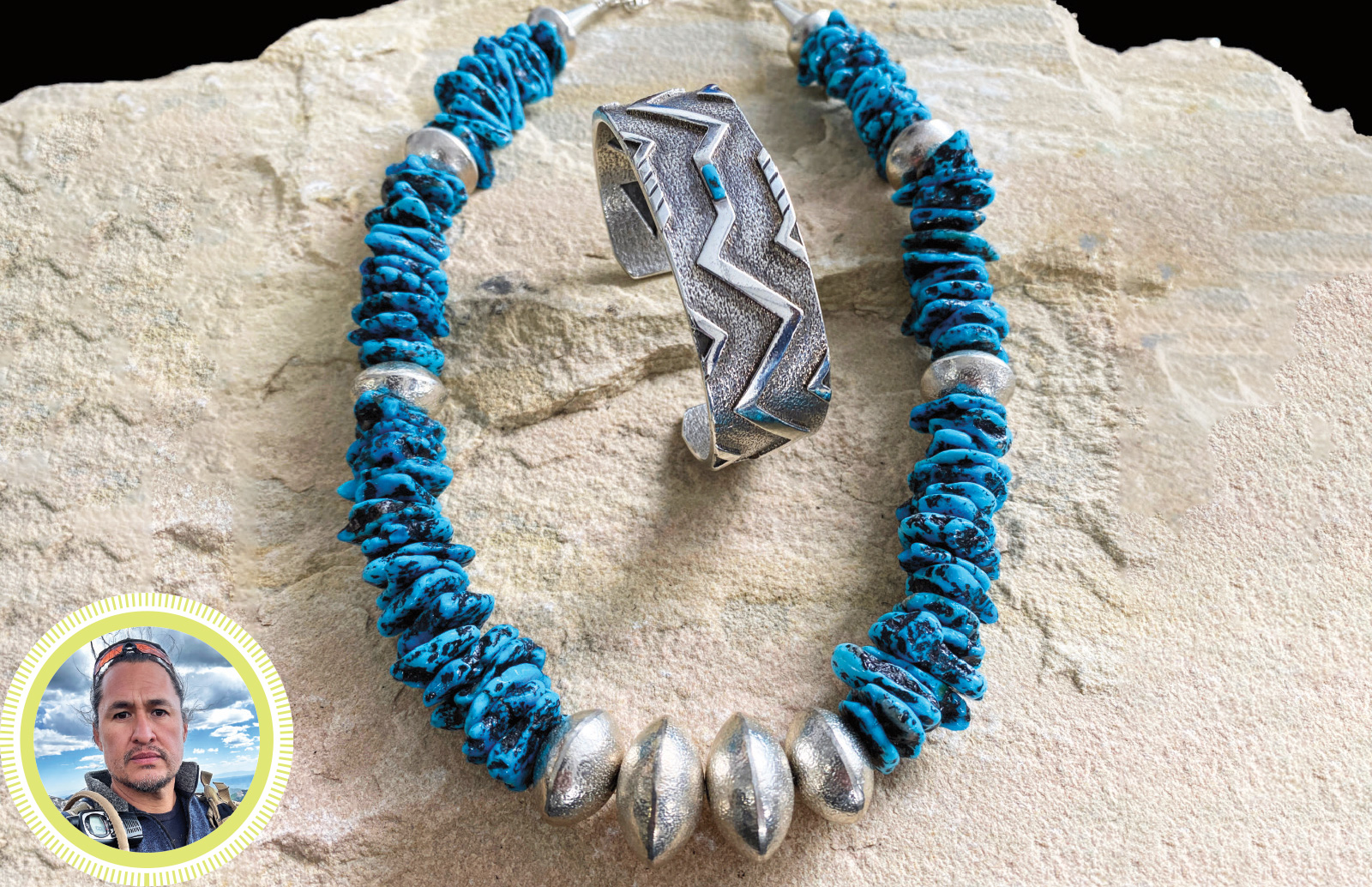
Jeff DeMent (Navajo (Diné))
Booth: H-O1
People often ask Jeff DeMent about the significance of the Lightning Arrow in many of his designs. “To me the Lightning Arrow is a powerful symbol of strength and overcoming adversity, never accepting defeat and continuing to move forward,” says DeMent. “It is there to remind me who I am, where I came from, and to live my life with honor and integrity no matter the challenges I face. I believe that together we can change the world.”
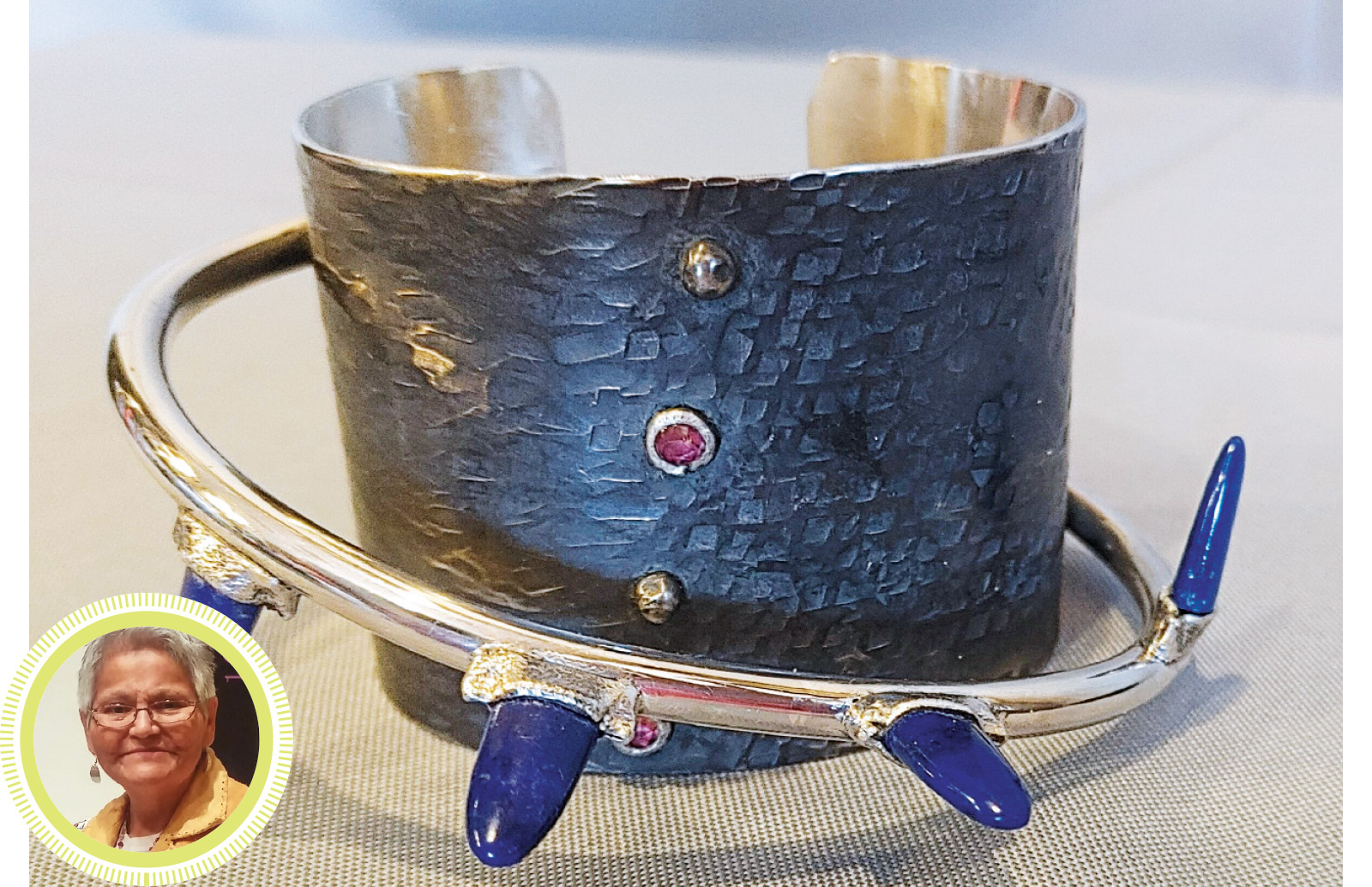
Nelda Schrupp (Pheasant Rump Nakota First Nation)
Booth: D-49
Whether creating jewelry or ceremonial rattles, where the bead size plays a significant role in the sound it emits, the focal point for Nelda Schrupp’s pieces is the metal, not the jewels or stones. She says, “Right from the beginning I mixed the past and future to create art with futuristic appeal, thus creating abstract art with cultural influence.”
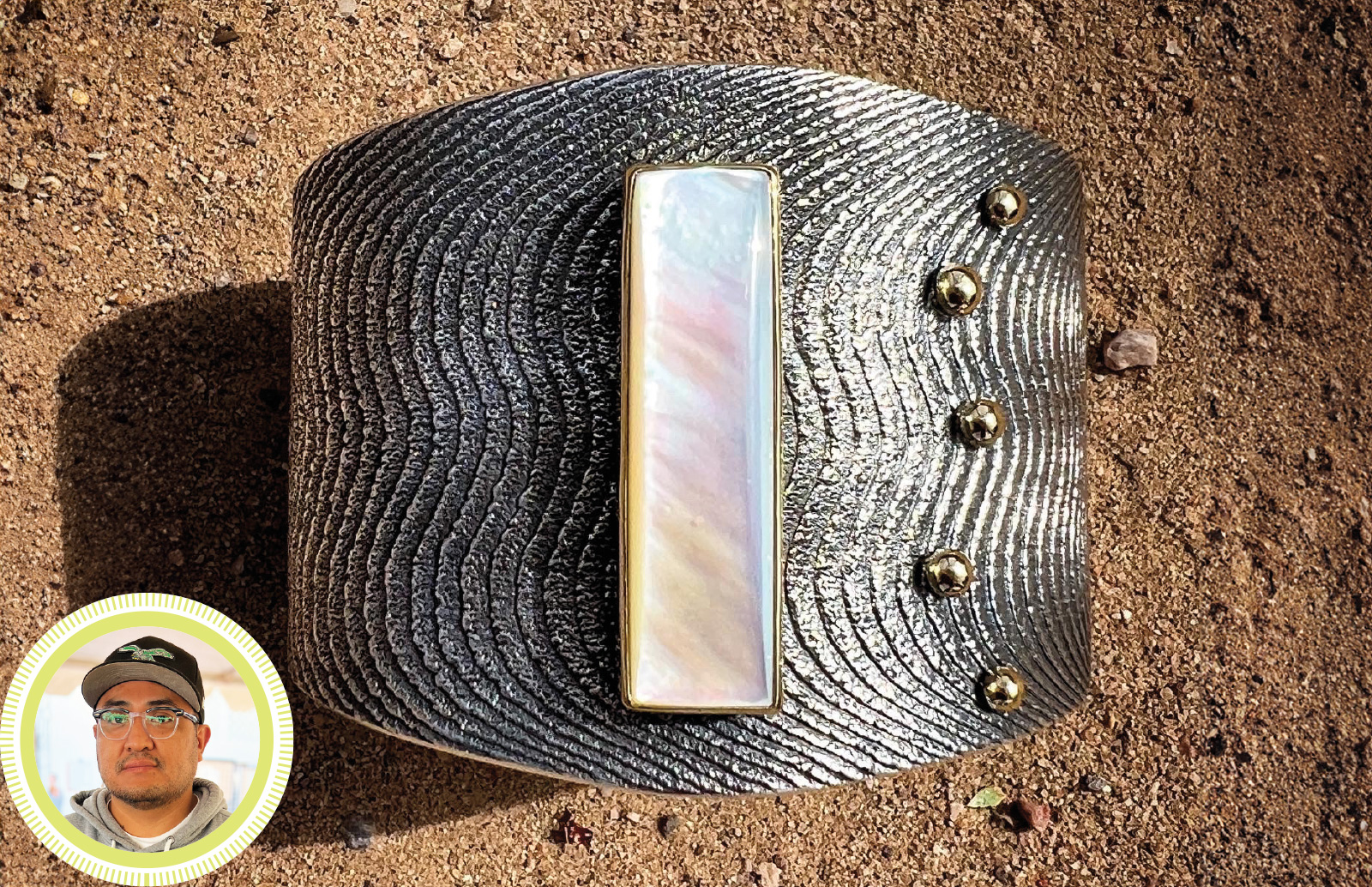 Melvin Platero (Navajo (Diné))
Booth: M-23
“It’s empowering to know that I’m able to turn raw materials that the earth provides into something beautiful and that brings others joy,” says Melvin Platero. “I know my grandparents, who raised me, would be proud of the legacy I’m carrying on. They taught me a lot about living in harmony. It’s said that your thoughts and emotions you have while creating something become part of that particular piece of work and I truly believe that.”
Pottery
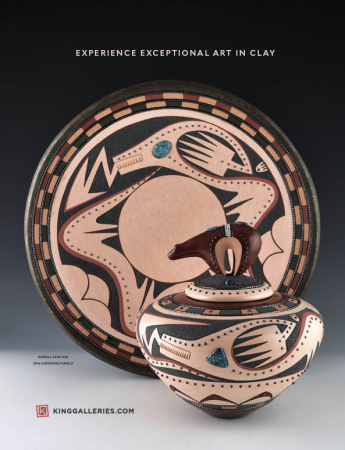
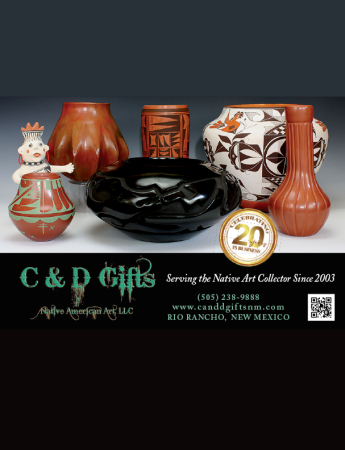
From intricate patterns and designs with different colors and slips, to unique sculptural pieces, Native American pottery offers it all. Some artists surprise many collectors with imaginative ways in which to use the coveted medium of clay. The 2024 market will see another year of these thrilling pottery pieces, with many artists combining traditional techniques and stories with a contemporary spin. Each artist highlighted within this section takes pottery to a whole new level, while paying homage to the ancestors of their individual tribes. Continue reading to learn about each artists’ process and inspiration, and what has brought them this far today.
Artists to Look For
Melissa Antonio (Pueblo of Acoma)
Aaron Cajero (Jemez Pueblo)
Melvin Cornshucker (United Keetoowah Band of Cherokee Indians)
Erik Fender (San Ildefonso Pueblo)
Laura Gachupin (Jemez)
Rowan Harrison (Pueblo of Isleta/Navajo (Diné))
Rose Pecos-SunRhodes (Jemez)
Fawn Navasie (Hopi)
Will Riding In (Pawnee/Santa Ana Pueblo)
Marcella Yepa (Jemez Pueblo/Chickasaw)
Agnes Peynetsa (Zuni Pueblo)
Sharela Waquie (Jemez Pueblo)
Behind the Scenes
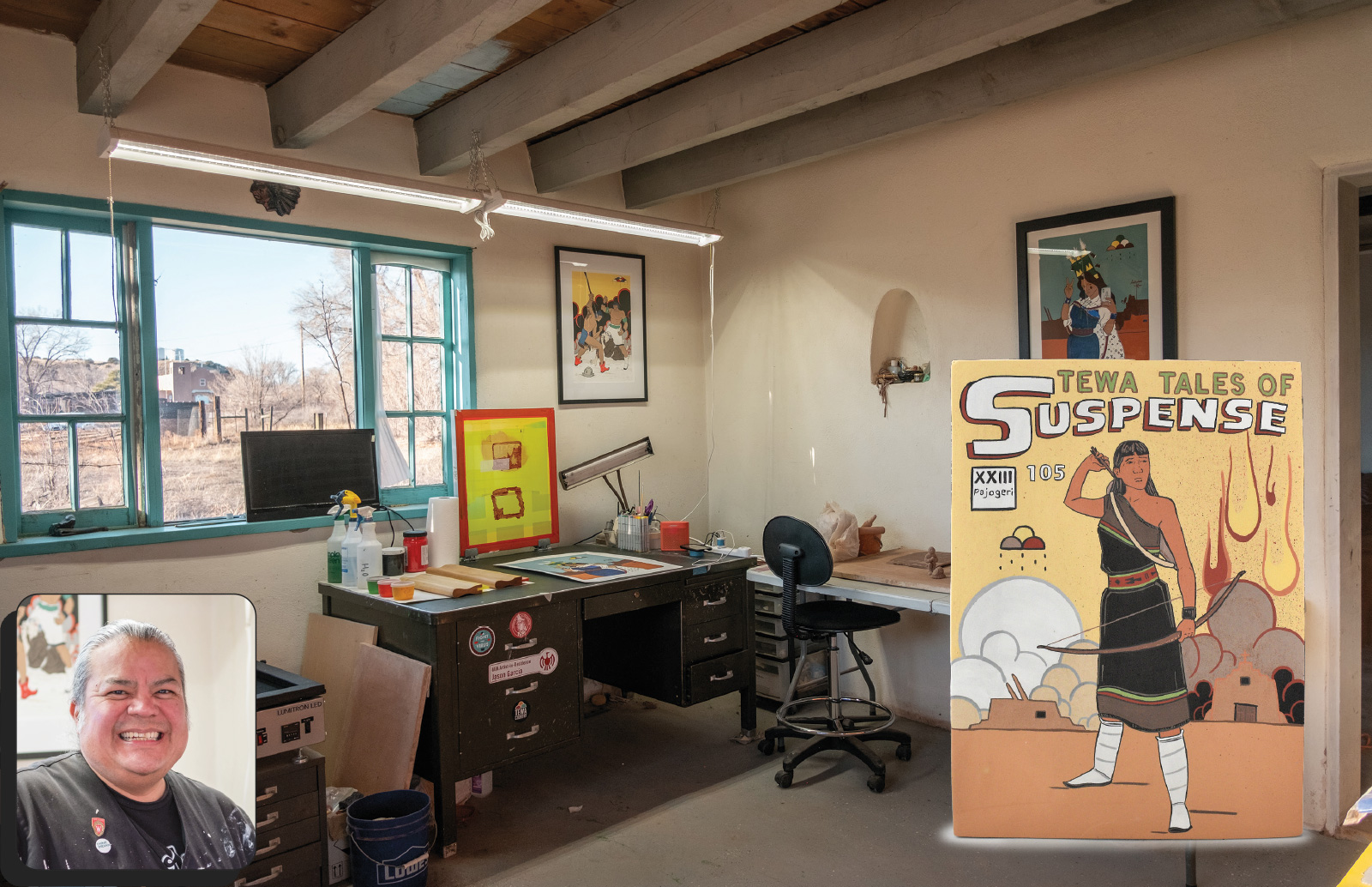 Jason Garcia (Santa Clara Pueblo)
Booth: F-26
Jason Garcia’s work documents the ever-changing cultural landscape of his home of K‘haPo Owingeh/Santa Clara Pueblo, New Mexico. “My work uses traditional pueblo pottery materials and techniques with clay sourced from the surrounding land,” he says. “My work is influenced by Tewa cultural ceremonies, traditions and stories, as well as 21st-century popular culture, comic books and technology. My studio is located in K’haPo Owingeh/Santa Clara Pueblo, and I have been working here since 2016...It was once my paternal grandparents’ home and was built of adobe and other natural materials sourced locally in the late 1950s to the 1960s. I feel fortunate to be able to create in such an amazing and beautiful space in my own community.”
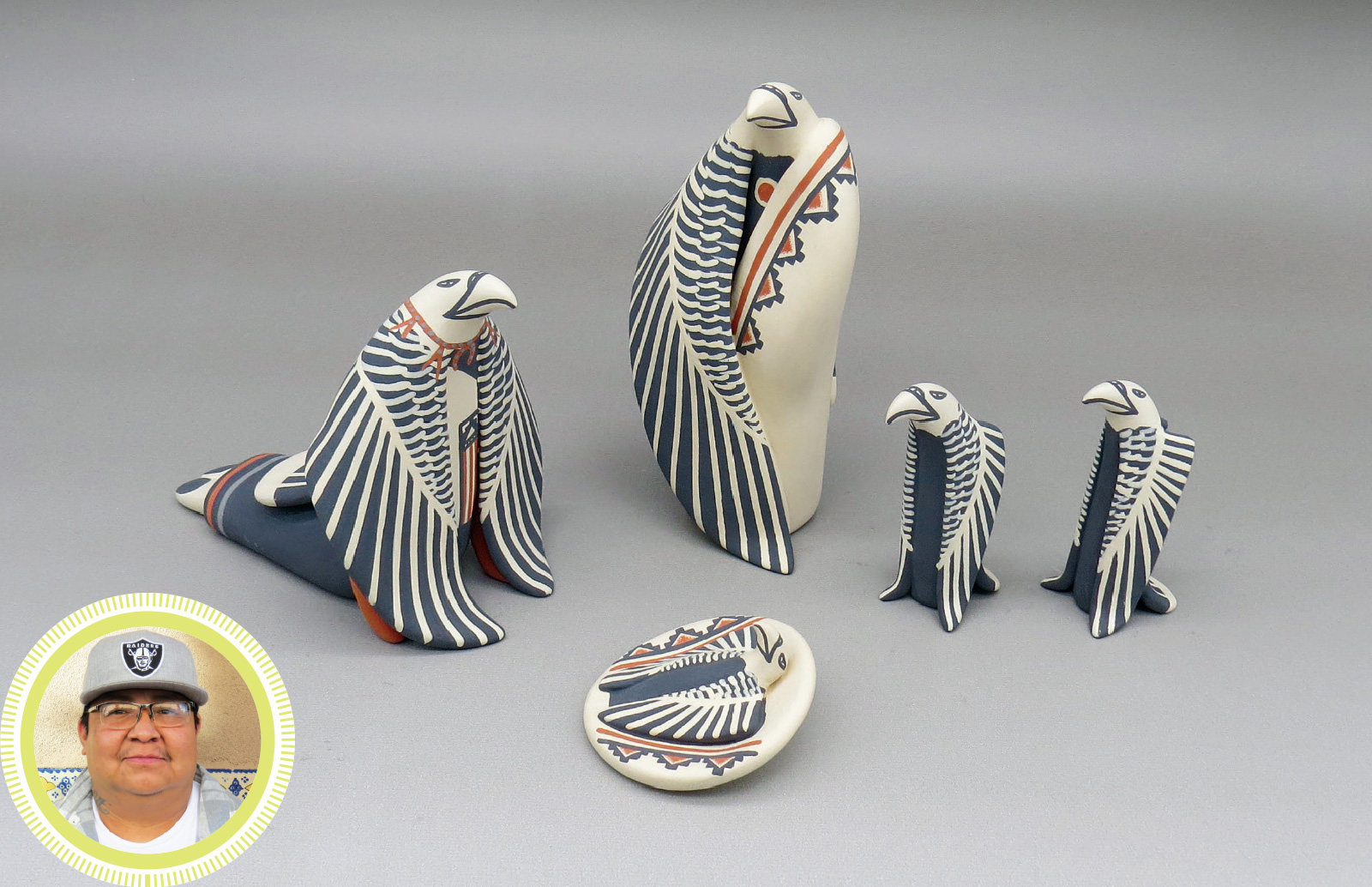 Loren Wallowingbull (Northern Arapaho/Jemez Pueblo)
Booth: D-23
“My inspiration and motivation in making my pottery figures is allowing myself to be creative in my own way, connecting and identifying with where I come from...,” shares Wallowingbull. “I create my eagle storytellers and bird figurines such as owls, parrots and stellar jays. All the figures are made from traditional clay and paint gathered from the surrounding mountain of Jemez Pueblo.”
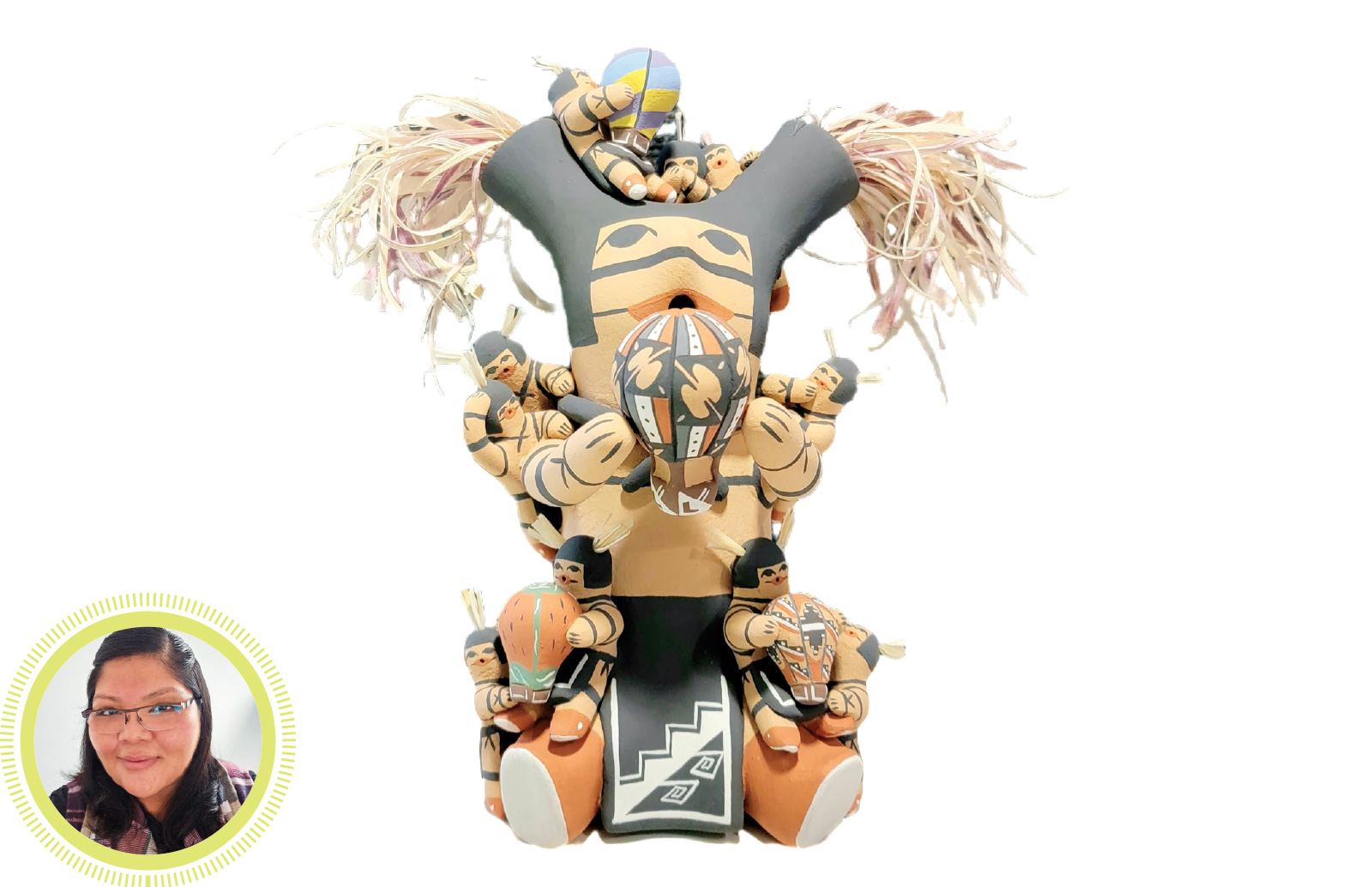 Sharela Waquie (Jemez Pueblo)
Booth: C-08
Waquie is the proud granddaughter of the well-known Jemez potter, Judy Toya-Waquie, and is the fourth-generation potter in her family. “I started working on pottery two years ago, when my grandmother asked me to keep the tradition alive,” says Waquie. “My focus is to create my own name in the world as an artist. I strive to become a good potter and to bring joy and happiness to people’s faces.”
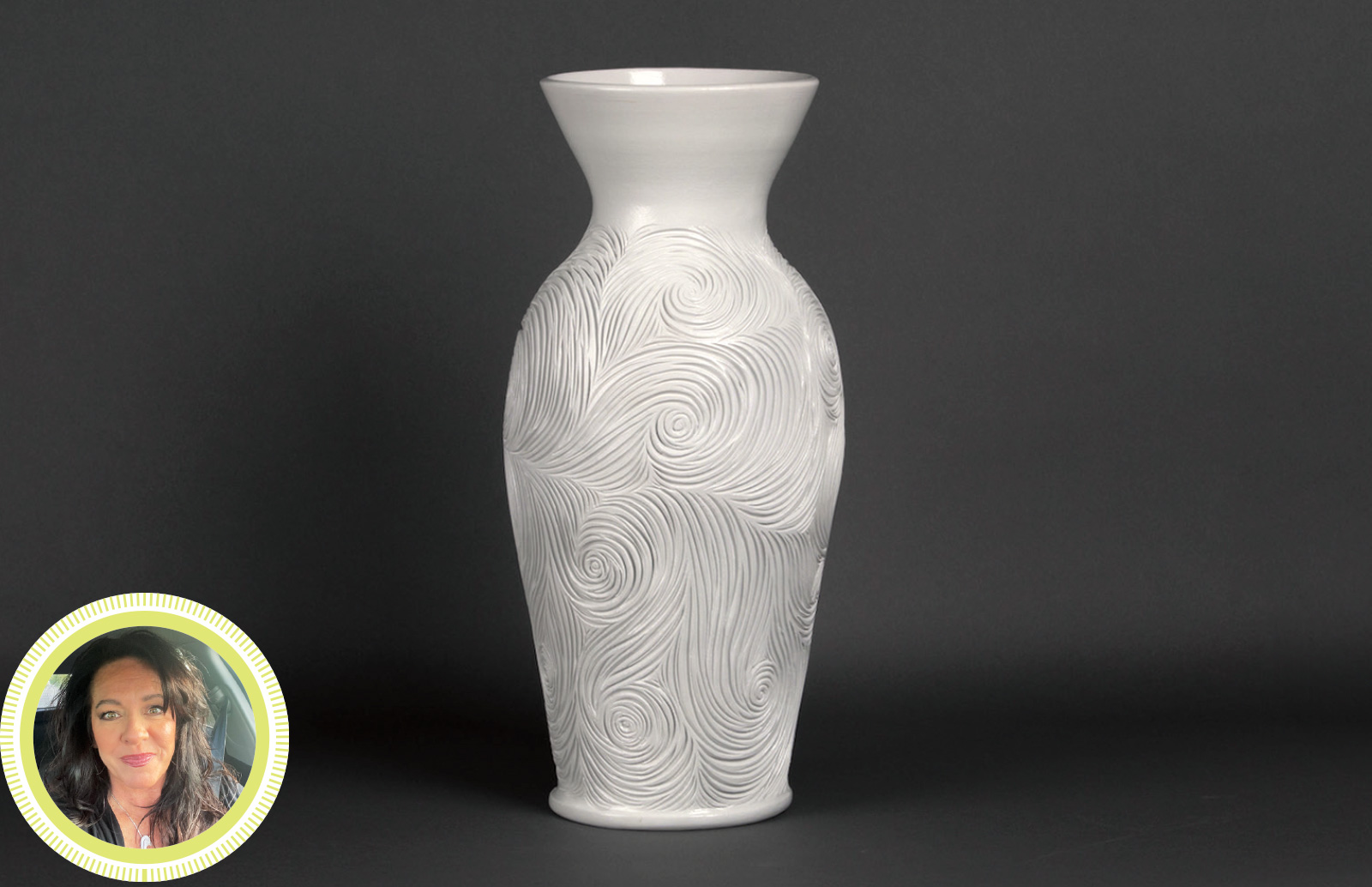 Tama Roberts (Cherokee Nation)
Booth: D-50
Each of Tama Roberts pieces are original and a direct representation of her heritage...“Using the interconnection and dependence of the four elements, I am hoping that each piece is emblematic in the relatedness and respect that we carry forth for Mother Earth and all of her inhabitants,” says Roberts. “My design features reflect contemporary characteristics that mirror the ‘art of today,’ married with the connections from the past.”
Two-Dimensional Art
Two-Dimensional Art is one of the most exciting and dynamic classifications you will find at this year’s Heard Museum Guild Indian Fair & Market, as emerging artists find innovative ways to combine aspects of contemporary Indigenous life with traditional practices, symbolism and beliefs. New digital technology has allowed for further experimentation with some artists creating paintings and photographs altered to look like weavings or carving patterns. Other artists are reinventing ledger art to address issues relevant today and employing pop culture references as a means to explain daily Indigenous life. As you can see in our selection of featured artists, women artists are coming to the forefront of the genre, making powerful statements through powerful art. Read on to learn about how cultural heritage continues to inform today's cutting edge contemporary art.
Artists to Look For
Brion Hattie, Jr. (Zuni)
Randy Kemp (Choctaw/ Mvskoke/Euchee)
Elroy Natachu, Jr. (Zuni)
Heather Johnston (Qagan Tayagungin)
Robert Martinez (Northern Arapaho)
Zoe Urness (Tlingit)
Terran Last Gun (Blackfeet)
Adrian Pinnecoose (Hopi)
Rhiannon Nez (Navajo (Diné))
Darryl GrowingThunder (Fort Peck Dakota/Nakoda)
Behind the Scenes
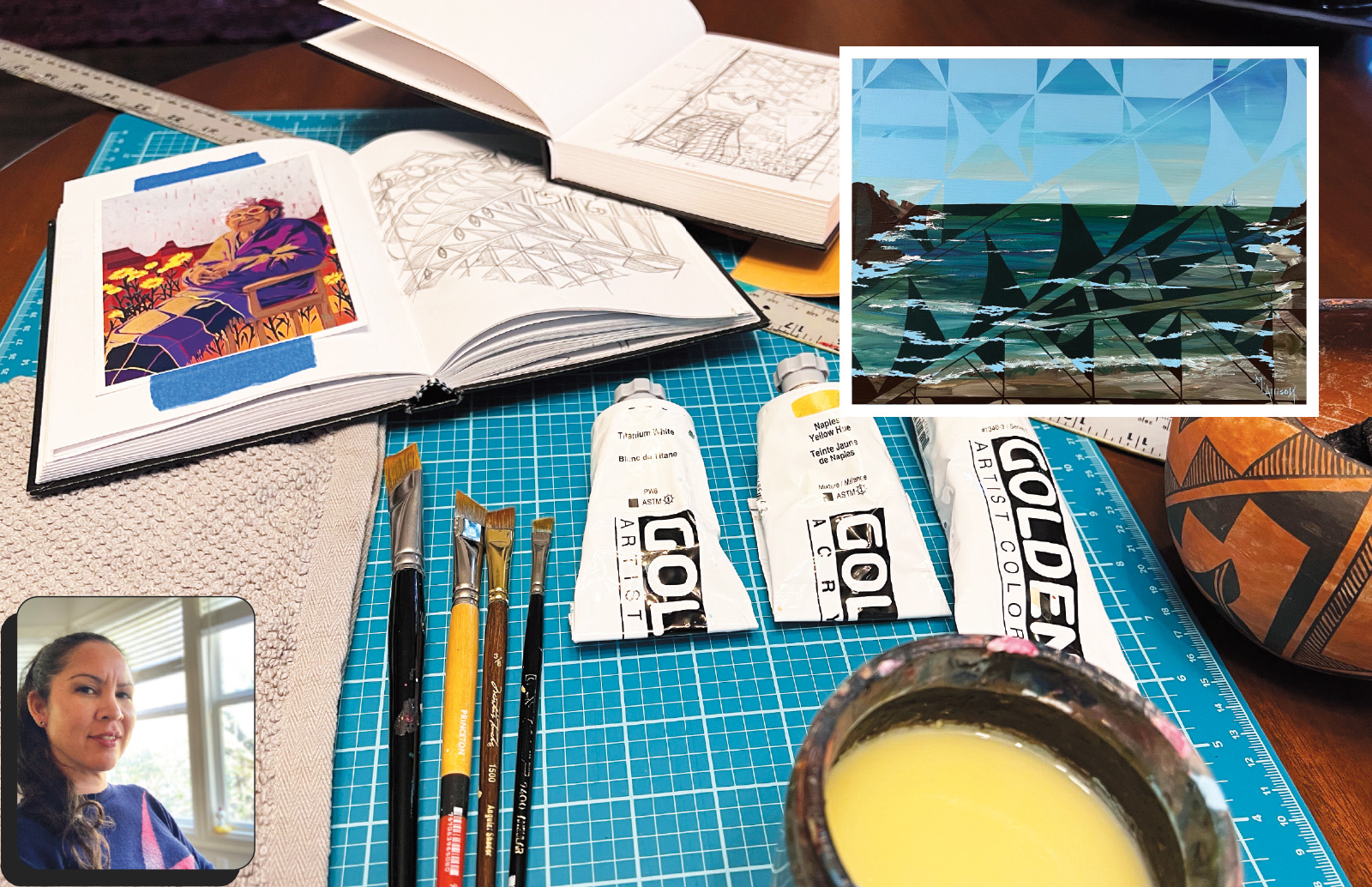 Marla Allison (Laguna Pueblo)
Booth: E-14
Marla Allison is a contemporary painter from Laguna Pueblo, New Mexico, now living in Healdsburg, California. Inspired by ancestral traditions, the human experience and cultural landscapes, Allison paints from the mind’s eye as a free spirit exploring various painting styles to capture the essence of place and time—past and present. “A skilled hand with the right tool can create magic,” says Allison. “In my paintings I use exact lines, silver and gold leaf, acrylic and oil paint, as well as designs of traditional pottery (the ceramic vessel which carries our stories and prayers). Inspiration is from watching life around me and this is what I call my magic added to canvas. It’s spirit. It’s understanding. It is art.”
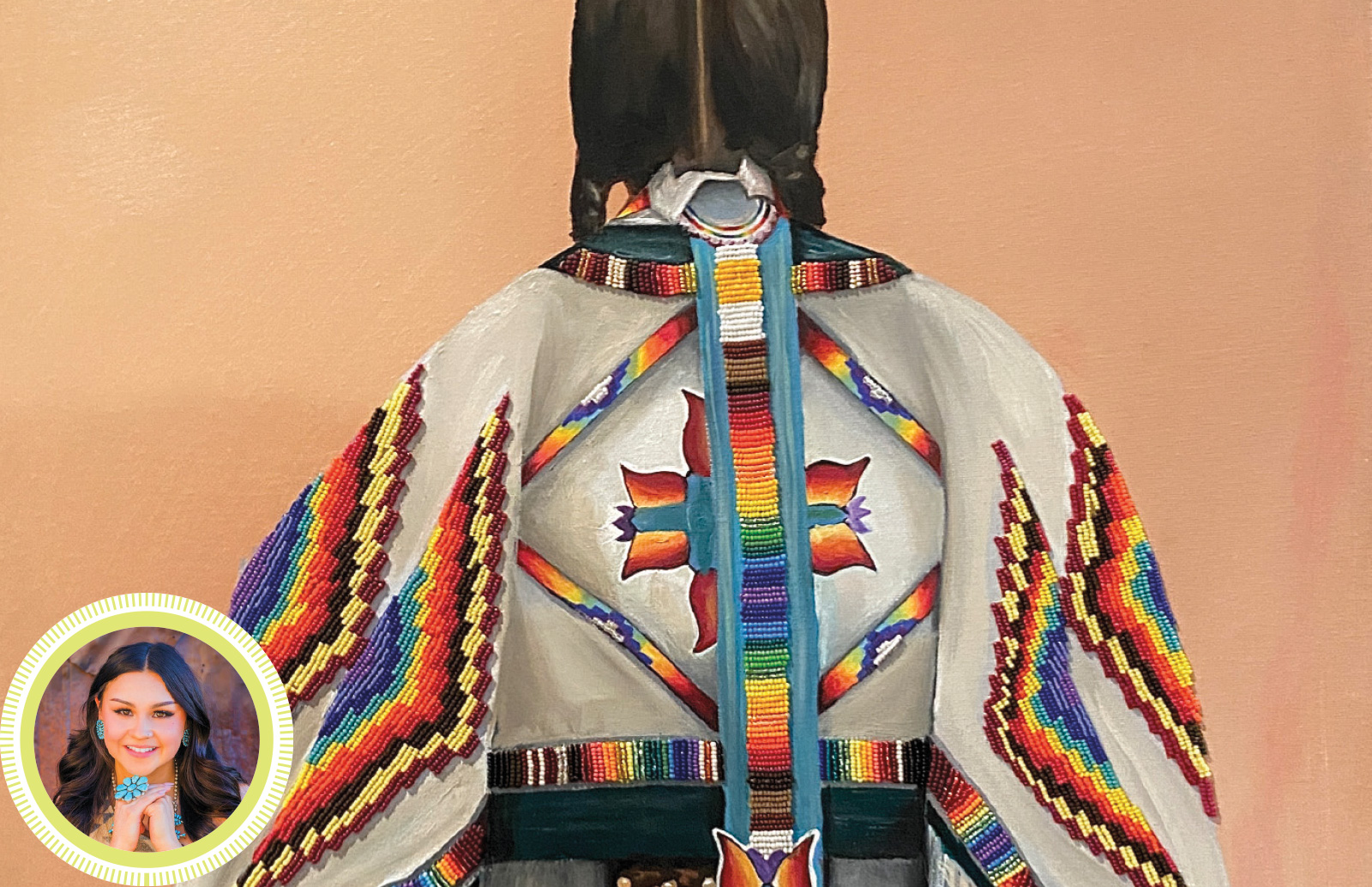 Skylar Blackbull (Navajo (Diné))
Booth: B-42
“Being a Navajo woman on the reservation, my artistry is inspired by our vibrant color palettes and traditional crafts,” says Skylar Blackbull. “I create contemporary artwork that honors our cultural roots while pushing artistic boundaries. By blending traditional Navajo motifs with modern techniques, my aim is to capture our tribal identity and express my personal journey as a Navajo woman today. My art is a bridge between past and present, inviting viewers to explore the beauty and resilience of Native American culture.”
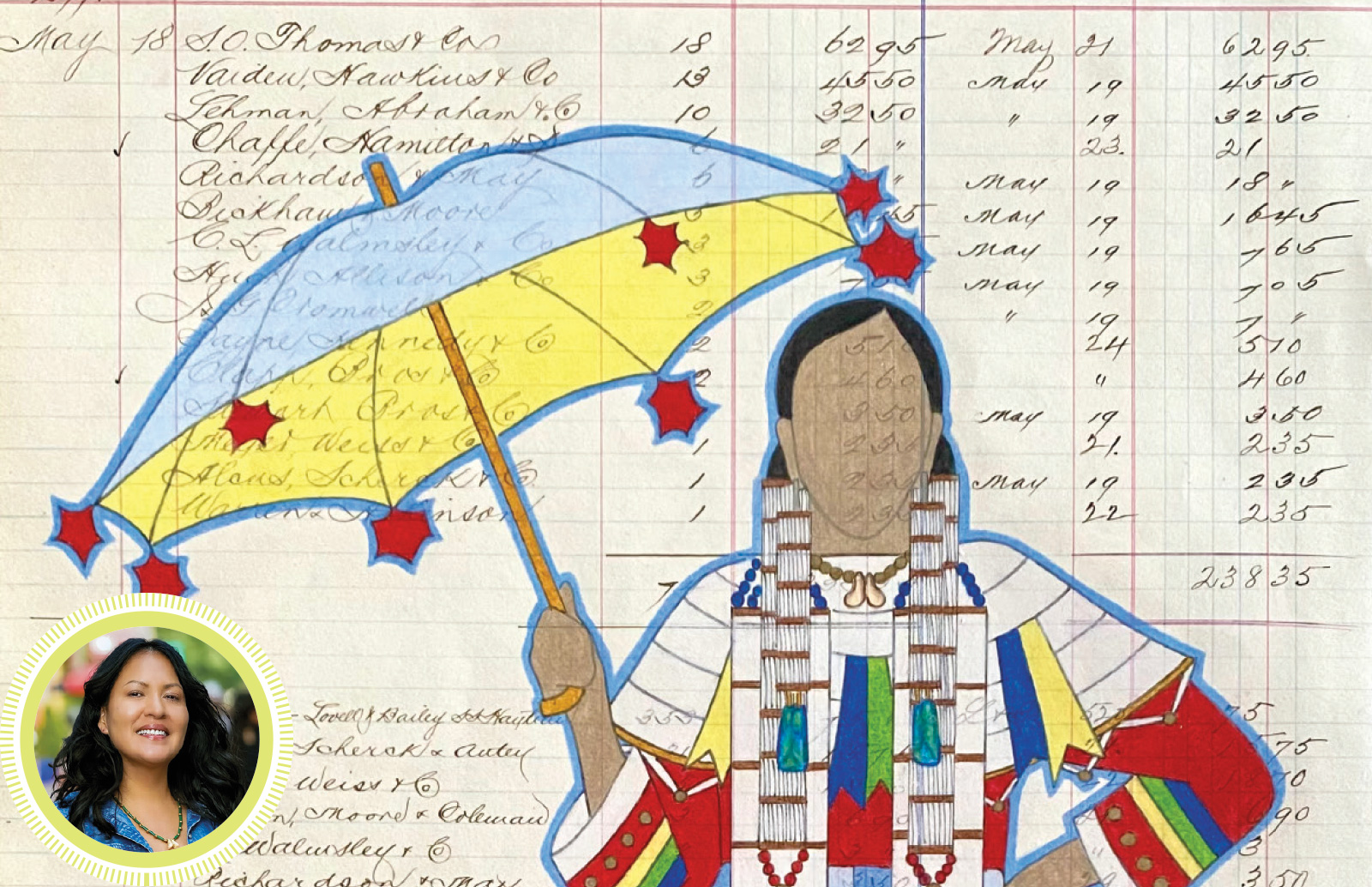 Avis Charley (Spirit Lake Dakota/Navajo (Diné))
Booth: E-11
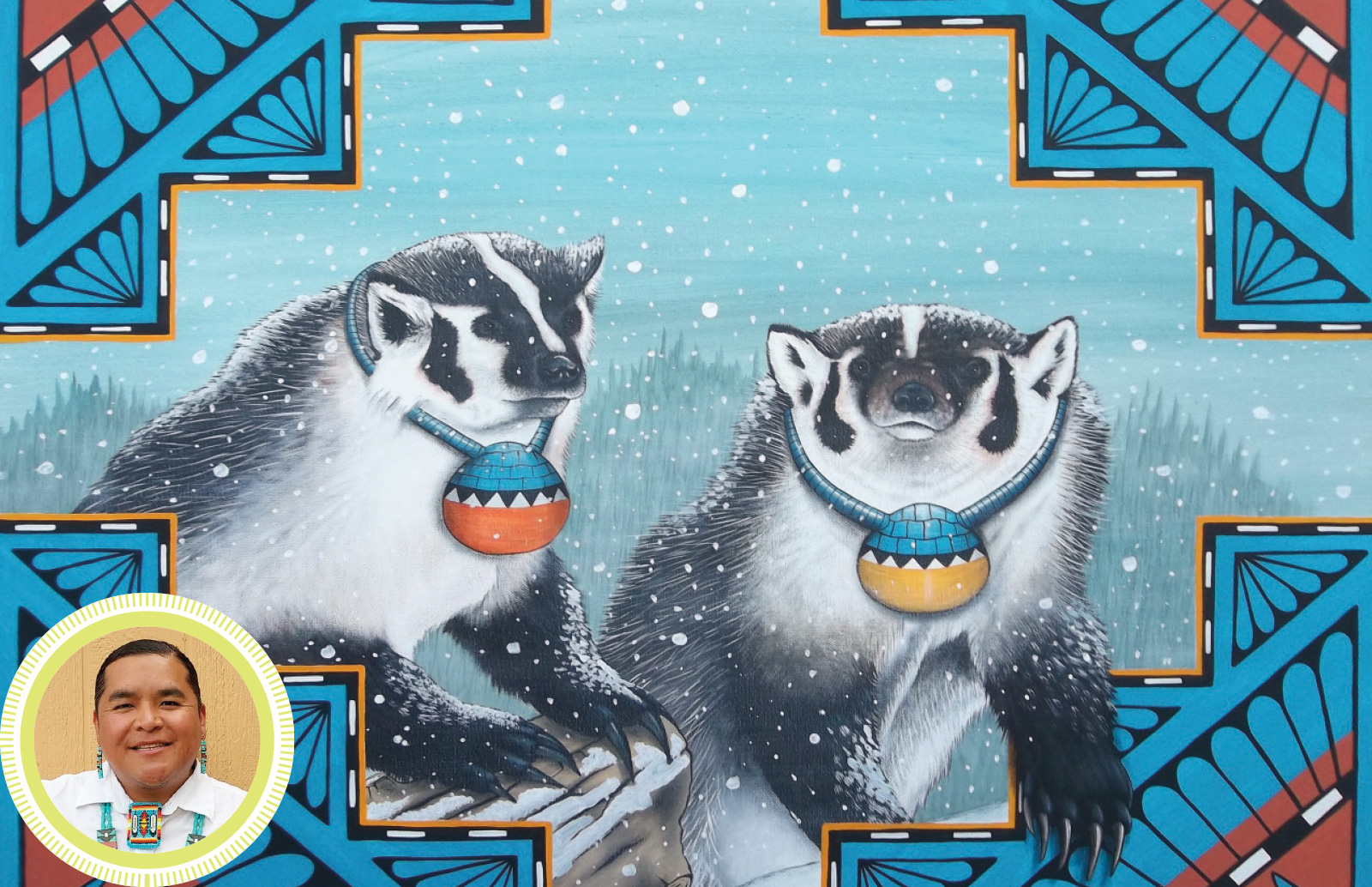
Avis Charley is a ledger artist and figurative painter born and raised in Los Angeles. Her artwork intertwines traditional values with contemporary realities, reflecting the powerful spirit of Indigenous women. Her goal is to chronicle the evolving Native American identity from the pre-reservation period to the present day, from ancestral homelands to the contemporary urban context. “I document our cultural vibrancy through my work on antique paper and oil paintings,” she says.
 Jason D. Valencia (San Felipe Pueblo)
Booth: C-34
Jason D. Valencia is from the Pueblo of San Felipe, New Mexico. A self-taught artist, he began painting in 1998. “My work of art is authentic, colorful and inspiring," he says. “I enjoy painting and creating art, while still learning as I go. I would like to thank the creator for blessing me with this talent of being an artist.” Valencia had his debut at the Heard Indian Fair & Market in 2023 and is excited to return. “The experience had a great outcome, especially meeting new people and different intelligent artists,” he says.
Pueblo Carvings
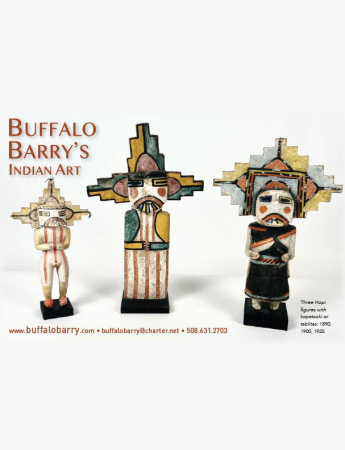
Although there are certainly exceptions, almost all of the artists from the pueblo carvings category are Hopi or Diné, live in Northern Arizona and work primarily with one material, the cottonwood root. And yet the category is still incredibly diverse in style and form, color, pose and depictions of its katsina subjects. The carving category is a fan favorite because the artwork is simply exquisite, but also because the artists infuse their works with their humor, wit and creativity. That is on full display here in our sampling of this classification.
Artists to Look For
Randall Brokeshoulder (Navajo (Diné)/Hopi/ Absentee Shawnee)
Manuel Chavarria (Hopi)
Darance Makwesa Chimerica (Hopi)
Dominic East(Hopi)
Arthur Holmes (Hopi)
Ronald Honyouti (Hopi)
Wilmer Kaye (Hopi)
Horace Kayquoptewa (Hopi)
Justin Lomatewama (Hopi)
Adrian Nasafotie (Hopi)
Gerry Quotskuyva (Hopi)
Kevin Sekakuku (Hopi)
Donald Sockyma (Hopi)
Mark Taho (Hopi/Diné)
Behind the Scenes
 Robert Albert (Hopi)
Booth: H-10
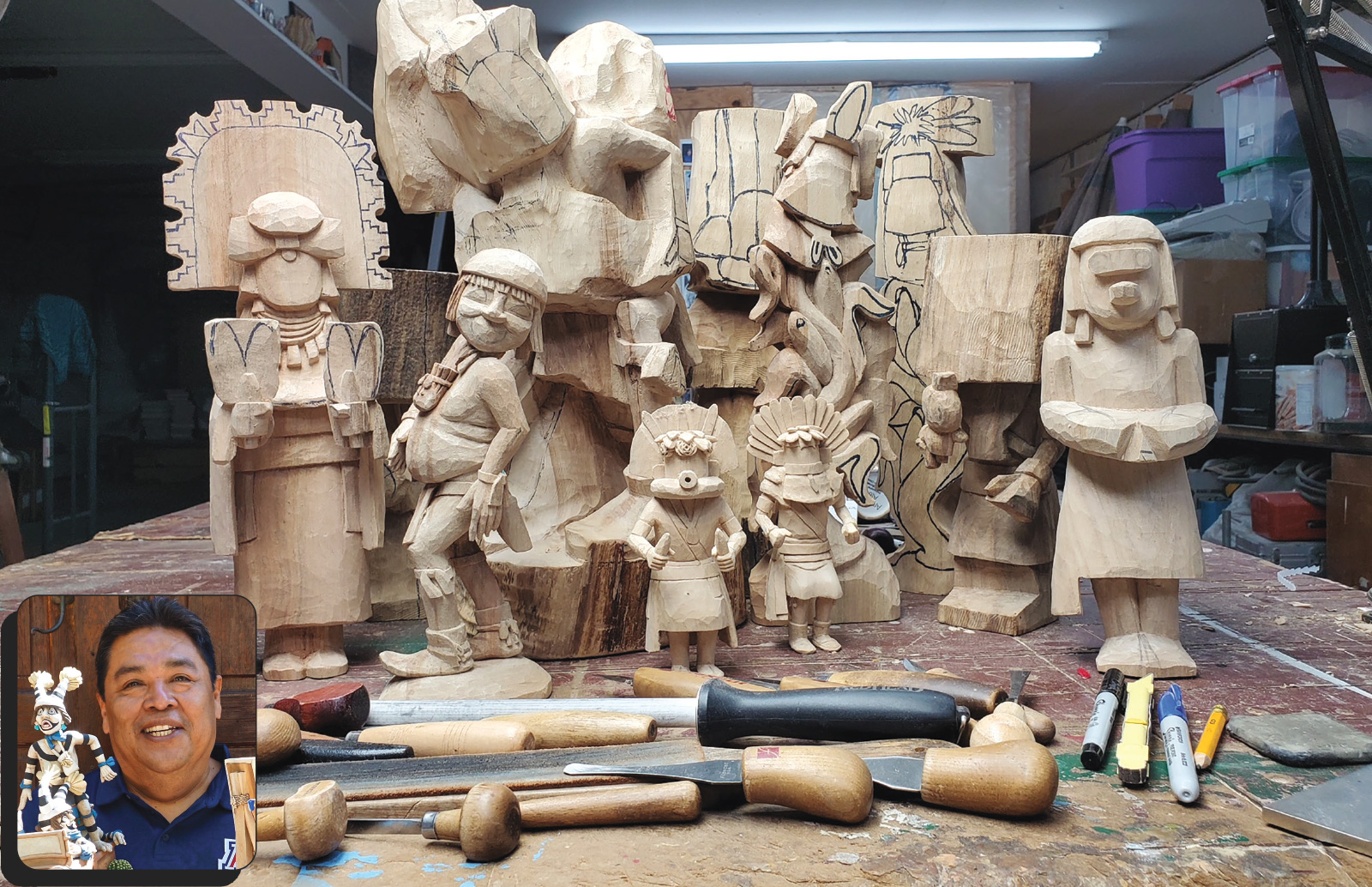
With the exception of paint and painting supplies, carving tools and sandpaper are essentially all that is used to create artwork within the studio of Hopi carver Robert Albert. Some of his newest works are meant to be humorous, with mischievous clown and trickster figures posing with cell phones, broken-down trucks and painting easels.
 Kevin Horace-Quannie (Hopi)
Booth: D-43
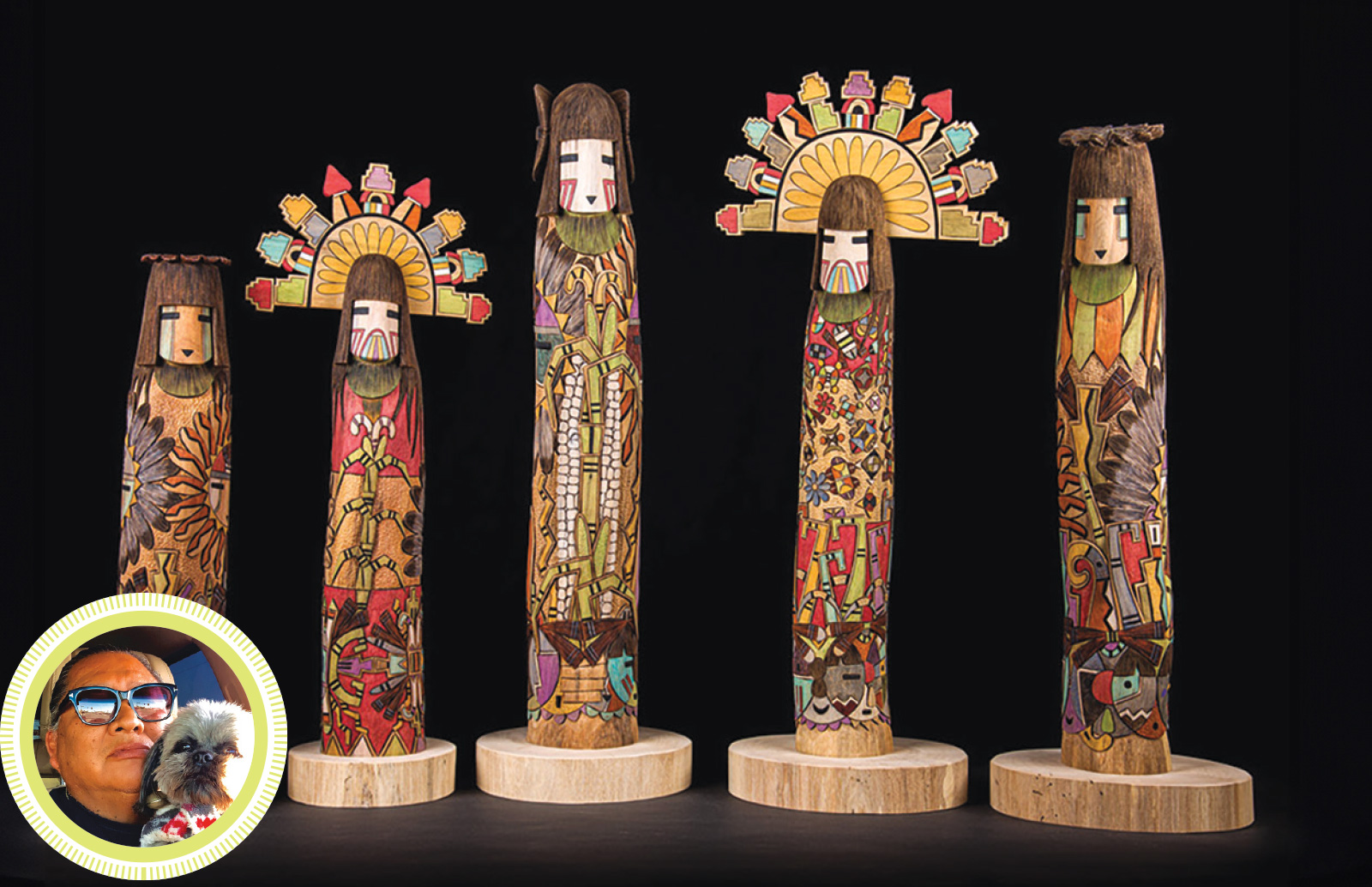
Not only does Kevin Horace-Quannie work in cottonwood, but he also will occasionally cast his carvings into bronze sculptures using the lost-wax casting process. “I believe my choice to be an artist was an ethereal choice in expressing my inner feelings through my art,” he says. “What continues to inspire and motivate me as an artisan is that my creations—whether it is a sculptured katsina in different medium or an oil painting—will make others proud to add my art to their own collections.”
 Randy Dukepoo (Hopi)
Booth: D-16
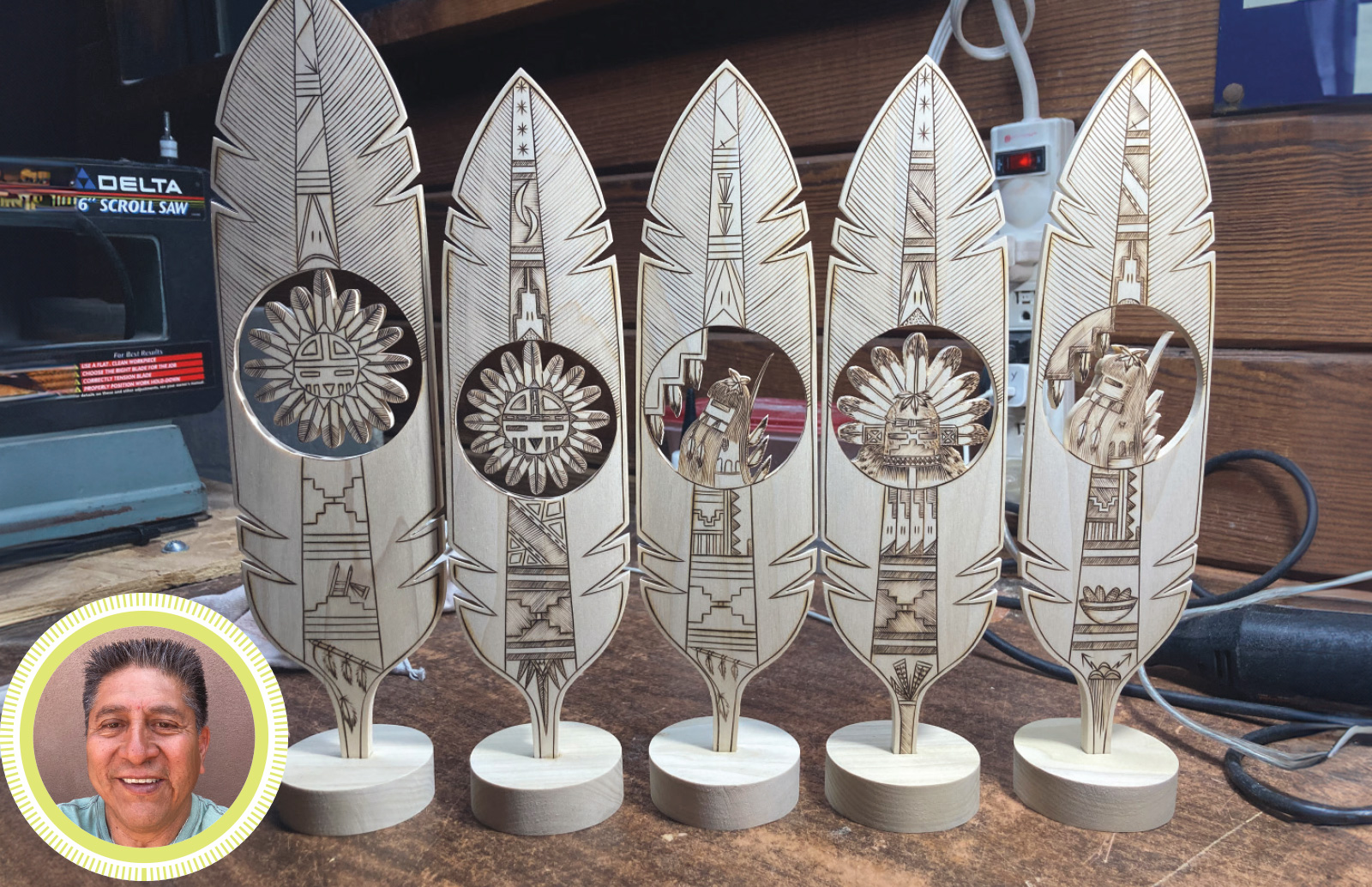
“At a young age I used to watch my late father, Anthony Dukepoo, carve katsina dolls. He never had a shop. He would just carve in the kitchen,” the artist says. “I would pick up his knife and try and he never told me not to touch his tools. Glad he didn’t. Today I carve katsina sculptures and full-figure dolls using the root of the cottonwood tree. I’m more modern in that I use a scroll saw, Dremel, belt sanders and various carving knives along with stains. I really enjoy carving and using my hands to bring out what is inside the wood.”
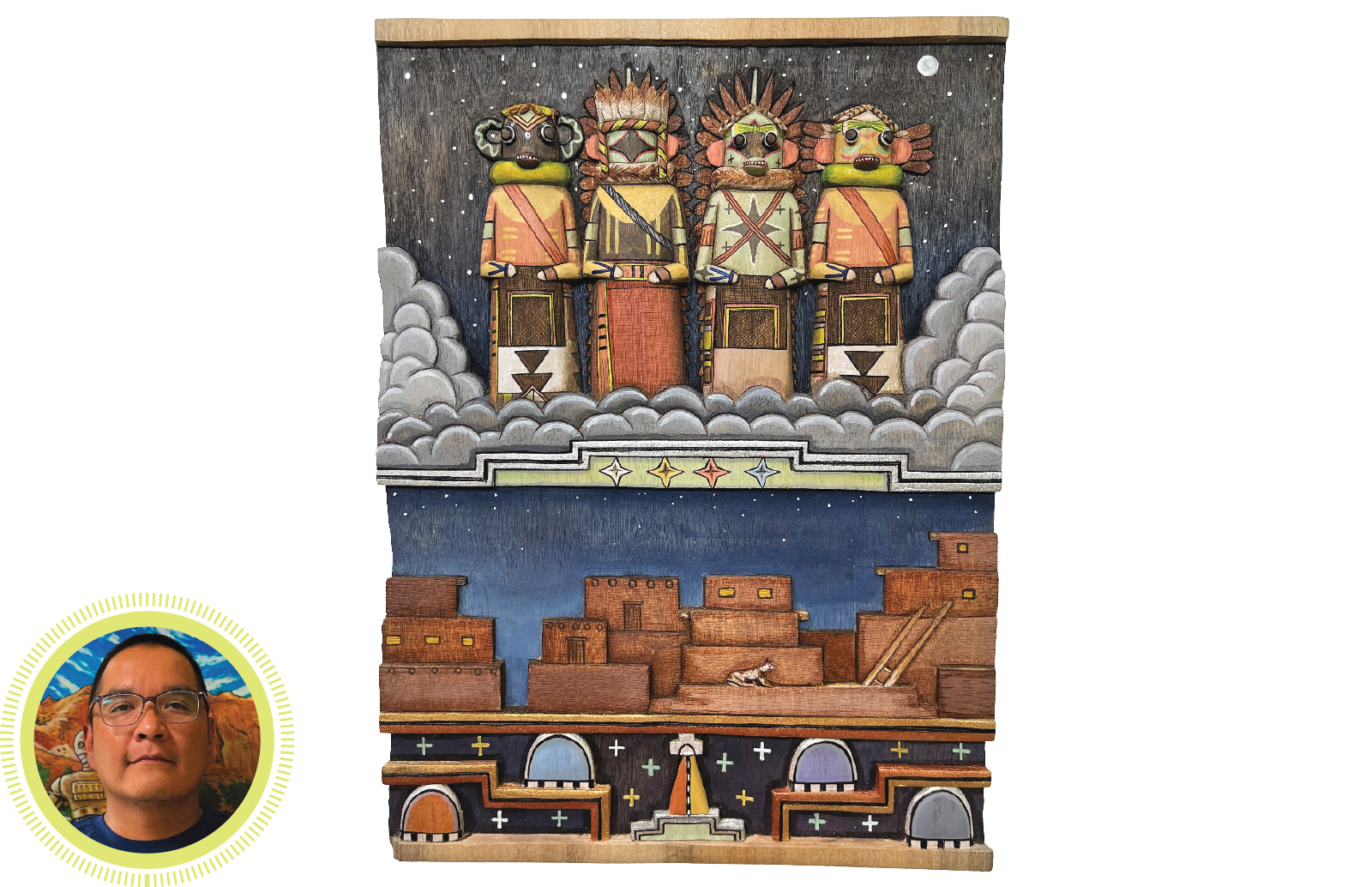 Mavasta Honyouti (Hopi)
Booth: J-06
One of the top carvers working today, whose work is collected at a high level by those with a keen eye, is Mavasta Honyouti. He will be showing his art with his father, Ronald Honyouti, and his brother, Kevin Honyouti. “I am looking forward to another great weekend at the Heard. It is always one of the highlights of the year. I’m especially excited about 2024 because I get to experience this market with my brother and our father,” he says. “I’m continually inspired by the talent, creativity and innovation. It’s a blessing to be a part of it all.”
Sculpture
Sculptors take elements of the earth and transmute them into works of art imbued with meaning and life. One of the most recognizable forms of sculpture within Native American culture are that of Zuni fetishes, chiseled primarily from stone but also materials like shells and even fossils. These small fetishes hold immense importance, often used for ceremonial purposes. Within the sculpture classification, you’ll also find large and stately formations (as well as mid-sized pieces), wrought in stone, cast in bronze or molded from clay. In the words of Navajo artist Randall Beyale, “As a sculptor, I unveil what is already there in the stone.”
Artists to Look For
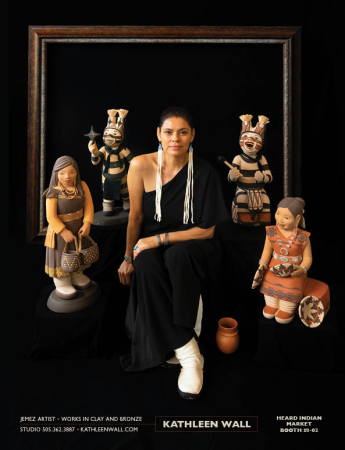
Kathleen Wall (Jemez Pueblo)
Adrian Wall (Jemez Pueblo)
Troy Sice (Zuni)
Dee Edaakie (Zuni Pueblo)
Cliff Fragua (Jemez Pueblo)
Terry Wilson (Navajo (Diné))
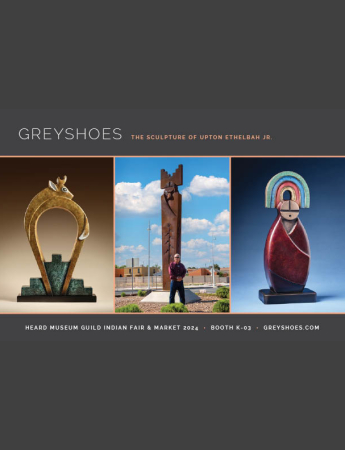
Upton “Greyshoes” Ethelbah Jr. (Santa Clara/White Mountain Apache)
Andres Quandelacy (Zuni Pueblo)
Lynn Quam (Zuni Pueblo)
Behind the Scenes
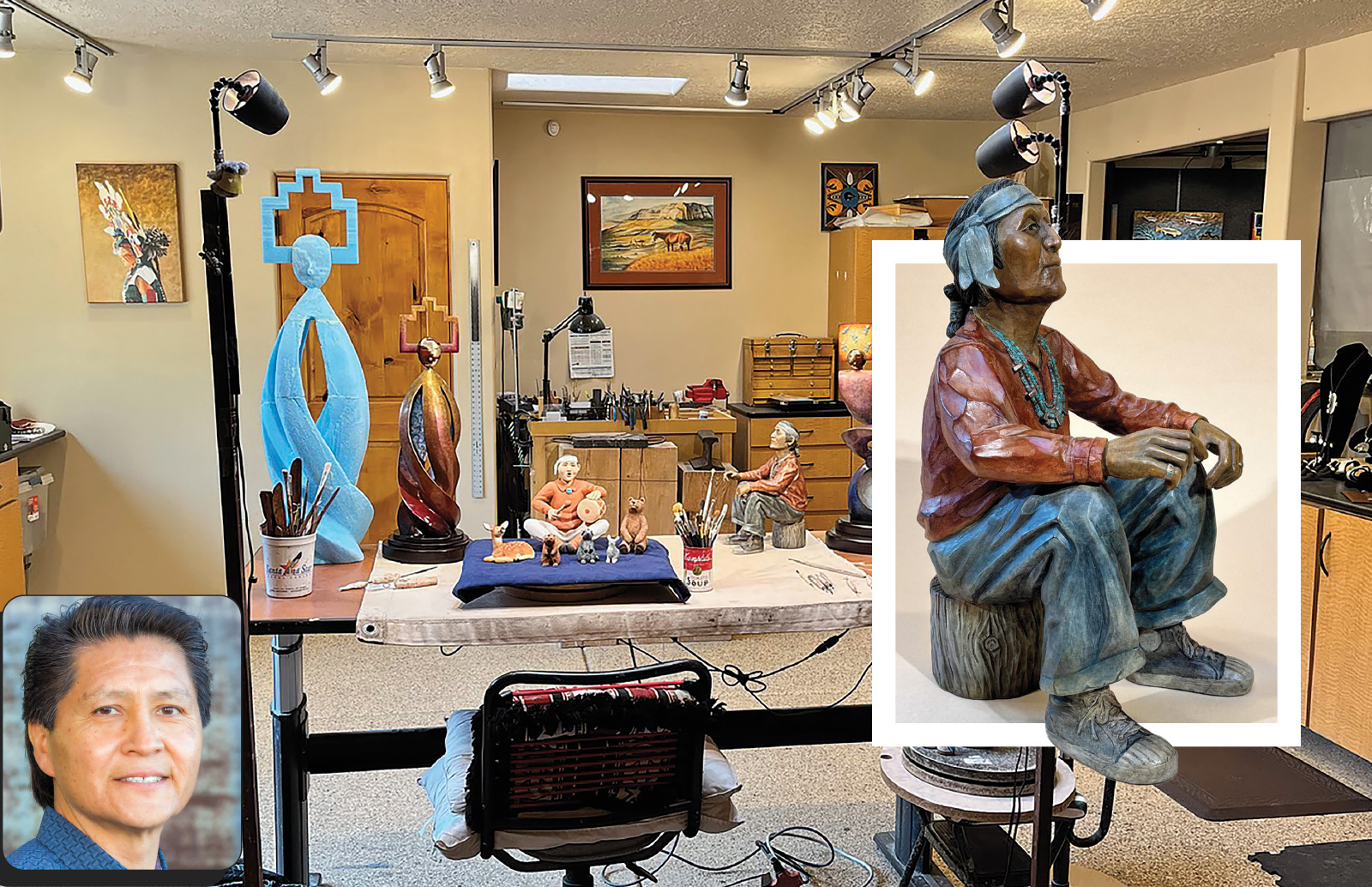 Joe Cajero Jr. (Jemez Pueblo)
Booth: D-30
“My creative energy is often spiritual in nature,” says Joe Cajero Jr. Inspired by the wisdom of his elders, nature and pueblo ceremonial life, Cajero uses realism and abstract art to represent the sacred. “I create my clay originals to full completion in my studio, the final step being kiln firing,” he says. Clay pieces can be seen on the center of the table in the photo above. Cajero continues, “And as for my bronzes, I create the original sculpture in an oil-based clay down to every detail. In the photo, the blue foam is the beginning of the enlargement process—a bronze sculpture titled Oneness. I will reshape the foam to what I consider a perfect shape, then apply oil-based clay to it. Then I work with a bronze foundry where the lost-wax casting process begins.”
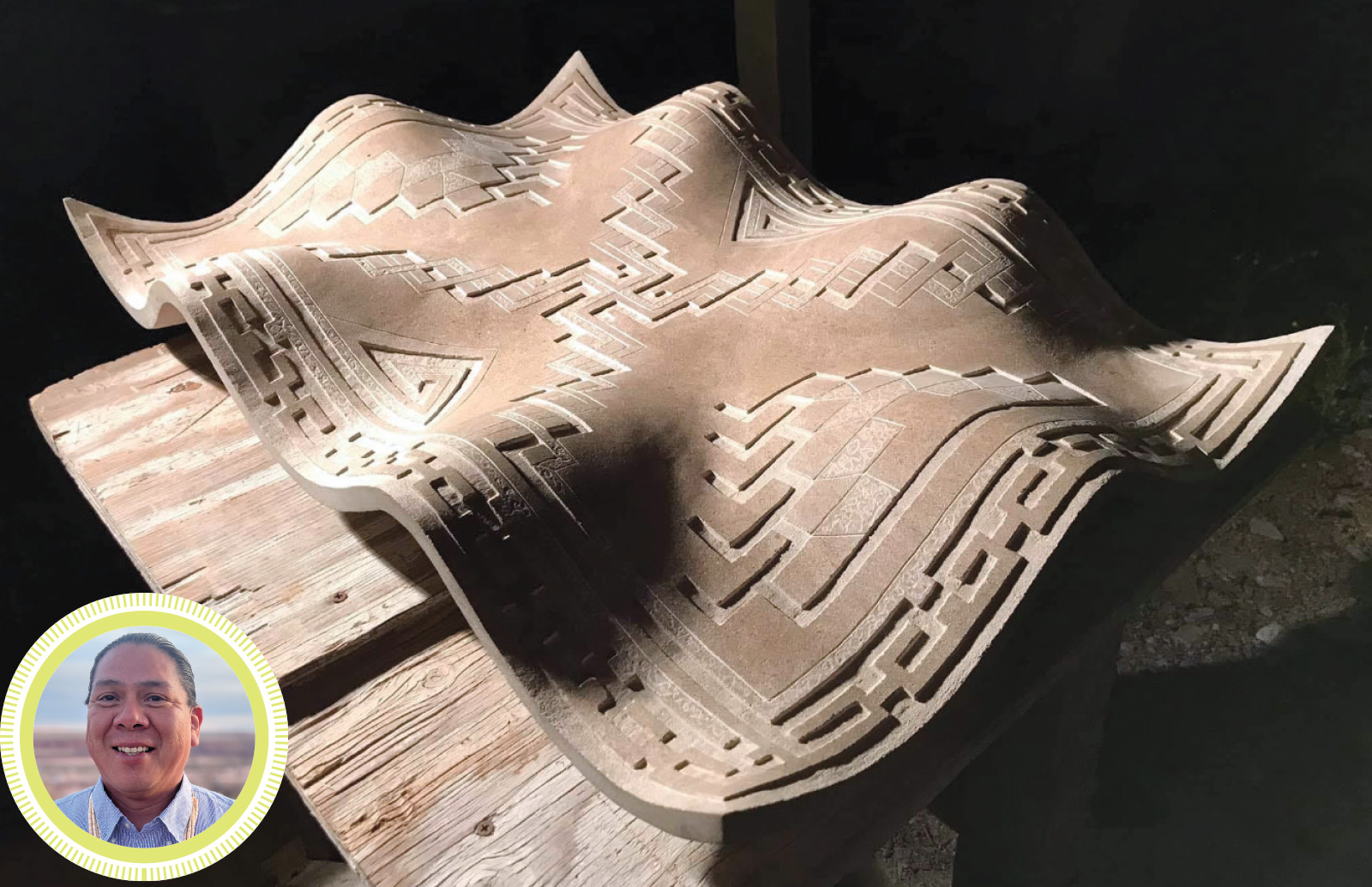
Lance Yazzie (Navajo (Diné))
“I use nature’s canvas to capture my feelings of wonderment. These chisels are in my back pocket, and the world is my medium,” says Lance Yazzie. His modern sculptures are tied to traditional teachings and highlight cultural designs. Both light and shadow enhance the textures in his sculptures from various carving techniques. “Graceful and stark movements are married together, [and] at times complicated detail is curtailed by flowing or abstract lines,” Yazzie adds. “Multimedia of stones come together in a kaleidoscope of colors and surfaces.”
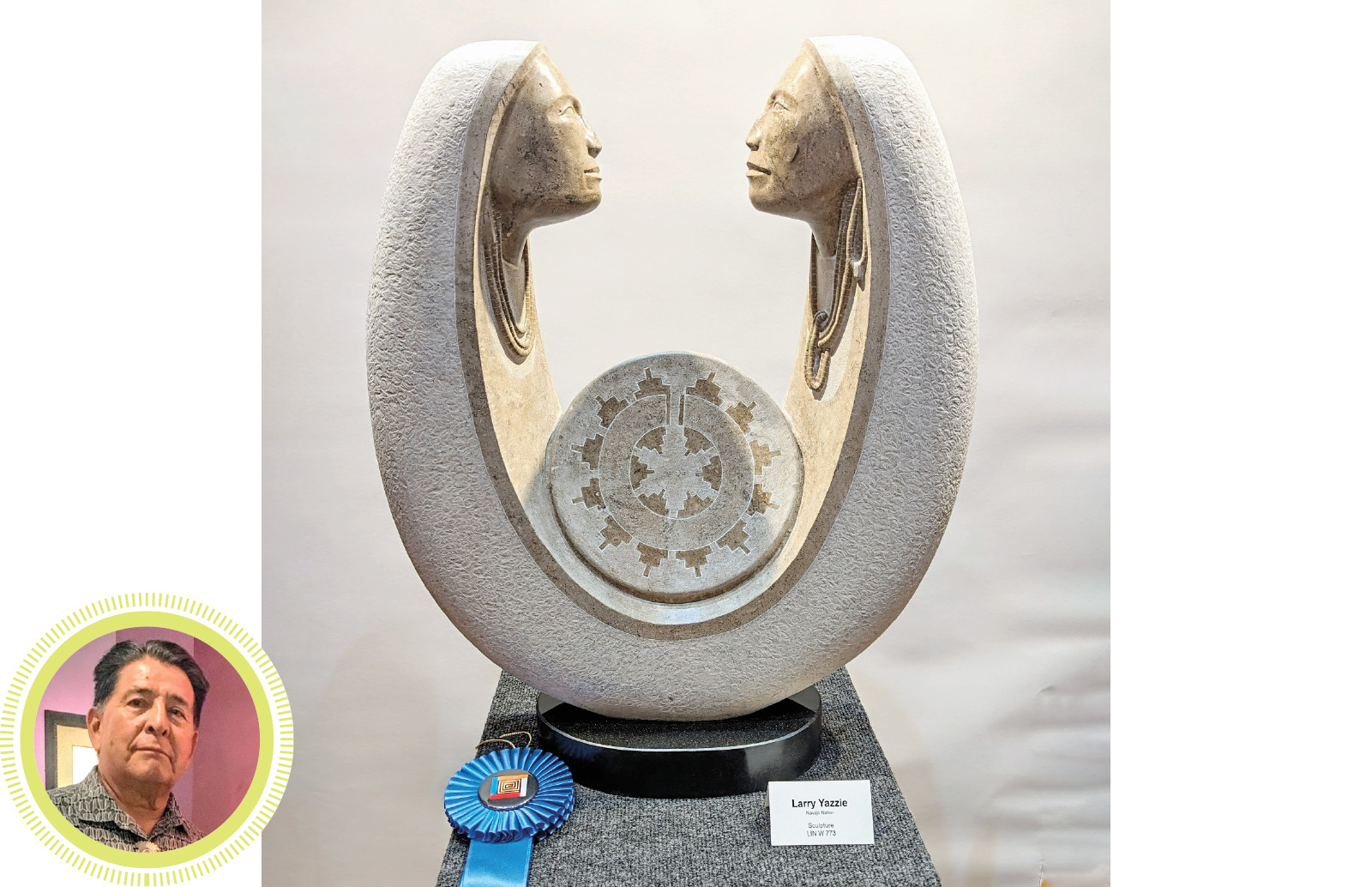
Larry Yazzie (Navajo (Diné))
Booth: D-17
The act of working with stone and creating art helped Larry Yazzie reconnect with his Navajo culture and ceremonies. “Making sculptures was by accident,” he says. Initially, the artist attended IAIA to pursue a career in painting but eventually decided to take a sculpture class. “And the rest is history,” he says. “I’ve been sculpting since 1985 and have only known this way of life to support myself and my family. I don’t use models or preliminary sketches, I let my creative mind guide my hands. I’ve come to believe that art is very spiritual and comes from way down deep inside your soul.”
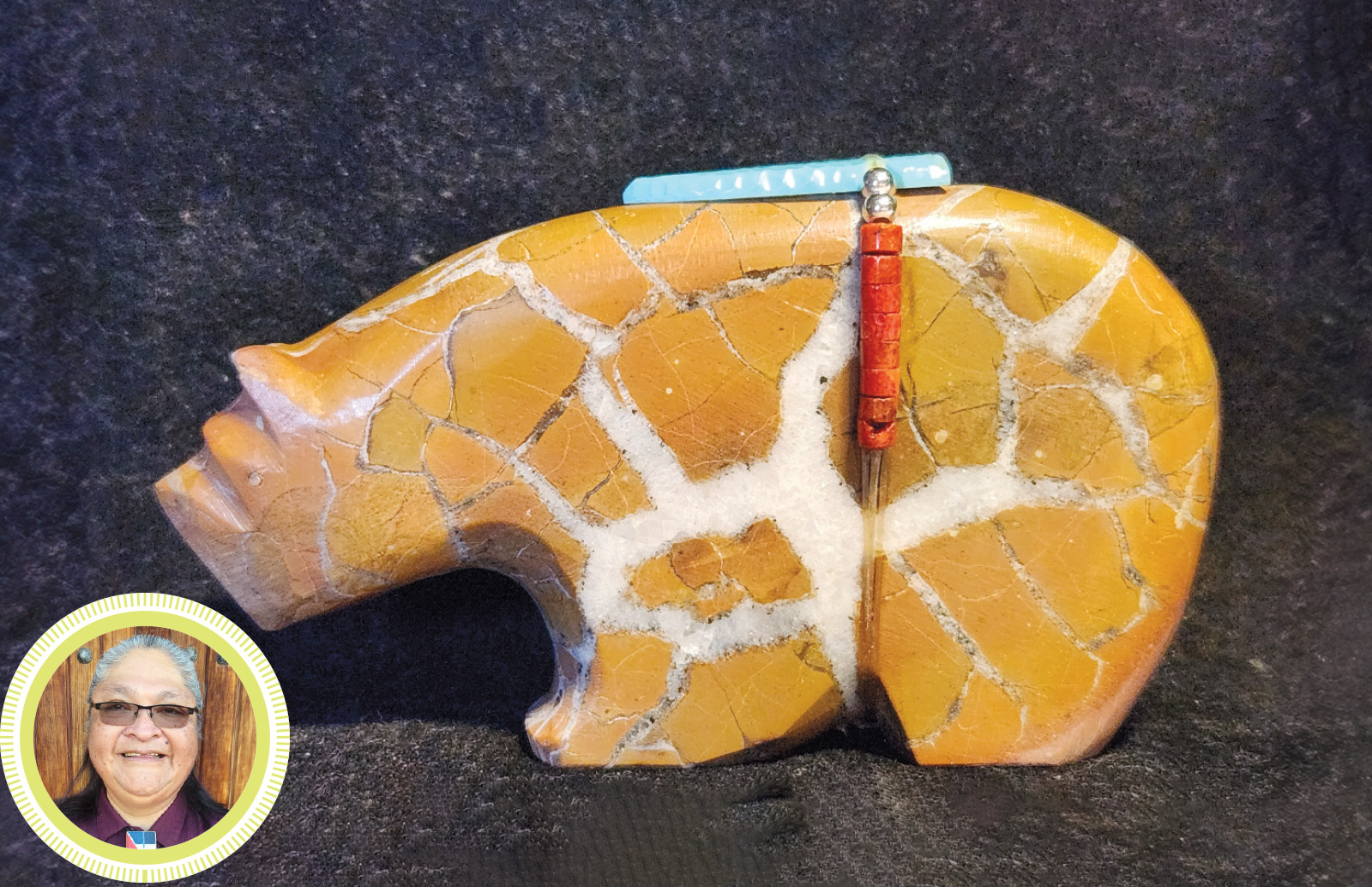
Todd Westika (Zuni)
Booth: Demo-08
Fetish carving has been a part of Zuni artist Todd Westika’s family for several generations. “My carving career started in January of 1990 with a one-day lesson that was given by an aunt, and the rest was self-taught,” Westika reflects. “As a little boy I would come home with pockets filled with rocks, and now I carve stones to help bring shape to the spirit within.” He follows in the footsteps of his great grandfather, whose philosophy was “to always have ‘good thoughts’ when working, because those are imprinted onto the piece that you’re creating, and then passed along to whoever it will eventually belong to.”
Weavings & Textiles
The 2024 Heard Museum Indian Market is kicking off once again in honor and celebration of Native American arts, including the beloved category of weaving and textiles. This decorative and utilitarian art form often accompanies creation stories—like that of Spider Woman in the Navajo heritage—and is a coveted skill that’s passed down from generation to generation. Today, we see textile artists upholding these traditions while also making way for their own voice and style. Featured in this section, and also found at market, we hear from several weaving and textile artists that create an assortment of fascinating visions. These works range from more traditional pieces made on the loom, utilizing natural materials, while others employ a fresh take on clothing and regalia.
Artists to Look For
Nanabah Aragon (Navajo [Diné])
Gloria Fain (Navajo [Diné])
Laverine Greyeyes (Navajo [Diné])
Carol Wilcox (Navajo [Diné])
Jason Harvey (Oglala Lakota)
Mona Laughing (Navajo [Diné])
Norma Susunkewa (Hopi)
Florence Manygoats (Navajo [Diné])
Michael Teller Ornelas (Navajo [Diné])
Janyce Trask (Oglala Lakota)
Timothy “Coyote” Smith (Hopi/Laguna Pueblo)
Jonessa Reid (Navajo [Diné])
Behind the Scenes
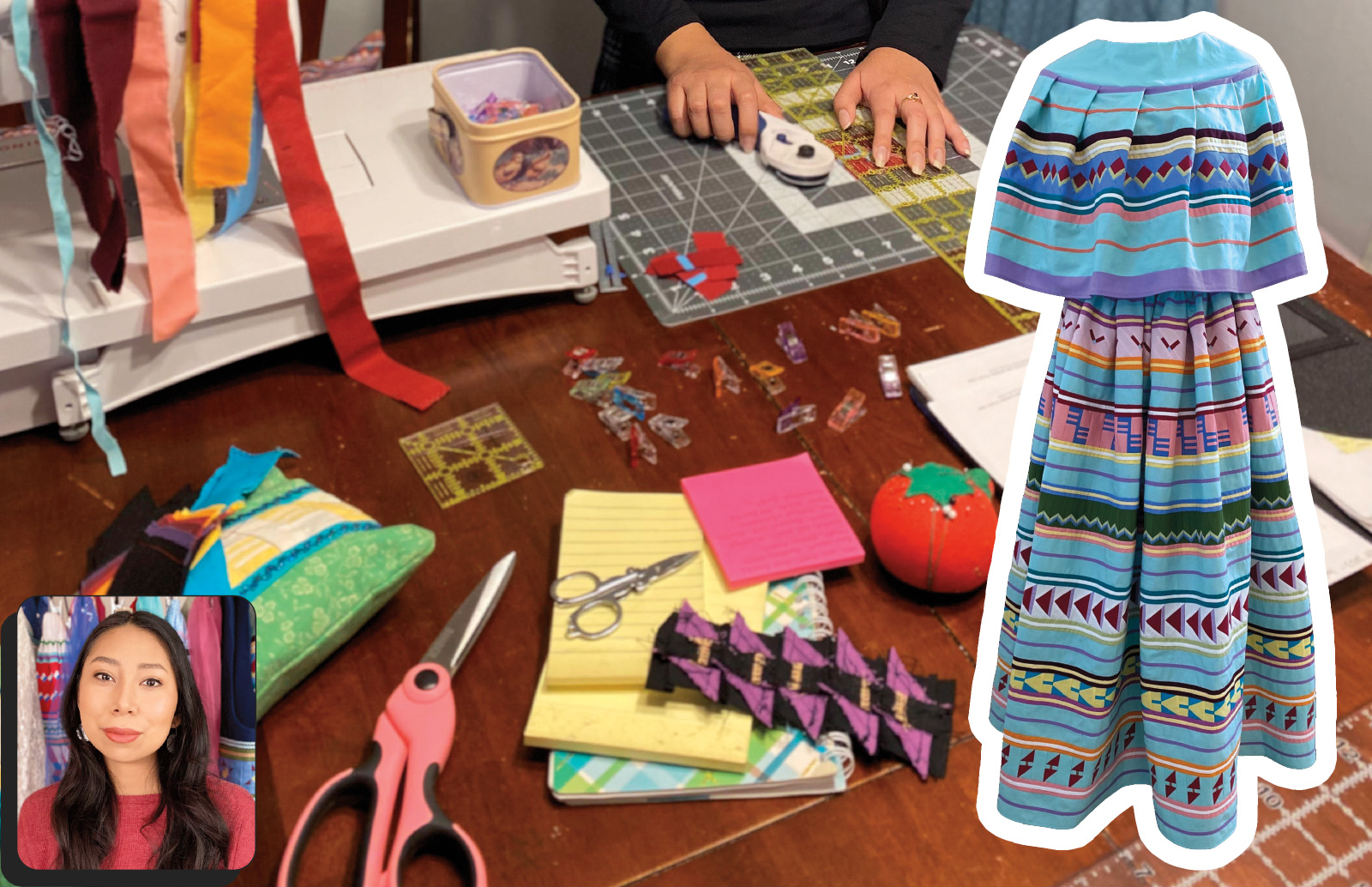
Jaylee Lowe (Seminole Nation of Oklahoma) Booth: F-19
Jaylee Lowe looks to the remnants of her late maternal grandmother’s traditional Seminole patchwork as a main source of inspiration in her clothing designs. Her studio space reflects her process that involves both these traditional influences, along with contemporary design. Lowe shares, “When my studio was in its own area in a closed-off room, I would find myself gravitating toward working on projects at my kitchen table. At the beginning of a new project, it’s a blank space and over the course it will become transformed by the accumulation of colorful materials. An integral part of my process is working with geometry and drafting. I draft my patterns by hand, so my essentials are a notebook, sewing gauge and rulers. Although the patchwork patterns can be complicated, the tools needed to create them are simple.”
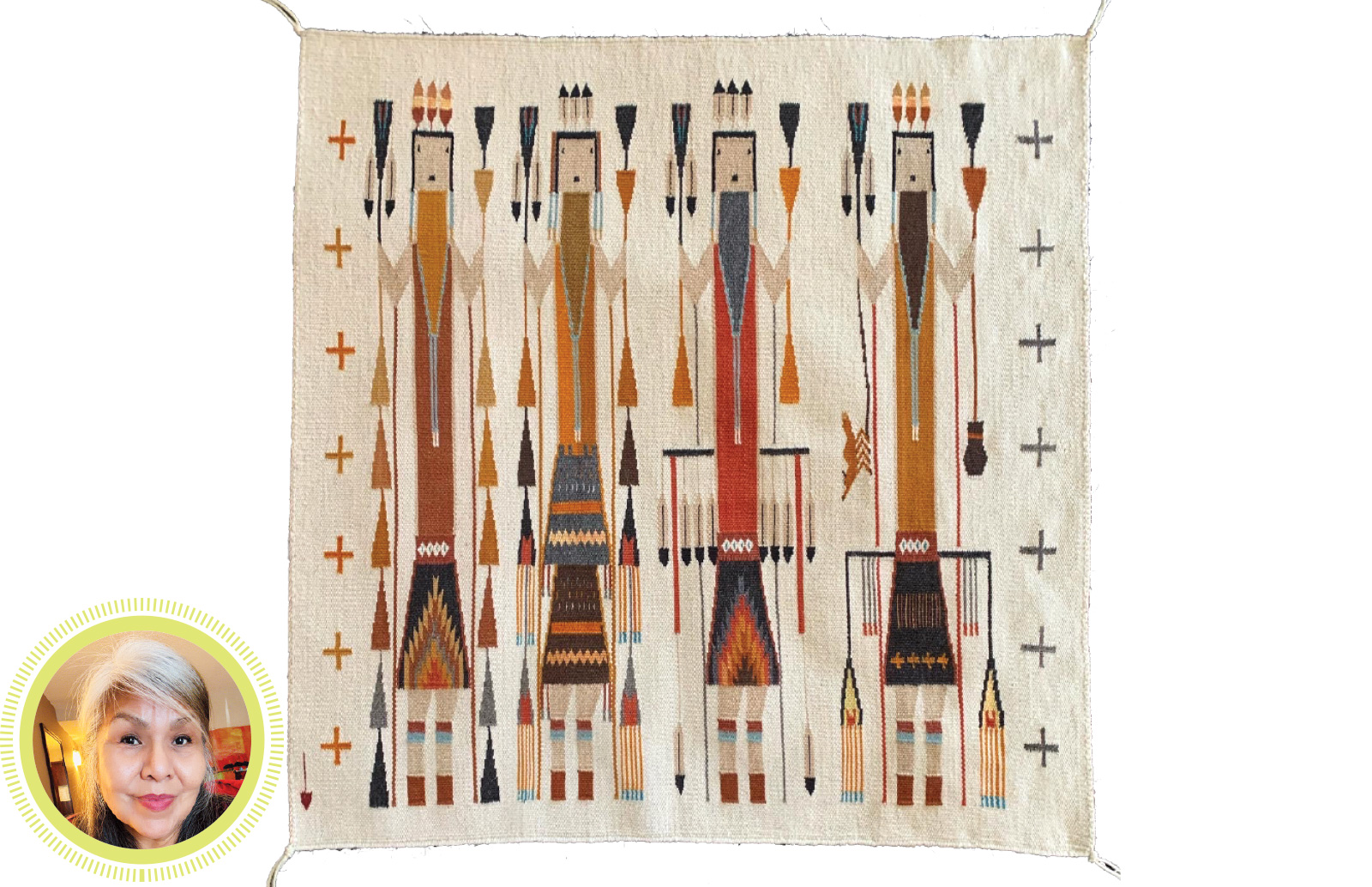
Leona Bia (Navajo (Diné))
Booth: F-03
“In the days of yore, my paternal grandfather utilized the Yei design through ceremonial practice to restore balance to an individual being,” explains weaving artist Leona Bia. “Today, the Yei textile expressed through my style of tapestry acknowledges a similar restoration of healing and balance within myself. Each new piece continues a legacy that was set in place by parents and grandparents, and it is my hope that the design is continued on into the future.”
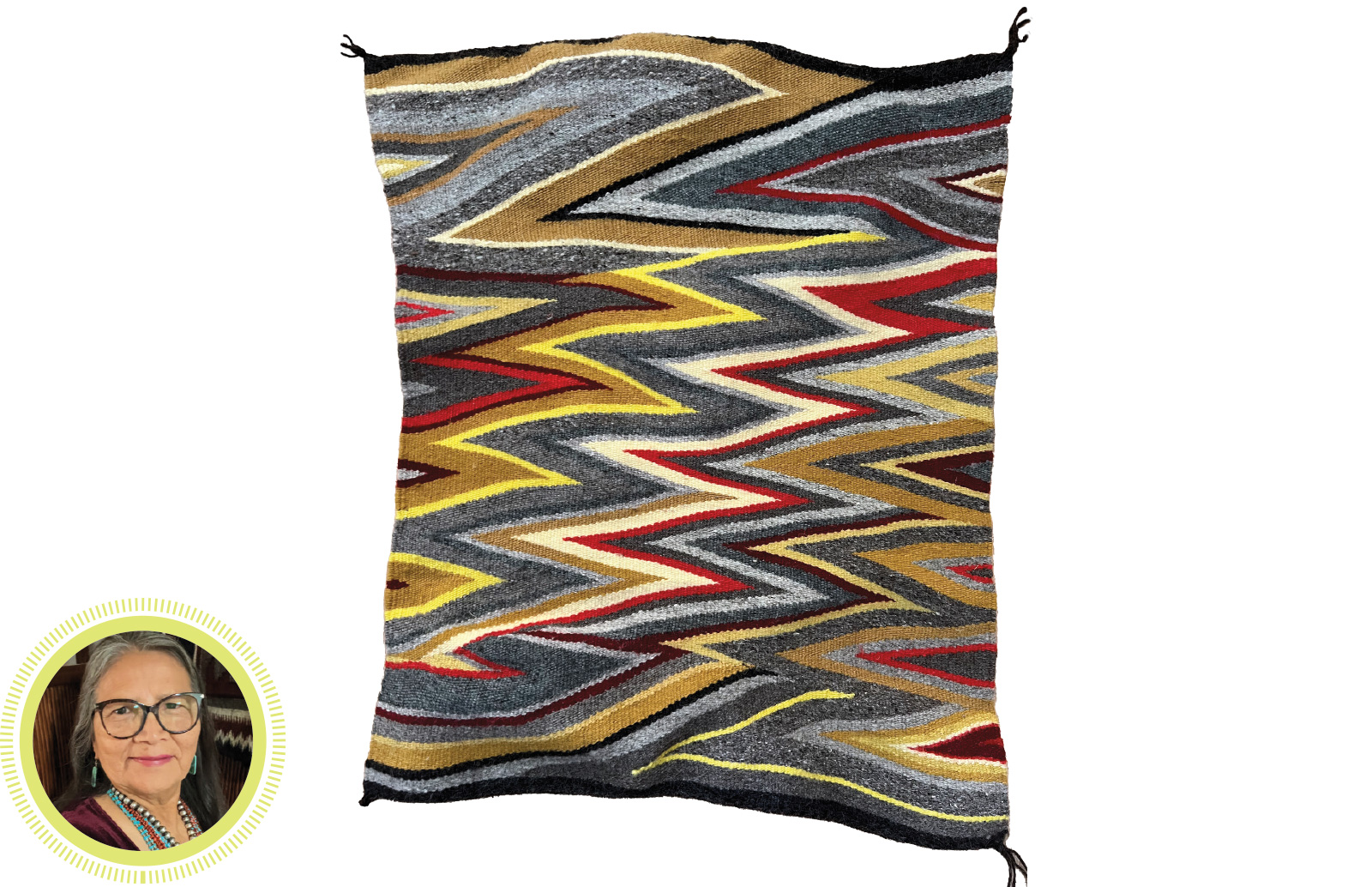
Marilou Schultz (Navajo (Diné))
Booth: E-03
“ I have always experimented with dyeing and weaving techniques, along with shape and design,” says Marilou Schultz. “This has me creating my own style while still using the basic techniques of our ancestral grandmothers. The natural landscape, sunrise and sunsets on our Native homelands give me inspiration to use various color palettes in my weavings. The technological world is intriguing, and I use that as a challenge in creating rugs that combine the traditional way of weaving with the present, which our ancestors did with their own art and worldview.”
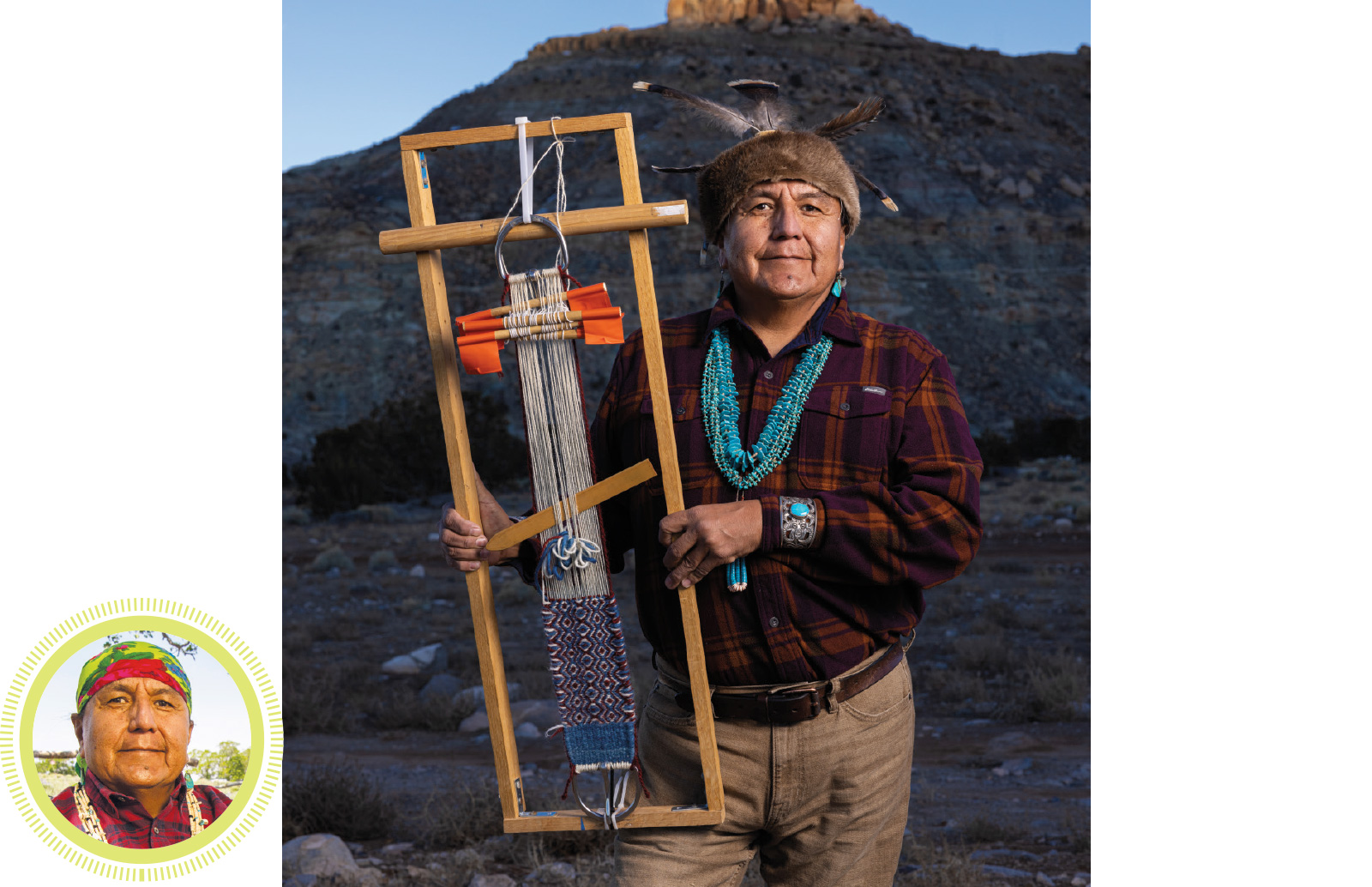
Roy Kady (Navajo (Diné))
Booth: A-47
Roy Kady passionately weaves and creates with natural fibers to center himself in the cosmos of the universe. He shares of his process, “My designs are inspired by my natural surroundings; whether it is colors for my palette or stories that I have heard from the past/present. I hand process most of the natural fibers that I create with, and I grow several fibers to include in my art as well. I also gather plants to vegetal dye my fibers to create one-of-a-kind art pieces.”
Diverse Arts
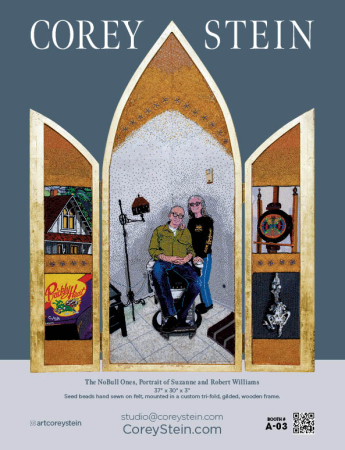
The diverse arts classification is always one of the most fascinating by its very nature. The classification is exactly what it says—a plethora of diverse and intriguing items, too outside-the-box to fit neatly into any of the other categories. And they don’t need to fit neatly. In fact, the unrestrained, creative ingenuity of these artists and the stunning items they create is what makes this classification so special. Within this category, you’ll find expertly crafted musical instruments, weapons, parfleche boxes, cradleboards, bags, pipes and so much more. You’ll also find wearable pieces, from traditional clothing to contemporary fashion, and that’s really just scratching the surface.
Artists to Look For
Candace Becenti (Navajo (Diné))
Lisa Chavez-Thomas (Isleta Pueblo)
Hollis Chitto (Mississippi Choctaw, Laguna/ Isleta Pueblos)
Sean Rising Sun Flanagan (Taos Pueblo)
Teri Greeves (Kiowa)
Joyce Growing Thunder (Fort Peck Assiniboine/Sioux)
JT Willie (Navajo)
Elias Not Afraid (Apsaalooke (Crow))
Corey Stein (Tlingit)
Kelly Church (Grand Traverse Band of Ottawa & Chippewa Indians)
Amanda Wilson (Comanche)
Behind the Scenes
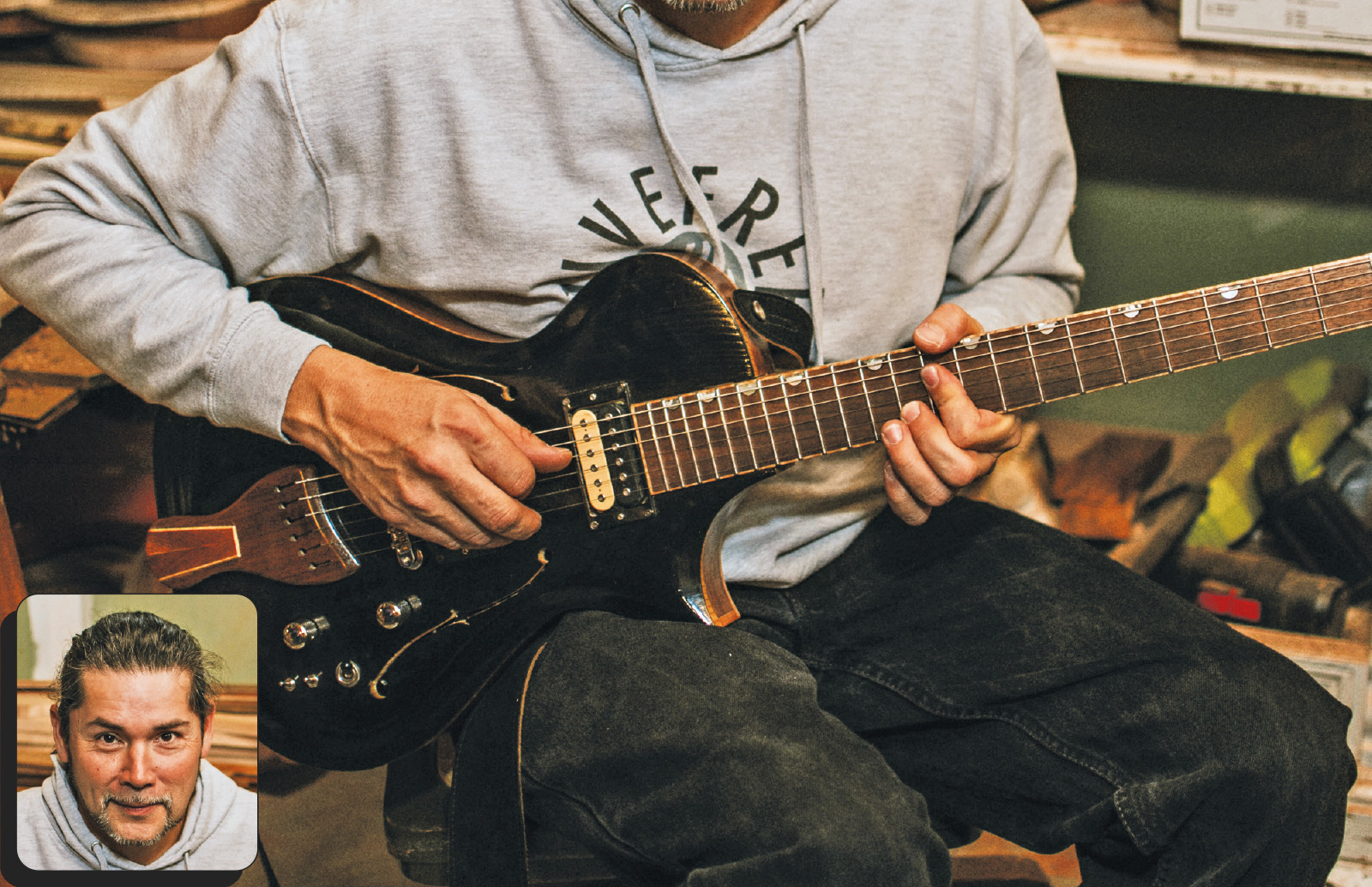
Glenn Hill Jr. (Saint Regis Mohawk Tribe) Booth: M-05
Glenn Hill Jr. is a luthier, a musician and a father. Hill’s primary focus is narrowed in on the older building techniques used in traditional luthiery. Most of his hand builds are locally sourced from his northeastern territory in and around Akwesasne near the U.S.-Canada border in New York. Many of the “old wood construction techniques” are laid out in the construction of his instruments. “I like the local hardwoods close by,” Hill says of the lumber he sources. “Hundreds of pounds of force will be on full display once the strings wake up the tone woods!” he says. Hill carefully crafts his “art guitars” with durability and an impeccable sense of tone. “The pieces have to be able to withstand time.” He is working toward establishing a small storefront away from his home and is currently taking commissions for 2024 instrument builds.
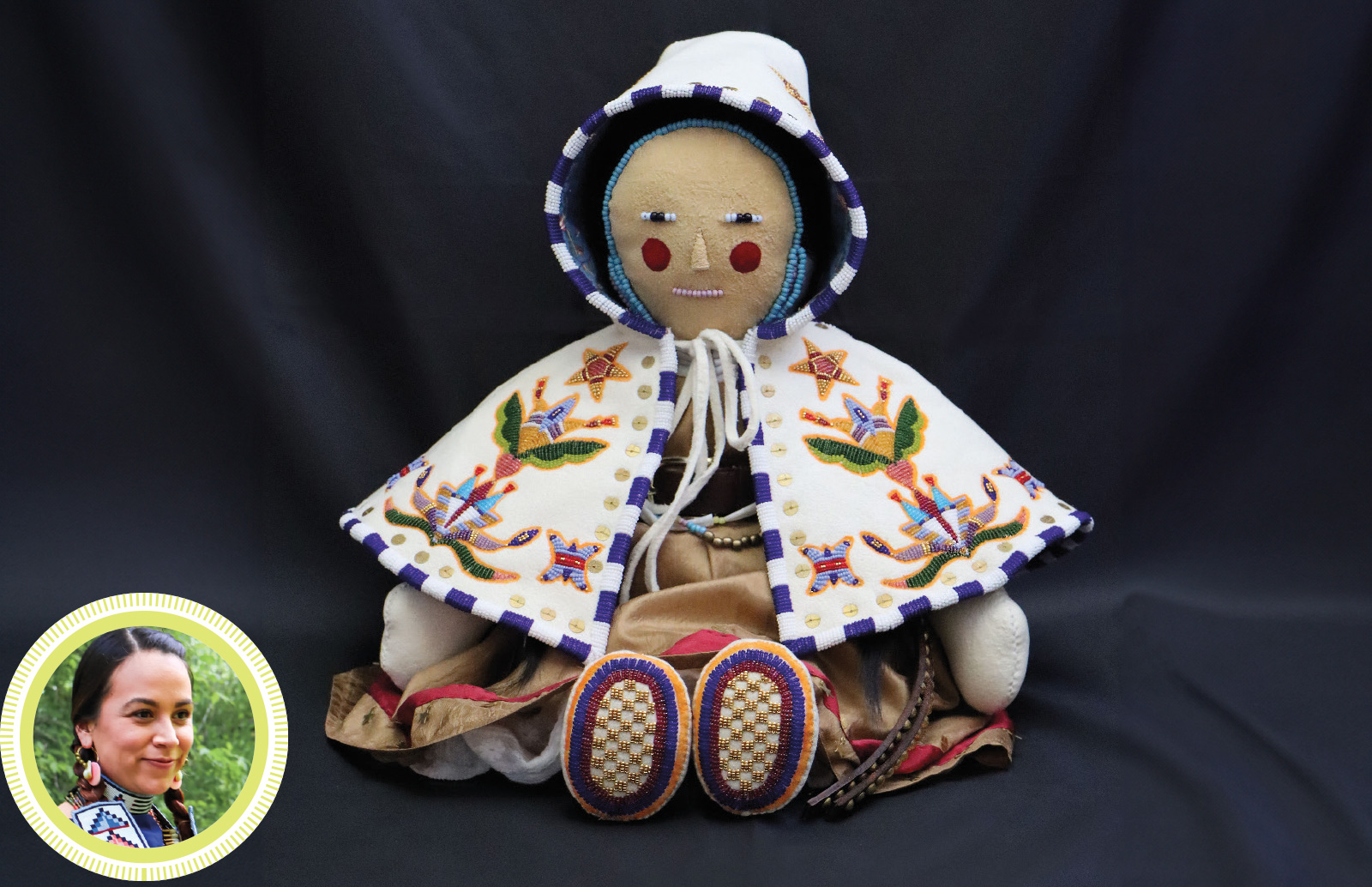
Jessa Rae Growing Thunder (Fort Peck Assiniboine/Sioux)
Booth: A-36
Third-generation beadwork/quillwork artist Jessa Rae Growing Thunder comes from the Fort Peck Assiniboine (Nakoda)/Sioux (Dakota) tribes of Northeastern Montana. “I have spent my life learning from my mother, Juanita, and my grandmother, Joyce,” she says. “It is an honor to be an Oceti Sakowin (7 Council Fires of the Sioux Nation) artist committed to the preservation of our artistic traditions. My beautiful daughters inspire this work because one day these teachings will belong to them.”
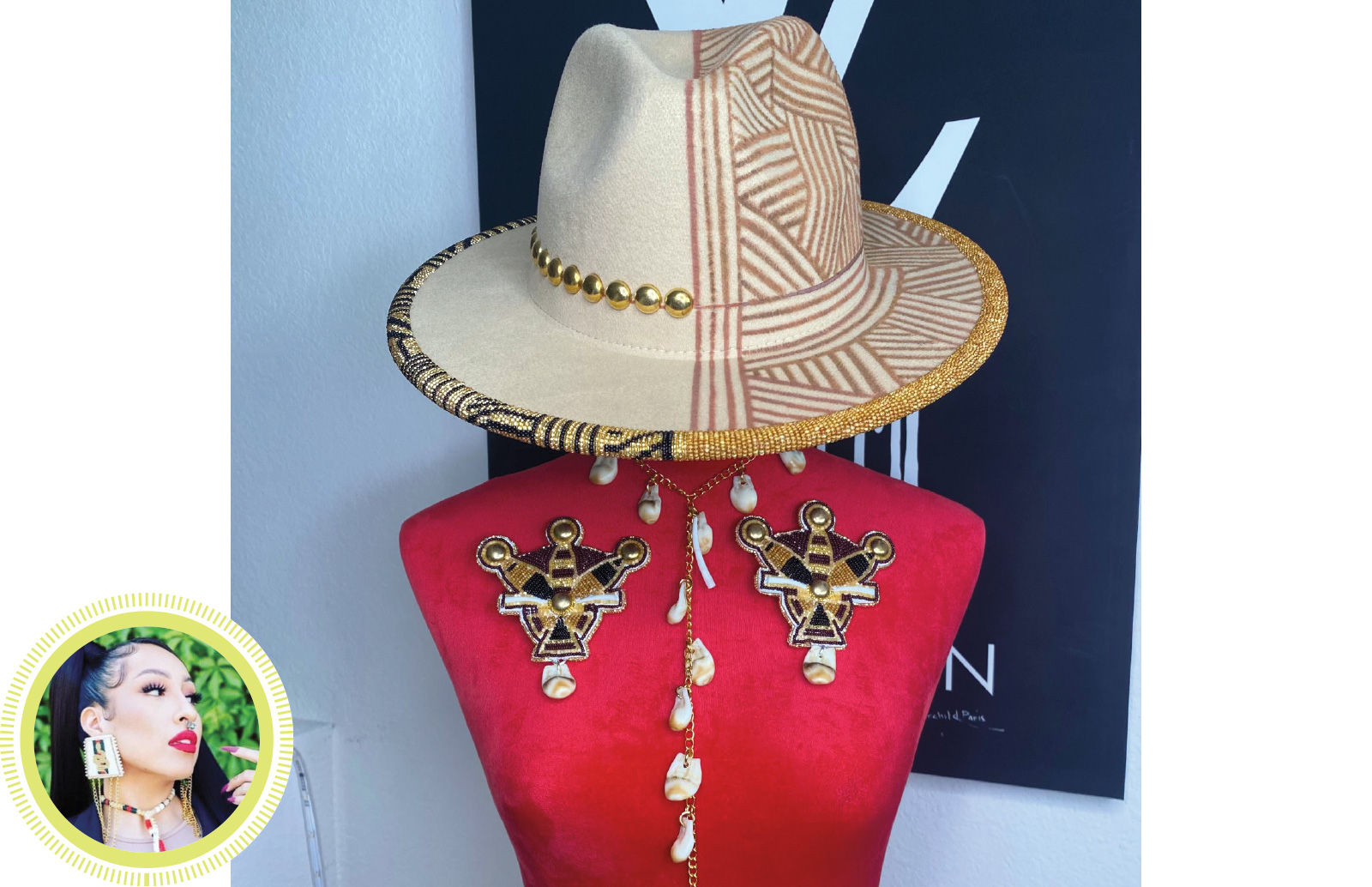
Shaydee Snow Pretends Eagle (Spirit Lake Nation)
Booth: B-23
Shaydee Snow Pretends Eagle is a Lakota/Dakota artist “creating modern artwork with traditional undertones.” She works with everything from dentalium shells to antique beads, parfleche and more. The artist says she is inspired by her Lakota name, Wa Wa Yupi Ka Win, which translates to “Artistic Woman.” “My grandmother gave me this name when I was just 4 years old,” she adds. “My mom always says how mindblown she is that I lived up to my name. My grandma knew who I was before I did. My work is a reflection of my ancestors; we are still here [in the] modern day.”
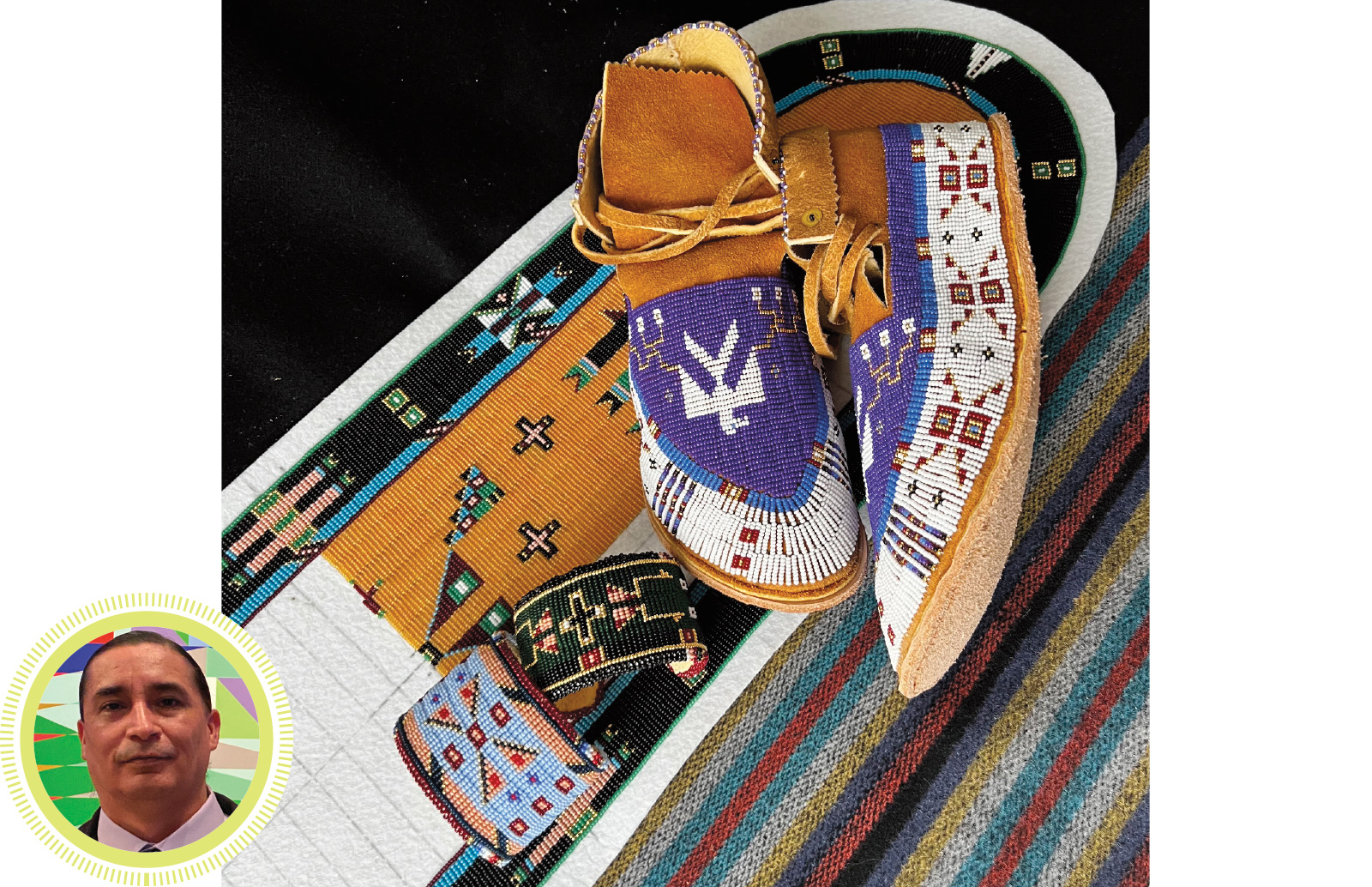
John Littlesun Murie (Chippewa/Cree/Pawnee)
Booth: A-43
John Littlesun Murie is an enrolled member of the Chippewa-Cree tribe of the Rocky Boy Reservation in northcentral Montana. His art reflects the environment he grew up around, which can be seen in his dynamic use of color and design. “We are still here thriving and creating, and our voice is only getting stronger,” he says. Murie uses art as a way to show how Indigenous people of North America are thriving and relevant to modern art even through the lens of traditional arts. His art reflects traditional stories and design as well as contemporary ideals.
Basketry
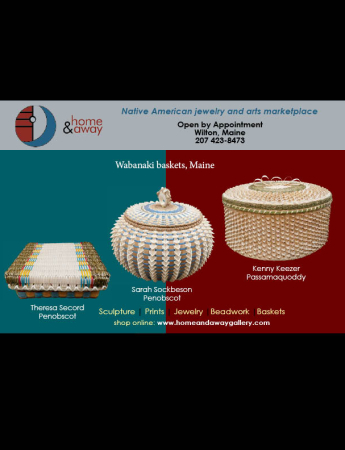
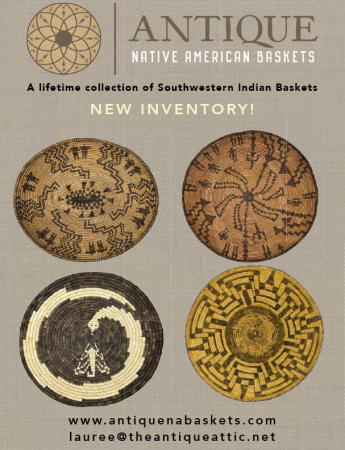
Known for its robust usage of all manner of plants—grasses, barks, bushes, roots and shoots—basketry is a popular and growing segment within Native American art, where artists from coast to coast are creating tremendous new works that exemplify creative freedom, technical expertise and quality materials. Expect to see a wide variety of shapes and colors, with each region, tribe and individual artist using what is at their disposal to create bowls, plates, vases, large woven jars and, of course, traditional baskets. Although this is one of the smallest categories—less than 25 artists are registered for the classification—basketry is also one of the most sought-after by top collectors.
Artists to Look For
Deborah Brooks (Passamaquoddy)
Kelly Church (Grand Traverse Band of Ottawa & Chippewa Indians)
Carol Emarthle Douglas (Northern Arapaho-Seminole Nation of Oklahoma)
Jeremy Frey (Passamaquoddy)
Iva Honyestewa (Hopi/Navajo)
Don Johnston (Qagan Tayagungin)
Wilmeta Kayquoptewa (Hopi)
Jessica Lomatewama (Hopi)
Leona Romero (Tohono O’odham)
Theresa Secord (Penobscot)
Sarah Sockbeson (Penobscot)
Laura Wong-Whitebear (Colville (Sinixt)
Behind the Scenes
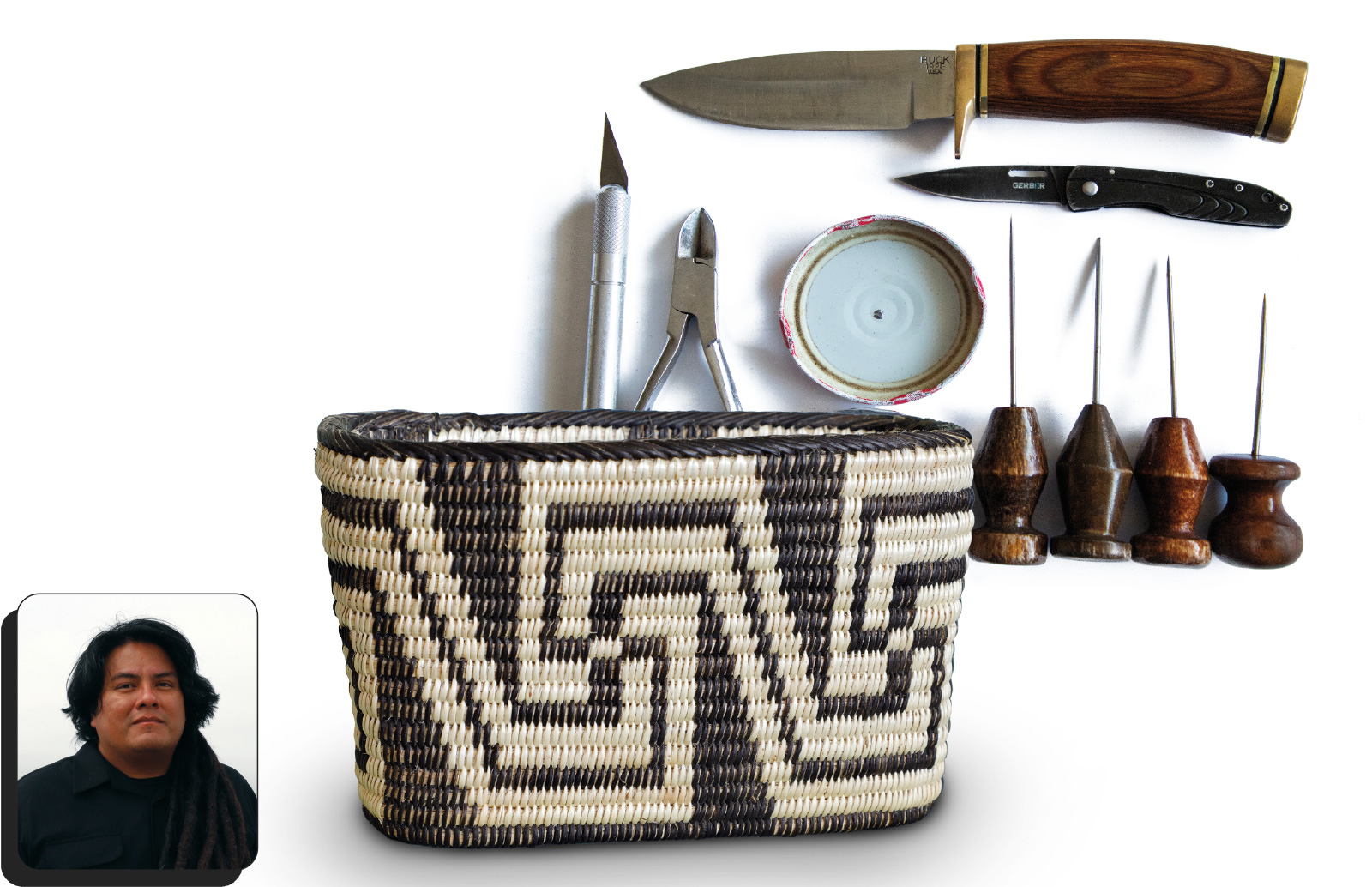 August Wood (Salt River Pima)
Booth: Demo-02
August Wood, who is a traditional Akimel O’Odham (Pima) basket maker from the Salt River Indian Community, will be one of the demonstration artists at this year’s market. “I harvest, grow and process all of my own materials during different times of the year from local plants, traditionally used by the Pima to create coil baskets,” Wood says. “Pima basketry is currently in danger of becoming lost, and that’s why I’m excited to be a part of the Heard Market, to be able to show they’re still being made.”
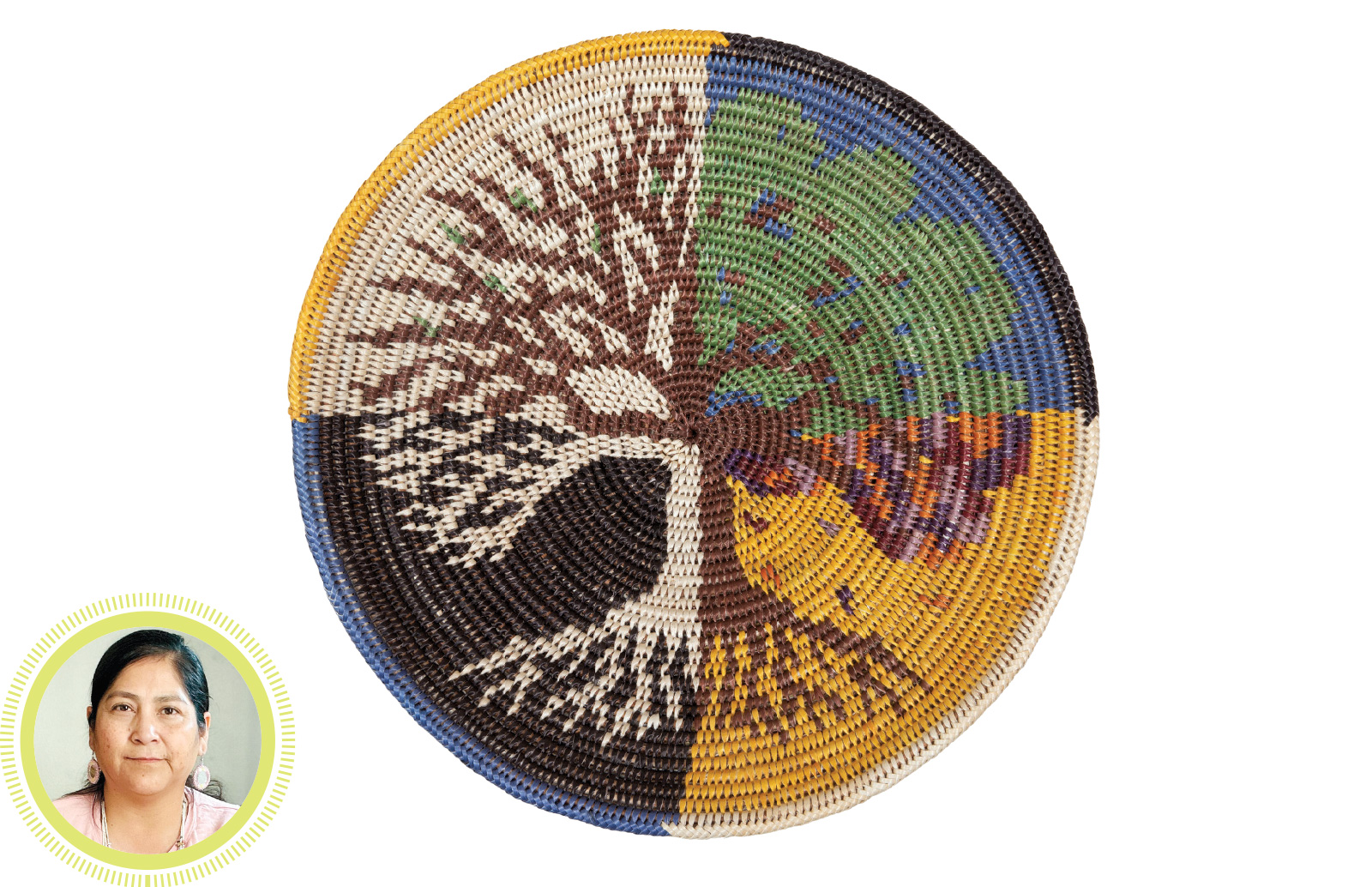
Alicia Nelson (Navajo (Diné))
Booth: F-23
Returning to the Heard Market is Alicia Nelson, whose work has been prized for its beautiful design and warm, earthy colors. “I am a Navajo Indian from Red Mesa, Arizona. I am Navajo basket weaver. I weave traditional and contemporary baskets,” the artist says. “I learned basketweaving from a master weaver, the late Mary H. Black from Mexican Hat, Utah. I am always thankful she taught me the art 26 years ago. In 2022, I placed second in the basket division at the Heard Indian Market. I am excited to be participating this year.”
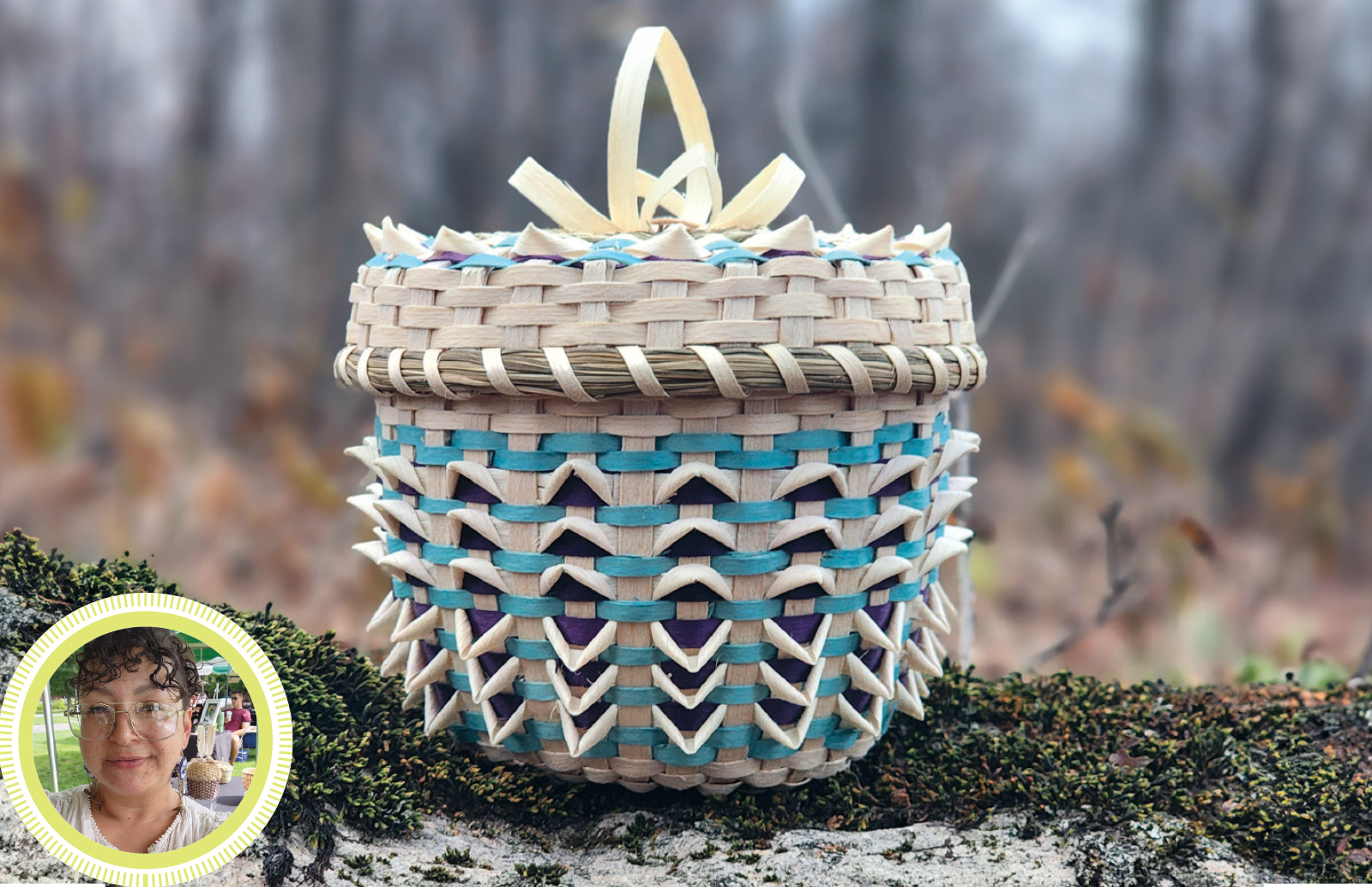
Carrie Hill (St. Regis Mohawk)
Booth: M-05
Producing art under the name Chill Baskets, Carrie Hill was originally a teacher in New York before committing to her artwork professionally. She makes baskets using black ash splints and sweetgrass, which goes back many generations in her family. “I am looking forward to attending the market again and seeing familiar faces and meeting new ones,” Hill says. “I’m very happy to bring my Haudenosaunne black ash and sweetgrass artistry to the market.”
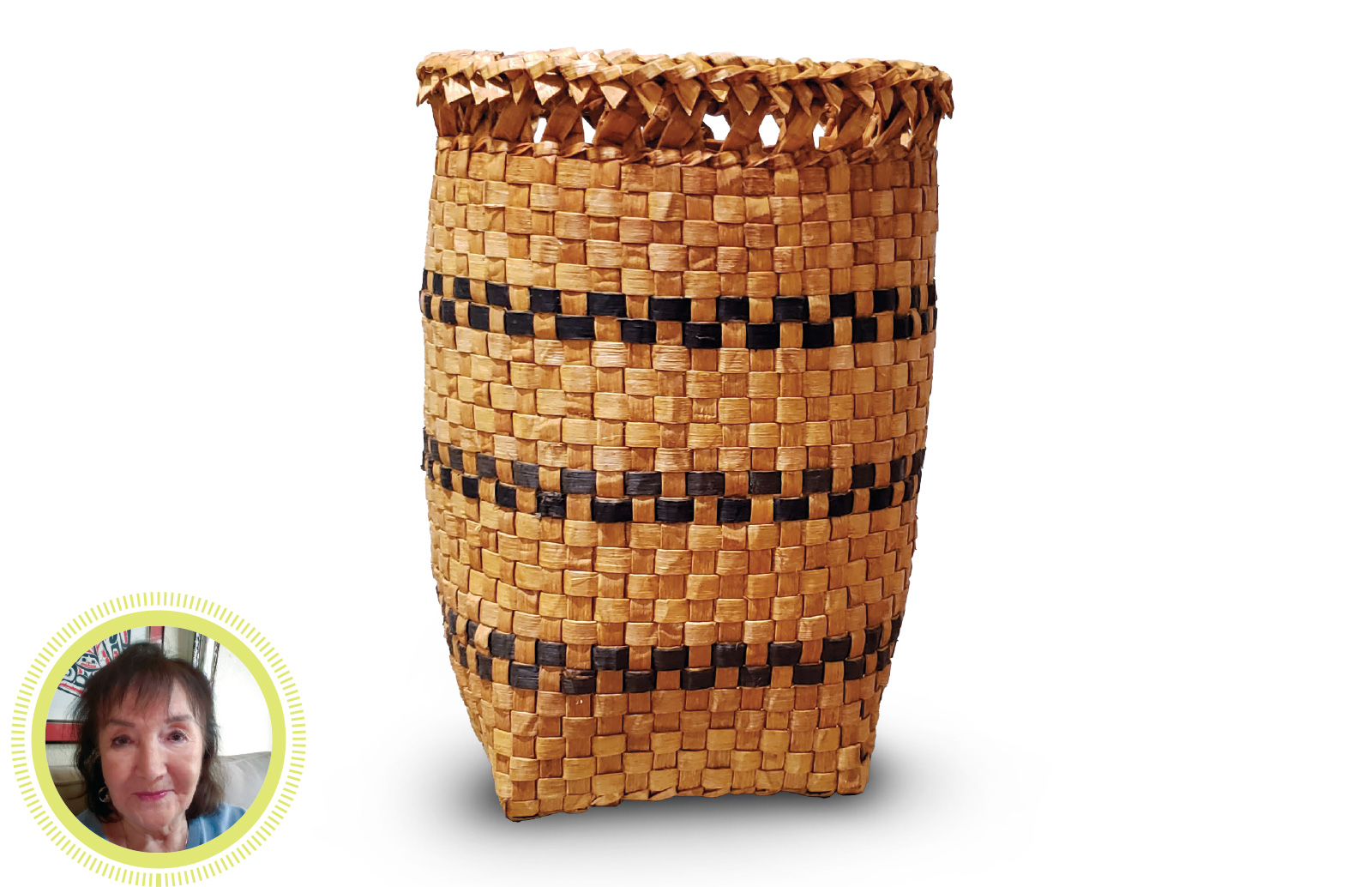
Loa Bilhamneex Ryan (Tsmsyen)
Booth: H-37
First Nations artist Loa Bilhamneex Ryan is from Metlakatla, British Columbia, Canada. She has a long and distinguished history as a basket maker. “I am from the house of Xpe Hanax, Gitlan Tribe, Raven Clan. I studied basketry for many years, mainly the basics of weaving,” says Ryan. “My goal was to gain as much knowledge that I could from master weavers, museums, educational institutions and media. Thankfully, the most valuable information that I could conceivably obtain, was from my ancestors.”
Powered by Froala Editor