For textile artist Tyrrell Tapaha (Diné), who uses they/them pronouns, weaving is not just a vocation or a way of being creative, it is a way of life. The artist—who lives between their homelands on the Diné Nation in the Four Corners region of the American Southwest and in off-reservation towns like Flagstaff, Arizona—situates their work in the complexity of lived experience, imagined futures and the rich history of their community. The artist’s sheep-to-loom methodology is not just process, but also part philosophical approach, taking the time to hold reverence for every facet of the production of a weaving, looking at the macro and the micro of the practice.
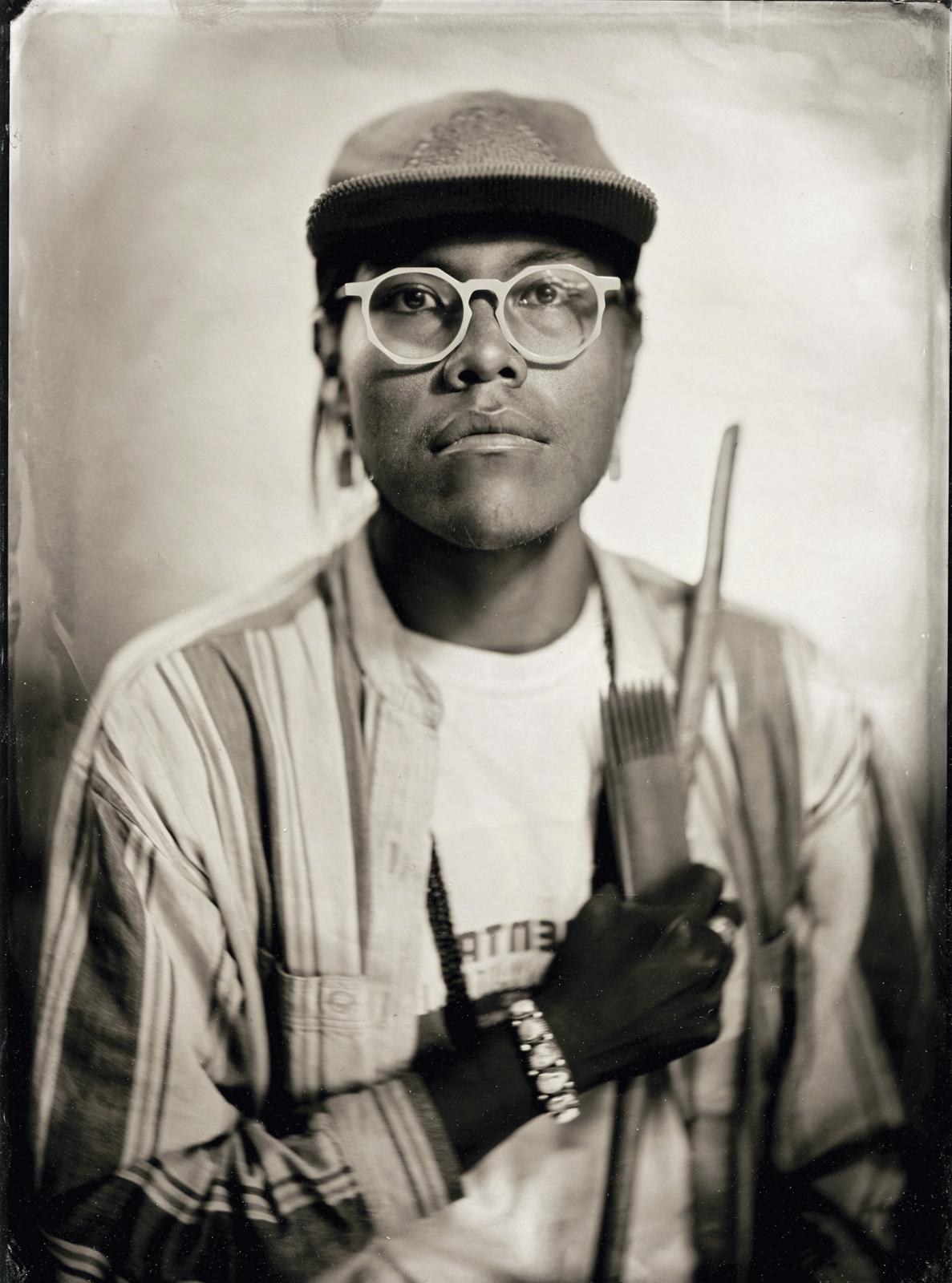
Tyrrell Tapaha (Diné). Photo by Eric Retterbrush. Courtesy the artist.
Tapaha’s holistic approach imbues a potency into the works themselves—transferring energy, history, memory and future into each textile that they weave on the loom. “I think it’s powerful to know that the thing that not only sustains me financially, emotionally and spiritually is the thing that also sustains the land in the same way, it sustains the sheep in the same way, and that is really powerful.” This work pushes Tapaha forward, but notes that, even though they are actively living this life and participating in these methodologies of production, they are far from an expert. “It’s super funny that everyone thinks that I’m a brainiac about this [stuff], but I literally know nothing,” they shared. “I’m just another 20-something-year-old kid who fell into a rabbit hole that I just so happened to really enjoy and it’s taking care of me, at least for right now, and that’s the evidence to show that it’s sustainable and that it can continue.”
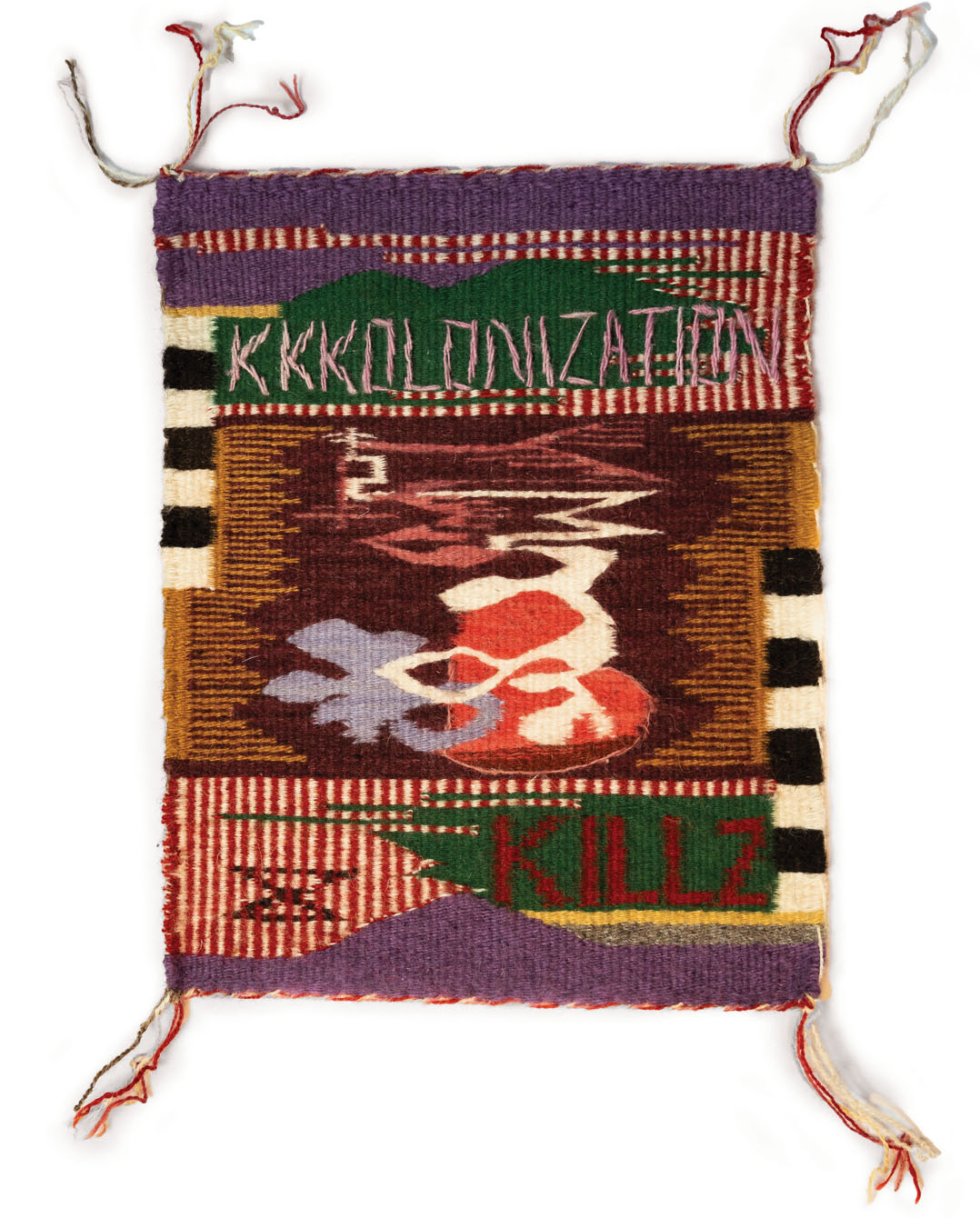
Áshkii Gáamalii : The Boy Who Lives in Two Worlds, 2021, Diné-style tapestry, 88 percent handspun vegetal-dyed Navajo churro, 10 percent brown sheep co, 2 percent Navajo-raised Alpaca, 12¼ x 151/3”
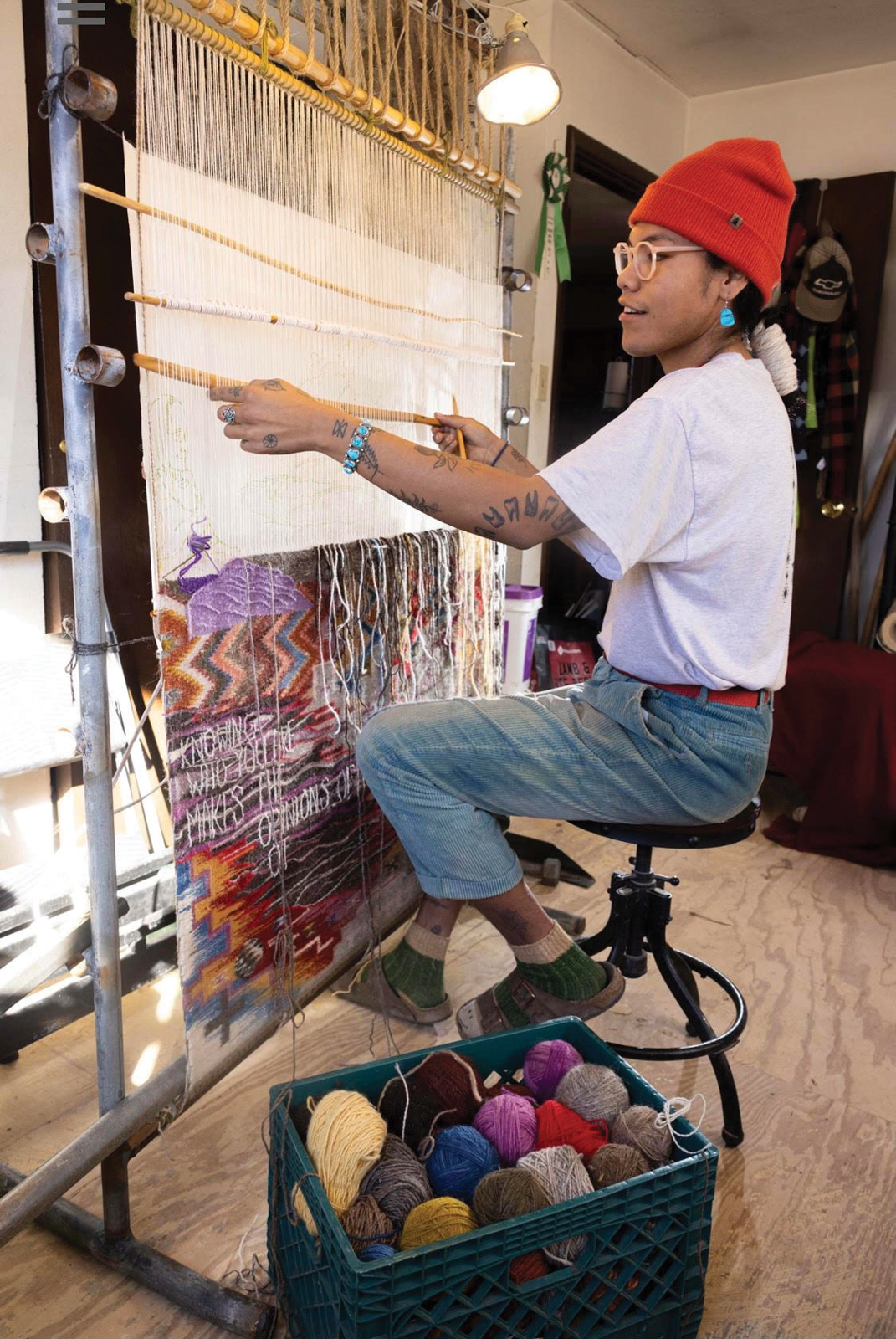
Tyrrell Tapaha in their studio.
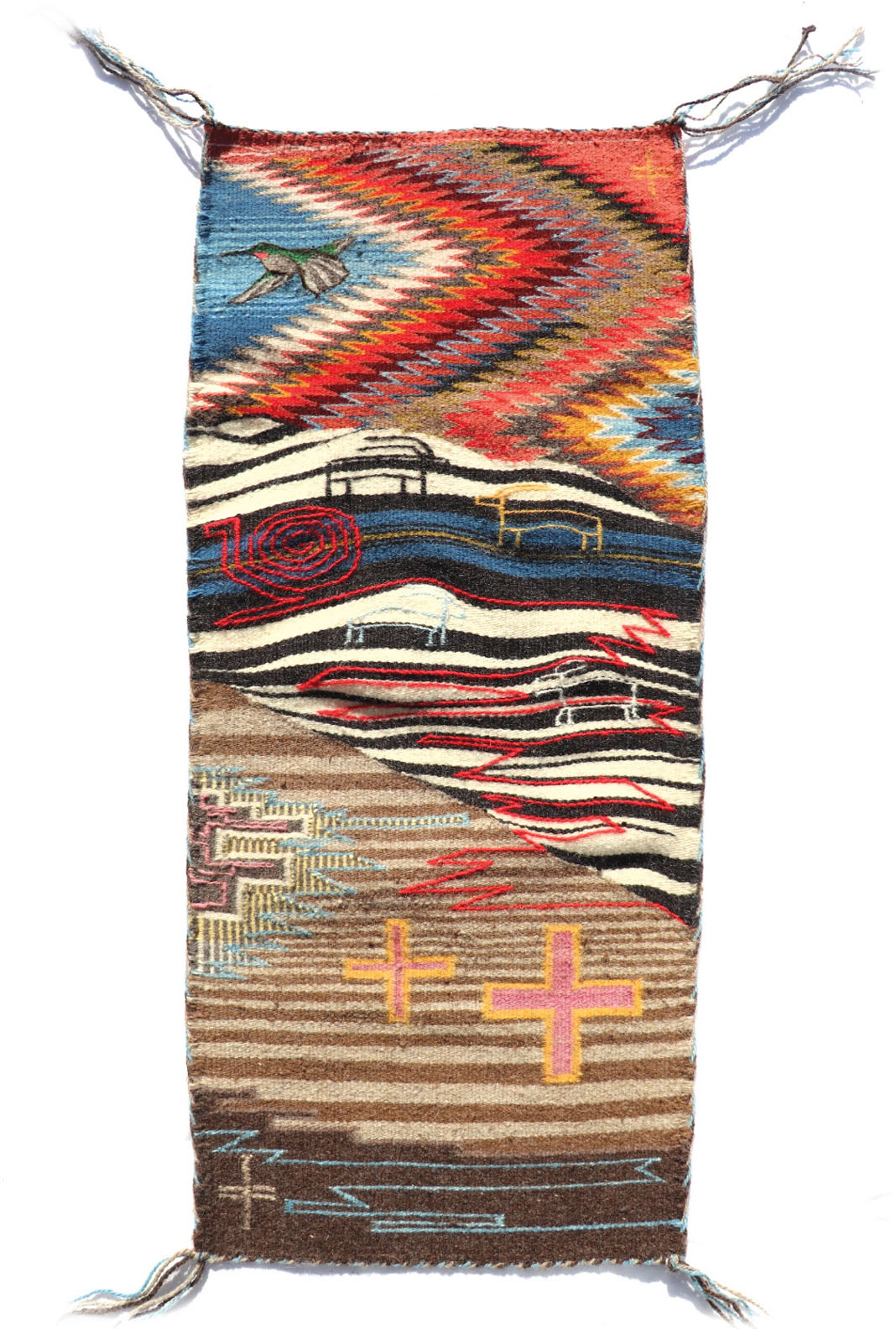
Carrizo Mountain Dance, 2021, Diné-style tapestry, commercial and handspun vegetal-dyed Navajo Churro yarn, 16 x 35”. Photo courtesy Dawson Peters.
A representation that is true to the artist’s point of view and not swayed by market demands and trading post aesthetics. “I want to exist in a space because each one of my pieces is a living breathing individual,” Tapaha says. “I am not tailoring my weavings to sell or to profit. [This] keeps me stable and allows me to continue my work. I have thrown out that idea of ‘who’s watching’ and have started creating and have always been creating for myself.”
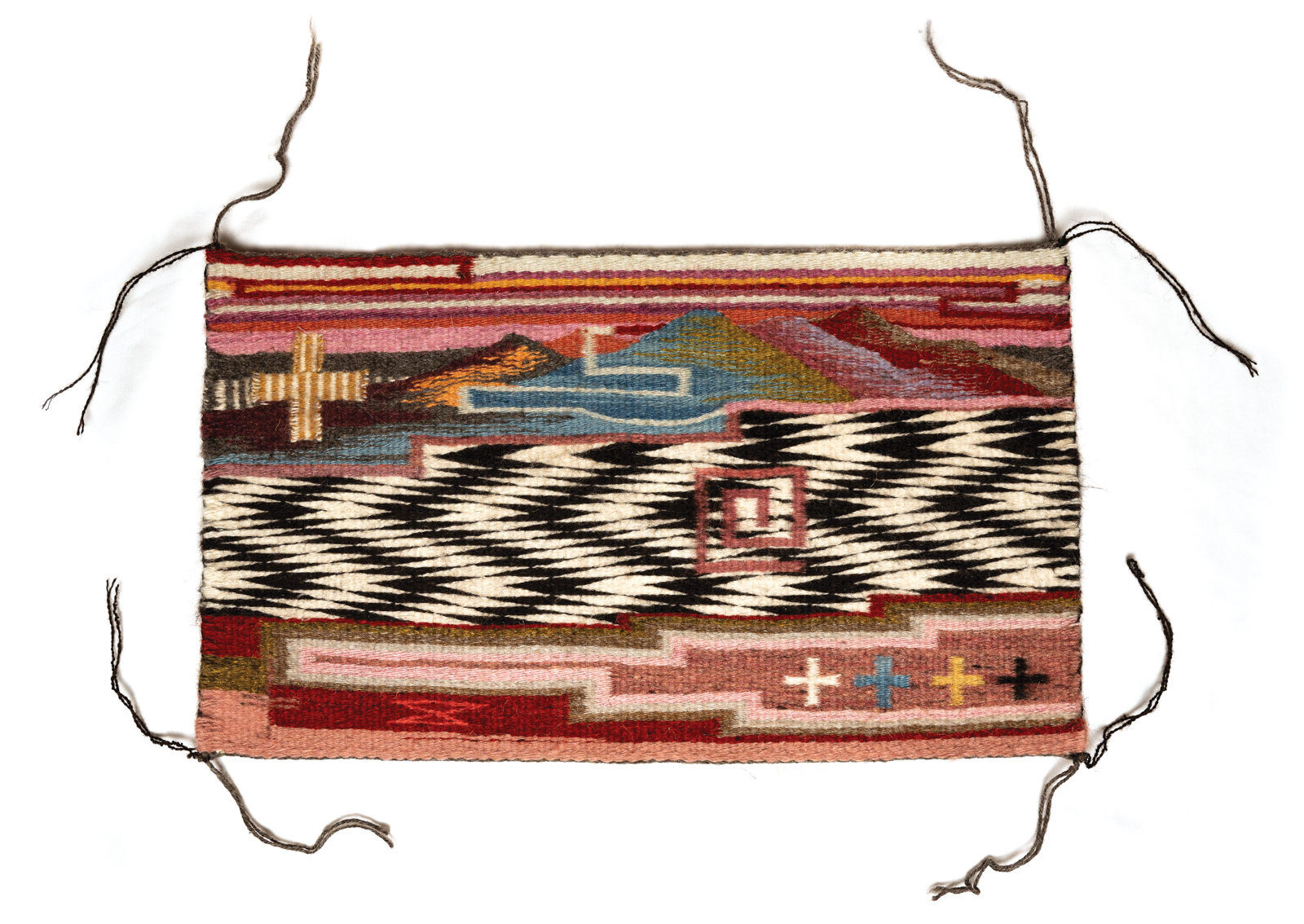
Living Love, 2021, Diné-style tapestry, handspun vegetal-dyed Navajo churro, New Zealand, Merino and Alpaca yarn, 15 × 33”
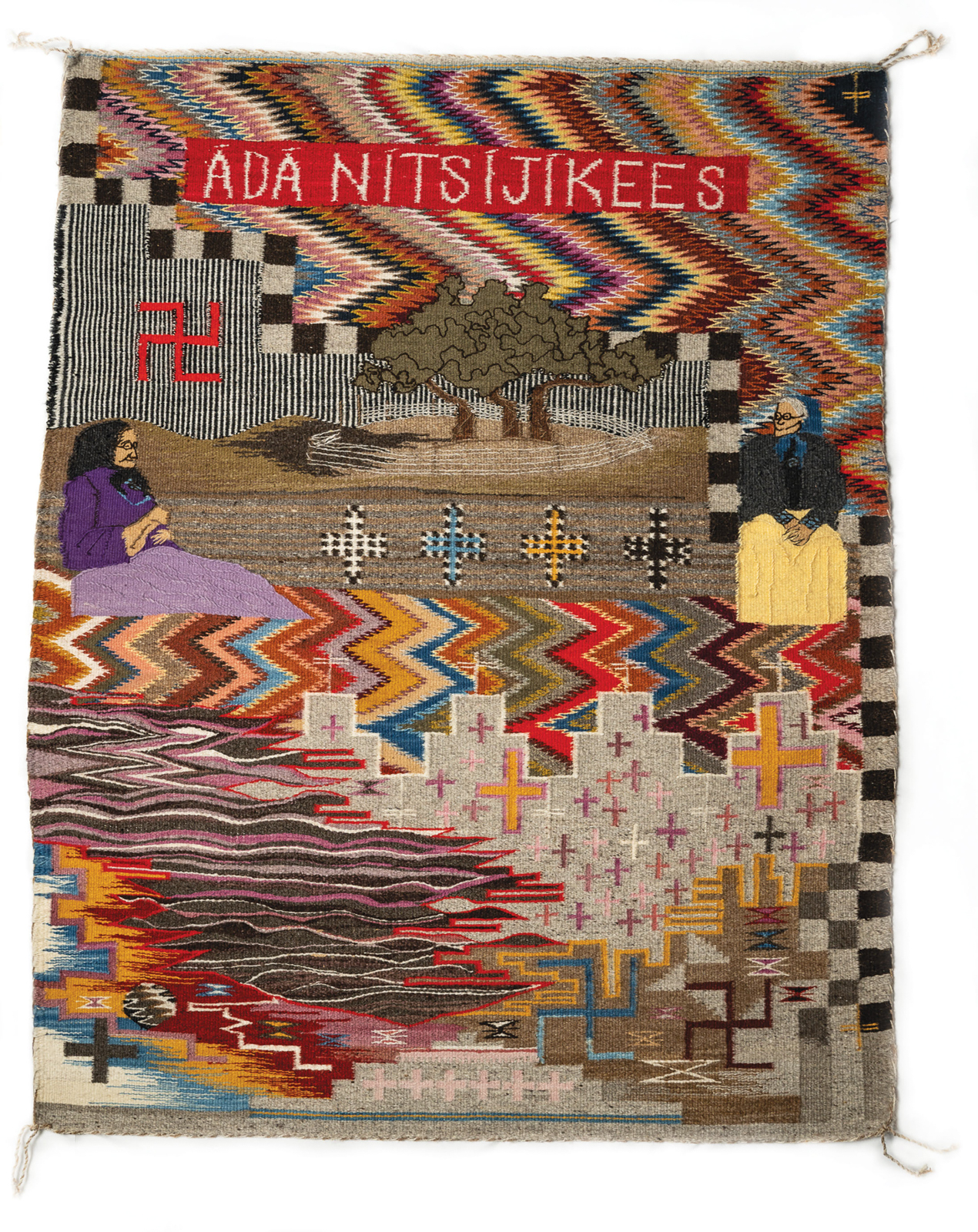
Think for Yourself, 2022, Diné-style tapestry, handspun and commercial vegetal-dyed Navajo churro/alpaca, 42 x 60”
Artists that Tapaha looks forward to seeing this year include fellow weaver Kevin Aspaas (Diné), who Tapaha greatly admires. “I am really excited to see what Kevin puts out. I admire him because he keeps his weaving life and his personal life really closed off—he doesn’t share or post his work in process [on social media], so I am really excited to see what he has this year.” Another artist Tapaha is looking forward to seeing is Diné potter Jared Tso. “I have been enamored with Jared’s process, progress and growth over the past few years—he has become a great friend,” Tapaha says. “He and his family have just been a beaming light in all of this. I rant about the lack of representation for our youth, for the continuance of these traditions and lifeways, and I think that Jared and his family do an exemplary job of showcasing that living and breathing that can be successful.”
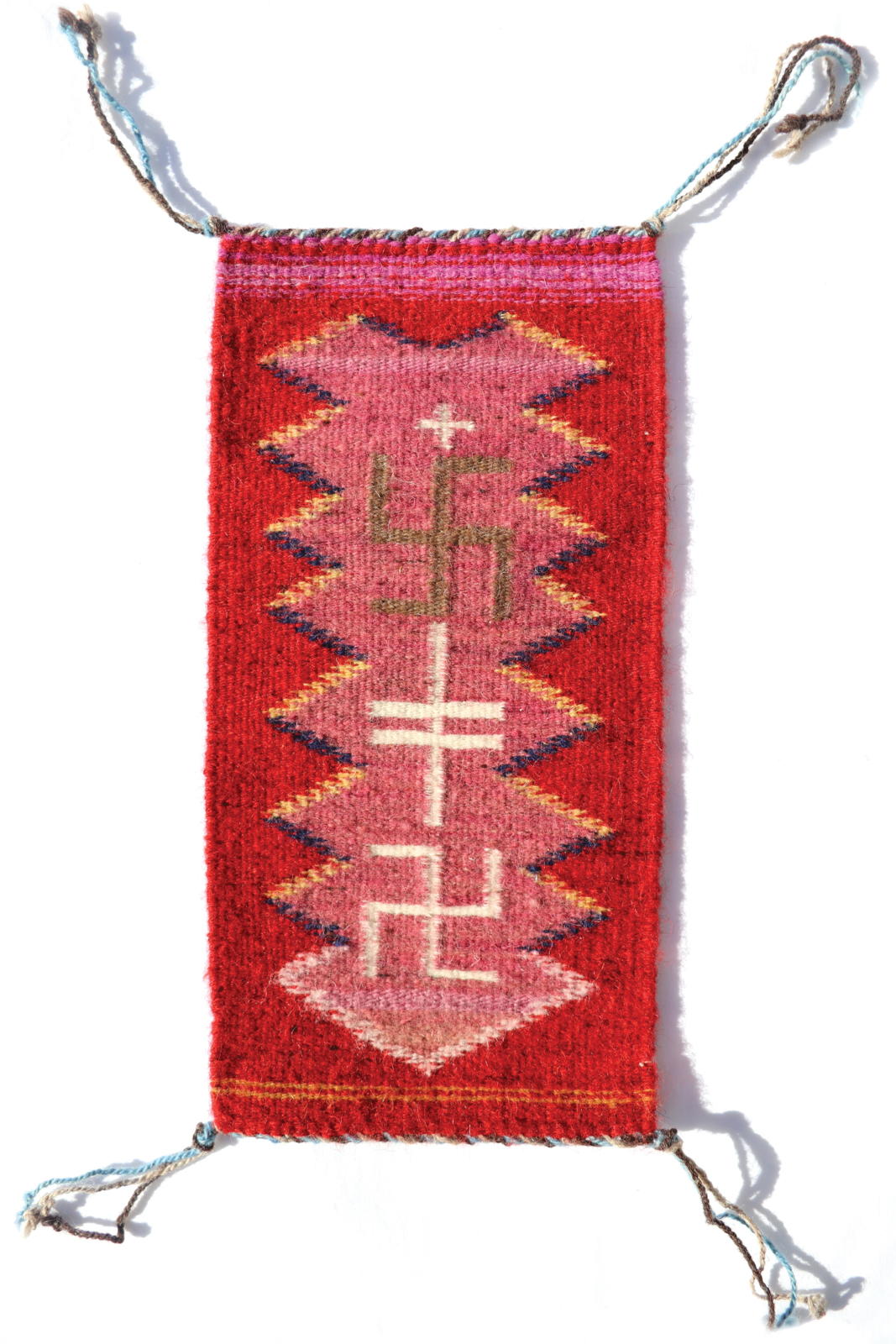
A Bird’s Eye View, 2021, Diné-style tapestry, handspun and vegetal-dyed Navajo churro, 10 x 15¾”
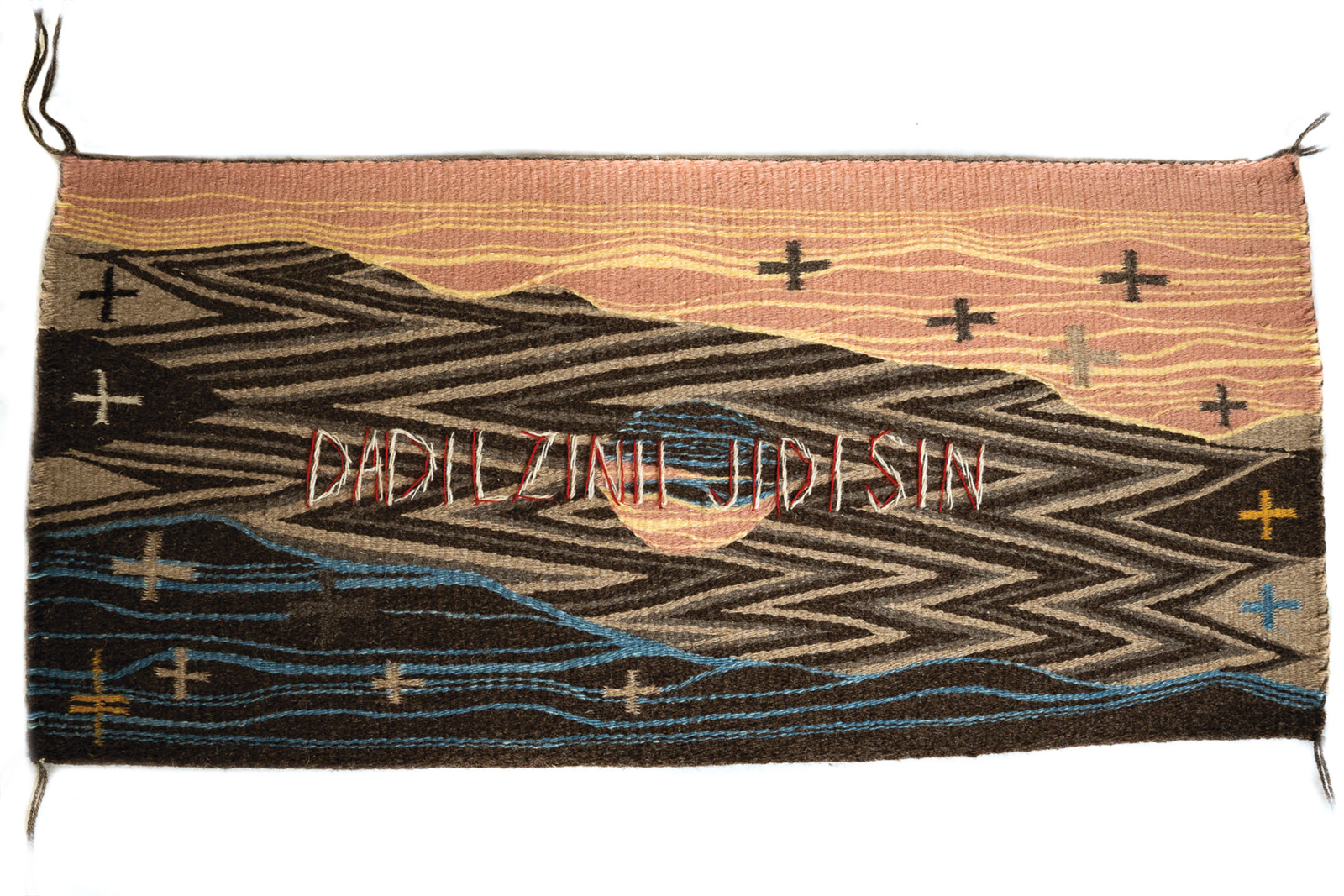
Hózhó Náhásdlįį’×4 : Leaving the Colonial Mindscape, 2021, Tapestry on Diné-style loom, 100 percent hand-dyed Navajo churro, 15 x 39”
Powered by Froala Editor