Many Diné weavers attribute their weaving careers to key family members. For siblings Naiomi and Tyler Glasses, they credit their grandmother, Nellie Glasses, who taught with love and encouragement.
Tyler started weaving when he was 21 years old, after they had moved back to the Navajo Nation. Their grandma would have him and Naiomi help close rugs, and often asked them to help with solid portions that didn’t contain designs. That was how they both learned the beginning movements of weaving. They would spend time with her and learn. Their grandma had been encouraging Tyler to create his own work, but he was hesitant at first. One day he walked into his grandma’s hogan, her traditional home. Naiomi talked about how their grandma ended up setting up the loom, sat him down and had him start. She had taken away the hesitation for him. It was turning point moment for him as he learned how to weave by simply doing it. They spent a lot of time growing up with their grandma, and she told them that “weaving can make a life for you.”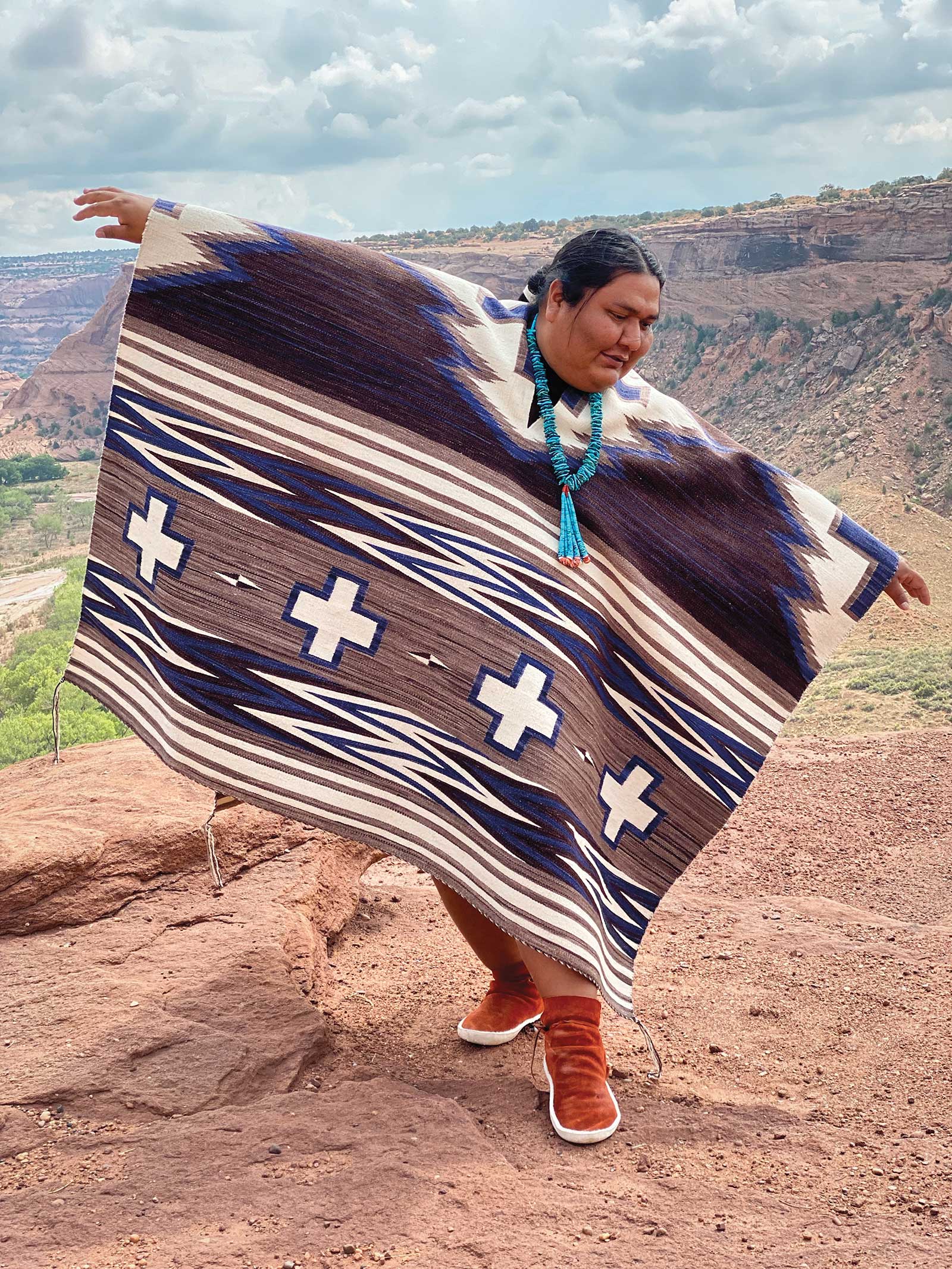 Tyler Glasses wears one of his poncho-style weavings.
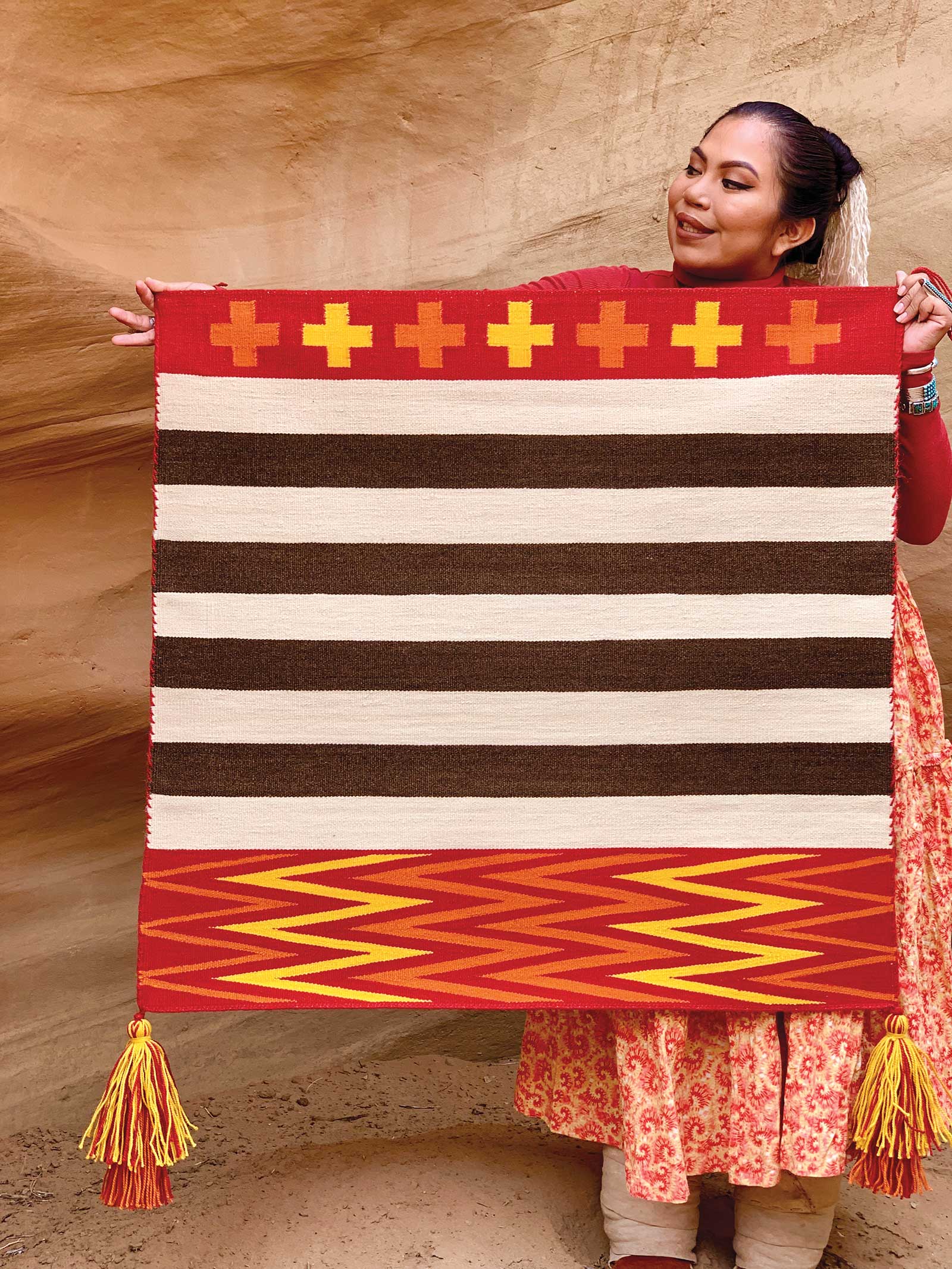 Naiomi Glasses holds up one of her latest creations.Naiomi describes herself as a Diné asdzáán, a Diné woman. Today she’s often noted for not just her beautiful weavings, but for her activism for elders in her community, skateboarding and for modeling for Native designers and brands. Naiomi says their parents, like their grandmother, were very encouraging for both Tyler and her to weave. “Treat it like a job,” she remembers them saying. “You’ll have to do the hard work, but you’ll get to do something you love.” Their grandmother put a lot of faith in siblings, she inspired them and she pushed them to where the weaving continued to make a life for them. And opportunities were soon around every corner. Naiomi says she is hopeful that her work sparks joy, and that it inspires others when they view it. “I hope children in the future will see the rugs, Navajo or other tribes, and want to learn about their own culture,” she says, adding that she would be honored to have her pieces still be shown or displayed after she’s gone from this physical existence.
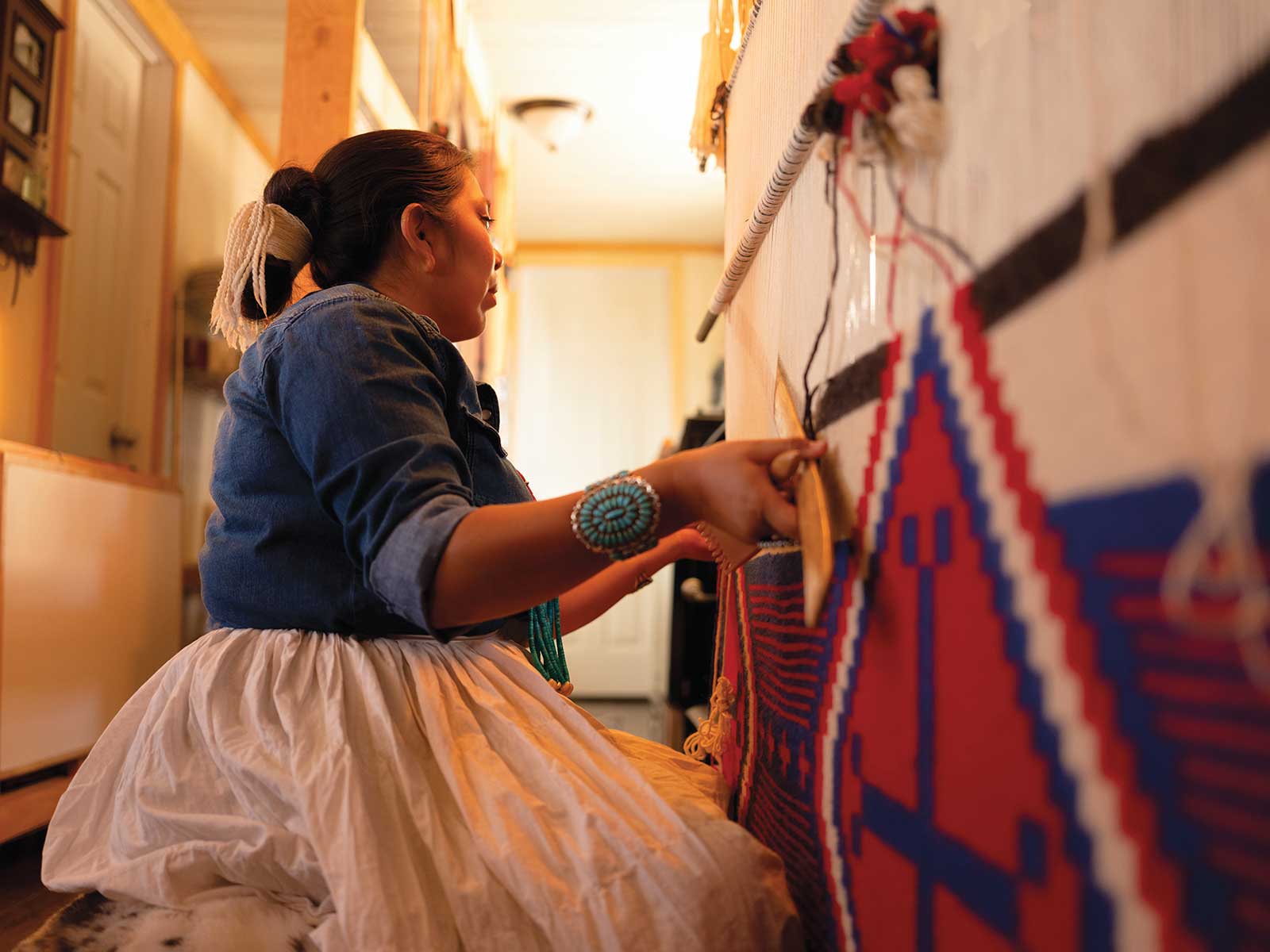 Naiomi Glasses weaves an elaborate new blanket from her studio.
Tyler said that he used to rodeo before he began his weaving career. One of the first pieces he owned was by his grandmother; it was a saddle blanket for the rodeo. Naiomi’s first piece was a similar saddle blanket. Because of those early pieces, both siblings believe in the utilitarian power of weavings—they are meant to be used. They both enjoy taking that starting idea, and then figuring out ways to embellish from there. Contemporary Native art was exemplified through their practices. Tyler said that when he starts, he doesn’t really have an exact idea, but rather just color concepts or maybe the overall size in his head. Neither Naiomi nor Tyler typically sketch out a full design prior to creating their pieces. “I’ll sit down and see what color of wool pops out to me. It happens naturally,” says Tyler. “I’ll weave a little bit. I’ll add some orange here, yellow here and see what comes.” Their grandma worked in the same manner, and would have them sit down and let ideas come. While they worked on their pieces, they were traditionally taught to keep their minds and thoughts positive. If they had bad thoughts, their pieces wouldn’t work out right. Like many Native artists, they work from the concept that when you give art to someone, the thoughts you put into the work also goes to them when they receive it. “You can sit down and let the rugs change your mindset, and start encouraging you. It’s very meditative. It can be part of our spirituality,” Naiomi says. “We want the receiver to get the blessings we put into the pieces. We want people to be really happy with what they receive.”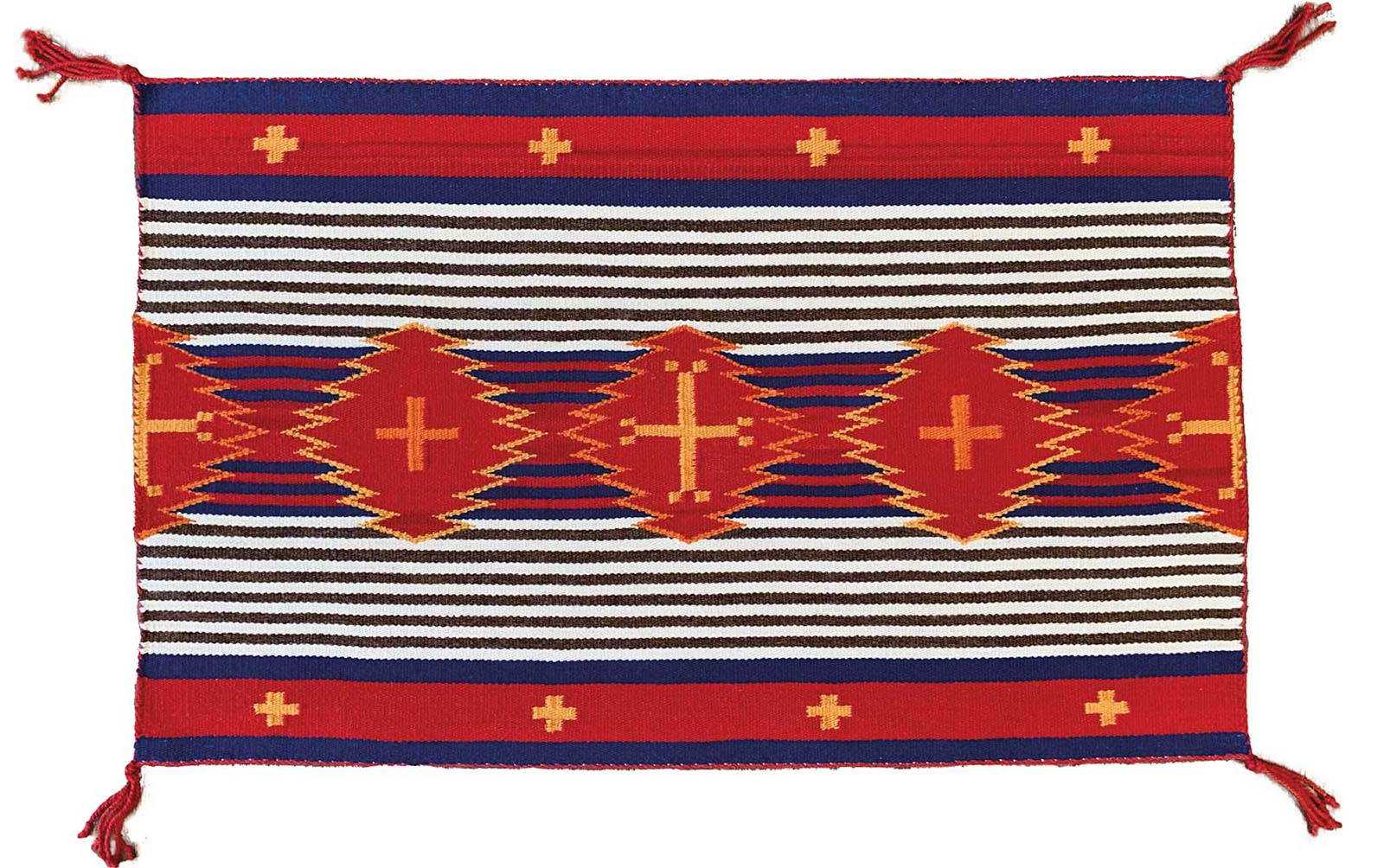 Weaving by Naiomi Glasses.
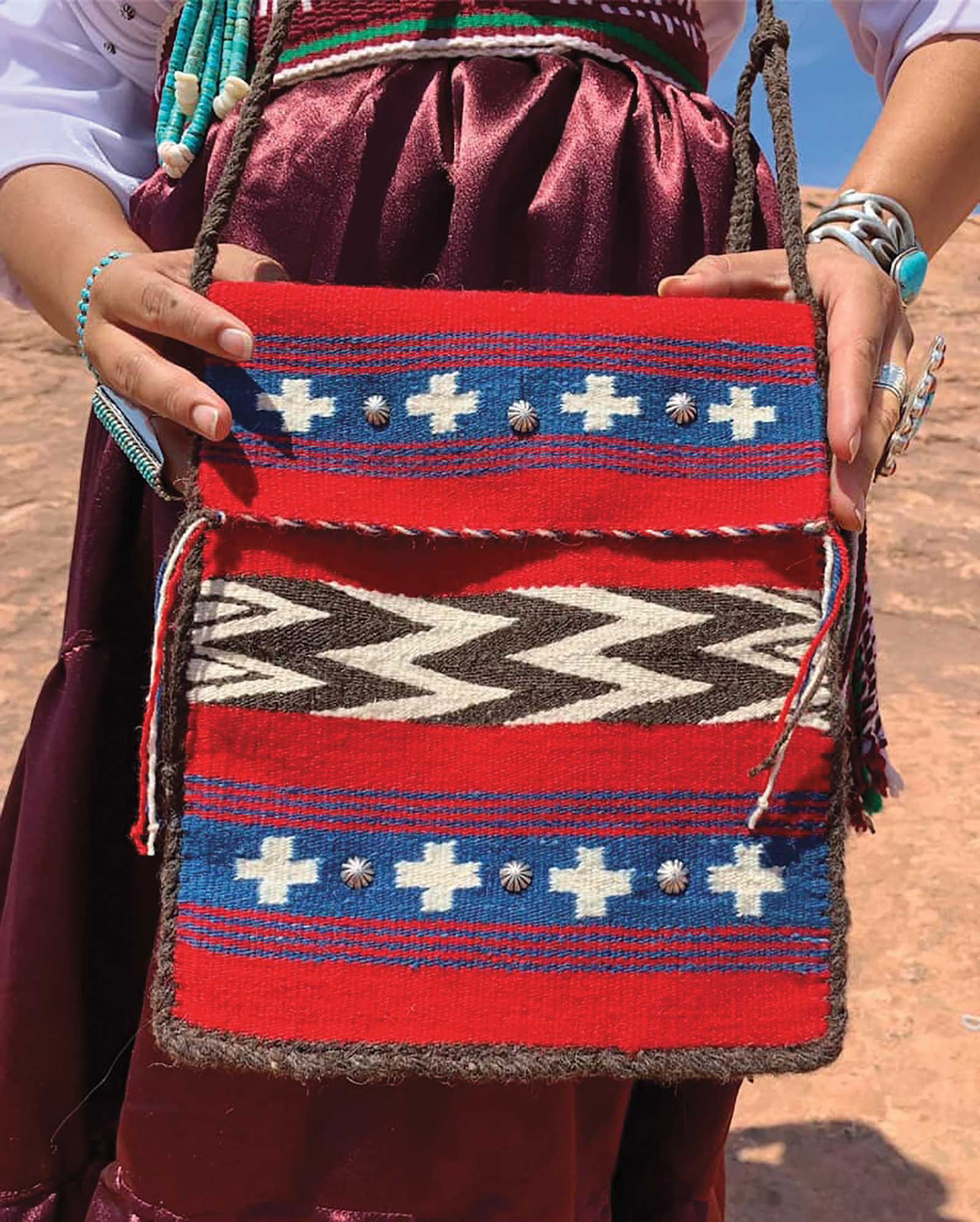 A woven bag by Naiomi Glasses.
When they’re asked how long it takes them to make pieces, they both respond with saying it takes them a whole year to make one piece. Further, they say it takes the same amount of time whether they are making a bookmark or a full wearing blanket or poncho. Not only do they make the weavings, but they also raise the sheep that provide them their wool. “You have to take care of them every day,” she says. “They have to have food, water and you have to take care of the sheep dogs, too—it’s a whole lifestyle.” Their whole family takes care of the sheep, and therefore their whole family is a part of their weavings. When their grandma passed away, their entire family shared the sheep to take care of them. They can spin and dye their own wool upon request. They have been taught to use natural plants like dock root and indigo. “We used to use so much hand-spun wool. Our grandma would card, spin and dye it. She taught us where to find the plants for the dyes,” Naiomi explains. To keep up with their success and high demands today, they have also used mill-spun churro wool in addition to the handmade wool they have harvested.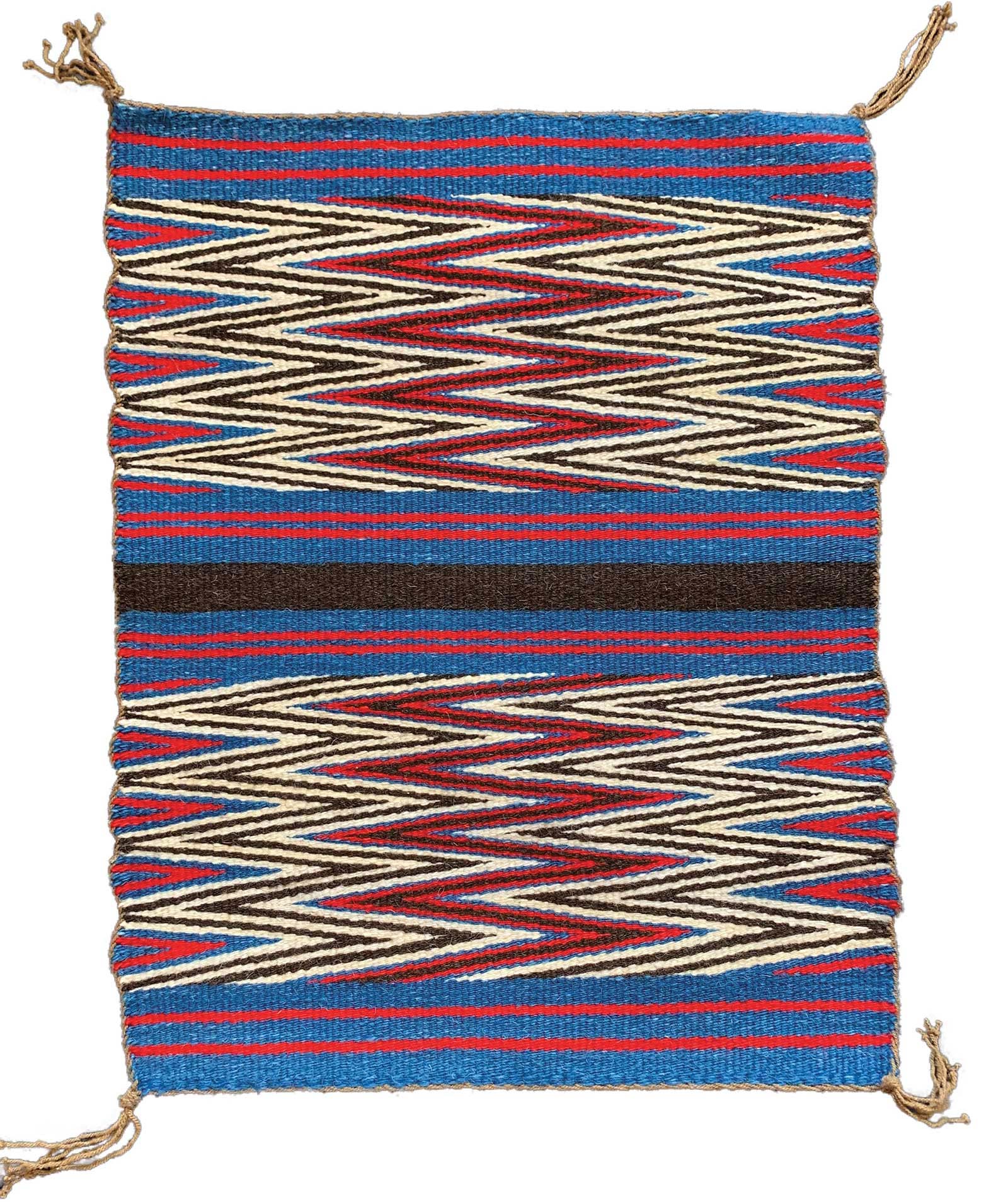 Weaving by Tyler Glasses.
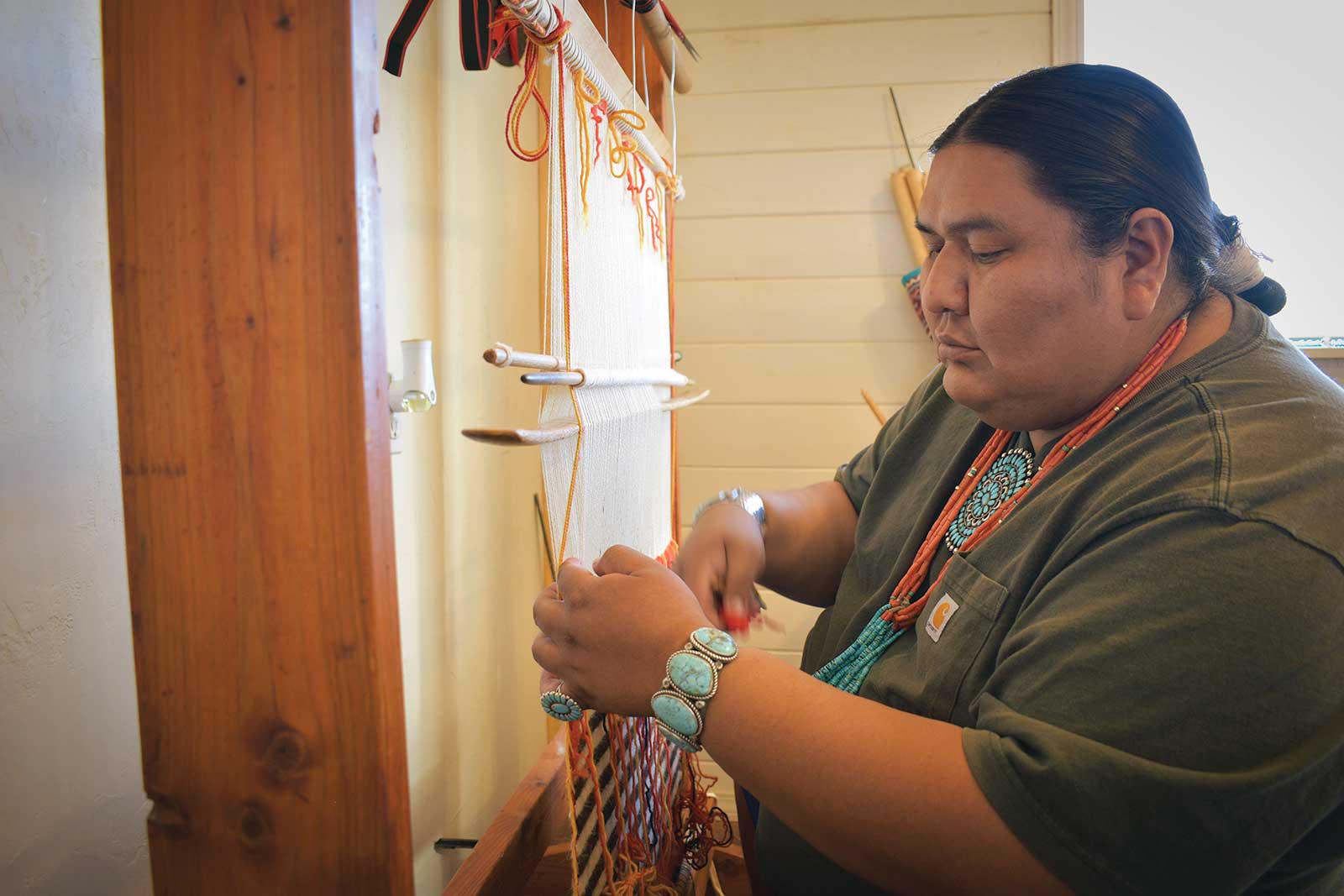 Tyler Glasses works on a new blanket.
Full-size pieces that are worn take such a long time they feel like a marathon to Tyler and Naomi. Tyler wanted to do more utilitarian pieces like where his practice started, and he’s working on saddle blankets for the Heard Museum Guild Indian Fair & Market. They’ve made purses, ponchos and many other items over the years. He said he also wants pieces for the Heard market to be in miniature versions of old-style wearing blankets. They both found this idea to be a great way to showcase what they offer.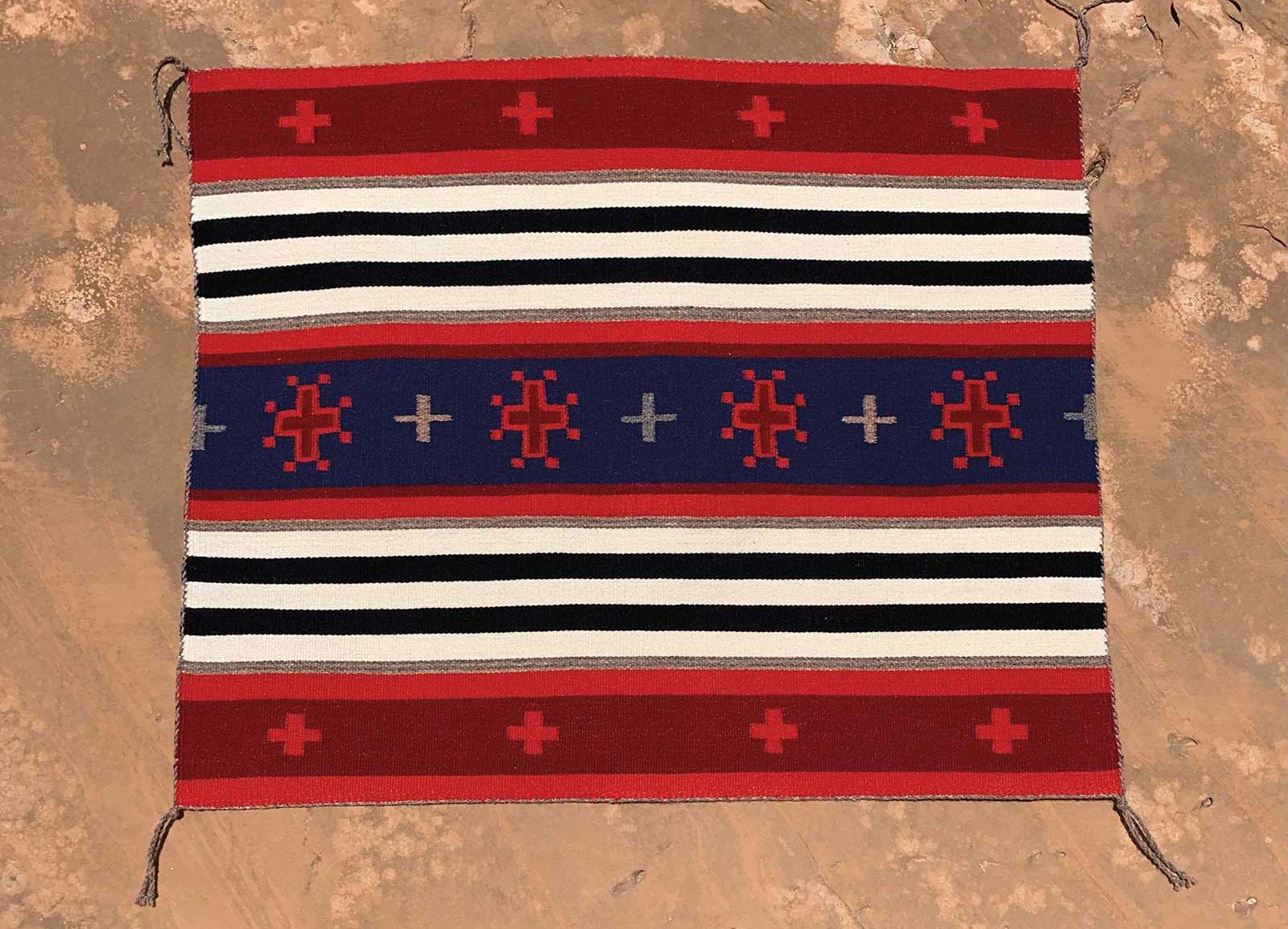 Weaving by Tyler Glasses.
“I’d love to also make a saddle blanket,” Naiomi says. “I want it to be all-natural hand-spun wool.” She adds that she’ll be making a weaving with lots of oranges and reds, a color scheme that is dated before the rise of the many trading posts and before Navajos were dictated to create specific designs for that era. “I feel most inspired seeing all the explorations and experiments before trading posts changed our traditions away from like the wedge weave,” she adds. “It’s being revived today, with a scalloped edge.” The way designs and art are passed down throughout history, all generations can be connected through the art of weaving. Naiomi and Tyler are both excited to have an in-person market, and to be within the arts community. “I love the Native art community; everyone is so helpful! We know [everyone] from the markets,” Naiomi says. “The camaraderie is very heartfelt. You see it in the weaving community. Traditionally we’re all taught to help one another, and this can be seen in our art market community as well.”—
Powered by Froala Editor