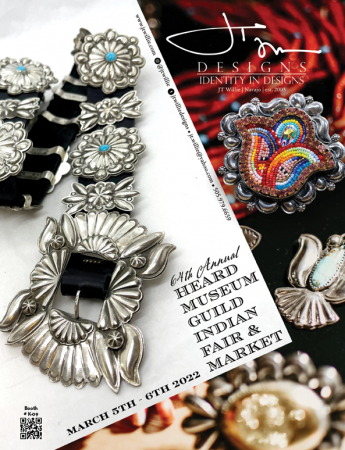
The Heard Museum Guild Indian Fair & Market emits an electrifying, magnetic force for both Native American artists and admirers of Native American artwork, bringing people from across the country together for two wonderful days in March. The fair undoubtedly sets an atmosphere of support and enthusiasm—enthusiasm for the passion and artistic prowess of Native American creators.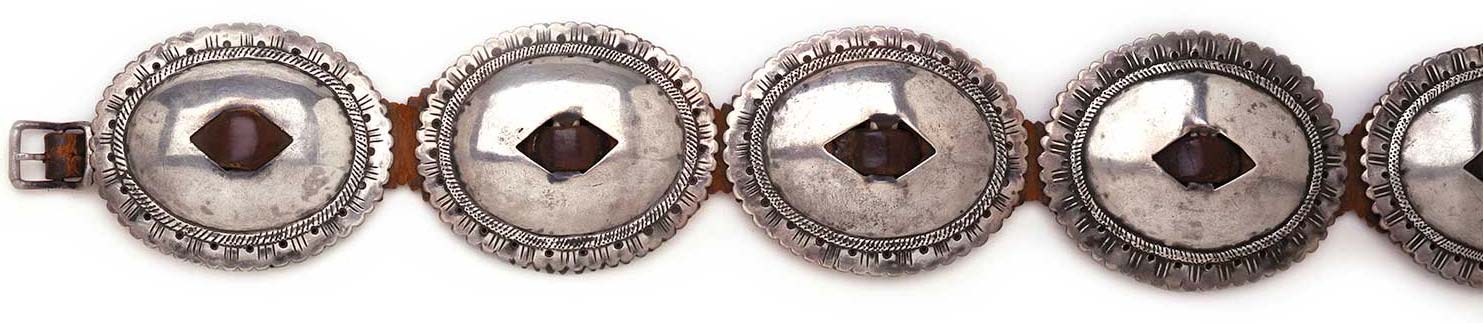 Artist once known (Navajo), First phase concho belt, ca. 1880, silver and leather. Fred Harvey Fine Arts Collection, Heard Museum, 1051S. On view in Southwestern Silverwork, 1850-1940.
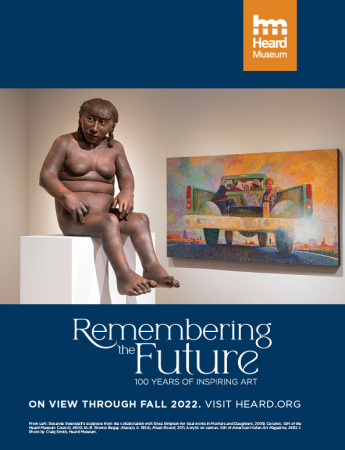
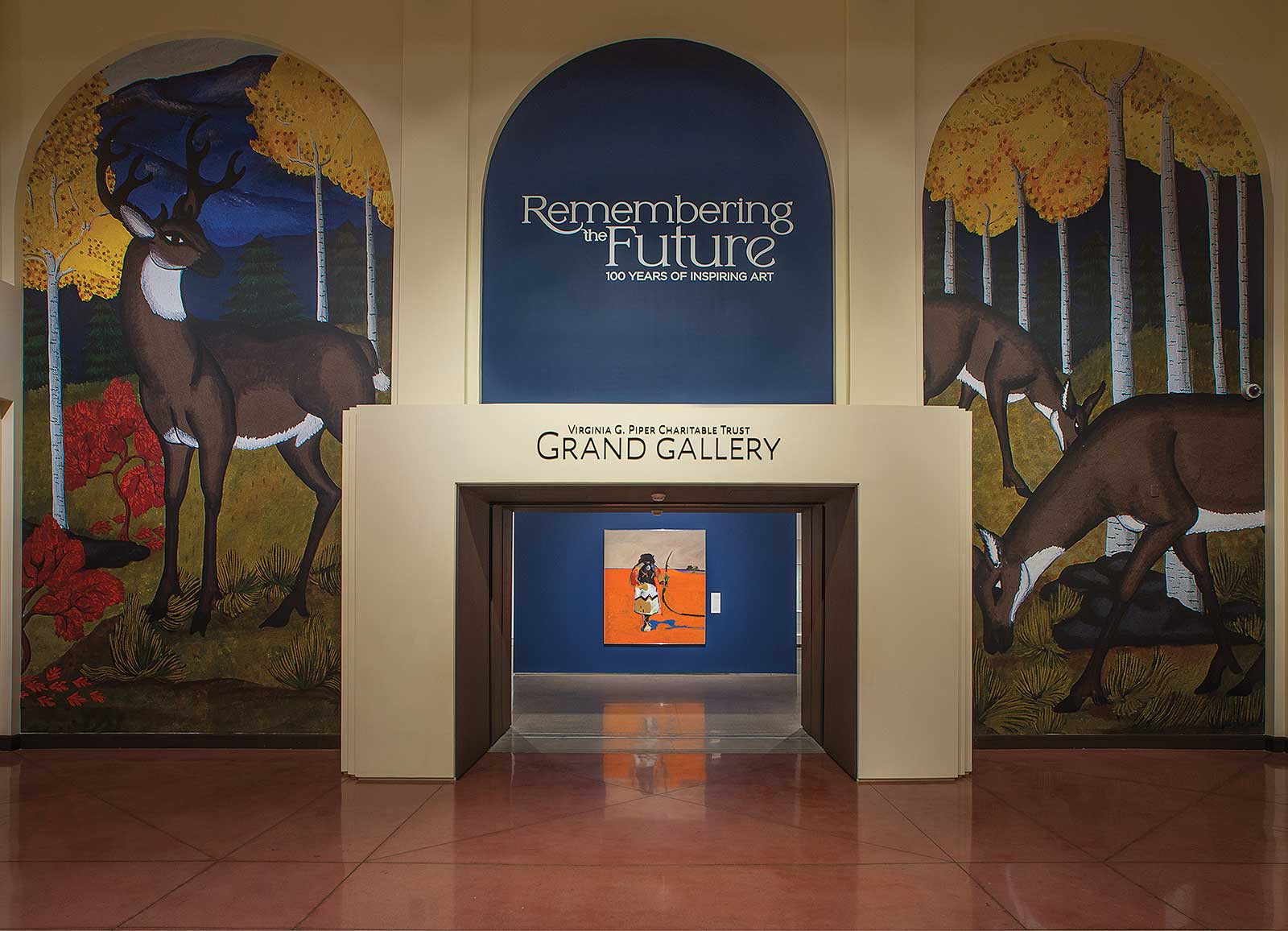 Installation view, Remembering the Future: 100 Years of Inspiring Art. Craig Smith, Heard Museum.
Two new exhibitions at the Heard Museum running concurrently with the market reflect that spirit of excitement. Remembering the Future: 100 Years of Inspiring Art features paintings, photography, sculpture and digital works by some of the very best Indigenous artists of the 20th and 21st centuries, and Southwestern Silverwork, 1850-1940 presents rarely seen works from the Heard Museum’s collection, documenting nearly a century of the evolution of Native American silverwork. These exhibitions take visitors through the works of modern artists as well as the many incomparable artists who came before them.
With a catalog spanning 100 years, Remembering the Future tells an expansive story of American artwork over the course of two centuries. It taps into decades of creative expression, shining a spotlight on the artists who have had a pivotal role in elevating the Native American fine art movement. “As we reviewed the many impressive masterworks in the Heard Museum’s collection, we sought examples of artists who have spoken to the times in which they found themselves,” says Ann Marshall, exhibition curator and director of research at the Heard Museum. The exhibition is co-curated by Heard Museum chief curator Diana Pardue.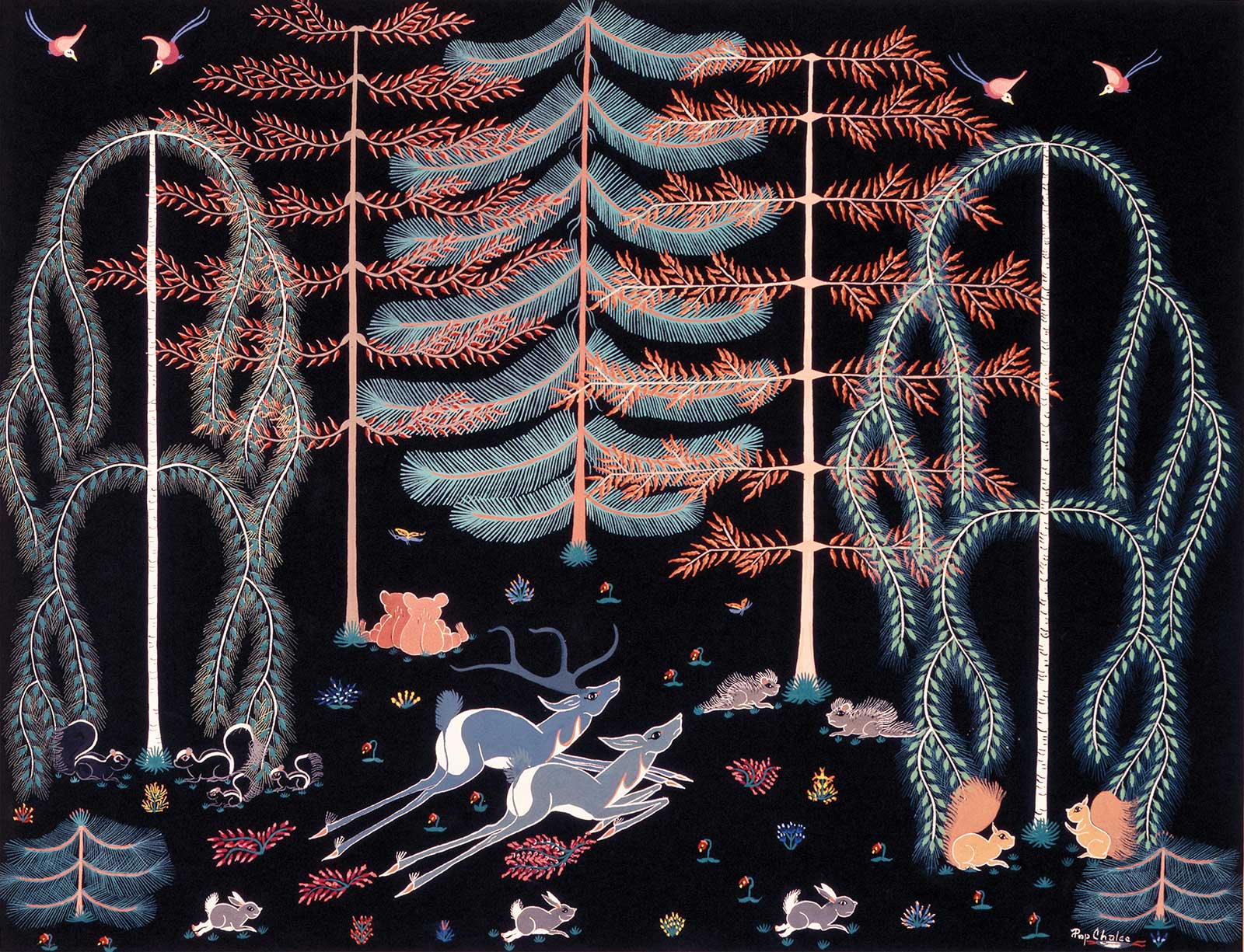 Pop Chalee (Merina Lujan, 1906-1993), Enchanted Forest, watercolor on paper, 19¾ x 25¾”. Heard Museum Collection. Gift of Mr. and Mrs. Read Mullan, IAC347. On view in Remembering the Future: 100 Years of Inspiring Art.
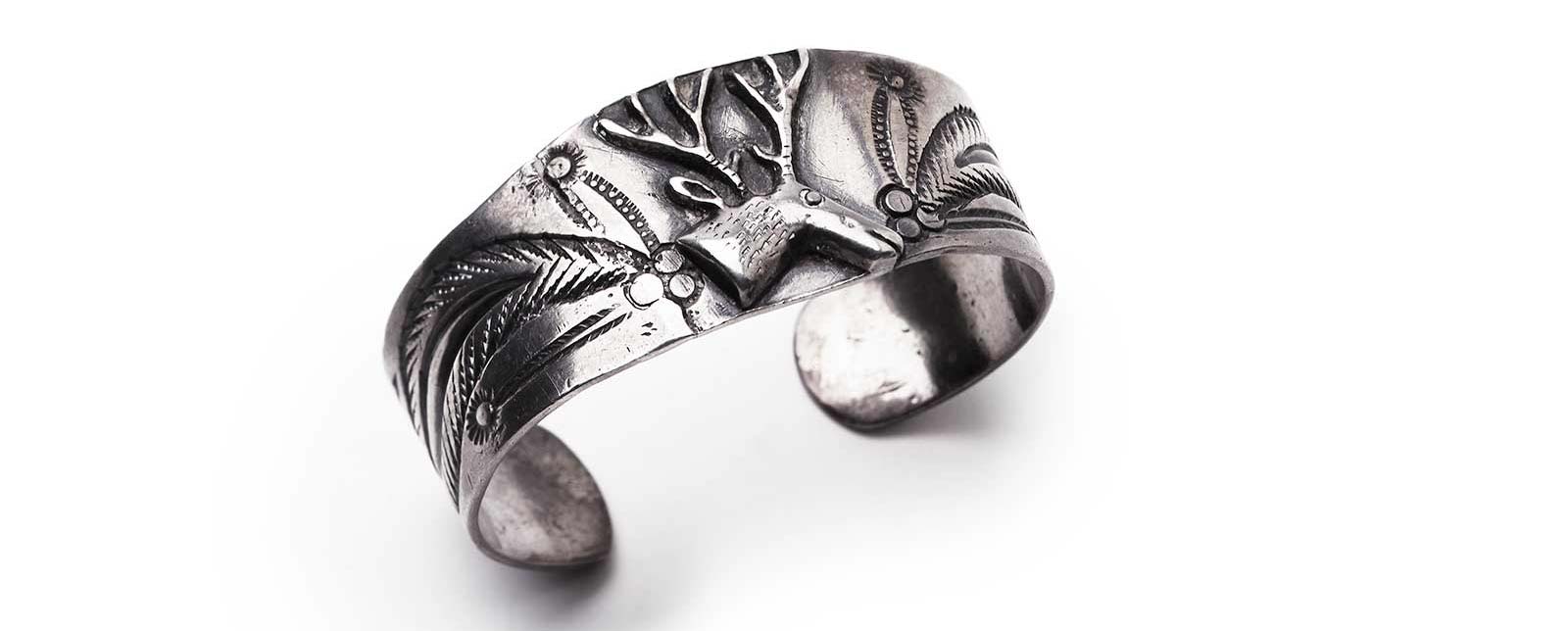 Artist once known (Navajo), bracelet, 1910-20, silver. Gift of the Graham Foundation for Advanced Studies in the Fine Arts, NA-SW-NA-J-549. On view in Southwestern Silverwork, 1850-1940.
“Over the decades American Indian artists have offered healing and hope through difficult times and have found ways to carry meaningful messages from the past to the future,” Marshall continues. “We selected paintings from the early decades of the 20th century, in which artists such as Awa Tsireh, Tonita Peña and Fred Kabotie shared the beauty of ceremonies that taught how the land should be cared for so that people of the world would have a good life. That theme of caring for the land and for each other moved through the decades to the present, for example, in Bob Haozous’ Ozone Madonna and Meryl McMaster’s What Will I Say to the Earth and Sky.”
Marshall discusses other prime examples of exemplary Native American artwork in Remembering the Future. “Deer and Aspens, a pastoral scene by Pablita Velarde, so beautifully transports the viewer to a place of beauty,” she says. An enlarged version of Velarde’s painting is installed as part of the entry experience for the show. And as visitors pass through that entryway, the first painting they’ll see is Fritz Scholder’s vivid American Portrait as a Buffalo Dancer. “[This painting] immediately shows how the Native American fine art movement has moved and changed with the times. As we pass through the midcentury, artists attended and taught at the college and university level, [forming] ideas that they expressed through sculpture and photography,” says Marshall. She also discusses celebrated Ojibwe modernist George Morrison, who worked in painting, drawing, sculpture and prints: “His White Painting uses concepts from modernism to express his vision of his Minnesota home.”
Moving toward present day, the 21st century ushered in its own set of uniquely impactful artwork, including video and new forms of photography. Marshall cites examples like Will Wilson’s Auto Immune Response #1 and Tanya Lukin Linklater’s Slay All Day, a high-definition video with no sound on continuous loop.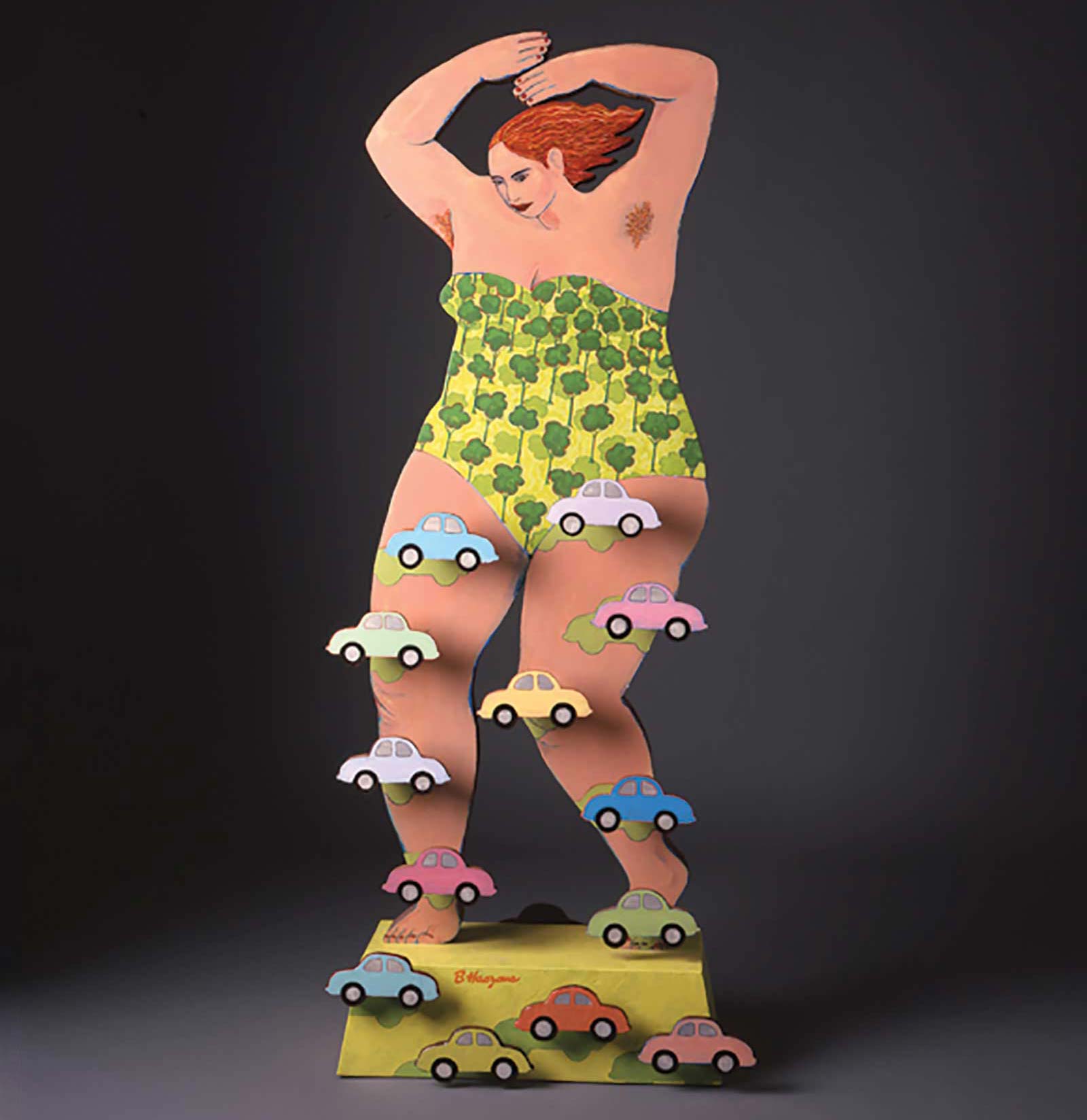 Bob Haozous (Chiricahua Apache), Ozone Madonna, 1989, mahogany, paint and steel. Heard Museum purchase, IAC2378. Photo: Heard Museum, Craig Smith. On view in Remembering the Future: 100 Years of Inspiring Art.
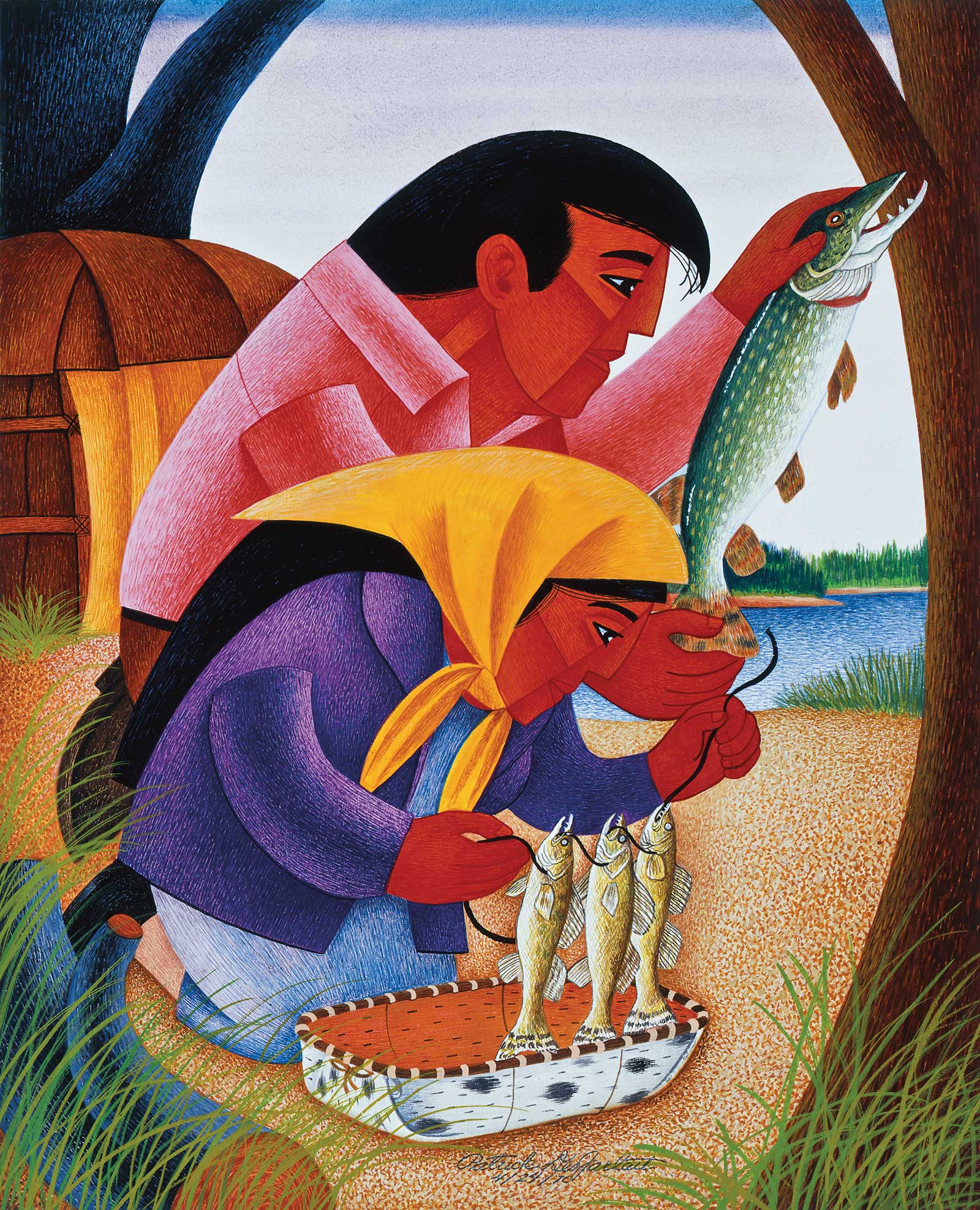 Patrick DesJarlait (Ojibwa, 1921-1973), Chippewa Fishing Camp, 1970, watercolor on board, 14 x 11¼”. Heard Museum Collection, 3675-1. On view in Remembering the Future: 100 Years of Inspiring Art.
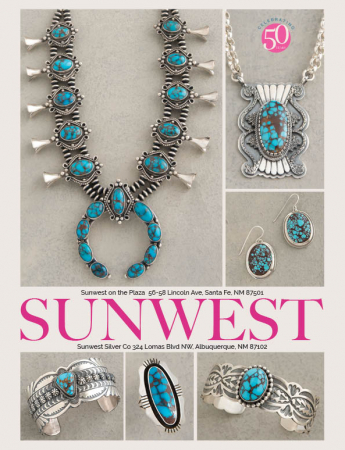
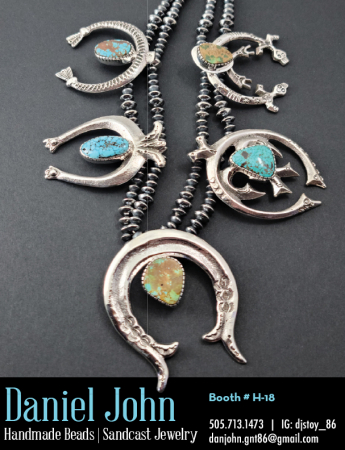
Opening February 19, Southwestern Silverwork, 1850-1940 covers a lengthy range of works, delving into nearly 100 years of techniques, processes and creativity. Pardue explains how the exhibition came to fruition. “Assistant curator Velma Craig andI were working on an exhibition titled Small Wonders, which included small-format works such as brooches, buckles, rings, earrings [and] silver seed pots along with a range of miniature houses, teapots and other unique items from the permanent collection.” Within this exhibition were several buckles and earrings from the early 1900s that Pardue says did not include definitive dates of origin. “We contacted [jewelry scholar] Robert Bauver for help with dating since the early silverwork is an area of specialty for him. In our conversations, he mentioned an interest in curating an exhibition of historic metalwork. He was familiar with the Heard collection since he had reviewed it a few different times for his personal research.”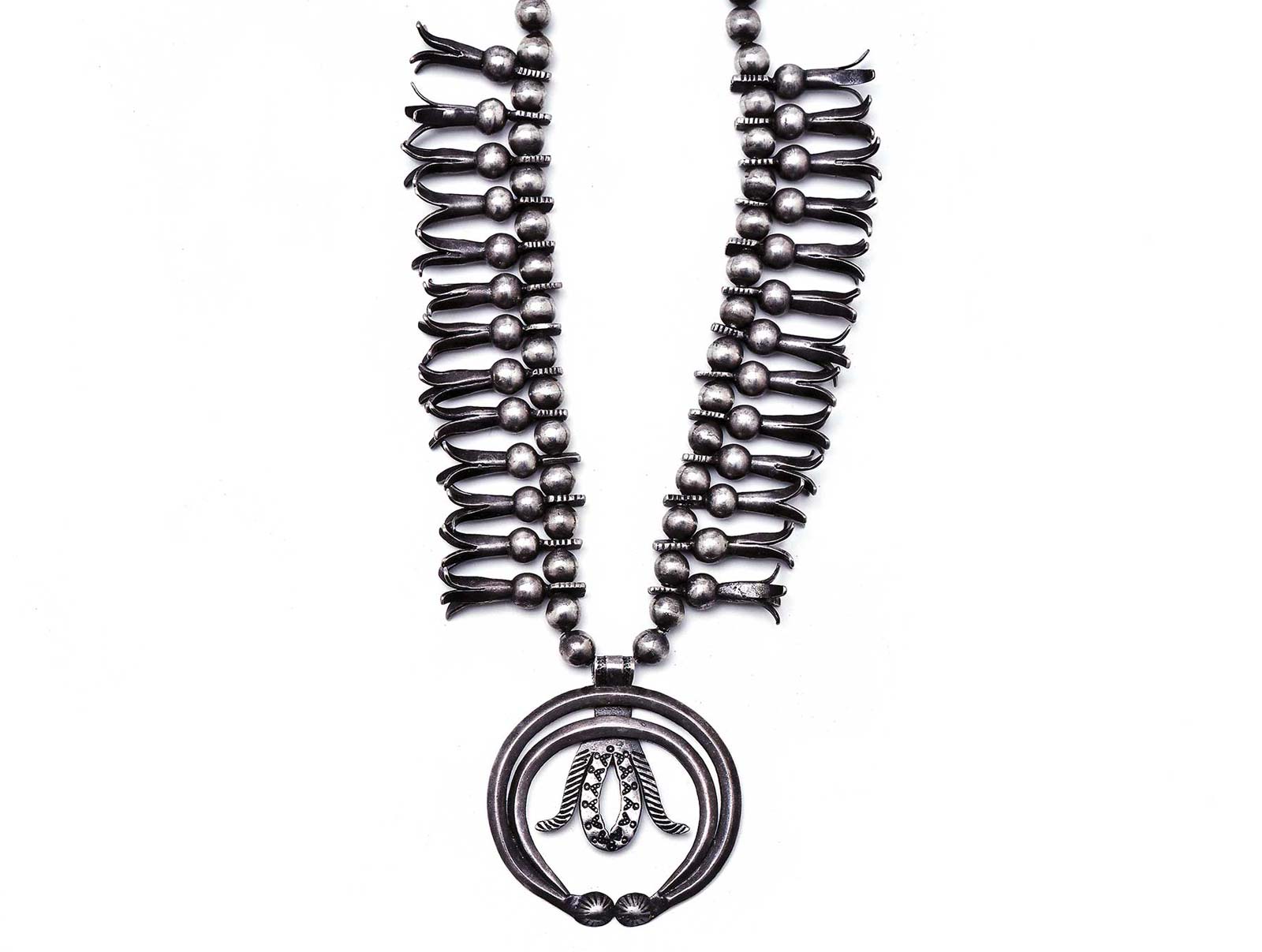 Artist once known (Navajo), squash blossom necklace, 1885-95, silver. Gift of Ms. Jacqueline Eidel, NA-SW-NA-J-737. On view in Southwestern Silverwork, 1850-1940.
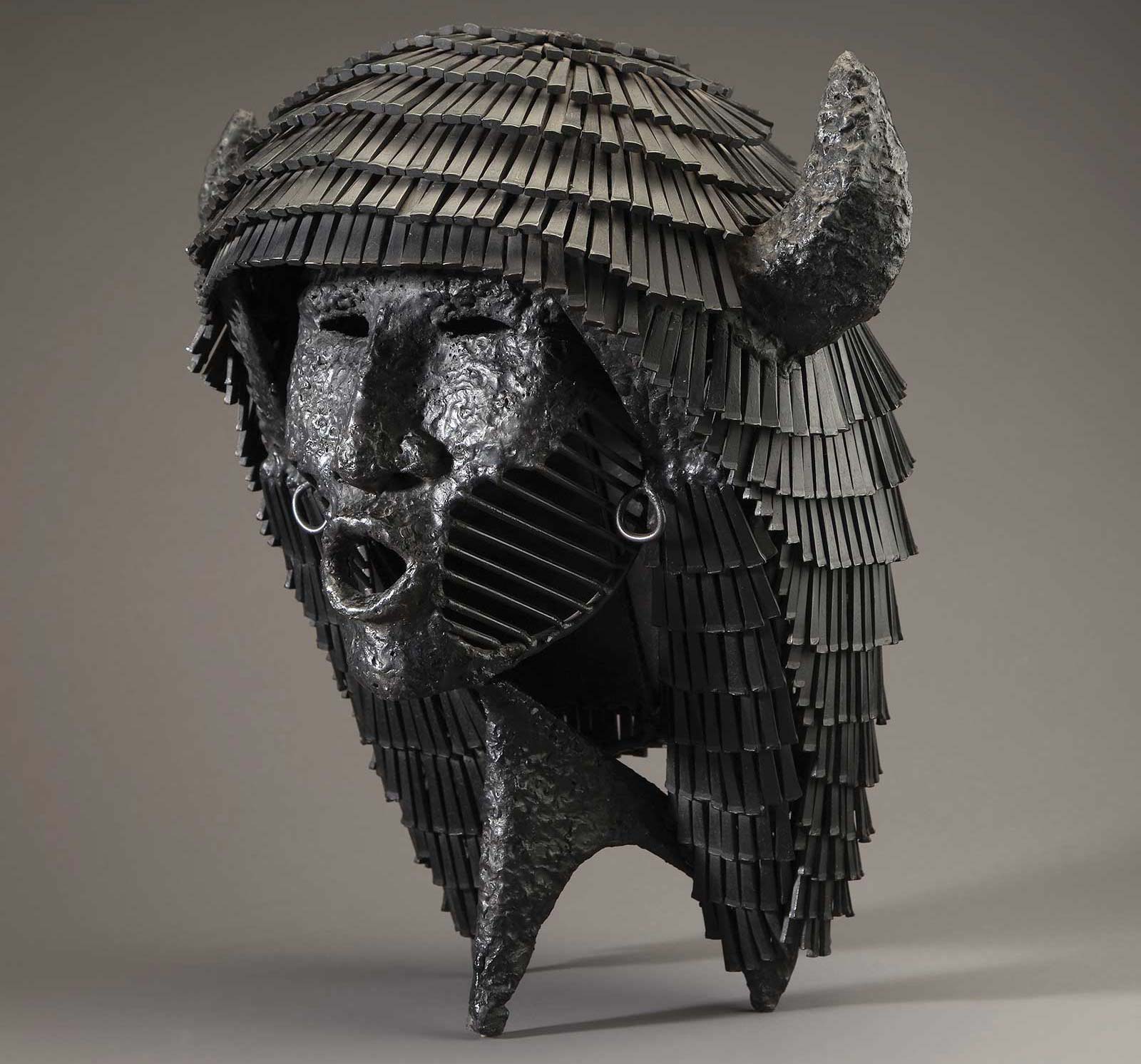 Allan Houser (Chiricahua [Warm Springs] Apache, 1914-1994), Buffalo Dancer, 1969, steel. Photo: Heard Museum, Craig Smith. On view in Remembering the Future: 100 Years of Inspiring Art.
The exhibition starts in the year 1850, the onset of Indigenous silverwork in the Southwest, Pardue explains. “[It] illustrates the changes that occurred with different types of objects—concho belts, horse bridles, necklaces, bow guards [and] earrings—through time. Visitors will have a chance to see [how the items shifted] through the years, and the exhibition didactics will provide more details about technical and aesthetic changes. There is something about the appeal of metal, whether it is the sheen of the silver, the complexity of forms and designs or the idea of adornment that captivates people, and Indigenous Southwestern silverwork encompasses each of those concepts,” she says.
Also exhibited in Southwestern Silver are 10 silver bridles that have not been shown at the Heard Museum for more than 40 years. “Visitors will see an early concho belt from the 1860s along with squash blossom necklaces made as early as 1880 to 1885, and bracelets that range from simple bands of silver to those with extensive turquoise settings,” says Pardue. “It is a great opportunity for the museum to share a wide range of works from these early creative years of silverwork.”
Southwestern Silverwork, 1850-1940 will remain on view at the Heard through October 31, 2022. Remembering the Future: 100 Years of Inspiring Art is on display through January 2, 2023. —
Through January 2, 2023
Remembering the Future: 100 Years of Inspiring Art
February 19-October 31, 2022
Southwestern Silverwork, 1850-1940
Heard Museum 2301 N. Central Avenue, Phoenix, AZ 85004
(602) 252-8840, www.heard.org
Powered by Froala Editor