In Arizona, Navajo oral stories say turquoise formed after a long drought ended, from the tears shed by dancing people—tears of joy. When the tears mixed with the falling rain, they soaked into the earth and formed turquoise. Across Indigenous cultures and the greater Southwest, the stone has captivated people for millennia.
Both the legend behind the stone and the science that happens within the earth are fascinating for fans of jewelry. Opening February 6, 2027, at the Museum of Northern Arizona, is Turquoise: Stone and Story, which brings together geological specimens, archaeological objects, jewelry, paintings and cultural objects from the museum’s collections with the voices of contemporary artists and cultural practitioners to explore turquoise as a color, a mineral and an element of culture.
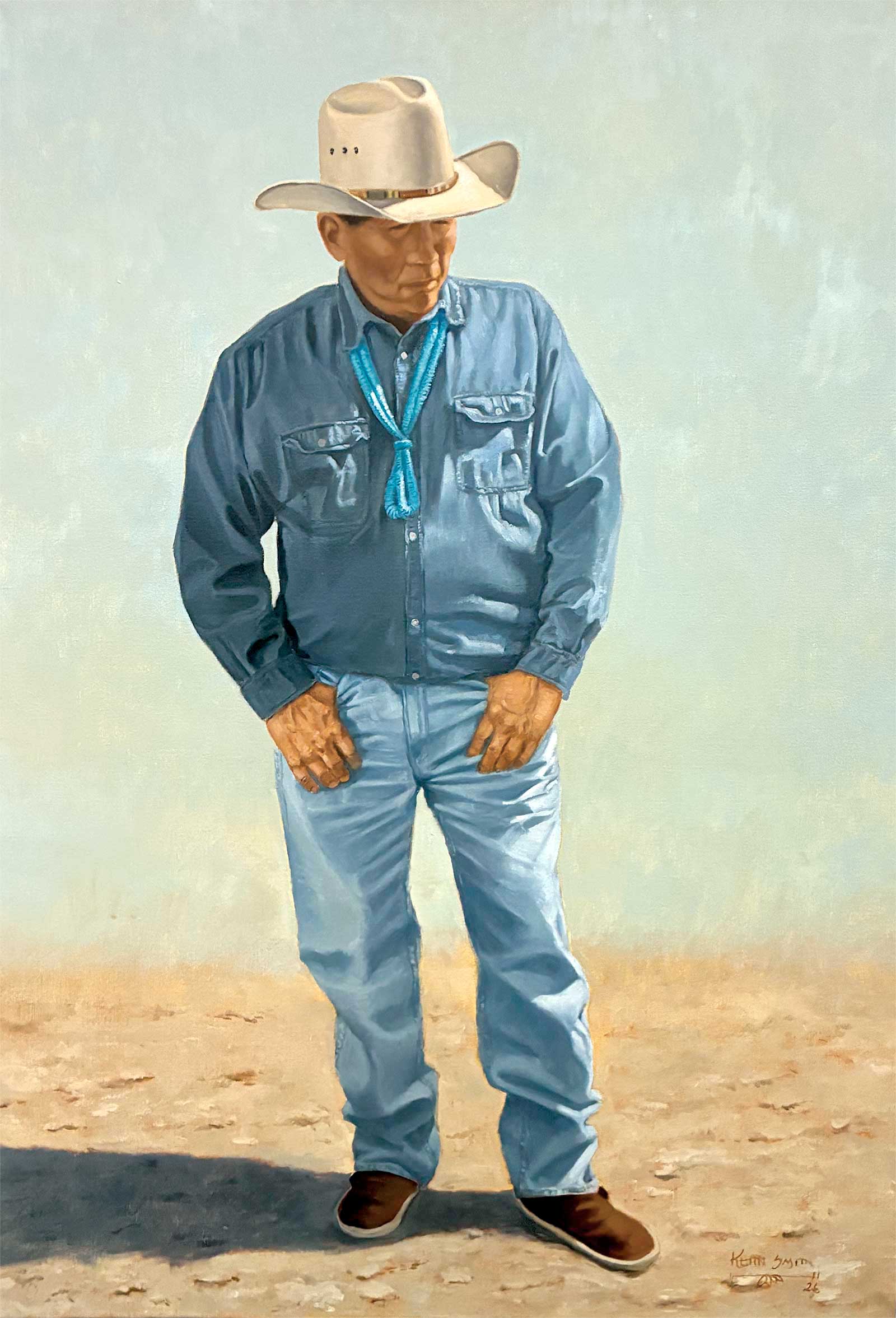
Keith Smith (Navajo (Diné)), Cheii Looking Sharp, 2026, oil on linen, 30 x 42 in. Museum of Northern Arizona purchase.
The exhibition begins with the stone itself. Breaking down the science that happens deep within the ground to bring about its creation. Turquoise does not naturally form within the uplifted interior of the Colorado Plateau; it occurs in mineral-rich regions around its edges, where the copper-rich earth and shifting groundwater create the conditions for its formation.
“The Museum of Northern Arizona is a place-based museum. We're always trying to explore the intersections of science, art and culture on the Colorado Plateau, and turquoise is one of those things that is just a naturally wonderful way for use to do that,” says Kristan Hutchison, the exhibition and publications manager at the Museum of Northern Arizona.
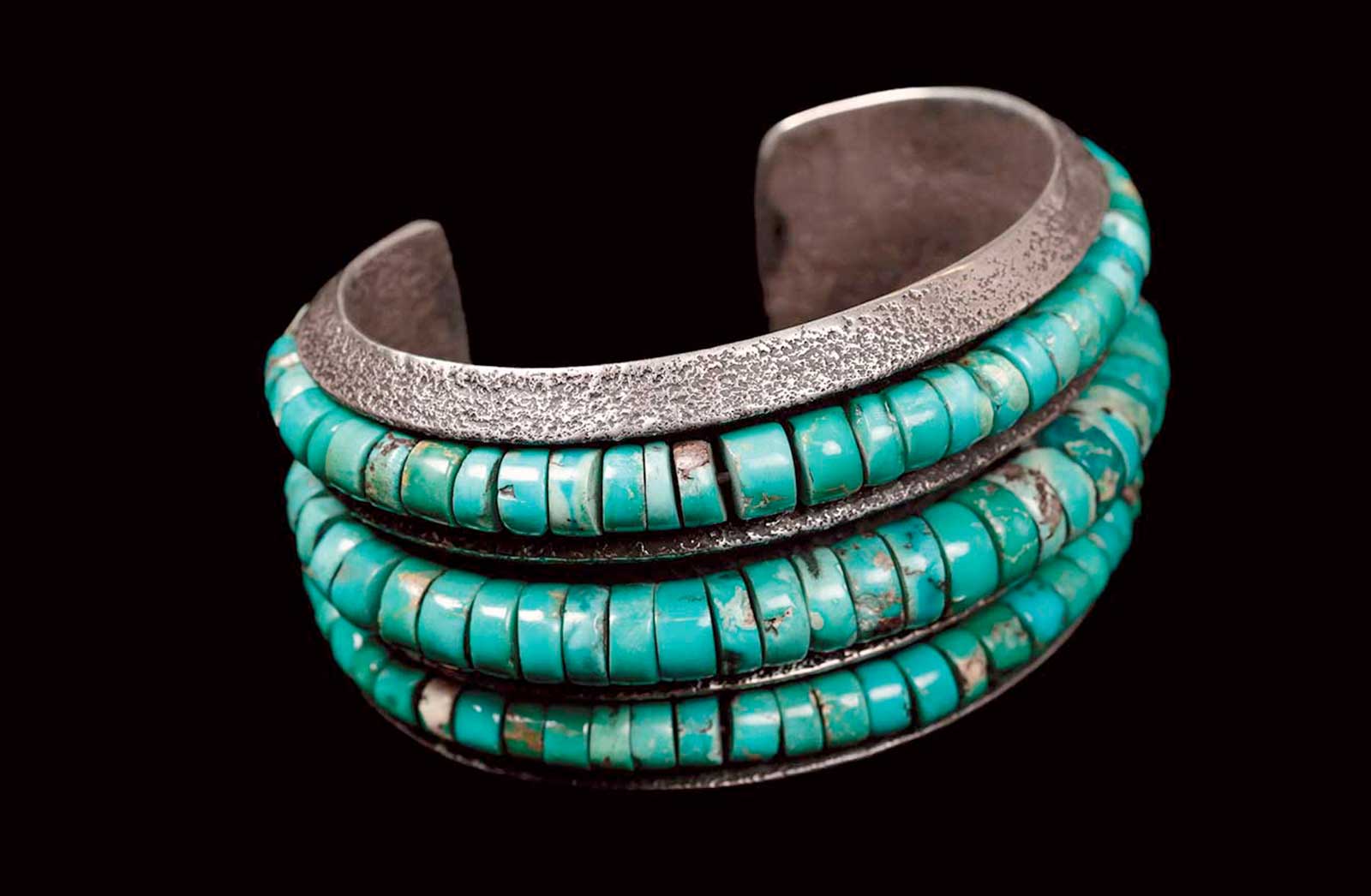
Charles Loloma (Hopi), bracelet, silver, turquoise jacla and coral, 21⁄5 in. Bequest from the estate of Catherine F. McWhirter
For thousands of years, people have transformed this material from the earth into objects of beauty, exchange and meaning. Archaeological objects in the exhibition include turquoise beads, pendants and worked fragments, accompanied by tools used to drill and shape stone. Samples from regional mines help connect these objects to the landscapes from which turquoise emerges.
The exhibition traces those relationships into the present through a selection of jewelry demonstrating approaches ranging from heishi and mosaic to petit-point, inlay and contemporary silverwork. Paintings and other works place the jewelry in context, showing turquoise not simply as a historical object, but as something made to be worn.
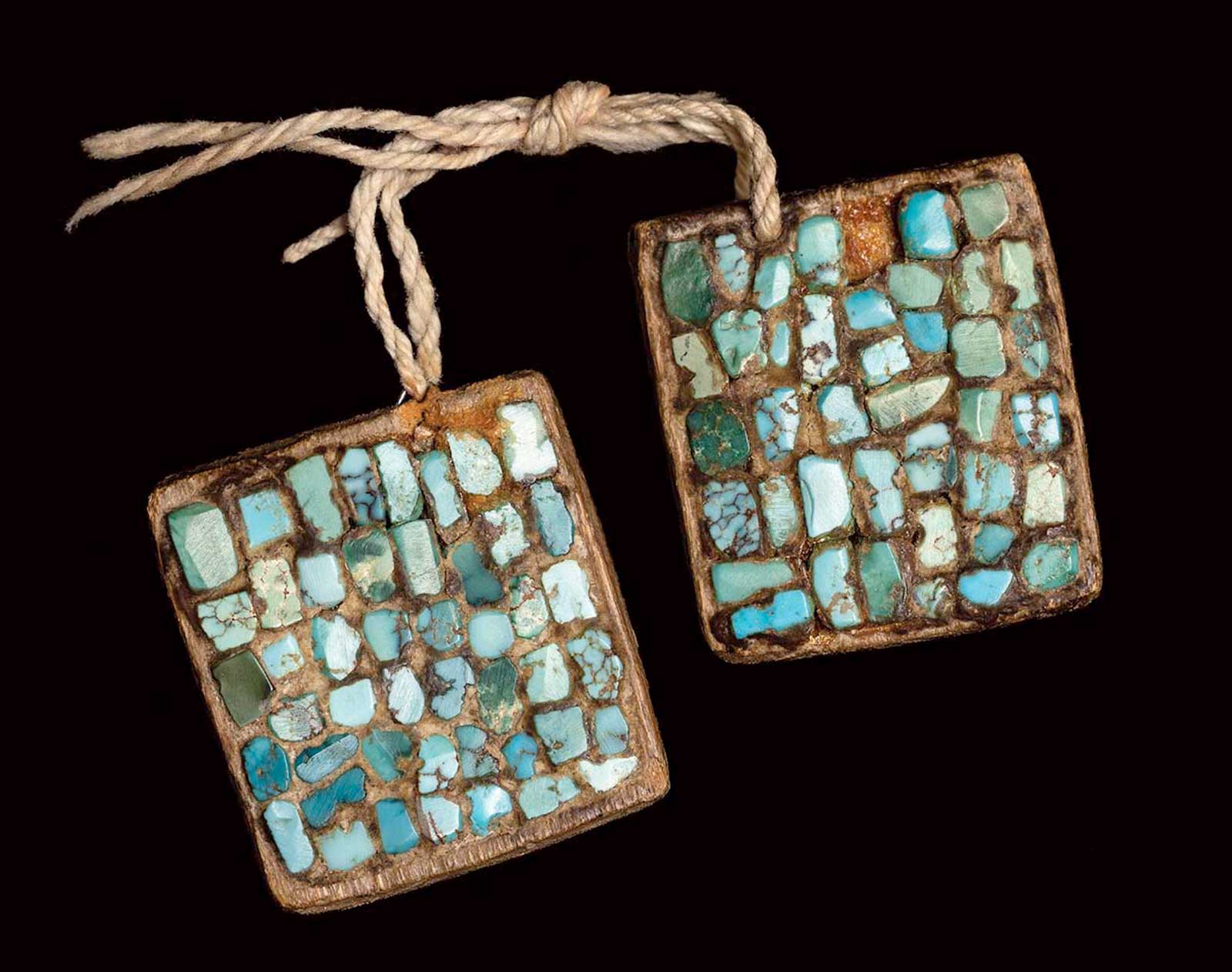
Square mosaic earrings, artist unknown, ca. 1930 or earlier., cottonwood and turquoise. 11⁄3 x 11/4 in.
“There's so much to learn from looking at this one thing and it brings us to so muc depth in different directions,” says Hutchison. “The exhibition is about the history of this place, artistic influences and Native peoples who have valued and worked with turquoise for so long. It's easy to think of turquoise as a beautiful fashion statement, but it holds deeper meaning than that."
Among the works on view will be a Zuni petit-point ensemble comprising a squash blossom necklace, earrings, cuff and ring, and a pair of square mosaic earrings dating to about 1930 whose design represents stacked corn. The exhibition also includes a bracelet by influential Hopi artist Charles Loloma that combine silver, turquoise and coral.
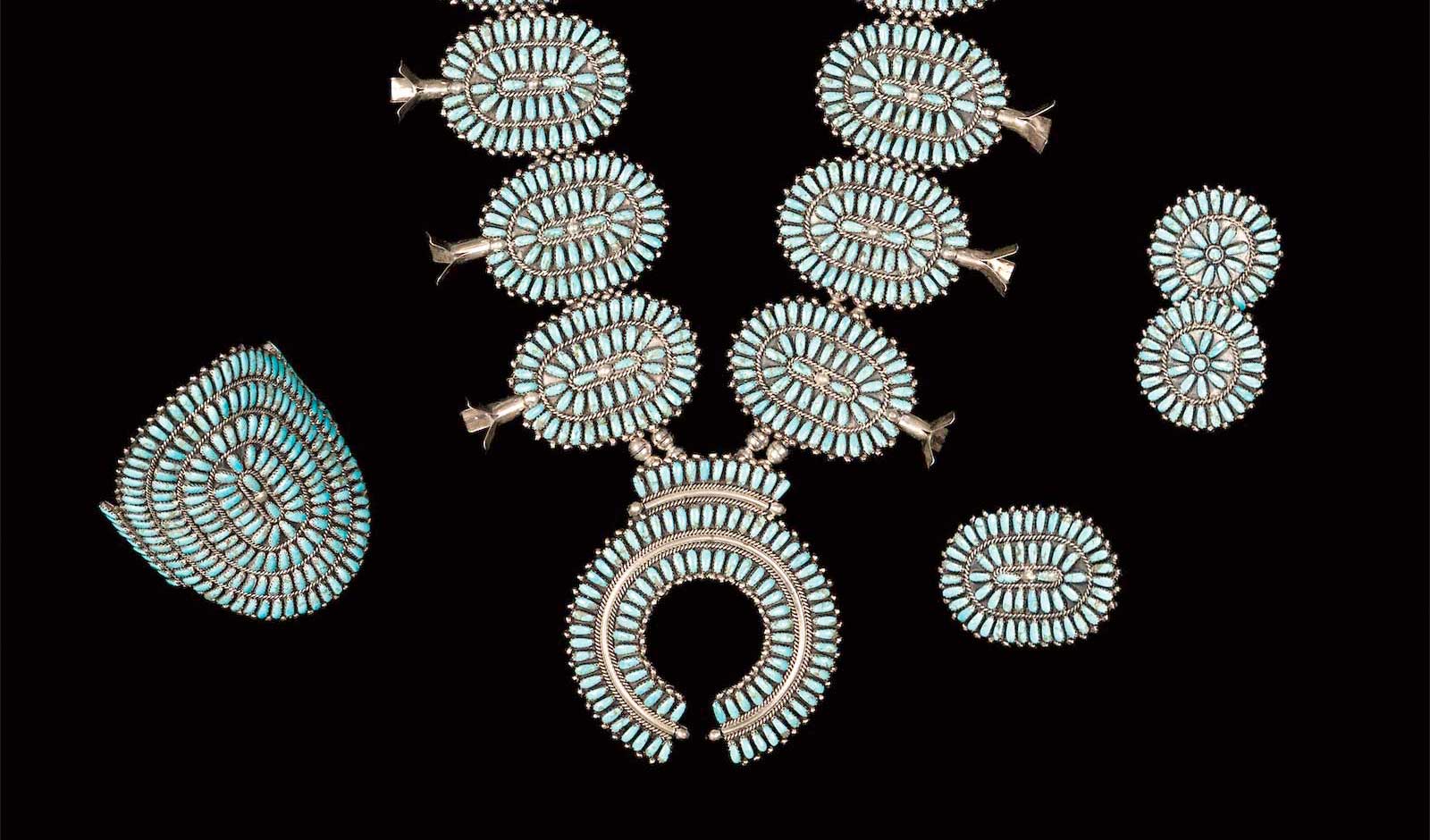
Zuni petit-point jewelry ensemble, artist unknown, squash blossom necklace, earrings, cuff and ring. silver and turquoise, 20 x 6 in.
Other objects expand the story beyond jewelry. A self-portrait by Diné painter Keith Smith depicts the artist wearing turquoise, while moccasins made by Hopi artist Jimmy Kewanwytewa in 1966 use turquoise color in an object made to be worn in dances. The moccasins will be displayed with a painting of Longhair Katsinam, connecting the object to the context in which it was used.
But the objects are only part of the story. Research for the exhibition has included conversations with Native American artists and cultural practitioners about their own relationships with turquoise, revealing meanings that museum collections alone cannot convey.
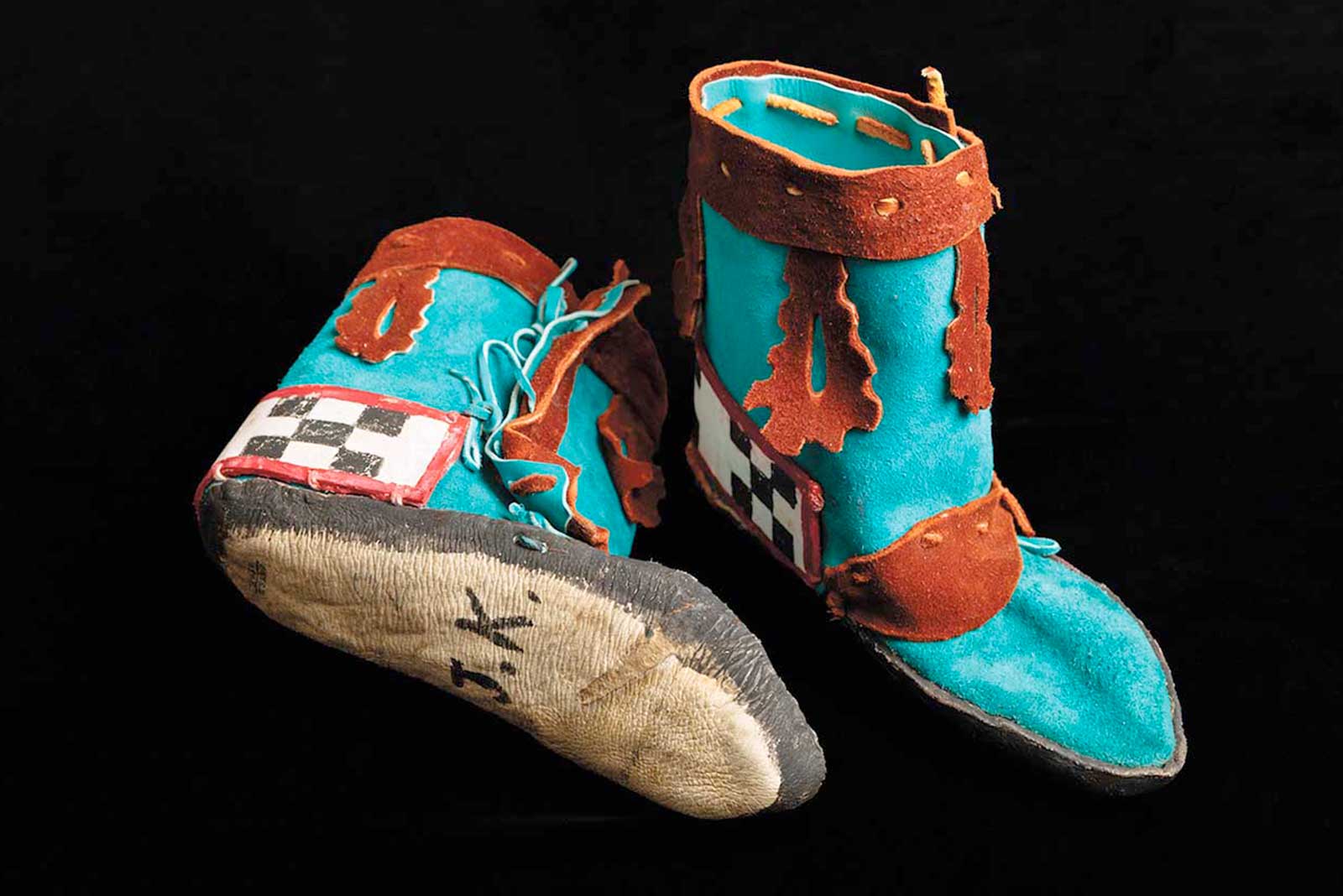
Jimmy Kewanwytewa (Hopi), moccasins, 1966, leather and suede, worn in Long Hair dance, Hohote and Hote Kachina dances
"Science can explain how turquoise forms and archeology can tell us how people use it, but only people can tell use with it means to them,” says Hutchison. In interviews for this exhibition she's asked people, "about the turquoise they're wearing and it always brings them back to their ancestry. These items are gifted and passed down, cherished. They connect not just meaning to turquoise but to family, the people the remember and honor."
What Hutchison hopes visitors take away from the exhbition is, "a greater apperciation for the world and what the earth produces and the ways things can connect...I hope they leave with greater apperciation for turquoise and look at piece of jewelry with more depth and curiosity."
Together, the objects and voices reveal turquoise is more than a familiar symbol of the Southwest. A stone formed in the crust of the Earth, was meant to be discovered and cherished as it has for millennia.
Turquoise: Stone and Story runs through January 16, 2028. Make the journey to Northern Arizona to see the stone in all its forms and throughout history. —
Feb. 6, 2027-Jan. 16, 2028
Turquoise: Stone and Story
Museum of Northern Arizona
3101 N. Fort Valley Road, Flagstaff, AZ 8600
(928) 774-5213, www.musnaz.org
Powered by Froala Editor
Powered by Froala Editor


