It’s been in his DNA all along. While his grandmothers and grandfathers worked sculpting pottery, weaving baskets and tending the land, their process of refining turquoise is what jeweler Ca’Win Jimmy F. Calabaza remembers the most.
Just a young boy at the time, he would watch as his grandfather boiled raw stones in animal fat to stabilize it. When cooled, they washed and dried them. Then in the evenings, the whole family would gather around the fireplace. “He would give us stones to rub on our blue jeans to polish them as he was telling us stories that pertained to our culture,” Calabaza says. “It would also be advice on how to live, along with some funny stories.”
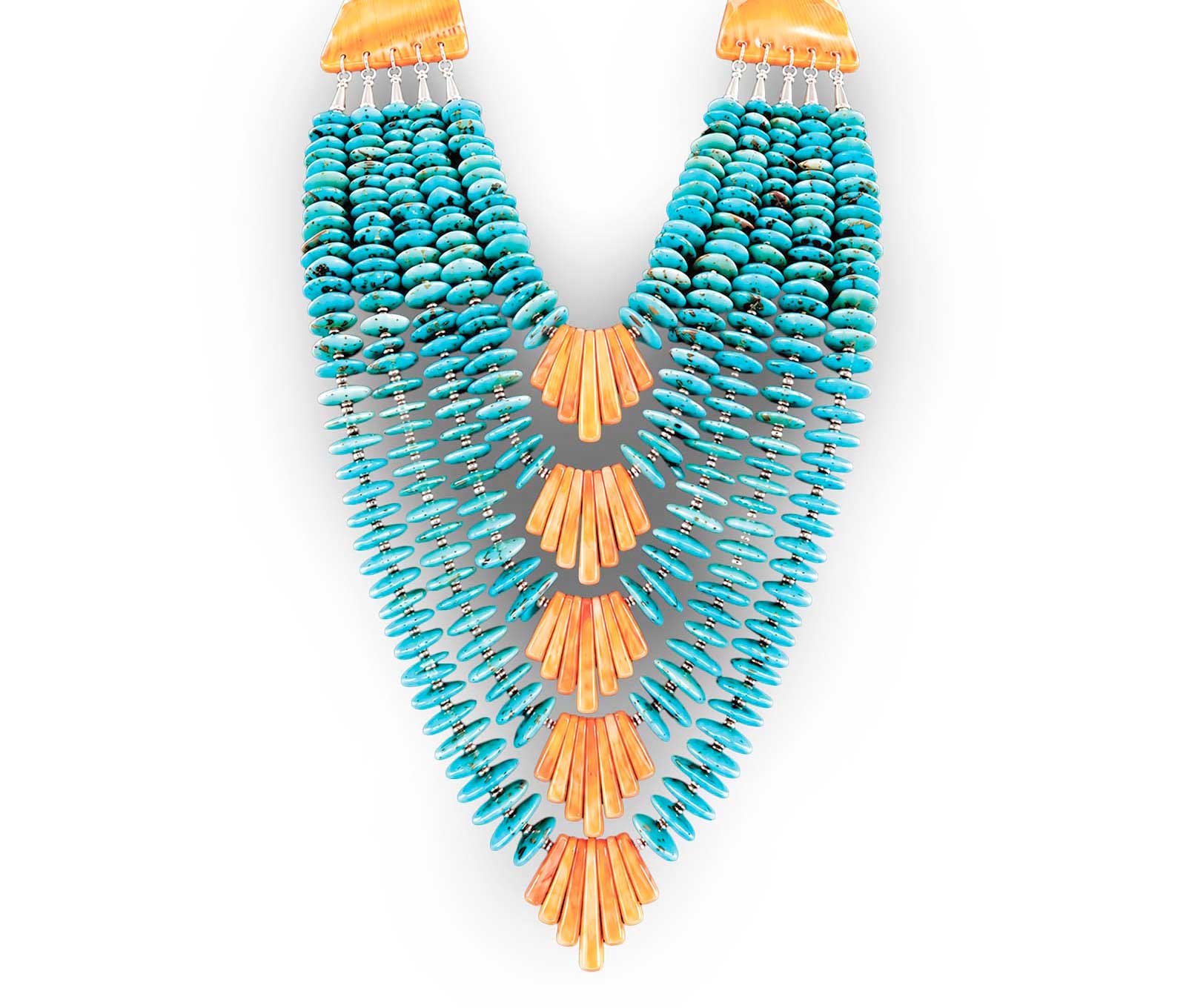
Five-strand Kingman turquoise nuggets with abalone heishi and orange spiney oyster fans
Later, he would assist his parents as they cut, drilled and created pieces to sell. Here, the basics of jewelry-making embedded themselves, inspiring him to explore the process on his own. It started with basic chokers, nugget necklaces and jaw-claws, which he would take to the Navajo Nation on the weekends to trade for rugs and blankets. He even earned a bit of cash.
But it was a side hustle. He worked hard in many trade jobs from diesel mechanic to surveyor. But when his company shut down suddenly, he found a new start in the stones. “Being a new father, I had to make sure my family was cared for. So, this is how I began my serious journey into making jewelry and it is truly something I love doing,” he says.
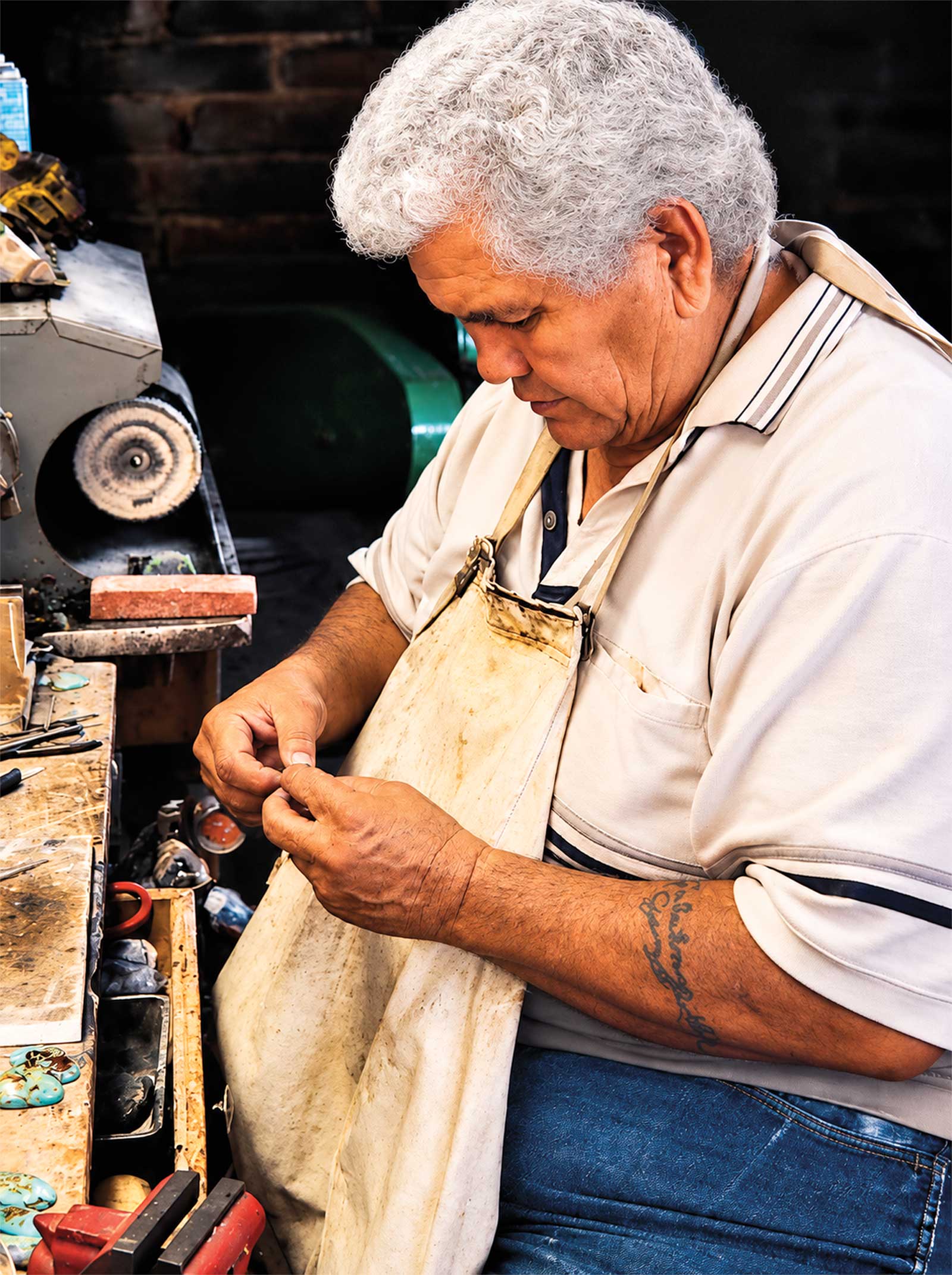
Calabaza at work in the studio.
His style evolved from the chunky nuggets and more delicate jaw-claws into larger statement pieces. Strands multiplied and a variety of stones found their place inlaid in pendants and alternated with turquoise. Calabaza explored materials that allowed for a wider range of color and texture, including serpentine, bumblebee jasper, petrified wood and dinosaur bone among many others. The artist also taught himself silversmithing, which has become a signature characteristic of his work.
The range of materials allow him to pay full respect to his one true inspiration: nature. “I draw my inspiration from the natural landscape,” he says. “I then translate that into abstract representation in my art pieces using natural stones and shells to bring it together in a three-dimensional work of art that can be worn and treasured.”
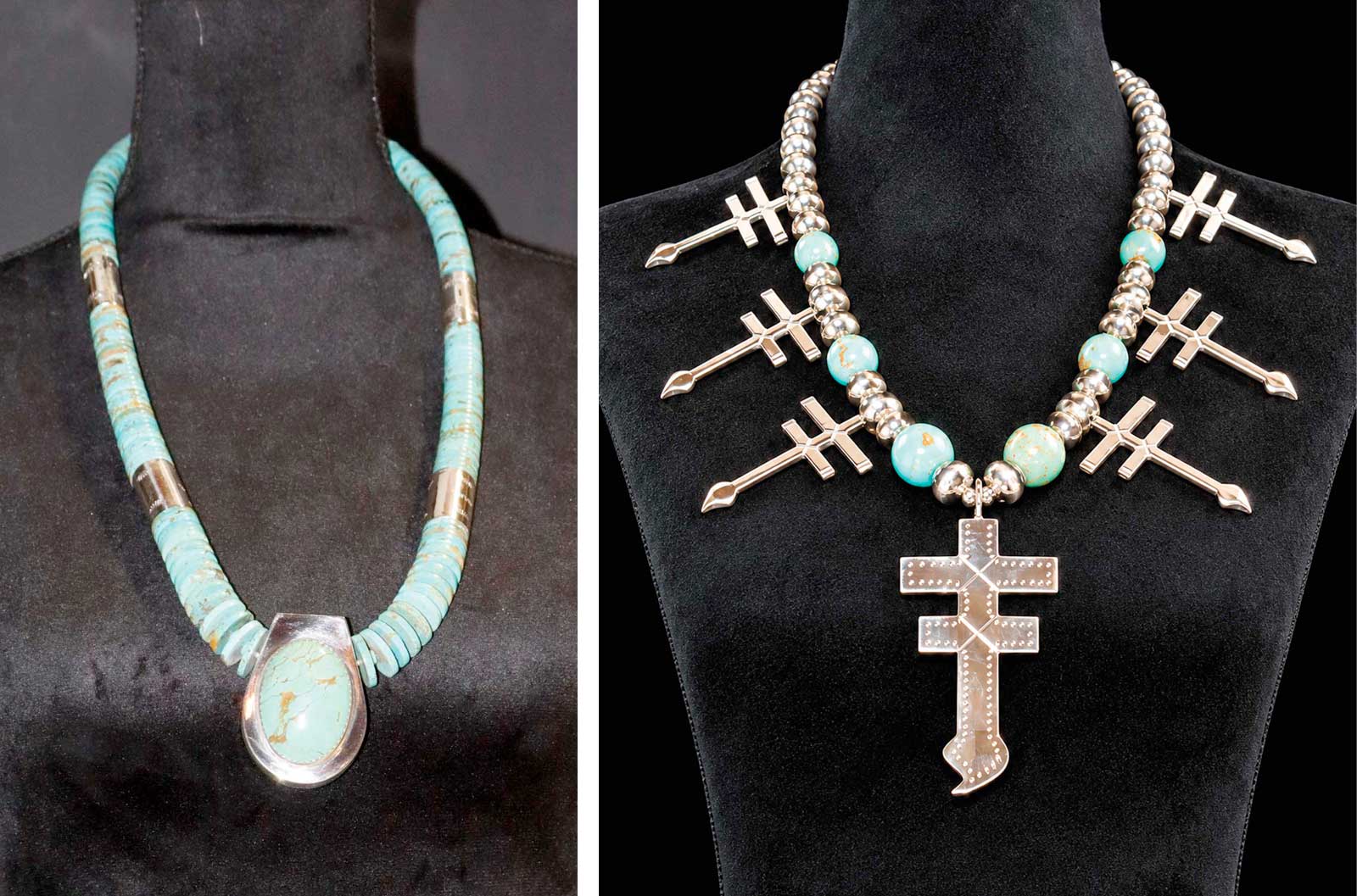
Left: Kingman turquoise flat-rolled beads with sterling silver drums with center sterling silver box with turquoise cabochon Right: Dragon Fly, double-bar cross necklace, sterling silver and Kingman turquoise
Drawing on long-lasting relationships with friends and dealers, Calabaza attends gem and mineral shows to source his materials. Because of his tendency toward larger pieces, not only does he consider the color and quality of the material, but he pays special attention to the size, which allows more opportunity for creativity.
The process of creating hand-made beads is steeped in Santo Domingo tradition. The artist says the processes of shell inlay, grinding, sanding, polishing and stringing are all unique to the culture and has remained true to tradition with no European influence at all.
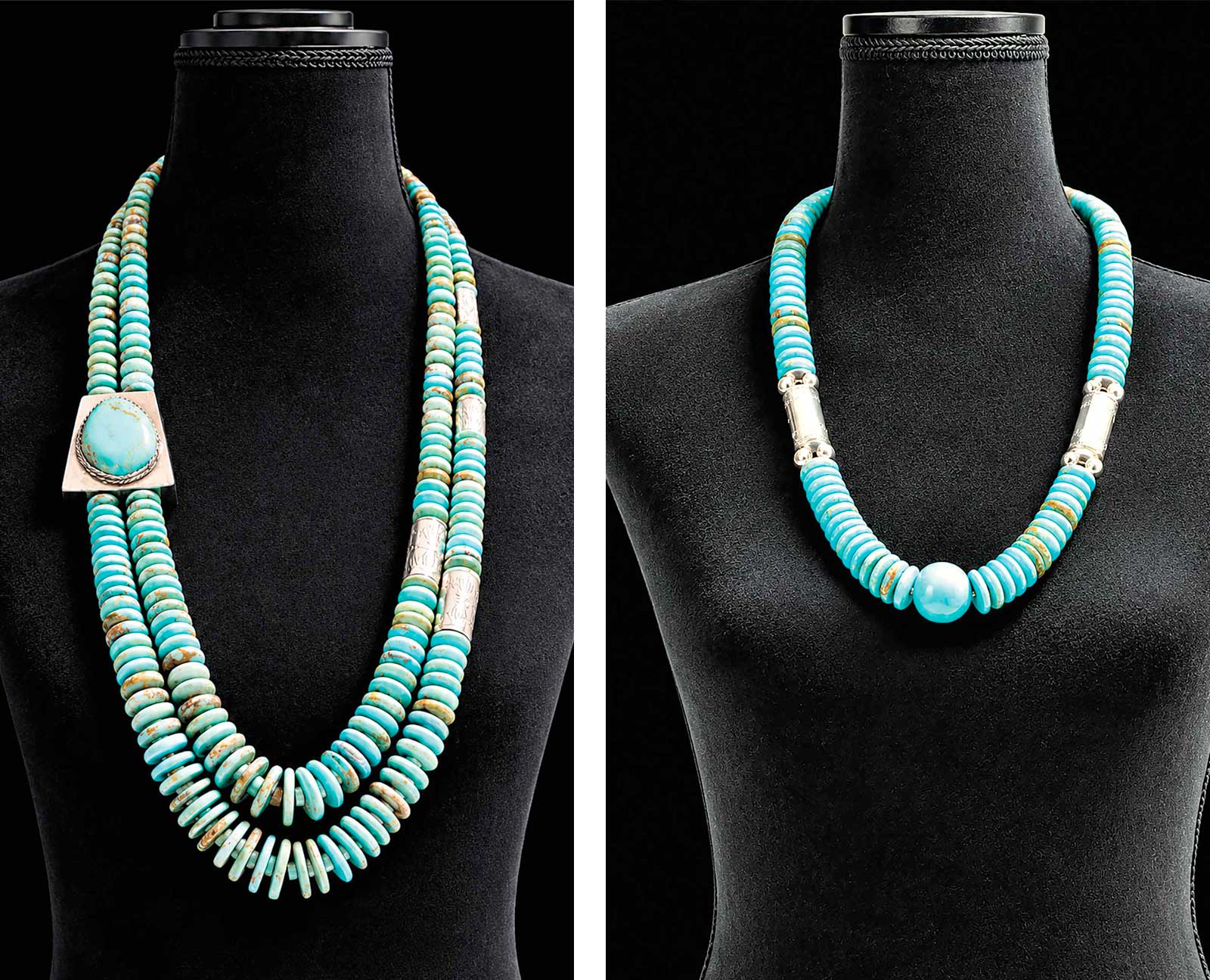
Left: Side-box necklace, double-strand handmade beveled Kingman turquoise beads, sterling silver with turquoise cabachon Right; Hand-made beveled and spherical Kingman turquoise beads with sterling silver drums
Calabaza is a registered tribal member of Santo Domingo Pueblo, and he highlights jewelry’s importance to the community’s economy, as well as a way of preserving tradition and spiritual connection across time. “It teaches how to ground oneself, be in tune with nature, patience in creating, and humility to accept how it turns out,” he says. “The adornment of wearing pieces represents wealth, protection, joy and appreciation form our ancestor and creator for blessing us with this ability to create wearable art that allows expression.”
This connection to both his own family and the greater ancestors of the tribe guide his process for each individual piece. “Everything is grounded in prayer, which reflects our cultural teachings,” Calabaza says. “I think of who will wear this piece so that the person will be blessed with health and well-being before the formation of the piece is worked on.”
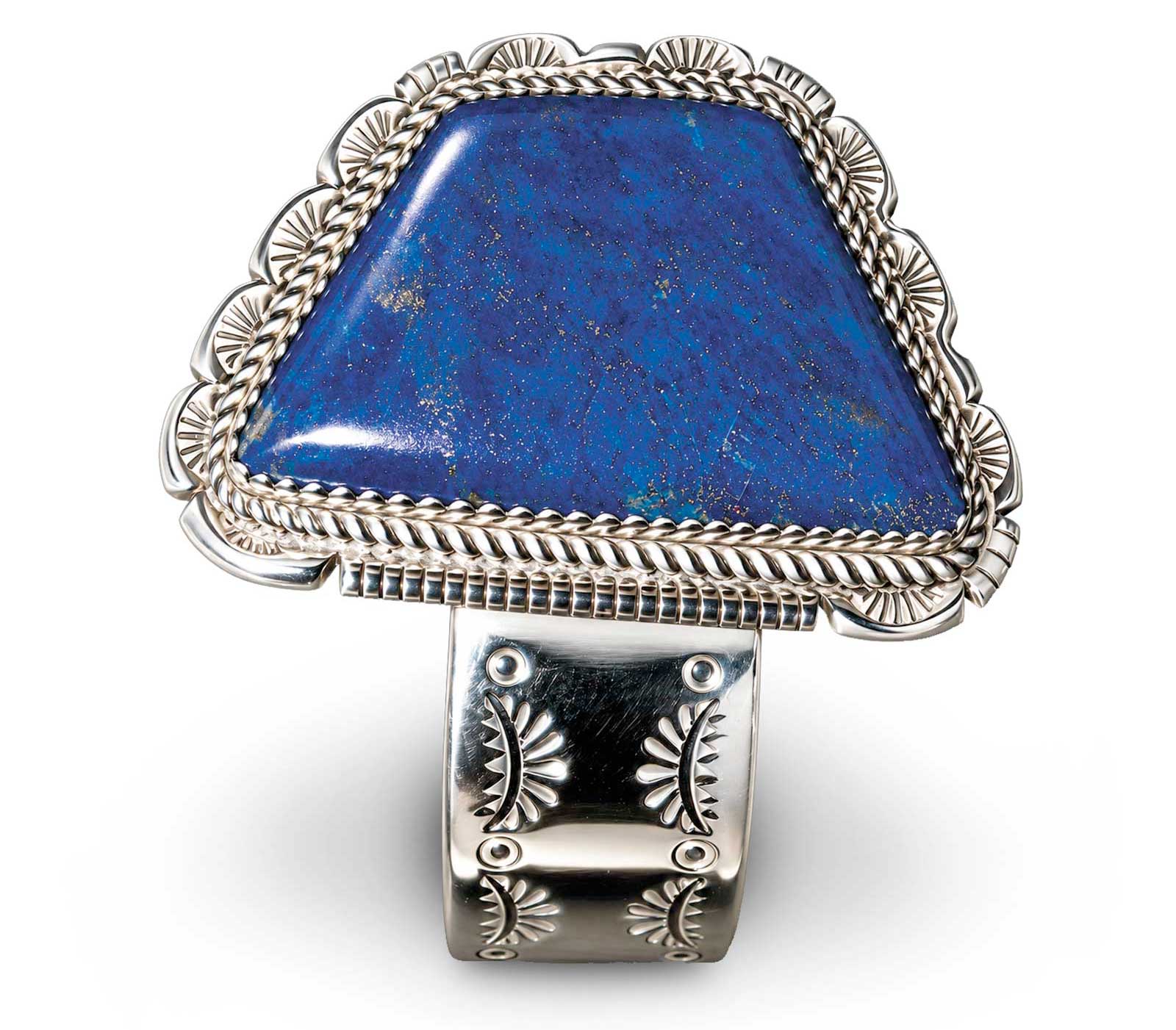
Onate silver lapis cuff bracelet
After his prayers and meditations, the artist describes a sort of divine intervention. “It seems like the materials begin to gravitate toward me and from there I begin working,” he says. “The materials seem to dictate what it should be. It guides me in the creation and formation of how the piece should be shaped.”
He says this is apparent in his inlays, as well as free-formed cabochons. While smoothed to a high-polished dome, the free-form style allows natural edges and internal patterns of the rough stone to emerge, preserving some of its innate beauty throughout the refinement process. Calabaza then uses his silversmith skills to create custom settings and pairs them with complimentary stones on the supporting strand. “As I find new materials and stones, they seem to complement the silver and turquoise well,” he says. “I use all types of stone and shell material that nature has given me to use.”
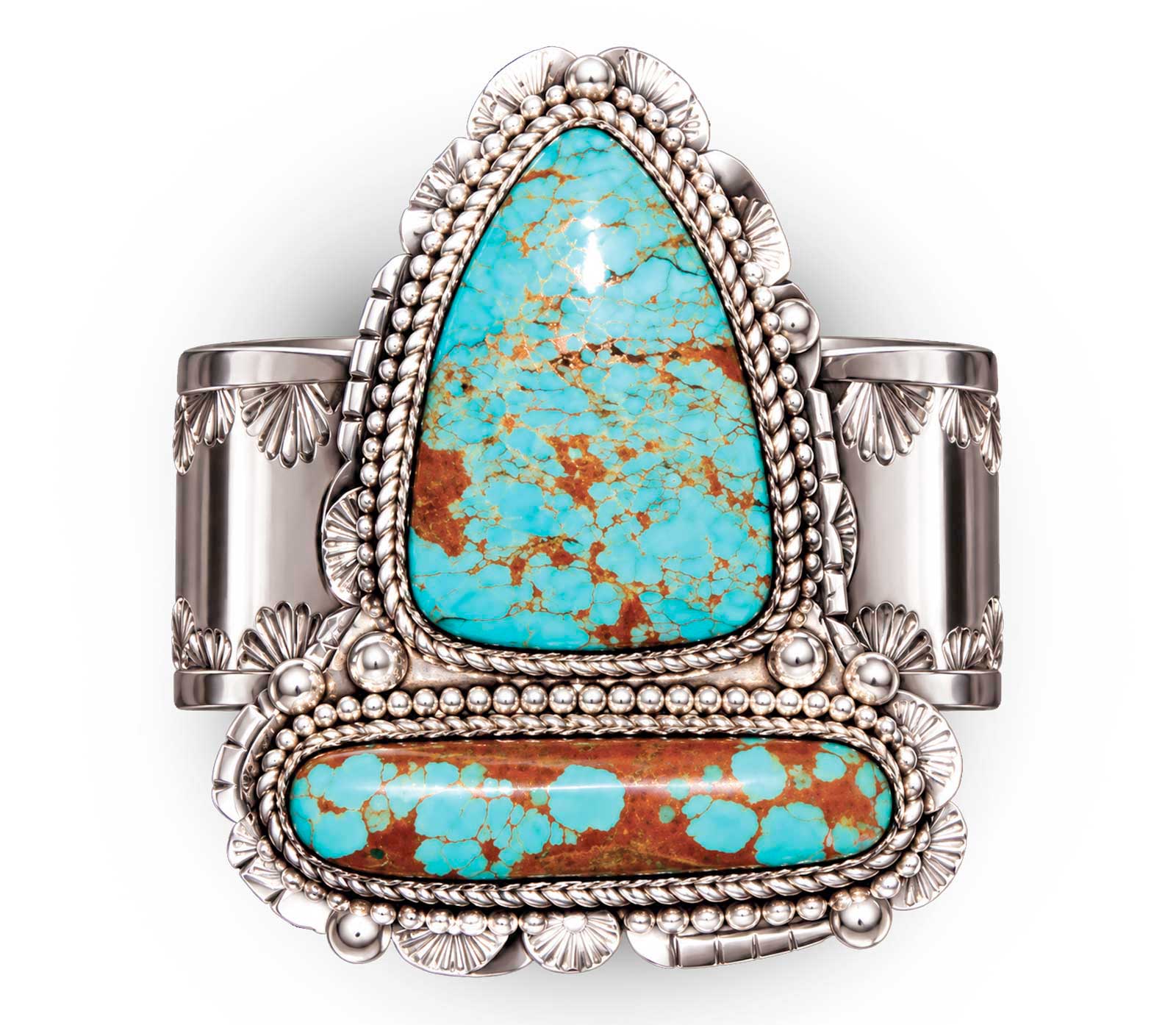
Number 8 turquoise on sterling silver cuff
Though his passion for his craft is palpable, Calabaza hopes that those who see his pieces will appreciate creative ability and nurture those instincts in themselves and others. “Having the ability to create art is not man-made, it is God-given,” he says. “We are born into this earth with different abilities. No matter what the gift, if not nurtured, it will not blossom as it comes from deep within one’s spiritual being. We are able to live in the past through what our forefathers left and live in the future after we are gone, by creating in the present.” —
See More:
www.cawinart.com
Powered by Froala Editor


