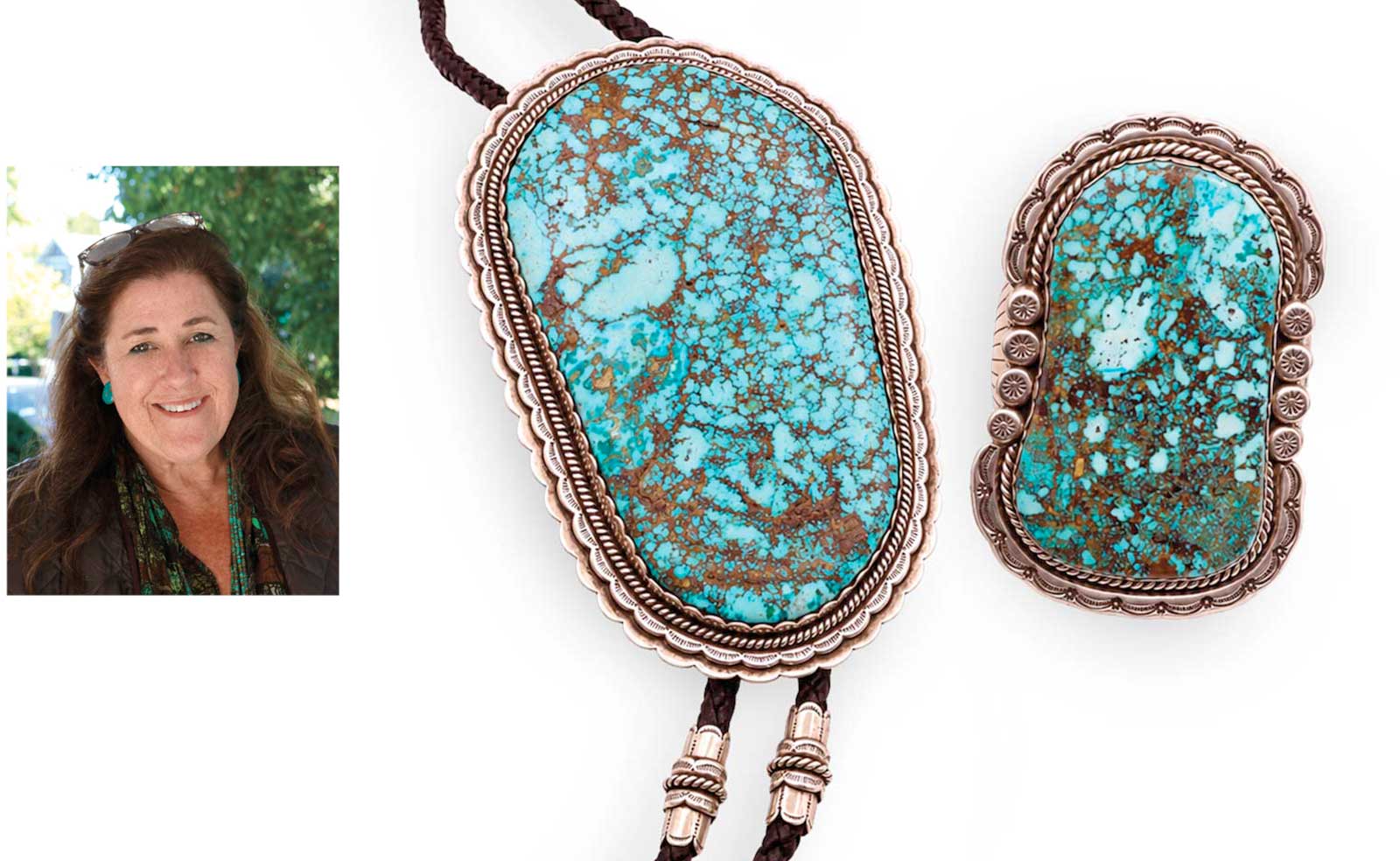
Vintage Turquoise Mountain Bolo and Bracelet, sterling silver bolo tie and matching bracelet set featuring exceptionally large Turquoise Mountain stones
Abby Kent Flythe
Owner
Abby Kent Flythe Fine Art
Spotsylvania, VA
www.abbykentflythefineart.com
(540) 538-9406
What trends are you seeing in the world of turquoise?
Turquoise is experiencing a wonderful resurgence, with collectors embracing traditional Native American jewelry, vintage designs and high-grade stones in every color. Statement pieces and 1970s-inspired styles are returning, yet the popularity of contemporary award-winning artists remains. I’m especially encouraged by younger collectors educating themselves about quality stones and craftsmanship online, although nothing beats having a good library of books on turquoise.
What are artists asking for, and what are collectors asking for?
Artists and collectors seek the highest-quality turquoise they can afford, with beautifully webbed stones being especially popular. Preferences can vary, but authenticity is essential. Understanding mine origins, treatments and artist attribution takes research and experience. Even after 40 years, I’m still learning. Reputable artists and dealers, and an educated eye are a collector’s best resources. There are many characteristics of each mine. Collectors of jewelry must also consider artist identification, including tribal affiliation. The Indian Arts and Crafts Act demands honesty in that representation, and the materials used should be honestly represented as well.
What are myths and misconceptions about turquoise that many collectors have?
One of the biggest misconceptions about turquoise is that its origin can be easily identified. The market has been flooded with overseas imitations and stolen Native American designs. During the 1980s and early 1990s, Chinese turquoise closely resembling American stones was often sold as turquoise from sought-after American mines. Turquoise is a world gemstone. Chinese turquoise is the most sold in the commercial market today. Unless we actually see a stone being mined, sometimes all we can do is make an educated guess.
What artists are using turquoise in new and exciting ways?
Raymond Yazzie still creates the most extraordinary inlay. Isiah Begay and Robert Begay stand out as new stars on the horizon. Don Supplee skillfully reinterprets traditional designs of pueblos and maidens into sculptural, wearable art. Lyndon Tsosie continues to innovate and mentor a new generation of young artists. Veronica Poblano and Vernon Begaye are artists who think outside the box and create modern art masterpieces. I encourage everyone to visit Santa Fe Indian Market and the Heard Museum Indian Fair & Market to see a new generation bringing skill and enthusiasm to this art form.
————————————
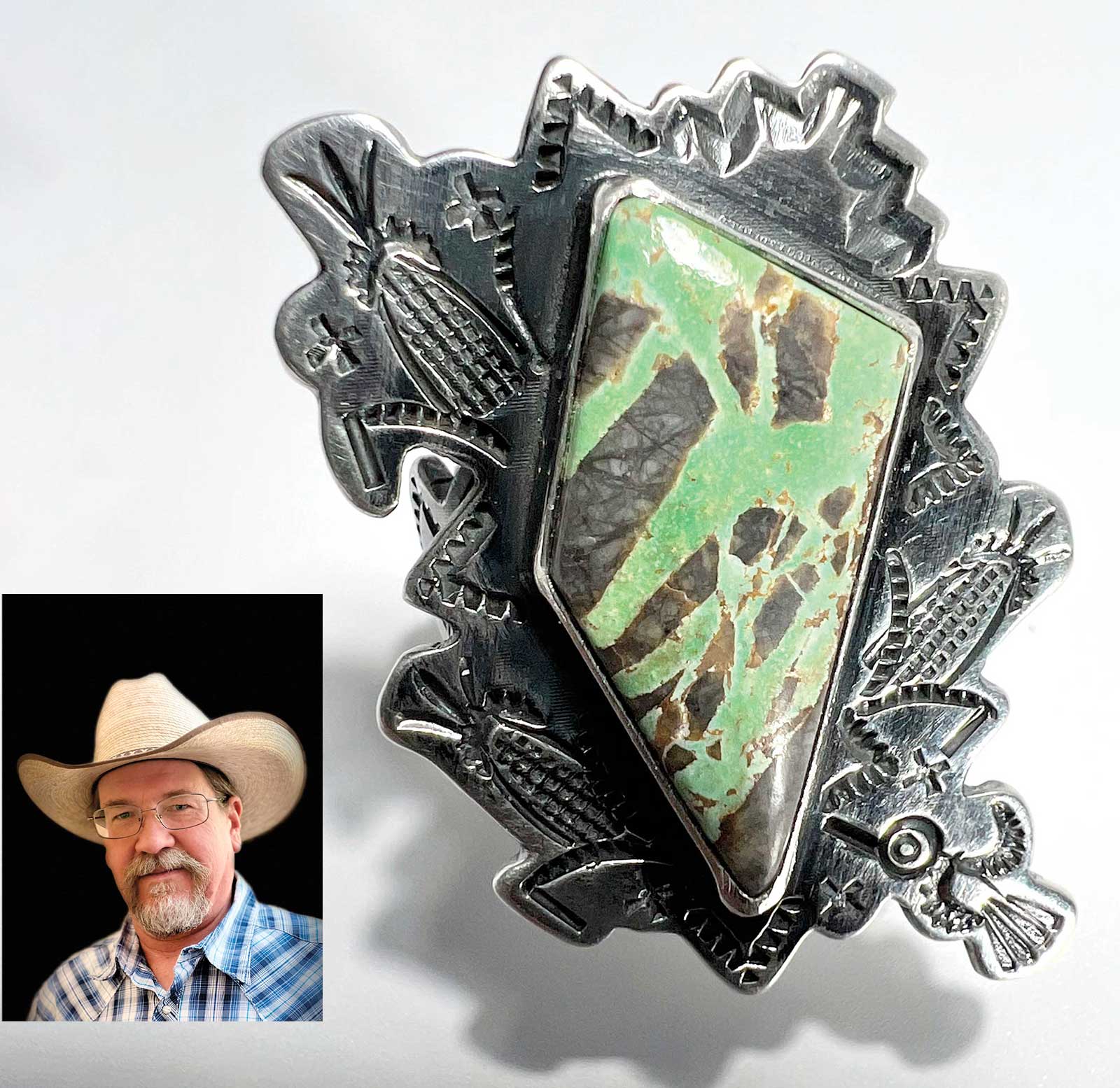
Naomi Natan (Navajo (Diné)), Ring with sterling silver and natural Northern Lights Mine Turquoise, size 6 1/2
Richard M. Shull
Owner
Esmeralda Turquoise Company
Dyer, NV
esmeraldaturquoisecompany.com
What trends are you seeing now in the world of turquoise?
Native American turquoise jewelry is continuing to increase in popularity. Younger and more recently established artists are going straight to the best turquoise and other gem materials currently available. Prices for stones from all sources that produce high-grade natural gem turquoise are going up as old sources dry up and production from newer finds can be intermittent with higher costs. Mines that are no longer producing or have dwindling production are seeing the highest prices. Nevada mines such as Lander Blue, Indian Mountain, Red Mountain and Nevada Blue, all of which are not currently producing, are setting record prices, especially in the finest jewelry. Other Nevada mines like Lone Mountain, Black Widow, Apache Blue and Black Web Gem are seeing high demand with corresponding prices as well. Bisbee and Morenci in Arizona are either no longer producing or available only in small amounts, mainly when collectors let go of a stash. Spiderweb stones from the Mineral Park deposits near Kingman, Arizona, are available but at much higher prices than just a few years ago.
What are artists asking for? What are collectors asking for?
Often, the jewelry artists have a good feeling for what collectors of their work like or prefer. This is where it gets interesting. The range is huge. Traditionally, natural turquoise with high blue color and/or black or reddish brown spiderweb or other attractive matrix has been favored. As sources for natural turquoise of this type become more scarce, other options are becoming increasingly popular. Currently, there is truly a type of turquoise for everyone. Artists and collectors are embracing these types as they propel beautiful and creative jewelry pieces into the limelight.
Are you seeing changes, positive or negative, in areas such as turquoise stabilization, domestic vs. international mines, or other larger issues related to turquoise?
As deposits of natural turquoise get depleted, stabilized turquoise has become increasingly popular with many people preferring it for various reasons, such as easier care, not changing color over time and its suitability for daily wear. A big positive about stabilized turquoise is that many who are just getting into collecting turquoise jewelry created by Native artists, have a wide range of price points to get started on a lifetime journey of collecting. I have heard some say the there would not be a thriving market for Native turquoise jewelry without the availability of stabilized turquoise. This is due to the fact that roughly 90 percent of turquoise mined needs to be stabilized or enhanced to make it suitable for jewelry. While less large-scale global production of turquoise could be considered a negative change, smaller deposits, both American and worldwide, are actively producing stones for the collectible Native art jewelry market. New finds, new looks and the wide variety of different types of turquoise are keeping the market fresh and vibrant, which is a great thing in my opinion.
What artists are using turquoise in new and exciting ways?
There are so many talented artists right now that it would be impossible to name them all here. The innovative use of turquoise, combined with metal working skills that push the envelope are making world class pieces of jewelry available from a large number of artists. I suggest that collectors, either new or experienced, visit the regional and national Native art shows that are happening across the country and talk to the artists, see their work in person and take home something amazing.
————————————
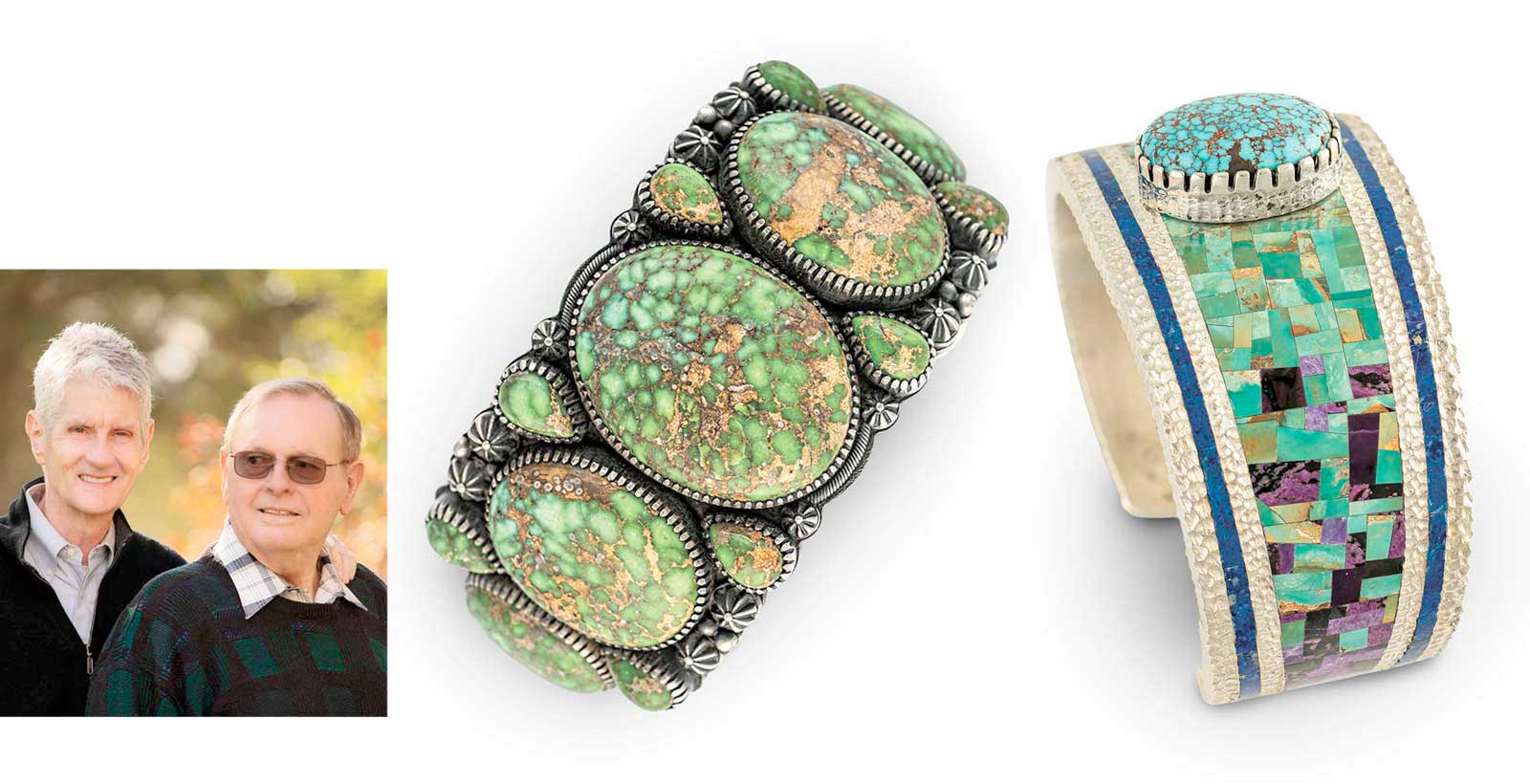
Left; Delbert Gordon (Navajo (Diné)), “Old Style” heavy-gauge sterling silver bracelet set with a row of 13 rare high-Grade natural fossilized clam Carico Lake turquoise stones totaling 178 carats Right: Alvin Yellowhorse (Navajo (Diné)), Fox turquoise bracelet, silver with high-grade natural Fox turquoise center stone, with lapis, Rojo Rio turquoise and sugilite
Frank Petrouskie and Sam Shoultz
Co-owners
SilverTQ
Corrales, NM
(505) 300-9066
www.silvertq.com
What trends are you seeing now in the world of turquoise?
Our business tends to focus on offering handmade pieces from acclaimed Native American silversmiths whose work is often complimented by using high-grade natural turquoise stones. The supply of these turquoise stones, such as Bisbee, Candelaria, Carico Lake, Fox, Lone Mountain, Number 8 and Lander Blue is becoming increasingly scarce and costly.
What are artists asking for, and what are collectors asking for?
The highly skilled artists we work with desire to be fairly compensated for their invested cost of materials and elite handmade workmanship. Conversely, collectors of fine Native American jewelry tend to be well versed in the art and are willing to pay up for these high-quality pieces.
Are you seeing changes, positive or negative, in areas such as turquoise stabilization, domestic vs. international mines, or other larger issues related to turquoise?
One of the biggest problems our industry incurs is the dissemination of seller misinformation, particularly relating to the correct classification of turquoise stones. There are many sellers who misleadingly claim their stabilized or enhanced turquoise pieces as being natural.
What are the myths or misconceptions about turquoise that many collectors have?
Occasionally some collectors fail to appreciate the art, material costs and skill level that’s involved with procuring these one-of-a-kind handmade collectible pieces.
What artists are using turquoise in new and exciting ways?
We are extremely fortunate to have working relationships with several award-winning Native American artists whose flawless handmade pieces include exceptional turquoise stones, intricate stone inlay and iconic designs. Father and son Philander and Isiah M. Begay; father, mother and son Darryl Dean, Rebecca T. and Robert W. Begay; father and son Earl and Lance Plummer; and Alvin Yellowhorse are to name a few of these trendsetting artists.
————————————
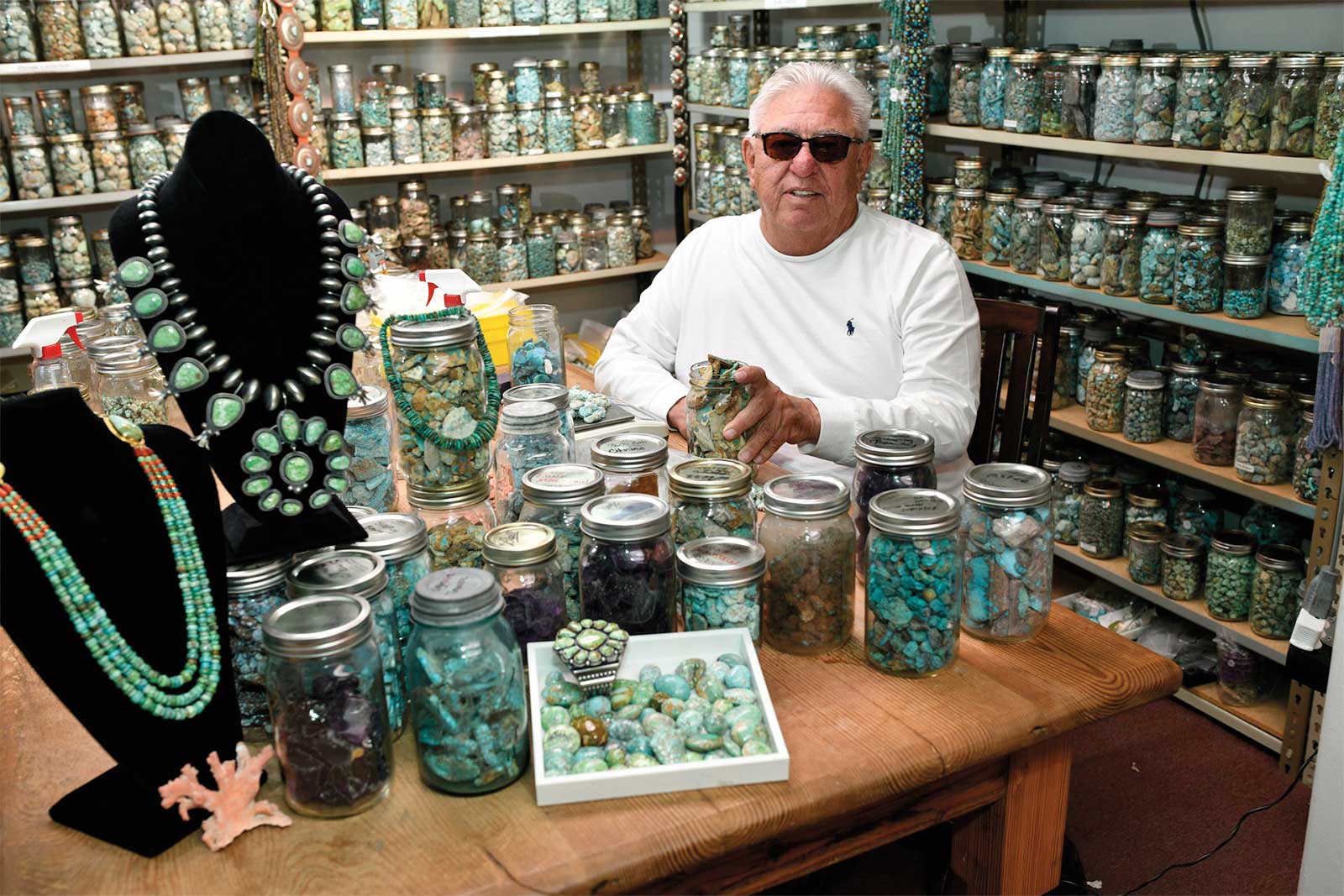 Ernie Montoya
Owner
Sunwest Silver
Albuquerque and Santa Fe, NM
(800) 771-3781
www.sunwestsilver.com
What trends are you seeing now in the world of turquoise?
There’s a lot of excitement around American turquoise in both traditional and contemporary jewelry. Native artists are carrying forward what they learned while bringing their own ideas to the work, which is exciting to me. A beautiful stone in the right hands can become something a family will treasure for generations.
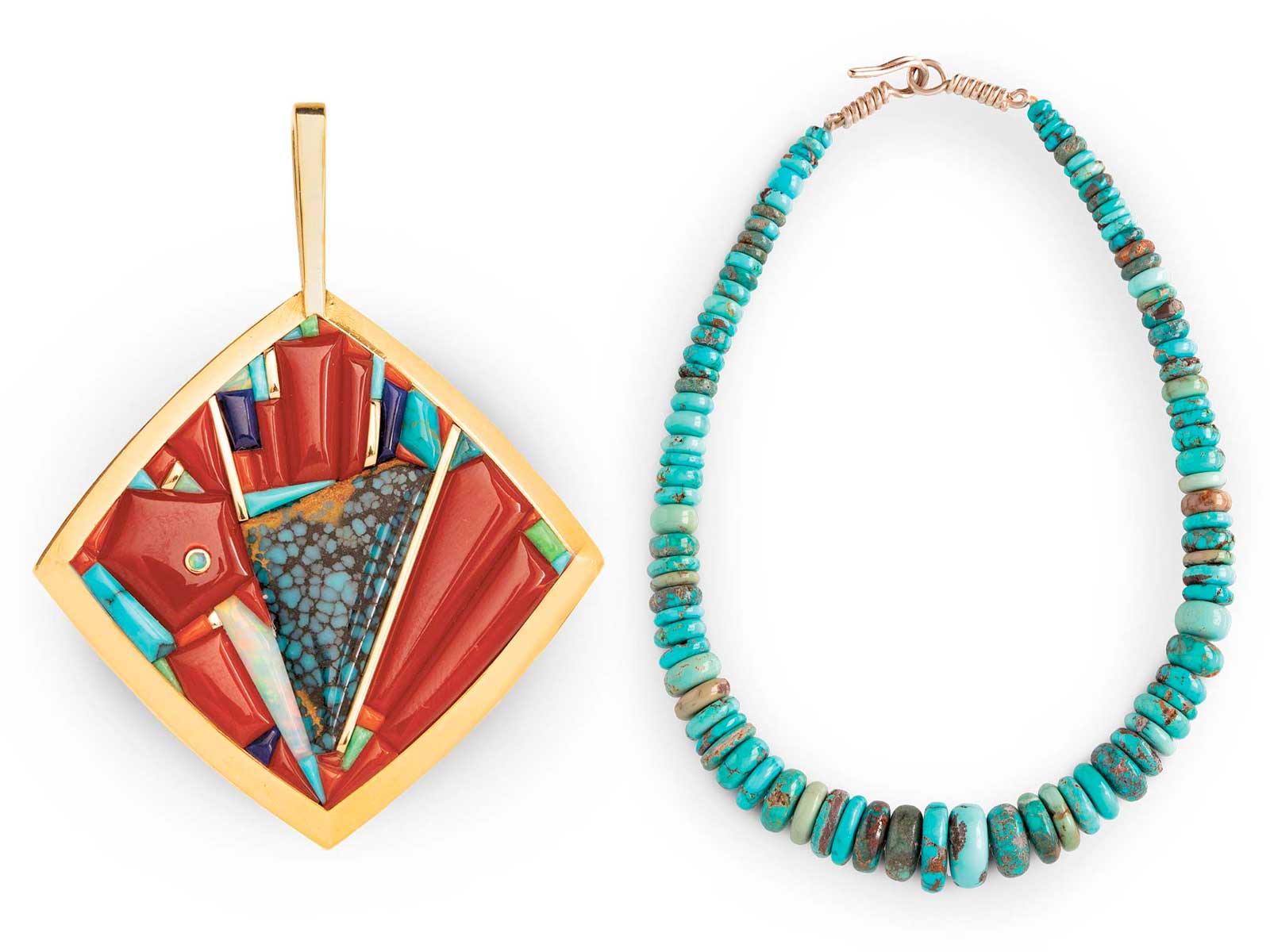
Left: Isiah Begay (Navajo (Diné)), Indian Mountain turquoise, coral, opal, 18k gold Right: Matthew Charlie (Navajo (Diné)), Lone Mountain turquoise, diamond, 18K gold
What are artists asking for? What are collectors asking for?
The Native artists we work with want good stones—beautiful color, character and careful cutting. Collectors want high-quality turquoise and craftsmanship they can trust. Knowing the mine and the artist makes a piece more personal. I’ve spent much of my life bringing those good stones and good hands together.
Are you seeing changes, positive or negative, in areas such as turquoise stabilization, domestic vs. international mines, or other larger issues related to turquoise?
Some historic American mines are no longer producing, so we need to take care with the material we have. There’s beautiful turquoise overseas, too, but American turquoise holds a special place for me. Stabilization can make softer stone usable. Whatever the source or treatment, the customer deserves a clear and honest understanding of what they’re buying.
What are the myths or misconceptions about turquoise that many collectors have?
People sometimes think turquoise has to be blue (it can be a whole range from yellow to green), or that a famous mine name guarantees quality. You have to look at the individual stone. And turquoise jewelry isn’t automatically Native American made. Ask who made it. The artist’s name and work deserve just as much attention as the stone.
What artists are using turquoise in new and exciting ways?
Isaac Dial and Rebecca Begay come to mind. Isaac lets the turquoise guide his contemporary designs. Rebecca brings flowers, vines and other natural forms into her silverwork. Both honor their heritage while making work that is unmistakably their own. Helping Native artists find stones worthy of that work is something I love about this business.
————————————
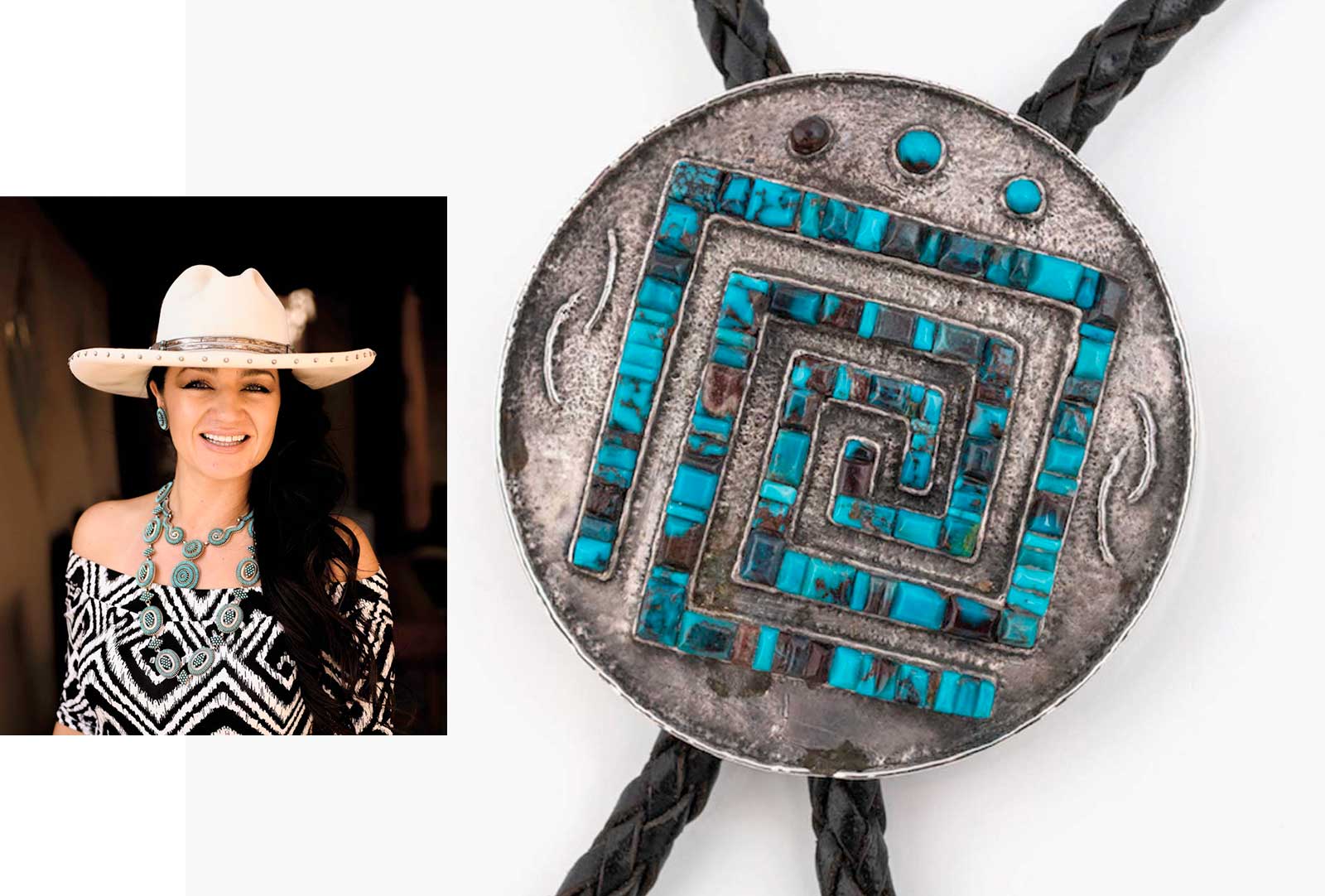
Preston Monongye (Navajo (Diné))/Hopi, 1927-1987) and B. Tsiiyupovi Tom (Navajo (Diné)), Chaco Motif Bisbee Bolo, tufa-cast sterling silver, natural high-grade Bisbee turquoise, bolo on genuine leather strap, 2¾ x 2¾ in.
Emerald Tanner
Owner
Tanner’s Indian Art
Gallup, NM
IG: @tannersindianarts
(505) 863-6017
What trends are you seeing now in the world of turquoise?
Natural, gem-quality turquoise is in high demand! Turquoise has been thousands of years in the making-but Mother Earth only produced so much of the high-grade material. I am noticing serious collectors and artists have the desire to invest more in the stone than ever before. The trend is: folks want the “real deal.” Not only do they want the natural, gemmy look, but they want to know where it came from—they want provenance. When it’s natural, turquoise should be like a dreamy gaze into a deep pool of water.
What are artists asking for? What are collectors asking for?
Our artist and collector friends are increasingly interested in the domestic turquoise mines and the best high-grade material of these domestic mines: Bisbee and Lone Mountain in particular. Here at Tanner’s, we talk about “Our Big Twelve” turquoise mines. These are the mines that have been important to the turquoise and Native American Jewelry world throughout our 150-plus year trade presence in the Southwest: Lone Mountain, Bisbee, Blue Gem, Villa Grove, Kingman, Number 8, Morenci, Fox, Lander Blue, Montezuma, Newlander Royal Web and Persian. My great grandpa Joe was an important character during the Southwest jewelry boom of the turn of the century and imported high-grade Persian turquoise, so it’s important for us to give our nod to Persian when listing these “Big Twelve.”
Are you seeing changes, positive or negative, in areas such as turquoise stabilization, domestic vs. international mines, or other larger issues related to turquoise?
I know the imported Sonoran Gold (Mexico) and Golden Hills (Kazakhstan) are both hot right now. While beautiful mines, I’ve always been so focused on our great domestic turquoise of the American Southwest and natural material. But that’s what’s so fabulous about turquoise: There’s something for everyone. While we don’t handle stabilized turquoise at Tanner’s, I don’t think there’s anything wrong with it—so long as it’s being represented and priced for what it is.
What are the myths or misconceptions about turquoise that many collectors have?
Unfortunately, some of what gets sold in today’s market gets misrepresented as natural when it’s actually stabilized, or dubbed as domestic when it’s not. [Always buy] from a reputable artist or dealer that knows what they’re selling. It’s the age-old rule of “you get what you pay for” if a piece is a screaming deal, and seems too good to be true for what it’s being represented as, it likely is.
What artists are using turquoise in new and exciting ways?
So many of the artists we enjoy and work with have such an incredible eye for color and placement, they are using fabulous materials, new techniques and designs to compliment the turquoise. Native American jewelry may have the biggest stage now than it’s ever been given—tools are better, shows are more competitive and expectations high. Artists of today have such a reverence for turquoise and the discipline to read deep into the stone.
————————————
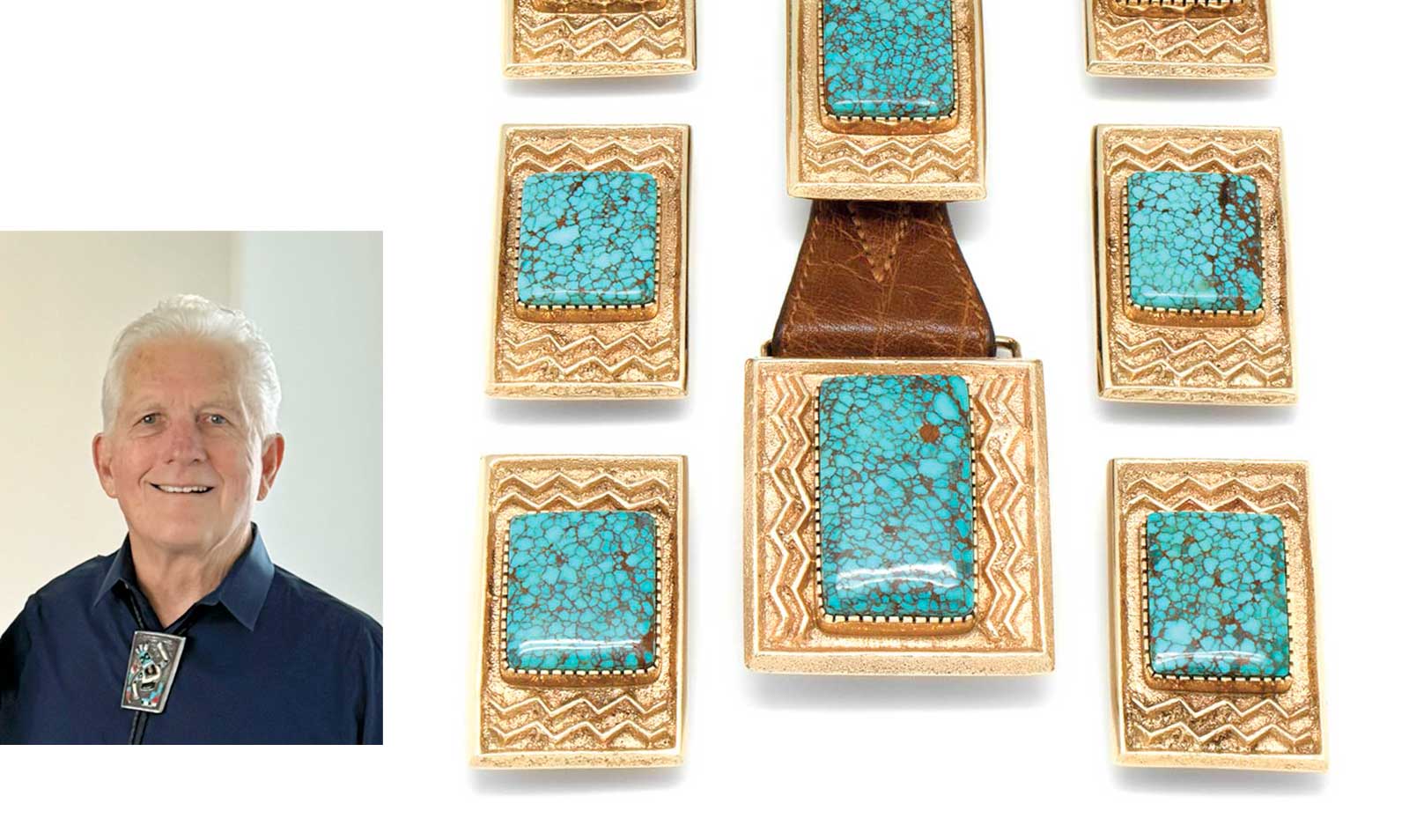
Larry Golsh (Pala Band of Mission Indians), 14k gold tufa-cast concho belt set with high-grade Nevada Blue turquoise
Gene Waddell
Owner
Waddell Gallery
Scottsdale, AZ
(480) 990-1004
www.waddellgallery.com
What trends are you seeing in the world of turquoise?
We’re seeing a growing demand for collector-quality pieces. Our customers increasingly view turquoise jewelry not only as something beautiful to wear, but also as a meaningful investment. They recognize the value of choosing the finest natural American turquoise and exceptional materials, understanding that quality and rarity are key to long-term value. Over the past 10 to 20 years, high-grade turquoise has become increasingly scarce, with the finest stones experiencing substantial appreciation in value. As a result, discerning collectors are placing greater emphasis on authenticity, rarity, craftsmanship and the enduring value of owning the very best.
Are you seeing changes, positive or negative, in areas such as turquoise stabilization, domestic vs. international mines, or other larger issues related to turquoise?
Even dealers and collectors can occasionally be misled when identifying turquoise. While many mines produce stones with distinctive characteristics that make them relatively easy to recognize, they also yield a wide range of colors, patterns and grades that can make identifying their origin challenging. Even leading experts sometimes consult one another to verify a stone’s provenance, particularly when dealing with rare, high-grade or valuable turquoise. As treatments and enhancement techniques continue to evolve, distinguishing natural turquoise from stabilized or enhanced material can become increasingly difficult for the average buyer. Reputable dealers and galleries should be transparent about whether a stone is natural, stabilized or enhanced, as well as whether it originates from a domestic or international source. Some foreign turquoise can closely resemble material from well-known American mines, making accurate identification especially challenging for inexperienced buyers. For these reasons, we always recommend purchasing turquoise from reputable dealers and galleries.
What are myths and misconceptions about turquoise that many collectors have?
Many experienced turquoise collectors understand the differences between varieties of turquoise and have spent years educating themselves through research and relationships with reputable galleries. However, new collectors and those simply looking to purchase a piece of turquoise often don’t realize how much there is to learn about this remarkable stone. One common misconception is that all turquoise is relatively equal in value, leaving many to wonder why one piece can be significantly more expensive than another. For those who develop a genuine passion for turquoise, the journey of discovery can last a lifetime.
What artists are using turquoise in new and exciting ways?
One artist who stands out is Don Supplee. Known for his creativity and attention to detail, Don takes turquoise beyond traditional inlay by carving the stone to complement the design of each piece. For example, when creating a Maiden pendant, he may carve a delicate turquoise necklace and inlay it into the piece, creating the illusion that the Maiden figure is actually wearing it. His innovative techniques showcase the versatility of turquoise and demonstrate how this remarkable stone can be transformed into miniature works of art. —
Powered by Froala Editor


