Editor’s Note: This is an excerpt from Lewis’ new book, Trade Roots — The Macaw Chronicle: Character Sketches, Observations & Reflections. The book focuses on trade routes, new and old, of Hopi and Zuni artisans.
Prehistory and Spanish Influence (pre-20th century)
For thousands of years Native people of the American Southwest have created adornments for both ceremonial and personal use. Necklaces, bracelets, pendants and headdresses were made from shells, feathers, turquoise and many other minerals acquired both locally and traded for from afar. During the Spanish conquest, the priests brought coral rosary beads from the Mediterranean that the Indigenous people considered magical and traded for them whenever possible, usually taking them apart and using the beads to create their own designs. When the Spanish soldiers arrived in 1540 the Natives admired the silver ornamentation adorning their horses and before long learned some of the metal-crafting techniques by working for Spanish blacksmiths. At some point they began to produce both traditional Spanish designs as well as their own styles, melting and hammering metal coins. The resulting jewelry was strictly for personal adornment and local trade, and went on as such for many years.
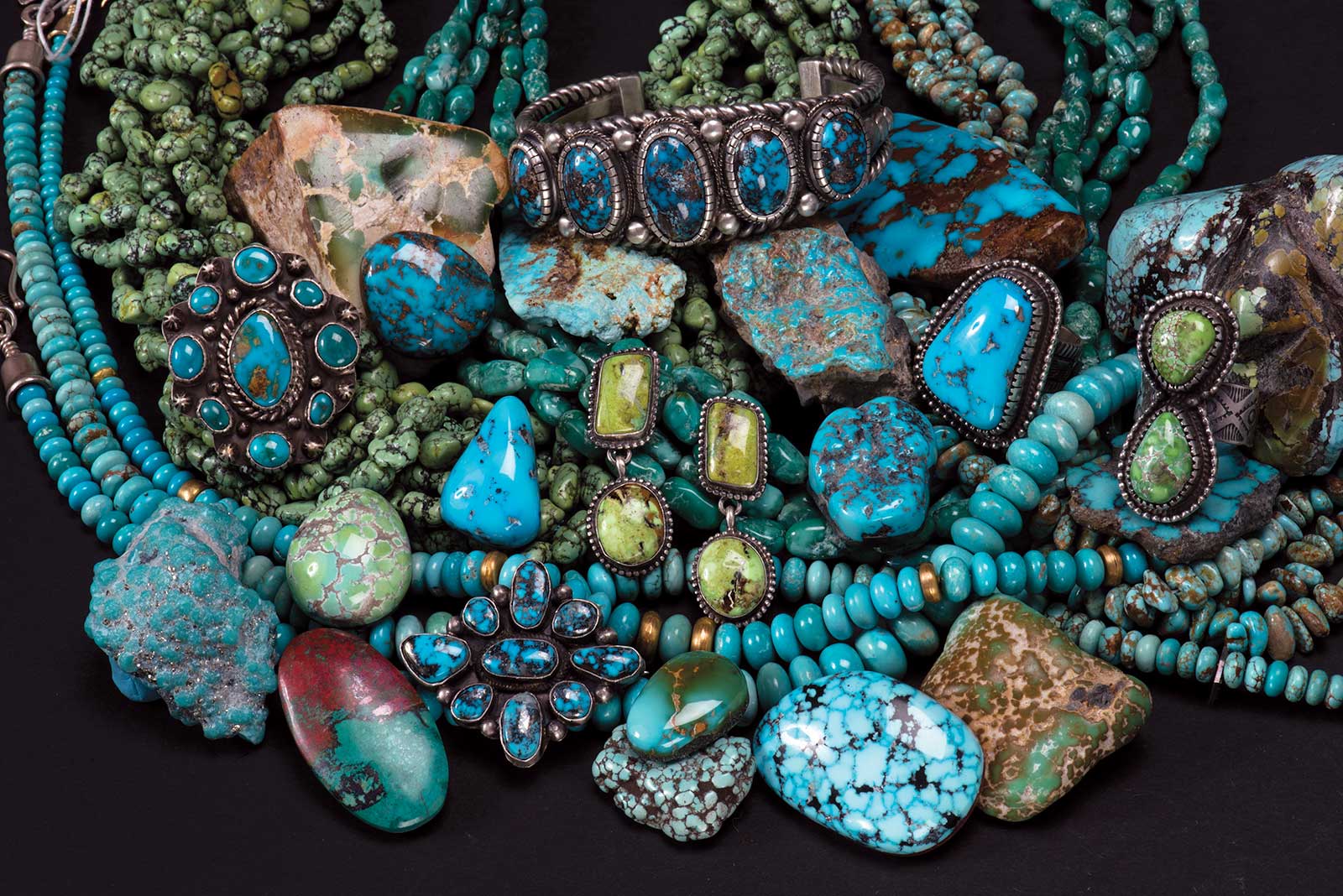
A collection of turquoise stones and jewelry.
Early Commercialization (1900s-1960s)
C. G. Wallace was both an innovator as well as a major trader of Zuñi and Navajo jewelry. He lived at Zuñi Pueblo from 1918 to 1964, spoke Zuñi, and remained involved with Zuñi life until his death in 1993 at the age of 96. In 1939, Wallace built the De Anza Motor Court, a Route 66 landmark in Albuquerque for over 70 years, famous for its mosaic thunderbird design in the lobby. C. G. had a simple formula. He gave silver to the Navajo to make jewelry frameworks (rings, bracelets, pendants, bolos, earrings) and then gave the silver frameworks to the Zuñi to create mosaic inlays. The materials were simple and included turquoise mined in the Southwest: black jet from Acoma Pueblo, red abalone shell from California, freshwater white clam and pink mussel from the Mississippi and White rivers, and green abalone and spiny oyster shell from Baja California. Later, he made a connection with the Mediterranean coral dealers in Torre del Greco, Italy, near Naples, and developed a supply chain of imported coral. In those days most of the jewelry produced by Wallace was sold both at railroad stops in towns like Flagstaff and Winslow in Arizona, and Gallup and Albuquerque in New Mexico, as well as at trading posts along the old Route 66, from the Grand Canyon to Kansas City.
In a few short years, supply houses near the reservations and pueblos were providing silver and other materials to an increasing number of artisans. At the same time, there was an ongoing demand for jewelry, which was created primarily by the innovative expansion of the Fred Harvey hotels and tours. This spurred the development of a number of companies in Albuquerque that began producing lightweight “Indian jewelry” specifically designed to fill the demand for souvenirs for the Route 66 tourist trading posts and the railroad trade.
These companies developed shortcuts for the manufacture of the jewelry by creating punch presses and automated stamping machines as well as innovating assembly-line production techniques using Native American labor working under sweatshop conditions. Today, those old Route 66 trading posts have become a cliché with most of them featuring rubber tomahawks and “Indian beadwork” produced in the Philippines, as well as jewelry of unknown origin made from questionable materials.
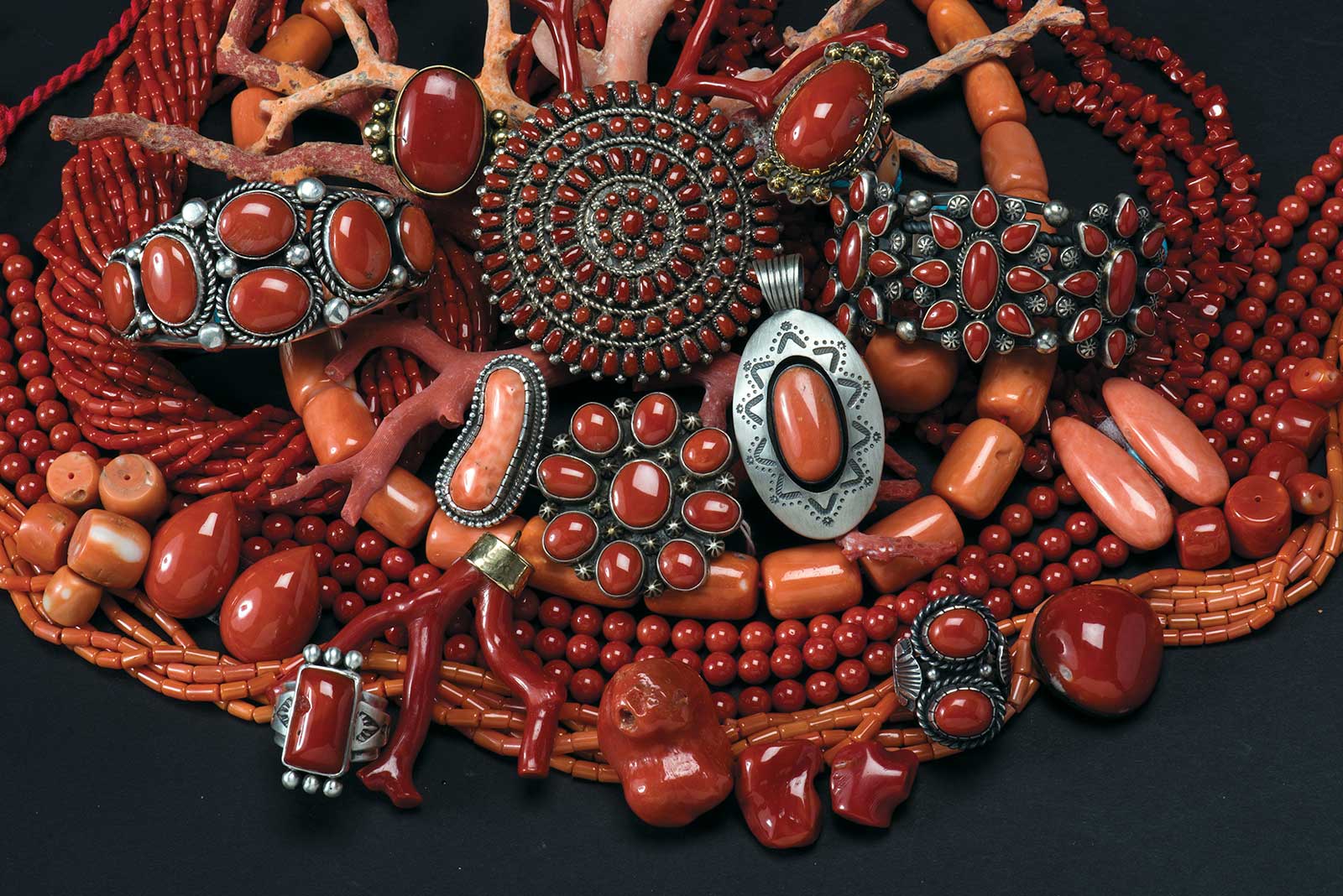
Varieties of coral.
Native American Jewelry Boom of the 1970s
Having lived and worked in the Gallup-Zuñi-Hopi region for over 50 years, I have observed many changes in the world of Native American jewelry production. In the 1970s there was a new and growing demand from international buyers as well as by Hollywood moguls, rock stars and wealthy ranchers, for high-quality Native American jewelry. Once again, demand was greater than supply, which gave rise to manufacturing facilities in Gallup (jewelry that was designed and marketed by those companies but still produced entirely by Native American artists). This was the beginning of a movement of jewelry production that was no longer home-based. The benefits for the jeweler was that he no longer had to worry about buying silver or raw materials, or having to market their finished pieces of jewelry in order to be paid.
By the mid to late 1970s the materials used in jewelry manufacture had become more sophisticated. Goldlip and blacklip mother of pearl, green sea snail, olive shell and pen shell from the South China Sea, Indonesia, Tahiti and Vanuatu were added to the mix, along with lapis from Afghanistan, sugilite from the Kalahari Plain in Africa, fossil walrus ivory from the Alaskan tundra and Baltic amber.
As the jewelry boom continued and Native American jewelry became an international fashion statement, outsiders began arriving with the sole purpose of exploiting the current boom. They began purchasing jewelry at inflated prices and soon controlled the majority of the jewelry industry in Gallup (by now it was a multi-million-dollar industry, putting many old-time traders out of business. As soon as the newcomers had a firm grip on the industry, they started pushing purchase prices lower and lower. In fact, prices were pushed so low that the artist could barely replace his materials, whose costs continued to rise. Still, this did not satisfy the interlopers’ continuing need for larger profits, so many of them also began to establish manufacturing facilities of their own.
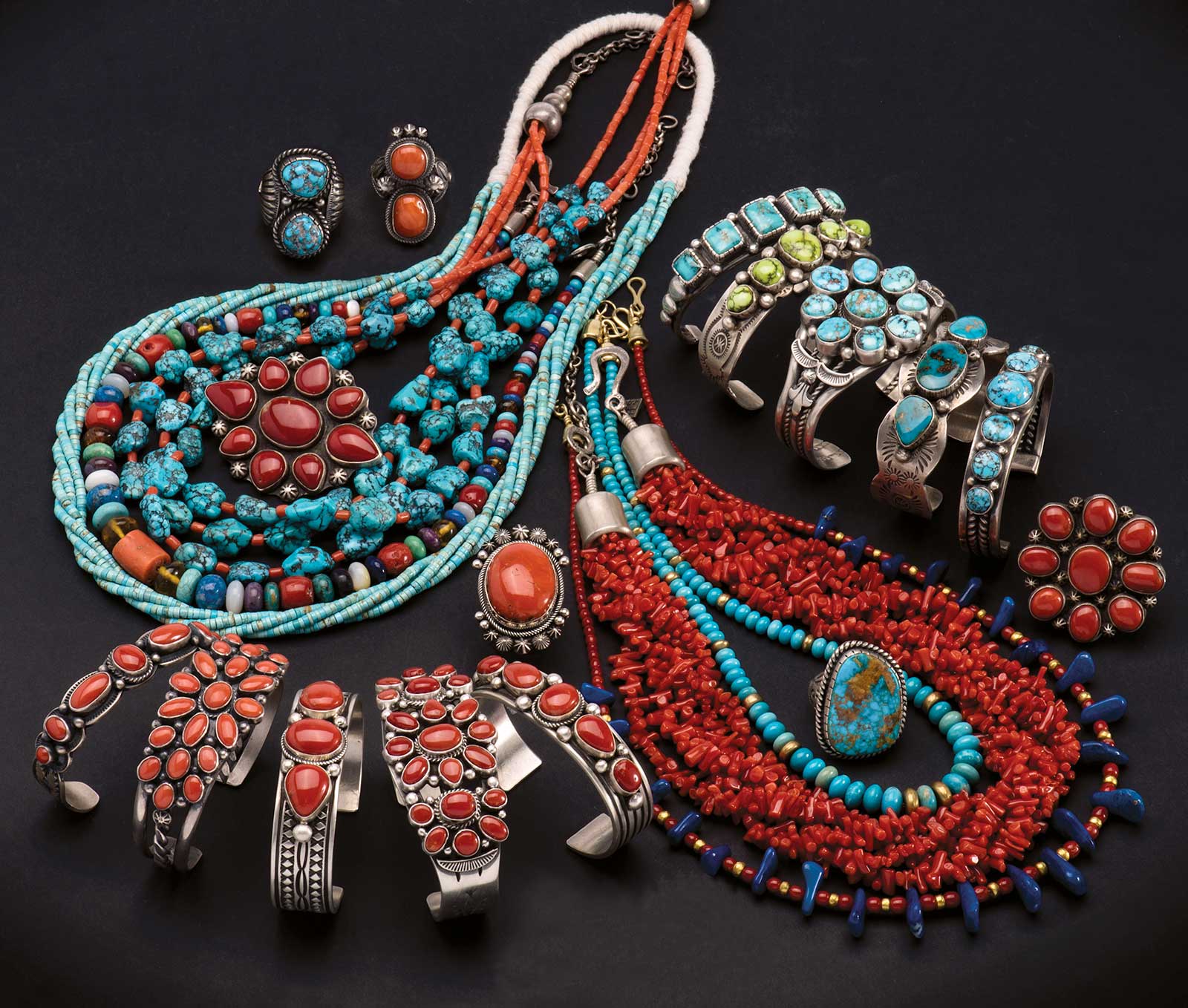
Turquoise and coral together in different forms of jewelry. The two materials are vastly different, and yet they are frequently used together.
Continued Exploitation in the 1980s
These newcomers were now firmly established in the community, buying real estate and sending their children to local schools. Their need for even greater profits continued, and soon many dealers and manufacturers found that they could produce comparable jewelry overseas at a much cheaper price, mix it into the local production and deceptively call it Native American jewelry. This gave rise to entire villages in the Philippines replicating Southwest-style jewelry. Eventually, workshops in China and Indonesia were turning out look-alike jewelry, all being imported into the United States without permanent markings to indicate the country of origin, and almost always being sold as Native American.
1990s to the Present
The interlopers (who were no longer newcomers but had become an established financial presence in the communities in which they did business) began opening their own retail shops and galleries, selling various qualities of Native American art (from the highest-end jewelry, pottery and katsinas, made by award-winning artists to the most commercial levels of knickknacks.) Intermingled with these inventories were items produced overseas that often were blatant copies that included the artist’s hallmark. These stores and galleries began to take up a larger percentage of the retail space in Gallup, Albuquerque, Scottsdale and Santa Fe. Hotel gift shop concessions throughout the U.S. were being operated in the same way with more and more jewelry of questionable origin and made with questionable materials being added into the mix, always without any permanent markings to disclose the country of origin.
In response, the U.S. government passed the Indian Arts and Crafts Act, aimed at protecting the Native American art market from fake and counterfeit substitutes.
On several occasions the offenders were brought to trial via due process and in almost every case the result was a hand slap with a token fine. Since the law had little or no teeth the offenders felt free to continue their violations. Eventually the enforcement of this law was entrusted to the U.S. Fish and Wildlife Service, which sent undercover agents to penetrate the market.
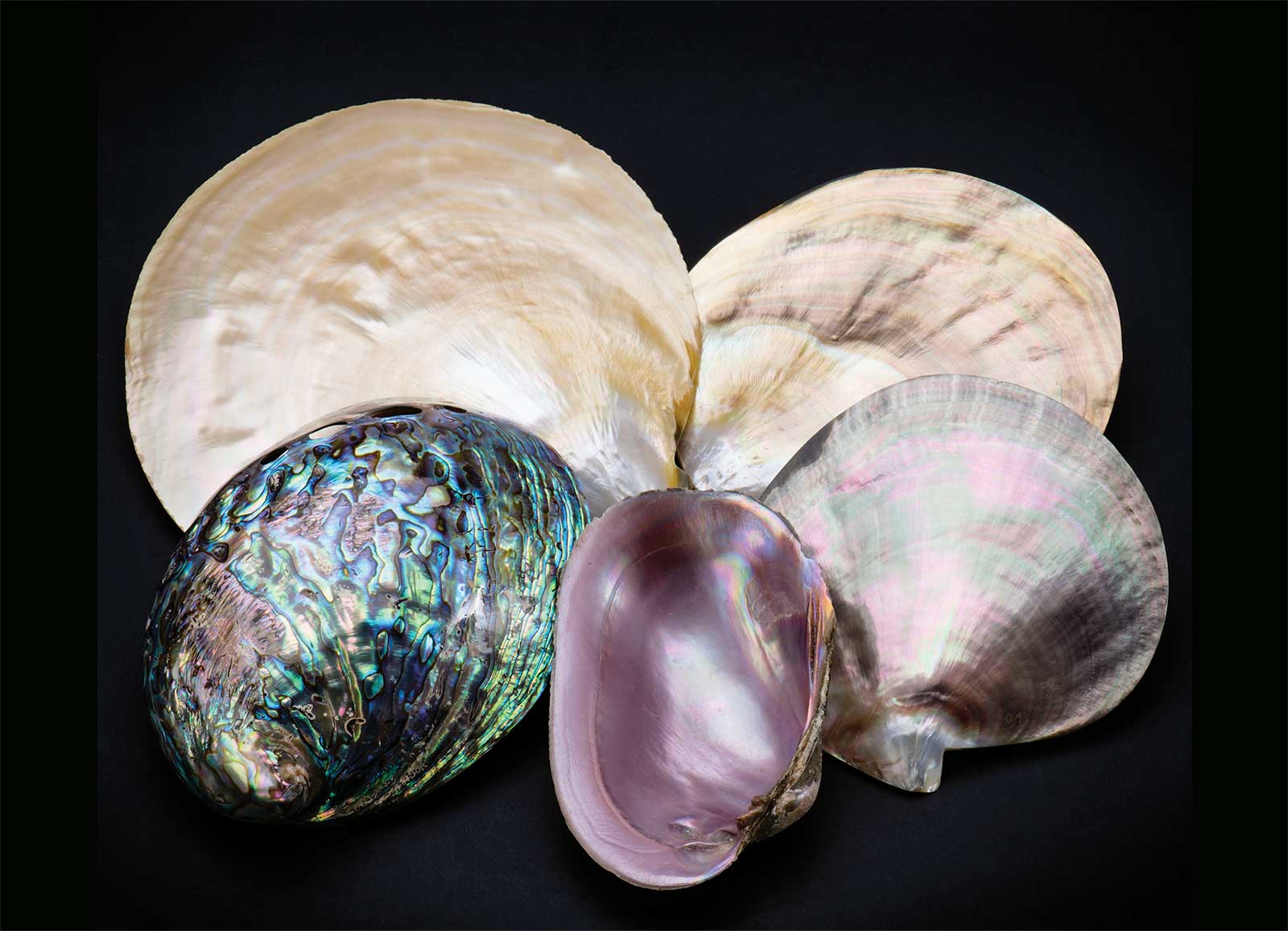
Examples of pearl and shell, common among jewelers.
Questionable Raw Materials Begin to Appear
Meanwhile, many miners, dealers and importers of raw materials started looking for ways to lower the price of raw materials needed to produce the jewelry. The effort began with chemical alteration of pale blue, softer, chalkier turquoise into a harder and more usable dark blue material via a blue-dye process mixed with hardening chemicals. This led to various descriptions and three classifications of treated turquoise: (1) fracture sealed with a super-glue type of material, which is considered an acceptable process and still regarded as natural turquoise by most; (2) simply chemically hardened; and (3) chemically hardened and dyed blue.
Mad chemists at work soon found that bits and pieces of scrap turquoise could be mixed with blue dye and hardening chemicals and compressed under huge force to create a solid block of material. Thus, another cheaper shortcut came into being and was embraced by many dealers, producers and even artists as a less expensive way to procure raw materials and still have the look of turquoise.
The need for higher profits by dealers and producers did not end here. The mad chemists realized that they could manufacture the same block of material without including the authentic bits and scraps of raw turquoise. And so began the introduction of dyed, pure-plastic block. Soon the producers learned to add texture to the block, making it almost indistinguishable from the genuine material to the naked untrained eye. Sadly, the colors these mad scientists produced that were textured and color matched to look like the real thing—shades of blue and green turquoise, azurite, coral, malachite, amber, purple, orange and red spiny oyster, lapis, sugilite, opal, even mother of pearl created their own fashion statement. Over time, artists producing inexpensive jewelry for a mass market found that this colored plastic block allowed them to better compete with the overseas imitators. Some supply houses claim that over 75 percent of their raw material sales are in plastic block.
The Need for Disclosure
At this point in the world of international fashion jewelry, the words turquoise, coral, pearl, lapis, sugilite, opal, amber, jet and abalone have the connotation of a color and not of a genuine material. Of course, after everything is said and done, any and all of the participants in this industry have the right to produce and sell whatever item they want, notwithstanding actually copying designs created by individual artists. They also have the right to use any materials not prohibited by law or treaty (protected elephant ivory, for example). However, the sellers of these items have the lawful responsibility to disclose the true nature of the origin of the item as well as the materials used, to the best of their knowledge. By not properly representing the items or worse yet misrepresenting the items, they have committed fraud.
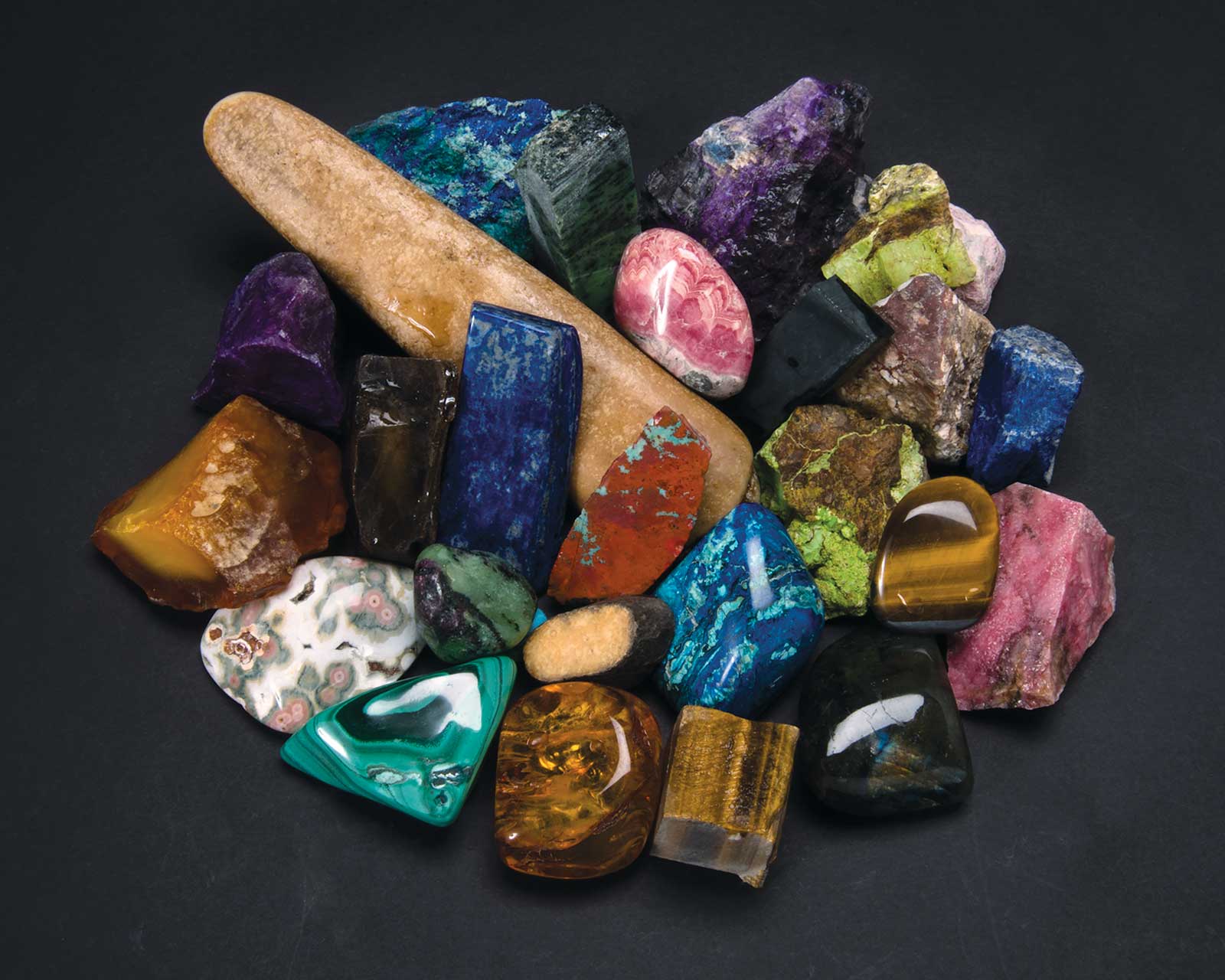
Raw stones in many varieties. Images courtesy the author.
A Simple and Obvious Conclusion
The Native American art industry supports a huge number of families in the Southwest. In these difficult economic times, many artists, producers and traders understandably choose the path that is of the most economic benefit and that choice is their prerogative. As a consumer and supporter of Native American art, it is your choice to purchase at whatever level you are comfortable. Issues of authenticity have scared many potential collectors from the marketplace. Never be drawn in by a “going-out-of-business” sale or an advertisement for 80 percent off. The best way to ensure that you are purchasing what you think you are purchasing is to (1) buy from a dealer or gallery with a longstanding reputation for quality; (2) ask the gallery owner to name the artist when possible and to describe the materials on your invoice; and (3) ask what their return policy is. When purchasing directly from an artist, ask whether the artist made the item and if the materials are natural. A reputable dealer, gallery or artist can make a mistake. However, if they do err, you will have recourse and the ability to either return or exchange your purchase.
The use of bogus materials and the introduction of imitation and foreign-made items have only succeeded in making the real item more desirable and valuable. These bogus materials are not going away and the production of imitation Native American arts and crafts will continue. I do not believe that this trend is reversible. As supporters of authentic Native American arts and crafts it is our obligation to do our best to ask the right questions, and use proper discretion to both protect ourselves and the arts and crafts culture as a whole. —
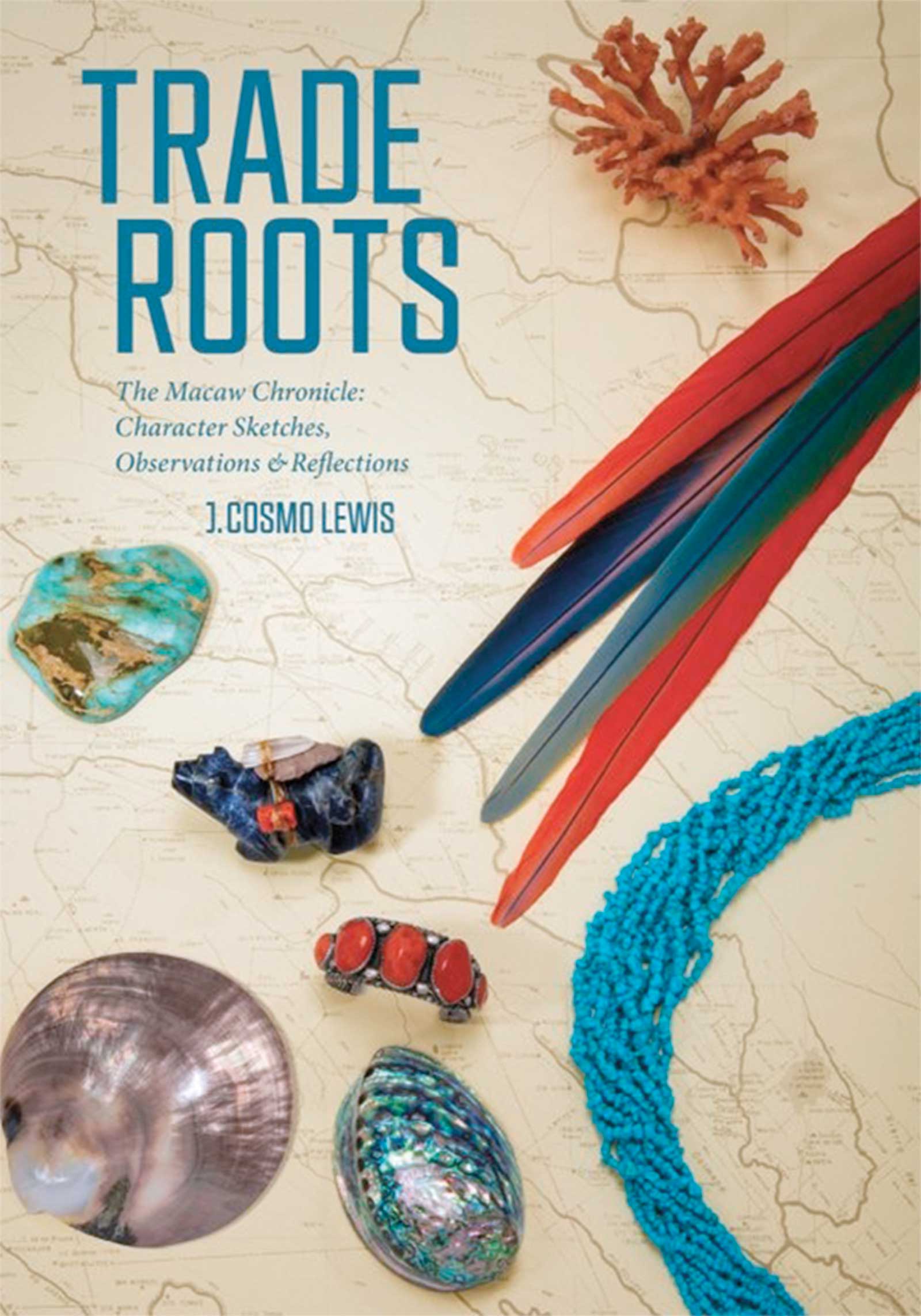
Trade Roots — The Macaw Chronicle: Character Sketches, Observations & Reflections
By J.Cosmo Lewis
Published by Existential Press, Santa Fe, New Mexico, June 2025
376 pages
www.traderoots.com
Powered by Froala Editor


