Fritz Scholder (La Jolla Band of Luiseño Indians) was not raised in Native American traditions, yet they became his most resonant subject matter, setting the stage for contemporary artists even today. One of the most prominent artists of his time, Scholder forged a new path for Indigenous art through his emotionally charged oil paintings and controversial prints.
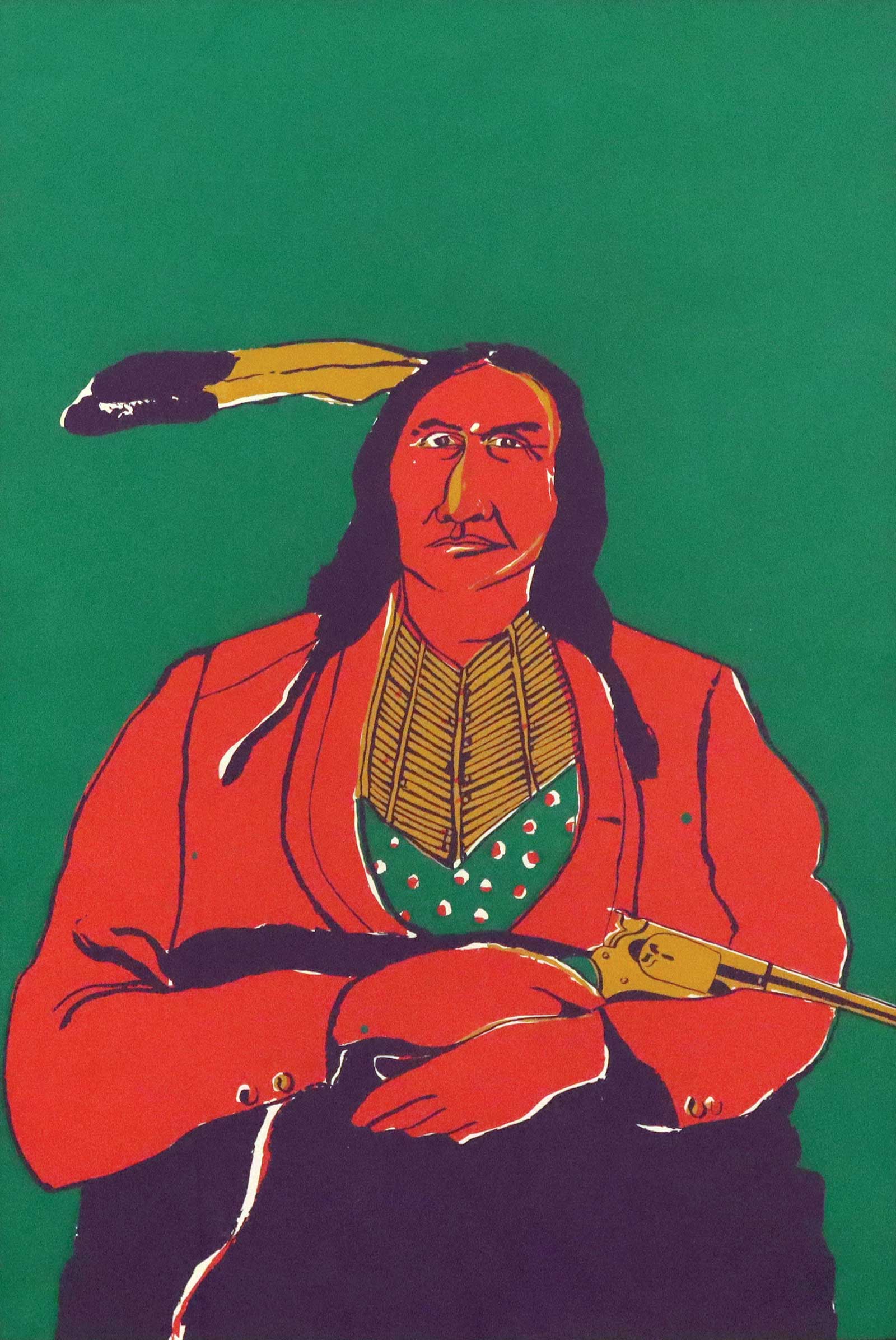
Indian with a Gun, 1973, lithograph, 30 x 22 in.
In a new exhibition at the Maynard Dixon & Native American Art Museum in Tucson, Arizona, a vast group of these works are on display and for sale through January 30. Titled Fritz Scholder: Enter the Matrix, the show features more than 30 works created between 1967 and 1980.
“He had so many classical influences like Frances Bacon, but he turned it into his own expression of his Nativeness,” says Mark Sublette, founder of the museum. “His work had the extensibility of telling the Native narrative in a form that focuses on the people and how he sees them and their influence in the modern world.”
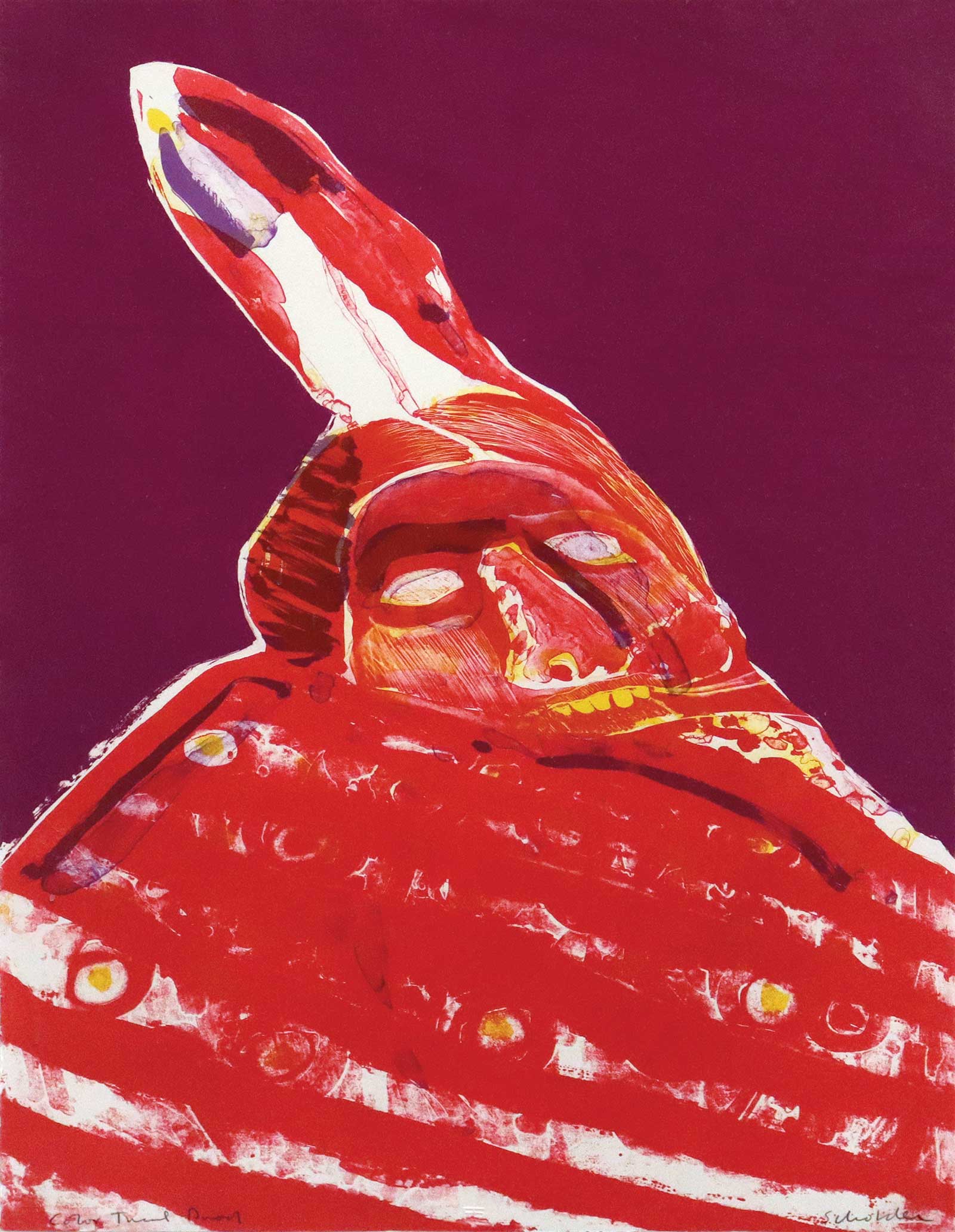
Red Indian, lithograph, 30 x 22 in.
A long-time collector of Scholder, Sublette has worked to bring together enough works over the last five years to host a show. He says he wanted to focus on this time frame of the artist’s career because it shows both the depth and breadth of a unique focus in his work. “This specific time frame is where he was looking at and investigating Native subject matter, which isn’t something he set out to do,” Sublette says. “He realized that it was something that was worth pursuing, and they have become the most important and most sought after works.”
While some pieces show traditional snake dances and warriors on horseback, Scholder also explored still life, architecture and landscape subjects. The timeframe represented the artist’s goal of rejecting the romantic view of Native Americans as people of history rather than a contemporary culture. The series aimed to show the “real Indian” while also imbuing it with the emotional gravity of past and present sufferings.
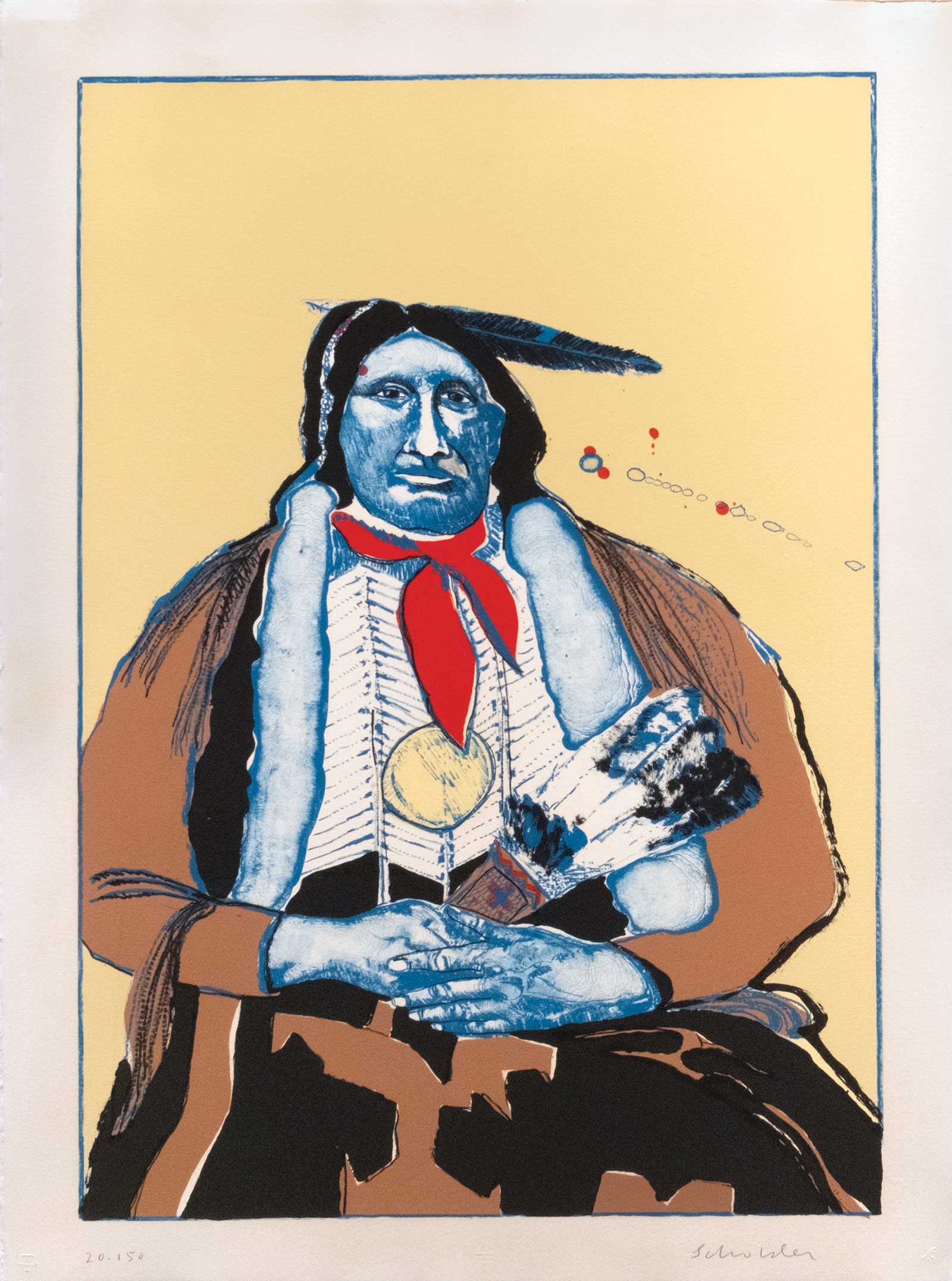
Indian with Feather Fan (State I), 1975, lithograph, 281/2 x 191/2 in.
“He was one of the first to be doing this at a time when this was all fresh and new,” Sublette says. “It was earth-shattering to be portraying Native Americans in such a fashion, styled in ways people didn’t expect, with such emotion and brutality.”
While some pieces are on loan from other museum collections, many of Scholders most iconic pieces are for sale. Sublette highlights a color trial proof edition of Red Indian, as well as another print titled Indian with a Gun, 1973. “The imagery of the subject along with the dots on the breastplate are very reminiscent of T.C. Cannon,” he says. “They did a show together and you can really see the influence Cannon had on his work as it progressed.”
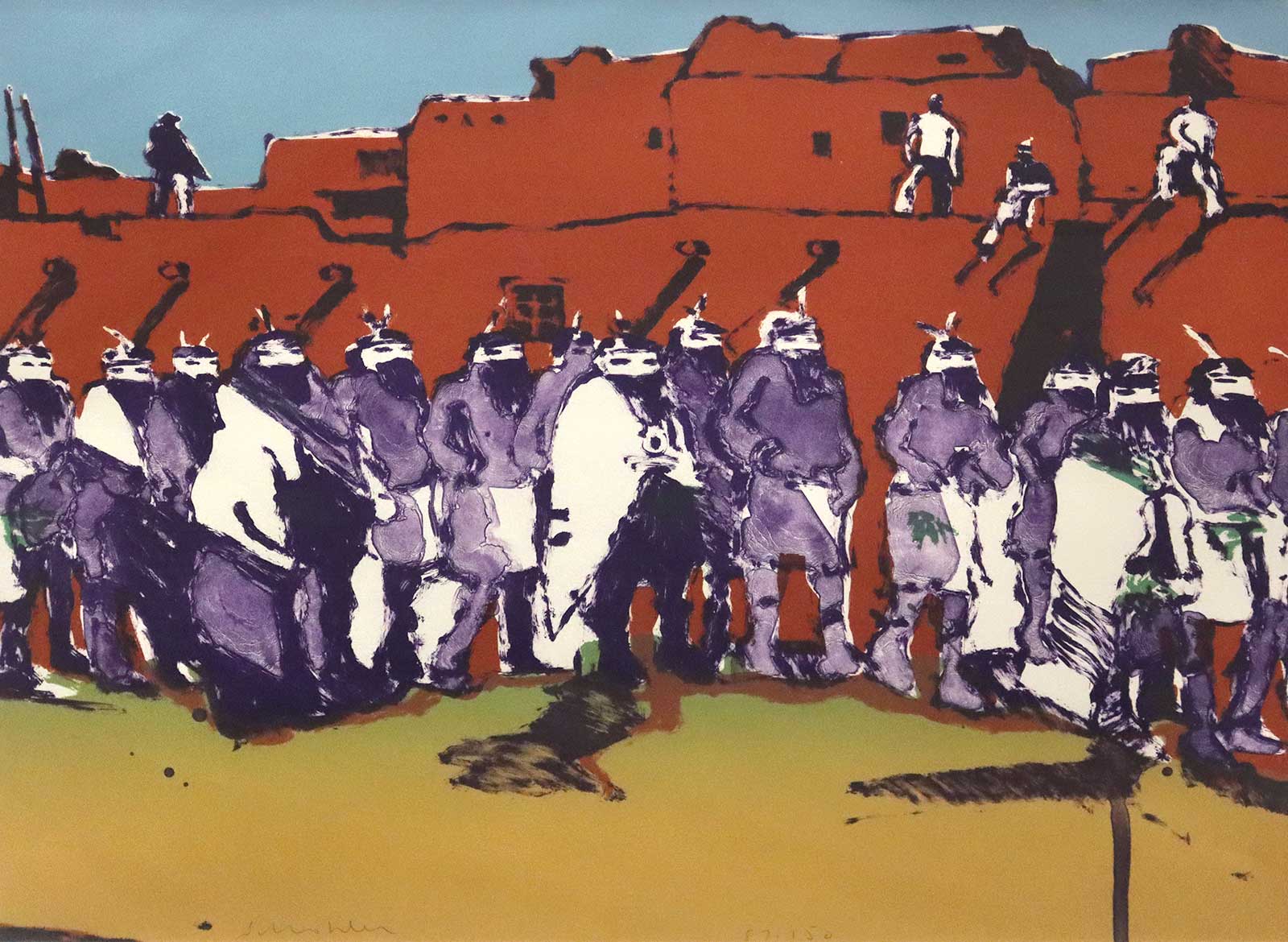
Dancers at Zuni Pueblo, 1978, lithograph, 30 x 22 in.
The show includes some oil paintings and many lithographs. During his time as an instructor for the Institute for American Indian Art, Scholder explored printmaking techniques, which have now become a popular medium across Native American art. “He was very fluid. He could do a monotype in a quick fashion because he knew exactly what he wanted to do and made it happen very quickly,” Sublette says. “That tells you about the mastery—he could work fast but the pieces would still be so poignant and emotionally charged.”
Works for sale can be viewed online and will remain on display through the end of the exhibition. —
Through January 30, 2027
Fritz Scholder: Enter the Matrix
Maynard Dixon & Native American Art Museum 6866 E. Sunrise Drive, Suite 150, Tucson, AZ 85750
(800) 422-9382, www.medicinemangallery.com
Powered by Froala Editor


