Representing Native voices, perspectives and artistic expression, an ongoing exhibition at the Denver Art Museum explores how Indigenous people have been sustained and supported from the early 1800s through the present day.
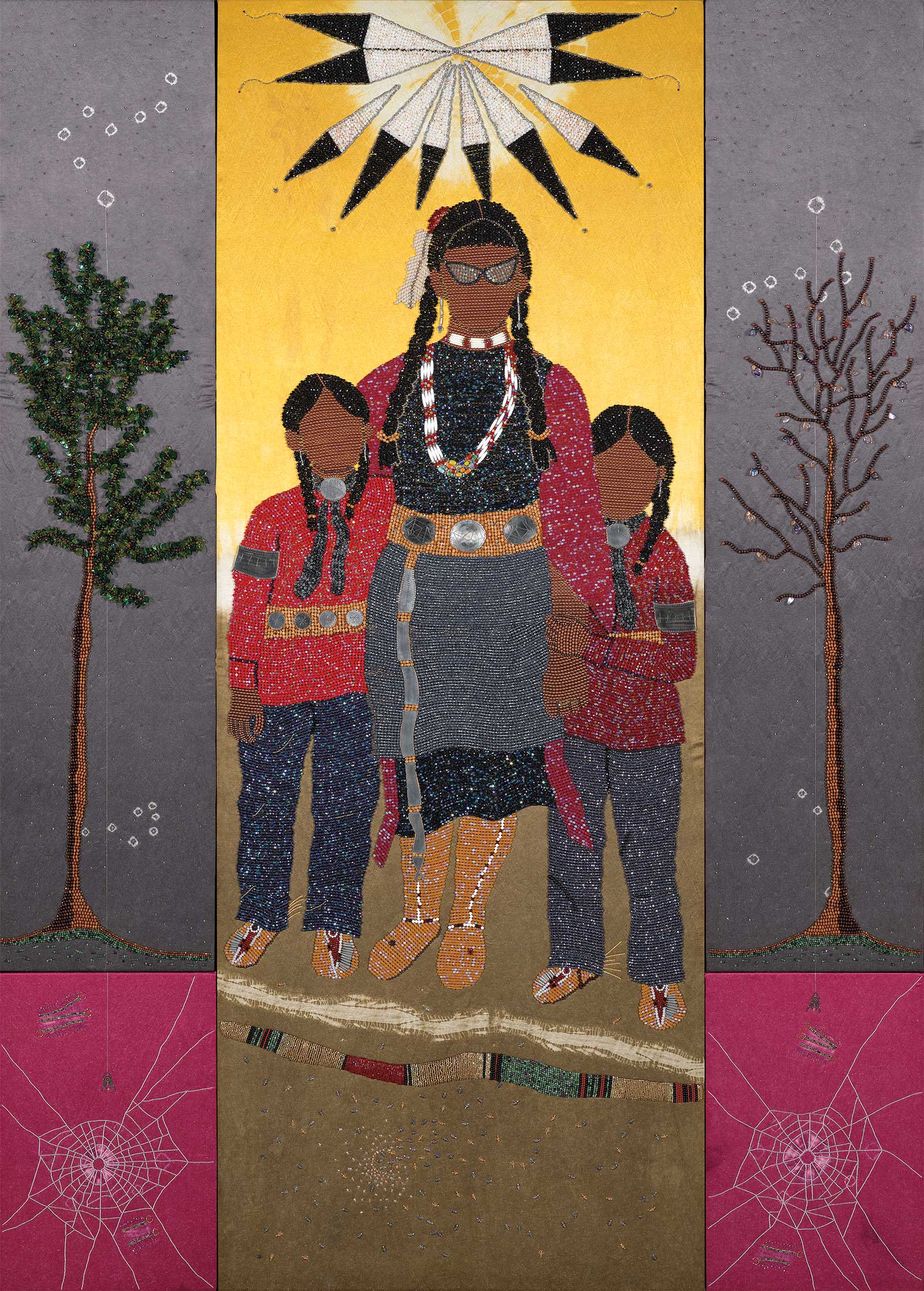
Teri Greeves (Kiowa), Sons of the Sun, 2023, beads, raw silk and dye on canvas, 96 x 72 in. Denver Art Museum: Purchased with the Nancy Blomberg Acquisitions Fund for Native American Art, 2023.777A-E. © Teri Greeves
SUSTAINED! features roughly 90 objects with media ranging from hide, clay and acrylic paint to 14-karat gold and fossilized ivory. It includes photographs, paintings, clothing, quillwork, beadwork, clay sculptures, miniature horsehair bowls, ledger drawings and ink prints. The oldest object in the exhibit is an Osage pair of epaulets from around 1830. The most contemporary work is Kiowa artist Teri Greeves’ figurative multimedia piece Sons of the Sun from 2023. The piece was a commission for the museum’s collection and recognizes the Kiowa tribe’s historical connection to and presence in the Denver region.
“SUSTAINED! is an exhibition intended to celebrate the 100th anniversary of the Denver Art Museum collecting Indigenous arts; however, rather than focus attention on our institution or past collectors, we used this opportunity to redirect focus towards the communities we serve,” explains curator of Native arts, John Lukavic, who adds that the title emerged from a collaboration with seven Indigenous community representatives who helped develop the overarching themes of the exhibition with DAM’s former associate aurator of Native arts, Dakota Hoska. “What the advisors chose to explore was the ways Indigenous people have been sustained over time, telling stories about strength, disruption and continuity through the art in our collection,” says Lukavic. “This exhibition celebrates the contributions of Native people as a cornerstone of our institution. It also recognizes the Native artists and communities whose works we steward and the community members who give their time, creativity and dedication to enriching our museum practices and our humanity.”
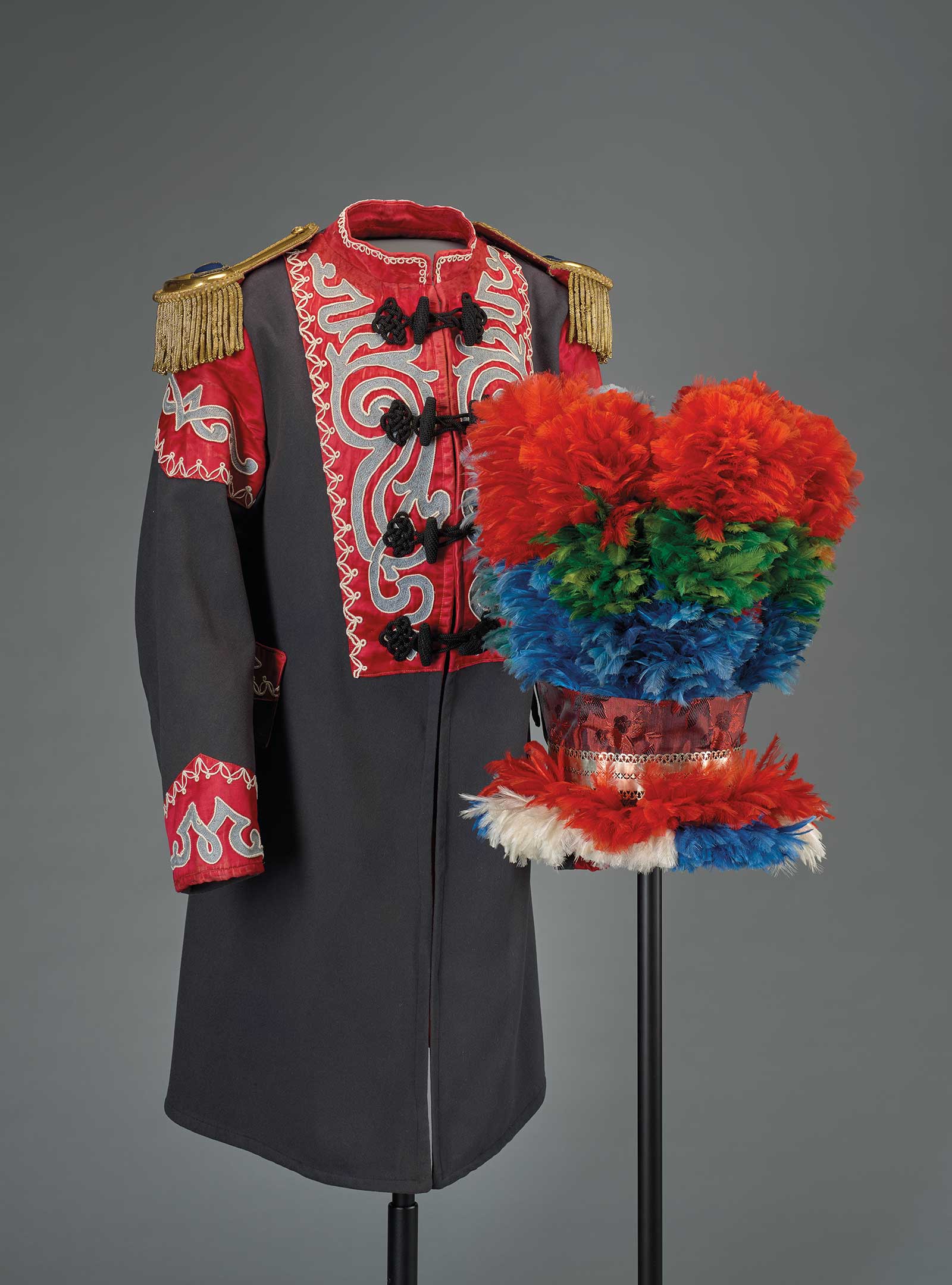
Unknown Osage Artist, Wedding Coat, 1900s, cloth and metal, 42 x 61 in. Denver Art Museum: Native Arts acquisition fund, 1963.157.
Another significant piece in the show is an Osage wedding coat, a woolen military-style coat made for U.S. soldiers in the 1800s that blends Native and non-Native elements. “These coats were sometimes given to Osage men as gifts from government officials when delegations traveled to Washington, D.C.,” explains Lukavic. “Back home, Osage women creatively adorned them with elaborate ribbonwork and adopted them as wedding coats. Flamboyant headdresses fashioned from feather dusters completed the outfit.”
Also of note is Santa Clara Tewa sculptor Roxanne Swentzell’s Mud Woman Rolls On from 2011, her first attempt at creating a larger-than-life piece. The site-specific clay and plant fiber sculpture depicts a mother figure holding four children who are, in turn, holding one another. “This idea of the mother (nurturer) with children around her is based on the Pueblo Storyteller tradition and was an important inspiration for Swentzell,” says Lukavic. “As she explains in her artist’s statement, ‘Pueblo Storytellers are about how knowledge is passed down through generations.’”
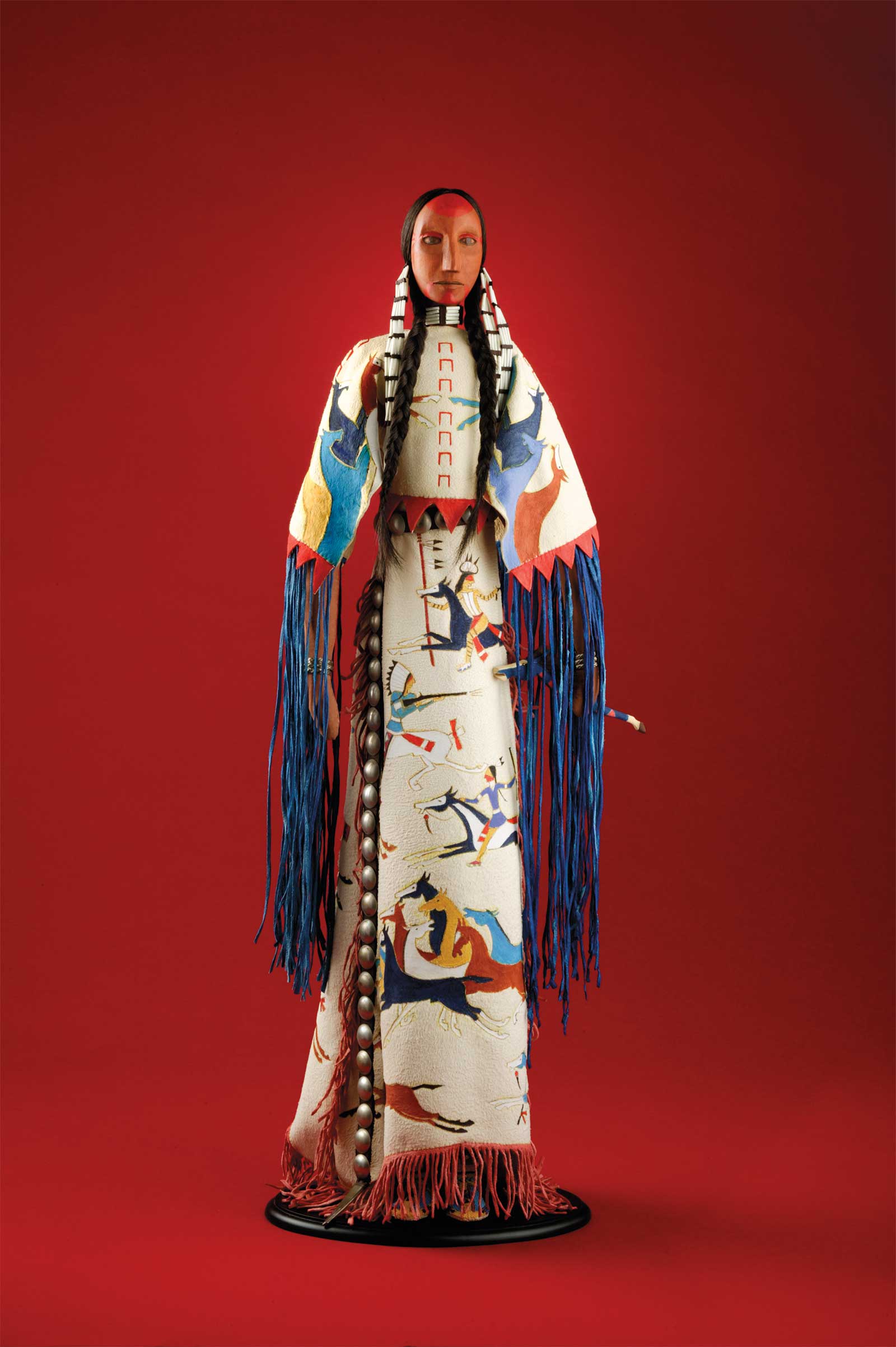
Rhonda Holy Bear (Lakota), Cheyenne doll — Woman in War Honor Dress, 1997, wood, paint, hide, silver, glass beads, cloth, hair, quills and shells, 24¾ x 7½ x 5 in. Denver Art Museum: Gift of Virginia Vogel Mattern, 2003.1303. © Rhonda Holy Bear.
Another work to look out for is Jeffrey Gibson’s (Mississippi Band of Chocktaw) video artwork one becomes the other, which the artist began during a residency at DAM in 2014 by filming Native American community members interacting with art and objects in the museum’s holdings. And contemporary fashion designer Orlando Dugi’s (Navajo (Diné)) dress The Eye Dazzler pays homage to the traditional pattern found in Navajo weavings made between 1880 and 1910.
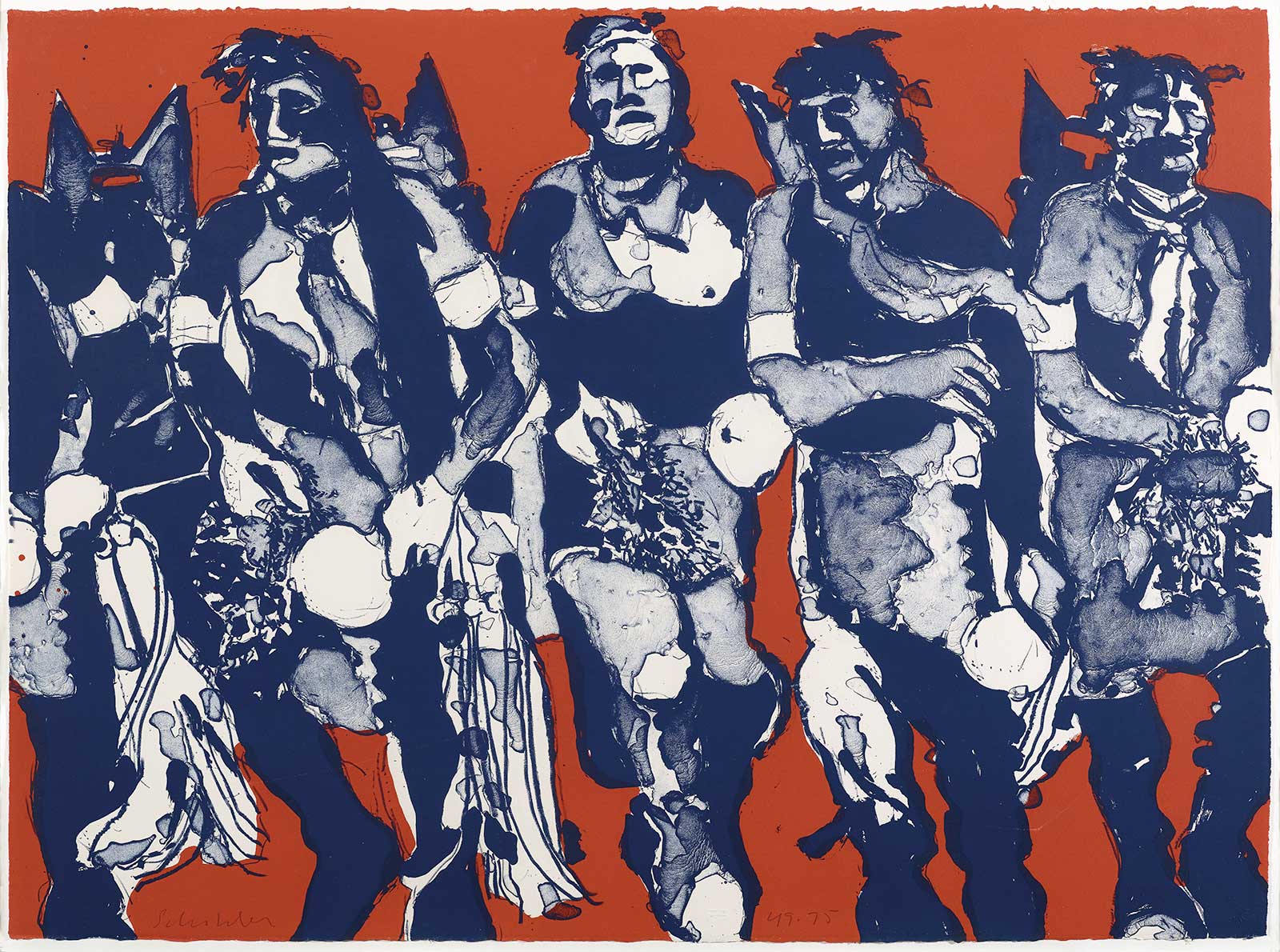
Fritz Scholder (Luiseño, 1937-2005), Hopi Dancers, 1974, lithograph, 22¼ x 30 in. Denver Art Museum: Bequest of the Estate of Suzanne W. Joshel, 2009.480. © Estate of Fritz Scholder.
A foundational theme of SUSTAINED! is how resilience, diversity and creativity have sustained Indigenous communities over time. Lukavic comments, “The objects selected for this exhibition all speak to these ideas in their own way. As noted by Dakota Hoska: ‘Beauty, connections and spirituality are cornerstones that have provided comfort and continuity in uncertain times and remain the building blocks for thriving Indigenous communities today. They also provide the thematic framework for the organization of this exhibition. The advisors helped select the objects...to tell important stories about strength, disruption and continuity.’” —
Ongoing
SUSTAINED! The Persistent Genius of Indigenous Art
Denver Art Museum 100 W. 14th Avenue Parkway, Denver, CO 80204, (720) 865-5000, www.denverartmuseum.org
Powered by Froala Editor


