Rose Quintana loved Columbia River Plateau beaded flat bags.
Heart-shaped ones in particular.
The color, the craftsmanship, the cultural continuity.
Her daughter Cecily was also born on Valentine’s Day. That’s what appealed to her most about the heart-shaped bags as opposed to the more common rectangular shape.
Arlene Schnitzer loved them, too.
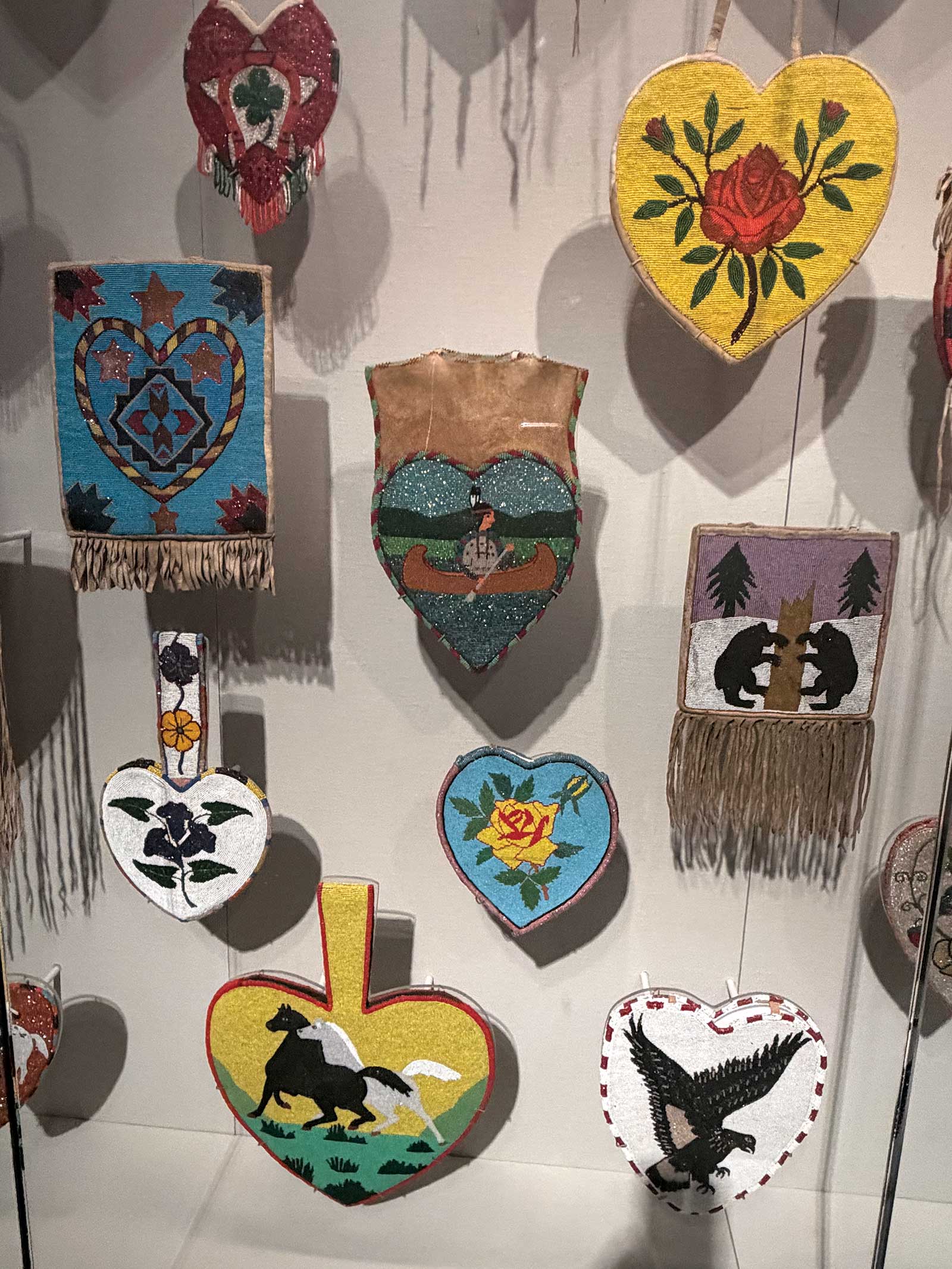
Heart-shaped beaded flat bags from the Arlene Schnitzer Collection at the Portland Art Museum.
The prominent display of Columbia River Plateau beaded flat bags at the Portland Art Museum is as much the story of a gallerist and collector as it is artists and artwork.
Quintana was co-owner of Quintana Galleries, Portland’s leading gallery for Native American art—especially from the Northwest Coast—from the ‘70s through the 2010s. Arlene Schnitzer was a patron of the arts in the Rose City for 50 years, and owned one of the city’s first art galleries. The Schnitzer family name appears on cultural institutions and civic buildings across Portland and throughout the Pacific Northwest. You’d be hard pressed to find another family anywhere in the United States whose philanthropy has done more to uplift a city’s cultural landscape than the Schnitzers in Portland.
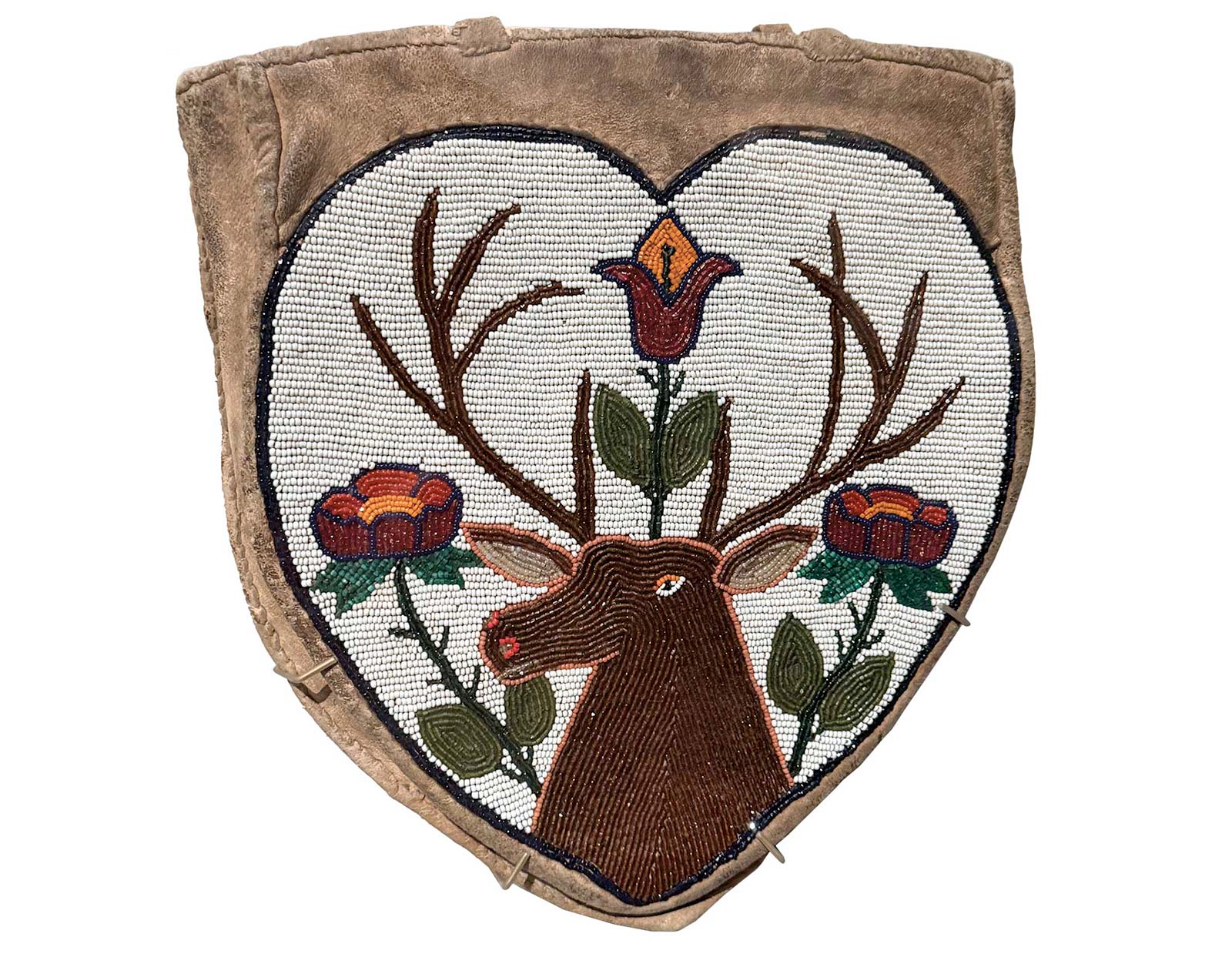
Plateau, 1940-50, beads, hide, cotton cloth, cotton thread. 2022.35.17.
Rose Quintana wasn’t exactly looking to sell selections from the heart-shaped beaded flat bags she had collected from dealers over 20-plus years when they caught Arlene Schnitzer’s eye, but she is a gallerist after all. She certainly wasn’t going to sell them to just anybody.
Schnitzer wasn’t just anybody. Quintana knew the collector and philanthropist had a deep relationship with the Portland Art Museum, and could see the bags preserved and celebrated there for posterity.
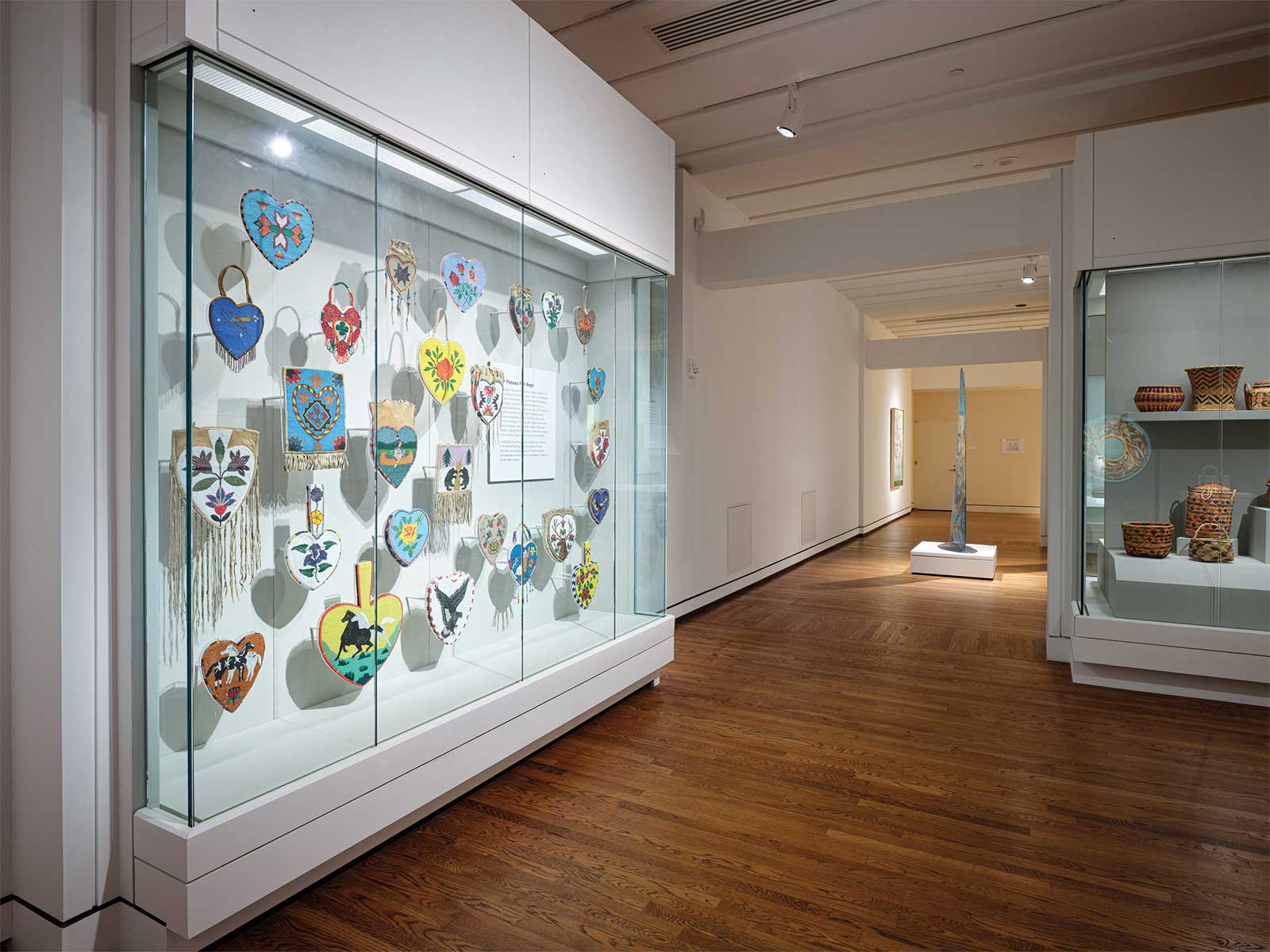
Arlene Schnitzer’s collection of beaded bags on display as part of Shifting the Narrative: 21st Century Acquisitions.
And so they are.
“Everything that we hoped for happened because now[the bags] have this magnificent display at the museum,” Cecily Quintana says.
Rose Quintana wouldn’t have sold the bags if she didn’t know they were destined for the museum.
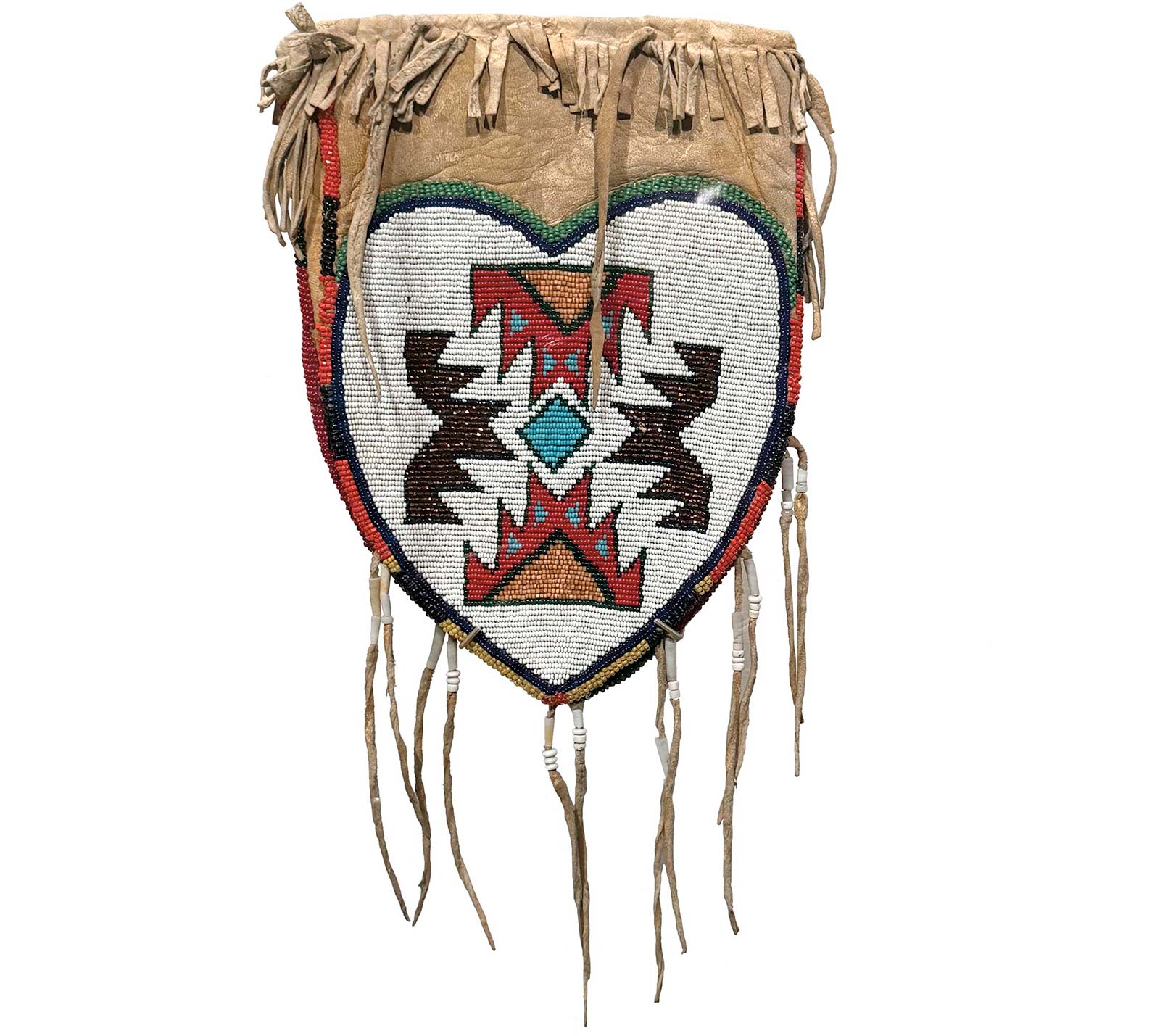
Plateau, ca. 1930s, beads, hide, cotton cloth, cotton thread. 2022.35.23.
Cecily continues operating Quintana Gallery online out of Portland. She kept a few of her favorites when her mother made the difficult decision of selling the majority of her bags to Schnitzer. The gallerist-collector relationship, the trust, between Quintana and Schnitzer—and Schnitzer’s son, Jordan, one of the most esteemed art collectors in the world—now benefits the public. More than 30 of the bags were bequeathed to the Portland Art Museum from the Arlene Schnitzer estate in 2022. They were in the museum’s collection on long-term loan, but infrequently displayed.
That changed when Kathleen Ash-Milby (Navajo (Diné)), senior curator of Native American art, undertook a complete reinstallation of the museum’s Native American art galleries in 2025.
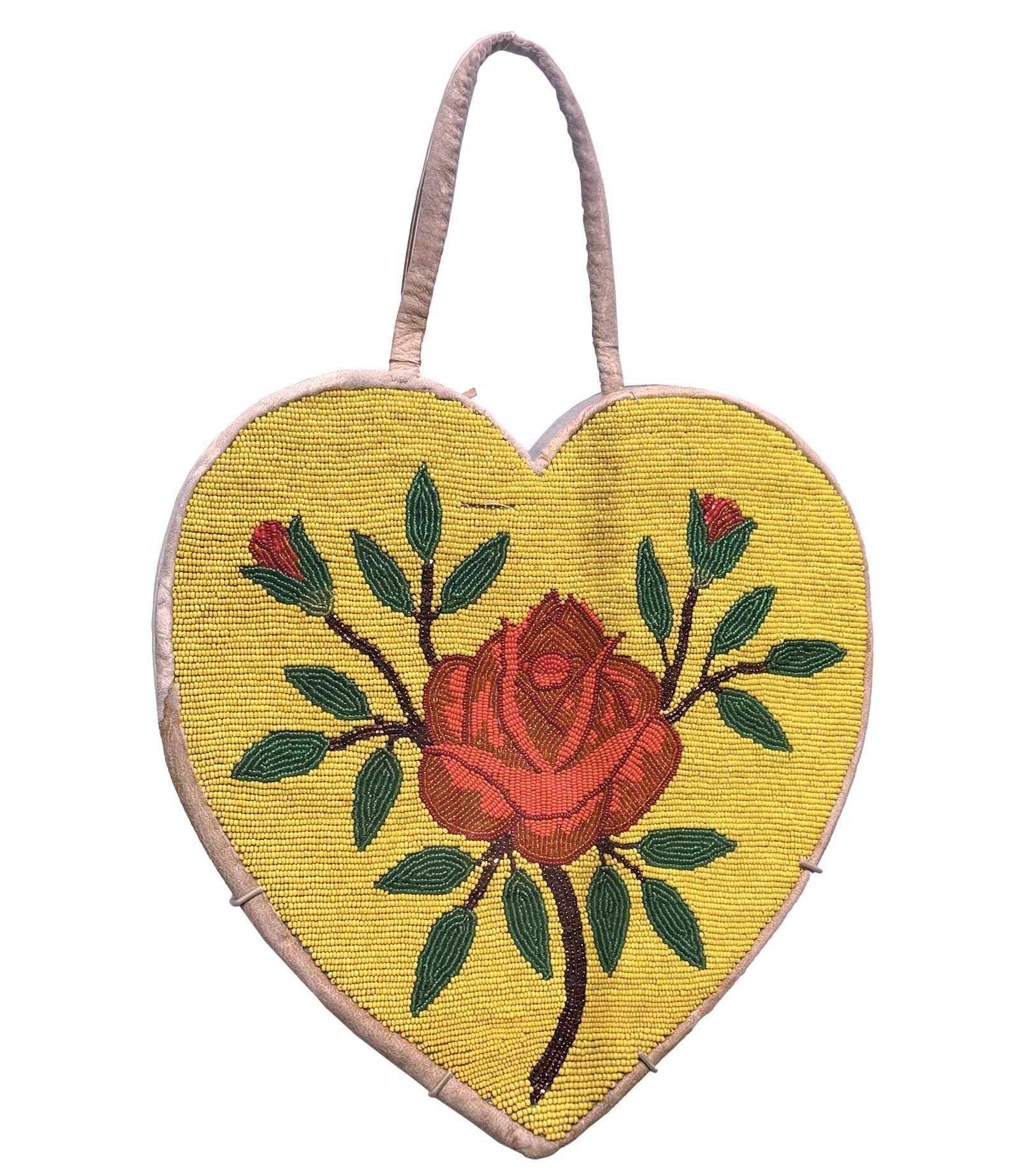
Plateau, ca. 1940, leather, glass beads. 2022.35.31.
“I thought that exhibiting them together would have more of an impact instead of just picking a few, in part because [Arlene] clearly was focusing on collecting bags that were heart shaped, so I felt like to get that impression of how the bags were collected, showing them together made the most sense,” Ash-Milby says.
Today, the heart-shaped Columbia River Plateau beaded flat bags first acquired by Rose Quintana, and later purchased by Arlene Schnitzer, take pride of place in a head-turning group presentation.
“When I came around the corner and saw that [display], it was powerful for me, not just as a member of the Nez Perce tribe, but also as someone who works on the Plateau and works with Plateau artists,” Rachel Allen, curator of modern and contemporary art at the Northwest Museum of Arts and Culture in Spokane, says. “Sometimes in the big representation of Indigenous art of this continent we get left out, or overlooked, or not championed in the same way; seeing that installation done with humor and love was special for me personally and professionally.”
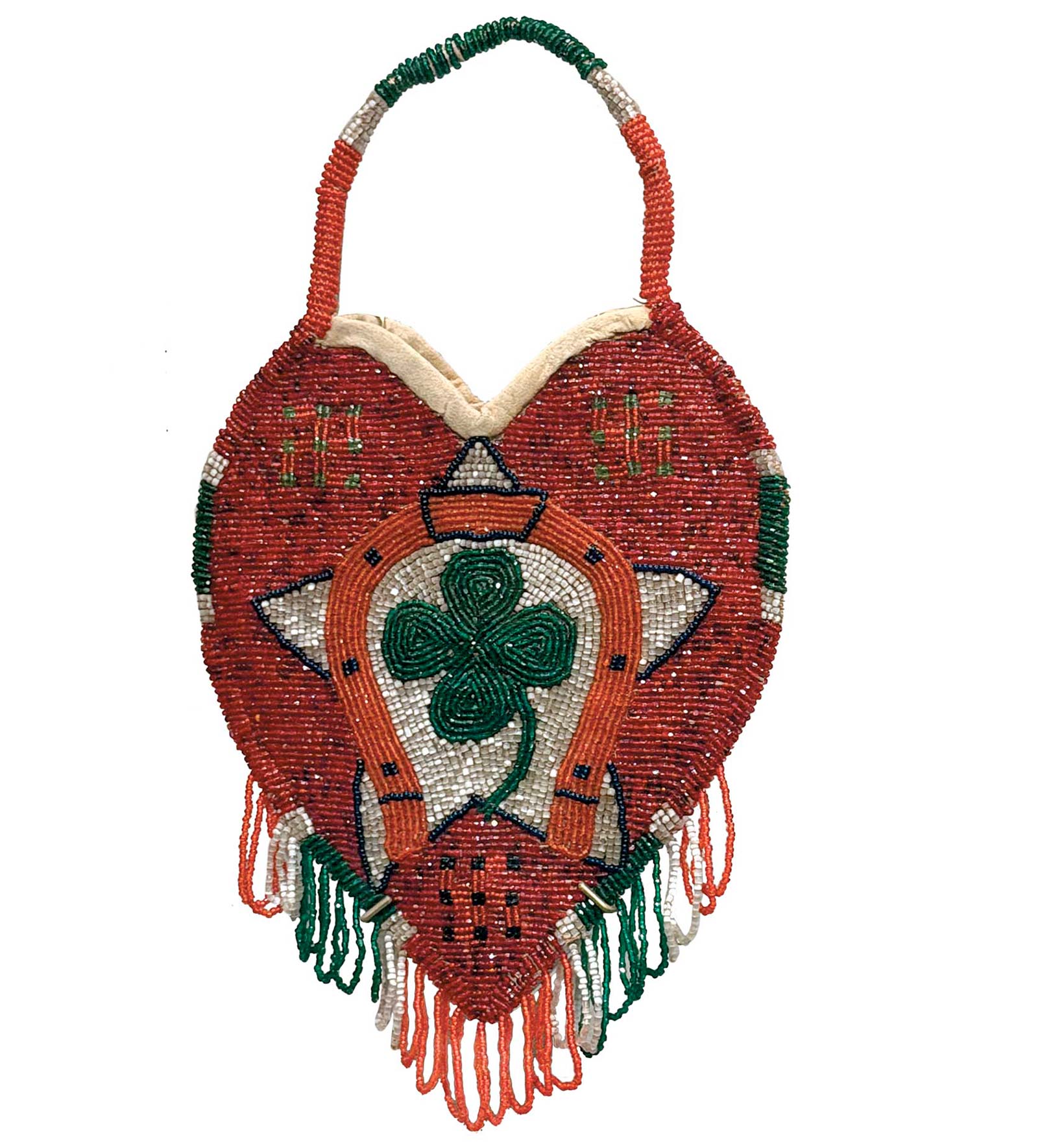
Plateau, ca. 1910-20, beads hide. 2022.35.10.
Columbia River Plateau Beaded Flat Bags
Beaded flat bags were produced by numerous interrelated, but distinct tribes across the Columbia River Plateau region, present-day Washington, Oregon and Idaho. Bags, including Schnitzer’s, were created for trade, but not exclusively.
“Many of them, I imagine, were made to be worn and to be carried and to be used with regalia, at ceremony, at parades, and to hold your things,” Allen says. “We all need a bag. There’s so much love and care put into those bags.”
It’s impossible to determine whether individual bags from Schnitzer’s collection were initially created for internal use or external trade. Unfortunately, their individual makers, and even the tribe of origin, were also not recorded when initially acquired.
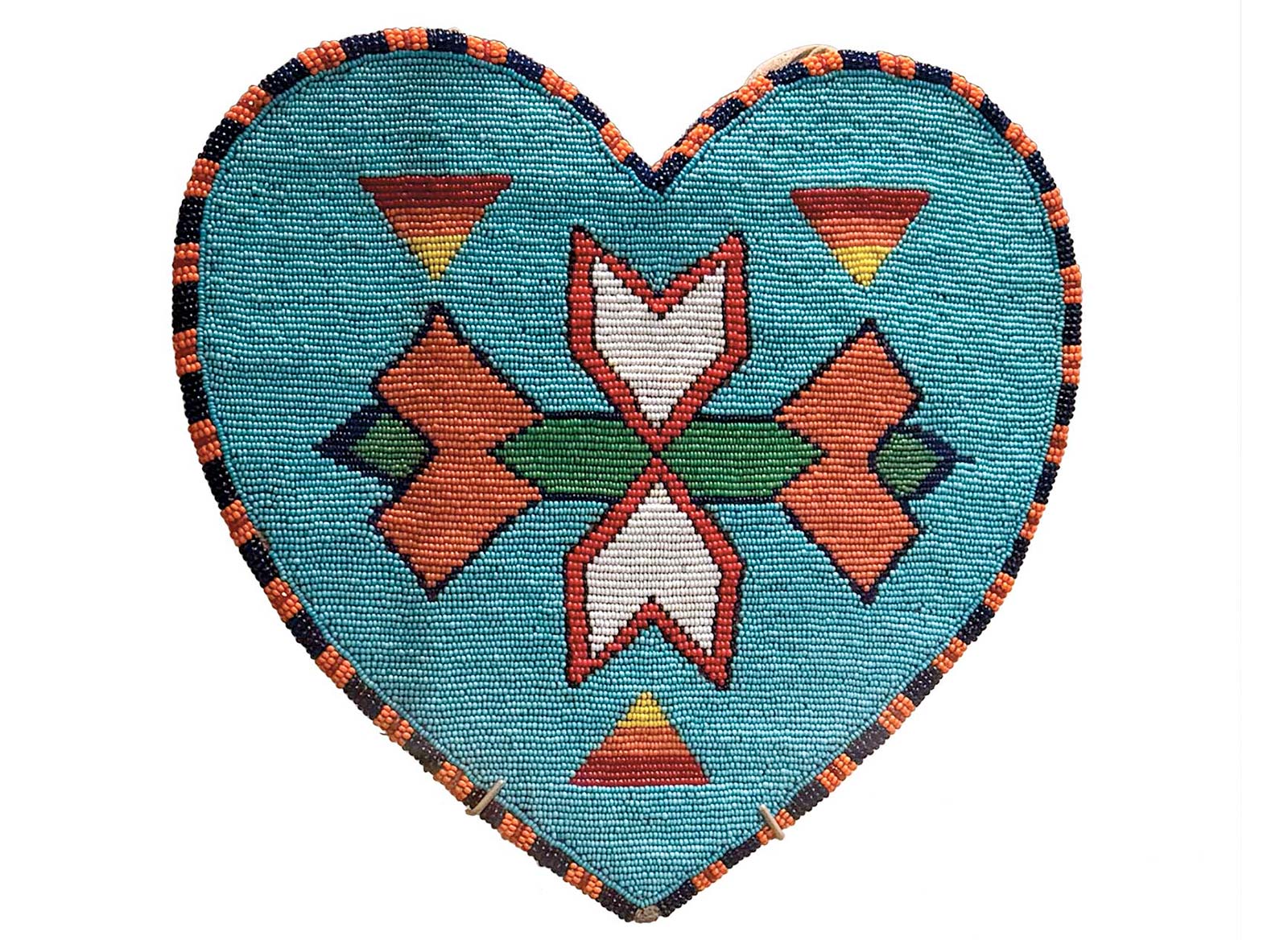
Nez Perce, ca. 1940, leather, glass beads. 2022.35.9.
Ash-Milby has invited experts to view the bags, allowing for a few to be identified based on specific color usage and beadwork styles.
“A lot of the groups on the Columbia River Plateau did similar work, so it’s hard to tease out specific tribal identity,” she says. “If people know, we would love to hear. We do hear from visitors when information is incorrect or missing and sometimes people recognize makers as well which is absolutely wonderful.”
Ash-Milby’s reinstallation of PAM’s Native American art galleries, titled Shifting the Narrative: 21st Century Acquisitions, highlights gifts and purchases since 2000. The artworks are new to the museum, but not necessarily new creations.
“I wanted to make sure to show the breadth of what we have and what we’re collecting, and that it’s not just—I put it in quotation marks—‘contemporary art,’” Ash-Milby explains. “(The beaded flat bags) were a great example of a tradition that spans historic and modern and contemporary in Native American art. Also, the Plateau is an area that we have a lot of strength in our collections—it overlaps the state of Oregon—and it seemed like a no-brainer to show this large collection that is spectacular, and has a lot of resonance with our visitors. They are a peek into the magnificent collections we have from the Plateau.”

Plateau, 1940-1950, beads, cotton cloth, cotton thread, 2022.35.6.
The Schnitzer Collection bags, primarily created in the early 20th century, also help Ash-Milby reinforce a point she likes to stress with visitors.
“Sometimes there’s a dismissal of contemporary art as not being traditional, and sometimes not as important or as authentic; what I want to convey in my work as curator in this exhibition is that it’s all authentic,” she says. “It’s all important. It’s all drawing on traditions and reflecting the lives of the people and the artists who made them.”
Allen highlighted Nez Perce bead workers Mikailah Thompson and Kellen Trenal as younger, contemporary artists carrying on the artform.
“The tradition of our flat bags is not stagnant; it’s a living tradition and continues to iterate,” she says. “People are making flat bags and doing amazing bead work now.”
As much as contemporary art has a propensity to be dismissed as not traditional, historic art is just as often dismissed as not being contemporary. That is also untrue. The bags—so vivid and fresh—help bust that misconception as well.
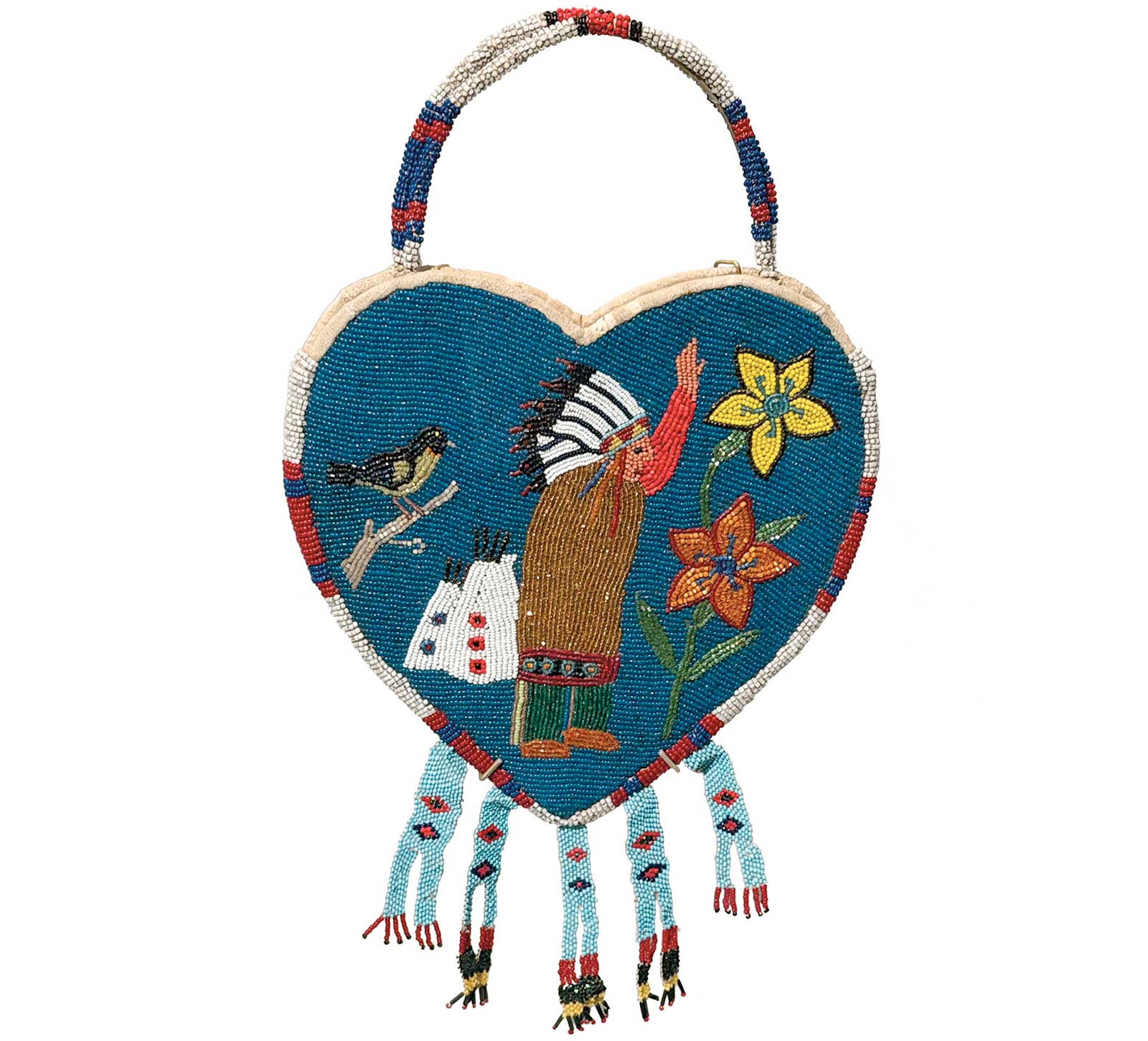
Plateau, early 1900s, leather glass beads. 2022.35.25.
“For those makers, it was contemporary to them. We want visitors to think about what we mean when we say ‘contemporary art,’” Ash-Milby explains. “What’s wonderful about these bags is they’re showing a traditional practice, which is beadwork—we all know Native American people for the beadwork—but this collection is showing an engagement with the contemporary world. You see imagery in the bags that refer to lived experience, and it also shows a playful side of Native artists. People talk about humor in Native art, and I think most people think that’s referring to contemporary art. In this case, you can see fun imagery in there, playful subjects.”
Humor and playfulness on behalf of the collector as well.
“It says a lot about [Arlene] that she collected the bags with hearts,” Allen says. “That’s sweet, too.” —
Through December 13, 2026
Shifting the Narrative: 21st Century Acquisitions
Portland Art Museum 1219 SW Park Avenue, Portland, OR 97205 (503) 226-2811, www.portlandartmuseum.org
Powered by Froala Editor


