Opening in early October, the Brooklyn Museum hosts the first exhibition to examine the katsina doll tradition from the perspective of girls and women in the Hopi community. The exhibition, Hopi Kachina Dolls: Blessings for a Balanced World, includes 122 pieces of historical objects from the museum’s robust Indigenous art collection, as well as exquisitely crafted pottery, basketry and jewelry by Hopi women artists.
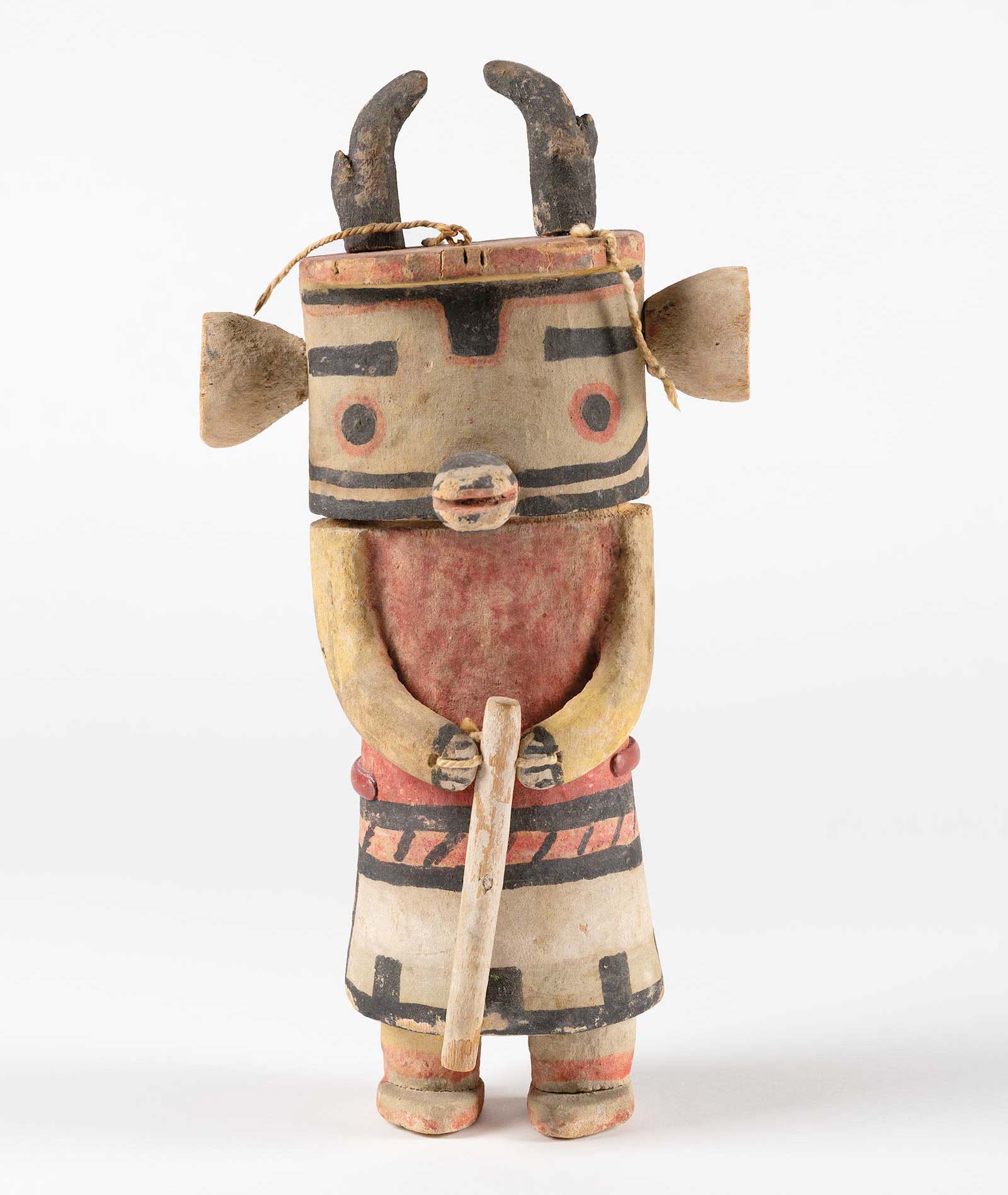
Tsöpkatsina Tihu (Pronghorn Kachina Doll), late-19th century, cottonwood, pigment, andcotton cord. Brooklyn Museum, Museum Expedition 1904, Museum Collection Fund,04.297.5566. Photo courtesy of the Brooklyn Museum.
“[This exhibition] is the result of the museum’s seven-year collaboration with Hopi women artists and culture bearers, as well as the Hopi Cultural Preservation Office (HCPO),” explain curators Dare Turner, Colleen Lucero and Nancy B. Rosoff. “These exhibition partners encouraged the museum to break new ground in its presentation of the kachina doll tradition by sharing the perspectives of Hopi girls and women who receive kachina dolls as gifts from ancestral spirits known as Katsinam.”
During consultations with tribal representatives, museum staff learned that the museum’s late-19th century katsina doll collection, acquired by curator Stewart Culin in 1904, was special because the dolls’ well-worn appearance indicated that Hopi babies and girls played with and loved them. “These imperfections thus make them a rare and invaluable record of the lived experiences of late-19th century Hopi children—ones that resonate with community members today,” note the exhibition curators. “Carved of cottonwood and painted with distinctive designs, kachina dolls (tithu) represent the Katsinam who gift flat tithu to infants and increasingly elaborate dolls to girls as they grow up.”
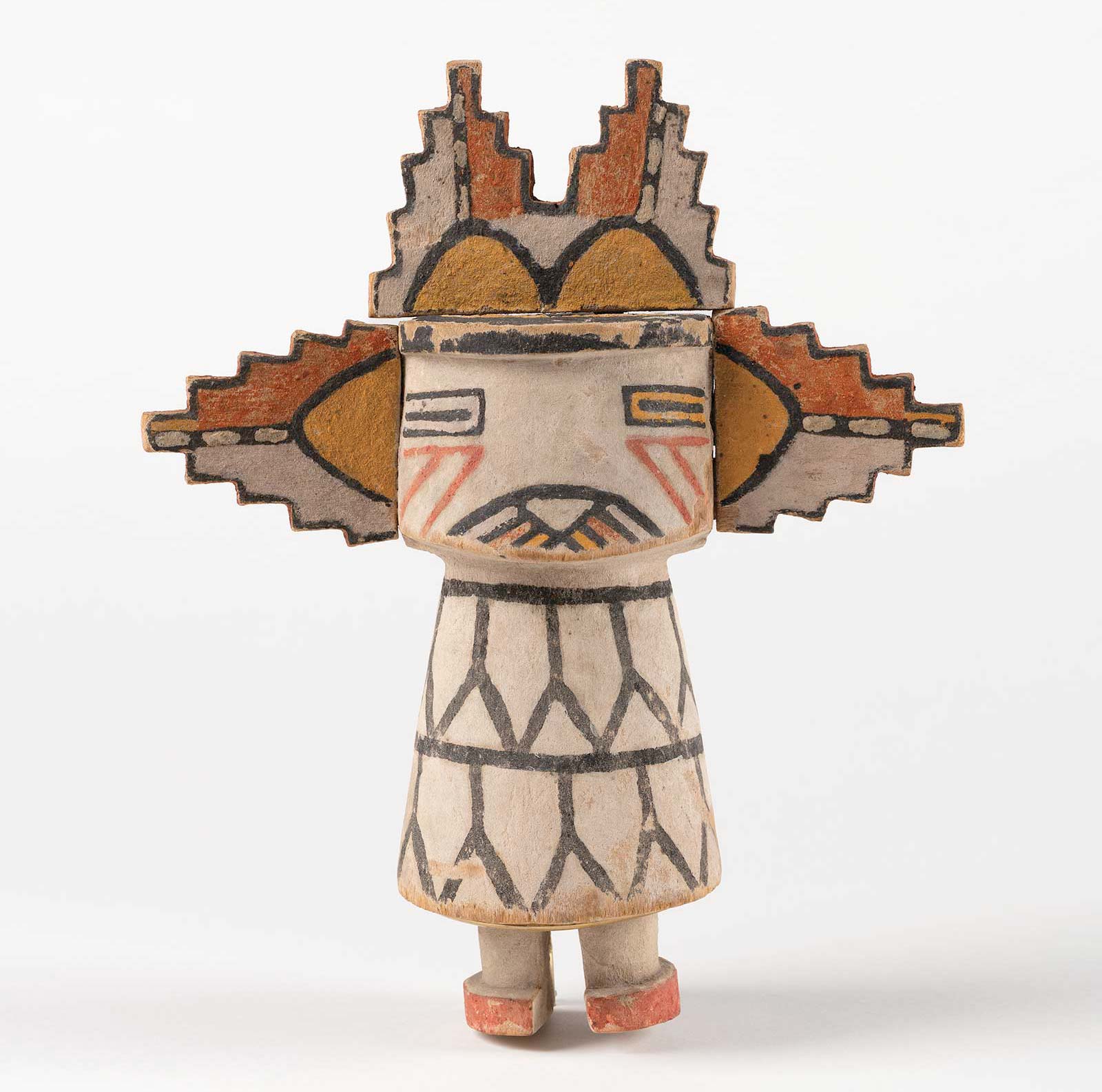
Sa’lakwmana Tihu (Salako Maiden Kachina Doll), late-19th century, cottonwood and pigment. Brooklyn Museum, Museum Expedition 1904, Museum Collection Fund, 04.297.5543. Photo courtesy of the Brooklyn Museum.
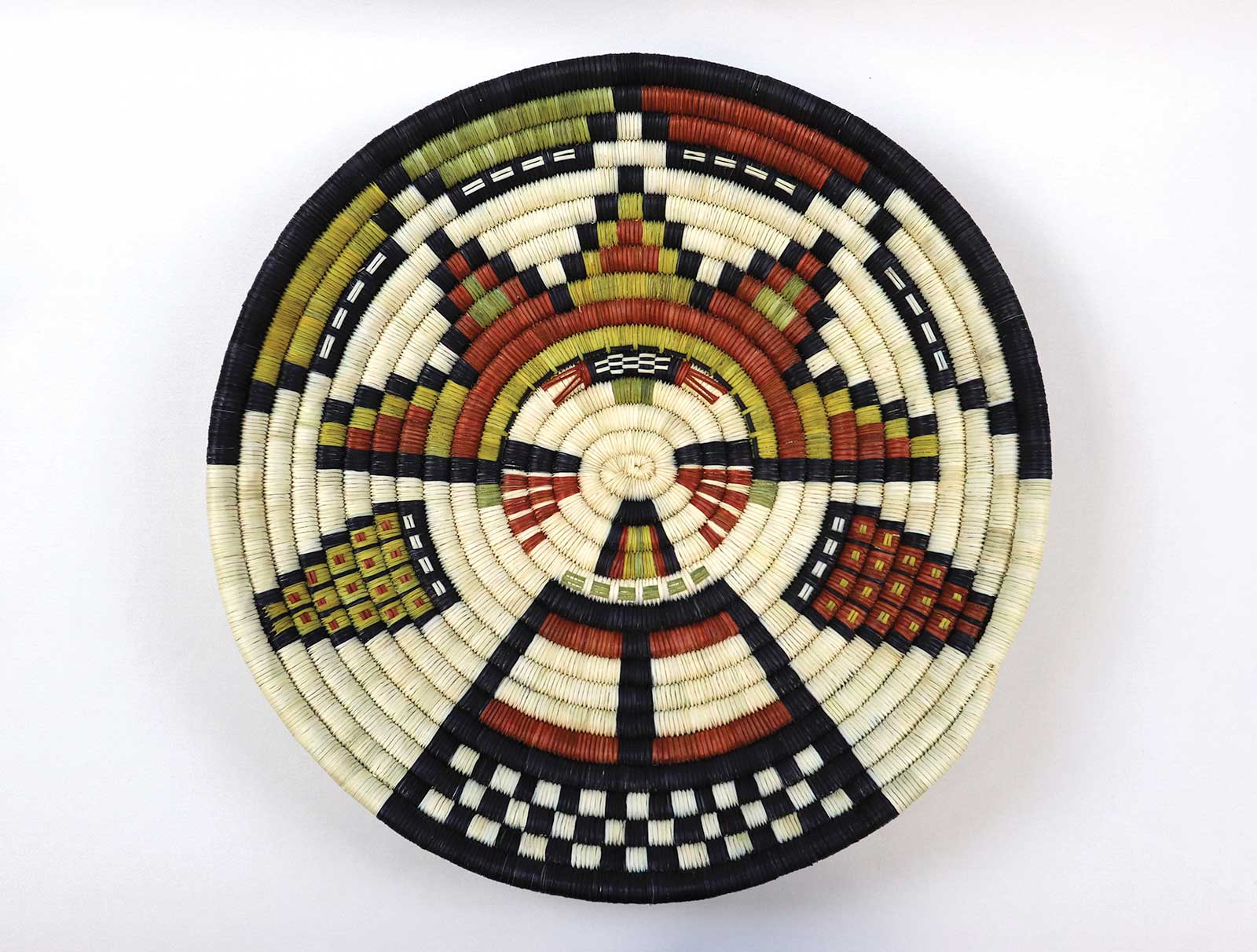
Kathryn Kooyahoema (Hopi), Coiled Plaque with Palhikwmana (Water Maiden), 2004, yucca, galleta grass and dyes. Courtesy Museum of Northern Arizona, Gift of Cindy Perin, Dr. Robert G. Breunig, and Karen Enyedy, E11401. © Kathryn Kooyahoema.
These treasured gifts shape both the Hopi cultural landscape and the lives of their recipients. By playing with and caring for these dolls, girls learn how to support their community as future matriarchs and artists who sustain traditions across generations.
The exhibition is organized in thematic sections, beginning with the section “Treasured Gifts,” with pieces like the Tsöpkatsina Tihu (Pronghorn Kachina Doll) and the Sa’lakwmana Tihu (Salako Maiden Kachina Doll). Both represent the types of intricate dolls the Katsinam gift to young girls. “Unlike flat dolls given to babies, these sculptural dolls have delicate features and slender arms that require gentle care,” curators note. “The Sa’lakwmana Tihu wears a stepped headdress representing rain clouds and a dress with feather designs. The pronghorn, which resembles animals depicted in petroglyphs in ancestral villages, is regarded as an important non-human relative that has lived alongside Hopi communities throughout time. All Katsinam represented in tihu form connect with the natural world and are associated with life-giving moisture that supports Hopìiqatsi, the Hopi way of life.”
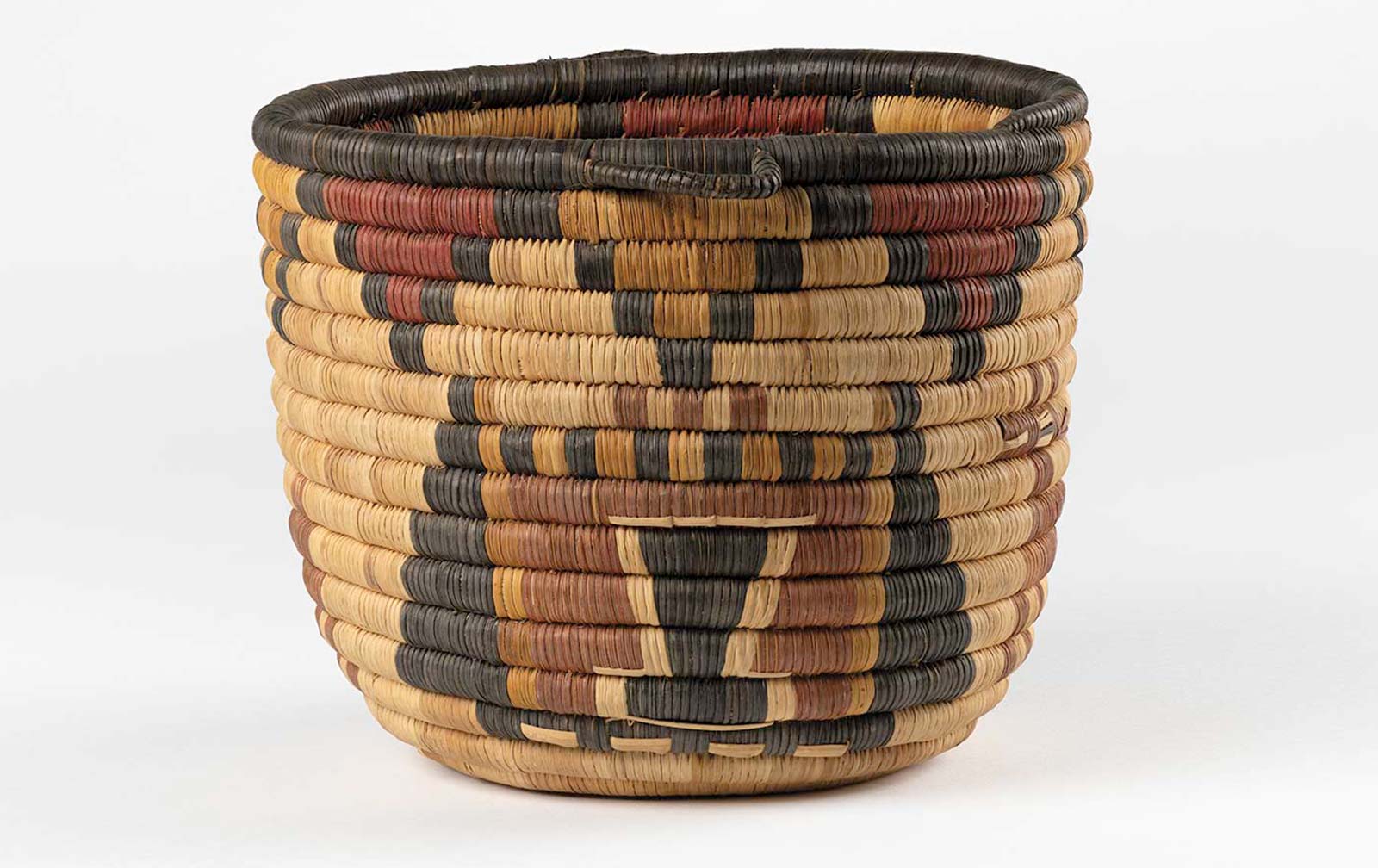
Coiled Basket with Angwusnasomtaqa (Crow Mother), early-20th century, yucca fiber, galleta grass and dyes. Brooklyn Museum, anonymous gift in memory of Dr. Harlow Brooks, 43.201.299. Photo courtesy of the Brooklyn Museum.
In addition to katsina dolls, the exhibition includes basketry, jewelry and pottery made by Hopi women, most of which feature imagery inspired by Katsinam. “Together, these works speak to the enduring influence of the Katsinam, illuminate the formative role of tithu in Hopi society and celebrate the innovations of Hopi women artists,” the curators add.
The exhibition opens October 2 and will remain on display through June 27, 2027. A fully illustrated catalog will accompany the exhibition, featuring essays by curators Lucero, Rosoff and Turner, along with additional contributors. —
October 2, 2026-June 27, 2027
Hopi Kachina Dolls: Blessings for a Balanced World
Brooklyn Museum 200 Eastern Parkway Brooklyn, NY, 11238 (718) 638-5000, www.brooklynmuseum.org
Powered by Froala Editor


