I was a small child in 1963 when my father’s professor at the University of New Mexico invited his class and their families on a field trip to Acoma Pueblo. We received permission to take a northern toehold ascent up to the top where adobe houses were outlined against the sky. There I was overwhelmed by the ancient mission church and its courtyard walls. Not to mention the smiling people sitting in the sun on their doorsteps offering me small pieces of wonder.
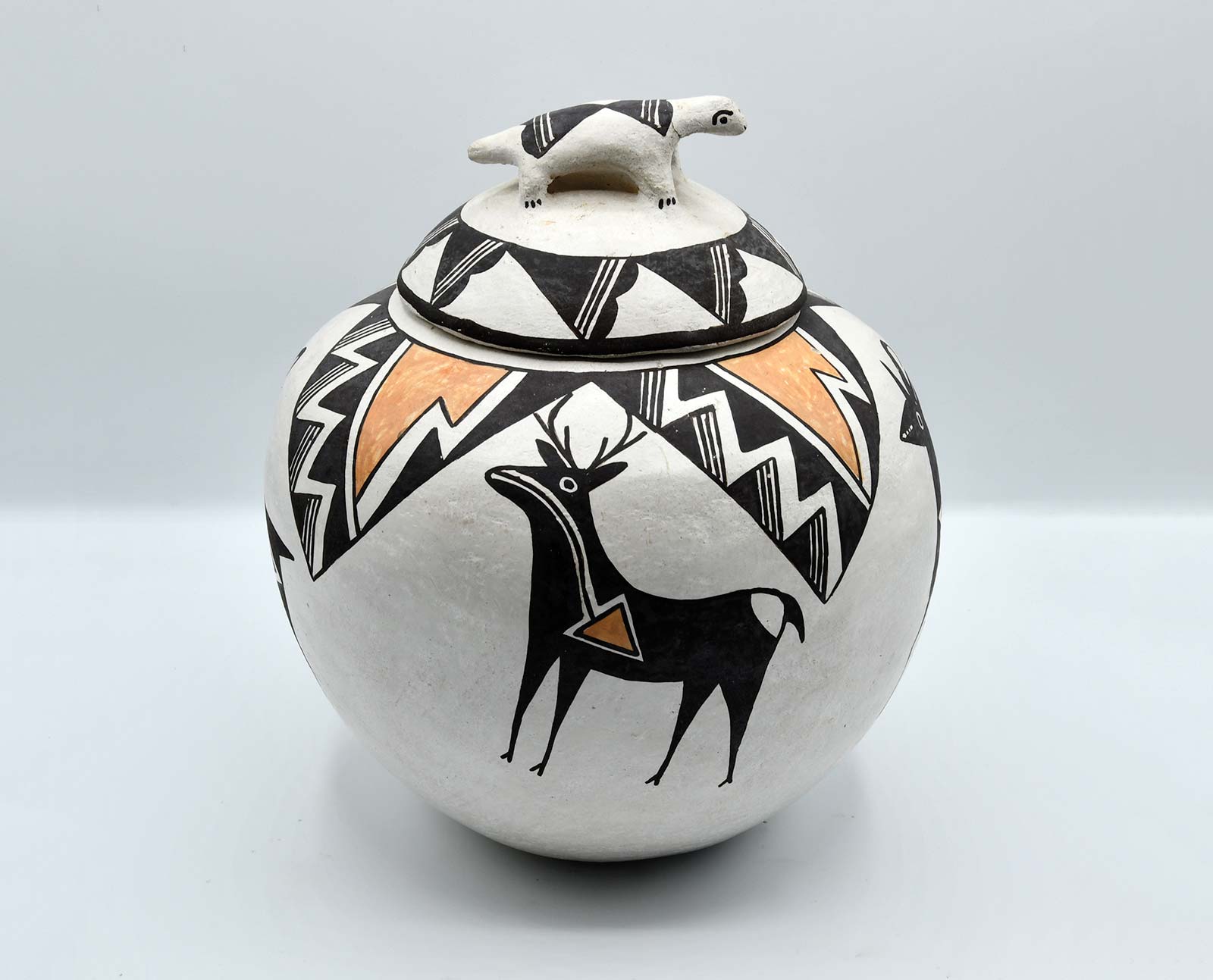
Figure 1: Lucy M. Lewis (Acoma Pueblo, ca. 1890-1992), vessel with four deer on white ground, two with heartlines and two with lozenge design, and a molded bear lid. Mid-20th century. Private collection.
Acoma pottery, from high-end creations to cheerful tourist ware, always evokes the marvel of that long-ago visit. Whether the work is black-on-white or polychrome with two or more lines of color, potters from Sky City and its attendant villages shape vessels, figurines and miniatures with unique visual appeal. Collectors in the early modern era were drawn to Acoma polychrome ollas with their fine lines and simple, sleek colors. Interior decorators in the 1920s and 1930s often chose Acoma pottery as embellishments for a stylish room.
Acoma’s potters are particularly known for their geometric designs but have increasingly added figural details over time. Birds appear on most pueblo pottery; at Acoma, the parrot motif honors a legendary “rain bird” who led the pueblo’s founders to water sources. Acoma potters are also adept at portraying animal motifs. Mimbres-style creatures are favored choices, some with graceful heartlines, often accompanied by Tularosa-inspired hatched designs.
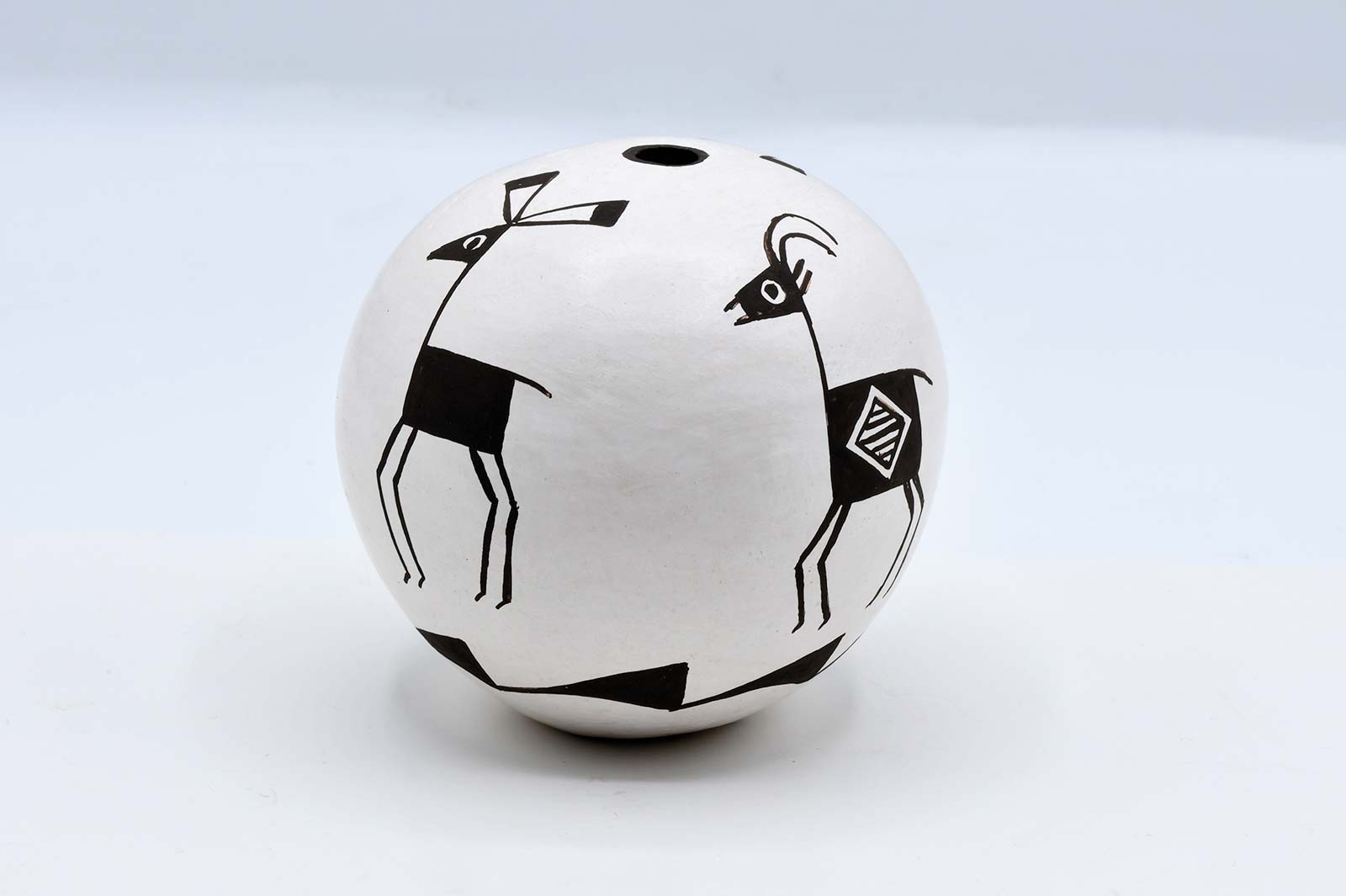
Figure 2: Dolores Lewis (Lewis-Garcia) (Acoma Pueblo), rounded seed pot with four bighorn sheep, alternating solid and diamond designs, 1970s.
Anthropologist Ruth L. Bunzel published a book in 1929, The Pueblo Potter, adapted from her doctoral dissertation. This work was a groundbreaking examination of Native pottery design. She considered Acoma vessels to be the best made of all pueblo pottery, praising their technique and form. Pots were and continue to be shaped with local gray clay and white slip, or paste, making smooth, strong, narrow walls. Mineral paints were applied to the surface with yucca brushes. Early pots were hand-fired using cow dung; modern potters now employ kilns. Nineteenth-century decorative patterning featured robust motifs applied around the rim. Through the next century, these images enlarge and grow away from the top, frequently becoming organized into four neatly spaced design groups.
Bunzel, like many collectors and experts, despised informal and quirky tourist pottery and called these objects “little atrocities.” Other critics labeled tourist ware as “grotesques.” Despite this disdain, figurines and small pieces made for visitors remain popular and have been known to attract future collectors. Acoma potters, like other pueblo potters, also appreciate making miniatures and small seed pots. Such work contributes to Native economic well-being, and the taste for these souvenirs continues to be strong.
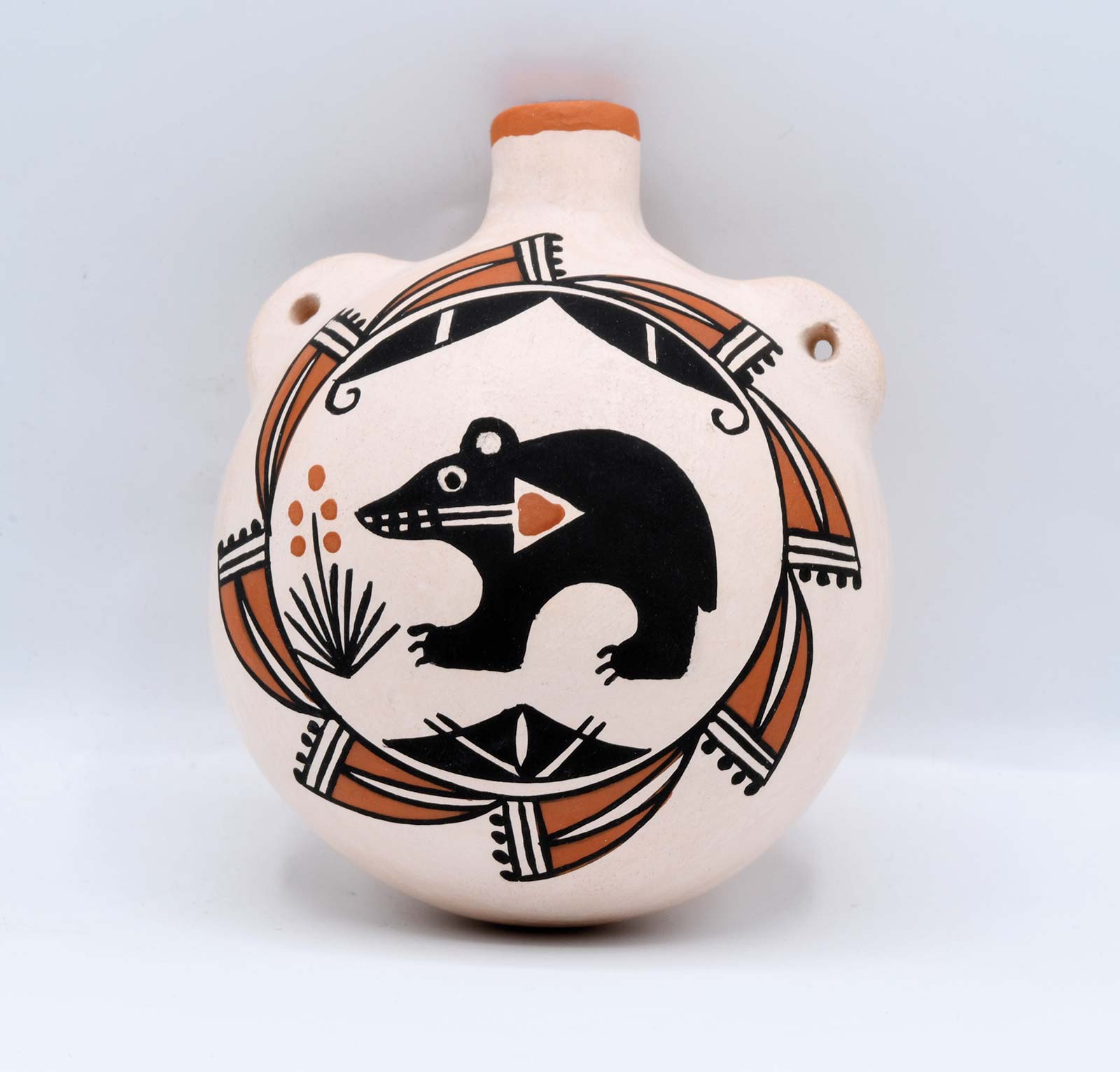
Figure 3: Rebecca Pasquale (signed Becky Pasquale) (Acoma Pueblo, 1941-2006), small 4-in. diameter canteen depicting bear with heartline, 1980s.
Acoma’s most famous potter was Lucy Martin Lewis (ca. 1890-1992). She started making pots in the 1920s, gained a collector following by the 1940s, and began signing her work around 1950, a pioneering break from tradition. Lewis had a natural sense of rhythm and clarity in her designs. She could also model animal figures in clay as we see on the lid of this vessel. Her motifs, arranged into four figures, feature handsome alternating male and female deer. They are also defined by their central decoration, either a heartline or diamond-shaped hatched lines. The overall design effect is sophisticated. This is achieved by decoration, especially the elegantly shaped geometric patterning and small additions of color that add tone to an essentially black-on-white composition.
One important development can be attributed to Lewis: she encouraged her fellow potters to make smaller vessels. Some experts labeled her work a “Revival Style” because she was given access to view ancient vessels in a New Mexico museum collection. Lewis undoubtedly added this knowledge into an already existing collective tradition of imagery in Acoma. Choosing to use ancient Mimbres-style figures, as Hopi silversmiths did, gave Acoma a deeper visual tie to the past.
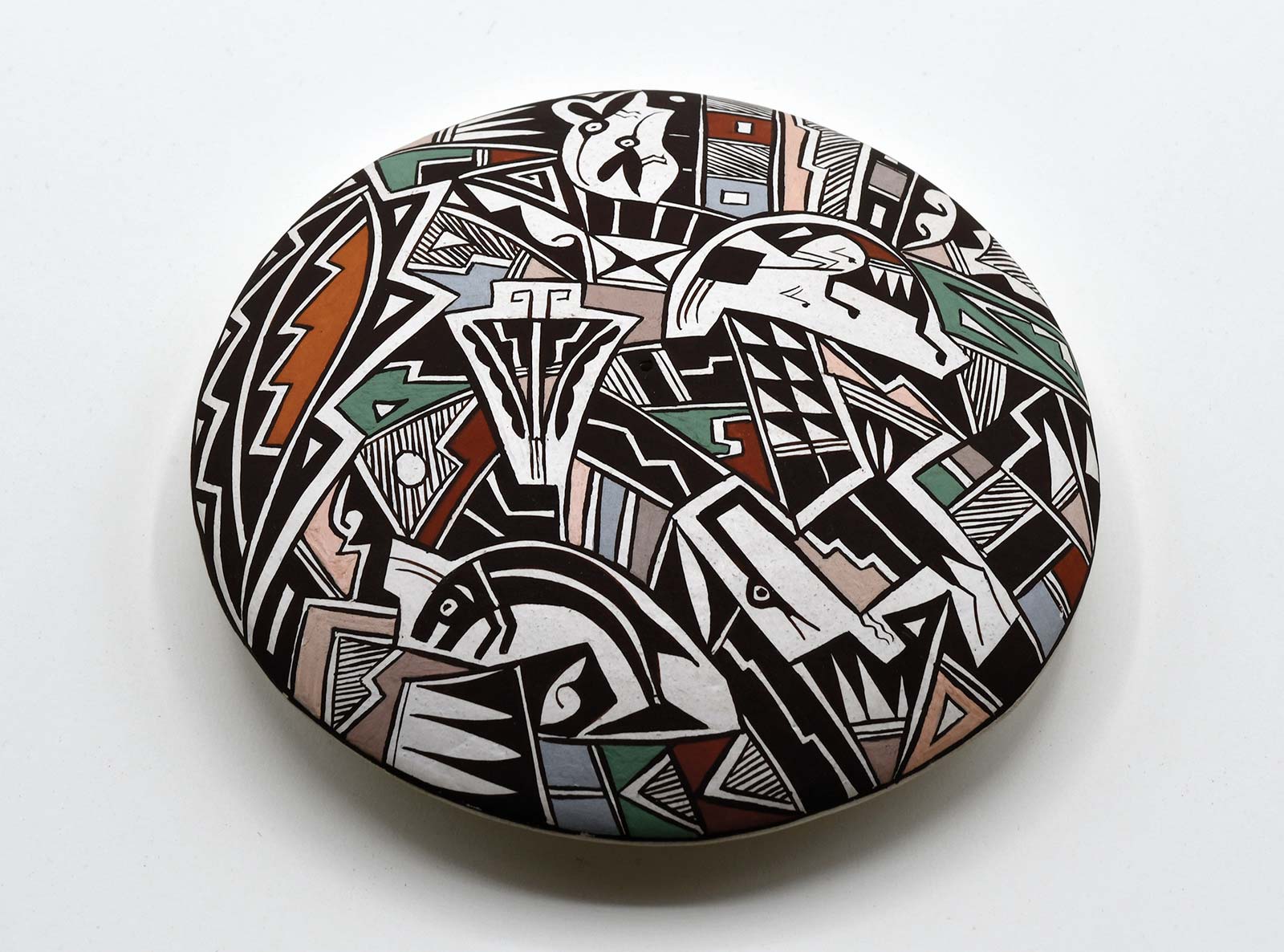
Figure 4: Carolyn Concho (Acoma Pueblo), seed pot with complex designs, including fish, butterfly, Kokopelli and hummingbird, ca. 2000. Private collection.
Lewis’s daughter Dolores, later Dolores Lewis-Garcia, learned how to make pots from her mother. Her work is popular, and this seed pot example from the 1970s is a fine example of her style. In this pot, the motifs receive the most attention. A small decorative border sits near the bottom. Four Mimbres-style longhorn sheep divide the contoured surface; they are portrayed with a graphic certainty that doesn’t leave them hanging in space.
Rebecca Pasquale (1941-2006) signed her creations as “Becky.” She worked in a mostly traditional mode. The canteen shown here with a circular polychrome border is fairly representative of 1980s patterning, but her bear with heartline motif has a charm that lifts this piece above the ordinary. This animal design was also a family favorite; her potter son Darin and Laguna daughter-in-law Michelle incorporated their own interpretations in their work.
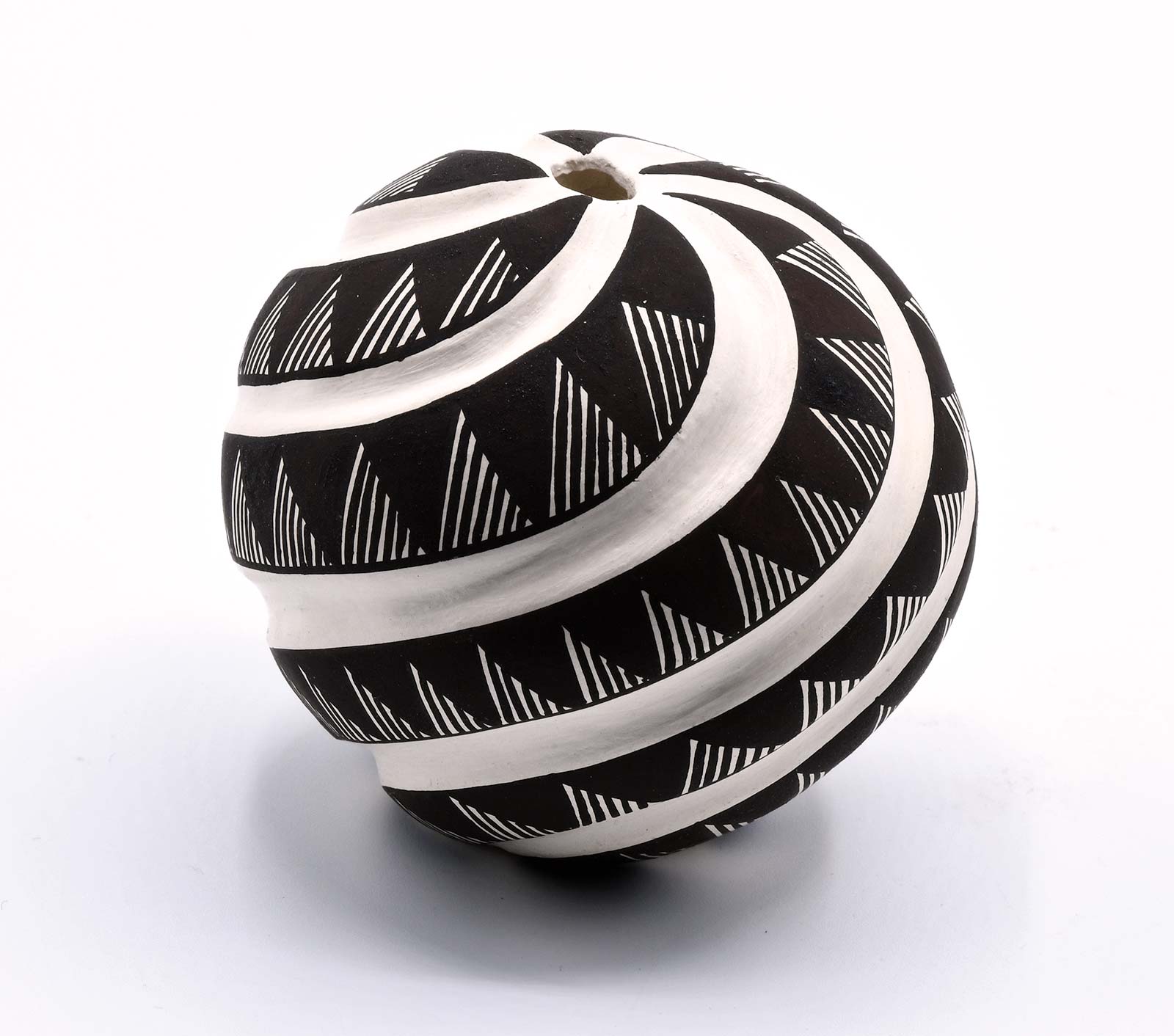
Figure 5: Sharon Lewis (Acoma Pueblo), black-on-white carved pot, 2026.
Carolyn Concho’s pottery appeared on the market in the mid-1980s and she’s been a favorite at Santa Fe Indian Market ever since. Skilled in both traditional and contemporary styles, she wins awards for the detail and complexity of many of her pieces. Her large seed pot from the 2000s is a dazzling example of visual patterning. This polychrome masterpiece takes up the entire surface, with elegant spatial compartments for Mimbres birds, fish and a Kokopelli. Concho makes her colors subordinate to the overall black on white design.
Another gifted potter is Sharon Lewis, the daughter of Elizabeth Garcia and Bernard F. Lewis. She is an innovator in terms of technique and form. Lewis’ small seed pot’s shape is nontraditional, and its black on white surface is enhanced by consistent carving; the effect is optically stunning. Her more conventionally shaped small seed pot confirms her skill with portraying symbolism; Lewis states that rabbits represent abundance and her Mimbres figure captures the grace and watchfulness required by this prey animal.
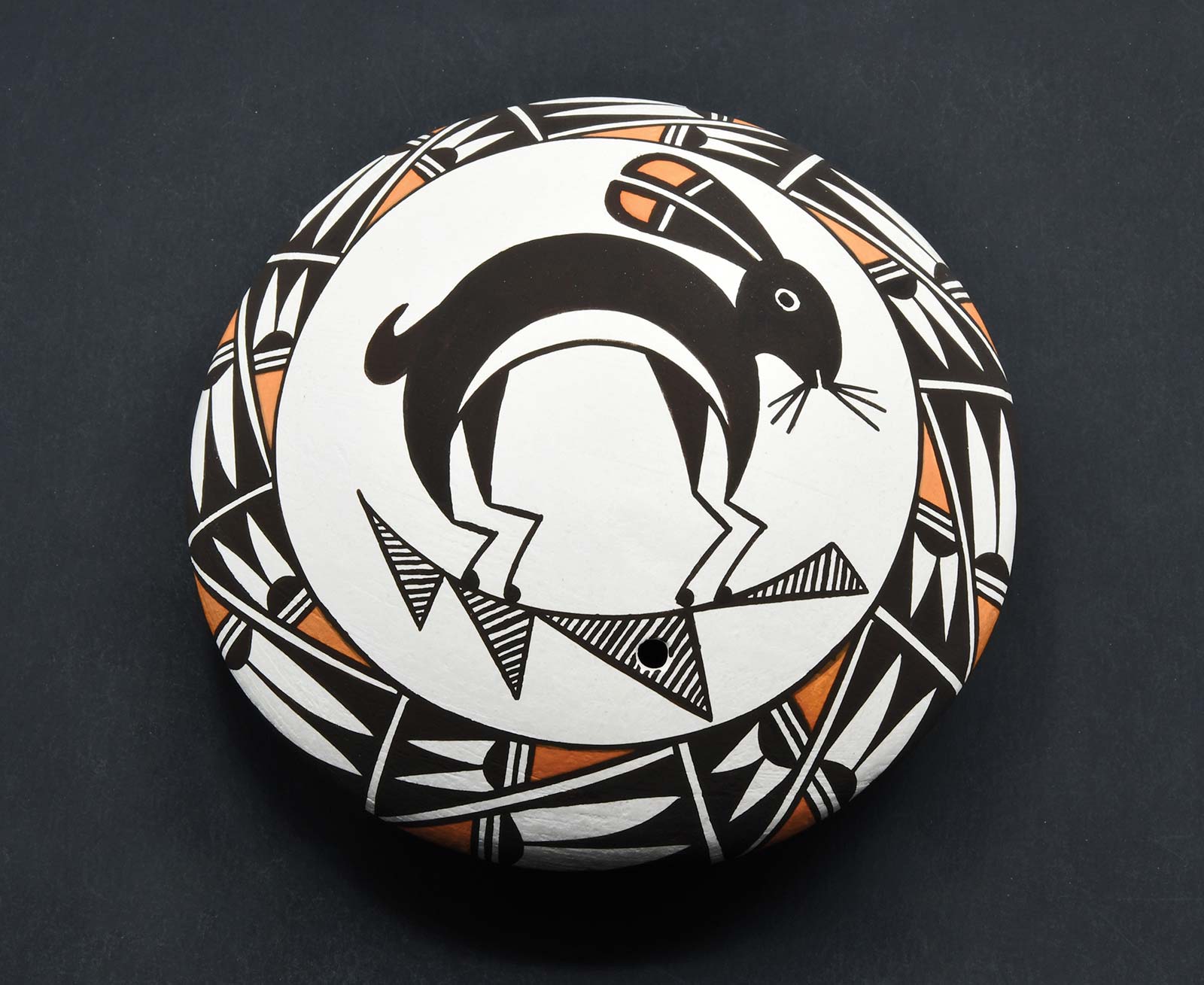
Figure 6: Sharon Lewis (Acoma Pueblo), polychrome seed pot with Mimbres-style rabbit, 2026
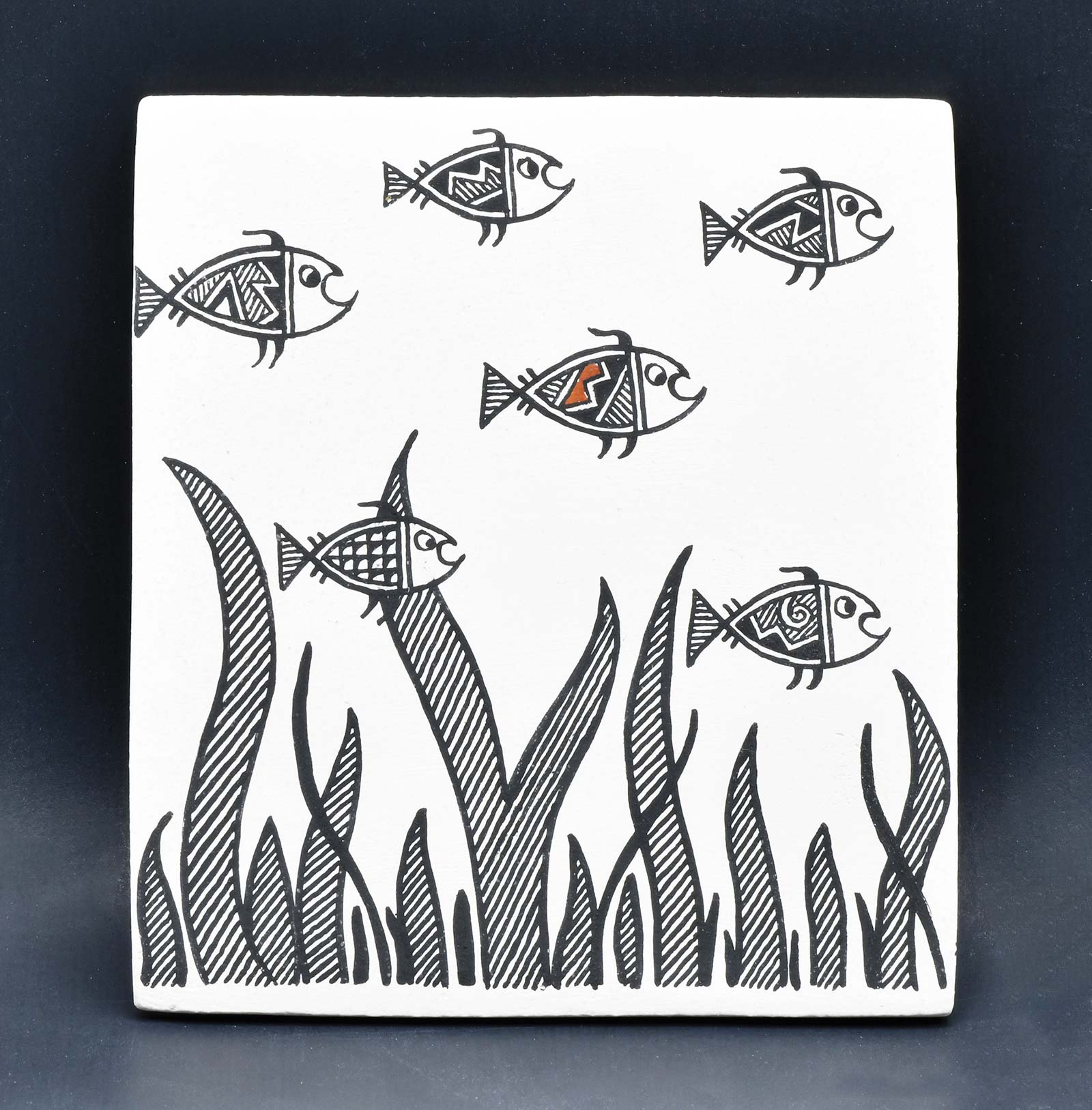
Figure 7: LaDonna Victoriano (Acoma Pueblo), Spring Break, 2026, black-on-white plaque
A number of Acoma potters retain traditional designs while adding imagery that acknowledges the humorous side of today’s popular culture. LaDonna Victoriano subscribes to this duality. She’s made polychrome jars and bowls since 1990 and brings a sense of humor to her creation process. At a recent Indian arts market she displayed miniature skateboards and an artistic plaque with fish titled Spring Break, a bit of a poke at an annual social ritual.
Another artist, Priscilla Torivio, collaborates with her husband Jim, and often signs her work as “P. Jim.” Her pieces reflect the traditional canon of black on white and polychrome compositions. But she has also developed an enjoyable sideline of small figurines that appear for sale alongside her classic pots, bowls and seed pots. This writer is one of her fans and remembers well the moment this black on white anthropomorphized bunny in a loincloth called to her from her artist’s booth at a market in Phoenix. Acoma figurines like this one demonstrate how well made whimsy can go right to the heart.
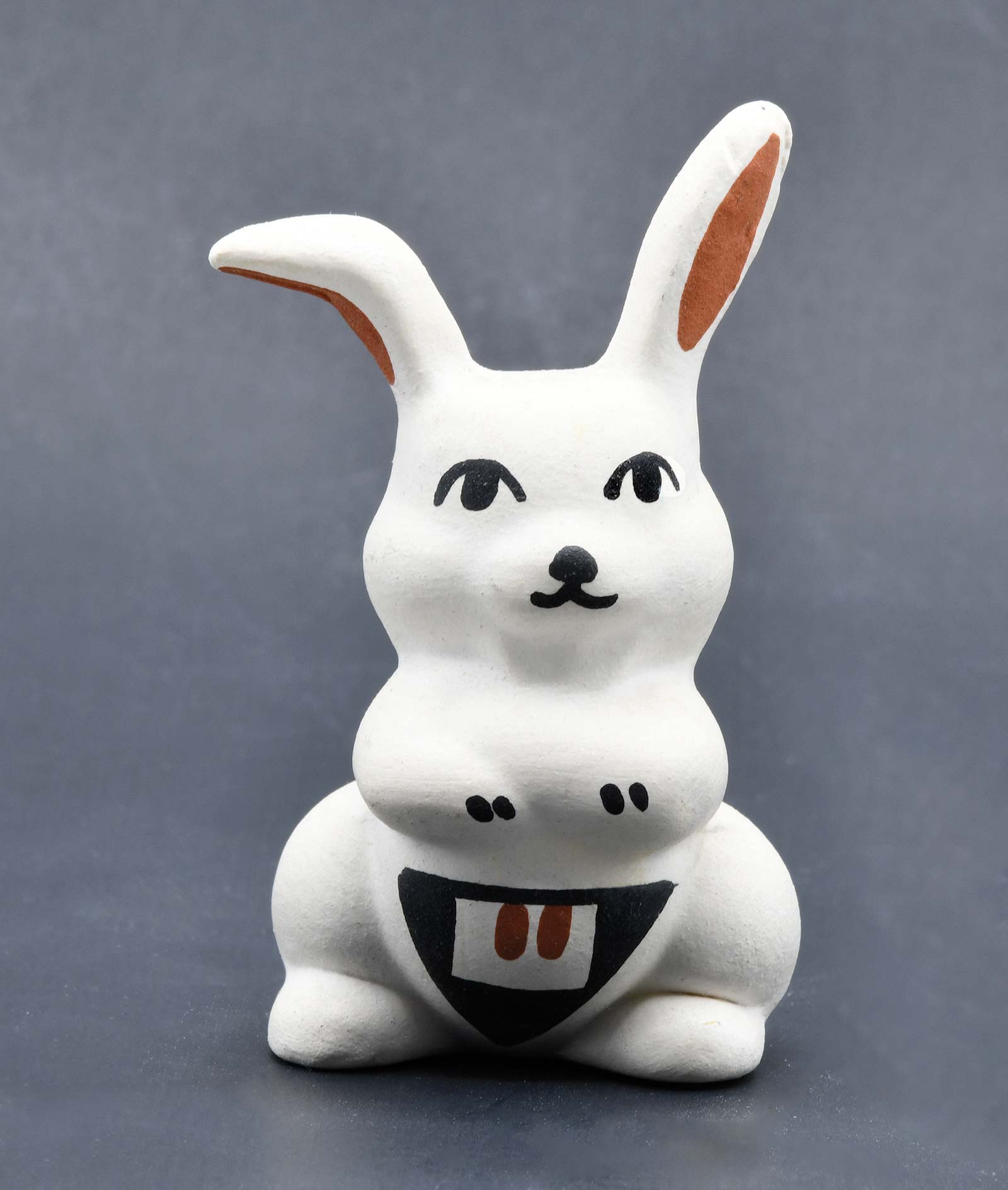
Figure 8: Priscilla Torivio (signed P. Jim) (Acoma Pueblo), miniature molded white rabbit figurine with loincloth, 2019
All these pieces succeed because they come from a disciplined cultural tradition and construction knowledge joined to a personal artistic vision. The fact that Acoma potters sign their work with the added name of their pueblo signifies how art and community are closely tied together. In recent years, the pueblo has developed an impressive ground-level visitor center and museum that tells the story of their survival and creativity. This, along with a ground-level courtyard, makes Acoma an attractive and worthy destination. As always, check for hours of operation. —
Paula A. Baxter, a former curator and adjunct professor from New York, is an independent design historian living in Scottsdale, Arizona. Her photographer is longtime husband Barry Katzen. Her sixth book, Navajo and Pueblo Jewelry Design: 1870 to 1945, was published in fall 2022. She’s working on a sequel which will cover the years 1946 to 2025, and will include Indigenous jewelers who aren’t Navajo or pueblo but live and work in the American Southwest.
Powered by Froala Editor


