Standing at one end of Western Spirit: Scottsdale’s Museum of the West’s new Southwestern pottery installation allows visitors to look back at 52 of the finest examples of Indigenous ceramics anywhere in the world. To look back in time a thousand years.
“The opportunity with Fire of Ages was to tell a longer story and a more inclusive one,” Andrew Patrick Nelson, Western Spirit’s chief curator, explains of the museum’s updated Southwestern Indigenous pottery exhibition.
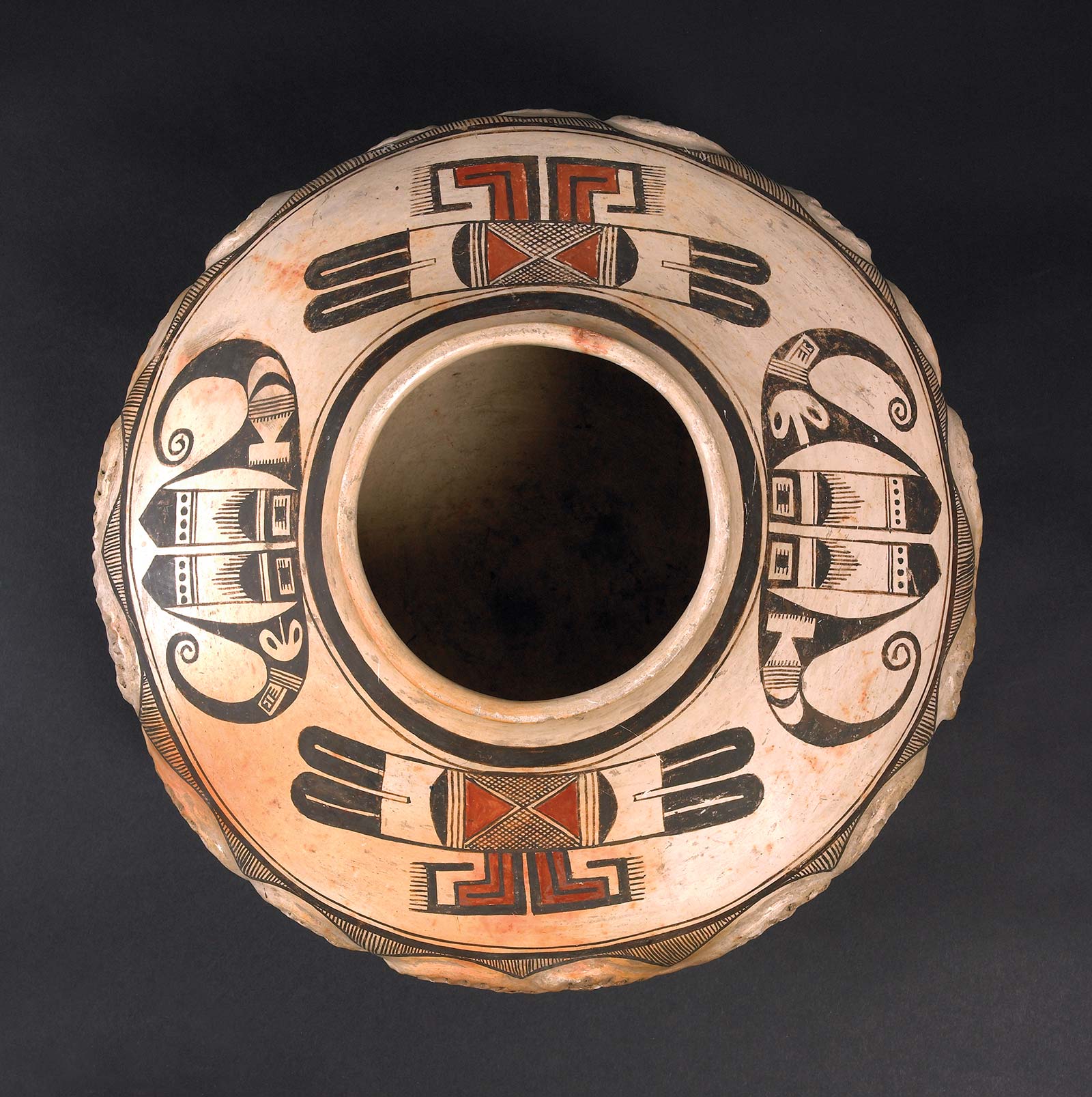
Nampeyo of Hano (Hopi-Tewa, 1859-1942), Polychrome Storage Jar with Applique, ca. 1905, clay, 9½ x 15 in. The Allan and Judith Cooke Collection.
The refresh was made possible thanks to a $12 million, 12,000-square-foot expansion highlighted by the new Louis Sands IV Center where the pottery is on view. It was also made possible thanks to a recent donation.
“One of the wonderful things that can happen when you’re in a museum, as we were developing this new exhibition, Edward Lesser, who has a large, diverse collection of Western and American art and artifacts, came to us with some of his pottery pieces,” Nelson says. “He had Ancestral Puebloan pieces, Hohokam pieces. He also had more contemporary pieces that he had been collecting from different traditions, different cultures, so suddenly we were looking at the opportunity to tell a story that was almost 1,000 years old within a within a single gallery.”
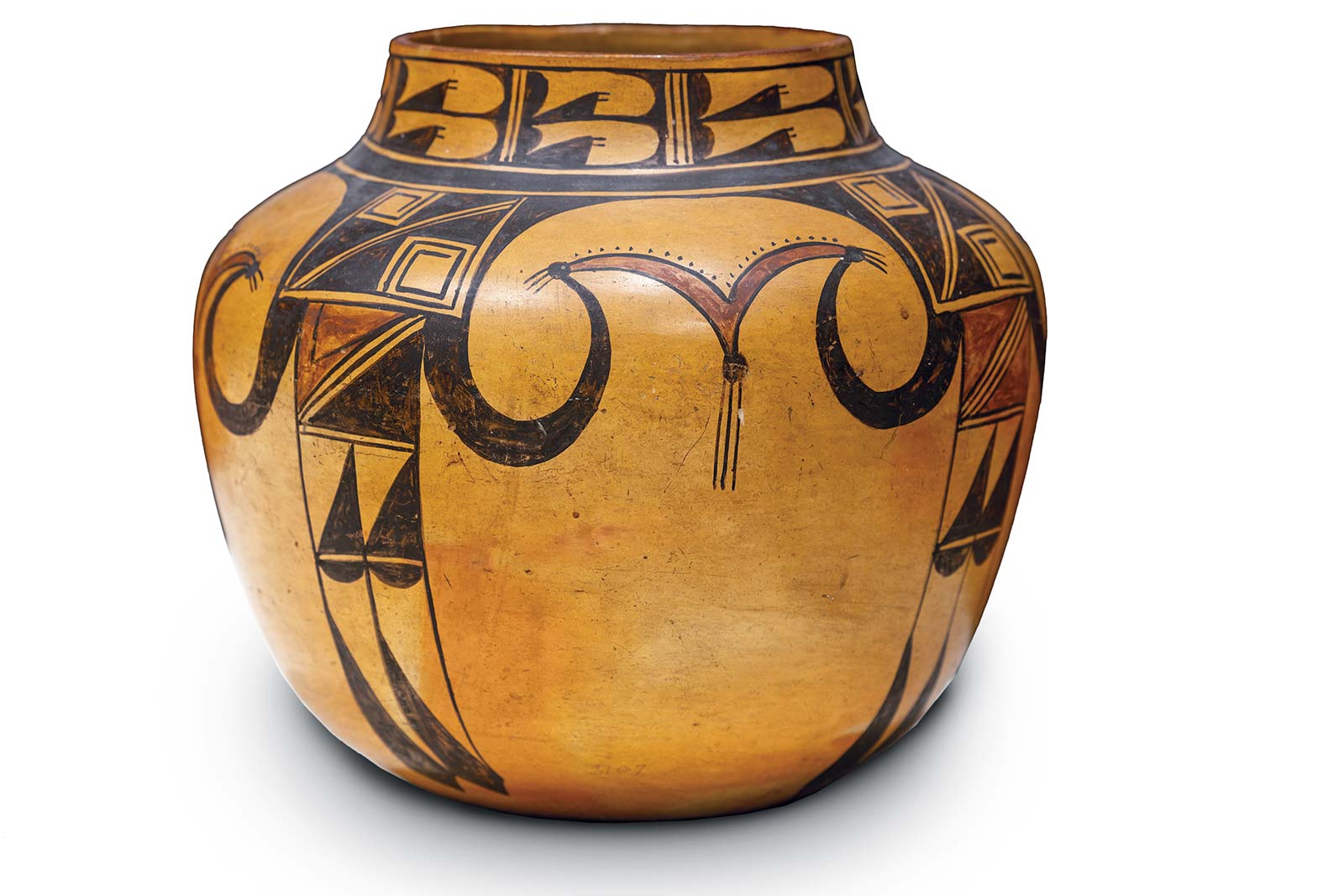
Nampeyo of Hano (Hopi-Tewa, 1859-1942), Alcatraz Jar, clay, 12¾ x 14 in. The Allan and Judith Cooke Collection.
Lesser’s pots joined those from the two foundational collections Western Spirit based its initial presentation on: the Allan and Judith Cooke Collection, and the Arthur and Linda Pelberg Family Collection.
“Dr. Cook was interested in modern art and by chance, on a visit to the Southwest, began to encounter this ceramics tradition,” Nelson explains. “He saw something that was familiar to him, but also different in a way that he found fascinating. That story resonates with a lot of people. When encountering new art forms, there’s something similar that says something about a shared humanity, the idea that we can solve problems through art in similar ways, in very disparate circumstances across time and space.”
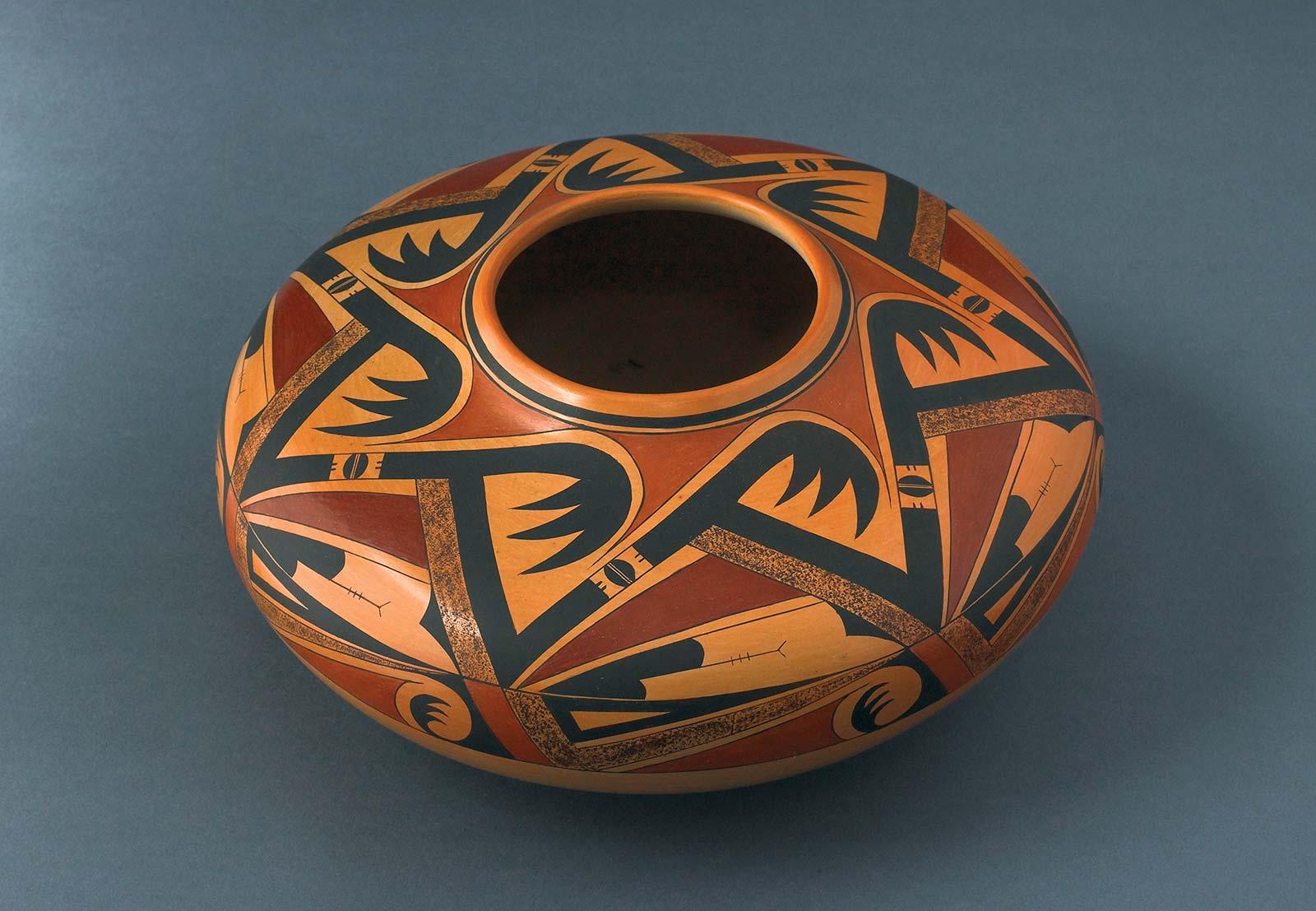
Camille Hisi Quotskuyva Nampeyo (Hopi-Tewa), Seven Star Pattern Jar, 1992, clay, 5½ x 12¾ in. The Allan and Judith Cooke Collection.
Cook’s collection of Hopi pottery was especially strong in the work of Nampeyo of Hano and her descendants. These pieces continue to be a highlight. He also acquired historic pieces, some going back 500 years.
More recently, another significant pottery collection was donated to Western Spirit.
“Dr. Pelberg came to Arizona as a physician in the 1970s working on the Hopi and Navajo reservations, and he began to acquire pottery as an extension of the relationships he was forging with these people; it starts with a single pot,” Nelson says. “His collection is more contemporary [than Cook’s], very strong from the ’70s onward [and] more expansive. There’s Hopi, but also some Zuni [and] some pueblo pieces.”
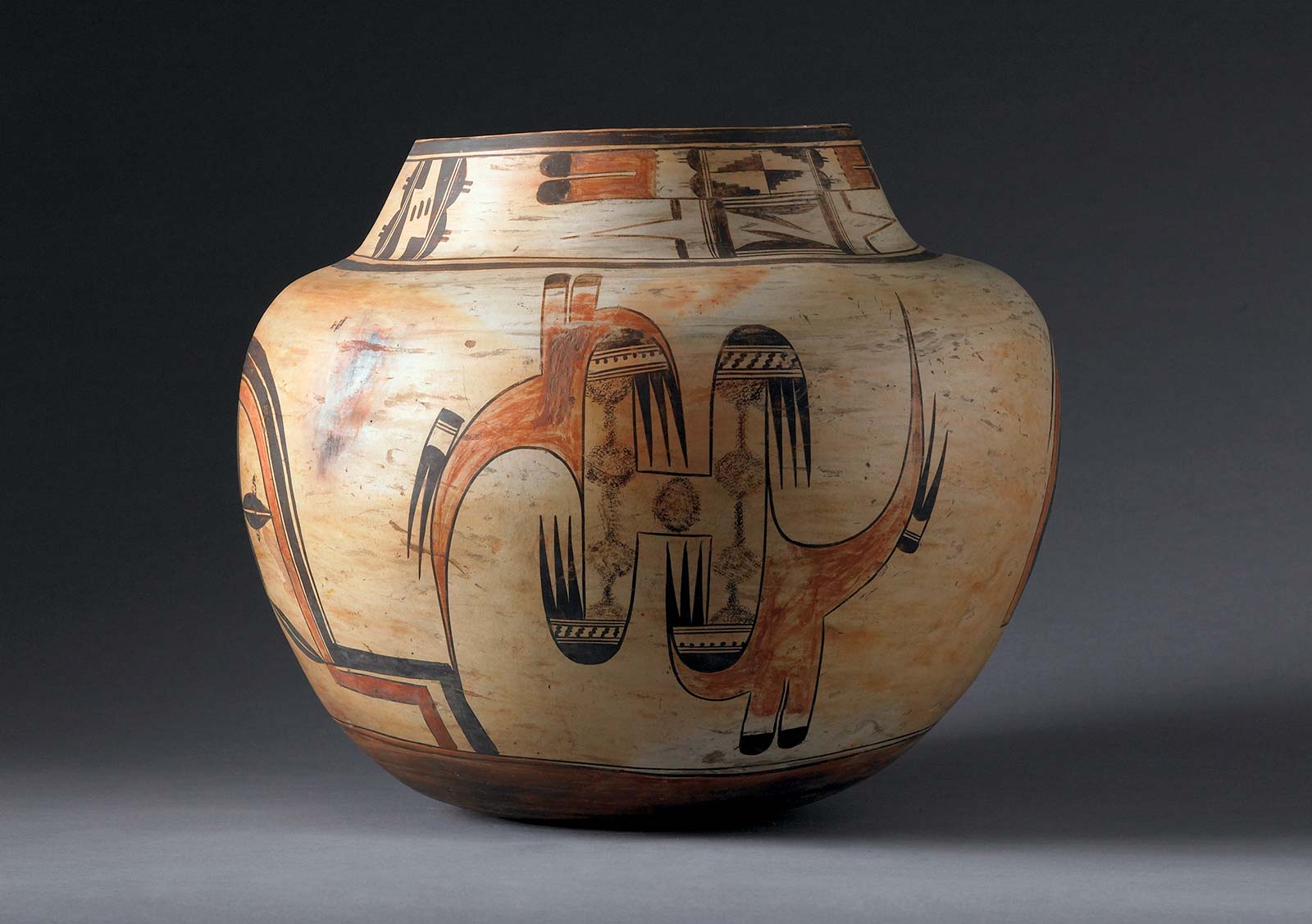
Nampeyo of Hano (Hopi-Tewa, 1859-1942), Storage Jar, ca. 1900, clay, 11¾ x 13¾ in. The Allan and Judith Cooke Collection.
Together, the three collections allow Western Spirit to tell both a broader and deeper story, more contemporary, with a greater variety. Doing so mirrors the museum’s overarching goal for the entire expansion project.
“We want to be a museum that tells the story of the American West through art and culture, but inclusively,” Nelson says. “If you look at the four exhibitions in the Sands Center—where we have the Eddie Basha Collection, one of the world’s foremost formerly private collections of Western American and American Indian art, then we’ve got galleries of American Indian jewelry, Western bronzes, and then our important collection of Indigenous ceramics from the Southwest—it gives folks a sense of what we can be. The West isn’t one story, its many stories, and we can tell those stories through art.”
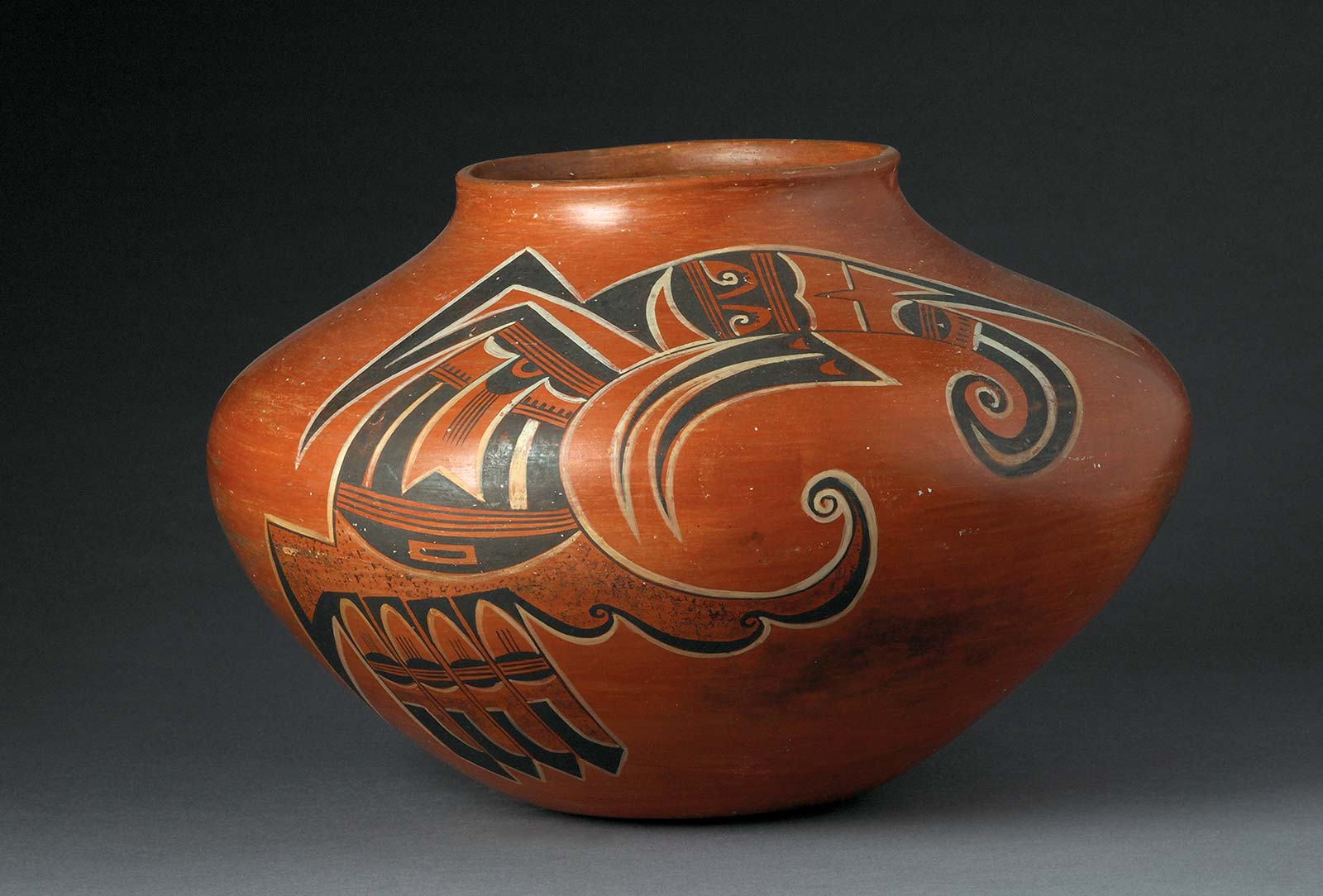
Garnet Pavatea (Hopi-Tewa, 1915-1981), Black on Red Jar, ca. 1940, clay, 8¾ x 14 in. The Allan and Judith Cooke Collection.
For its presentation of pottery, Western Spirit has cleverly reinforced the unique place these artworks come from by displaying items on pedestals recalling mesas.
“You can stand at one end and look back literally one thousand years into the past, and as you walk along you can actually see it, you can see the introduction of the Sikyatki tradition, you can see how Nampeyo is adapting some of those colors and forms, the avian motifs. You can see what her descendants are doing,” Nelson says. “Then you can see how other families are taking things in very different directions. How Joy Navasie and Dolly Joe Navasie have a very different approach to this. Then you get into some of the pueblo pottery with Maria Martinez.”
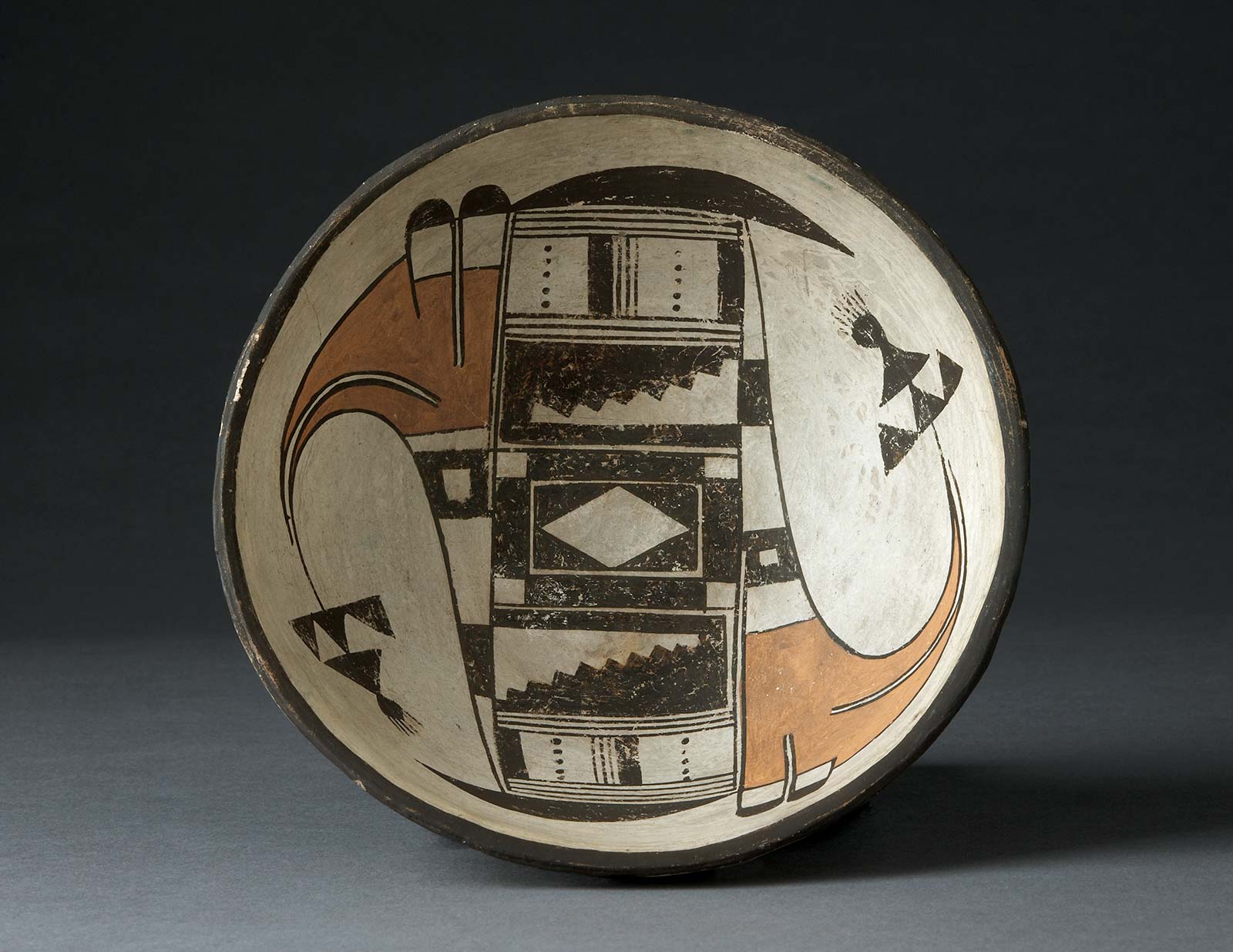
Daisy Hooee Nampeyo (Hopi-Tewa, 1906-1994), Bowl, 1930-1940, clay, 3 x 8½ in. The Allan and Judith Cooke Collection.
Nampeyo of Hano
While Western Spirit’s presentation of Southwestern pottery has diversified, Nampeyo maintains her starring role.
“We’re all skeptical—and rightly—about great man theories of history, but Nampeyo is one of the greatest American artists. She is in a time and a place and has a skill set where she has access to literal remnants of the past at a particular moment, and when she looks into the past, she doesn’t just see the past, she sees the future,” Nelson says. “When she’s seeing these shards of the Sikyatki tradition, she sees how those can be incorporated. She fundamentally transforms the pot making tradition and turns it into one of the great fine art traditions in American history.”
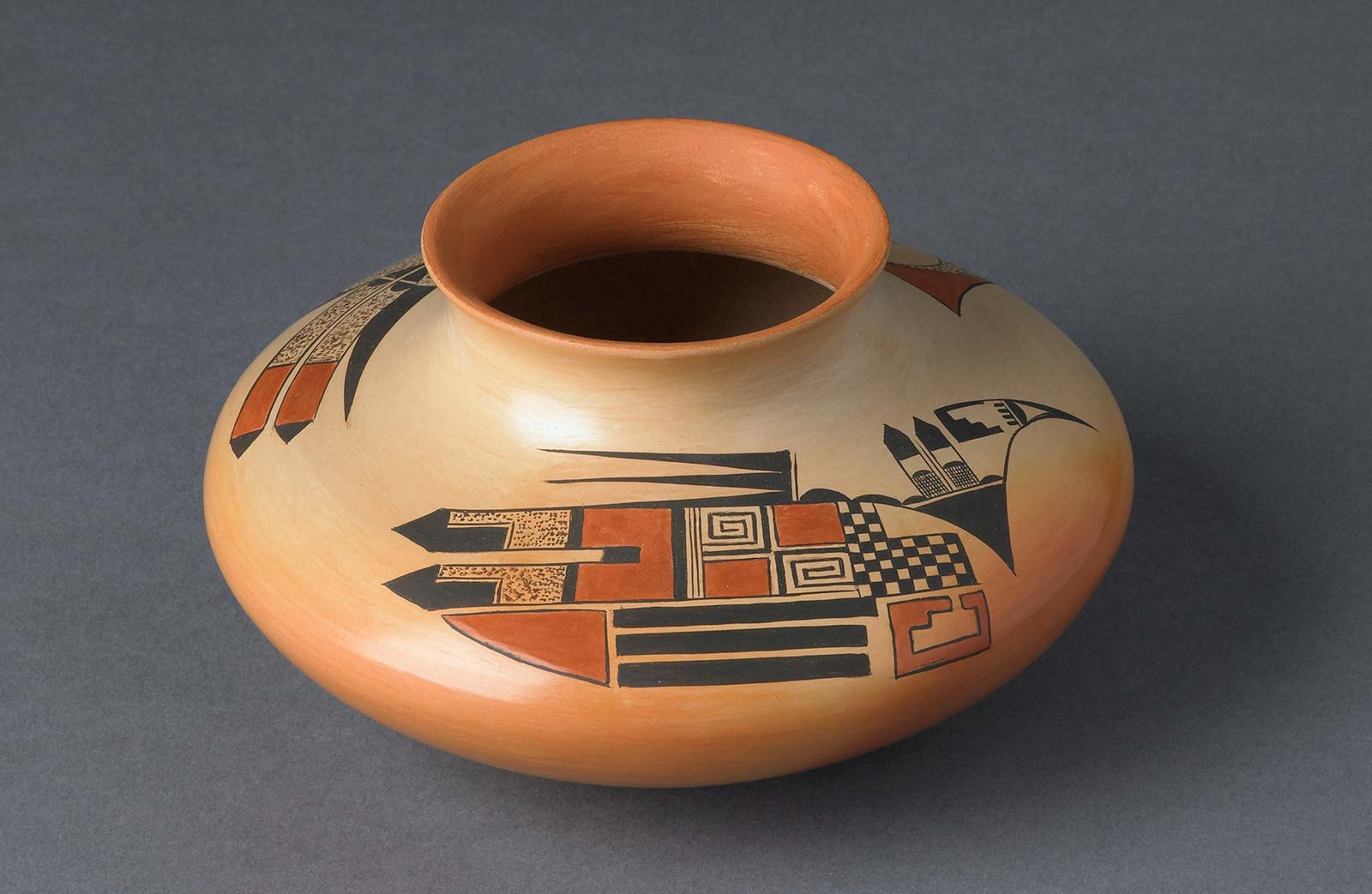
Dextra Quotskuyva Nampeyo (Hopi, 1928-2019), Jar, 1991, clay, 4 x 6¾ in. The Allan and Judith Cooke Collection.
Western Spirit wants visitors to understand Southwestern pottery as a distinct American art form not reliant on other creative contexts. There aren’t even paintings on the walls. This is a noticeable departure from the museum’s previous presentation, which was titled Canvas of Clay, canvas being incorporated to help guests draw artistic parallels between pots and paintings.
“We called it Canvas of Clay, which was a helpful framing, but some of these pieces were being made before canvas was being used in the European context,” Nelson says. “What we’ve tried to do is shift to look at the art in and of itself as its own tradition. Someone like Nampeyo is not a significant artist because of the way that her work may or may not remind us of other traditions.”
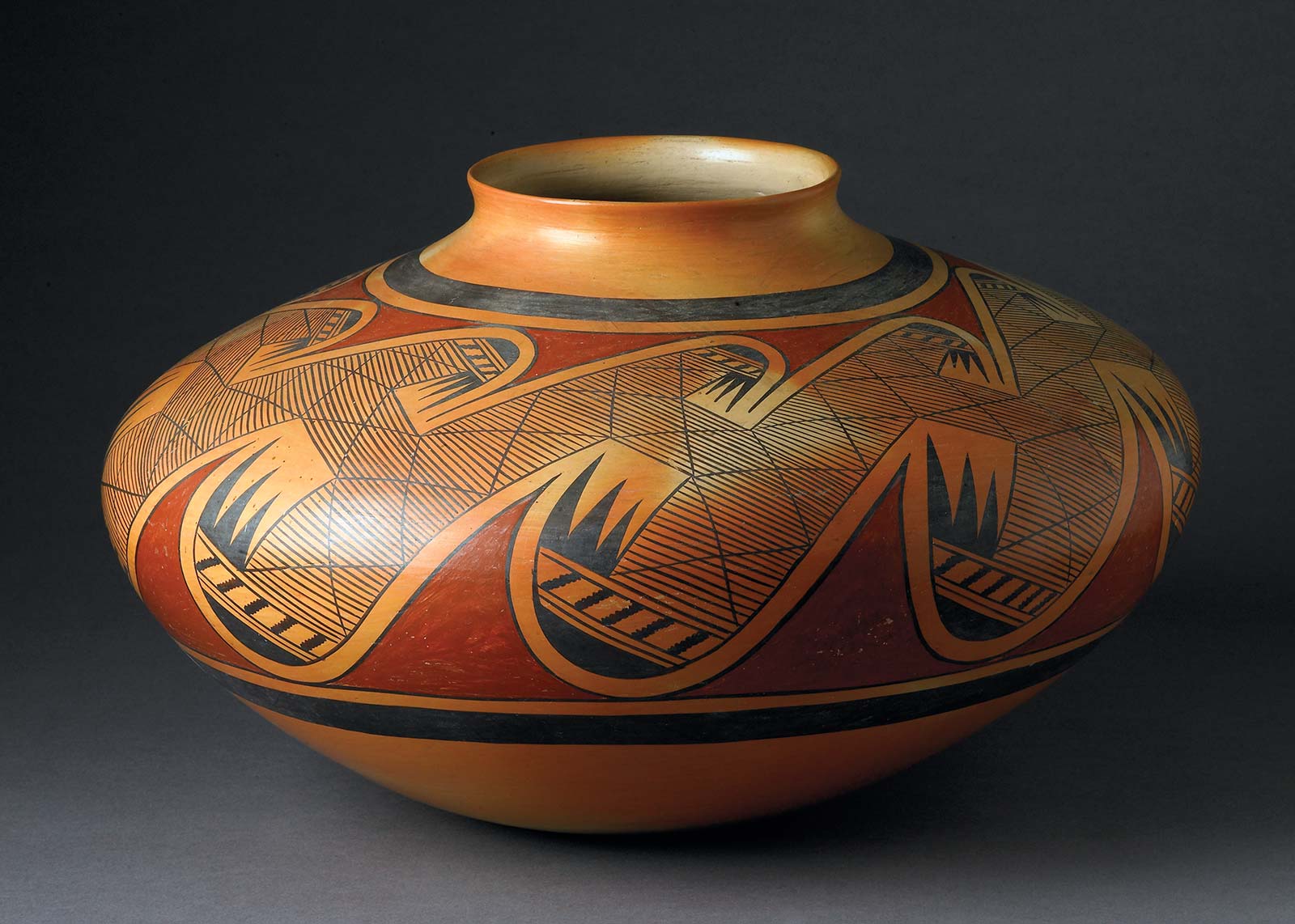
Fannie Nampeyo (Hopi, 1900-1987), Migration Pattern Jar, 1967, clay, 9¾ x 16¼ in. The Allan and Judith Cooke Collection.
The middle “mesa” pedestal places Nampeyo artworks on top with the lower platform featuring descendants up through her great-great-grandson Steve Lucas, reinforcing the constant yet evolving continuum of Southwestern pottery.
Gratefully, because the pedestals’ design distances objects from visitors, the pots are no longer presented in cases. The open-air environment allows items to be more easily exchanged, freshening the display; Canvas of Clay was static.
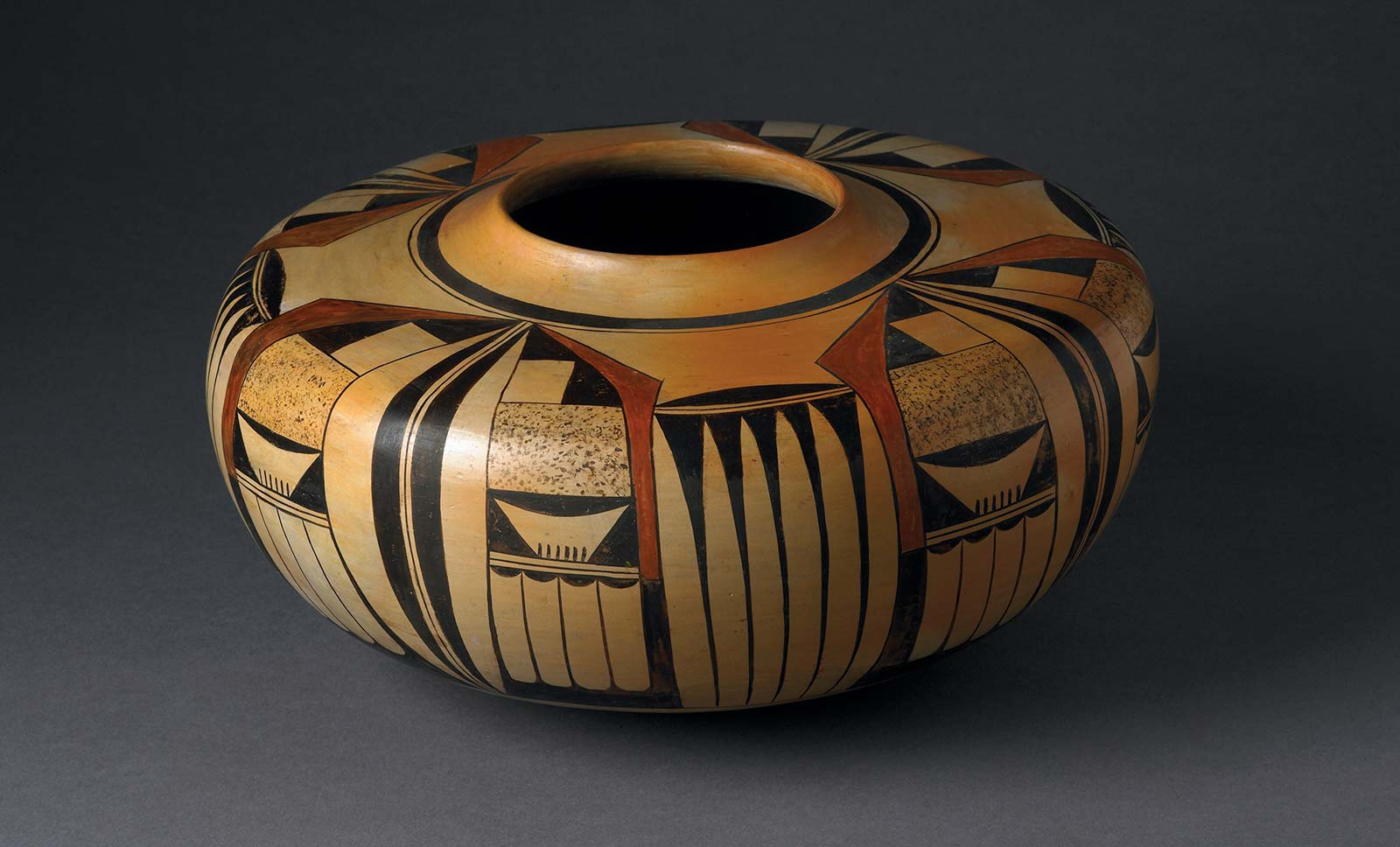
Dextra Quotskuyva Nampeyo (Hopi, 1928-2019), Pomo Basket-Shaped Jar, 1966, clay, 5¾ x 11½ in. The Allan and Judith Cooke Collection.
More than that, the pots are now allowed to breathe. Their voices no longer muffled by Plexiglas. The difference is palpable.
These are not mere art objects. They never were.
“We’re talking about a tradition that began as purely functional items; these were made for carrying water, storing food, seeds and so on, and yet these are pieces of remarkable beauty where people still took the time to decorate them in ways that were meaningful to them,” Nelson says. “That is a reminder that there are some things that transcend time, space, race, class, creed, religion, and that’s our fundamental longing to be around beautiful things. To look at these pieces, some of them a thousand years old, and to see the attention taken to that kind of detail, I would hope people would come away with that and hopefully be inspired.”
Clay, Silver, Turquoise and Bronze
Western Spirit integrates its display of pottery on the main gallery level alongside updated presentations of sculpture and American Indian jewelry. The mediums are not walled off from one another. Visitors aren’t corralled into separate rooms then marched down linear rows. Guests meander, as if navigating a landscape. A three-dimensional landscape of three-dimensional art.
Artworks emerging from the earth.
“In the staging, we’re trying to remind people about the materiality that, ultimately, this is clay. It comes from the earth,” the curator says. “The framing is that clay is one of the most democratic of media. It requires no imported tools. You don’t need a forge. You don’t need to kiln. You just need your hands, water and time.”
And fire.
Fire of ages. —
On View Now
Fire of Ages
Western Spirit: Scottsdale’s Museum of the West 3830 N. Marshall Way, Scottsdale, AZ 85251 (480) 686-9539, www.westernspirit.org
Powered by Froala Editor


