Harlan Reano and Lisa Holt met in Albuquerque in the late 1990s. It was several months before they realized they were from the neighboring communities of Santo Domingo Pueblo (Kewa Pueblo) and Cochiti Pueblo, respectively. In addition to sharing the Keresan language, and other cultural and historical ties, both pueblos are renowned for its distinctive pottery. Santo Domingo (Kewa) pottery—often in the form of jars, ollas and bowls—is characterized by bold, black geometric designs and a strict adherence to traditional techniques. The Cochiti people are most strongly associated with their Storyteller figures and other expressive clay figurines.
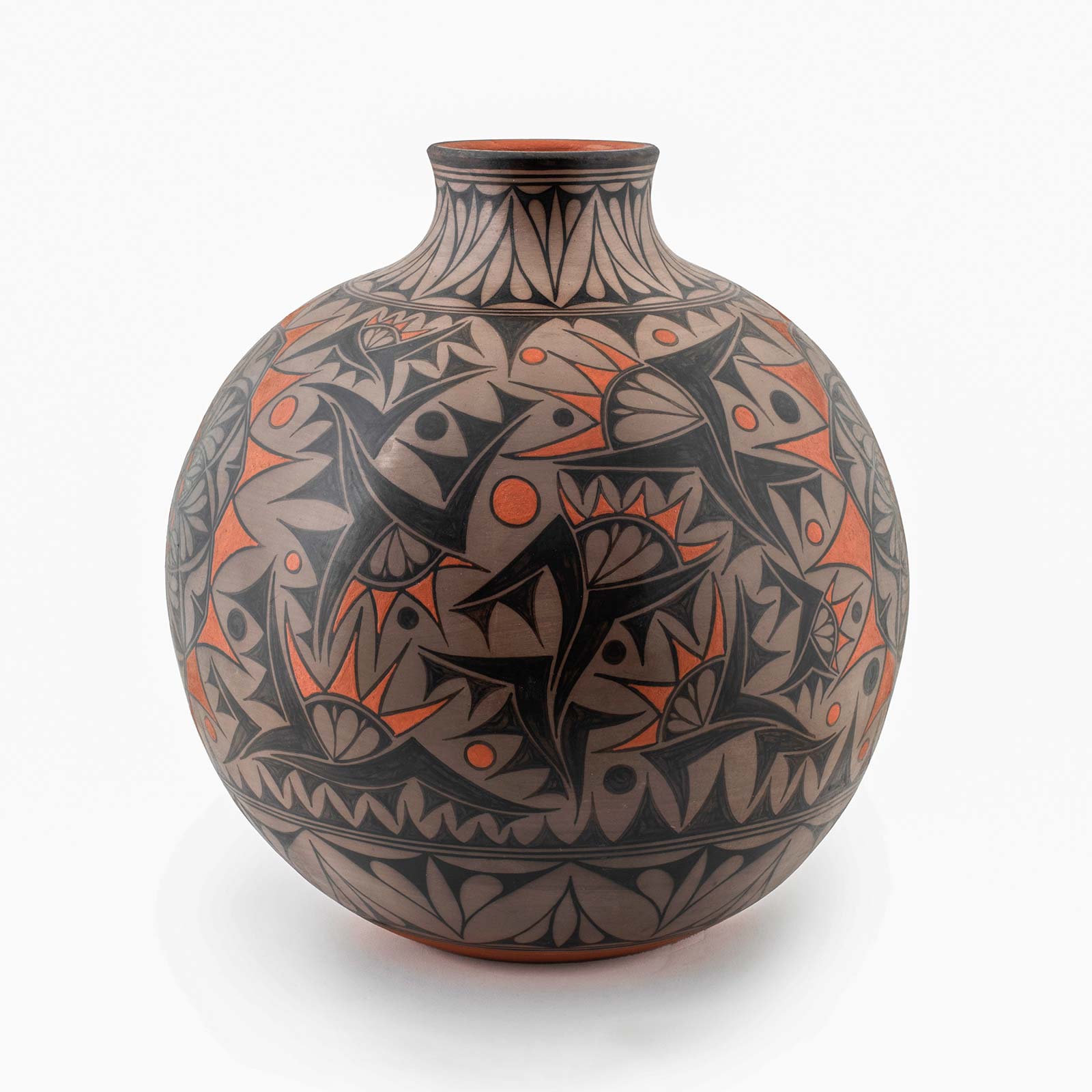
Lisa Holt (Cochiti Pueblo) and Harlan Reano (Santo Domingo Pueblo), Wildflower Jar, natural clay with pigments, 13½ x 14 in.
Reano wasn’t steeped in the Kewa pottery tradition; he comes from a family of jewelry makers and, while he helped his elders as a boy, Reano was more creatively inclined toward drawing and painting. It was through Holt, part of a long line of notable Cochiti potters, that Reano was introduced to the art form. Holt learned to make pottery from her mother, Inez Ortiz. She is also a niece of Virgil Ortiz and Janice Ortiz, and a granddaughter of Seferina Ortiz.
“Lisa’s family is a big influence, if not one of the primary influences, on both her and I,” says Reano. “Lisa’s mom was the first one to sit us down and show us how to do pottery. We began helping her with some of her pieces and gradually began building our own figures and smaller pots. Lisa’s aunts and uncle have always been very supportive and inspirational for us as well, as well as the rest of her family.”
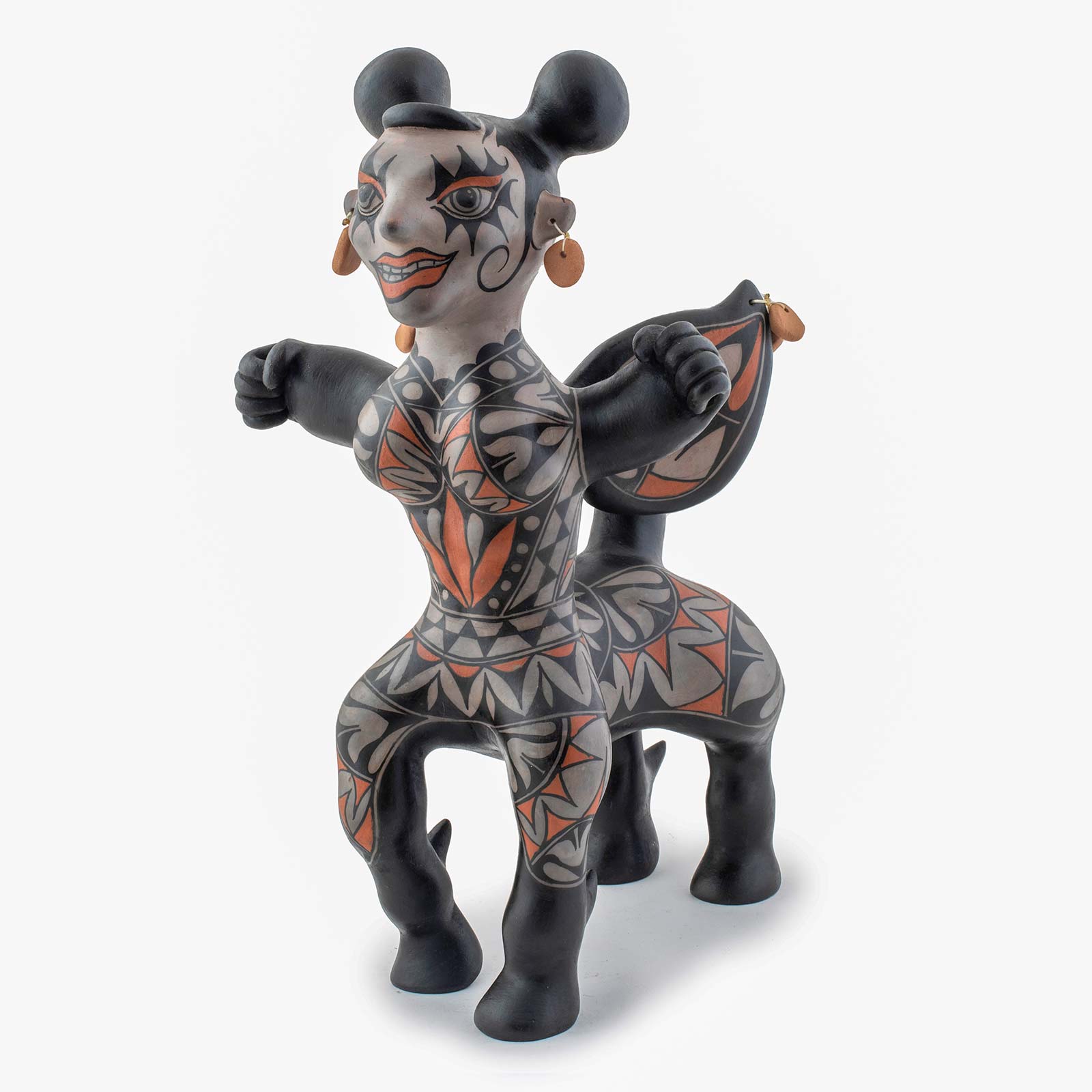
Lisa Holt (Cochiti Pueblo) and Harlan Reano (Santo Domingo Pueblo), Female Centaur, natural clay with pigments, 15¾ x 9½ in.
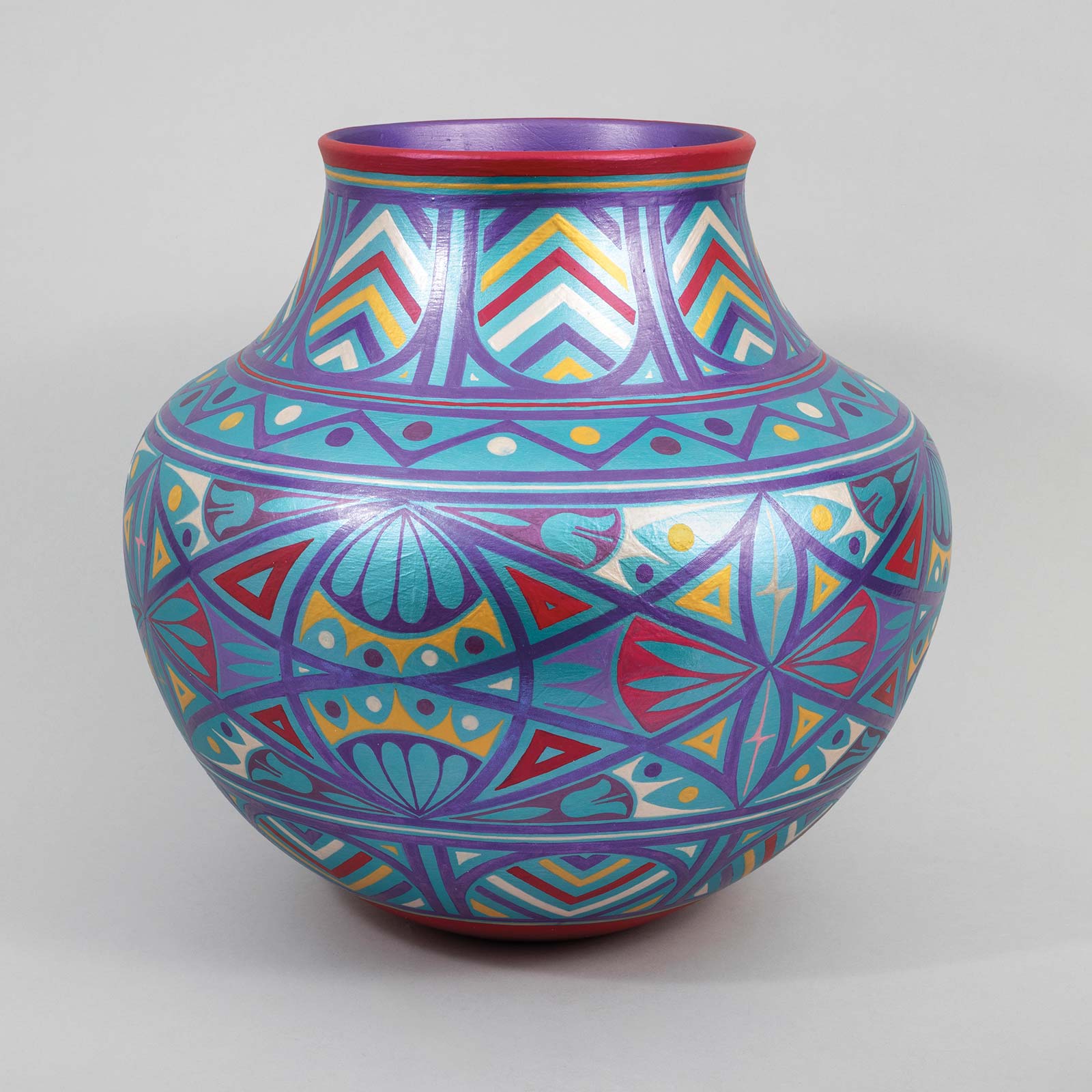
Lisa Holt (Cochiti Pueblo) and Harlan Reano (Santo Domingo Pueblo), Untitled Pot, natural clay with acrylic paint, 14¼ x 15 in.
When the two started collaborating in 1999, they received swift recognition for their hand-coiled vessels and sculptural forms that are innovative and contemporary, while maintaining the integrity of tradition. For many years, Holt would build the forms and Reano would design and paint them but over time, Reano started doing more of the building and, for the past five years or so, has been working independently for the most part. He continues to sign his work with Holt’s name in honor of all he gleaned from her and her family, including knowledge and inspiration that continue to inform his pottery to this day.
“Whether she is working with me or not right now, Lisa is always, always, in the back of mind,” he says.
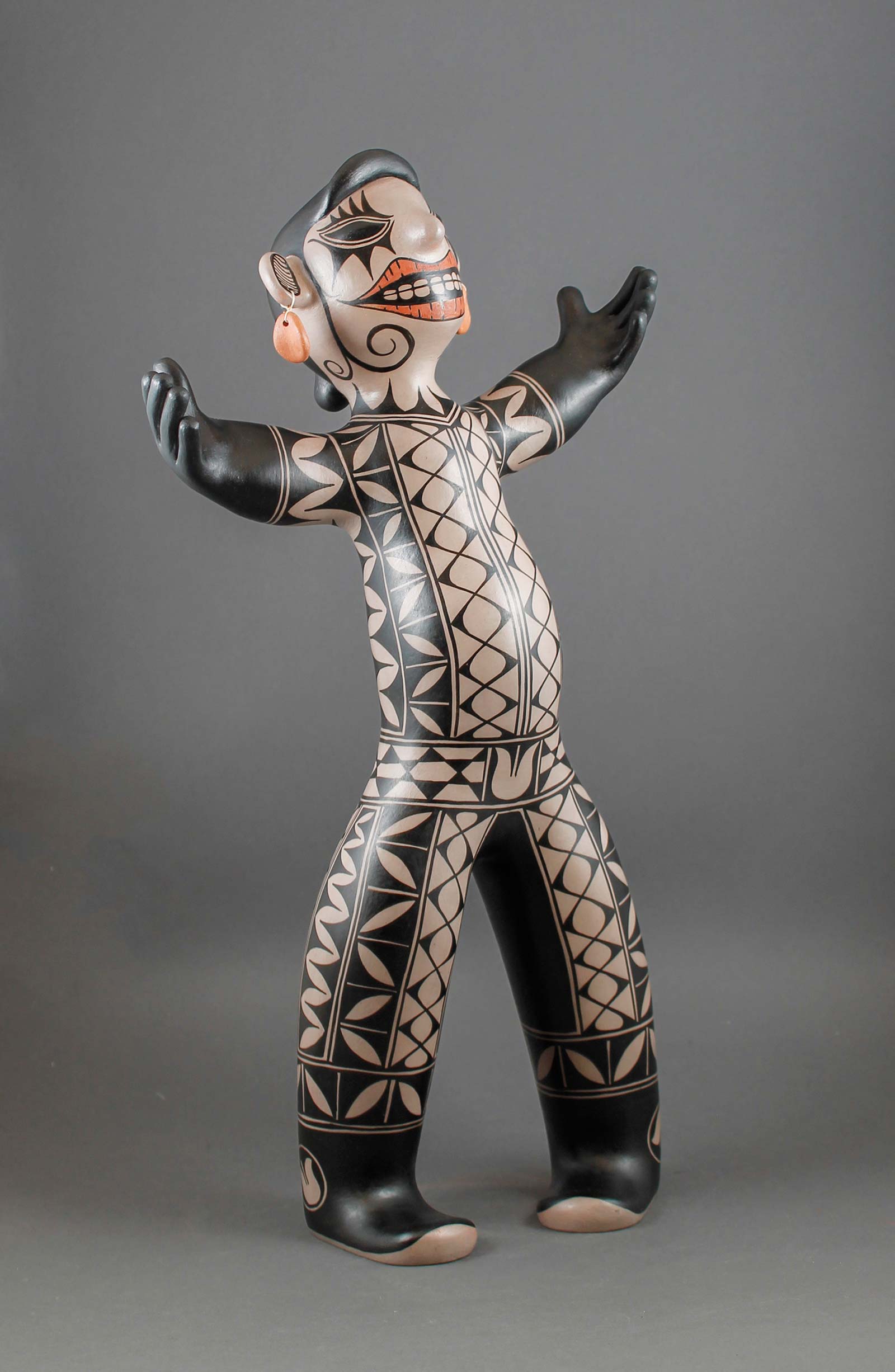
Lisa Holt (Cochiti Pueblo) and Harlan Reano (Santo Domingo Pueblo), Untitled, natural clay with pigments, 20¼ x 10 ¾ x 4¼ in.
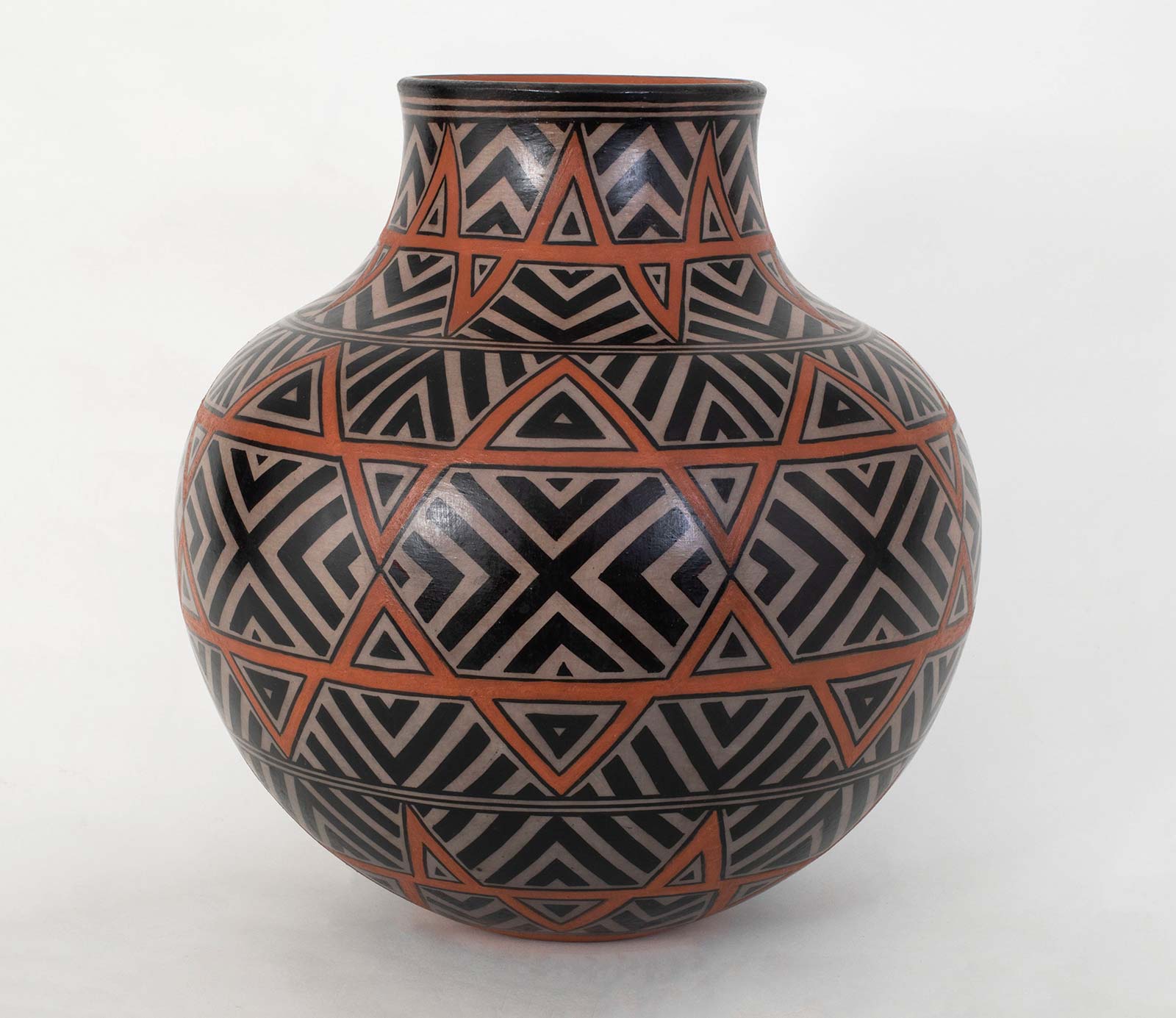
Lisa Holt (Cochiti Pueblo) and Harlan Reano (Santo Domingo Pueblo), Star Lines, natural clay with pigments, 11¼ x 10½ in.
Their pottery is unique for its combination of design elements from both pueblo traditions—the largely abstract Santo Domingo style with the floral and naturalistic imagery used by the Cochiti, while staying true to traditional forms, techniques and media. But in new work, Reano is branching out in a new direction in some of his pieces, using acrylics for a color palette not possible with earth-based pigments, and adding “little horns” or “flames” to give them a bit more flair.
“More recently, I’ve been experimenting with acrylic paint,” says Reano. “Giving the traditional designs a little pop, maybe some new life. And seeing how the traditional designs translate in color. I was so used to working in black and white that translating the colors was a little difficult and challenging at times, but also fun and exciting. I’m red/green colorblind so sometimes my colors are a little off, but I also think that works too. I often ask my daughters, friends and family to help me with colors, but most of the time, I just throw colors that I like together and see how that works.”
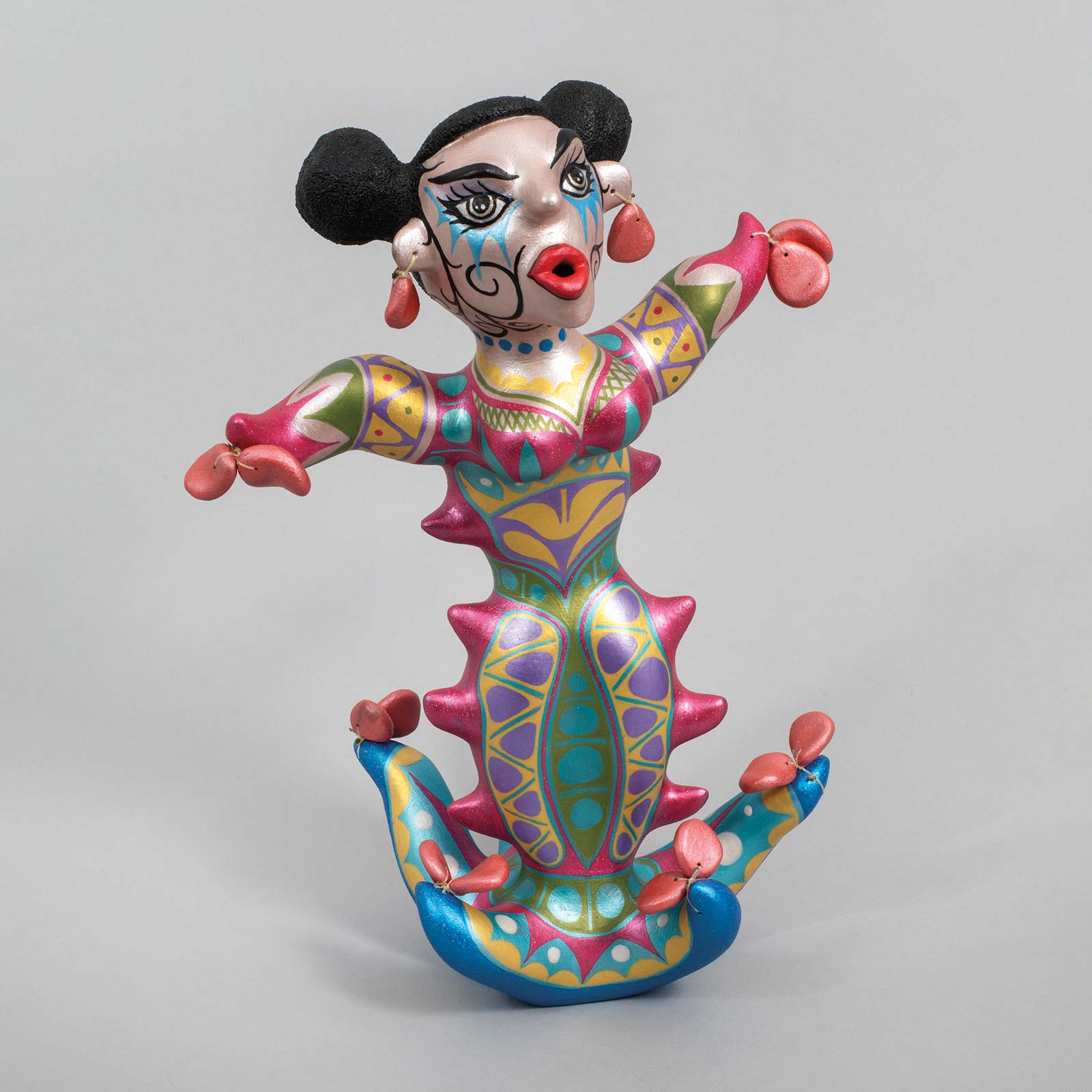
Lisa Holt (Cochiti Pueblo) and Harlan Reano (Santo Domingo Pueblo), Trinity, natural clay with acrylic paint, 13 x 9 x 6 in.
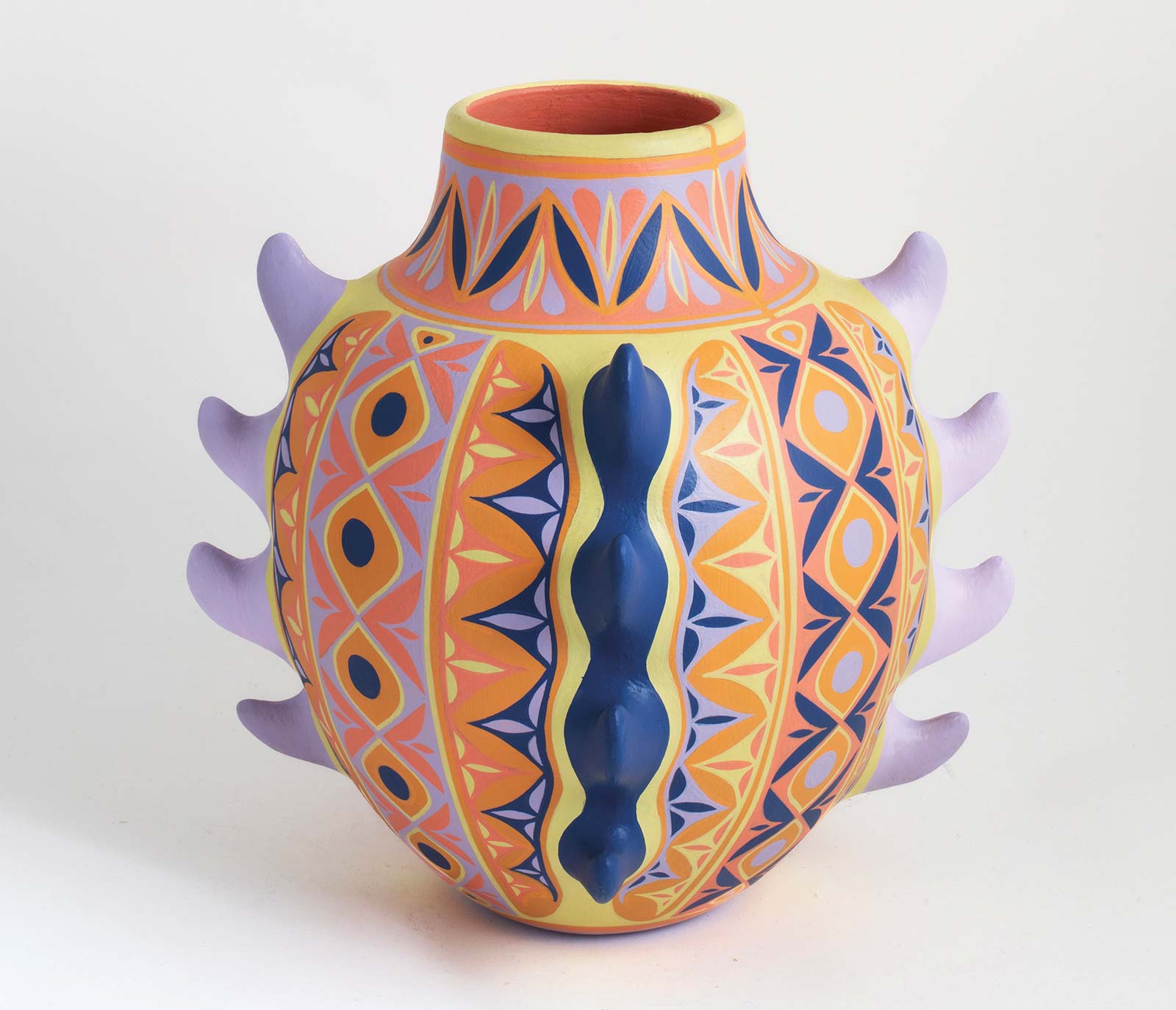
Lisa Holt (Cochiti Pueblo) and Harlan Reano (Santo Domingo Pueblo), Geometric Pot, natural clay with acrylic paint, 9½ x 9 in.
Images courtesy Blue Rain Gallery
If the positive response from collectors, as well as the encouragement from his peers, are indicators, then Reano’s new aesthetic choices are beyond “working.”
Leroy Garcia, owner of Blue Rain Gallery in Santa Fe and Durango, Colorado, has been representing Reano and Holt on and off for 20-plus years. “We’re having a hard time keeping them on the shelves at this point,” he says, adding that one of Reano’s acryclic pieces recently sold to the Smithsonian. “They’re very vibrant, you have such a wider color range than the black, white and red of traditional pigments. With acrylics, you have the rainbow. Audiences are noticing the vibrancy but also that they’re done in a very traditional way. Whenever you can interpret something in a new way and still have the tradition, you have their attention.” —
Powered by Froala Editor


