Native-made rings have grown increasingly creative over the years. While these rings first appeared in the late 19th century, their impressive features surfaced in commercial manufacturers’ trade catalogs by the 1900s and 1910s. This form of design theft sparked Indian arts advocates’ indignation. After 1945, ring construction steadily developed more complex and personalized visual features, including individual hallmarks.
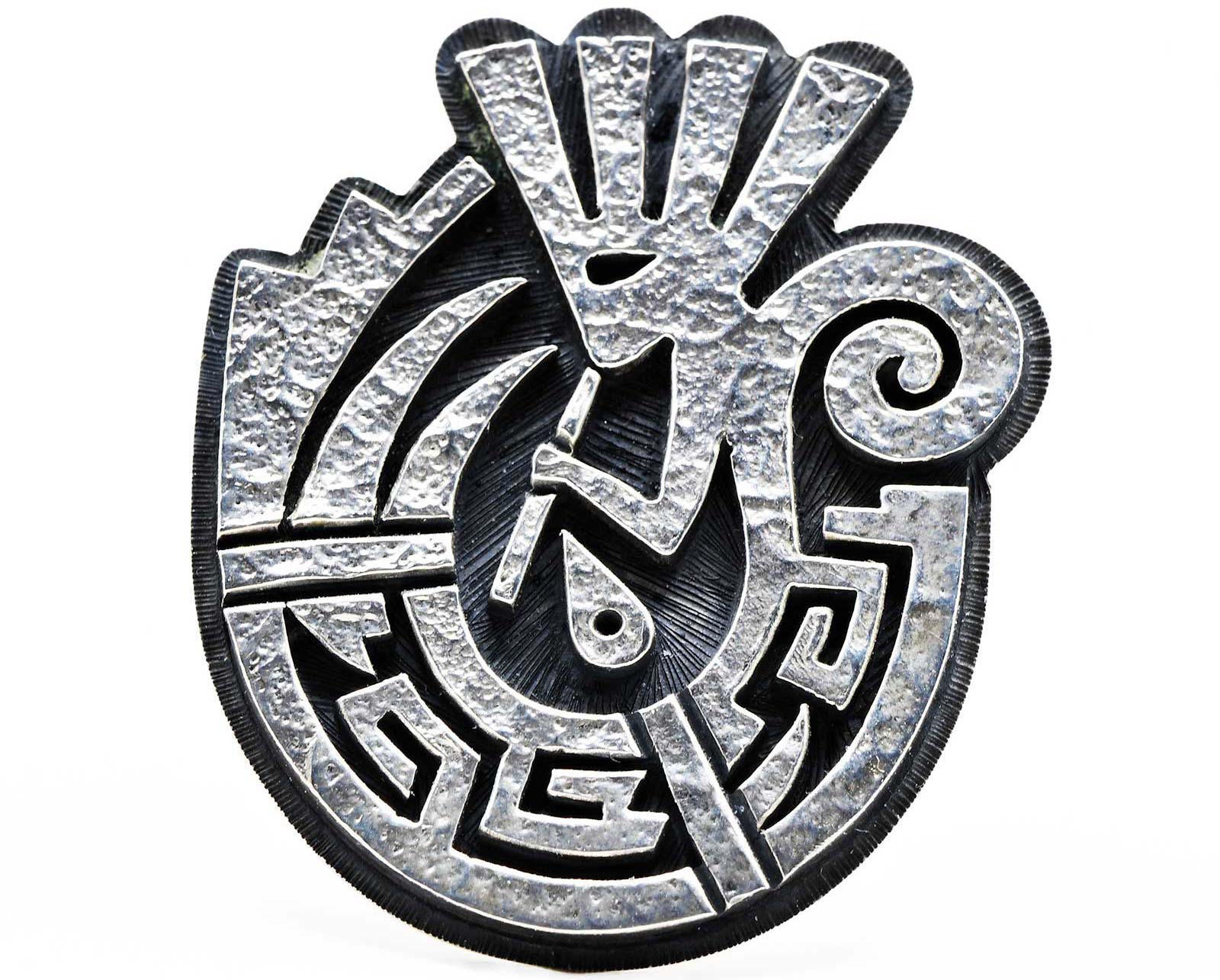
Silver overlay Kokopelli motif ring by Ruben Saufkie, 2025.
Most of the postwar ring forms shaped were bands, signets and shanks holding a central plate on which stones or mosaic inlay were set. By the early 2000s, numerous additional patterns upheld both established and original styles. Rings made by Navajo (Diné) and pueblo jewelers (the two largest groups of active silversmiths) now express a new aesthetic energy.
This vitality springs from a unique individualism in current ring design. Many rings now reflect their maker’s exposure to and training in art history. Even artists who work determinedly in a specific old-style or theme add personal touches to their compositions. What makes rings today so inventive is how they enable new ideas to reanimate older design conventions. Many of today’s artistic rings skillfully bypass the expected and the clichéd.
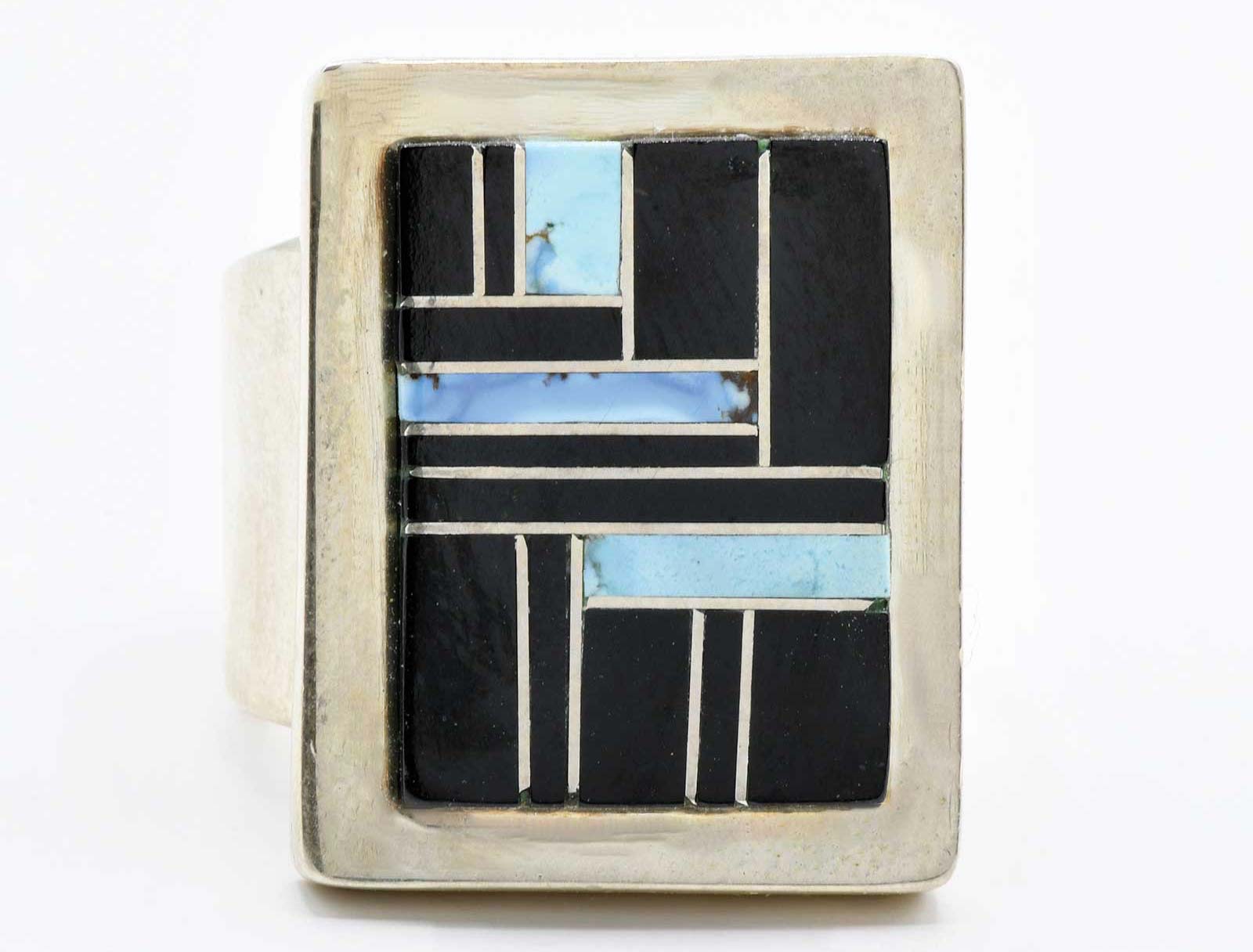
Heavy cast silver shank with rectangular jet and turquoise design by Tommy Jackson, ca. 2010.
Some examples of this 21st-century finesse deserve a closer look. In terms of design history, the best rings for the finger wield a effective blend of cultural tradition, materials, construction, and personal vision. The rings shown in this article demonstrate a flash of humor or bring out features that make their work feel fashionable. These jewelers create modish pieces that enliven their repertoire of work. More than ever, new ring designs bring together elements of craft, fashion and fine art.
There has always been a creative tension between fashion and art history. While fashion has long been accused of making willful changes in aspect, the need to recycle and refresh jewelry design ideas remains essential today. Eight examples of recent ring fabrication show the combination of fashion and ornament at work. The rings shown here also use characteristic design elements to make their pieces succeed.
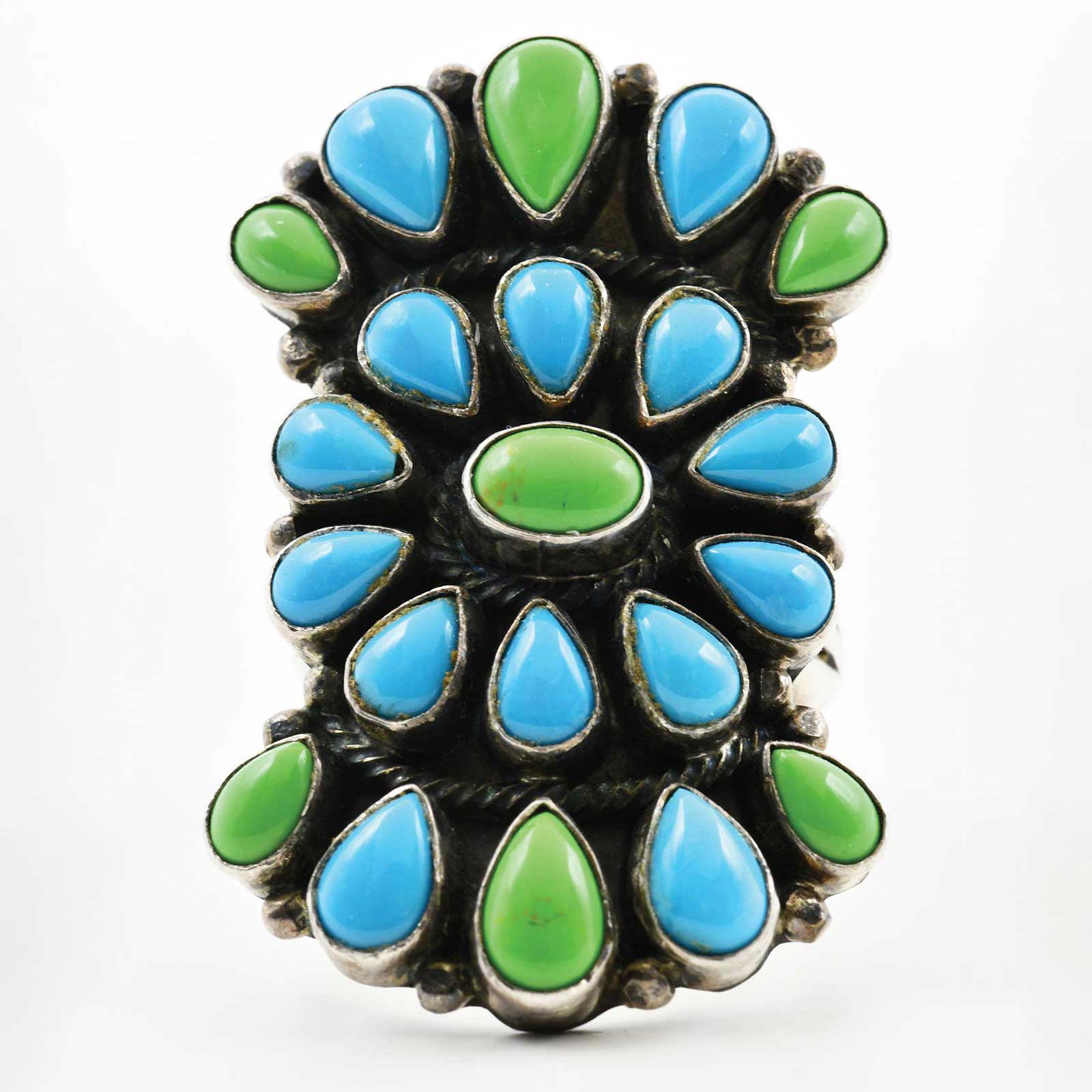
Cluster ring with green and blue turquoise setting, ca. 2010, by Roie Jaque.
Hopi silversmiths fostered the overlay technique as a means of constructing distinctive cultural representations on jewelry. Hopi overlay designs, beginning in the late 1930s, were historically patterned with abstract and pictorial images. A recently made ring by Ruben Saufkie, grandson of famed jeweler Paul Saufkie, expands the customary effect of contrast and emphasis. Silver and oxidation are both boldly executed; the fluteplayer motif stands out more sharply. The combination of special enhancements and textured silver makes this ring a signature statement.
Tommy Jackson’s genius lies in his ability to explore and refine his jewelry in a succession of artistic styles. His rectangular ring displays a direct connection to the compositions of Piet Mondrian and De Stijl. Using only horizontal and vertical lines of turquoise on black inlay, Jackson captures the same aesthetic sense of dynamic abstraction that artist painters achieved. The chief design element illustrated here is harmony.
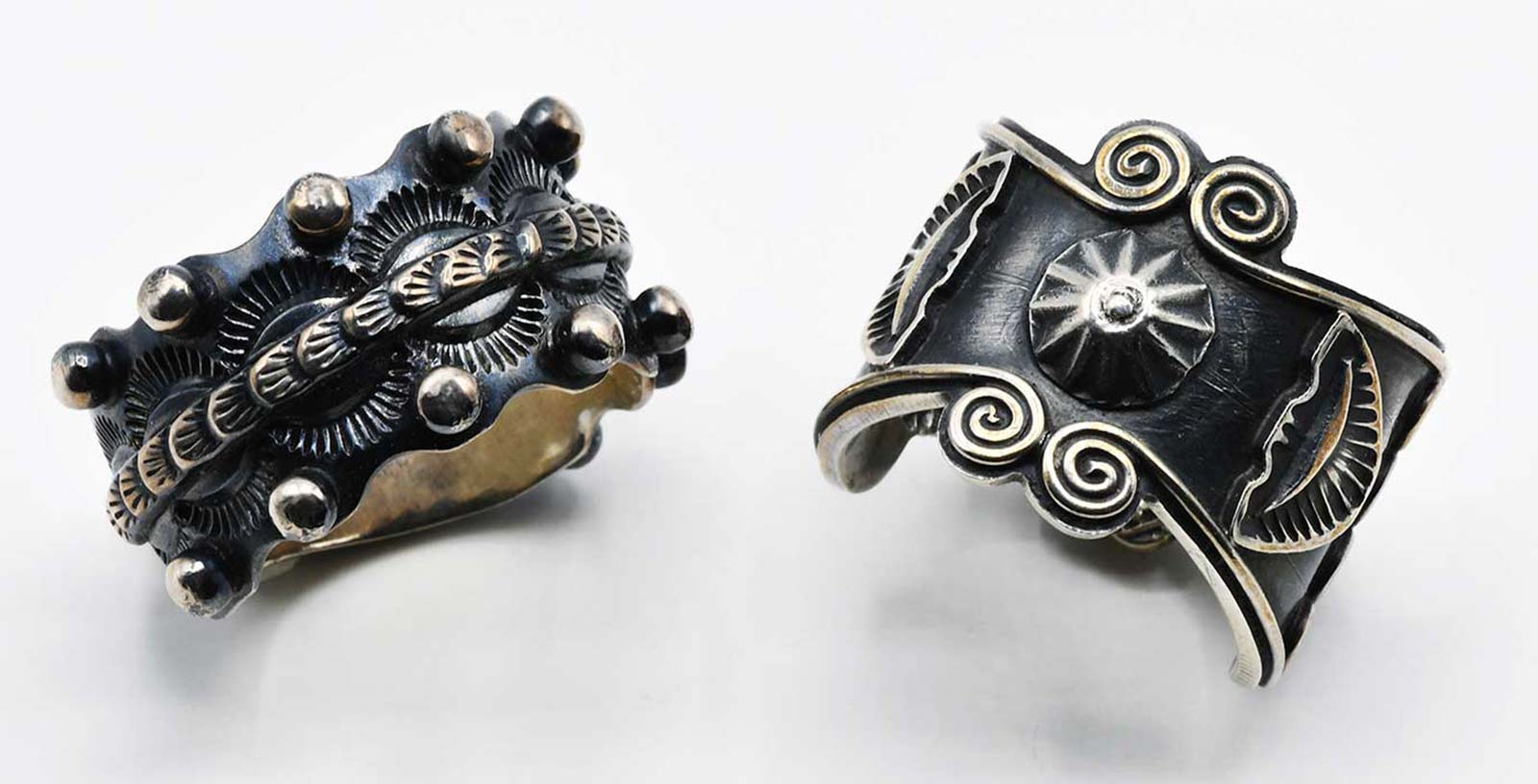
Silver rings with applique settings: left, Fritz Casuse; right, Sunshine Reeves, both ca. 2010.
Roie Jaque is skilled in traditional Navajo styles, including cluster work. His ring possesses stronger animation in terms of its vivid colors. Brightly colored cluster jewelry with two or more popular colors became stylish in the early 2000s. Jaque shows how handsome such a visual pairing of blue and green turquoise can be. The ring’s design is based on a specific older stone shaping, but its up-to-date hierarchy of arrangement makes the piece feel livelier and more fashionably appealing.
Another pleasing design element is tone. This is the essential ingredient for works that are compellingly moody and more individualistic in presentation. In the case of these two rings, by Fritz Casuse and Sunshine Reeves, the darkened tone on silver establishes a background for fine appliqué. Casuse has long been praised for creative ring construction; Reeves has won followers for his detailing. Characteristic features, such as pierced raindrops, miniature scrolling and stamping, and ridged half-domes, make these rings very tactile.
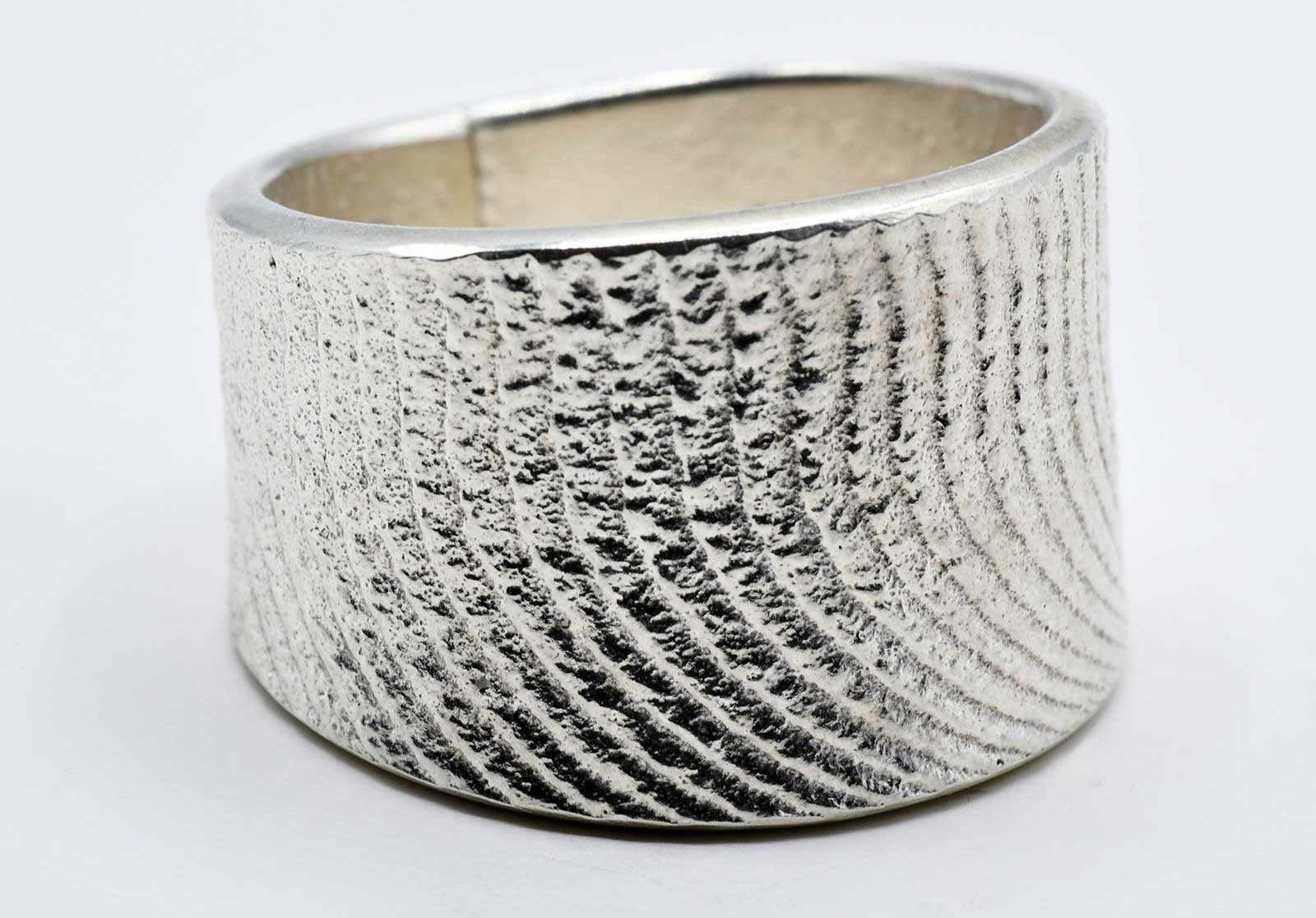
Minimalist silver ring made from cuttlefish casting by Darryl Dean Begay, 2025.
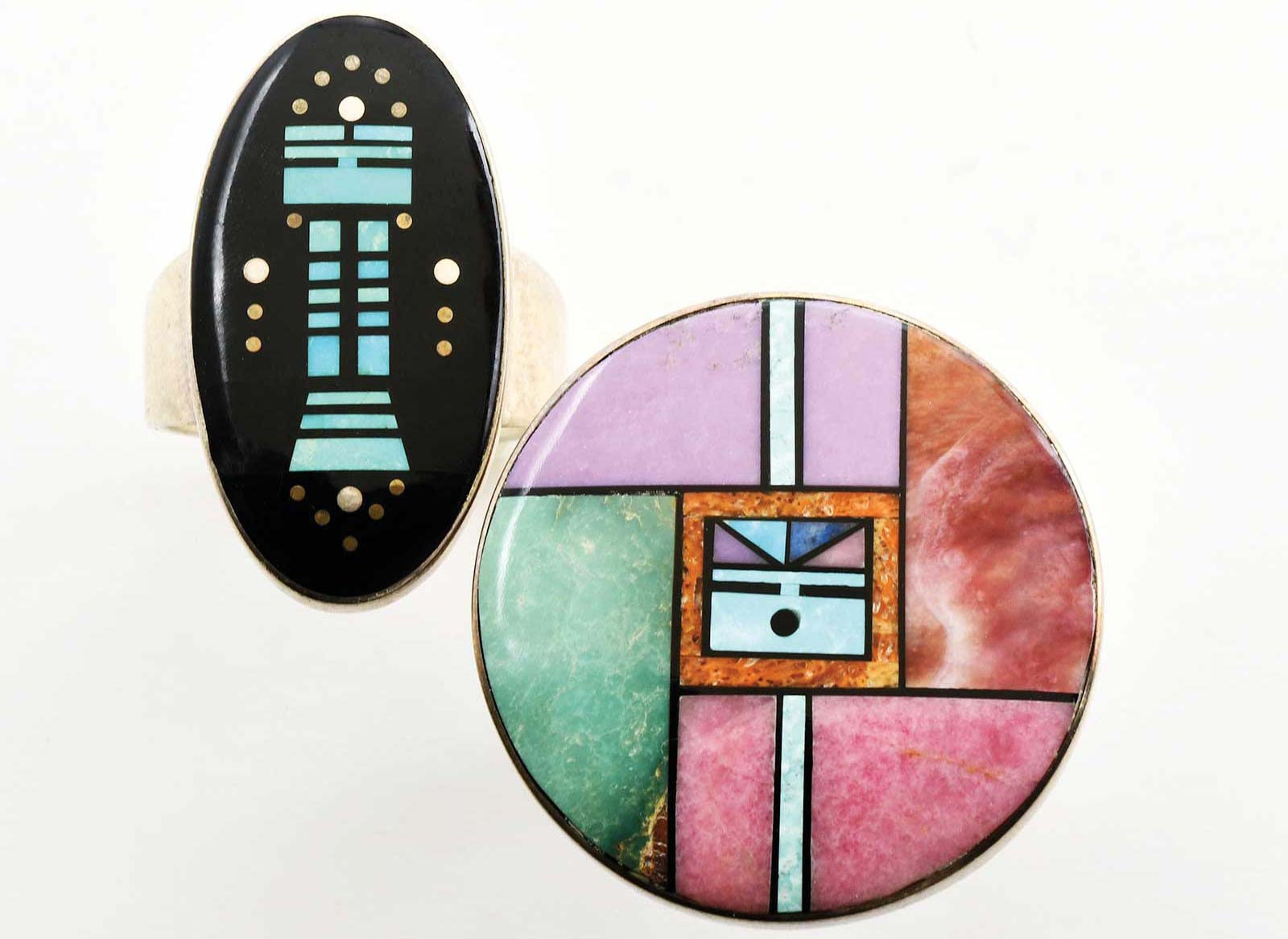
Jim Harrison inlay rings: left, night sky with sacred spirit motif; right, Yei face on circular plate, both ca. 2015.
Minimalism can be used for maximal effect. Stripping decorative attributes permits a ring to become the essence of its form and shape. Simplicity marks Darryl Dean Begay’s band; the cuttlefish cast silver ring is distinctive in line and texture. This piece is chic and refined since it lacks distracting and emphatic features. “Less is more” holds a firm place in the aesthetics of today’s adornment.
Jim Harrison has always been popular with collectors and enthusiasts. His personal inlay style was developed while working with Preston and Jesse Monongye. Harrison is best known for his night sky setting which offsets abstract, celestial, or figural depictions. Two recent rings show a classic sacred spirit standing against a starry sky and also a round central plate set with vividly colored stones framing a square Yei face. Both are clearly fashionable; the round ring, however, is particularly modish in terms of color and proportion.
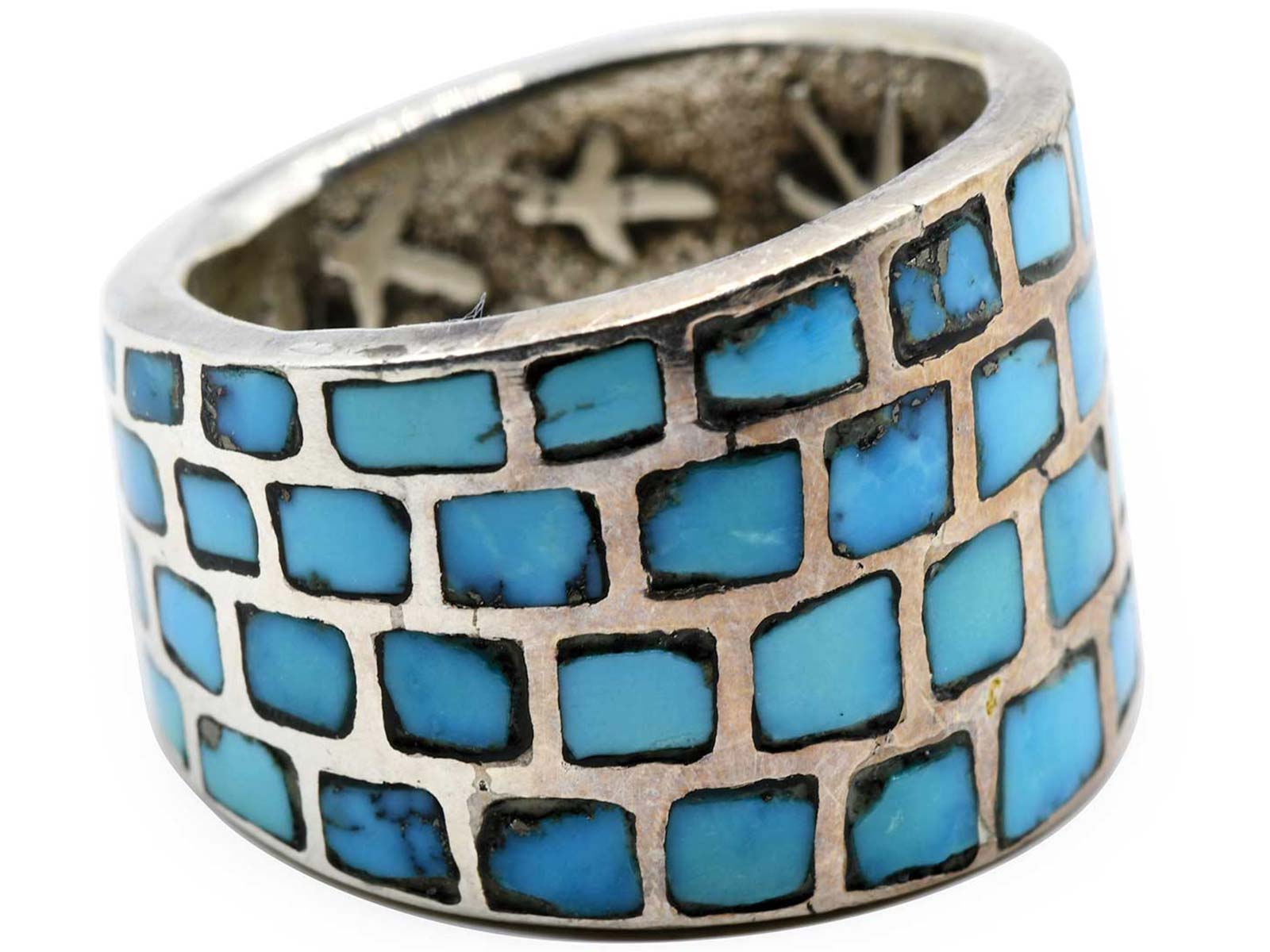
Wide cast silver ring set with asymmetrical turquoise rectangular stones by Philander Begay, ca. 2019.
Another admired jeweler is Philander Begay, whose works soak up various artistic influences and always pay tribute to some aspect of Native life and landscape. His ring is inlaid with small asymmetrical turquoise squares against solid silver which may approximate ancient masonry. Yet these turquoise squares are organized into four rows that seem to float on their silver background. Could it also be seen as a tribute to the union of silver and turquoise itself? Begay allows us to enjoy this suggestion through the elements of repetition and unity.
There are also jewelers who design with a dose of avant-garde whimsy. J.T. Willie in this case has taken a pre-existing ornamental form found on historic silverwork and enlarged both its size and scale. Made in lightweight hammered silver with shallow repoussé, this ring celebrates the past and enlivens the present. Worn on the hand, the ring accentuates rather than overpowers; the design element of dominance generates its fashionable flair.
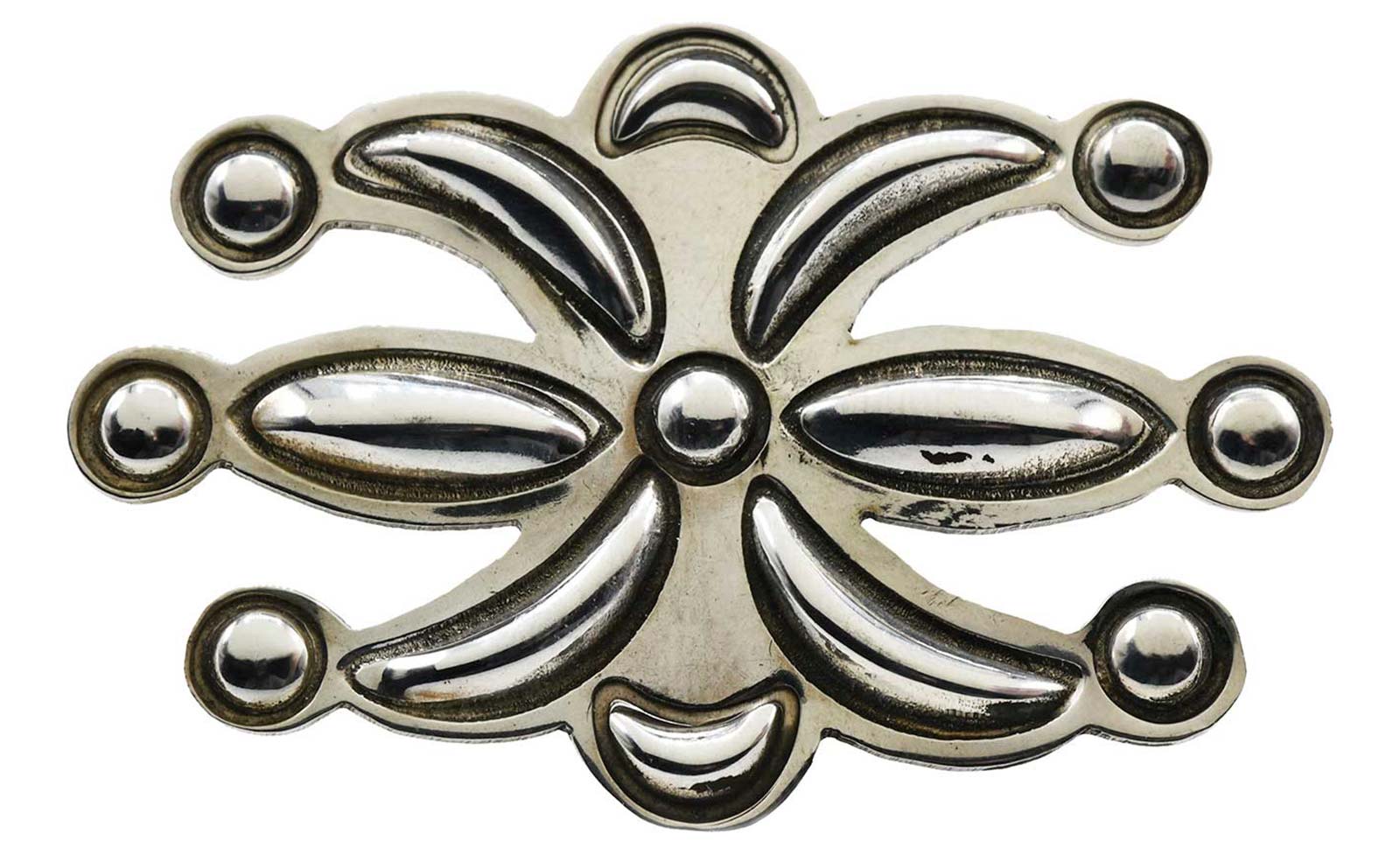
Thin silver hammered ring on adjustable band by J.T. Willie, 2024..
The secret of each ring’s success is its ability to enhance the wearer’s hand. Each jeweler manipulates design elements that flatter, something Charles Loloma always excelled at. Many artists today draw on older forms and motifs to anchor new explorations in construction. Color, shape, and scale experiments now convey a fashionable panache. Style is a creative focus derived from the maker’s personal vision. This blending of the past with the here and now is aesthetically stimulating—another example of living fine art at work. —
Paula A. Baxter, a former curator and adjunct professor from New York, is an independent design historian living in Scottsdale, Arizona. Her photographer is longtime husband Barry Katzen. Her sixth book, Navajo and Pueblo Jewelry Design: 1870 to 1945, was published in fall 2022. She’s working on a sequel which will cover the years 1946 to 2025, and will include Indigenous jewelers who aren’t Navajo or Pueblo but live and work in the American Southwest.
Powered by Froala Editor


