The story of Raven Skyriver’s glass sculpture is a Pacific Northwest story. A Puget Sound story. Not only because the marine animals he depicts are native to those waters—the same waters where he was born and raised on Lopez Island, one of the San Juan Islands—but also because the area is America’s epicenter of glass art. Skyriver probably wouldn’t have become a glass artist if he had called anywhere else home because no other place could have similarly nurtured him in the artform.
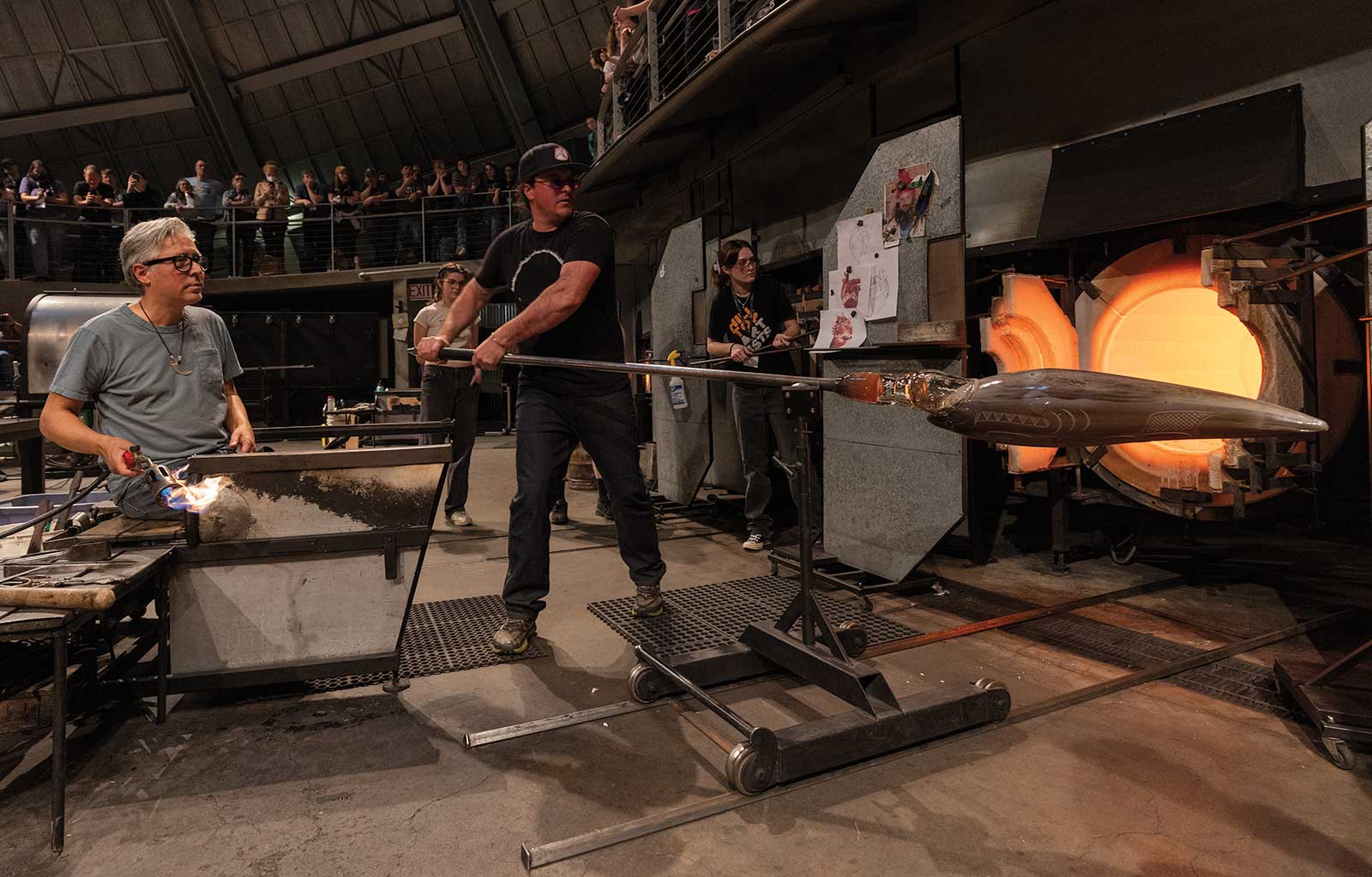
Raven Skyriver, center, with Preston Singletary, pulls a piece of glass from the furnace in 2022. © Russell Johnson.
Where else could a teen struggling with his grades have found a school system open to allowing him to take vocational training in glass blowing as a substitute for course credits? Where else besides Lopez Island would a little glass shop have been available for Skyriver to work during his junior and senior years.
“As soon as I tried [glassblowing], I was like, ‘Whoa! This is so cool!’” Skyriver remembers. “I knew this is what I was going to do.”
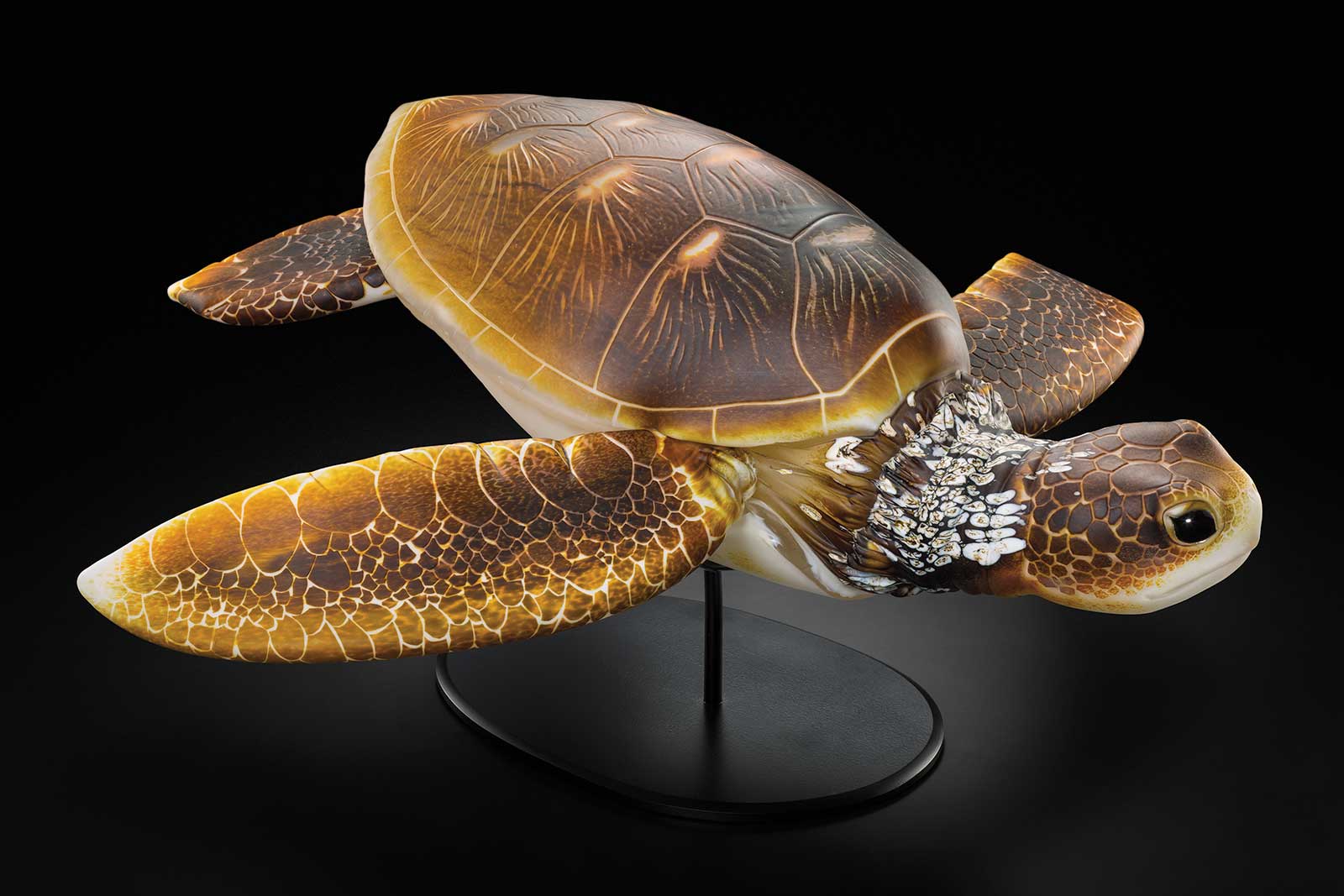
Adrift, blown and free-hand sculpted glass, 14 x 28 x 31 in. Courtesy Blue Rain Gallery, Santa Fe, NM.
He was in the right place to do it.
“This is the best place to be a glass nerd because there’s so many studios, the (Dale) Chihuly influence, all the different private studios, places like the Museum of Glass in Tacoma,” the Tlingit artist says. “I just started running around everywhere I could in the Sound assisting people for free, opening doors, doing whatever I could to gain more technique and knowledge.”

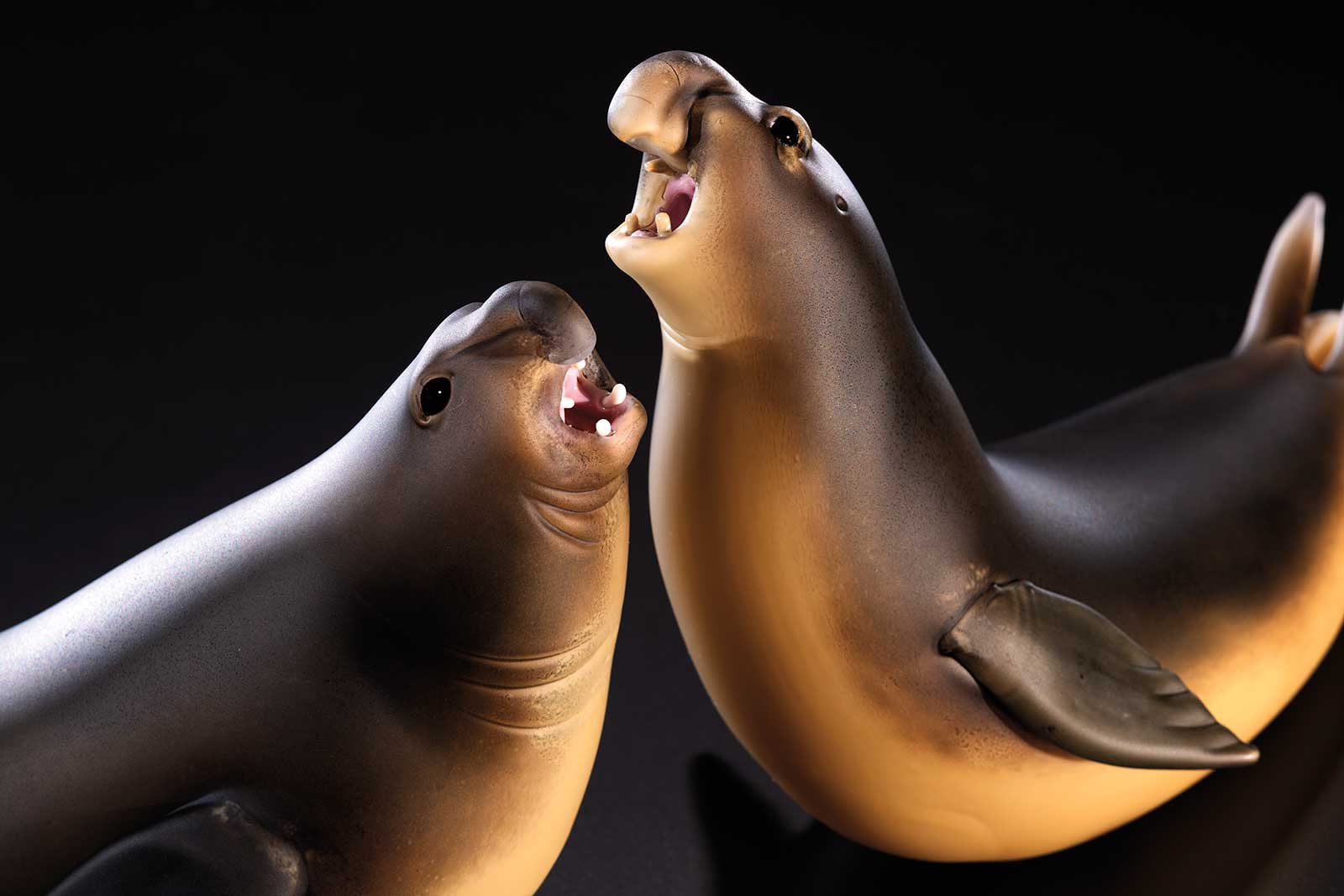
Rival, hand-sculpted glass, 9 x 24 x 9 in.
His introduction to glass sculpture came at the Pilchuck Glass School 60 miles north of Seattle. The school was founded in the early 1970s by Dale Chihuly. Today, Pilchuck is the preeminent glass art workshop in the country.
Skyriver started there in 2003, working under prominent glass sculptor Karen Willenbrink-Johnsen, who was then working for an icon in the field, William Morris. Morris previously worked under Chihuly. Glass sculpture is a team effort.
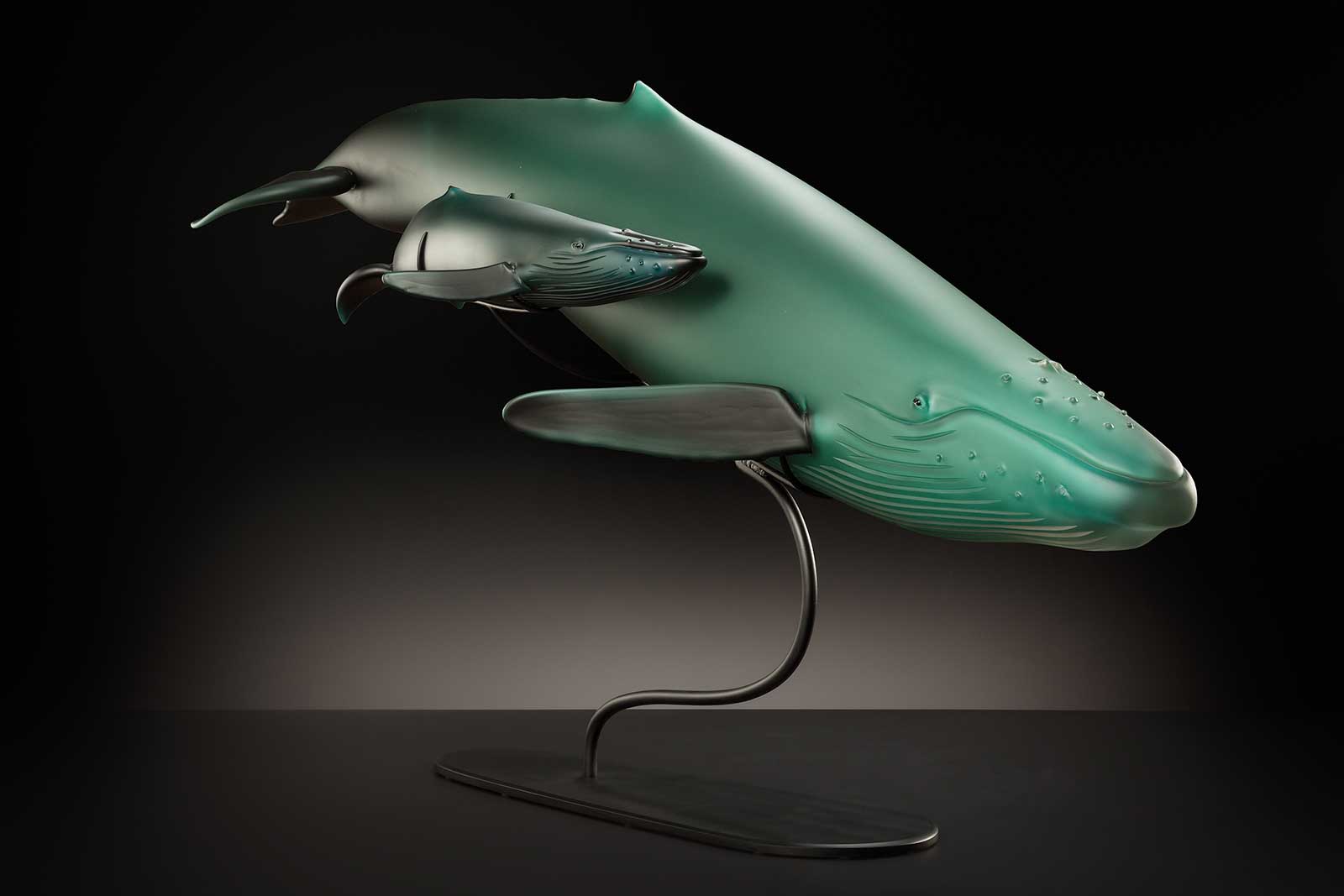
Mother, hand-sculpted glass, 27 x 46 x 14 in.
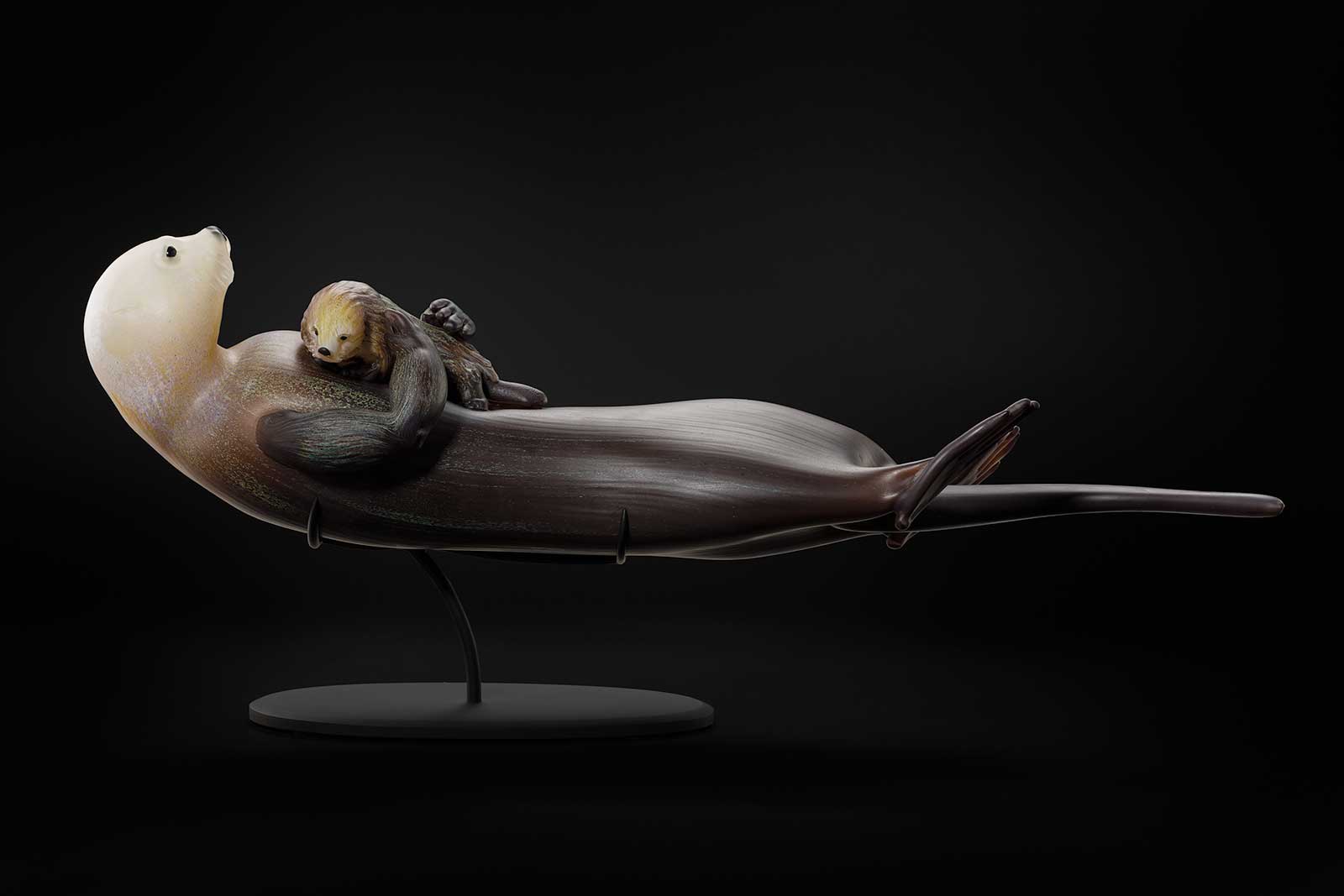
Clutch, 2016, off-hand sculpted glass, 10 x 5 x 23 in.
Skyriver worked at Pilchuck for Morris for four years and then directly for Willenbrink-Johnsen for another seven, learning every part of the glass sculpture process. He worked nearly seven days a week during the roughly six months a year when Pilchuck was “dark” and not hosting classes for visiting artists. Then it was taken over by the resident artists, the best of the best, for their own projects. Morris rented out the whole place each winter. All glass, all the time.
Skyriver even lived in a cabin owned by Morris near Pilchuck for 15 years. Skyriver became a glass art master during this time. He also met his wife, Kelly O’Dell, a fellow glass sculptor, almost immediately upon starting at Pilchuck.
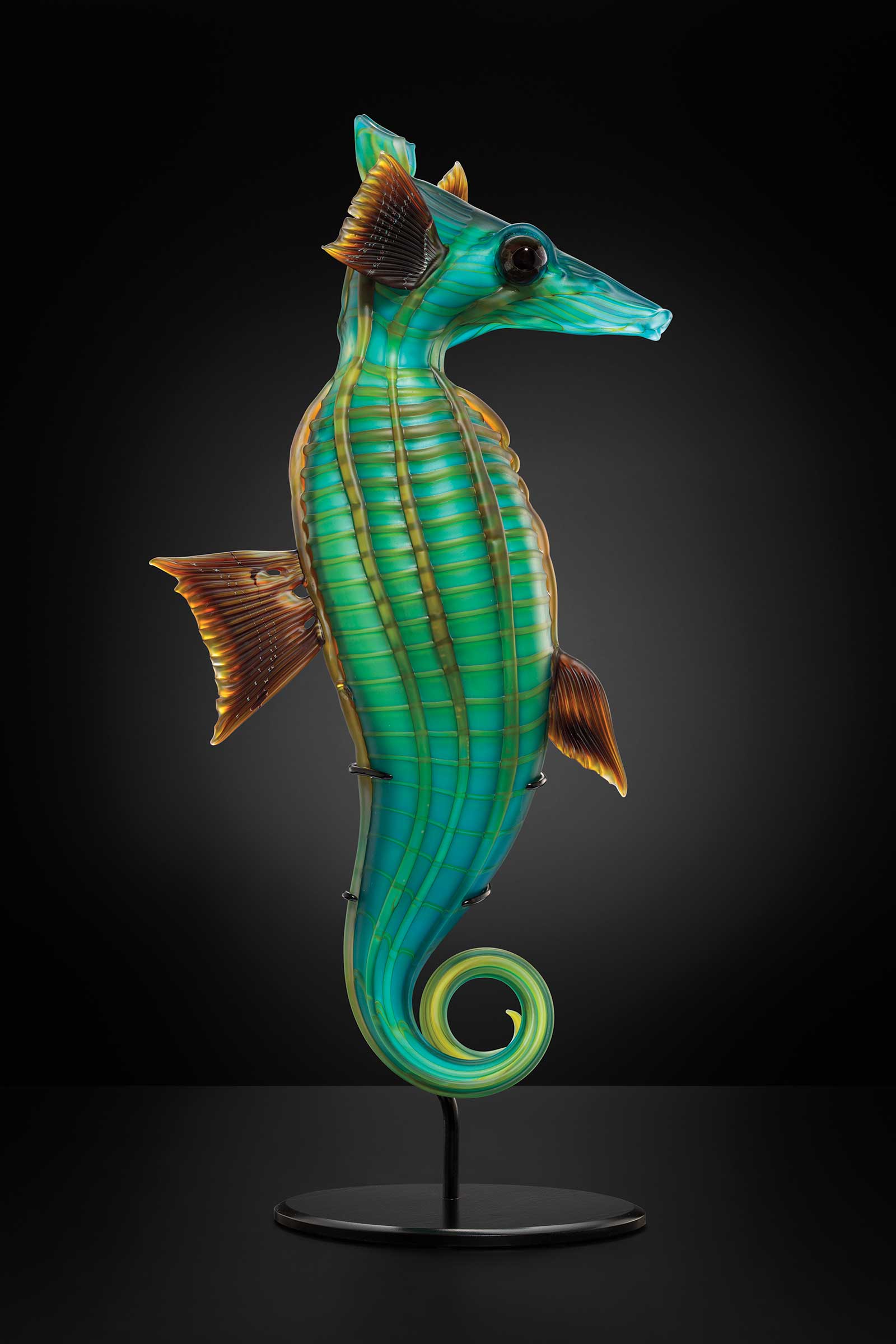
Anchor, 2017, off-hand sculpted glass, 6 x 26 x 12 in.
A Community of Artists
Skyriver likes to say of glass blowing and glass sculpture, “technique is cheap.” He elaborates, “When you go to Pilchuck or these other schools and you’re teaching or you’re learning, everything is within the public domain; all techniques are taught and shared. The expectation is that you’re going to take that technique, and not duplicate my work, but you’re going to take that technique and you’re going to apply it to your own artistic narrative.”
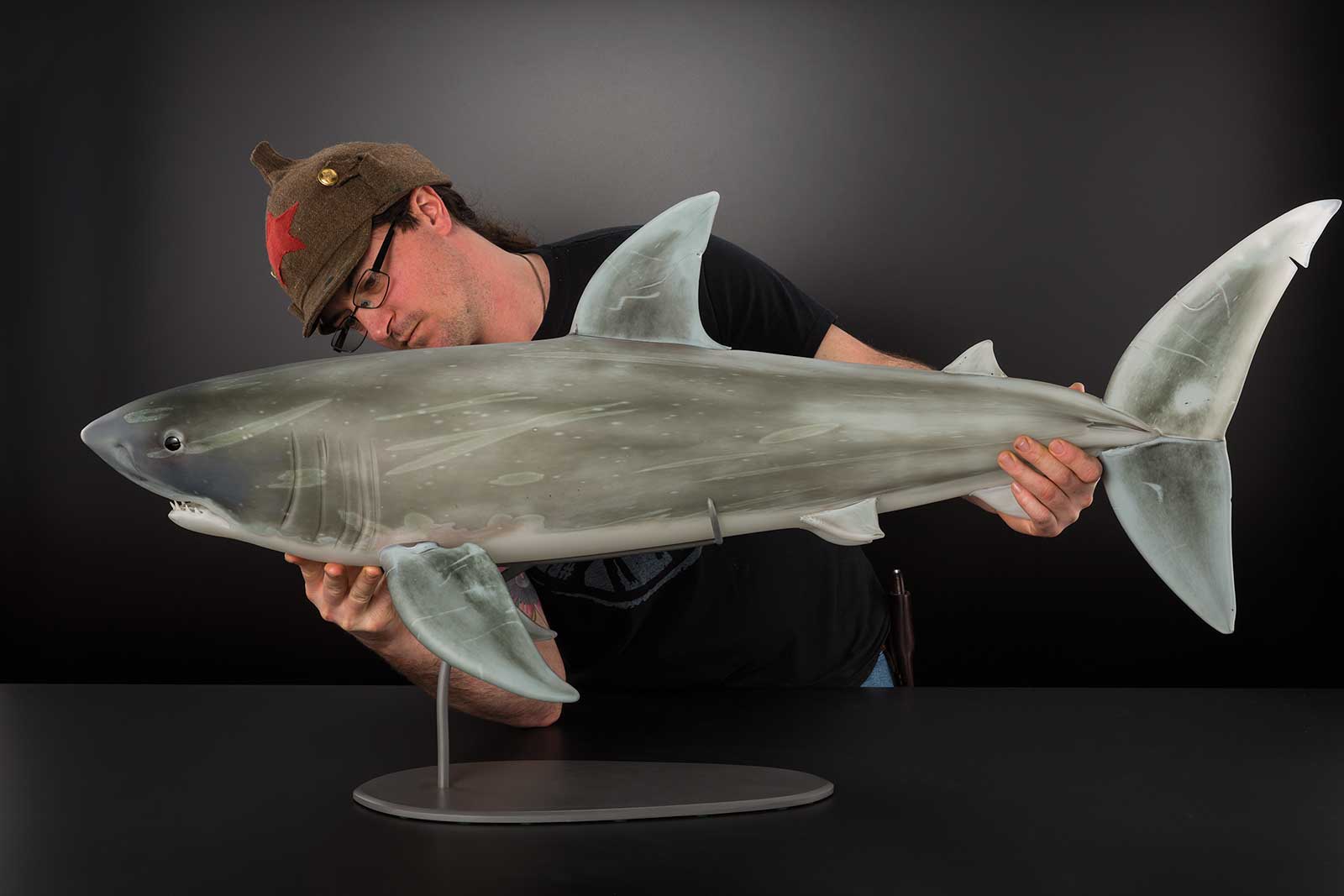
Apex, off-hand sculpted glass, 23 x 45 x 15 in.
No glass artist works alone the way a painter might. Technique is out in the open. There are no tricks of the trade. No hoarding of knowledge.
“The glass community really is a community,” Skyriver says. “It requires teamwork and fosters community. We go to each other’s weddings and funerals and everything in between.”
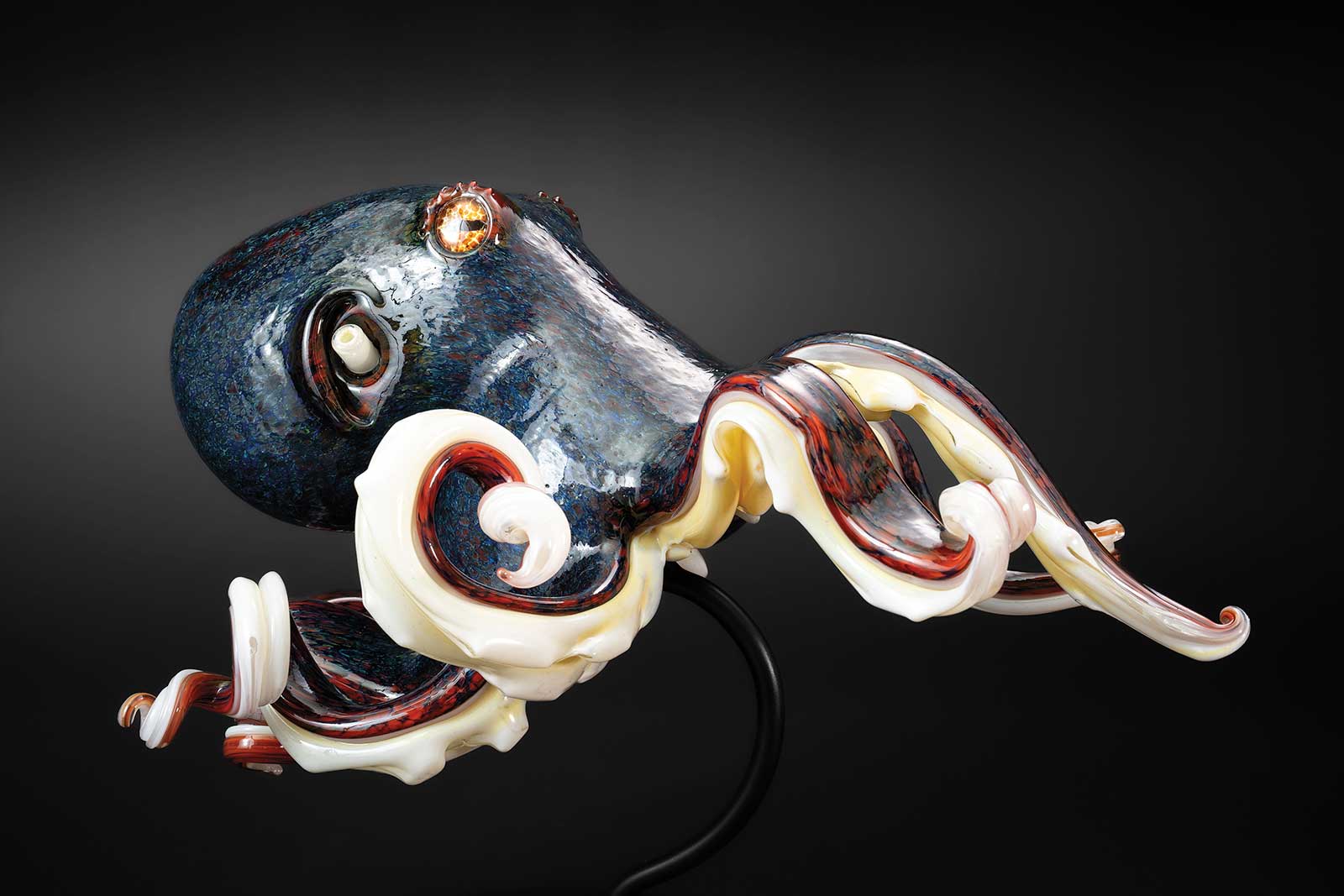
Chromatophore, free-hand sculpted glass, 15 x 18 x 14 in. Courtesy Stonington Gallery, Seattle, WA.
They collaborate.
Skyriver has begun collaborating with fellow Tlingit artist and fellow Puget Sounder, Preston Singletary.
“My work, when you see it, is not readily indicative of Native American art where Preston’s work has the traditional Formline design, this really Northern style, beautifully refined technique, very recognizable as Native art,” Skyriver explaines. “That’s been the cool thing working with Preston, putting the Native in the native species (of marine life). Sometimes collaborations can be a hodgepodge of two people’s separate works, but I feel like my work is a great canvas for his design.”
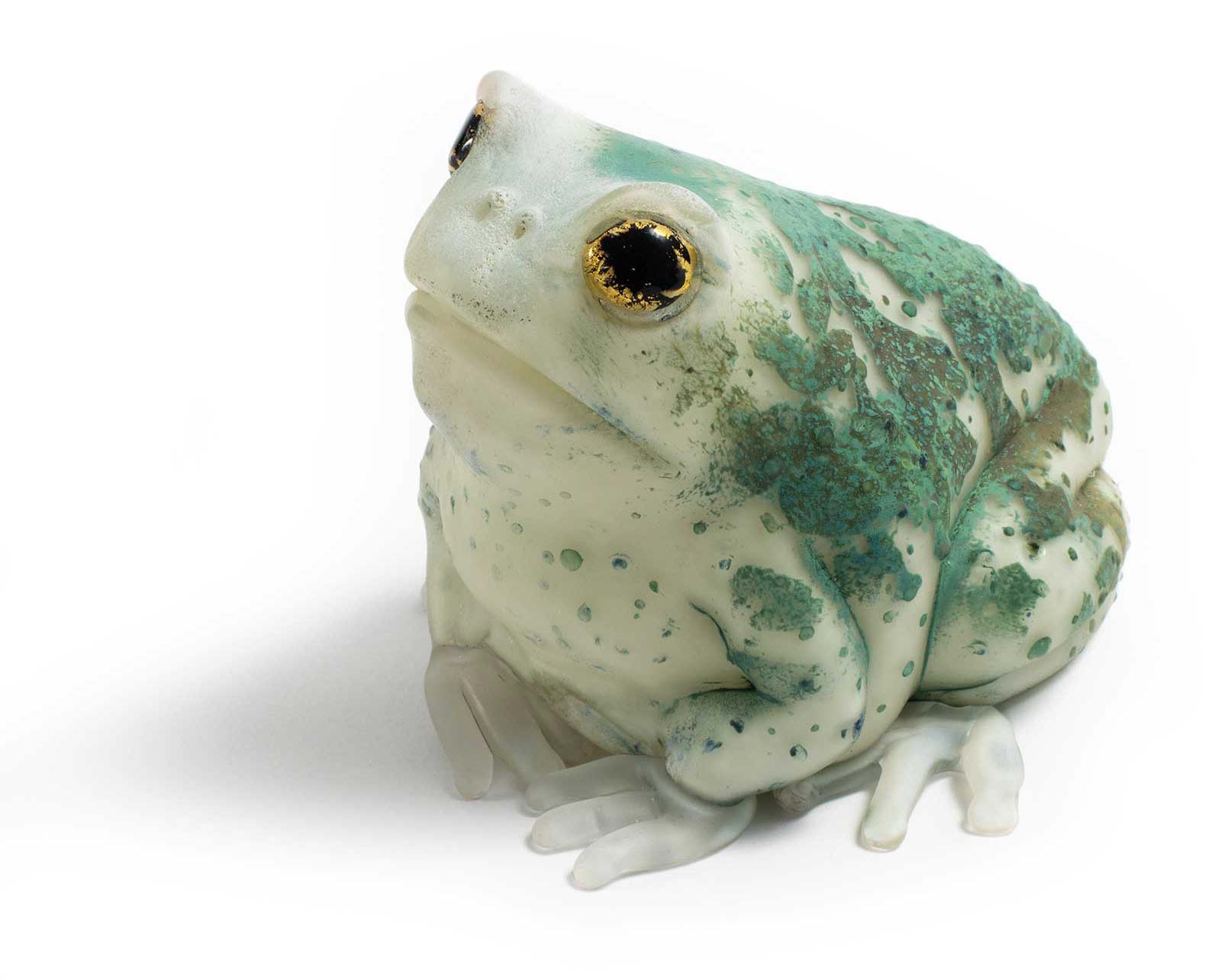
Bad Lands, hand-sculpted glass, 4 x 4½ x 5 in. Courtesy Blue Rain Gallery, Santa Fe, NM.
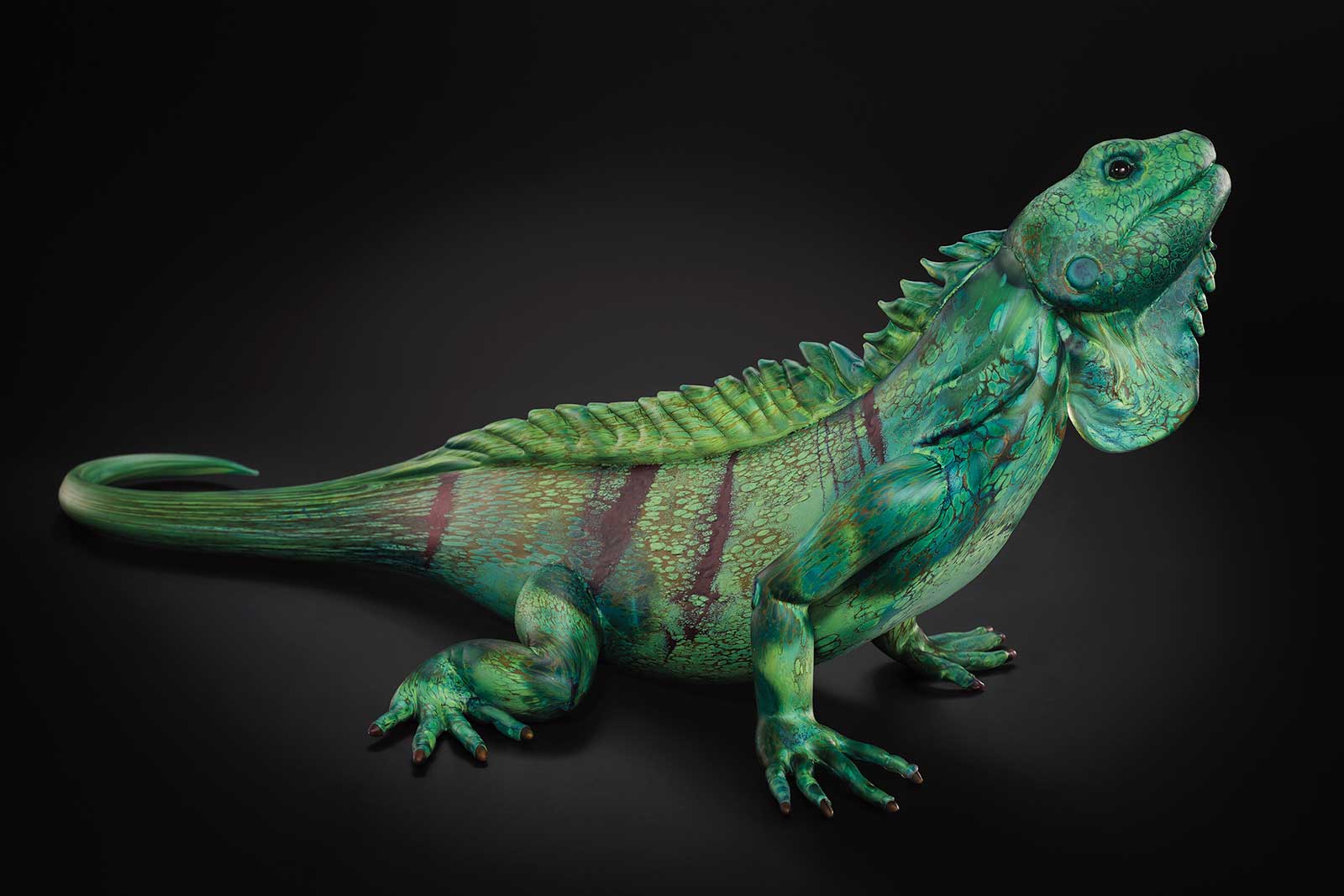
Awaken, 2017, off-hand sculpted glass, 11 x 18 x 25 in.
And how’s this for coincidence for more proof that Skyriver’s career is owed to his birthplace: Skyriver’s father, Gregg Blomberg, started a knife and tool making company, Kestrel Tool, on Lopez Island that he ran for decades. The company made Northwest Coast-style carving tools—crooked knives and adzes—specifically designed by the region’s Indigenous people for carving totem poles and masks.
Blomberg would host carving and design classes led by leaders in the field at the Kestrel Tool studio adjacent to the house where Skyriver was growing up. Who should show up in the 1990s to take some of these classes, but Preston Singletary.
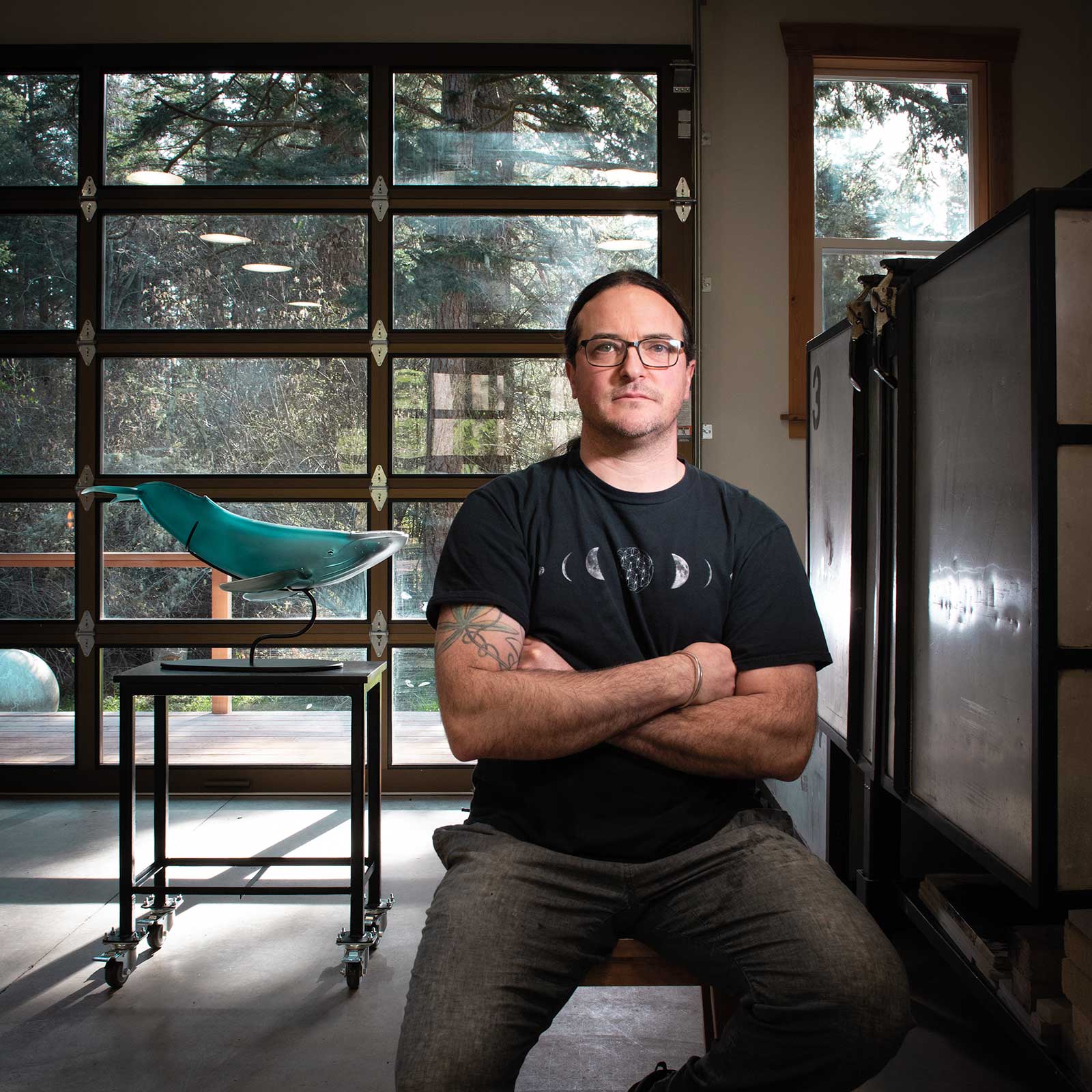
Raven Skyriver (Tlingit)
Starting his glass career in high school, Skyriver was a budding glass artist when Singletary visited Lopez Island for instruction.
“The last time he came up, I was 16, and he was like, ‘Here kid, keep up the good work,’ and he gave me Ed Schmid’s Beginning Glassblowing book,” Skyriver says.
All these years later, the two remain connected, not only through their artistic collaborations. Both are represented by Blue Rain Gallery in Santa Fe, New Mexico, and Stonington Gallery in Seattle, and both are featured in the exhibition Clearly Indigenous: Native Visions Reimagined in Glass, on view through May 29 at the National Museum of the American Indian in New York, New York. —
See More:
www.ravenskyriverglass.com
Blue Rain Gallery
Santa Fe, NM
www.blueraingallery.com
Stonington Gallery
Seattle, WA
www.stoningtongallery.com
Powered by Froala Editor


