Holding the brush with an unwavering hand, he completed the final delicate stroke on the Sio Hemis—another katsina carving brimming with the essence of his Hopi culture. After days of meticulous work, believing he had captured the spirit symbolizing fertility and good harvest, the faint smile at the corner of his eyes slowly disappeared. The paint, so full of promise moments before, was in fact slightly uneven.
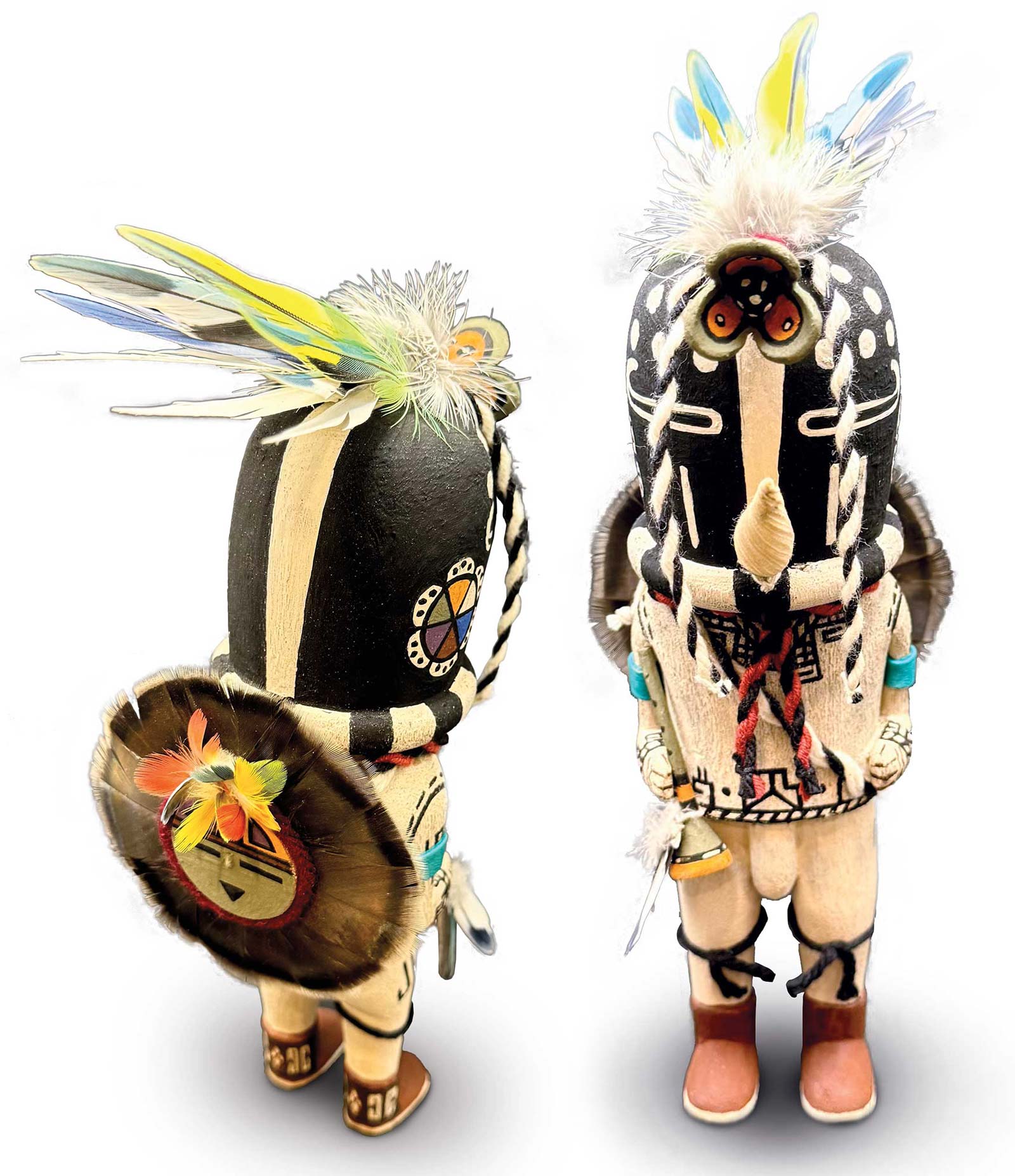
Tayron Polequaptewa (Hopi), Hilili Katsina (Natural Spring Ripple version)
Tayron “Tay” Polequaptewa, from the village of Shongopovi on Hopi’s Second Mesa, turned his attention to tying feathers. The paint needed to fully dry before he would sand it off and start again. It simply wasn’t good enough. Not, at least, to properly infuse the katsina carving with the life it deserved. And that was always his goal.
Tay carves as though listening to something older than time—something that speaks not in words, but in rhythm and resistance: the grain of the wood, the patience required to let form emerge rather than be forced. In his hands, a katsina carving is not an object striving to be art, but a presence coming into being—the breath of the land, the pulse of centuries of Hopi memory, heritage and tradition.
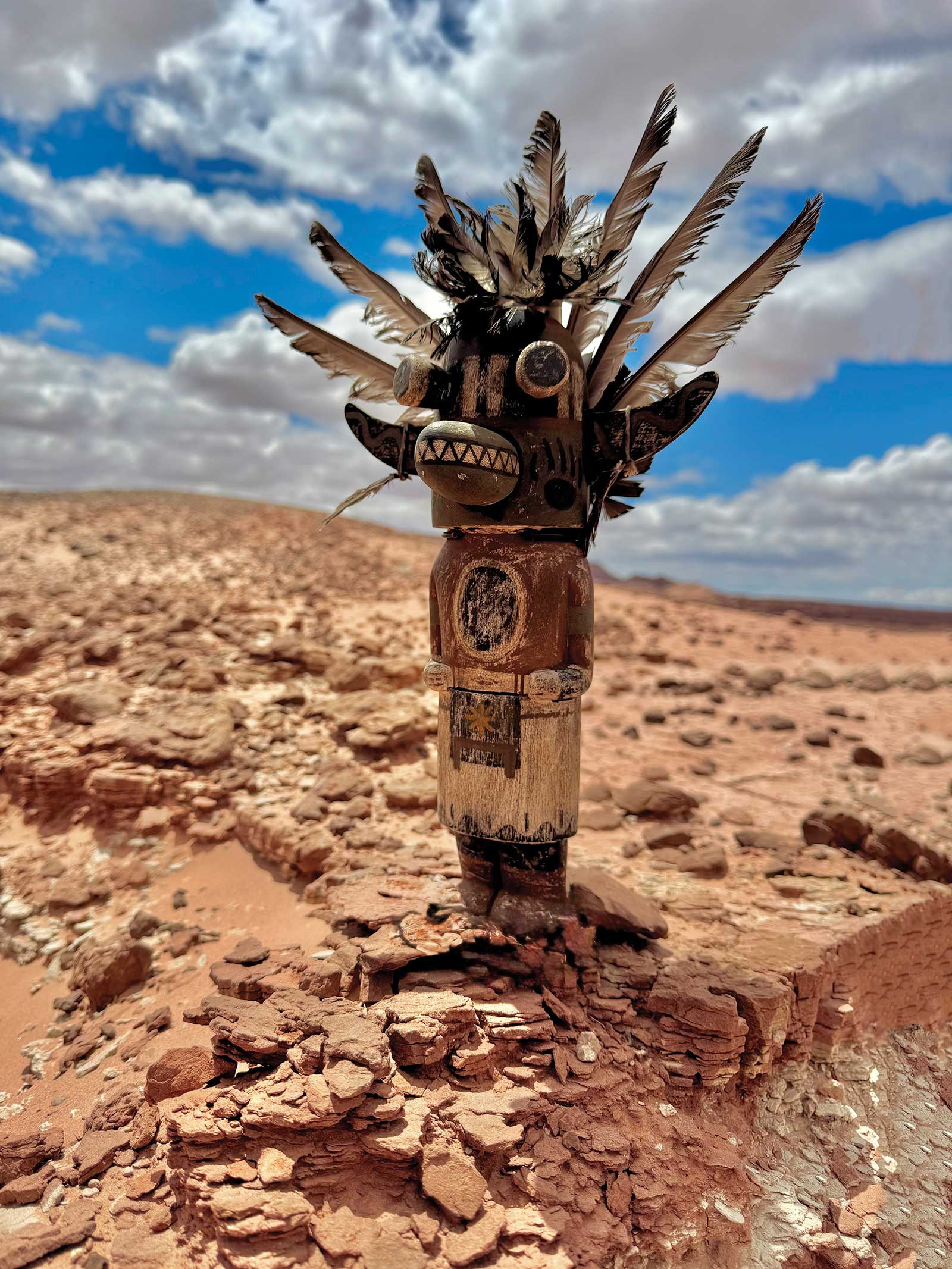
Honan (Badger) Katsina, an intentionally aged katsina carving by Tayron Polequaptewa (Hopi). Photographed on Hopi land. Photo by Russ Hoover.
Tay has been carving katsina tithu, commonly known as katsina dolls, for more than 35 years. The great-grandson of Wilson Tawaquaptewa (1873-1960), one of the most widely recognized tithu carvers in Hopi history, Tay is known for his exceptionally detailed painting, refined feather work and unwavering commitment to traditional methods. His reputation today places him among the finest contemporary carvers working in the traditional style.
Tay’s katsina carvings generally fall into three distinct approaches: finely detailed, award-winning pieces; katsinam intentionally aged; and carvings inspired by the style of his great-grandfather. “My great-grandfather was the village chief of Orayvi,” Tay explains. “Because he held ceremonial responsibilities, he didn’t believe accurate katsinam should be made if they were going to be sold. He carved figures that mixed elements from real katsinam or ones that were completely imagined. He called those Toomok katsinam.” Tay creates these katsina tithu to honor Tawaquaptewa’s legacy. “I try to bring examples of all three styles when I participate in markets and shows,” he says.
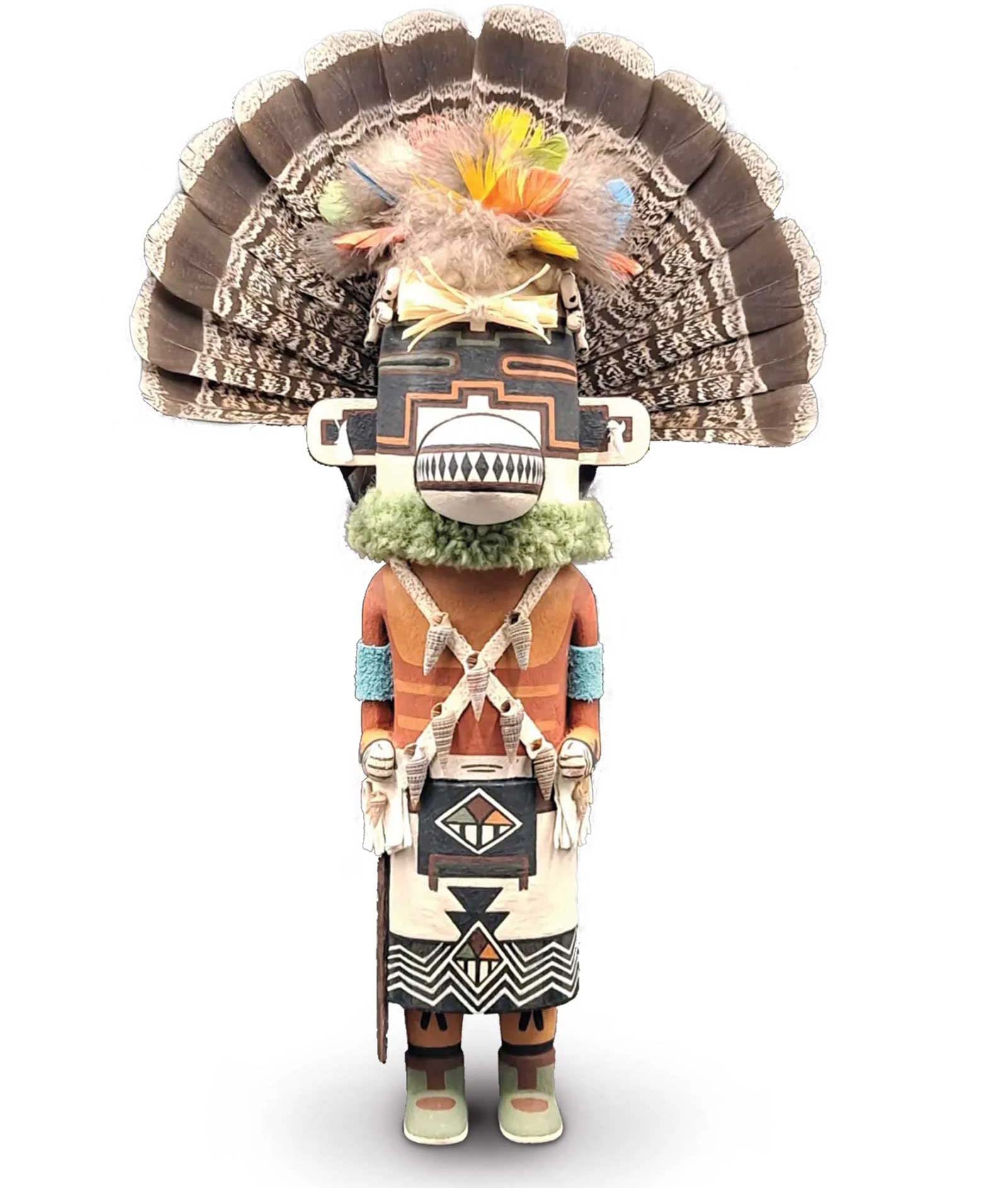
Tayron Polequaptewa (Hopi), Monongya (Lizard Katsina)
When asked about his preparation for the upcoming Heard Museum Guild Indian Fair & Market, Tay widens the conversation beyond katsina carving, speaking about Native American arts as a whole.
“Ours is the art of living traditions,” Tay says. “And that’s what makes it special. It sets it apart.”
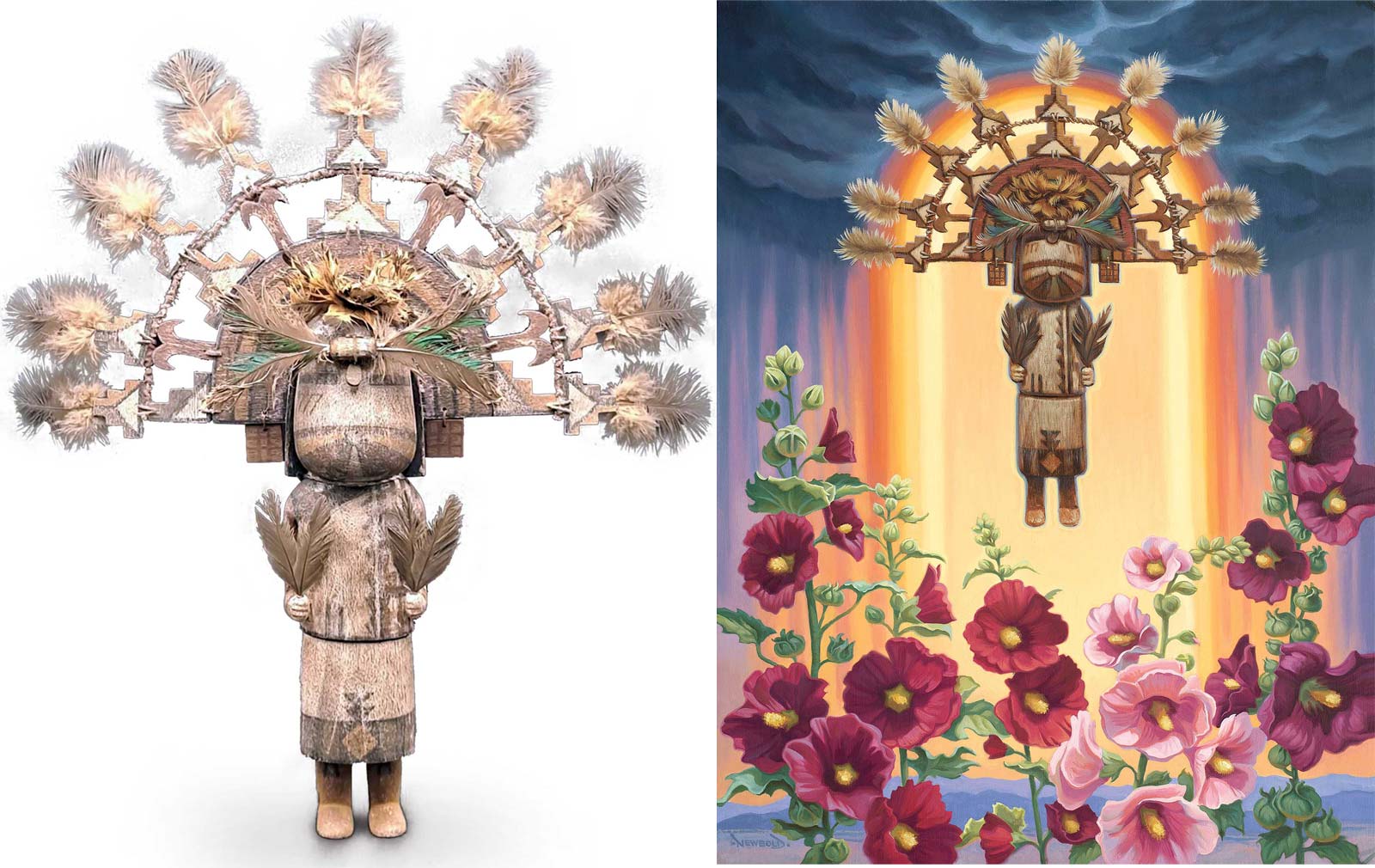
Left: Tayron Polequaptewa (Hopi), Pahlik Mana (Water Moisture Maiden katsina) Right: Greg Newbold, Sacred Petitions, oil on linen mounted on board, 24 x 18 in. Courtesy Medicine Man Gallery, Tucson, AZ, and Manitou Galleries, Santa Fe, NM.
From pottery and weaving to painting, jewelry, beadwork and carving, Tay sees Indigenous art forms sharing a common strength: they are rooted in place, story and responsibility. In a cultural moment saturated with artificial intelligence, digital replicas and rapidly shifting trends, Native American arts offer something increasingly rare—a direct lineage between material, maker and meaning. This, Tay believes, uniquely positions Indigenous artists within today’s changing landscape of contemporary collecting.
“The new collectors aren’t just buying objects anymore,” he says. “They’re looking for truth. They want to know where something comes from, who it belongs to and what it stands for.”
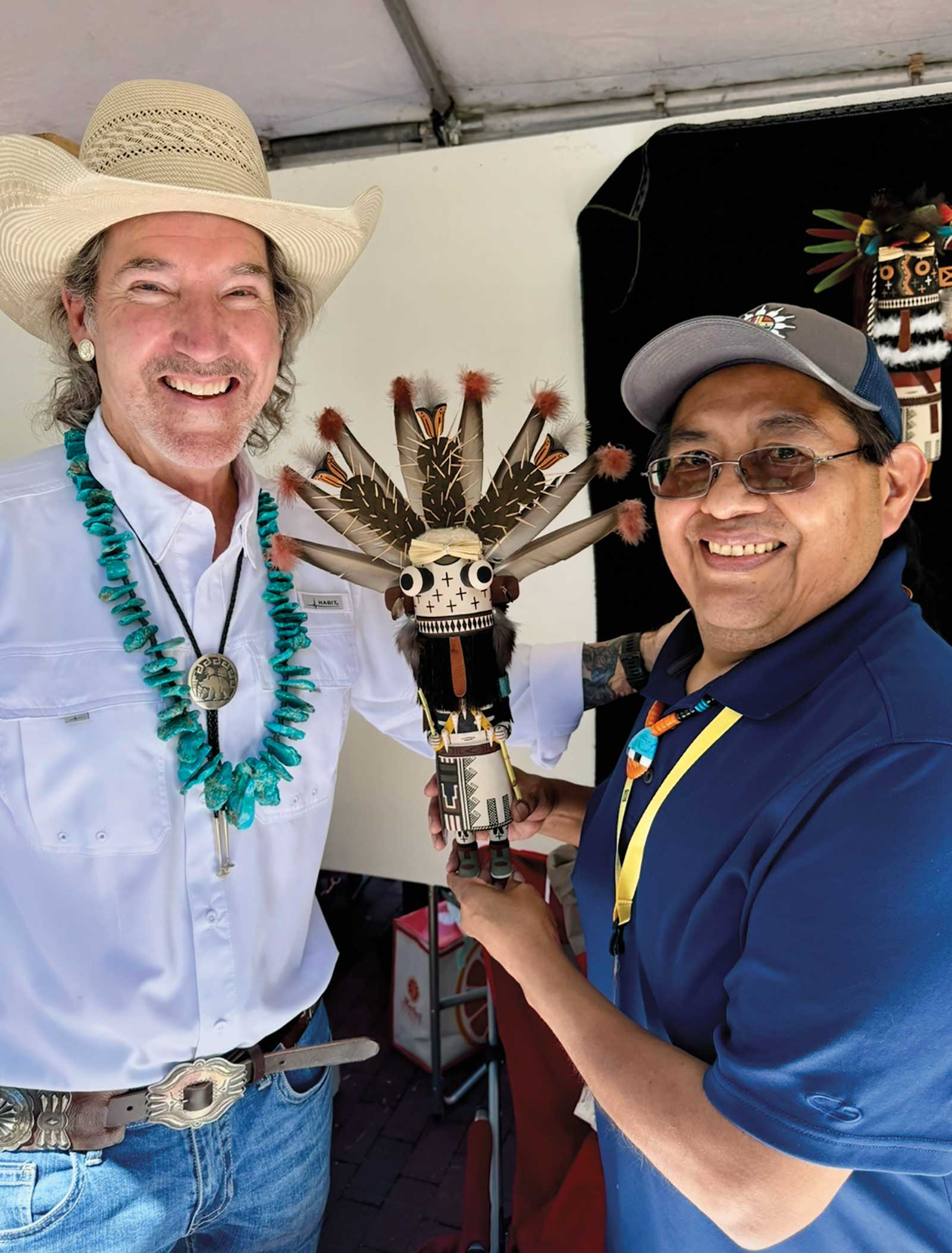
Tayron Polequaptewa, right, and his Prickly Pear Cactus katsina with painter Kim Wiggins, who used the carving in one of his paintings.
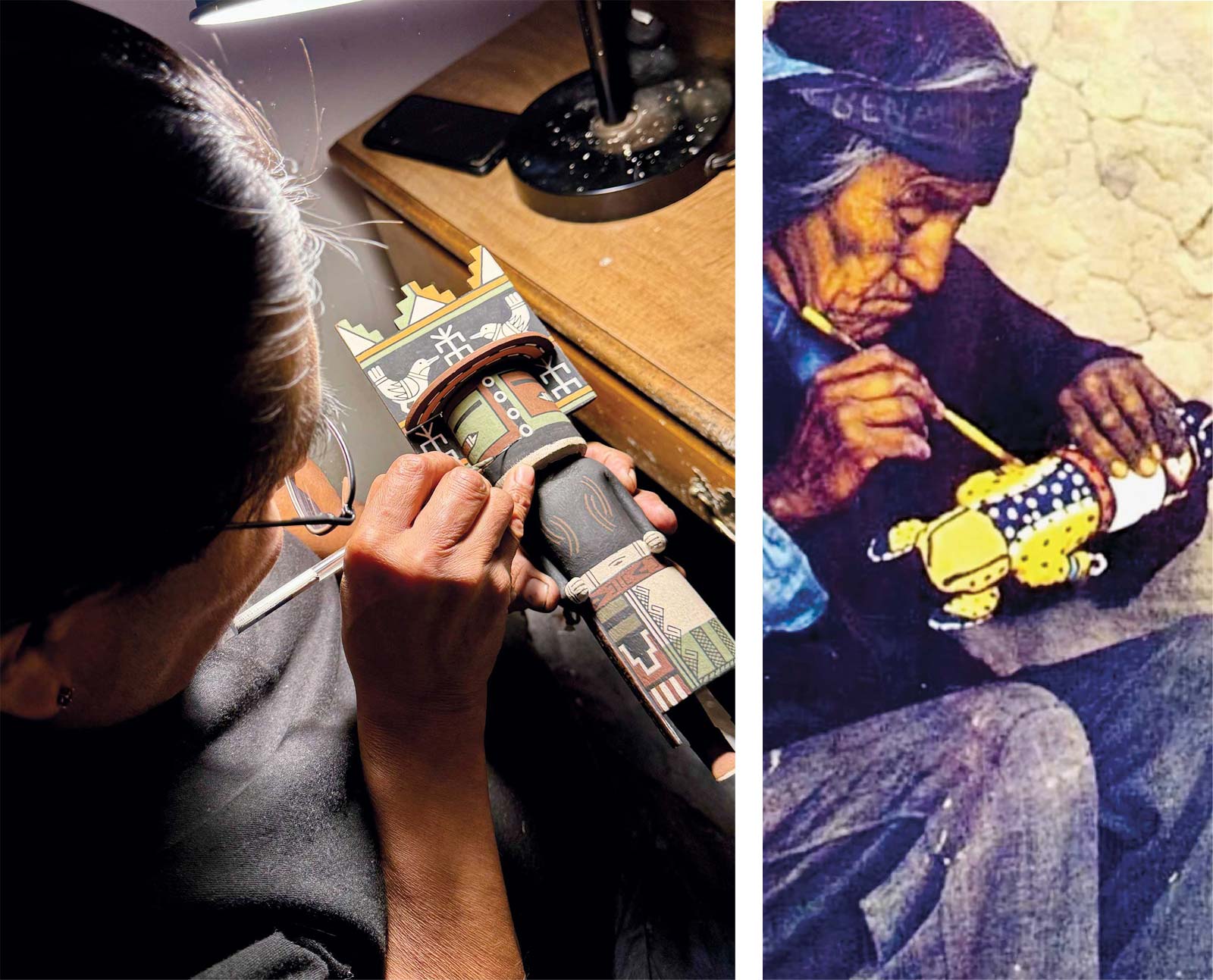
Left: Tayron Polequaptewa working on a Sio Hemis katsina. Right: Tayron Polequaptewa’s great-grandfather, Wilson Tawaquaptewa, painting a katsina, circa 1950. Courtesy the artist.
Across Native American art forms, materials are often gathered from the land, processes guided by teachings passed down through generations, and the work inseparable from their communities and worldviews. Tay notes that this depth resonates strongly with collectors who feel increasingly disconnected from mass production and digital culture. Whether it is clay shaped by pueblo hands, fibers spun into textiles, or cottonwood roots carved into katsinam, these works embody choices about how to live in relationship with the earth.
Today’s collectors seek dialogue. They want to understand spiritual frameworks, cultural resilience and the artist’s personal journey. This shift creates space for Native artists to speak for themselves. “I’m so thankful for the Heard here in Phoenix, and SWAIA in Santa Fe,” Tay says. “They give us the opportunity to connect with collectors and tell our stories.”
Ultimately, Tay believes Native American arts answer a deep longing in contemporary culture. “Our work comes from identity that’s lived every day,” he explains. “It’s not imagined or artificial—it’s practiced.”
As collectors seek art that reflects their values and reconnects them with real experience, Tay’s katsina tithu offer not an escape from the modern world, but a grounding within it. His carvings stand not at the margins of contemporary collecting, but at its moral and spiritual center—offering stories that endure, values that resonate and connections that feel, at last, real.
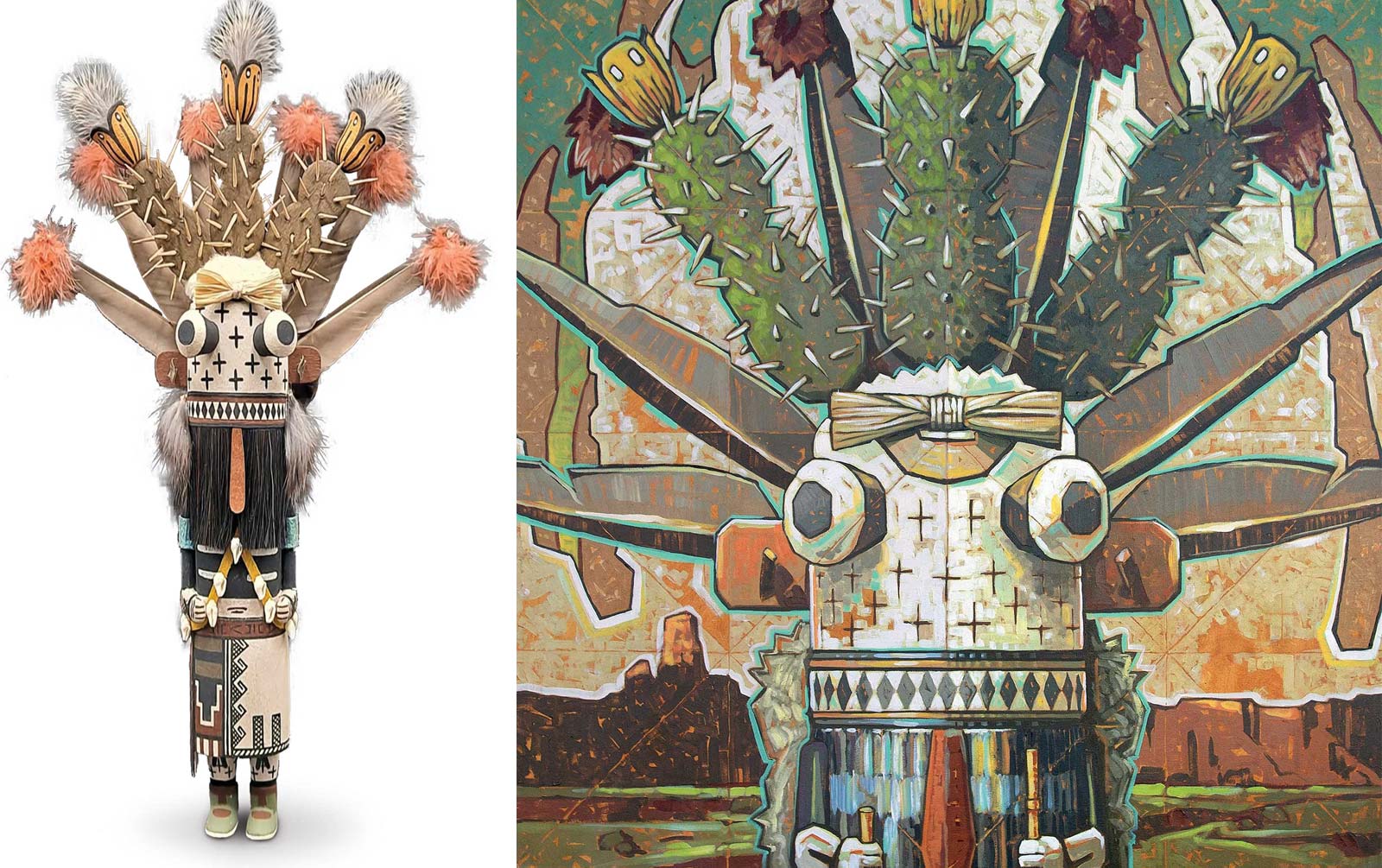
Left: Tayron Polequaptewa (Hopi), Yunguh (Prickly Pear Cactus katsina) Right: Sean Micheal Chavez, Yunguh- Prickly Pear Katsina, oil on canvas, 36 x 36 in. Courtesy Acosta Strong Fine Art, Santa Fe, NM.
Collectors of Hopi katsinam are long familiar with Tay’s work. Recently, however, he recognized an opportunity to broaden his audience while fostering dialogue that emphasized appreciation over appropriation. “My katsina carvings were featured in paintings by some of the best artists out there,” Tay says. “It was an honor—and a lot of fun—to share my culture with Mary Calengor, Sean Michael Chavez, Drew Christie, Josh Gibson, Max Grover, Greg Newbold and Kim Wiggins. What they created was incredible. I learned as much from them as they did from me. It inspires me to keep getting better.” —
To learn more about Polequaptewa’s collaboration with Western painters, read Russ Hoover’s companion piece in the February issue of Western Art Collector.
Powered by Froala Editor


