Beginning February 28, the Phoenix Art Museum will host Cara Romero: Panûpünüwügai (Living Light), the first major museum exhibition of the narrative work of the Chemehuevi photographer.
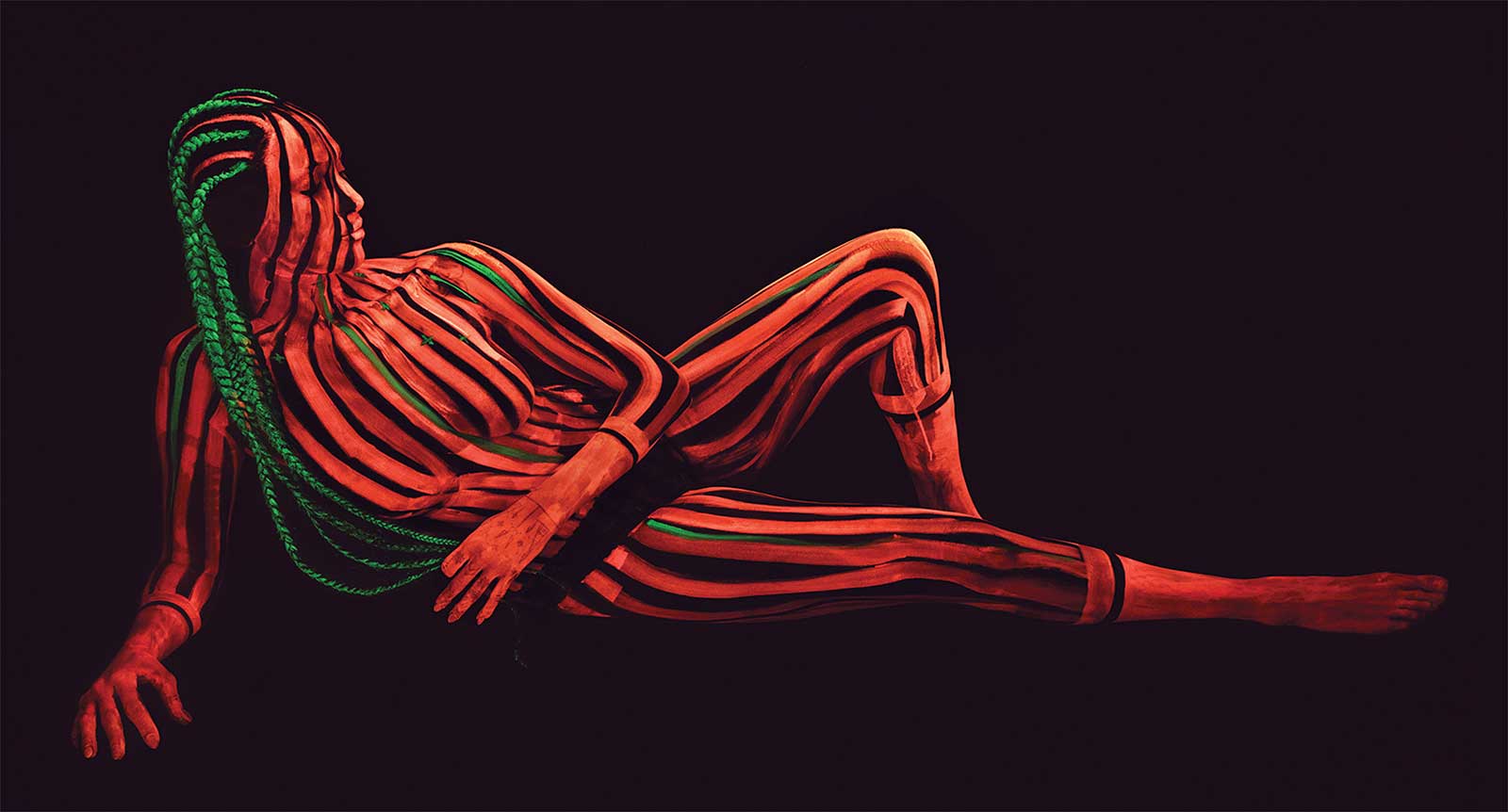
Alika No. 2, 2024, archival pigment print. © Cara Romero. Image courtesy the artist
Jeremy Mikolajczak, the museum’s director, says, “Romero stands at the forefront of contemporary photography, masterfully weaving materials, myths and Indigenous practices with urgent contemporary realities. Though rooted in her personal story and Indigenous futurism, her work speaks universally to themes of women’s empowerment, environmental stewardship, and the role of landscape in shaping identity.”
The exhibition was curated by Jami Powell, curator of Indigenous art at Dartmouth College’s Hood Museum of Art.
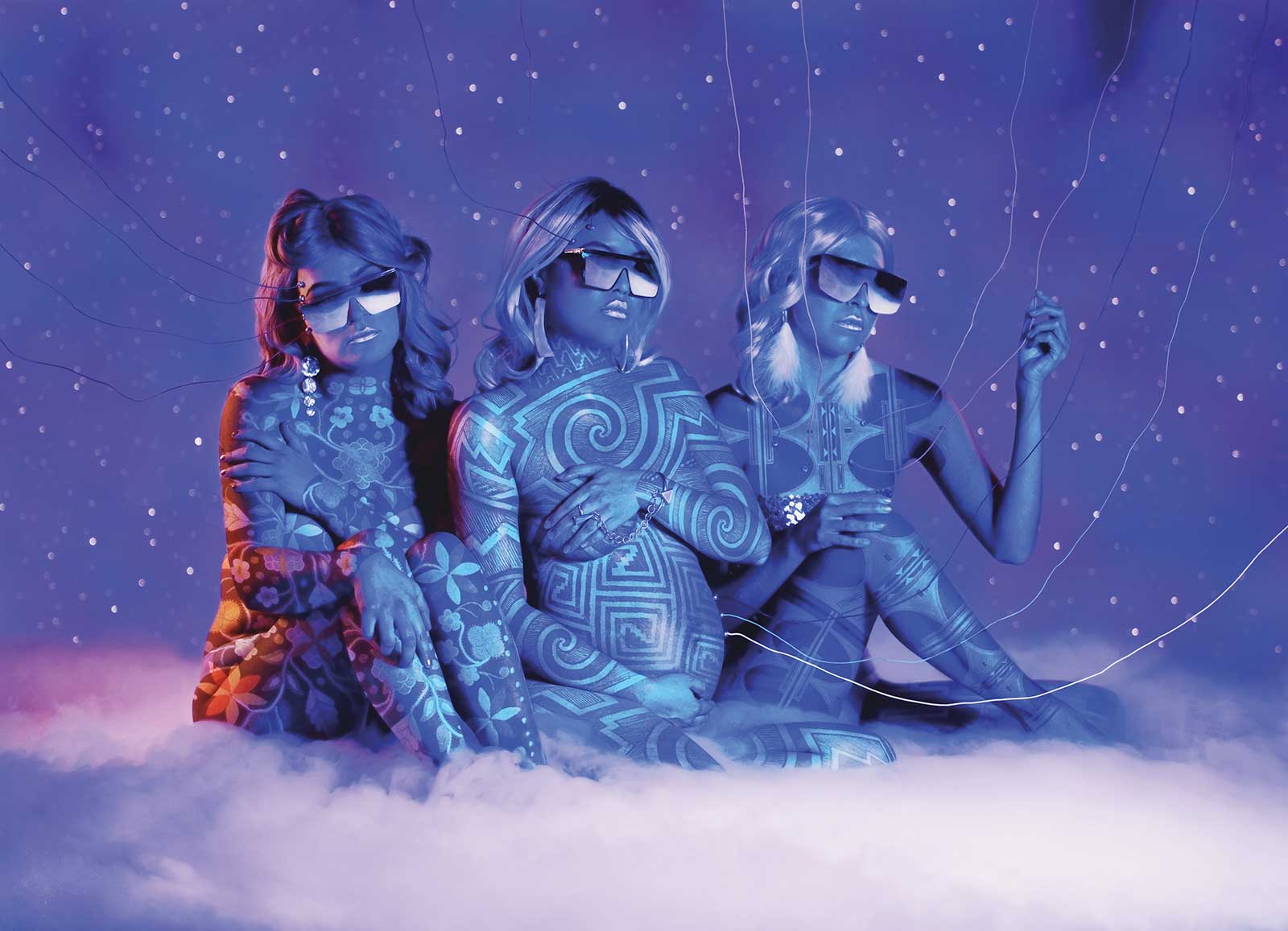
3 Sisters, 2022, archival pigment print. Hood Museum of Art, Dartmouth: Purchased through the Acquisition and Preservation of Native American Art Fund; 2022.47.2. © Cara Romero. Image courtesy the artist.
Romero says, “I feel like one of the lucky ones that grew up in one of the most biodiverse places in the world. We left Los Angeles in ’79 and I grew up in the big, wild Mojave Desert on the lapping shores of the Colorado River and Lake Havasu. Animals everywhere, wildflowers, rocks, cacti. The Mojave Desert is my heaven.
“In Chemehuevi, we don’t have words for photography, but we have words for light—different kinds of light,” the artist continues. “Panûpü is like a source of light that you’re beginning to see. Like maybe the sun is coming up and everything is becoming light. Nüwügai is a word that you can add to a tree or to a rock, and it means it’s giving spirit to that thing, animation. It’s living light. What we are talking about is not only photography being painting with light, but also how this journey of making photographs for me has been about the spirit of community and contemporary Native peoples and giving life to these stories and the spiritual journey that I’ve been on making these photographs—a never ending love.”
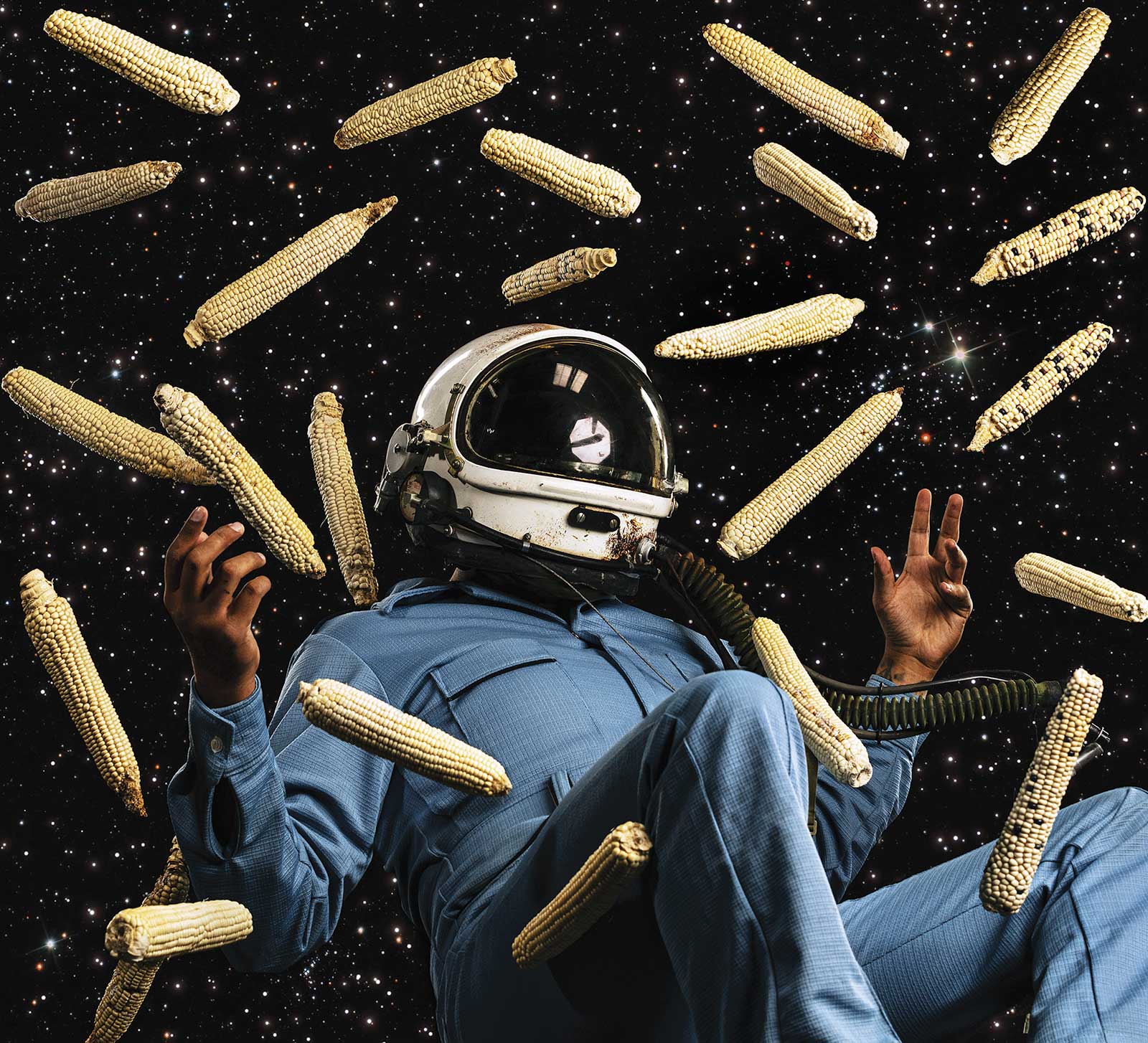
The Zenith, 2022, archival pigment print. Hood Museum of Art, Dartmouth: Purchased through the Acquisition and Preservation of Native American Art Fund; 2022.47.1. © Cara Romero. Image courtesy the artist.
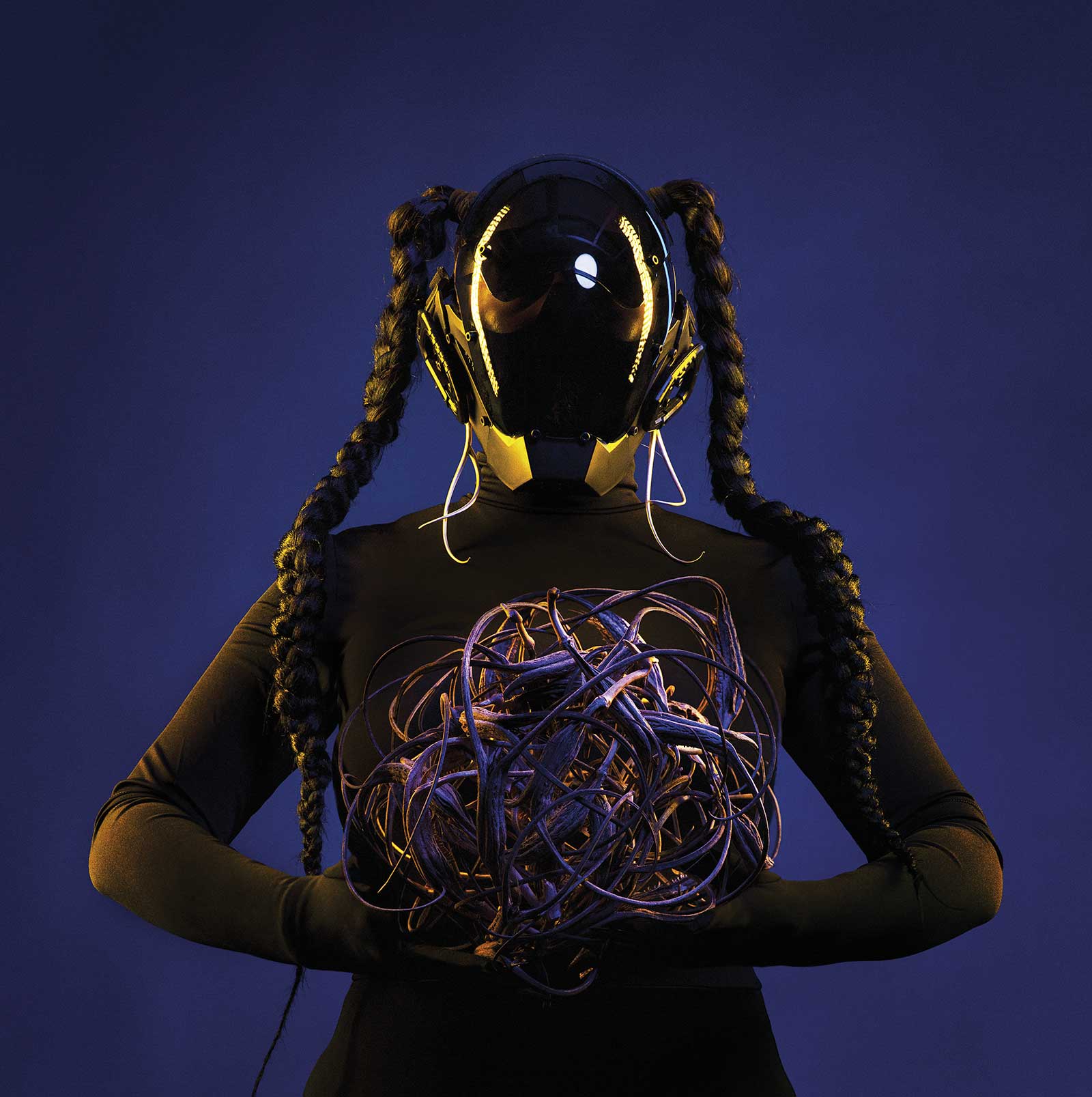
Devil’s Claw No. 2, 2025, archival pigment print. © Cara Romero. Image courtesy of the artist.
She continues, “At the University of Houston I borrowed a camera to take my first black-and-white film class, and then another one, and then another one, and then I ran off to IAIA [Institute of American Indian Arts in Santa Fe]. The class had one of those instructors that change your life. He was all about narrative in photography. I fell in love with the science, but I also fell in love with what you could do with a photograph. It was worth 1,000 words and he made me feel like I was really good at it. I had so much to say and so little technical ability. I think I just knew right away, this is how I was going to show people that we’re contemporary, that we’re living.
“I realized that it was a very powerful shift to have a woman behind the camera from within the community. So, there’s a great amount of maternal relationship, of woman-to-woman relationship that comes through in those images. There’s autobiography, there’s strength, there’s the experience of how I live in the world and how I was raised in the world. If you compare photography of Native women by men from outside the culture to work by women inside the culture, you have a very strong counter-narrative of rematriation, of giving humanity to women from our community.”
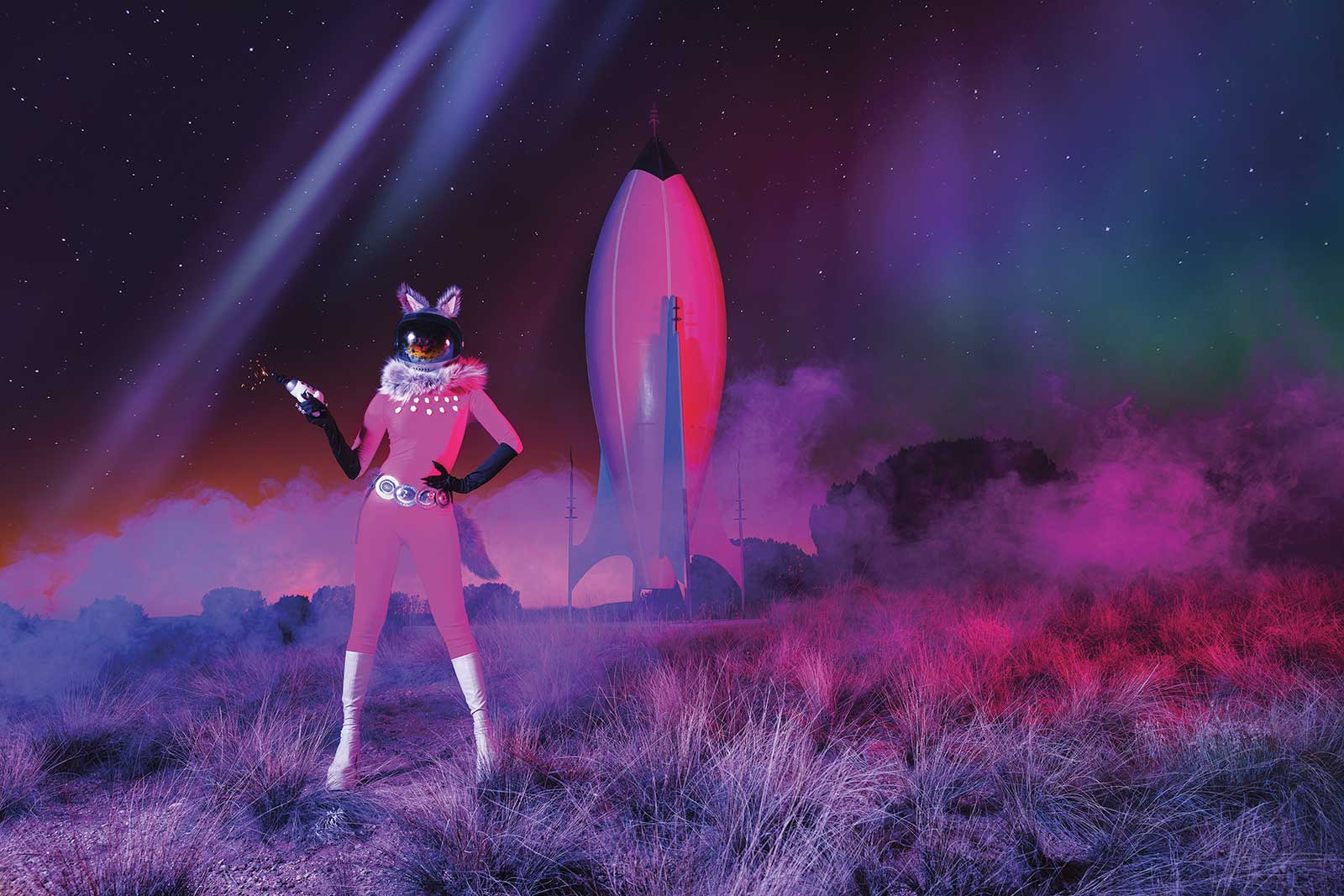
Coyote Girl, 2024, archival pigment print. © Cara Romero. Image courtesy the artist.
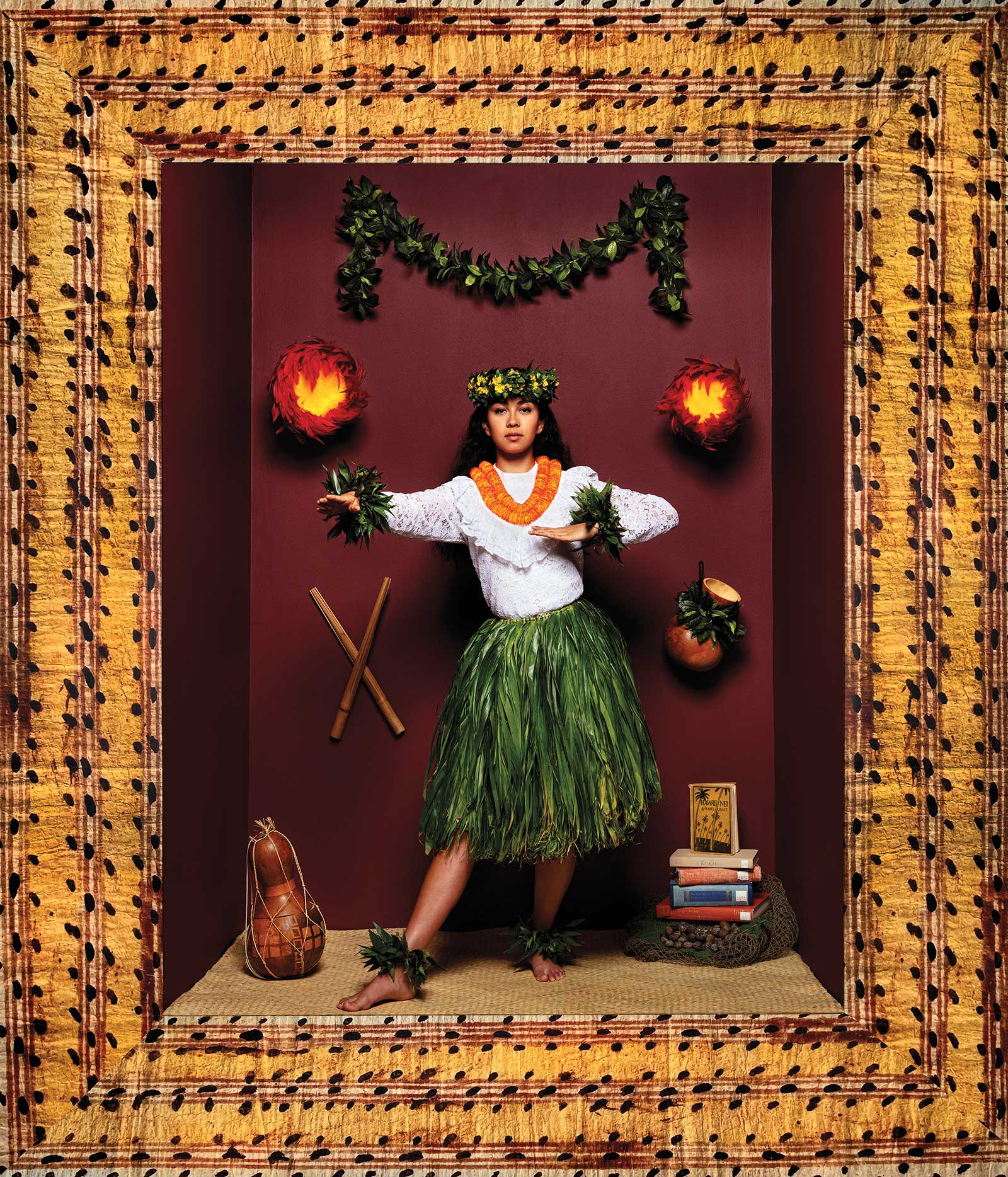
Amedée, 2024, archival pigment print. © Cara Romero. Image courtesy the artist.
Among the photographs in the exhibition is 3 Sisters, 2022. The Hood Museum places it in the context of Indigenous history and futurism. “From a newer genre of Native Futurism: 3 Sisters refers to the indigenous science (sometimes called T.E.K. or Traditional Ecological Knowledge) of 3 Sisters gardens implemented by many tribes that demonstrates the sophisticated empirical science that has helped tribes live sustainably and in harmony with our environments for thousands of years. 3 Sisters imagines a future where Native women hold a sacred role in the healing and balance of our earth. The wires are ‘plugged in’ to their hearts, minds and life-giving energies—the things our futures depend upon for survival.”

Oil Bloom, 2015, archival pigment print. Hood Museum of Art, Dartmouth: Purchased through the Sondra and Charles Gilman Jr. Foundation Fund; 2019.78.2. © Cara Romero. Image courtesy the artist.
Romero links the three women to the ancient “three sisters” of corn, squash and beans, a sustainable companion planting method. The models, all artists—Leah Kolakowski (Keweenaw Bay Ojibwe), Kaa Lazaro-Folwell (Santa Clara) and Peshawn Bread (Kiowa/Comanche)—wear patterns from their tribes, digitally applied to their bodies. “I knew I wanted to have their individual vernacular coming through time,” Romero explains. “So, Leah is adorned with the vernacular of her Ojibwe peoples. That’s Ojibwe floral work. Kaa has Ancestral Puebloan designs, and Pishon has her family’s Comanche parfleche design. When all three of them were together, I thought, ‘Three Graces.’ Then, I thought, ‘Three Sisters.’ That was a nod to Indigenous science, but also one of the things that we have to protect as human beings. All of the futurism pieces kind of have that something, they’re very playful. It’s like speculative futurism, but they all have something really, really old coming through time. And that, to me, is hopeful.”

Cara Romero, 2020. © Cara Romero. Image courtesy the artist.
IAIA describes Indigenous futurism as artwork “that presents the future from a Native perspective, and illustrates the use of cosmology and science as part of tribal oral history and ways of life.”
In the immediate future, Cara Romero: Panûpünüwügai (Living Light) will remain on view through June 28 in Phoenix. —
February 28-June 28, 2026
Cara Romero: Panûpünüwügai (Living Light)
Phoenix Art Museum 1625 N. Central Avenue, Phoenix, AZ 85004
(602) 257-1880, www.phxart.org
Powered by Froala Editor


