As first days on the job go, Bill Faust had an all-timer. The year was 1981 and Faust was 21 years old. The job was at Lovena Ohl Gallery in Scottsdale, Arizona. Faust was fresh in the desert from St. Louis. His boss was his great-aunt, Lovena Ohl (1908-1994).
The gallery specialized in Native American jewelry, including the work of Charles Loloma. The legendary Hopi jeweler happened to be in that day visiting.
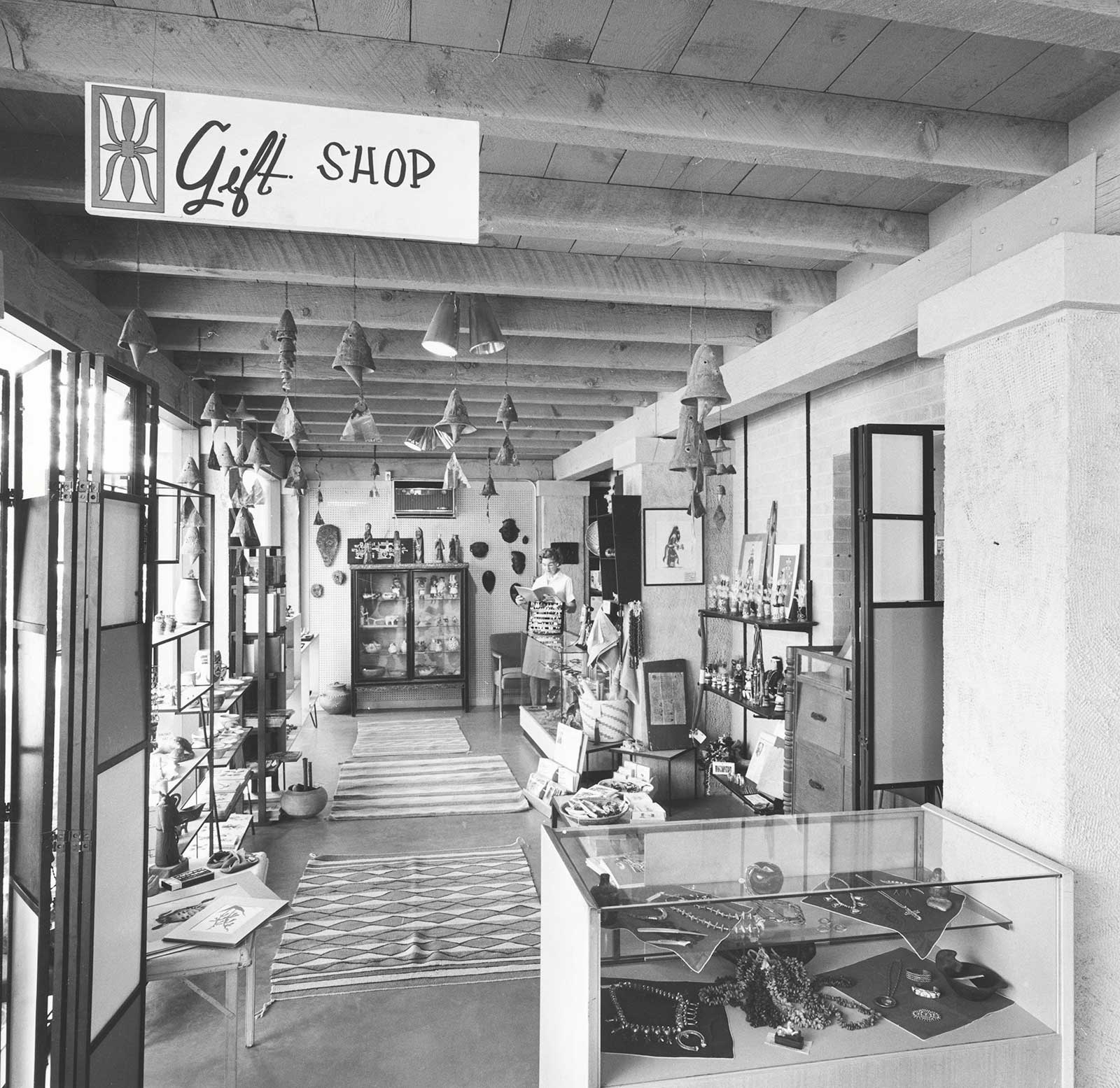
Lovena Ohl in the Heard Shop, undated. Billie Jane Baguley Library and Archives, the Heard Museum, Phoenix, AZ.
While Ohl repeatedly refused gifts from Loloma, she couldn’t prevent him from giving something to Faust. That something was a sterling silver katsina mask belt buckle with ironwood and Lone Mountain turquoise inlay. The gift now resides at Western Spirt: Scottsdale’s Museum of the West.
So it went for Bill Faust traveling and working with Ohl, one more remarkable memory after the next. The first time he traveled West was on her invitation to tag along to Santa Fe Indian Market in 1976. Faust met Maria Martinez and N. Scott Momaday there before visiting the pueblos to watch her purchase art.
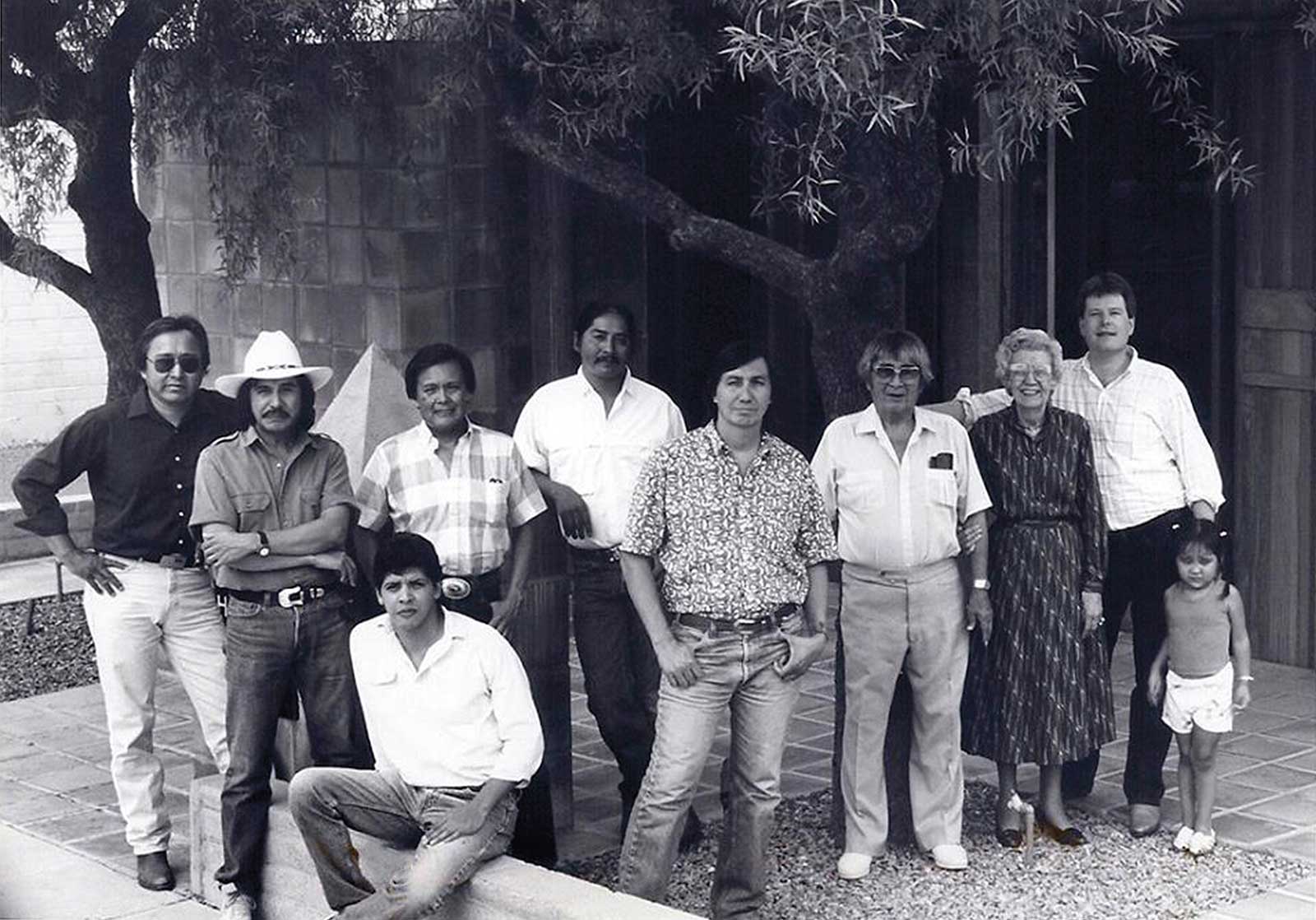
Faust Gallery artists in Scottsdale, Arizona, in 1987. Standing from far left: Painter David Johns, jeweler James Little, jeweler Harvey Begay, sand painter Joe Ben Jr., jeweler Larry Golsh, jeweler Charles Loloma, Lovena Ohl, Bill Faust and Shaliyah Ben, Joe Ben Jr.’s daughter. Jeweler Charles Supplee is seated in front.
At that time, Ohl was managing and buying for the Heard Museum Shop. Upon taking that job in 1969, she began transforming it from a typical museum gift store selling mostly souvenirs to a high-end gallery offering the best of the best Native American artwork from the Southwest.
“When she took the job at the Heard, they had so many tchotchkes she literally took a lot of that material on Route 66 and unloaded it,” Faust says. “With those funds, she went and bought better items. She told the story of one of the [Heard Museum] Guild members who comes into the shop and sees this miraculous, beautiful concho belt hanging on the wall. She says, ‘Lovena, that’s a beautiful belt. How much is that?’ Lovena says, ‘It’s $800.’ The gal replies, ‘Lovena, we don’t sell things like that here.’ Lovena looked at her and said, ‘Well, dear, we do now.’”
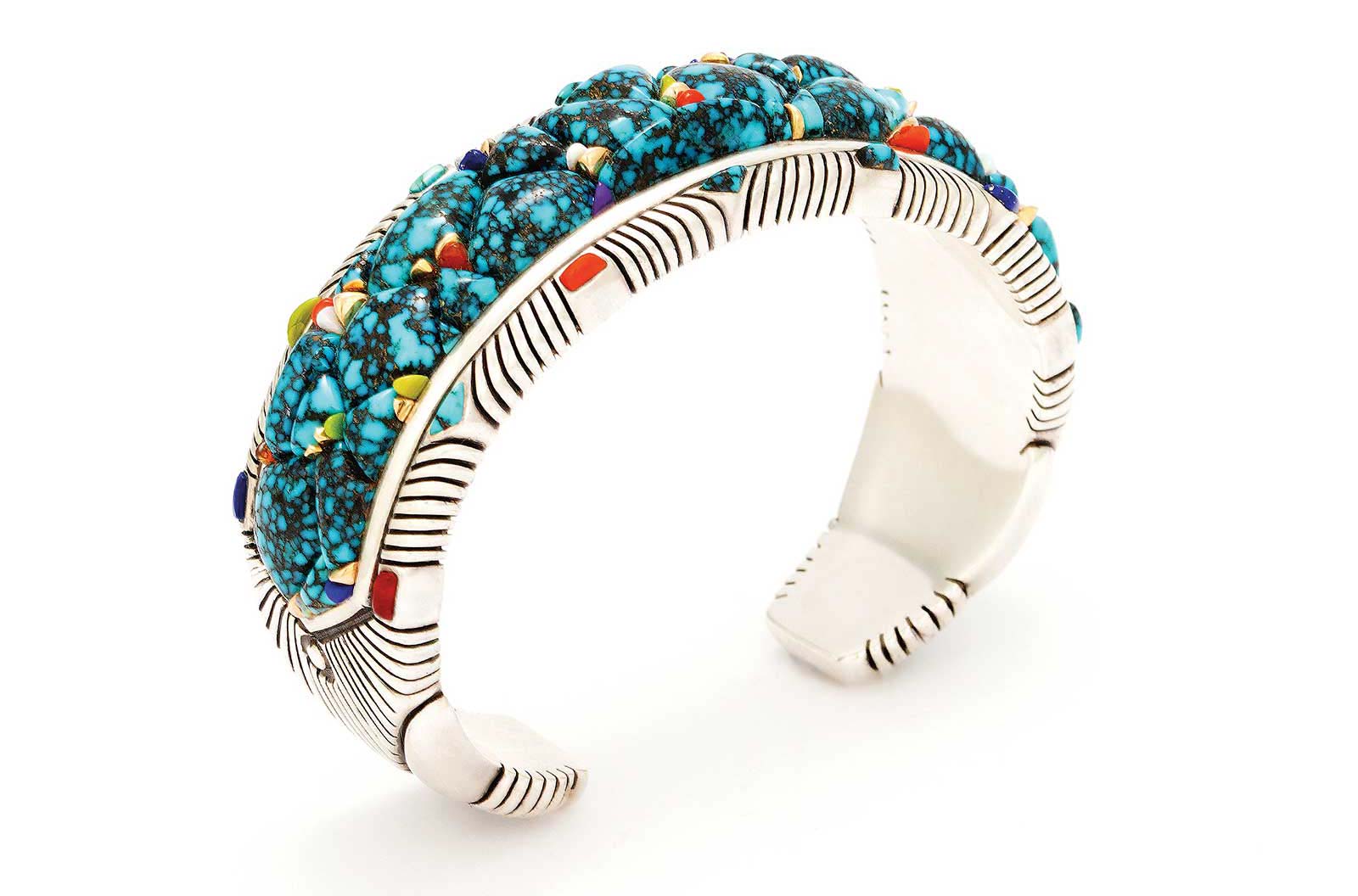
Raymond Yazzie (Navajo (Diné)), inalid bracelet, sterling silver, Lander Blue turquoise, hand-cut stones including coral, lapis, sugilite and gold, 5¼ in.
The Heard Museum Shop has upheld Ohl’s lofty standards for its retail items ever since.
Faust shares these stories, and has made new ones, from his two Faust Gallery locations in Scottsdale and Santa Fe, New Mexico. Scottsdale opened first, in 1996, following Ohl’s passing.
Before the Heard
Lovena Ohl was born for sales.
“She remembered everybody’s name, all her clients. She knew them all by heart,” Faust says. “Every year they’d come back, and they couldn’t believe that she would remember who they were.”
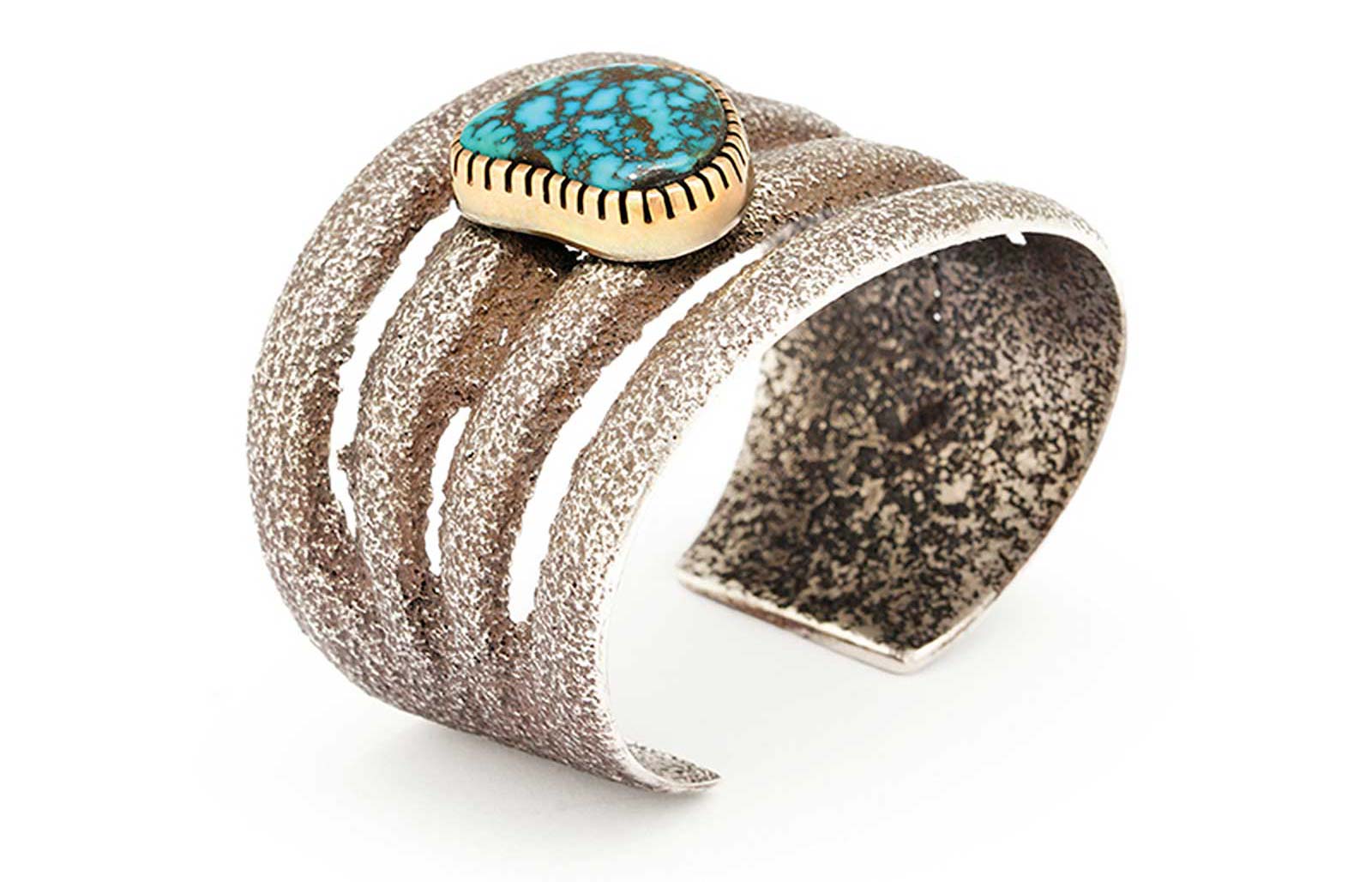
Charles Loloma (Hopi, 1921-1991), split-band bracelet, tufa-cast sterling silver, Morenci turquoise stone set in classic Loloma-style serrated bezel design in polished 14k gold, 5½ in.
Before entering the art world, she became the first female agent hired by Prudential Insurance, eventually running her own agency. That was back in Pennsylvania. It was Faust’s father, also named Bill, who brought Ohl to Arizona in 1946.
“Dad was deathly ill with asthma and the doctors were really worried he may not survive it. It was that bad,” Faust explains. “Lovena loved my father, and her husband, who passed away, was Dad’s favorite uncle. She made the decision to sell her house and sell her partnership in the insurance agency and use that money to go to Arizona to have Dad get better.”
When 10-year-old Bill Faust Sr. was sufficiently stable to travel, off they went to Phoenix where he could recover, and Ohl would begin a journey to becoming one of the foremost experts in contemporary Native American jewelry.
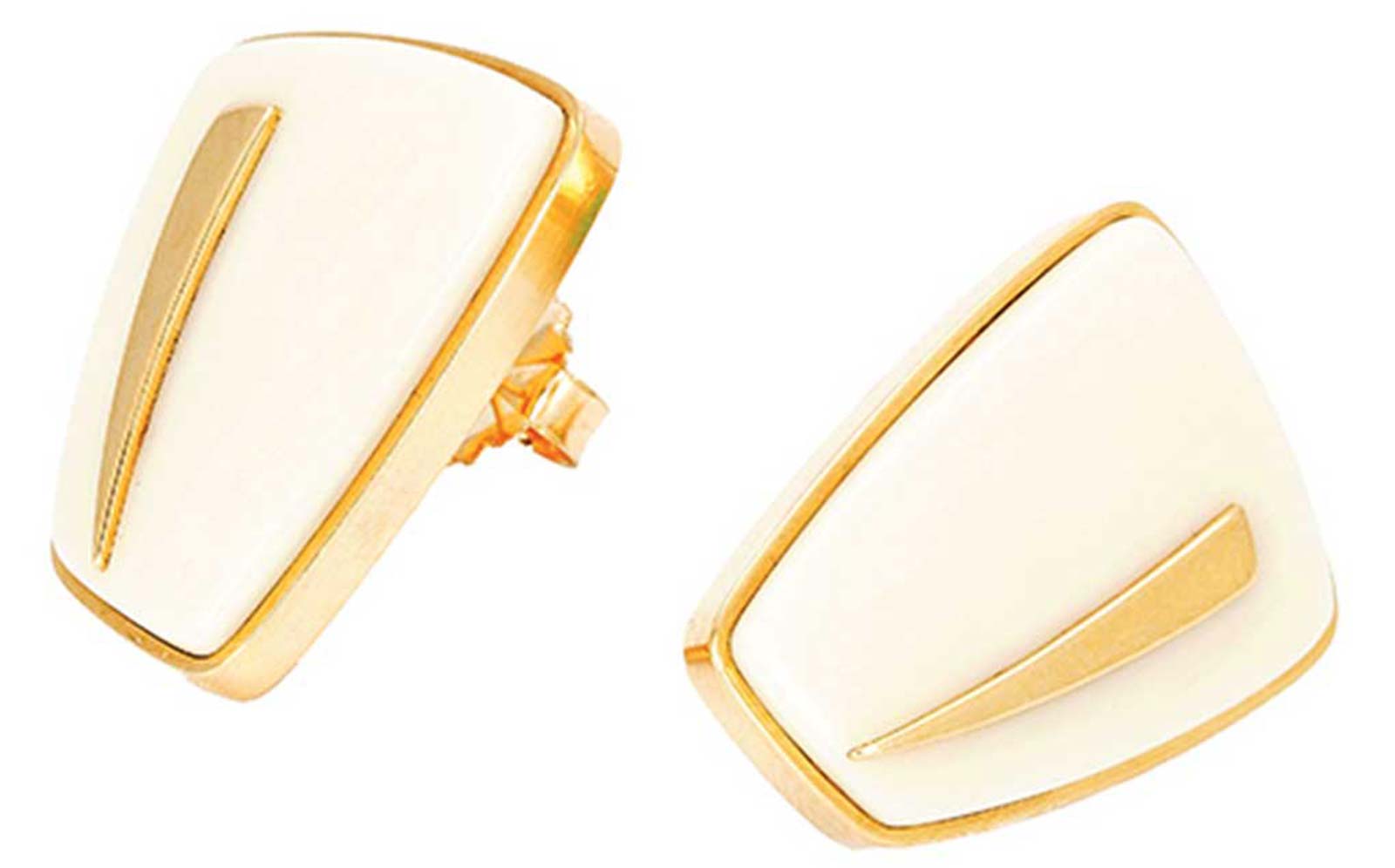
Charles Supplee (Hopi, 1959-2021), earrings, hand-fabricated 14k gold and set with white coral, 11⁄16 x 7⁄8 in.
An employment agent figured if Ohl could sell insurance, she could sell jewelry. Ohl was set up for an interview with Clay Smith, who owned a gallery at the Westward Ho hotel. Thanks to some nudging from his wife, Smith hired Ohl as a salesperson.
The gallery sold jewelry, European antiques, C.M. Russell and Frederic Remington paintings, and Native American art in a side section. Lovena learned about diamonds and precious gemstones. The gallery had a relationship with Oscar Heyman & Brothers in New York, one of the most prestigious jewelry ateliers in the world since 1912. She learned about Southwestern Native jewelry in part from CG Wallace, a famous trader from the Zuni Pueblo who had worked with the gallery.
One of the gallery’s clients was Walter Bimson, head of Valley National Bank. He took a liking to Ohl. When Bimson learned the Heard was looking for someone new to run its shop, he recommended Ohl, who by that time was running her own small gallery, Jewels by Ohl, on Fifth Avenue in Scottsdale.
The Heard’s board agreed with Bimson’s recommendation and hired Ohl to take over the shop with an eye on transforming it into a world-class museum store.
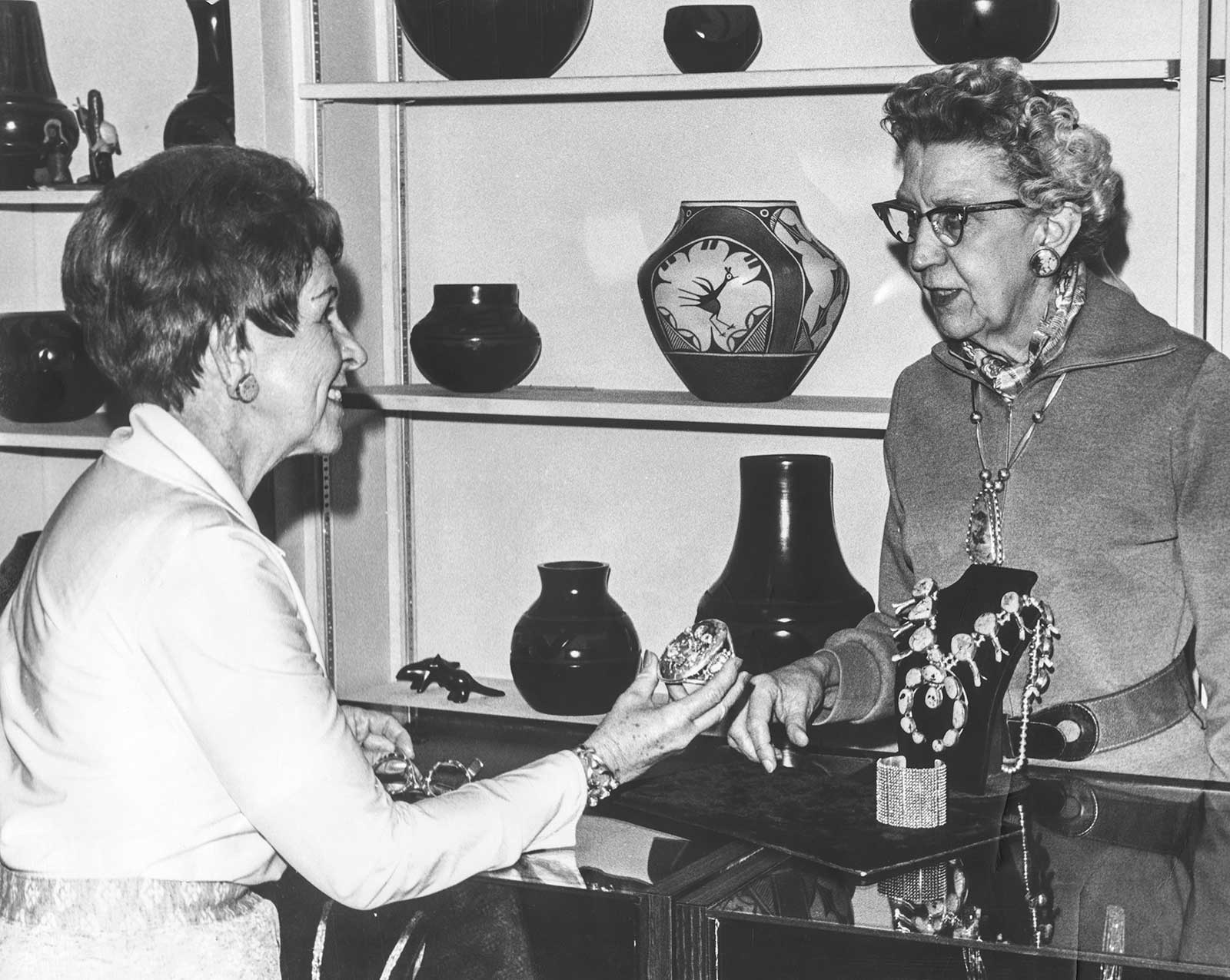
Lovena Ohl in the Heard Shop with unidentified woman, undated photo. Billie Jane Baguley Library and Archives, the Heard Museum, Phoenix, AZ.
Phoenix Tenure
Lovena Ohl ran the Heard Museum Shop from 1969 through 1977. Her timing was perfect; Southwestern Native American jewelry was white hot during these years. Jim Morrison and Cher and the biggest stars in music and Hollywood were wearing turquoise and silver in concho belts driving consumer demand.
Her tenure intersected with an unsurpassed era for artists as well.
“She was right there at a time where American Indian art was transforming and artists weren’t working with trading posts anymore. They were trying to identify themselves as independent artists—and it was happening,” Faust says. “Charles Loloma, Fritz Scholder, Allan Houser…all those guys blazed a new path for American Indian artists and they’re at their pinnacle.”
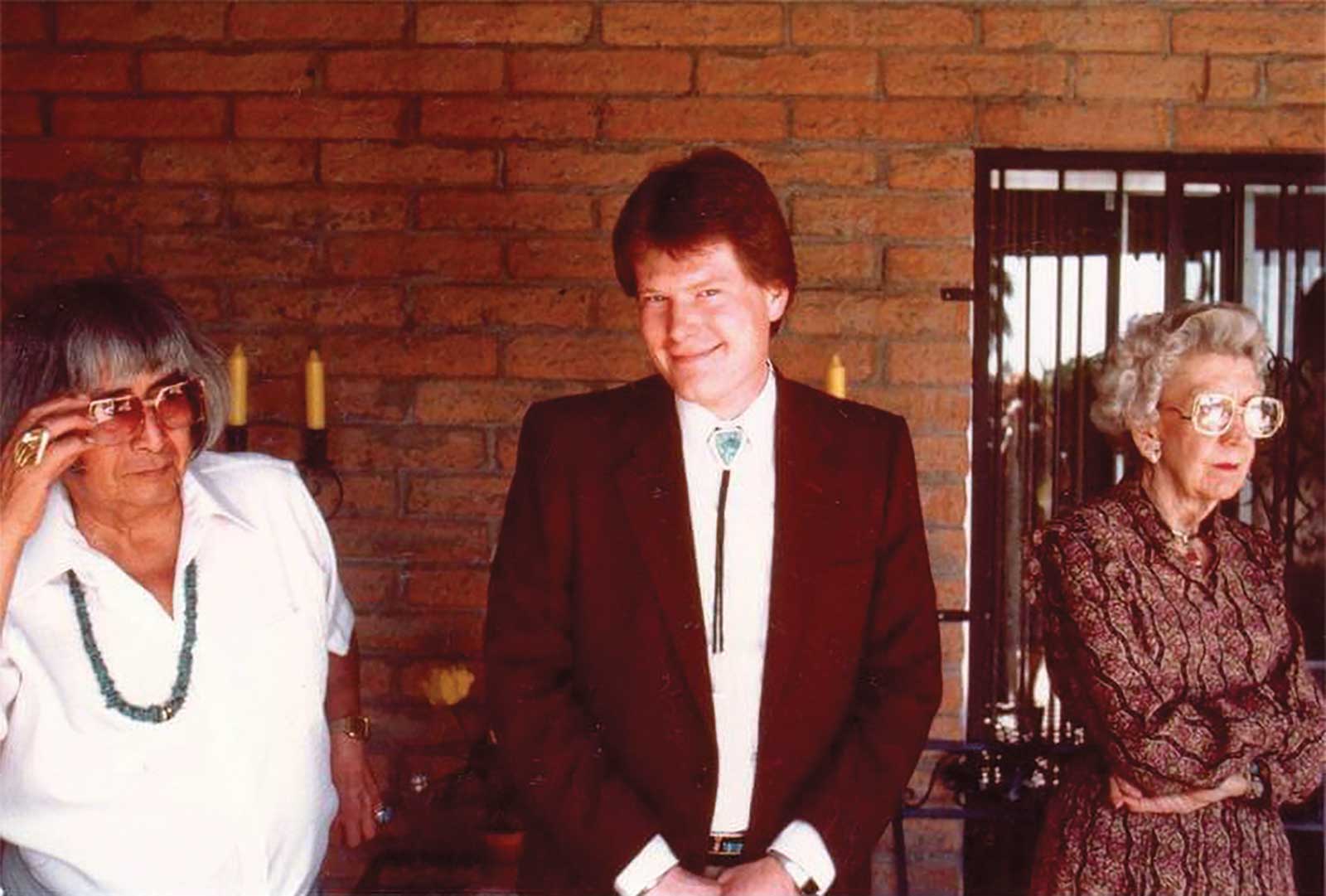
Jeweler Charles Loloma, left, with Bill Faust and Lovena Ohl, undated. Courtesy Faust Gallery.
Ohl was ahead of her time in recognizing and positioning Native jewelry as fine art, not merely craft.
“There was a bracelet that I really wanted, and at the time when I’m working with her, I’m not making that much money. The bracelet was in sterling silver with woods and ivories and turquoise that Charles [Loloma] did,” Faust remembers. “[Lovena] says to me, ‘If you really want that bracelet, you should buy that because it’s going to be worth a Corvette someday.’ She would tell people that what you’re buying is probably one of the best investments you could ever make. Not that that is how you should sell art, but she was right.”
And when it came time to closing a big sale, Ohl had an ace up her sleeve.
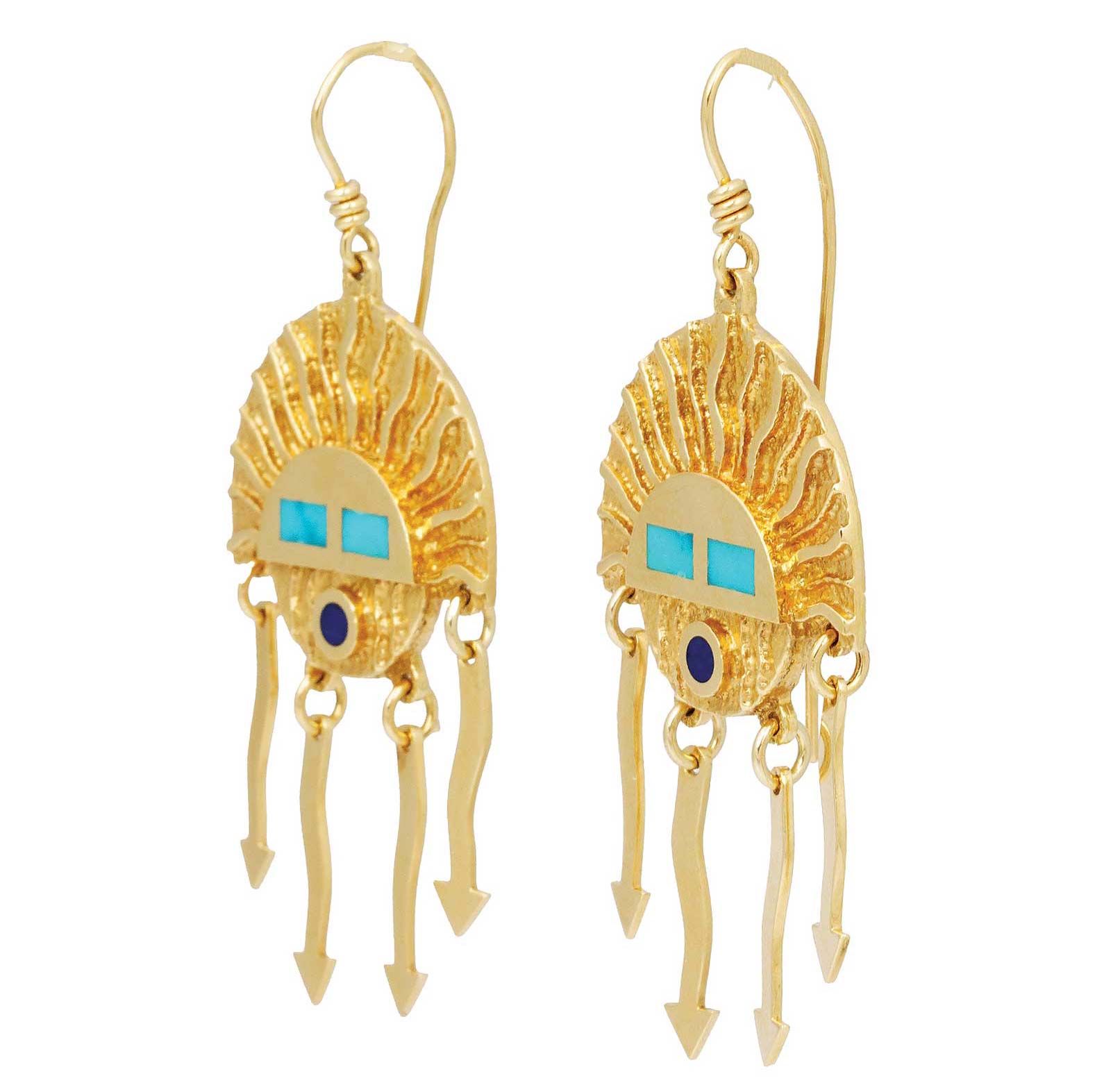
Ric Charlie (Navajo (Diné)), Yei earrings, 18k gold, with lapis and turquoise, 2¼ x 13⁄16 in.
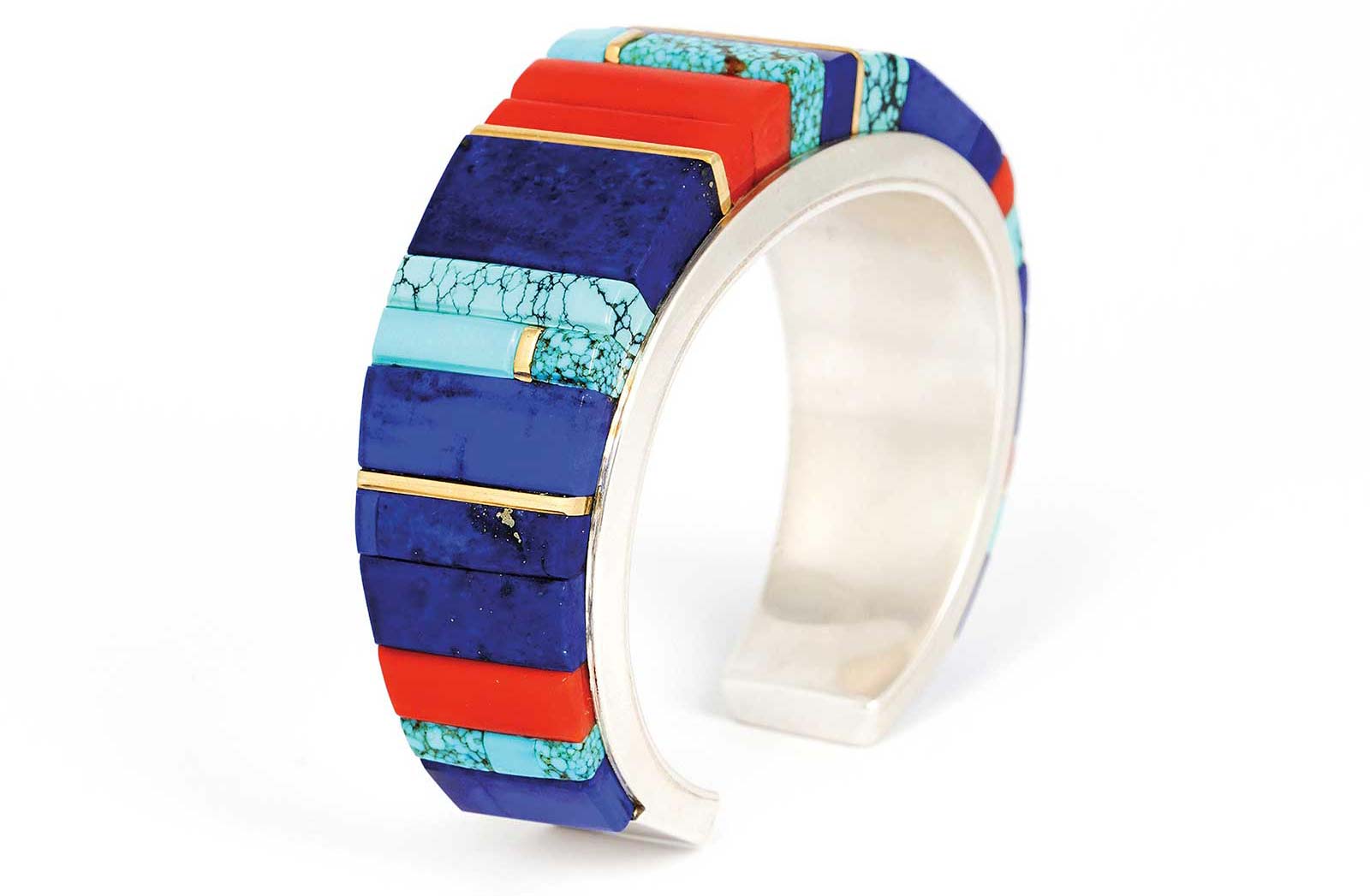
Sonwai (Verma Nequatewa) (Hopi), inlaid cuff bracelet, sterling silver with hand-inlaid lapis, turquoise, coral and fine gold line accents, 59⁄16 in.
“One of the things she created at the Heard, she had a special back room where she kept special pieces, and when she had a feeling that a client or collector would be interested in something special, she took them in that back room and she sold it,” Faust explained. “When I joined her in Scottsdale, she had her own little office there that acted in the same way.”
Ohl didn’t simply see the artists she represented through the prism of sales, however. She routinely paid more than asking price for pieces, and established the Lovena Ohl Foundation in 1978 to support young Native artists. One of them was James Little, whose work she handled. Little was born deaf, and as a result, was unable to read or write. Surgeries in early adulthood allowed him to hear. Ohl’s foundation found Little a speech therapist from Arizona State University and supported his learning to read and write.
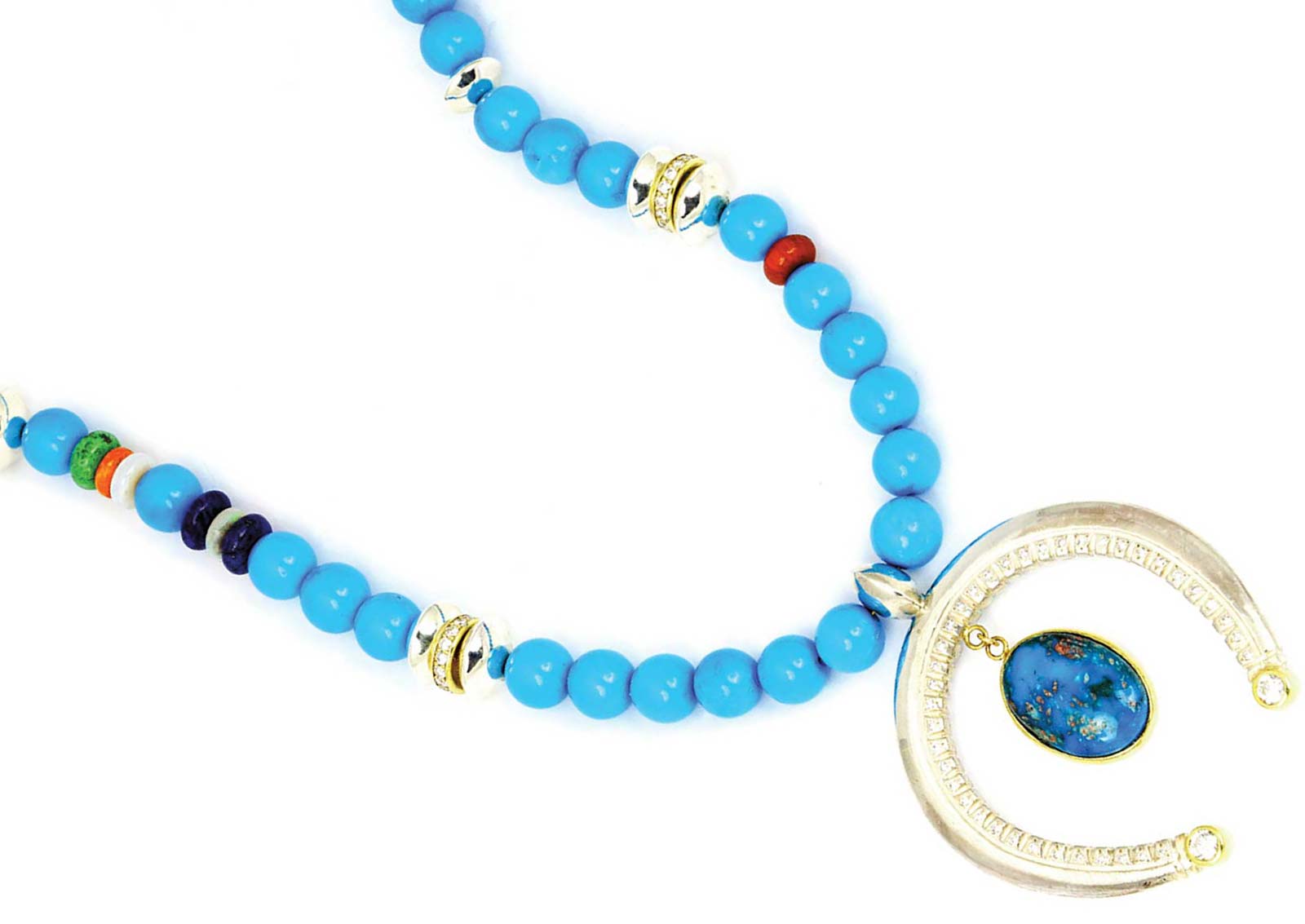
Bo Monongya (Navajo (Diné)), necklace, handmade 18k gold and sterling silver with Kingman turquoise and lapis, coral, opal, sugilite, pearls and additional turquoise, 22 x 7⁄16 in.
Ohl left the Heard to open her own Scottsdale gallery in 1977.
Ohl’s Legacy Continues
Bill Faust carries on his great-aunt’s legacy of selling the finest in Southwestern Native jewelry. Artists he represents will be returning to the 2026 Heard Museum Guild Indian Fair & Market, offering pieces from the generation of artists Ohl worked with, and who Faust started with—Loloma, Harvey Begay, Larry Golsh—as well as the artists filling their shoes.
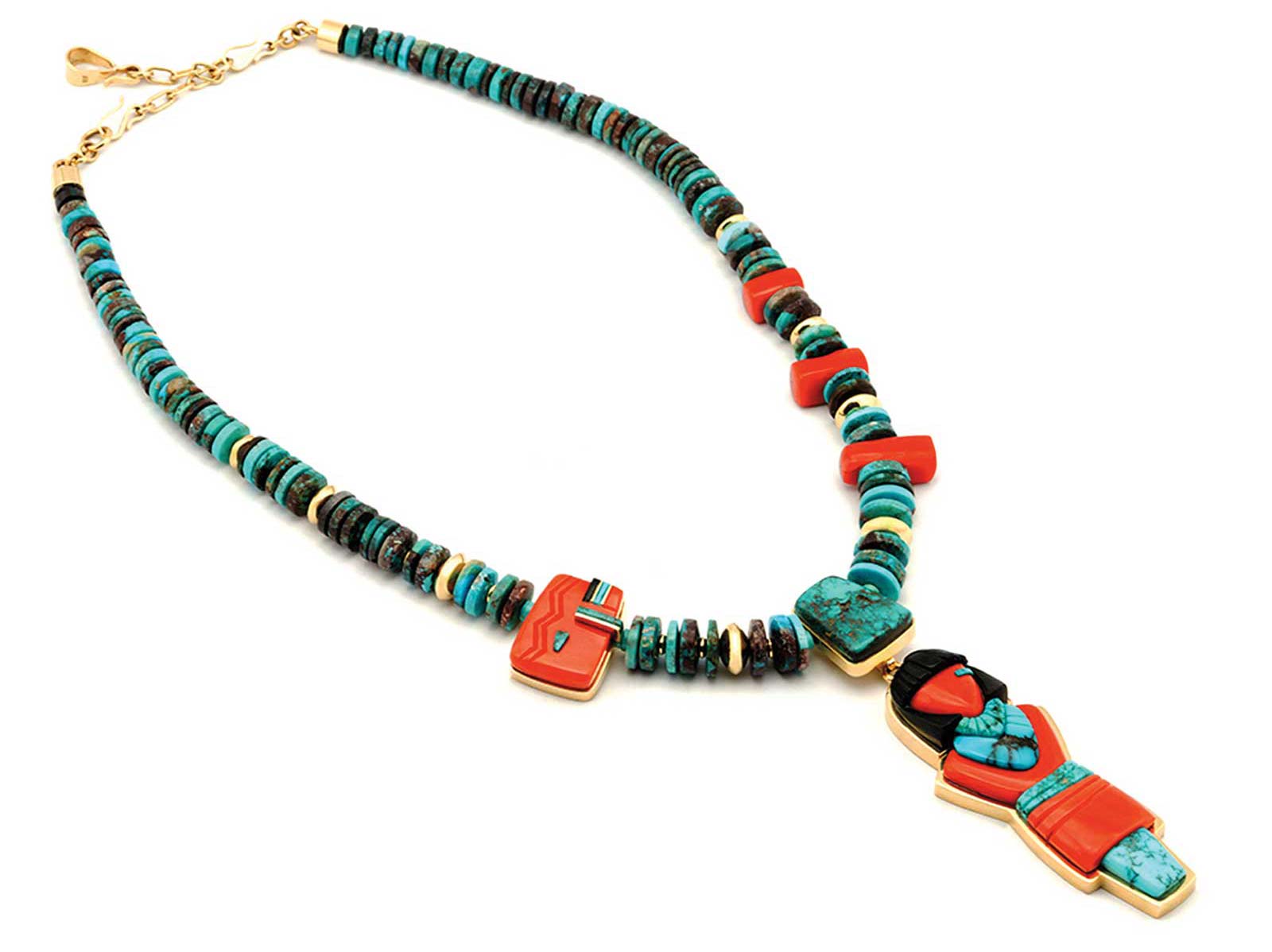
Don Supplee (Hopi), necklace, gold, turquoise and coral
“Ric Charlie (Navajo) is probably the finest tufa cast artist alive today,” Faust says. “He does very special carvings into the stone that are meticulously perfect. Then he casts the metal in that, and once you cast it, rarely are you able to recast a mold because it’s all carved out and when you pull it out, it destroys the mold, so almost everything he does is one of a kind. No one casts like him. Nobody takes the time to do the detail he does.”
Contemporary Native jewelers aren’t replacing the legends. That’s impossible. Instead, they’re moving the art form forward in their own ways.
“Donnie Supplee plays off of his (Hopi heritage) with katsina themes, plus he does some of the finest turquoise necklaces ever with high-quality Lone Mountain or Fox turquoise,” Faust says. “He might put a katsina pendant on [a necklace] that he literally inlays everything, every detail on there, which is fabulous.”
Ohl’s impact at the Heard Shop can be seen still today, as can her role in amplifying Native American jewelry in the Southwest. This will all be on display at the 2026 Heard Museum Guild Indian Fair & Market.
Powered by Froala Editor


