Blue Bird Flour is well known for its use in frybread and tortilla recipes, and its logo has become a motif in Native popular culture. From February 6 through March 7, 2027, the Heard Museum presents an exhibition that showcases the creative ways the iconic flour brand has been integrated into daily life, alongside an exploration of the history of frybread.
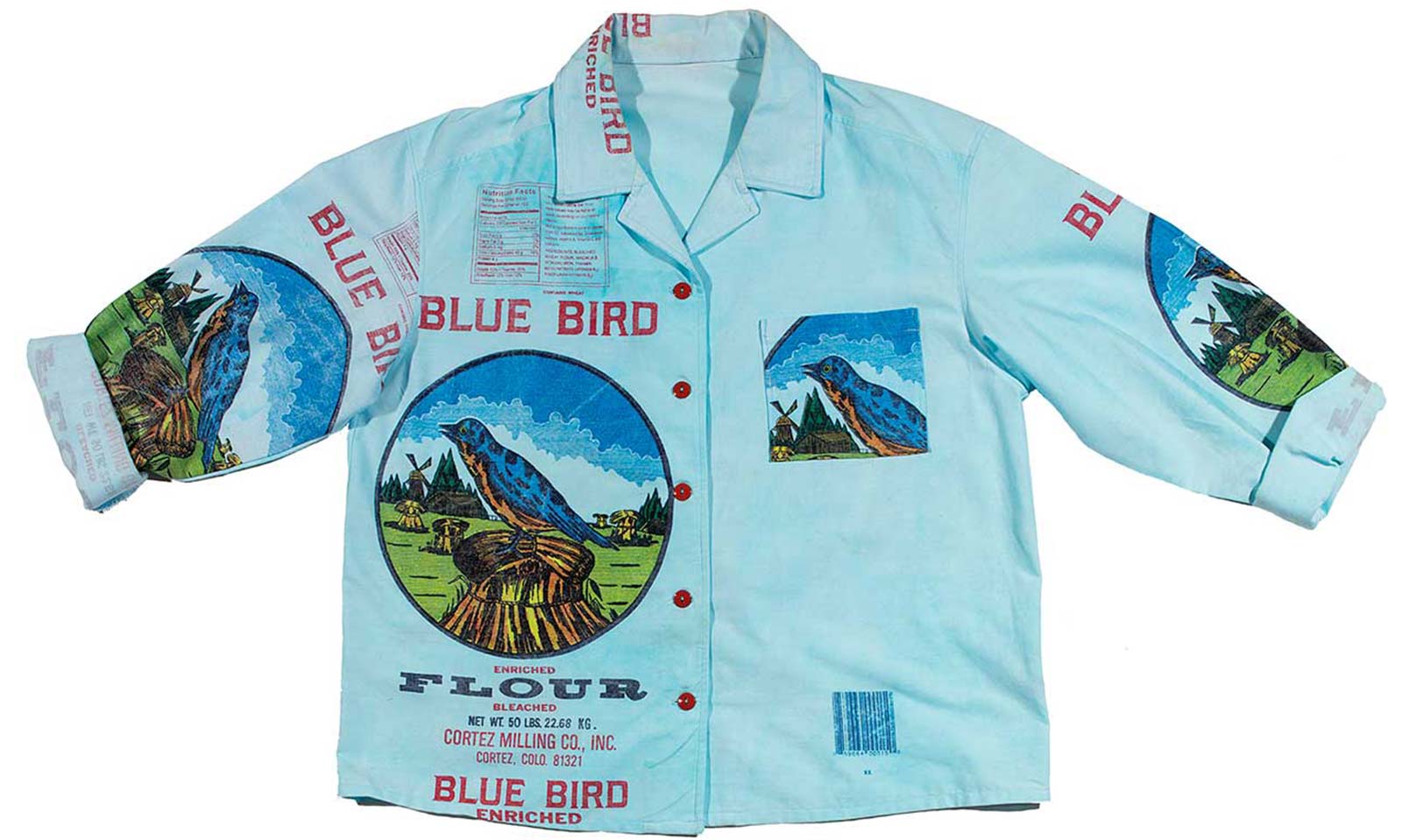
Toni Williams (Northern Arapaho), Button Shirt, ca. 2015, Blue Bird Flour bag cloth. Collection of Kathy and Bill Howard.
On display will be roughly a dozen examples of clothing, bags, face masks and paintings that incorporate the Blue Bird brand in unique ways, from using the actual cloth of the flour bags to the company logo.
Frybread is not a traditional Native food in that it was not eaten before contact with Europeans. Around 1864, during a forced removal and relocation from their homes by the United States government, it was a means of survival when rations consisted of flour, lard, sugar, coffee and other dry goods.
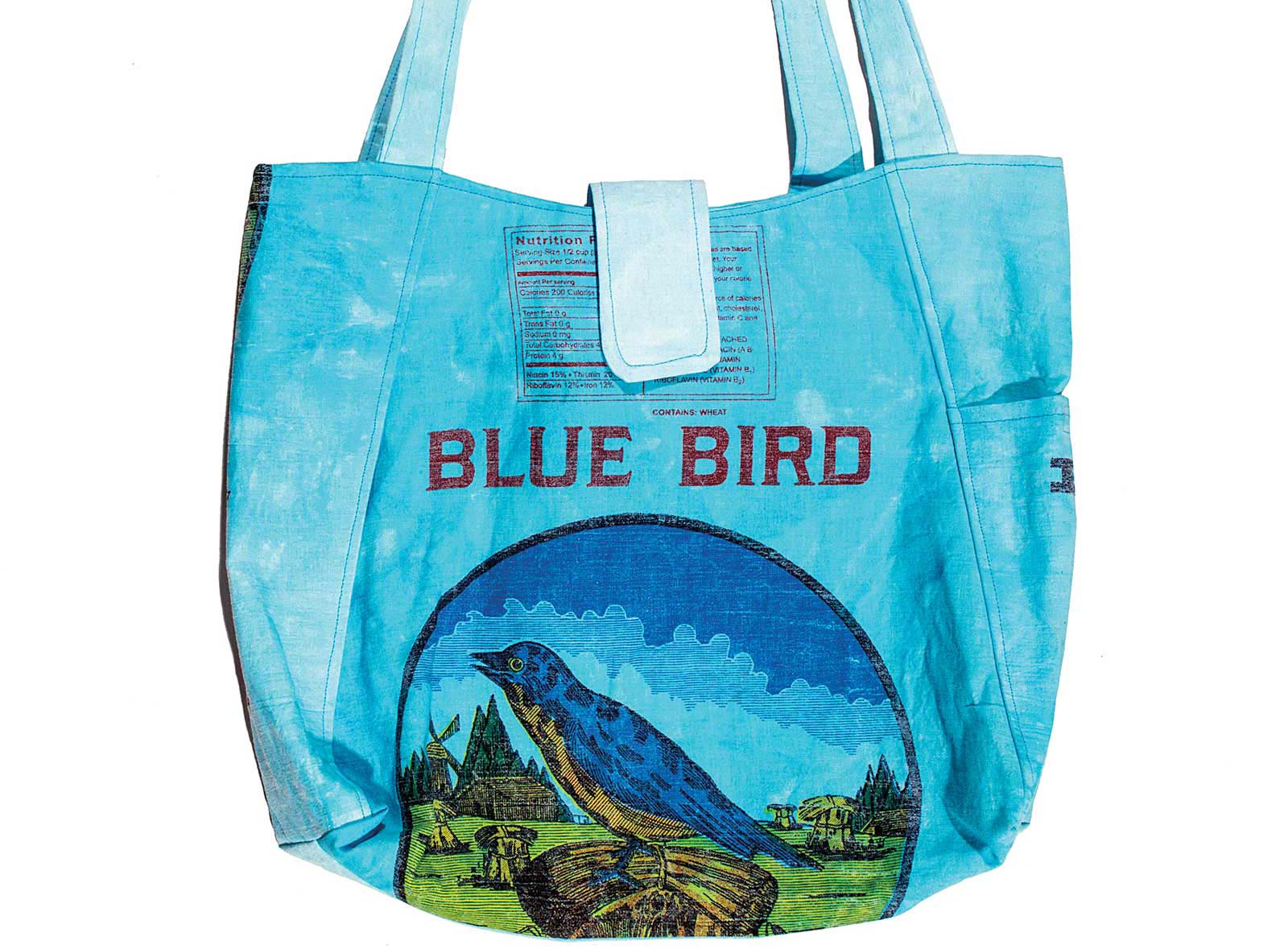
Toni Williams (Northern Arapaho), Tote Bag, ca. 2015, Blue Bird Flour bag cloth. Collection of Kathy and Bill Howard.
“Despite the origins of its creation, frybread continues through today but as a beloved comfort food in many gathering spaces for Native people, whether it’s at a market, powwow, cultural center or a relative’s home,” explains Olivia Barney (Diné), Heard Museum collections coordinator. “It’s not only a representation of perseverance but also innovation in order to provide sustenance for one’s family.”
One aspect of the exhibition calls attention to Indigenous breadmaking before frybread through two-dimensional artwork. “Before flour, varieties of corn native to the Americas were ground up and used to make breads in many Indigenous cultures, Piki from Hopi and Banaha from Choctaw being two examples,” says Barney. “So, the concepts of bread, cooking methods and supporting one’s community have always been present.”
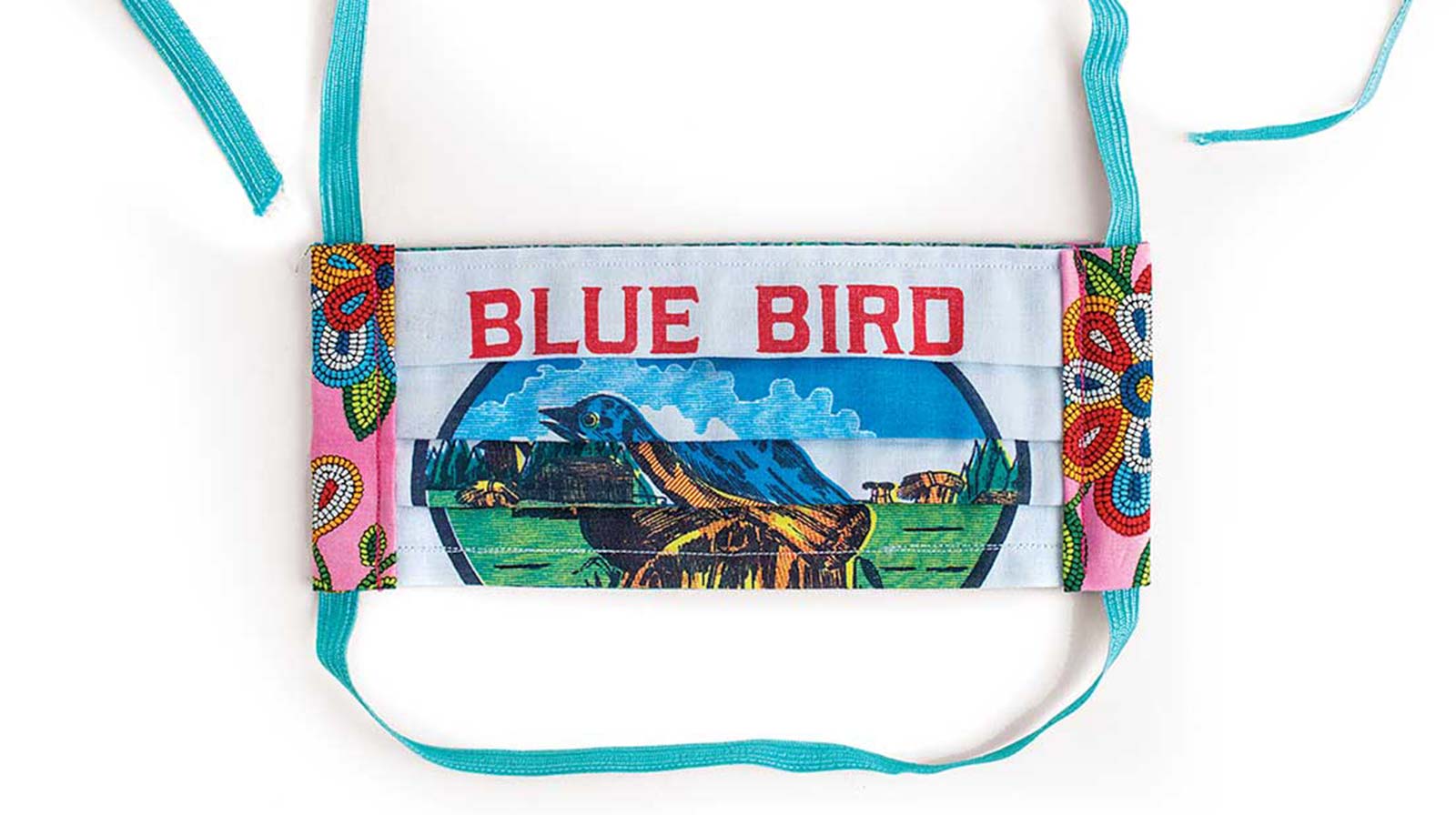
Ginger Sykes Torres (Navajo (Diné)) and Sherry Denipah Sykes (Navajo (Diné)), Face Mask, 2020, Blue Bird Flour bag cloth, printed pattern fabric, elastic. Gift of the artists, 4968-3.
Among the featured works is a cooking apron and toddler dress by Cathy Short (Citizen Potawatomi Nation) that has patches made from the cloth of Blue Bird Flour sacks. Face masks by Diné mother and daughter Sherry Denipah Sykes and Ginger Sykes Torres are made from a combination of Blue Bird cloth and additional printed pattern fabric. A denim jacket and skirt by Kathleen Tom-Garcia (Diné) and a button up shirt and tote bag by Toni Williams (Northern Arapaho) are other wearable items and accessories that are interwoven with Blue Bird materials and imagery.
Two-dimensional works include a canvas by Selina A. Scott (Diné, Latina), a gouache painting by Valjean McCarty Hessing (Choctaw, 1934-2006), an ink drawing by Neil R. David Sr. (Hopi-Tewa) and a watercolor by Ruthe Blalock Jones / Chu-Lun-Dit (Delaware, Shawnee, Peoria).
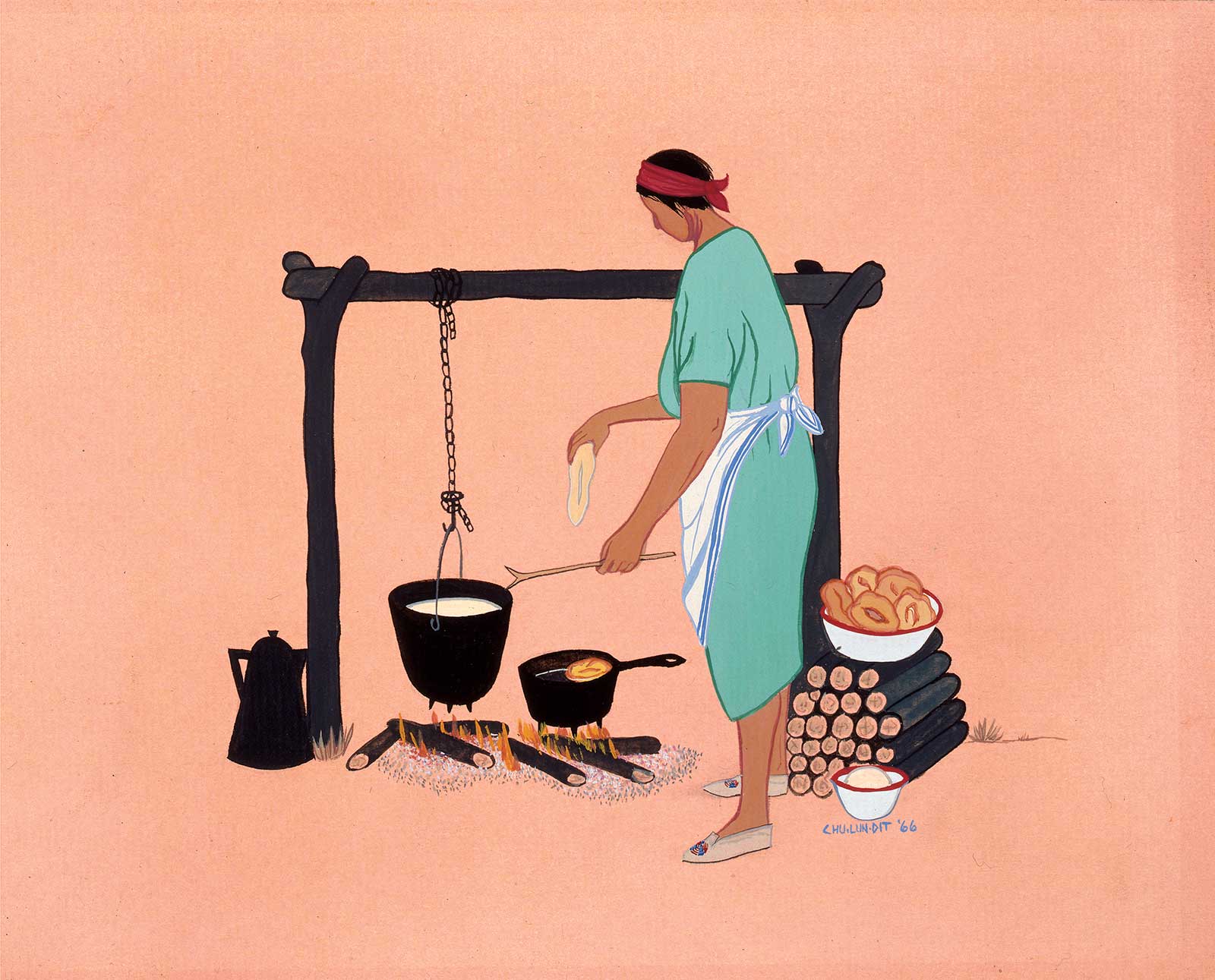
Ruthe Blalock Jones/Chu-Lun-Dit (Delaware, Shawnee, Peoria), Making Fry Bread, 1966, watercolor on paper. Heard Museum Purchase, IAC51.
“Making Fry Bread by Ruthe Blalock Jones / Chu-Lun-Dit is important to the exhibition because I wanted to include a visual of a person making frybread but in the form of another artwork,” says Barney. “A significant portion of the exhibition shows how people repurpose the cloth of the Blue Bird Flour sacks into wearable fashion items. But, what about before the flour bags are empty? …So, while the painting is not about Blue Bird, it does depict what people create with flour while the other creations in the exhibition show how the Blue Bird cloth is reused to form something new.” —
February 6, 2026-March 7, 2027
Blue Bird
Heard Museum
2301 N. Central Avenue, Phoenix, AZ 85004
(602) 252-8840, www.heard.org
Powered by Froala Editor


