When art dealer and author Mark Sublette opened a museum devoted to painter Maynard Dixon in 2024, he wanted to honor the artist’s vast contribution to the art and culture of the Southwest. But Dixon, who spent months at a time with tribes of the Southwest, was only part of the story, which is why the museum opened with an expanded name: the Maynard Dixon & Native American Art Museum.
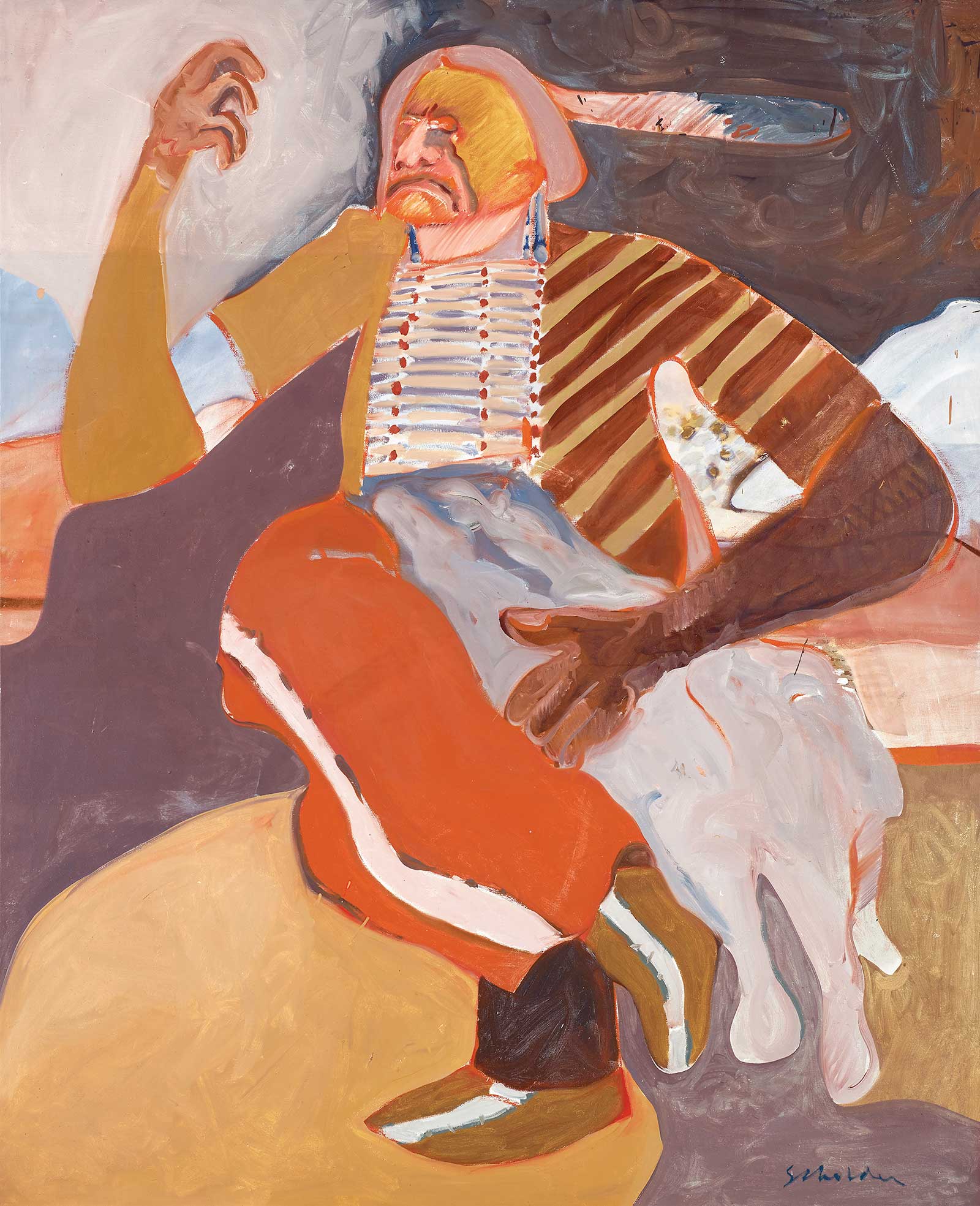
Fritz Scholder (Luiseño, 1937-2005), Mad Indian, 1968, acrylic on canvas, 71 x 60 in.
On March 4, the venue will open the largest Native American-themed exhibition in the museum’s short (but growing) history. Titled Native Voices: 1950-2025, the exhibition will explore the role of Indigenous artists and how they and their work contributed to contemporary art across many genres and styles. For Sublette, who has long championed Native American artists and creators, the exhibition offers him the chance to talk about some of the favorite artists, including artists such as Fritz Scholder, T.C. Cannon, Tony Da and others.
But why 1950 as a starting point? “It seemed liked a nice clean number so we can have 75 years of artwork. But it’s also because of the historic precedent. You have World War II and this new sensibility about what is going on in the world. There was abstract art and Jackson Pollock, but there was also Oscar Howe, who was told by the Philbrook Museum of Art [in 1958] that his art wasn’t Native enough. He writes them a letter back basically saying, ‘Who are you to tell me that?’ Change was happening very quickly in the 1950s, including with the Institute of American Indian Arts [IAIA] and then artists like Fritz Scholder and T.C. Cannon, or George Morrison, who was going into abstract expressionism,” Sublette says. “Starting in 1950, and then going from there, acknowledges all of the great changes that were happening, including pueblo pottery, which starts getting signed in the 1950s. You start to see major changes elsewhere too, with Charles Loloma, who was influencing the way Native art could look, or Helen Hardin, who called herself a contemporary Indian artist. You get textiles and sculpture. You see political statements about the Vietnam War and the atomic bomb, which showed the beginning of the fertile ground of what Native art could speak to. That goes all the way through to Emmi Whitehorse and Cara Romero, or her husband, Diego Romero, or his brother, Mateo Romero, who has gone back to an almost abstract sensibility as he paints landscapes with emotional gestures.”
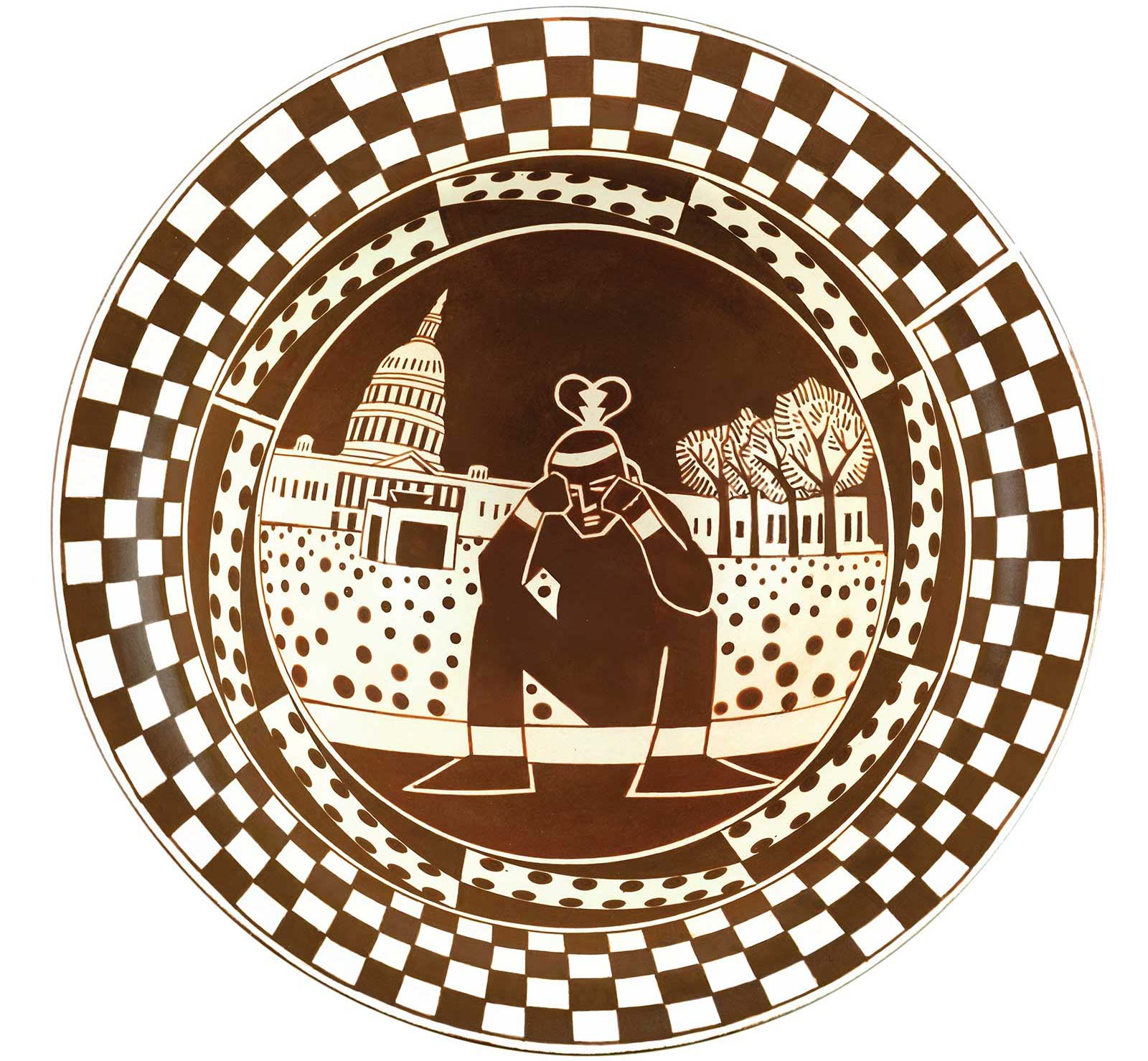
Diego Romero (Cochiti Pueblo), American Heartbreak, polychrome bowl, 101/8 x 43/8 in.
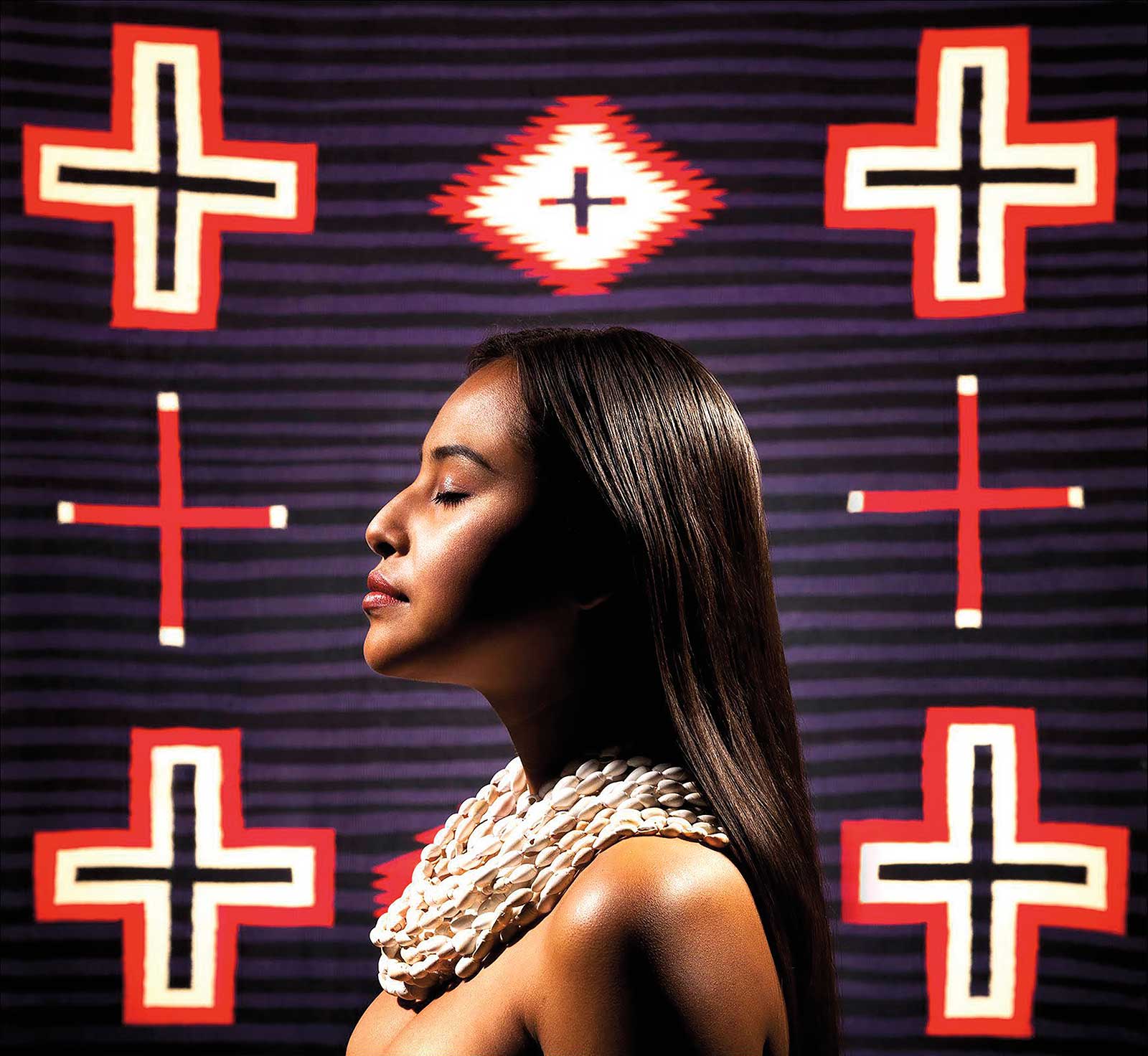
Cara Romero (Chemehuevi), Ty, 2017, archival print, ed. of 25, 163/8 x 177/8 in.
Sublette continues: “I want this show to explore what it is to be a Native artist and to create art. I want visitors to see the spectrum of their creation.”
Native Voices will consist of works by 45 artists. There will be an exhibition portion at the Maynard Dixon & Native American Art Museum, as well as a show that will have work available for purchase at Sublette’s Medicine Man Gallery, which is around the corner from the museum. Besides Cannon, Scholder, Da and others, the exhibition will also include work from Howe, Kent Monkman, Starr Hardridge, Willard Stone, Michael Kabotie and many others. Sublette is also preparing a printed catalog that will be available for purchase. Many of the works from the exhibition are part of Sublette’s own collection.
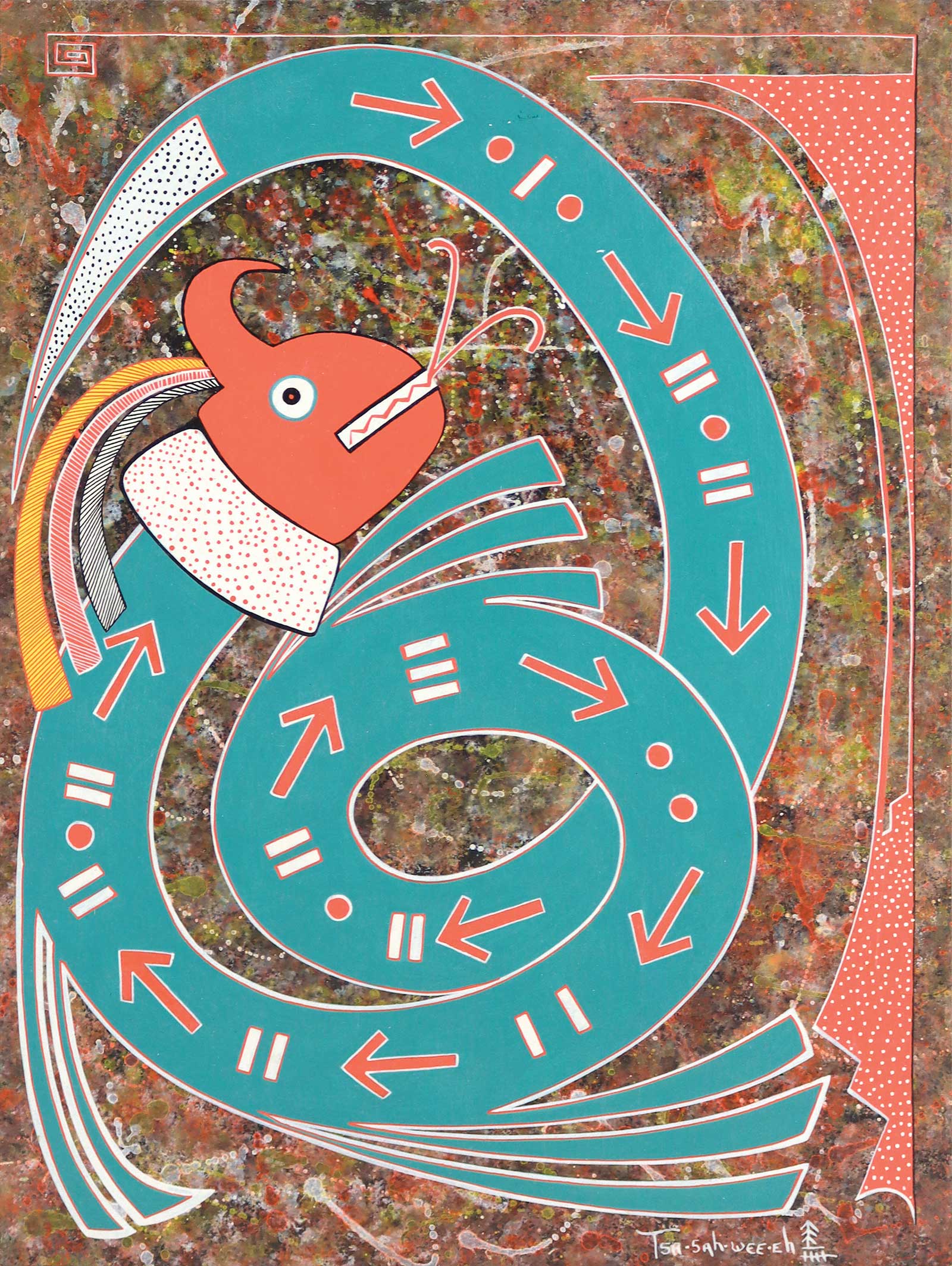
Helen Hardin (Tsa-Sah-Wee-Eh) (Santa Clara Pueblo, 1943-1984), Plumed Serpent of the Hopi, mixed media painting, 20¾ x 16¾ in.
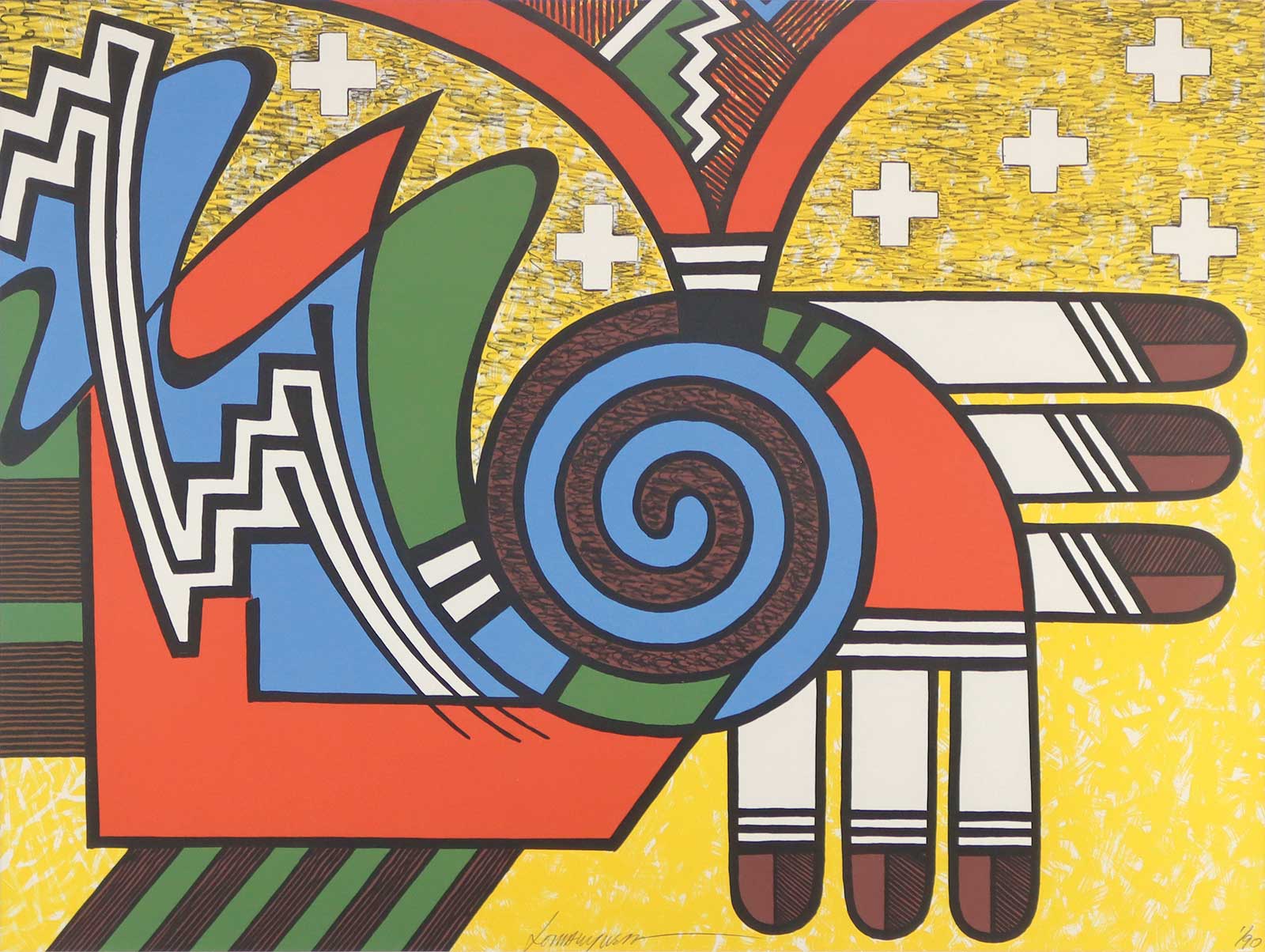
Michael Kabotie (Lomawywesa) (Hopi, 1942-2009), Mother Earth Father Sky, lithograph, ed. 1 of 90, 18 x 24 in.
“We have limited space, so it’s always hard to make those cuts that are sometimes necessary. But it’s a great grouping, which is why the show will hang for seven months. I want people to have time to come down and see it,” he says. “For me, a show like this is critically important. Dealing in Native American art for the last 35 years, I now have a museum that offers me a podium where I can say, ‘Hey, this is really important art and part of who we are as Americans, and you need to take notice,’” he says. “And the best part is, it’s not just me doing this. The Guggenheim, the Whitney, MoMA…institutions around the country are leading the movement as well. These venues are making big strides to show this kind of material. They have an obligation to do so, because these museums are all built on Native lands. Shows like this allow people to look at American art a little different, which is the point.”
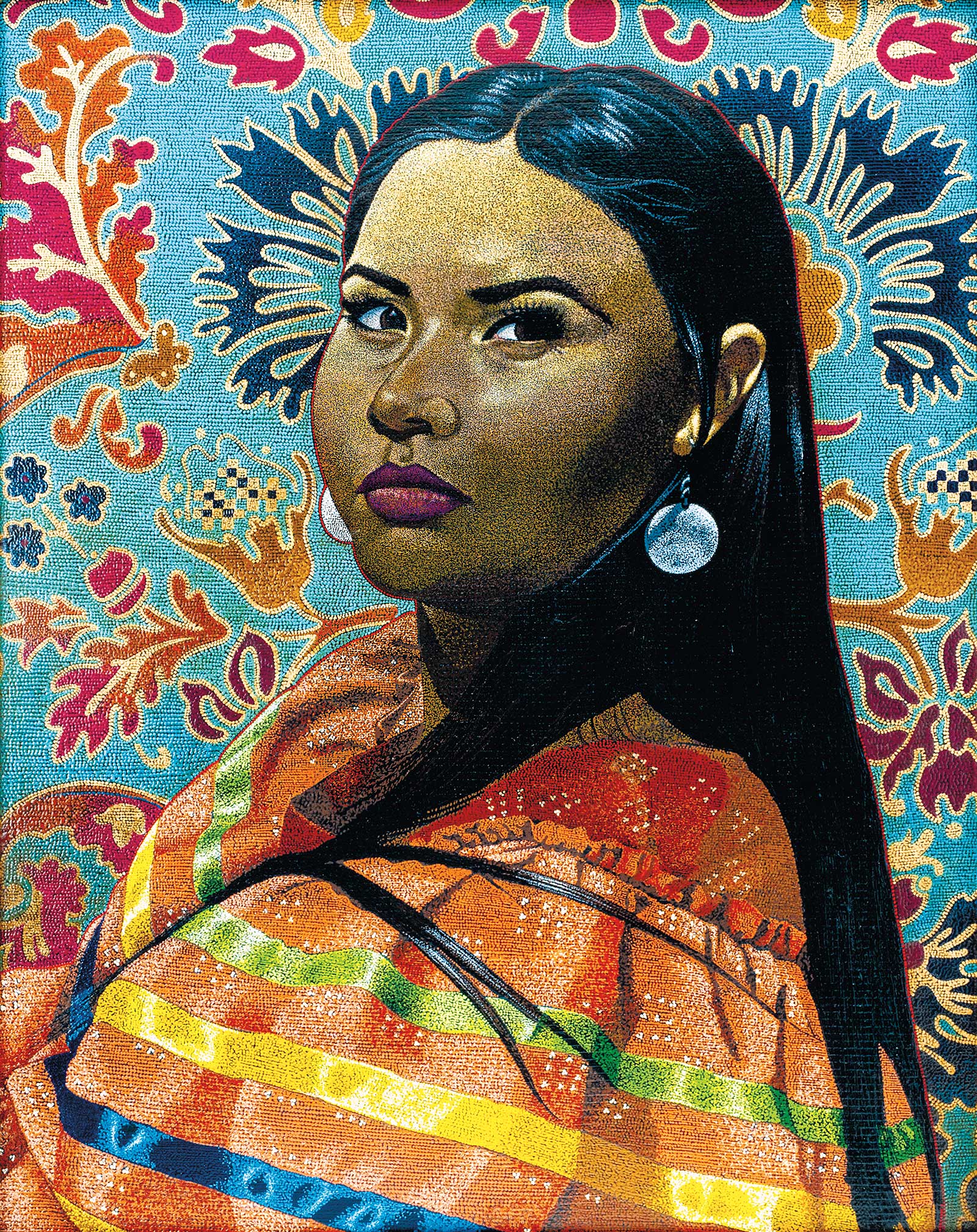
Starr Hardridge (Muscogee Creek), Shadow on Indian Territory, 2025, acrylic on canvas, 20 x 16 in.
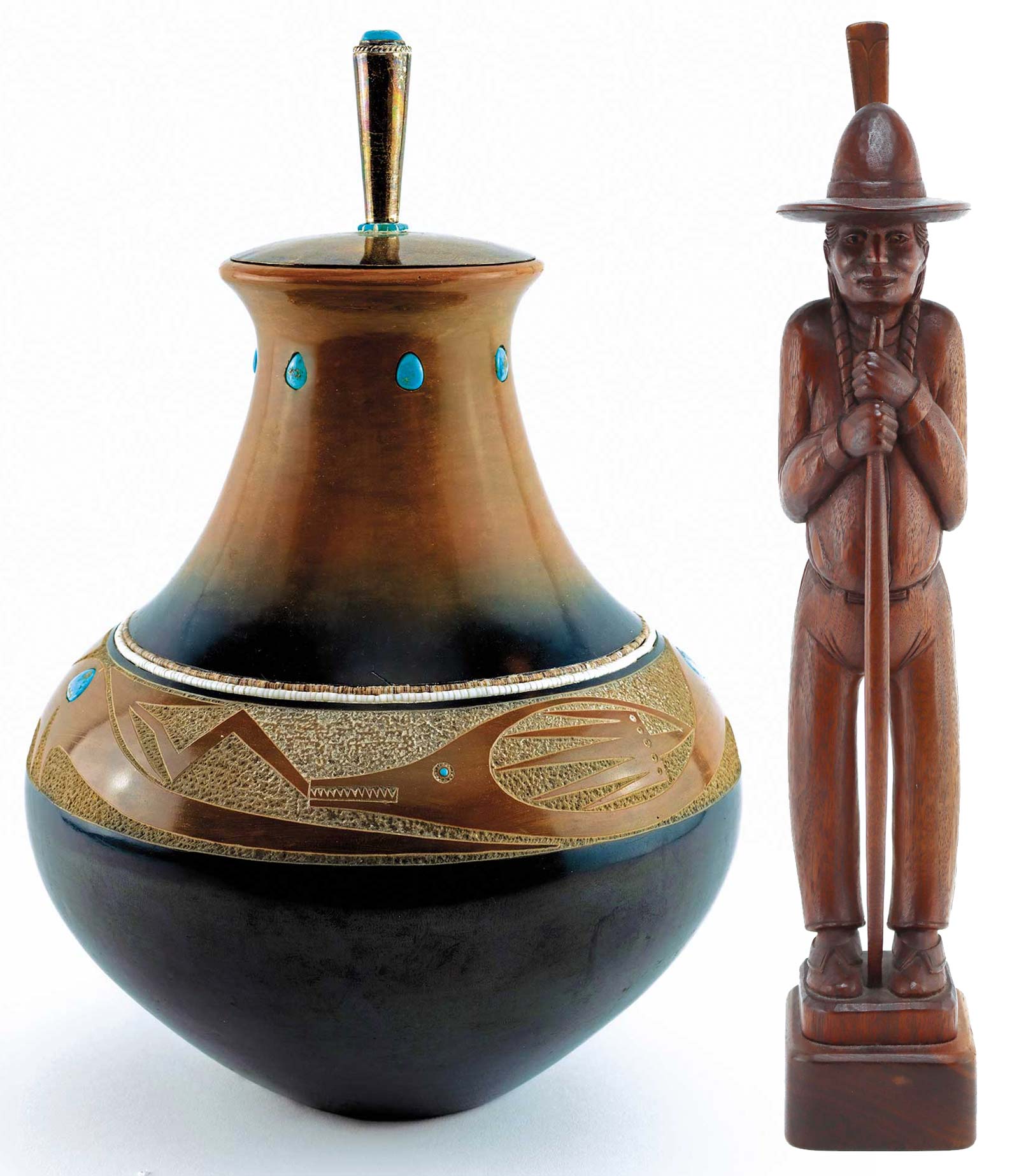
Left: Tony Da (San Ildefonso, 1940-2008), black and sienna sgraffito vase with turquoise inlay, Heishi inclusions and Avanyu design, ca. 1970s, 121/8 x 8 in. Right: Willard Stone (Cherokee, 1916-1985), Cherokee Cornstalk Shooter, 1961, wood carving, 19¼ x 4 x 3¼ in.
Sublette also hopes that visitors take away how modern these artists are. They are not just at the forefront of a movement, in many cases they invented the movement and have made huge leaps long before others. He points to Native weavings, or pueblo pottery, or early abstract work as proof that Native American artists have always been on the cutting edge of art. “I love seeing the work that is outright modern. Some of the work is thematic that the artists draw creative magic from. Then there’s also the cultural heritage and history, and their connections to the land,” he says. “But the really modern and contemporary work is always exciting. I’ve sort of lagged behind on some of that, but it has certainly opened my eyes.”
Native Voices continues through October 10. —
March 4-October 10, 2026
Native Voices: 1950-2025
Maynard Dixon & Native American Art Museum
6866 E. Sunrise Drive, Suite 150, Tucson, AZ 85750
(520) 722-7798, www.maynarddixonmuseum.org
Medicine Man Gallery
6872 E. Sunrise Drive, Suite 130, Tucson, AZ 85750
(520) 722-7798, www.medicinemangallery.com
Powered by Froala Editor


