Emmi Whitehorse (Diné) grew up in Northern New Mexico tending sheep with her grandmother in a land she found magical and endless. Her grandmother wove some of the wool into colorful blankets and rugs. In high school, Whitehorse won an art contest and bought a set of paints with her prize money.
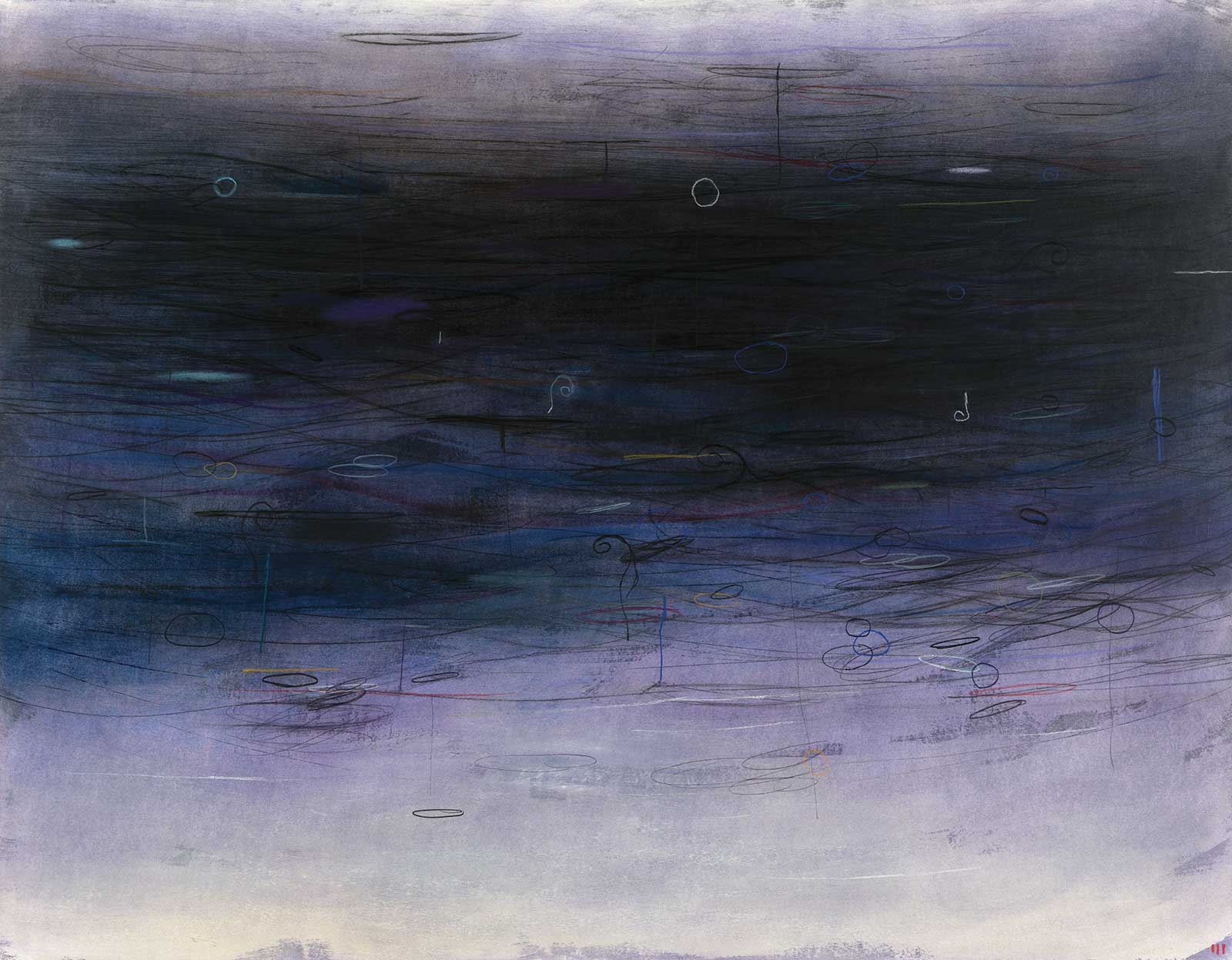
Water Course I, #1300, 2001, oil pastel, chalk and paper on canvas, 39½ x 51 in. Courtesy of Emmi Whitehorse Studio. Photograph by Addison Doty.
In 2024, her large, abstracted landscapes were shown at the Venice Biennale. This year, the Wheelwright Museum of the American Indian in Santa Fe is presenting a two-part retrospective exhibition of her work, Emmi Whitehorse: Intimate Landscapes. “Part I: Light and Space (1980-2000s)” opens February 21 and continues through June 13. “Part II: Line and Form (1990-2020s)” opens June 18 and continues through October 3.
In her artist statement for the exhibition, Whitehorse says, “My work is about—and has always been about—land, about being aware of our surroundings and appreciating the beauty of nature. I am concerned that we have lost this awareness. I hope the calm and beauty in my work serve as a reminder of what is underfoot, of the exchange we make with nature. Light, space and color are the axis around which my work evolves.”
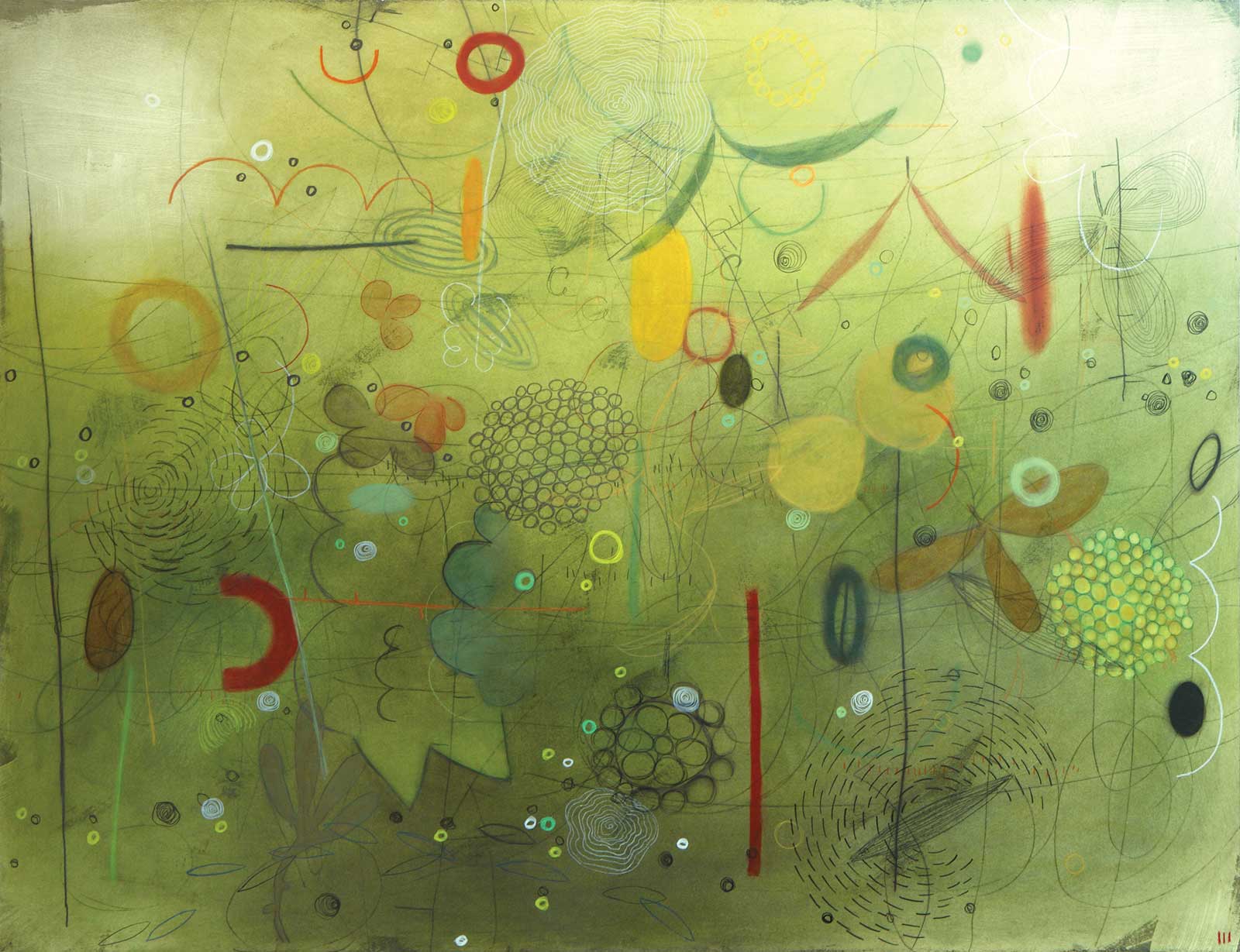
Prickly Pear, 2012, oil pastel, chalk and paper on canvas, 40 x 51 in. Private Collection. Photograph by Addison Doty.
Her grandmother taught her the Diné philosophy of Hózhó, the harmonious balance between nature, humanity and the universe, and the colors and patterns of her weavings are a continuing inspiration.
Hadley Jensen, the museum’s curator of collections and research and curator of the exhibition, comments that Emmi Whitehorse Studio has loaned five paintings from the artist’s Water Series which she began making in the early 2000s “in response to water in its various states. Each piece reflects a different sensory experience,” she continues. “Many have a red palette and colors not always associated with water. Living here in New Mexico, we are more aware of its different colors and tones.”
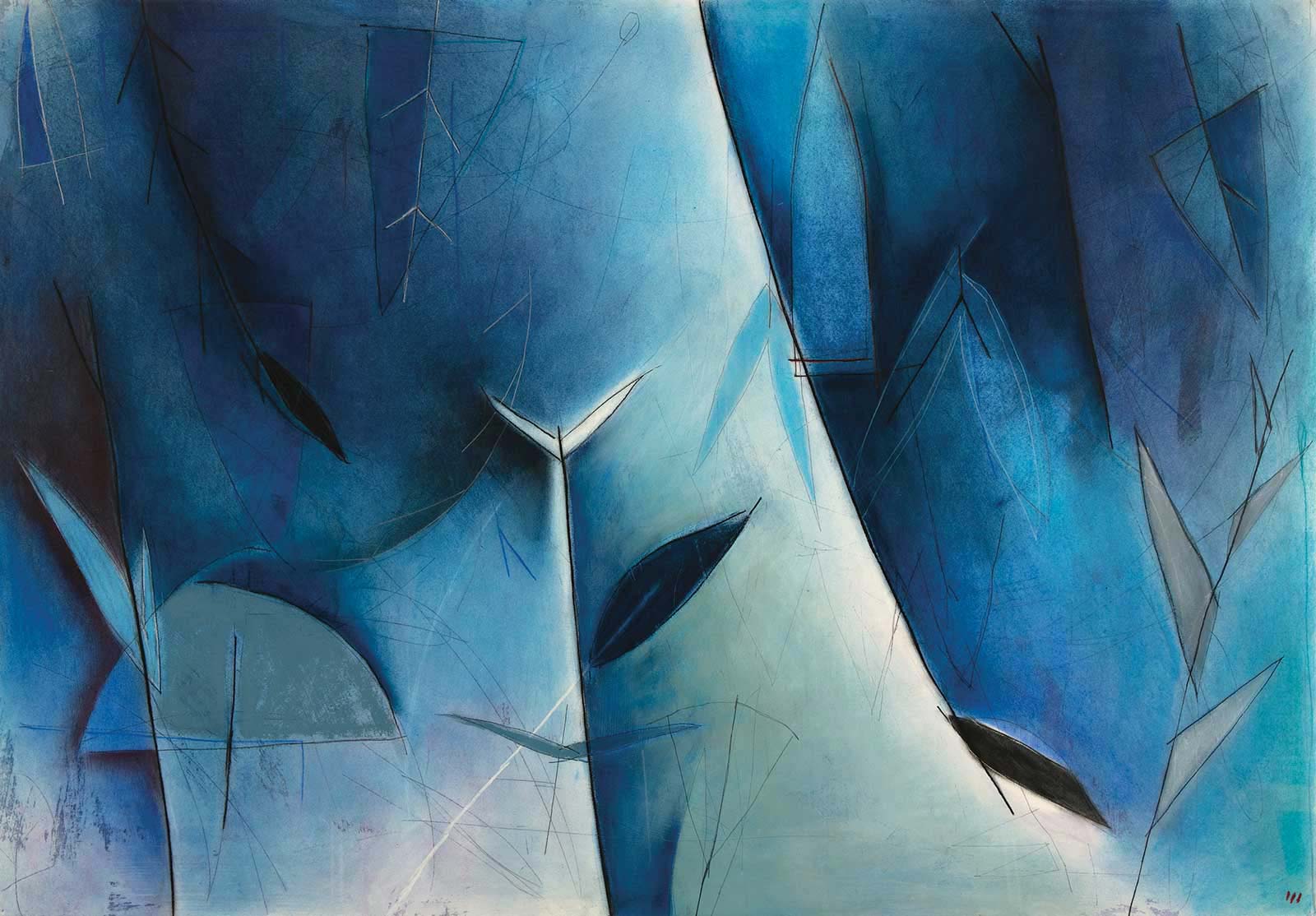
Dootł’izh (Blue), 1988, oil pastel, chalk and paper on canvas, 44¾ x 37½ in. Wheelwright Museum Collection. Photograph by Addison Doty.
Whitehorse’s painting Prickly Pear (2012) abounds with symbols of her multidimensional vision of the landscape. Her recurring seed pods, pollen, topographical renderings and insects “capture a sensory impression of things that people overlook,” Jensen observes.
Her visual language comes from her having been intimately associated with the land over time. She draws botanical shapes and forms with chalk and pencil over an atmospheric color field of oil pastel to create works like Water Course I (2001) and Prickly Pear.
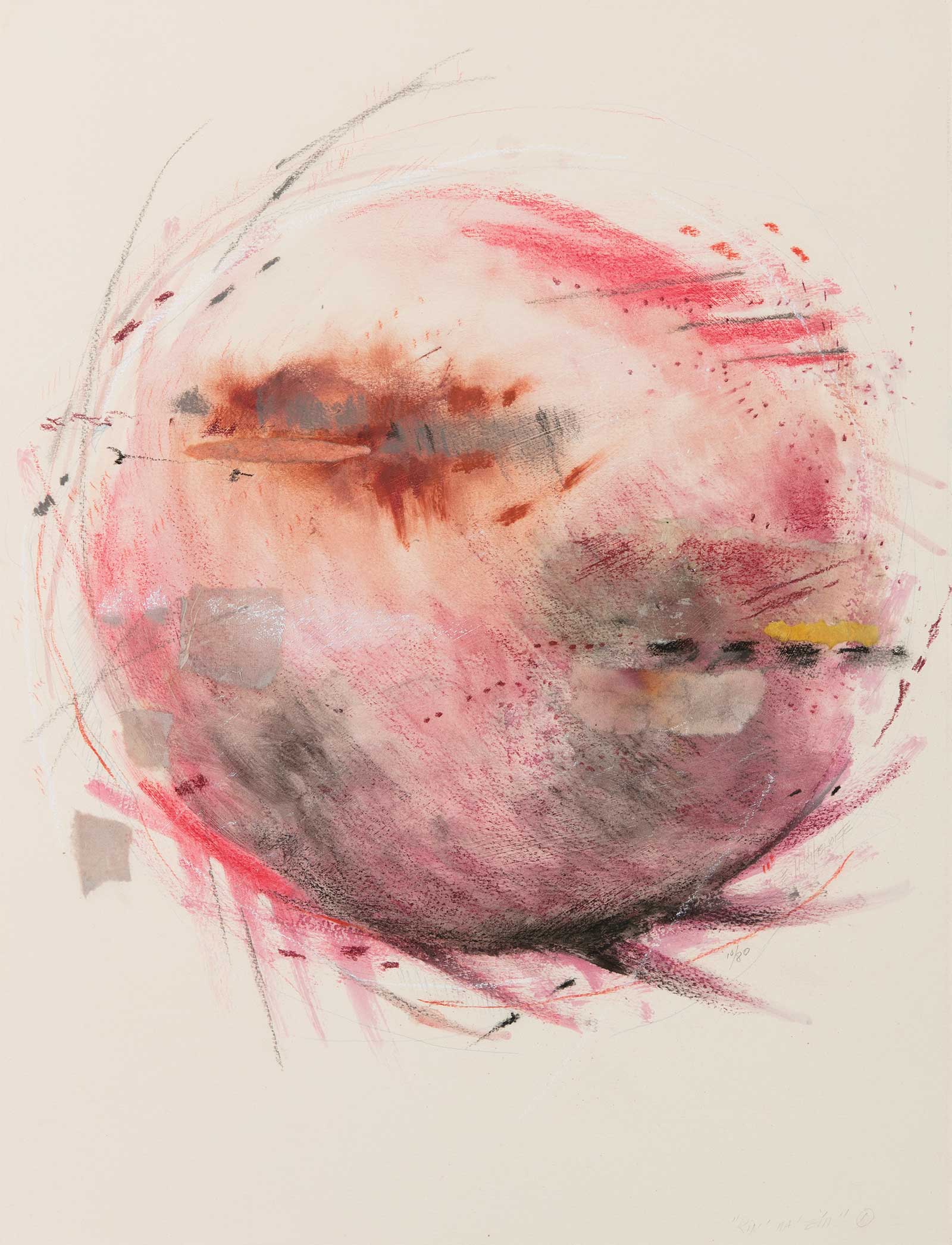
Kin Náh Zin (2), 1980, collage with dyed rice paper, chalk, conté and pencil on paper, 20 x 15 in. Wheelwright Museum Collection.
Her’s is a meditative and slow process that captures the fleeting moments of being intimately present in the landscape. —
February 21-October 3, 2026
Emmi Whitehorse, Intimate Landscapes
Part I: February 21-June 13, 2026 • Part II: June 18-October 3, 2026
Wheelwright Museum of the American Indian 704 Camino Lejo, Santa Fe, NM 87505 (505) 982-4636, wheelwright.org
Powered by Froala Editor
Powered by Froala Editor


