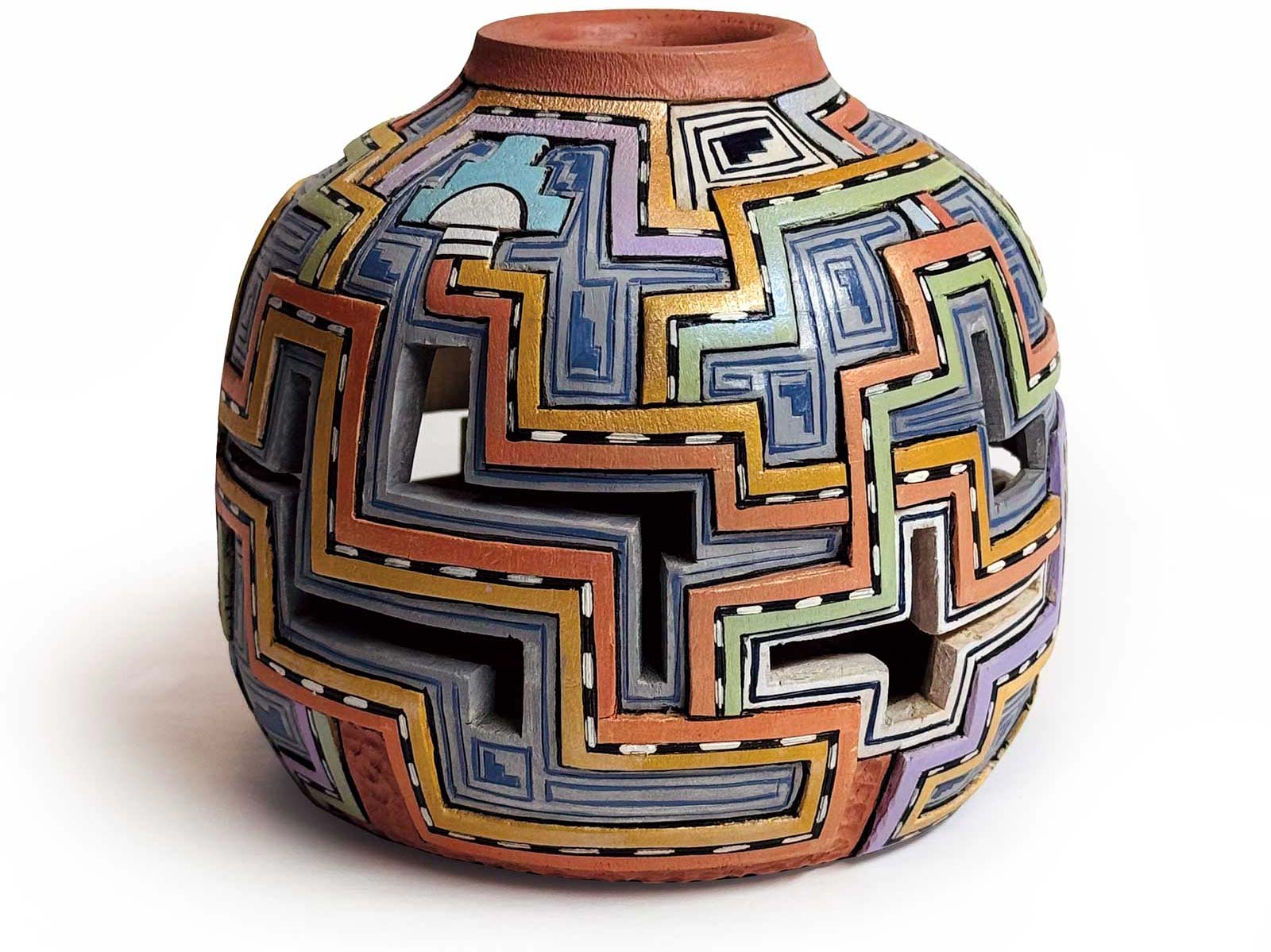
 Mavasta Honyouti (Hopi), carved potWelcome to our annual Guide to Market section, where we highlight artists and artwork from the eight classifications represented at the Heard Museum Guild Indian Fair & Market. Each classification is unique with its own materials, methods and uses. And then there are also different regions, tribes and the individual styles of the artists themselves that make each of these categories even more exciting. As you visit Phoenix for the market, please consider exploring all of the booths, regardless of what kind of work fills it. Talking with the artists, hearing their stories and viewing (and purchasing) their art—this is what market is all about.
———————————————
Jewelry & Lapidary
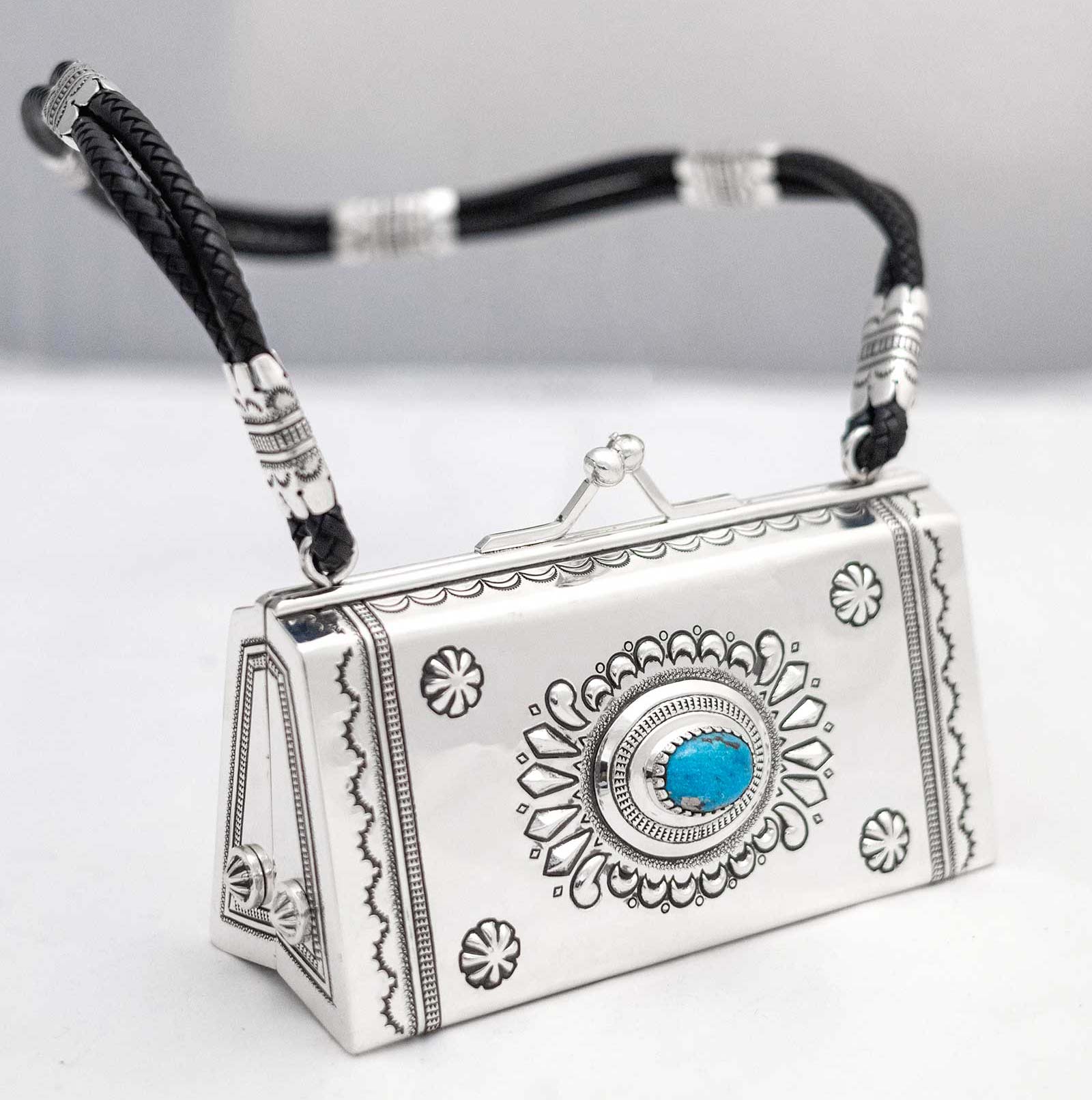 Leonard Gene (Navajo [Diné]), Taking it to the Next Level, Navajo sterling silver purse with Sierra Nevada Turquoise and lined with leather. Photo by Amber Gene | The Matriarchal Marketing & Media.
Within the jewelry and lapidary classification at the Heard Museum Guild Indian Fair & Market, collectors will find an abundance of brilliant options. This includes dazzling gemstone necklaces, bracelets and rings, eye-catching bolo-ties and beaded earrings, among many other wearable designs. While many Native American jewelry artists create pieces inspired by their cultural backgrounds, they also combine contemporary influences that offer a more personal touch. Within this section, you’ll experience a mere taste of the copious amount of jewelry offered at the 2026 market.
Artists to Look For: Bea Aguilar (Santo Domingo Pueblo) • Erick Begay (Navajo (Diné)) • Dana Chavez (Santo Domingo Pueblo) • Ramon Dalangyawma (Hopi/Navajo (Diné)) • Georgia Kieyoomia (Hopi/Navajo (Diné)) • Crystal Littleben (Navajo (Diné)) • Jake Livingston (Navajo (Diné)) • Michael Slim (Navajo (Diné)) • Gordell Wright (Shinnecock Nation) • Duane Maktima (Laguna Pueblo/Hopi) • Alfred Lee (Navajo (Diné)) • Norbert Peshlakai (Navajo (Diné))
MARKET MEMORIES
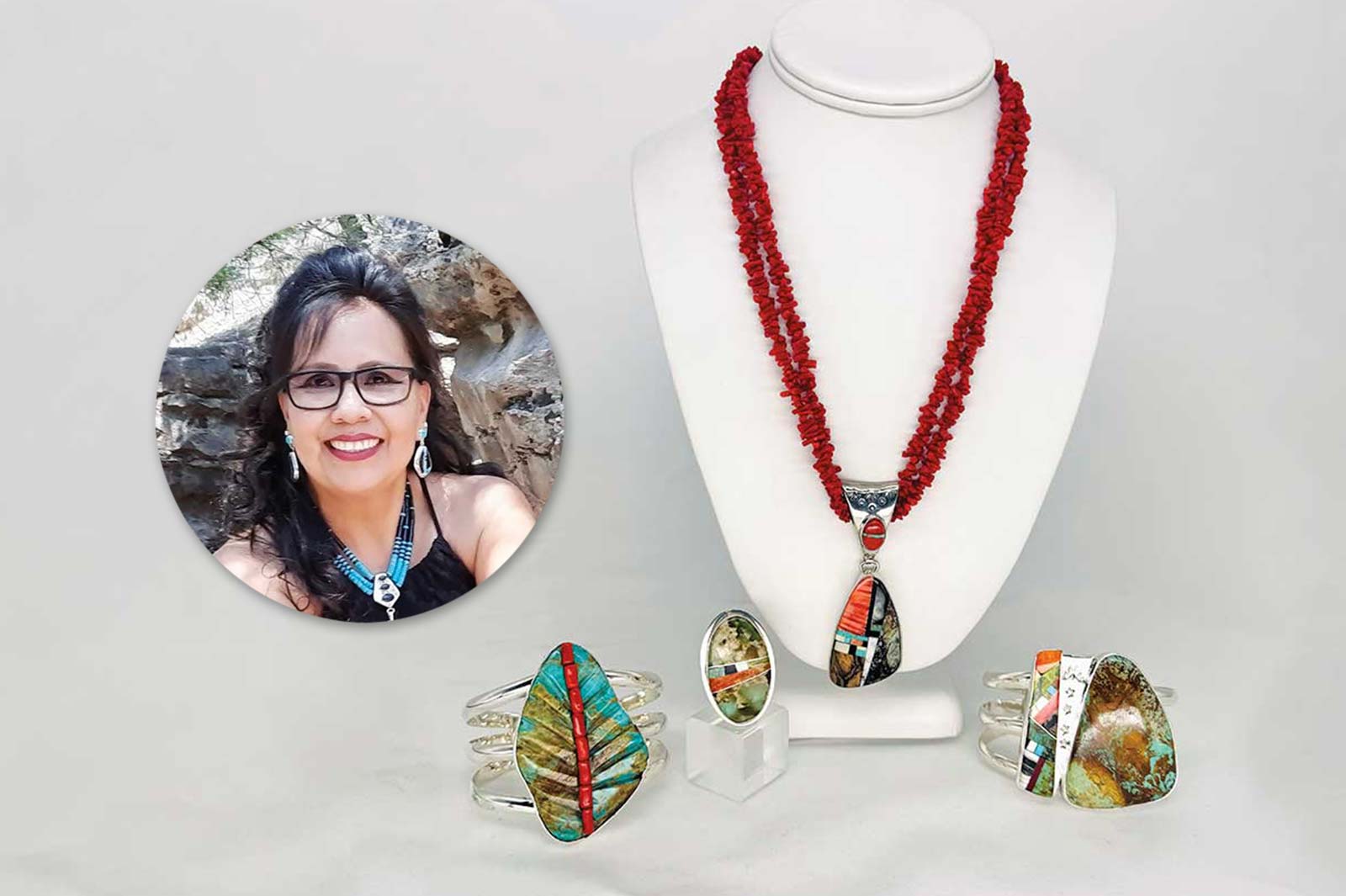
Ellouise Toya (Navajo (Diné))
Ellouise Toya’s first time at the Heard Indian Fair & Market was in 2005. “I was full of excitement and anticipation. After all, it’s the Indian Fair & Market, the biggest, most prestigious Native American art show in Arizona,” she says. “I wanted to represent myself well. My first morning, as always, started in the dark before the sun came up. As people entered the show, many were attracted to my jewelry. I was so happy they loved my work. All my pieces are handmade, with each a combination of traditional and contemporary design. My pieces are still made the traditional way—how I was taught by my elders when I was a young girl. My designs continue to evolve through different gemstones.” Toya always look forward to catching up with her original customers and friends and meeting new ones, as well as seeing fellow Native American artists from various communities around the Southwest.
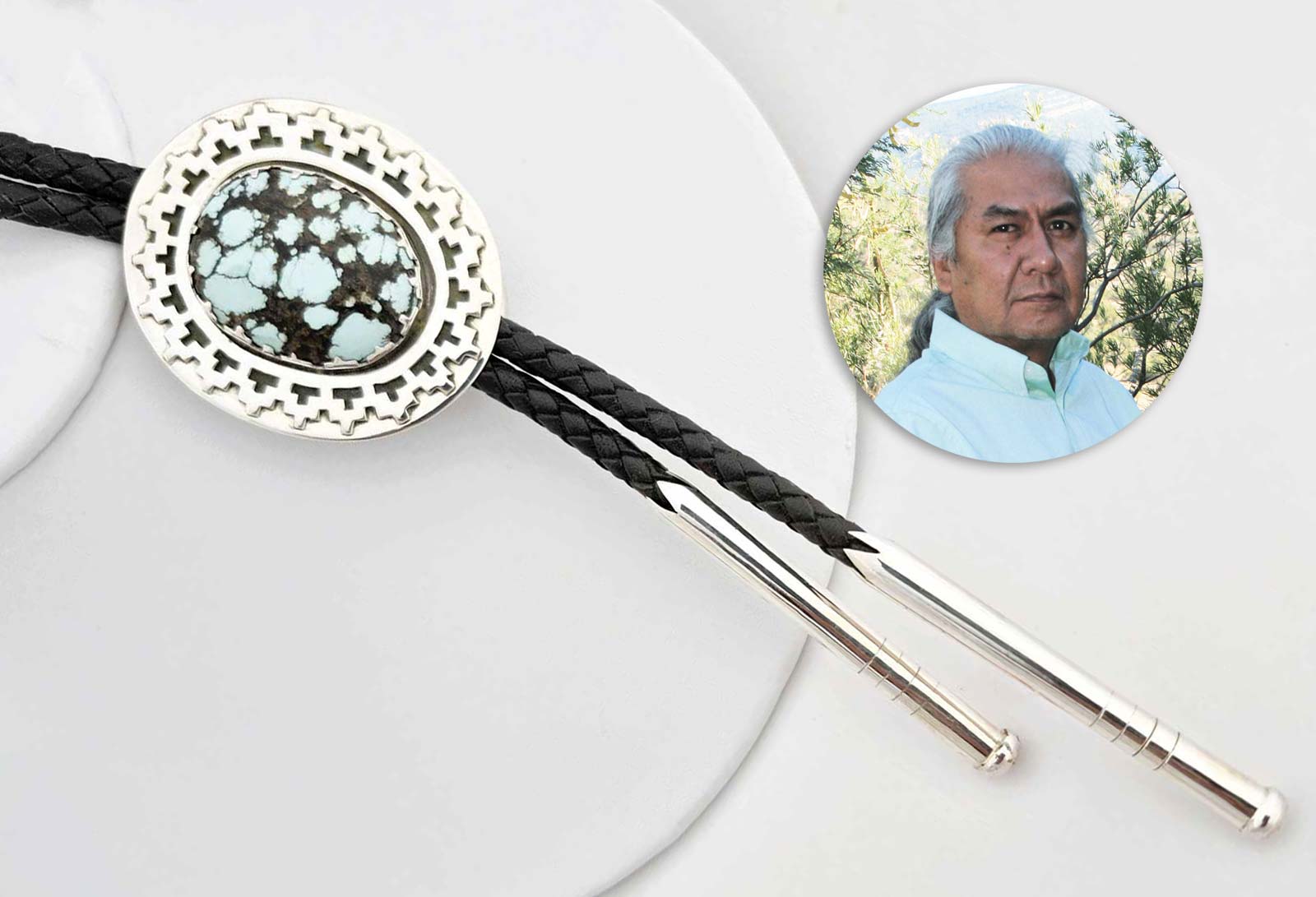
Lyle Toledo Yazzie (Navajo (Diné))
Yazzie grew up in the community of Pueblo Pintado and currently lives in Placitas, New Mexico. “My inspiration comes from the environment, travels, people and communities, ancestral and cultural images, and prehistorical rock art and Navajo iconography,” the artist notes. “My contemporary design concepts include bold protest or political and non-traditional images; even erotically sensual, spirited themes.”
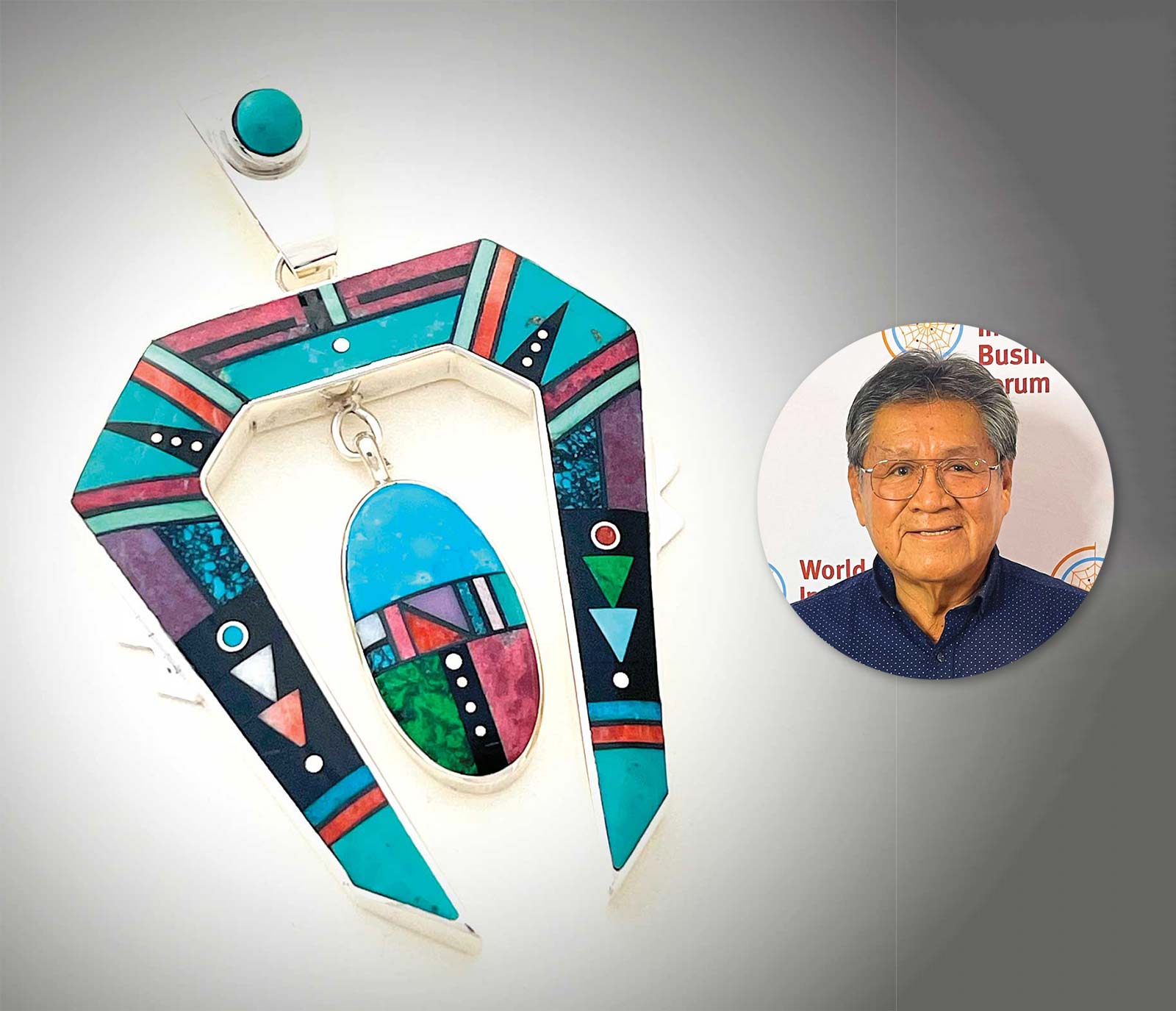
Jim Harrison (Navajo (Diné))
“I am very well known for my meticulous inlaid work, and working with various stones and shells to form images and designs,” says Jim Harrison. “The majority of my jewelry artwork depicts stories from the Navajo-Diné mythology, Southwestern landscapes, constellations, and images of the Diné Yei Bei Chais and katsinas. In recent years, I have been designing more Father Sky and Mother Earth imagery, which is part of my spiritual connection in respecting our Mother Earth.”
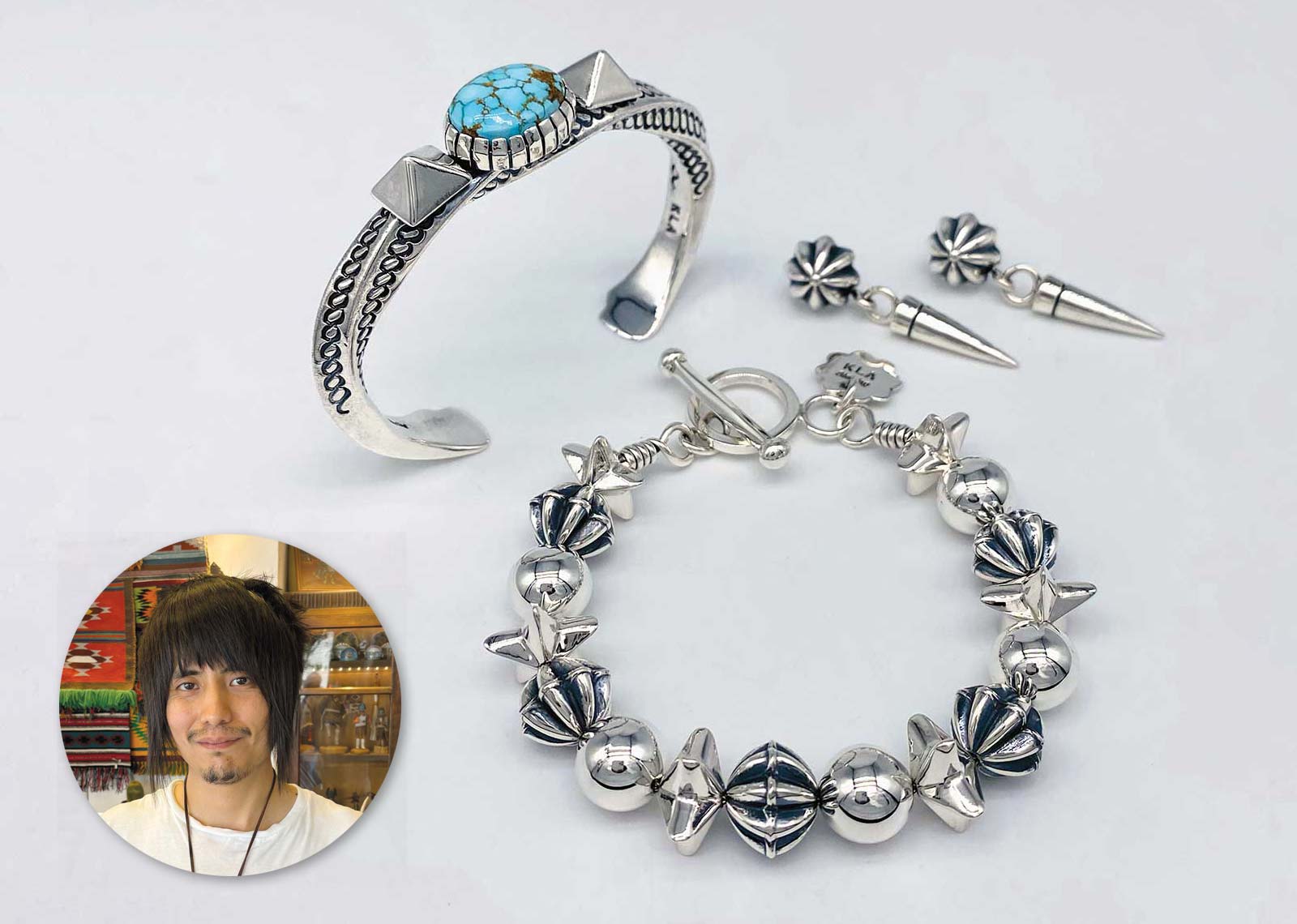
Kyle Lee-Anderson (Navajo (Diné))
The jewelry that Kyle Lee-Anderson creates is inspired by childhood influences—growing up through Y2K/2000s fashion trends of skateboarding counter-culture, and most importantly, watching his late father, Allison (Snowhawk) Lee, and his Native jeweler friends. “The quality, precision and cleanliness of their work inspired me to match their efforts in creating beautiful, unique art pieces,” says the artist. “Their influences shaped [my style], which is combining traditional designs with a contemporary touch. It made me want to use the highest quality materials and natural, precious turquoise stones.”
———————————————
Pottery
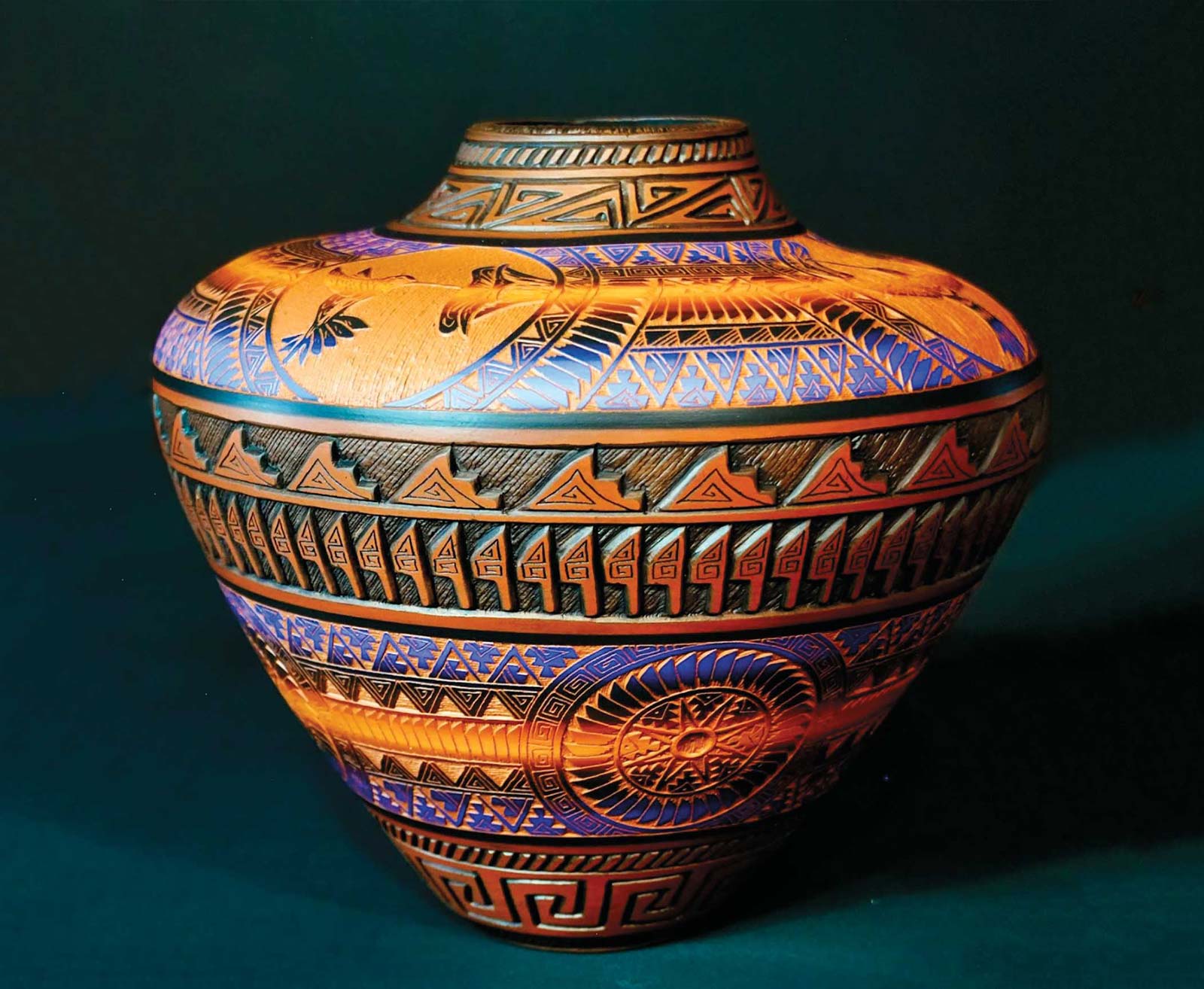
The history of Native American pottery is a lengthy one, going back around a couple millennia. It goes without saying that modern artists are deeply tied to such a rich heritage. Within the pottery classification at the Heard Museum Guild Indian Fair & Market, we see tradition, culture and story unfold in an array of pottery examples: expertly crafted vases, ollas, bowls, plates and so much more. While many harken to the past, utilizing passed-down techniques and styles, artists also rely on their own unique visions. Whether traditional or contemporary, attendees at the 2026 market will find no shortage of outstanding pottery options, some of which are within this curated section.
Artists to Look For: Karen Abeita (Isleta Pueblo) • Jamelyn Ebelacker (Santa Clara Pueblo) • Chrislyn Fragua (Pueblo of Jemez) • Marita Hinds (Tesuque Pueblo) • Dusty Naranjo (Santa Clara Pueblo) • Aiden Tippeconnie (Navajo (Diné)) • Esther Cajero (Pueblo of Jemez) • Bernice Suazo-Naranjo (Taos Pueblo) • Valerie Kahe (Hopi) • Harrison Begay (Navajo (Diné)) • Roger Perkins (Akwesanne Mohawk) • Diego Romero (Cochiti Pueblo)
MARKET MEMORIES
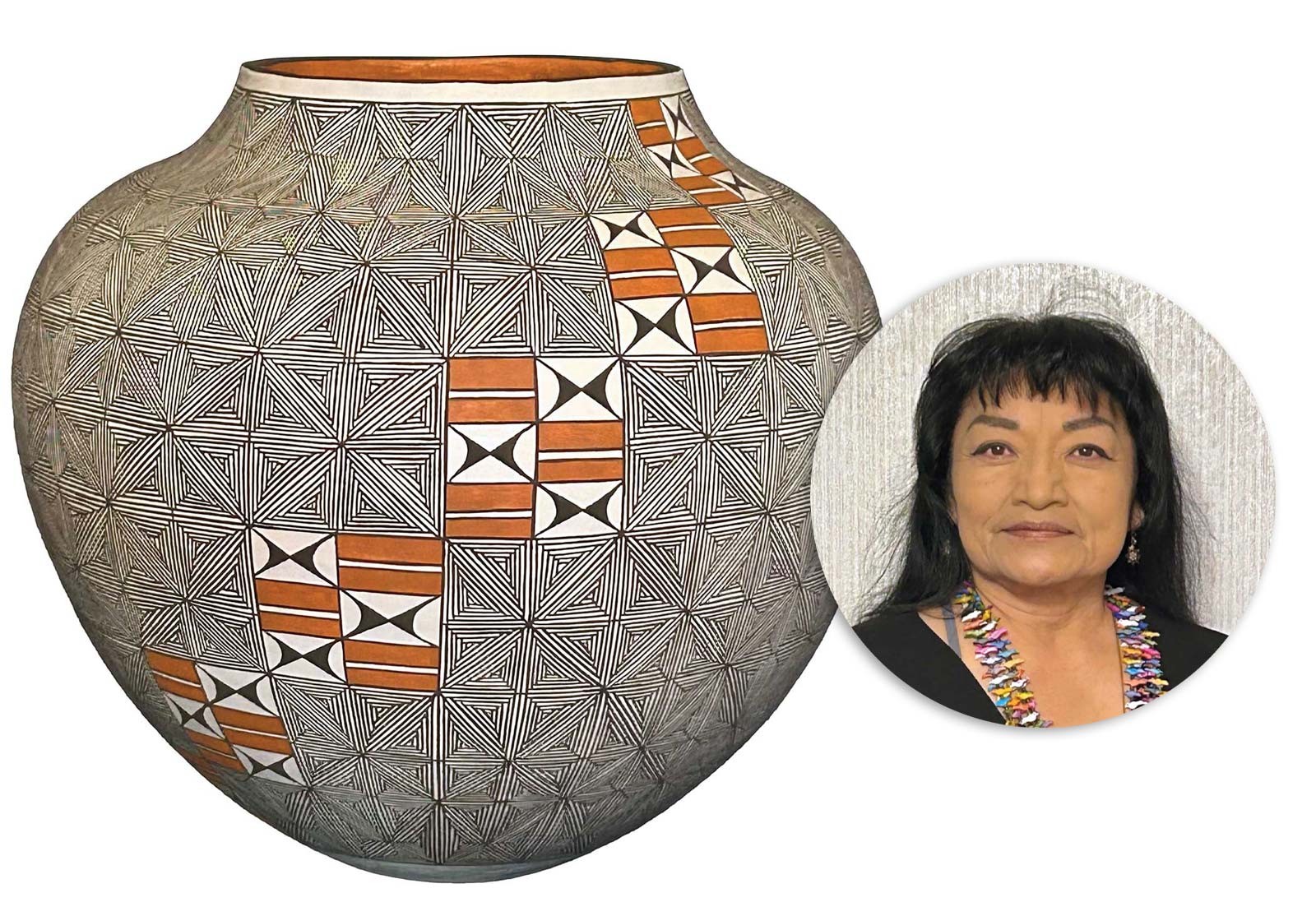
Marietta P. Juanico (Acoma Pueblo)
“I was nervous at the beginning of my first Indian Fair & Market, as I wasn’t sure if the public would have interest in my style of art,” says Marietta Juanico of her first market experience in 2010. “Turns out, showcasing my traditional Acoma pottery at the market was a success. Every year that I’ve been accepted, I would create new and attractive artwork with significant representations of different earth elements and the universe. My handmade traditional pottery has a unique style of design, pattern and shape aside from the common style of Acoma pottery that includes parrot designs. What inspires me the most is the positive atmosphere when the public and local businesses look forward to seeing this Native American annual event take place. It’s a time to share wonderful stories with customers and fellow artists, as well as business owners and workers.”
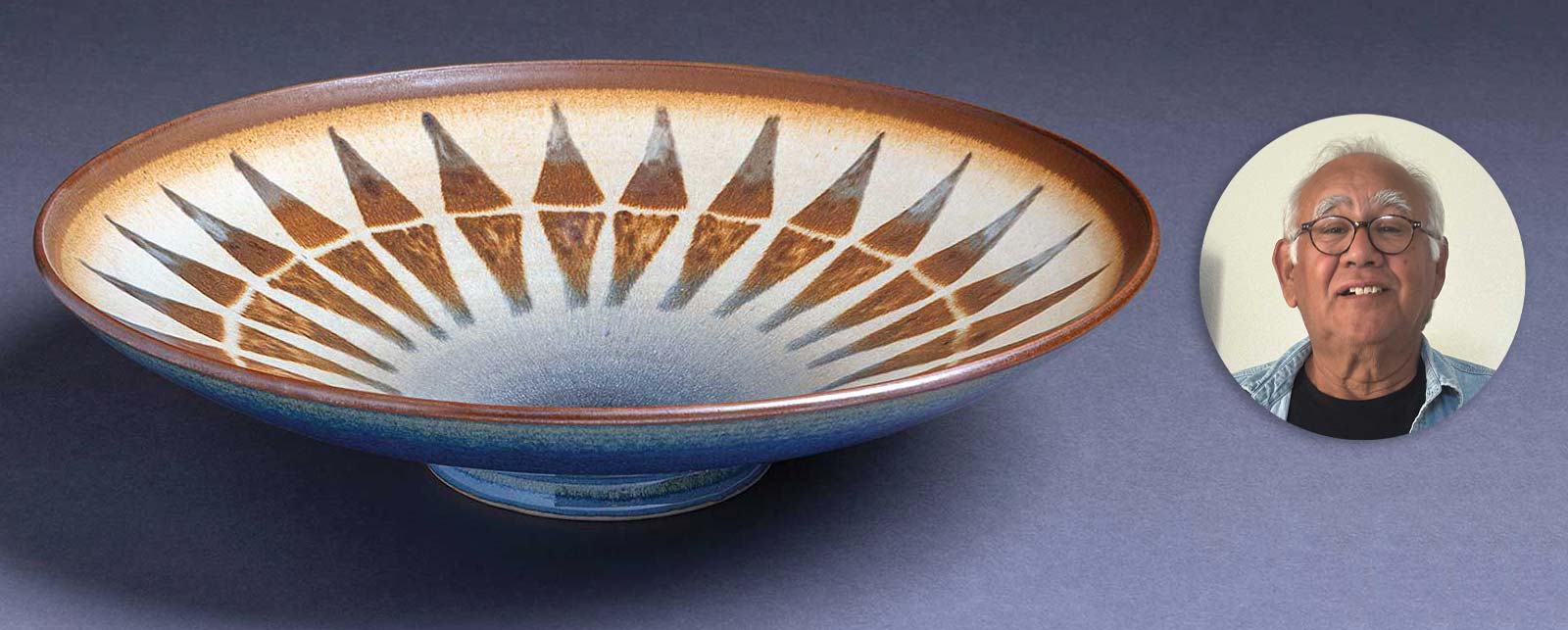
Melvin Cornshucker (United Keetoowah Band of Cherokees)
Melvin Cornshucker’s first inspiration for creating was when he went cane-pole fishing as a young boy with his grandfather in rural Oklahoma. “Dragonflies and other creatures were abundant and inspired me to be in awe of nature and its designs,” he shares. “Nature, family and my heritage continue to inspire me all these years later. I hope to also honor my people.”
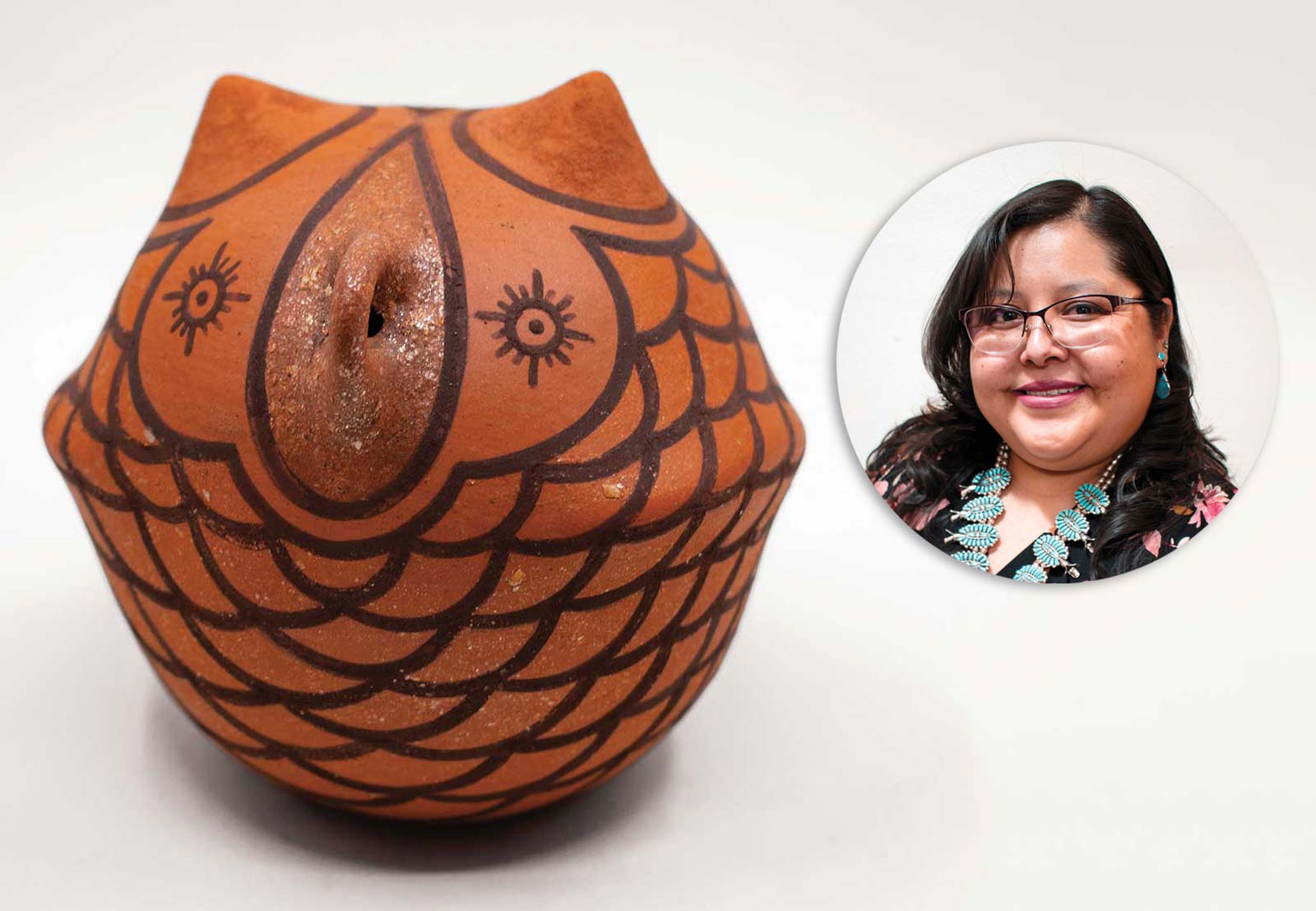
Shelley Edaakie (Pueblo of Zuni)
Growing up as a member of the Zuni Pueblo, Shelley Edaakie was raised with a strong connection to the culture, traditions and language. “I am inspired by our rich cultural artistry, my artisan family and the love that I have for the land around my pueblo,” she says. “Pottery keeps me connected to our land and culture through the design, form and natural found clay and pigments that I use. My art is driven by the need to share our art practices with people outside of our small reservation and to be a resource for our younger generations.”
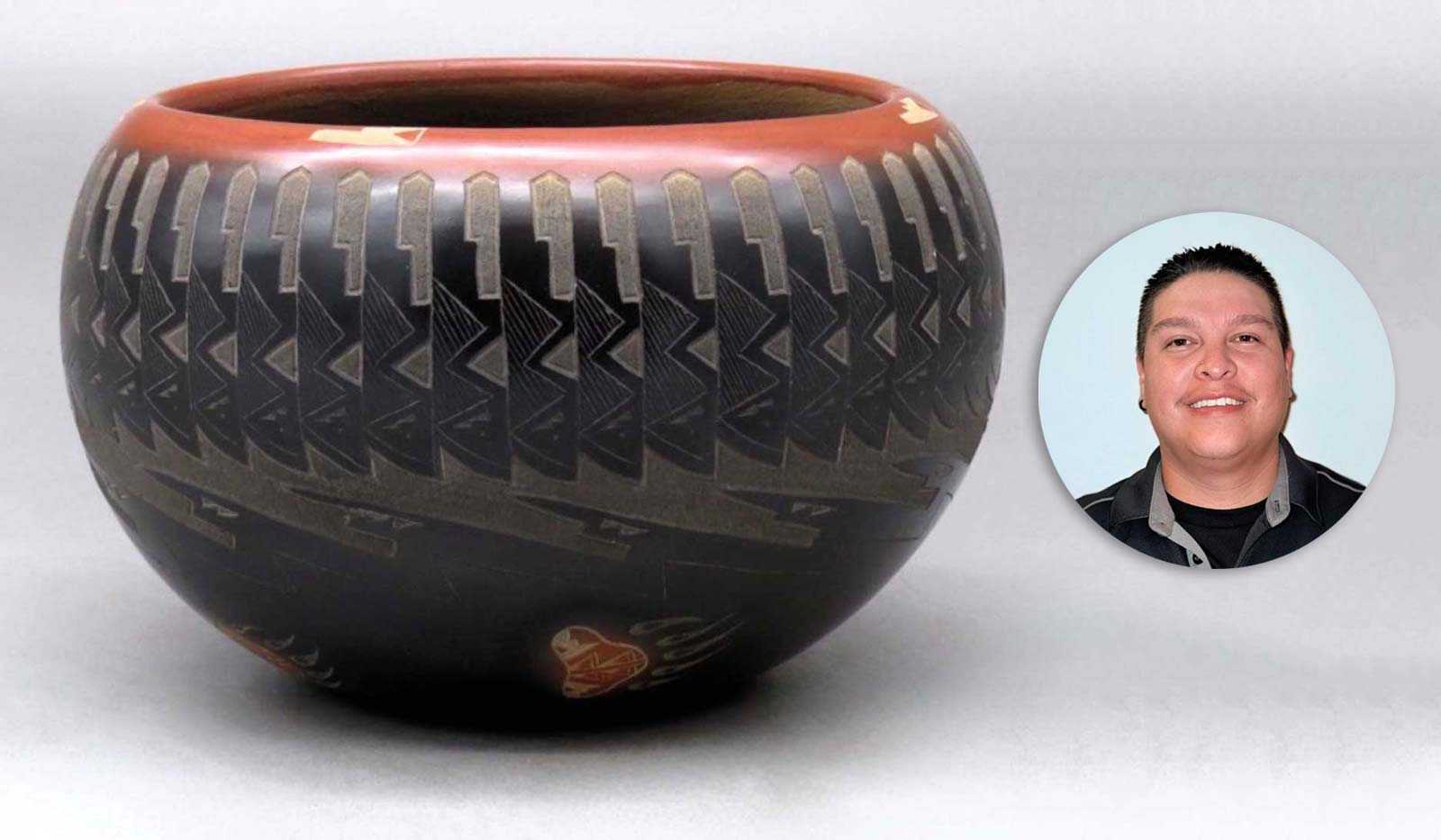
Justin Naranjo (Santa Clara Pueblo)
“As a pottery artist from Santa Clara Pueblo, New Mexico, I’m inspired by continuing my parents’ legacy, passed down through generations,” Justin Naranjo says. “It’s about knowing and learning my culture’s history, and embedding meaningful designs onto each pottery piece. I have a passion to create new designs, and the ability to bring each creation to life. My art is a tribute to the past and a vision for the future.”
————————————————
Two-Dimensional Art
Trailblazing Native American approaches to two-dimensional art go far beyond photography or painting with traditional mediums—although Indigenous artists are soaring in those arenas as well. Artists like Sarah Sense and others are creating multi-media “photoweavings” that integrate ancestral symbolism and designs with contemporary methods. Before being adapted to 3D pieces, Northwest Coast formline art is drawn in two dimensions. Ledger art builds on a centuries-old art form that originated to incorporate popular culture and pictorial narratives of modern Indigenous life. The Woodlands Style of the Great Lakes Region often uses bark as its canvas. Others might add beadwork or shells to their canvas. Also in this category are mosaic works and stained glass. Here are just a few of the innovative artists showing their two-dimensional creations at this year’s Heard Indian Fair & Market.
Artists to Look For: Marla Allison (Laguna Pueblo) • Angela Babby (Oglala Lakota) • Merlin Little Thunder (Cheyenne) • Dustin Logg (Navajo (Diné)) • Deborah Lujan (Taos Pueblo) • Dwayne Manuel (O’odham) • Kandis M. Quam (Zuni) • Benjamin West (Otoe Missouria, Southern Cheyenne, Muskoke Creek) • Heather Johnston (Qagan Tayagungin) • Oliver Enjady (Mescalero Apache) • Peggy Fontenot (Patawomeck/Potawatomi)
MARKET MEMORIES
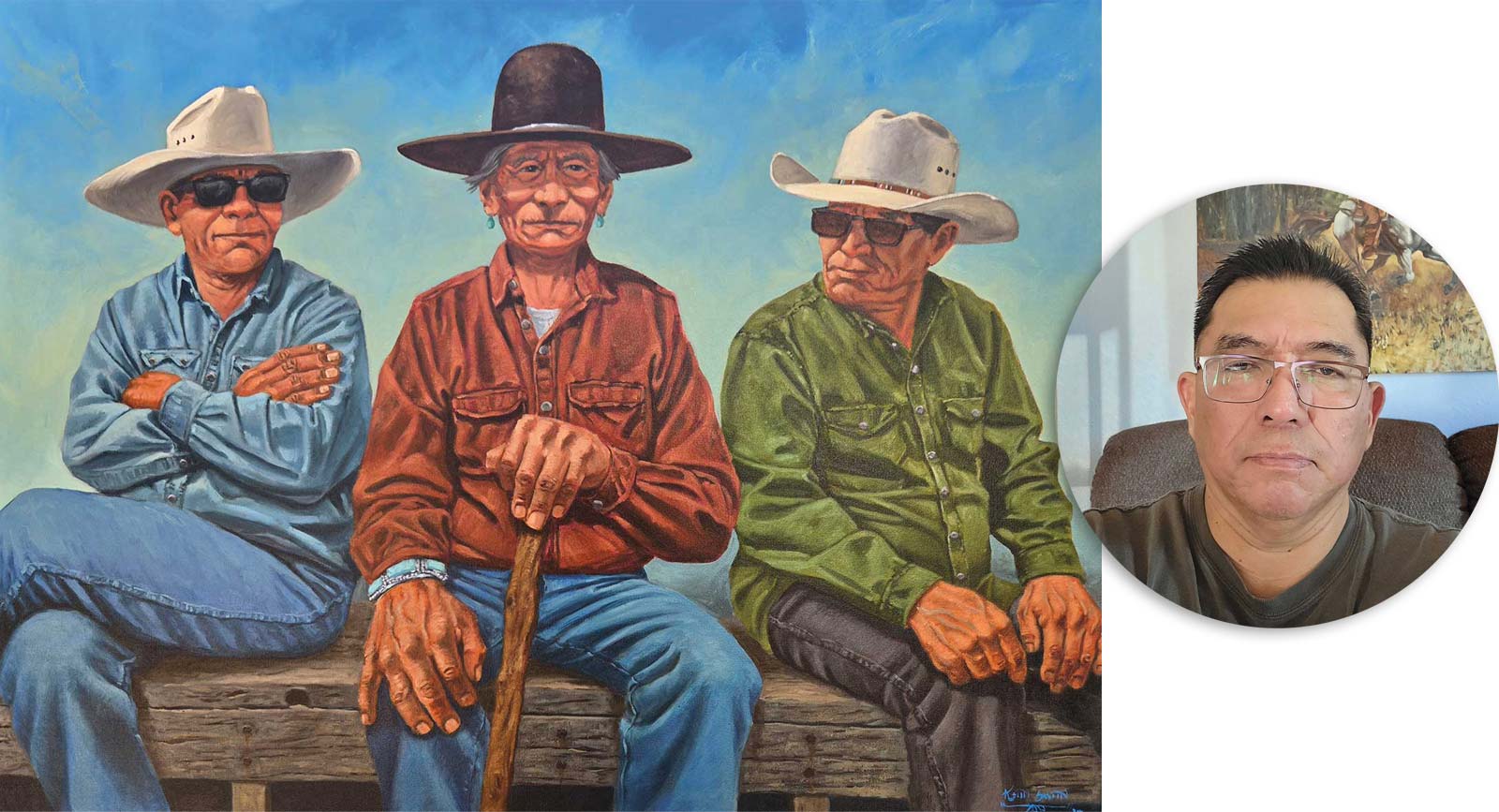
Keith W. Smith (Navajo (Diné))
Keith Smith’s first Heard Indian Fair & Market in 2000 made a lasting impression on the artist. “To show alongside so many well-established artists was an honor,” he says. “It gave me the chance to ask questions and to gain valuable knowledge on future shows.” His most memorable market memory was when he received an award at the event. “I didn’t make any sales that year, but I was humbled to have been ribboned...What I took away from that experience was not money but something more valuable that helped me to reflect on my work. It helped me see the growth in my work as an artist. What I enjoy most is the art family that is made throughout the years. It’s a way to reconnect with old friends and make new ones.”
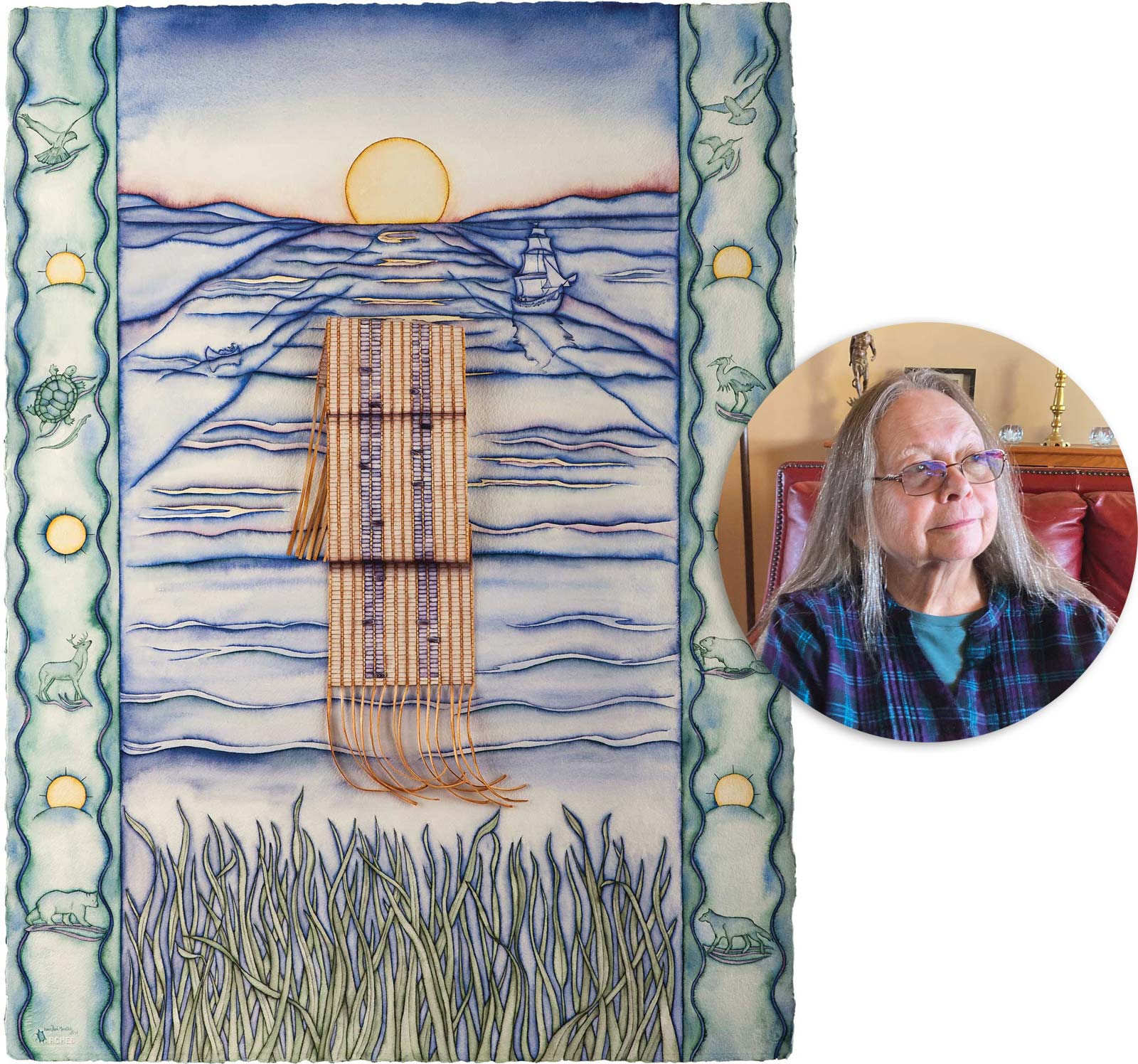
Dawn Dark Mountain (Oneida Nation of Wisconsin)
Watercolorist Dawn Dark Mountain takes a creative, multi-media approach to many of her pieces. “Some of my work includes ‘three-dimensional’ watercolors that include cut-out and manipulated paper, and beadwork and wampum beads sewn into the paper,” Dark Mountain explains. She has been participating in the Heard Indian Fair & Market since the late 1990s. “For me, it is always a thrill to see the work my fellow artists have created, as well as the changing, evolving nature of the work displayed.” Among her sculptural watercolors is Two Row Wampum/The Kaswentha. “...The Two Row Wampum belt was created in 1613 to record and honor an agreement between the Haudenosaunee and the Dutch…This treaty held three elements, first acknowledging our friendship, second that we will live in peace, and lastly that this treaty will last forever.”
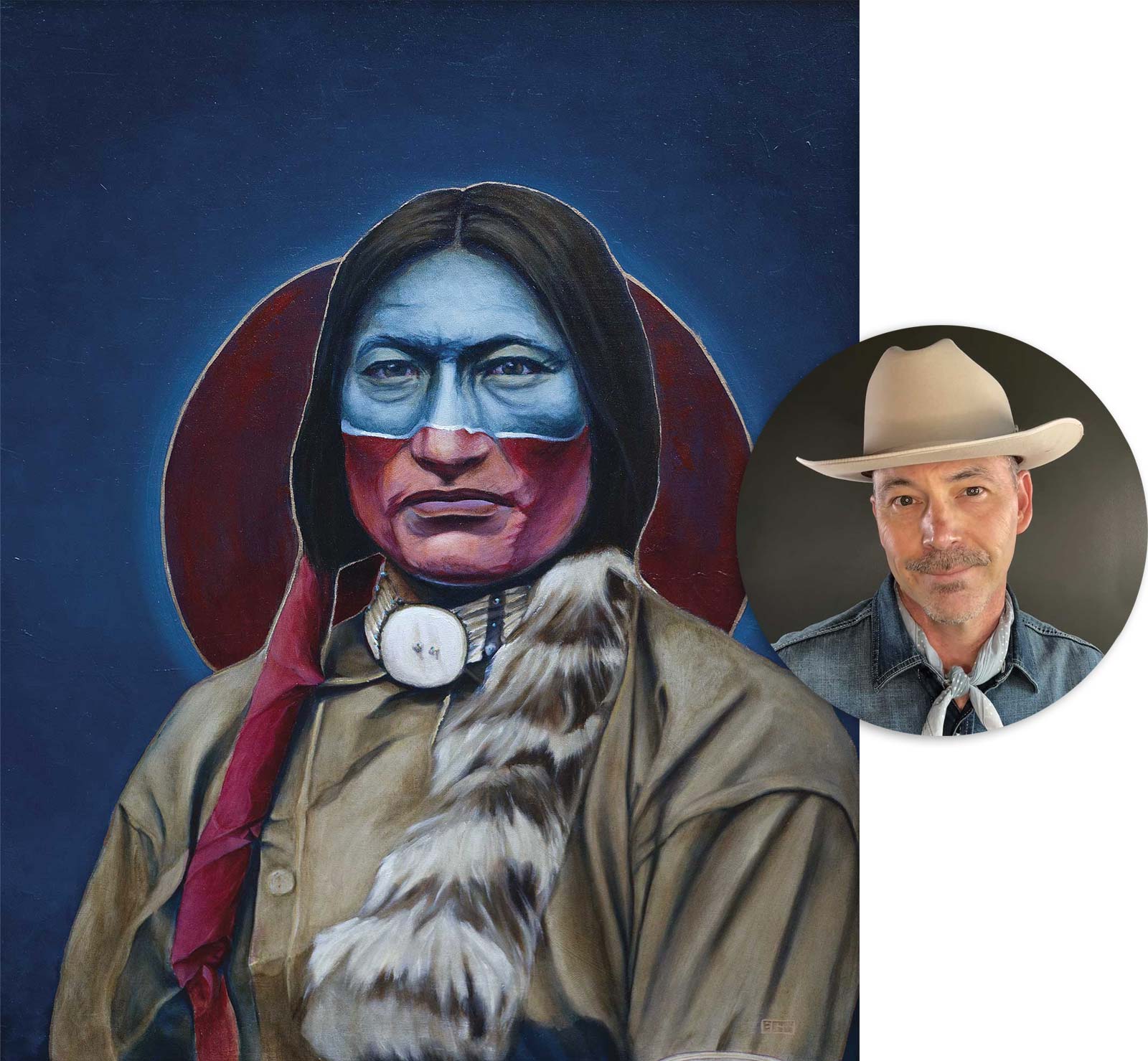
Brad Imotichey (Chickasaw)
Brad Imotichey was born in Talihina, Oklahoma, and grew up within the Chickasaw Nation. As a kid, he would spend hours drawing comics, magazine art and album covers, and went on to study graphic design, technology and fine art. He worked as a designer and photographer before a 20-year career in IT. “This past year, I rediscovered my passion for painting and committed to daily practice," says Imotichey, who is participating in the Heard Indian Fair & Market for the first time this year. “I’m drawn to 19th-century life in the American West—the experiences of Native people. If I could step back in time, that’s the era I’d choose. I feel like my painting journey is just beginning, with more ideas than time to chase them.”
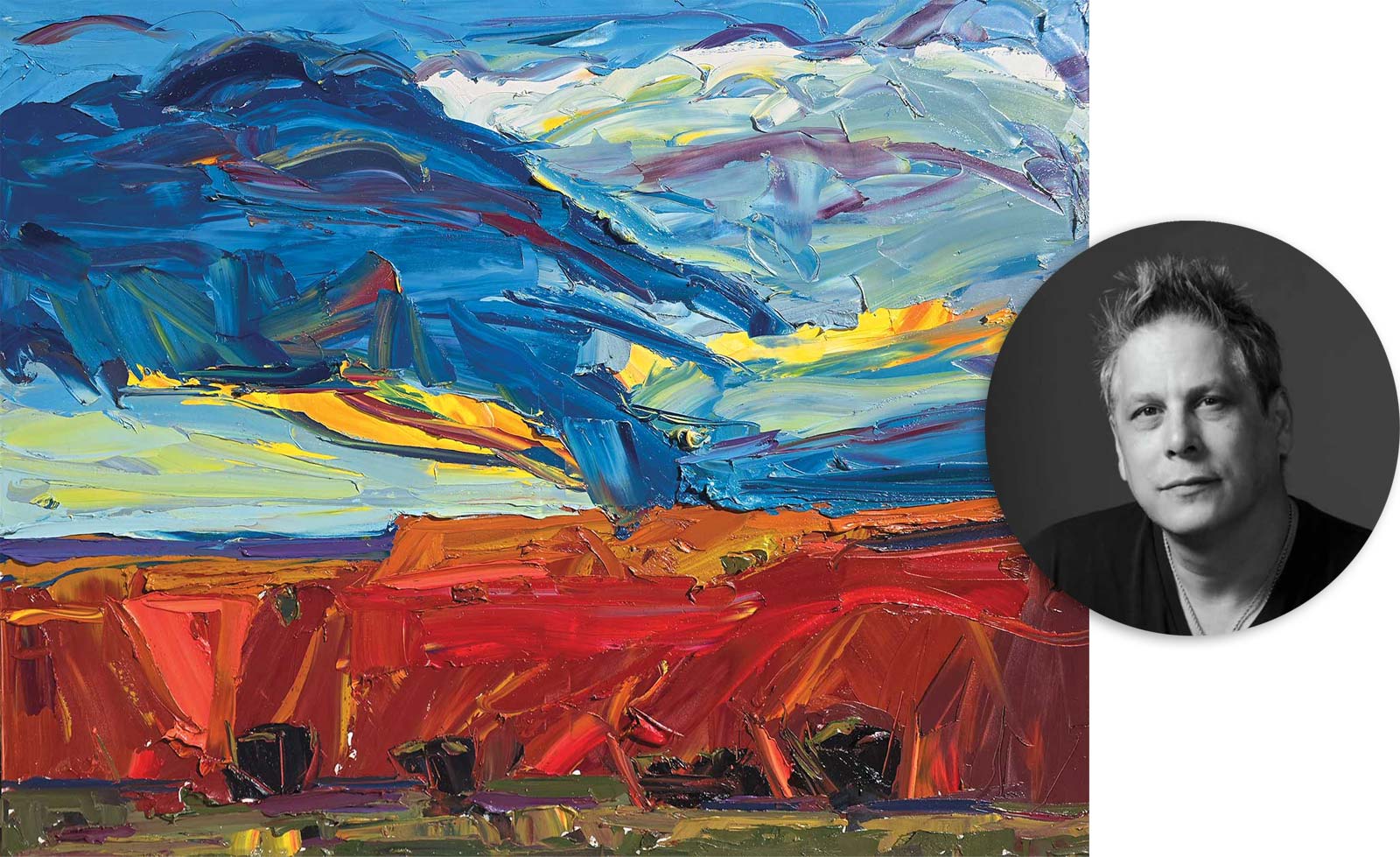
Mateo Romero (Cochiti Pueblo)
Mateo Romero is an internationally known artist. He attended Dartmouth College, received an MFA in printmaking from the University of New Mexico and has exhibited in Canada and in the United States. “I am constantly looking at the power and beauty of the New Mexico landscape,” says Romero, who lives in Pojoaque Pueblo with his wife and children. “Using oil paint and palette knives I try to capture this in expressionist impasto color. Santa Fe pink sunsets, magenta thunderclouds, burnt sienna mesas with shocks of olive green chamisa and juniper. Thick muscular paint glides across canvas with occasional brush marks. I fall in love all over again.”
————————————————
Pueblo Carvings
The pueblo carvings classification is a beloved area of collecting at the Heard Museum Guild Indian Fair & Market. Not only does the museum have a world-renowned collection of carvings, but the Heard Shop also offers work by top artists and holds semi-annual markets devoted purely to katsina carvings. This deep support of the classification shows during the March market, where dozens of artists bring their works that include scenes from daily life, cultural traditions, katsina figures and much more. Several tribes usually appear within this classification, but it is the Hopi who have elevated katsina carving to the art form it is today and has been for centuries. There is much to see and collect from this category.
Artists to Know: Manuel Chavarria (Hopi) • Shawn Deel (Navajo (Diné)/Hopi) • Arthur Holmes Jr. (Hopi) • Ernest Honanie (Hopi) • Wilmer Kaye (Hopi) • Eric Kayquaptewa (Hopi) • Adrian Nasafotie (Hopi) • Tayron Polequaptewa (Hopi) • Donald Lomawunu Sockyma (Hopi) • Manfred Susunkewa (Hopi) • Mark Taho (Hopi/Navajo (Diné))
MARKET MEMORIES
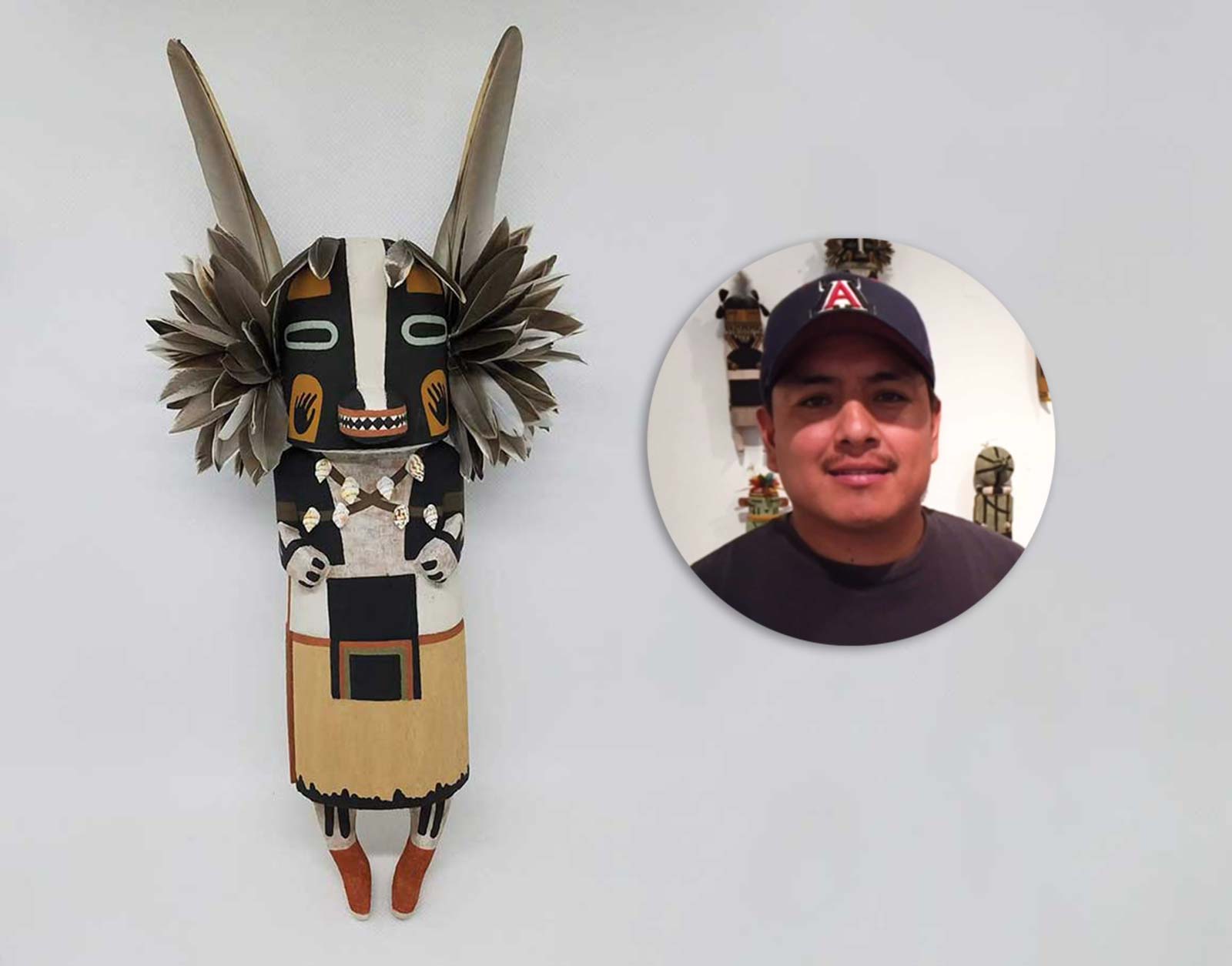
Darance Chimerica
(Hopi) Darance Chimerica’s first experience at the Indian Fair & Market was in 2005. He looks back on that time fondly, but also remembers how young he was. “[I was] at an age when I was very young and inexperienced. I had no clue what the outcome would be. I think this set the first stone of many shows to come. It was a great experience,” he says. “The atmosphere that surrounds the Heard is one of kind. The feeling of artists coming together…seeing customers who are now considered friends reconnecting—it’s kind of like a family gathering.” For his work at this year’s market, Chimerica is inspired by the world around him. “Using nature as my main source for the materials I use is one of the things I enjoy. Kayaking down the Green River, hiking the Hopi mesas to gather the paints that I use. Many of the bird feathers that I use are from friends I have met through the many shows that I have attended throughout my years as an artist.”
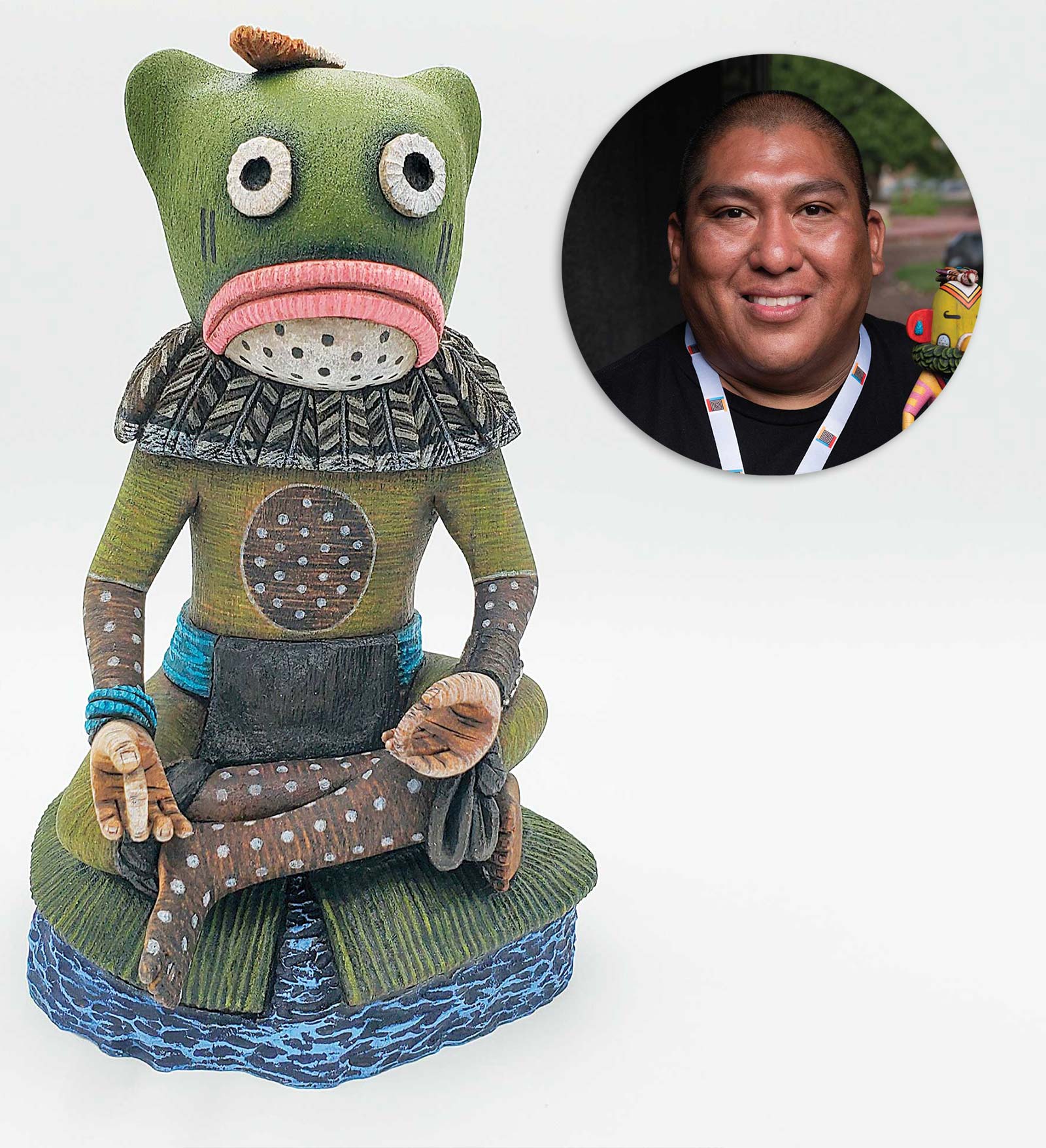
Renferd Koruh (Hopi)
Renferd Koruh is recognized for his intricate Hopi katsina doll carvings, especially his innovative spiral designs and detailed miniatures. His first Heard Market brought a mix of nerves and excitement, but meeting new clients and sharing the cultural meaning behind his work made it a successful and inspiring experience. Over the years, his carvings have grown more refined, creative and story-driven, influenced by encouragement from family and supporters. Now, his unique spiral style attracts a widening audience. He values the market’s supportive community, talented artists, and opportunity to educate others about Hopi culture, which continues to motivate his annual participation.
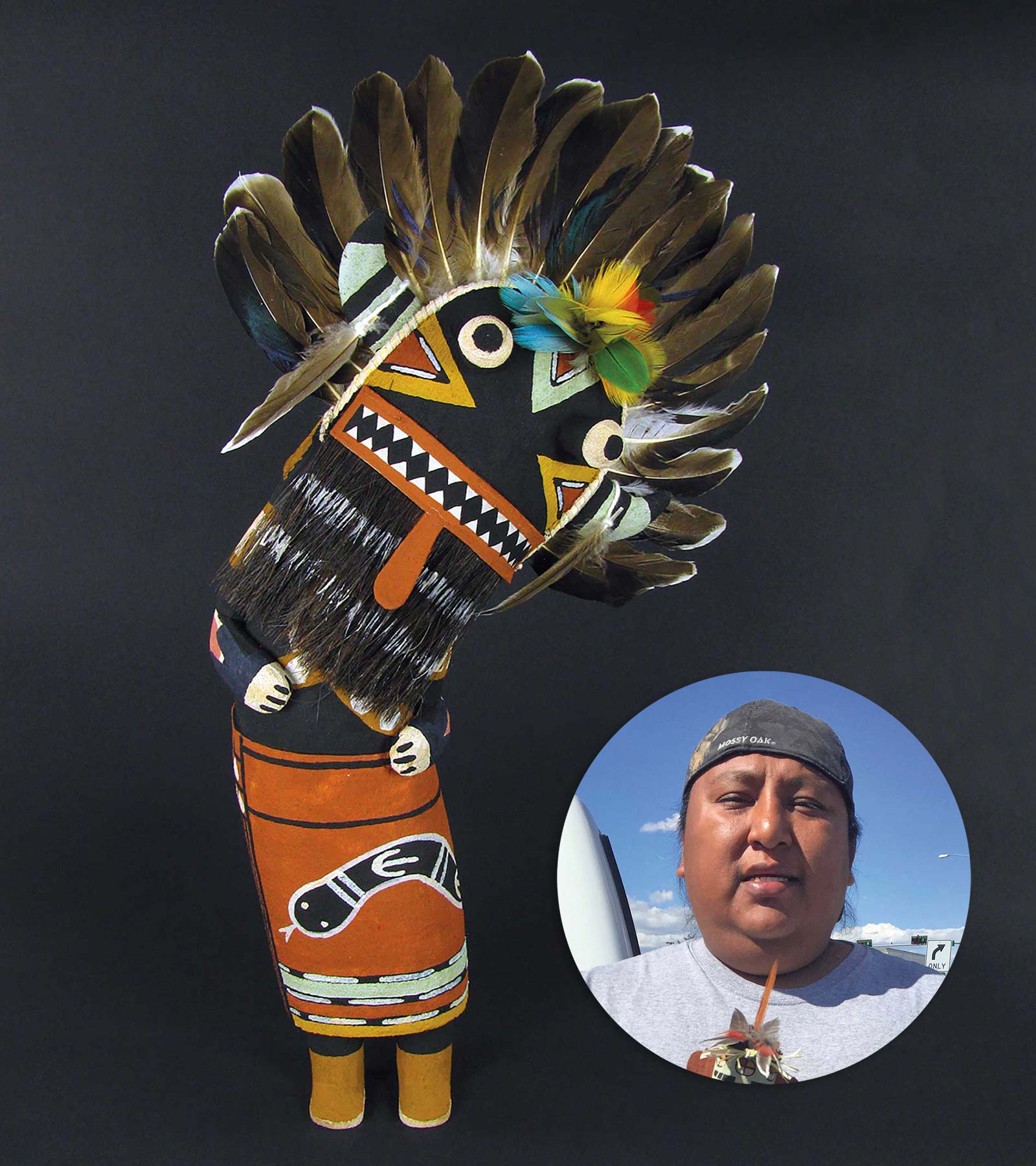
Raynard Lalo (Hopi)
Hopi carver Raynard Lalo has a great deal of experience under his belt, and says he is excited to return to Phoenix to show what he has been working on. “I’ve been exhibiting my traditional katsina carvings for years at the Heard Indian Fair & Market, though every year feels like my first,” he says. “I meet new collectors and catch up with old friends. I have new and unusual katsina carvings to share, and I’m looking forward to meeting everyone at my booth.”
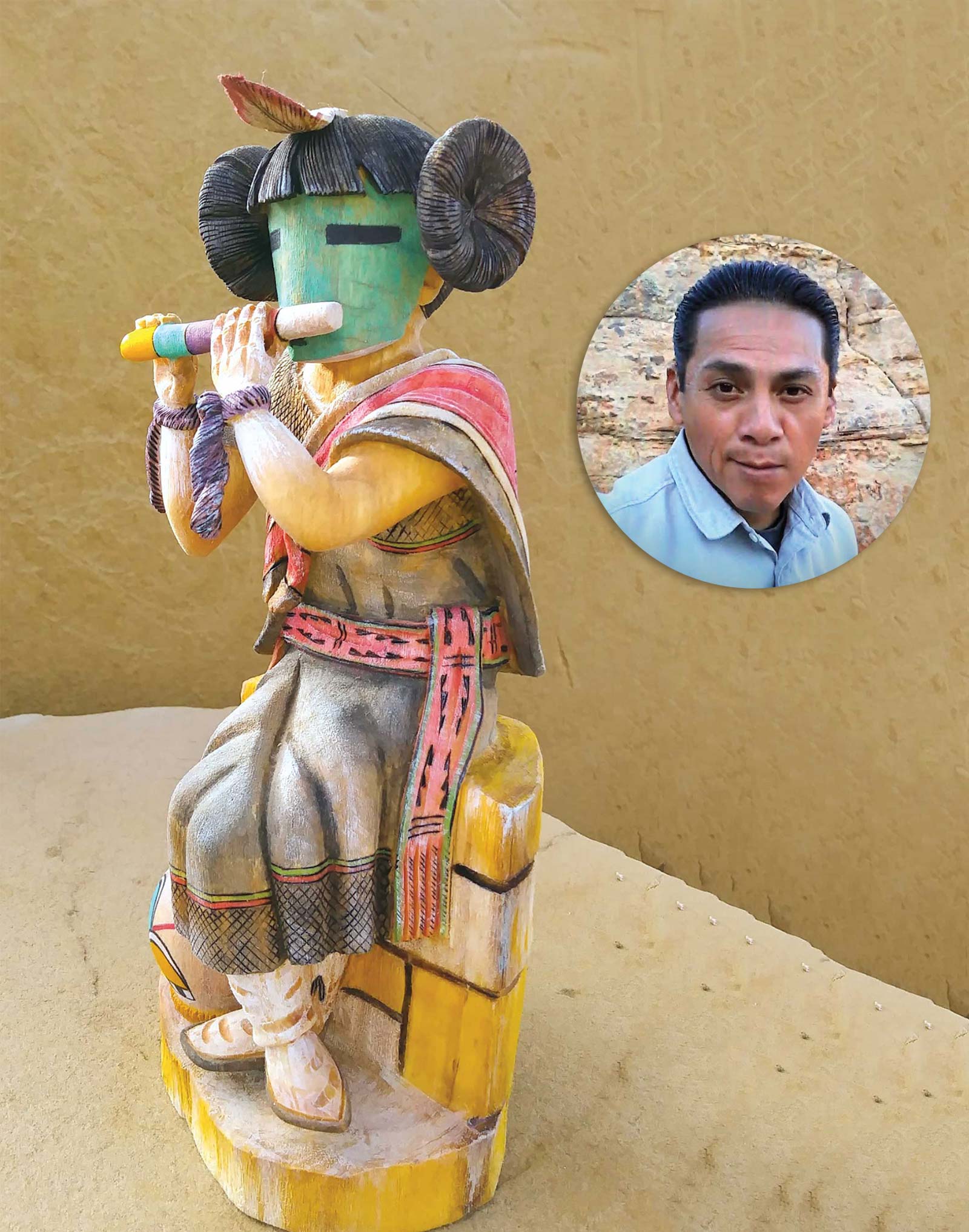
Alexander R. Youvella Sr.(Hopi)
Alexander Youvella Sr. has been involved in carving throughout his life, and attended the Heard Market since the early 1990s. His carvings, lifelike and imbued with an authenticity to detail, often push the boundaries of creativity. “Contemporary katsina doll art is a passion deeply embedded in me, that propels me to return to the Heard Market to continue educating, sharing and meeting fellow katsina doll enthusiasts,” he says.
————————————————
Sculpture
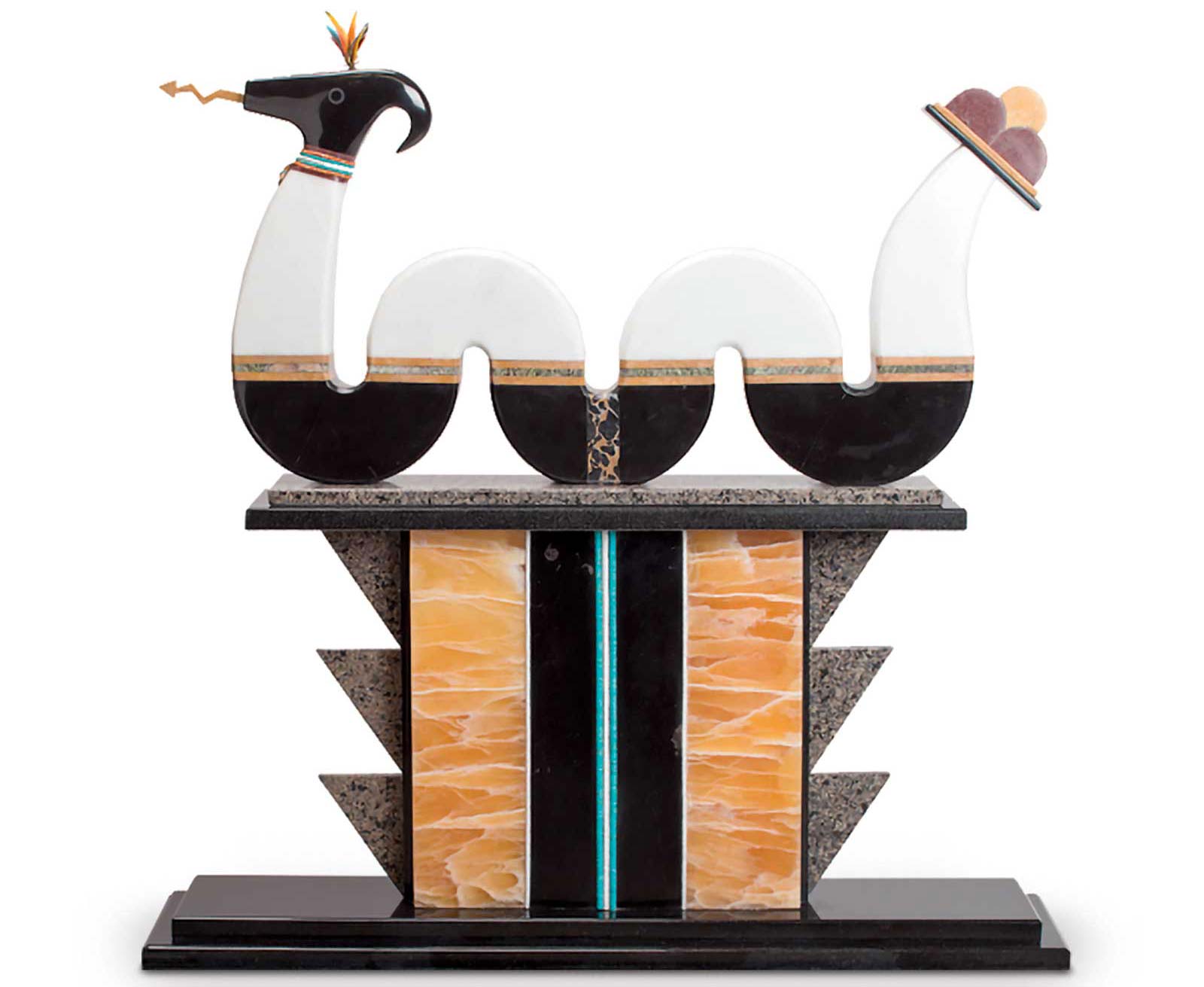 Sculpture by Cliff Fragua (Jemez Pueblo).
Utilizing materials like clay, stone, ceramic, glass and bronze, sculptors reshape the earth into expressive three-dimensional works. The range of works you’ll find in the sculpture classification is vast, from small yet powerful Zuni fetishes carved from stone and fossil, to massive, commanding sculptures in metal. Some forms honor historic Native figures, while others capture symbolic animals or dynamic abstract forms. Through skilled hands, raw materials are transformed into works of art that exist within three-dimensional space.
Artists to Know: Upton “Greyshoes” Ethelbah (Santa Clara/White Mountain Apache) • Cliff Fragua (Jemez Pueblo) • Alvin K. Marshall (Navajo [Diné]) • Troy Sice (Zuni Pueblo) • Talia Quandelacy (Zuni Pueblo) • Adrian Wall (Jemez Pueblo) • Nelson Tsosie (Navajo [Diné]) • Joseph Begay (Navajo [Diné]) • Gibbs Othole (Zuni Pueblo) • Kateri Sanchez (Zuni/Acoma) • Saige LaFountain (Navajo/Turtle Mountain Band of Chippewa) • Donovan Yazzie (Navajo [Diné])
MARKET MEMORIES
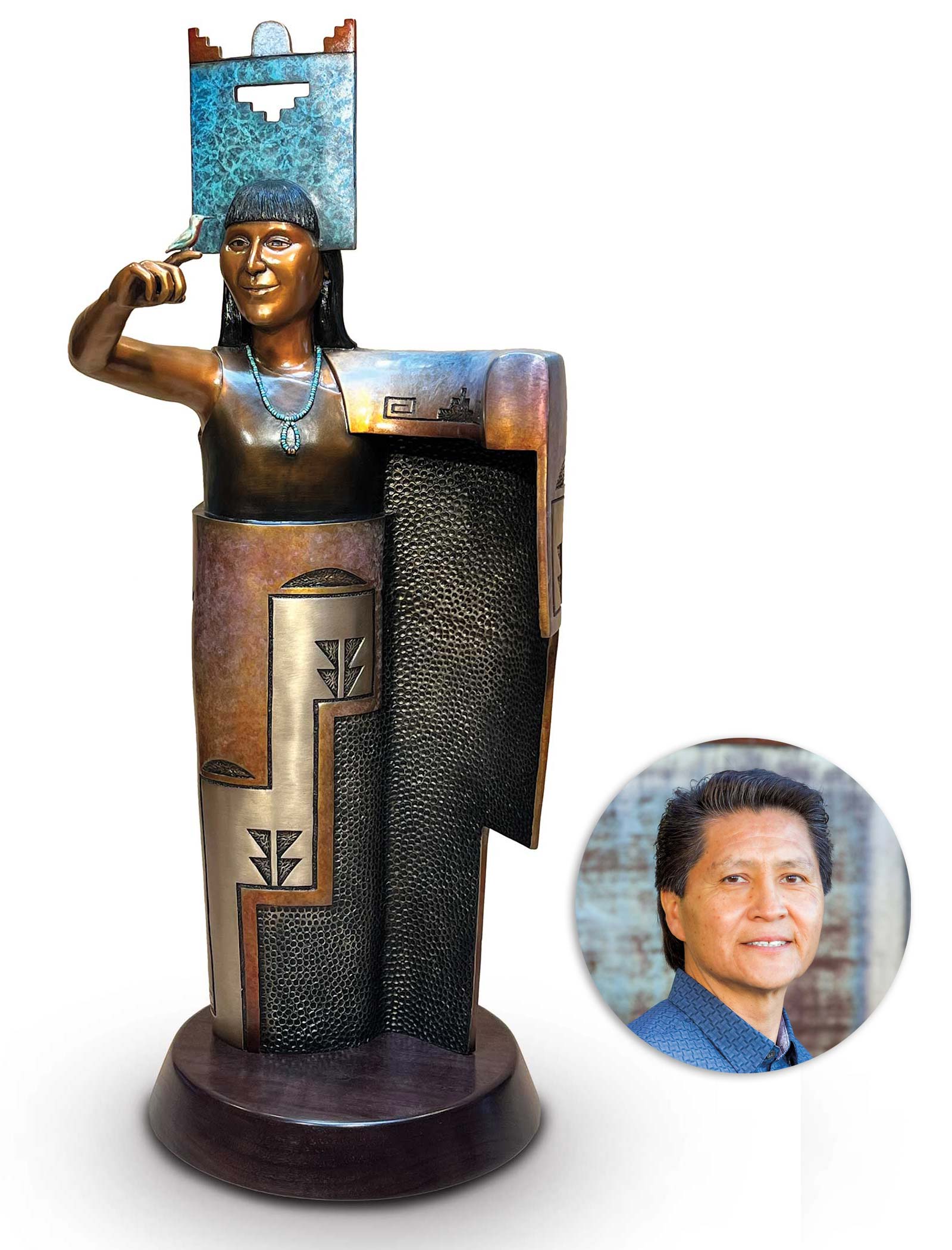
Joe Cajero (Jemez Pueblo)
“I was a teenager at my first Heard Indian Market, and my mother Esther Cajero shared her booth with me,” says Joe Cajero. “The experience gave me a sense of confidence, and I found support for my creations. This has led to many stages of growth in directions I couldn’t have imagined. The inspiration these markets provide is amazing!”
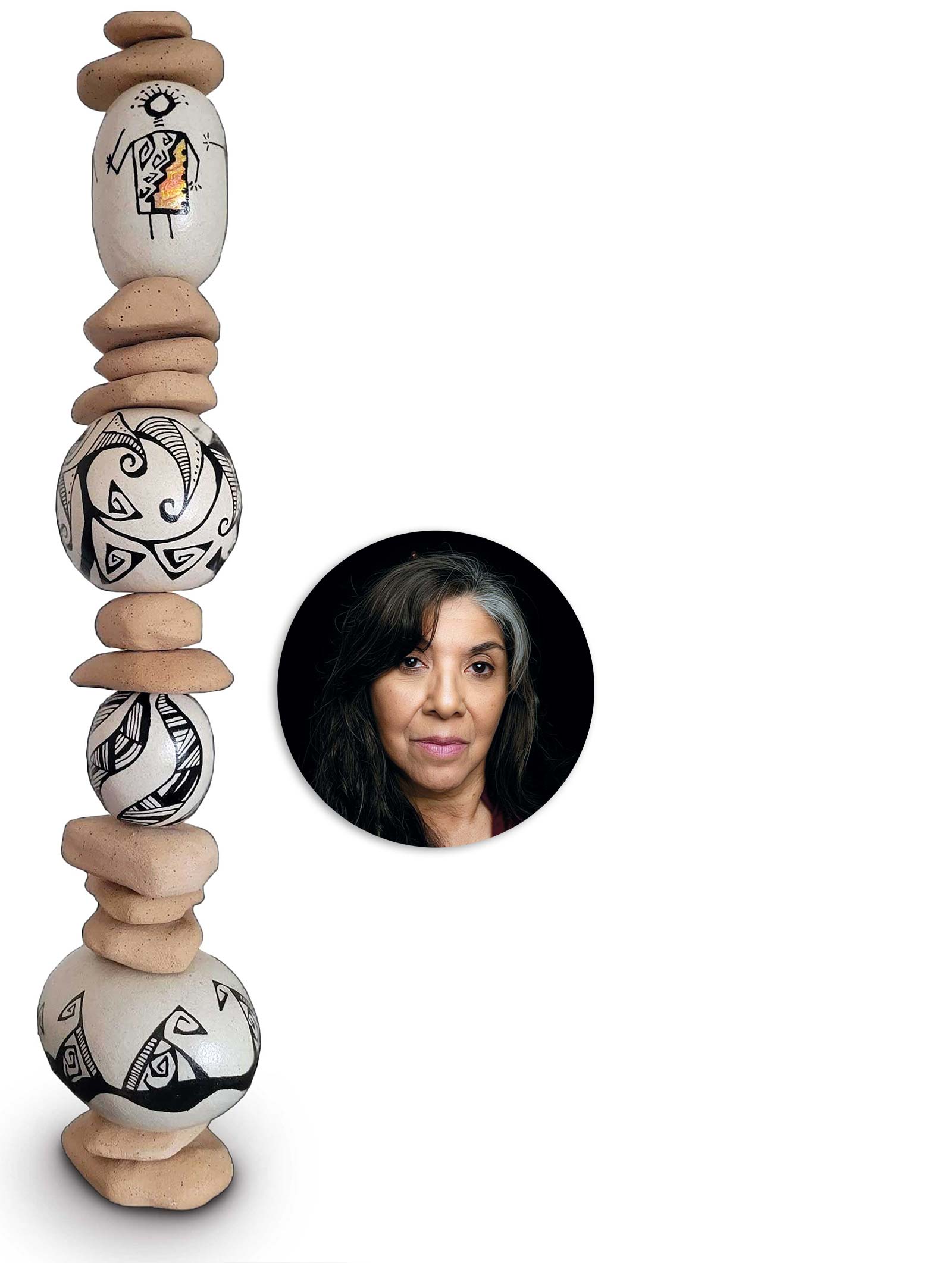
Janet Travis (Gila River Indian Community/Maricopa)
Janet Travis is a contemporary multimedia artist who works with clay, glass and local natural materials, which she often incorporates into her sculptural pieces. Family and culture, past and present, are strong influences in her creative process. “Transforming historical and traditional concepts and images into a contemporary representation allows for endless possibilities,” says Travis.
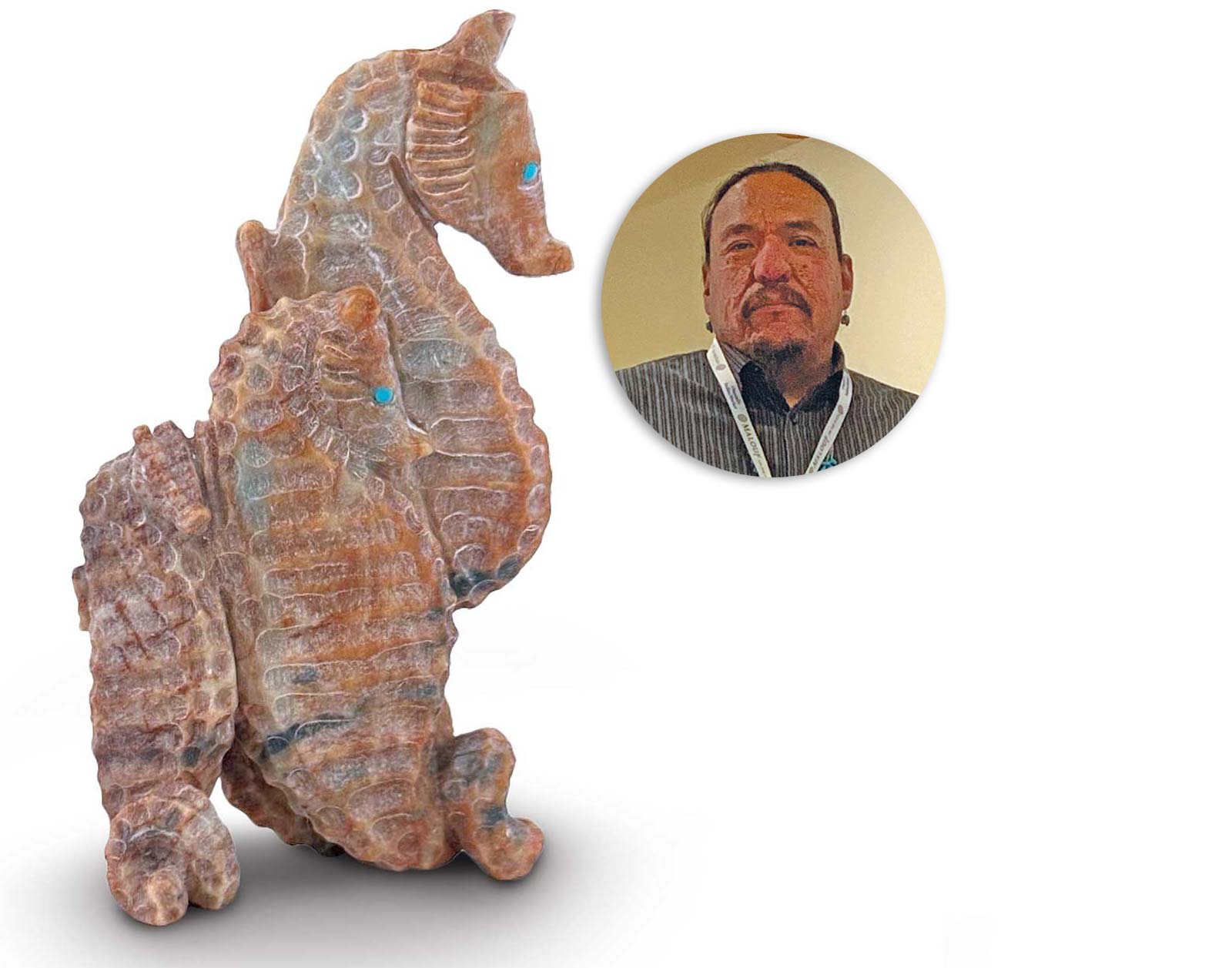
Terry A. Wilson (Navajo (Diné))
Terry A. Wilson carves his sculptures from natural stones using carbide and diamond-tipped tools, dental burrs and cutting and buffing wheels. Each detailed art piece also has inlaid eyes of differing stones like turquoise, opal, jet or marble. “I let the stones speak for themselves to give you a remarkable piece of art,” he says.
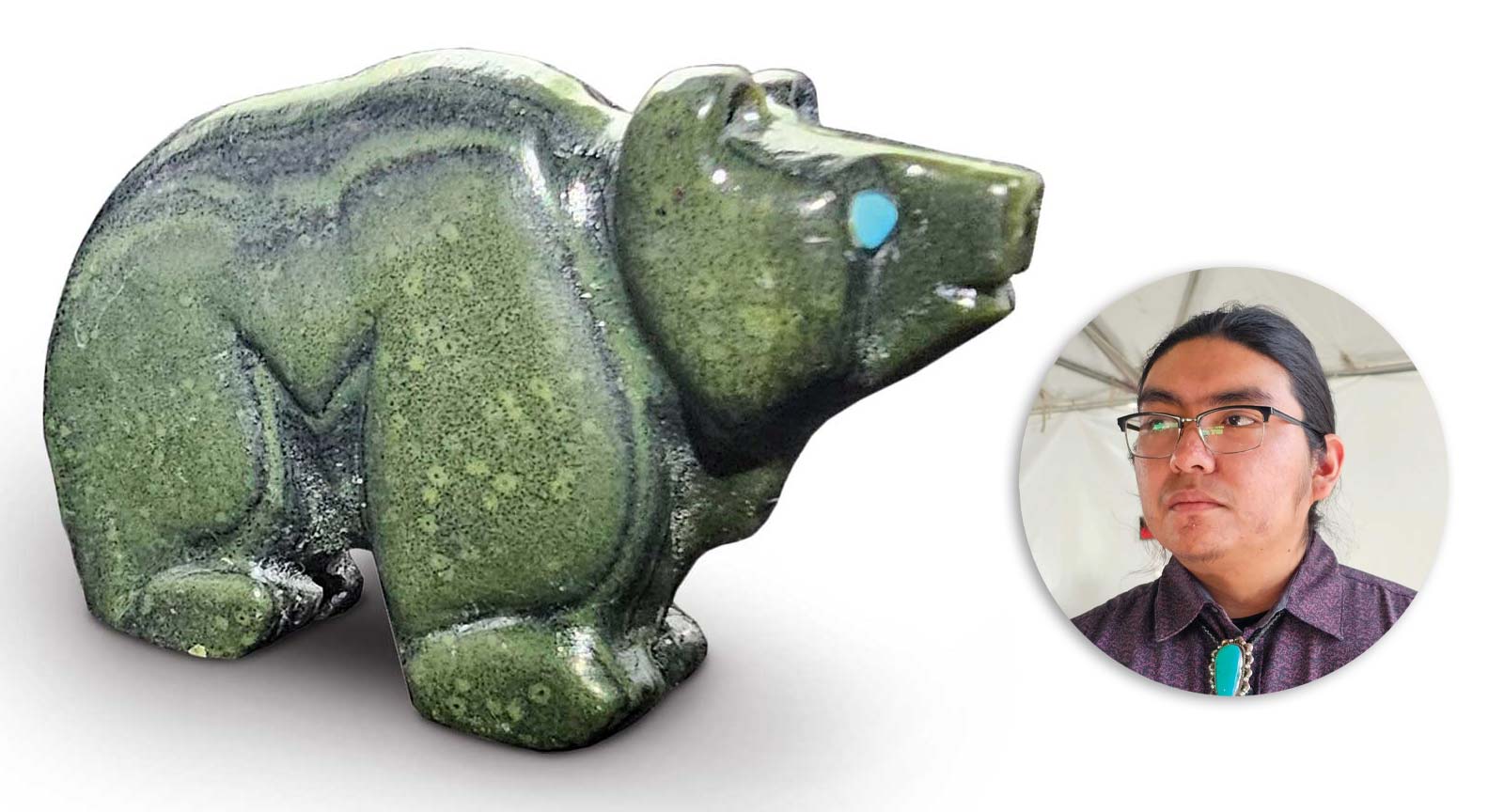
Jacob Wilson (Zuni/Navajo (Diné))
“I enjoy detailing each piece differently than other artists to give you a unique piece of art,” says Jacob Wilson, son of Terry Wilson. The artist also carves his sculptures from natural stones, inlaid with eyes of varying stone using carbide and diamond-tipped tools, dental burrs, and cutting and buffing wheels.
————————————————
Weavings & Textiles
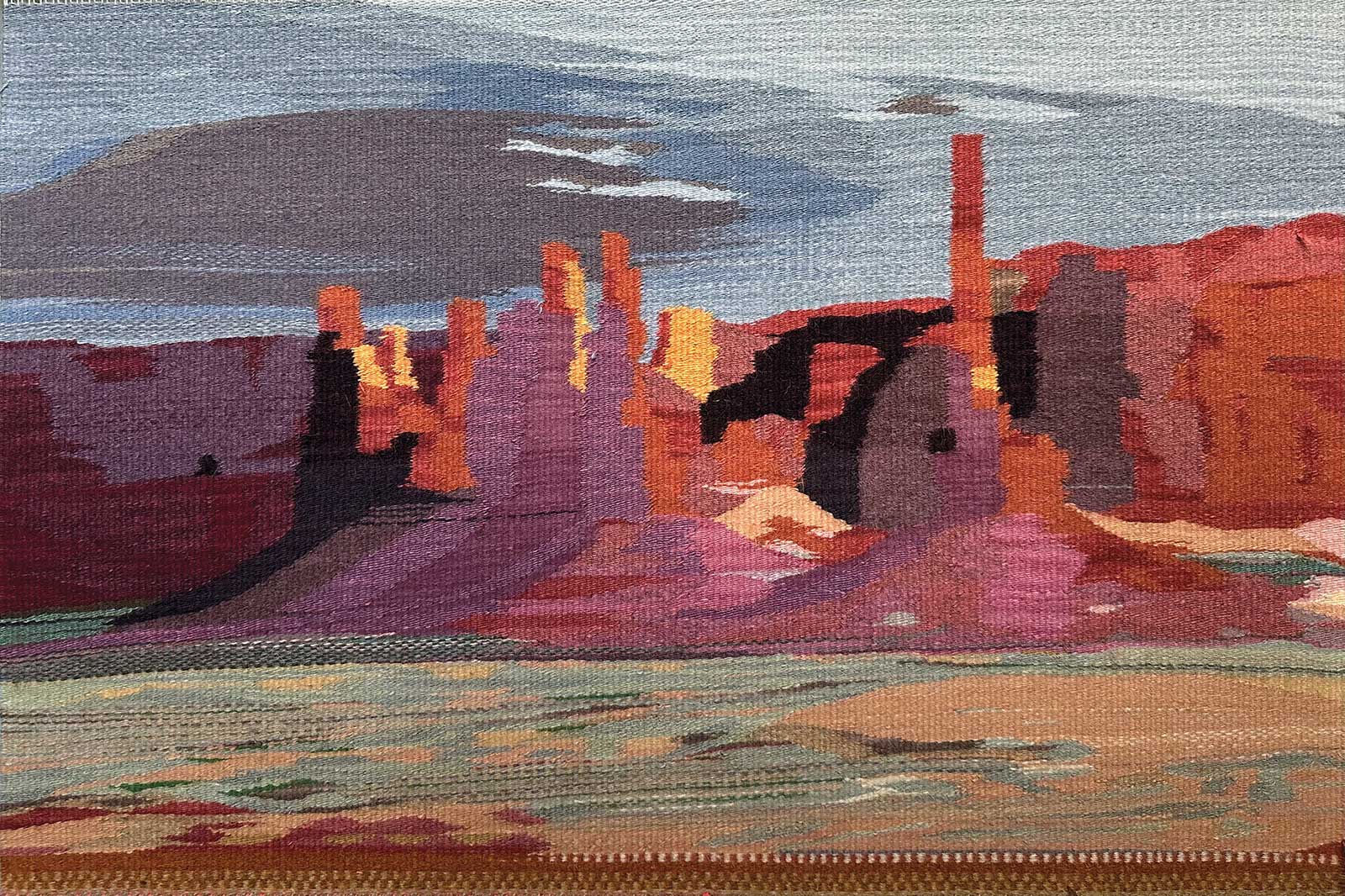
A weaving by Diné artist Philip Singer.
Threads of history and innovation intertwine in the weavings and textiles classification. Rooted in nearly 2,000 years of tradition, these items exist as both art and living memory, carrying the stories, culture and history of generations of weavers. Textiles have long served ceremonial, utilitarian and spiritual roles, with motifs like Spider Woman, the Four Sacred Mountains of the Navajo and other symbols appearing frequently throughout these stunning creations. Today, artists continue to honor these foundations while expanding the medium through contemporary materials and personal expression. As you explore the market this year, notice how these woven works move fluidly between past and present—blankets, rugs, clothing and regalia that reflect ancestral knowledge and individual vision.
Artists to Know: Venancio Aragon (Navajo (Diné)) • Naiomi Glasses (Navajo (Diné)) • Tyler Glasses (Navajo (Diné)) • TahNibaa Naataanii (Navajo (Diné)) • Mary Henderson Begay (Navajo (Diné)) • Berdina Y. Charley (Navajo (Diné)) • Jason Harvey (Navajo (Diné)) • Christopher Velarde (Jicarilla Apache Nation) • Timothy “Coyote” Smith (Hopi/Laguna Pueblo) • Charlene Laughing (Navajo (Diné)) • Mona Laughing (Navajo (Diné))
MARKET MEMORIES
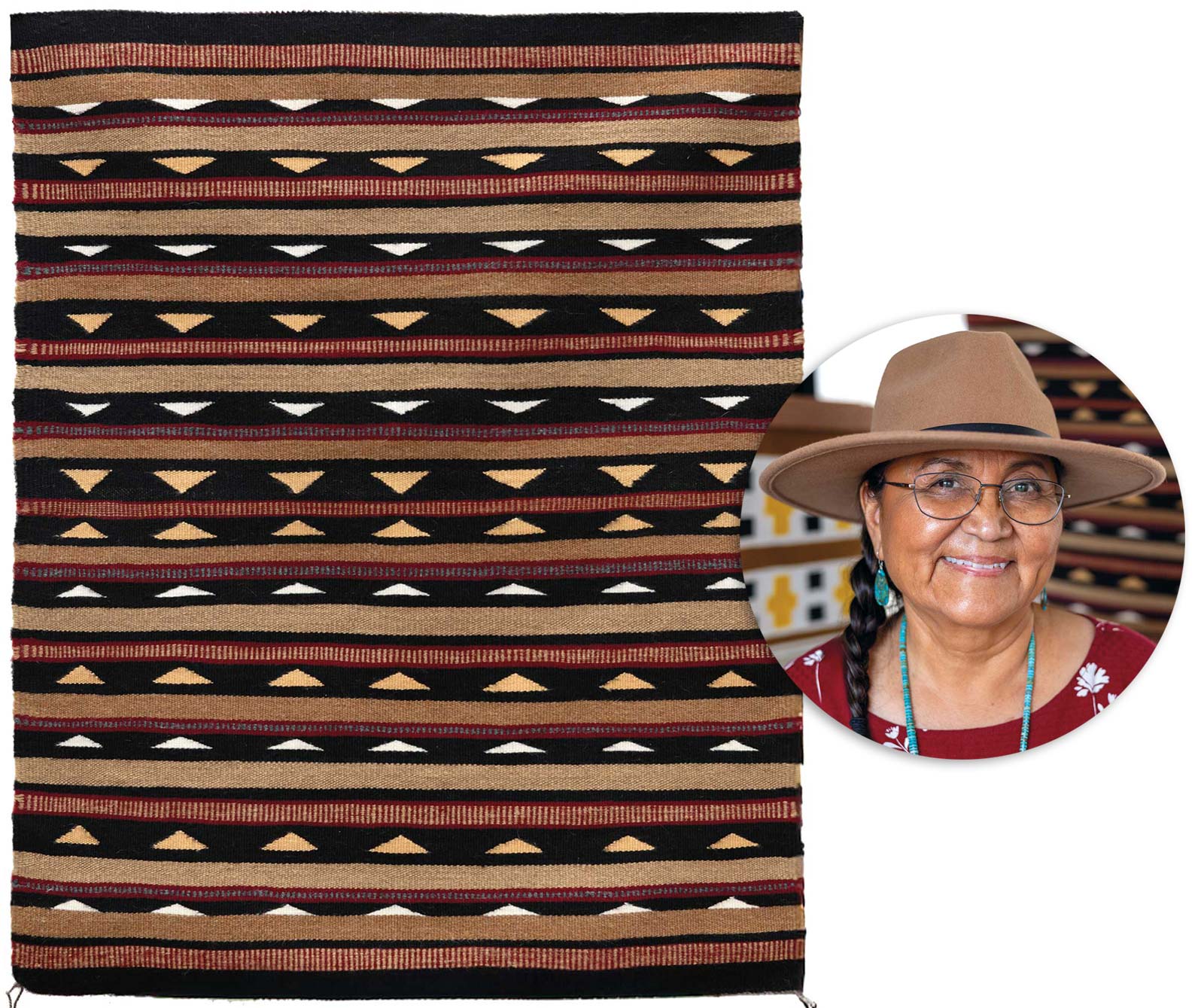
Rosie Taylor (Navajo (Diné))
“My first Heard Indian Market was back in the early ’90s, and it was both exciting and intimidating,” says Rosie Taylor. “I did not feel fully confident in my work at the time, but it was an honor to show my weavings alongside so many master artists. I am truly honored and in gratitude that my older brother, the late Herbert Taylor, and my late mother and master weaver, Lillie Taylor, were there with me. My work has changed through a deeper commitment to slow-made weaving. I am honoring the pace and intentionality my ancestors practiced. I have also grown by showing up for my community, offering weaving classes, and sharing more knowledge about the weaving process. Teaching has strengthened both my technique, my connection to our traditions and my Indigenous communities. I love the generosity, respect and warmth of the art market community. Being in the company of my community, old and new, is truly the best part of the Heard Indian Market.”
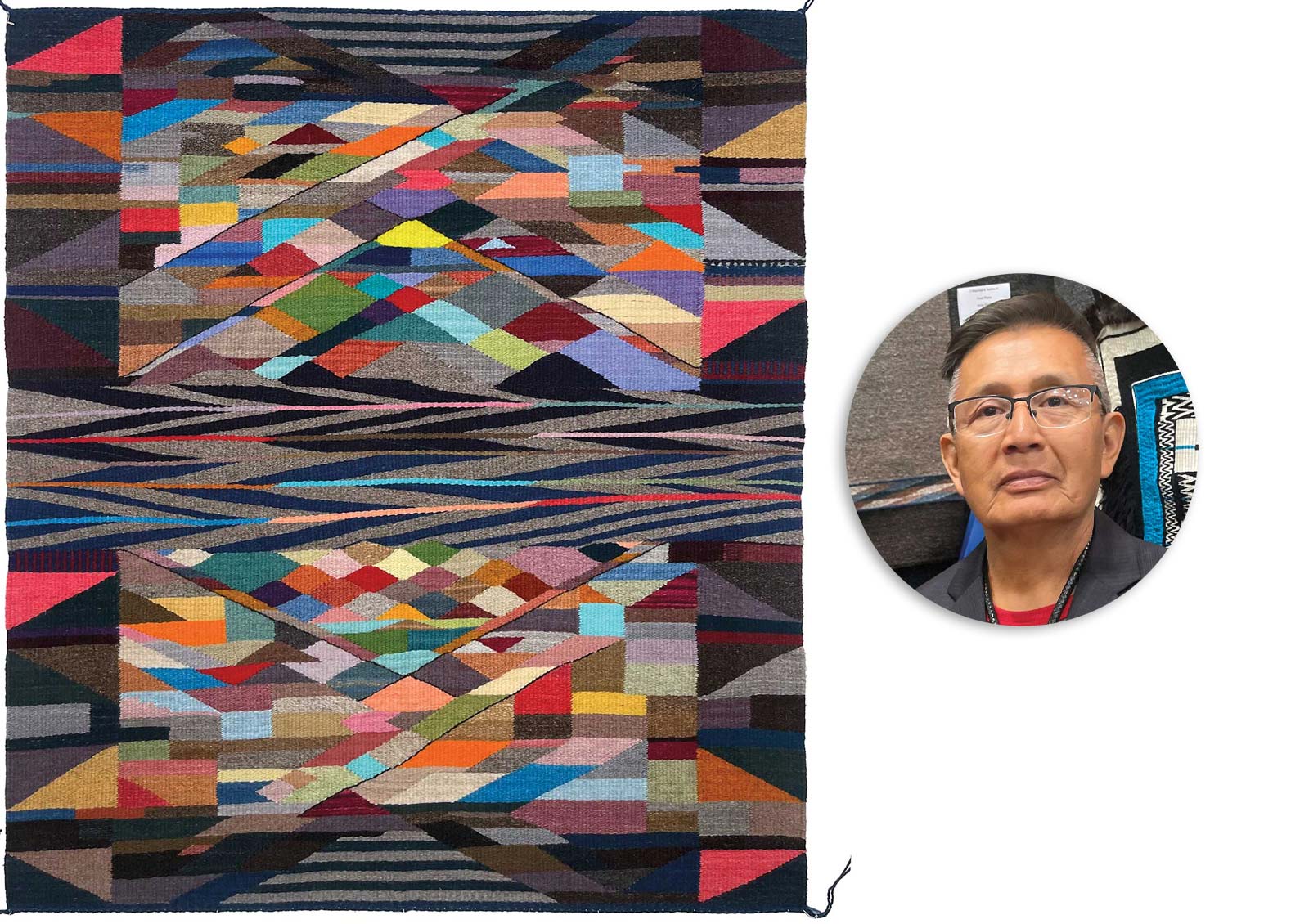
Philip Singer (Navajo (Diné))
Philip Singer finds inspiration in innovation. “Non-traditional designs coupled with simplicity is my forté,” he says. “I have grown accustomed to being a fiber artist. A newfound love that is rich in traditions.” Singer attended art school and relied heavily on his education to use color, proportion, balance and perspective, all of which have helped develop his aesthetic sense. “My weaving is about exploration and how to use traditional tools and construction methods to achieve a visual masterpiece,” says the artist.
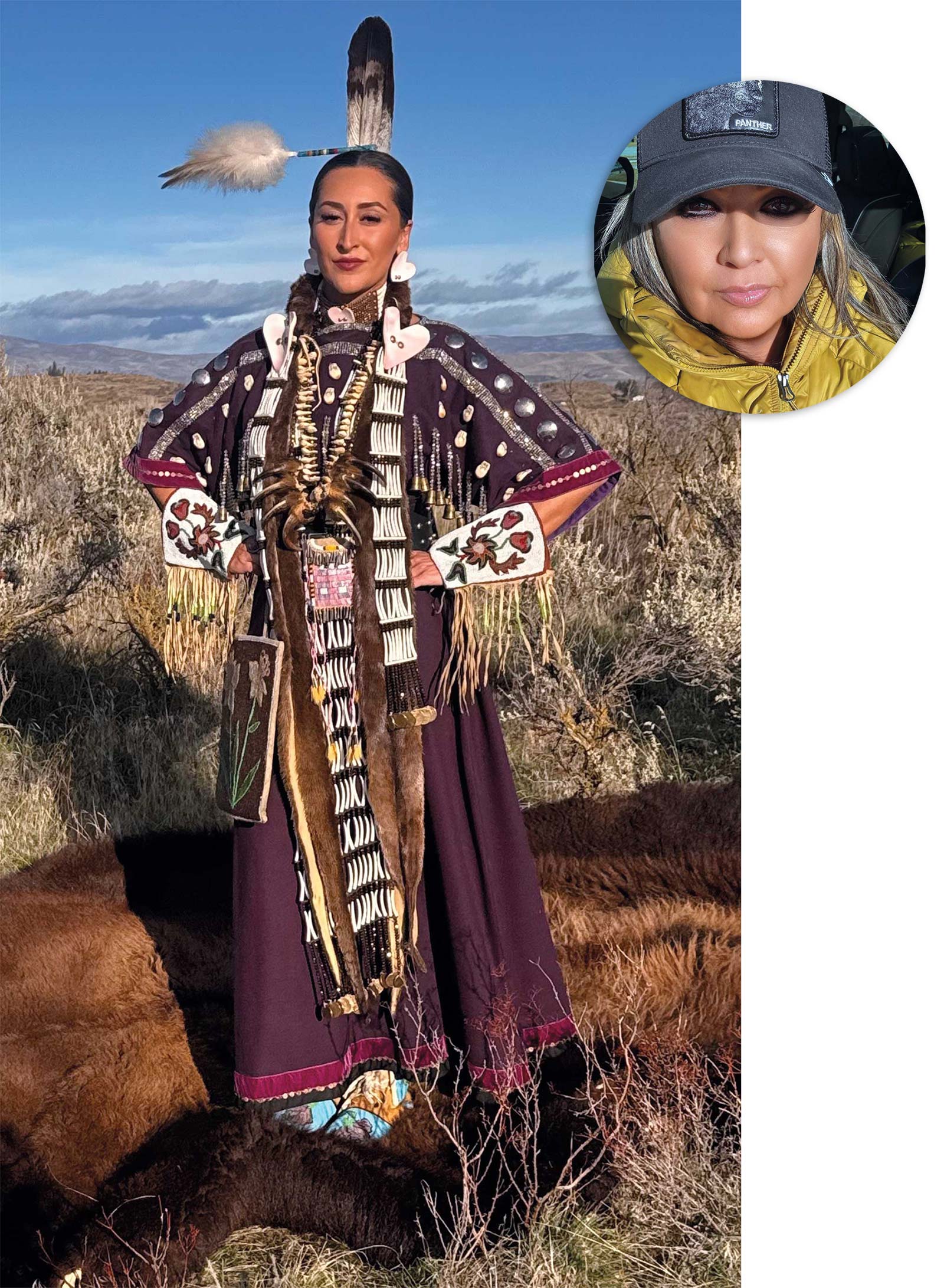
Catherine Black Horse (Seminole Nation of Oklahoma)
Catherine Black Horse highlights the power and beauty of women through her traditional hand-made dresses, dentalium and elk ivory artwork, creating all of her artwork with love, intention and prayer. “Each piece carries a blessing, surrounding the wearer with beauty, resilience and strength,” says Black Horse.
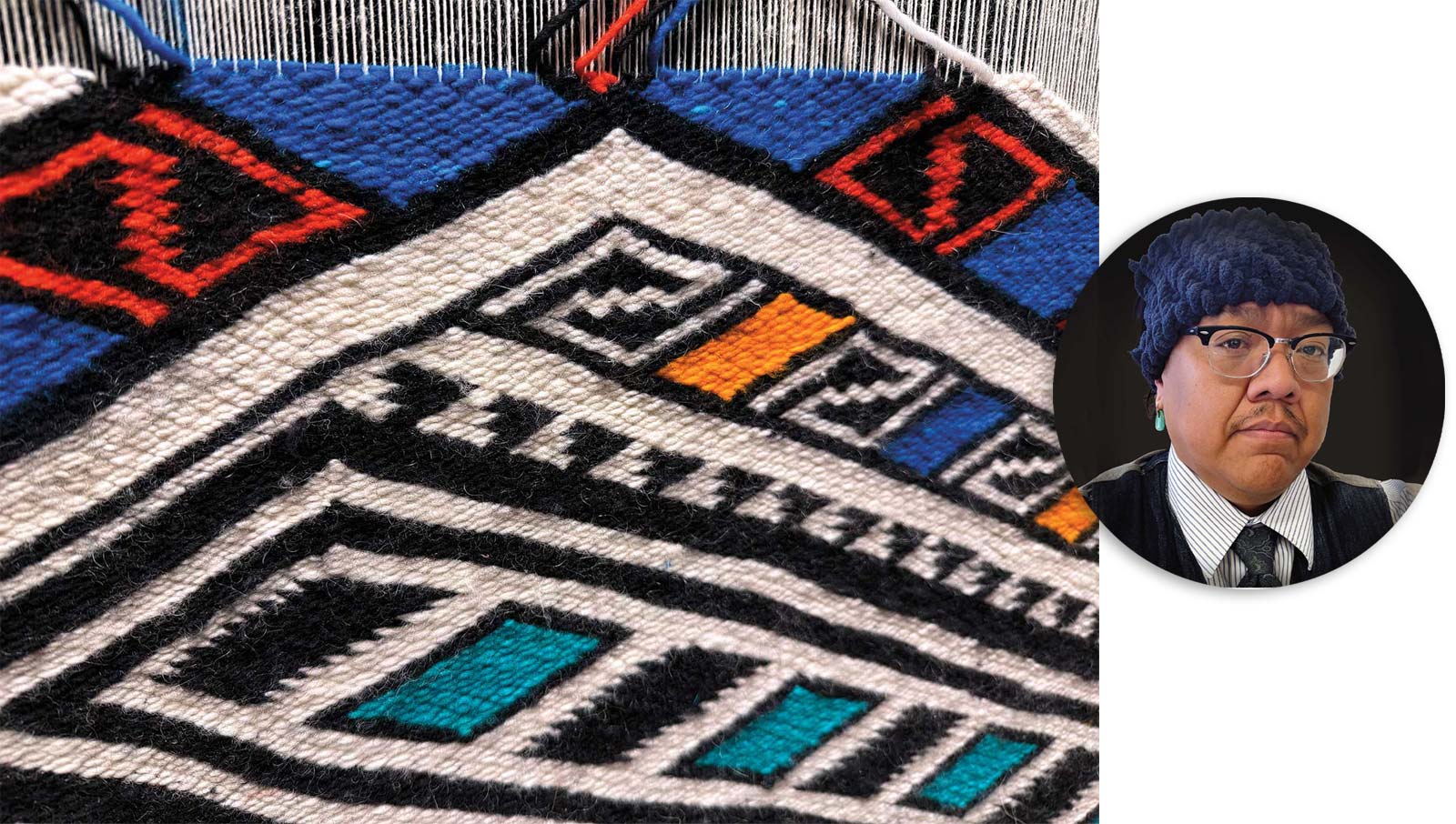
Zefren-M (Navajo (Diné))
Ephraim Anderson, known as Zefren-M, strives to deconstruct and learn from the last 150 years of influence on Indigenous weaving. “I feel that weavers in different times will always weave in an infinite number of techniques that fade and come back, given the freedom to weave from the mind,” says the artist. During his first market, a pipe from his loom fell on him while he was working, leaving “a permanent impression on my head to forever remember the experience.”
————————————————
Diverse Arts
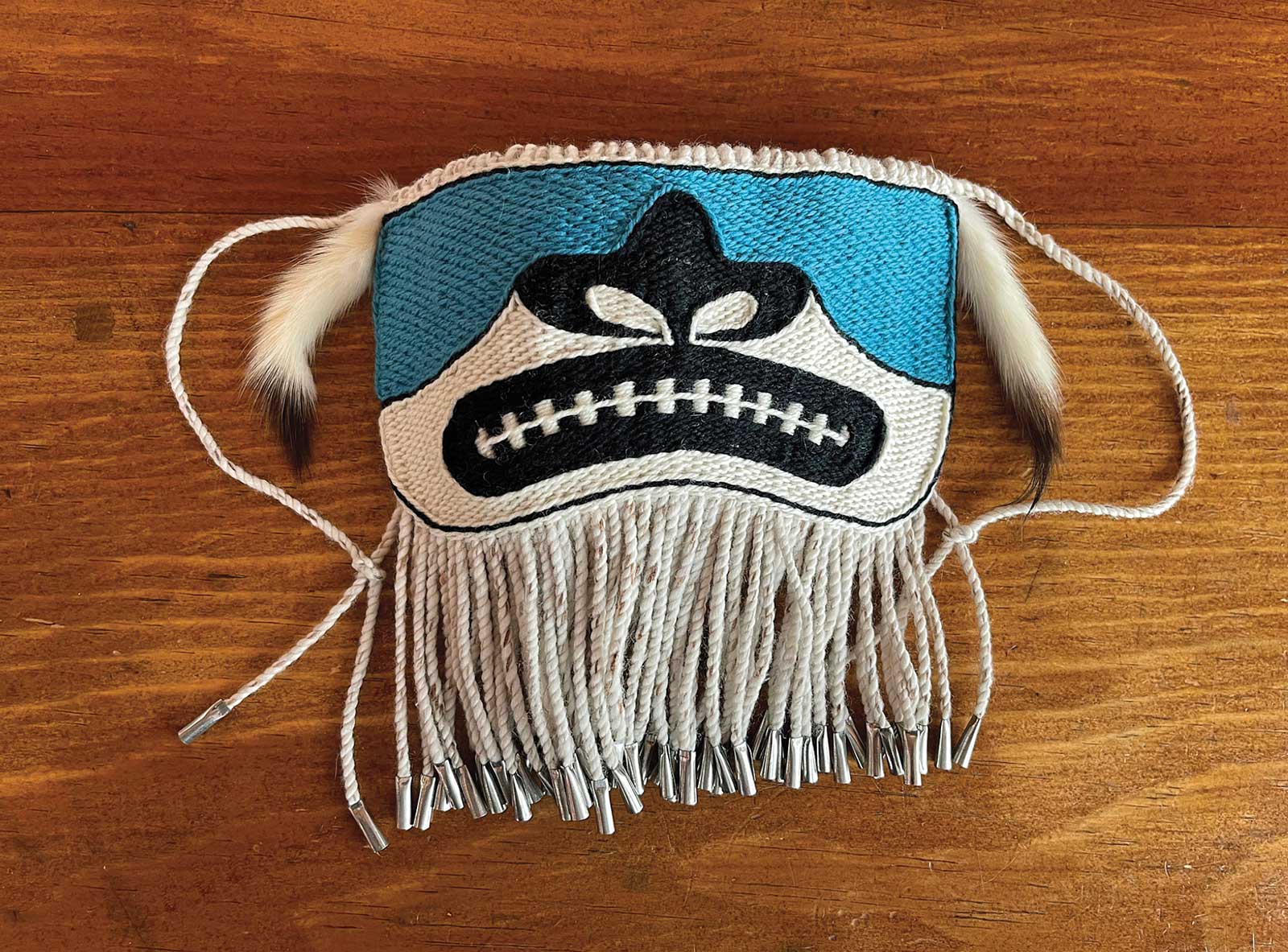
Lily Hope (Tlingit), Chilkat Protector Mask, 2021, Chilkat weaving techniques using thigh-spun warp of merino wool and cedar bark, Merino weft yarns (in the original Chilkat blue), ermine tails, tin cones, 7¾ x 4 in. woven, plus 3-4 in. fringe.
The diverse arts category at the Heard Indian Fair & Market represents a wonderfully eclectic array of art and objects that don’t neatly fit neatly into more clearly defined traditional mediums like jewelry or pottery. It can encompass dolls and figurative works, apparel, musical instruments, regalia and other cultural and ceremonial items, both functional and decorative. The Heard’s criteria for inclusion in the diverse arts category emphasizes the merit received for every handmade component, such as brain- or smoke-tanned hides. Certain commercial materials are allowed with full disclosure, while others, like anything plastic or synthetic, are not acceptable. Don’t overlook this catch-all of a category at this year’s market—unexpected treasures await you!
Artists to Know: Emil Her Many Horses (Oglala Lakota) • Lily Hope (Tlingit) • Tracy Jackson (Navajo (Diné)) • Sayo’:ka Kindness-Williams (Oneida Tribe of Wisconsin) • Patrick Knowles (Cherokee) • Deborah Cocker (Kiowa) • Lenaya Tso (Navajo (Diné)) • Dan Vallo (Acoma Pueblo) • Monica Jo Raphael (Grand Traverse Band Ottawa and Chippewa Indians) • Shelby Rowe (Chickasaw)
MARKET MEMORIES
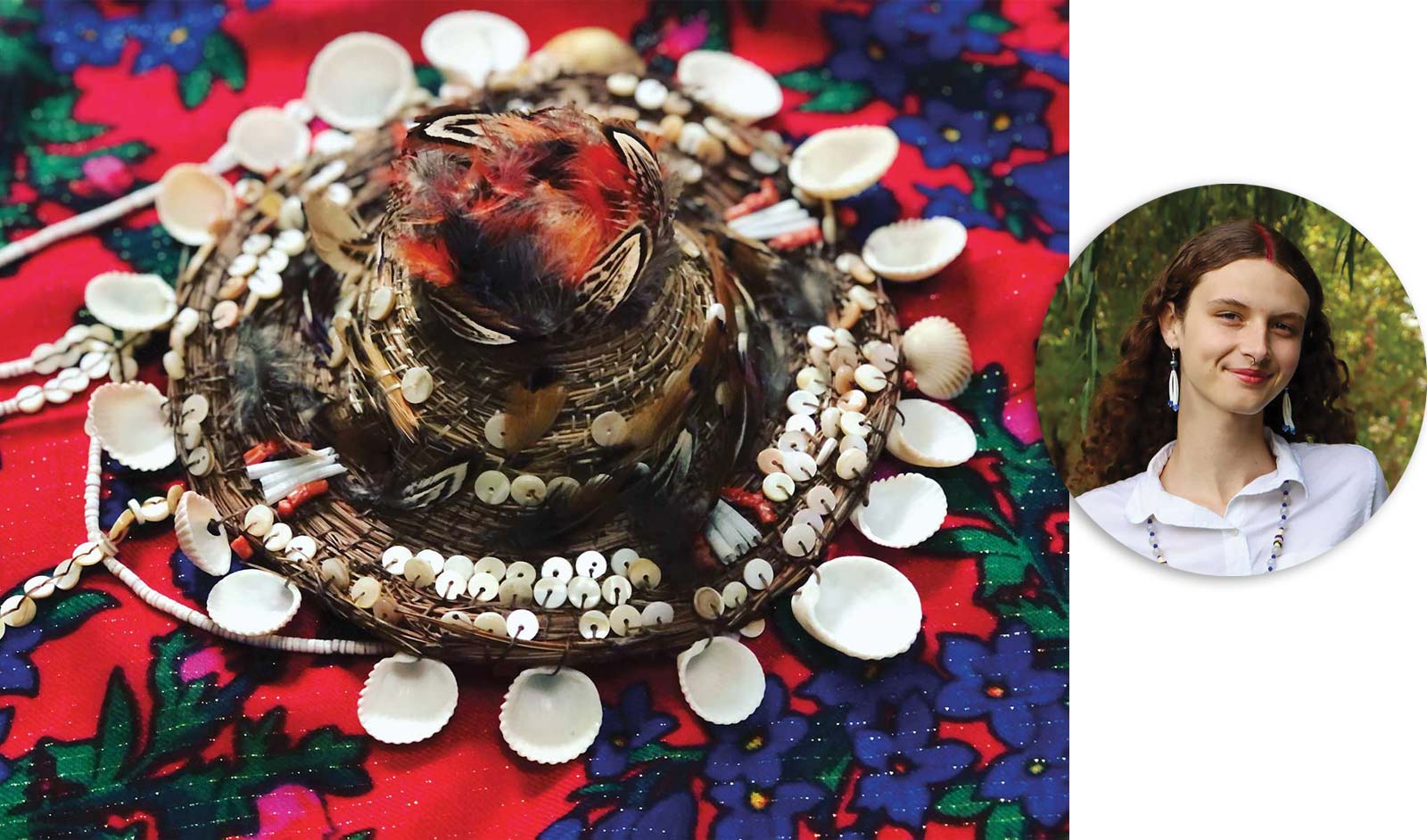
River Webb (Nez Perce/Sac/Fox)
For ribbonwork and appliqué artists River Webb, each and every Heard Indian Fair & Market is a memorable, enriching and inspiring occasion. “When I travel to the Heard Market, I see something at the awards reception I’ve never seen before. I meet people from communities I have never been to before, learn about their practice, and feel immense gratitude for a space where someone like me can meet artists from so many different Nations, and represent my own community in the process. I always bring relatives along, and the experience becomes a memory we cherish forever.”
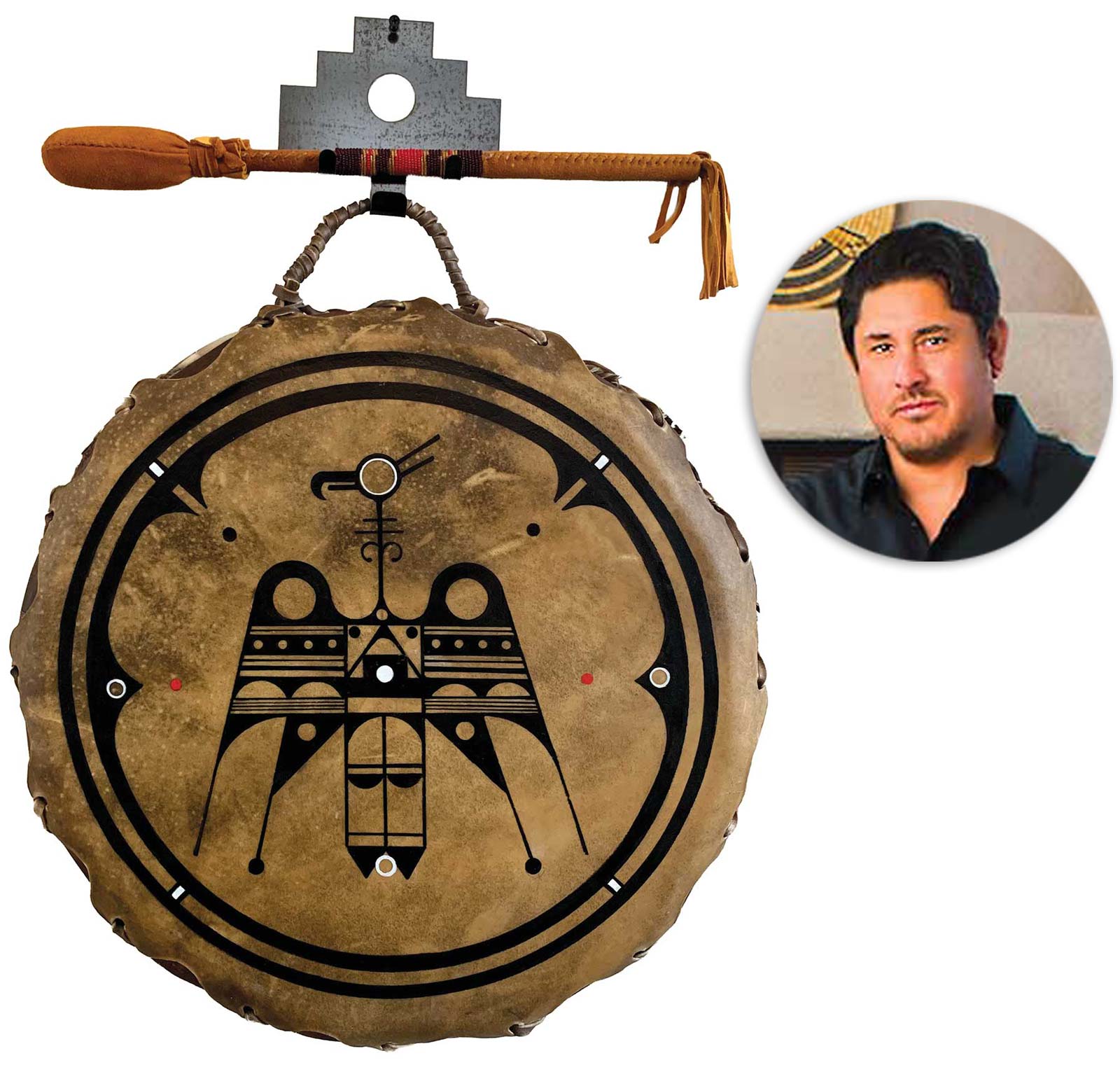
Sean Rising Sun Flanagan (Taos Pueblo)
Sean Rising Sun Flanagan is known primarily for his painted drums and stylized sculptures. “I draw inspiration from the traditional images of my native roots which have been passed down for numerous generations,” he says. “My drums are traditionally made from deer, elk and buffalo hides and are painted with a sense of design that unites deep tradition with the contemporary.” Flanagan is also a sculptor. “My stylized sculptures and design motifs are contemporary in nature and are integrated with form and color that result in a strong and vibrant balance that has been described as geometrical and organic at the same time. They range from 3 to 15 feet tall and are powder-coated with UV/water-resistant paint. They are designed to withstand the elements as a permanent installation whether standing as a focal point in a courtyard, attached to a wall or in a rugged landscape.”
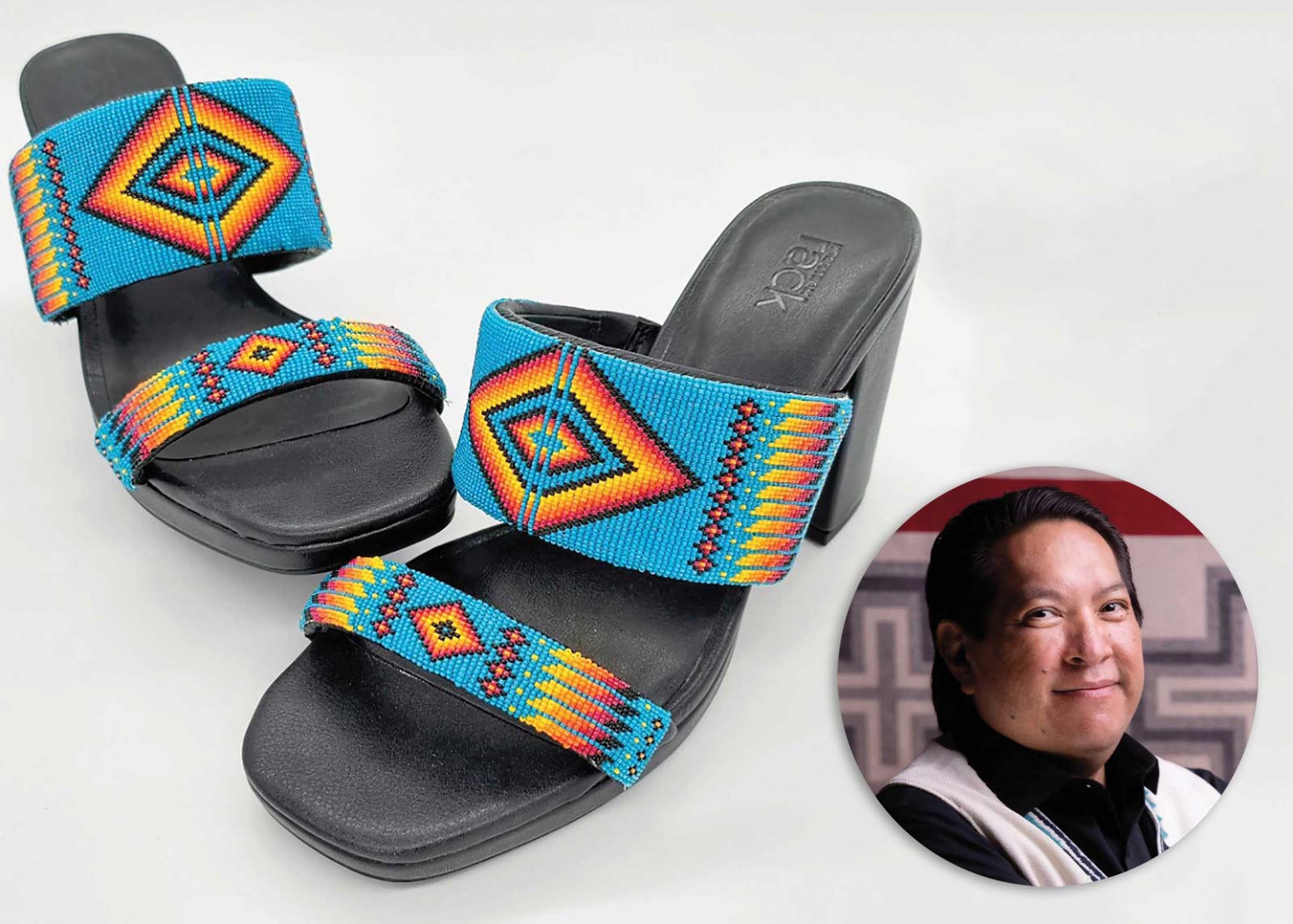
Marvin Gabaldon (Ohkay Owingeh/Taos/Acoma)
Marvin Gabaldon started beading around the age of 10. “My mom volunteered and did crafts at the co-op on the pueblo, and taught me how to bead as a way of keeping me out of trouble,” he says. “I continue to bead today because I love design and color and it keeps me close to my mom, who I lost 13 years ago. I use a lot of pueblo motifs and symbols and interpret them as I see them. I am happy to be back at the Heard Indian Market after a few years of not participating…I love that people appreciate what I do and how I do it. They understand how difficult it is to design some of the pieces I create.” Gabaldon applies his beading techniques and ancestral symbolism to a variety of items, from salt and pepper shakers to belt buckles, cuffs, hair accessories, shoes and more.
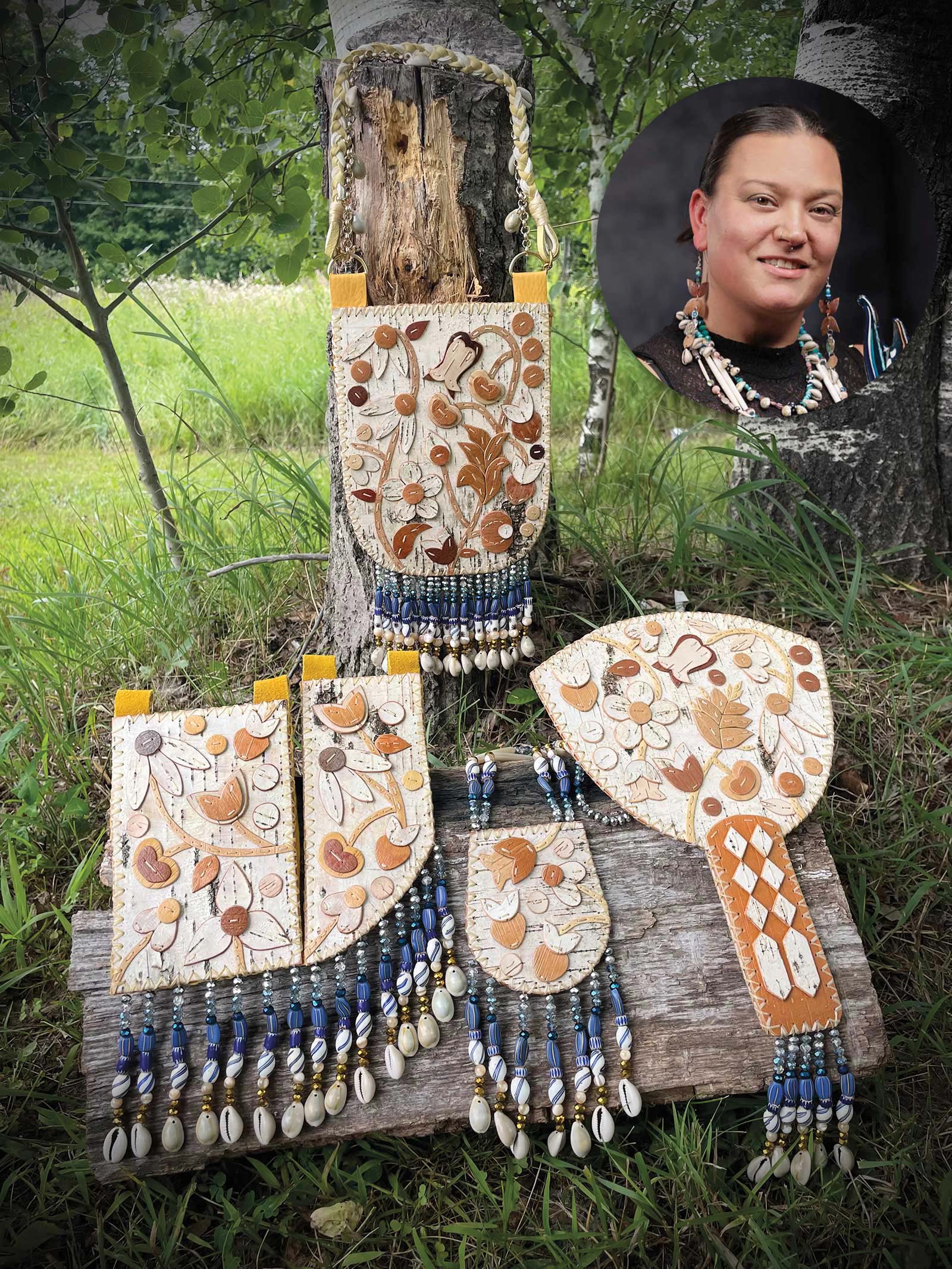
Melissa Fowler (Lac Courte Oreilles)
In addition to being a Lac Courte Oreilles tribal member, Melissa Fowler has been a St. Croix Chippewa Indians of Wisconsin community member for 25 years. “I started my journey with birch bark, regalia and adornments shortly after going through ceremonies almost 15 years ago,” shares Fowler. “Following my artistic passion and our traditional art ways has gifted me with a thriving life. I’ve been able to focus on revitalizing old art ways…research old items and recreate them. I’m able to have my hands on birchbark every day, like our ancestral moms did. Birch bark has brought me and my family into some really amazing spaces sometimes clear across the country. This is my first year attending Heard Indian Market and I’m so excited to represent our Northern Anishinaabe art forms at this year’s market!”
————————————————
Basketry
Grasses, barks, roots and plant material are the key materials for most basketry, but just listing the components doesn’t do justice to the weeks and months of preparation that goes into each and every Native American basket. Growing, locating, harvesting and prepping the materials are, in many cases, art processes unto themselves. The final product, a finished woven or coiled basket, is a thing of beauty at once in harmony with the natural world and a direct response to nature’s vulnerabilities. Historically, this category frequently has the fewest artists at market, but that shouldn’t deter collectors from seeking out their works, inquiring about their methods and making purchases. This is a vital category of Native American art.
Artists to Look For: Sally Black (Navajo (Diné)) • Kelly Church (Pottawatomi/Ottawa) • Gabriel Frey (Passamaquoddy) • Carrie Hill (St. Regis Mohawk) • Donald Johnston (Qagan Tayagungin) • Wilmetta Kayquoptewa (Hopi) • Jessica Lomatewama (Hopi) • Jilli Oyenque (Ohkay Owingeh) • Holly Pyke (Mohawk) • Theresa Secord (Penobscot Nation) • Laura Wong-Whitebear (Colville)
MARKET MEMEORIES
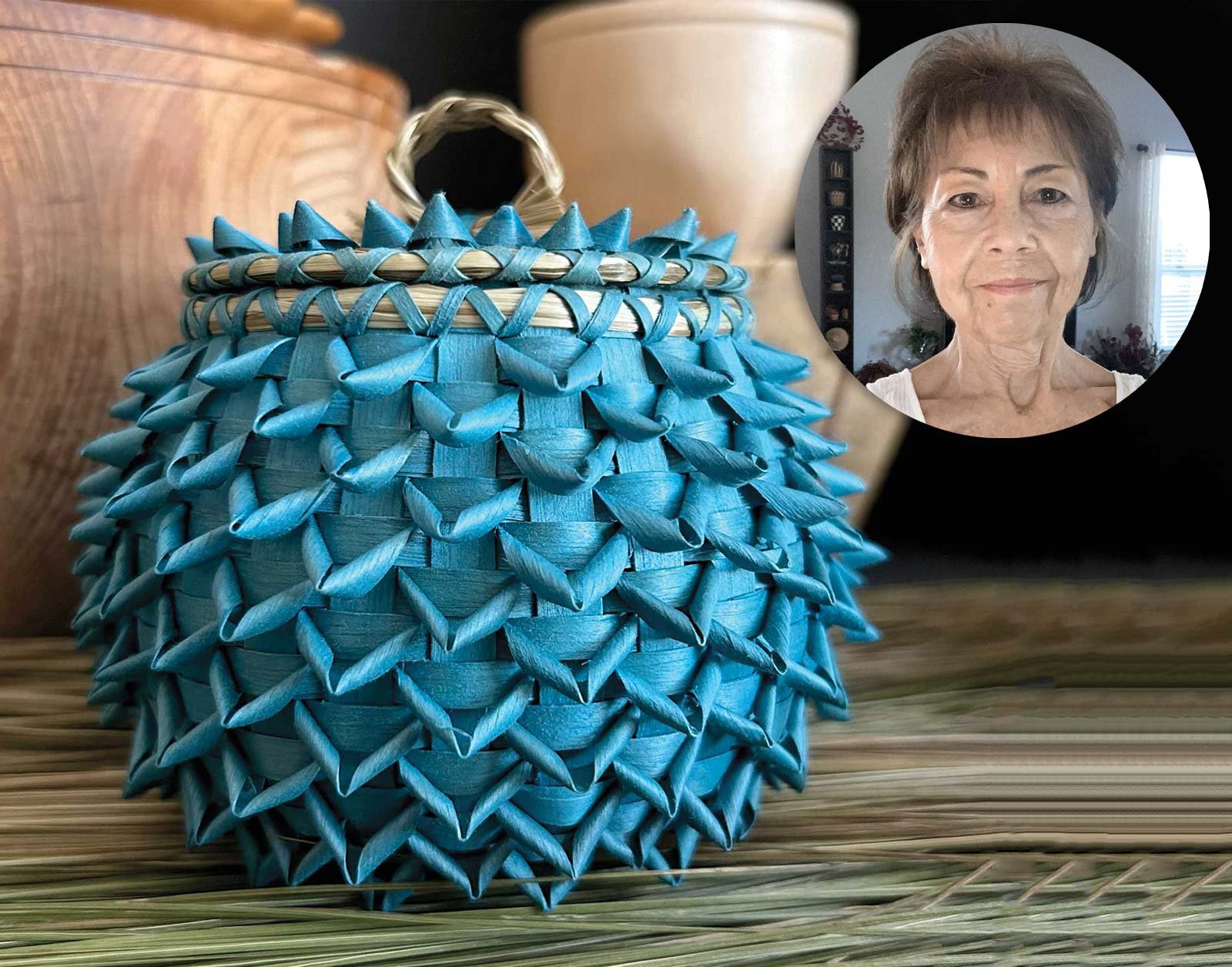
Deborah Brooks (Passamaquoddy)
Several years ago, Deborah Brooks walked into the Heard Indian Fair & Market as a first-time artist. “It was an inspiring gathering of artists and collectors that deepened my appreciation for the community surrounding Native art markets,” Brooks says. “Since then, my work has evolved to more intentionally focus on themes of cultural preservation and ancestral resilience, reflecting upon how basketry historically sustained Passamaquoddy families through tremendous hardships in the late 19th and 20th centuries. I am honored to weave in the shadow of their greatness.” This year, the artist will be bringing sweetgrass baskets rooted in her Passamaquoddy tradition—boundary-pushing, innovative designs and bold colors. Her works also honor her ancestors “who created baskets for survival despite the hardships of colonialism. Each basket carries the narratives of Passamaquoddy resilience and resistance.”
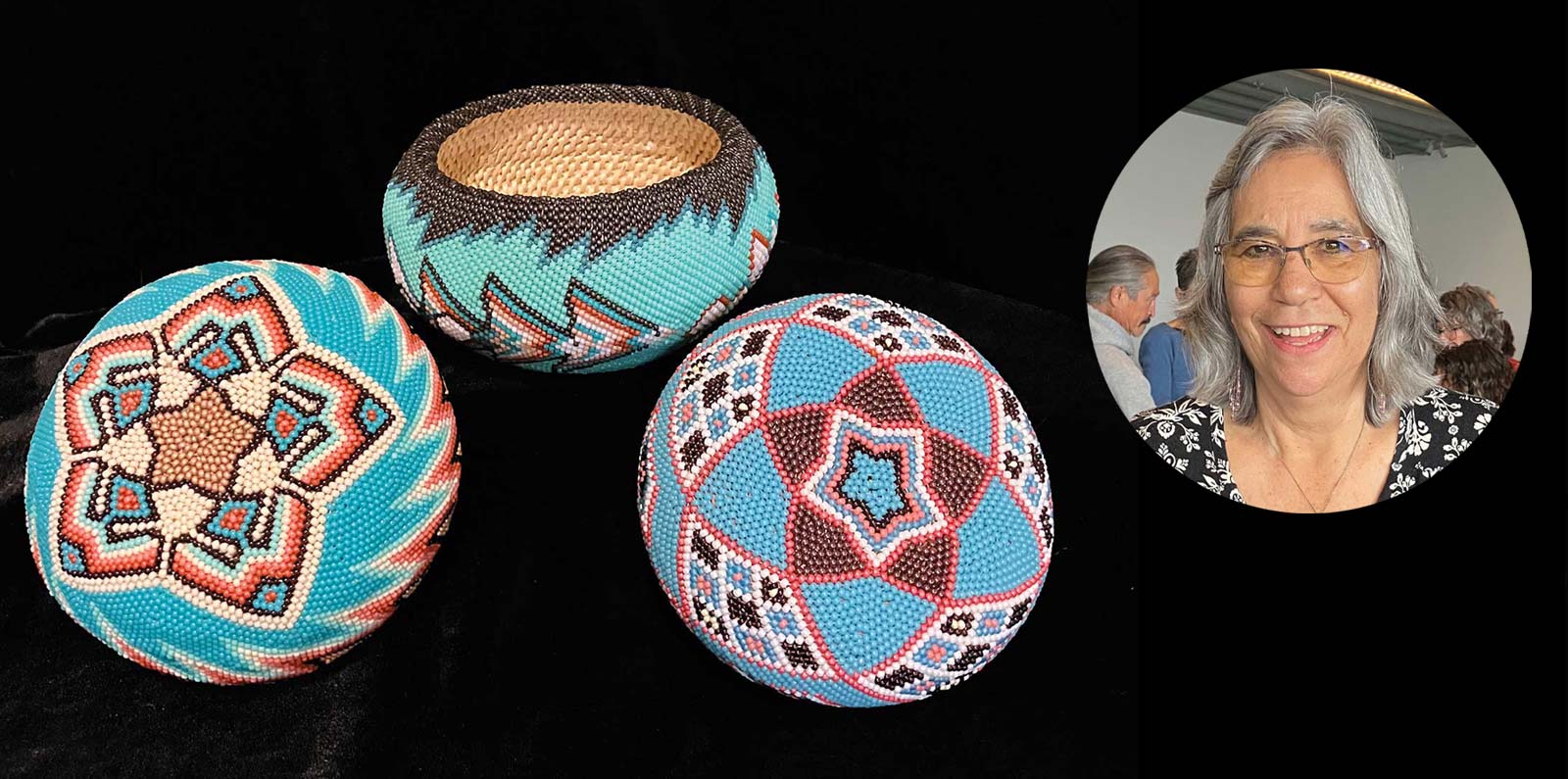
Jacqueline Rickard (Passamaquoddy)
This year’s market will be the first for Walker River Paiute artist Jacqueline Rickard. “I am looking forward to the experience of attending such a large venue. Up to the present, I have participated mostly in basket weaving affairs such as the [Northwest Native American Basketweavers Association] annual gatherings where I have taught pine needle basketry since 2010,” she says. “I enjoy designing baskets that reflect the Walker River Paiute culture through the stories, history, natural settings and animals found in the Great Basin of Nevada. I use geometric designs mixed with pictorial scenes with an artistic twist to cover each basket with beads. It is pure joy.”
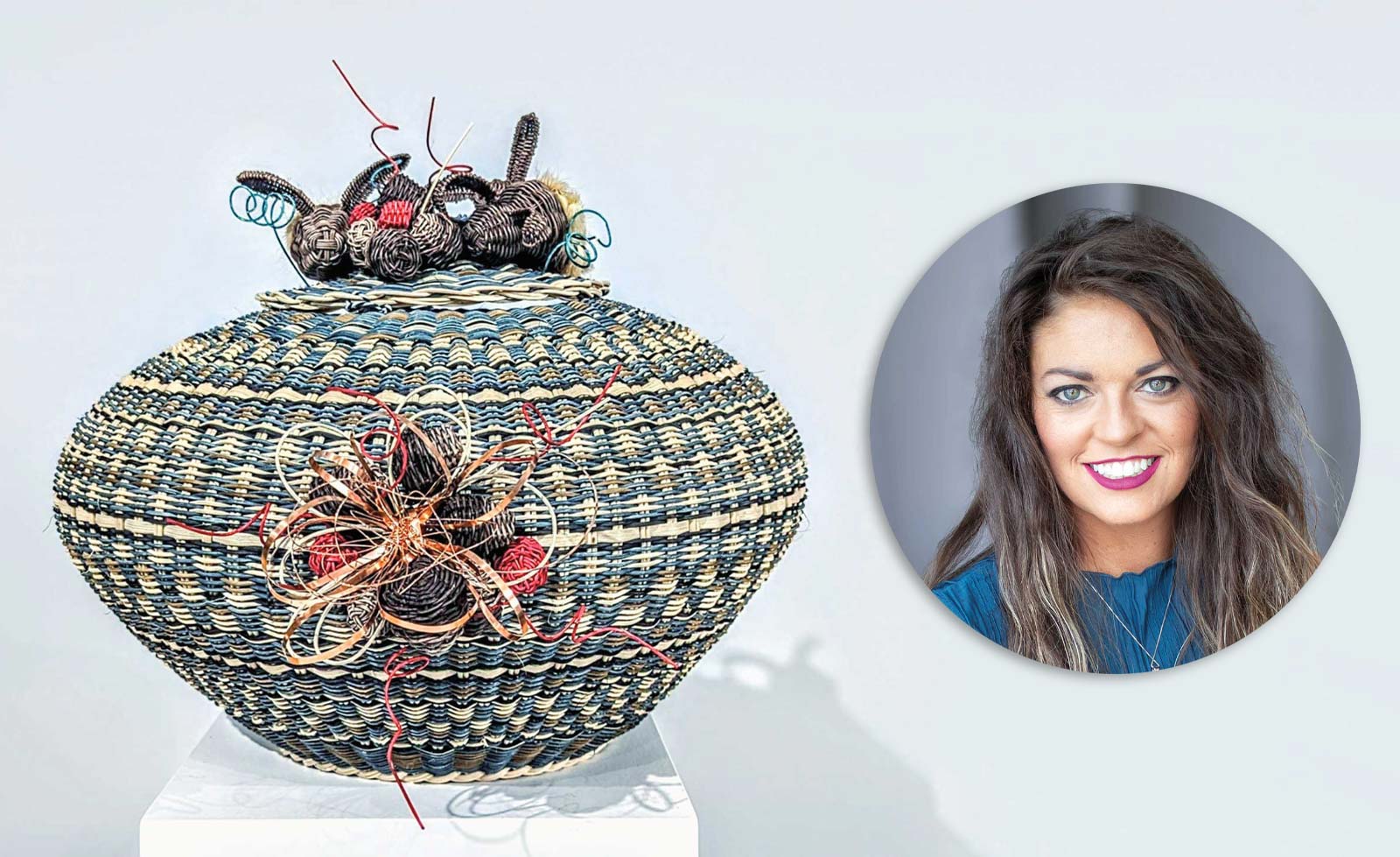
Talisha Lewallen (Cherokee Nation)
Cherokee artist Talisha Lewallen is excited to be returning to the Heard Indian Fair & Market. “The community surrounding Native Art markets is unlike any other—being in that space is deeply inspiring,” she says. “Conversations about art, tradition and innovation motivate me to expand my artwork in new ways. Since my first Heard, I have begun developing new concept pieces that push the limitations of my previous work, and I am excited to share them this year.” This year she will bring Cherokee double-wall baskets using contemporary materials, blending cultural heritage with modern expression.
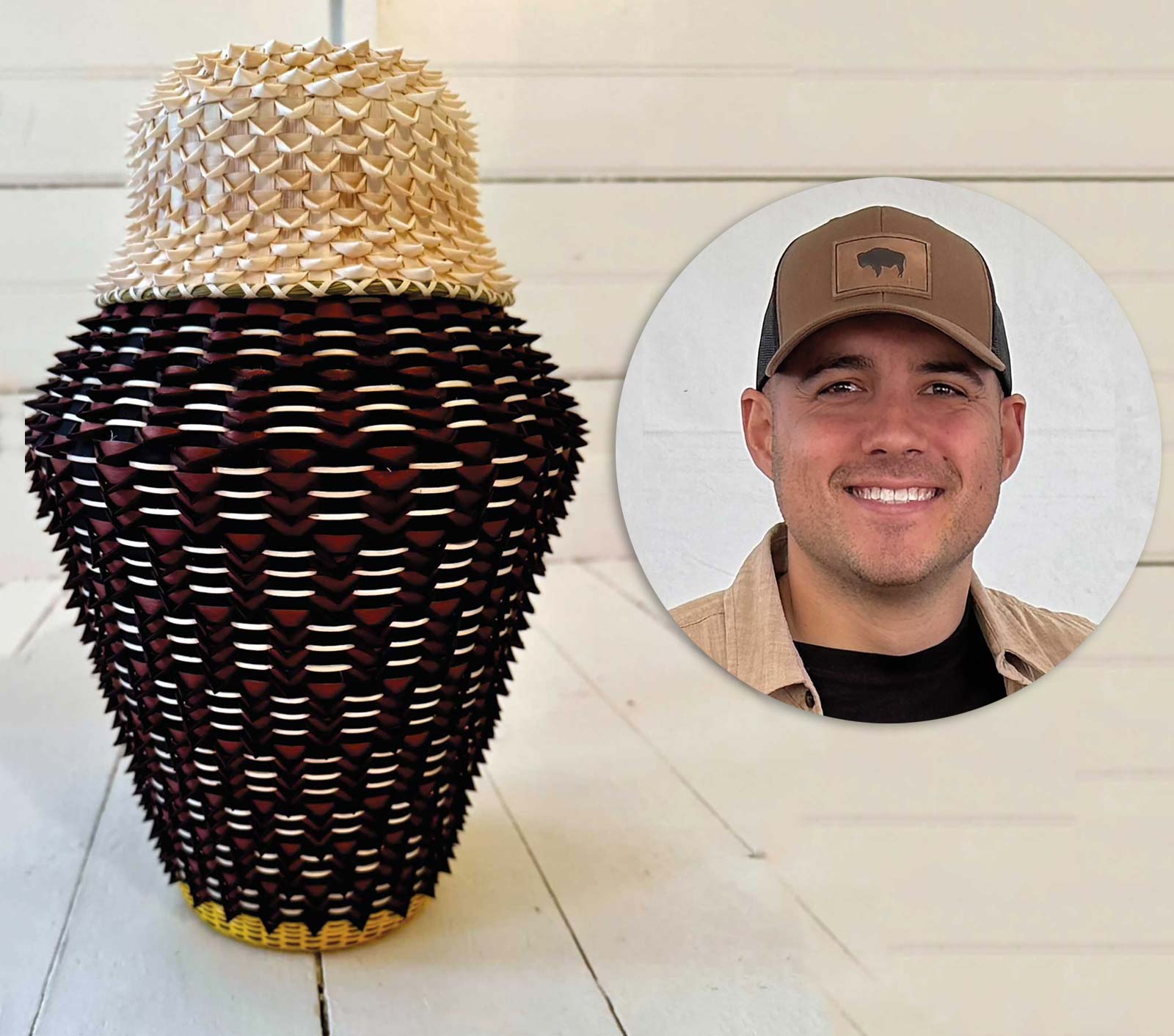
Caleb Hoffman (Cherokee/Penobscot)
Making his debut market appearance is basket artist Caleb Hoffman, son of award-winning artist Theresa Secord. Hoffman, who has been apprenticing with Jeremy Frey for the last two years, has been creating baskets and participating in Wabanaki workshops since he was a child. “[I’ve been] learning advanced weaving techniques and how to harvest and prepare my own ash wood. I’m developing my own lines of work, fabricating wooden forms and creating new designs and styles,” Hoffman says, adding that it’s his first Heard Market but he’s shown at Santa Fe Indian Market twice and won top awards in 2024. “I get really inspired by the work I see made by contemporary artists in the markets and connecting with artists, friends and collectors.”—
Powered by Froala Editor


