On view now at the Heard Museum in Phoenix is a stunning selection of Native American basketry that highlights a key era of Southwest basketry from the early 1900s.
The exhibition, Heart of the Community: Baskets from the Basha Family Collection of American Indian Art, draws from the collection of Eddie and Nadine Basha, whose art collection was recently donated to two Arizona museums: the Western material went to Western Spirit: Scottsdale’s Museum of the West and the Native American objects went to the Heard. Both museums are now presenting exhbitions, and preparing future exhibitions, that highlight the work from the family’s vast and important collection.
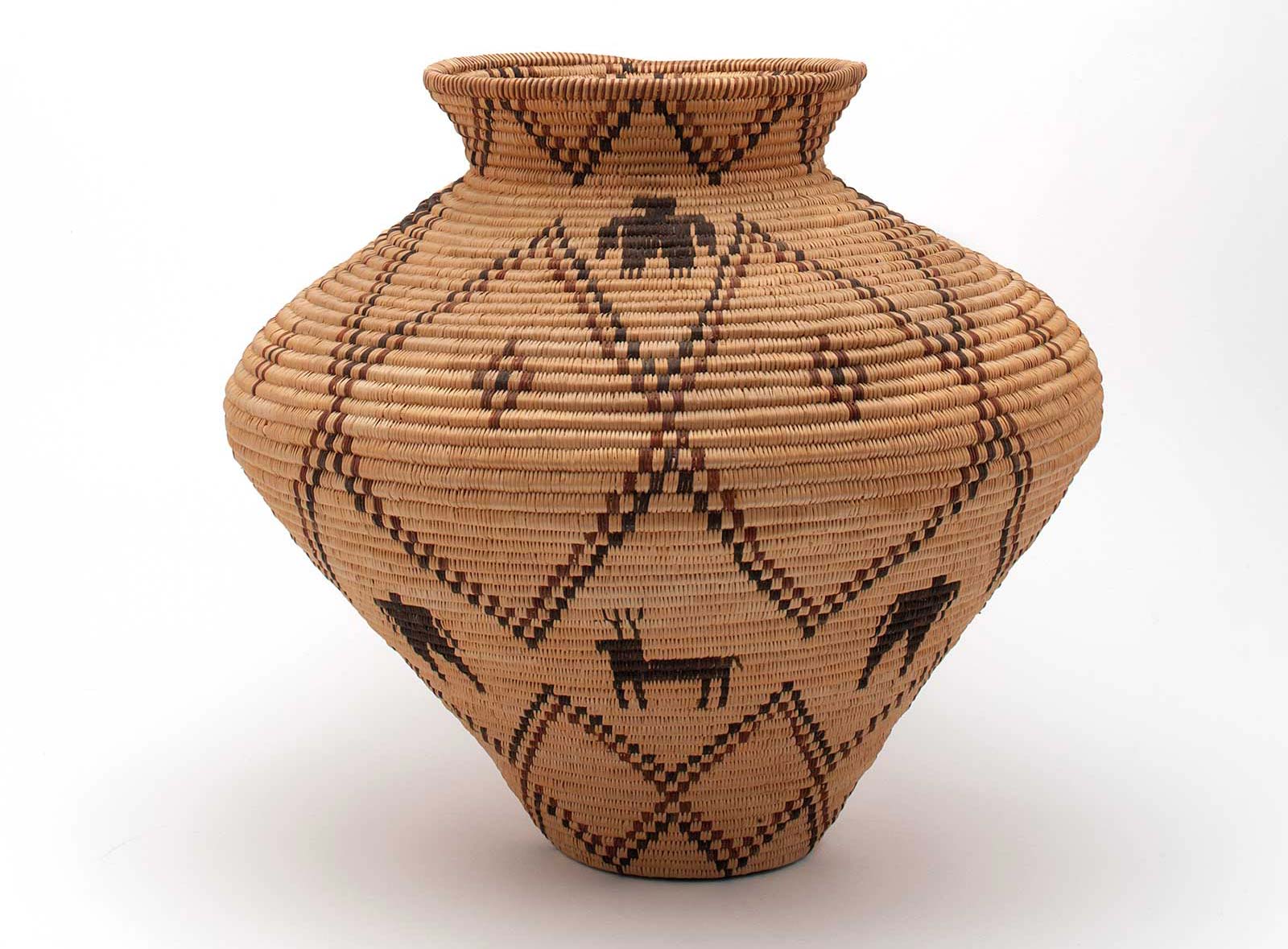
Virginia S. Newton (Apache, 1915-2004), basketry jar, early 1900s, willow, martynia, yucca root, 14½ x 16½ in. Gift of Basha Family Collection of American Indian Art.
The Heard’s director of research, Ann Marshall, notes that the Bashas had a keen eye when it came to basketry. “Their collection is huge. And many come from the golden age of basketry between 1900 and the 1930s. These are beautifully made baskets with interesting designs,” Marshall says. “Eddie always credited his Aunt Zelma for getting him interested in art, but it was really Nadine who introduced him to baskets. They primarily focused on Arizona tribes, which is why it’s so wonderful they wanted these baskets to stay in Arizona so people here, including the families of those who made them, could appreciate them.”
Eddie Basha, who died in 2013, was the chairman and CEO of Bashas’ grocery stores. He had a larger-than-life personality that he showed off in commercials for his stores, his philanthropic undertakings and in his shift into politics. Although he ran unsuccessfully for Arizona’s governor, he had an endearing presence in the Grand Canyon State, especially in the art world, where he was beloved by artists of all types. After his death, his collection was housed in a public gallery at the Bashas’ headquarters. In 2021, the company was sold and plans were made to find the art collection a home. The joint donations for Western Spirit and Heard Museum were announced by the museums and the Basha family in October 2023. Nadine Basha, who carries on her husband’s legacy, is on the board of trustees at the Heard Museum.
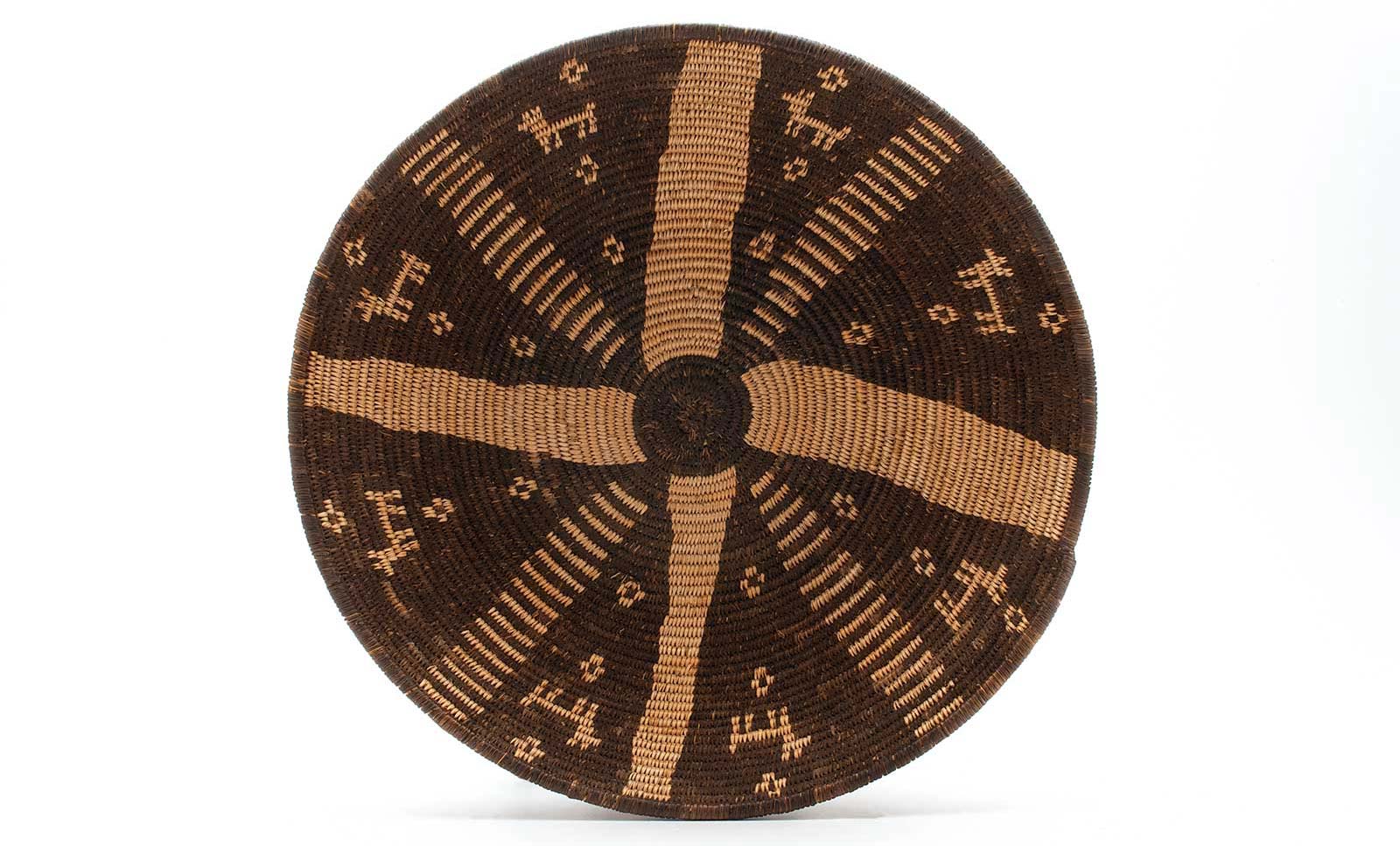
Artist Once Known, Yavapai, basket, early 1900s, willow, martynia, 14 x 4 in. Gift of Basha Family Collection of American Indian Art.
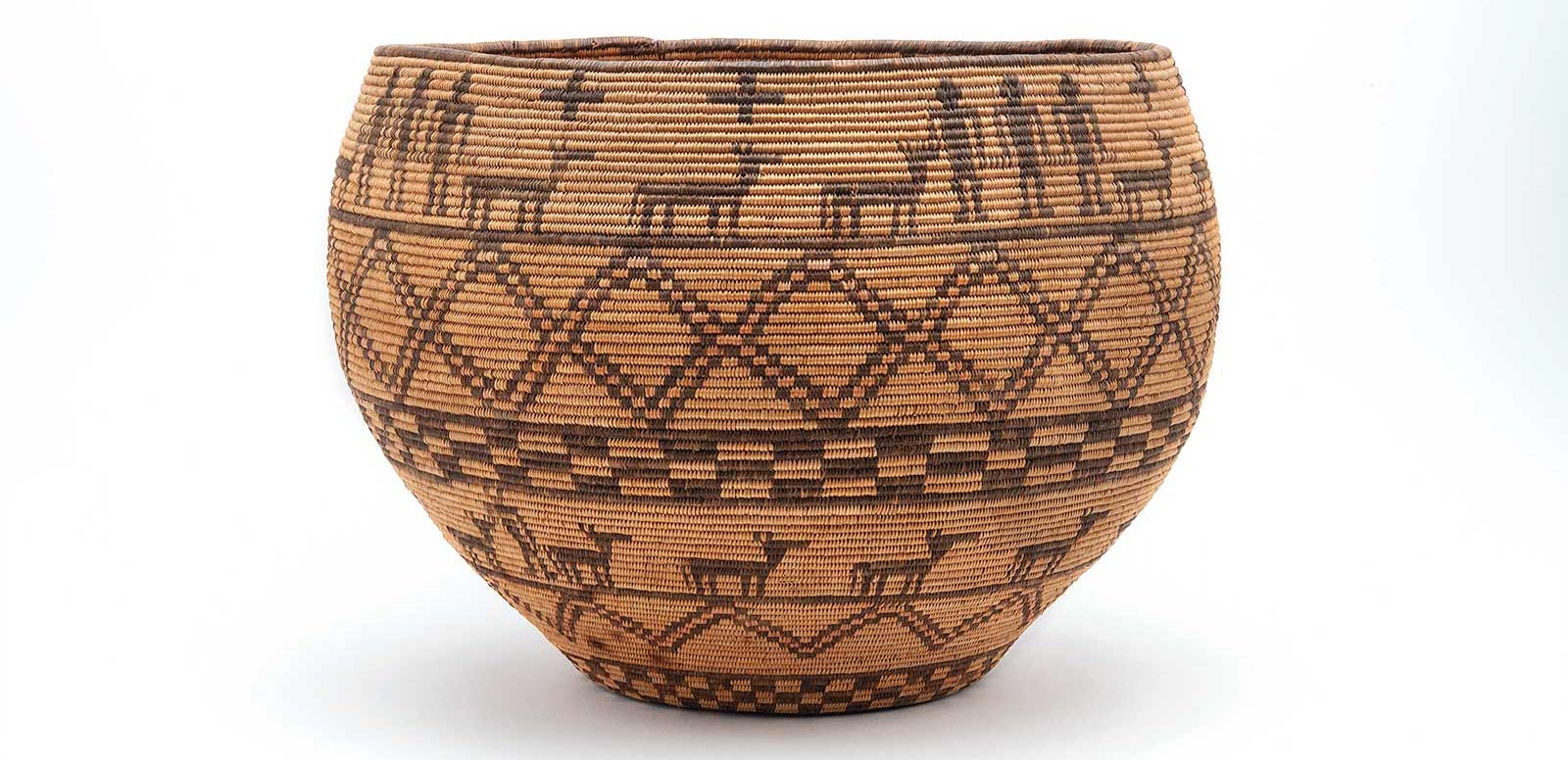
Artist Once Known, Apache, basketry bowl, early 1900s, willow, martynia, 14¾ x 19½ in. Gift of Basha Family Collection of American Indian Art.
“Anytime we do gallery talks or events around these baskets, there is always a big crowd—people are fascinated by these pieces. I think it’s great they tell so many stories, about the baskets and about Eddie. He was very giving to Native American artists and he frequently worked in partnership with Native American communities. He also had a sharp eye and collected baskets that are interesting to talk about,” Marshall says. “Most of the baskets from the Yavapai, Apache and Akimel O’odham, with materials in willow, cottonwood, cattail, yucca root and martynia. The martynia, or devil’s claw, was frequently used for the designs.”
Marshall notes that for Native American basketry artists, the work frequently began long before the design of the basket. Finding the trees, roots and plants needed is often difficult and laborious, and even then there was harvesting the materials and processing them in a uniform way that they could be used for baskets. Weeks and months went into these steps, long before a basket could even be started. “These processes don’t get enough recognition. The artists did a tremendous amount of work early in the process. And they also had to have the knowledge of where to go and what to do, all while avoiding rattlesnakes out there in the wild. The effort that went into these baskets was enormous.”
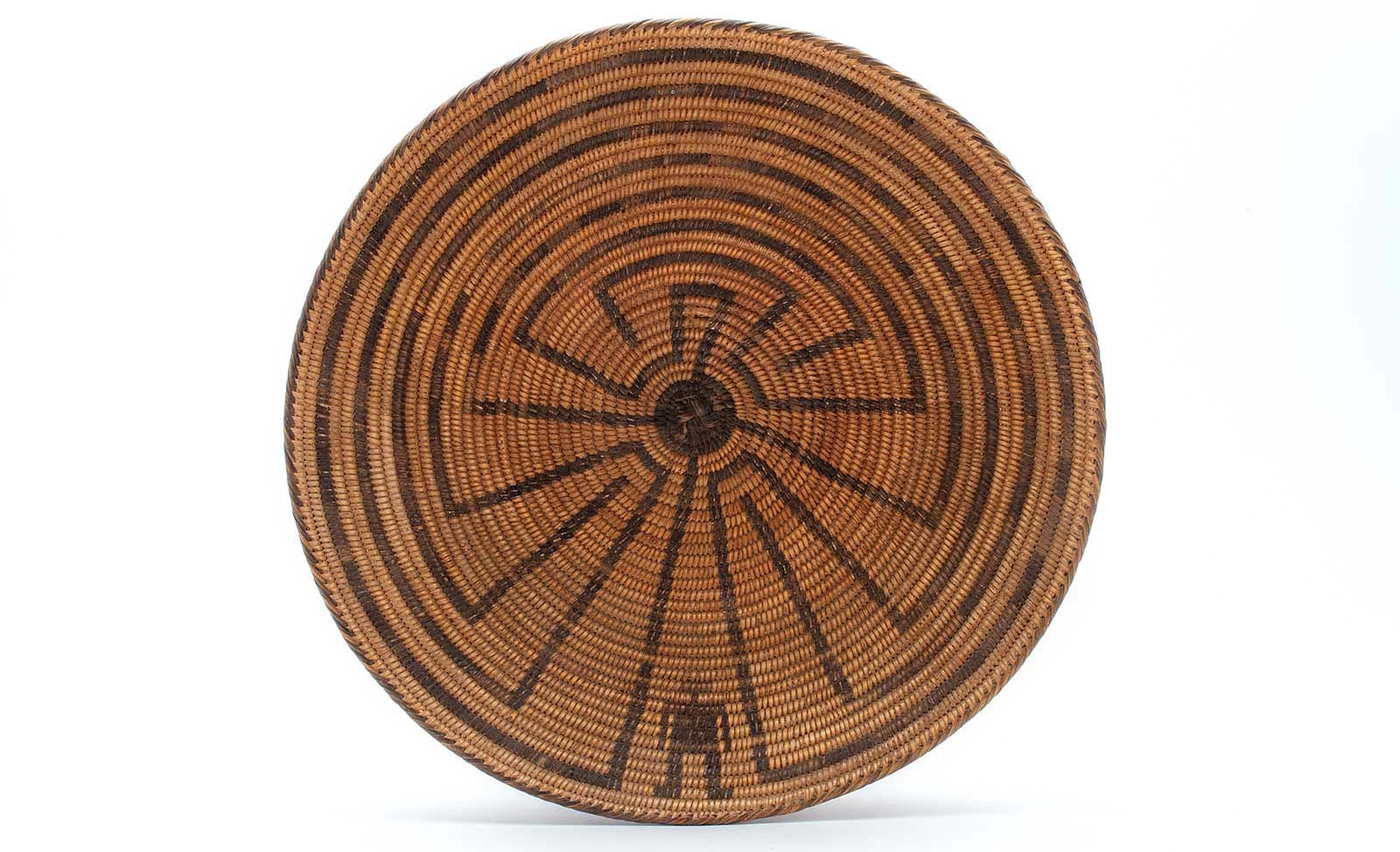
Artist Once Known, Akimel O’odham, basketry bowl, early 1900s, willow, cattail, martynia, 12 x 4 in. Gift of Basha Family Collection of American Indian Art.
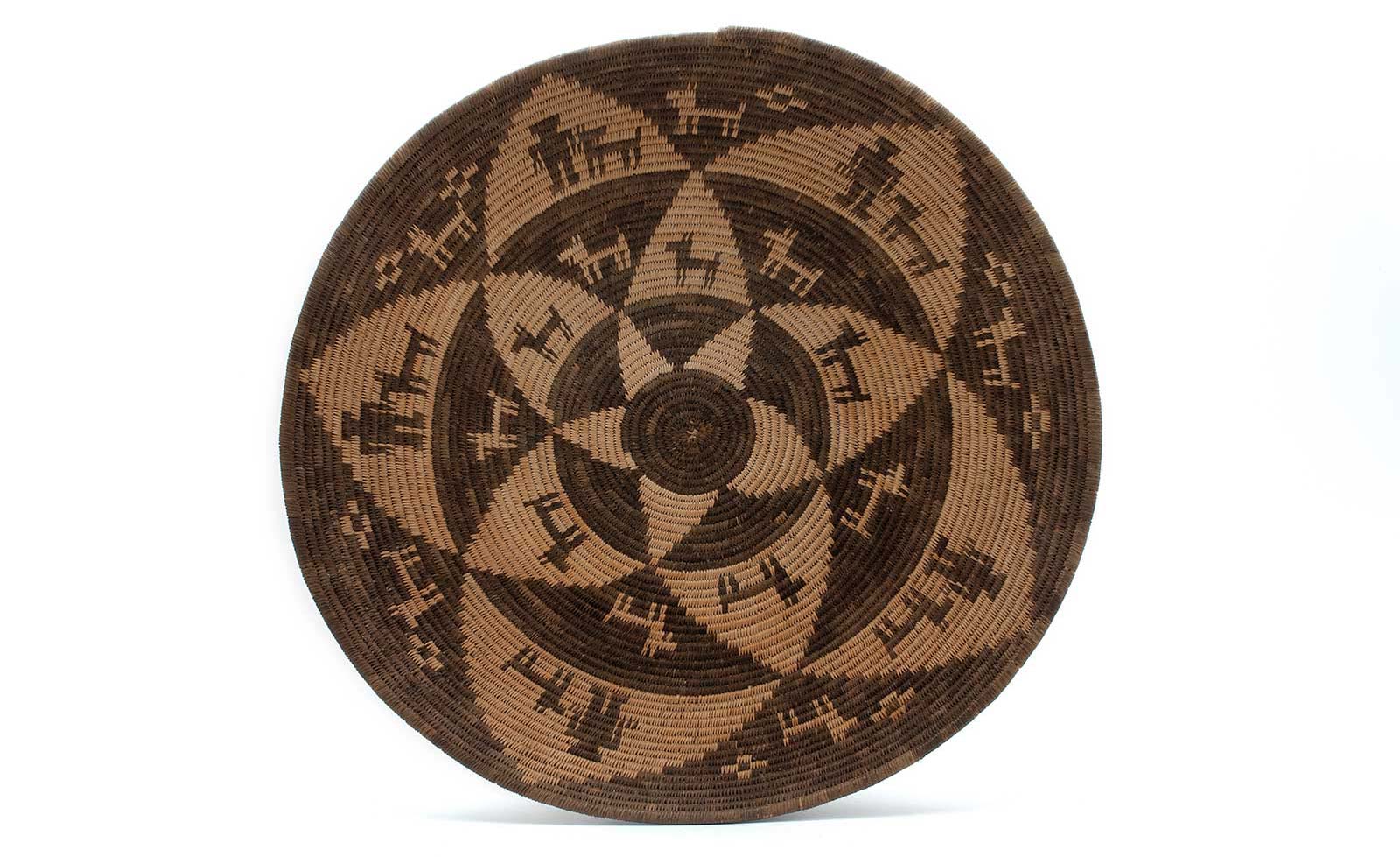
Artist Once Known, Yavapai, basket, early 1900s, willow, martynia, 16½ x 3½ in. Gift of Basha Family Collection of American Indian Art.
Marshall also notes that there is still scholarship being done on these pieces. She points to another exhibition at the museum, Substance of Stars, which had an Akimel O’odham advisor on the curating team. “We had a beautiful basket with a unique design in the exhibition. In the literature—in the old, old literature—this design is called the ‘Greek fret,’ but we were told it’s a flowing water design,” she says. “It’s so nice to be able to share these sorts of things with our visitors, because it adds names and meaning to the culture.”
Credit is also given to the artists, who, prior to the 1930s, quickly adapted their works for the changing market. “The basket weavers were so good at assessing the market and making important shifts. For instance, they started making baskets with a large, flat base, which the artists did so the pieces could be placed on a shelf. They were expressing their artistic vision, but doing so in a way that acknowledged their collectors. At that time there was the Arts & Crafts movement, so people desired to have handmade things in their homes, and these pieces fit into that,” Marshall says. “Sometimes the artists were not the ones selling them, though, and the sellers would suggest these baskets could be used for umbrella holders. When I read that, the curator in me cringed.”
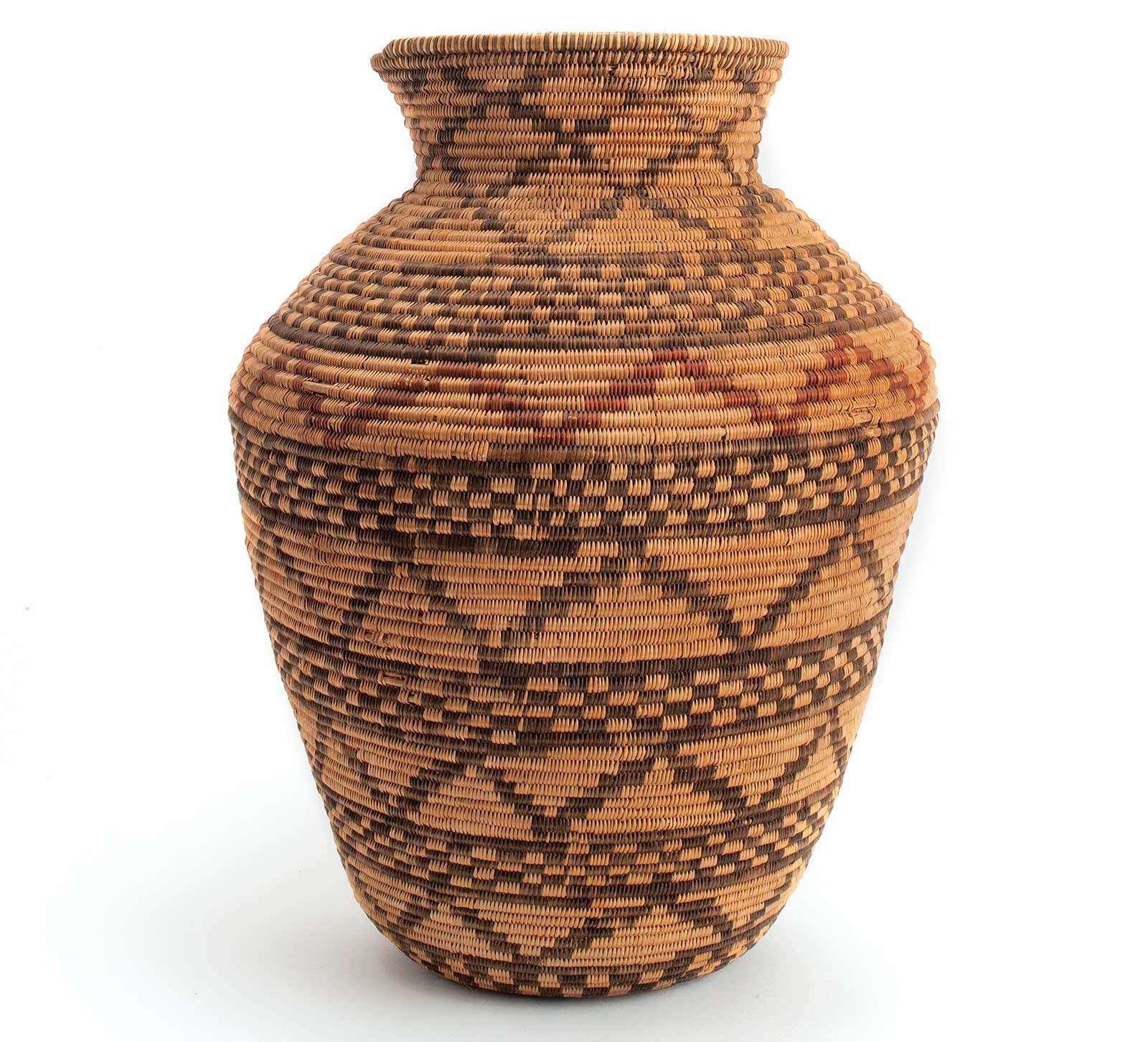
Artist Once Known, Apache, basketry jar, early 1900s, willow, martynia, yucca root, 16 x 12 in. Gift of Basha Family Collection of American Indian Art.
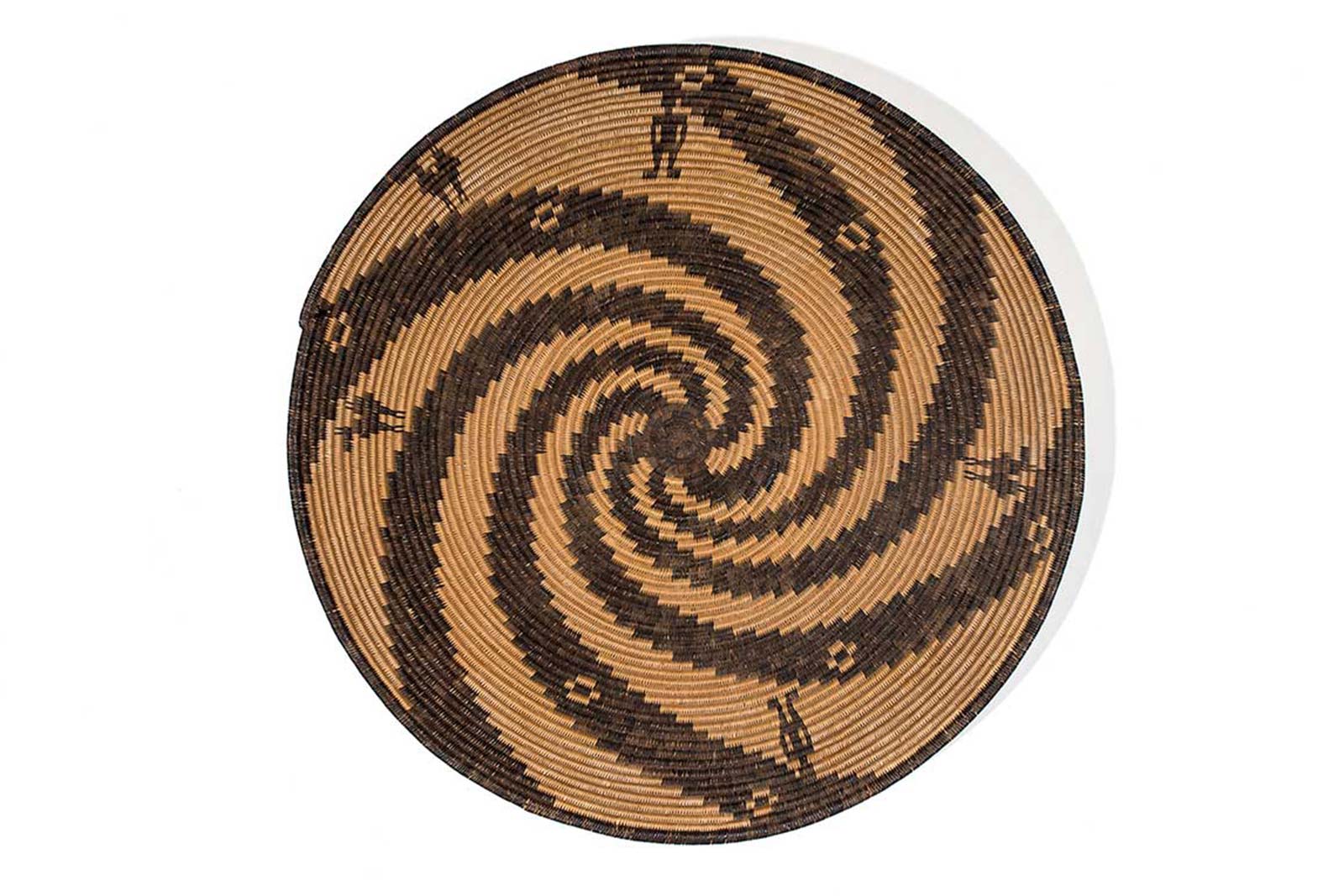
Artist Once Known, Yavapai, basket, early 1900s, willow, martynia, 20 x 3¼ in. Gift of Basha Family Collection of American Indian Art.
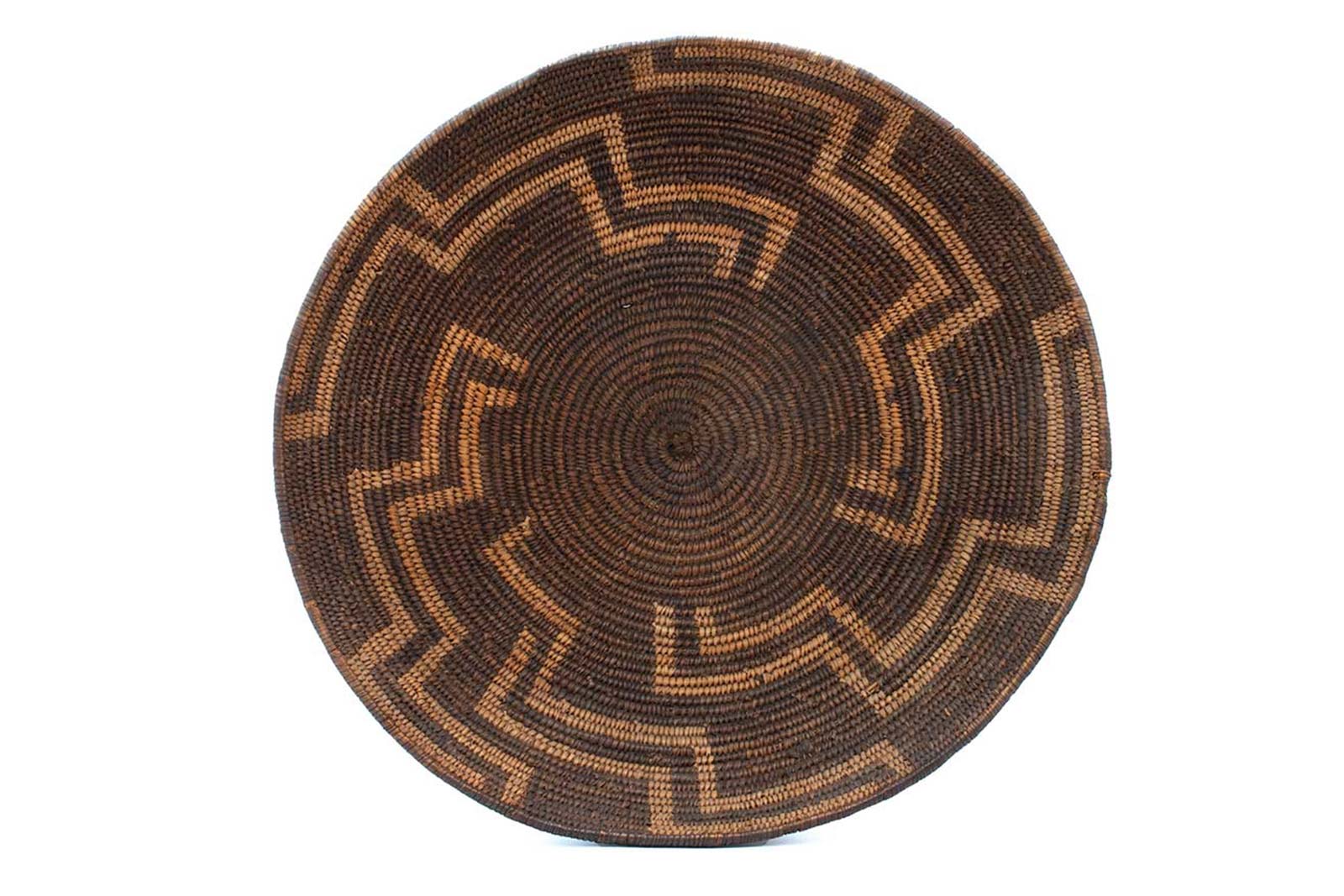
Artist Once Known, Akimel O’odham, basketry bowl, early 1900s, willow, cattail, martynia, 16½ x 5¾ in. Gift of Basha Family Collection of American Indian Art.
Marshall adds that pieces from the Basha collection have never held an umbrella, and it shows in the exquisite condition of all the baskets.
Heart of the Community will remain on view through March 8, 2026. —
Through March 8, 2026
Heart of the Community: Baskets from the Basha Family Collection of American Indian Art
Heard Museum 2301 N. Central Avenue, Phoenix, AZ 85004 (602) 252-8840, www.heard.org
Powered by Froala Editor


