One of the great Western destinations in the country is not in Arizona, New Mexico or Utah, but rather a state or two to the east, in Tulsa, Oklahoma. Singer Carrie Underwood sang it best: “I’d rather be tipping cows in Tulsa than hailing cabs here in New York.”
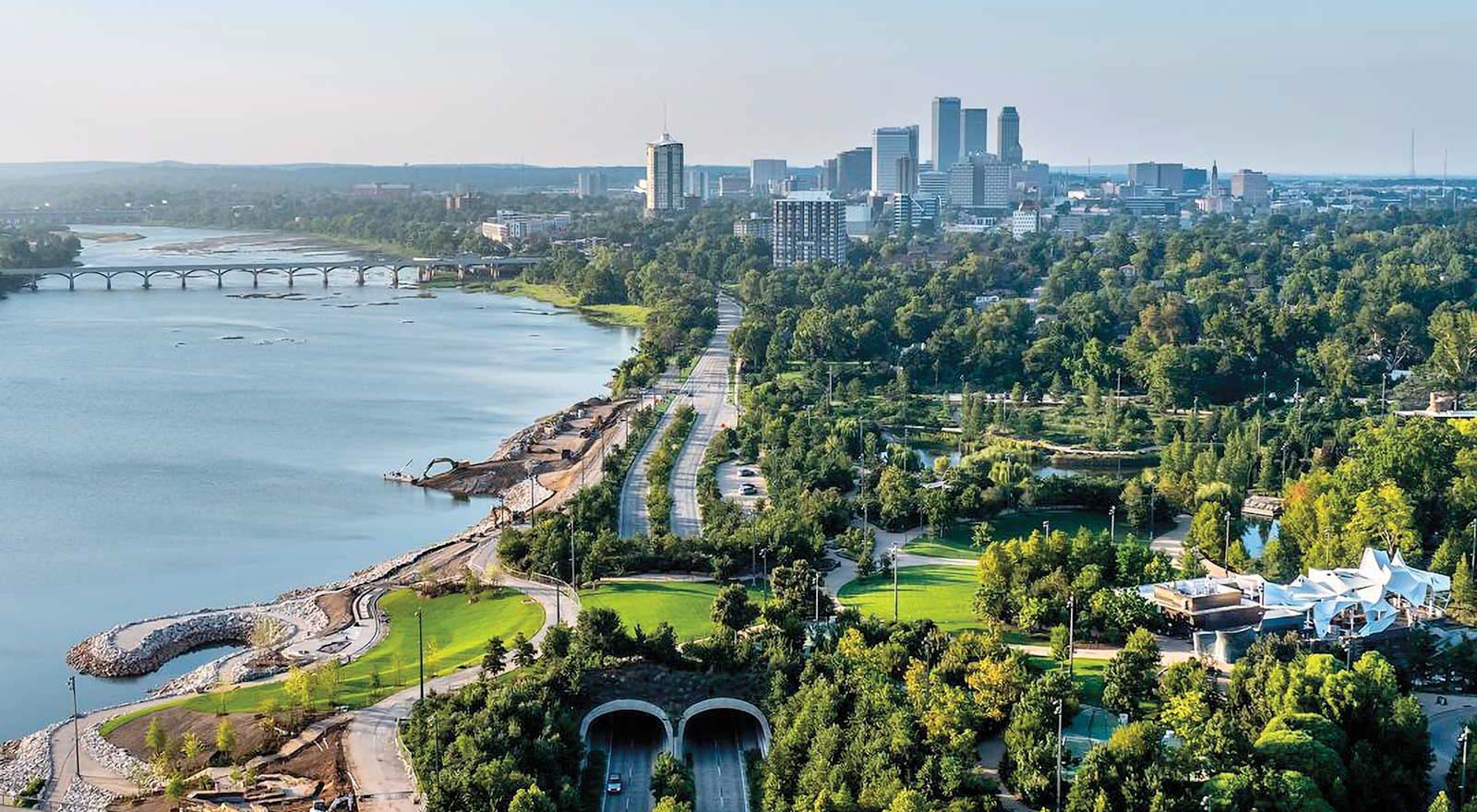 Tulsa, Oklahoma. Photo courtesy Visit Tulsa.
Underwood—who was born in Muscogee and raised in Checotah, both near Tulsa to the southeast—was keying into the Western culture that runs deep in Tulsa and neighboring communities. This is not a new development. Tulsa has long been a fascinating place, with a great deal of history that speaks to the many cultures and sub-cultures that make cities west of the Mississippi River so interesting. The city has a long, and even ancient, history with Native American tribes such as the Cherokee, Caddo, Wichita, Plains Apache, Comanche, Choctaw, Chickasaw and others. Later visitors into the area came for the cattle and ranching, which places a strong cowboy presence in Oklahoma. And then, not long after that came another development—oil.
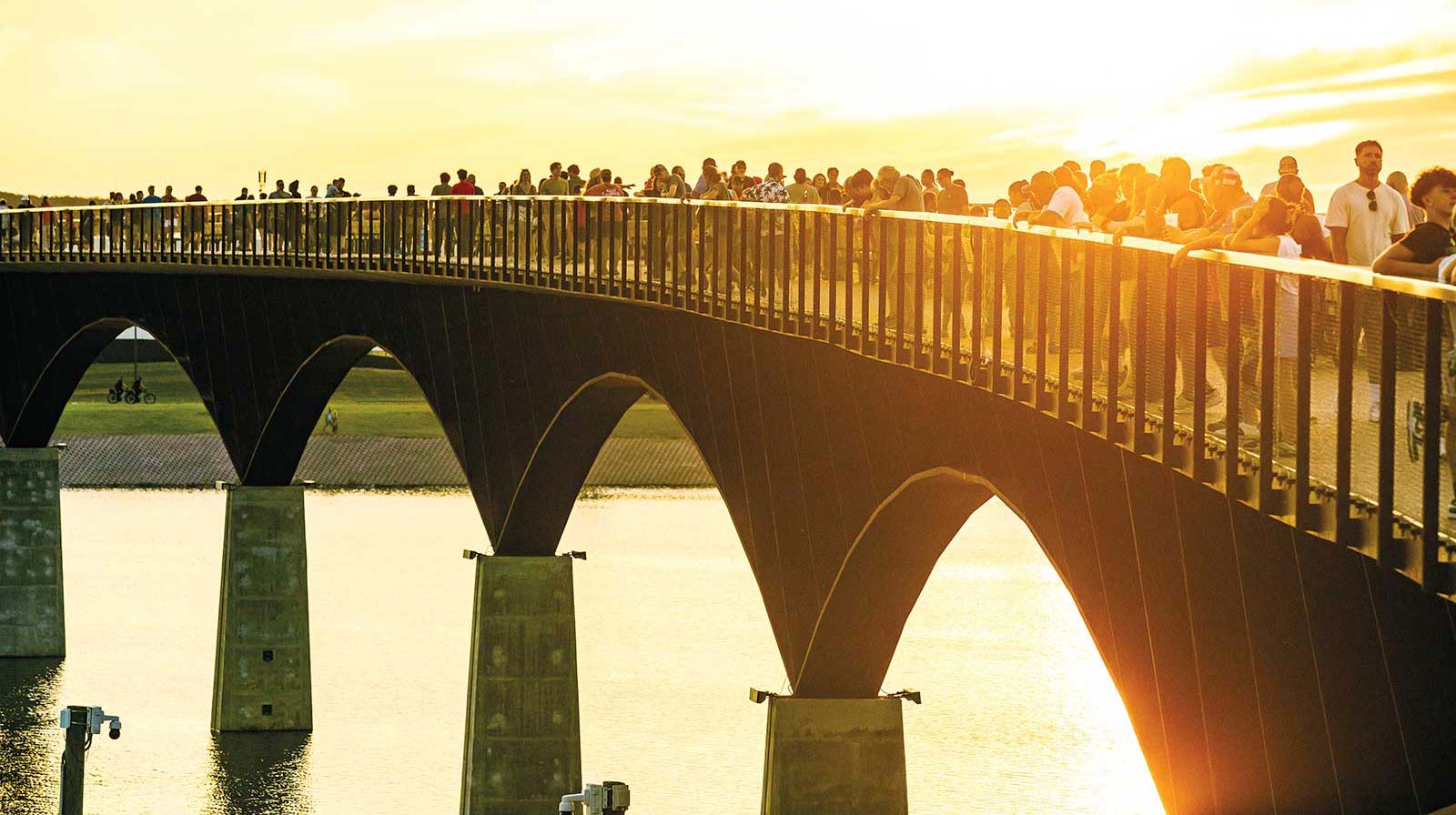
Crowds enjoy a party along the Williams Crossing Pedestrian Bridge. Photo courtesy Patrick Witty / Visit Tulsa.
The simultaneous presence of Native Americans, cowboys and oil workers (and oil money) has created a unique intersection in Tulsa that manifests itself in the arts and culture of the city. Today, this manifestation is felt in the city’s many museums, cultural sites and venues, public art and even in the entertainment industry, which has used Tulsa as a hub for film and TV projects, including recent shows by Seminole filmmaker Sterlin Harjo such as Reservation Dogs and the upcoming show The Lowdown.
Anchoring together the arts community in Tulsa are two prominent, world-class institutions that have extensive collections of Native American material. The first is the Philbrook Museum of Art, which makes its home in a historic home with 25 acres of gardens. Opened in 1939, the Philbrook has a collection that has more than 16,000 objects, a sizable portion of which come from Native American artists. The historic home, called Villa Philbrook, was originally constructed with oil money in 1926 by Kansas City architect Edward Buehler Delk for oil tycoon Waite Phillips. In 1938, Phillips donated the 72-room mansion and gardens to the city of Tulsa, thus enshrining a gorgeous home and art collection to a city that is known for its art and history. The museum is very active in the community and is already looking ahead to new exhibitions and events. “I can’t imagine a more exciting moment in our institution’s history. A year from now, we’ll open the new Tandy Pavilion in the gardens and mark the centennial of Route 66 and its enduring cultural impact on Oklahoma,” says Megan Whittaker Nesbit, the museum’s president and CEO. “In 2027, we’ll celebrate the 100th anniversary of Villa Philbrook. We can simultaneously reflect on what came before while looking ahead for future generations.”
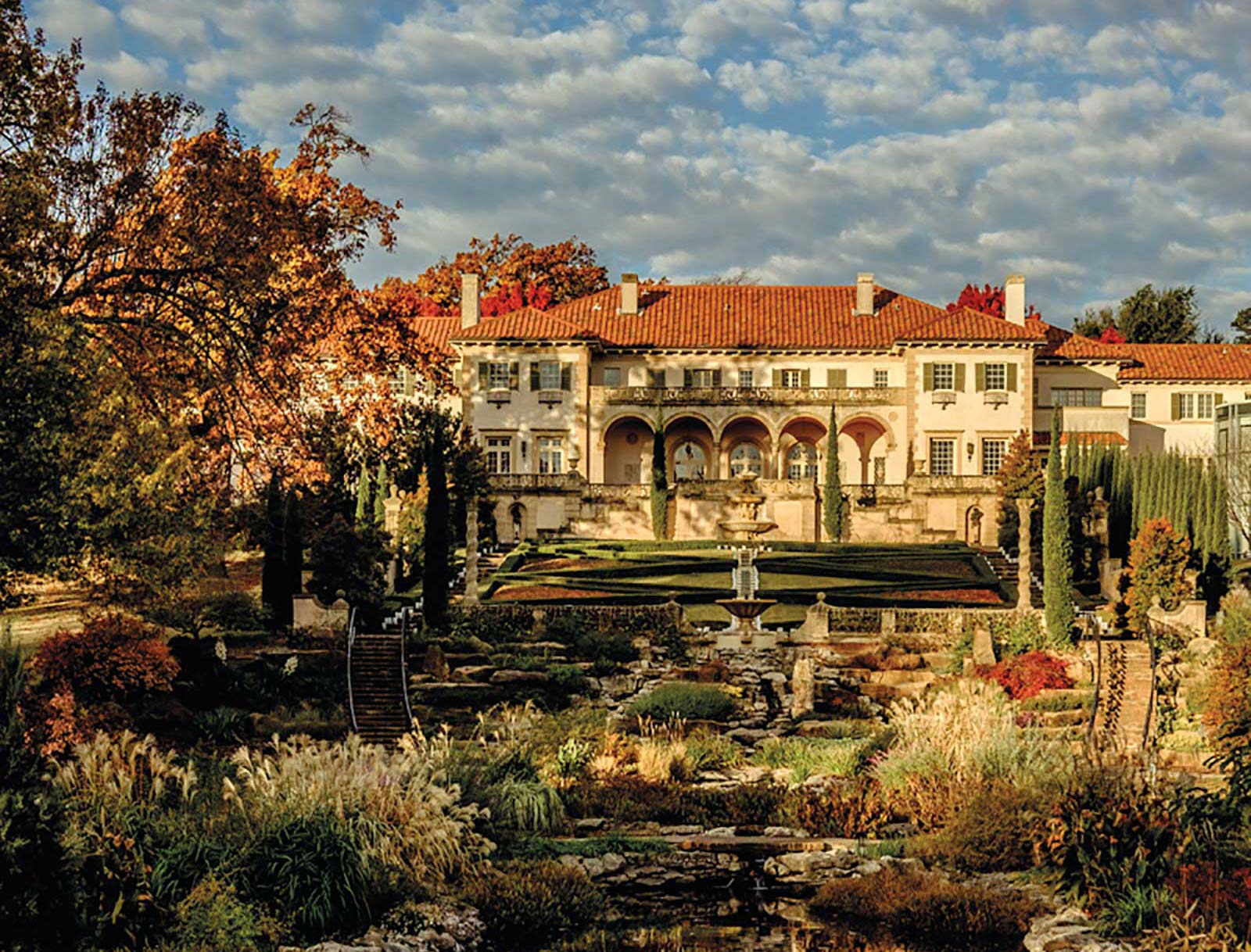
Philbrook Museum of Art, home to a world-class collection of Native American art. Courtesy Philbrook Museum of Art.
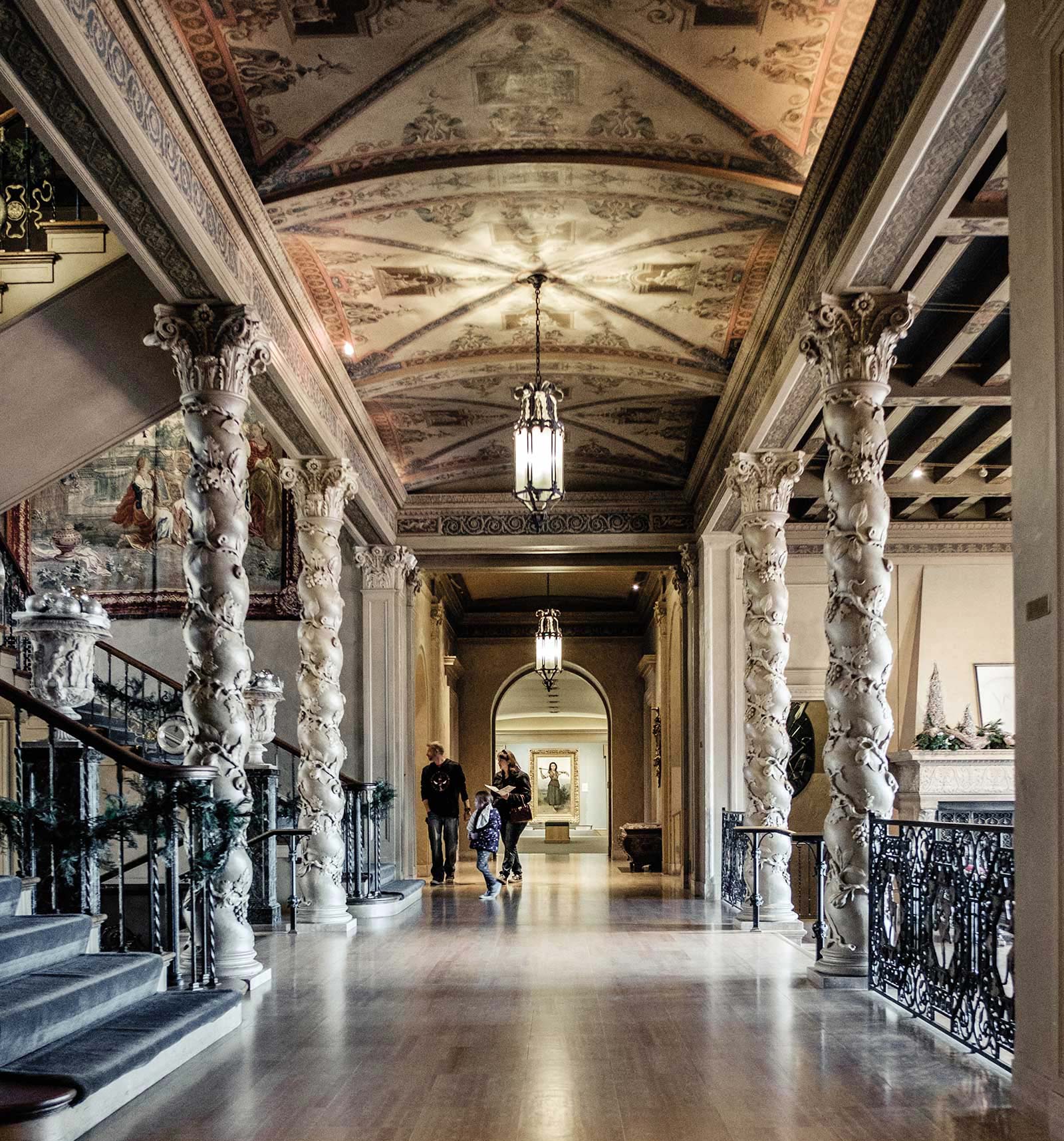
The Great Hall within the Philbrook Museum of Art. Courtesy Philbrook Museum of Art.
The second arts venue is the Gilcrease Museum, which is also referred to by its longer name, the Thomas Gilcrease Institute of American History and Art. Gilcrease, who was a citizen of the Muscogee Creek Nation, established the museum in 1949. Today the collection has more than 350,000 objects, with a special focus on art and material from Indigenous creators. “The museum represents hundreds of Indigenous cultures from across North and South America, with material culture and archaeology ranging from 12,000 B.C. to the 21st century,” the museum notes. “The collection includes more than 350 years of American paintings, sculptures and works on paper, including the largest public holdings of art of the American West.” The institution is currently closed while a new museum is under construction. An opening date has not been set, but it will surely be a city-wide celebration when the museum reopens.
Other museums that have featured Native American artists include the Museum of Tulsa History and the OKPOP Museum, which celebrates creative people from Oklahoma who have made significant contributions to music, movies, television, radio, comics, animation, literature and more. Even Tulsa’s Woody Guthrie Center, dedicated to the famous folk singer, has highlighted Native American history by exploring the complexities of Guthrie’s song “This Land is Your Land.”
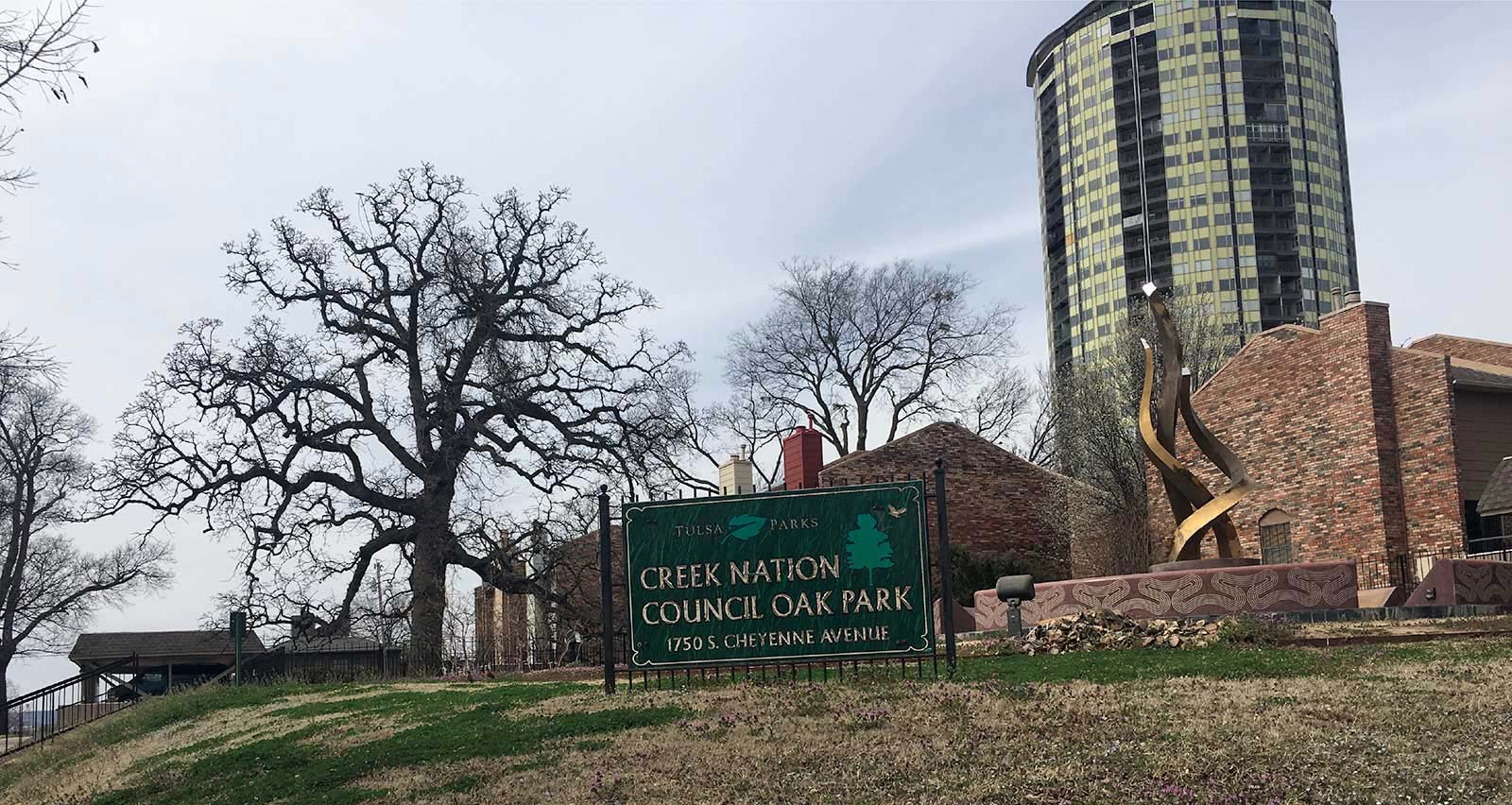
The Creek Nation Council Oak Park in Tulsa. Courtesy Muscogee Creek Nation.
Tulsa galleries that support the arts, especially Native American artists, include the Exhibit Art Gallery, which has hosted group shows and dedicated exhibitions of Indigenous art; Pierson Gallery, home to works by Shonto Begay, Brent Learned, Merlin Little Thunder and others; Lovetts Gallery, which has offered work by Marla Allison, Autumn Borts-Medlock, Susan Folwell, Ed Natiya and Jody Naranjo; M.A. Doran Gallery, which represents Chickasaw painter Brenda Kingery; and Southwest Trading Company, home to incredible handmade Native American artworks such as weavings, pottery, baskets and jewelry.
One of the largest art events that occurs in Tulsa is the Cherokee Art Market, this year held on October 11 and 12 at the Hard Rock Hotel & Casino Tulsa. More than 160 artists participate in this important market that has a growing presence in the art world. (See our full coverage of Cherokee Art Market on Page 52. Native American Art is the official guide to this year’s show.)
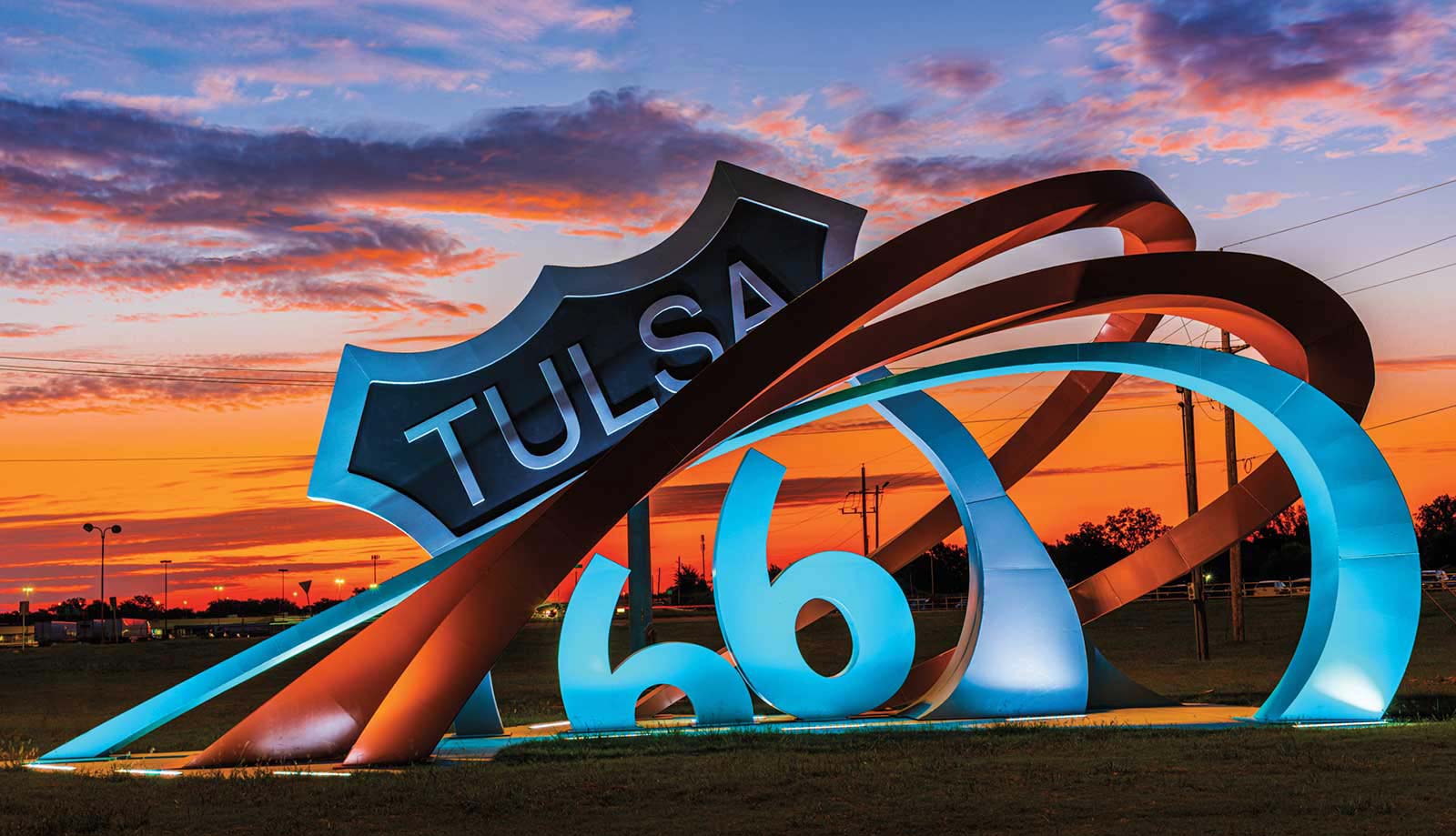
A Route 66 monument in Tulsa. Courtesy Tyle Layne Photography / Visit Tulsa.
A number of tribes and nations have a large presence in Tulsa, where they host exhibitions, special events and unique spaces important to the region’s Native American residents. One such venue is the Creek Nation Council Oak Park, which features a large oak tree that marks the Locvpoka’s ceremonial grounds. “The U.S. government forced this group of Creek Indians to migrate from Alabama in 1834. From the original group of 630, 161 died on this slow and painful trek west. In 1836, the clan arrived on a low hill overlooking the Arkansas River, and marked their arrival with a solemn ceremony depositing ashes from their last ceremonial fires in Alabama,” the Creek Council notes. “The Council Oak designated the village as Talasi or ‘Old Town.’ Tulsa eventually gained its name through later white settlers’ mispronunciations. Creek Council Oak Park is often referred to as Tulsa’s first City Hall. As late as 1896, the Tulsa-Locha Locvpoka gathered here for ceremonies, feasts and games. Today, the park still holds commemorative tribal ceremonies. It also features an ethno-botanical garden displaying plants that Creek Indians used for food, fiber, ceremonial and medicinal purposes. Interpretive signs identify plants and provide information about their purpose. Listed in the National Register of Historic Places, Creek Council Oak Park is protected and preserved by Oklahoma Historic Preservation zoning.”
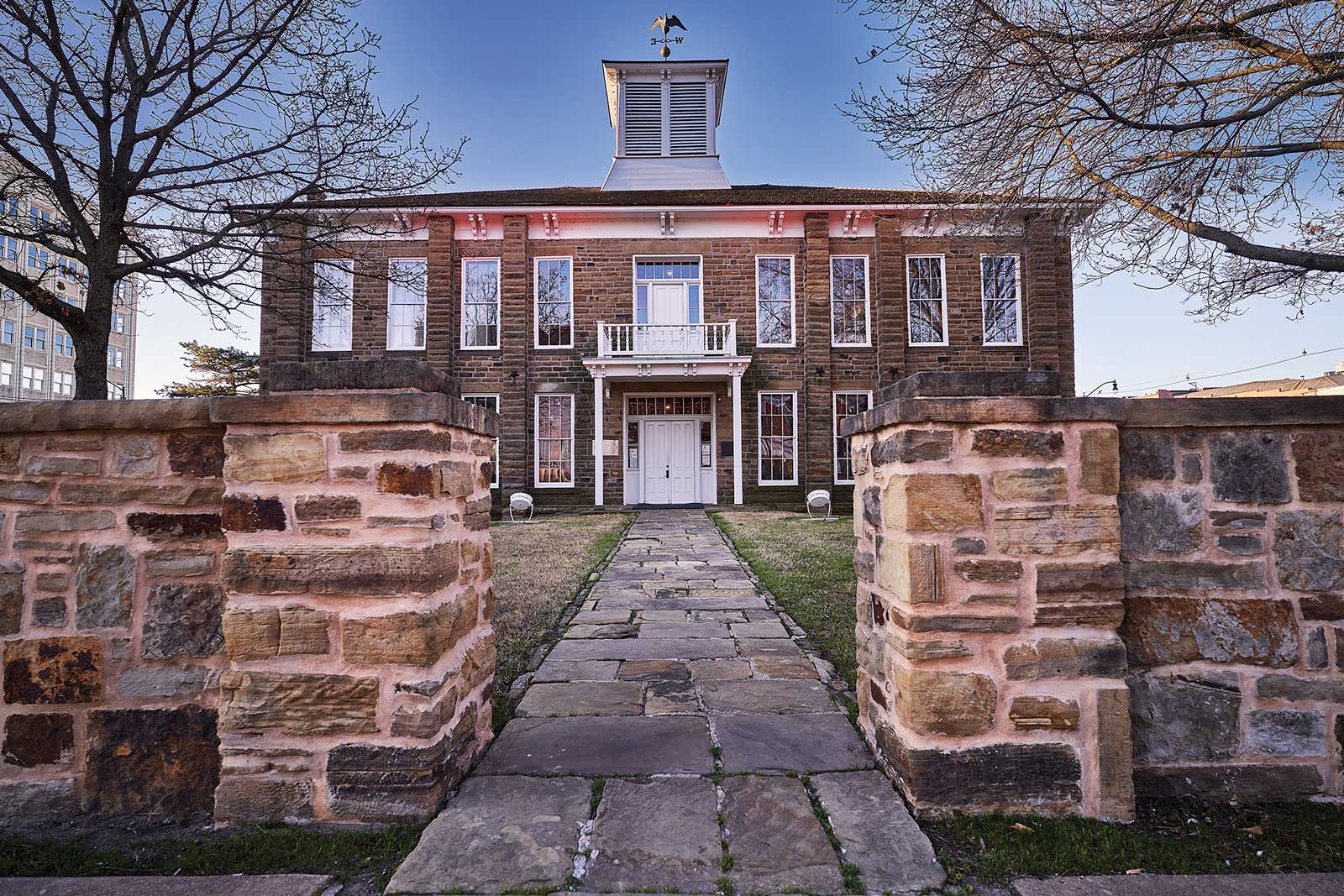
The Creek Nation Council House in nearby Okmulgee, Oklahoma. Courtesy Muscogee Creek Nation.
The Muscogee Creek Nation oversees the Creek Nation Council Oak Park and also the Council House in Okmulgee, south of Tulsa. This was the original capitol of the Muscogee Nation in Indian Territory and now serves as the historical center for the Muscogee government and its people. “The Muscogee Nation and the City of Tulsa will forever be culturally connected. For Muscogees, the great Council Oak tree was at the far end of our Trail of Tears journey. And that’s where we made our home,” says Muscogee Creek Nation Principle Chief David Hill. “What grew from there was the City of Tulsa, and that relationship grows stronger today as we collaborate forward towards a mutually prosperous future.” The Muscogee Creek Nation hosts several major events every year, including the Muscogee Nation Festival in June and the Mvskoke Art Market every April.
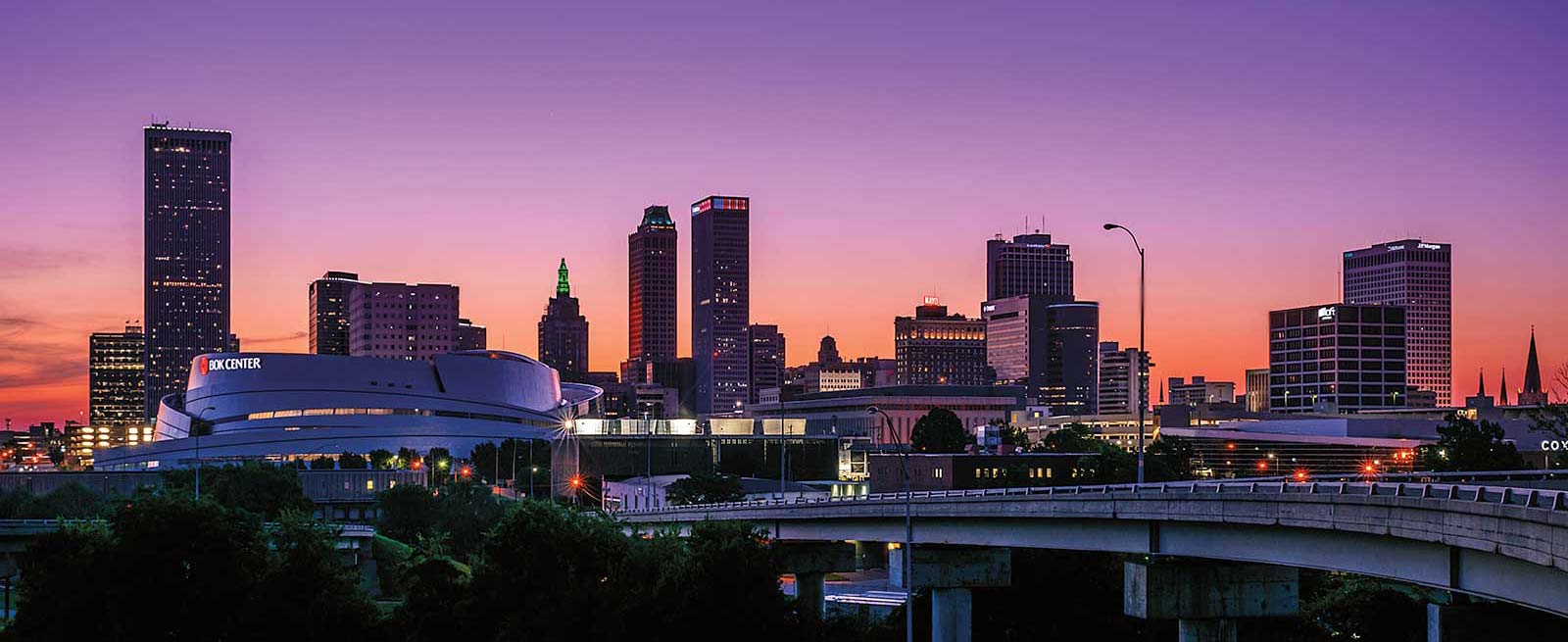
Tulsa skyline at dusk. Photo Courtesy Visit Tulsa.
Other cultural destinations include the Tulsa Herd monument at LaFortune Park, which celebrates the importance of the bison to the Great Plains region; and the Three Tribe Indian Memorial at Owen Park that marks the site where Cherokee, Creek and Osage tribes agreed to common boundaries in 1825.
For visitors who want to explore the larger region, destinations include Sequoyah’s Cabin, First American Museum, Standing Bear Park Museum & Education Center, Spiro Mounds Archaeological Center, Trail of Tears National Historic Trail, Chickasaw Cultural Center, Choctaw Cultural Center and the Five Civilized Tribes Museum. All of them are in eastern Oklahoma.
Whether it’s the rich arts culture, or the chill vibes of a popular modern city, Tulsa offer something for everyone, especially those who want to learn about Native American culture and celebrate its art forms. —
Destination Tulsa
Creek Nation Council Oak Park (Muscogee Creek Nation)
1750 S. Cheyenne Avenue, Tulsa, OK 74119
www.mvskoketourism.com
Exhibit Art Gallery
(918) 740-1054, www.exhibitartgallery.com
Gilcrease Museum
1400 N. Gilcrease Museum Road, Tulsa, OK 74127
(918) 596-2700, www.gilcrease.org
(The museum is temporarily closed for construction.)
Cherokee Art Market (at Hard Rock Hotel & Casino Tulsa)
777 W. Cherokee Street, Catoosa, OK 74015
cherokeeartmarket.com
Lovetts Gallery
6528 E. 51st Street, Tulsa, OK 74145
(918) 664-4732, www.lovettsgallery.com
M.A. Doran Gallery
3509 S. Peoria Avenue, Tulsa, OK 74105
(918) 748-8700, www.madorangallery.com
Museum of Tulsa History
2445 S. Peoria Avenue, Tulsa, OK 74114
(918) 712-9484, www.tulsahistory.org
OKPOP Museum
422 N. Main Street, Tulsa, OK 74103
(918) 295-3970, www.okpop.org
Philbrook Museum of Art
2727 S. Rockford Road, Tulsa, OK 74114
(918) 749-7941, www.philbrook.org
Pierson Gallery
19404 W. 81st Street South, Sapulpa, OK 74066
(918) 629-8827, www.piersongallery.com
Southwest Trading Company
1306 E. 11th Street, Unit D, Tulsa, OK 74120
(918) 760-3237, /SouthwestNativeGoods
Tulsa Herd at LaFortune Park
Yale Avenue and E. 58th Street, Tulsa, OK 74135
www.natureworks.org/tulsaherd
Three Tribe Indian Memorial
560 N. Maybelle Avenue, Tulsa, OK 74127
Powered by Froala Editor


