There are many mysteries in the Hopi katsina carving tradition. One of them is the established tradition of antiqued, worn and distressed Hopi katsina carvings. To those who lay eyes on these carvings, there is a presence, a personality, an inner energy. Others feels something they can’t put their fingers on, but it’s there, humming within the carving.
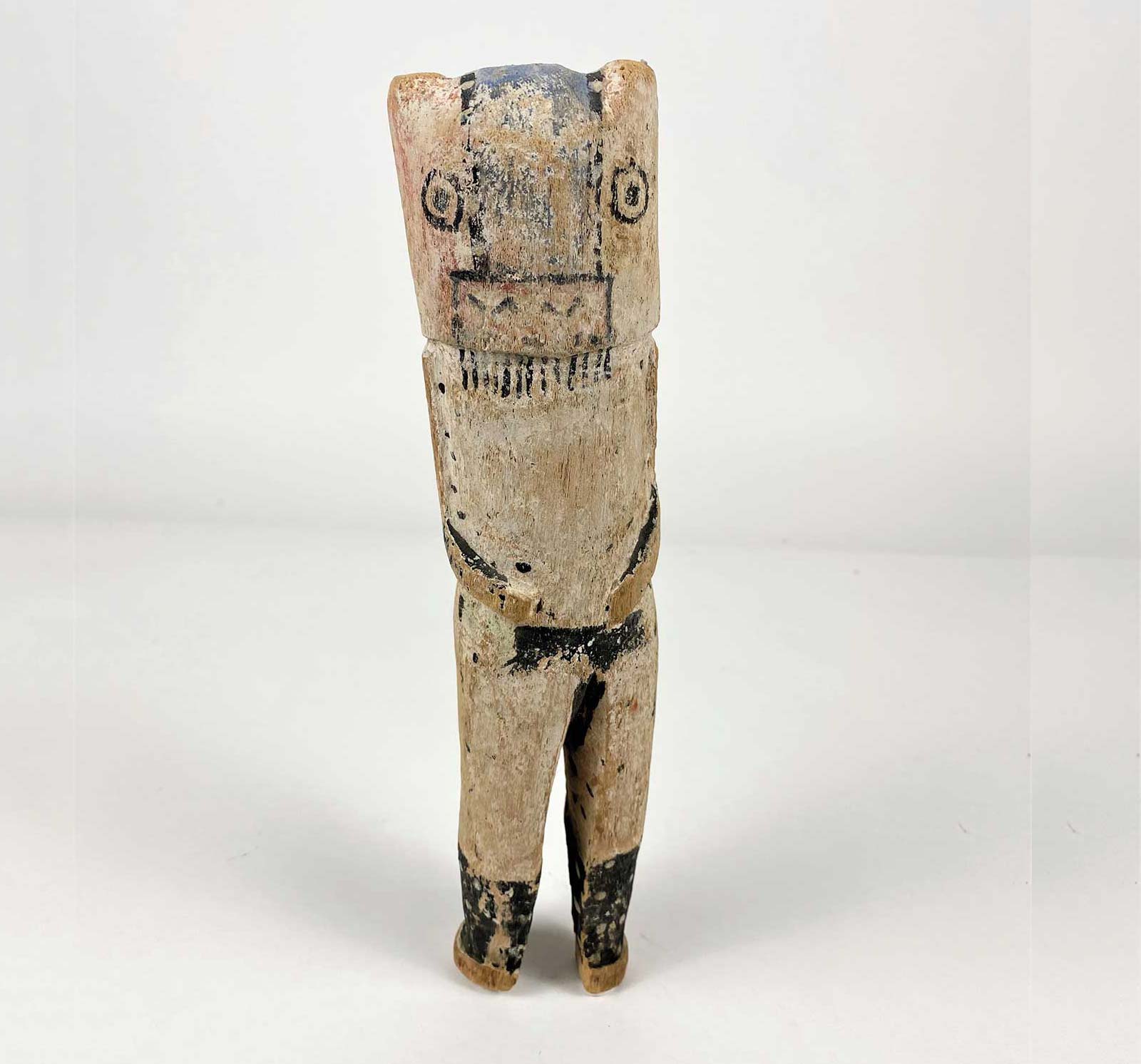 Figure 1. Early Traditional 1880s Hisat Katsina. Barry Walsh collection.
Hopi katsina carvings have been collected since about 1880. Examples in museums and personal collections from this era often show considerable wear. This may be due to handling by the girls who received them as presents from the katsinam (plural) at ceremonies. In addition, the old mineral and vegetal paints used during this early era tended to slough off and disappear.
An example from the 1880s showing considerable wear is shown in Figure 1. It is a Hisat katsina (or one who no longer appears). Note how the paints are largely worn away and the cottonwood root is worn smooth on the head, arms and feet. Objects that are 120 to 140 years old tend to show considerable wear.
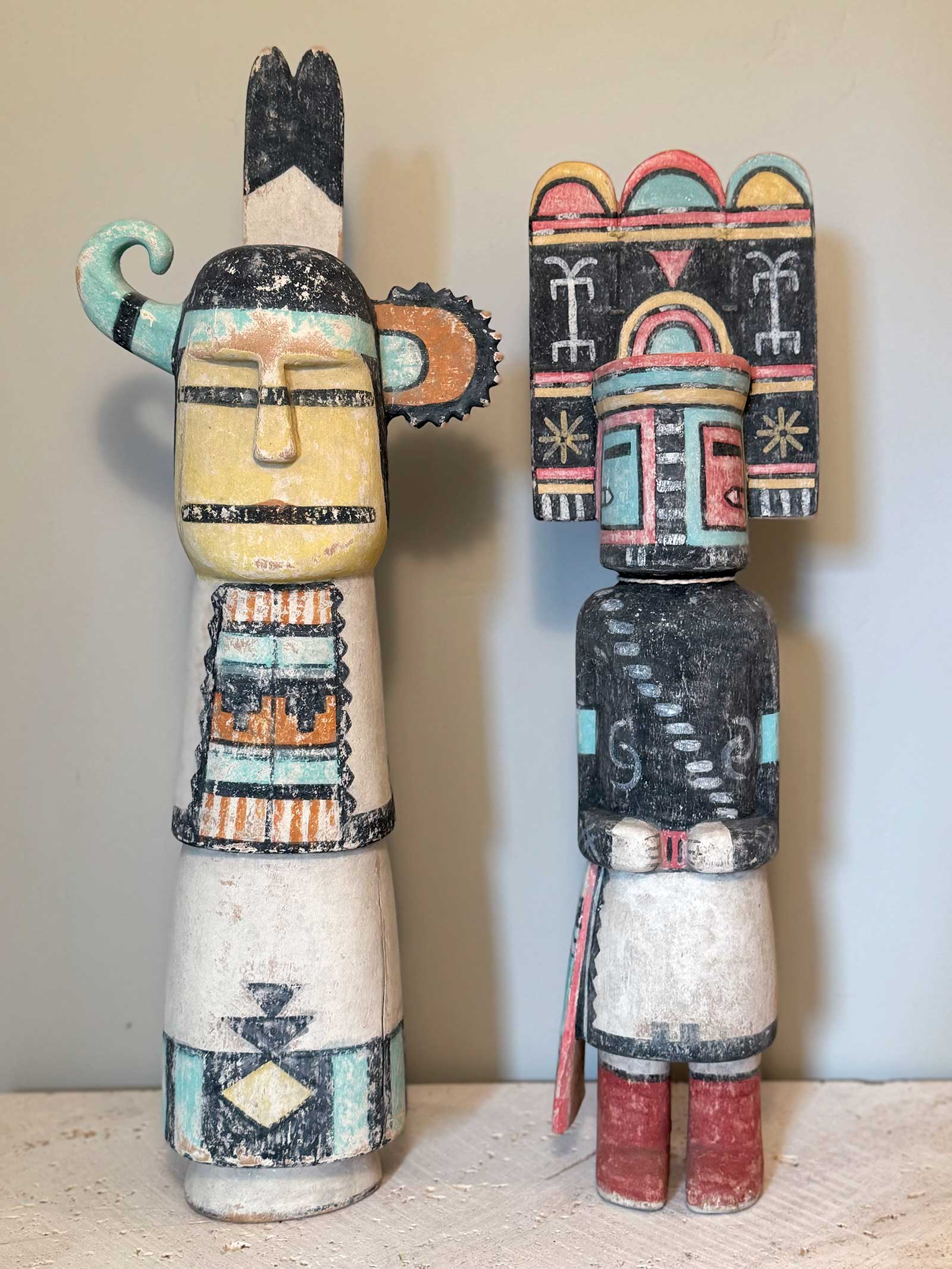
Figure 2. Examples by Walter Howato Saiastasana and Sio Hemis.
An intriguing aspect of katsina carving history is that at some point a few Hopi artists began intentionally distressing or antiquing their representations. The first of these was Walter Howato (1921-2003). Walter had a very complex life working at Disney Studios in California, detonating dynamite at the Glen Canyon Dam and being employed at Ringling Brothers in Florida. Eventually, in the 1960s, he settled in Phoenix where he developed a relationship with the Heard Museum. He was intrigued by the antique katsinam exhibited there and eventually was inspired to create his own katsina carvings using a deliberately worn and abraded style. He was really the originator of the antique, distressed style, which he expanded during his later life on the Hopi reservation.
Hopi katsina carvings are made from the root of the cottonwood tree, and finding the best quality wood is a challenge for all carvers. To create his aged look, Howato looked for wood that other carvers avoided. “Junk wood, that’s the kind I use, cracked and old,” he said in Jonathan Day’s book, Traditional Hopi Kachinas.
Examples of his work include Figures 2 and 3. Figure 2 depicts, on the left, a Saiastasana or Zuni Rain Priest of the North and, on the right, a Siohemis katsina or Zuni Jemez katsina. Note the intentional wear on both figures. They are brightly painted yet distressed, characterized by a dusty pastel color palette, which he achieved by mixing poster paint with douma (clay undercoat). After applying the paint, Howato would remove some of it by going over the carving again with a clean wet brush, giving it a muted coloration.
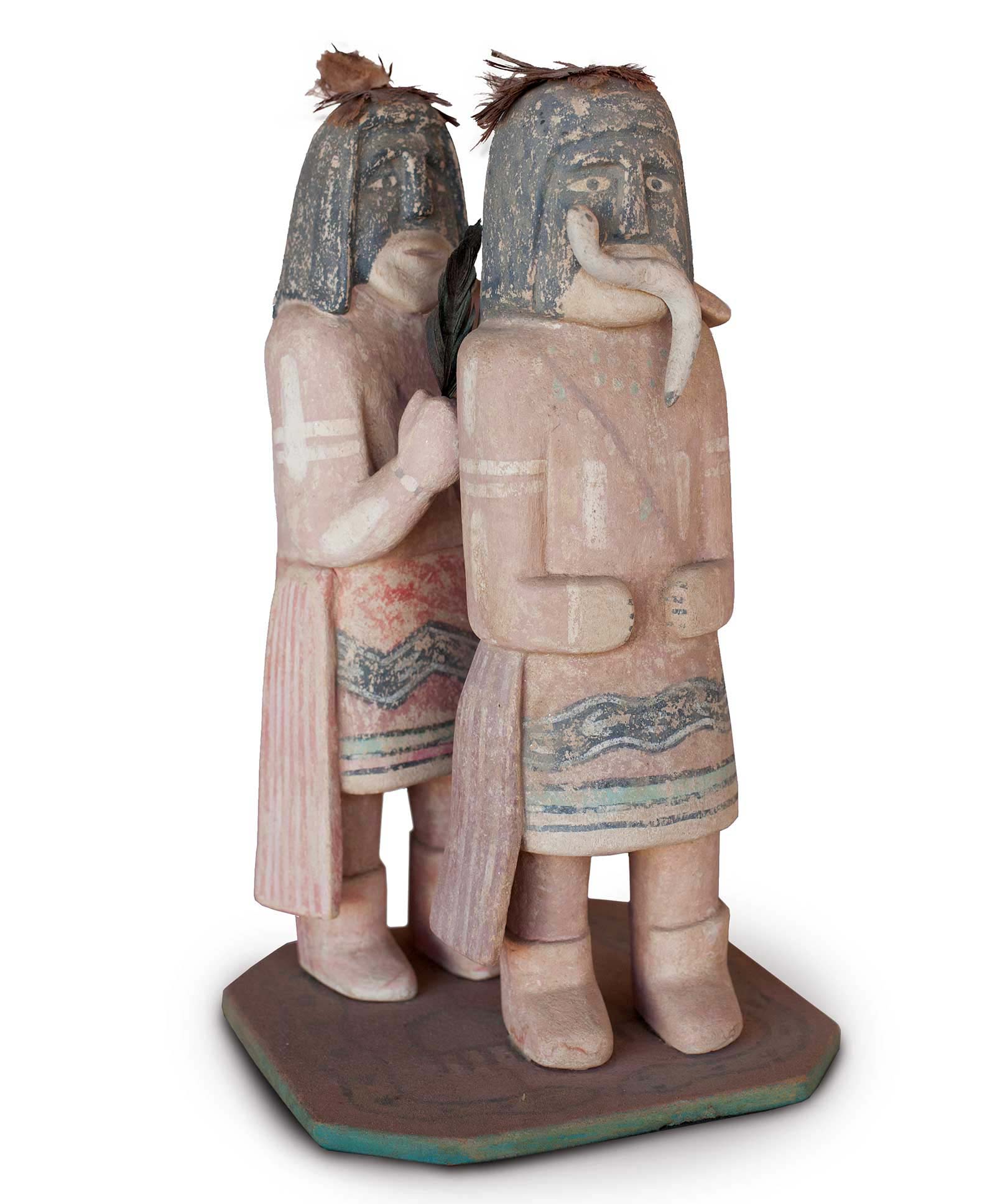
Figure 3. Walter Howato (Hopi), Tsu’sona Pair. Randy Lazarus collection. Anna Walsh photo.
“You have to do them about three times over…it’s hard. If you use too much water you smear it up,” Howato said.
Figure 4 shows another example by Howato, and it is an exceptional one. The two figures are Tsu’sona or Snake Priests. Note the substantial distressing. They have an ancient feel, which was the artist’s intention. Howato maintained this distressed approach to his katsina art until his death in 2003.
Who was next to work in this style? The approach to katsina carving Howato created in the 1960s was taken to a different level of excellence by Manuel Denet Chavarria, and his work has served as the standard bearer of the intentionally aged style for the last 30 years.
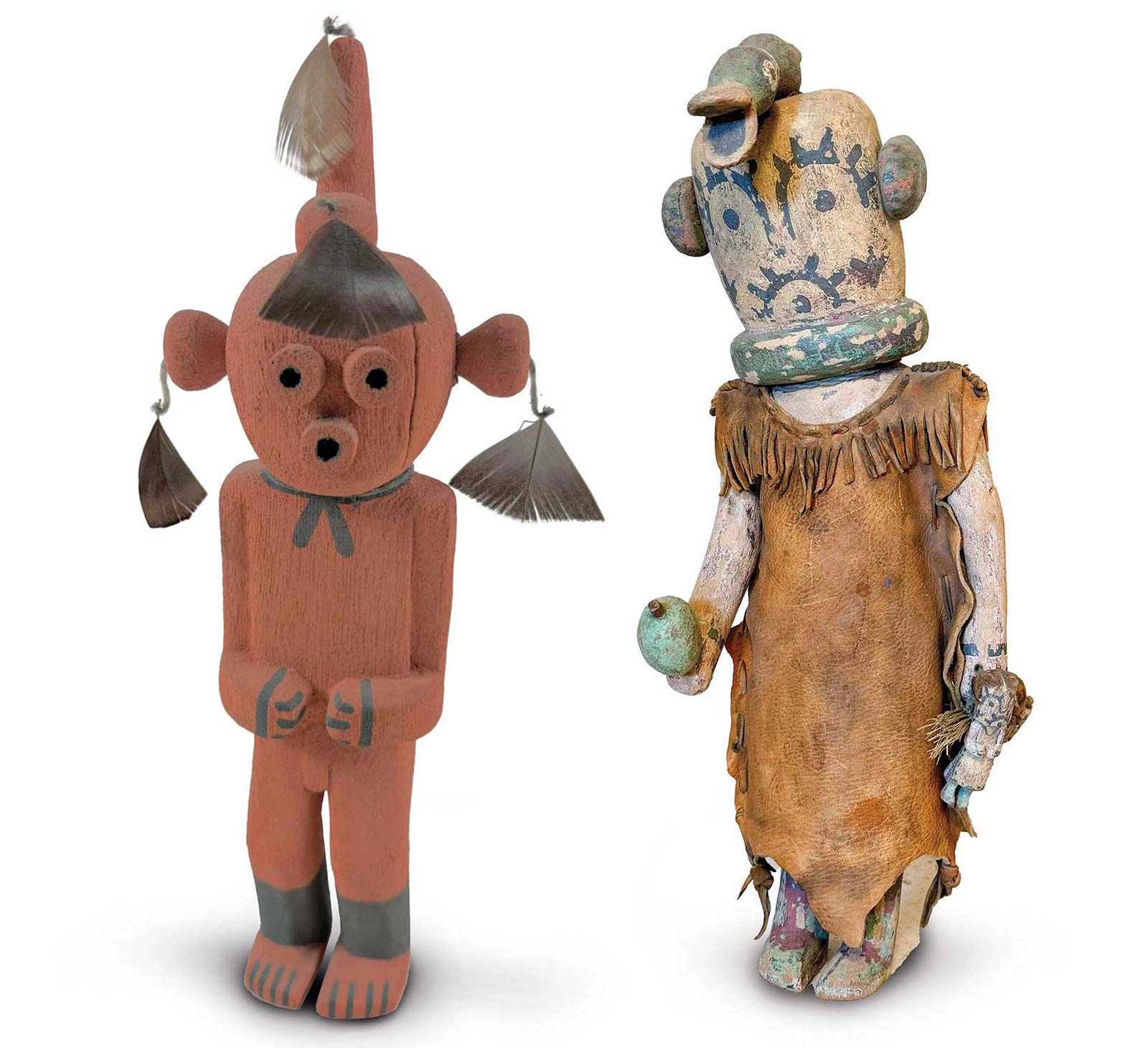
Left: Figure 4. Manuel Denet Chavarria (Hopi), Kooyemsi. Barry Walsh collection. Right: Figure 5. Manuel Denet Chavarria (Hopi), Qoqlo. Russ Hoover collection.
Chavarria was born in 1964. Figure 4 shows a very simple carving from about 1991. Note the minimalist aspects that resemble very early katsinam from the 19th century. The katsina has a subtle rendering of male genitals. This detail was characteristic of some early katsinam before Anglo prudishness intervened. Particularly striking is the long crack on the left side of the face. This echoed Howato’s use of cracked or splintered wood.
“Walter influenced me conceptually, but not technically…I went in my own direction,” Chavarria says. The fundamental inspiration for his work came from another source. Although Chavarria was aware of the work of Howato and Manfred Susunkewa that he saw at the Heard Museum as a young boy in the early 1970s, he really didn’t move in this stylistic direction until a family event inspired him. He describes how he and his wife, Marlinda, went to visit a sister and saw a katsina on the floor that their young niece had been playing with. Unlike the brightly painted katsinam that are gifted to young girls at ceremonies and then hung on the wall for safe keeping, this one had been actively played with and well-loved. The oils from the little girl’s skin had worn away and softened the previously bright paint into a captivating patina, infusing the surface with warmth and a feeling of aged beauty. Each mark and smudge told a story of play, laughter and the joy of a little girl’s Hopi life. Inspired by this revelation, and with Howato’s examples living in the subconscious from his youth, he envisioned a new stylistic path for his art.
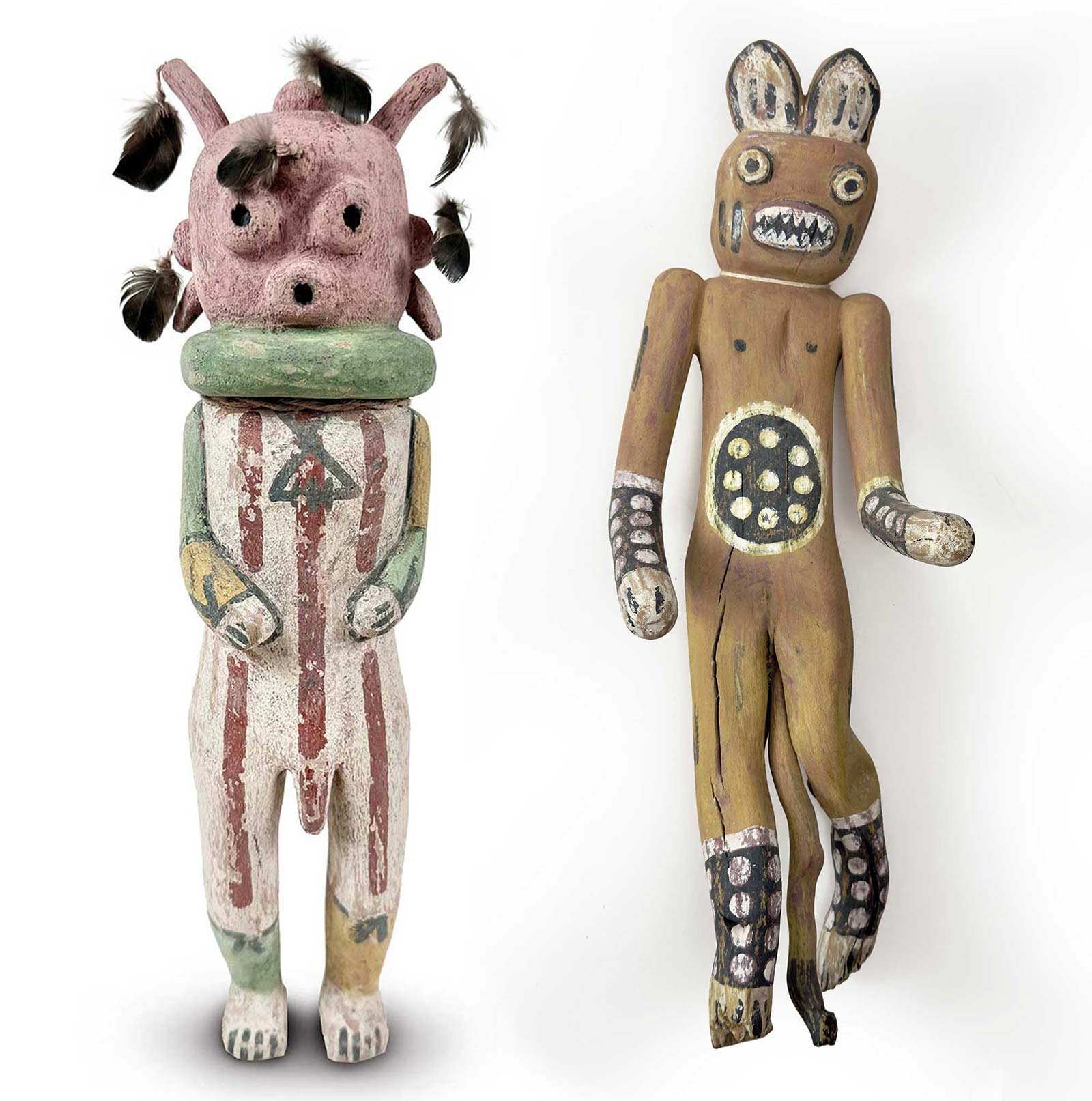
Left: Figure 7. Manuel Denet Chavarria (Hopi), Kooyemsi. Barry Walsh collection. Right: Figure 6. Manuel Denet Chavarria (Hopi), Tohokatsina (or Mountain Lion). Barry Walsh collection.
“Manuel’s katsinam…they’re different. They have a different energy to them,” says Marlinda Kooyaquaptewa, Chavarria’s wife and business partner. “I’ve been in the gallery and art business for years. I’ve seen thousands of katsina carvings. I know the work. I know when they are good or not so good, but despite the quality of the art, you can tell when there’s good energy in the piece. You can just feel it.”
Kooyaquaptewa continues, “Manuel approaches his carvings differently, too, and that, I think, is where their inner beauty and character come from. He wants those katsinam to go into your homes so you can enjoy them. When you return home at the end of the day, you’re happy to see them just looking back at you. That’s what he wants his art to create for you. And the most interesting thing about Manuel’s work, when we go to a show, is that these katsinam will choose who they want to go home with. It’s weird to say, but they do.”
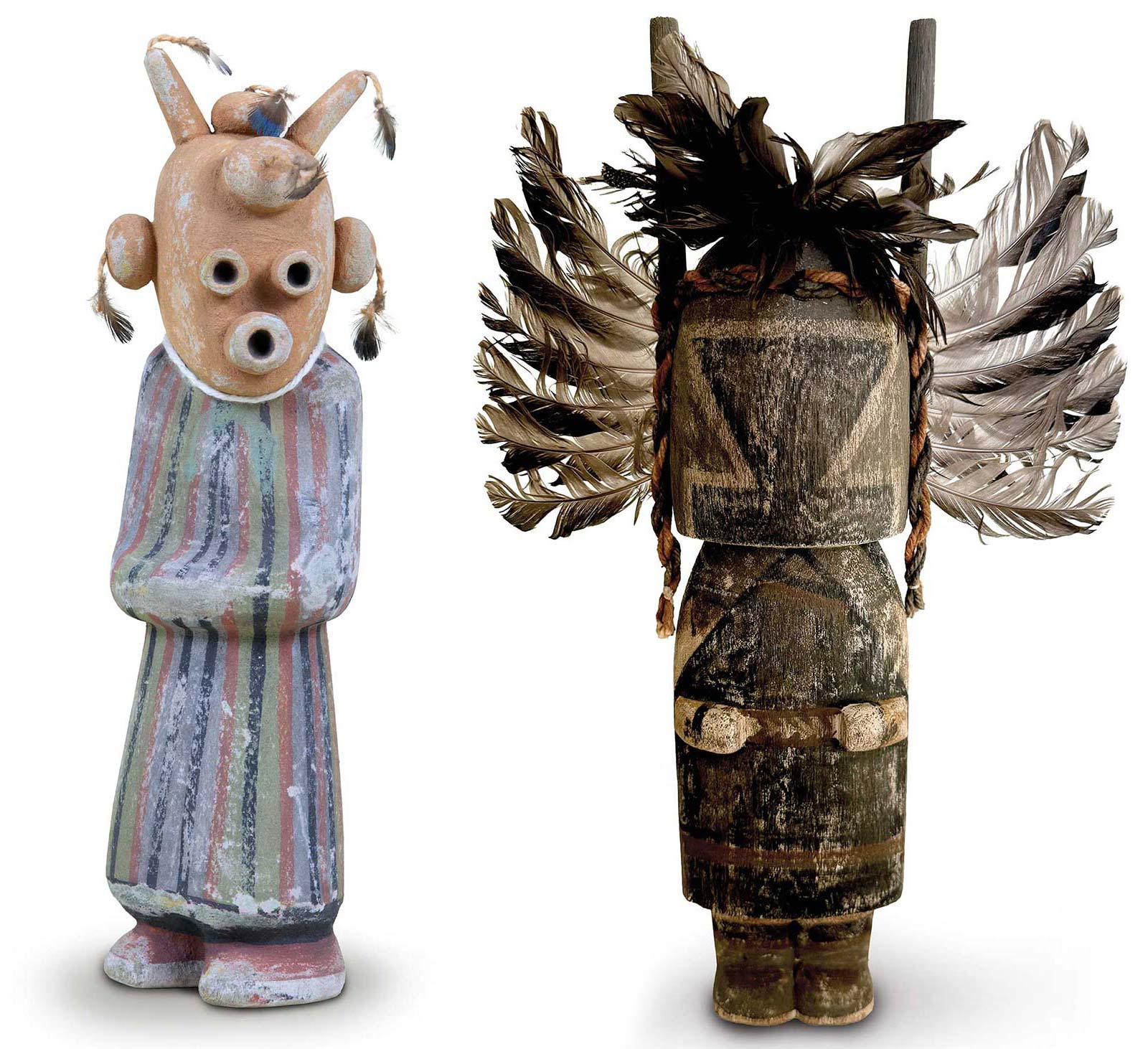
Left: Figure 8. Spike Satala (Hopi), Kooyemsi. Peg DeMouthe collection. Anna Walsh photo. Right: Figure 9. Tayron Polequaptewa (Hopi), Crow Mother in a distressed style.
Over the decades Chavarria has developed a very individualized style in both the distressed and non-distressed traditional style. However, he shared with us that about 20 years ago he shifted to antiquing his figures full time. A superb example of his recent work in the antiqued style is shown in Figure 5. This is a Qöqlö katsina bearing gifts as he often does at ceremonies. Note the elaborate handmade fringed-leather garment, the miniature katsinam (to be gifted), and the detailed duck on the head. Chavarria, careful not to give away too many of his trade secrets, says he uses a burnishing tool to take off layers of paint and edges on the cottonwood root.
Another spectacular example is shown in Figure 6. This is a 19-inch Tohokatsina or Mountain Lion. Note the undulating piece of cottonwood root he has used in this creation. Manuel exploited the meandering branch in the middle to create the Mountain Lion’s tail. It is not an add-on.
A fourth example by Chavarria came to us during a visit to his home in October 2024. Figure 7 depicts a 19th-century style Kooyemsi or Mudhead. Note the three stripes and genitals. The three stripes come from putsqatithu or cradle dolls. Back in the late-19th century, some full-figured katsinam had three stripes as they were transitioning from cradle dolls to figures with arms and legs. And, as noted above, the genitals were a 19th-century phenomenon. In this carving Chavarria is showing his knowledge of katsina carving history.
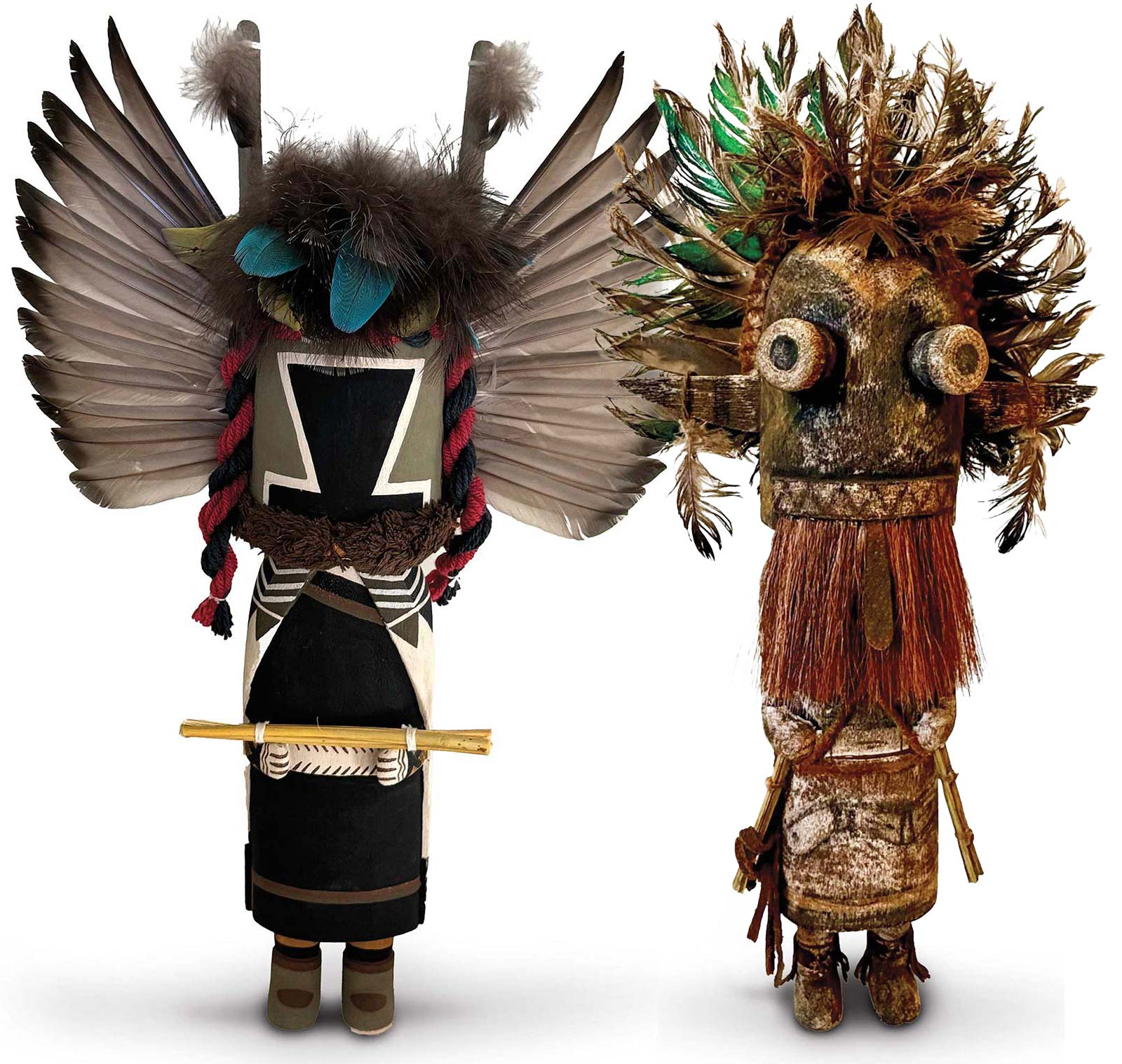
Left: Figure 10. Tayron Polequaptewa (Hopi), Crow Mother in a Traditional non-distressed stye. Right: Figure 11. An example of a very distressed carving by Tayron Polequaptewa (Hopi).
Chavarria shares that he also makes “paintings, jewelry, leatherwork, furwork, tortoise-shell rattles, drums, spin tops, bows and arrows, and whip tops.” He refers to himself as a having “a restless creativity.” Indeed. It should also be noted that these artistic activities such as leatherwork, furwork and tortoise-shell rattles frequently appear on his katsinam. There is an inter-relationship.
One of today’s more recognized katsina carvers in the intentionally aged style, is Tayron “Tay” Polequaptewa. “I picked up the idea for this style from my buddies Spikey (referring to Ferris “Spike” Satala) and Manuel,” Tay explains. “Walter Howato started this style of making them look old but it was Manuel and Spikey who were my biggest influences. Manuel had been doing it for a long time before the rest of us, and it’s a funny story how Spikey started doing it. We were at a show together and he’s trying to sell a regular one of his katsinas to a tourist, but they said they wanted a ‘real one’…something that was older, used and played with. So, he turns away from the tourist and looks like he is looking for another doll but instead, out of the view of the tourist he just screwed his whole doll up, messed it up, broke all the feathers, smeared the paint, then turns back around and asked the tourist, ‘Like this?’ And the tourist said, ‘Yes, like that!’ And they bought it. So, then he started doing that with all his dolls.” For an example of Satala’s distressed work, see Figure 8.
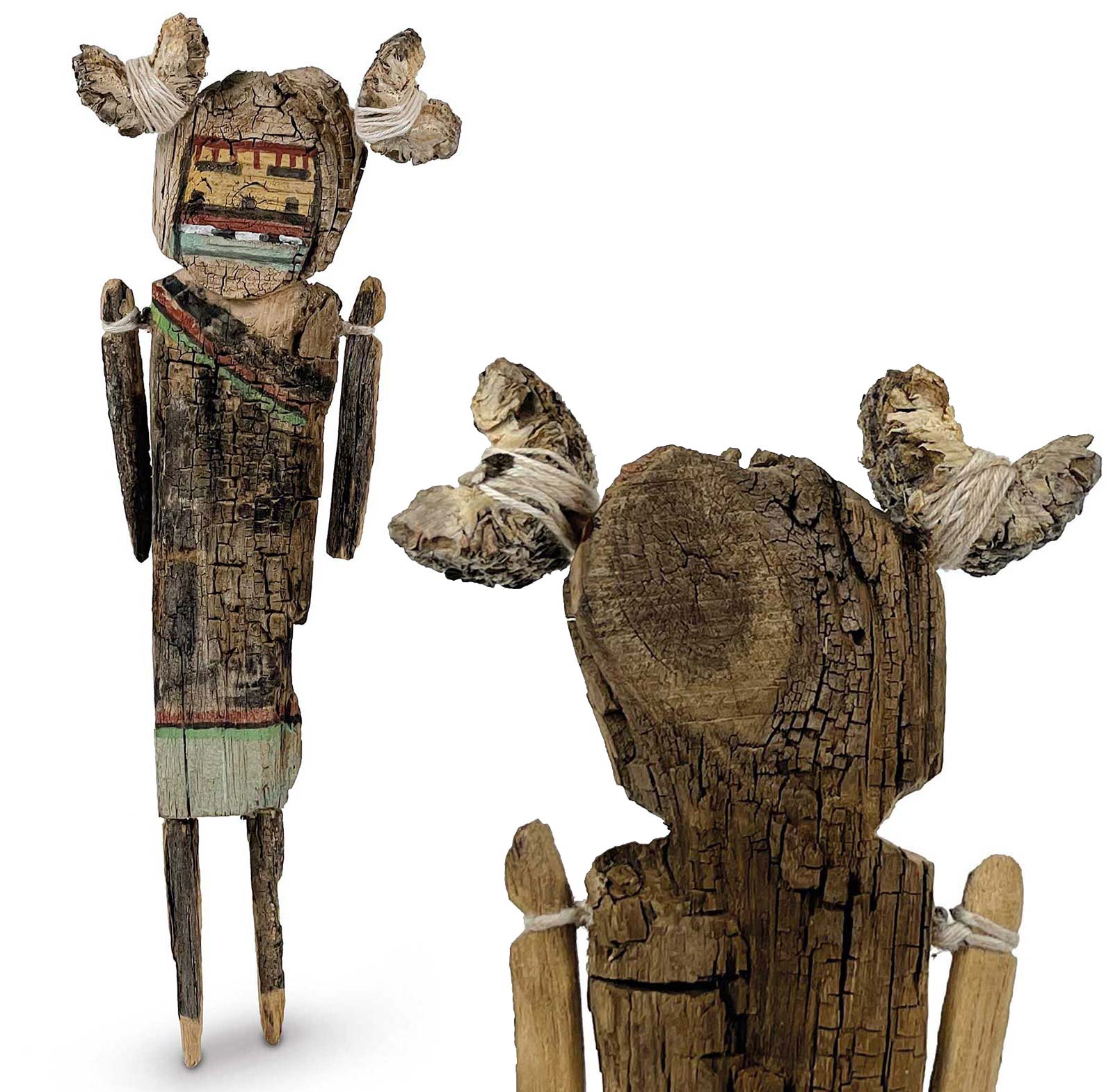
Figure 12a & 12b . Cimmaron Grover (Hopi), Corral Wood Katsinmana. Robb Lucas collection. Anna Walsh photo.
Ferris “Spike” Satala was born in 1965 on First Mesa in the village of Sichomovi. Unfortunately, due to poor health, Spike is no longer carving, but as an early adopter of the intentionally aged style, his outstanding katsinam are coveted by collectors.
Tay Polequaptewa, born in 1969, is an award-winning katsina carver, well-recognized for his exceptionally detailed painting skills and the artistically complex mastery of feather design in his work. Creating katsinam in the intentionally aged style is a relatively new addition to the work he creates. They are quickly achieving a popularity that rivals collectors’ demand for katsinam in his fine detailed style.
“It was about four years ago,” Polequaptewa remembers. “I was running short on paako (cottonwood root) and was ready to carve a new tihu (katsina carving). The only pieces of paako I had weren’t very good. Normally I would cut them down to make flat cradle dolls. But I thought I would experiment and make something that looked like what Manuel or Spike were making, but to do it in my own style, differently. Every once in a while, if you are messing around in what’s left of one of the old fallen down Hopi houses on the rez you come across an old tihu that’s been long forgotten. Lost to time, you could say. They get exposed to the weather, rained on, and all the paint has run together or totally washed off. Maybe it’s half buried in the dirt, but it’s old and all beat up. It’s actually pretty cool. I wanted to make something that looked like that.”
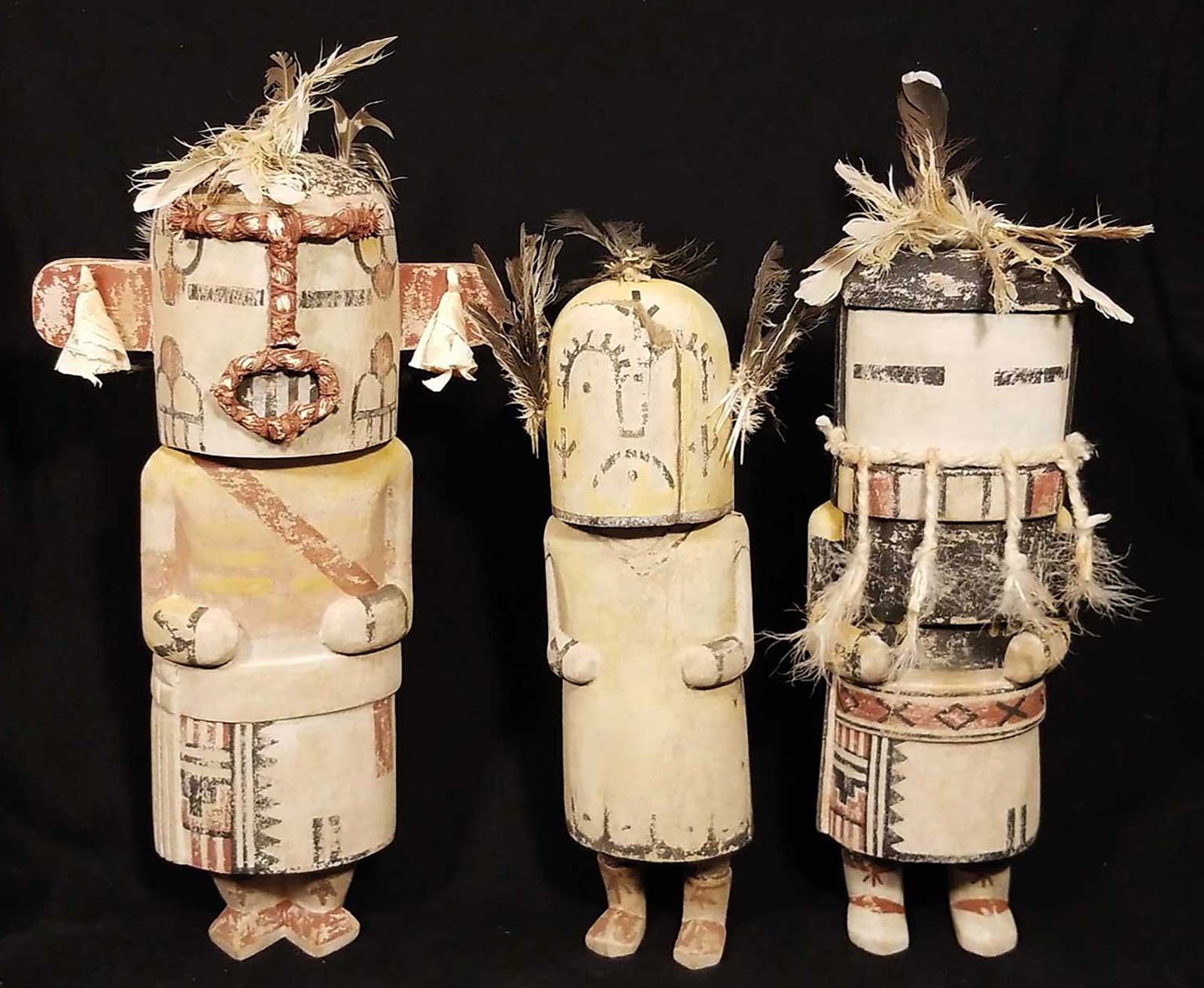
Figure 14. Max Curley (Hopi), Trio Hehey’a Qoqlo Angaktsina
He continues, “I first started off with the brighter colors like Walter Howato is known for, but it wasn’t the look I was trying to achieve. If you’ve ever been in an older Hopi home, it’s pretty dark and dusty. We live in the Arizona desert and the wind blows up on the mesas. Lots of dust. We heat and cook with open fires and sometimes use coal for our stoves. There’s a lot of soot on the walls and ceilings. So, if some little girl was playing with the katsina she was given and it fell behind the couch or something and wasn’t found for years, it wouldn’t be in its original bright colors. It would be dark and dusty. The paint would be all covered with soot, the feathers would be all curled and broken. It would look pretty dark and messed up.”
Polequaptewa—like Howato, Chavarria and Satala—operates with a simple objective: to give the carved katsina an aged or weathered look, creating the natural patina that comes with time, characterized with an evolved and subtle wear that is generally more random and irregular. Although all of these intentionally-aged tihu look uniquely reflective of the artist that created them, the common thread is a shared mastery in the ability to avoid looking too perfect in their imperfection. This sophisticatedly understated aging evokes the passage of time without the extreme or overt wear traditionally implied by the words “distressing” or “antiquing.”
“After a lot of trial and error to get that sooty and dusty look,” Polequaptewa explains, “I went back to the darker colors I use on my more detailed katsina carvings—my umbers. They’re deeper rich brownish colors with a little red, yellow and dark green mixed in. I now go to shows with both my fine detailed katsinam and carvings done in this intentionally aged style.” The two Angwusnasomtaqa or Crow Mother carvings in Figures 9 and 10 serve as examples of both styles for the carver. Here we have the same figure rendered in very different ways. In addition, see Polequaptewa’s example in Figure 11. This is an exceptionally dark rendition of Wuyaktaywa or Broadface. The blackened tones are different from any other carver working in the distressed style. They certainly incorporate the dusty and soot-covered coloration described by the artist above.
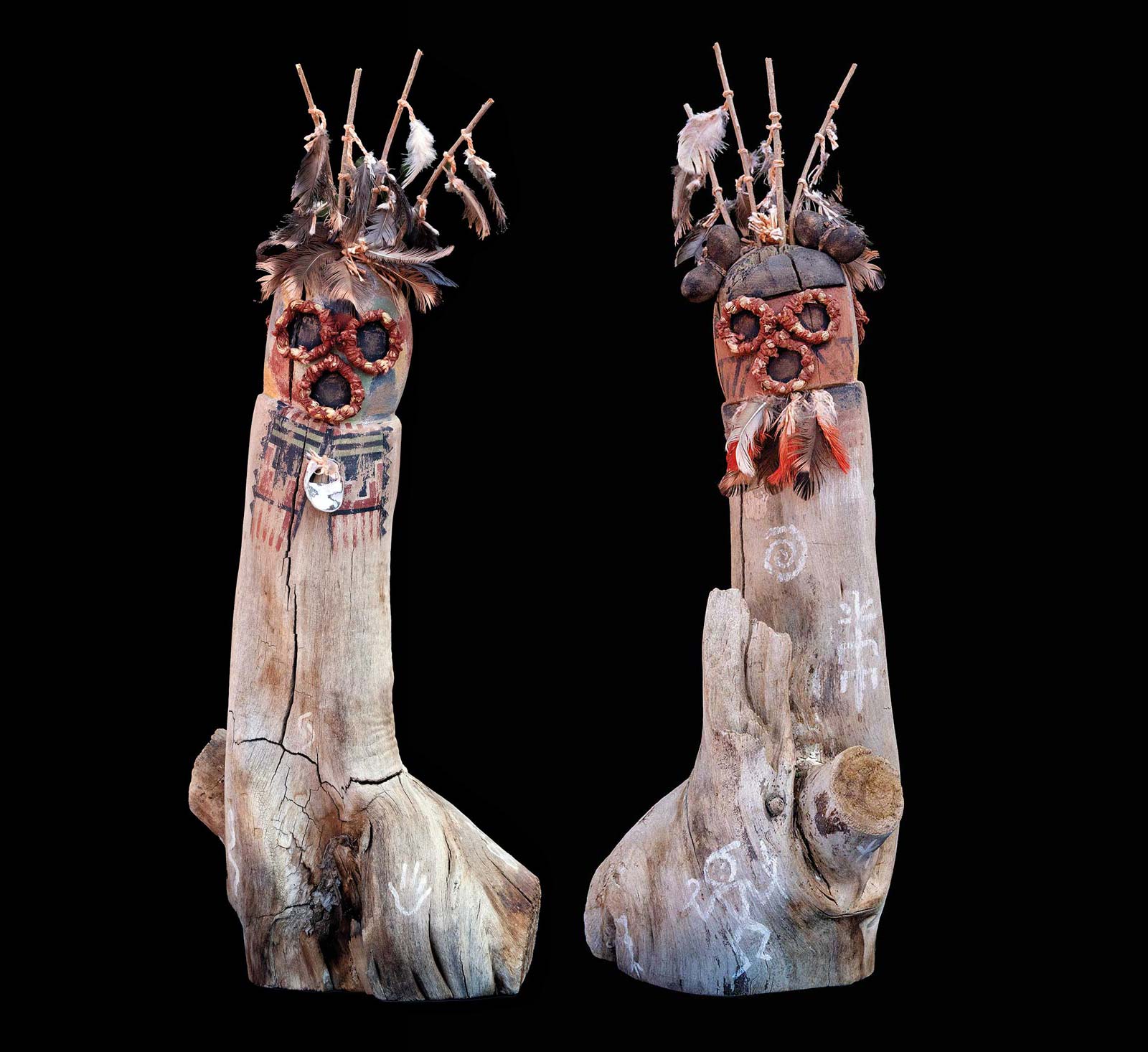
Figure 15 & 16. Max Curley (Hopi), Masawkatsina, left, and Masawmana.
The carvers in this article discussed so far have a common feature in that they fully carve and paint katsinam and then distress and antique them afterwards. The next carver proceeds in reverse. He often chooses distressed, weathered wood and then renders a katsina from this material. This artist is Cimmaron Grover, an especially creative individual born 1978. To date, Grover has used two types of what he calls “corral wood.” He explained to us that he first used corral wood because he had run out of cottonwood root, but over time he came to like the weathered, worn corral material. Such wood does convey antiquity in a concrete, material way, and the wear to such wood requires a great expanse of time and exposure to weather. It cannot be rushed or manufactured.
As a first example, consider Figures 12a and 12b. It is a Katsinmana or Maiden katsina. Notice how simple both the carving and painting are on this figure. Pay special attention to the extremely worn grain of the wood on the back of the doll. The legs are simply narrow splinters of wood. Another unique feature is that the butterfly whorl hairdos are made of very old, dried-out corn cobs.
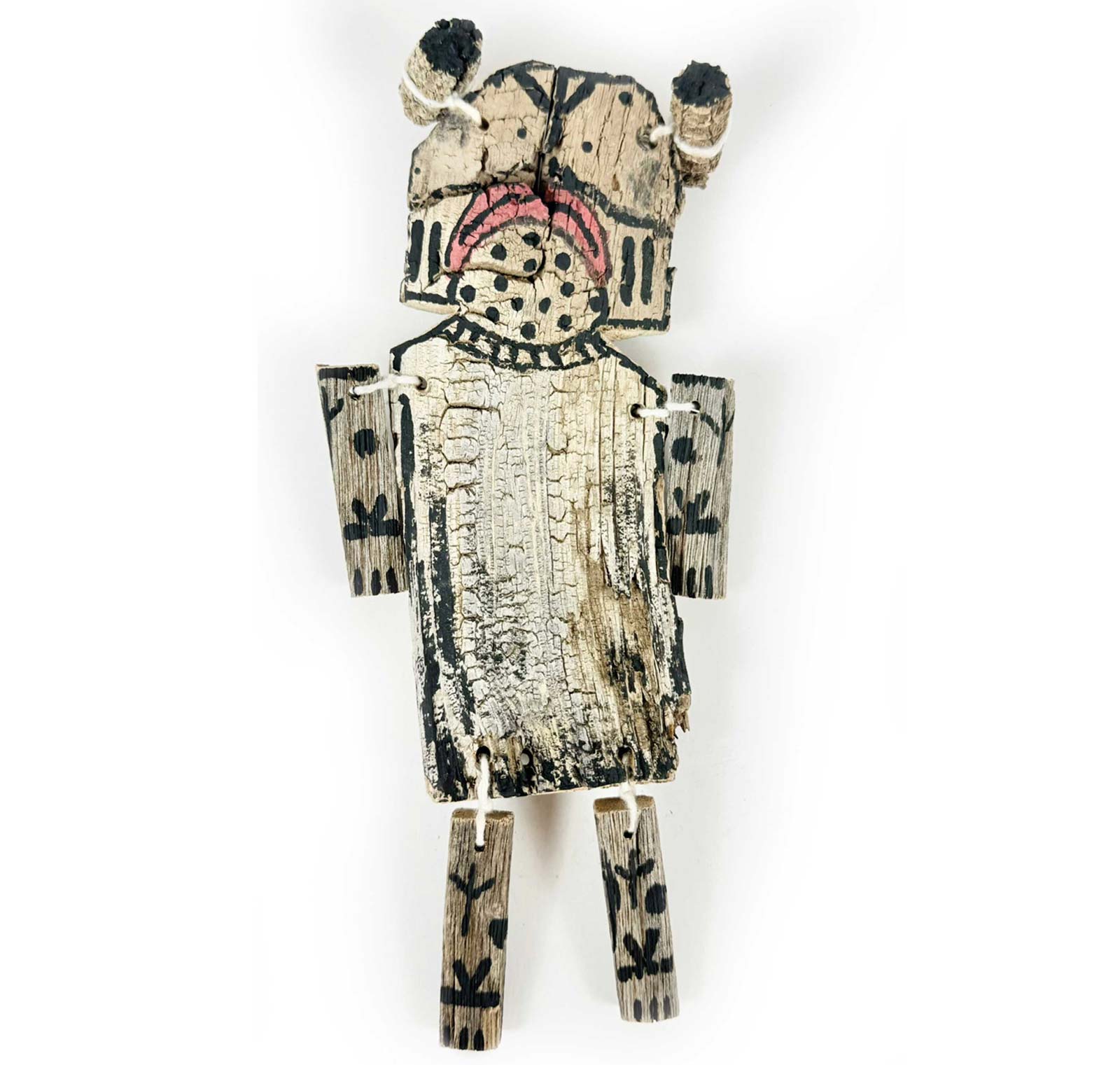
Figure 13. Cimmaron Grover (Hopi), Corral Wood Paakwa (or Frog). Barry Walsh collection.
In 2024 Grover obtained a new haul of corral wood, which he used in Figure 13. This wood came from a retired sheep herder in Dinnebito, Arizona. It appears to be among the most weathered material that Grover has used to date. Figure 13 is a Paakwa or Frog and it has articulated arms and legs. His eyes are very old, dried-out corn cobs. Grover certainly takes aged wood and other materials in new directions. His work serves as a counterpoint or artistic contrast to others working in a distressed, antiqued style. Grover contends that his work harks back to 19th-century katsinam, when they were very simple and sometimes not painted at all. His artistry is unique.
A pleasant development is that some new younger carvers are also drawn to the antiqued style. One such example is Max Curley, who was born in 1992 and is almost 30 years younger than Chavarria. Curley has been carving since age 13, although he became more serious in the art form at the age of 17. His big influences are his grandfather and brother Mike and, later on, Walter Howato. He describes seeing a lot of Howato’s work when he worked at the Tsakurshovi trading post on Second Mesa, Hopiland. Curley says his other big influence has been his involvement in ceremonial activities in his village of Musangnovi. He first started making distressed katsinam in his 20s. He cleverly refers to them as “instant antiques.” An example of Curley’s artistry is shown in Figure 14. Left to right, the katsinam are Hehey’a, Qöqlö and Angaktsina (Longhair). Note the skill of his distressing, including not only the wood but also the feathers. These really do look like “antiques,” and the amount of work involved is not “instant.”
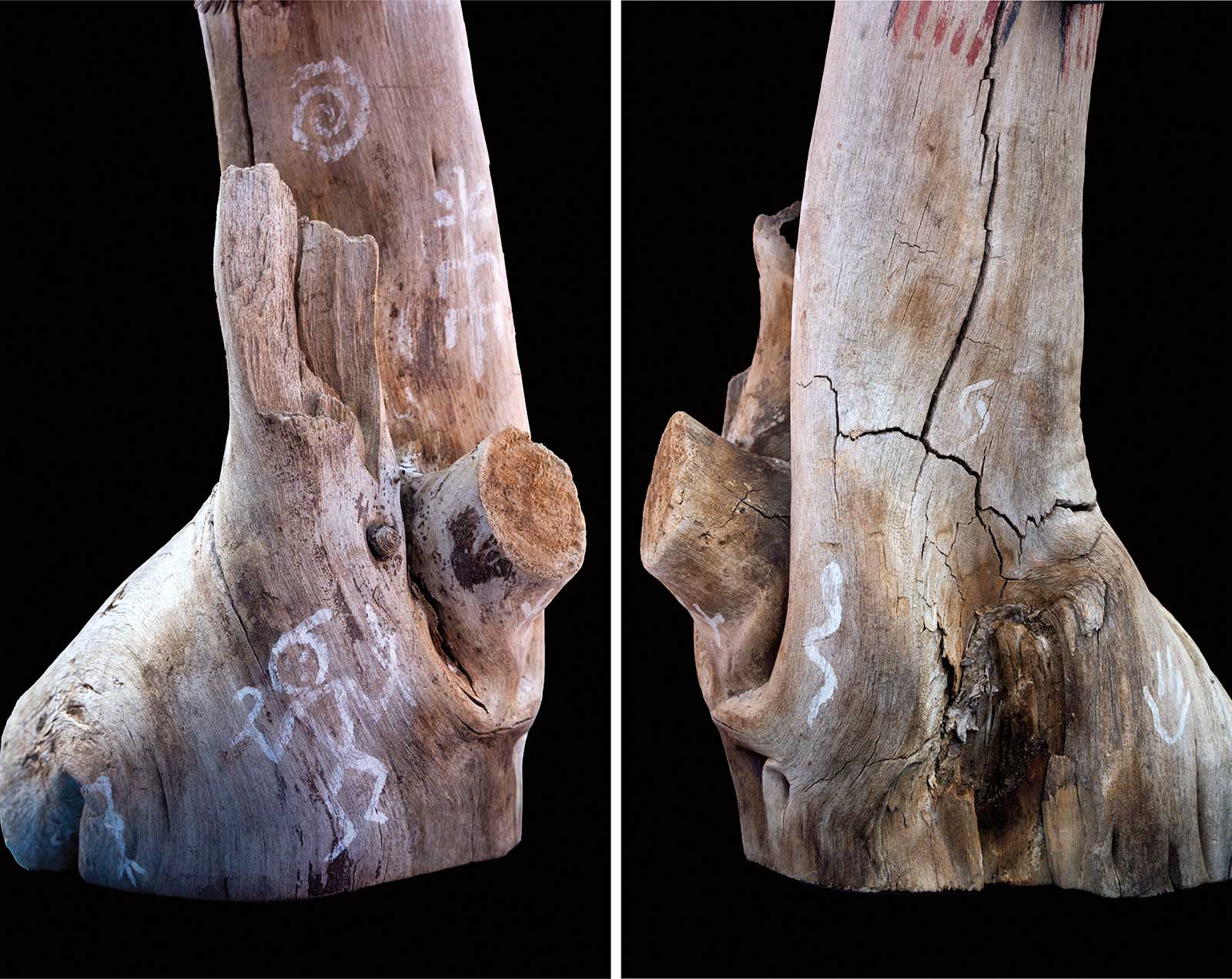
Figure 17. Max Curley (Hopi), Masawkatsina, left, and Masawmana (detail)
Curley often works alongside his wife, Yoyokmana, which means, “Girl who brings the rain.” She is an expert beader who makes elaborate, colorful beaded earrings, necklaces, pendants, cuffs, armbands and also wicker plaques. In addition, she is a seamstress, so at times she provides both beadwork and traditional clothing for her husband’s katsinam. He said they inspire and reinforce each other’s art. Curley shared that his wife may say, “Hey, let’s get to work!”
Curley’s magnum opus may be the large double Masaw carving, which he made from what he calls “gnarly wood” (See Figures 15, 16, 17). This carving takes unusual raw wood and transforms it into a sculptural form. One side depicts the male Masawkatsina (Figure 15) and the other his female partner, Masawkatsinmana (Figure 16). The carving of the two is exceptional by itself, but what really puts the piece over the top are all the Hopi symbols/petroglyphs he has added (Figure 17). He told us that the symbols include corn, migration, snakes, rain clouds, friendship, handprints, warrior shields, bird tracks, a crane and Ewtoto, the Father katsina. This carving includes a thorough inventory of Hopi symbology.
The Hopi katsina carving tradition is so long and diverse that there are a multitude of styles taking many diverse directions. Some are intentionally minimalist, others strive for ultrarealistic detail (see Walsh’s The Great Tradition of Hopi Katsina Carvers: 1880 to Present, 2019). One reason that Hopi art remains so vibrant is that the Spirit Beings continue to express themselves in so many ways; there will always be new and profound chapters in the Hopi katsina art world. —
At Market
Manuel Denet Chavarria, Booth No. LIN W 736
Tayron Polequaptewa, Booth No. PAL S 249
Powered by Froala Editor


