What takes place Sunday afternoon at Santa Fe Indian Market takes root that morning. Sunday afternoon is the SWAIA Native Fashion Show, while Sunday morning is the Native American Regalia Showcase. All the celebrity designers with the big Instagram followings trace their inspiration back to the traditional regalia featured in the showcase.
Native American regalia continues thousand-year-old traditions. The Regalia Showcase, however, is new. Sort of. The event is an evolution of the former Native American Clothing Contest started in 1991 by Jeri Ah-be-hill (Kiowa-Comache, 1933-2015). Last year, was the first year the event was officially renamed the Native American Regalia Showcase.
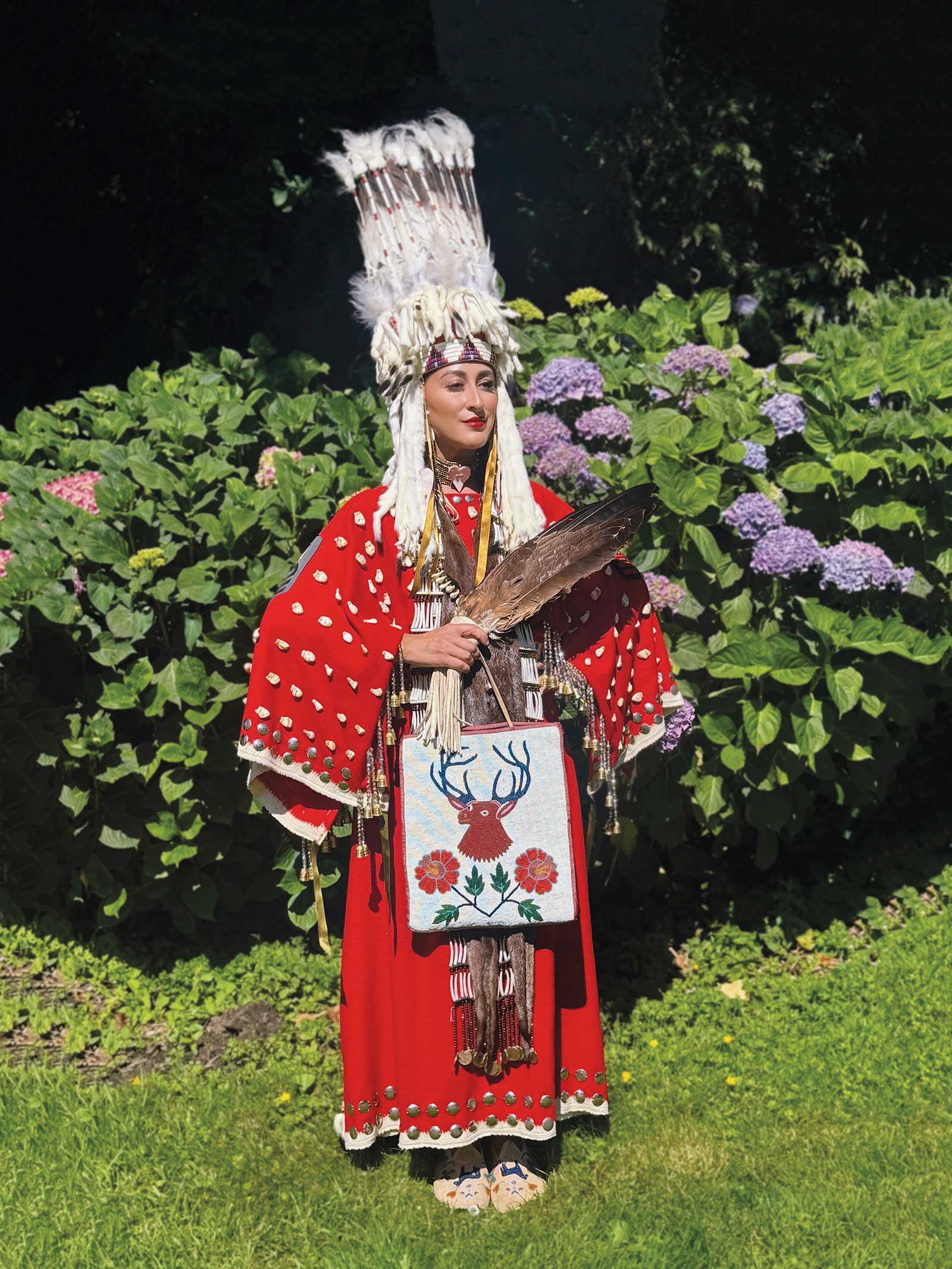
Catherine Black Horse (Seminole Nation of Oklahoma), Falling Stars Elk Tooth Dress and Blackfeet Stand-Up War Bonnet, 2025. sawtooth broad cloth wool, 244 real elk teeth, 1898 tin spots, brass thimbles, fire-polished cut glass beads, 1890 antique vegetable-dyed silk ribbon, winter ermine pelt and winter ermine tails. Model: Bree Black Horse. Image courtesy the artist.
“It became not a good look for SWAIA to be putting one tribe’s regalia up in competition against another tribe’s regalia,” says Natasha Ashley-Brokeshoulder (Diné), the creative director of the SWAIA regalia show. “The feedback I would get was why are we competing against another tribe when it should be an all-inclusive event.”
With that in mind, the event is no longer a competition, but maintains Ah-be-hill’s vision of promoting traditional regalia while offering educational outreach to Natives and non-Natives alike. Native American regalia holds deep cultural, spiritual and personal relevance. More than simple clothing, it’s a powerful expression of identity, heritage and connection to community and ancestors. Ah-be-hill was ardent about stopping people from referring to regalia as “costumes.”
The free Native American Regalia Showcase takes place Sunday, August 17, at the stage in the Santa Fe Plaza between 9 a.m. and noon. Each participant will share an on-stage presentation that may include a traditional dance or song, offering insight into the significance, craftsmanship and design of their regalia.
Regalia artists juried into SWAIA are invited to participate, as are—for the first time—artists not juried into market. Regalia artists wishing to show their work can sign up before the event on the SWAIA website or register in person the morning of the event. All participants will receive an honorarium and recognition ribbon.
Catherine Black Horse (Seminole Nation) will be one of the participating artists. Show organizers prefer referring to the participants as “artists” as opposed to “designers” to avoid confusion with the designers featured as part of the contemporary fashion show later in the day.
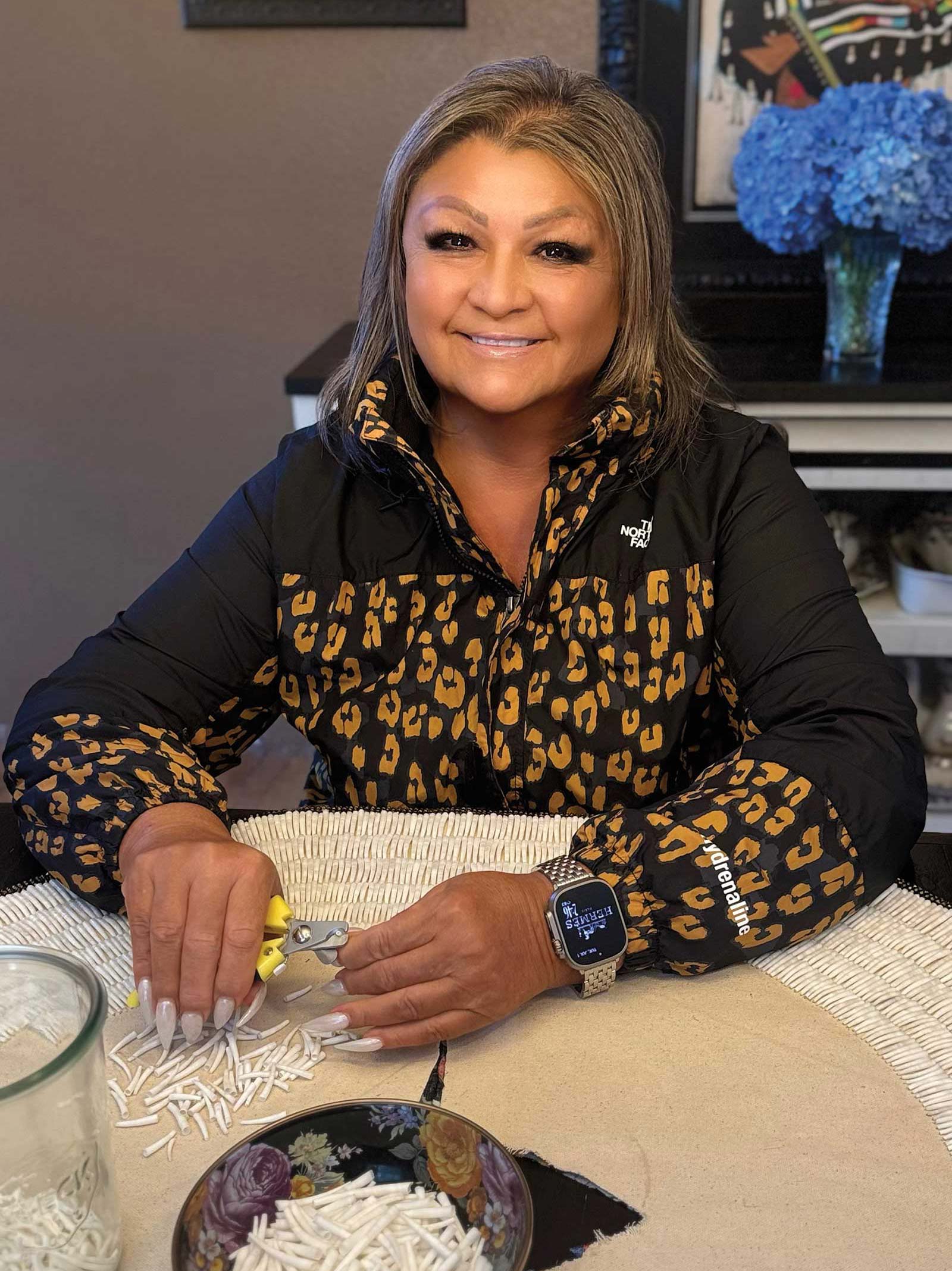
Catherine Black Horse (Seminole Nation of Oklahoma) works on the pieces she will show during the 2025 Native American Regalia Showcase. Image courtesy the artist.
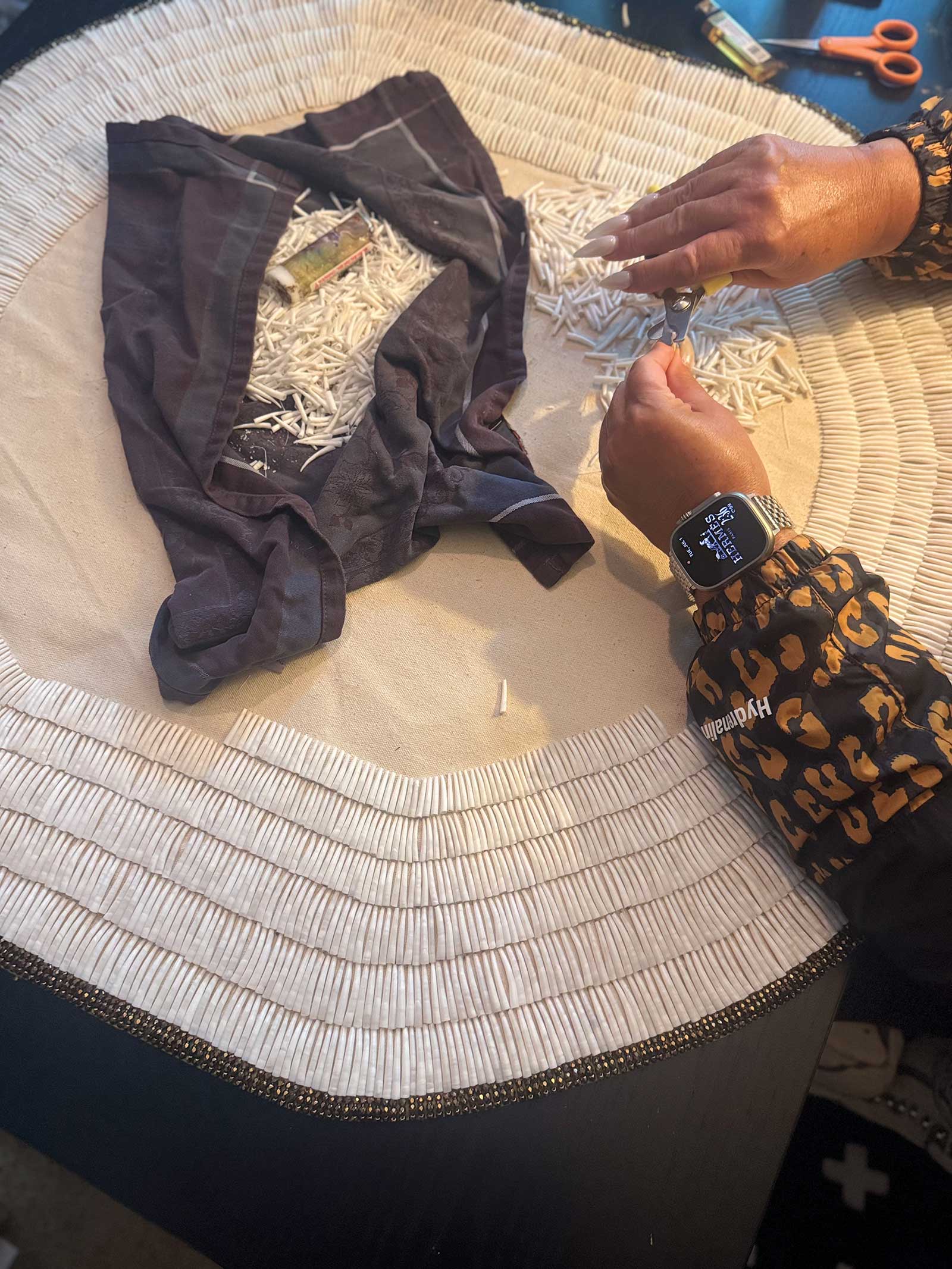
Catherine Black Horse (Seminole Nation of Oklahoma) works on the pieces she will show during the 2025 Native American Regalia Showcase. Image courtesy the artist.
For the Regalia Showcase, Black Horse will be presenting a traditional, red, sawtooth wool dress with white selvage edge featuring 244 real bull elk teeth, thimble bead drops, circa 1890s tin spots, and ermine adornments. All materials are authentic and painstakingly sourced by Black Horse.
Every element carries deep intention. The elk teeth represent provision. Meat. Hides. Abundance. The thimble bead drops, called “falling stars,” reference a belief that people are created from star beings. The small triangles on the white selvage edge represent mountains, the backbone of the world. The ermine stands for fierceness and protection. “Each dress, to me, is almost like a ceremonial bundle or like a child; it’s precious,” Black Horse explains. “The prayers and energy that go into each dress…if my dresses turn out the way [I want] they have a presence on them, and that’s from how I feel when creating them.” A presence she hopes her regalia passes on to its wearer.
“For women, especially Native women, [my dresses]acknowledge the power and the beauty that women have, and when you’re clothed in something beautiful that has presence on it, that’s the most lovely feeling as a woman,” Black Horse says.
Modeling Black Horse’s dress for the showcase, as always, will be her daughter Bree, a federal prosecutor focusing on cases of missing and murdered Indigenous women.
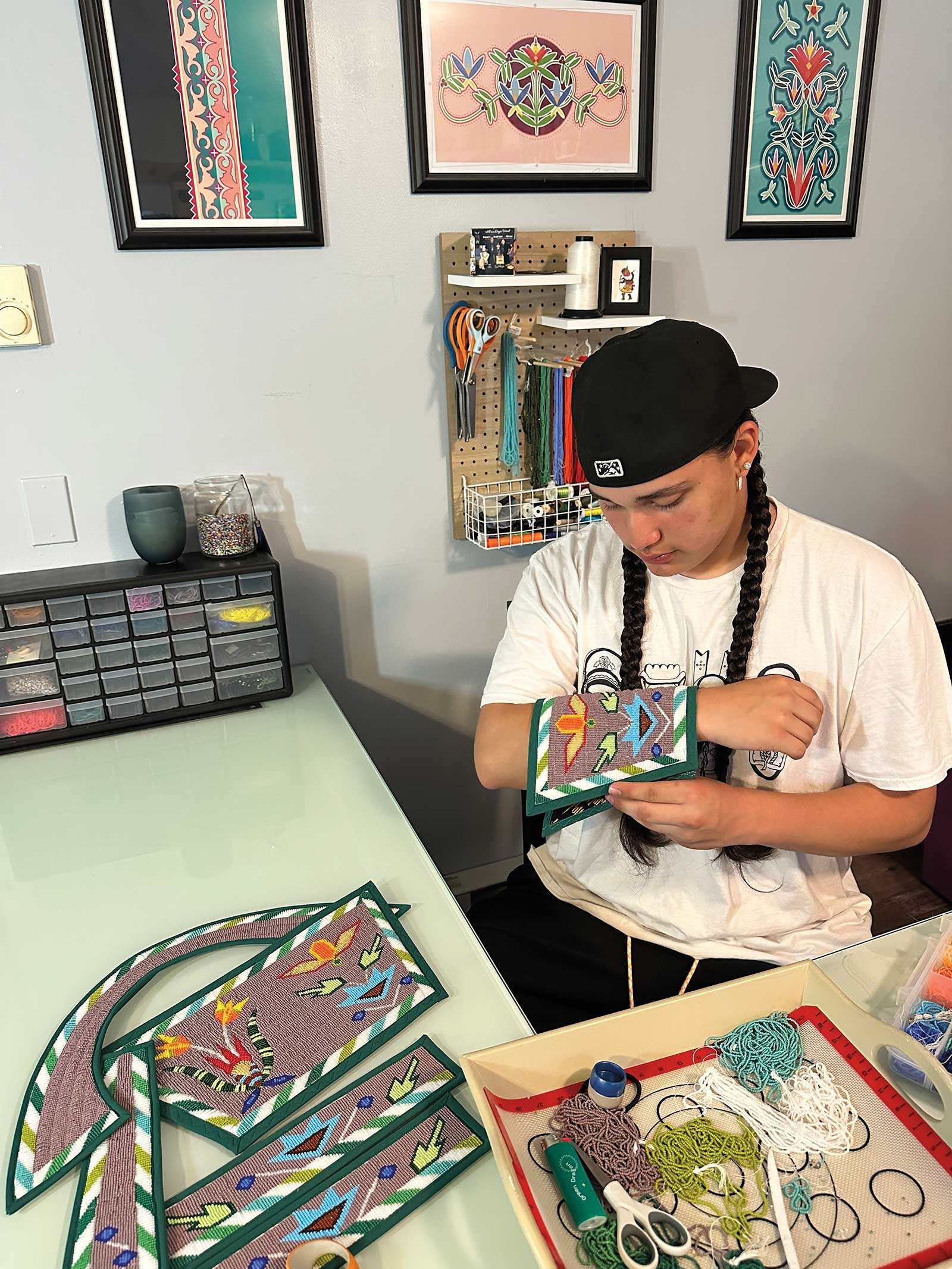
Aydrian Day (Hochunk) works on beaded pieces for the 2025 Native American Regalia Showcase. Image courtesy the artist.
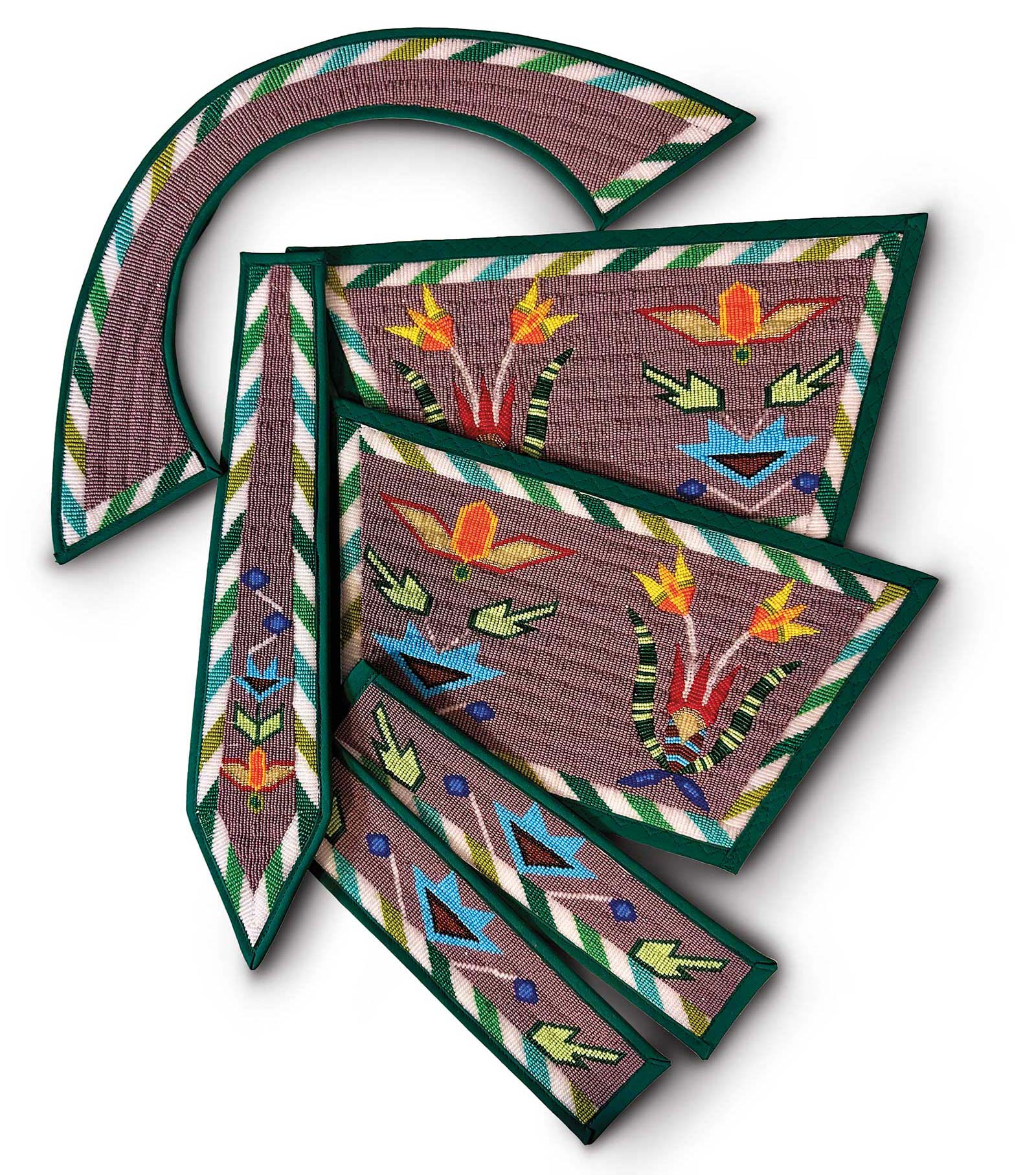
Beaded panels made by Aydrian Day (Hochunk). Image courtesy the artist.
“I always wanted my daughters to be independent and powerful and contribute to their communities in a meaningful way, to create legacy,” Black Horse says. “I feel like my dresses are legacy pieces; they’re not trendy, they’re not fashion, they’re legacy. They can go from one generation to the next to the next and be heirlooms.”
Regalia is also a family affair for Alexa Rae, Bud and Aydrian Day (Ho-Chunk/Anishinaabe). The married couple and their son primarily collaborate on pieces. Alexa and Bud come from mothers who bead and sew and who started making powwow outfits in their teens. Aydrian had them beat by a decade. The 15-year-old started beading at age 3 and has become something of a phenom of regalia, racking up awards and collectors as a pre-teen, skill even accomplished adults admire.
Aydrian Day has produced a new, full, grass dance outfit for the showcase. His interest in regalia is simple, and profound. “I wouldn’t like to lose my culture,” he says. “I don’t think anyone would like to lose their culture. It brings me joy to bring my culture through the generations.”
Hopi regalia artist Ahkima Honyumptewa has similar motivations. Recognizing how many regalia traditions had been lost, he accepted an invitation to a weaving class taught by an uncle. That was 20 years ago.
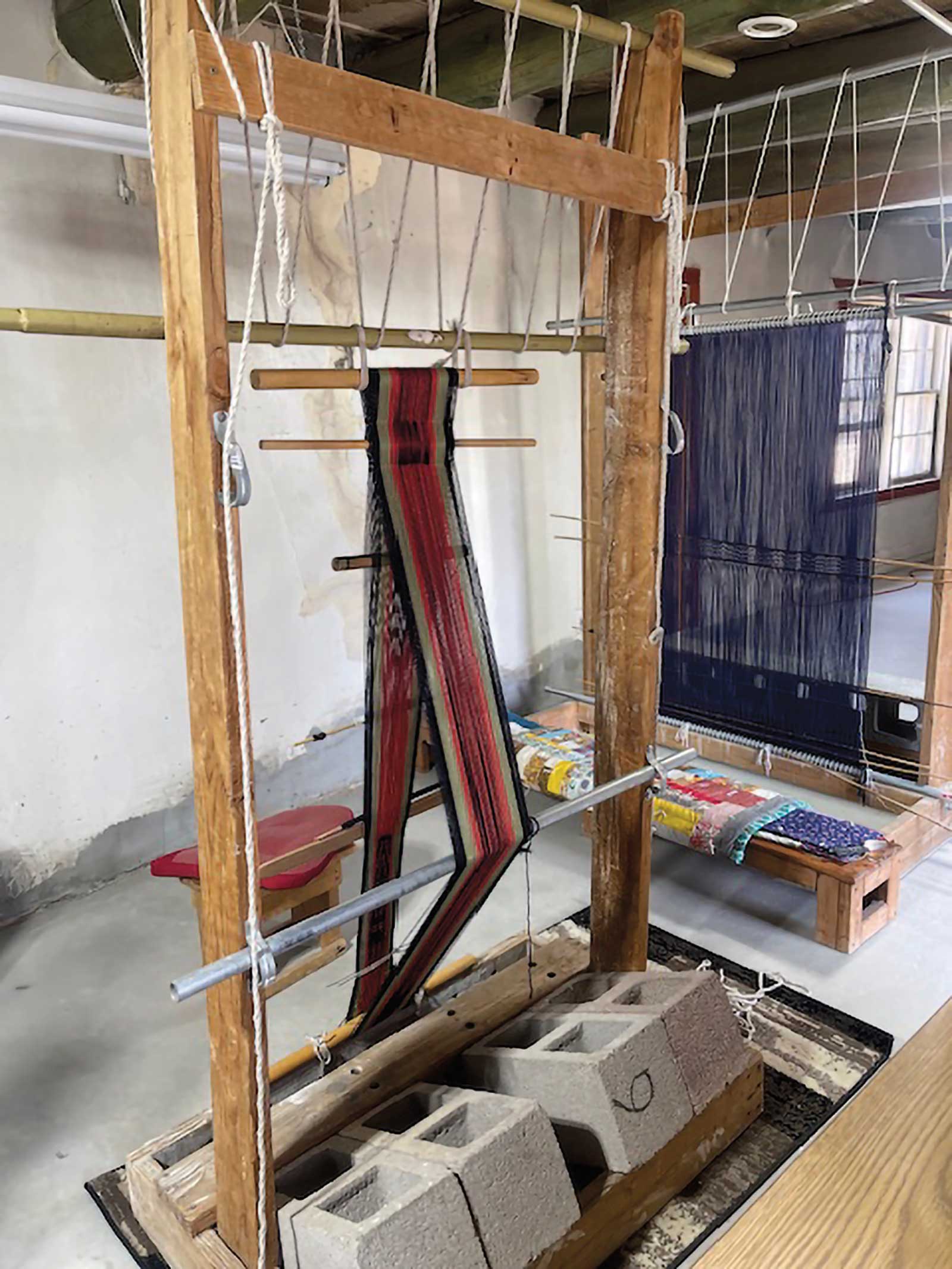
A loom with a work in progress by Ahkima Honyumptewa (Hopi). The finished piece will be shown at the Native American Regalia Showcase
“Nobody knew how to do the diamond twills, the diagonal twills, the mantas, the dresses, the capes,” Honyumptewa says. “All of that stuff was lost. I decided to figure it out. Trial and error.”
Working with other weavers, sharing knowledge, Honyumptewa figured out how to produce the lost designs. He plans on showing a manta—a women’s dress—for the Regalia Showcase, an event proving the old way never goes out of style. —
August 17, 2025, 9 a.m.-noon
Native American Regalia Showcase
Santa Fe Plaza
63 Lincoln Avenue, Santa Fe, NM 87501
www.swaia.org
Powered by Froala Editor


