Growing up, I was always drawn to the way our people dressed for ceremony—for celebration, for protection, for expression. Every stitch and stone seemed to carry something more than beauty: a story, a prayer, a memory. I didn’t know it then, but that early sense of reverence for what we wore would shape how I saw fashion—not as trend or commodity, but as a language. Our language.
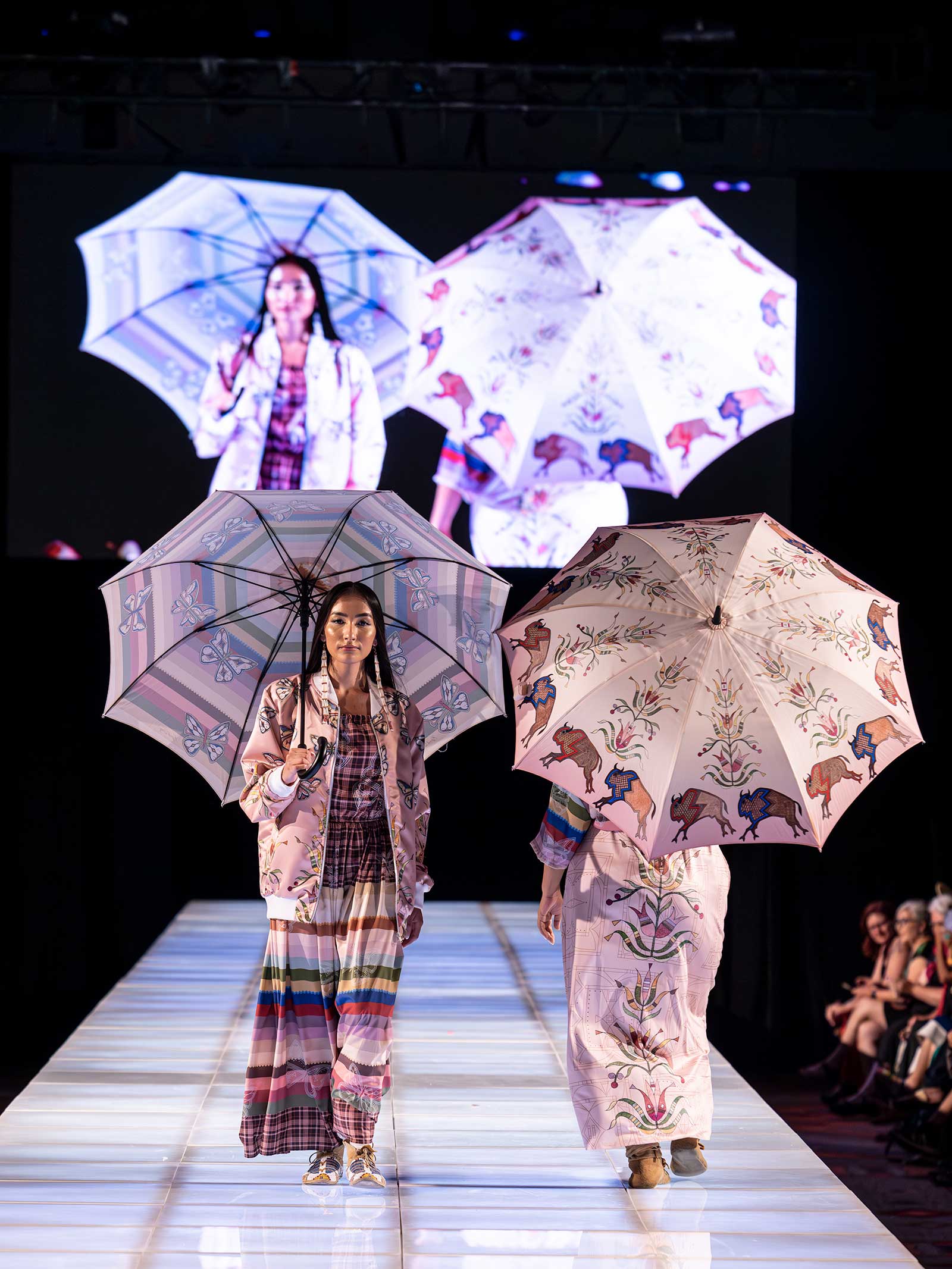
Models wearing designs by Lauren Good Day (Mandan/Hidatsa/Arikara Nation) during the 2024 SWAIA Native Fashion Show. Photo by Tira Howard / SWAIA.
For too long, the world has admired Native design from a distance, often through non-Native interpretations that borrow the aesthetics without the understanding. But we are more than inspiration. We are the origin. And today, we are telling our own stories boldly, beautifully and on our own terms.
As August approaches, so does one of the most anticipated celebrations of Indigenous creativity: Santa Fe Indian Market. Now in its 103rd year, this historic gathering is the largest and most prestigious showcase of Native American art in the world. From traditional pottery and sculpture to beadwork and painting, Indian Market has long honored a vast array of Native expression. Yet for decades, one essential artform remained overlooked: fashion.
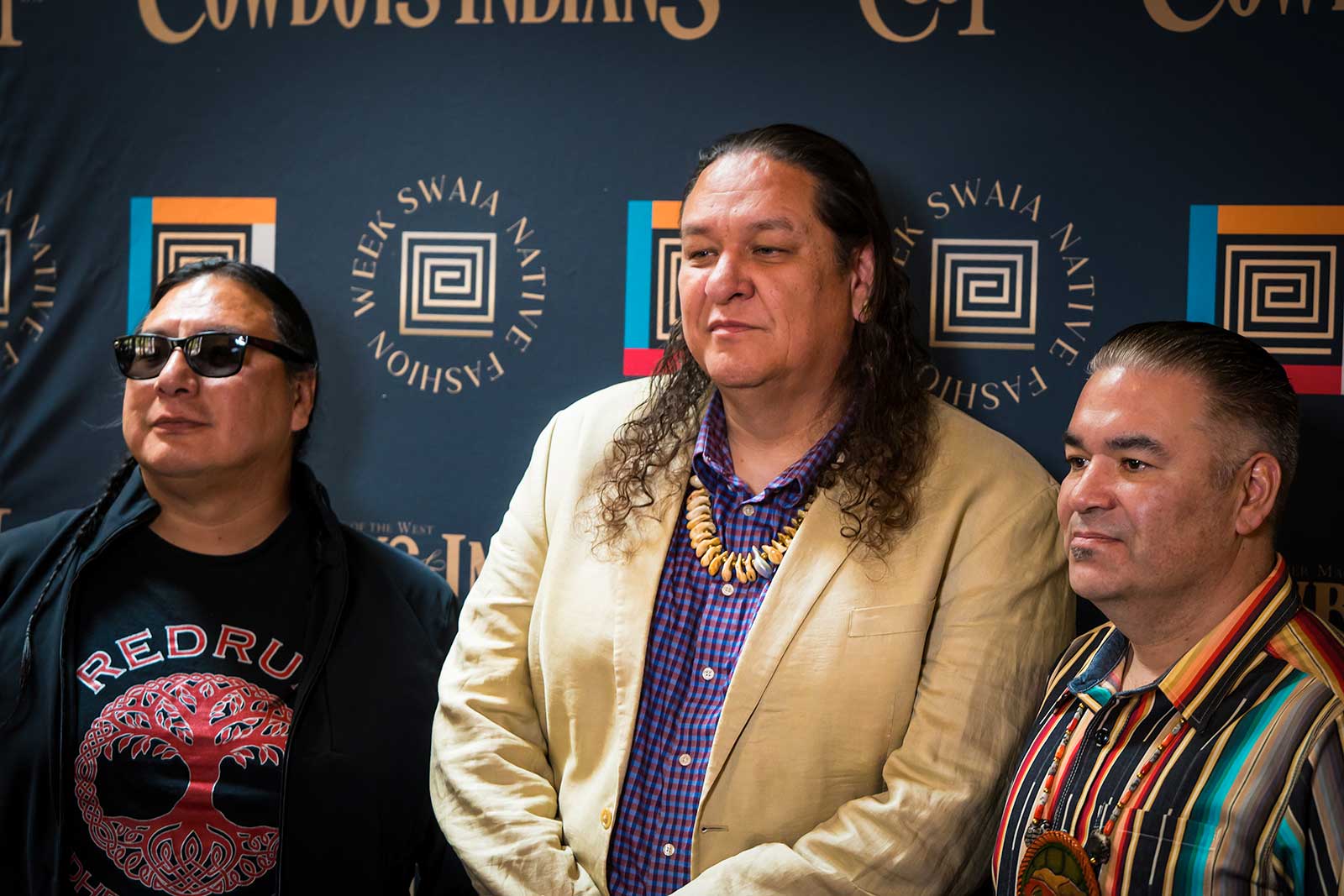
Dallin Maybee, center, with Anthony Linklater, on left, and Dr. Rodney Haring at SWAIA Native Fashion Week, May 2025. Maybee will be co-producing the 2025 fashion show at Santa Fe Indian Market with Peshawn Bread.
Fashion has always been a vital expression of Native identity, sovereignty and survival. For Indigenous communities, clothing and adornment are not merely aesthetic—they are cultural declarations, visual storytelling and living continuities of pre-colonial traditions. While Native fashion has persisted despite historical erasure, it has only recently begun receiving the national attention it deserves. That shift is due in no small part to the groundbreaking SWAIA Native Fashion Show.
Since its inception, the SWAIA Native Fashion Show has become a dynamic platform for Indigenous designers, models and creatives. It has launched careers, fostered cross-generational mentorship and reshaped the public’s understanding of Native fashion. In recent years, it has earned attention from major media outlets including Vogue and Women’s Wear Daily. I experienced this transformative power firsthand as a high school junior, I walked for Patricia Michaels and Korina Emmerich at SWAIA. The experience opened the doors to signing with Elite Model Management in New York City the following year.
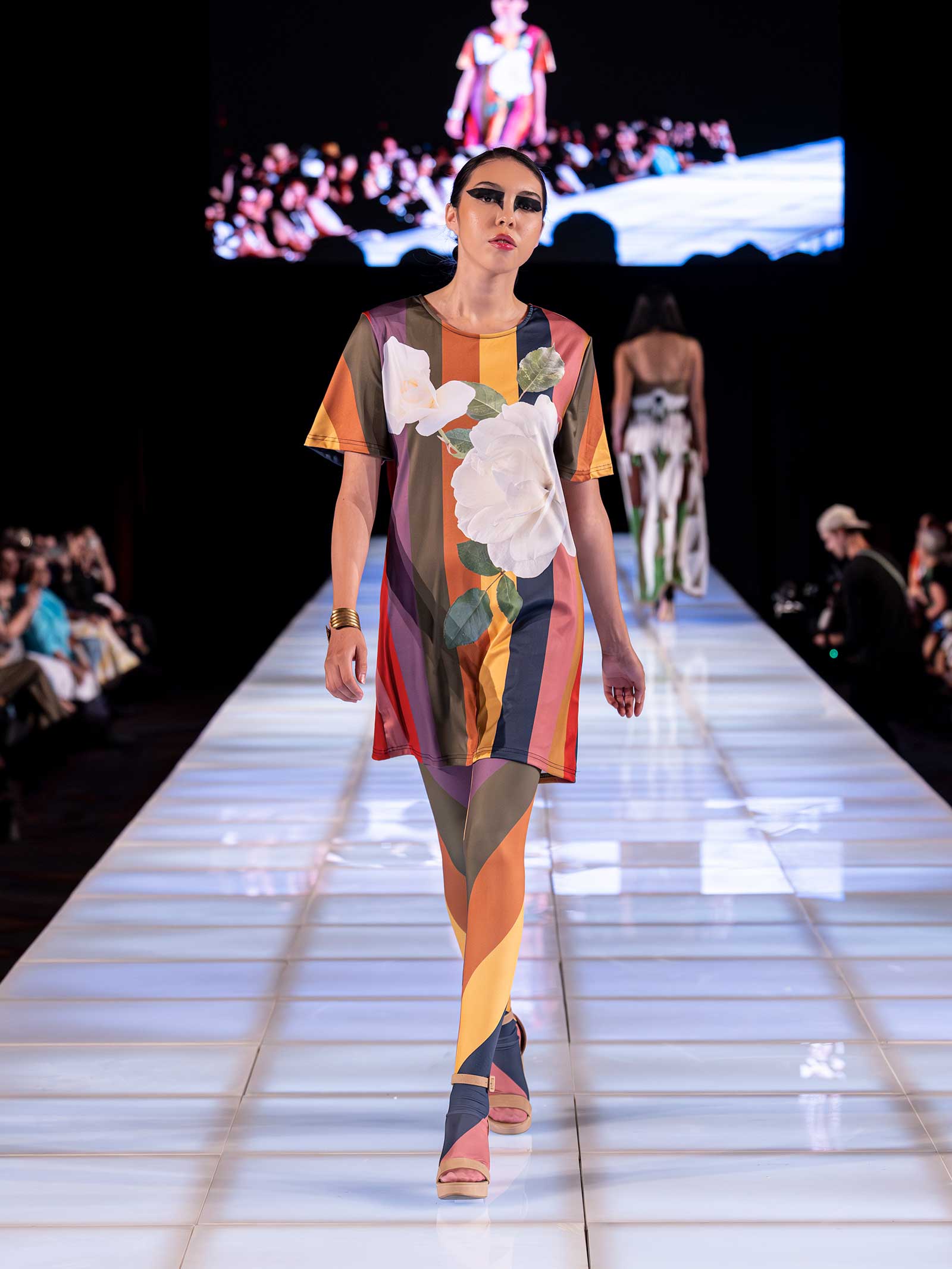
The runway show for Jamie Okuma (Luiseño/Shoshone-Bannock/Wailaki/Okinawan) during the 2024 Santa Fe Indian Market. Photo by Tira Howard / SWAIA.
This year’s show, themed “Iconic Beginnings, Legacies in Motion,” takes place August 17. Co-produced by fashion visionaries Peshawn Bread (Comanche/Kiowa/ Cherokee) and Dallin Maybee (Northern Arapaho/Seneca), the event features a lineup of powerhouse designers: Penny Singer (Navajo (Diné)), Jontay Kahm (Plains Cree), Lauren Good Day (Arikara/Hidatsa/Blackfeet/Cree), Jamie Okuma (Luiseño/Shoshone-Bannock/Wailaki/Okinawan) and Natasha Ashley-Brokeshoulder (Navajo (Diné)). Additionally, Patricia Michaels (Taos Pueblo) will be the featured designer during the SWAIA gala on August 16.
Maybee, who has served on SWAIA’s board since 2001, recalls a time when Native fashion wasn’t viewed as fine art. In 2014, he organized a fashion showcase during Indian Market to test the waters. The response was overwhelmingly positive. “People didn’t view fashion as fine art,” Maybee says. Maybee hopes to show “appropriate and intentional” Native fashion representation, one that platforms Indigenous art by Indigenous people.
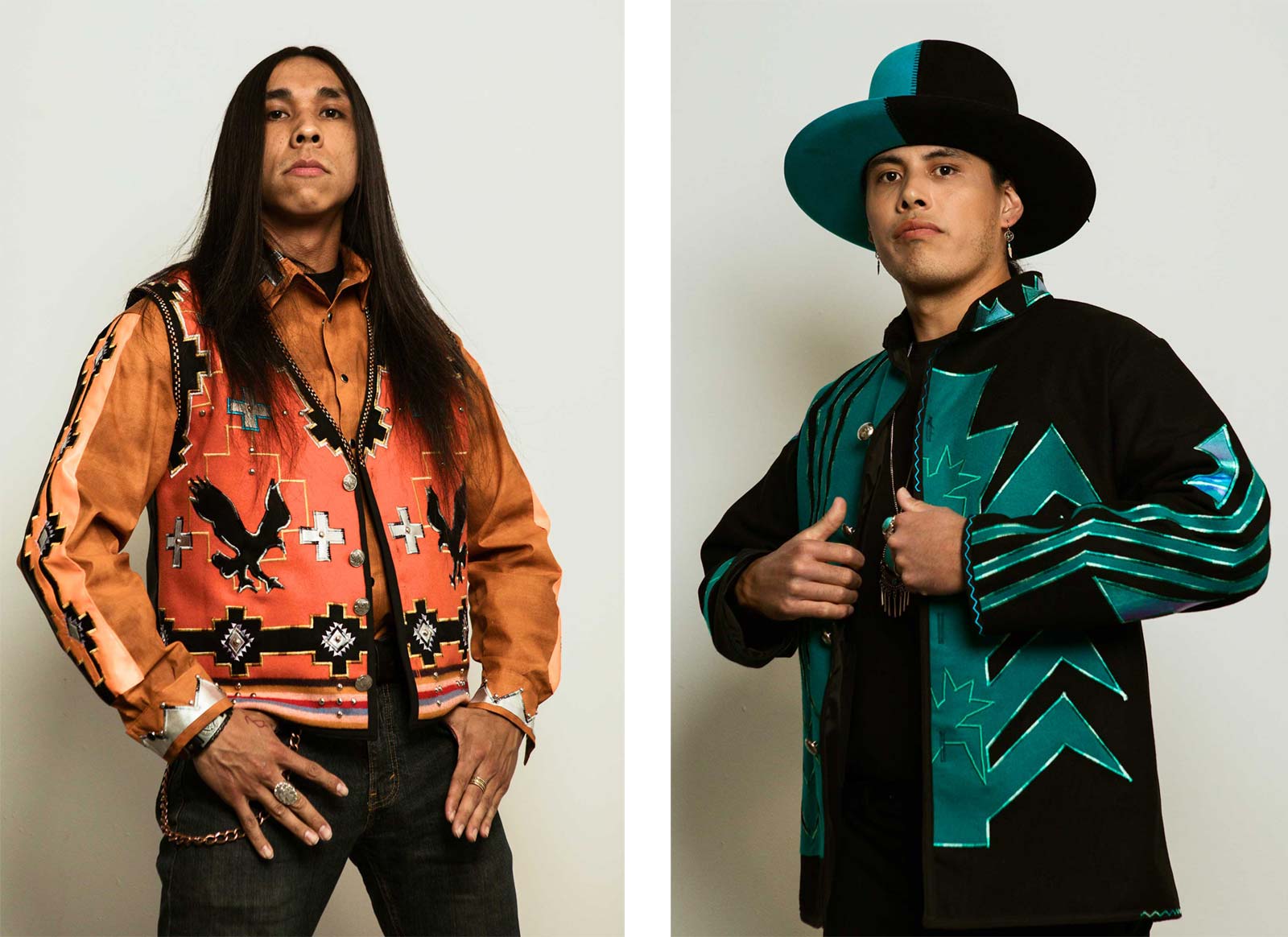
Left: Penny Singer (Navajo (Diné)), eagle vest and shirt set. Model: Noodin Craven. Photo by Nate Lemuel. Right: Penny Singer (Navajo (Diné)), turquoise corn men’s shirt jacket. Hat by Sleep Rock Company. Model: Samuel Hare. Photo by Nate Lemuel.
That mission is shared by co-producer Peshawn Bread, a designer, model, director and founder of House of Sutai. Bread has modeled for Elias Not Afraid, Orlando Dugi and Jamie Okuma, and walked in SWAIA shows since 2014. This year, they’re focused on building infrastructure for the next generation. One of their proudest additions to the 2025 show is a designer assistant internship program, an initiative that offers Indigenous youth hands-on experience with fittings, makeup boards, garment prep and backstage production.
“We want to show that we are talented and capable people who can break into the professional industry,” says Bread. This year’s show is about “upholding a legacy and continuing a legacy.”
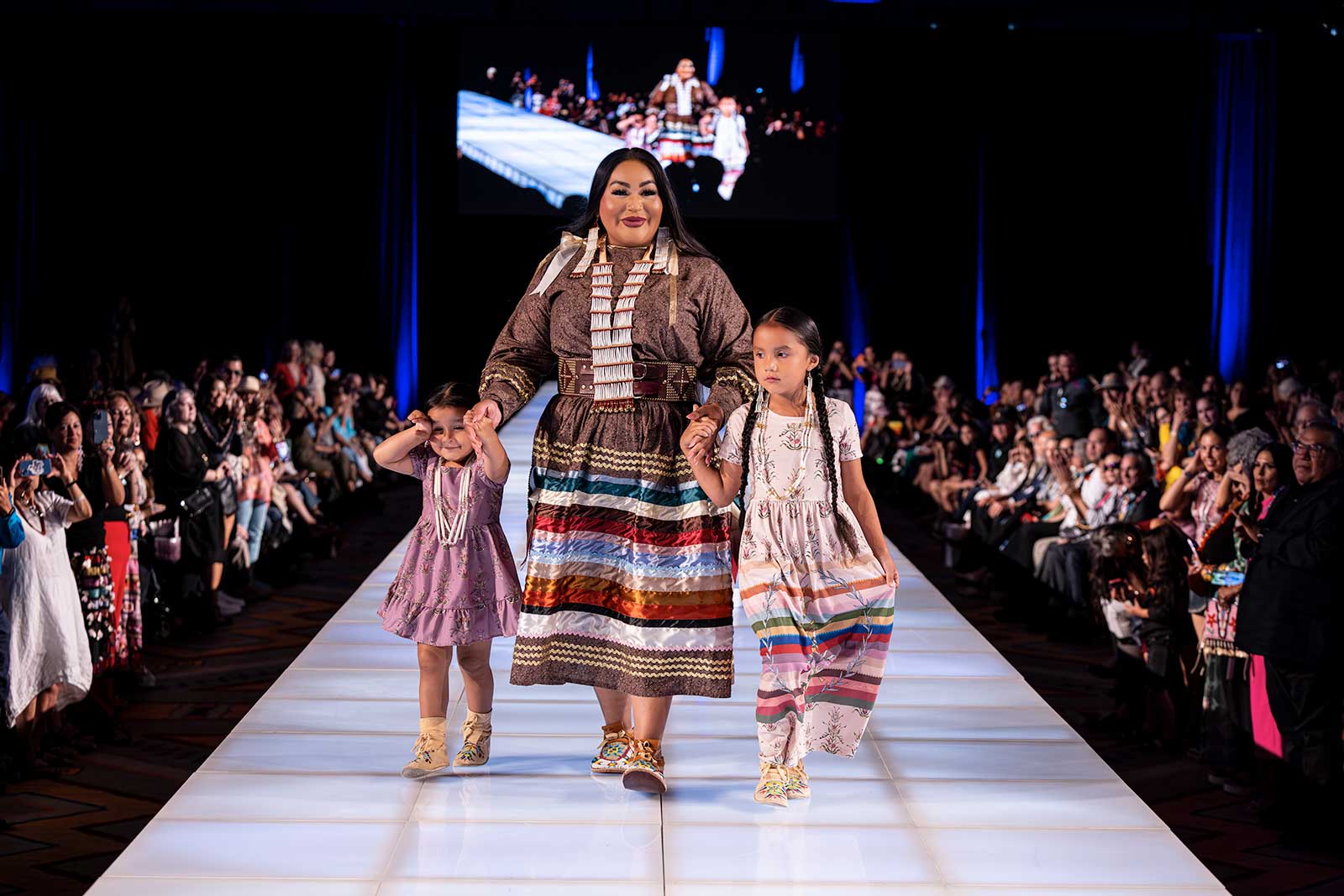
Lauren Good Day (Mandan/Hidatsa/Arikara Nation) during her 2024 runway show. The designer will be returning for the 2025 show. Photo by Tira Howard / SWAIA.
Legacy is indeed central to the show’s ethos. For Patricia Michaels, the groundbreaking haute couture designer from Taos Pueblo, the visibility of Native fashion is long overdue. A Project Runway finalist and recipient of the Smithsonian National Museum of the American Indian’s Arts and Design Award, Michaels has spent decades defying barriers in the fashion industry.
“Before, it was never permissible to have a Native designer,” she says. “Now people are celebrating that there are stories behind these designs. Ever since there was a runway, you’ve been seeing the influence of Native American design.”
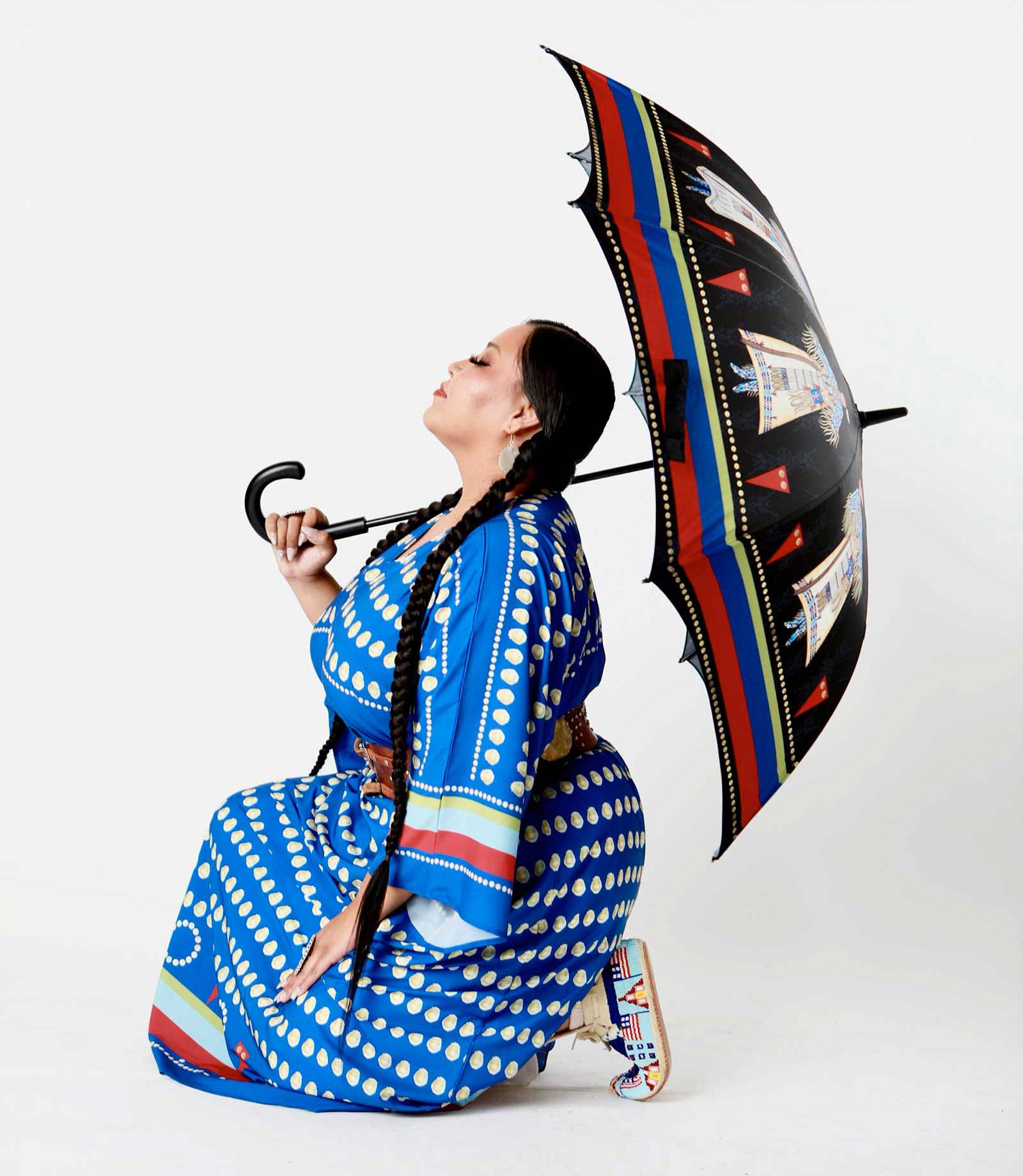
Model Emily Etsitty (Navajo (Diné)) wearing items made by Lauren Good Day (Mandan/Hidatsa/Arikara Nation). Photo © Zoe Urness.
Michaels believes Indigenous fashion offers more than style—it offers strength. We precede colonization, and we continue to evolve. “Now that the world is seeing this, they’re seeing the truth of our strength,” she adds.
Joining the show for the first time this year is Diné designer Penny Singer. A longtime SWAIA vendor, Singer is debuting a new collection titled Diné Life, inspired by the landscapes and cultural stories of the Navajo Nation. Raised as an urban Native away from the reservation, Singer reconnected with her roots in adulthood. Her designs translate oral tradition into visual storytelling—what she calls turning “stories of then into garments of now.”
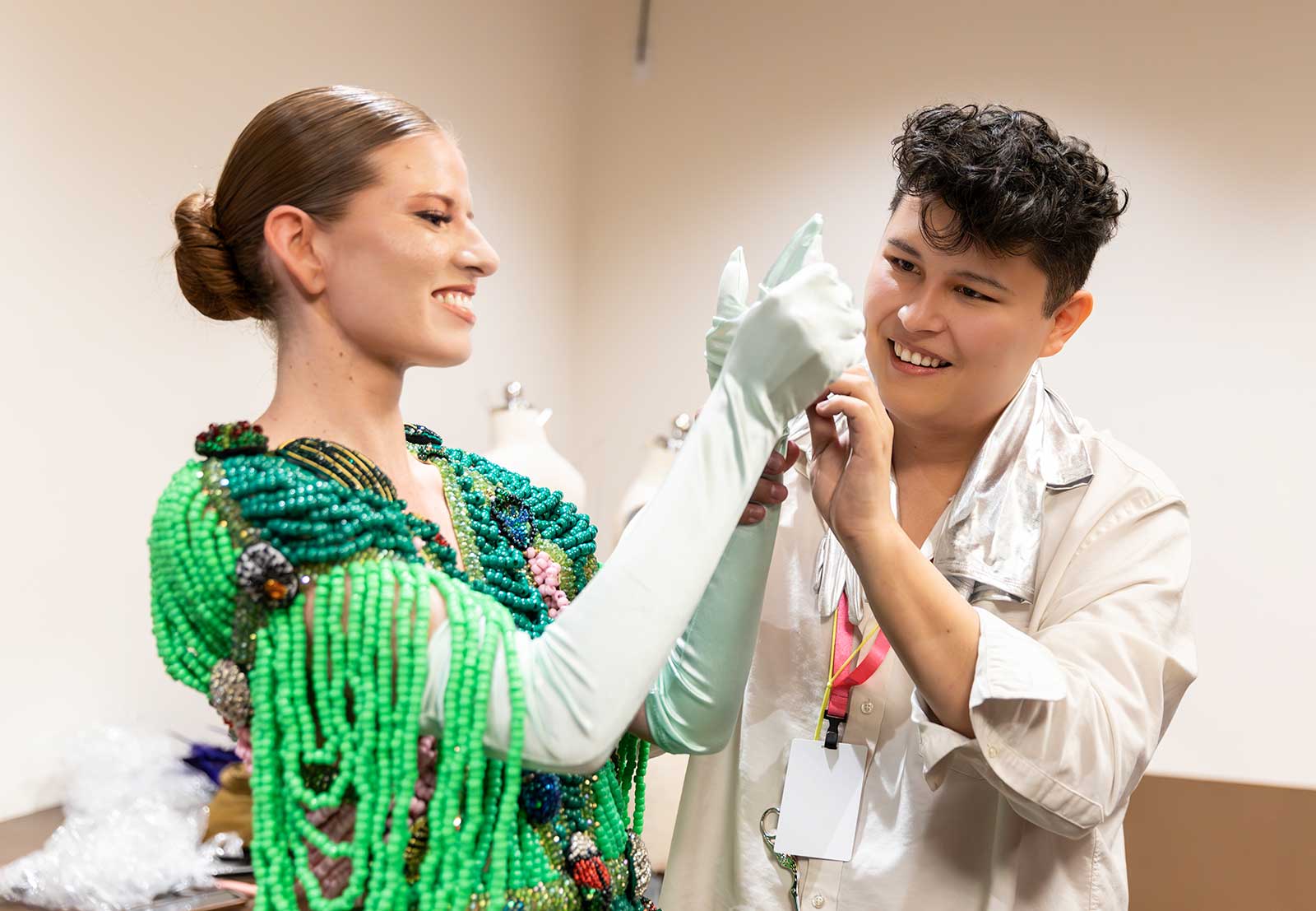
Designer Jontay Kahm (Plains Cree) works backstage at the 2024 Santa Fe Indian Market fashion show. Photo by Tira Howard / SWAIA.
Singer makes traditional and contemporary Diné clothing for a living. But this show is a way to branch out and “make cutting-edge, contemporary designs,” she says. “I want people to see my designs in motion.”
Her collection will open with traditional Diné ribbon shirts, a nod to her roots, before unveiling experimental silhouettes and geometric landscapes. With the surge of national interest in Native design, Singer believes, “Now is the time.”
And indeed, the time is now. The SWAIA Native Fashion Show, though a relatively new addition to the century-old market, stands as a powerful symbol of Indigenous futurism. It honors the past while forging forward. It platforms the sacred, the modern, the rebellious and the traditional.
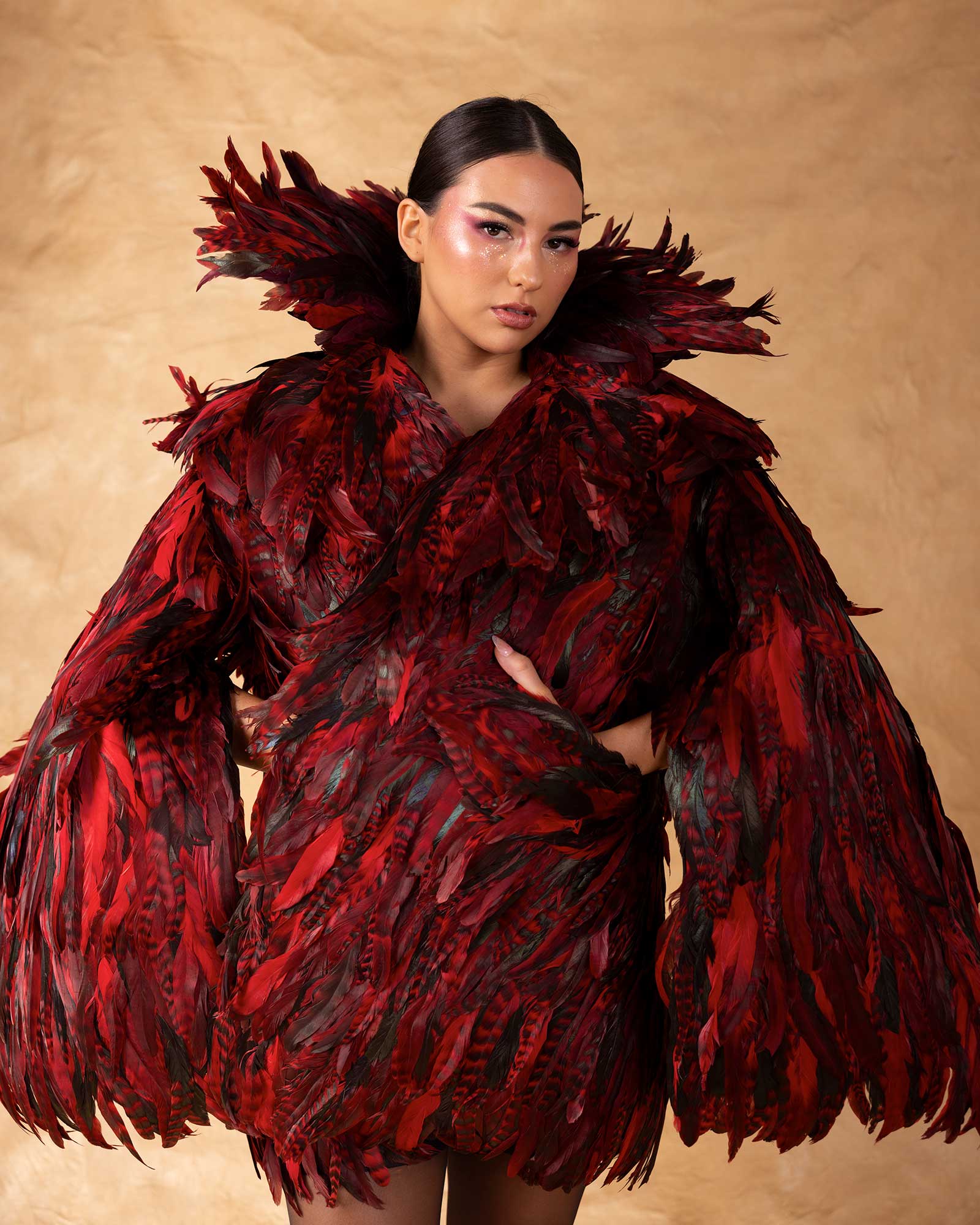
Clothing by Jontay Kahm (Plains Cree), 2024. Photo by Tira Howard / SWAIA.
Native fashion is not a trend. It is a legacy stitched into every garment, a prayer carried down runways, a future imagined by those who refuse to be forgotten. With bold vision and intergenerational brilliance, this year’s show promises to be more than a spectacle—it will be a movement in motion.
Nolan Hall (Diné) is a professional model represented by Elite Model Management and Brick Model Management, and a dedicated advocate for 2SLGBTQIA+ and Native American communities. A graduate of the Santa Fe Indian School with honors, he has served as the sole youth appointee on New Mexico’s MMIWR Task Force and has held leadership roles on multiple state and local youth advisory boards, working to advance equity, representation and Indigenous visibility.—
August 17, 2025, 3 p.m.
SWAIA Native Fashion Show
Santa Fe Community Convention Center
201 W. Marcy Street, Santa Fe, NM 87501, www.swaia.org
Powered by Froala Editor


