Beadwork/Quillwork
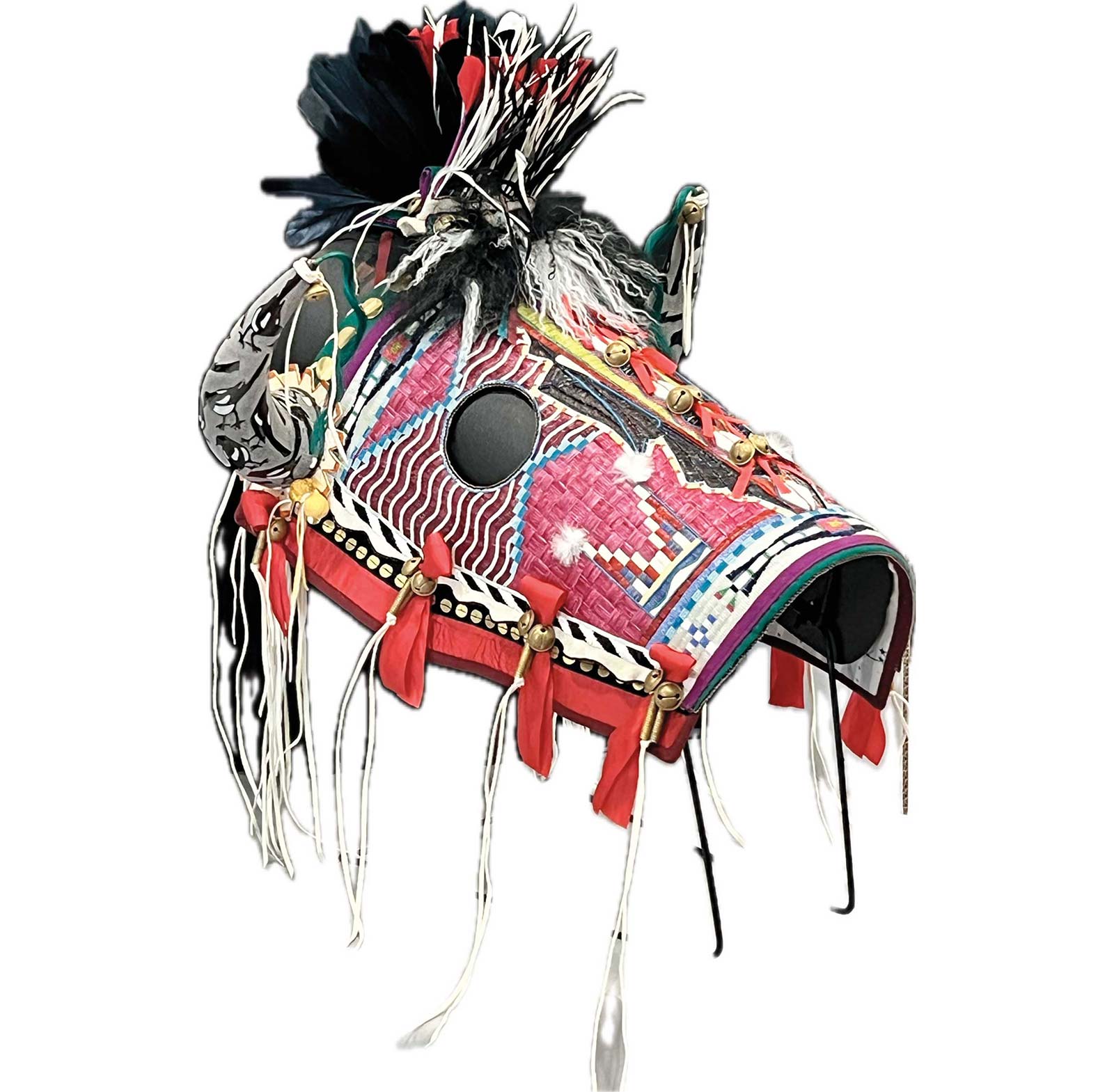
Juanita Growing Thunder Fogarty (Fort Peck Assiniboine Sioux Tribes) and Kevin Pourier (Oglala Lakota), The Great Race, 2024, horse mask collaboration with porcupine quills, beads, buffalo hair and inlaid buffalo horn caps
Popular among top-level art collectors and market visitors is the beadwork and quillwork category, which has long been an exciting classification in Santa Fe. The category encompasses a wide range of items from attire like beaded clothing, moccasins, jewelry and accessories to Plains and Southwestern-style dolls, soft sculpture and cradleboards. While there are more artists who make beaded items at market, don’t ignore the quilled works, which are rarer but just as beautiful and cherished. Traditionally used to embellish textiles using dyed porcupine quills and sometimes bird feathers, the practice has taken on new and experimental forms. The 2025 market will see a wide range of traditional and contemporary examples of both mediums around the Santa Fe Plaza.
2024 Winner: Class VIII: Beadwork & Quillwork
Monica J. Raphael (Anishinaabe/Sicangu Lakota)
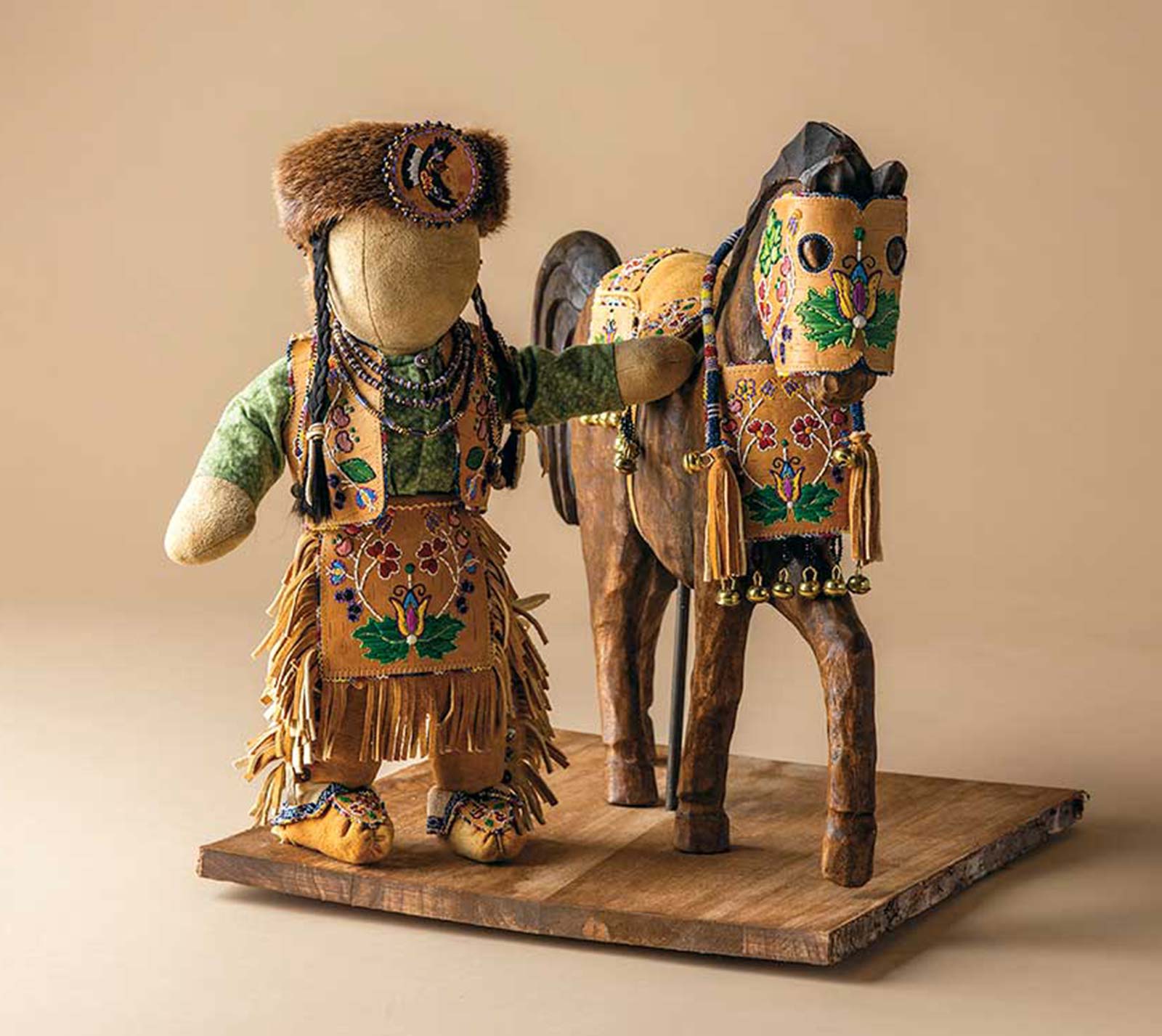
Indede Odayi - My Dad’s Horse, bead and quillwork on birchbark displayed on a horse mannequin with a handmade doll: woodland porcupine quillwork on birch bark, otter hide, smoked deer hide, replica dimes and a found horse as a mannequin wearing a miniature saddle, doll constructed with brain-tanned and smoked deer hide, all-natural materials, harvested and prepared by artist, 18½ x 19 in.
Artists To Watch
Beverly Bear King Moran (Standing Rock Sioux Tribe), Elias Jade Not Afraid (Apsaalooke (Crow)), Grant W. Jonathan (Tuscarora), Hollis Chitto (Mississippi Choctaw), Jackie Bread (Blackfeet), Jamie Okuma (Luiseno/La Jolla Band of Indians), Joyce Growing Thunder (Fort Peck Assiniboine Sioux Tribes), Holly Pyke (Mohawk (St. Regis Mohawk)), Teri Greeves (Kiowa)
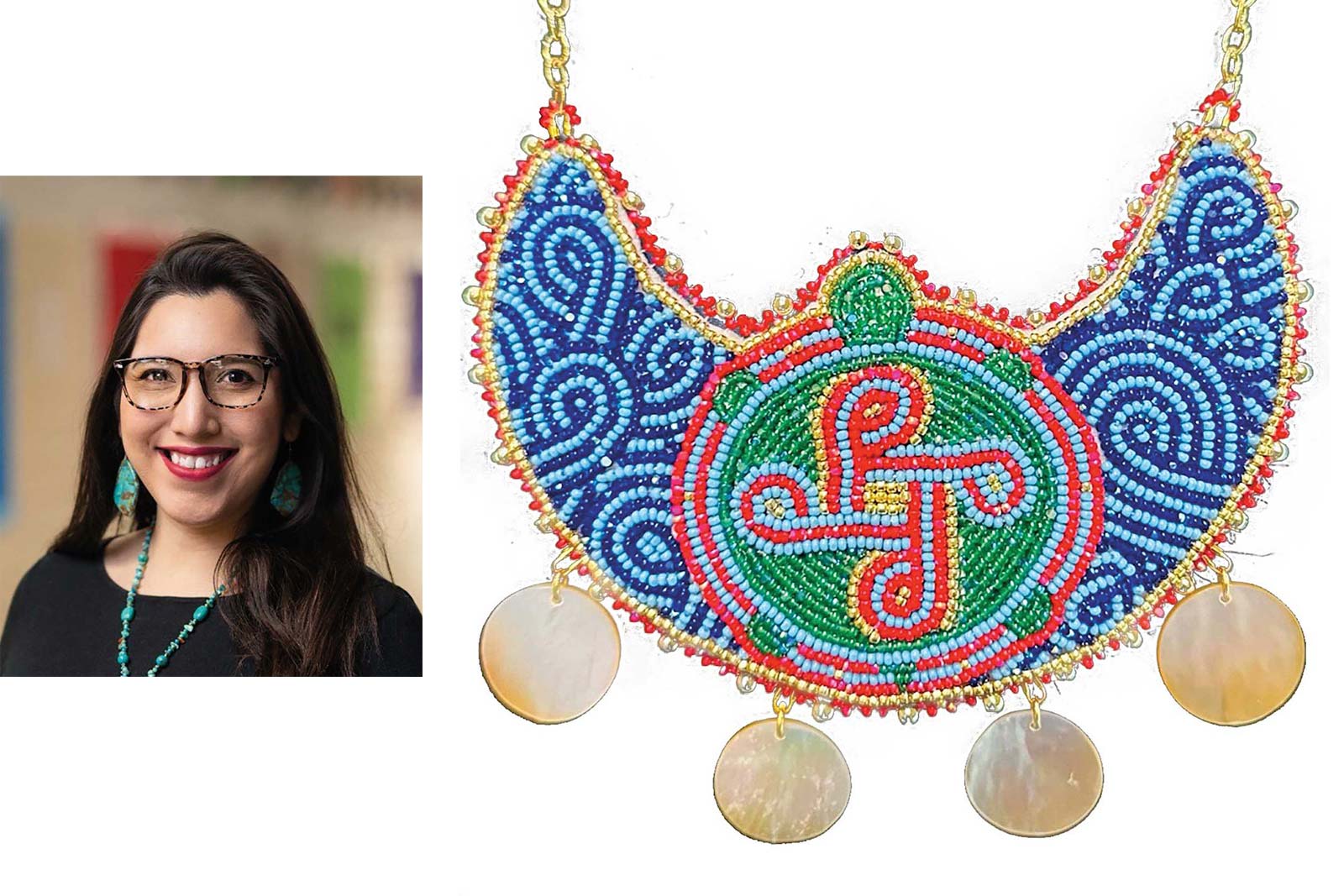
Faith Harjo-Jones (Muscogee Creek)
Booth: CAT 912
Faith Harjo-Jones is a self-taught contemporary beadwork artist with a deep reverence for her heritage. She intricately weaves elements and symbols into stunning wearable art, including earrings, necklaces, medallions, pins and other exquisite pieces. “The closest we can ever get to God is when we create so I take my pieces seriously,” she says. “I set my intentions through prayer at the beginning of every project in hopes that someone—all it takes is one—will have their spirits lifted by this gift that the Creator has given me.”
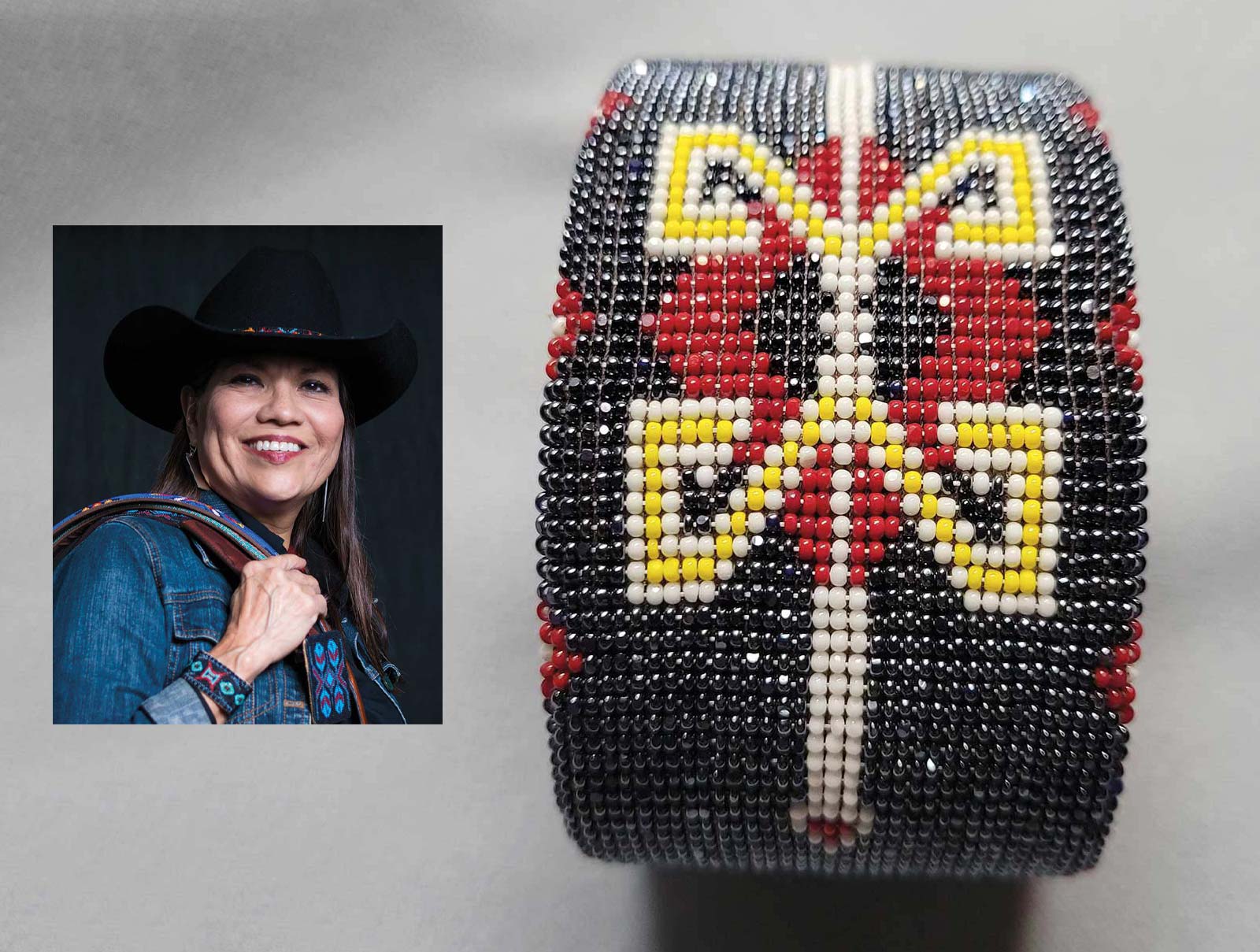
Yonavea Hawkins (Caddo Nation)
Booth: LIN E 759
Yonavea Hawkins is an award-winning artist whose works have captivated viewers all around the country. She has won numerous awards for her moccasins, beaded belts, jewelry and cultural items. “Who would have guessed that my artist side and my desire to have Caddo moccasins would lead to teaching myself to do beading as a new medium,” she says. “Today I create beadwork as wearable art plus Native American, Caddo and Southeastern cultural items using traditional designs with contemporary colors using Czech cut beads.”
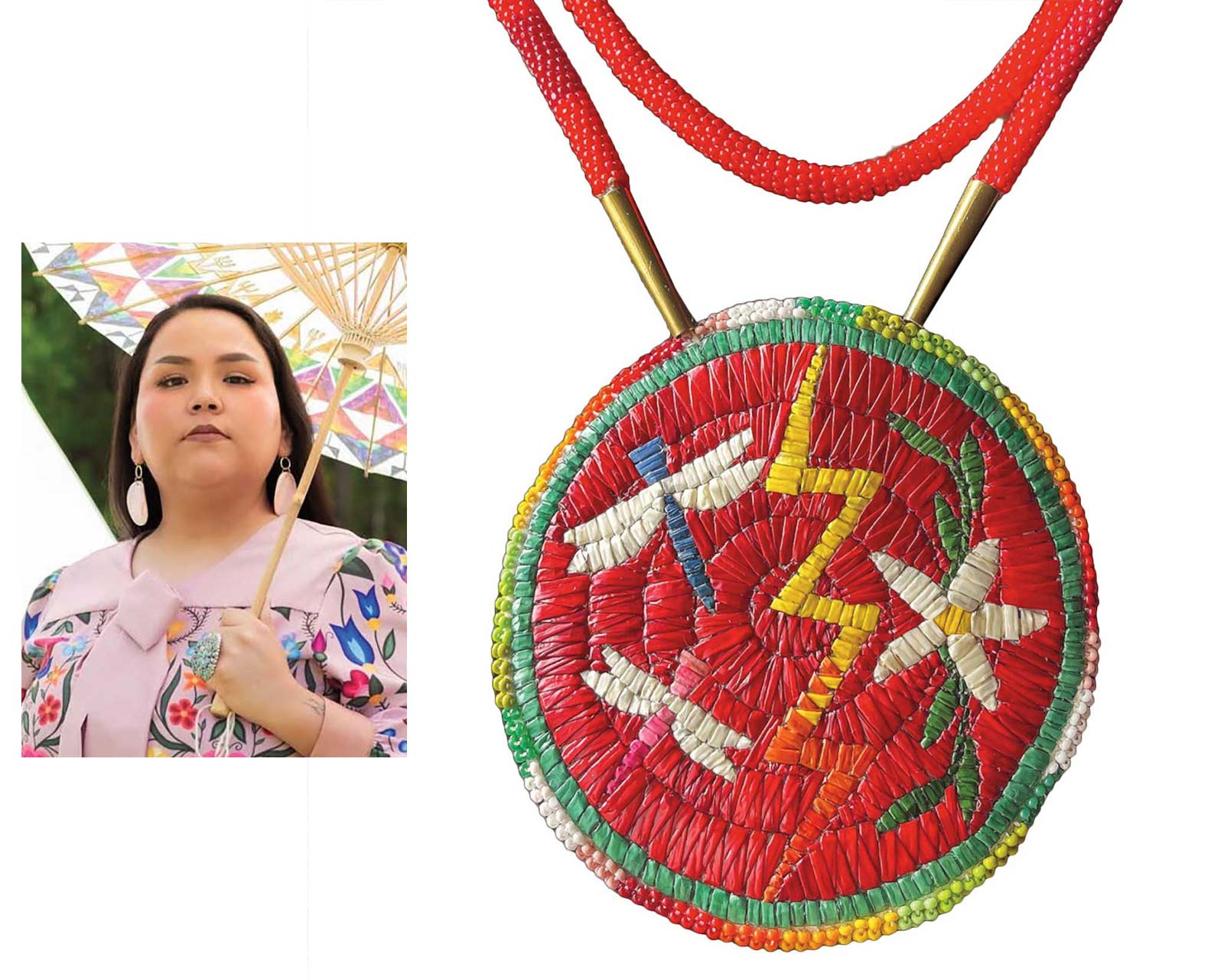
Kendra Roan (Ermineskine Cree Nation)
Booth: FR N 342
Kendra Roan says that each piece she makes is a reflection of resilience, “the kind that lives in our grandmothers’ hands and our children’s footsteps,” she says. “I use quillwork and beadwork to show that we are still here, still making, still remembering. Our stories continue in thread, hide, quill and color.” One of the pieces she is bringing to market is called Okichitawak Biwapisk Misatim, which means “Warrior on Wheels.” “This quilled necklace honors my mosom, a modern warrior who still rides, still teaches, still holds our stories,” she adds. “Through this piece, I celebrate him now, while he’s still with us. It’s a reminder to honor our loved ones in life, not just in memory.”
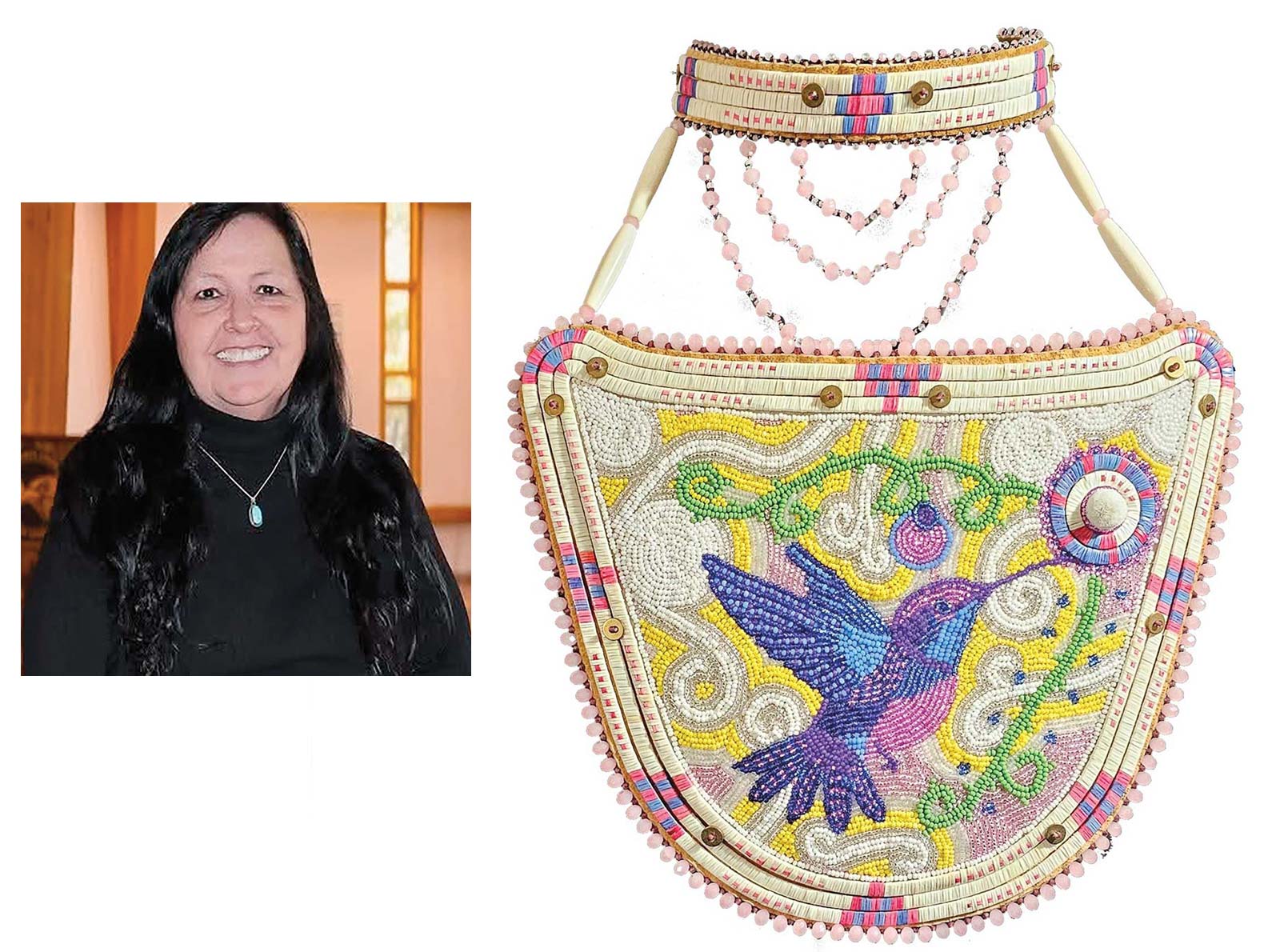
Ramona Morrow (Lac Courte Oreilles Ojibwe)
Booth: CP 08
Ramona Morrow is bringing to market Morning Sweetness, an Ojibwe breastplate, “depicting a beaded hummingbird drinking in the sweetness of the quilled morning flower with caribou tufting center,” she says. “Morning Sweetness is created using size 11 seed beads, porcupine quills, caribou tufting, buckskin, crystal beads and bone beads.”
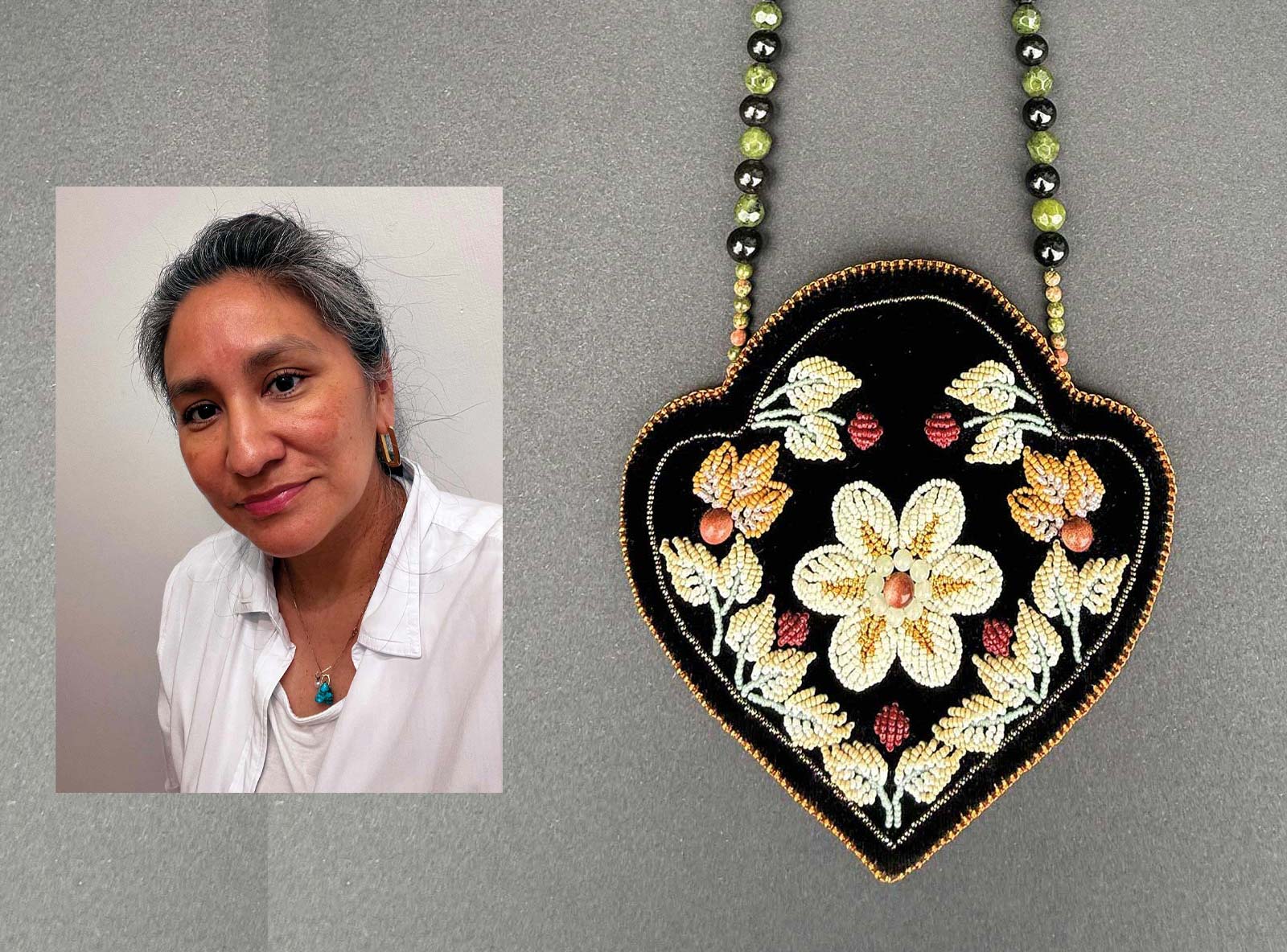
Leith Mahkewa (Oneida Nation of Thames)
Booth: PAL S 223
Artist Leith Mahkewa will be returning to Santa Fe Indian Market with a variety of finely made, intricately designed pieces that highlight her skills as a bead artist. “[I’m] excited to be showing at the 2025 market, and looking forward to seeing collectors and fellow artists,” Mahkewa says. “I will be creating more wearable art pieces this year, in my signature Southwest color palette but I will be adding some bright pops of color.”
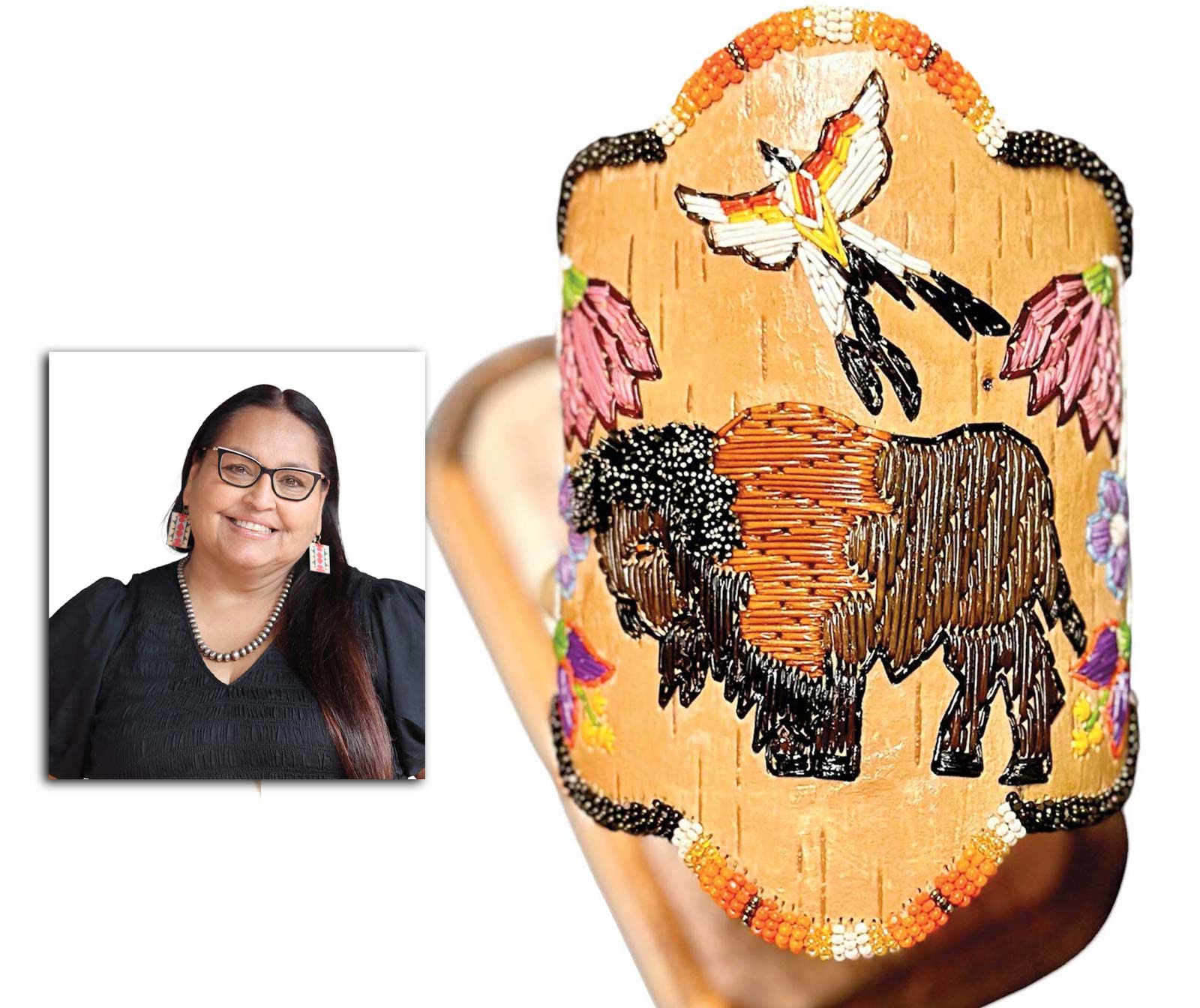
Monica Jo Raphael (Anishinaabe/Sicangu Lakota)
Booth: PAL N 216
Monica Jo Raphael (Anishinaabe/Lakota) creates art that emulates Anishinaabe teachings of creation. A culture bearer, grandmother and fifth-generation quill worker, the artist has dedicated her life to preserving her culture’s traditional teachings, language and practices, sharing her knowledge with others to be continued into the future. The traditional art form of quill and birch box making was passed down to her by her grandmothers and she quickly mastered both the woodland flora and fauna designs for which they were known and continues to excel in creating even more complex designs with bright modern colors creating a modern twist to a timeless art form. When creating her interpretation of an art that predated European contact and the introduction of glass seed beads, Raphael feels as if she is having a dialogue with her ancestors.
—————————————————————————————————
Basketry
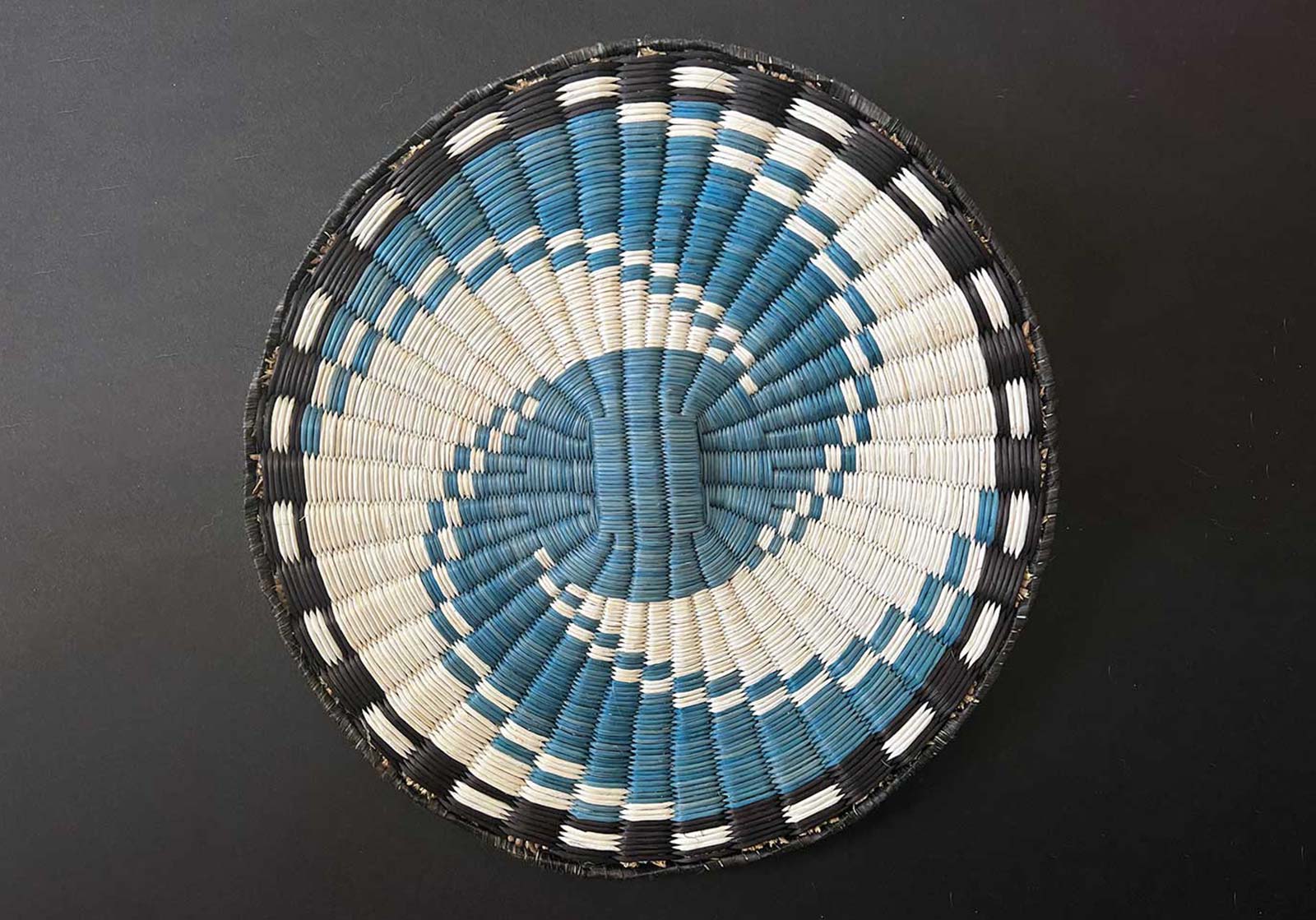
Jessica Lomatewama (Hopi), wicker plaque
Praised for its precise detail and time-consuming difficulty, basketry has been celebrated at Santa Fe Indian Market since its very inception. And although it has long been established in the art world, Native American basketry still holds many secrets, which is evident when speaking to the basket makers at market. For starters, they are not just makers of baskets. They are also experts on trees, grasses and special plants used in their work. They are harvesters, who must know how and when to acquire these natural materials. They are organized and meticulous in their processes. They have delicate hands that can produce consistent materials. All of this before a basket is even started. Adding to the specialness and rarity of basketry are the number of artists who work within the medium. This year only 23 artists have registered using basketry as their primary classification. That’s an easy number. Can you meet them all?
2024 Winner: Class XI: Basketry
Caleb Hoffman (Cherokee/ Penobscot)
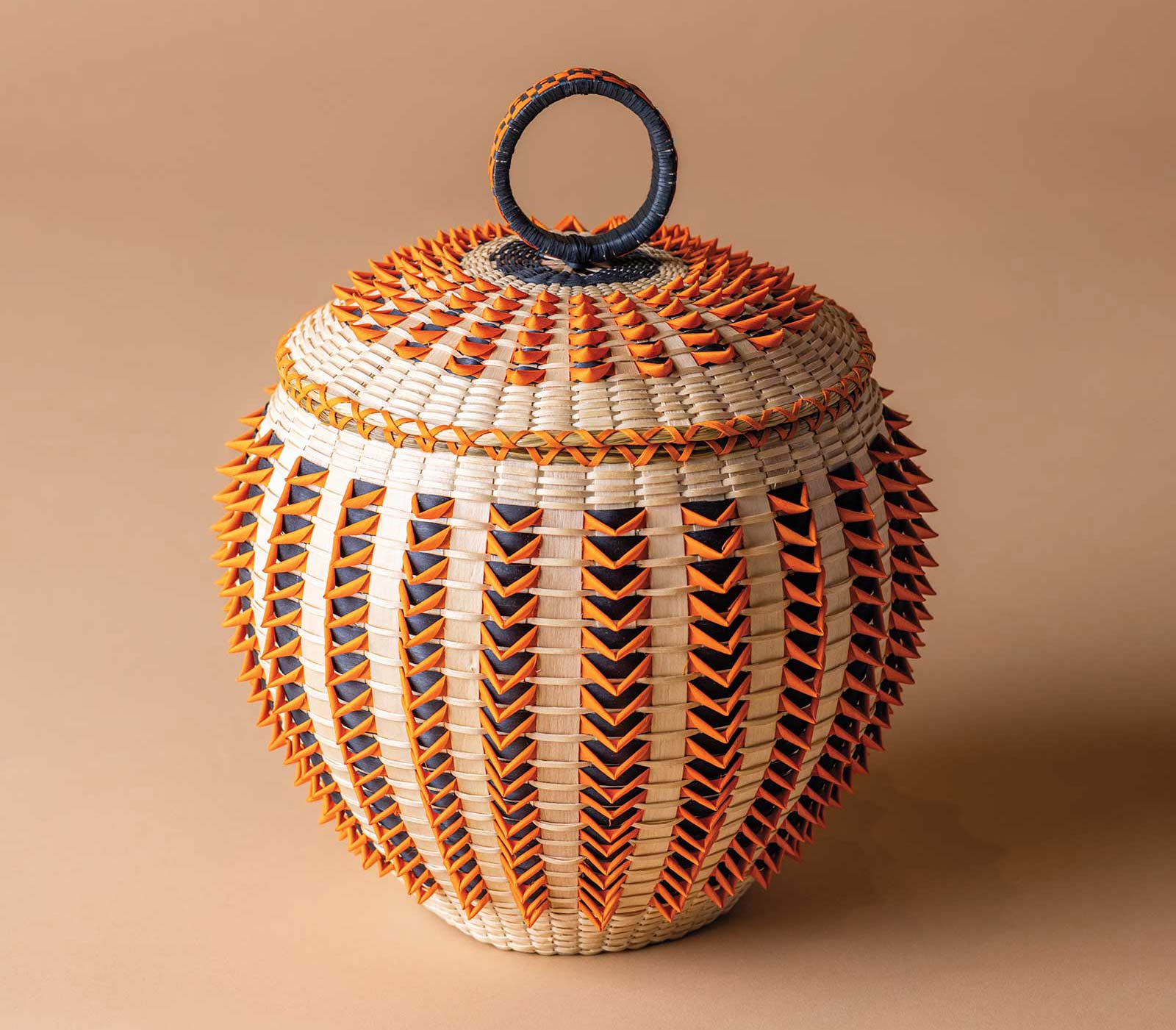
Embers, hand-pounded ash point basket with sweetgrass: double-woven, plated-point basket, inspired by teacher Jeremy Frey, 8 in.
Artists To Watch
Carol Emarthle Douglas (Northern Arapaho), Ronni-Leigh Goeman (Onondaga), Sally Black (Navajo (Diné)), Vivian Cottrell (Cherokee Nation), Wilmetta Kayquoptewa (Hopi), Caleb Hoffman (Cherokee Nation of Oklahoma), Laura Wong-Whitebear (Colville (Sinixt)), Reba Lomayestewa (Hopi), Talisha Lewallen (Cherokee Nation)
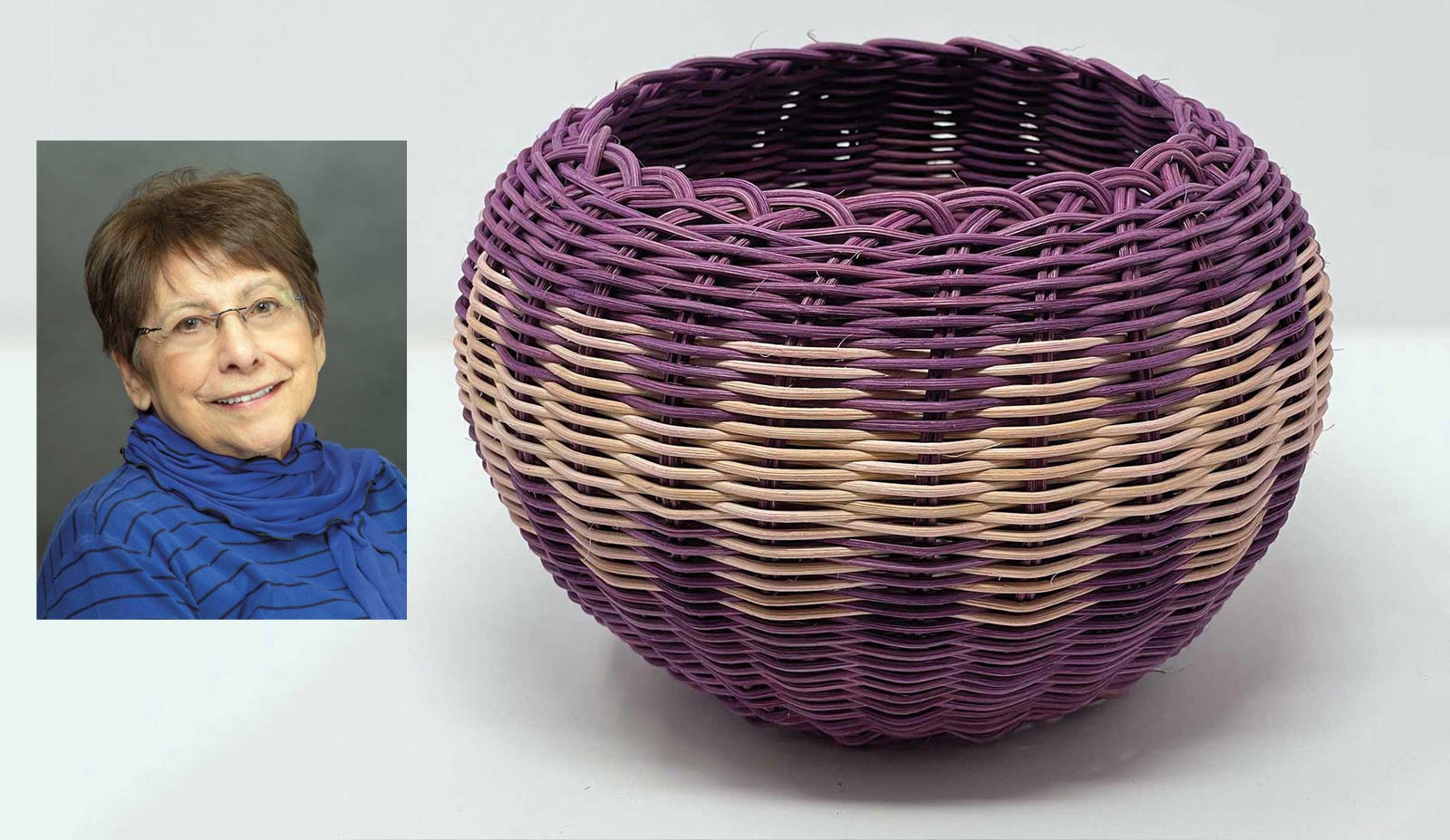
Mary Aitson (Cherokee)
Booth: FR N 328
Mary Aitson is not one to sit idly by while the world spins. “When I retired from a 38-year career teaching middle school in 1993, I knew I needed more than rest—I needed a passion to carry me into this next chapter of life. That passion became basket weaving,” she says. “What began as a retirement hobby quickly transformed into a deeply fulfilling craft and, eventually, my side hustle. Now, well into my 90s, basket weaving has not only kept my hands busy, but my mind sharp. It challenges me creatively and inspires continuous learning…Weaving isn’t just something I do; it’s become a vital thread in the fabric of my life.”
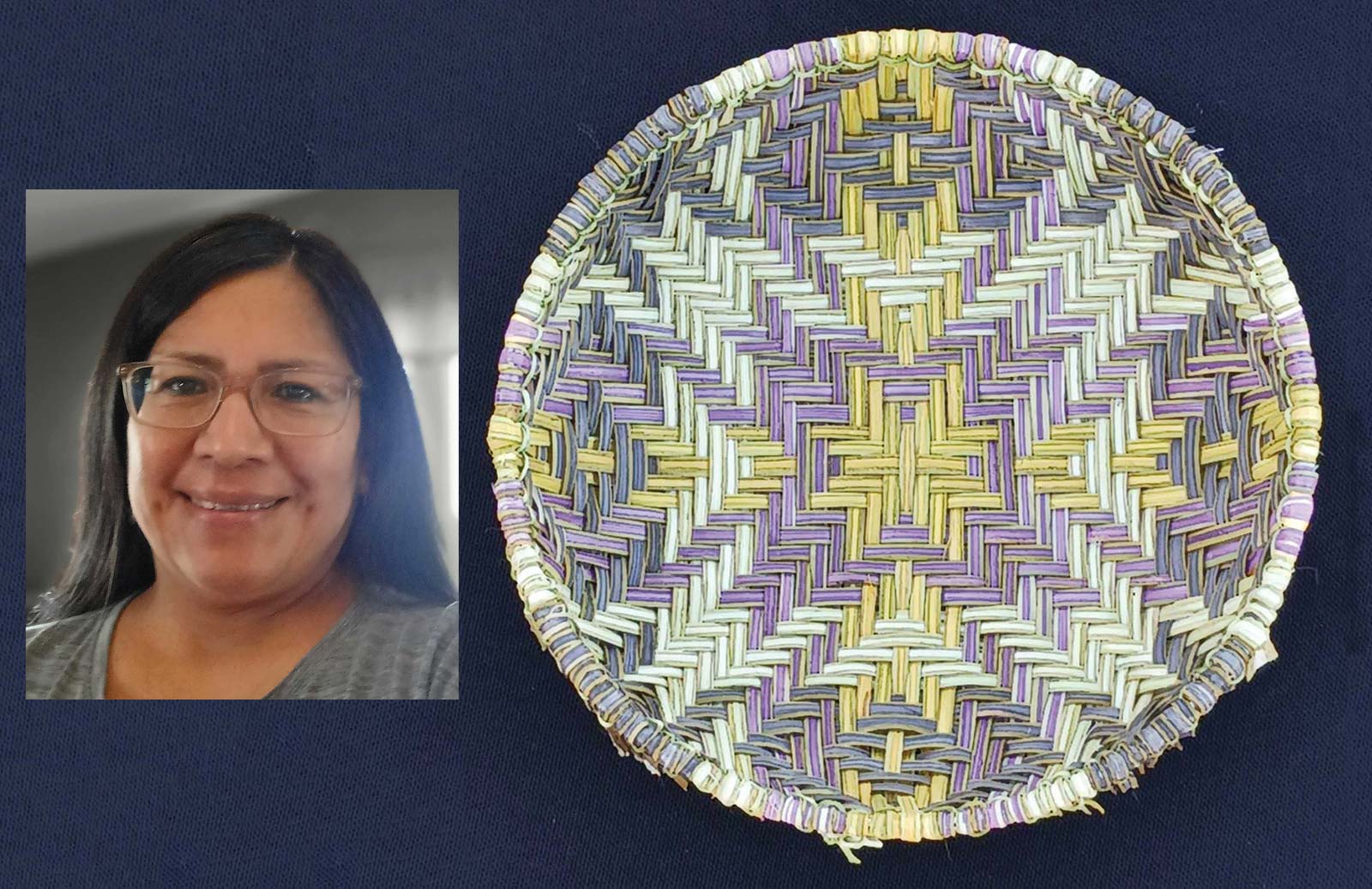
Josephine Lomahaptewa (Hopi)
Booth: POG 119
Basket maker Josephine Lomahaptewa will be showing stunning new designs at this year’s market. “Greetings from the Hopi Tribe…
I am from the Butterfly clan of Mishongnovi village,” she says. “I am self-taught in making traditional sifter baskets which are made from yucca plants. I will be showcasing my artwork in various styles, designs and colors.”
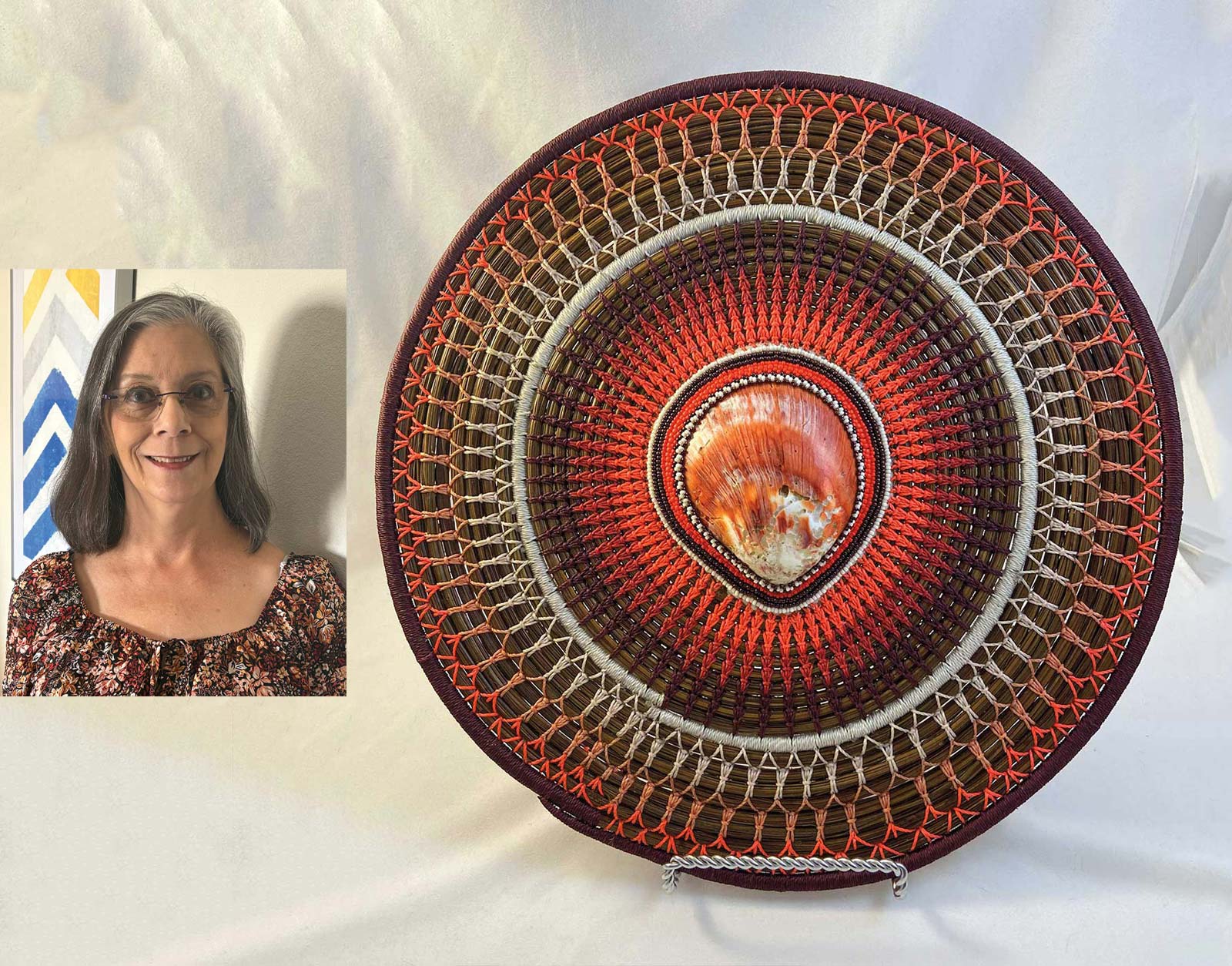
Debra Keazer (Cherokee)
Booth: WA W 411
Debra Keazer’s work is often colorful and comes in a variety of unique shapes, such as large-handled baskets, bird vessels, bowls with antler and bone accoutrements, and even hats. “I have worked with long leaf pine needles for about 10 years. I work with beads, shells, gar scales, walnut slices, colored threads to add to my baskets/wall hangings,” she says. “I will have a variety of pine needle artwork when I attend the Santa Fe Indian Art Market.’
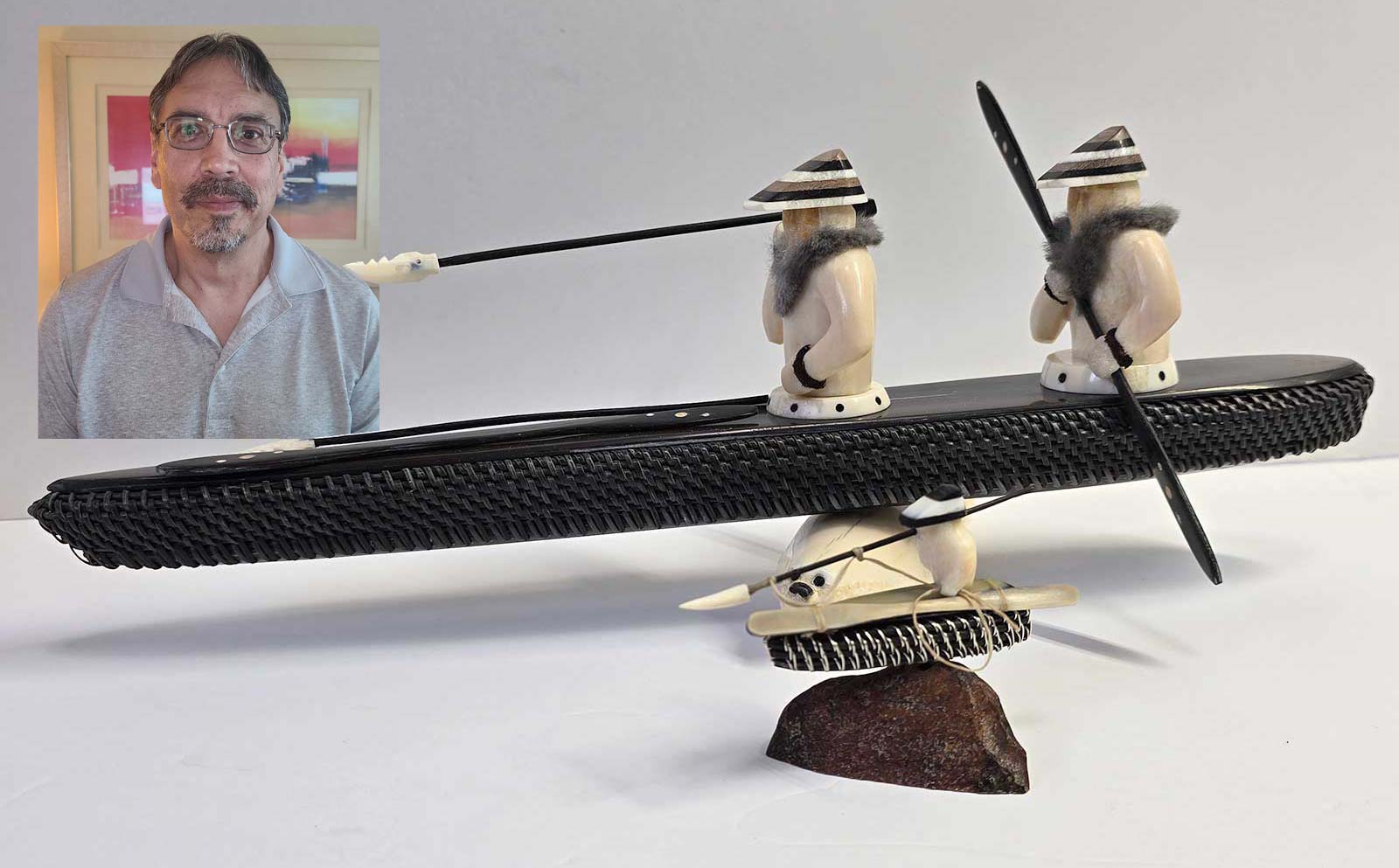
Don Johnston (Quagun Tayagungin)
Booth: PLZ 35
Award-winning basket maker Don Johnston works with baleen, which is essentially the filtering “teeth” of whales. The plastic-like material can be used the same way other artists use grass or bark. For his newest works, Johnston is exploring new artistic forms. “I have been working on Baidarkas with hunters looking for seals. The kayak (Baidarka) is a woven basket,” he says. “The entire deck and hunters are the lid. Also, I have ventured into spirit masks representing a successful hunt.”
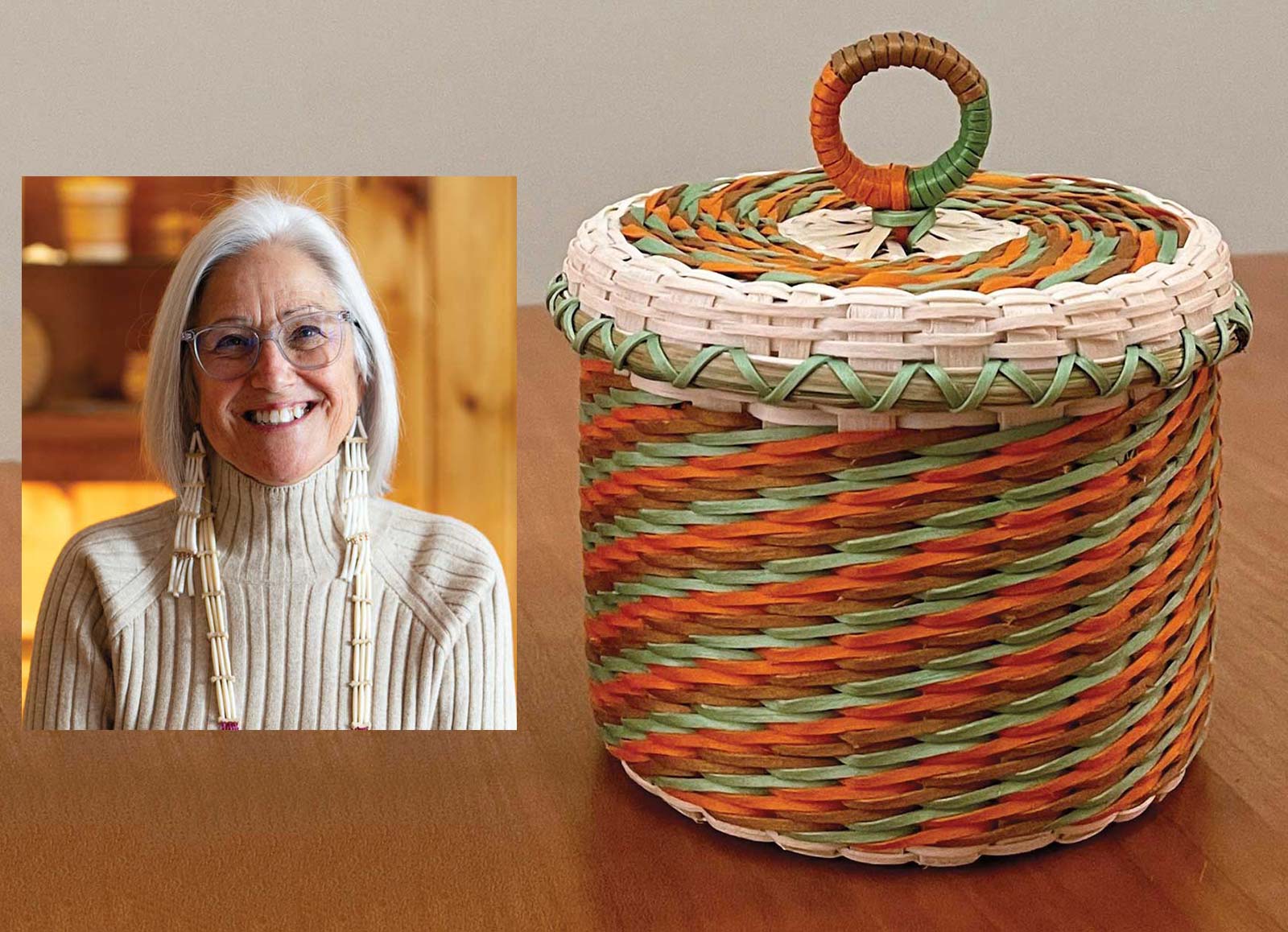
Theresa Secord (Penobscot Nation)
Booth: SFT P 524
Long-time Santa Fe Indian Market participant Theresa Secord is returning to Santa Fe with her exceptional basket creations. “This is my 18th year participating in the Santa Fe Indian Market,” she says. “It’s still fun to plan for market and challenge myself to weave new lines of work that I haven’t attempted before. The anticipation of the juried competition, seeing old friends and meeting new is exciting and keeps the creativity flowing.”
Glossary Of Terms
Twining A class of basketry made by passing horizontal elements called wefts, around stationary vertical elements called warps.
Warp & Weft Warp is the stationary vertical element in twined basketry, or the horizontal in coiled work. Weft is the moving horizontal element in twined basketry which engages the vertical rigid or somewhat flexible warps or the vertical moving element which coils around the horizontal warp in coiled basketry.
Rod A rigid or semi-rigid foundation element of coiled basketry used alone or in combination with other rods, bundles or welts.
Plaiting Plaiting denotes a class of basketry in which all elements are active, usually equal in function, and which generally has neither what could be called a weft or a warp. Characteristic types are checker, twill, wicker and rarely hexagonal plaiting. In some terminologies, wicker, being a coarse form of plaiting, is treated as a separate class of basketry.
Bundle A flexible, multiple foundation element of plant material used in coiled basketry. It may consist of loose fibers, a mass of stems or twigs, or cordage.
Courtesy Matt Wood’s Antique American Indian Art
Powered by Froala Editor


