Welcome to our annual Guide to Market section for Santa Fe Indian Market. Inside you will find information on all nine classifications recognized by SWAIA for the market. These nine categories are mostly used for judging purposes—awards are given for each classification, and even more for sub-categories within each—and yet they also represent so much more to the artists, to the various cultures and to the collectors. Although the booths at market are not separated by classification in Santa Fe, we are separating them here so you can learn about each classification, meet some of the artists and see what is possible with the materials. We hope this fuels new curiosity once your feet are on Santa Fe soil in August. Enjoy!
Jewelry
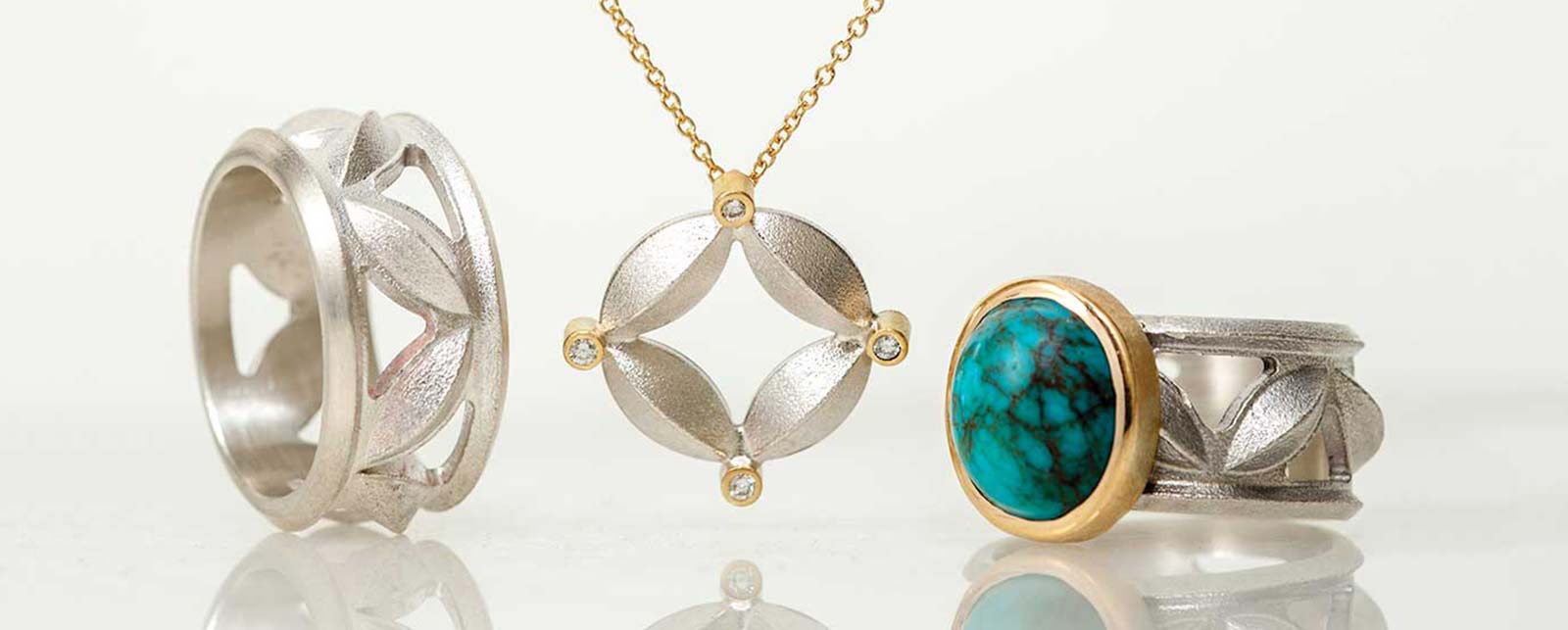 Maria Samora (Pueblo of Taos), Sweet Pea Set, 18k
Among the many brilliant categories at Santa Fe Indian Market, jewelry is found in abundance, as many Native American tribes have passed down the knowledge of the art form through generations. This abundance also means that there’s a large variety of “wearable art” options from squash-blossom necklaces and earrings, to rings, bands, cuffs and so much more. Artists also utilize an array of styles and designs,often blending traditional visions with the contemporary. This section, bringing together impressive jewelry highlights, is but a mere taste of what to expect at this year’s market.
2024 Winner: Best of Class I: Jewelry
Sarah Aragon (Navajo (Diné))
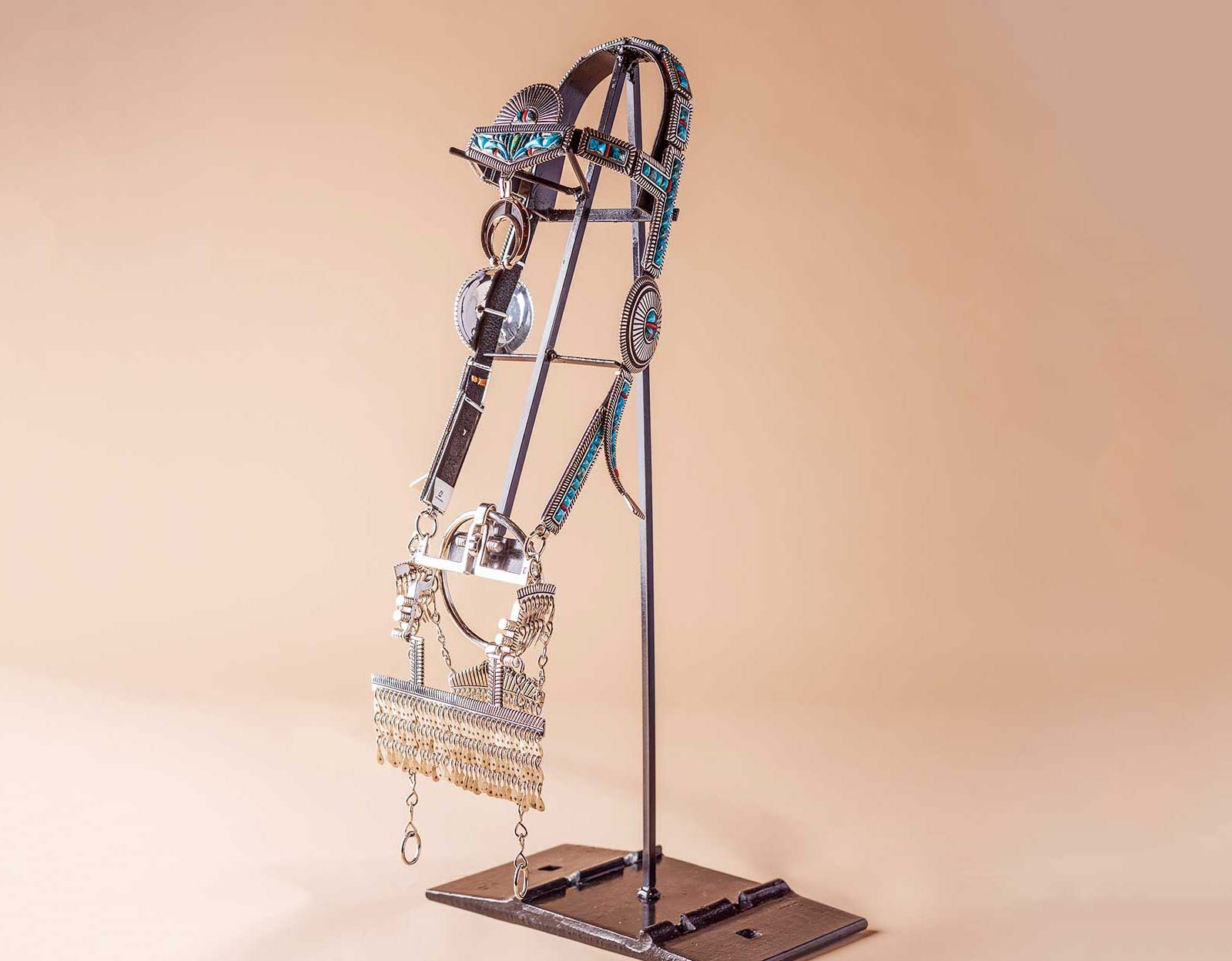 Back in the Saddle, horse headstall with silver female ring bit: handcrafted sterling silver from Tufa-cast ingots, shaped by chiseling, chasing and filing secured on a leather headstall, stone inlay work of Mediterranean coral, Castle Dome turquoise, Morenci turquoise, Kingman turquoise, Persian turquoise and Carico Lake turquoise, 33 x 9 x 6 in.
Artists To Watch
Mark Calladitto (Navajo (Diné)), Monty Claw (Navajo (Diné)), Rudy Coriz (Santo Domingo Tribe), Elizabeth M Kirk (Pueblo of Isleta), Langston Thompson (Navajo (Diné)), Steven Arviso (Navajo (Diné)), Rosabelle Teesyatoh Shepherd (Navajo (Diné)), Jerome Nakagawa (Navajo (Diné)), Earl Plummer (Navajo (Diné)), Cheyenne Custer (Navajo (Diné)), Alexander Becenti (Navajo (Diné)), Sage Natohtso’o’h Goldtooth (Navajo (Diné))
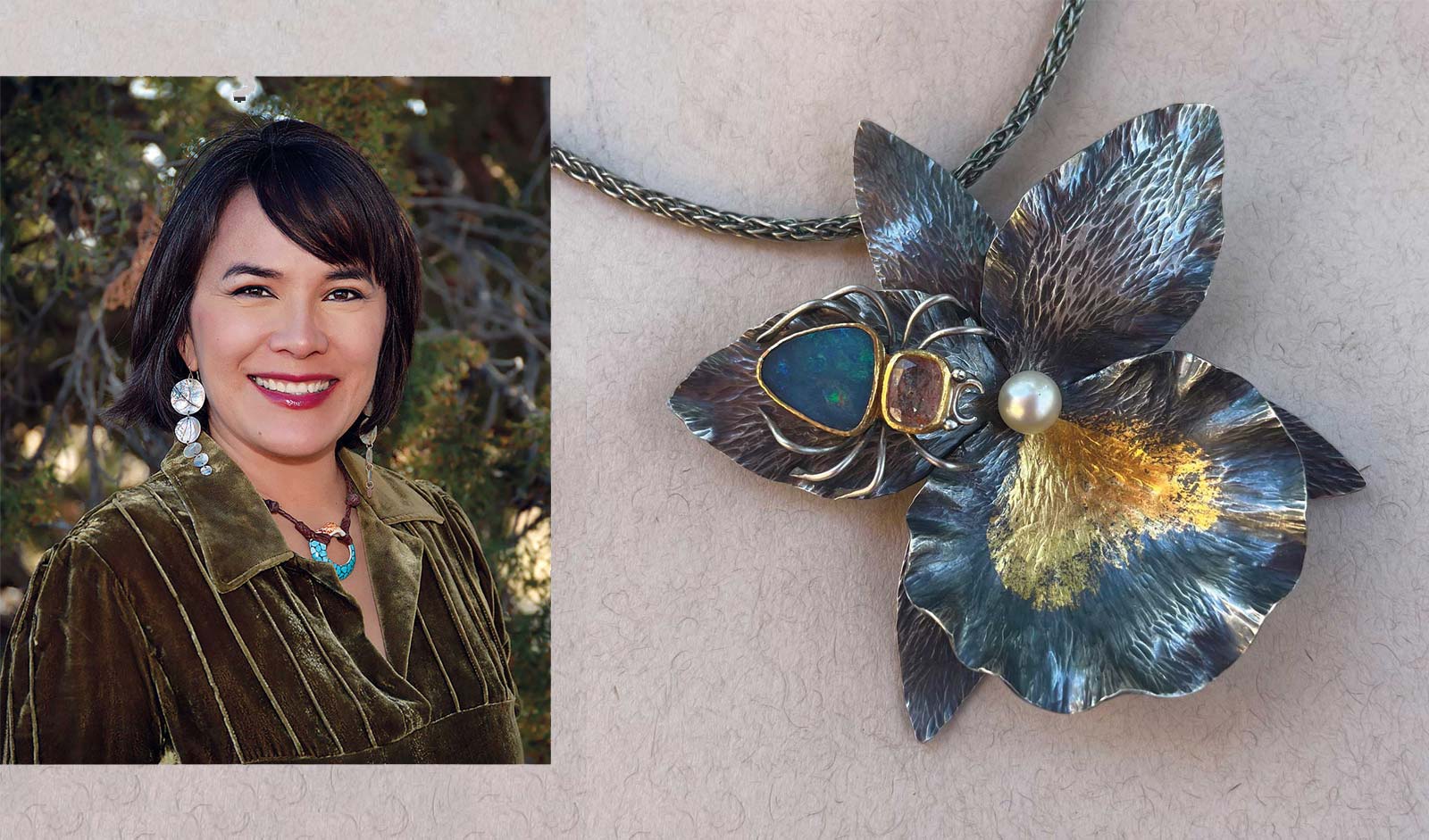
Liz Wallace (Navajo (Diné))
Booth: FR P 308
“Jewelry is my way of adding beauty to the world,” explains Liz Wallace. “Immortalizing insects, spiders, flowers, or whatever I’m inspired by is fulfilling and always an adventure. I’ve learned lapidary, chasing, repoussé, plique-à-jour, metal weaving and forging because I want to be able to bring my ideas to life. Like how a garden grows, my jewelry makes me as much as I make it. For market this year, I plan on bringing metal basketry, plique-à-jour and classic Navajo-style coin silver pieces. I’m enrolled with the Navajo Nation and also descended from the Washo and Nisenan Maidu.”
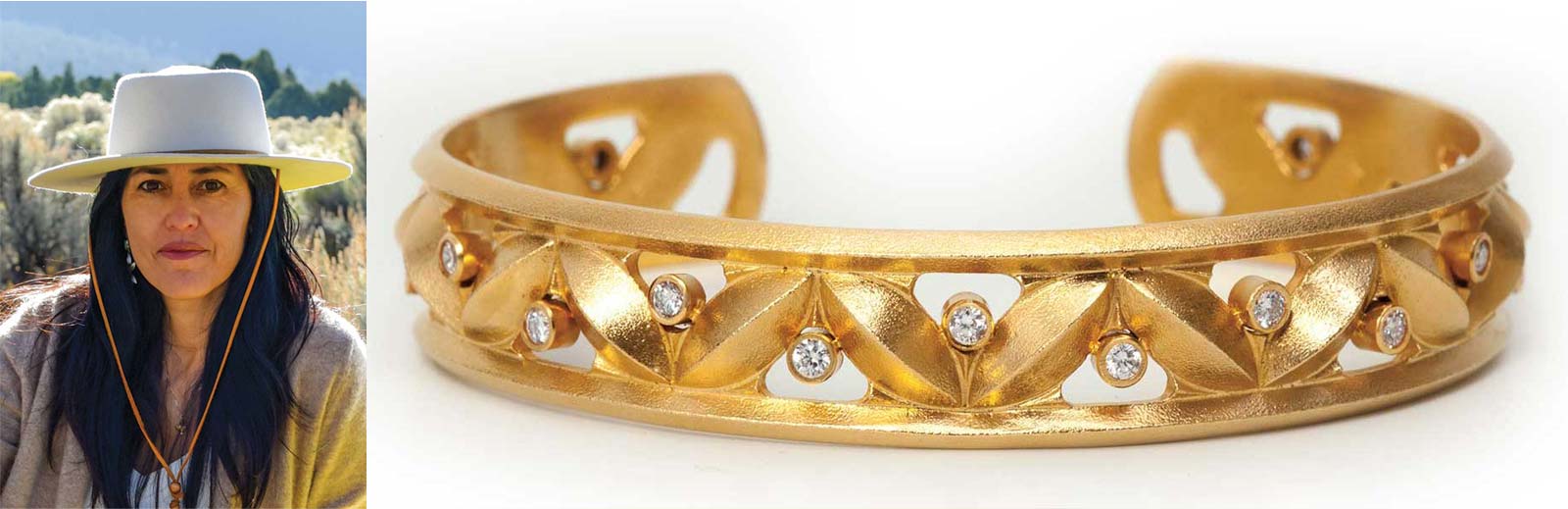
Maria Samora (Pueblo of Taos)
Booth: FR N 313
“The purpose of my art is to accentuate the body and capture the movement of the human form, enhancing one’s personal beauty and grace with sophistication and elegance,” says Maria Samora.“My hopes and challenges as a designer are not only to honor my spiritual heritage, but to push beyond any boundaries and move forward in a contemporary way. The natural blossoming elements of my Sweet Pea Blossom collection, as well as the interplaying geometric forms of my Mountain Range and Pyramid collections, will continue in their evolution for this year’s Santa Fe Indian Market. Subtle textures, various patinas, and the tonal play of mixed metals blend richly and create contrast and dimension. Hand-selected stones, including top white diamonds and natural turquoise, are hammer-set into thick-gauge bezels.”
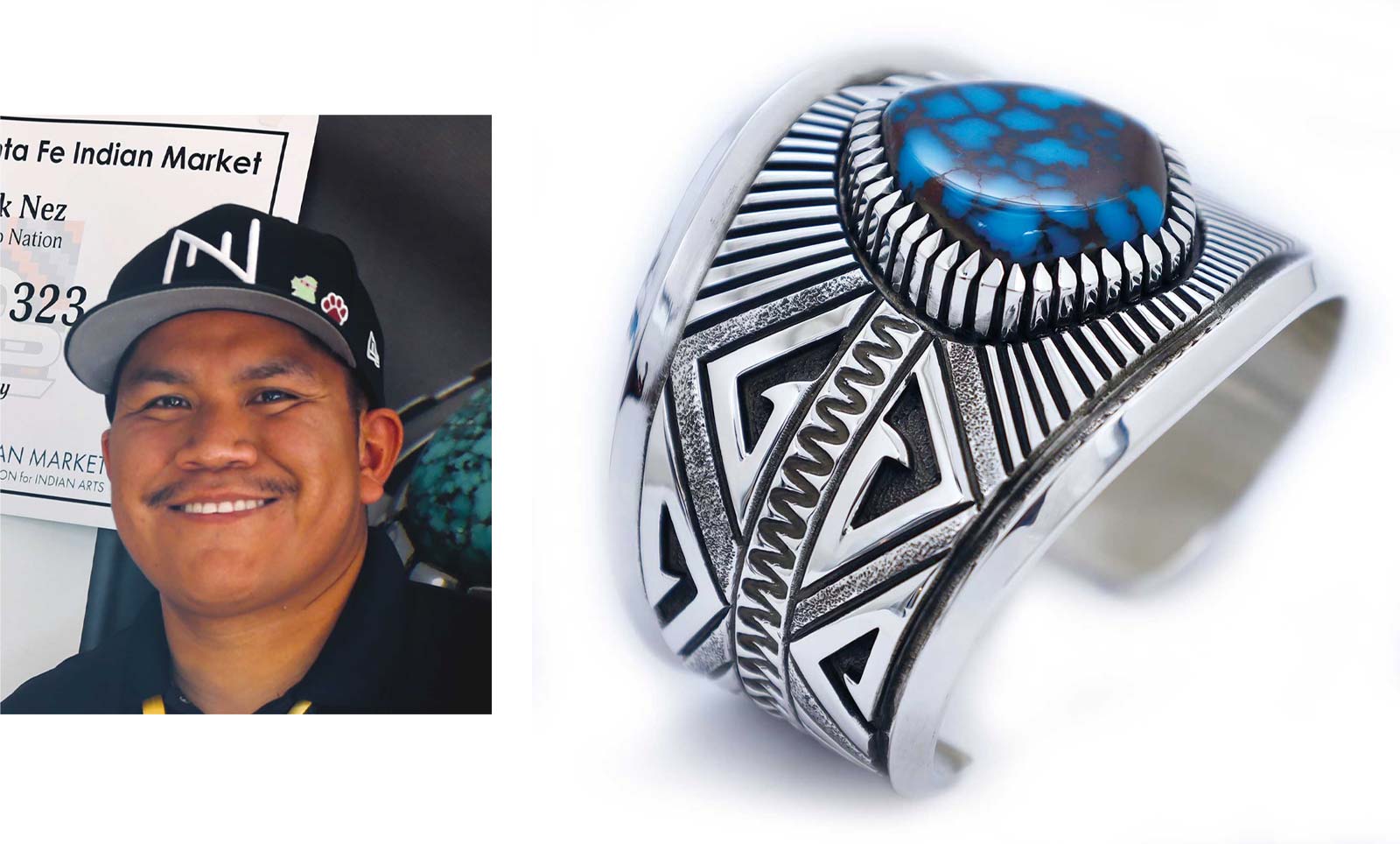
Nick Nez (Navajo (Diné))
Booth: FR N 323
“Each year, I try to make the best pieces from bolo ties to rings,” notes Nick Nez. “Top-quality stones from Southwestern turquoise mines are set in handmade sterling silver jewelry. All pieces are designed and hand fabricated by me, which have a contemporary look and Native flare that flows together. All jewelry is finished with a high polish.”
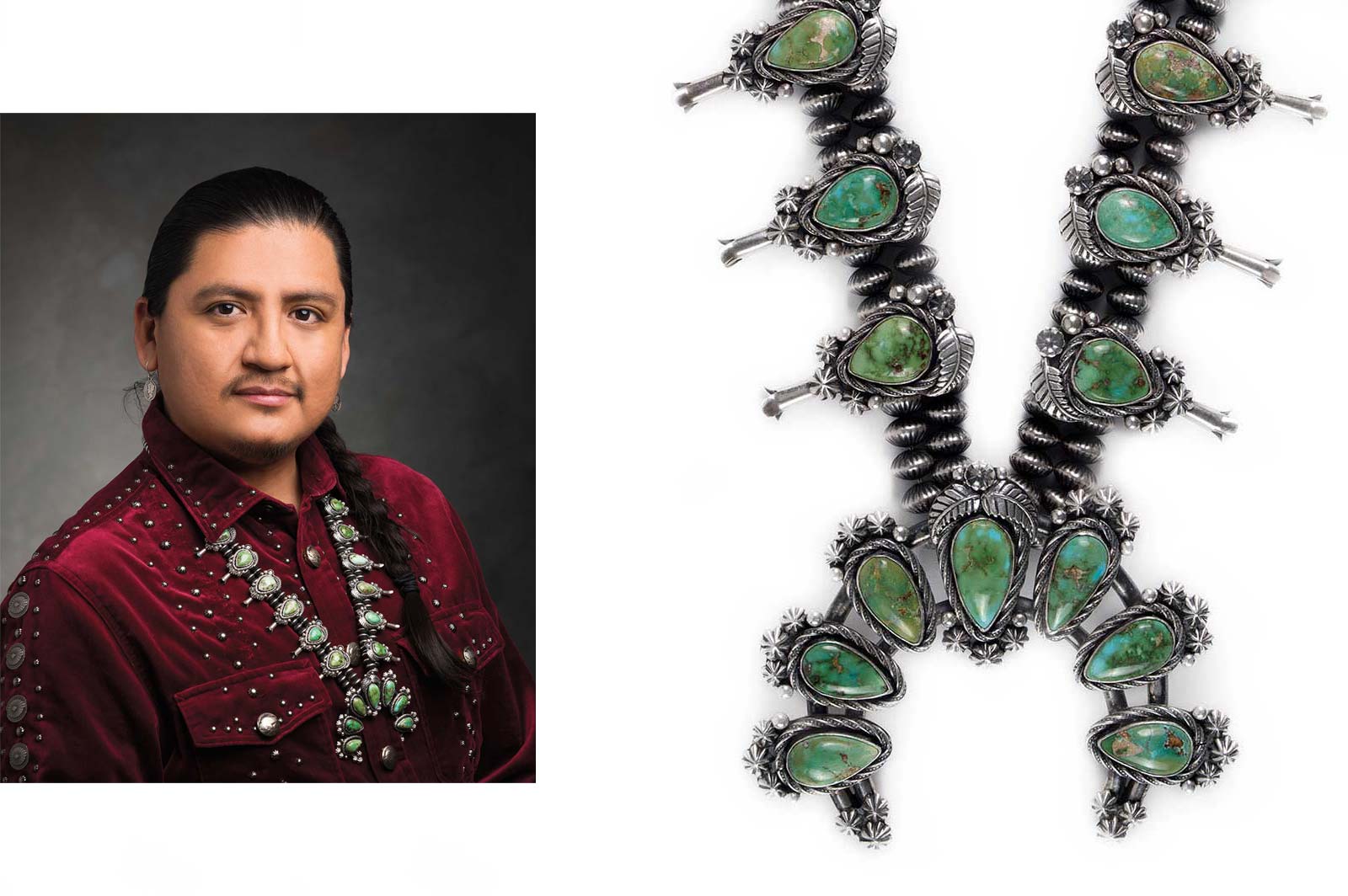
Enoch Platero (Navajo (Diné))
Booth: CP 07
Enoch Platero came to jewelry on his own, but later learned that silversmiths existed in his family for generations. “I carry it forward by working with care and staying close to the tools,” he says. “My goal is to make jewelry that lasts, that feels grounded and that lets the wearer bring their own meaning to it.” Platero makes silver and turquoise jewelry, sometimes including coral, shell and the occasional rare gem. “I build each piece by hand, from melting and rolling silver to shaping bezels, cones, tubes and every other finding imaginable, and I focus on structure, symmetry and balance,” he shares. “I aim for clean lines and intentional construction.”
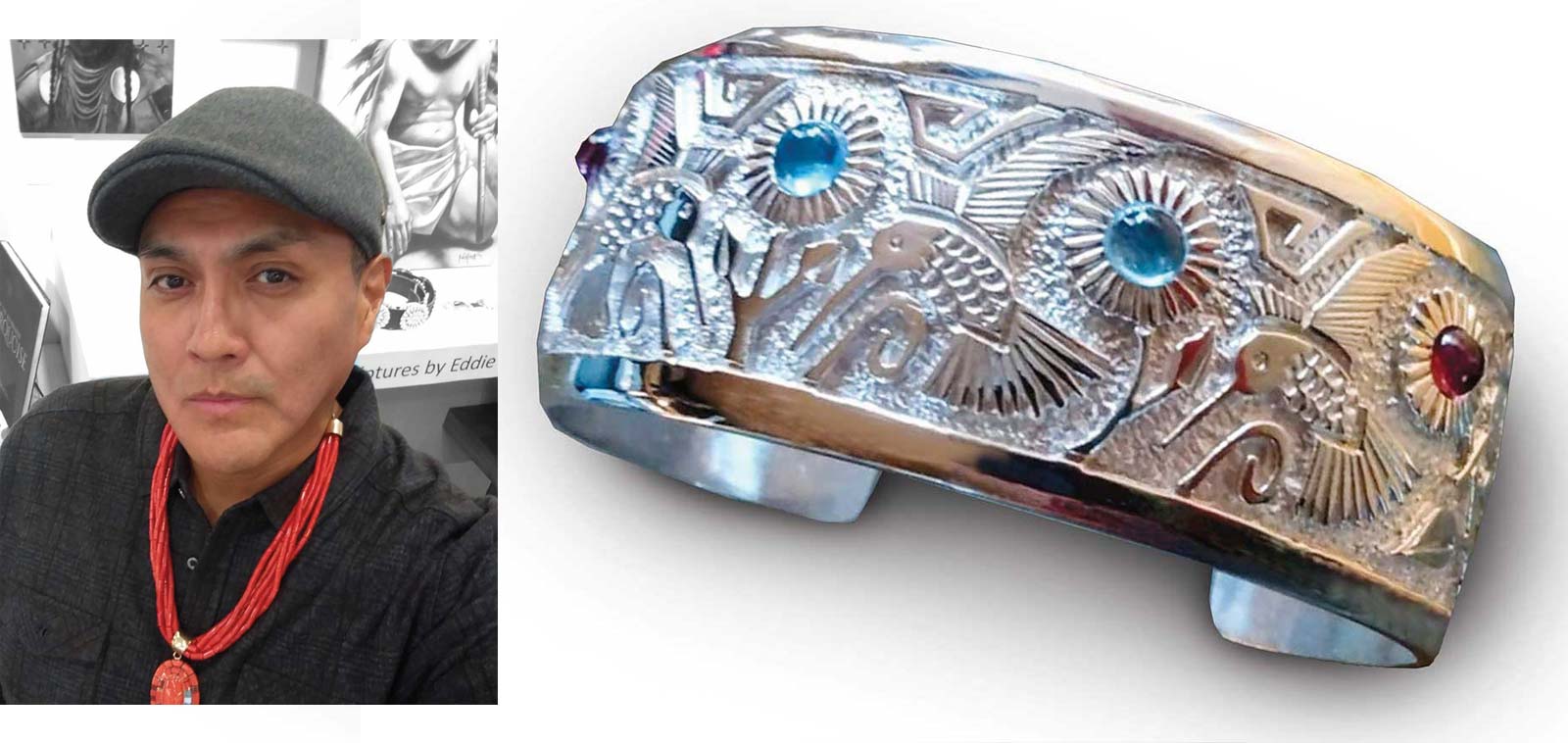
Philbert Begay (Navajo (Diné))
Booth: FR N 305
“As a young Diné artist, my grandparents told me to make things beautiful and harmonious,” says Philbert Begay. “My jewelry creations embody ‘Hozho,’ meaning balance and harmony, and to carry my life in that way. The symbols in my creations include animals, plants, places, as well as the stars, rain and wind. My work has moved into modern techniques, but my foundation is using hand-cut and hand-stamped traditional techniques...I am always connected to traditions, and ask in prayers for creative blessings.”
Glossary Of Terms
Lapidary This involves the shaping of a stone or gem using different techniques like tumbling, cabochon and faceting.
Bezel A band of metal that surrounds a faceted stone or gem to hold it in position.
Embossing The creation of a relief by raising the surface of a material.
Inlay This is the process of embedding a decorative item into the material by etching or channeling.
Antiquing This process often deals with silver work, in which an artist will darken or oxidize the metal to create contrast in the design.
Chasing Chasing is used in metal smithing, where metal is moved laterally to create line and form. Many tools are utilized for specific affects.
Solder The joining of two or more metal pieces by melting and flowing a fill metal into a joint.
Sandcast This is the process of pouring molten metal into a mold to form a shape or design.
——————————————————————————
Sculpture
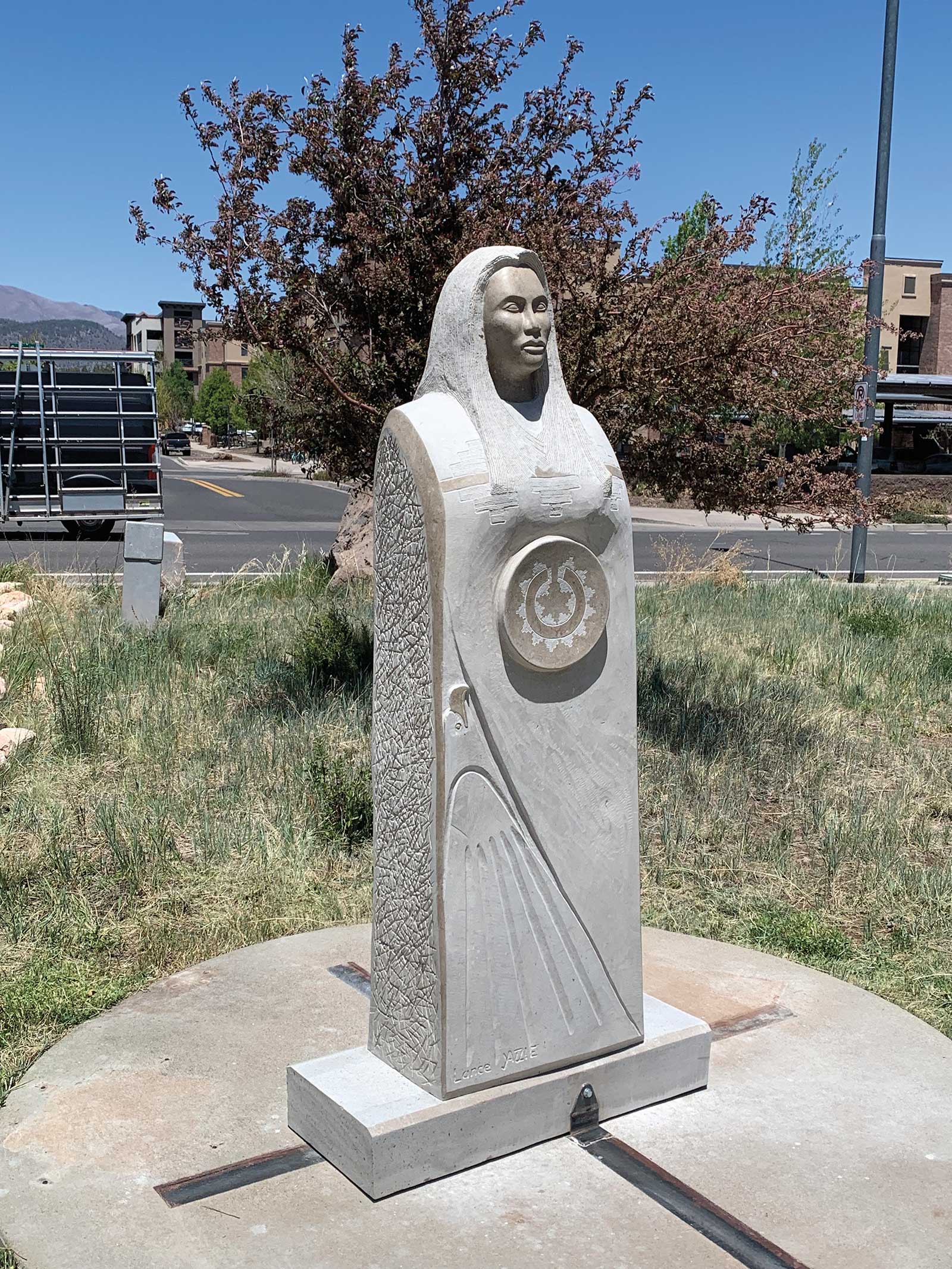
Lance Yazzie (Navajo (Diné)), Asdzaa Nadleehe (Changing Woman), Indiana limestone, 78 x 28 x 12 in.
As is true for sculpture in general, Native American sculpture can be created out of an array of mediums including stone such as marble, limestone and alabaster, as well as bone, steel, bronze, clay, wood, glass and more. Like other forms of Indigenous art, sculptors often work with the materials most readily available to them, often sourced from their own land or region. In terms of subject matter, Native American representational sculpture often depict what the artists are most familiar with: local fauna, human figures and mythical beings that reflect the beliefs, designs and traditions of their ancestors.
2024 Winner: Class V: Sculpture
Ryan Benally (Navajo (Diné))
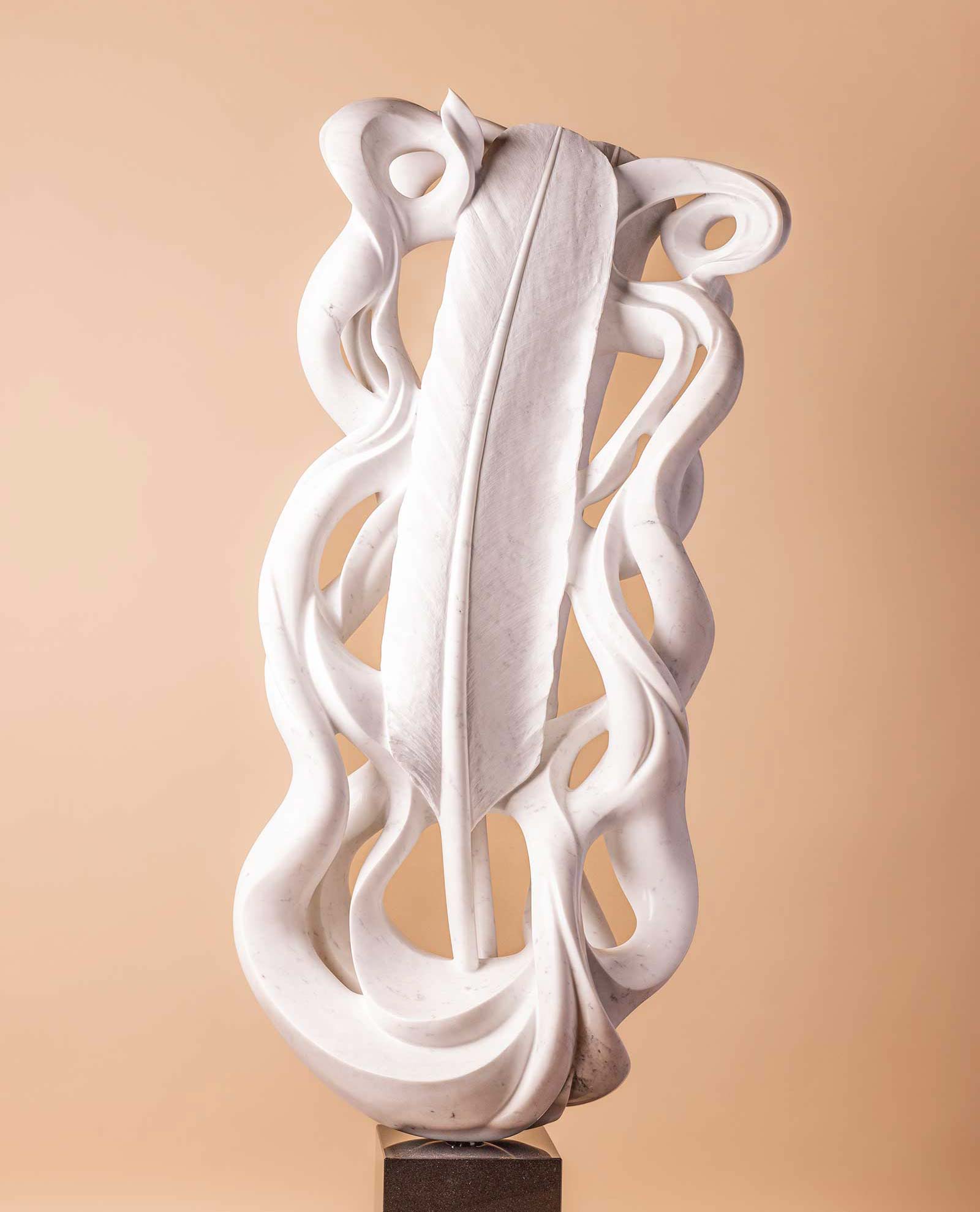
Feathered Prayers, sculpture inspired by the Navajo feather ceremony: Italian marble, black granite, stainless steel base, CNC cut design on the base, carved with hammer and chisel, electric power tools and hand-polished to 8000 grit, 63½ x 24 x 24 in.
Artists To Watch
Ramson Lomatewama (Hopi), Wayne Gunville-Keeper of the Stone (Turtle Mountain Band of Chippewa) , Jayne Quam (Navajo (Diné)), James Goodman (Navajo (Diné)), Caroline Carpio (Isleta Pueblo), Loren Tsalabutie (Zuni Pueblo), Jane Semple-Umsted (Choctaw), Saige LaFountain (Navajo (Diné)), Ryan Panana (Jemez Pueblo), Troy Sice (Zuni Pueblo), Michael Roanhorse (Navajo (Diné)), Randy Chitto (Mississippi of Choctaw)
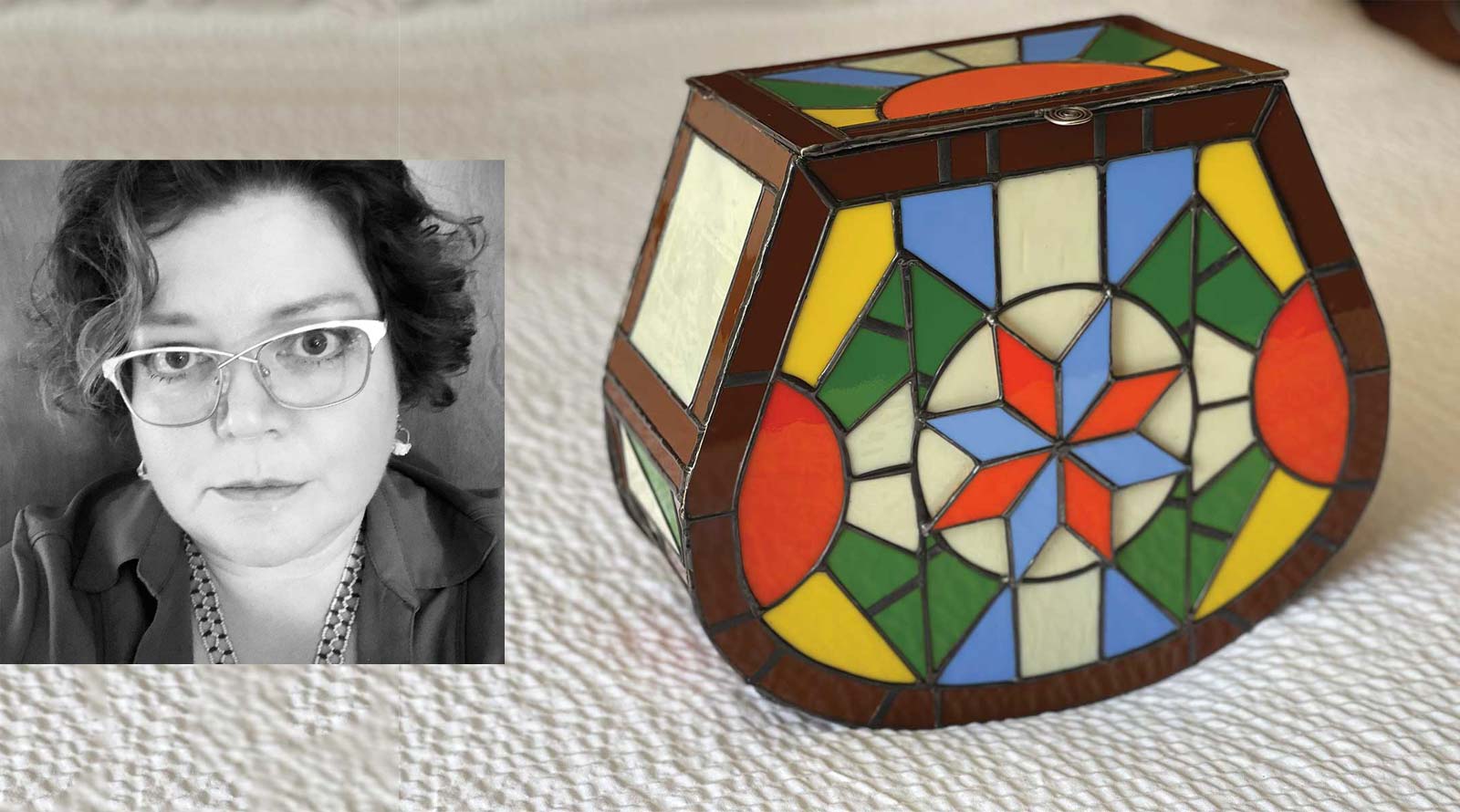
J. Rae Pictou (Mi’kmaq Nation)
Booth: PAL N 212
“My art is about the intersection of being a Mi’kmaq woman in a Colonial world,” says multi-disciplinary artist J. Rae Pictou. “From beadwork to cold glass, to hot glass, my art encompasses the stories of situations and the natural world in which I/we have lived in and continue to survive. I am excited to bring my glasswork (jewelry, stained glass and hot glass) to SWAIA as I have embarked on a new set of narratives that are challenging and combine glass forms into new visual landscapes.”
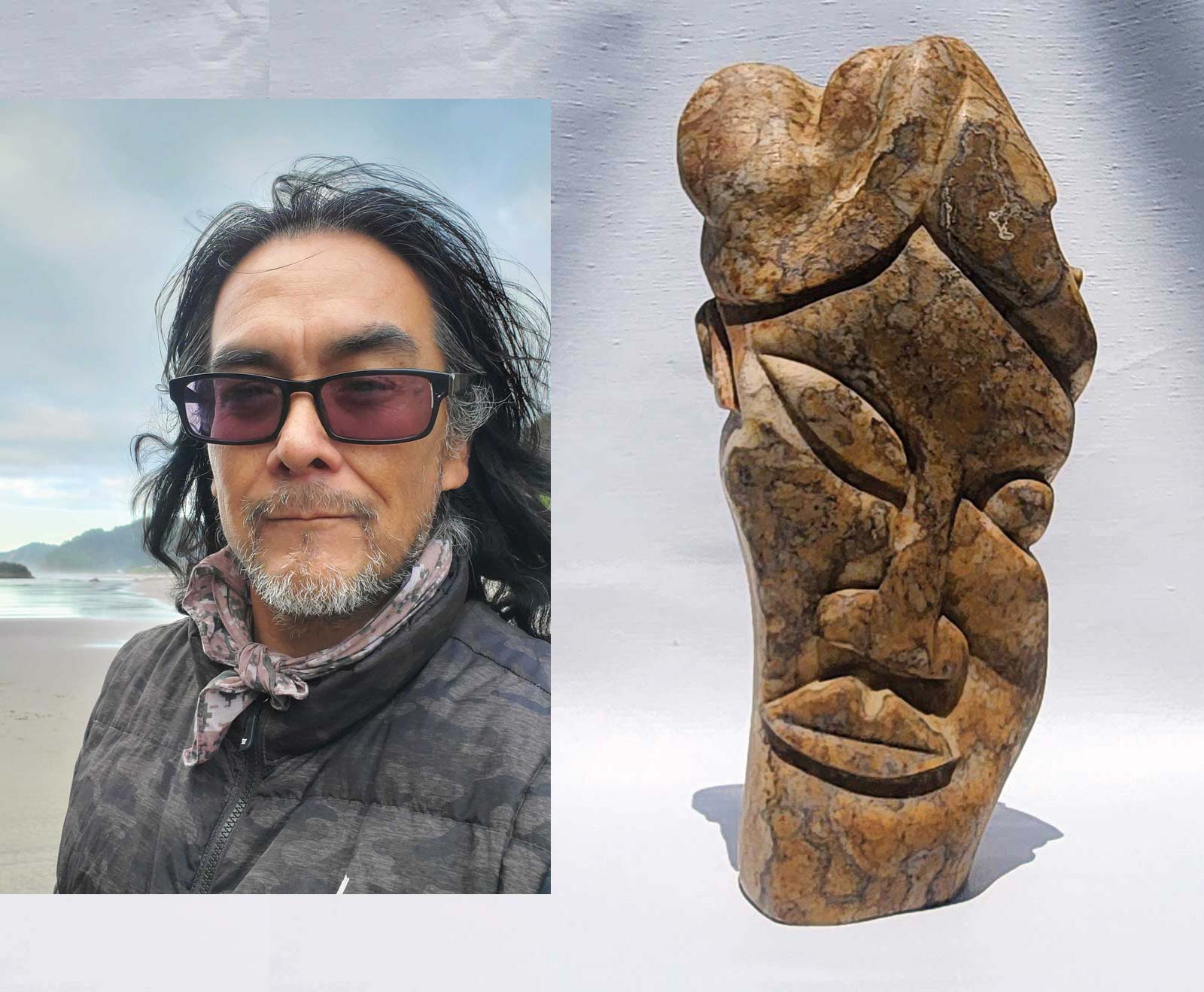
Ishkoten Dougi (Jicarilla Apache/Navajo (Diné))
Booth: FR S 342
Ishkoten Dougi studied fine arts at the Institute of American Indian Arts in Santa Fe. He works in a variety of media, including painting, sculpture and mixed media, and is known for his highly modern use of bold colors and dynamic designs. His thought-provoking art often explores themes of Native identity and cultural heritage. About his sculpture practice in particular, he says, “Creating narratives with alabaster reflect the teachings of survival in worlds that one has to journey, to be a human, carving stone or painting, sending messages to future societies’ perception of the message from an ‘NdN.’”
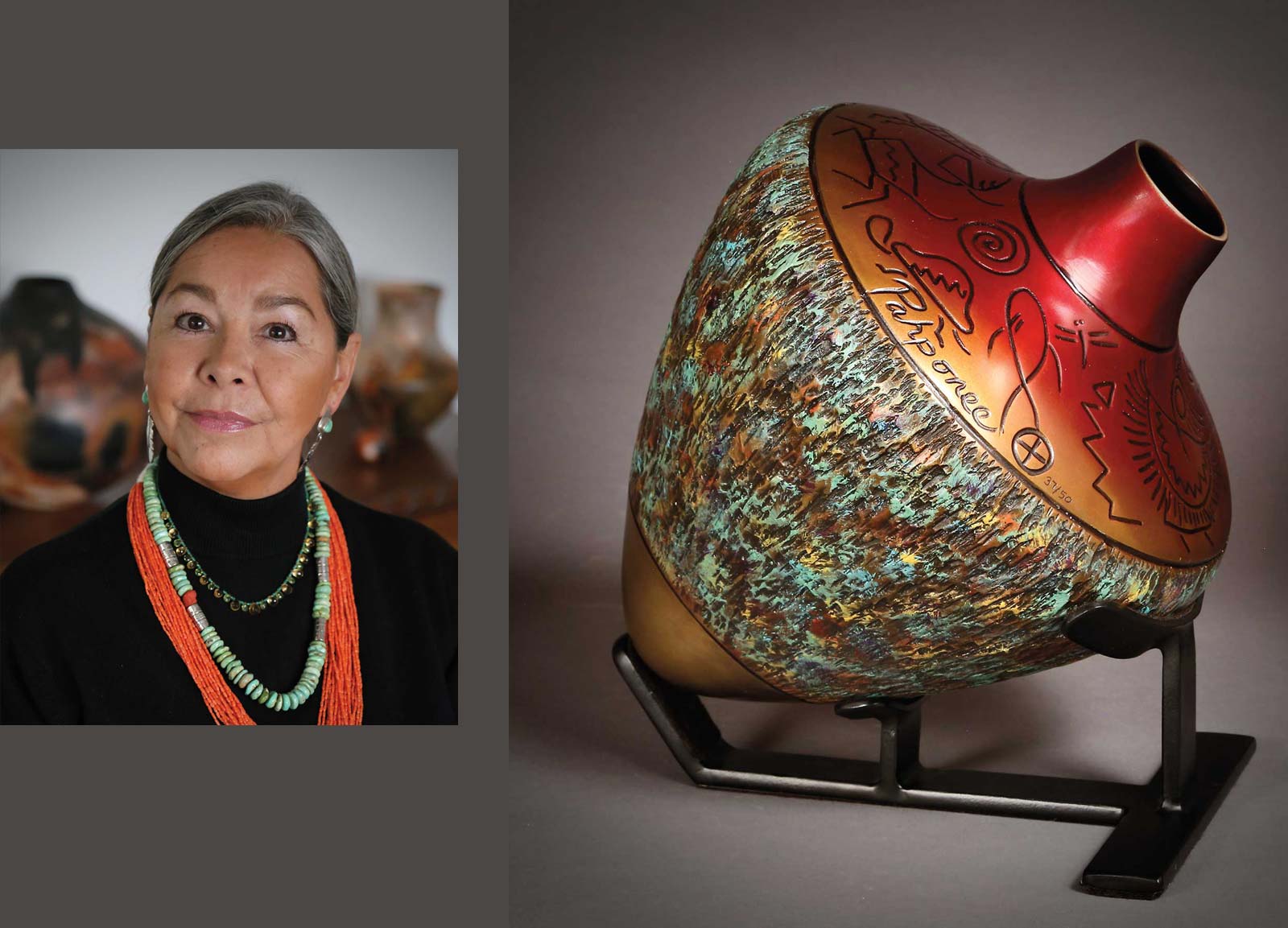
Pahponee (Kickapoo/ Potawatomi)
Booth: PLZ 20
A self-taught artist known for her contemporary creations, Pahponee began making pottery in the early 1980s, re-learning the traditional methods of her Woodland culture. “I am the only living member of my Kickapoo and Potawatomi tribes who presently creates bronze sculpture as I do,” she says. “Each design is inspired by the traditional and contemporary life-ways of my Great Lakes ancestors and descendants, as we continue to live with all our relations on our earth.”
Jazmin Novak (Navajo (Diné))
Booth: SFT P 526
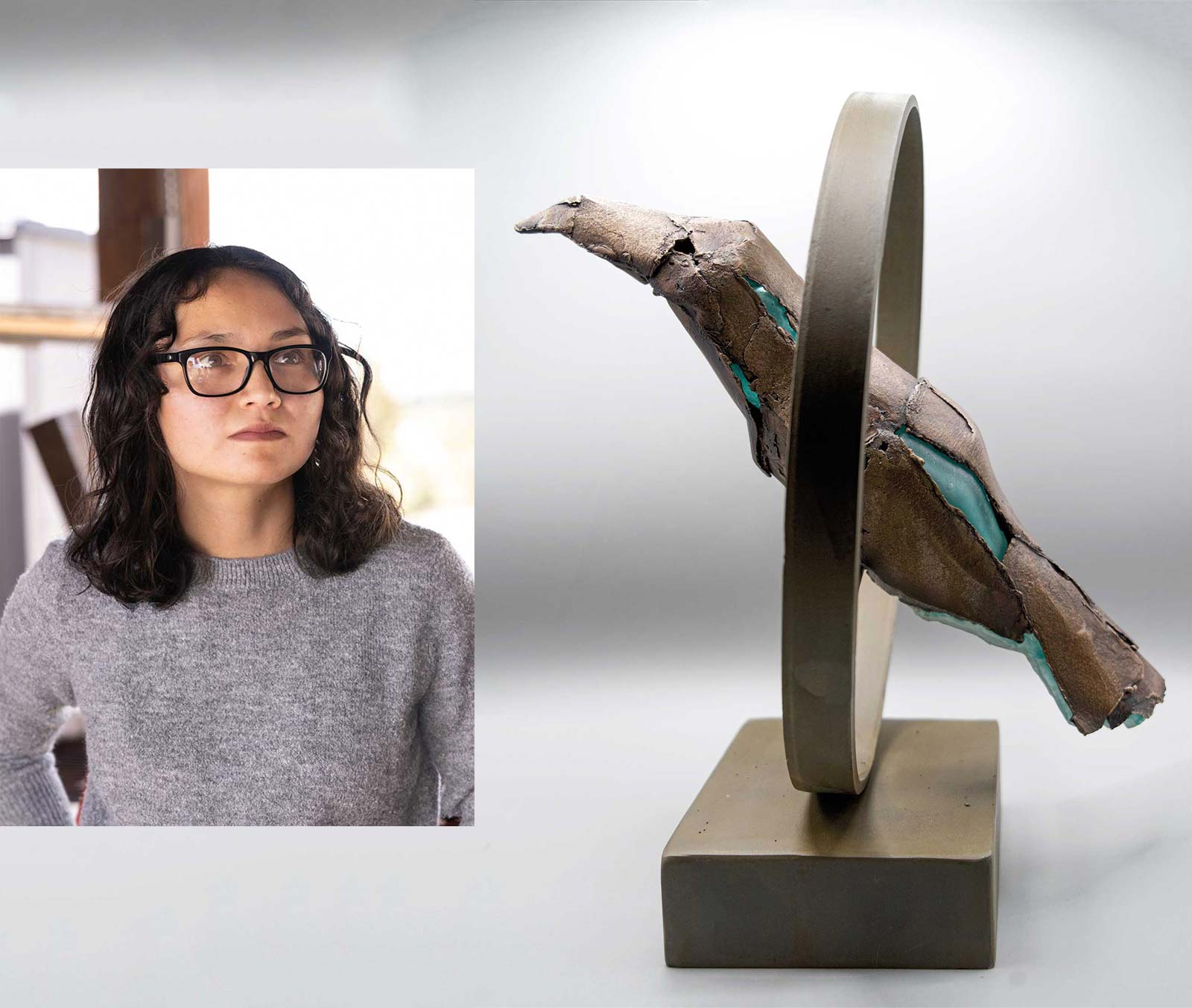
Jazmin Novak’s work explores connection, memory, and resilience through animal forms using metal and glass. “At this year’s Indian Market, I am sharing new pieces that honor personal and collective healing,” says Novak. “Each sculpture is a reflection of love, loss, and the strength we carry forward through story and form.” Her raven sculpture Ascending reflects Novak’s personal journey. “The inner blown glass captures the breath of life and soul within each living being,” she says. “The bronze outer shell reflects the armor we develop over time to protect ourselves. We can get so used to our armor that we forget to let our light shine from within.”
Ahnesah Jo Clark (Navajo (Diné))
Booth: MAR 802
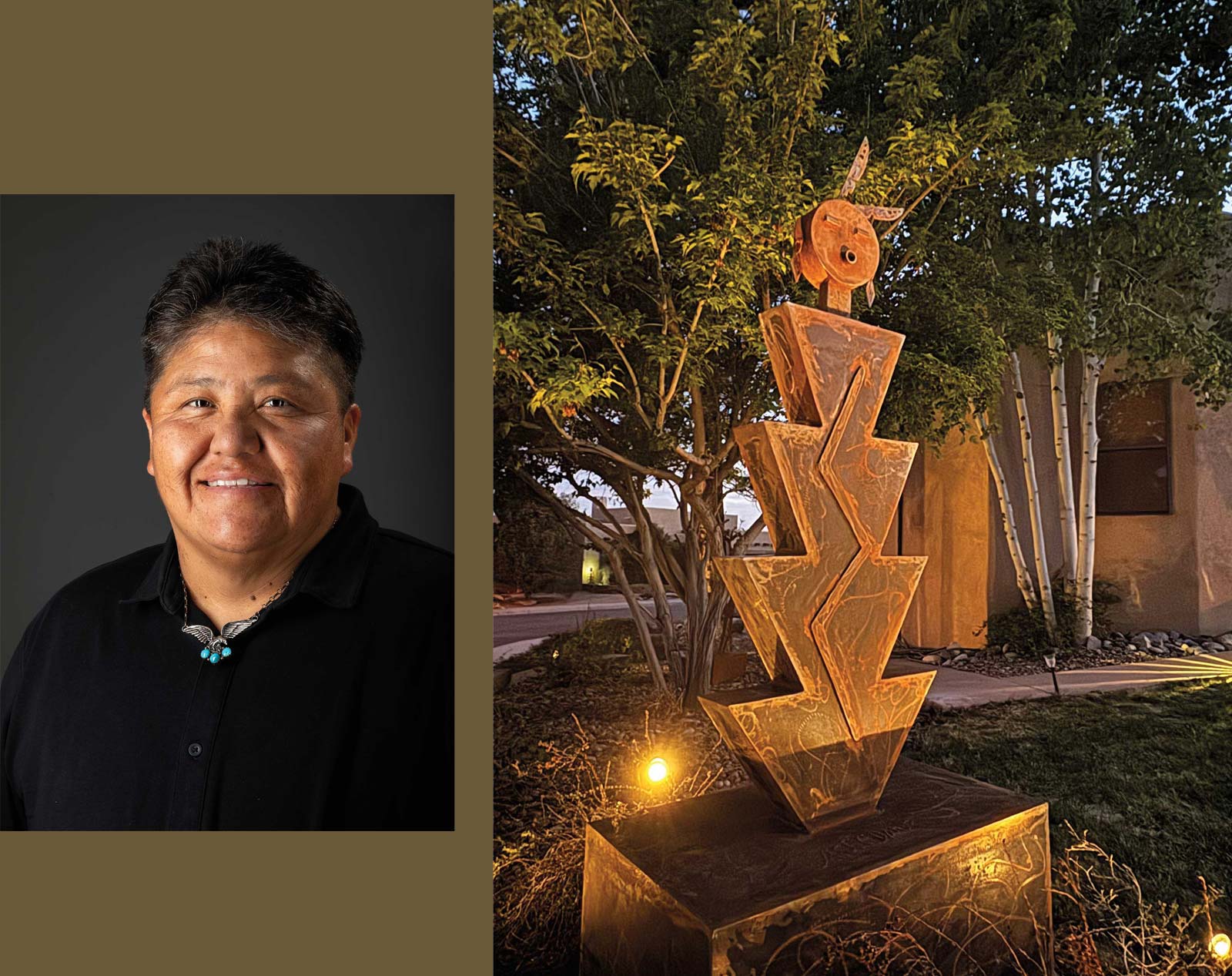
Ahnesah Jo Clark designs her steel sculptures in two and three dimensions. “All my sculptures are all created using a handheld plasma torch and all grinded, welded and shaped by hand,” she explains. “All my pieces have symbolic meanings and tell a story passed on by my parents and grandparents.” She often incorporates symbolic designs into her work, such as the zigzag, which represents lightning and its association with fire and energy, as well as blessings, strength and the power of nature.”
Regina Free (Chicksaw)
Booth: PLZ 08
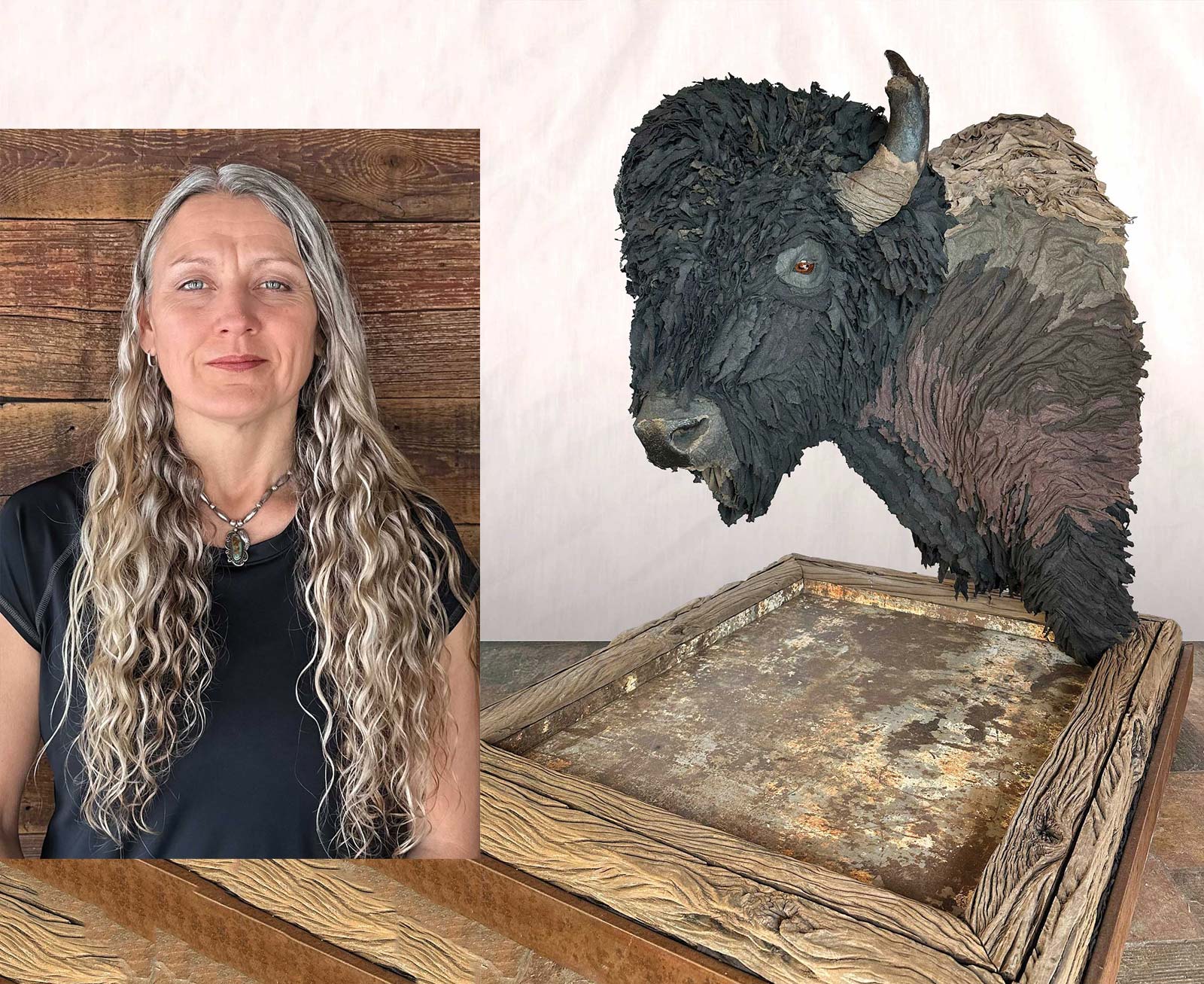
“My sculptures have been described as ‘an Indigenous use of available materials,’” shares Regina Free, an interdisciplinary artist who works in watercolor, oil painting, colored pencil, graphite, ceramics and sculpture. Her three-dimensional pieces are realistic sculptures of animals with a focus on the use of paper. “They are life-sized mixed media sculptures made with paper, paper towels, foam, wire, plaster and found objects,” says Free. “I have been working in this medium for less than two years and I am excited to see where it takes me.”
Glossary Of Terms
Alabaster A popular stone with Navajo sculptors, alabaster is native to the Four Corners region of New Mexico, Utah, Arizona and Colorado. Soft and translucent, alabaster is a preferred medium for its ease of carving and the glowing, ethereal quality it emanates when light shines through it.
Armature A framework or basic structure on which a sculptor molds a piece made with a pliable medium.
Argillite A dense, black, carbonaceous shale, often used for carving in Northwest Coast art, and found exclusively at Slatechuck Creek on Graham Island, the largest and most northerly island in the Haida Gwaii archipelago.
Soapstone A metamorphic rock that is composed primarily of talc which makes for a soft, easily-carved stone. It is a popular medium among Inuit and Eastern tribes in particular.
Patina A distinct green or brown surface layer often found on bronze and copper pieces. Patina can be a result of a natural oxidation process or artificially achieved by applying chemicals that react with the metal medium.
——————————————————————————————
Pottery
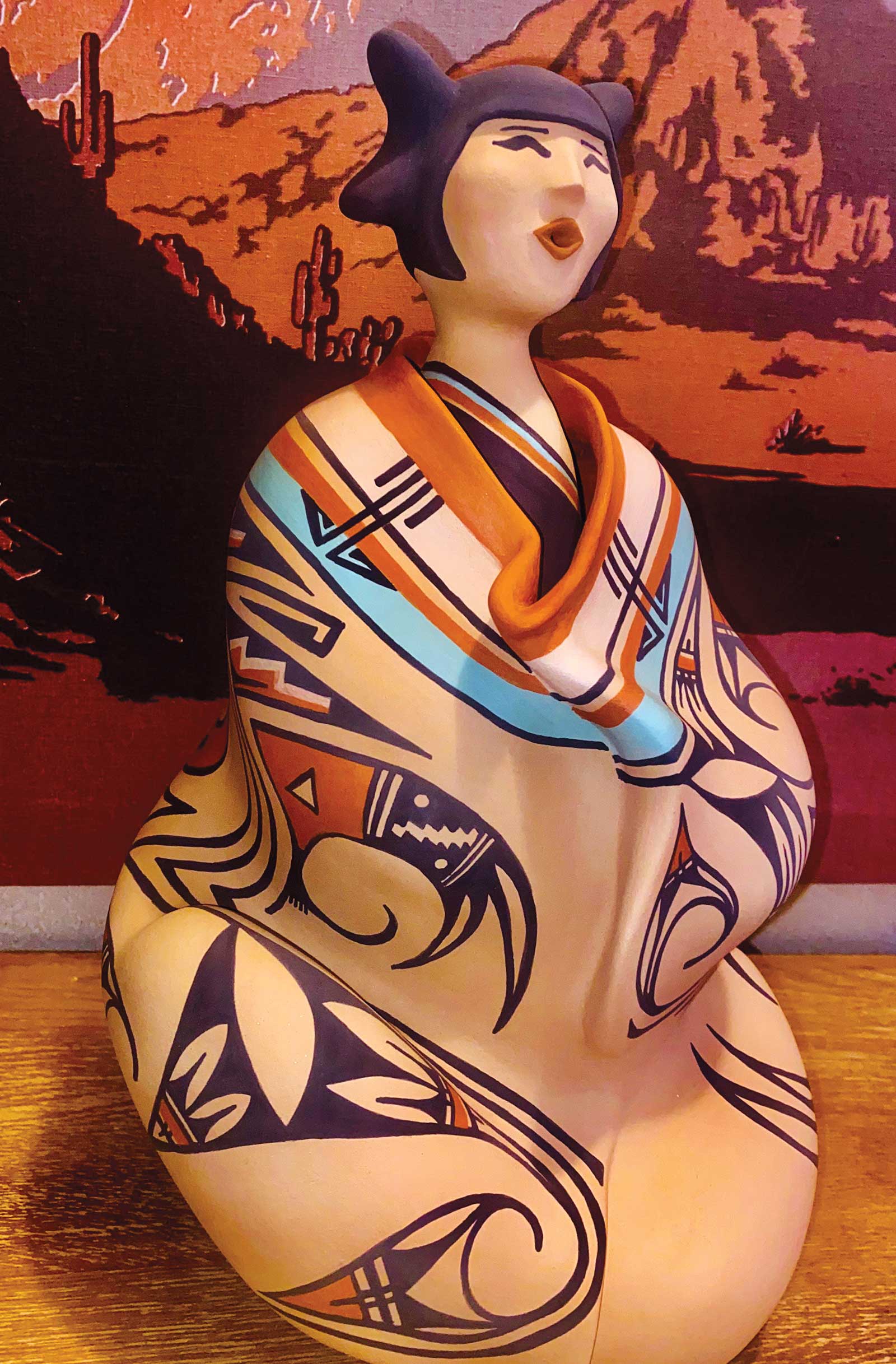
Rose Pecos-SunRhodes (Jemez Pueblo), Sikyátki (Earthmother figure), hand-processed Jemez clay and paint, 12 x 10 x 8 in.
Pottery is one of the most celebrated Indigenous art forms, and beloved by collectors and makers alike. Many North American tribes create pottery—their materials, process, shape, designs and symbology unique to each tribe’s region and deeply-rooted cultural traditions. In the Southwest, pottery differs between each of the nearly 20 puebloan tribes; while surrounding tribes have their own distinct styles. Beyond the Southwest, the Cherokee, Shoshone and Iroquois are also noted potters. From highly traditional forms to the cutting-edge contemporary, and ranging from vessels like pots, jars, ollas and bowls to figurines, Native American pottery is stunning in its variety, and as diverse as the tribes that produce it.
2024 Winner: Class II: Pottery
Garrett Maho (Hopi)
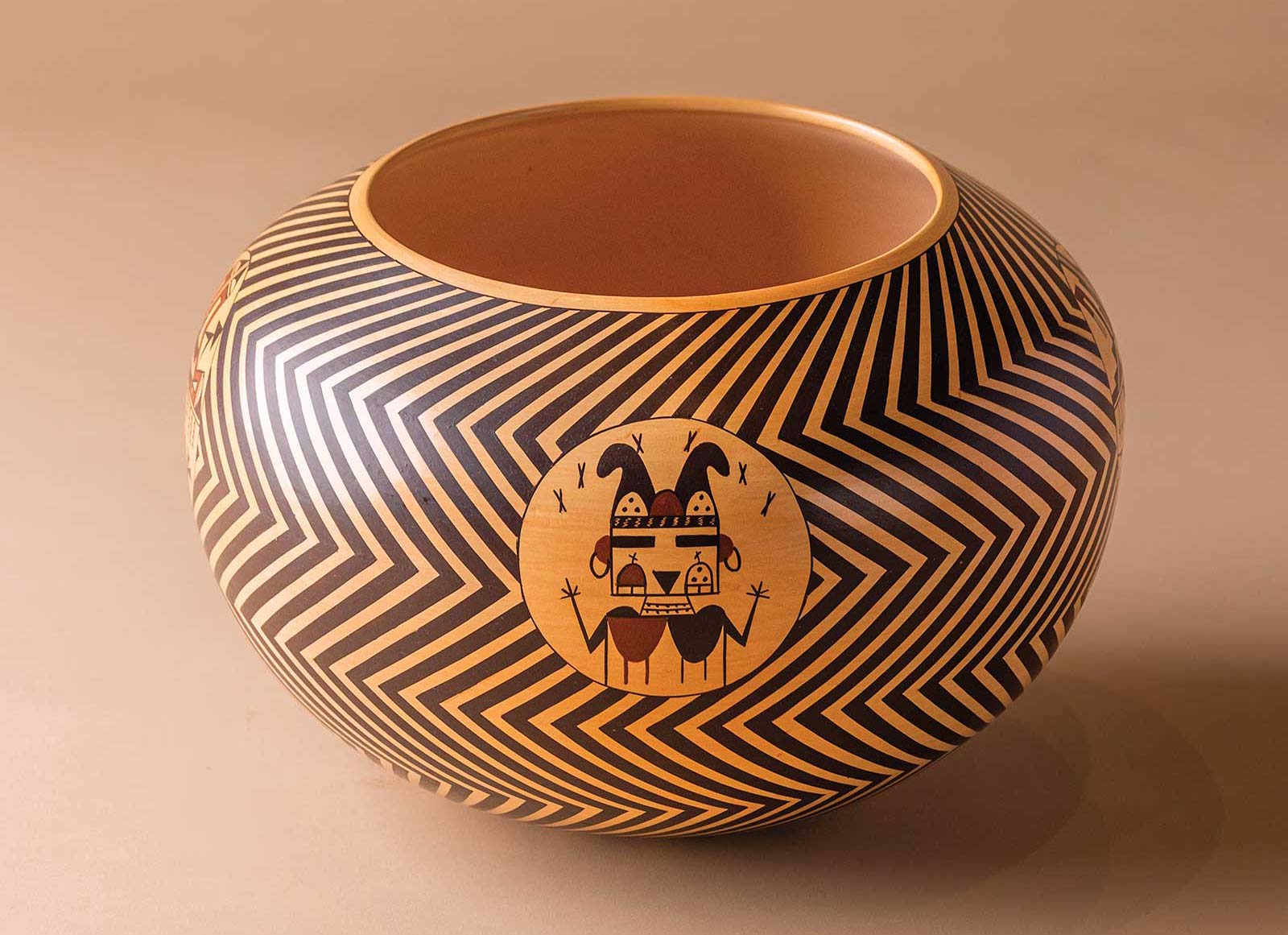
Gentle Rain, hand-built pot: traditional clay, paints and paintbrushes, stones used to polish, outdoor traditional wood and dung firing, all natural pigments, 11 in.
Artists To Watch
Hubert Candelario (San Felipe Pueblo), Caroline Sando (Jemez Pueblo), Joseph Youngblood-Lugo (Santa Clara Pueblo), Robert Patricio (Acoma Pueblo), Jared Tso (Navajo (Diné)), Dow Redcorn (Osage Nation), Martha Fender (San Idelfonso Pueblo), Bernice Suazo Naranjo (Taos Pueblo), Larson Goldtooth (Hopi), Anderson Peynetsa (Zuni), M. Janice Ortiz (Cochiti Pueblo), Zoe Hundley (Cherokee)
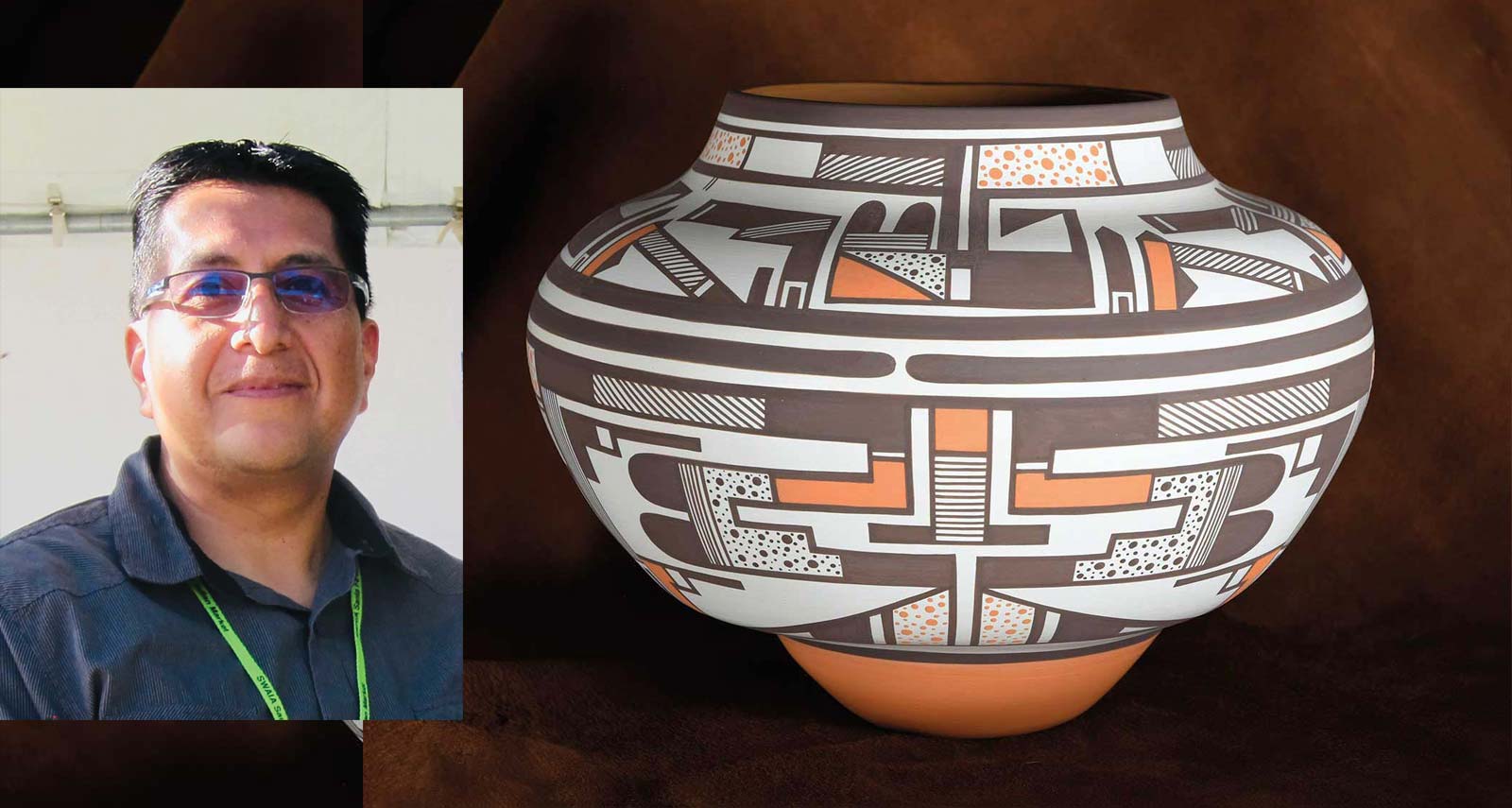
Gabriel Paloma (Zuni)
Booth: PLZ 56
“I am a multi-talented individual who thrives to put hands on clay, wood, canvas, photography, sculpture and conceptual art, especially pottery,” says Gabriel Paloma, who is a retired high school teacher. “No matter the medium, my creations in clay have been an incarnation of living in the past.
I create pottery to uplift my spiritual devotion with the use of native materials that I find around the reservation. Currently, I have a vision to explore in depth more styles of Zuni wares.”
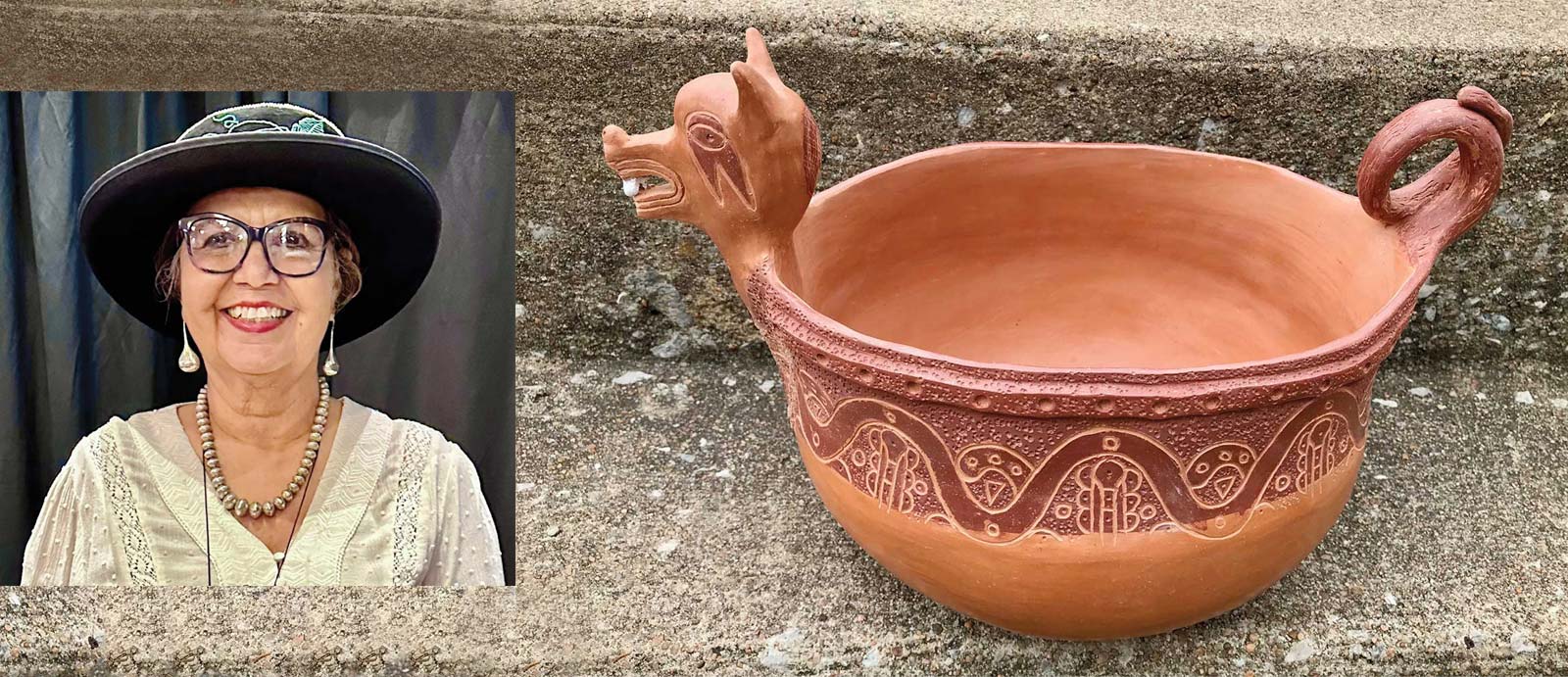
Crystal Hanna (Cherokee)
Booth: SFT 513
Crystal Hanna is a Cherokee Nation citizen from Tulsa, Oklahoma. She has been creating, showing and teaching traditional pottery methods since 1999. Her inspiration comes from her ancient ancestors who lived in the Southeastern United States. While she prefers to work with hand-processed “wild clays,” she also works with commercial low-fire earthenware. Her work has been in museum exhibitions and her story has been documented in the OSIYO-Cherokee sponsored TV show, an episode of which can be viewed on YouTube.
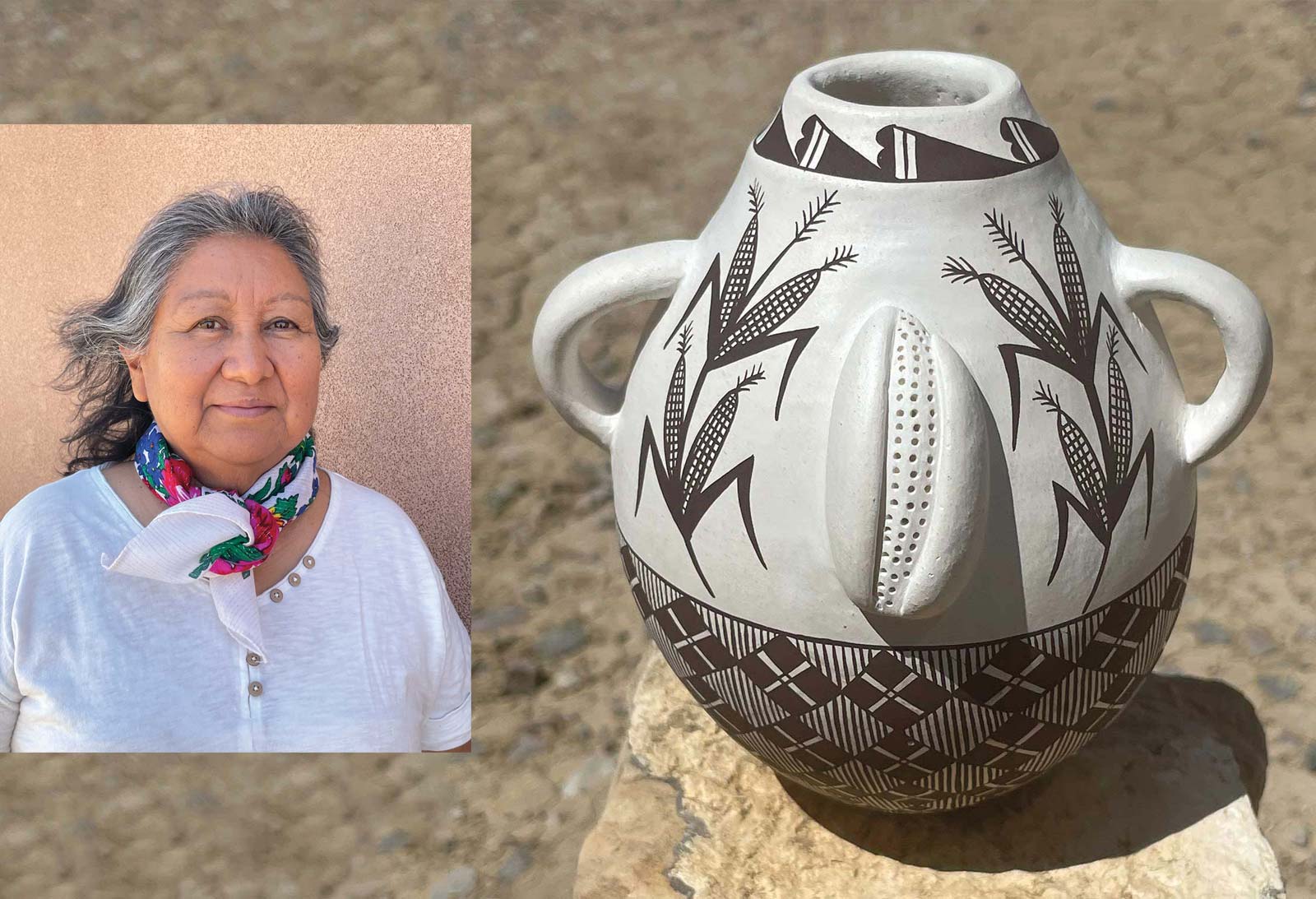
Sharon Lewis (Acoma Pueblo)
Booth: PLZ 45
Sharon Lewis gathers natural clay and pigments from Acoma Pueblo land to use in her pottery. “I am a self taught artist and even after 40 years, I continue to enjoy and take pride in creating an art form passed down from my ancestors,” says Lewis. “I draw inspiration from historical pottery designs and incorporate my own ideas of contemporary design. Bringing these pots to market is always a rewarding experience.”
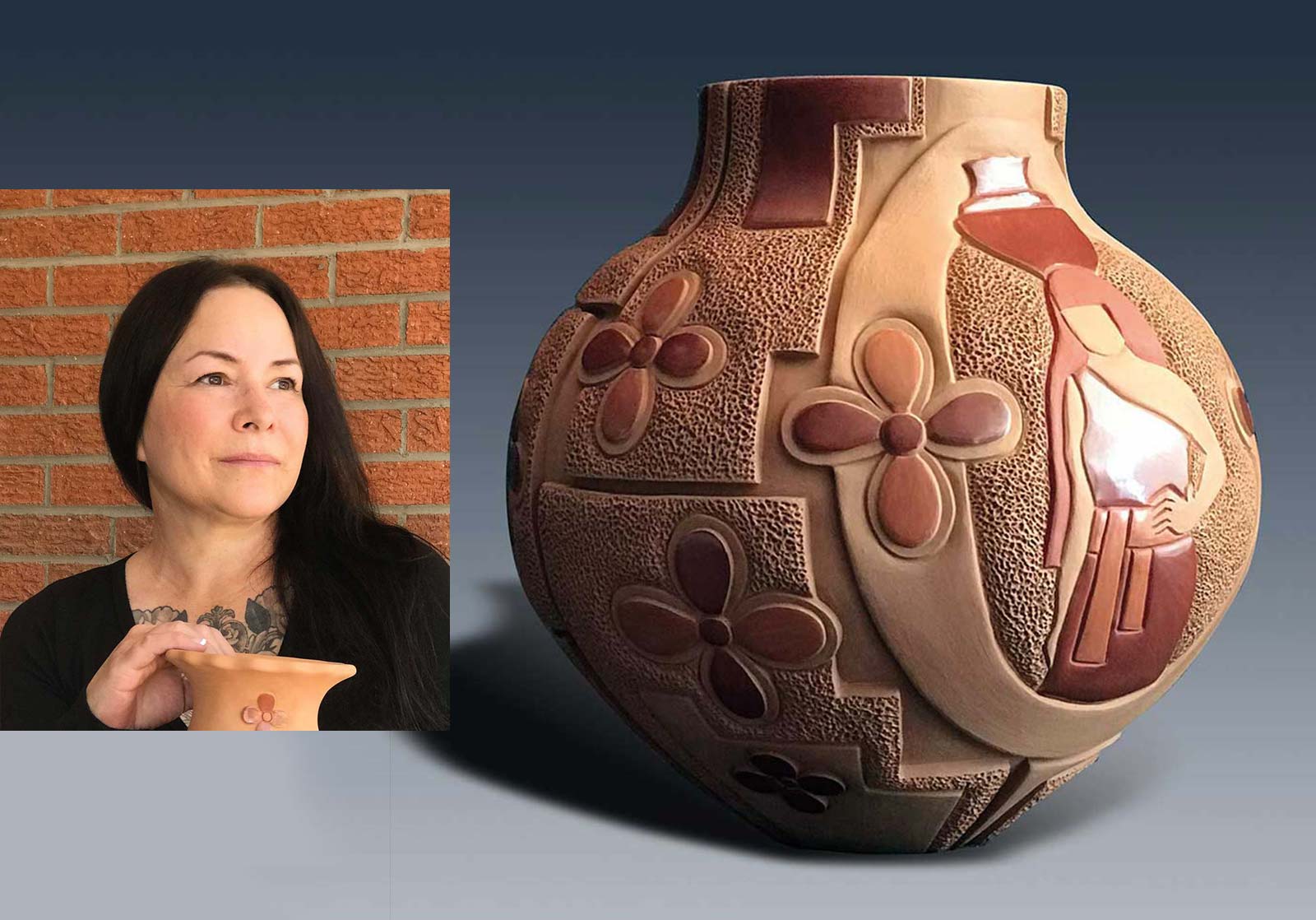
Tammy Garcia (Santa Clara Pueblo)
Booth: PLZ 22
Tammy Garcia is one of the most renowned pueblo potters working today, and comes from a long lineage of exceptional female potters, who passed down their knowledge and skill. “As a teenager working with clay, I learned placement of the coil determines the shape of the vessel,” says Garcia. “I would make the water jar again and again. My grandmothers seemed fearless and it inspired me to have courage to evolve and trust my pottery instincts. I wish those who come after me to approach life, and art, in that same fierce spirit.”
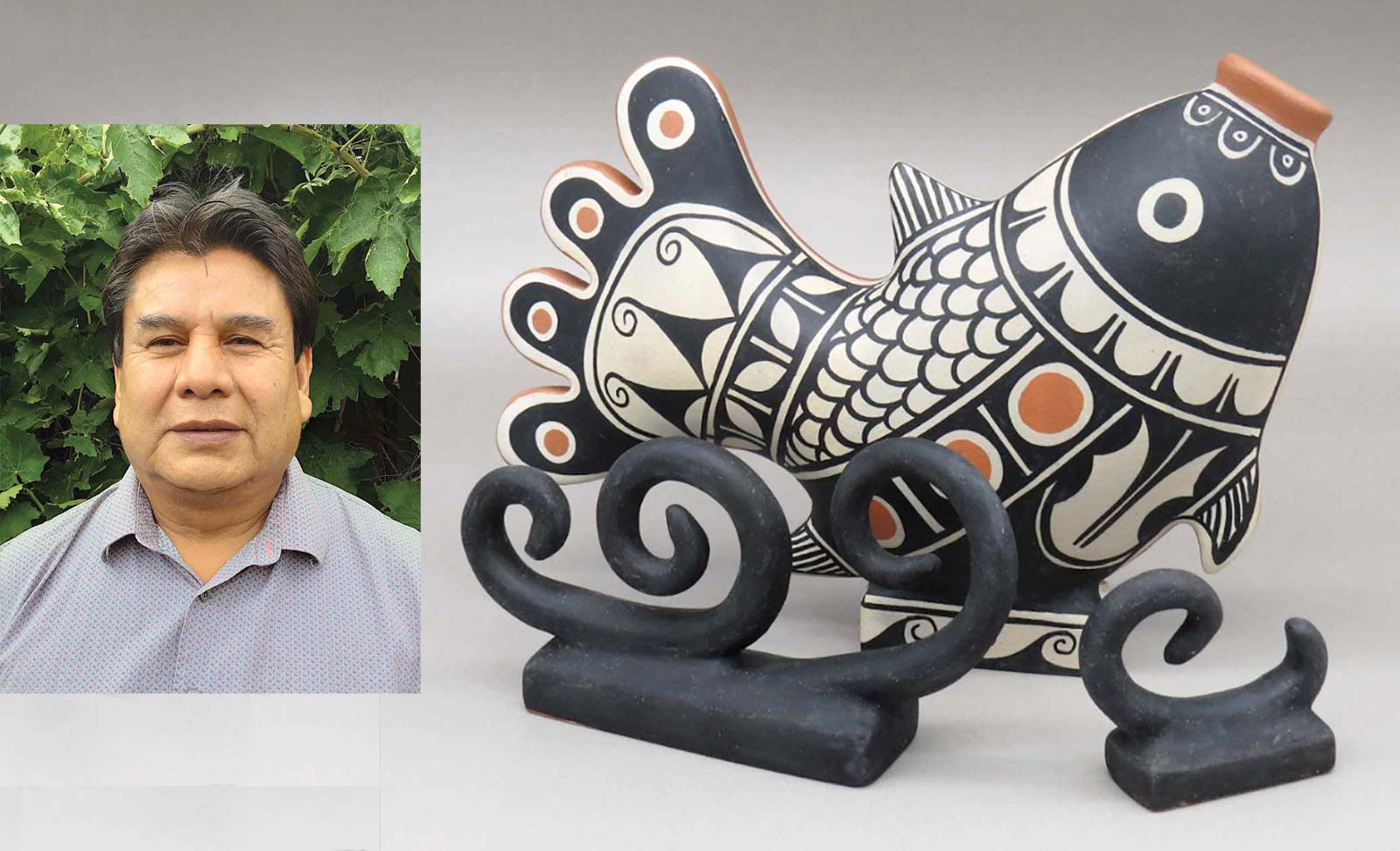
Thomas Tenorio (Kewa Pueblo)
Booth: LIN E 744
Kewa potter Thomas Tenorio uses all traditional materials from nature for his pieces, from the clay, sand, natural pigments and slips to the wood for firing. He makes pots, vases, bowls and fish figurines, all of which he will be showcasing at this year’s Indian Market. “The main goal of mine is to keep this traditional art of my Pueblo alive for future generations,” says Tenorio. “I’m honored to have that responsibility to do so. That said, I want to thank all the artists who came before me, and the ones yet come. Art brings the people of the world together!”
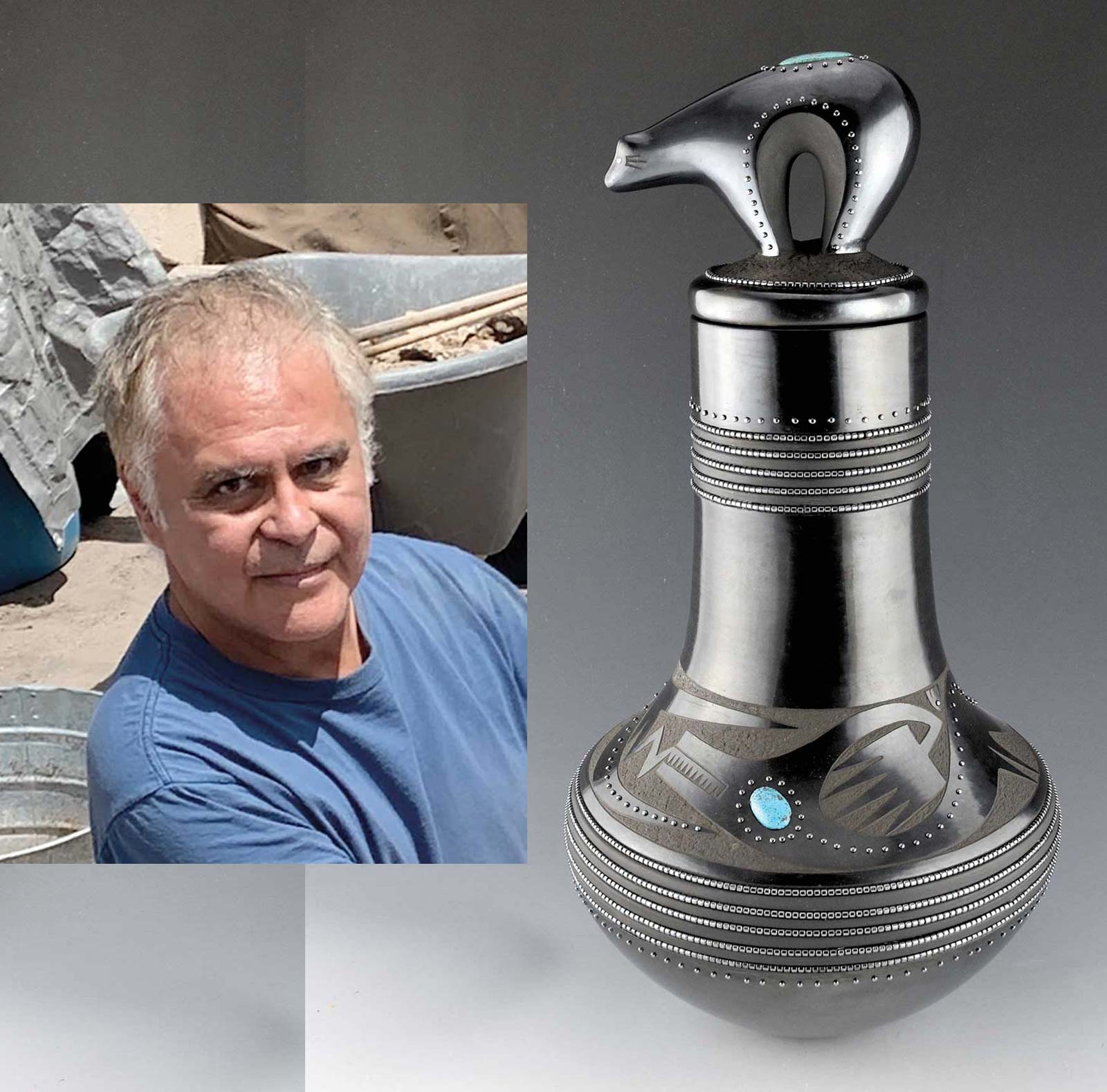
Russell Sanchez (San Ildefonso Pueblo)
Booth: LIN E 711
Russell Sanchez grew up in San Ildefonso Pueblo. Each piece of his pottery is made with native clay and traditionally fired. “For me, tradition means moving forward and adding to what has come before,” says Sanchez. You keep changing and evolving. If we stayed stagnant, we would no longer exist. I want each piece to be unique, from my revival of polychrome colorations to gunmetal firings, they speak to the importance of Native pottery in the world of art.” (Image courtesy King Galleries.)
Glossary Of Terms
Paddle and Anvil Method A traditional technique that employs a wooden paddle to shape the exterior of a piece and an anvil on the inside to create various forms. The application of pressure on both sides creates strong, durable pottery with even thickness.
Burnishing The process of rubbing a smooth stone on a dried piece of pottery to achieve a polished, shiny surface.
Coil Method A traditional pottery technique where long ropes of clay are rolled and stacked to build up the walls of a vessel
Fire Cloud A blemish caused by a piece of pottery coming into direct contact with burning fuel, resulting in uneven firing and the formation of dark markings.
Potsherd A fragment of broken pottery, often found at archaeological sites.
Sgraffito Pottery designs formed by scratching or etching lines into the surface of the piece either before and/or after the firing process.
Slip A clay slurry used to join semi-hardened clay pieces as well as for decorative purposes, including additional color and the creation of intricate designs.
Temper Material added to fresh, raw clay to improve its workability and durability during firing. This can include sand, crushed shell and rock, volcanic soil, and even ground-up potsherds.
——————————————————————————————
Painting, Drawing, Graphics & Photography
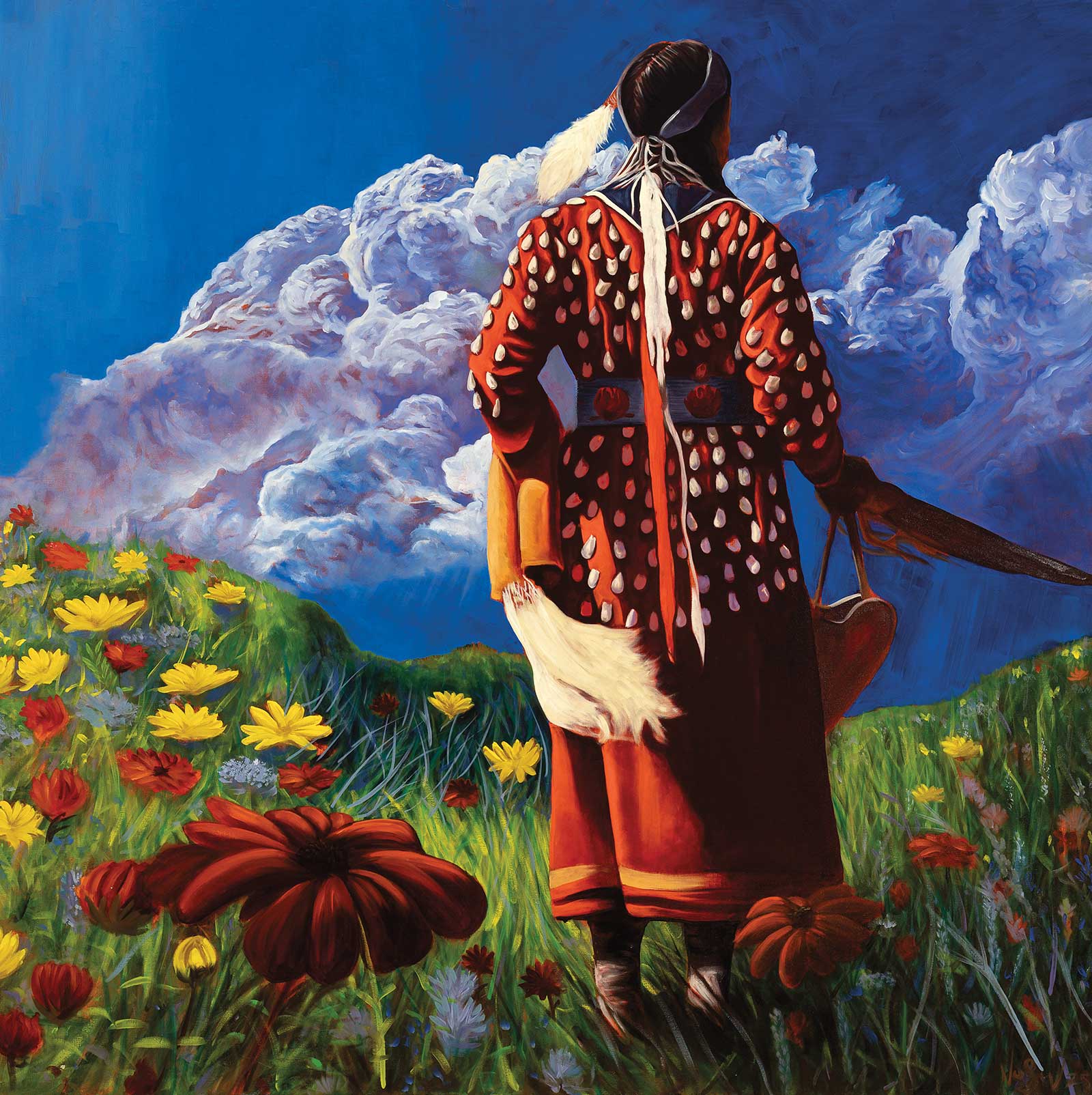
Derek No-Sun Brown (Shoshone-Bannock), Lightning in Her Purse, oil on canvas, 48 x 48 in.
The two-dimensional art classification is one of the most highly anticipated categories at Indian Market. Every year, these dynamic works dazzle collectors—everything from ledger art, printmaking, charcoal and graphite drawings, to sandpainting, photography and traditional paintings. These exceptional artists are carrying the stories and traditions of their heritage, while simultaneously drawing inspiration from the many resources, materials and experiences of modern-day life. “I’ve always looked up to the Old Masters and contemporary greats for inspiration. I see art as a process of discovery with no limits. Through paintings, I get the chance to reinterpret my dreams and visions of the future,” says Derek No-Sun Brown, whose work will be part of the 2025 Indian Market. Read on to learn more about this exciting classification at this year’s market.
2024 Winner: Class III: Painting, Drawing, Graphics & Photography
Johnson Yazzie (Navajo (Diné))
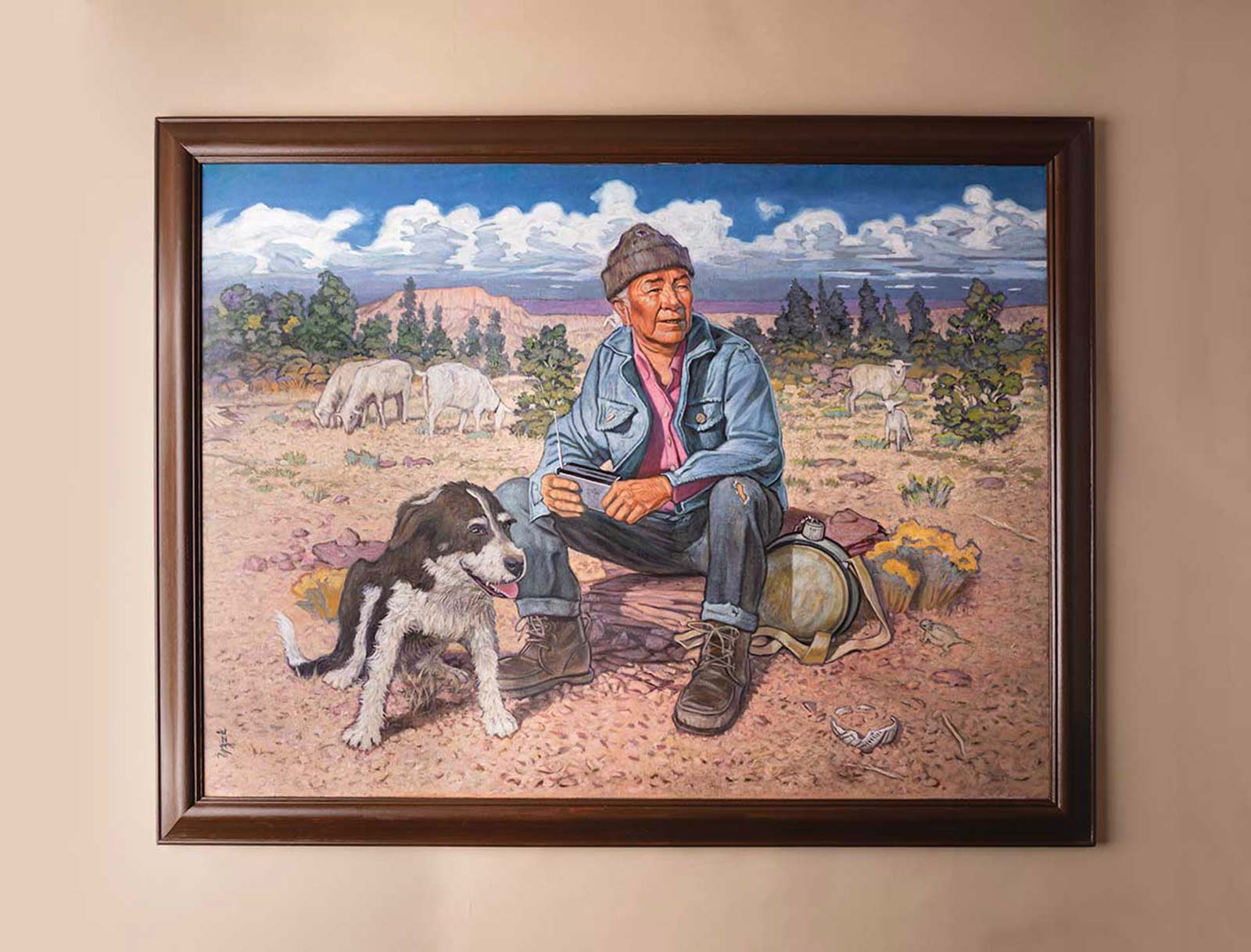
AM 660 Afternoon, acrylic and oil on canvas, 48 x 53 in.
Artists To Watch
Carlin Bear Dont Walk (Crow), Mateo Romero (Southern Keresan Cochiti), Devin Brokeshoulder (Choctaw), Johnson Yazzie (Navajo (Diné)), J. Dylan Cavin (Choctaw), Nocona Burgess (Comanche), Everton Tsosie (Navajo (Diné)), Bryan Waytula (Cherokee), Hillary Kempenich (Turtle Mountain Band of Chippewa), Terrance Guardipee (Blackfeet Nation of Montana)
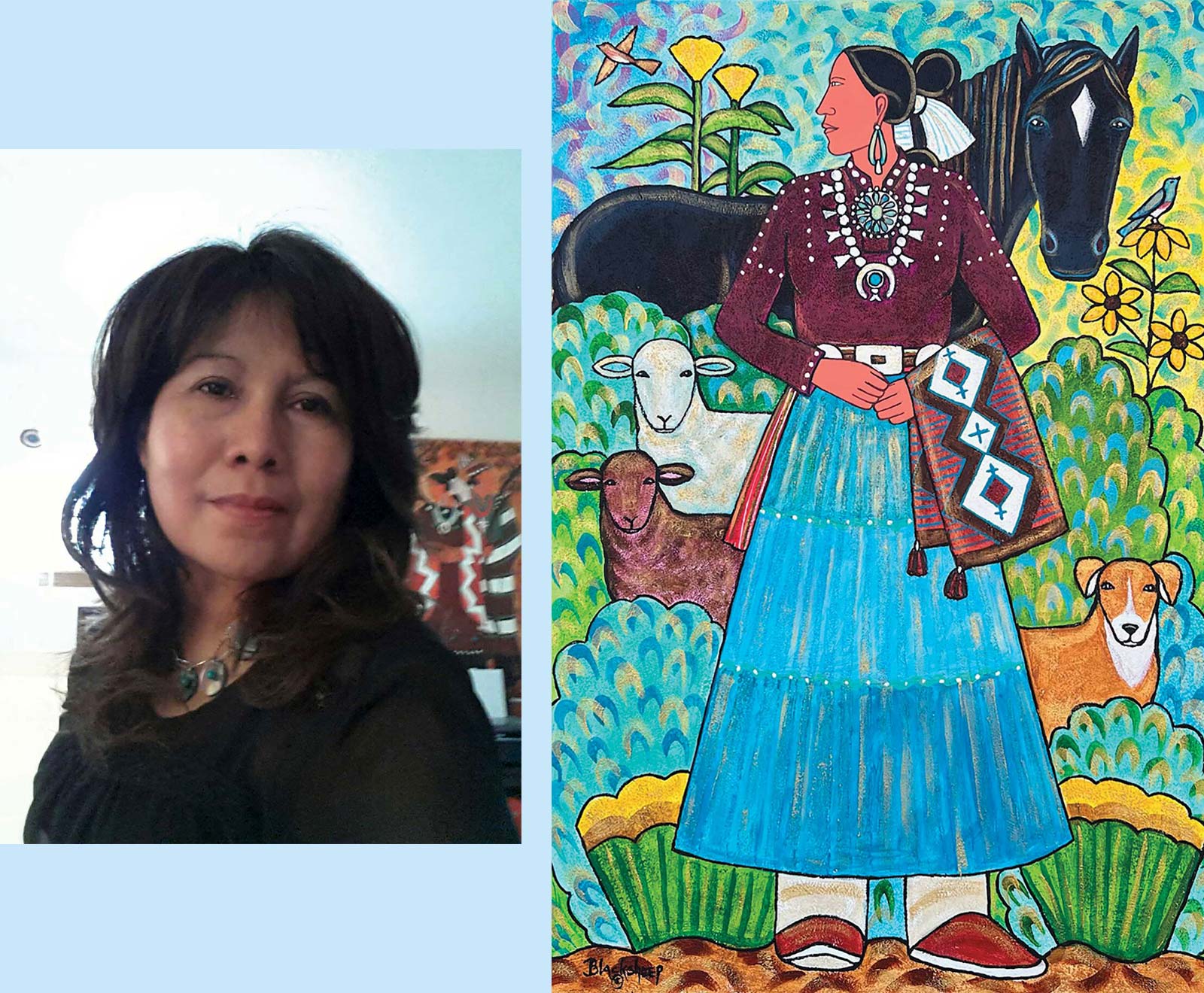
Beverly Blacksheep (Navajo (Diné))
Booth: PAL N 234
The daughter and granddaughter of weavers, Beverly Blacksheep attributes her creativity and work ethic to her family. “The women in my family were all independent, resilient and resourceful,” she says. “They wove rugs to sell at the trading posts, farmed corn, melons and squash, and raised sheep and horses alongside their children. My first thought to create art came from etching on the sandstone boulders with colored rocks as the sheep and goats grazed nearby. Art came naturally, as a way to learn, to experience and appreciate the beauty of the land and sky. I express, through my art, all my memories and appreciation of my family.”
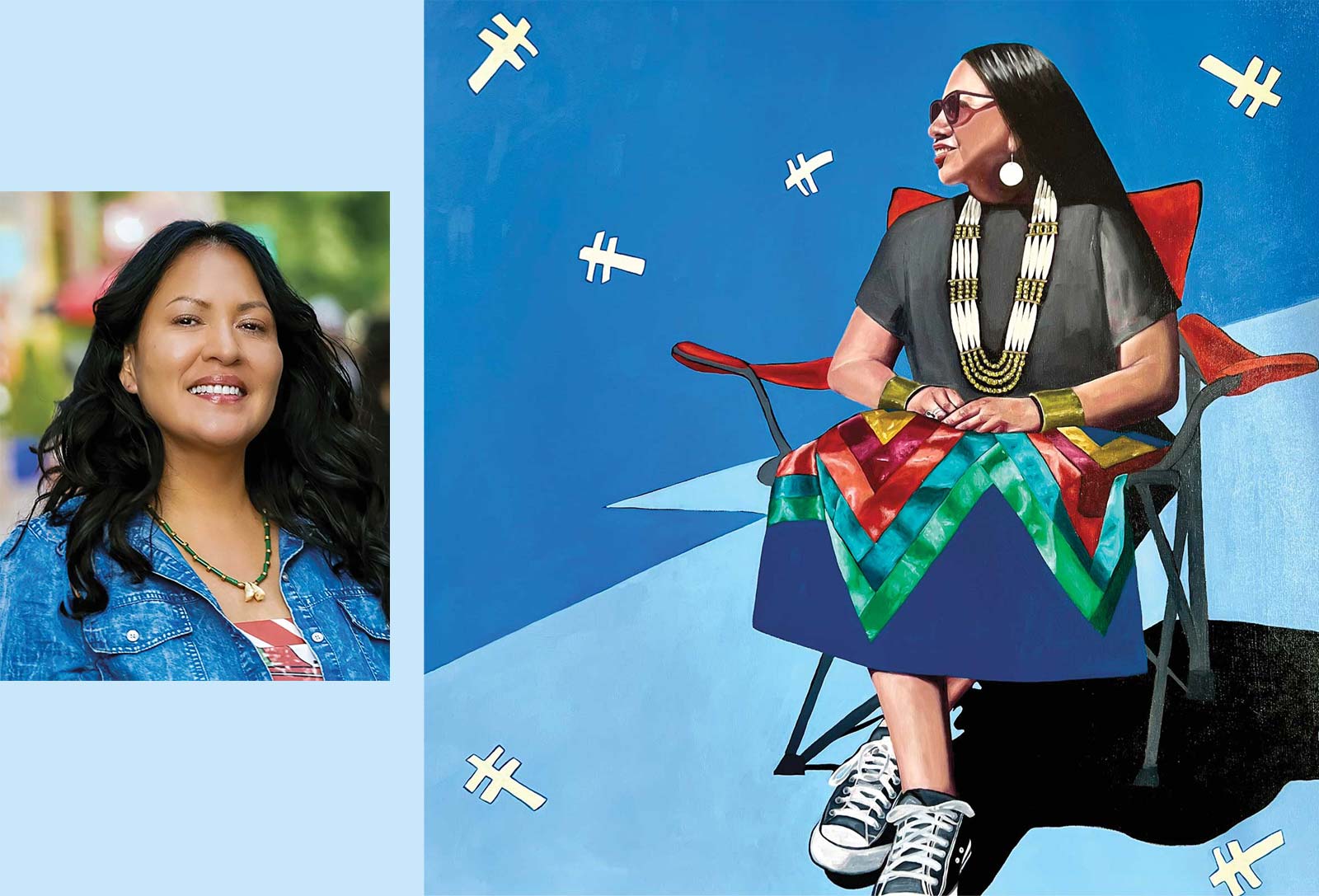
Avis Charley (Spirit Lake Dakota)
Booth: LIN W 738
Avis Charley is a visual artist from Los Angeles. “My work centers on Native presence, power and beauty, and speaks to our movement across time and place,” she says. “This year, I’m focused on justice and hope, reminding us that Indigenous knowledge carries us forward. I return to Indian Market with clarity and growth, ready to share new stories and perspectives.” Charley’s work is in the collections of the Eiteljorg Museum, the Minneapolis Institute of Art and the Crystal Bridges Museum of American Art.
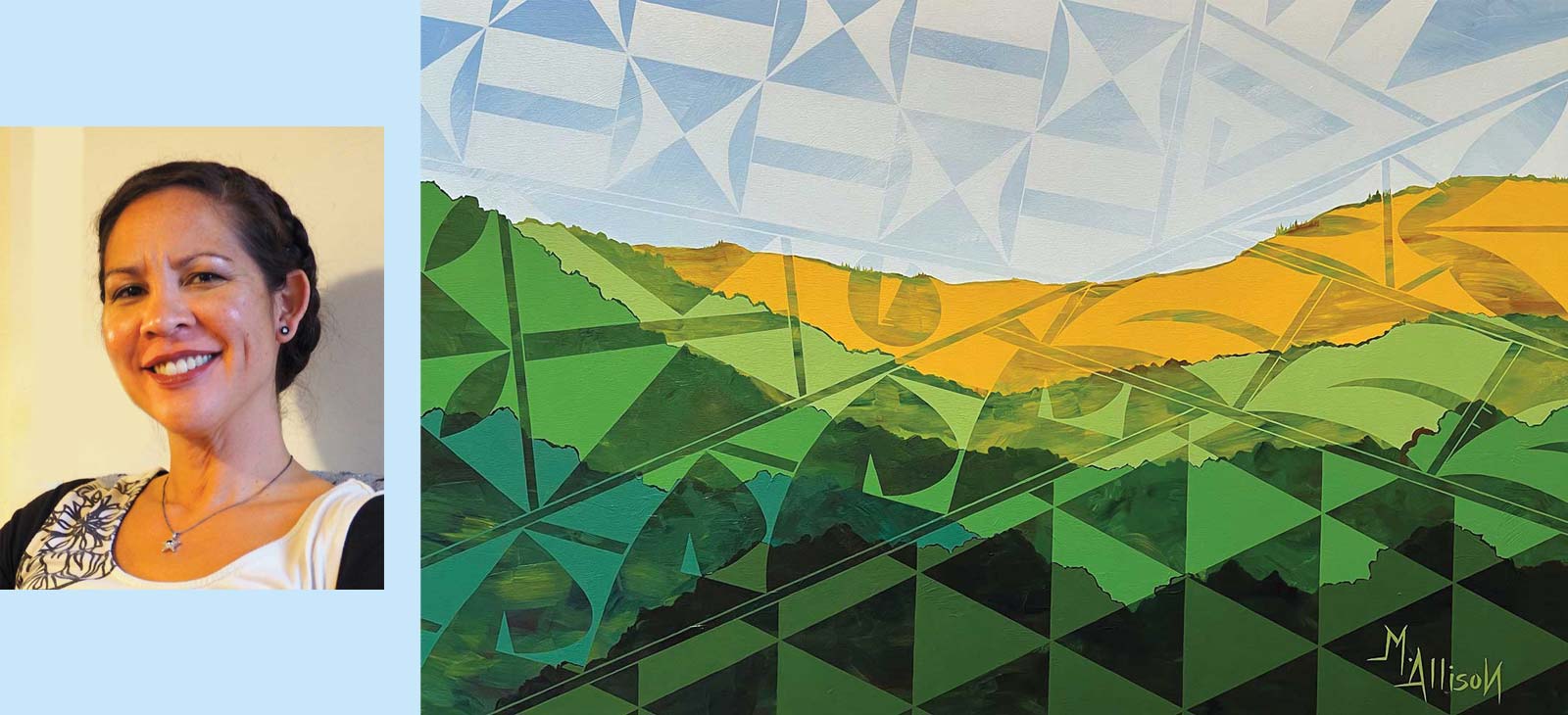
Marla Allison
(Laguna Pueblo)
Booth: LIN E 730
“Art is delightfully addictive,” says artist Marla Allison. Based on traditional pueblo pottery designs, cubism and futurism, her artwork reflects the histories, landscapes and culture of her people as well as life on the reservation. “Sharing new visions of color and shape calls me to the canvas. Balancing history with whimsy, sarcasm, humor [and] philosophy inspires contemplation,” says Allison. “My work is complete when it can inspire how an audience thinks and shows up in the world. I wish my obsession upon us all.”
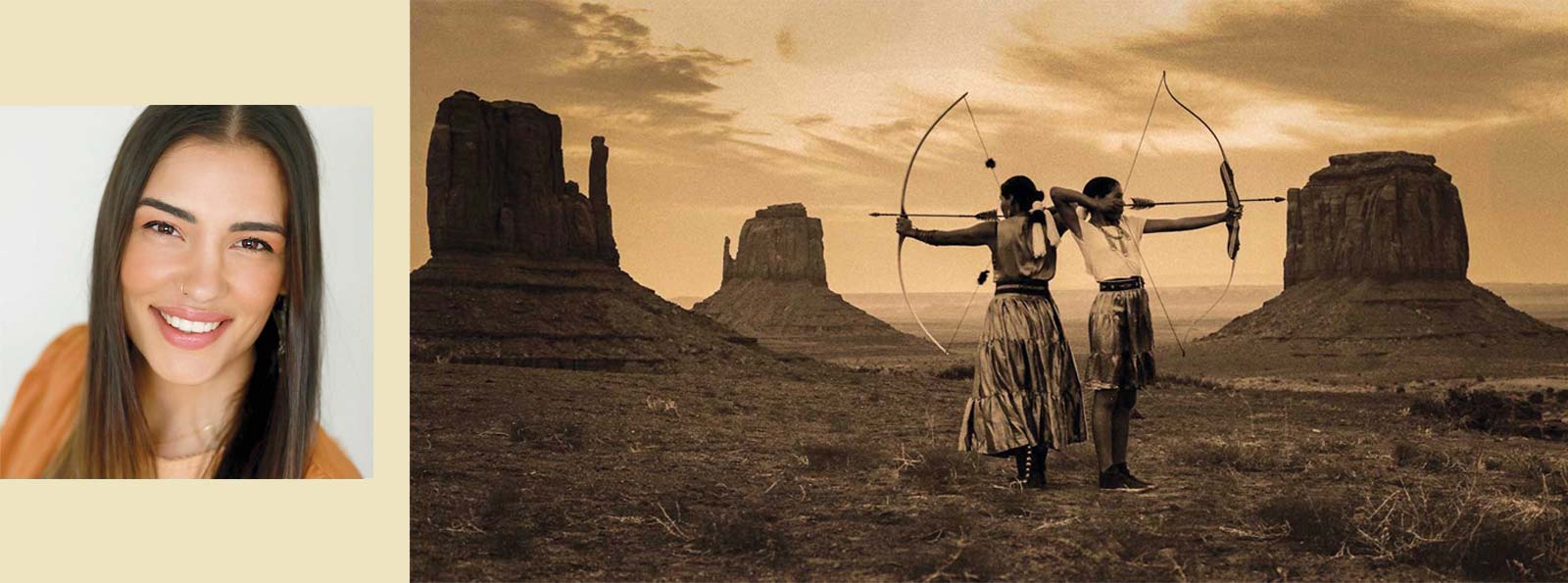
Zoë Marieh Urness (Alaskan Tlingit/Cherokee)
Booth: PLZ 04
Zoë Marieh Urness is an Alaskan Tlingit/Cherokee photographer whose award-winning work bridges documentary and fine art to celebrate and preserve Native American traditions. Raised in the Pacific Northwest, she has drawn from her deep roots in Tlingit culture to create powerful images that connect ancestral practices with contemporary Indigenous life. Her series Native Americans: Keeping the Traditions Alive and her iconic photograph No Spiritual Surrender from Standing Rock have earned her numerous honors, including a Pulitzer Prize nomination and multiple first-place awards from the Autry Museum, the Heard Museum and Santa Fe Indian Market. Urness’ work has been exhibited nationally and internationally, and she is the recipient of the 2022 Sony Alpha Female+ grant for her ongoing project Indigenous Motherhood.
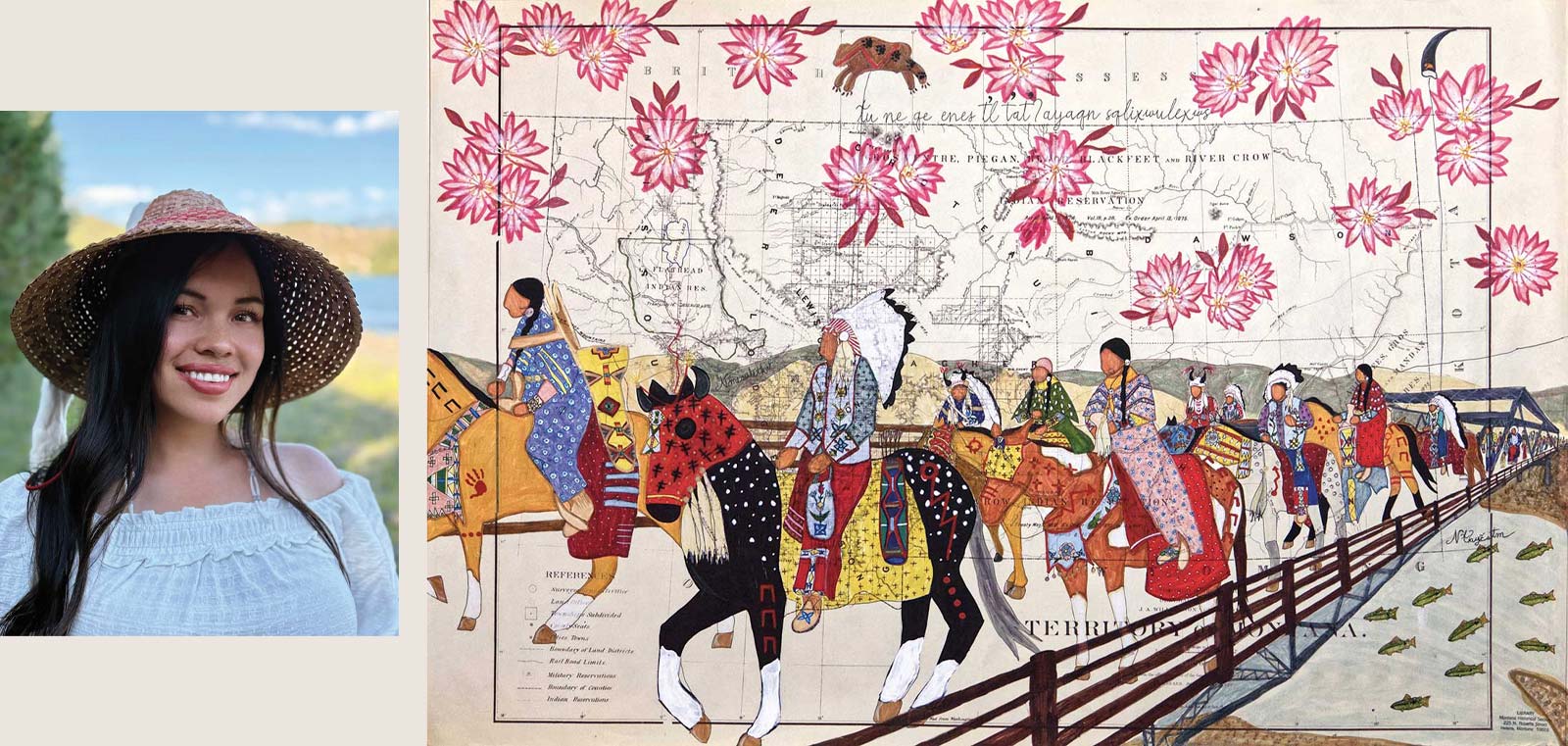
Aspen Decker (Confederated Salish and Kootenai Tribes)
Booth: MAR 807
Ledger artist Aspen Decker is an enrolled member of the Confederated Salish and Kootenai Tribes and a speaker of her tribal Salish language. She graduated with a master’s degree in linguistics from the University of Montana in 2021 and earned her bachelor’s degree in Tribal Historic Preservation from Salish Kootenai College in 2018. She’s been teaching Salish for 10 years. “Ancestral Indigenous knowledge and language are at the heart of my work,” says Decker. “As a Salish speaker and storyteller, I create ledger art on antique maps that reflect Indigenous ways of knowing and emphasize cultural preservation, language revitalization, storytelling and Plains Indian Sign Language.”
Glossary Of Terms
Representational Painting/Graphics A realistic/stylized form using traditional Native subject matter that reflects the regional and cultural style of tribal groups in a flat naturalistic manner with minimal use of perspective, depth, shading and light.
Abstract Painting/Graphics SWAIA defines abstract painting as one in which the subject is simplified or reduced to its essential forms, but where the viewer can “interpret” it as having been derived from something “real.”
Sandpainting Sandpainting is the art of pouring colored sands, powdered pigments from minerals or crystals, and pigments from other natural or synthetic sources onto a surface to make a fixed or unfixed sand painting.
Ledger Art A narrative drawing or painting on paper or cloth, ledger art is predominantly practiced by Plains Indians, but also comes from the Plateau and Great Basin. The term is derived from the accounting ledger books that were a common source of paper for Plains Indians during the late 19th century.
Printmaking Printmaking is the process of making artworks by printing, typically on paper. Importantly, it covers only the process of creating prints with an element of originality, rather than just being a photographic reproduction of a painting. Printmaking is not chosen simply for its ability to produce multiple impressions, but rather, for the unique qualities that each of the printmaking processes creates.
Photography In the photography division, SWAIA accepts metallic photography, as well as alternative processes like platinum, palladium and carbon, and digital techniques like giclee, light jet and iris.
———————————————————————————
Pueblo Wooden Carvings
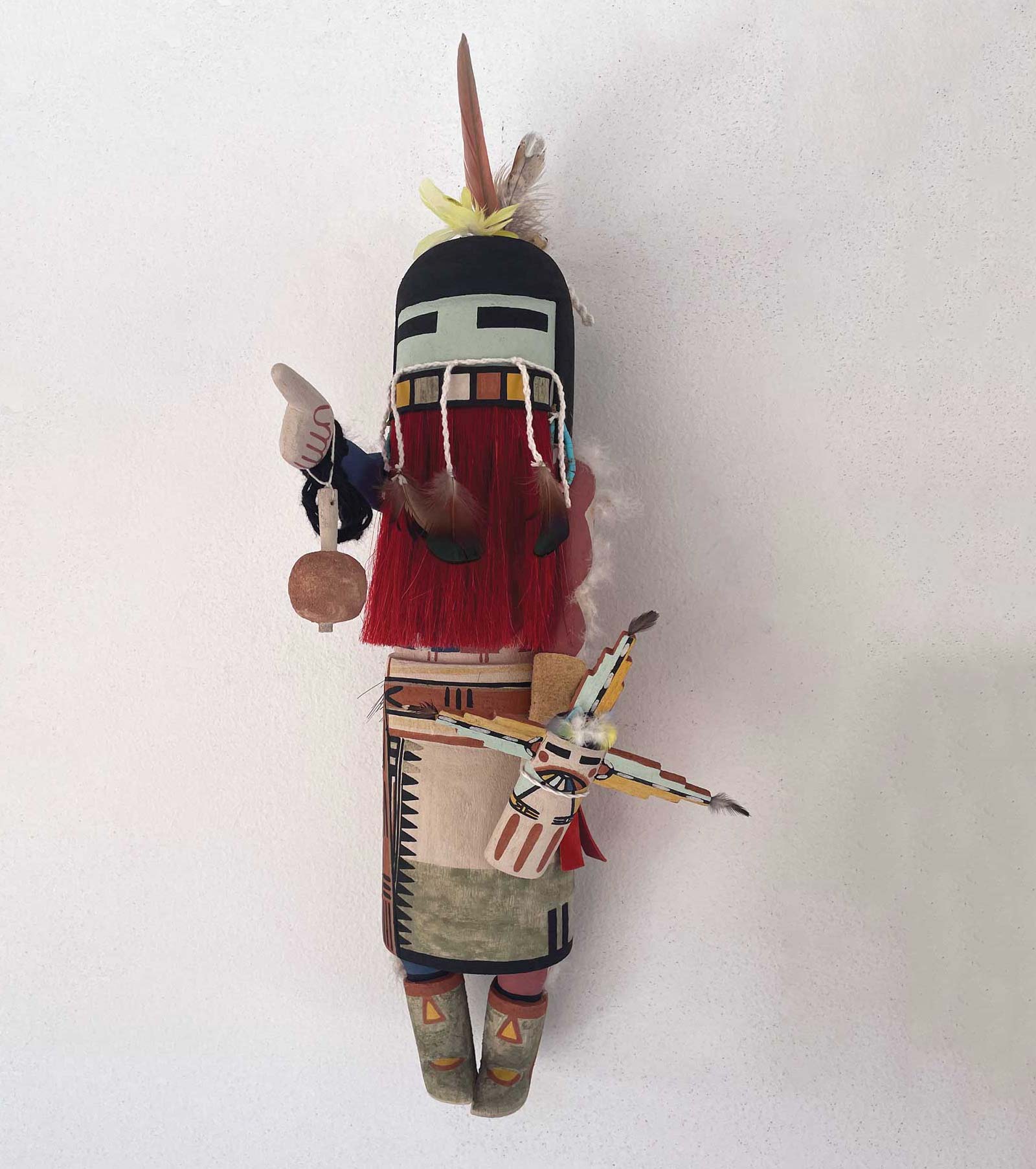
Randall Brokeshoulder (Absentee Shawnee), Red Beard Longhair Katsina (Pala’sowitsmi Katsina), cottonwood root, 22 in.
The popular and time-honored classification of pueblo wooden carvings is a beloved area of collecting at Santa Fe Indian Market not only because the works are stunningly made, but also because they frequently represent important cultural figures and deities, especially for the Hopi people. Many tribes can appear within this classification, but it is the Hopi who have elevated katsina carving to the art form it is today and has been for centuries. In addition to the katsina carvings, the classification also features traditional scultpure, bas reliefs, pottery forms and even wearable artwork. There is much to see and collect from this category.
2024 Winner: Class IV: Pueblo Wooden Carvings
Arthur Holmes Jr. (Navajo (Diné))
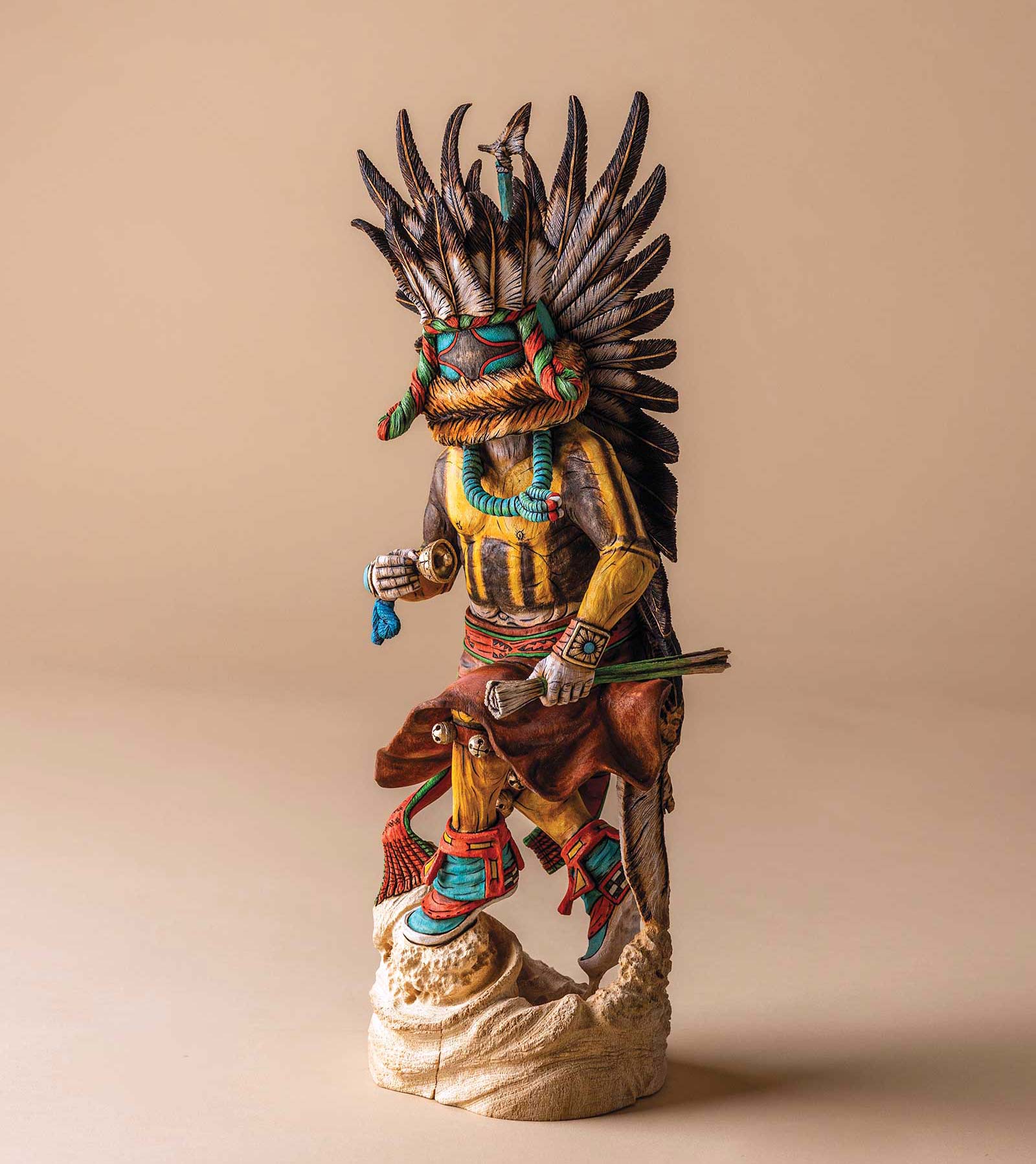
Chasing Star – Na-ngashu Katsina, carved from roots of a cottonwood tree, oil paint, 16½ x 5½ in.
Artists To Watch
Stetson Honyumptewa (Hopi), Manuel Chavarria (Hopi), Adrian Nasafotie (Hopi), Arthur Holmes Jr. (Hopi), Edward Seechoma (Hopi), Donald Lomawunu Sockyma (Hopi), Darance Makwesa Chimerica (Hopi), Brendan Kayquoptewa (Hopi)
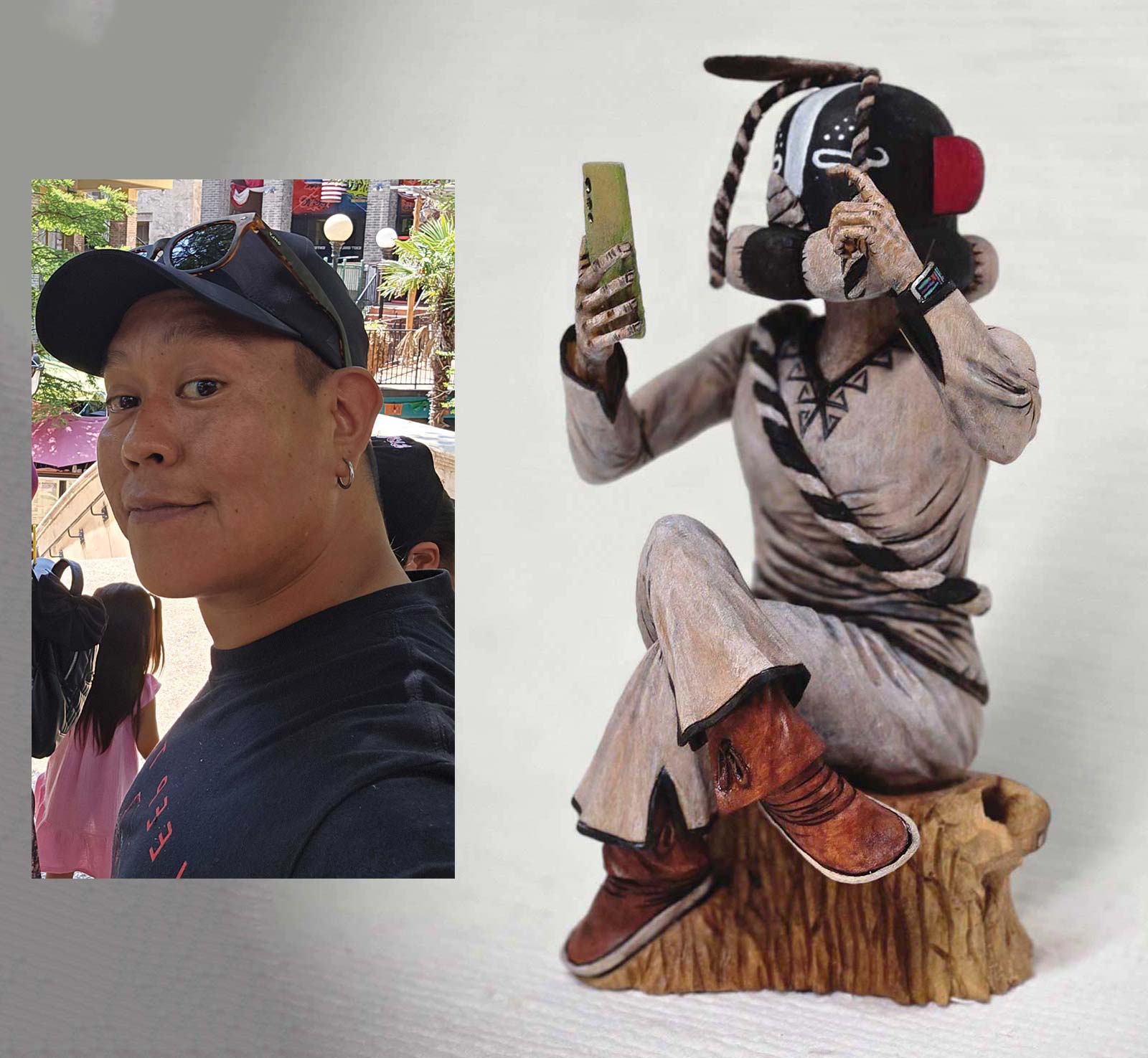
Aaron Honyumptewa (Pueblo of Picuris)
Booth: PLZ 11
Using natural materials and complex new designs, Aaron Honyumptewa is on the leading edge of a new generation of katsina carver. He carves in a more contemporary and realistic style. “The style of carving I have been taught from my father is to bring a life-like depiction of seeing the katsina in real life,” he says. “I have pushed my abilities for this coming market entry. I hope everyone enjoys it.”
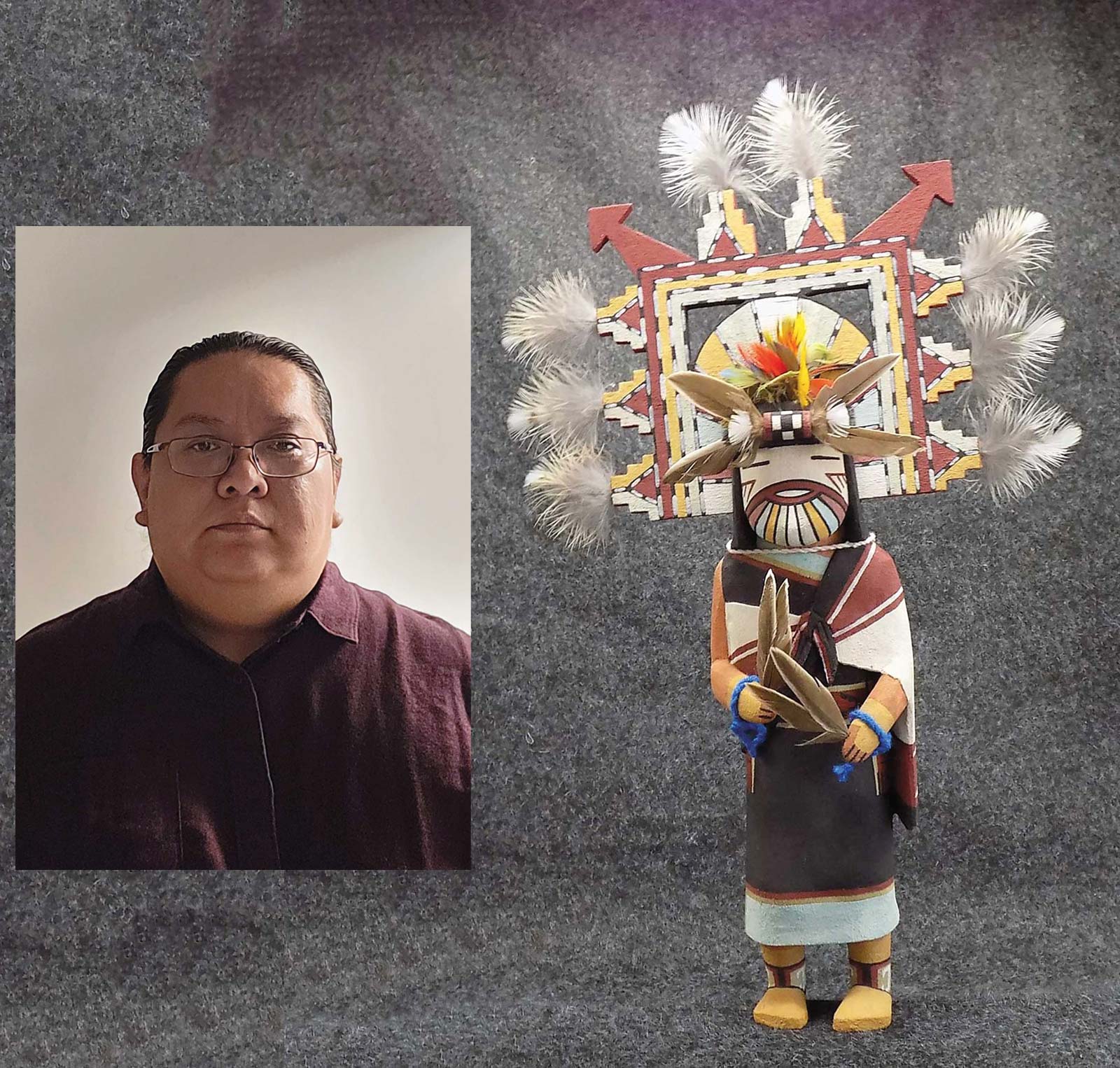
Eric Kayquaptewa (Hopi)
Booth: PLZ 91
Eric Kayquaptewa is a carver from Hotevilla, Arizona. He was taught to carve by family members in Northern Arizona on the Hopi Reservation. His work has appeared in Santa Fe before, as well as other major markets and fairs. His pieces are often colorful and feature materials such as feathers and uniquely carved objects.
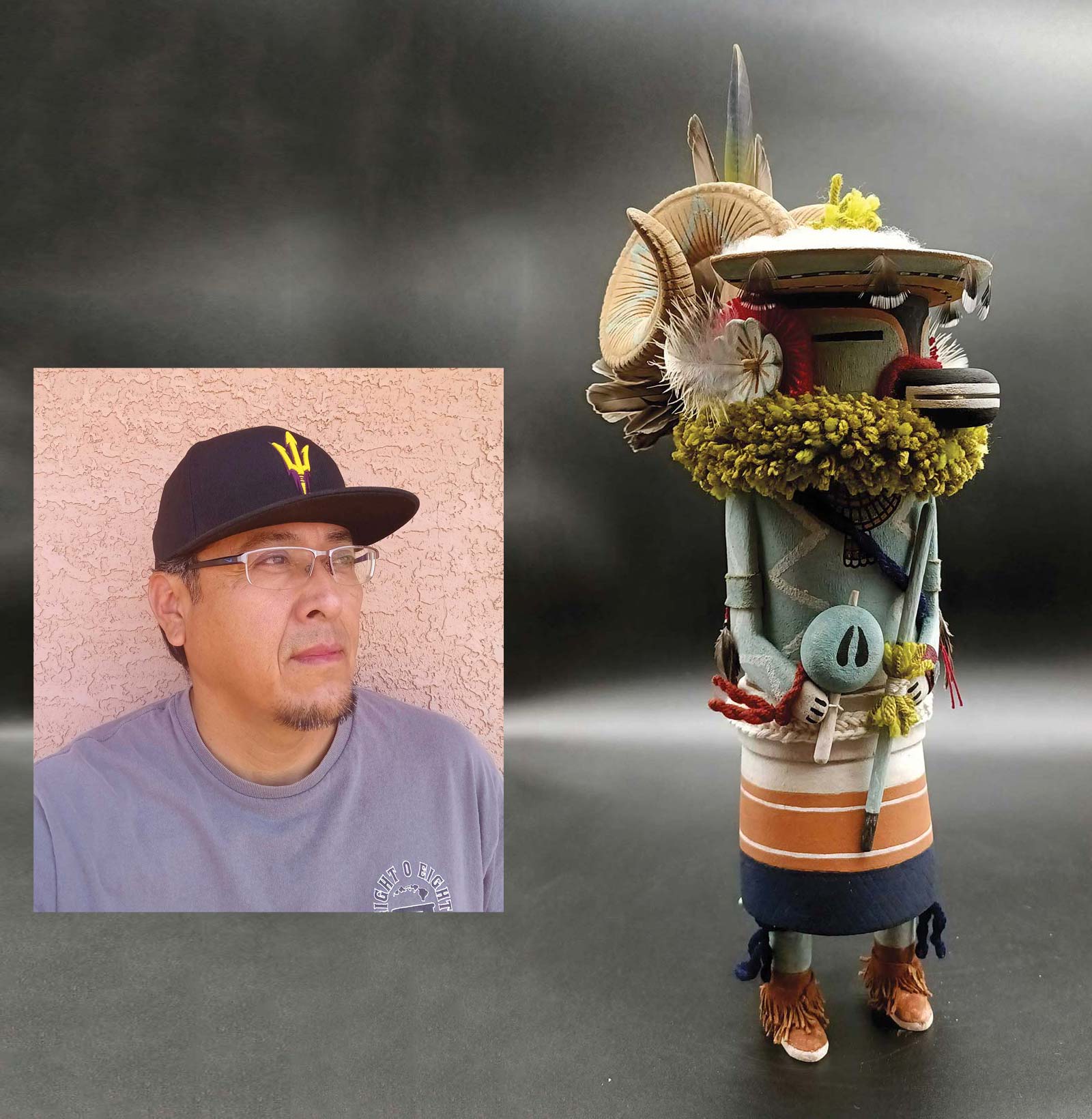
Mark Ron Taho (Hopi)
Booth: PAL N 222
Respected and collected as one of the top katsina carvers working today, Mark Ron Taho is no stranger to awards, magazine covers and features. Known for both is realistic carvings and his more traditional “old-style” carvings, Taho pushes the category forward with carvings that speak to the medium’s past, present and future.
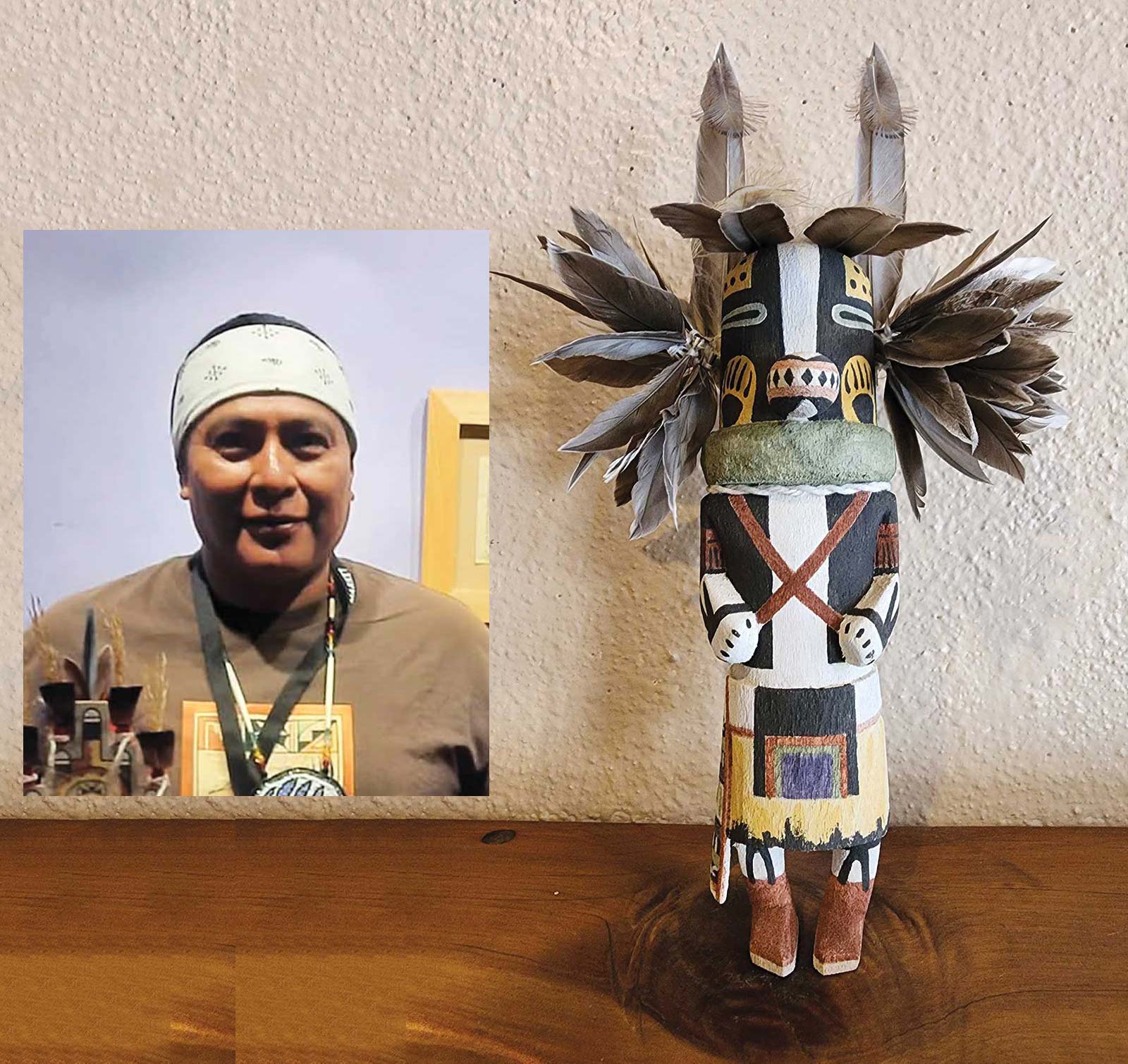
Wayland Namingha Jr. (Hopi)
Booth: POG 104
Wayland Namingha Jr. is Hopi from the Bear (Honwungwa) Clan. He started carving in 2000 with the guidance of his father, the late Wayland Namingha Sr. “This year I will be bringing to market my traditional-style Hopi katsina carvings. The traditional-style katsina are carved using cottonwood root shaped with pocketknives and horseshoe files,” he says. “The paint used on the katsina dolls are all-natural mineral pigments found in and around the Hopi reservation.”
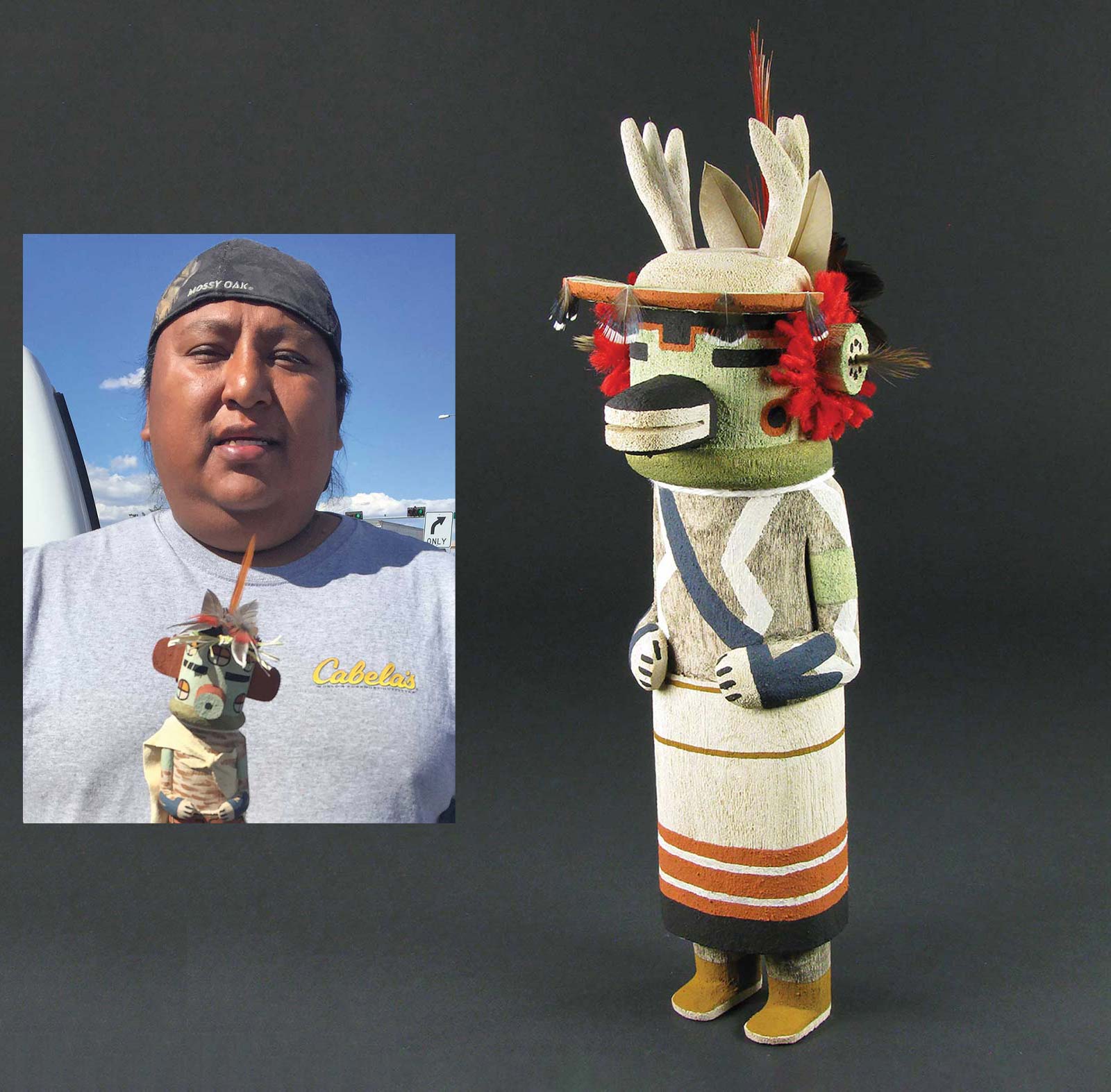
Raynard Lalo (Hopi)
Booth: SFT W 530
Raynard Lalo is from Third Mesa in Northern Arizona. He has been carving since 1998. He is inspired by traditional carvers and only uses natural earth pigments, crushed to a fine powder, in making his paints. “I’m very happy to exhibit my handcrafted artwork at the Santa Fe Indian Market this year,” Lalo says. “I’ve got some new and unusual kachina carvings to share and I’m looking forward to meeting everyone at my booth.”
Glossary Of Terms
Katsina and Katsinam The preferred spelling is “katsina,” as opposed to the more common, but less accurate “kachina.” Katsina also refers to dolls made specifically by the Hopi, Zuni and other pueblo tribes. “Katsinam” is used as the plural form of “katsina.”
Tithu The Hopi word for a katsina doll. The plural version is “katsintithu.”
Cottonwood Most katsina carvings are made from the root of a cottonwood tree, which is soft and holds paint well. The Hopi word for the tree is paako, which means “water wood.”
Bas relief A low-relief, or shallow-depth, carving. Some artists will carve on flat surfaces. These are typically bas reliefs.
Vegetal paints Many carvers use vegetal paints, which are derived from plants. Mineral paints are also popular.
Spiritual Beings Katsina dolls symbolize a spiritual being that embody pieces of the natural world, including animals, seasons, spiritual guardians, the weather and vital life cycles. There are dozens of katsina figures, each with their own meaning.
—————————————————————————————
Textiles
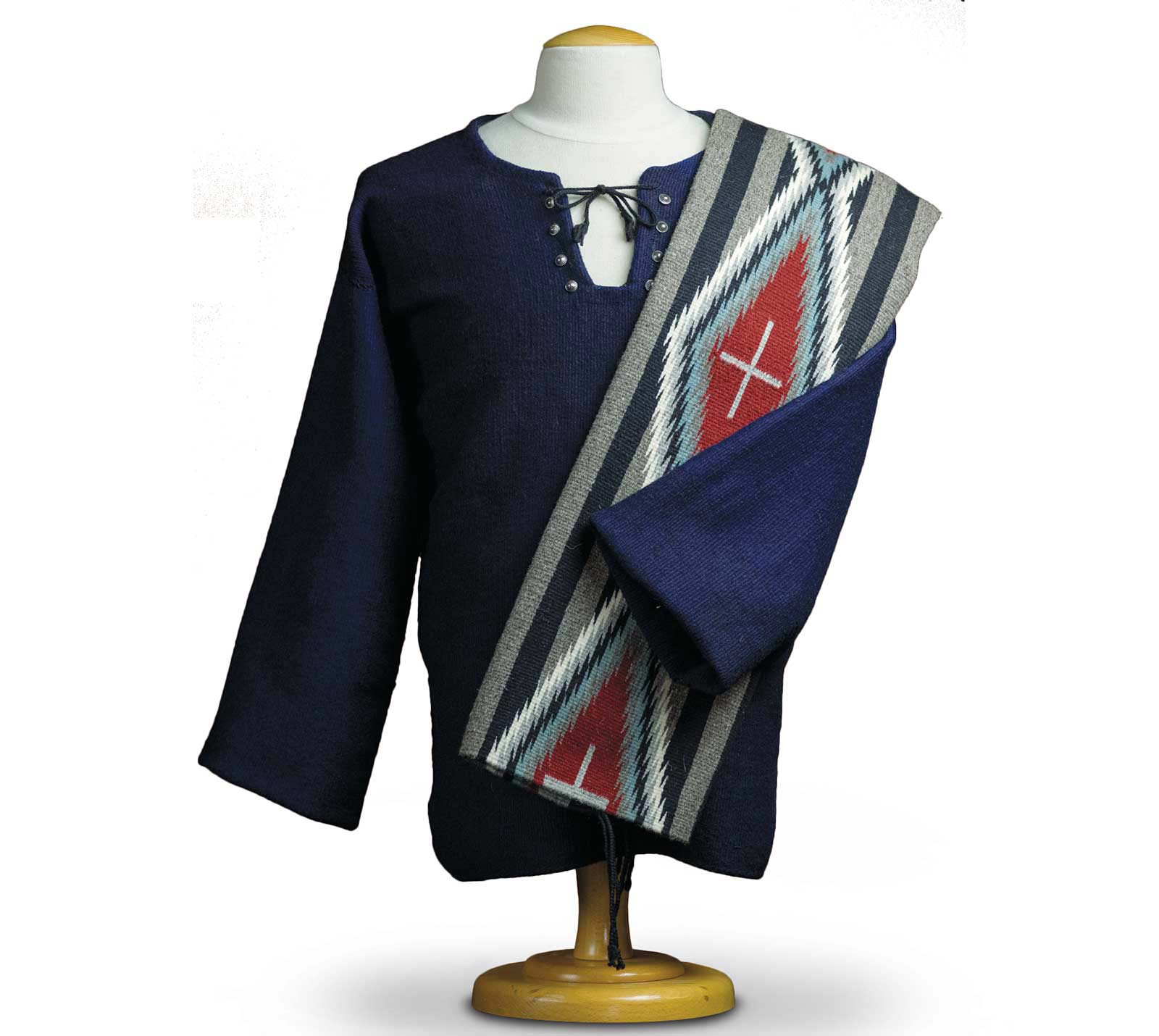
Gerard Begay (Navajo (Diné)), Men's Shirt and Sash
While artists creating for the textile category for Santa Fe Indian Market continue to rely on traditional methods and designs, the 2025 event welcomes contemporary visions to its roster as well. In a wide range of creations, including wearable garments, tapestries, rugs and quilts, artists usher in the “new” while honoring their ancestral backgrounds. This section is dedicated to the textile arts, where collectors can witness an impressive sampling of market’s textile artists—many of whom “weave” together history with fresh perspectives, calling us to action, providing awareness and giving voices to those who may be long gone, but should never be forgotten.
2024 Winner: Class VI: Textiles
Isabel Gonzales (Jemez Pueblo/Walatowa)
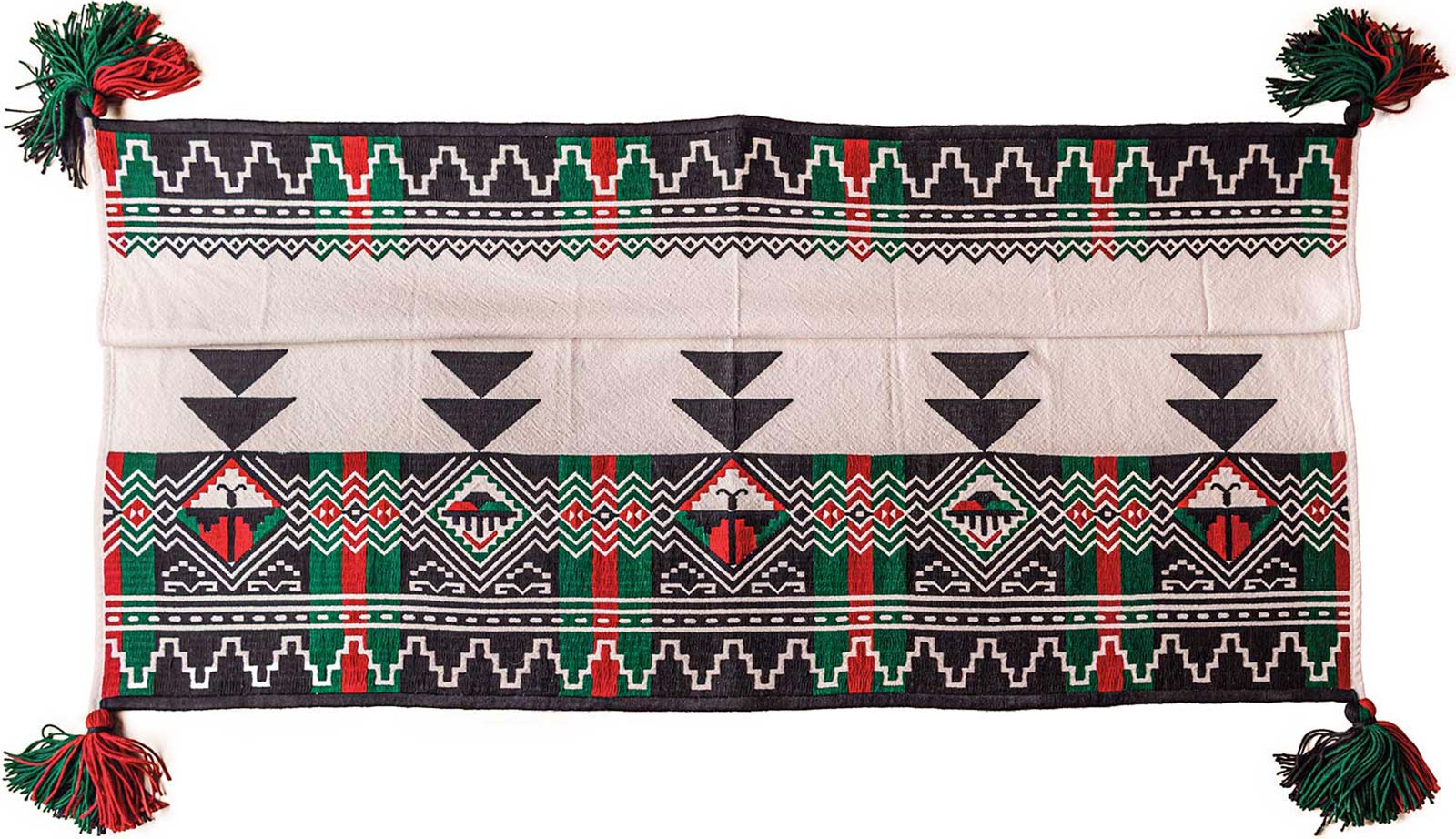
Untitled, hand-embroidered ladies’ manta with a traditional pattern: cotton monks’ cloth, hand-spun yarn on drop spindle, commercial yarn, 60 x 48 in.
Artists To Watch
Rena Begay (Navajo (Diné)), Lola Cody (Navajo ((Diné)), Christy Ruby (Tlingit/Haida), Jocy Little Sky (Mandan/Hidatsa/Arikara), Bonita Woodie (Navajo (Diné)), Chambreigh Onesalt (Navajo (Diné)), Joan Aragon (Pueblo of Zia), Elaine Emmons (Cherokee), Mary Henderson Begay (Navajo (Diné)), Benjamin Nelson (Kiowa)
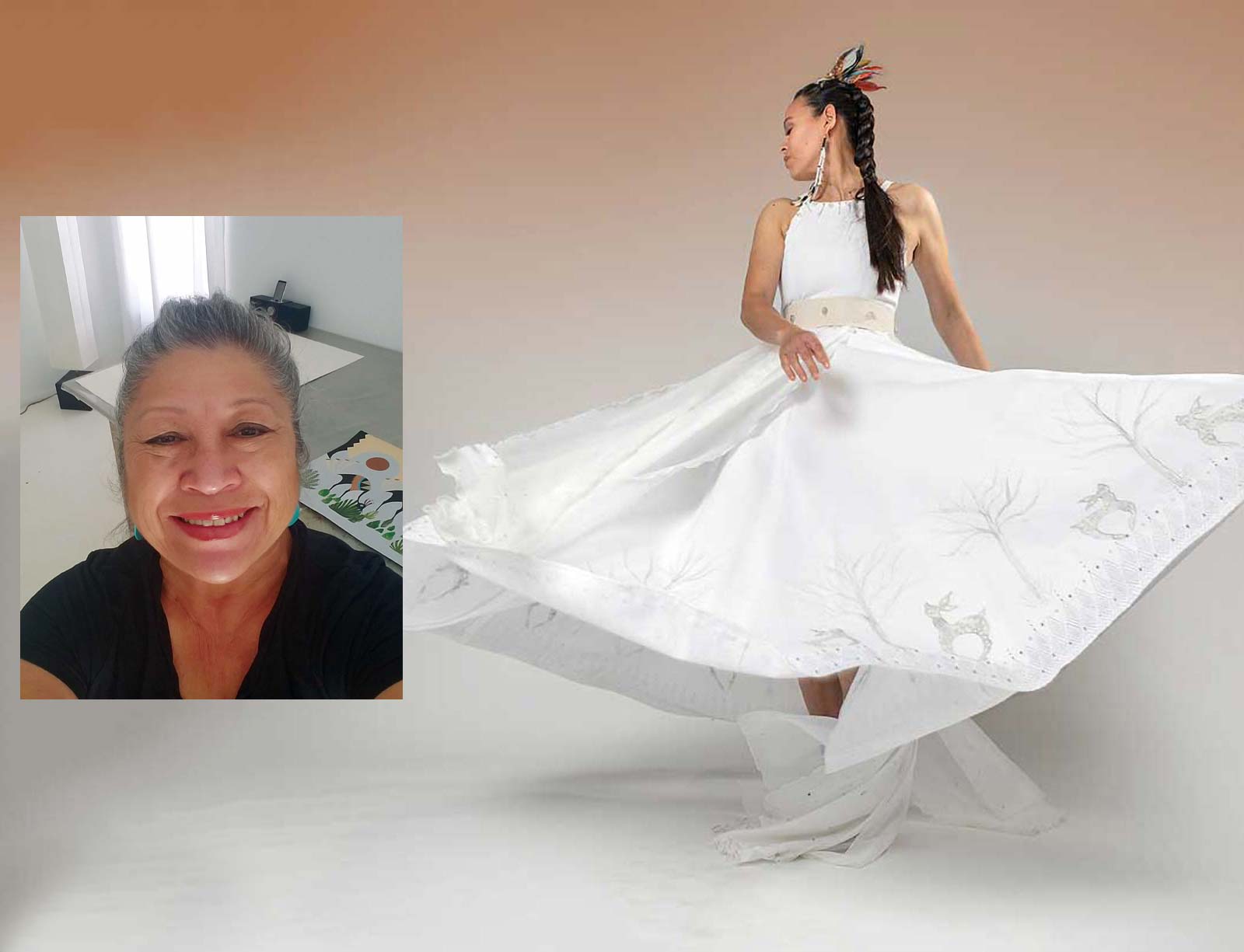
Michelle Tsosie Sisneros (Santa Clara/Navajo/Laguna/ Luiseno Mission)
Booth: FR N 301
Textile artist Michelle Tsosie Sisneros lives in Santa Clara Pueblo located in Northern New Mexico, where she works as a painter and an Indigenous clothing designer. “My designs reflect my memories and my internal conflict with mainstream America,” she notes. “I hope to create clothes that are beautiful, confident, challenging and non-judgmental in shape and size. I look at my clothes as a crossover between worlds—the outside world and my traditional world. I am at peace, yes, but I am a rebel at heart. That is what my art reflects—my beliefs and gratitude.”
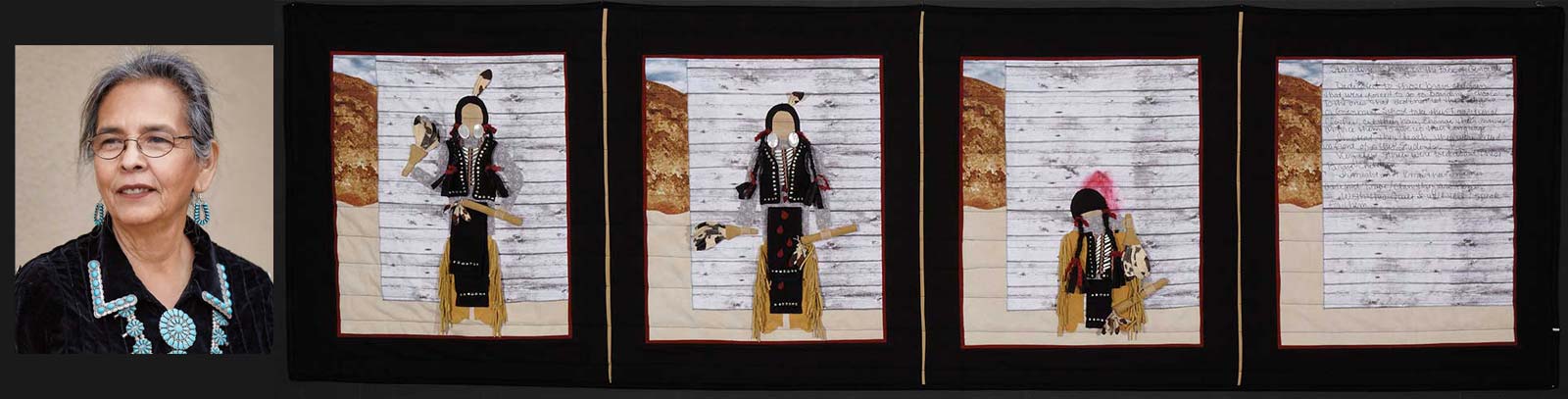
Susan Hudson (Navajo (Diné))
Booth: PLZ 13
Hudson is from Sheep Springs, New Mexico, and her mother is artist Dorothy Woods. Hudson is also the first Indigenous/Navajo quilter to win the National Endowment of the Arts Fellowship and declared a National Treasure by Congress. “I was invited to take two of my quilts to be shown at the White House, and to also speak at the Kennedy Center and the Library of Congress,” she adds. “I was able to reclaim my mothers and ancestors’ voices, history and stories. My quilts are made to educate people about the atrocities and brutality that our people suffered and survived. Their voices and whispers will not be silenced.”
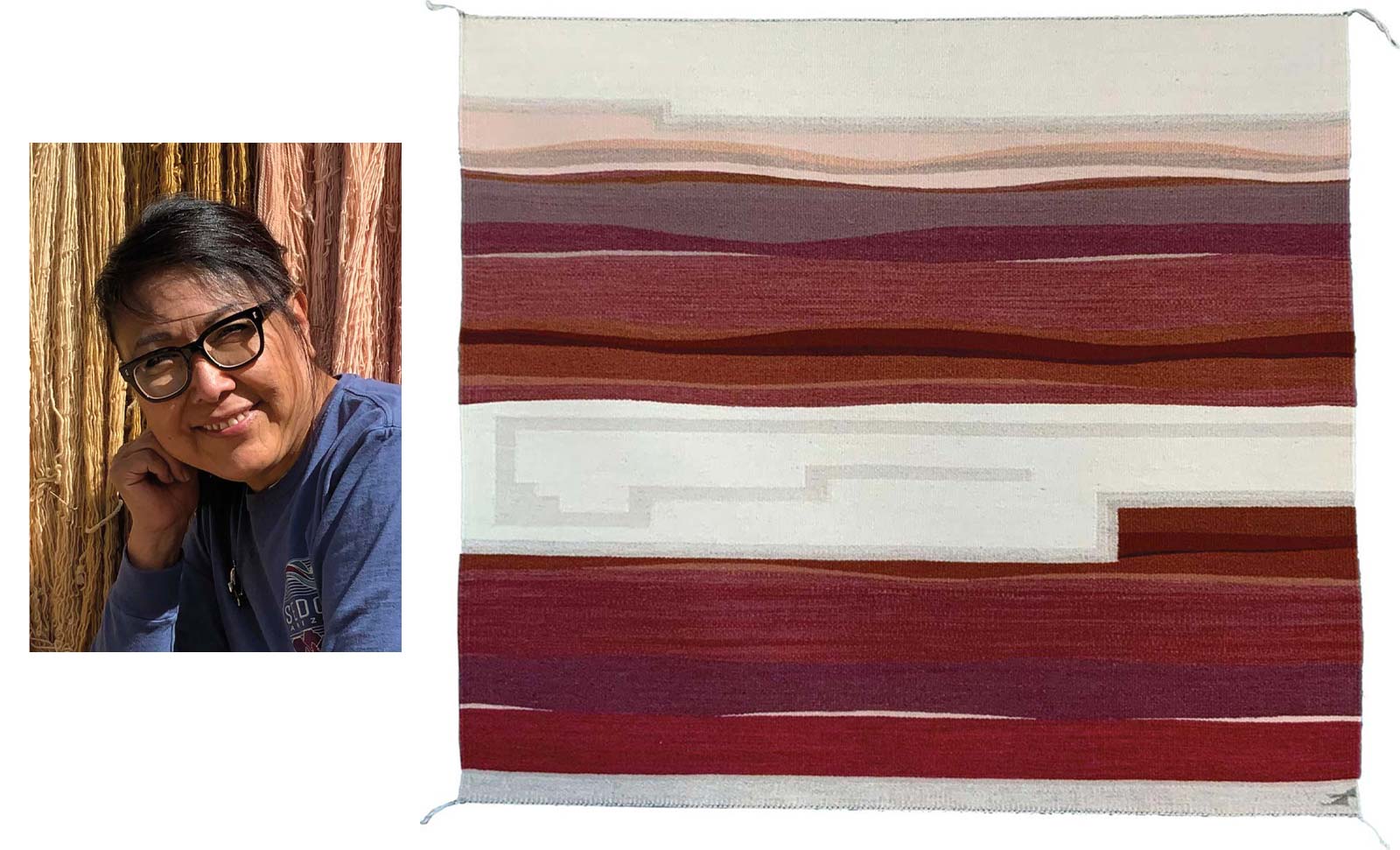
Berdine Y. Begay (Navajo (Diné))
Booth: LIN E 715
Begay was born in Totsohni (Big Water Clan) as Táchi’nii (Red Running into Water/Earth). She is a fifth-generation weaver and grew up in Tselani, Arizona. The artist creates her tapestry to reflect landscape motifs, as in her piece Táchii. “I envisioned red-streaked mesas lingering in the foreground, their layered formations gently swaying across the landscape,” she explains. “The earthy hues of cochineal evoke memories and stories of my paternal clan, Táchi’nii. My father described his clan as being defined by the streaks of deep red hues flowing across the mesa walls of Táchii—his birthplace. The natural reds in the weaving reflect the essence of those mesa walls and the movement of imaginary water streaming through the land.”
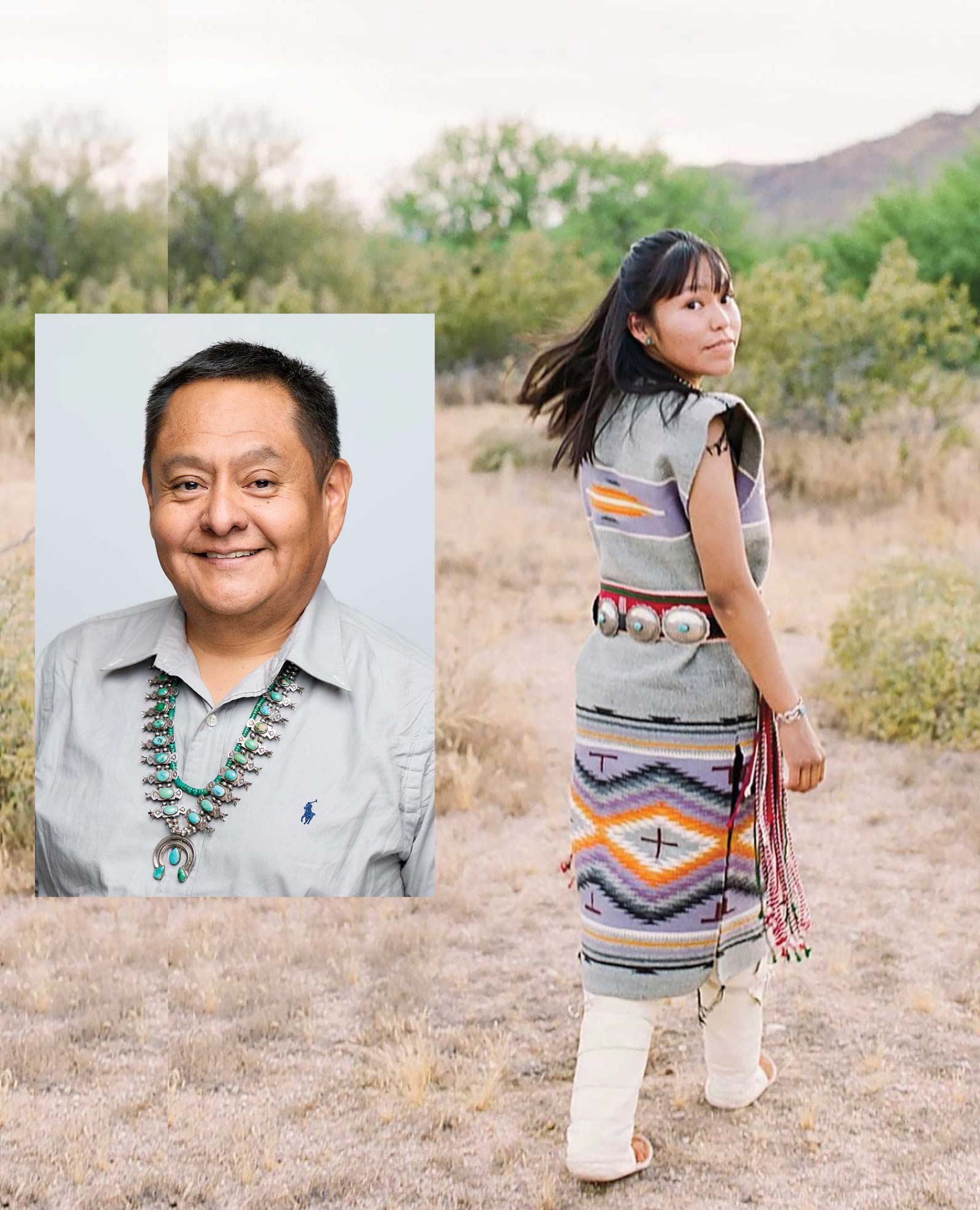
Gerard Begay (Navajo (Diné))
Booth: WA E 404
Gerard Begay is a Navajo textile weaver, educator and cultural practitioner dedicated to creating inclusive, culturally grounded spaces for Indigenous students. For this year’s Santa Fe Indian Market, his work centers on the current political climate and drawing inspiration from traditional stories shared by medicine people. “I will showcase handwoven rugs and biil (rug dress), honoring ancestral knowledge and resilience through weaving,” he shares. “My art serves as both cultural preservation and contemporary commentary, bridging generations with purpose, beauty and voice.”
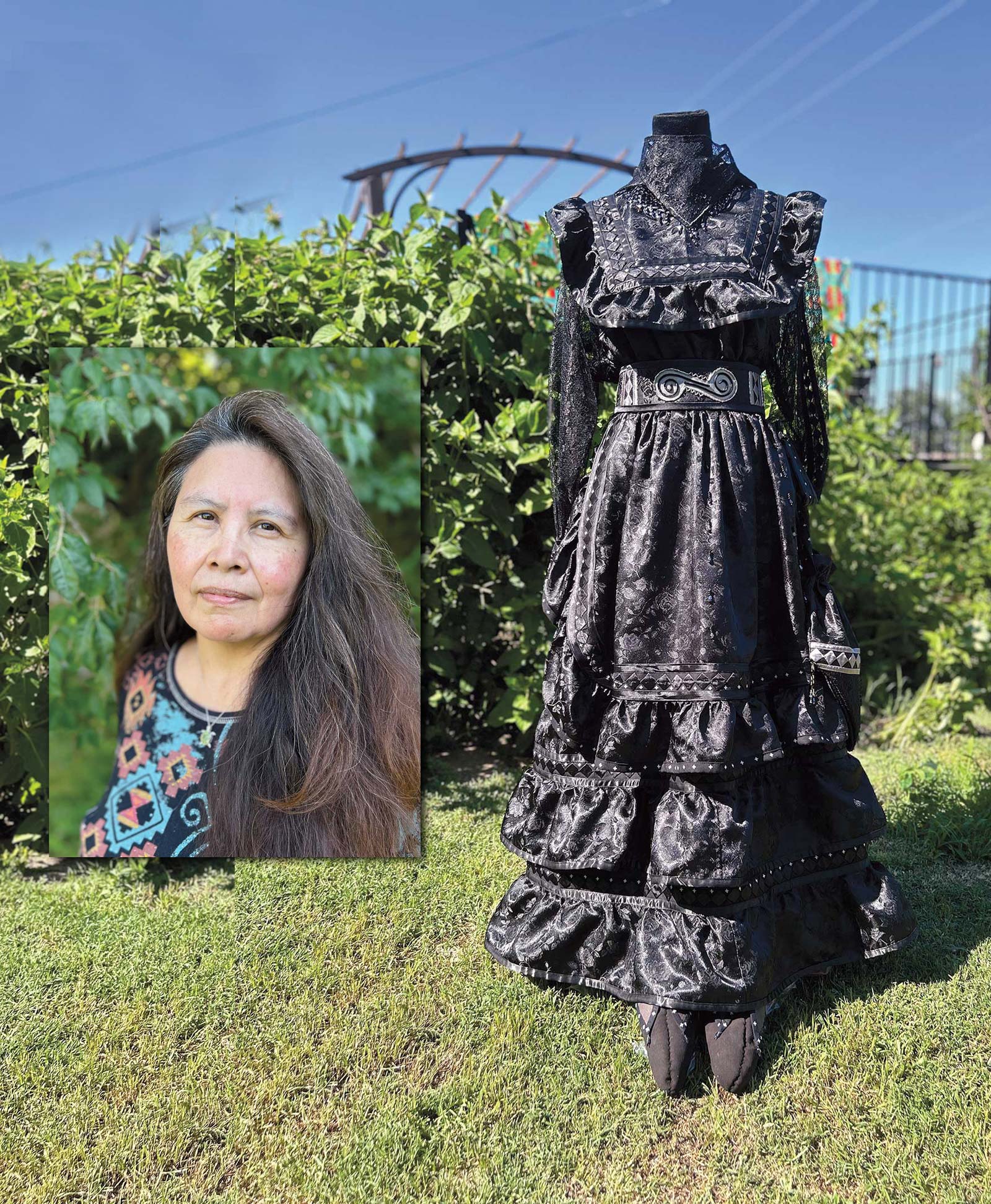
Melissa Freeman (Chickasaw)
Booth: PAL N 204
The piece Onnahinli Okhlika/Dark Morning, pictured here, is a dedication to Freeman’s father through fabric and thread. “Before my father passed, I was overcome with a sadness I could not shake,” says the artist. “I created this piece in black jacquard satin with floral patterns, and Choctaw symbolism to express emotions my family and I had experienced over the past year. Teardrop shaped beads adorn this piece as a reminder of tears shed in both grief and the joy of happy memories. The pops of gray represent the slow healing that comes after grief. With love and respect, I honor my father.”
Glossary Of Terms
Warp and Weft These two terms go hand in hand, where warping of yarn provides vertical structure and wefting is woven through the warp to create pattern, design and the horizontal or “width” of a piece.
Twill Twill is a specific weave that includes warp and weft threads to create diagonal lines (with many different combinations) and is one of the more fundamental weaving structures.
Loom The loom is the tool in which artists weave thread or yarn, providing tension and structure for the warp and weft. There are different loom types, with more modern versions providing different mechanisms.
Heddle The heddle is a mechanism on a loom that helps to separate and warp threads in the weaving process, and are designed with an eye or loop in the center for the warp yarn to pass through.
Shuttle This is a spindle-shaped tool used in the loom-weaving process, that interlaces the warp and weft layers to form a cohesive piece.
Churro Sheep Closely associated with the Navajo Nation, the wool from the churro sheep is used for its unique wool—lustrous and low in lanolin, low crimp, with the ability to be spun from the raw fleece.
Carding This is the term used for preparing wool for use, involving a cleaning and straightening process using specific brushes or by using a machine.
——————————————————————————
Diverse Arts
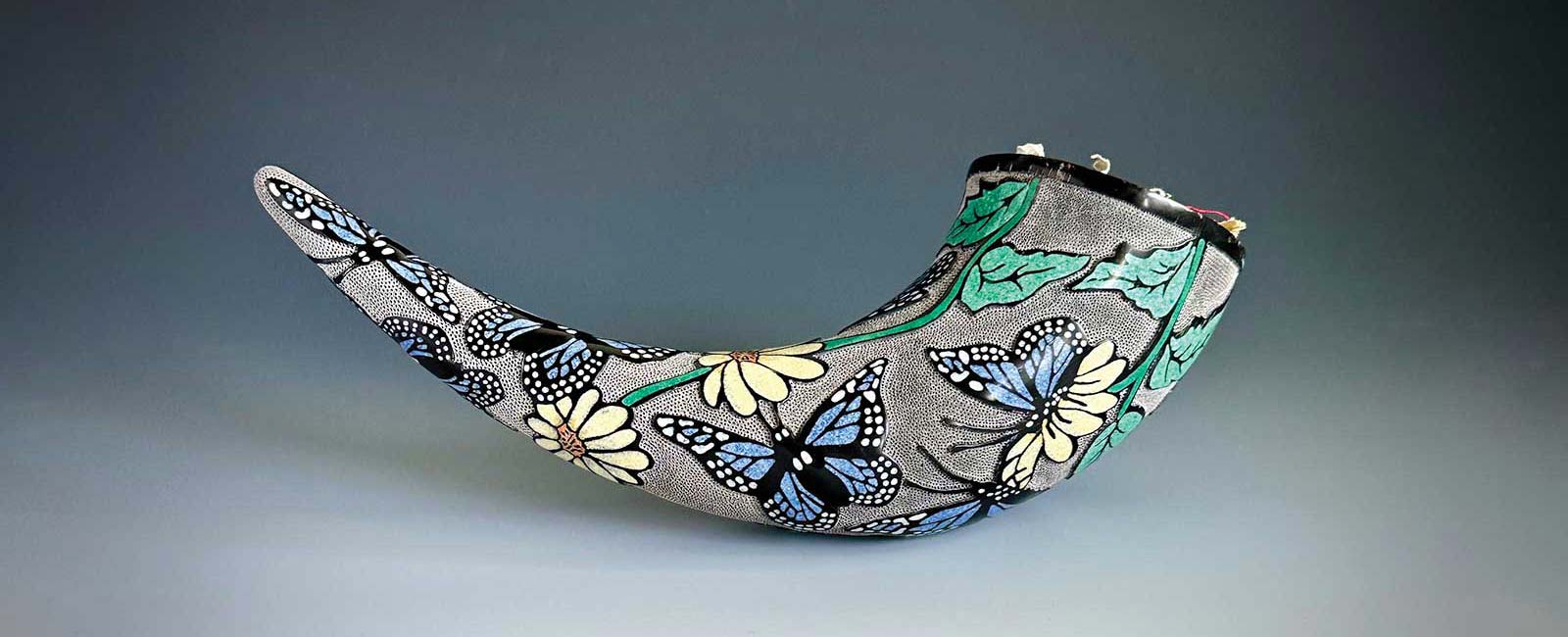
Kevin Pourier (Oglala Lakota), horn cup with butterflies
The diverse arts classification is where all of the art goes that was so unique, so avant-garde, so outside-the-box that it simply couldn’t fit anywhere else. Because of that, the artwork and artists you’ll find within this classification are as diverse and dynamic as its name suggests. Exploring these works, you’ll find meticulously crafted items—both ornamental and utilitarian—like musical instruments, handbags, shoes, parfleche boxes and cradleboards. Last year’s classification winner, Dan Vallo, crafted a bow, quiver and arrows that resembled the weapons pueblo warriors used during the Pueblo Revolt. The set of weapons also won the 2024 best of show.
2024 Winner: Class VII: Diverse Arts
Dan Vallo (Acoma Pueblo)
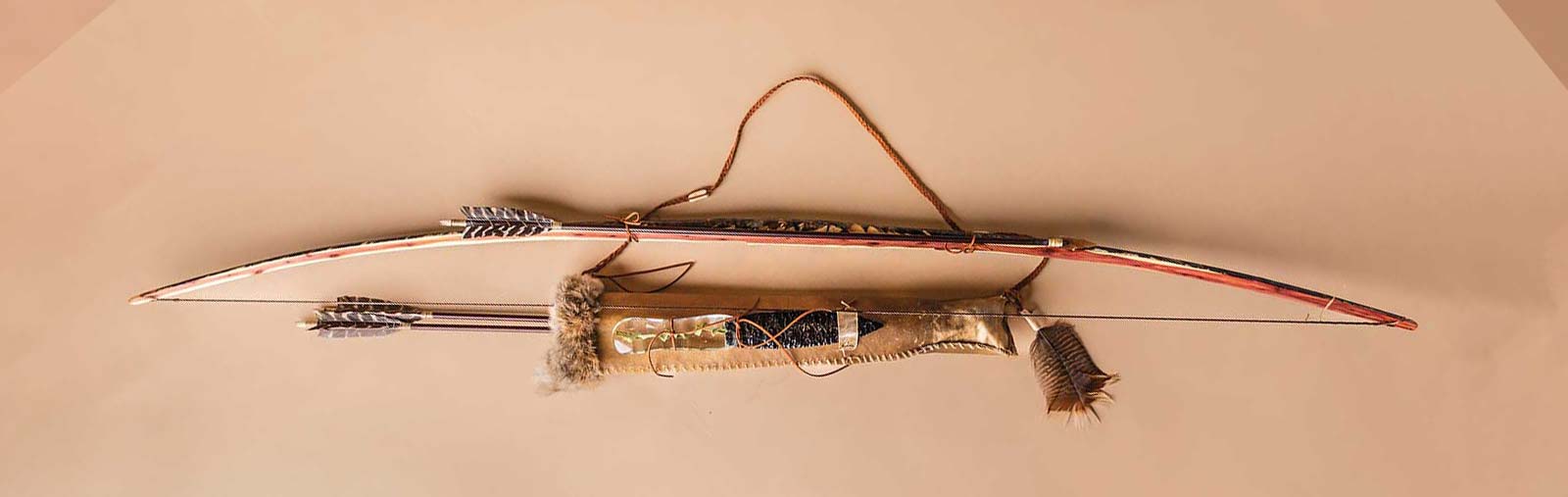
Pueblo Revolt Ensemble, rendition of a set of weapons used by many pueblo warriors during the time of the Pueblo Revolt: obsidian flint knapped dagger, handle made of yucca cord encased in clear resin, juniper bow backed with over 150 wild turkey feathers, handmade twisted bow string, rawhide quiver and red cedar wood arrows, 66 x 14 x 5 in.
Artists To Watch
Kevin Pourier (Oglala Lakota), Glenda McKay (Athabascan), Kelly Church (Match E Be Nash She Wish Tribe), Gabriel Frey (Passamaquoddy), Tim Blueflint Ramel (Bad River Band of Lake Superior Chippewa), Jolene Bird (Santo Domingo Pueblo), Richard Honyouti (Hopi), Joe V. Cajero Sr. (Jemez Pueblo), Darryl Growing Thunder (Fort Peck Dakota), Sean Rising Sun Flanagan (Taos Pueblo)
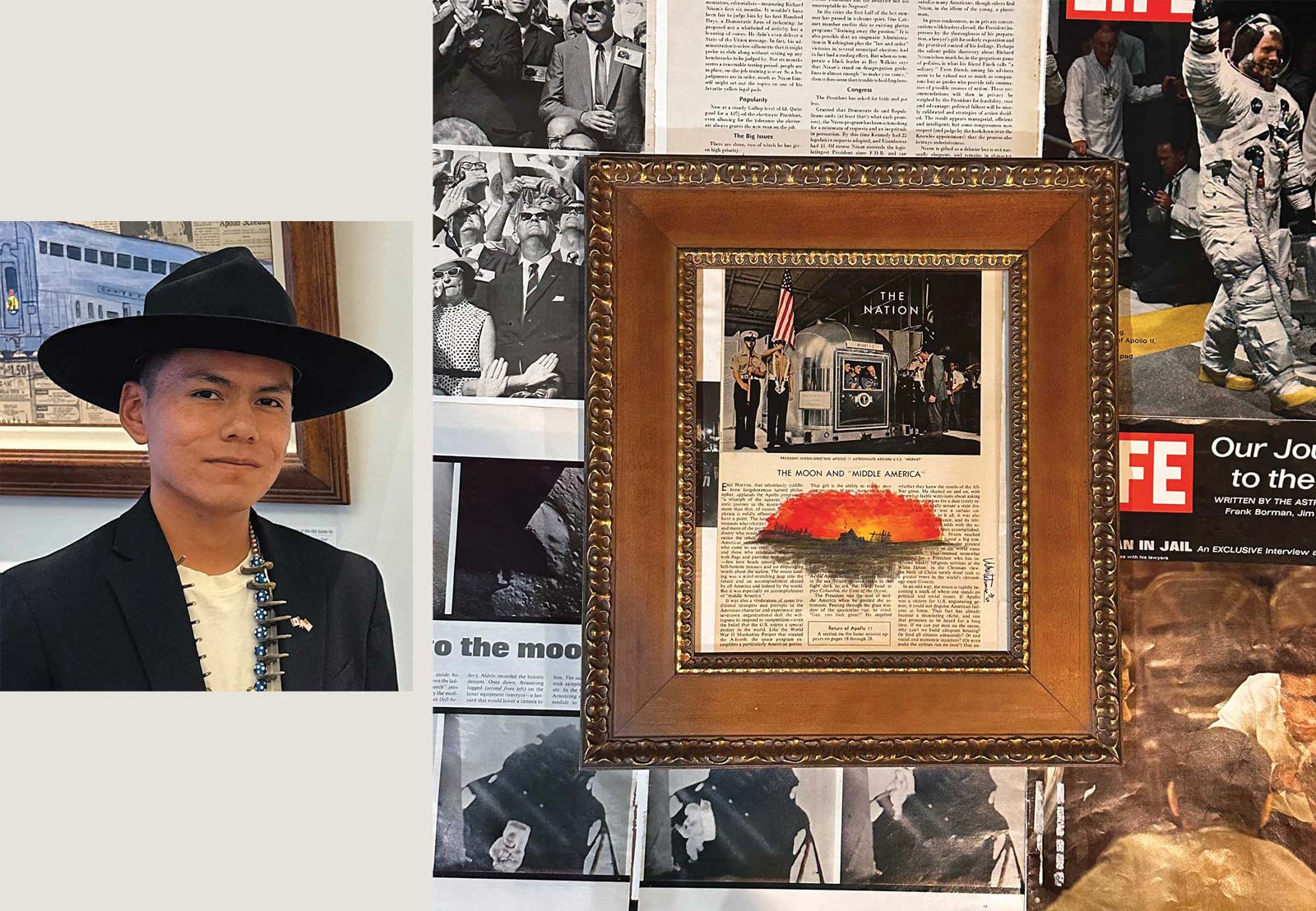
Jalen Whitethorne (Navajo (Diné))
Booth: SFT 504
“I am a third-generation Navajo artist following in the footsteps my grandpa made,” says artist Jalen Whitethorne. Among the works he will be presenting this year are various pieces from his 1960s Cold War-era newspaper series, as well as textured art utilizing various methods the artist learned during his travels in Austria this year.
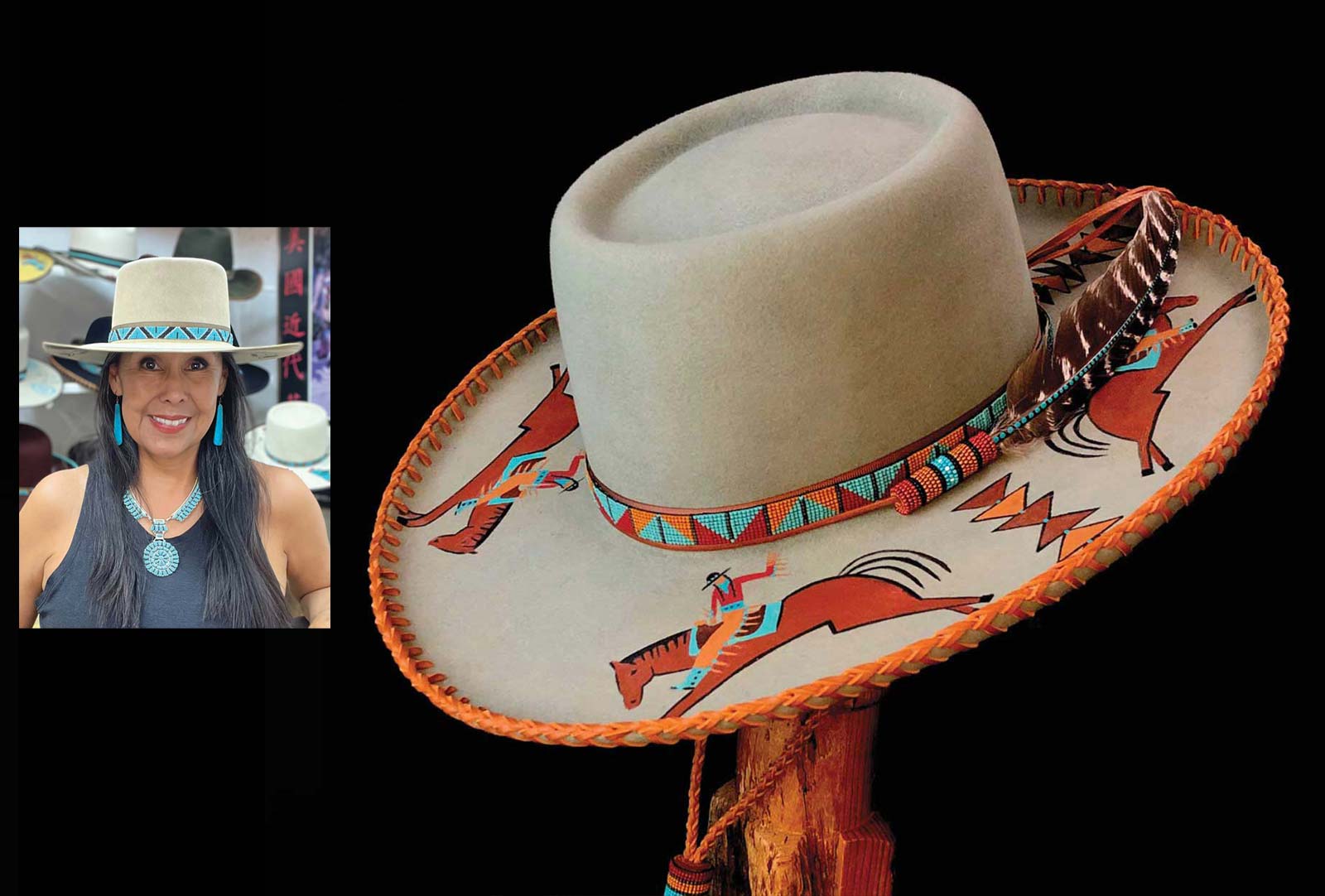
Melissa Lewis-Barnes (Navajo (Diné))
Booth: LIN E 754
Navajo artist Melissa Lewis-Barnes has been handcrafting unique Western hats for more than 25 years and is best known for her painted and beaded hats. “I take inspiration from my Navajo heritage and growing up on the ranch with my family,” she says. “I love to incorporate rug designs, turquoise jewelry and contrasting colors to create custom Western hats that are striking one-of-kind wearable pieces of art. I’m excited to share my latest creations at Market this year.”
Terrill Goseyun (San Carlos Apache)
Booth: PAL 274
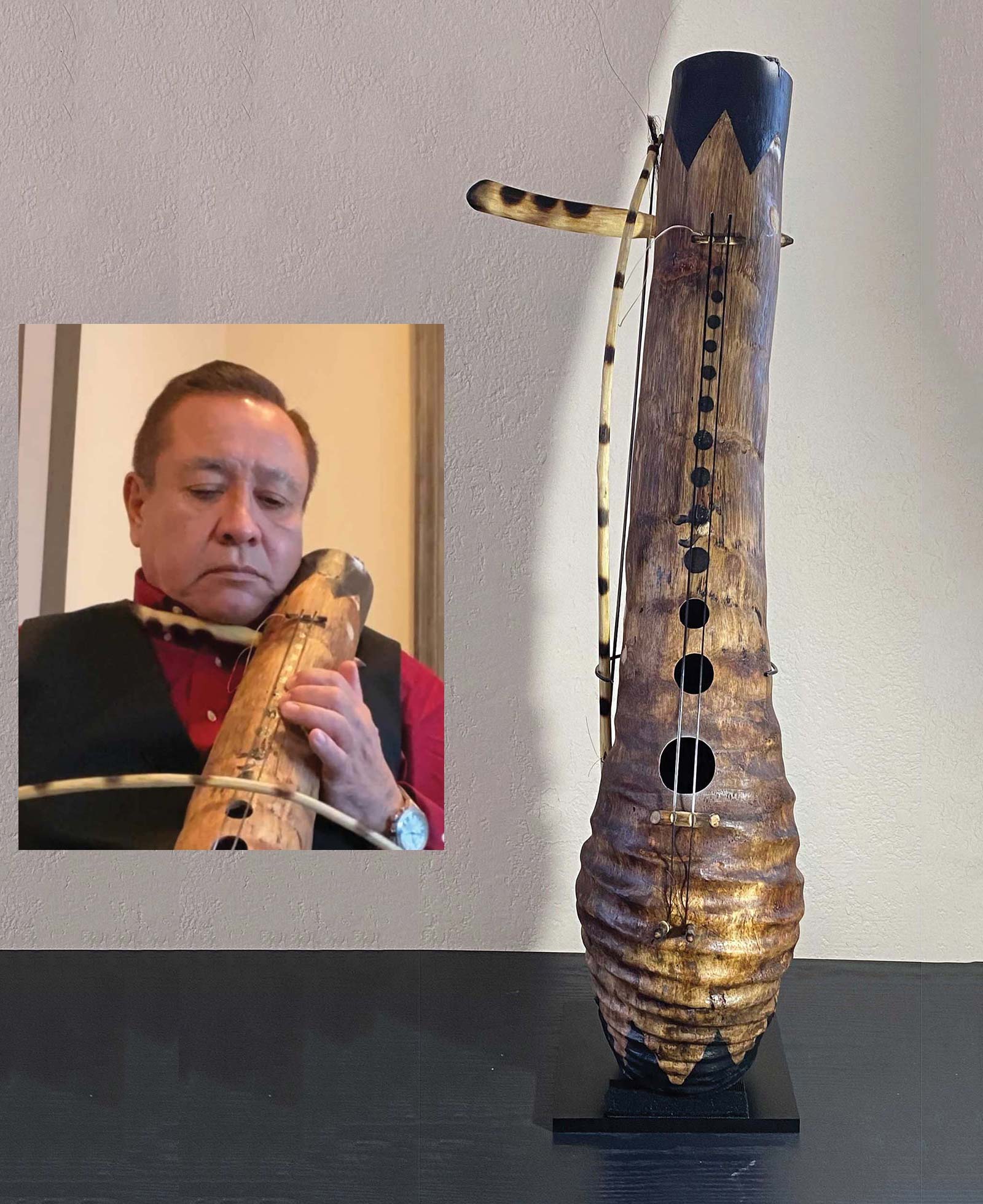
The grandson and great grandson of master Apache violin makers, Terrill Goseyun has continued his family’s legacy. Goseyun, of the San Carlos Apache Tribe, creates detailed, award-winning pencil portraits as well as Apache violins sought after by private, public and corporate collectors around the country. He is also one of the last surviving violin makers of the Goseyun family. These rare instruments, currently facing possible extinction, are constructed from the Agave plant and strung with horse hair.
Lenaya Tso (Navajo (Diné))
Booth: CAT 907
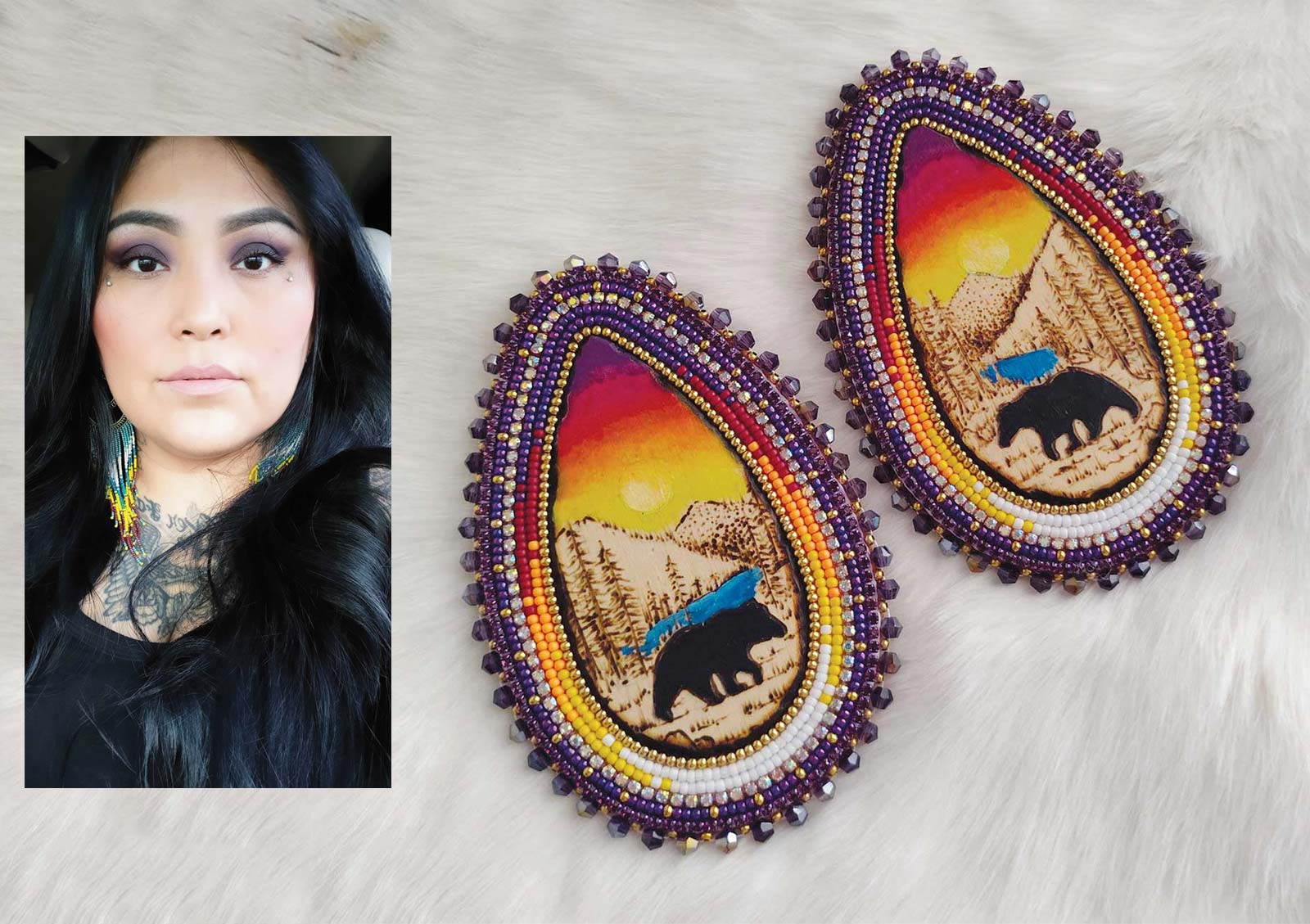
This is Lenaya Tso’s first year showing at Indian Market. “I’m so excited to be a part of it,” she says, adding that she will be showing unique custom handmade Woodburn beadwork made with 24k gold beads and seed beads, backed with buckskin. One of her pieces, Sunset Bear, is a custom pouch bag with a handmade Woodburn Bear design. “It’s attached to a beaded wrapped cord made with size-11 seed beads, 24k gold beads, buckskin, ermine tails tassels and brass rivets finished off with a matching custom handmade Woodburn earrings on fingernail post,” the artist explains.
Diamond Williams (Tlingit)
Booth: SFT W 525A
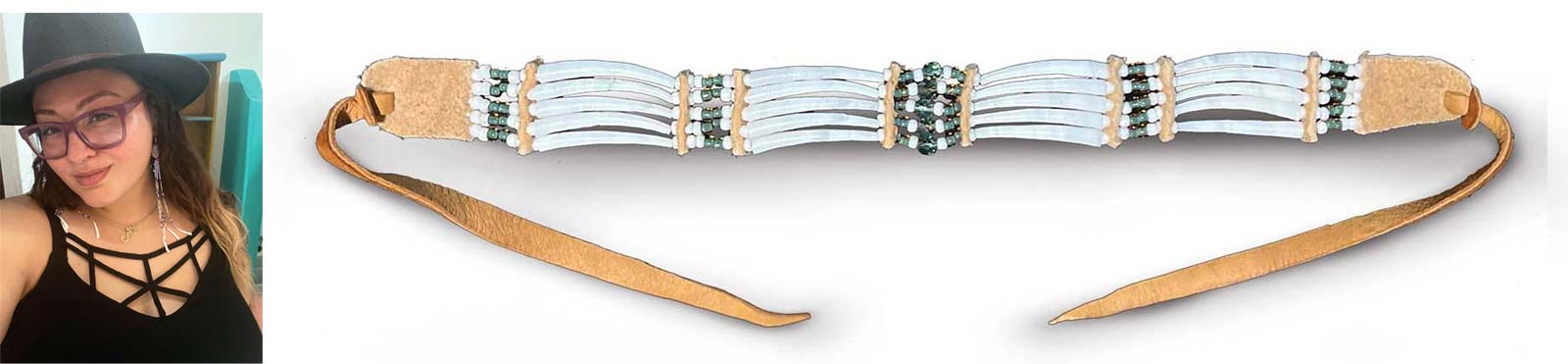
Alaskan artist Diamond Williams will be selling jewelry and accessories made with seal, sea otter, ermine, beaver, salmon leather and fox furs paired with semi-precious stones, bone beads and shells. She’ll also be offering hand-sewn sea otter bags with moose hide accented with beads and shells. Williams’ designs have garnered her numerous accolades, including Second Place in Contemporary Jewelry at the 2023 Santa Fe Indian Market.
Glossary Of Terms
Cradleboards Crafted from wood, hide, cloth, stems, shoots and other materials, cradleboards are a traditional method in which to carry infants and children.
Moccasins A flexible shoe made from one to three pieces of animal hide sewn together, and often adorned with beadwork.
Parfleche Boxes Tough, rawhide containers used to hold various items like dried meats, tools, clothing and household items. The panels on these boxes typically include painted/incised motifs and symbols.
———————————————————————————
Powered by Froala Editor


