Whether working in stone, wood or steel, or painting or making jewelry, Bob Haozous (Warm Springs Chiricahua Apache) has become renowned for his technical skill and intricate detail. Haozous’ work has been recognized by museums, scholars and collectors for many years but the first major retrospective of his work, on view at the Heard Museum through November 30, is the first opportunity to see a comprehensive grouping of his work, 75 examples in all, in various media that span six decades of the artist’s career.
Bob Haozous (Warm Springs Chiricahua Apache), Princess Crown, 1990, turquoise, coral, silver, 14k gold. Collection of Gary, Brenda and Hayley Ruttenburg.
The exhibition, Bob Haozous: A Retrospective View, will also examine the timely social commentary embedded in the work of the artist, who is a self-proclaimed political activist.
“Bob Haozous is a man with a mission, or two,” writes Lucy R. Lippard in a catalog essay for a 2005 Institute for American Indian Arts (IAIA) exhibition. “Some 30 years ago he set out to be a damn good sculptor. He has since achieved this, successfully wedding Native and especially Apache imagery with powerful form and a sharp, unequivocal wit aimed at contemporary American life, at ‘the white man in all of us.’” Haozous is the son of world-renowned sculptor/painter Allan Houser (1914-1994). “Between them, he and his father,” Lippard continues, “[they] have defined the range of Native American sculpture.”
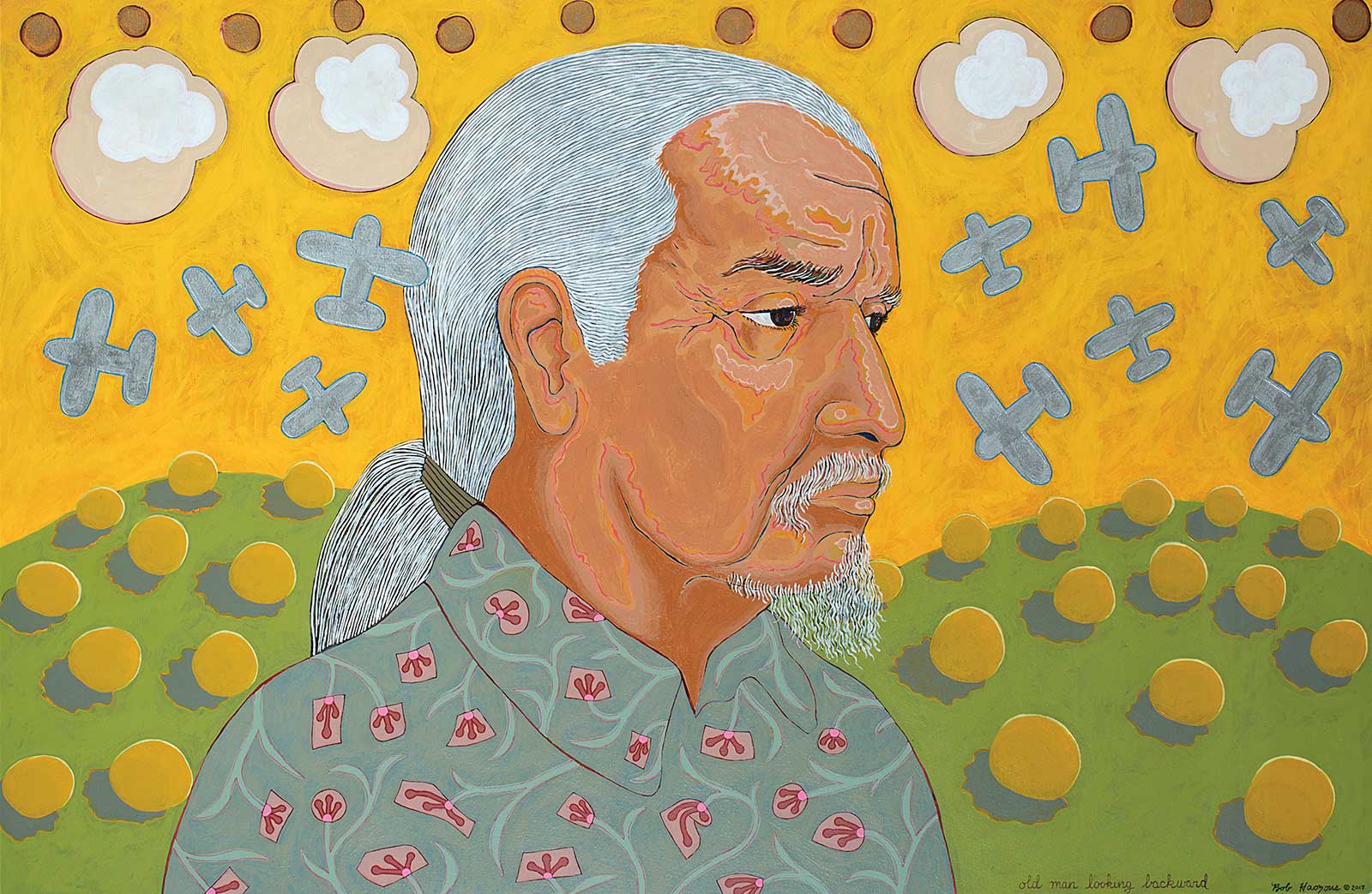
Bob Haozous (Warm Springs Chiricahua Apache), Old Man Looking Backward, 2017, mixed media on paper, 24 x 29”. Collection of the artist.
Haozous’ social commentary—on Native identity, cultural appropriation, environmental degradation, and the responsibility of artists to address uncomfortable truths—has been a consistent theme since his early years as a student at the California College of Arts, where he earned his degree in 1971. He exhibited at the Sante Fe Indian Market for the first time the same year.
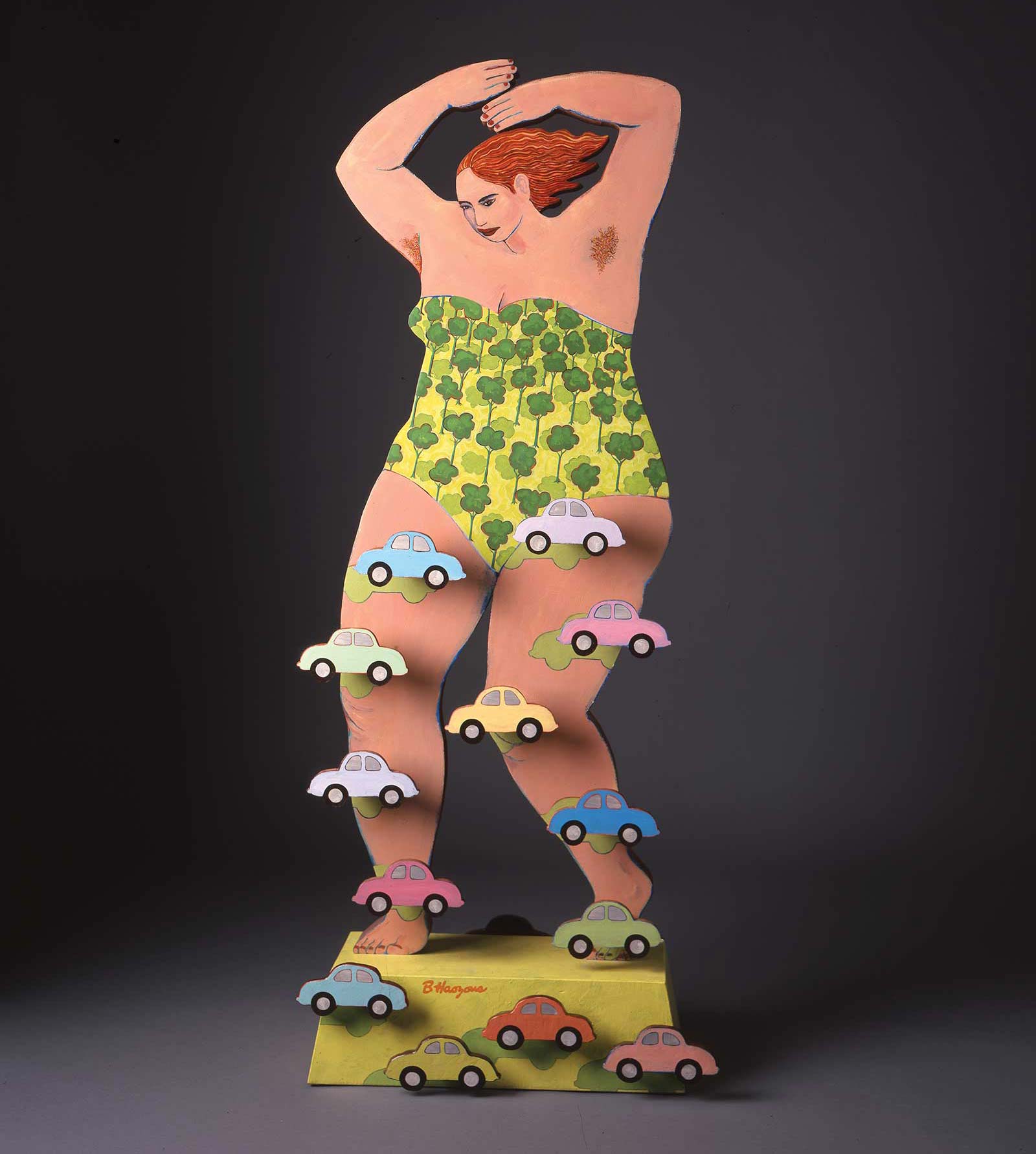
“Bob approaches topics in unique ways,” explains Heard chief curator Diana Pardue. “In Ozone Madonna we see the rain forest and Mother Earth with her hands raised as if to avoid an onslaught of cars. In an untitled student work made in 1969, North America, represented as a turtle, self-destructs. In Vocation and Good Indian Trap, both covered with dollar bills, there is a clear message that art should be something more than economic gain.”
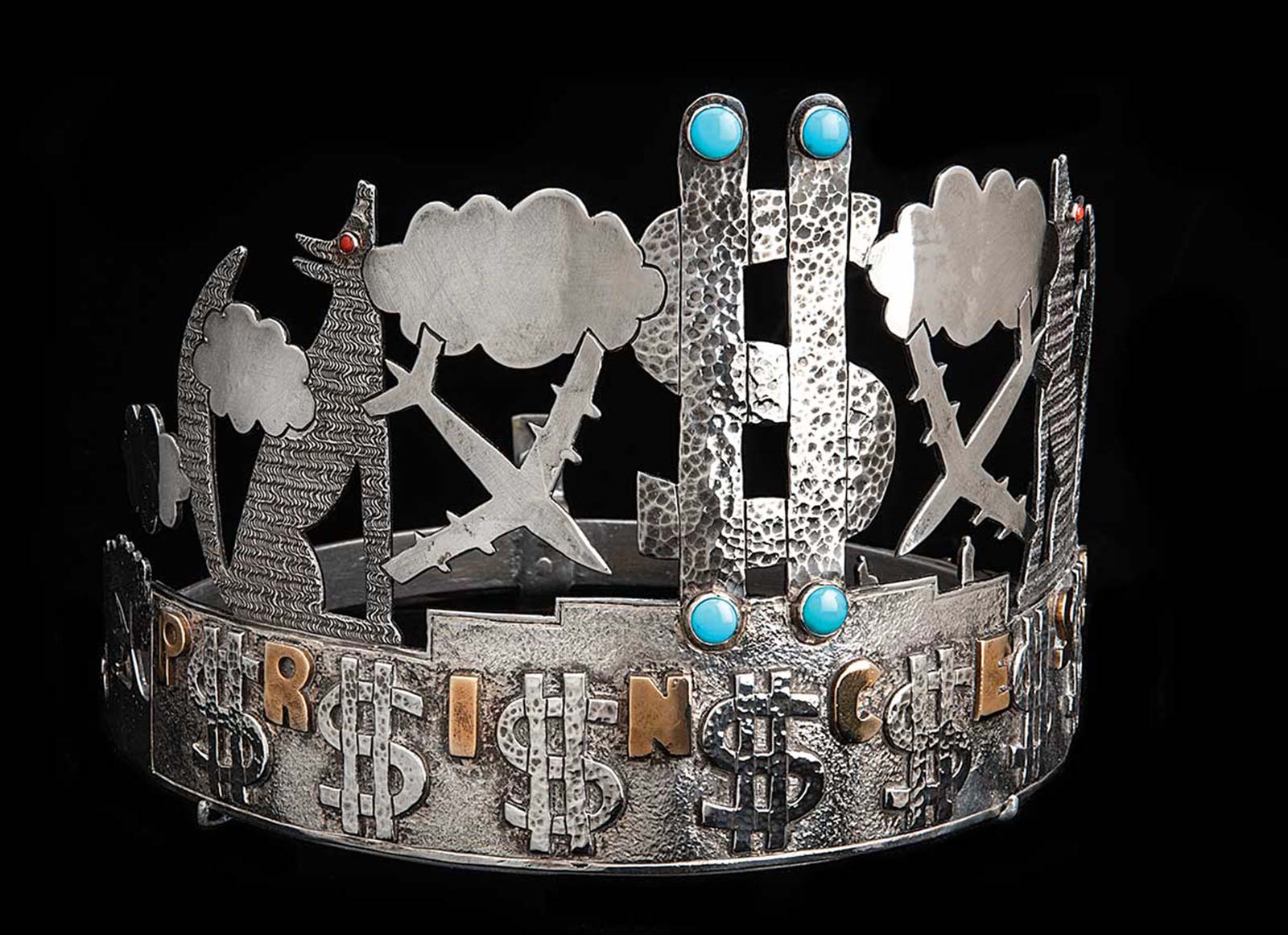
Bob Haozous (Warm Springs Chiricahua Apache), Princess Crown, 1990, turquoise, coral, silver, 14k gold. Collection of Gary, Brenda and Hayley Ruttenburg.
In Freedom Man, a sculpture in African wonderstone created in 1978, Mother Earth is threatened by a man brandishing a knife. In Princess Crown, 1990, Haozous shines a light on the commercial aspects of competitions. In Old Man Looking Backward, 2017, Pardue says, “Haozous reminds us that, ‘Most people think old people do not have value.’”
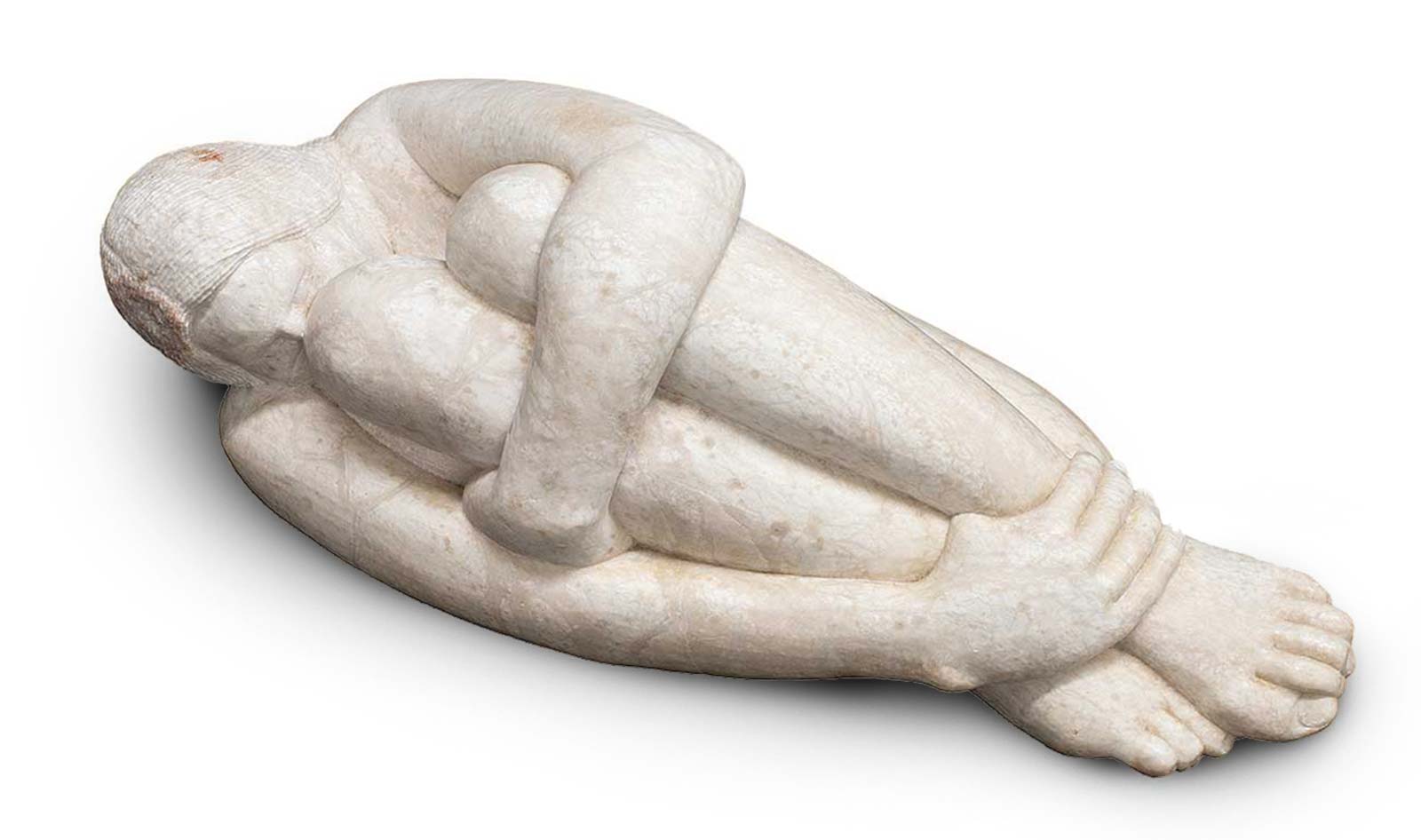
Bob Haozous (Warm Springs Chiricahua Apache), Sleeping Warrior, 1975, Colorado pink alabaster, 5½ x 13½ x 6”. Gift of Dr. Edwin L. Wade and Carol Haralson.
Haozous continues to add his voice to current dialogues about the complicated reality of American Indian life, creative expression, and art as a commodity in that context. His art, while beautiful in its own right, is even more so because it arises out of a much deeper contemplation of what it means to be Indigenous in the postmodern world..—
Through November 30,2025
Bob Haozous: A Retrospective View
Heard Museum 2301 N. Central Avenue, Phoenix, AZ 85004
(602) 252-8840, www.heard.org
Powered by Froala Editor


