Les Namingha was born at Zuni Pueblo. His father was Tewa/Hopi and his mother is from Zuni. Growing up at Zuni, Namingha was encouraged to study hard and, eventually, he attended Brigham Young University where he studied design. He didn’t know a lot about his Hopi ancestry other than that there was a long line of pottery artists including his great-great-grandmother, the acclaimed Hopi-Tewa potter, Nampeyo of Hano (1857-1942). In 1989, her great-granddaughter, Namingha’s aunt, Dextra Quotskuyva (1928-2019), began teaching him about his heritage and the multiple aspects of working with clay. She also taught him patience.
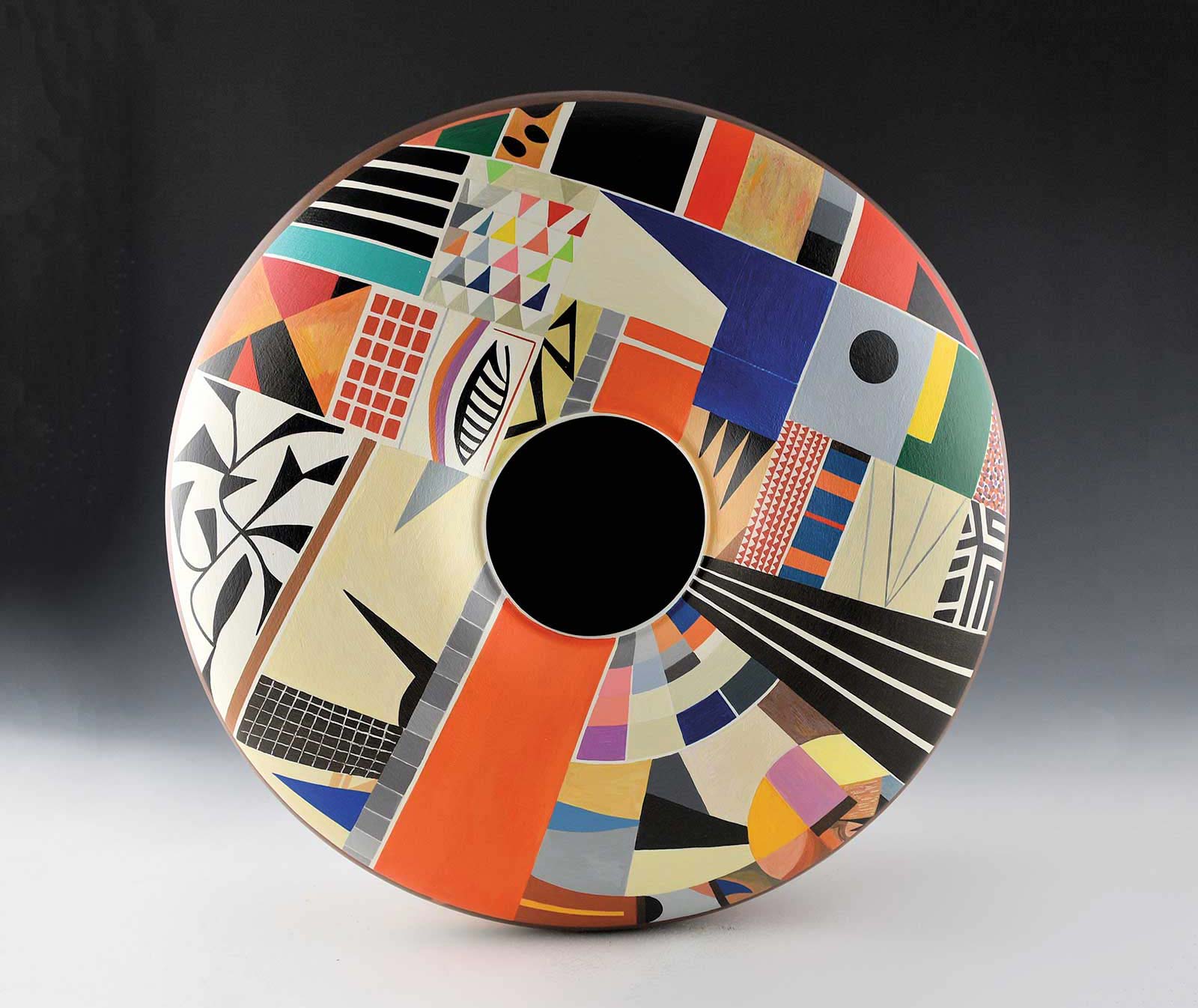
Tapestry, native clay, acrylic
As with many pueblo pottery mentors, Quotskuyva began by having Namingha watch her at work. “When I first arrived in Hopi, I didn’t touch clay for several days of her instruction. She taught me a lot about the technical and spiritual aspects of making pottery and about her own experiences. Watching her build with coils all the way through to sanding, polishing and mixing clay paints, I saw what I needed to be able to start.
“In my eagerness, she was patient. Firing is a pretty technical process. It’s done outdoors and is affected by wind and moisture. Dextra would take over that part and she would fire my pots alongside hers.
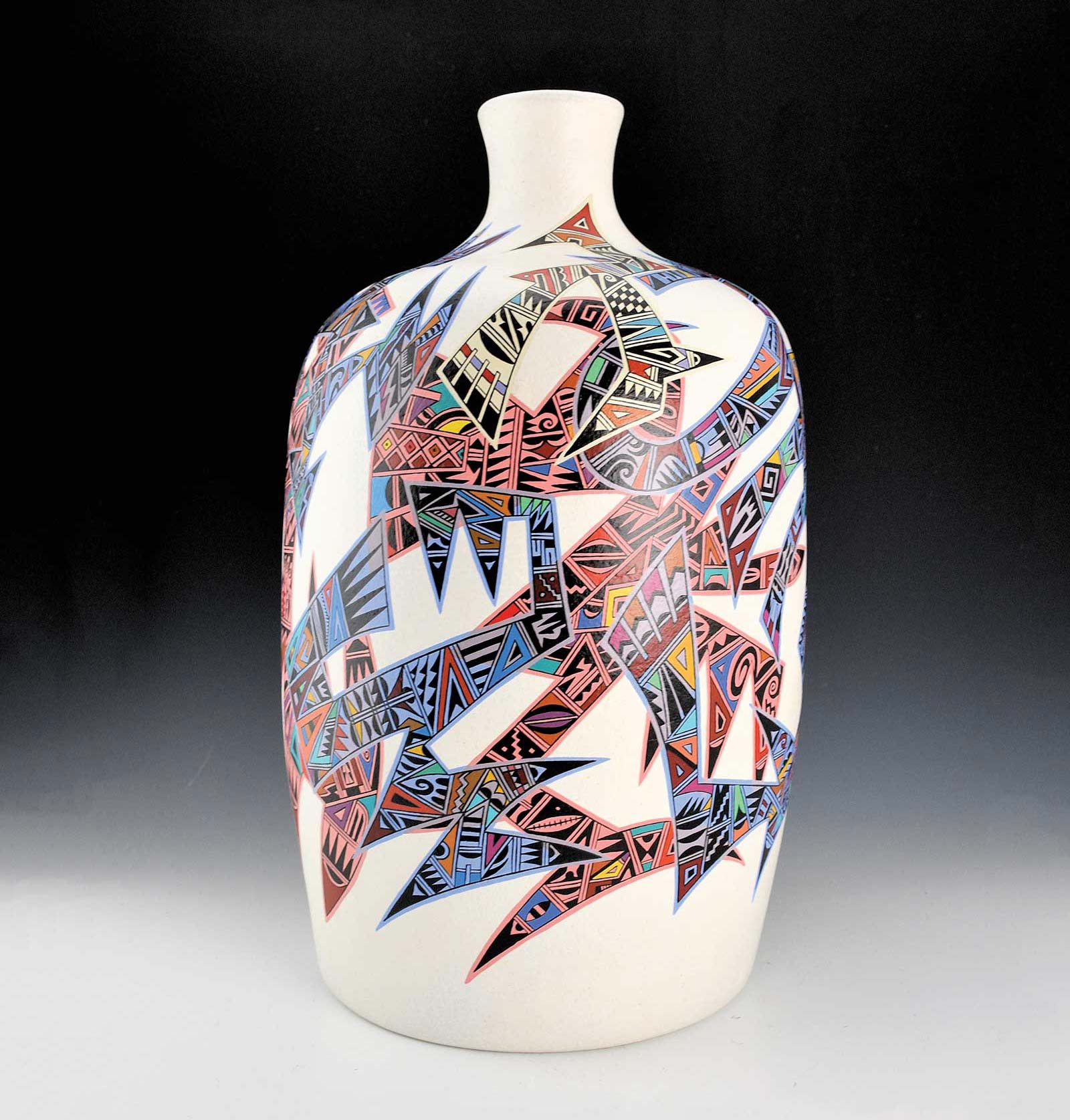
Sikyatiki Birds, native clay, acrylic
“One day, in my second summer, she had gone to town and I was there by myself and decided I was going to fire a pot on my own. It came out all black and cracked. It was a lesson learned. My training was not complete.”
Today, Namingha’s pottery is uniquely his own but firmly rooted in Hopi and Zuni tradition. While studying graphic design at BYU, where he was able to design his own classes, he began learning about the influential artists of the early 1990s.
“Early on I was awed by the art of the mid-century. Stuart Davis’ bold colors and geometry captured my eye. It was also exciting to see the works of abstract expressionist painters like Willem de Kooning and Jackson Pollock.
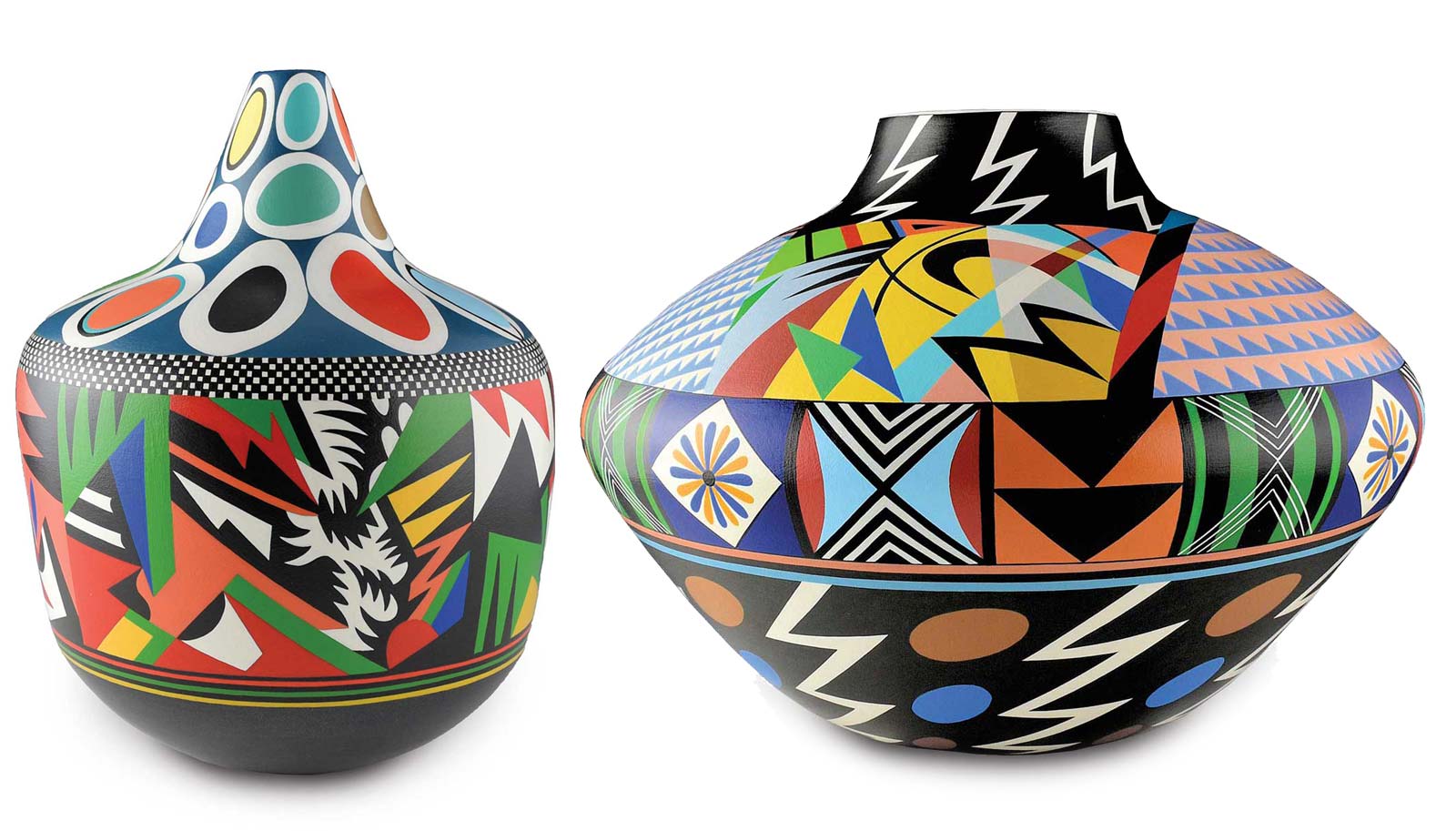
Left: Kalidescope of Color, native clay, acrylic. Right: First Dance, native clay, acrylic
“I was trying to develop and understand how to control paint and to utilize glazing. I was also trying to understand color theory. When I was doing pottery and studying fine art and design, I always wanted to use color and saw that acrylics offered a larger palette than earth tones. I made the decision to meld the two. Wanting to work with acrylics, I could have moved into two-dimensional work, but I always had a desire to create shapes. I first used acrylics painting an abstract design on a gourd. It opened the door and I started to experiment with layering.”
He explains that, “like our experiences, words, works, emotions, prayers and songs build up in layers creating our existence.”
In his jar Sikyatiki Birds, layering becomes physical as the colors and patterns of the lower layers of the design can be seen through the upper layers. The large village of Sikyatiki on the flank of First Mesa was abandoned in about 1500. Nampeyo was influenced by the designs on shards found at the site. Namingha recalls visiting pueblo ruins at Zuni and finding shards layered one atop another on the ground. “They were not all from the same period and seeing this, I saw the layering of history. Even in the making of pottery, there has always been a layering process—applying water and burnishing the pot, then a layer of design with paints and then a layer of polishing.”
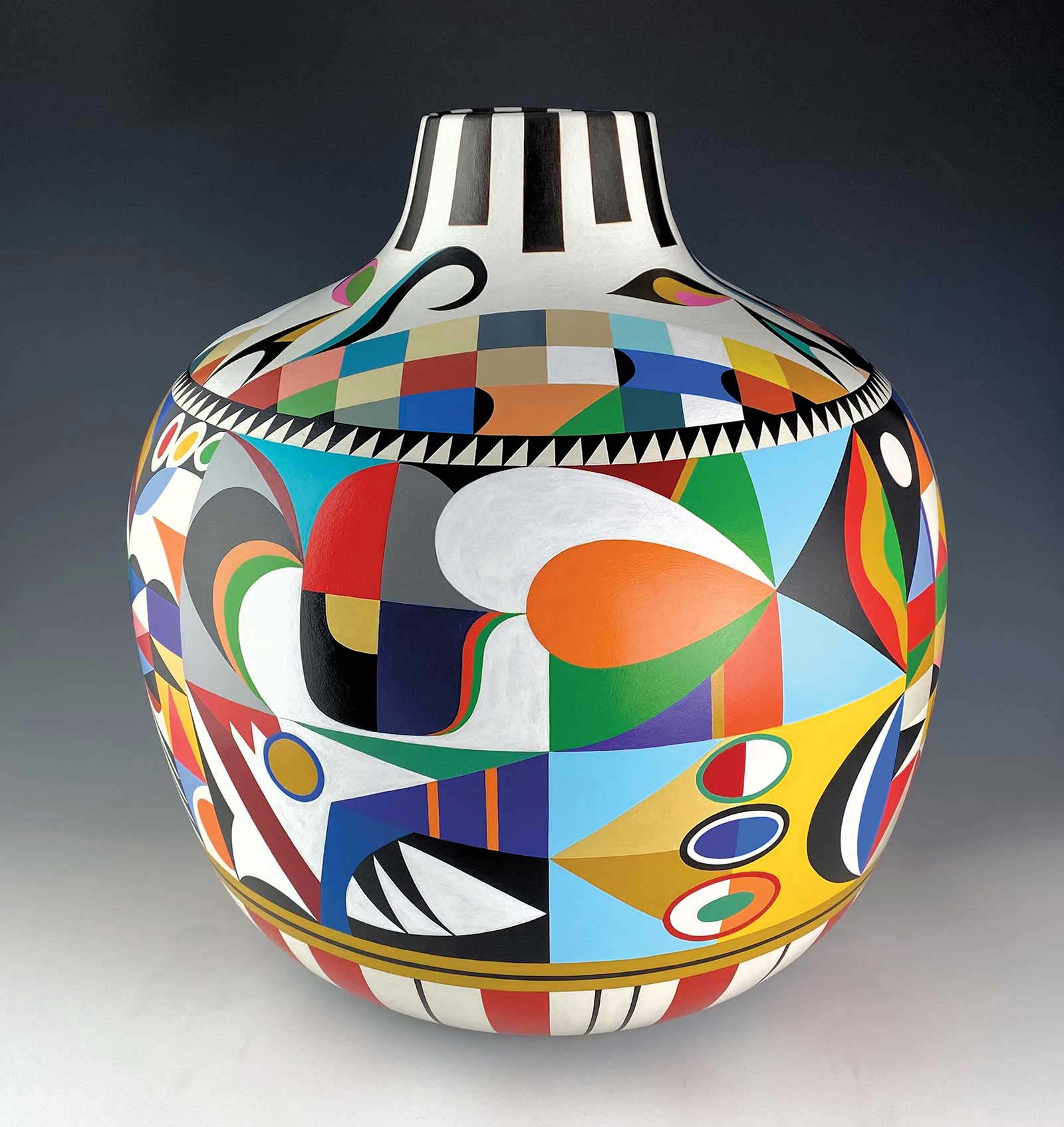
Modern Murals, native clay, acrylic
In his pot Tapestry, he explains, the prominent orange band is composed of several layers of “orange.” In some cases, a band of color might have started out as another color but in the collaborative process of making the pot the clay and the pot can begin to tell him what the next step should be.
The brilliantly colored patterns on his pottery are visually attractive, but also contain something of the artist himself that can add to the experience of seeing his work. “My purpose is to create an abstraction that is pleasing and balanced—a visually pleasing piece that is also thought-provoking. I don’t begin with an idea or statement I want to make. I make room for interpretation.
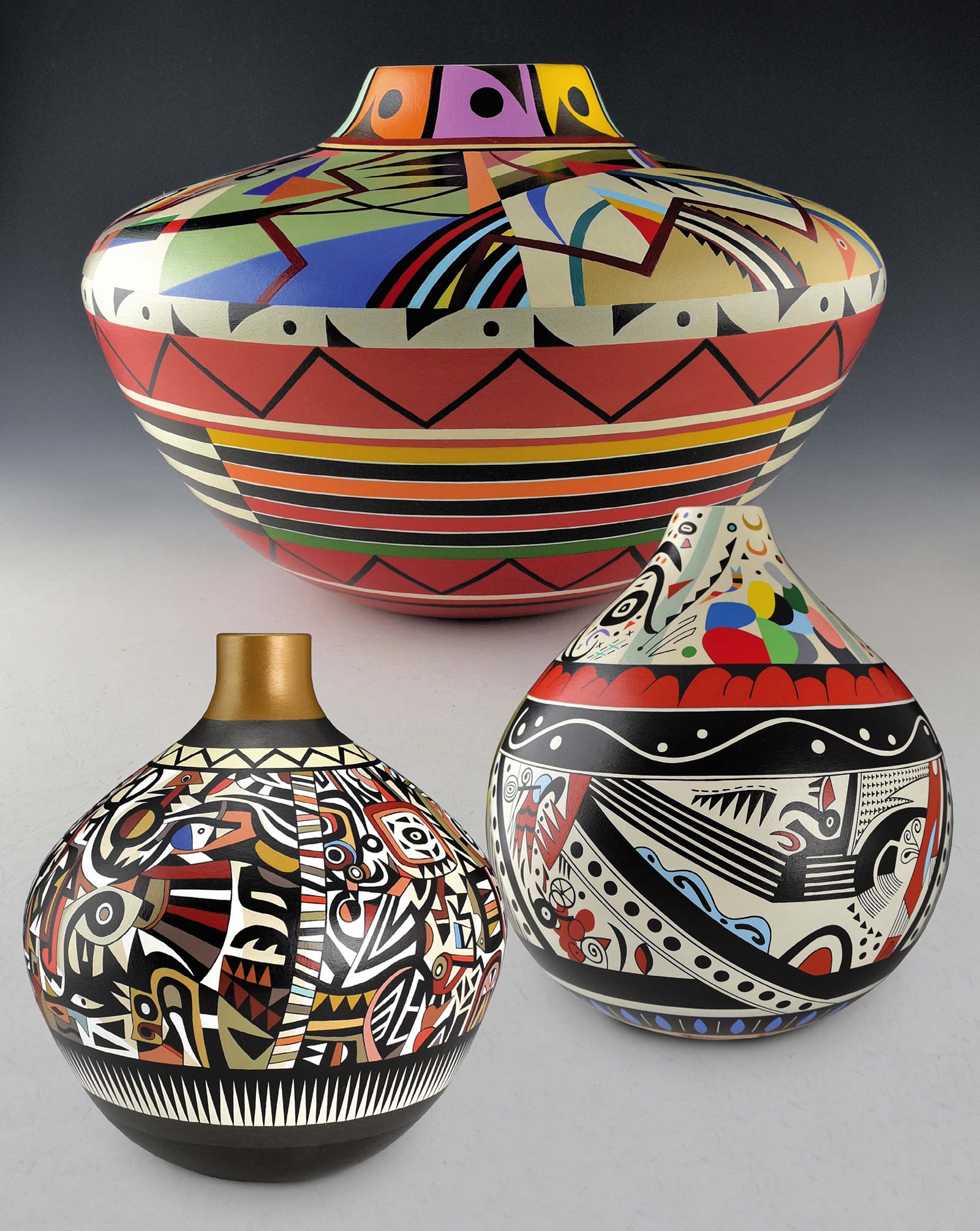
Top: Caught in Flight, native clay, acrylic Bottom left: The Bird Maze, native clay, acrylic Bottom right: Ex-Tweet, native clay, acrylic
“One of the lessons I learned from Dextra is that as you’re working with clay, producing the jar, even painting and polishing, a lot of thinking takes place—not necessarily about what you’re doing but thoughts about other people, the joys in life, the regular thoughts of the day, requests for blessings. Those end up as part of the pot you’re creating. All your thoughts, songs and prayers are there. They become an offering to those who will see the completed jar.
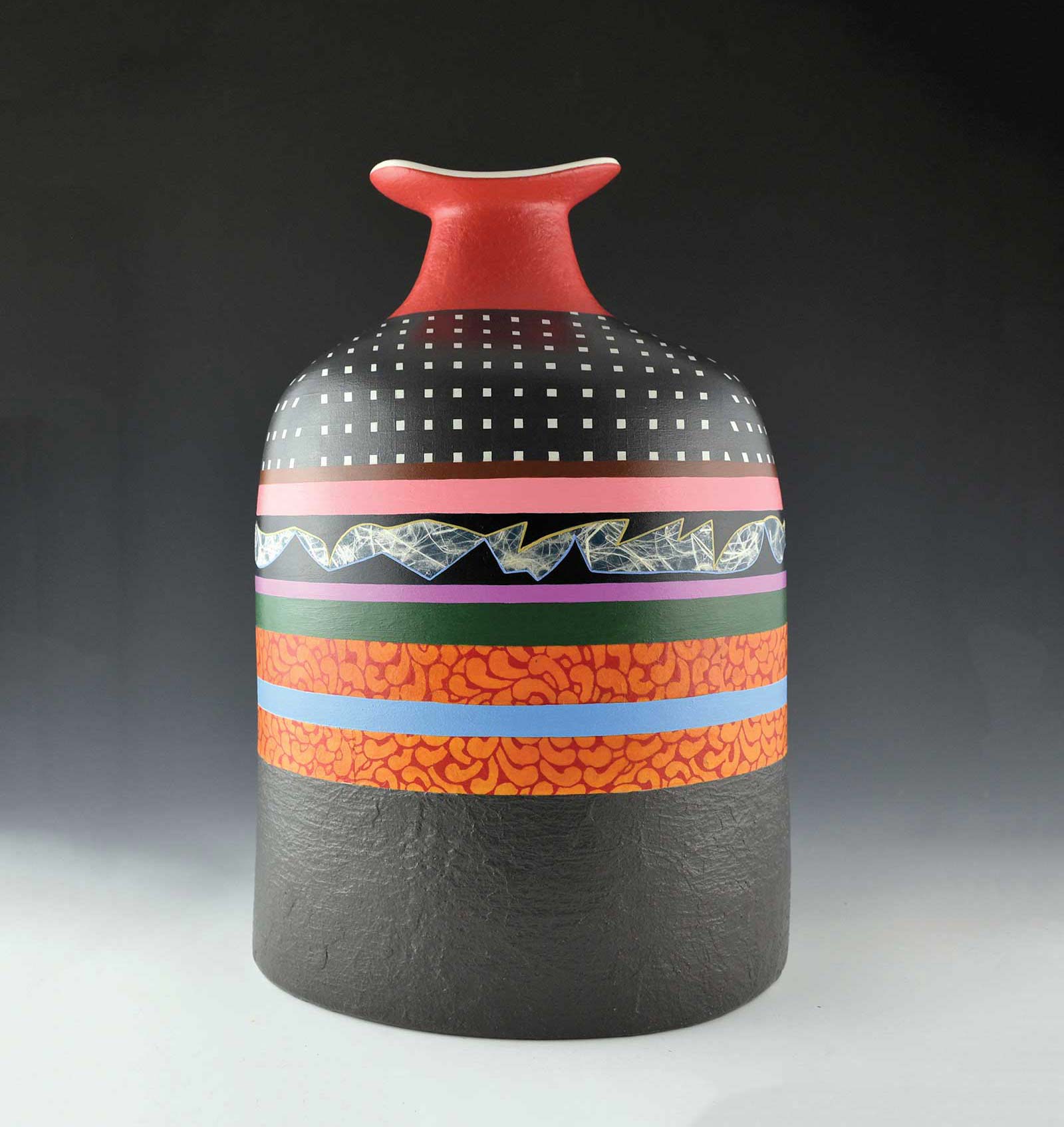
Strata 13, native clay, acrylic
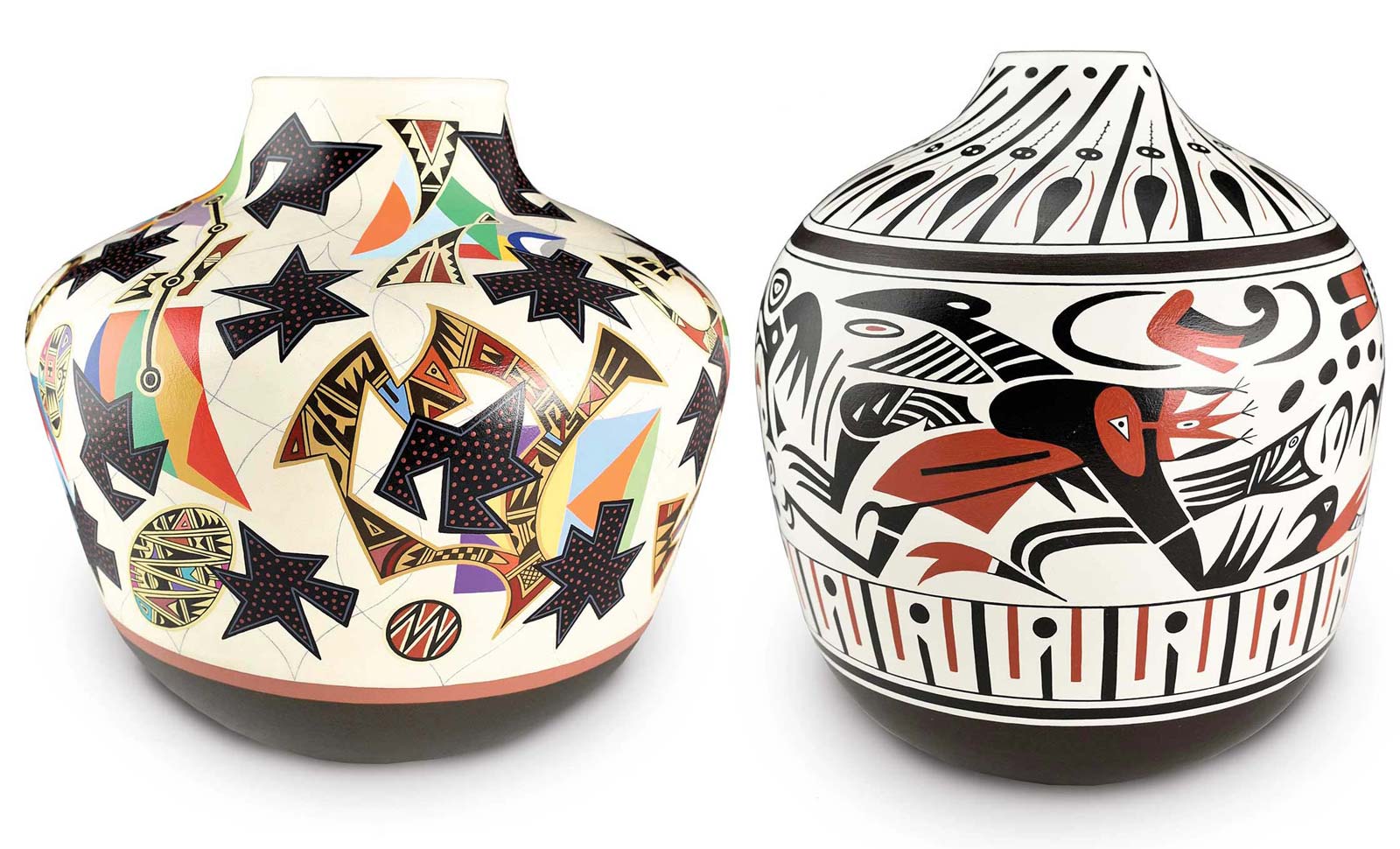
Left: Puzzle Birds, native clay, acrylic Right: A Zuni of Birds, native clay, acrylic. All images by King Galleries.
“Sometimes the painting goes with the flow of what’s in you. There’s not as much thought as in other pieces. That comes from my love of abstract art, where the process is the process. There are other works where there is much consideration that goes into it. Maybe I’m working on the under-structure design with painting first and then laying it aside for a bit. I’ll think about where to go next and see where the piece leads me. There is also solely relying on the teaching of the older Nampeyo type designs. There the process for me is trying to work with the color since the structure is already there. The question is what I’m going to do with it.” —
Powered by Froala Editor


