A new exhibition at the Museum of Northern Arizona (MNA) highlights acquisitions from the past decade that reflect shifts in art, culture and science across the Colorado Plateau. Collecting in a Changing World, on view through January 4, 2026, features roughly 70 artworks including paintings, pottery, prints and posters, weavings, carvings, beadwork and clothing. The earliest examples are ancient painted potsherds from 1,000 to 400 years ago that will accompany contemporary Acoma, Laguna and Hopi-Tewa pottery to show how ancient designs have inspired new creations.
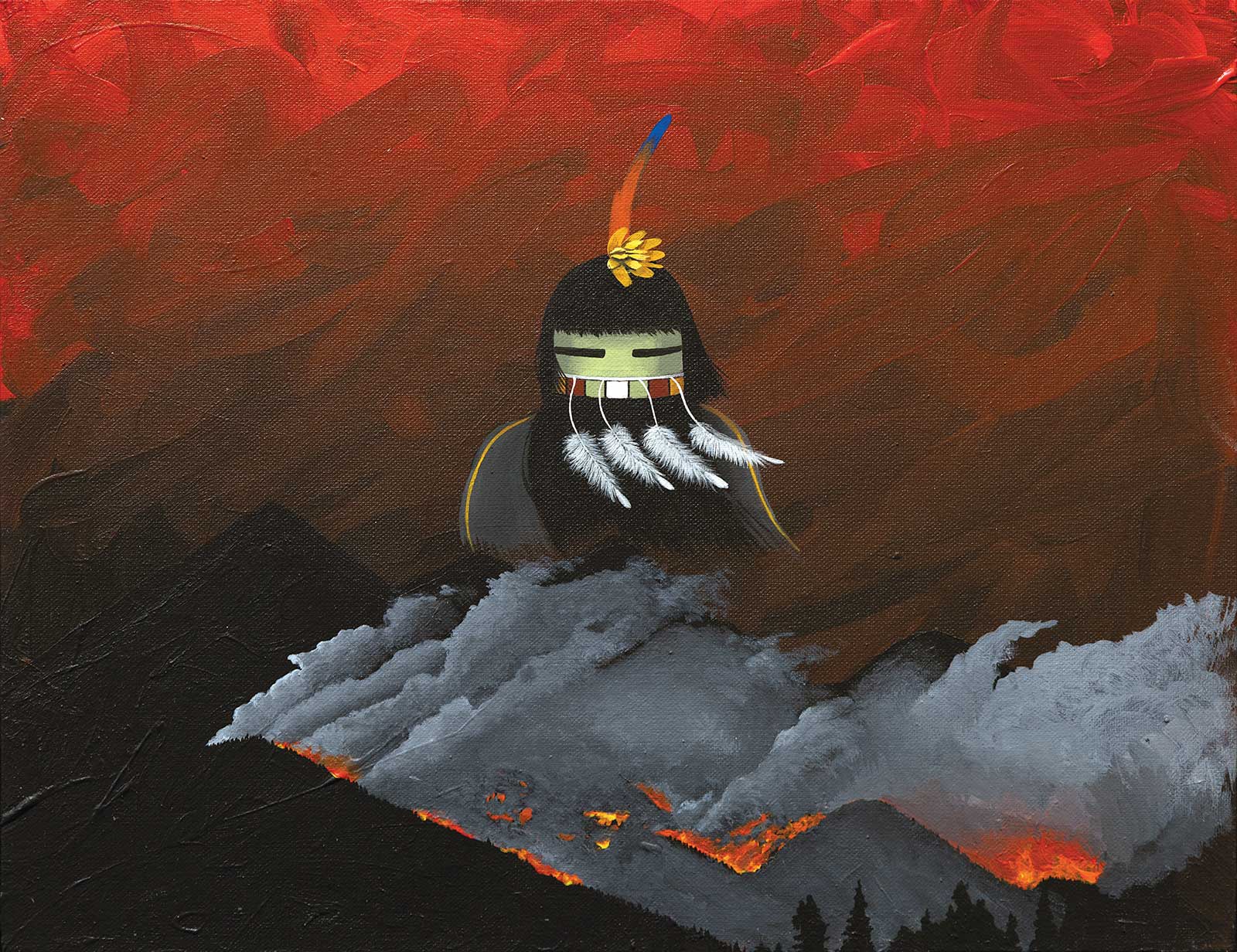 Duane Koyawena (Hopi-Tewa), Iitah kwatsiim övah taayugnwaa, tuswkai nit kii ow tunaatyowugnwaa” (Watching from above, helping to protect the lands and their home.) “Kwak kwaa iitaamuy pahawgnaatötah” (Thank you for all the help.), acrylic on canvas, 14 x 18". Museum of Northern Arizona collections, IL2019-67-1. Photo by Nancy Wiechec, courtesy of the Museum of Northern Arizona.
The most recently created pieces in the show include a frog katsina doll carved in 2024 by Cimmaron Grover (Hopi), and a beaded pin titled Yoda Yazhi (Baby Yoda) by Navajo artist Amanda Bahe from 2022.
“Most contemporary, in my view, aesthetically speaking, is Dan Namingha’s 2013 painting titled Pictography #13,” says exhibit curator Kelley Hays-Gilpin, the Danson Chair of Anthropology at the Museum of Northern Arizona and a professor of anthropology at Northern Arizona University. “This is the centerpiece of the exhibition because it is a contemporary expression of change on the Colorado Plateau, from the first emergence of humans on this earth, through generations of knowledge and artistry to the present day.”
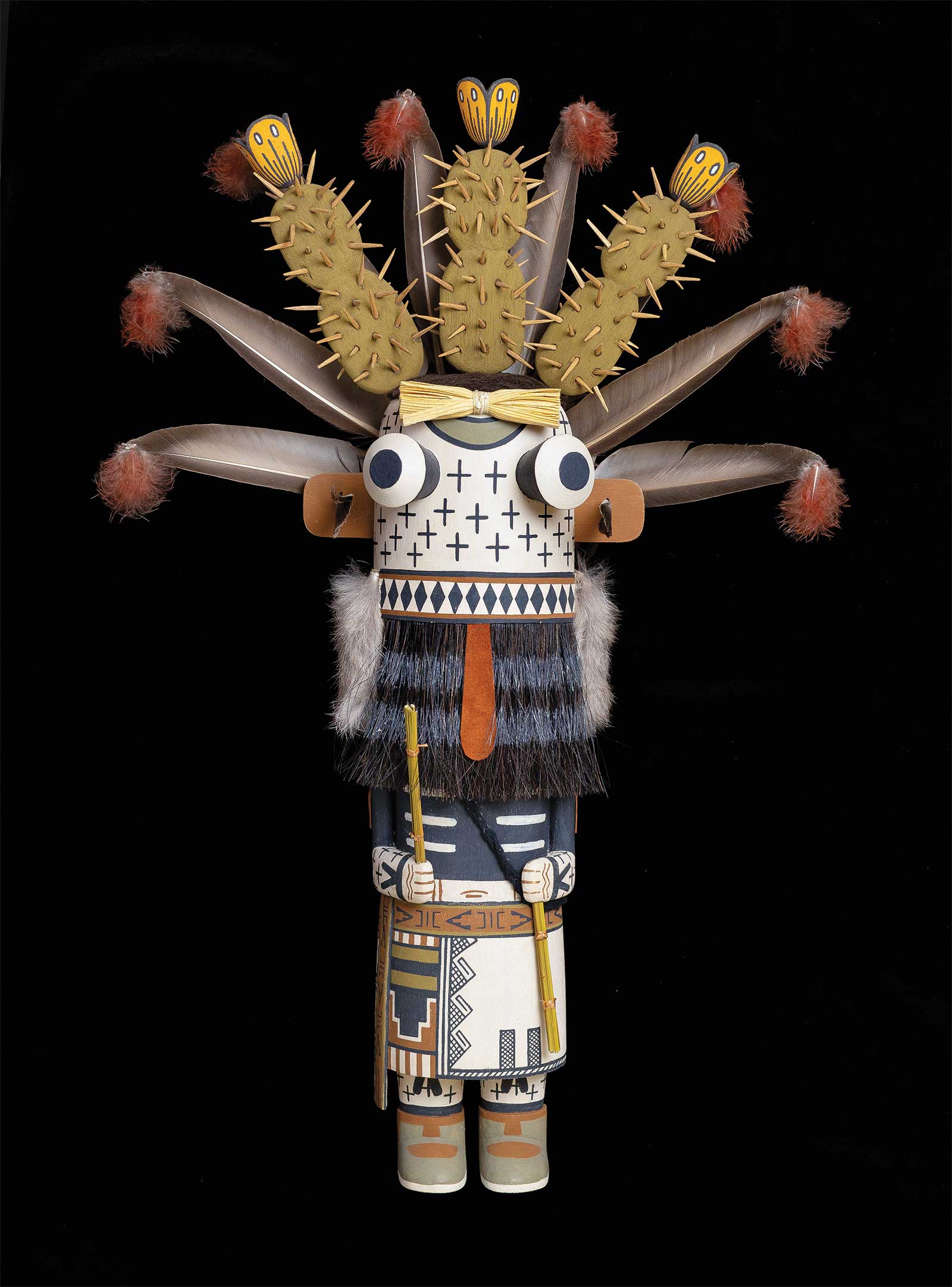
Tayron Polequaptewa (Hopi), Navuktsina (Prickly Pear Cactus Katsina), cottonwood, feathers, fur, yucca, horsehair; 20½ x 13½ x 6”. Museum of Northern Arizona collections, E14517. Photo by Nancy Wiechec, courtesy of the Museum of Northern Arizona.
The exhibition includes other works from the renowned Nampeyo-Namingha family, as well as those more immediately tied to recent events, such as new paintings by Hopi artist Duane Koyawena and Hopi-Tewa artist Ed Kabotie, and Indigenous items from the Covid-19 pandemic.
“Artists respond to current events, such as the 2019 Museum Fire on the San Francisco Peaks, near Flagstaff, and the Covid-19 pandemic,” says Hays-Gilpin. “They reinterpret and Indigenize popular culture icons, such as Star Wars characters and themes. Some katsina doll carvers and pueblo potters are turning to ancient styles and imagery for inspiration, and some Zuni carvers are creating extraordinary detailed, naturalistic sculptures.”
An interesting component of the exhibition pairs regional specimens in the museum’s botanical and insect collection with artworks that highlight the relationship between culture and ecology.
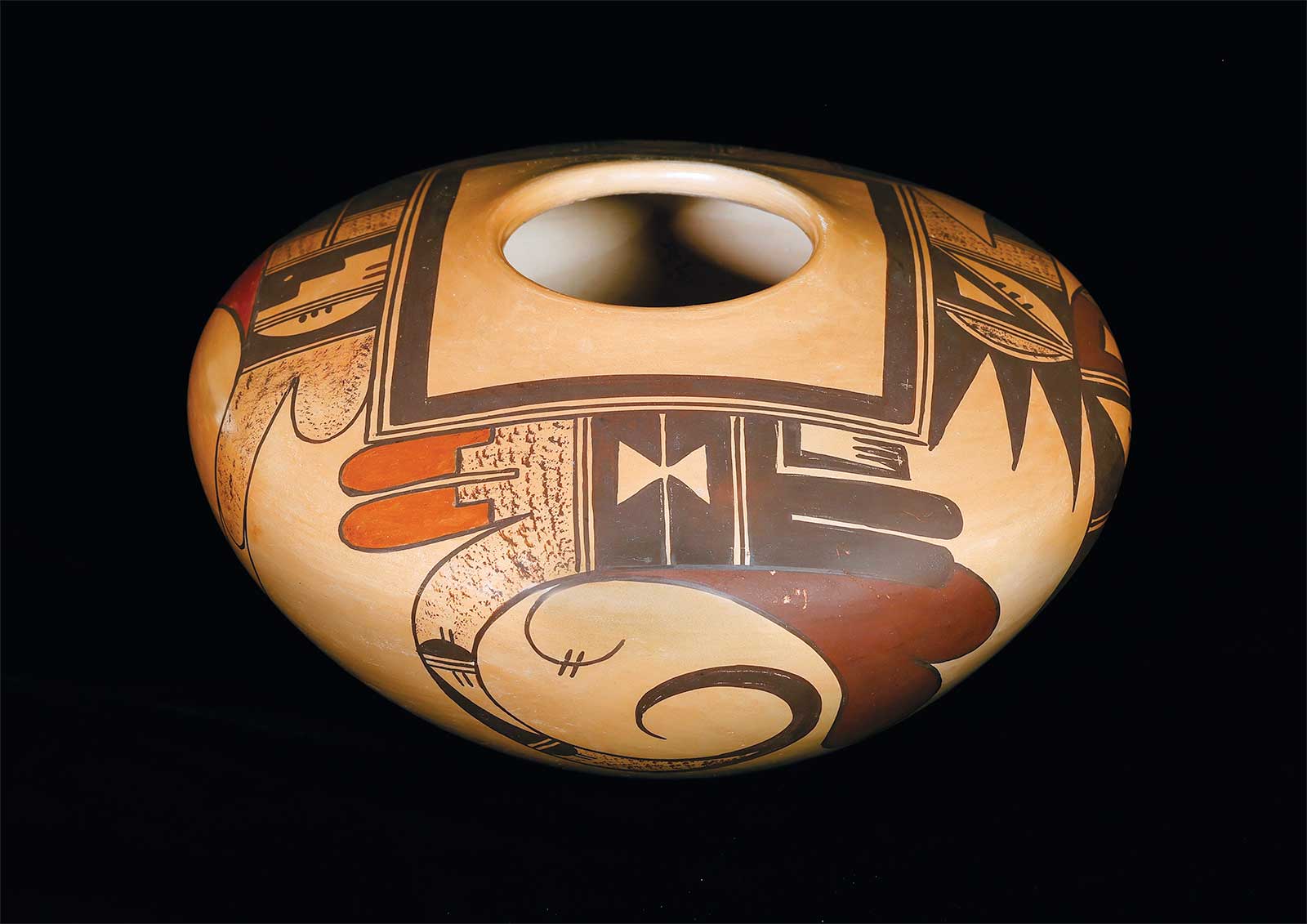
Donella Tom Zacarias Nampeyo (Hopi-Tewa), Jar with Sikyatki-style bird, ceramic, 4 x 681/100”. Museum of Northern Arizona collections, E14415. Photo by Nancy Wiechec, courtesy of the Museum of Northern Arizona.
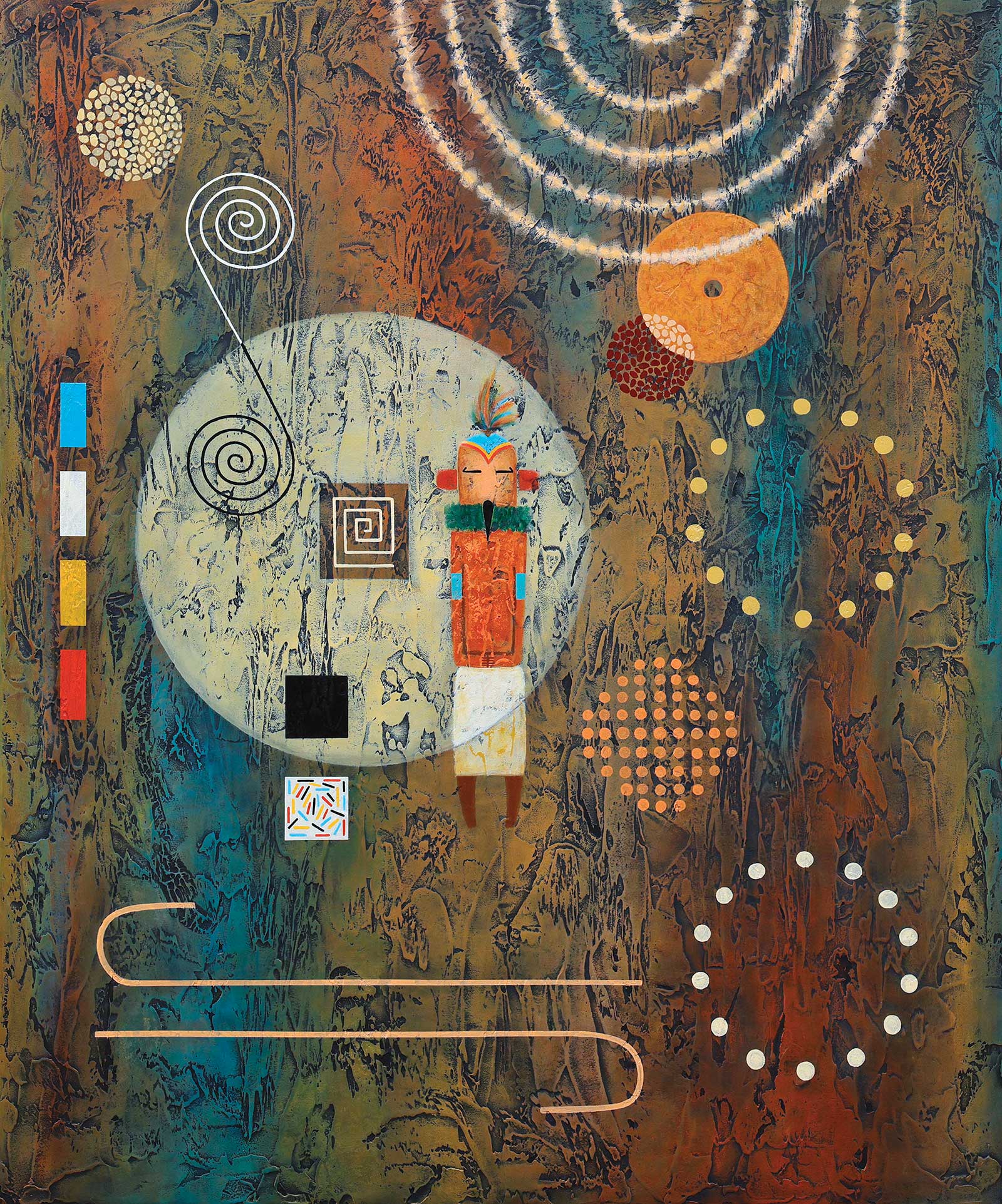
Dan Namingha (Hopi-Tewa), Pictograph #13, plaster and acrylic on canvas; 48 x 40”. Museum of Northern Arizona collections, IL2017-96-1. Photo by Nancy Wiechec, courtesy of the Museum of Northern Arizona.
Hays-Gilpin explains, “The katsina dolls that we selected for the permanent collection represent aspects of the natural world—plants, animals, and astronomical phenomena, as well as exemplary carvings by master carvers. For the exhibition, we present a sample of dolls that represent plants and animals of the Colorado Plateau. In the Hopi world, katsina dolls serve as teaching and learning toys for girls. They make aspects of the natural world more accessible and understandable in their human-like forms, and are cross-culturally significant in that way.
She continues, “Dried insects and pack rat midden debris are not especially enjoyable to look at (unless you are scientist, of course), so juxtaposing scientific specimens with artistic interpretations of the natural world is a great way to start conversations about our changing world. We are interested in cross-pollination! Across cultures, across disciplines and fields of practice, across media, across generations.” —
Through January 4, 2026
Collecting in a Changing World
Museum of Northern Arizona
3101 N. Fort Valley Road, Flagstaff, AZ 86001 (928) 774-5213, www.musnaz.org
Powered by Froala Editor


