A fifth-generation Diné weaver, DY Begay’s contemporary tapestries are deeply rooted in Navajo tradition, an intimate connection with her homeland, generational knowledge and family, but filtered through a strong personal vision, a spirit of experimentation and a mastery of color and design.
In March, Smithsonian Books published Sublime Light: Tapestry Art of DY Begay, the first volume dedicated to Begay and three decades of her ground-breaking work. At nearly 300 pages with text in both English and Diné, Sublime Light features 80 of her tapestries spanning 1965 and 2022, and essays about Begay’s life and legacy. Drawing from Begay’s detailed journals, family photographs and images of the desert landscape that inspires her work, the book is a collaboration between the artist, editors Cécile R. Ganteaume and Jennifer McLerran, and contributors America Meredith (Cherokee Nation) and Jennifer Nez Denetdale (Diné). An exhibition of the same name is on view at the Smithsonian’s National Museum of the American Indian through July 13.
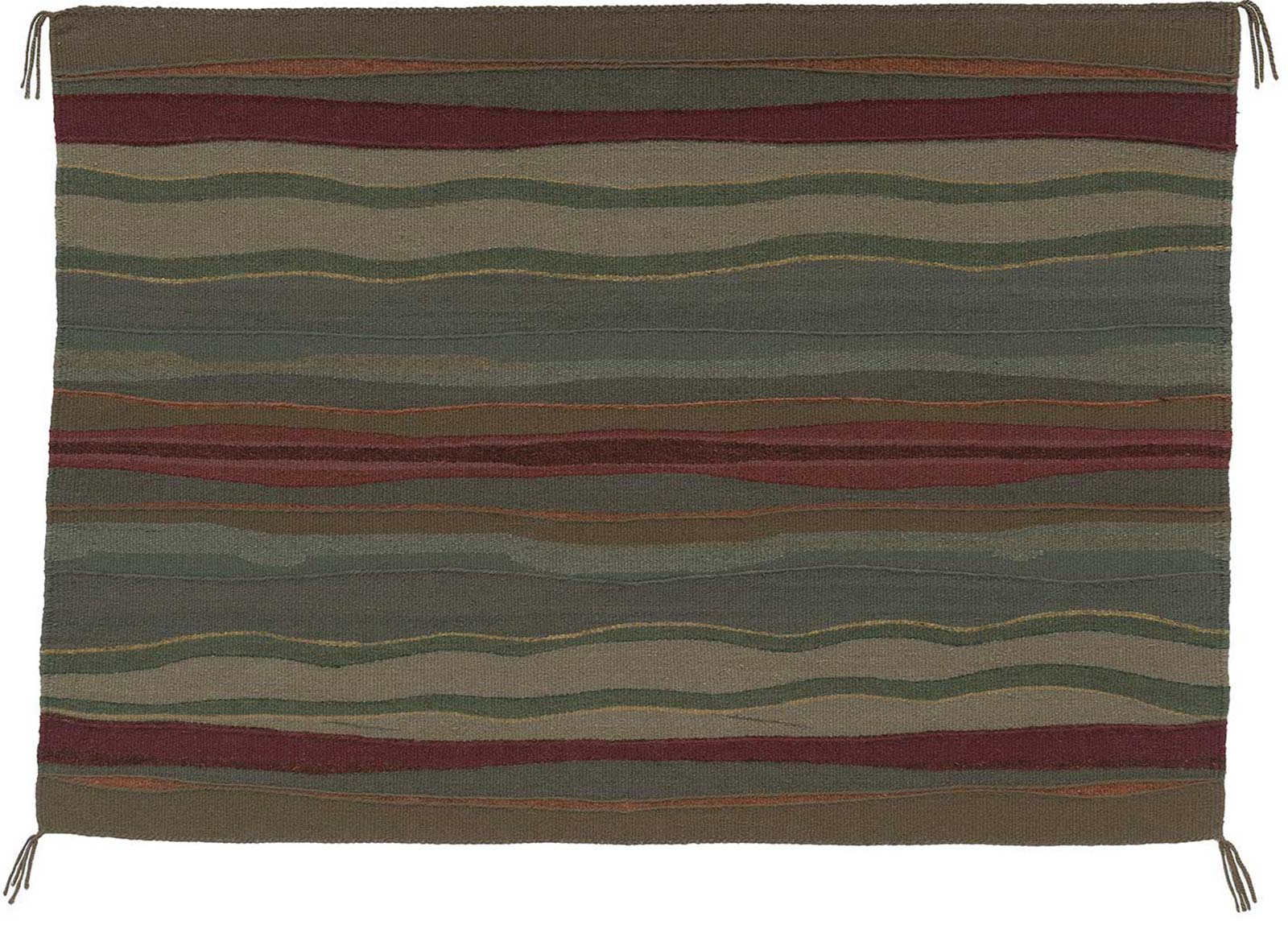 DY Begay (Navajo (Diné)), Pollen Path, 2007, churro and merino wool and plant and synthetic dyes, 365⁄16 x 2511⁄16". Private collection of Rowland D. and Diane E. Hill. Photo: Walter Larrimore for NMAI.
Begay’s fist memory of weaving was looking up at her mother’s loom at the age of 5. In Sublime Light, she writes, “I learned basic weaving techniques by watching my mother and my grandmother operating at their looms. I caught glimpses of my mother concentrating on warping the loom, picking and gently setting and spacing the warp. We were reminded to keep still in case we bumped the frame and disturbed the warp tension. The process of teaching was achieved with almost no explanation; the actions of picking and alternating warps and wefts were shown by hand actions. There were very few words spoken and no mention of technical weaving terminology or techniques; the weavers often uttered “Kót’éego” (like this) as they gracefully flipped the shed sticks and inserted rows of wefts.”
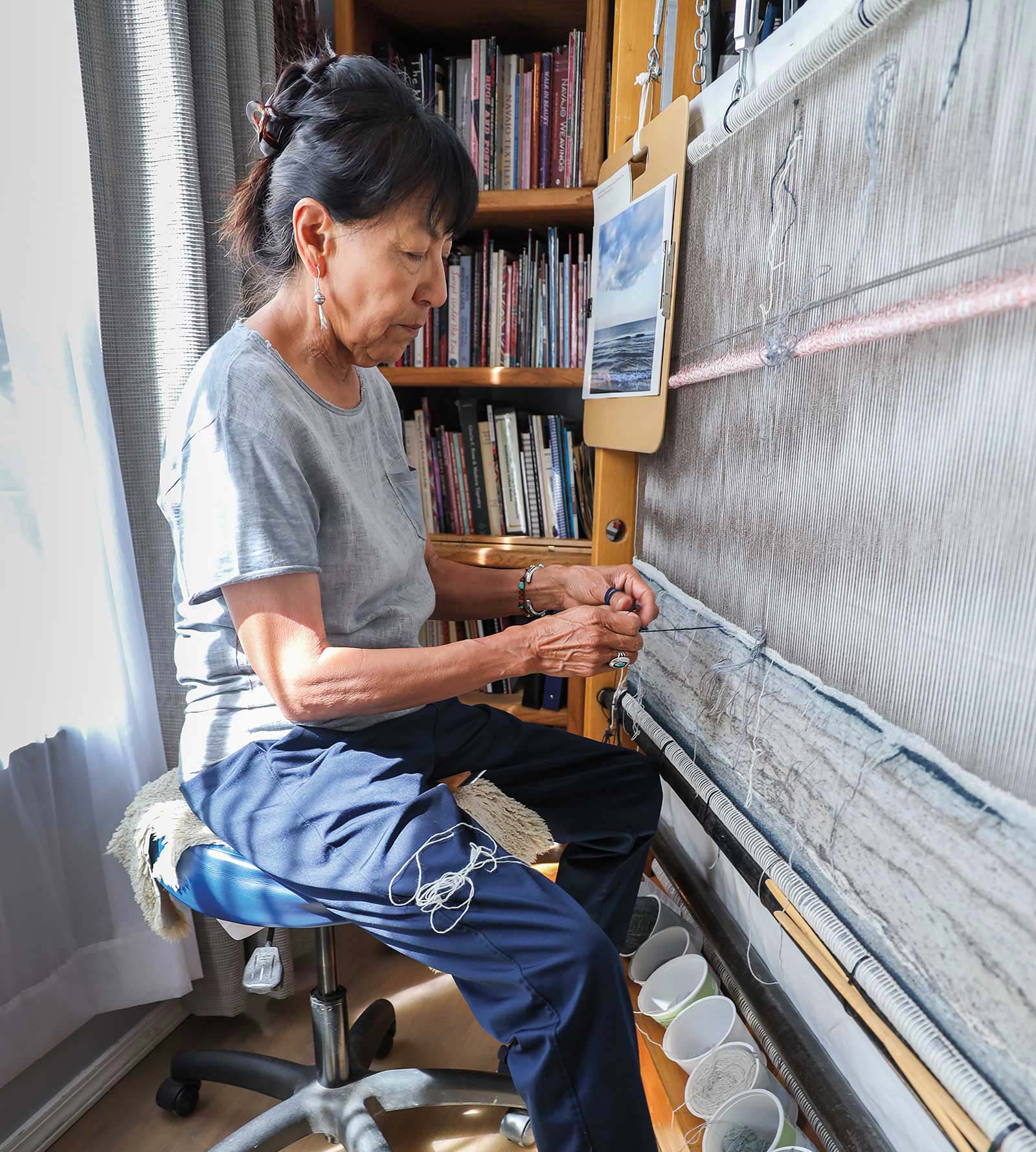
DY Begay weaving a private commission in her studio as she typically does with the morning light behind her. Santa Fe, New Mexico, 2023. Photo courtesy National Museum of the American Indian.
Keeping the weaving tradition alive in its original form in terms of tools and materials, and passing it down to the next generation in the hope that they will do the same, is one of the most important values behind Begay’s work,” she says. “The history of weaving is very important in our culture. It has always been part of our origin story. My grandmothers told us we needed to learn to weave because we would survive. You can trade, you can sell your weavings. They can keep you warm. That it was a survival skill and the teaching should continue. The weaving tradition has to—will—continue. I can be an inspiration for the next generation to maintain this tradition and preserve it.”
Begay grew up in Tsélání, Arizona, an isolated community southwest of Canyon de Chelly on the Navajo Reservation where, from a very young age, she was exposed to a life spent largely outdoors, exploring the washes and canyons, climbing juniper trees and eating wild berries, and helping her family tend to their sheep and other animals.
DY Begay (Navajo (Diné)), The Natural, 1994, wool and plant dyes, 275⁄16 x 463⁄8". Private collection of Peg Maher and Bill Morgan. Photo: Walter Larrimore for NMAI.
As it was for her mother and grandmothers before her, Begay carries out every step of her artistic process, from shearing the wool from her family’s sheep to warping and weaving at the loom. She hand dyes the hand-spun yarns with plant-, mineral- and insect-based coloring agents that will allow her to bring her unique vision to life on the loom.
Begay was born in 1953 into a Diné-speaking family of weavers, and spoke only Diné until she was 6 years old. She was sent to boarding school in 1958 and went on to high school and then Arizona State University in Tempe. Her early tapestries reflected the roughly 15 weaving styles referred to collectively as Diné (or Navajo) regional rug styles. But, “as I became proficient in weaving techniques…my creative spirit pushed me to shift from the typical designs and colors that I saw on family looms,” Begay explains in the book. It was taking a few fiber arts classes her junior year in college that opened her eyes to, literally, a whole world of weaving styles, designs and cultures. One of her teachers told her she was a natural when it came to color and design, and that she should work with her own ideas and inspiration. She was further encouraged when her grandmother echoed the same sentiments.
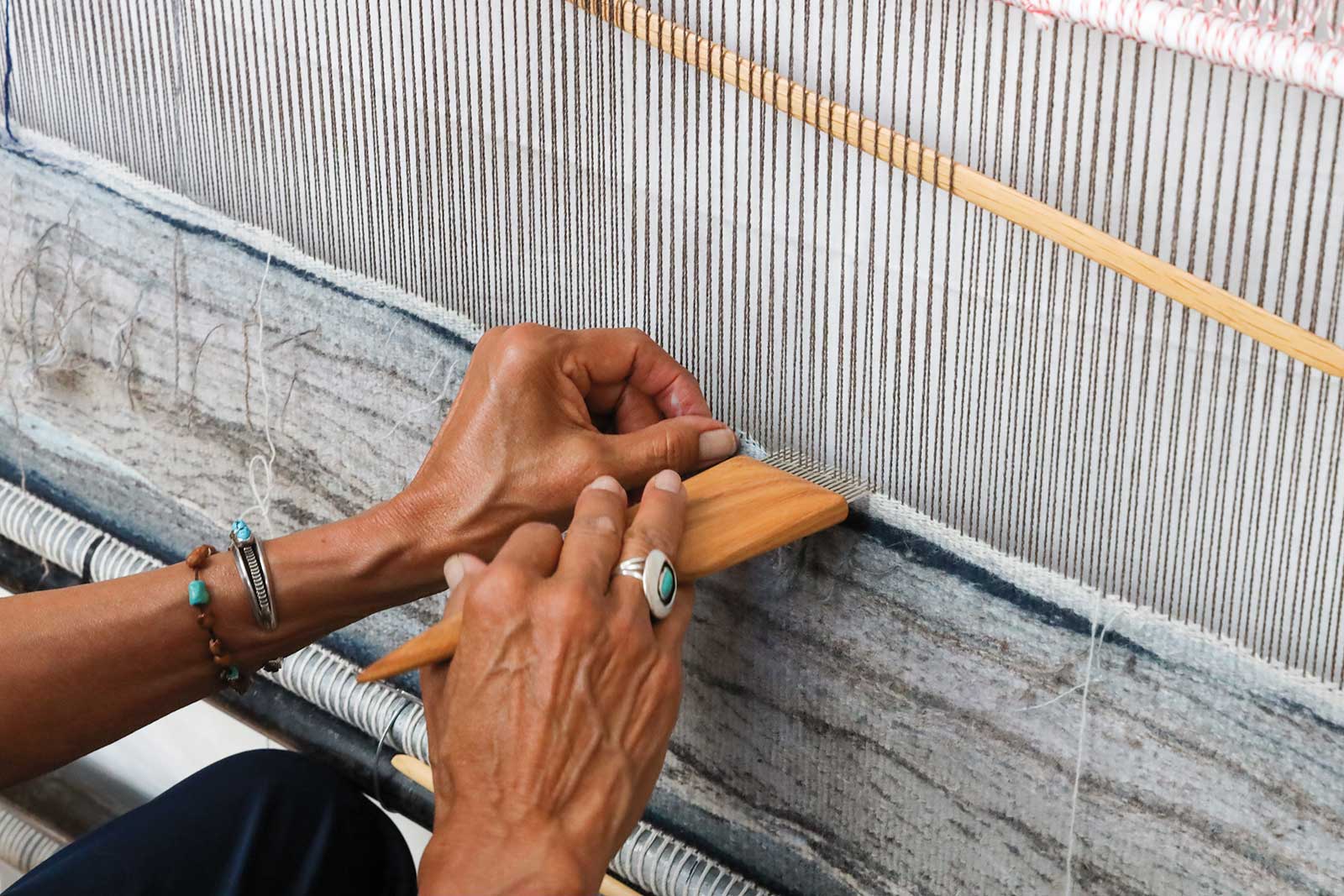
DY Begay weaving a private commission in her studio. Santa Fe, New Mexico, 2023. Photo courtesy National Museum of the American Indian.
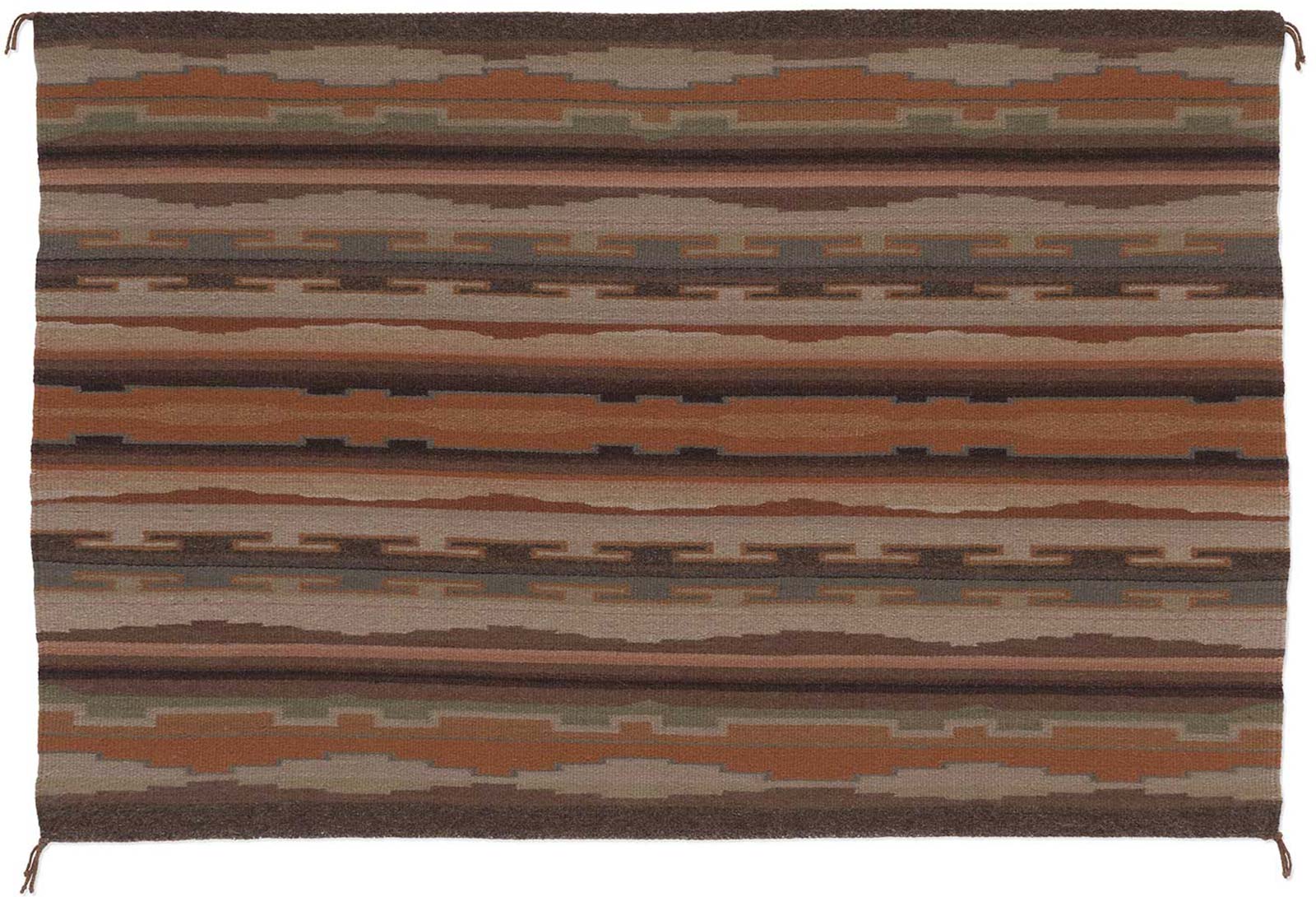
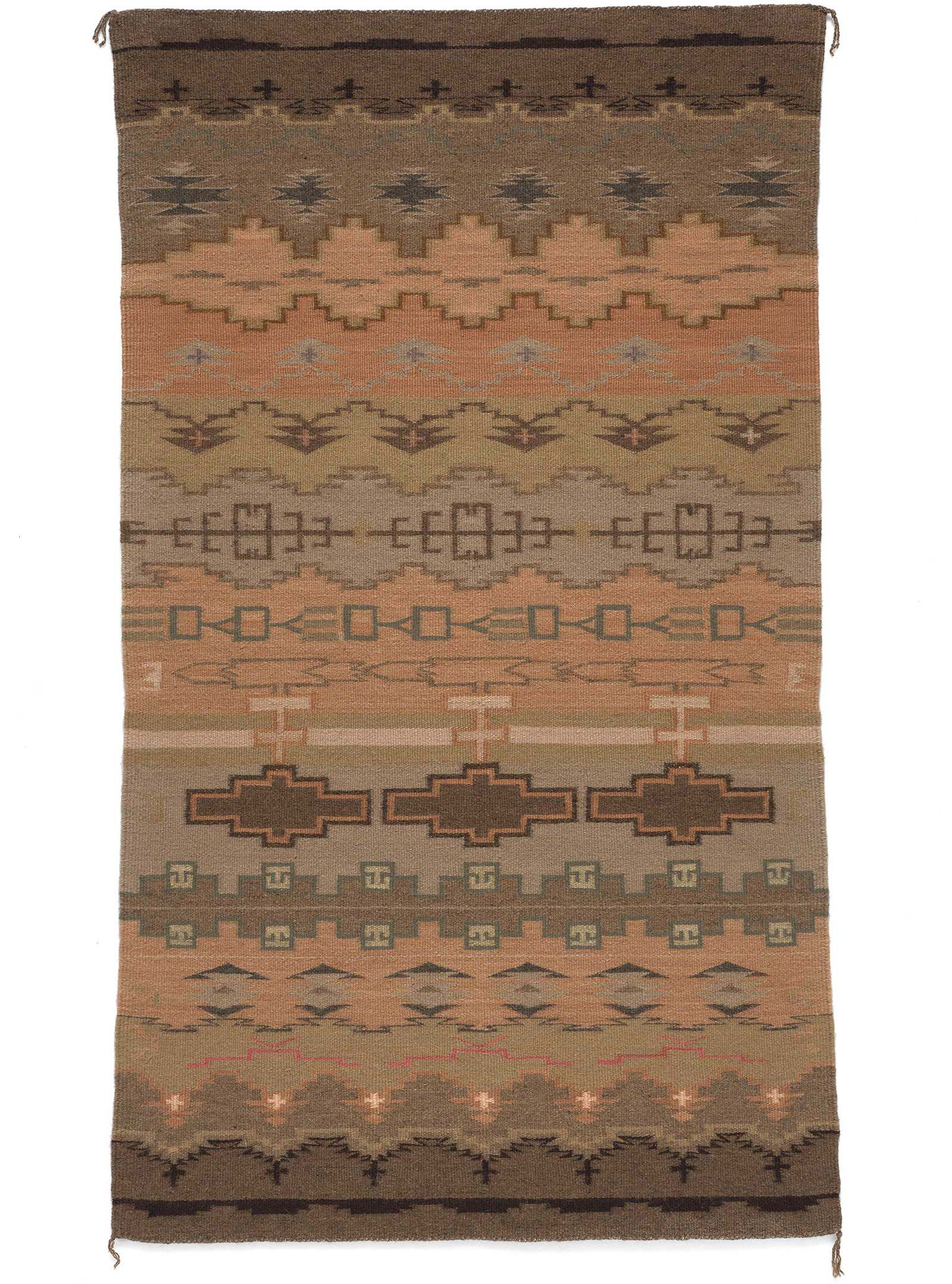
DY Begay (Navajo (Diné)), Mountains Behind the Hogan, 1999, wool, plant, and lichen dyes, 463⁄8 x 3013⁄16". Private collection, Washington D.C. Photo: Walter Larrimore for NMAI.
“My paternal grandmother, then in her upper 80s, saw a weaving going on my loom and said she liked the colors and the design I was creating,” Begay says, noting this was in the late 1980s, early 1990s, a pivotal time in her career. “She validated me. ‘You should weave what you like, what your eye sees and what your heart feels,’ she said. She really validated me to continue my mission to weave what I truly like. All the information is coming from my environment—the landscape, the water, sunrise and sunset. I was very happy she liked what was happening on the warp. It took off from there.”
One piece that she equates with her departure from regional weaving styles is The Natural, from 1994, for which she first consciously looked to the Tsélání landscape for inspiration. “Around 1990, I realized I was honing my weaving skills but neglecting my passion for color and design,” she writes. “The Natural flourished from this place in my weaving evolution. Sketching guided me. The was the first tapestry in which I embedded hints of colors from the landscape. It began my transformation in to a new realm.”
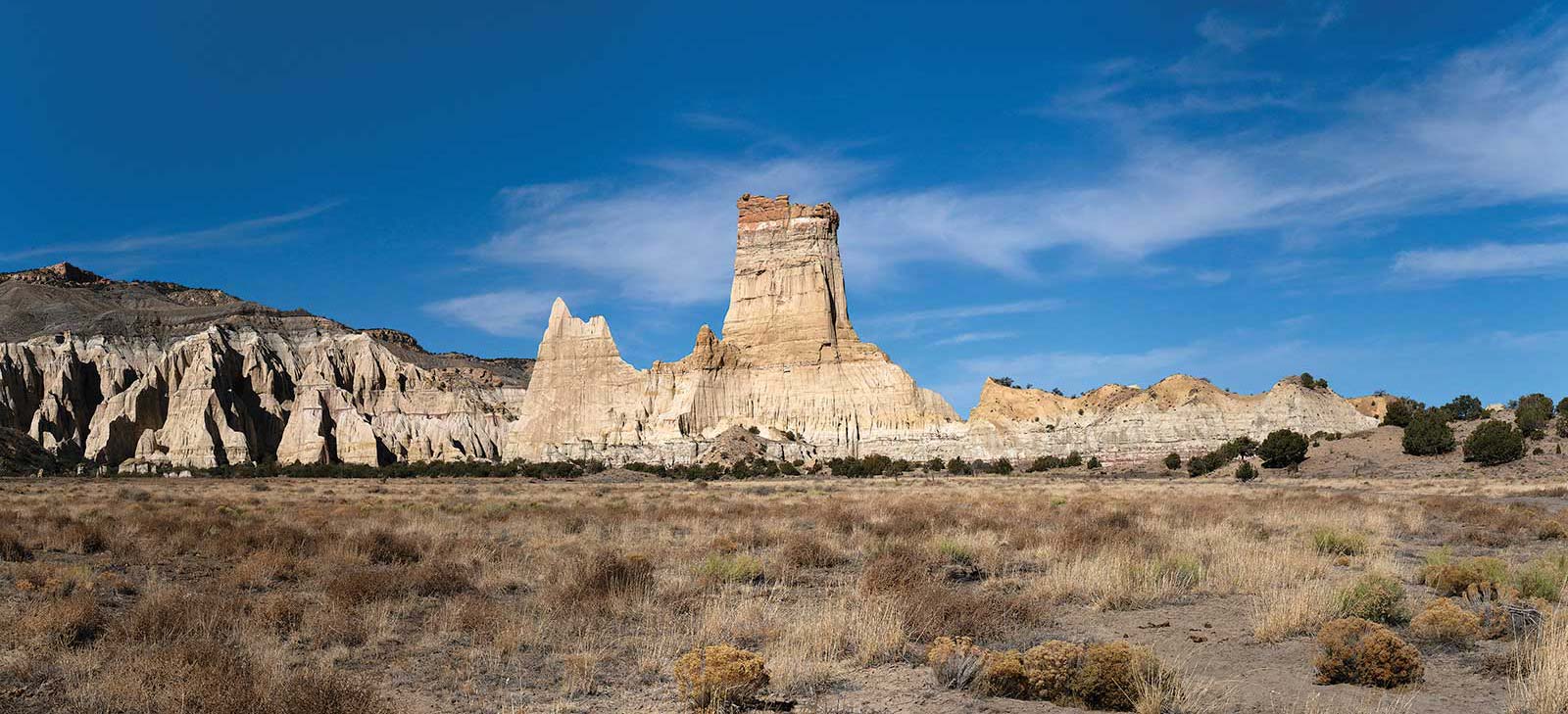
Tsélání’s sandstone spires. Navajo Nation, Arizona, 2024. Photo courtesy National Museum of the American Indian.
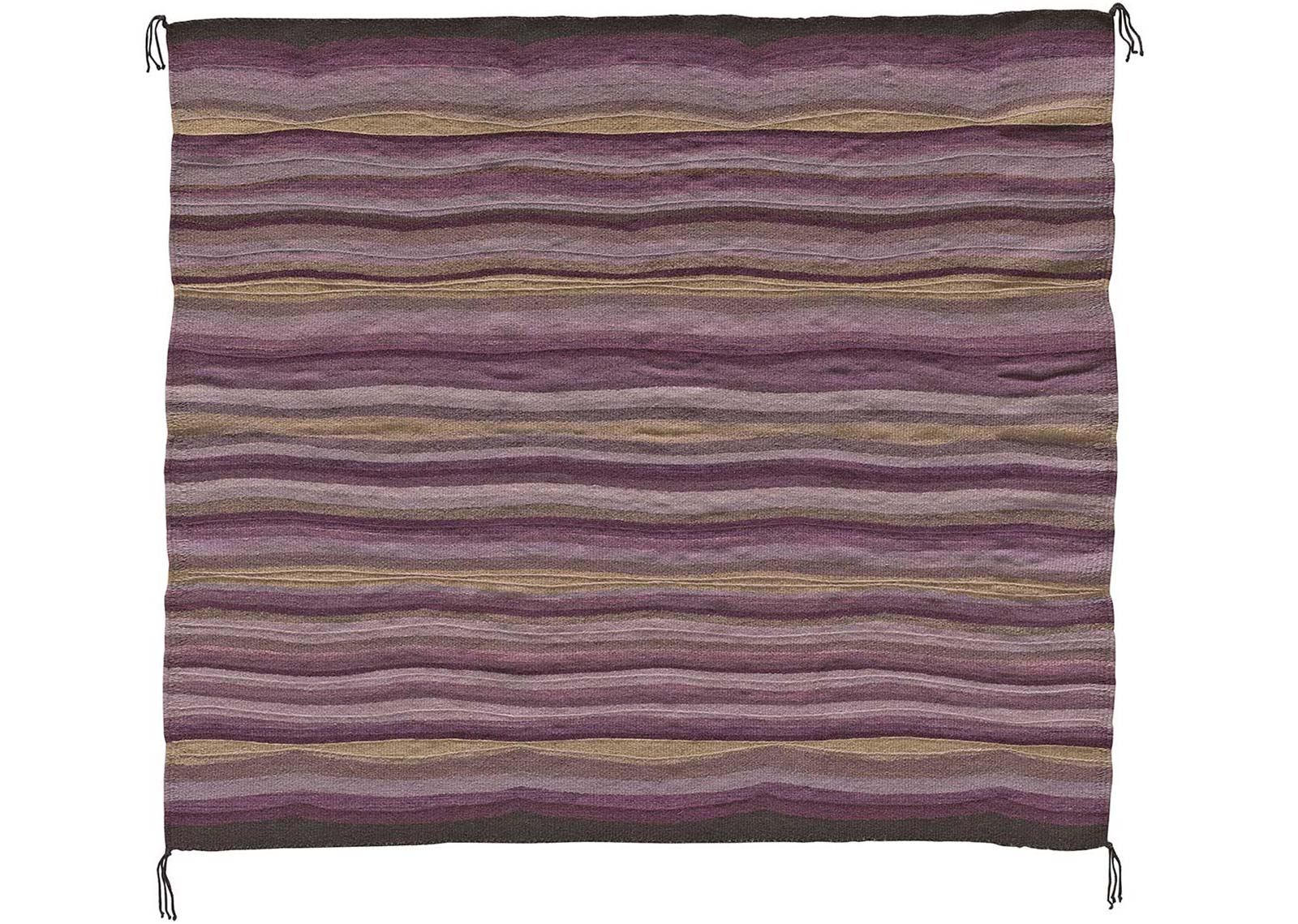
DY Begay (Navajo (Diné)), Confluence of Lavender, 2016, churro and merino wool and plant and insect dyes, 42 x 37". Private collection. Photo courtesy National Museum of the American Indian.
Mountains behind the Hogan, 1999, also marks a significant advancement in Begay’s conceptual and stylistic approach to weaving. Rather than weaving a vertically and horizontally symmetrical composition composed of large and small geometric design elements seen in traditional Navajo tapestries, Begay took inspiration from a mesa visible from her hogan in Tsélaní for the piece.
Ever since the early 1990s, Begay has taken a more purposeful approach to weaving the land where she was born and raised into her deeply personal tapestries. Through color and design, they encapsulate memories, intimate thoughts and the specific beauty of a place where she still maintains a home today.
In Sublime Light, she writes, “At the end of the day, I often sat outside our hogan in contemplation, studying the horizon of the Lukachukai Mountains. The Lukachukai horizon is imbued with visual formations evoking a collage of ideas, colors, and stepped structures to create on my loom. I also came to realize that my home, Tsélání, which translates to ‘many rocks,’ captivated me with its exquisite natural beauty. Tsélání is an entrancing place tucked away among cream-colored cliffs, walls textured by the wind, rain, and erosion. Time and weather have carved vertical streams of pigment into soft, undulating patterns. The cliffs are majestically sculpted into elongated, soaring, vertical structures, and the tops are capped with mineral domes.”
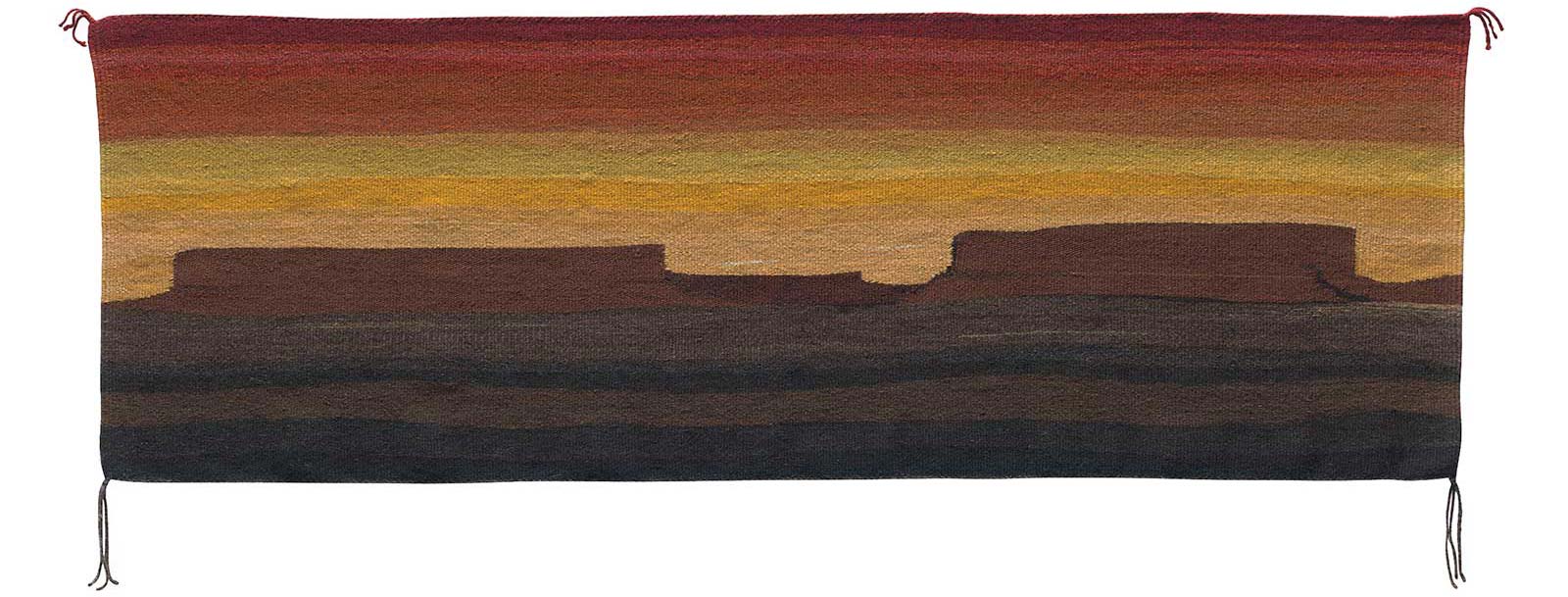
DY Begay (Navajo (Diné)), Sunset Mesas, 2006, wool and dye, 5811⁄16 x 20". Private collection. Photo: National Museum of the American Indian
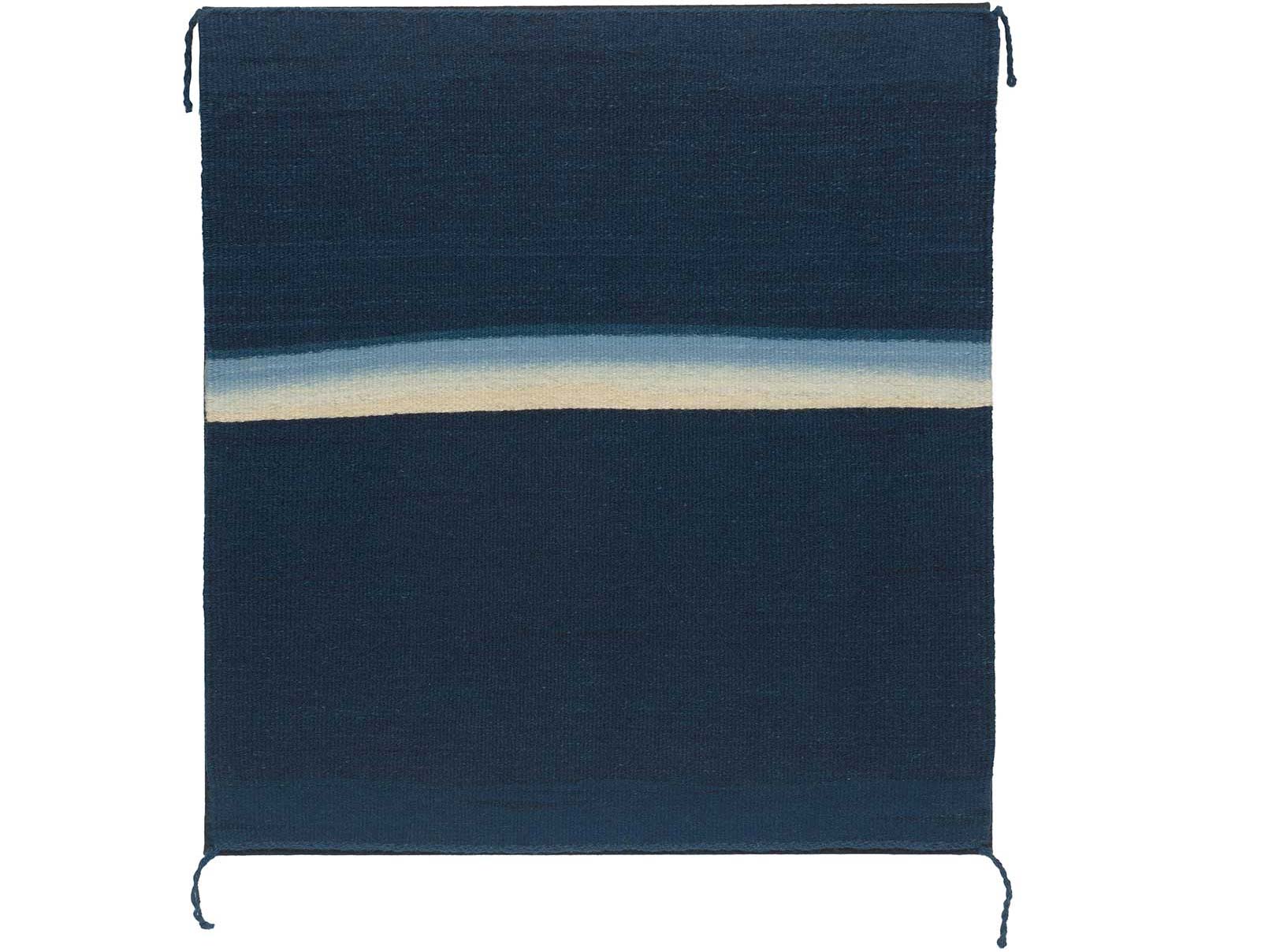
DY Begay (Navajo (Diné)), Enchanted Indigo, 2022, wool and plant dye, 245⁄8 x 26". Private collection, New York. Photo: Walter Larrimore for NMAI.
The importance of place for Begay sometimes shows up in literal ways—undulating bands of color suggestive of a Southwest sunset; designs reminiscent of table top mesas, mountains and sage brush. But she also honors her connection to the land and her family in much subtler ways that might go unknown to all but herself.
She tells me about Pollen Path from 2007, a tapestry that holds personal significance for the artist. It was the first summer in a long time the weather had allowed for a good supply of corn and squash, and Begay and her sisters were feeling very proud of themselves. They decided to collect corn pollen, or tádídíín, which is used in Navajo ceremonial practices, from the healthy stalks. With a bag full of offerings, she saw the day as a gift, as a blessing, and immortalized the memory in a tapestry woven with yarn the color of the pollen harvested that day.
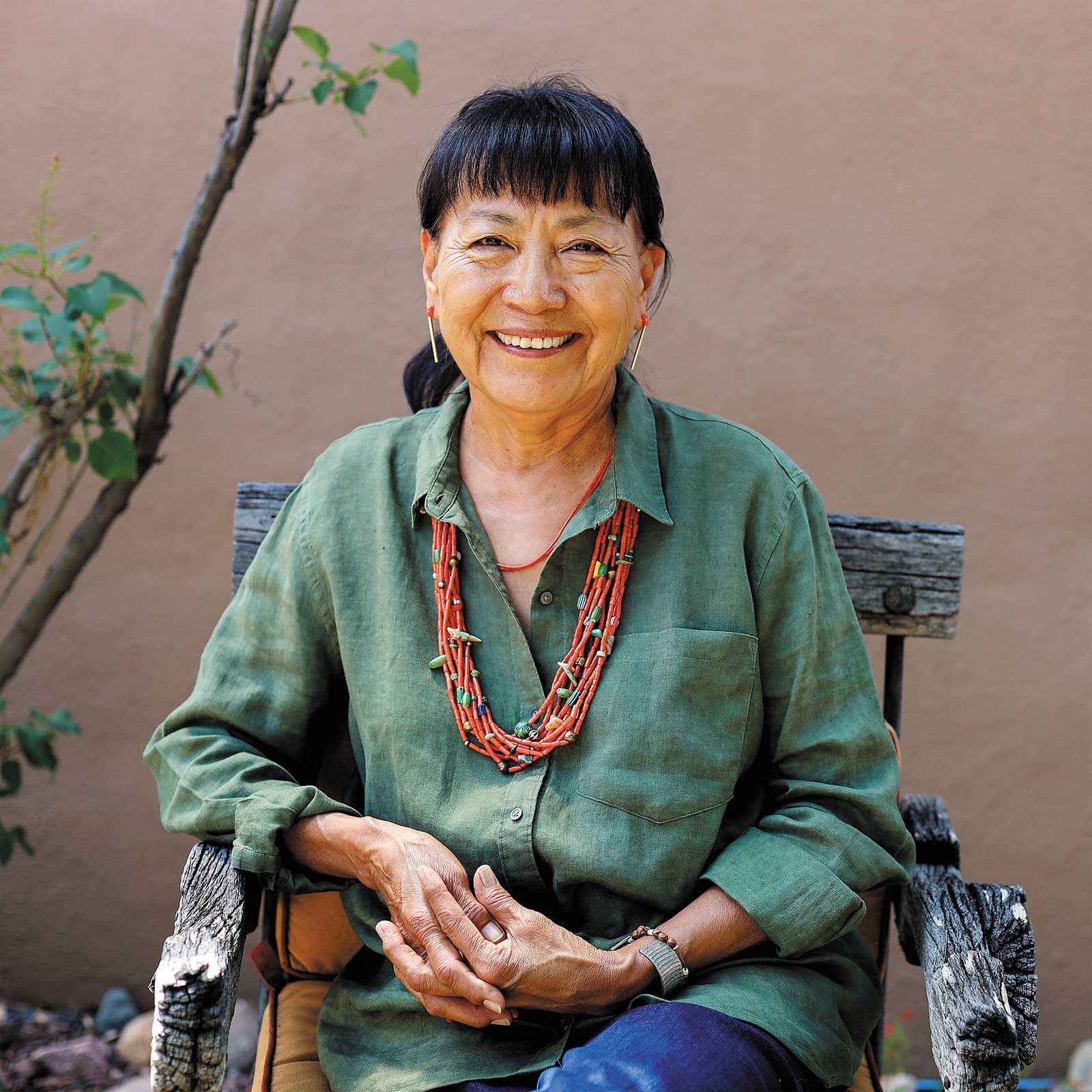
DY Begay at her home in Santa Fe, New Mexico, June 2023. Photo courtesy National Museum of the American Indian.
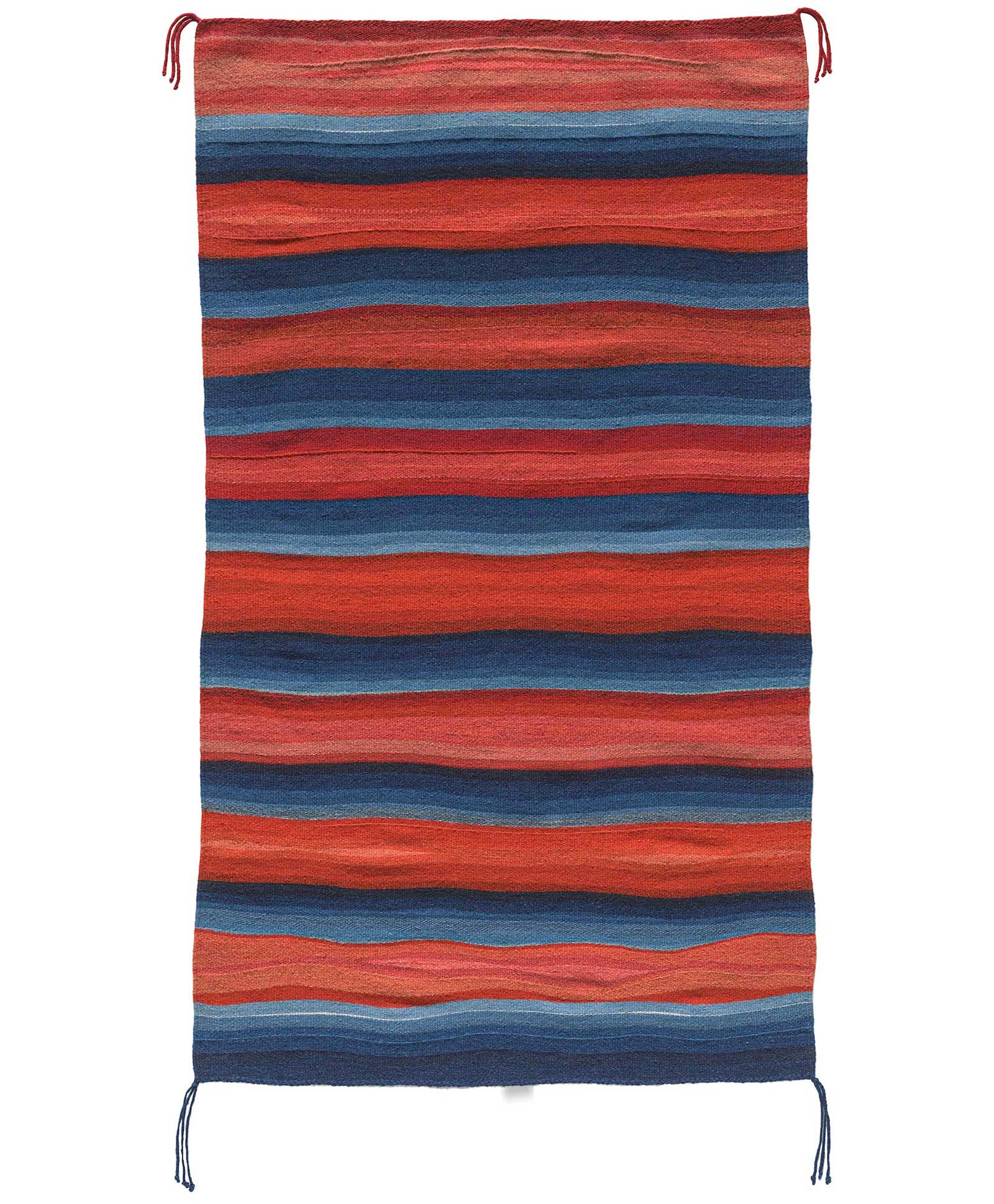
DY Begay (Navajo (Diné)), Transformation, 2012, wool, plant and insect dye, 29 x 495⁄8". Collection of Caroline and Roger Ford. Photo courtesy National Museum of the American Indian.
In her introduction, Ganteaume, the book’s editor and exhibition curator, says it best: “Encapsulating DY Begay’s creative genius in words can be a challenge. Not because it is difficult to discern her artistic influences, but because she draws inspiration from so many sources that emphasizing one would be misleading and certainly exclusionary. Like groundwater flowing through a network of cracks and fissures to create a spring, a network of artistic currents has flowed into Begay’s artistic wellspring throughout her life. Begay soaks them up, rethinking them to suit her purpose, which is to create unique artistic expressions shaped by her personal approach to color, design sensibility, and desire for self-expression.” —
Powered by Froala Editor


