
Mark Ron Taho (Hopi/Navajo (Diné)) is a biomedical engineering technician in Tuba City, Arizona. He measures subminiature components manufactured for the Department of Defense. Measurements for the tiny components are in microns—one micron equaling 1 millionth of a meter or .00003937 inches.
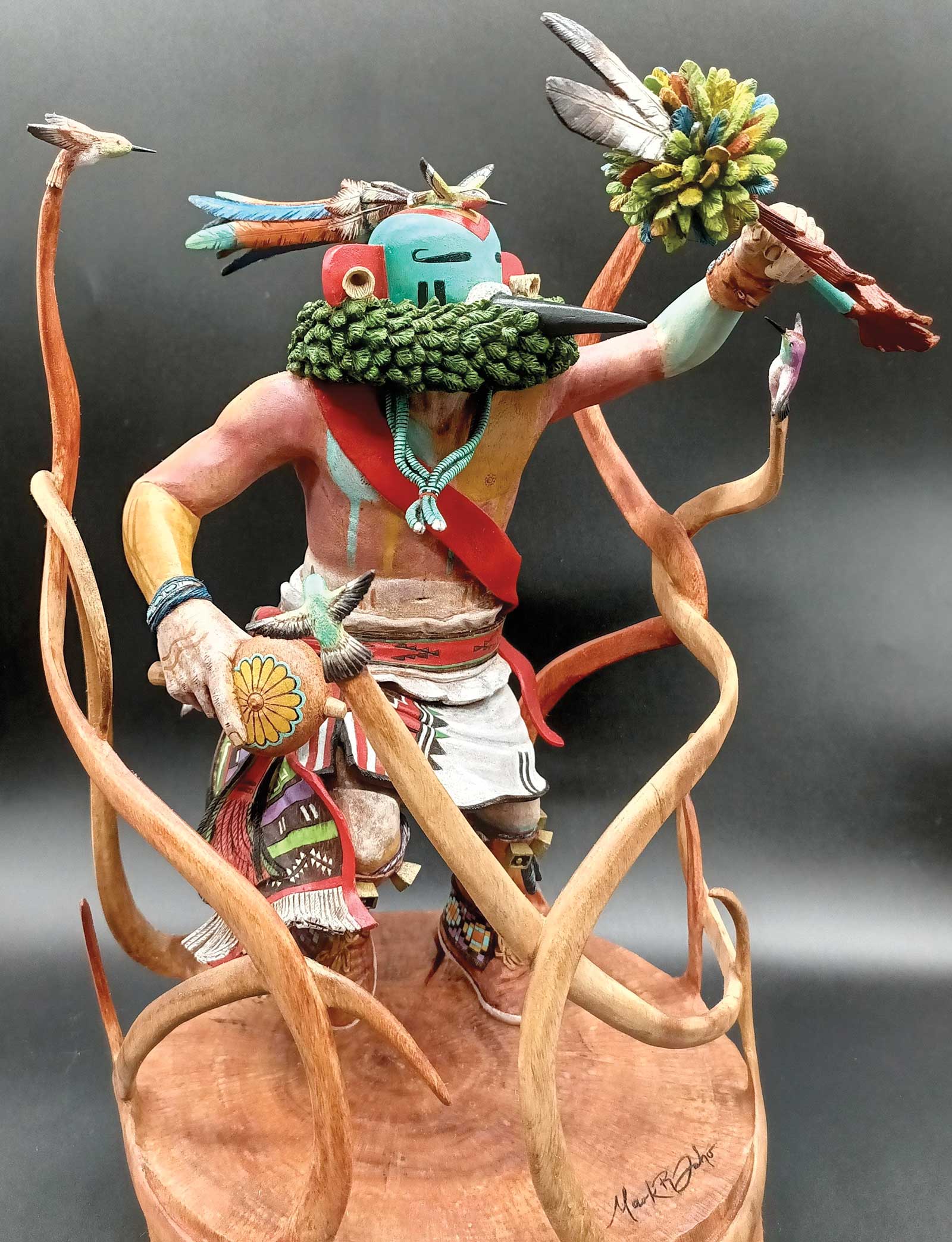
Blessings, cottonwood root, wood stain and oil paint, 17"
As a carver of traditional katsinem and contemporary figurative wood sculptures, he hasn’t always been so accurate. As a boy growing up in the village of Mungapi on the Hopi Indian Reservation north of Flagstaff, Arizona, he watched his grandfather, Leonard Taho, and his uncle, Emerson Taho, carve katsina dolls as they hummed songs associated with the katsinem. “I watched traditional ceremonies and dances as a kid and drew and painted them. I watched with awe and amazement. Today, I invite friends to see some dances, and when they see katsina dancers in real life, there’s a look of amazement on their faces. I have the same feeling every time.”
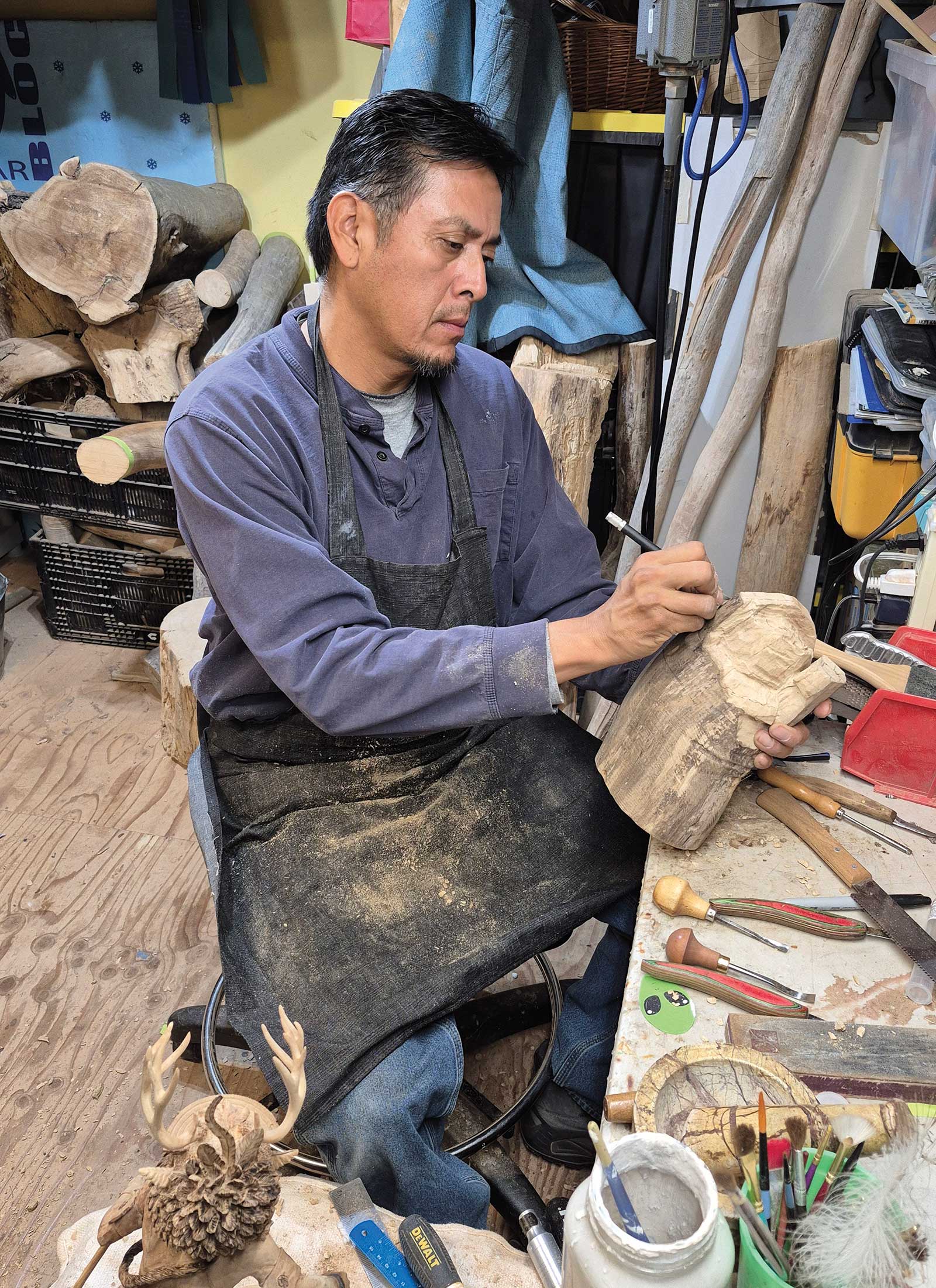
The artist in his studio in Tuba City, Arizona.
When he was about 10, he remembers “sitting in the kitchen making wood chips with a piece of cottonwood root that was about 8 inches long. Weeks later I finished my first doll and it was only about 4 inches high.” Even then, he wanted to get the proportions right, whittling away more and more of the wood to get it right.
Hopi boys are initiated into katsina society before they become dancers or carvers representing the katsina spirits. The katsina dolls and dances embody the spirit of the katsina they represent. The Heard Museum notes that the dolls were “traditionally presented as gifts to babies and girls during ceremonies held in February and July. They are given with a prayer-wish for future growth and well-being.”
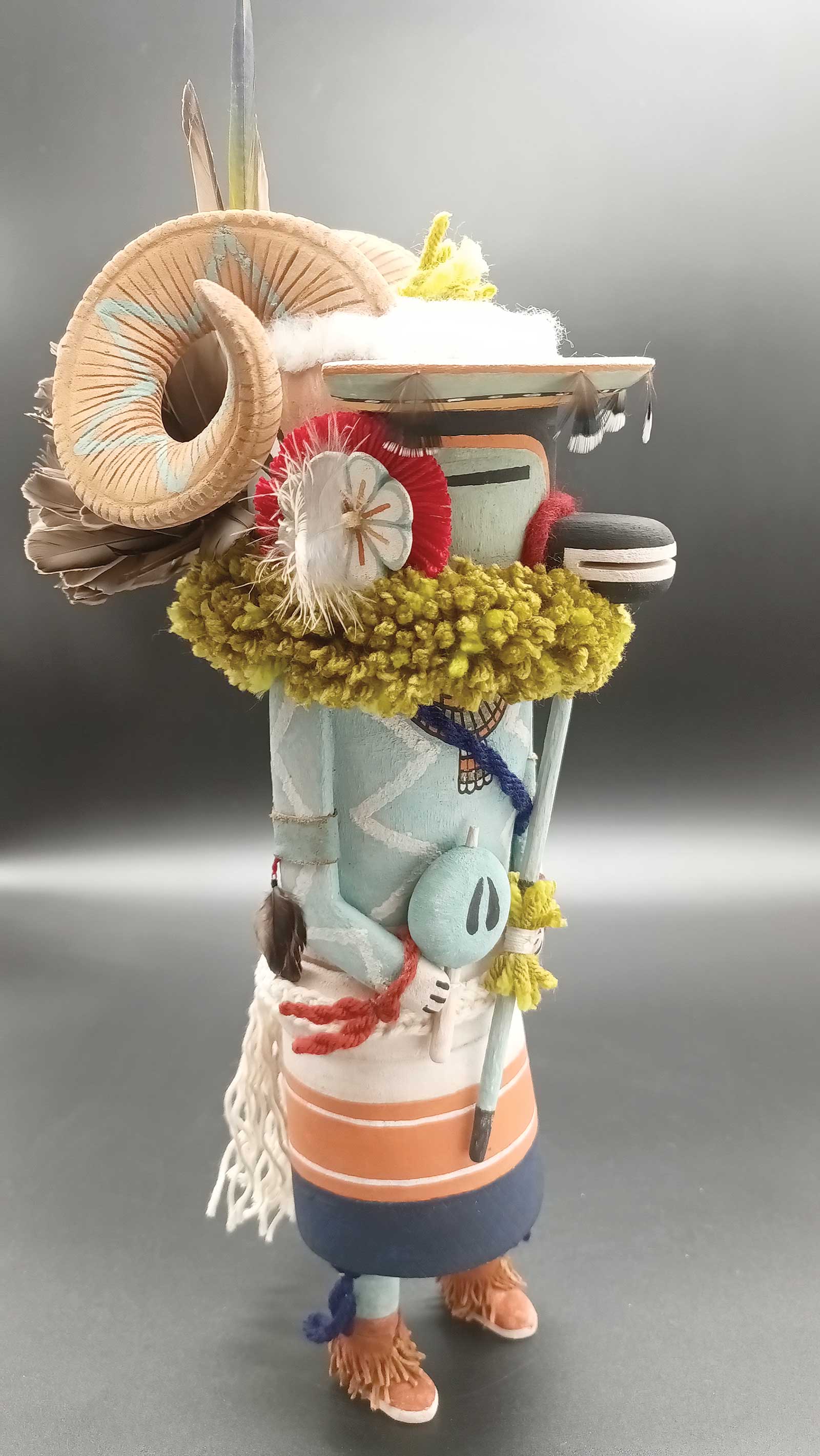
Ram, cottonwood root, natural pigment and mineral paint, assorted feathers (grouse and pheasant) and natural yarn, 13"
Cottonwood root is the traditional medium for Hopi carvers, softer and easier to work with than the trunk or branches. Monsoons expose the roots, and when a tree falls, the roots are exposed, collected and then buried in sand to let them slowly dry. Sometimes the carvers forget where they buried their cache like squirrels forgetting where they hid their supply of nuts.
Taho’s family has a ranch not far from Tuba City where they have 120 cattle, horses and a small flock of sheep—and cottonwood trees. He also has suppliers who come in from Colorado and New Mexico and has a friend in Moab, Utah, who navigates his kayak along the Colorado River to collect roots.
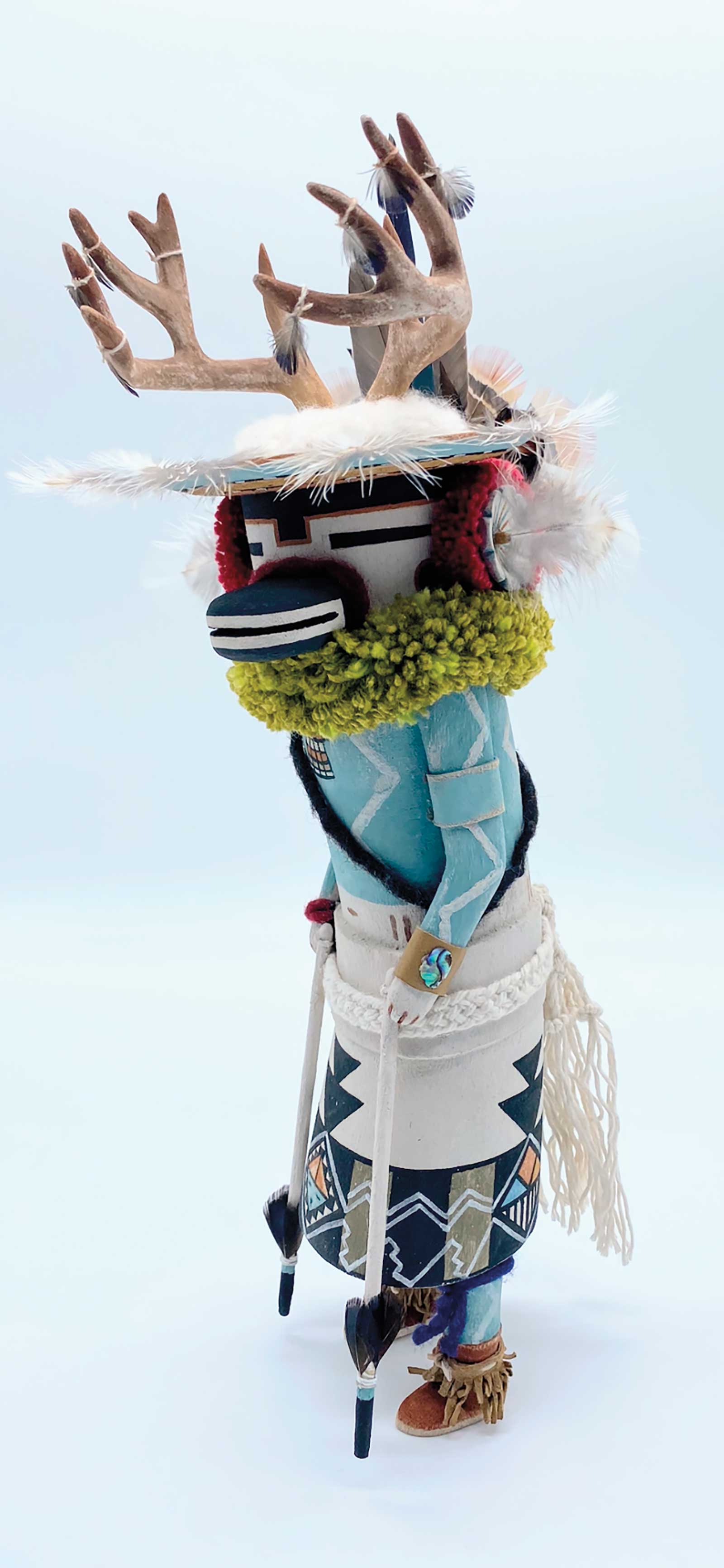
Deer, cottonwood root, natural pigment paint, assorted feathers (duck and pheasant), leather and natural yarn, 13"
After his 4-inch-tall doll, he says, “I started carving in the ‘action style’ and used acrylic paints. Today, I try to use all natural materials in my traditional style dolls. I collect minerals and pigments for paint. Along with my traditional style, I also carve contemporary dolls. I use wood stain and finishers as I like the natural grain of the wood to show through. Lately, I’ve been trying to capture the natural fluid movement in the poses of katsinem. I use only traditional cottonwood roots in both styles of carving. I’m also a very slow carver. I tend to only market a few pieces of each style a year.”
One of those pieces, Blessings, a hummingbird dancer, won 2023 Best of Wooden Carving at the Autry Museum of the American West’s 32nd annual American Indian Arts Festival, as well as a second-place ribbon at both the Santa Fe Indian Market and the Heard Museum Guild Indian Fair & Market that same year.
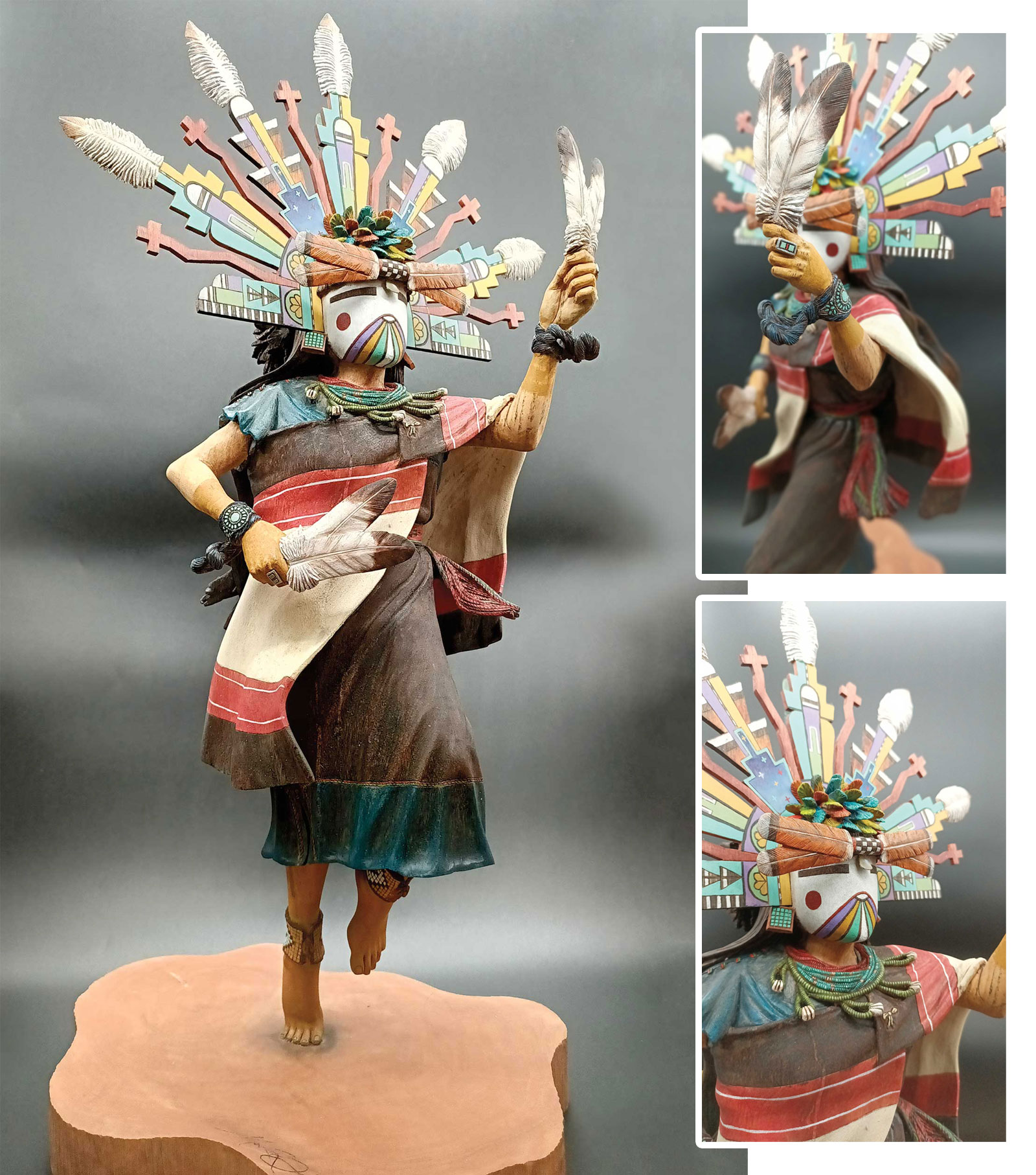
Pahlikmana, cottonwood root, abalone sheel, wood stain and oil paint, 22"
He used to draw a few lines on a piece of wood but now he sometimes sketches out new work on paper and studies human anatomy to ensure accuracy in his figures. He most often starts at the top and carves his way down. The piece may evolve as he’s carving—an arm position might change, for instance, or the katsina might hold something different in its hand. “It starts in my head,” he explains. “Sometimes I have a particular katsina in mind, motivated from watching actual katsina dances. I think about the stories and how can I convey them to other people. I also think about the katsina living in its own land, in the San Francisco Peaks. They have their own lives and I think about what this one would be doing, like a hunter would be hunting.”
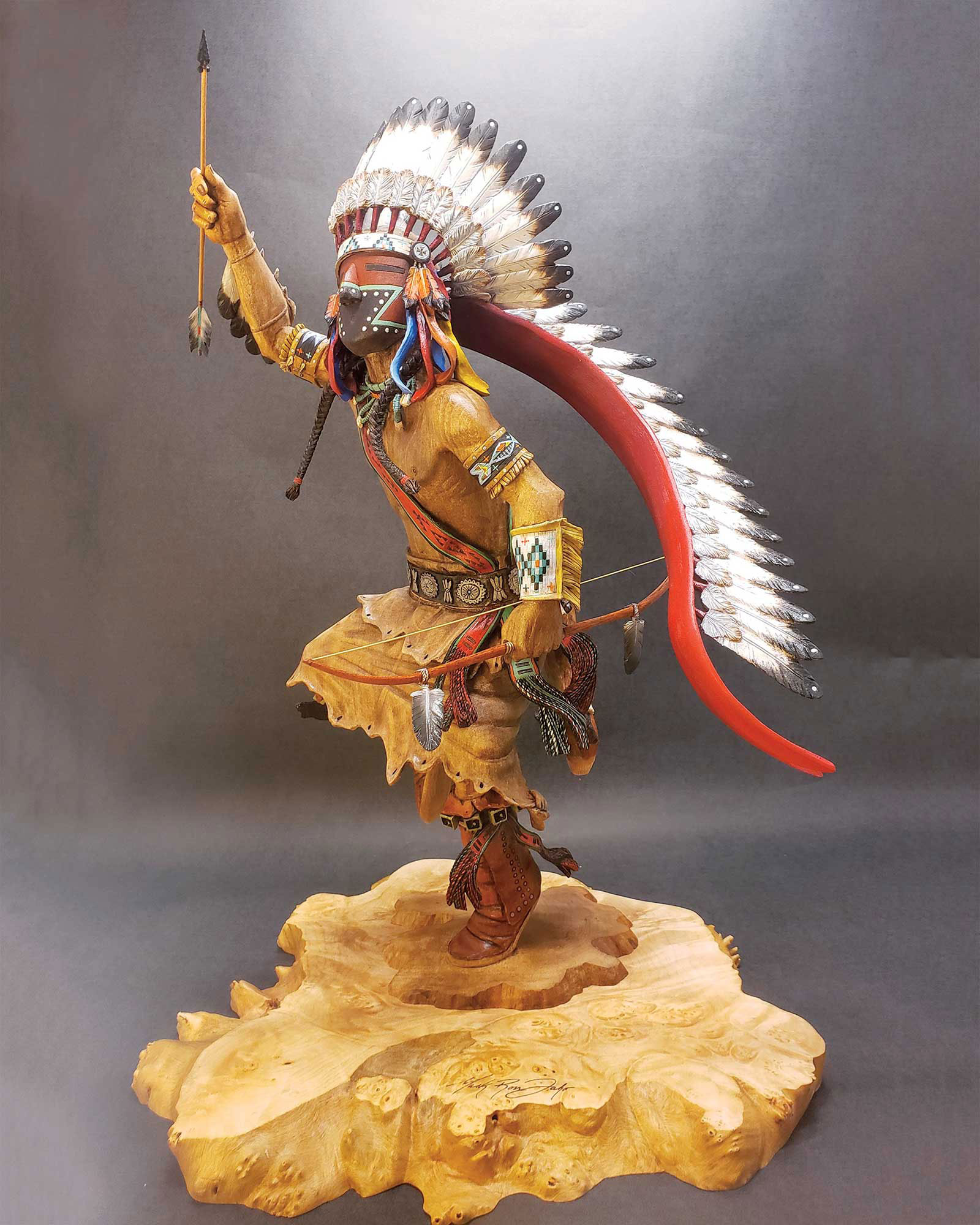
Komunsi, cottonwood root, wood stain and oil paint, 19"
For Blessings, he thought about the swerving flight path of hummingbirds, carving them at the tip of curving and intertwining strips of wood, flying around the dancing katsina. The Hopi hummingbird katsina intervenes with the gods to ask for rain and the dancer sings prayers to nourish crops and plants.
For his traditional katsina, Taho and his son, Jalen, go out hunting for pigments or trade with other carvers and local pueblo people for their natural paints. He and Jalen also hunt wood together and Jalen has begun to carve traditional katsinem, winning best in show at the 2024 Heard Museum Guild Youth Art Show & Sale for his Navan Katsina. Jalen also participates in his father’s creative process as they bounce ideas off each other.
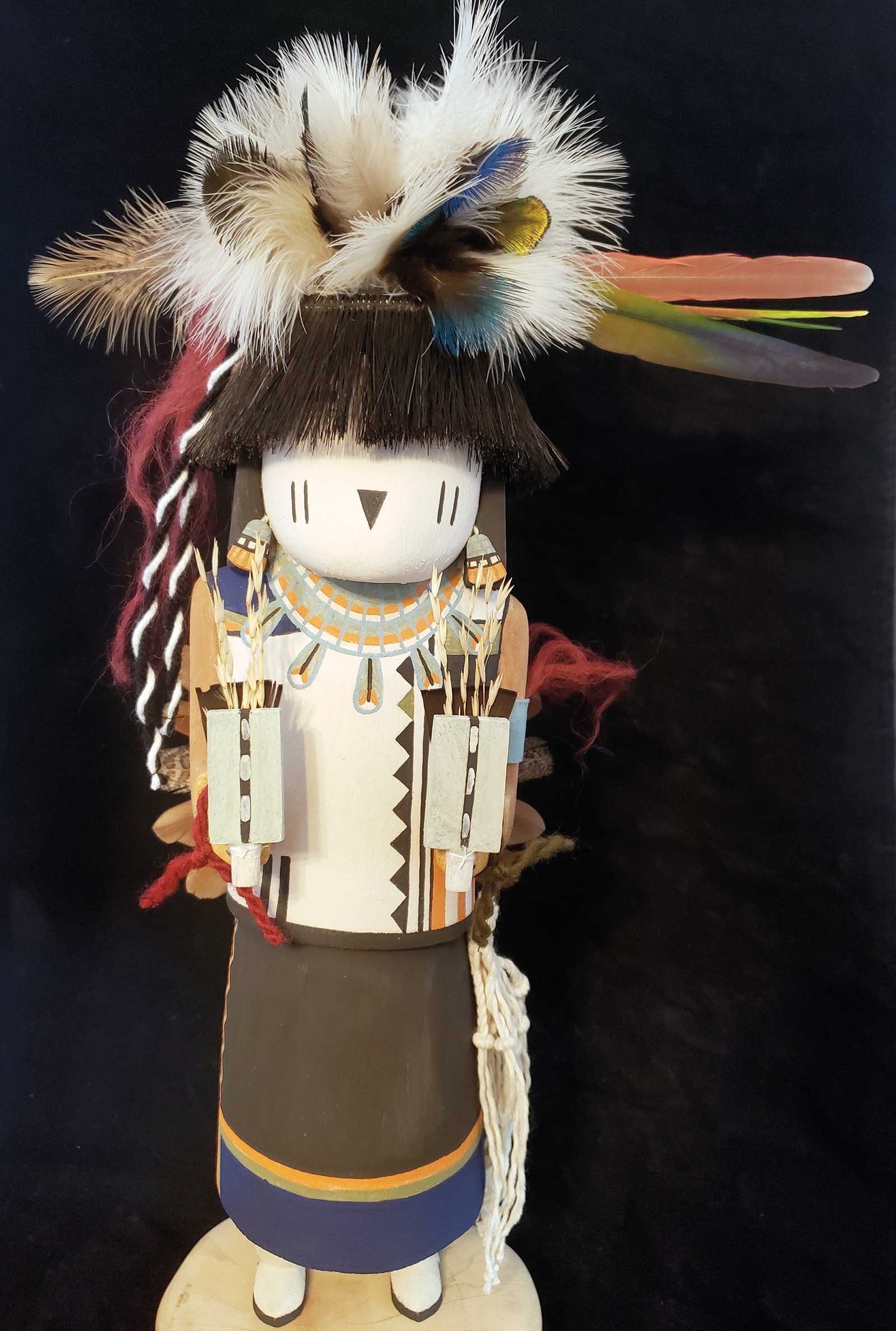
Buffalo Maiden, cottonwood root, natural pigment and mineral paint, assorted feathers and natural yarn, 14"
Taho won best in class in pueblo carvings last year at the Heard for his katsina, Pahlikmana—the Hopi butterfly maiden, heralding the season of regeneration in the spring, flying from flower to flower and pollinating the fields. Taho’s traditional Deer katsina appeared on the cover of the SWAIA 2024 artist directory and booth guide.
As he carves, and thinks about the katsinem back in their own homeland, he says, “I give thanks as I’m going along.”
Mark Taho will show his carvings at Booth G-08. —
Powered by Froala Editor


