Henry Payer Jr. works primarily with collage and mixed media that draws from his background as a Ho Chunk, the Indigenous people of Wisconsin who, after being relocated multiple times in the 1800s throughout the Midwest, ended up in Nebraska. The history of the Nebraska Ho Chunk and the power of place informs much of Payer’s work, including Appliqué sur le terrain, an installation on view at the Joslyn Art Museum through September 4.
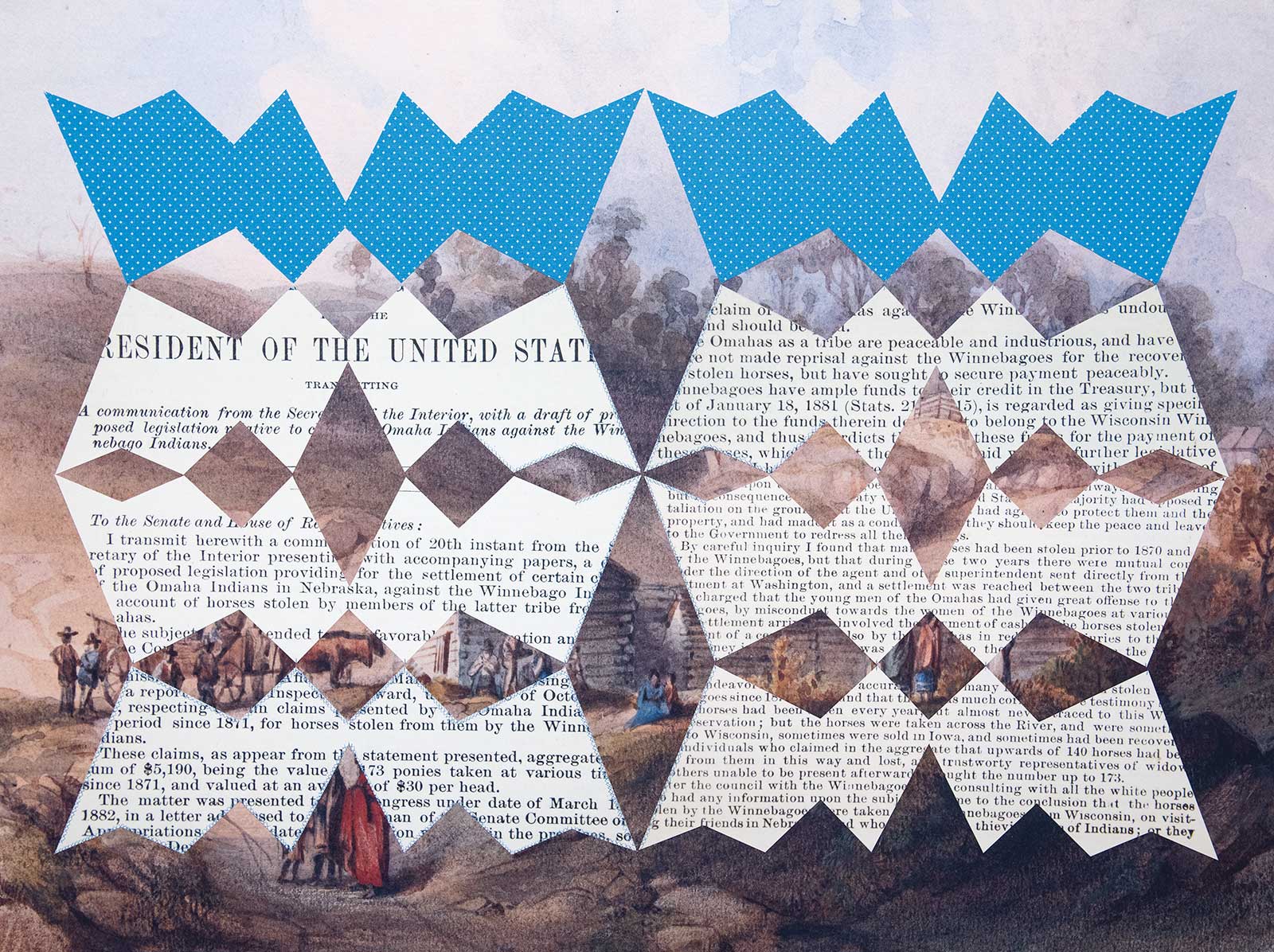
Henry Payer (Ho-Chunk), Omaha, Bellevue Agency, Post of Major Dougherty (After Ancestor Artist), 2024, from the series Appliqué sur le terrain, calico, digital print on polyester fabric and thread, 36 x 48". © Henry Payer, Courtesy the artist.
Inspired by the Joslyn’s collection of Karl Bodmer (1809-1893) watercolors of the area, Payer created eight collages that interpret the cultural landscape of present-day Nebraska through vibrant ribbonwork appliqué, an artform that entails sewing layers of silk ribbons, fabric and beads traditionally used to make regalia for special occasions. The distinctive symmetrical patterns reflect kinship, ecological knowledge and oral histories of various Indigenous communities.
Layering Missouri River landscapes, textiles and text, Payer has applied the technique to works that address the colonization of the region. He hand-stitched the designs in the Ho-Chunk appliqué style, called zeenįba hirarucak. Each floral and geometric pattern references historical examples created by Umónhon, Ponca, Ho-Chunk, Pawnee, Ioway and Otoe-Missouria women, honoring the legacy of artists whose names were not documented.
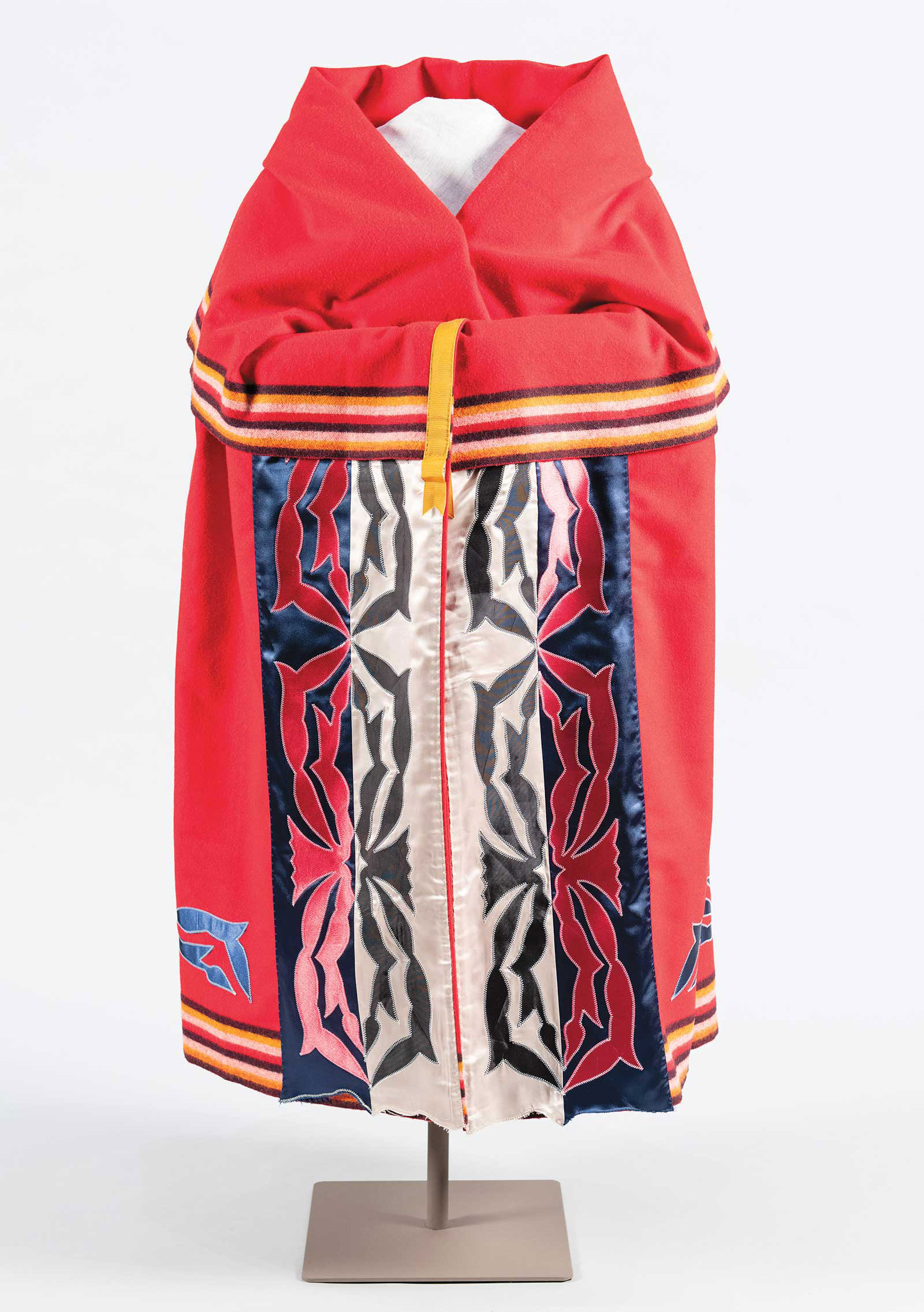
Octa Keen (Míntonin, New Moon/Omaha Tribe of Nebraska), Wearing Blanket with Appliqué, early 21st century, wool broadcloth, satin and cotton thread. Lent by Octa Keen and Taylor Keen.
“Henry Payer’s work deftly layers historical imagery, cultural ephemera, and Ho-Chunk aesthetics to uncover the complex and often untold stories of what we now call Nebraska,” says Annika K. Johnson, the Joslyn’s curator of Native American art. “While his visually and conceptually rich compositions recall the collage tradition of artists like Hannah Höch and Robert Rauschenberg, Payer reorients this form through a Ho-Chunk worldview, offering insights that continue to unfold with each viewing.”
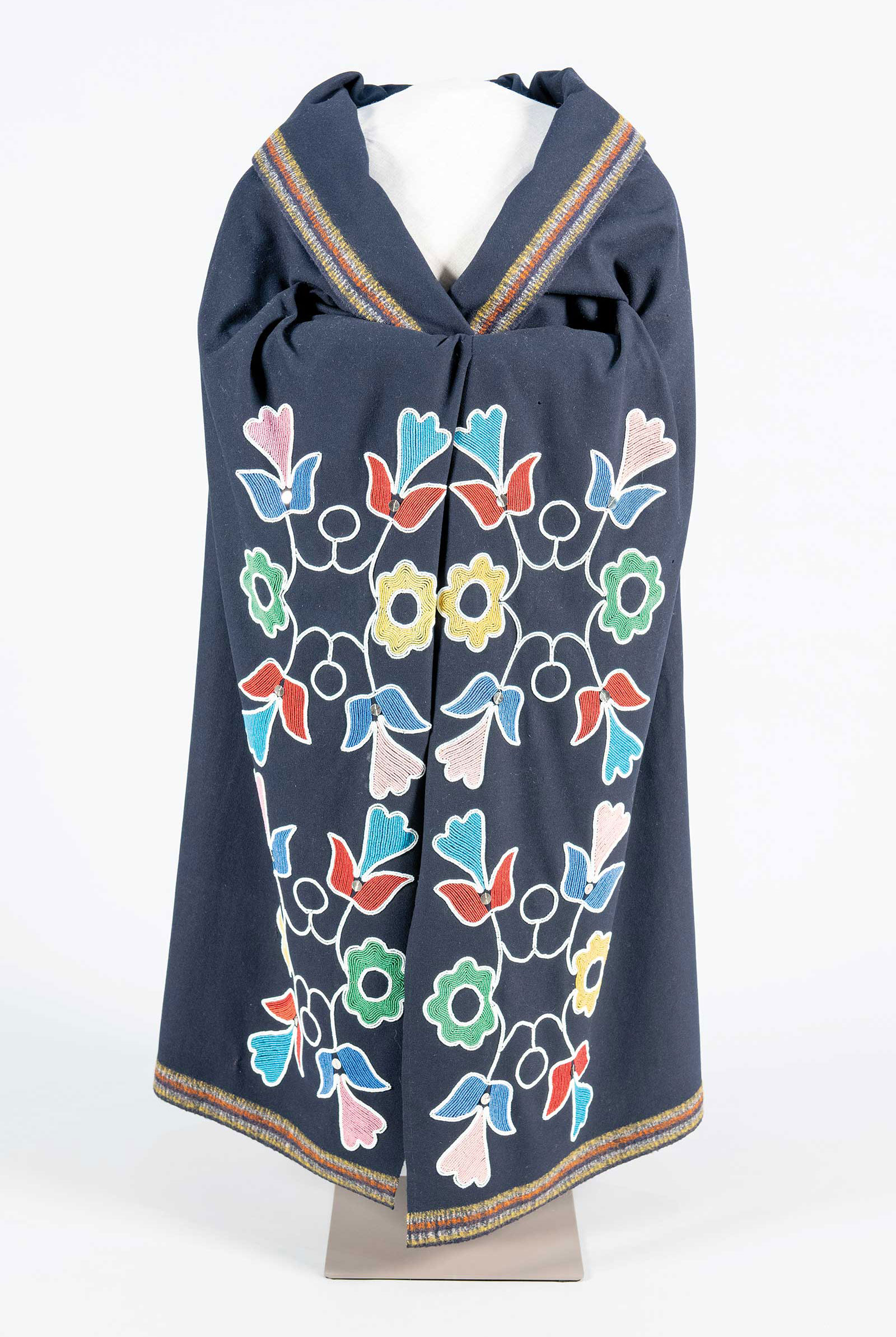
Ancestor Artist (Attributed Umó"ho"), Wearing Blanket, early 20th century, wool broadcloth, glass seed beads, cotton thread and sequins, 55¾ x 70". Joslyn Art Museum, museum purchase with funds from the Durham Center for Western Studies Art Endowment Fund, 2024.11.10.
Payer’s Bellevue builds upon Bodmer’s watercolor of an Indian Agency in Bellevue, Nebraska. Johnson notes that Payer selected this work not only for the scene’s close proximity to the Joslyn, but because it was one of few works that depicts women. Johnson says, “He cut his appliqué designs from blue calico fabric and from enlarged reproductions of treaty documents and meticulously arranged the designs in three registers to highlight two Umónhon women wearing blue dresses in the center of the canvas.”
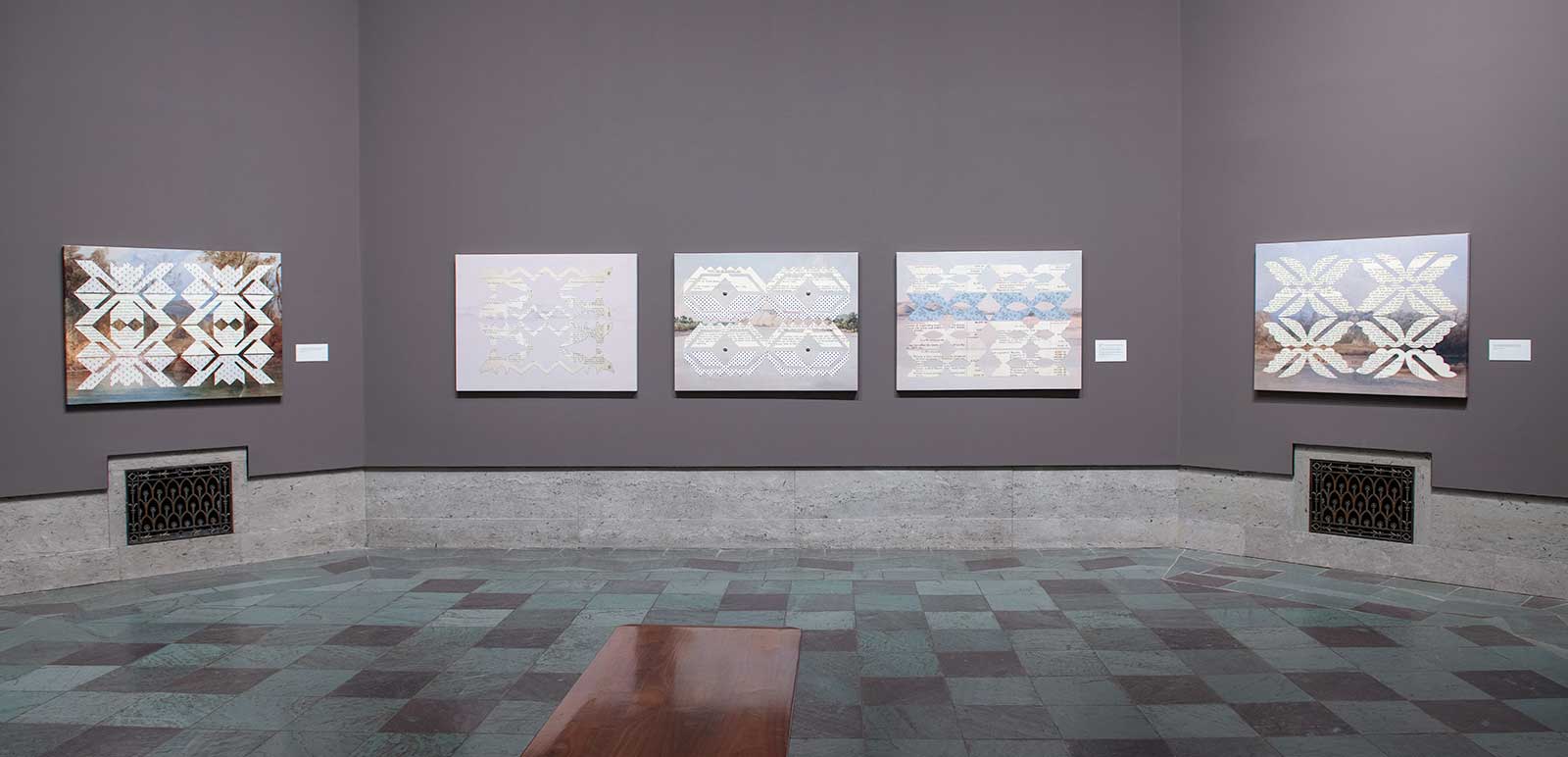
Installation view. Photo courtesy Joslyn Art Museum.
Payer’s appliqué collages are accompanied by two wearing, or honor blankets that will rotate between historical works from the museum’s collection and contemporary loans from community members. “Payer’s own practice of making regalia deeply informs his approach to collage,” explains Johnson. “Instead of including his own regalia, he wanted to showcase work made by ancestor artists from this region and those working today. The pairing highlights the brilliance of Indigenous appliqué design as a format for telling stories across media [and] showcases the continuities between past and present approaches to appliqué, as well as the diversity of creative expression within Indigenous communities in this region.” —
Through September 4, 2025
Henry Payer: Appliqué sur le terrain
Joslyn Art Museum
2200 Dodge Street, Omaha, NE 68102 (402) 342-3300, www.joslyn.org
Powered by Froala Editor


