Go to any art show in North America and you won’t find as much diversity in medium and material as you do at a Native American market. Some shows are almost entirely paintings and sculpture. Other shows have those mediums and maybe a small handful of others—Art Basel famously has neon, performance art and bananas with duct tape—and yet the shows rarely stray too far from a small handful of categories. But in Native American art, the sky is the limit. There are eight main classifications at the Heard Museum Guild Indian Fair & Market and each one of those has numerous categories. Consider the two-dimensional classification, which not only has painting, but also ledger art, photography, prints, mixed media and digital creations. Pottery has sections devoted to painted works, sgraffito, kiln-fired pottery, non-native materials, miniatures, inlay and incised. At the Heard Fair & Market, you never know what you’ll see: quilled rattles, beaded cradleboards, watercolor paintings, woven blankets, clothing made with hand-spun materials, jewelry in every color and size, ribbon dresses, sculptures in a variety of woods or metals, baskets in every regional style, and so, so much more. We can’t cover everything you’ll see at the fair, but this Guide to Market is a great start.
Jewelry & Lapidary
The jewelry and lapidary classification is always a popular one, in part because of the ways in which this wearable art form can be so easily shown off. Each artist carries their own rich histories of jewelry-making techniques—skills like tufa casting and sand casting, hollow-forming, mosaic, overlay and inlay—often passed down from generation to generation. So when marketgoers wander around the Heard Museum grounds in search of their next treasure, they can find the perfect piece of jewelry that suits their individuality, while also learning about the stories, history and technical prowess that went into making it.
Artists to Look For
Bruce Lane (Navajo (Diné)), Vernon Haskie (Navajo (Diné)), Victoria Adams (Southern Cheyenne), Ernie Lister (Navajo (Diné)), Ric Charlie (Navajo (Diné)), Verma Nequatewa (Sonwai) (Hopi), Aaron Brokeshoulder (Shawnee/Absentee), Benson Manygoats (Navajo (Diné)), JJ Otero (Navajo (Diné)/Hopi)
Behind the Scenes
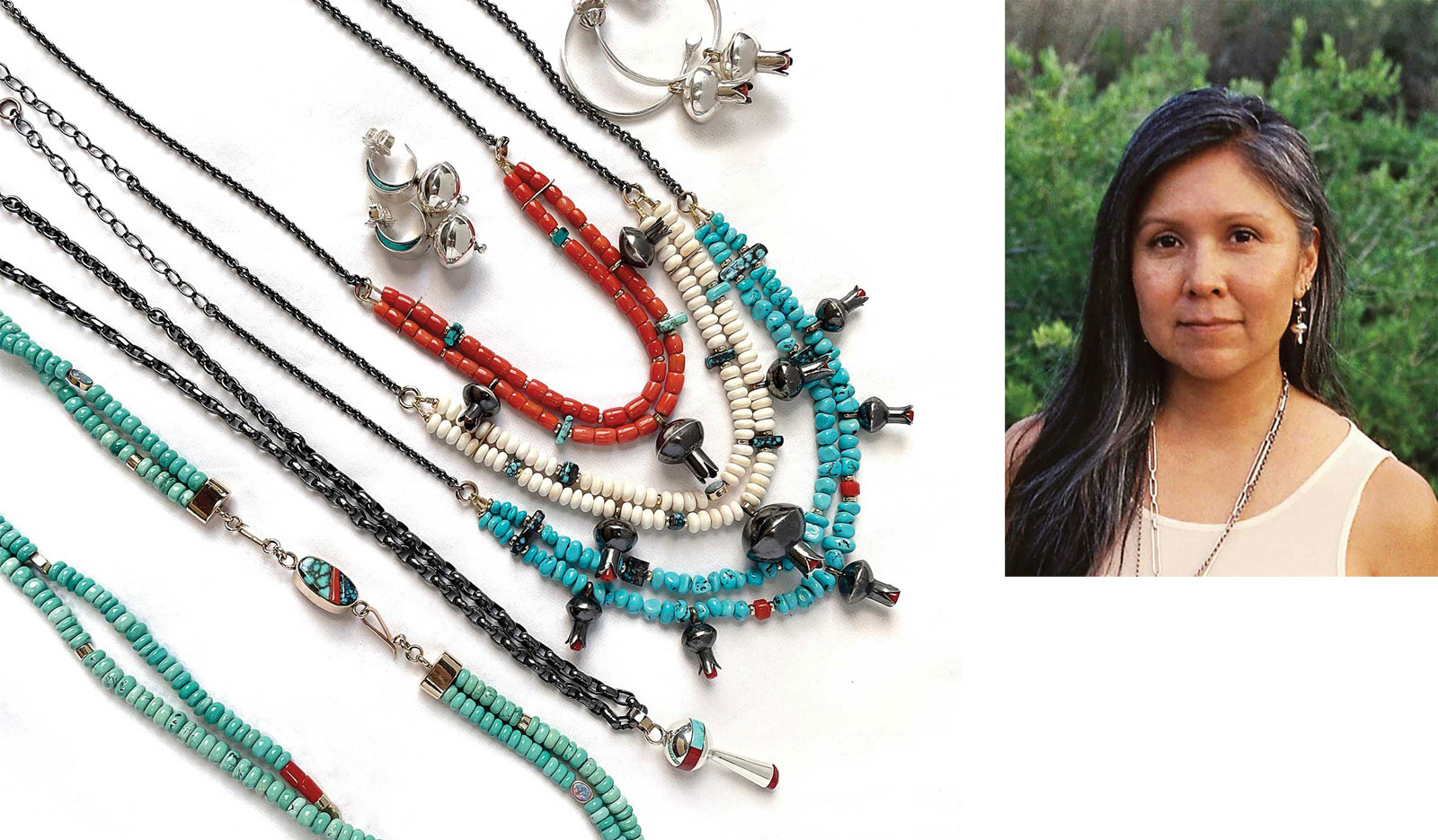
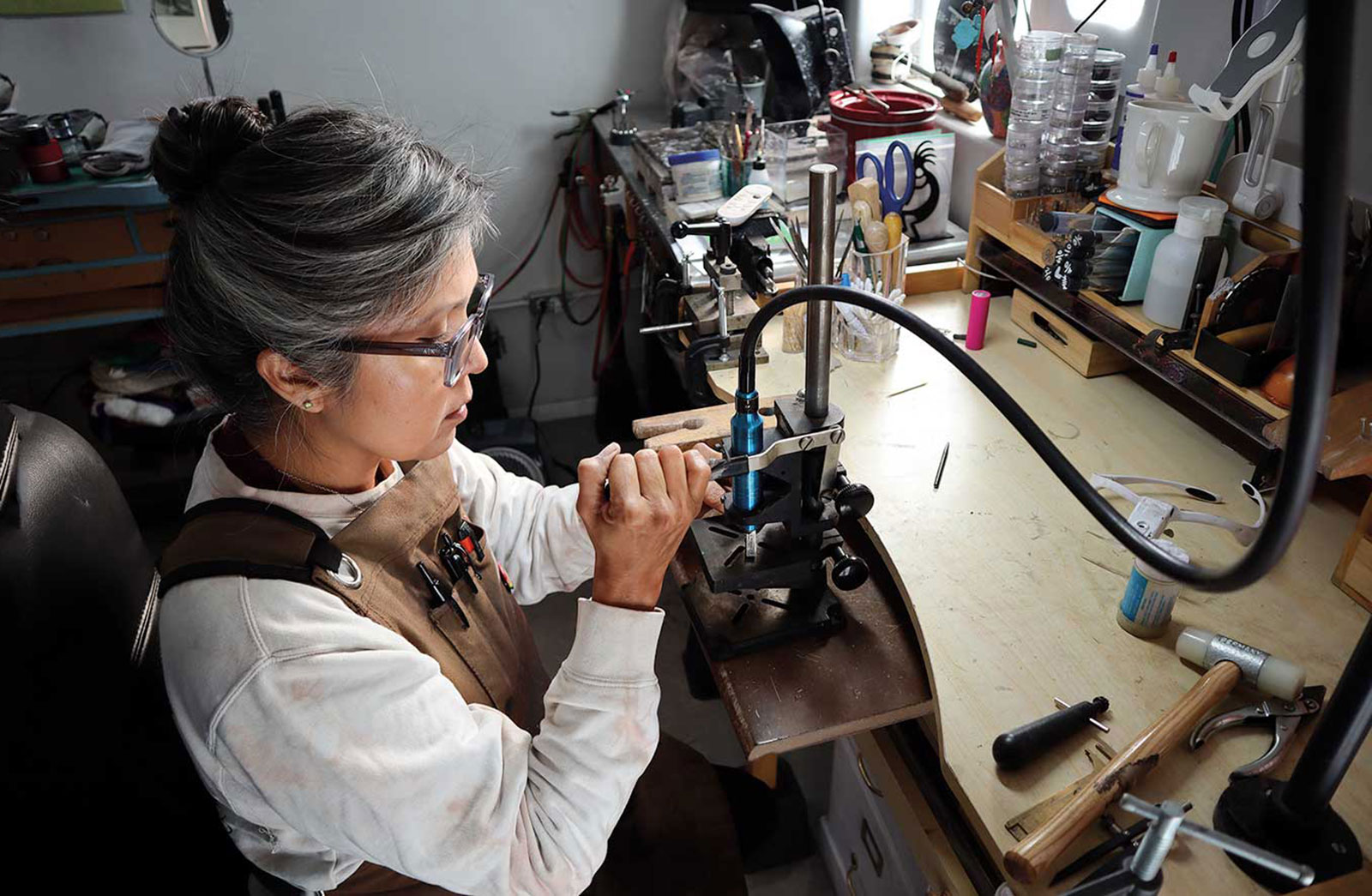 Nanibaa Beck (Navajo (Diné))
Booth No. I-11
Under her fashion label NotAbove, artist Nanibaa Beck’s work offers a fresh and unique perspective on traditional Diné jewelry. A second-generation jeweler, she takes pride in carrying on the lessons and techniques taught by her parents. “I create art that communicates without words, embodies my personal reflections and challenges definitive categories and conventions,” says Beck. “Having a studio space where I can explore and craft in peace gives me a sense of security as I establish my presence in jewelry and fine art.” She adds that Native American art is constantly evolving, and every show she attends allows her the opportunity to meet relatives and creatives who are enhancing the public’s perception of traditional mediums.
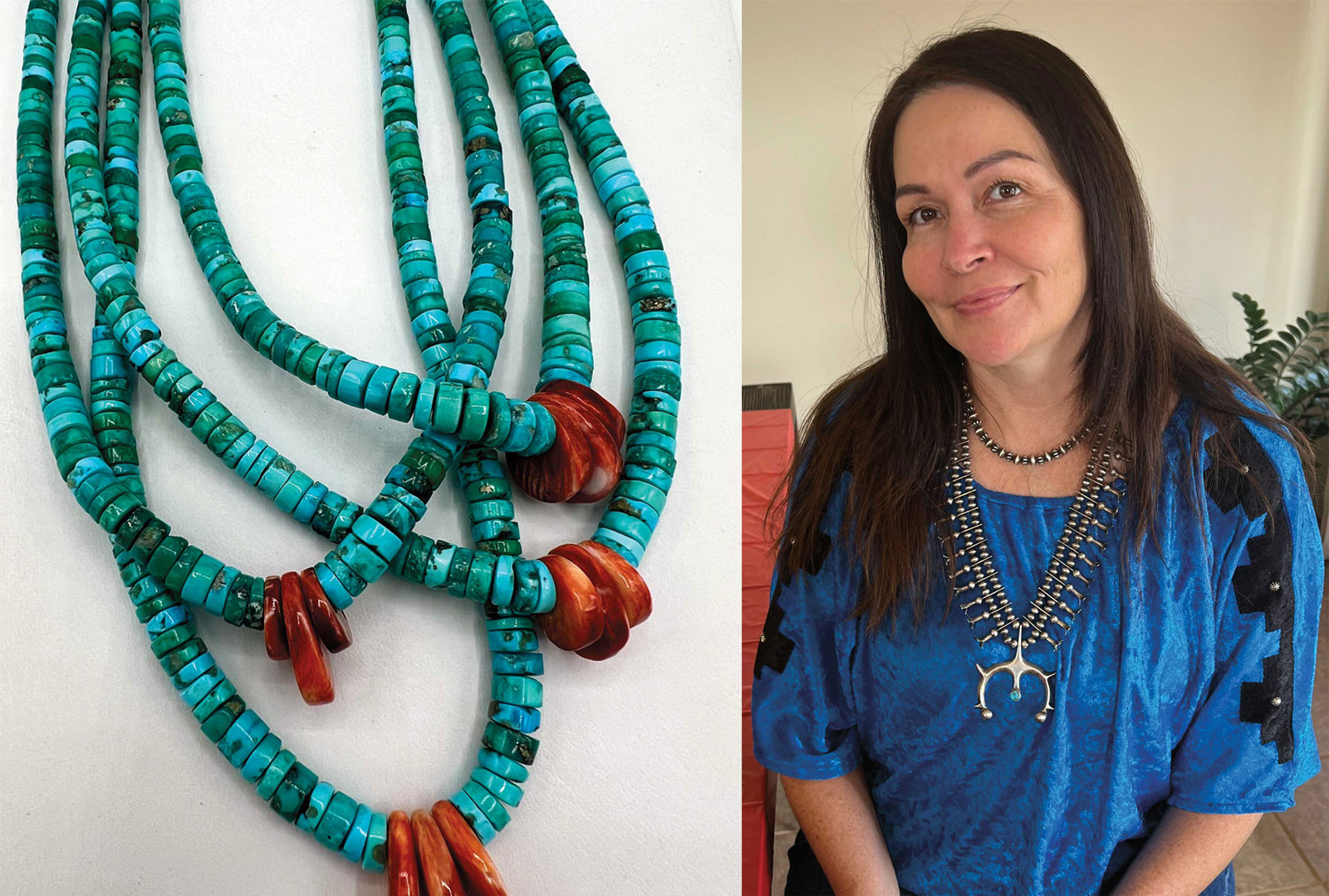 Piki Wadsworth (Hopi/Navajo (Diné))
Booth No. B-08
Hopi/Navajo artist Piki Wadsworth learned the art of jewelry making from her late mother, Cheryl Yestewa. “Through observing her from a very young age, I have had the privilege of carrying on the tradition of beadmaking,” she says. “I take immense pride in designing my own unique craft…This art form enables me to provide for my family while preserving my Native American heritage.” Wadsworth creates necklaces and earrings utilizing the finest natural turquoise and other minerals.
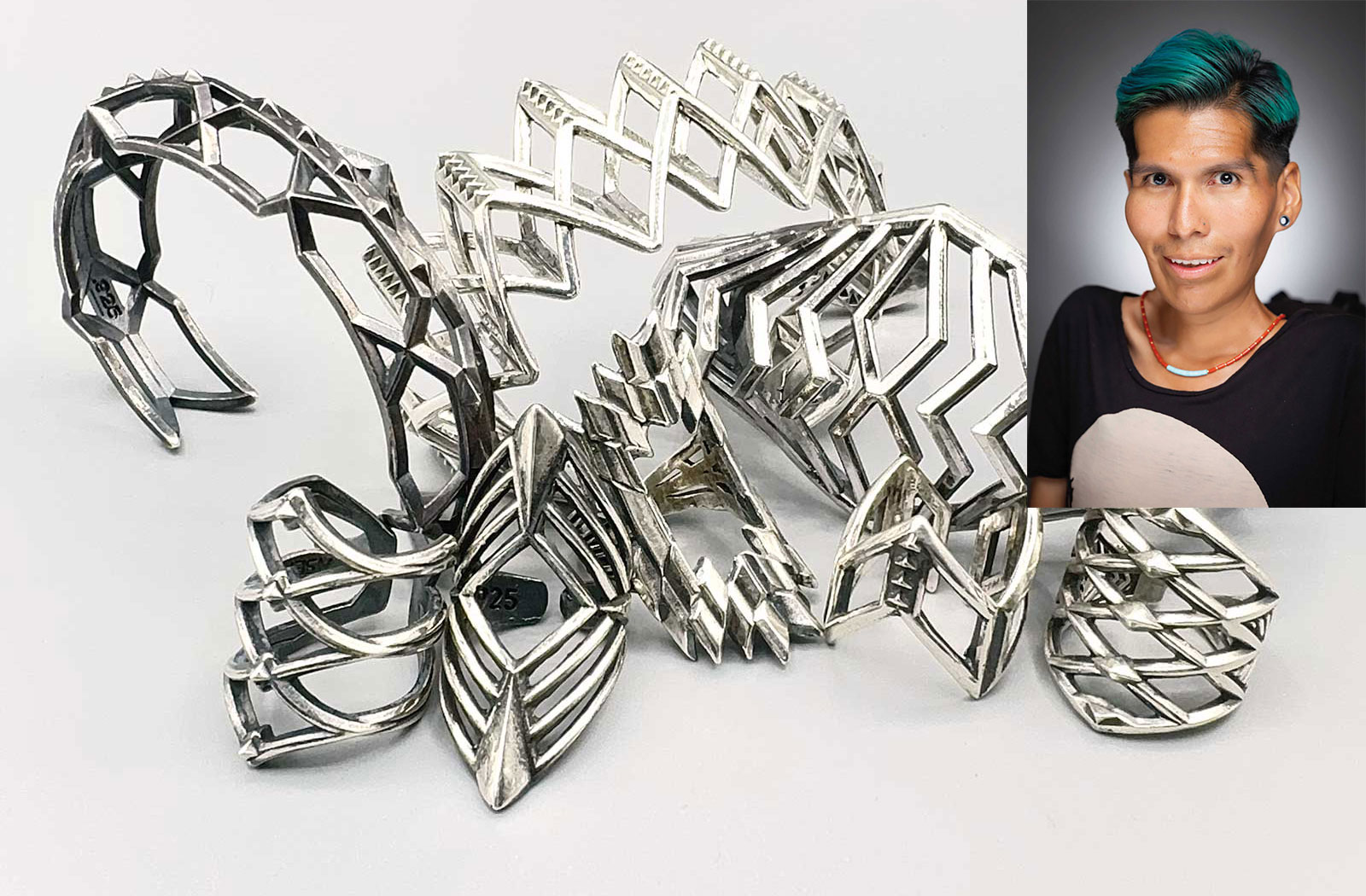 Adrian Pinnecoose (Navajo (Diné)/Southern Ute)
Booth No. E-20
As a contemporary artist, Adrian Standing Elk Pinnecoose is known for producing innovative pieces that explore and push forward the limits of computer-generated design. “My work is in a constant flux of evolution from when I started doing graphic design,” says Pinnecoose. “My body of work is tied together through a vernacular foundation of traditional Navajo textiles showcased in a modern abstract form, utilizing different architectural styles [like] Gothic, Renaissance and Art Deco architecture.”
 Gerald Lomaventema (Hopi)
Booth No. B-11
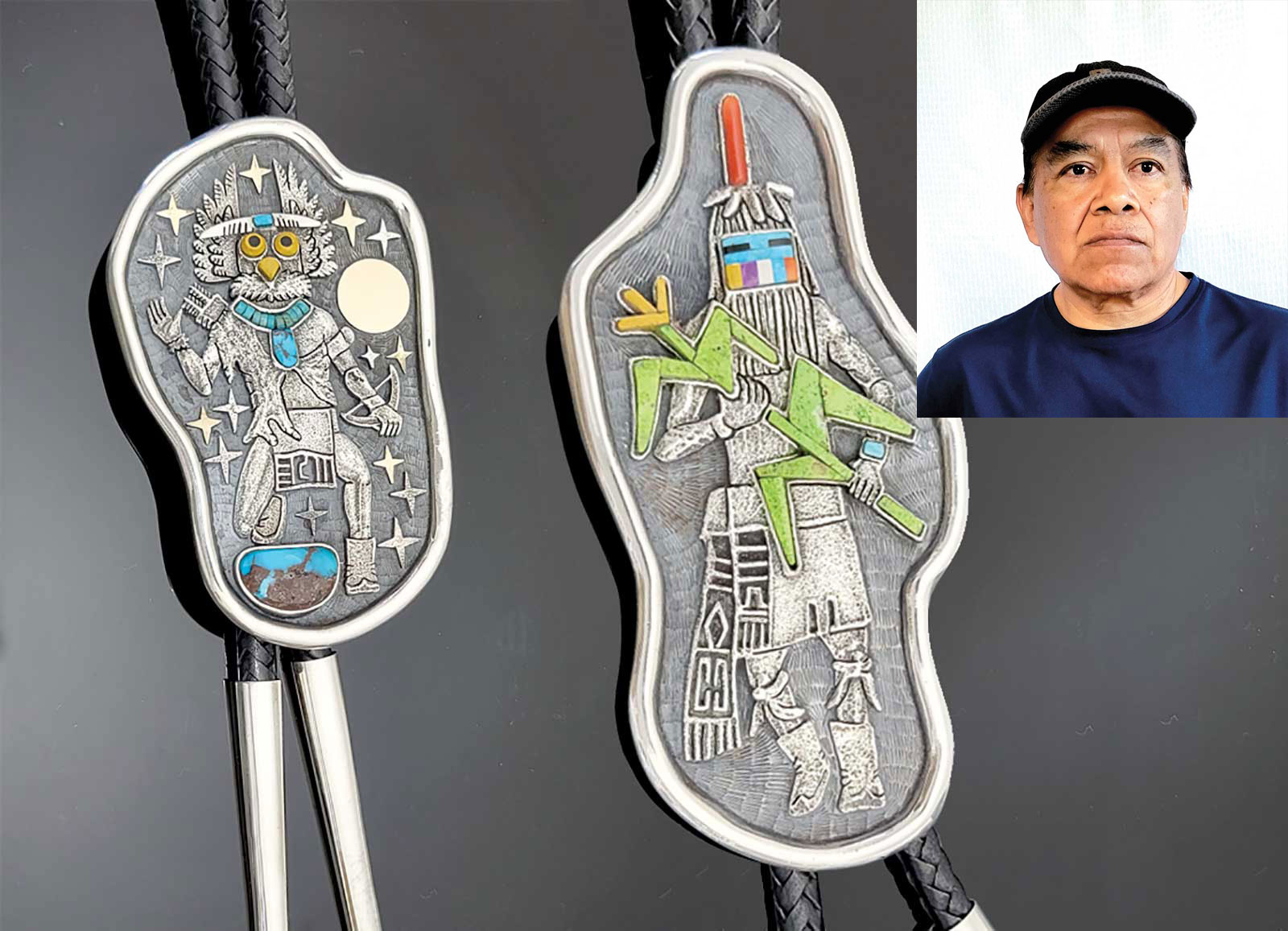
“I learned the traditional Hopi overlay technique at the Hopi Co-op Guild Shop here on Hopi,” says jeweler Gerald Lomaventema. “The Guild, as we called it, was a lively place. We would walk there as kids to watch the Hopi silversmiths work and eventually we were included.” After the Guild closed in 2002, the artist continued attending tufacast, lapidary, hollow-forming and lost wax classes. “Hopi jewelry—traditional or contemporary—have bits of Hopi culture. Hopi inspired jewelry design comes from living the Hopi way or close to it,” he says.
≠≠≠≠≠≠≠≠≠≠≠≠≠≠≠≠≠≠≠≠≠≠≠≠≠≠≠≠≠≠≠≠≠
Pottery
Pueblo and Native American people have been making beautiful clay pottery for centuries and today’s Native American potters continue to carry on this storied legacy. Clay is the essence of pottery, often laboriously mined, purified and processed in manners unique to each tribe, including drying in the sun, soaking in water for days, and repeatedly running through a screen or sieve. From the elegant black-on-black pottery of the San Ildefonso Pueblo to the intricate polychrome designs of the Hopi and Zuni, the diversity of Native American pottery is a testament to each tribe’s traditions and styles, and a physical embodiment of the vibrant cultural heritage of these communities.
Artists to Look For
Hubert Candelario (San Felipe Pueblo), Kathleen Wall (Jemez Pueblo), Laura Gachupin (Jemez Pueblo), Karen Abeita (Hopi), Sammy Naranjo (Santa Clara Pueblo), Maxine Toya (Jemez Pueblo), Bob Lansing (Navajo (Diné)), Marilyn Ray (Acoma Pueblo), Russell Sanchez (San Ildefonso Pueblo), Samuel Manymules (Navajo (Diné))
Behind the Scenes
Gwen Setalla (Hopi)
Booth No. B-24
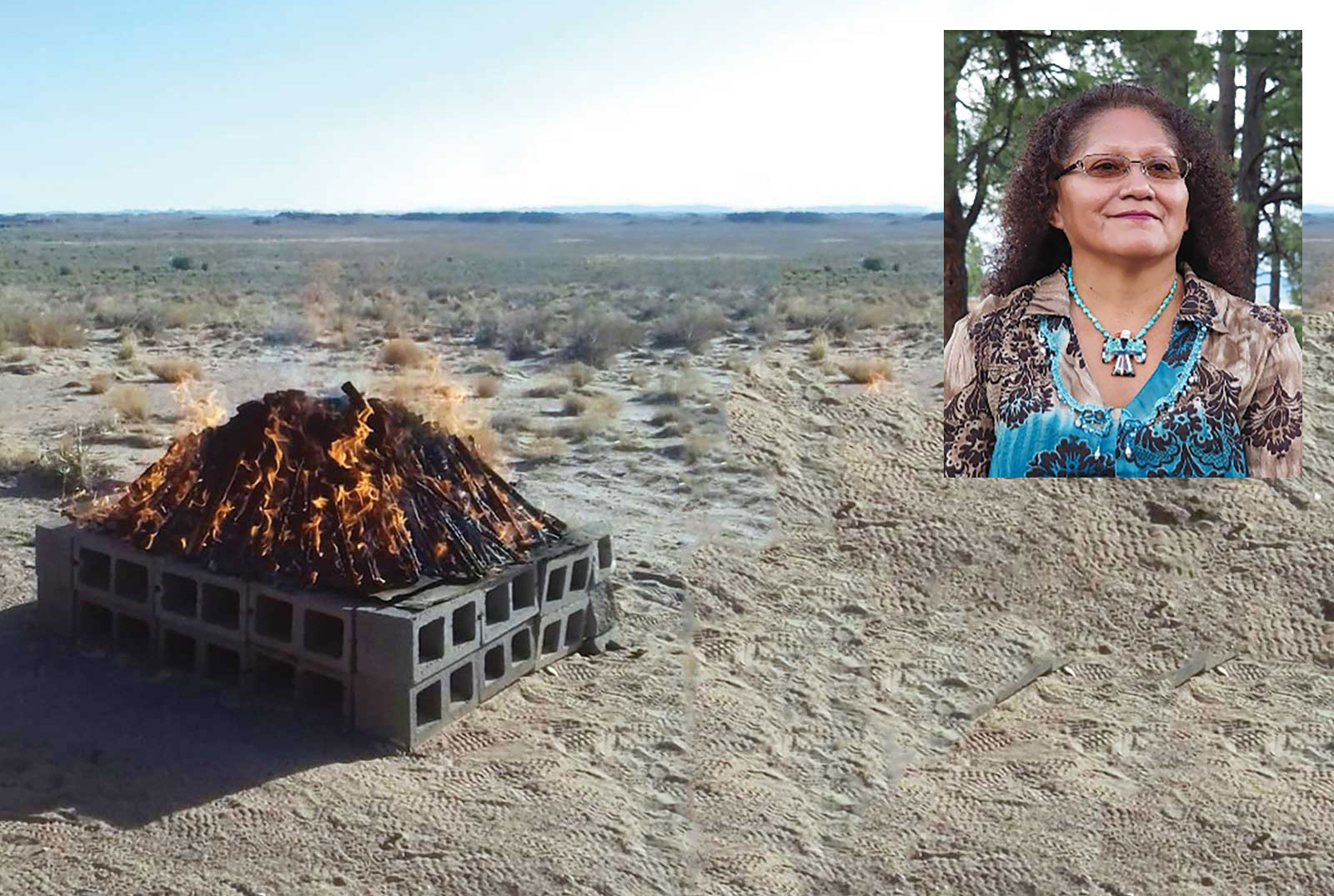
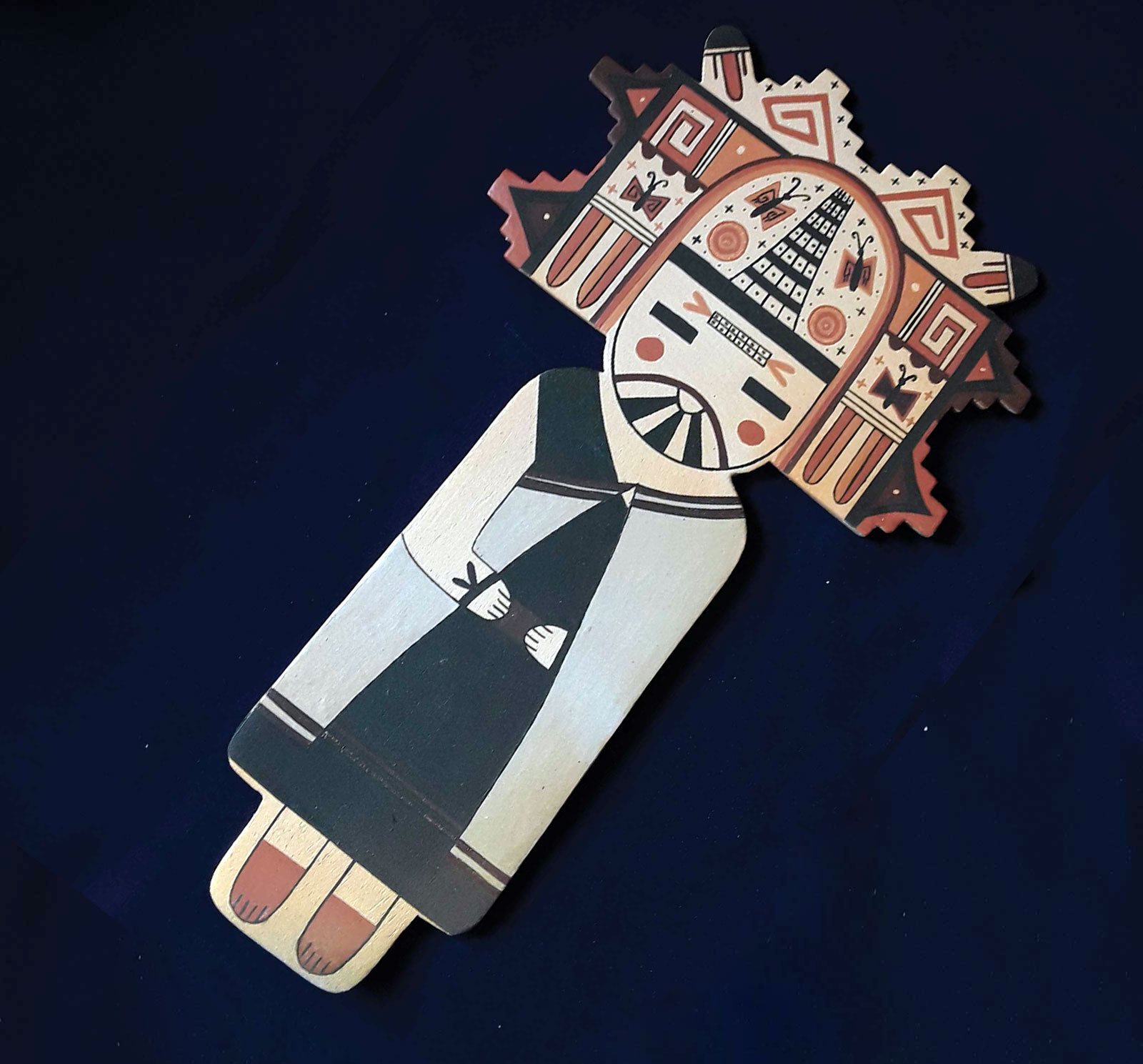
Gwen Setalla loves to experiment with various natural clays, pigments and minerals. “I hope to carry on a great legacy of Hopi potters of the past and to be an inspiration for those to follow,” she says. “Participation in the Heard Indian Fair & Market allows me to bring to life and share new creations.” Since she started making tiles back in the early 1990s, her goal was to create tiles in the shape of flat doll kachinas. “Pottery tiles are some of the hardest things to make if they are to be flat and uniform without being too thick,” says Setalla, adding that her largest tiles are approximately 9 by 11 inches. “I continue to challenge myself as far as producing various sizes, shapes and styles of tiles.” She mines and collects native clay, and works with a mixture of raw hematite and an extract from the wild green mustard plant, before an outdoor firing process, using sheep dung and wood.
Rowan Harrison (Navajo (Diné)/Pueblo Isleta)
Booth No. B-45
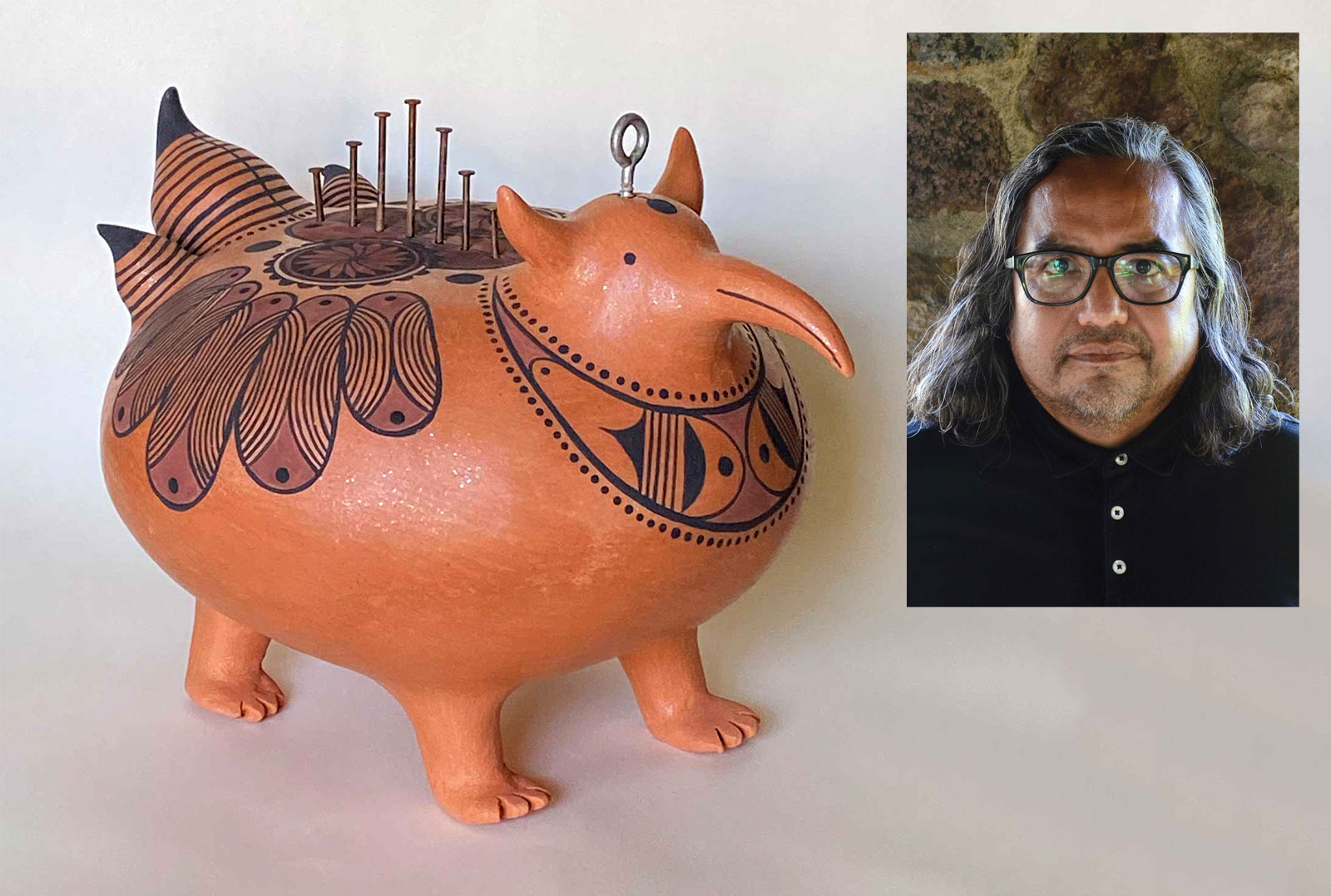
Rowan Harrison creates works of art that incorporate traditional methods from previous generations while maintaining a contemporary vision. “It is always an honor and a privilege to be a participating artist at the annual Heard Indian Fair & Market,” he says. “The Heard show always challenges me to bring something new and dynamic to the show and share these new works within its community. This piece, of a mythological animal form, is inspired by the Navajo side of his heritage and the origin story where animals played an integral part of the narrative. “The animal form is not a representation on one species but a morphing of several animals.”
Jason Ebelacker (Santa Clara Pueblo)
Booth No. F-29
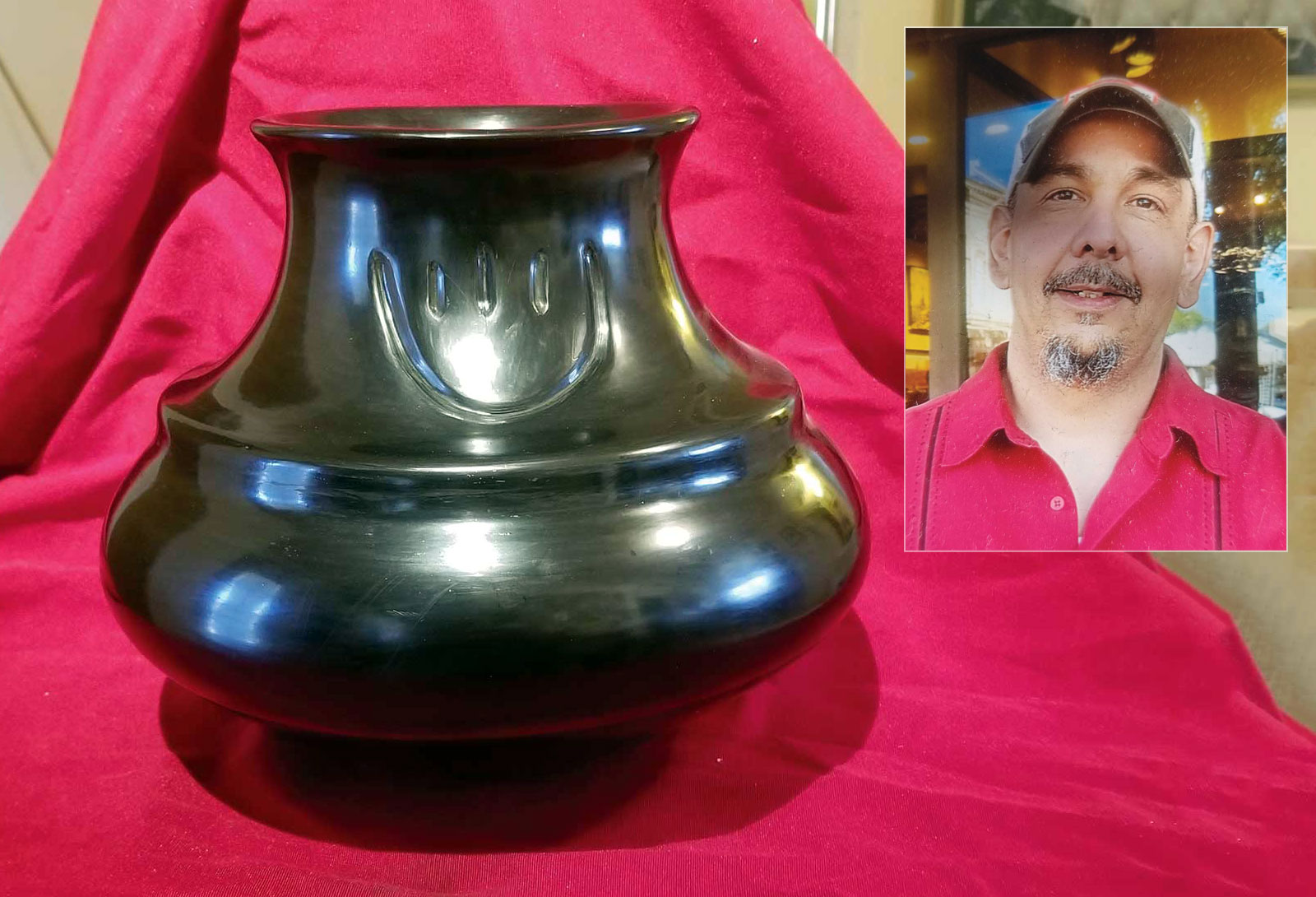
Jason Ebelacker has been making traditional Santa Clara Pueblo pottery since 1995. Part of a long line of notable potters, Jason learned to make pottery from his father, Richard Ebelacker. His work is inspired by the classic Pueblo shapes, with large ollas bowls, broad-shouldered pottery, bear paw imprints and the superior burnish and designs of his family. He uses only traditional methods of hand-coil construction, shaping, polishing and carving each work before they are traditionally fired.
Lorraine Gala Lewis (Laguna/Taos/Hopi)
Booth No. H-42
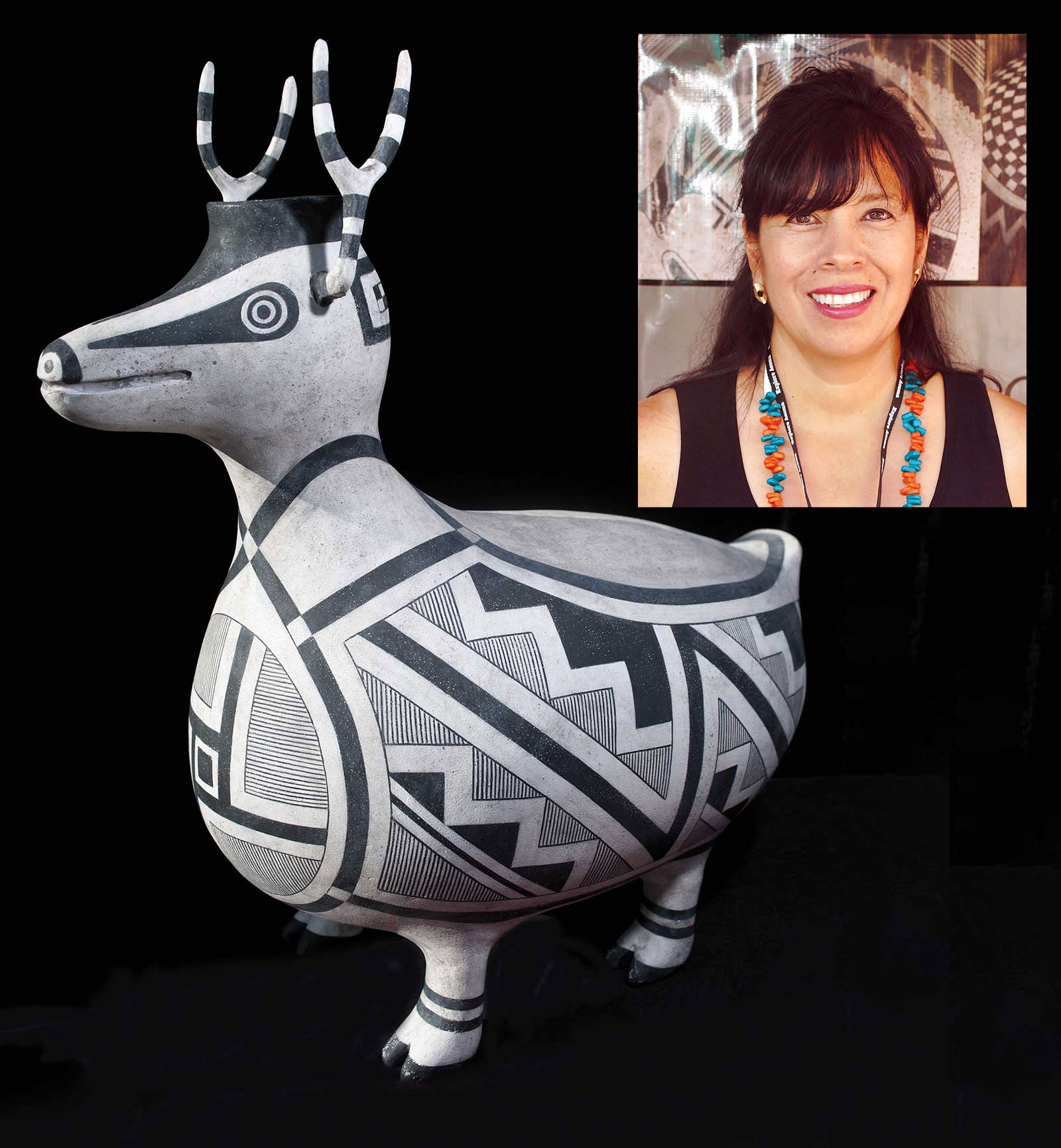
“Over the centuries, our ancestors have passed on their legacies through various forms of art,” says potter Lorraine Gala Lewis. “The origin of their work is what I bring to life through my replications. I try to capture the aesthetic beauty and individuality of each piece and remain as close as I can to the original works of art. I share these re-creations with respect in hope of preserving a pottery culture that existed hundreds of years ago. For those who have come and gone before us, this is my way of showing how strong these ties remain.”
≠≠≠≠≠≠≠≠≠≠≠≠≠≠≠≠≠≠≠≠≠≠≠≠≠≠≠≠≠≠≠≠≠
Two-Dimensional Art
Like all of the other classifications at the Heard Market, the two-dimensional classification is special because of the connections it offers artists—to their heritage, to their families and to the land. “Art came naturally, as a way to experience and appreciate the beauty of the land and sky and all living things,” says Navajo painter Beverly Blacksheep. “I express, through my art, all my appreciation and memories of my family. I feel truly blessed to be able to share my experiences and inspiration on canvas and paper.” At this year’s market, collectors will be able to explore a treasure trove of two-dimensional art including paintings, drawings, ledger art, photography and more, while also learning about the many ways artists feel inspired to create.
Artists to Look For
Angela Babby (Oglala), Randy Kemp (Choctaw/Euchee-Creek), Marla Allison (Laguna), Beverly Blacksheep (Navajo (Diné)), Dawn Dark Mountain (Oneida), Ronald Chee (Navajo (Diné)), Al Bahe (Navajo (Diné)), Anthony Chee Emerson (Navajo (Diné))
Behind the Scenes
Karen Clarkson (Choctaw Nation of Oklahoma)
Booth No. B-43
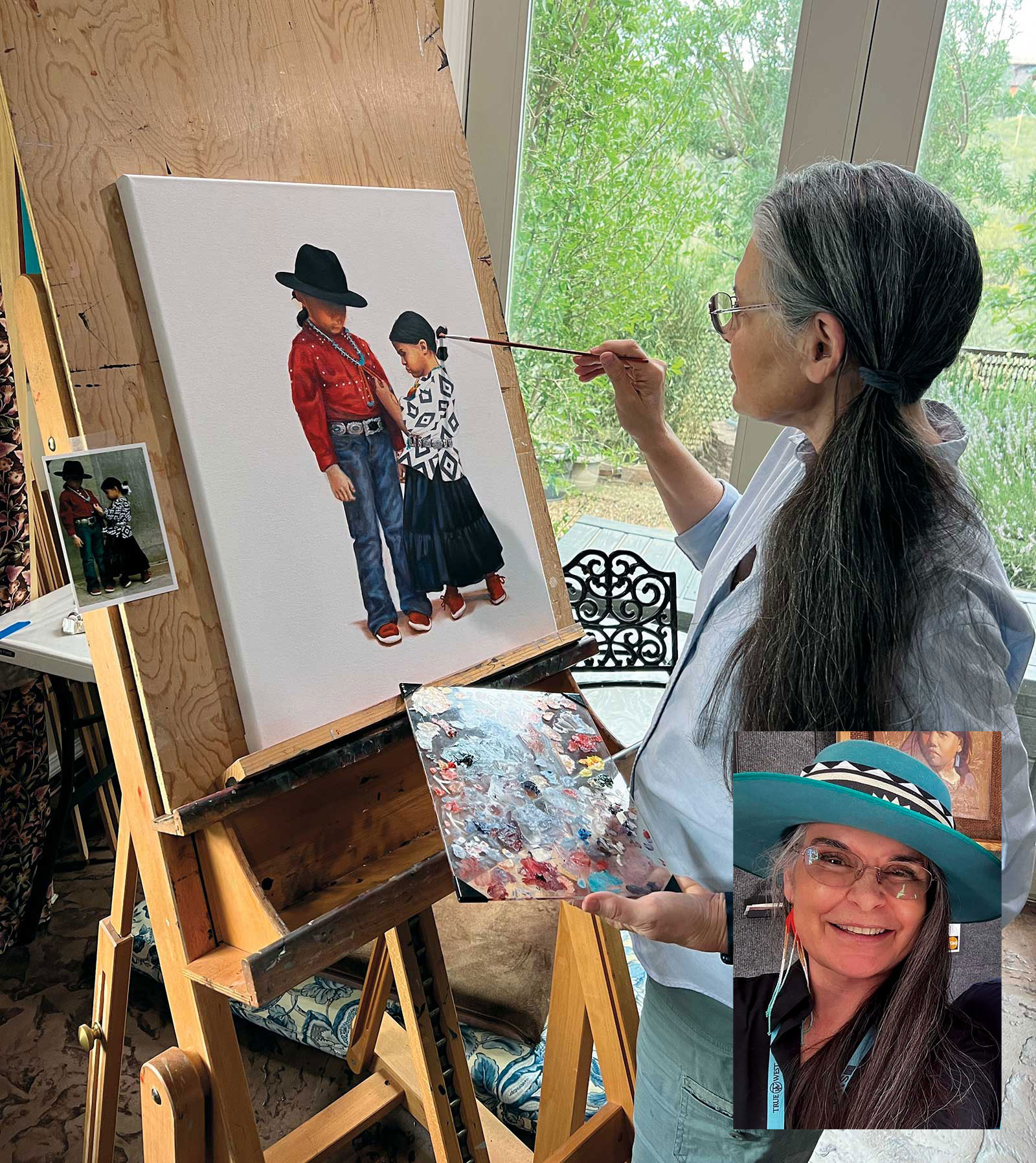
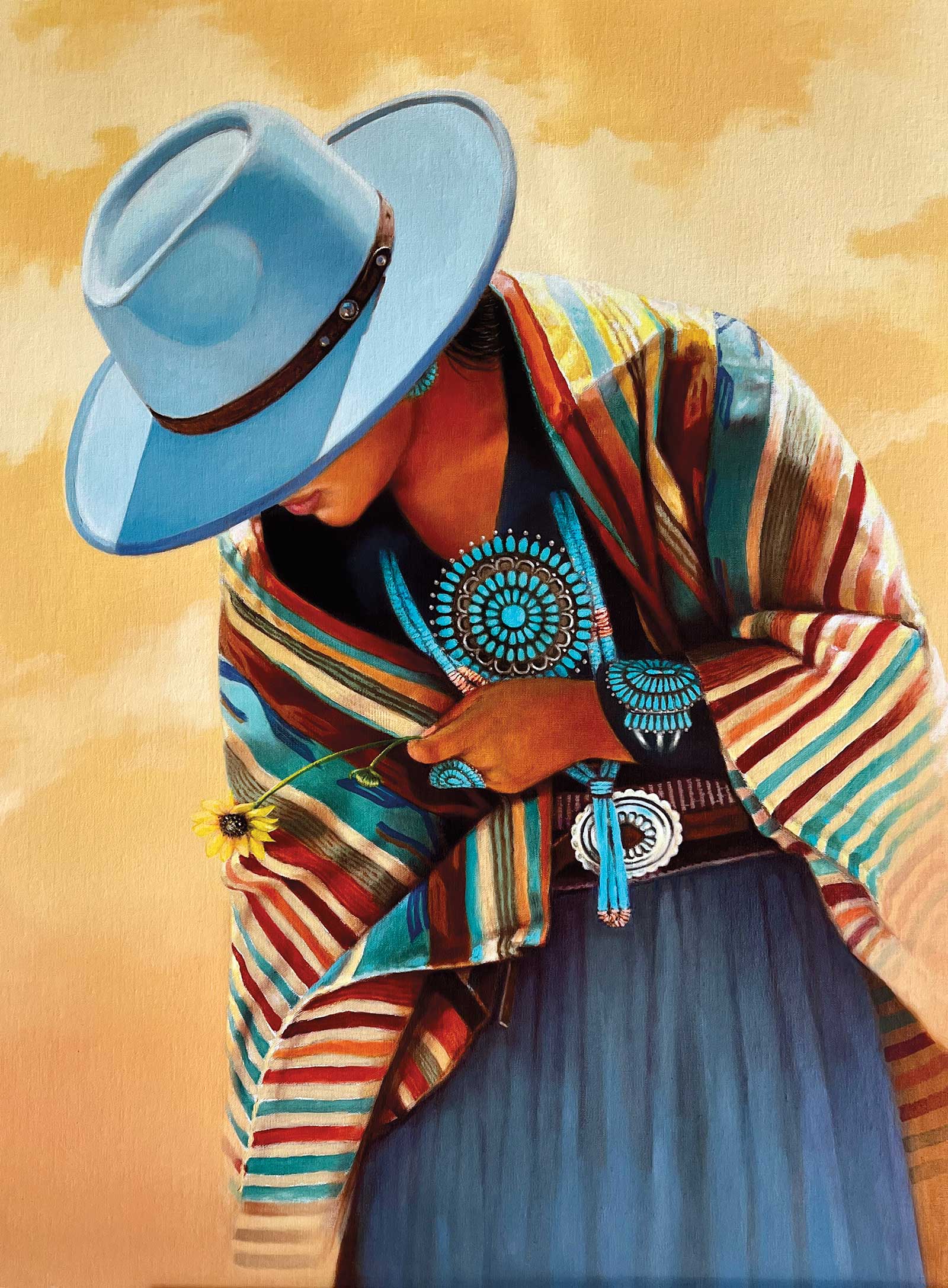
“I find my art goes beyond artistic procedure and gesture. It is made of form and feeling and allows me to consider each attempt as part of a larger picture,” says artist Karen Clarkson. “I feel I must experience each new subject and pose before I commit to the task. Once this has happened, I am drawn to it immediately. Without this I have little interest in its creation. At the end when these ideas are fully realized there is a deep sense of thankfulness. Without exception I find the seed of the next piece always beginning in the last.” Pictured here is Clarkson in the process of painting the cover of the August/September 2022 issue of Native American Art magazine.
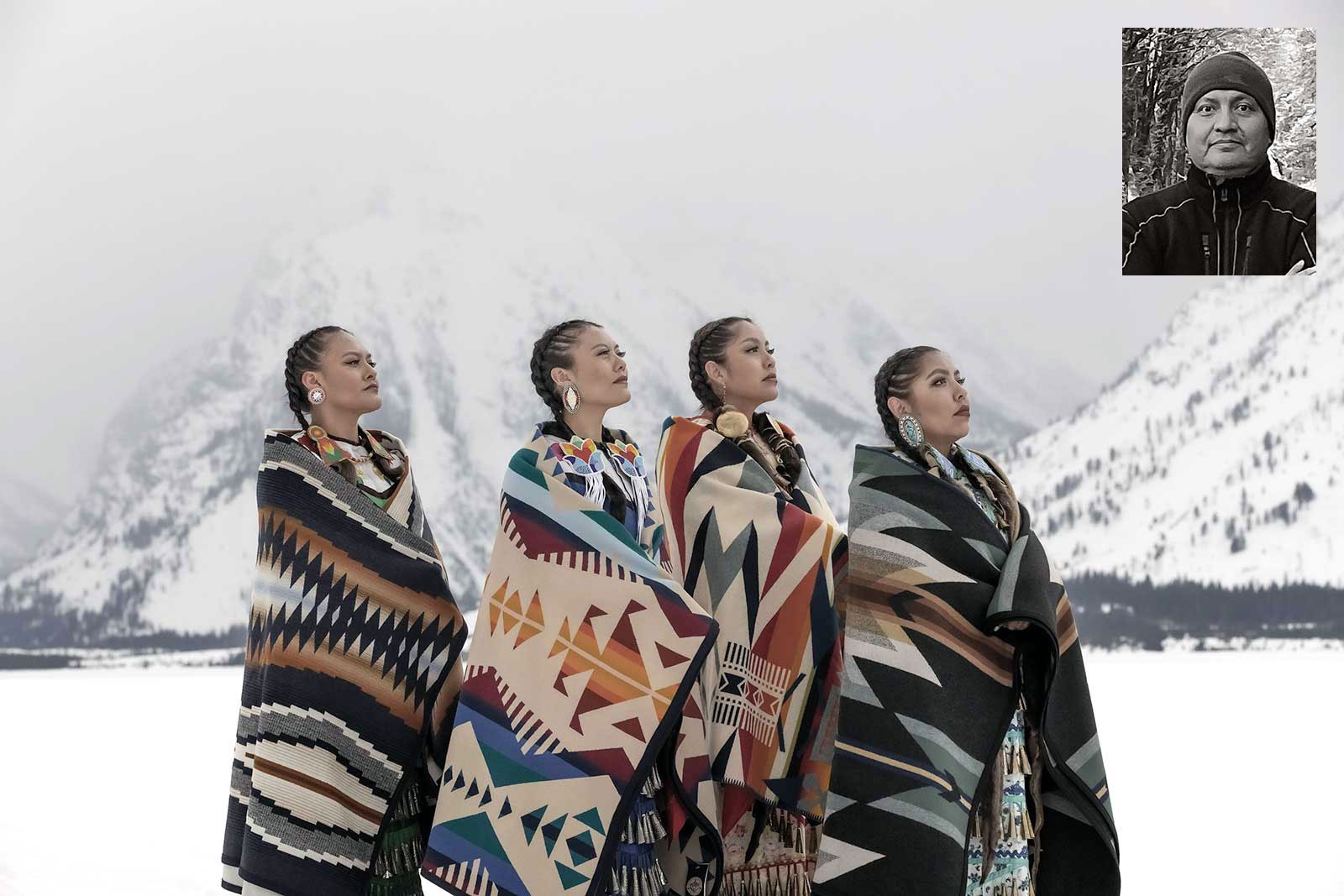
Eugene Tapahe (Navajo (Diné))
Booth No. D-26
Eugene Tapahe is an artist inspired by his Diné traditions and modern experiences. His photography reflects the fragility and resilience of Native American culture. “In my work, I celebrate and honor the identity and culture of Native Americans while promoting unity, hope and healing,” says Tapahe. Through various visual art mediums, he seeks to balance the past and present, echoing his people’s traditional stories and philosophies of always walking in beauty.
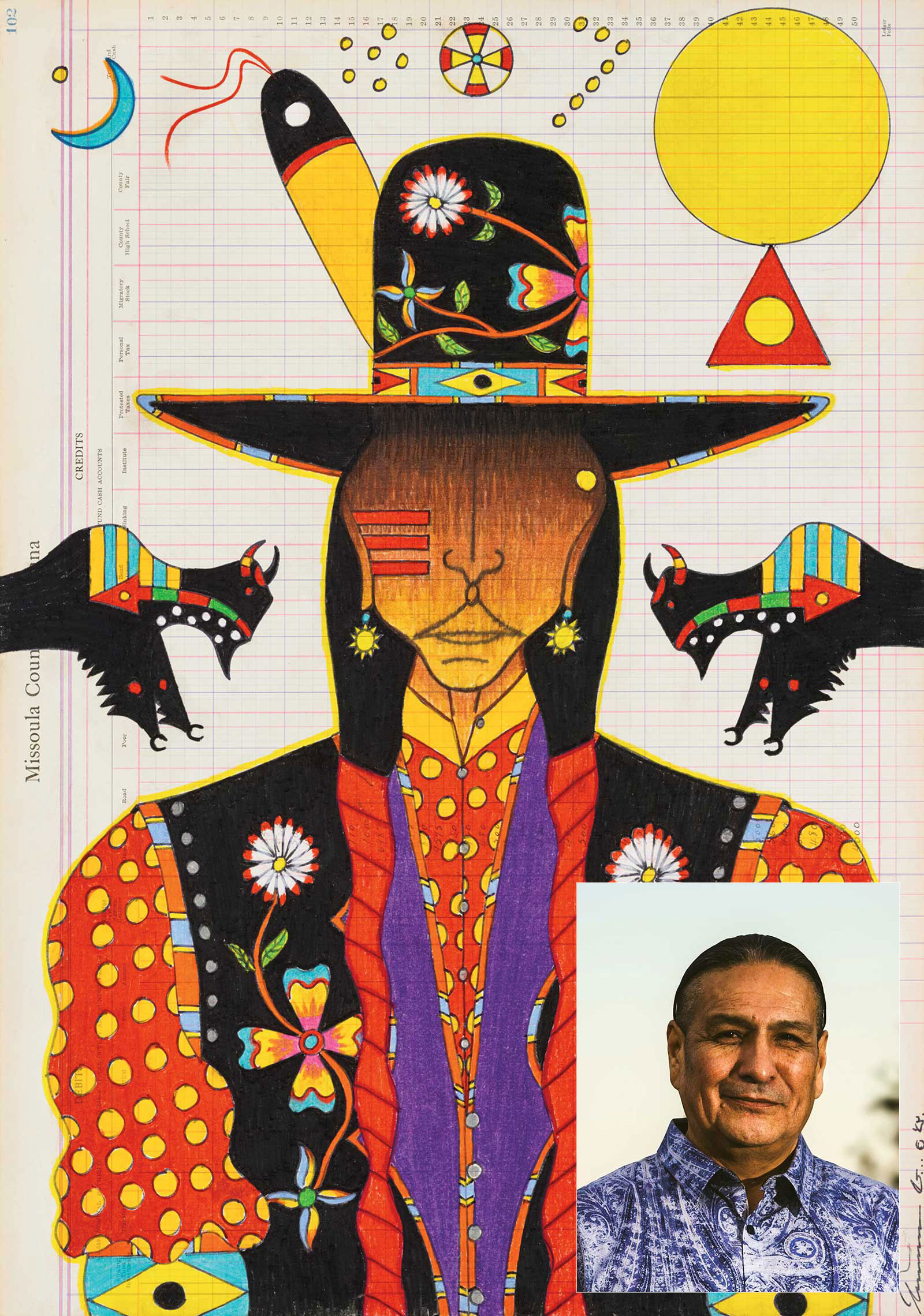
Terrance Guardipee (Blackfeet Nation)
Booth No. K-12
Terrance Guardipee is an enrolled member of the Blackfeet Nation who reflects his personal knowledge and experience of Amskapi Piikani history and culture in his ledger artwork. He grew up on the Blackfeet Indian Reservation in northern Montana, immersed in the heritage of the Amskapi Piikani people. From this lived experience, the cultural life and history of the Blackfeet people became and remains a foundational part of his identity. “The revival of the ledger art form has given me a great opportunity to represent my Amskapi Piikani people and our history and to share our culture with people from all Nations,” says the artist.
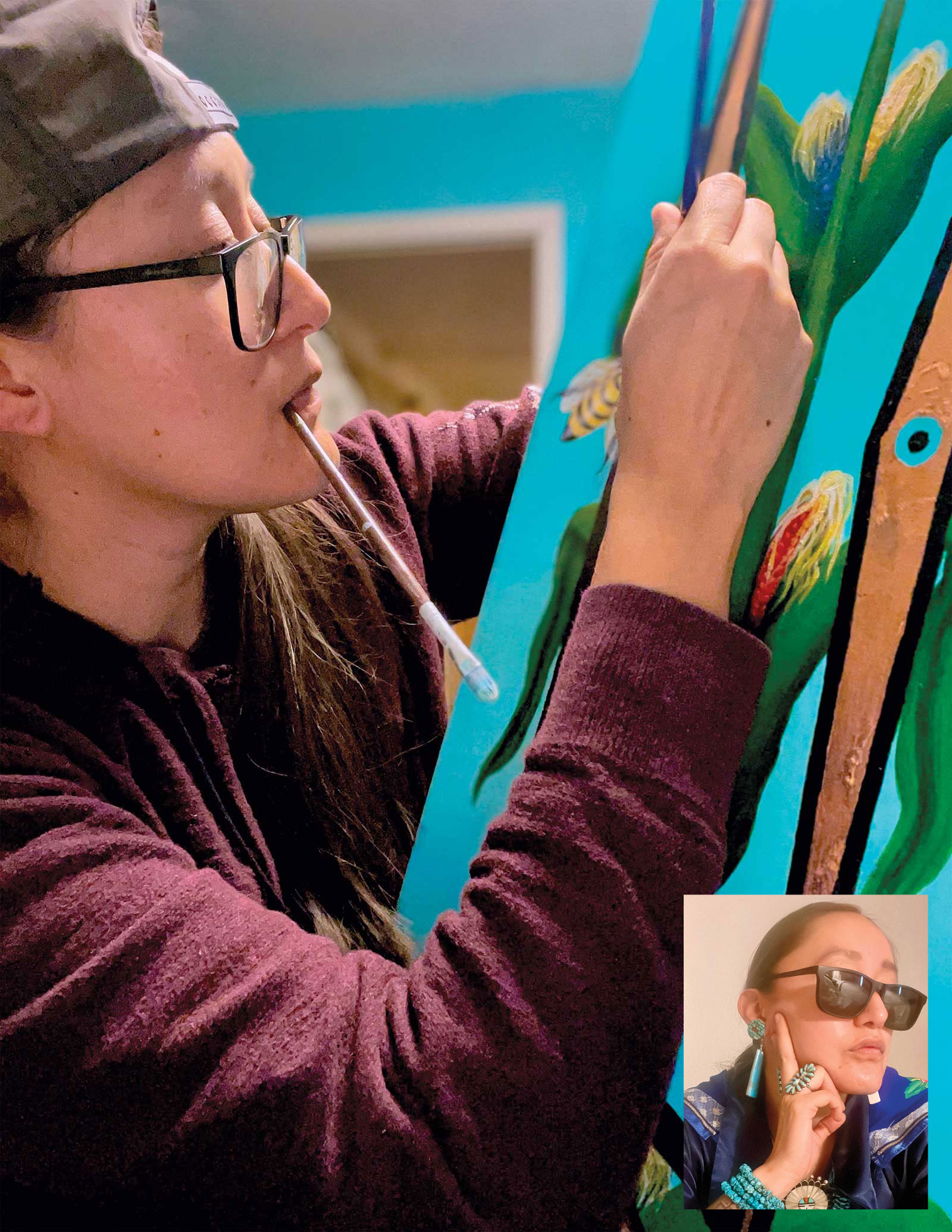
Kandis Quam (Zuni/Navajo (Diné))
Booth No. H-43
Growing up in a family of Native artists, Kandis Quam inherited and continued the Quam family’s artistic legacy. As the first person in her family to graduate from college, she pursued a degree in cultural anthropology and American Indian studies, and after completing her education, returned to the Pueblo of Zuni and began her journey as an artist. “My artistic focus is on blending traditional and modern elements, with an emphasis on Zuni influences,” says Quam. “I strive to preserve our culture through my work and to pass on this knowledge to future generations. By bridging the past and the present, I hope to create change through beauty.”
≠≠≠≠≠≠≠≠≠≠≠≠≠≠≠≠≠≠≠≠≠≠≠≠≠≠≠≠≠≠≠≠≠
Pueblo Carvings
Although it mostly represents one small region of the country—northern parts of Arizona and New Mexico—the pueblo carvings category contains an exceptional grouping of artists, including many of the top Hopi artists working today. The majority of the works show Hopi katsina figures, each one representing an aspect of life or nature. Originally these carvings were used only for sacred ceremonies, but carvers have made versions for the public for more than a century. Each one has its own story, as does the artist, so be ready to ask questions and to listen intently to the words of the artist.
Artists to Look For
Eric Kayquaptewa (Hopi), Kevin Pochoema (Hopi), Manuel Chavarria (Hopi), Arthur Holmes Jr. (Hopi), Ronald Honyouti (Hopi), Adrian Nasafotie (Hopi), Edward Seechoma (Hopi), Manfred Susunkewa (Hopi), Tayron Polequaptewa (Hopi)
Behind the Scenes
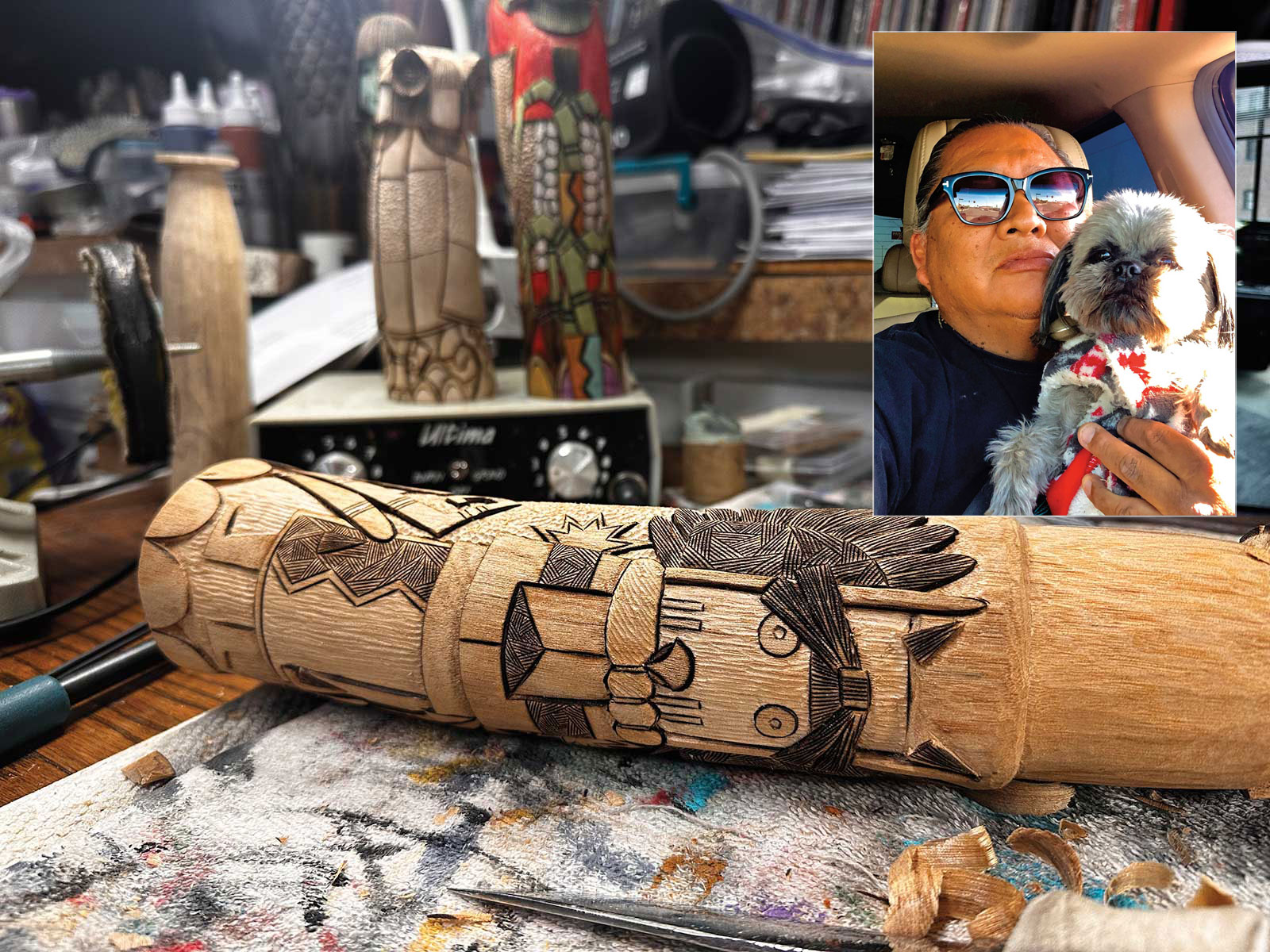
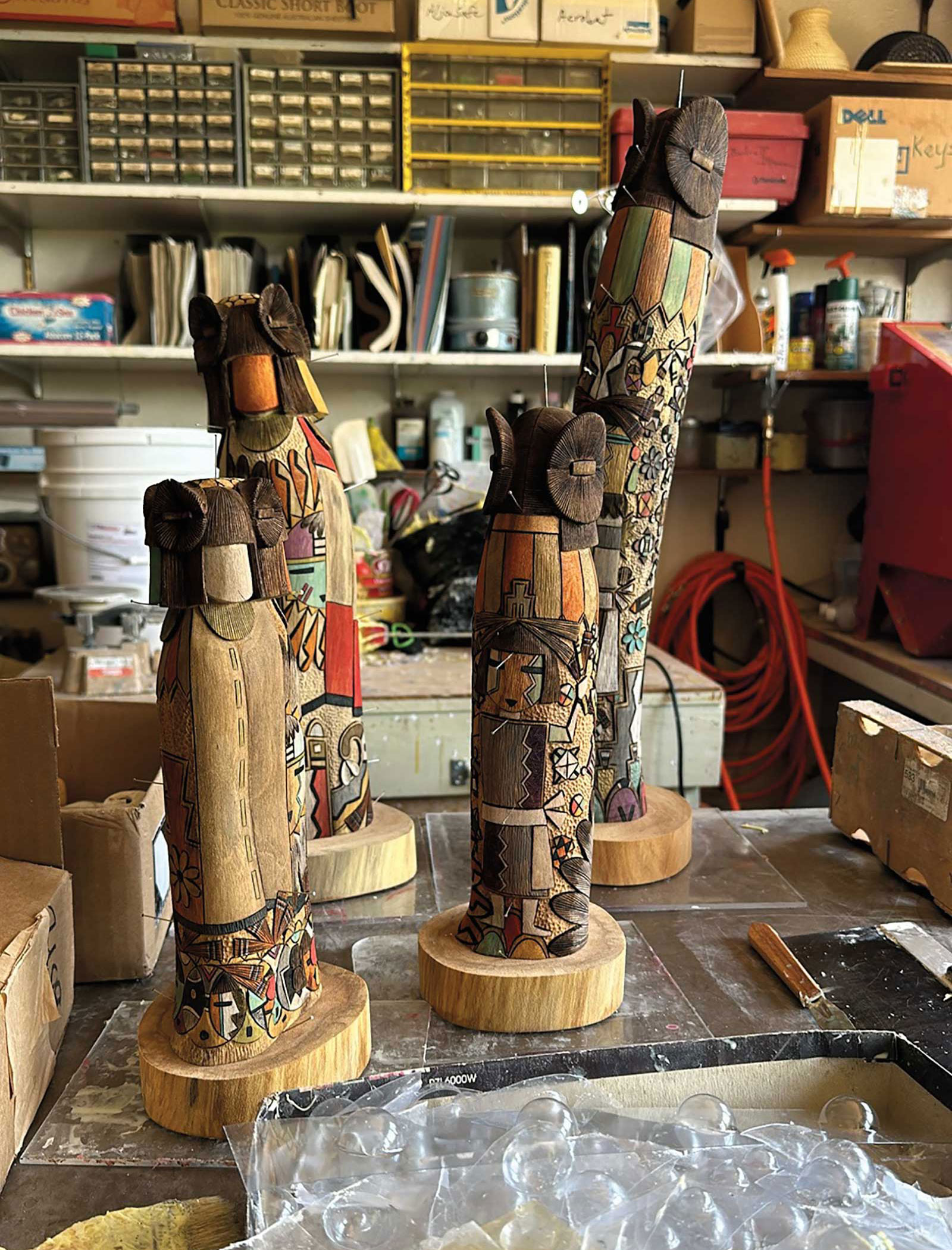
Kevin Horace-Quannie (Hopi)
Booth No. D-03
Known for his contemporary designs around near-perfect cylinders of cottonwood, Kevin Horace-Quannie is on the front edge of where pueblo carvings are headed in the future. The artist has been experimenting with unique new designs and materials. “I’ll have many different contemporary Hopi katsinas,” the artist says, “and some imagery of paintings and also the new additions of some new bronzes formed from the Hopi contemporary carvings I do.”
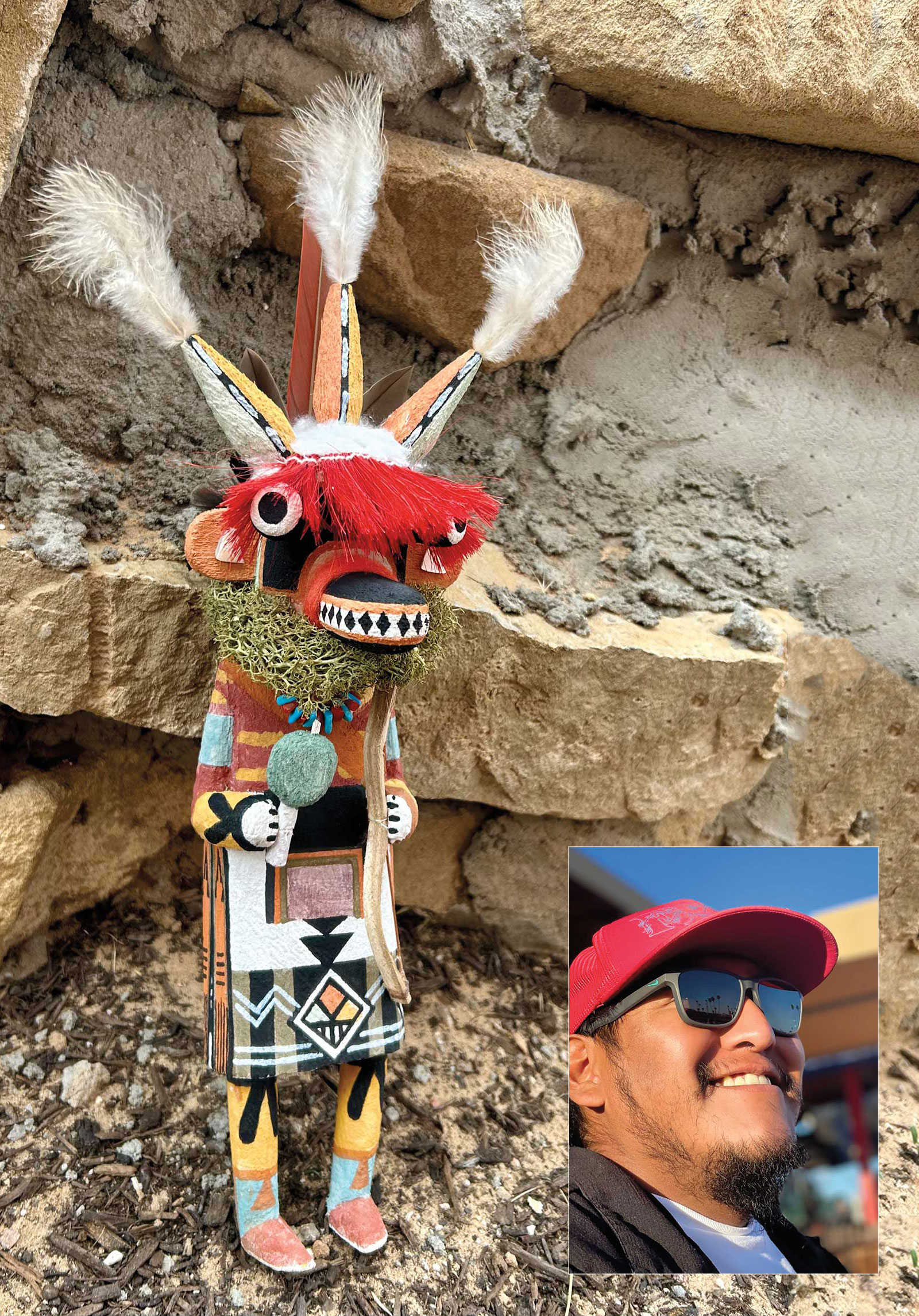
Kevin Honyouti (Makvaho) (Hopi)
Booth No. I-20
Kevin Honyouti (Makvaho) comes from the Coyote Clan from Hotevilla, Arizona. He carves both contemporary and old-style works. “My contemporary carvings are one-piece carvings created by hand using pocket knives and X-Acto blades,” he says. “I detail with a wood burner and paint with oils. The traditional (old-style) dolls are painted with strictly natural pigments and usually adorned with feathers, shells, turquoise and other natural materials. I will be bringing both styles to the Heard Market.”
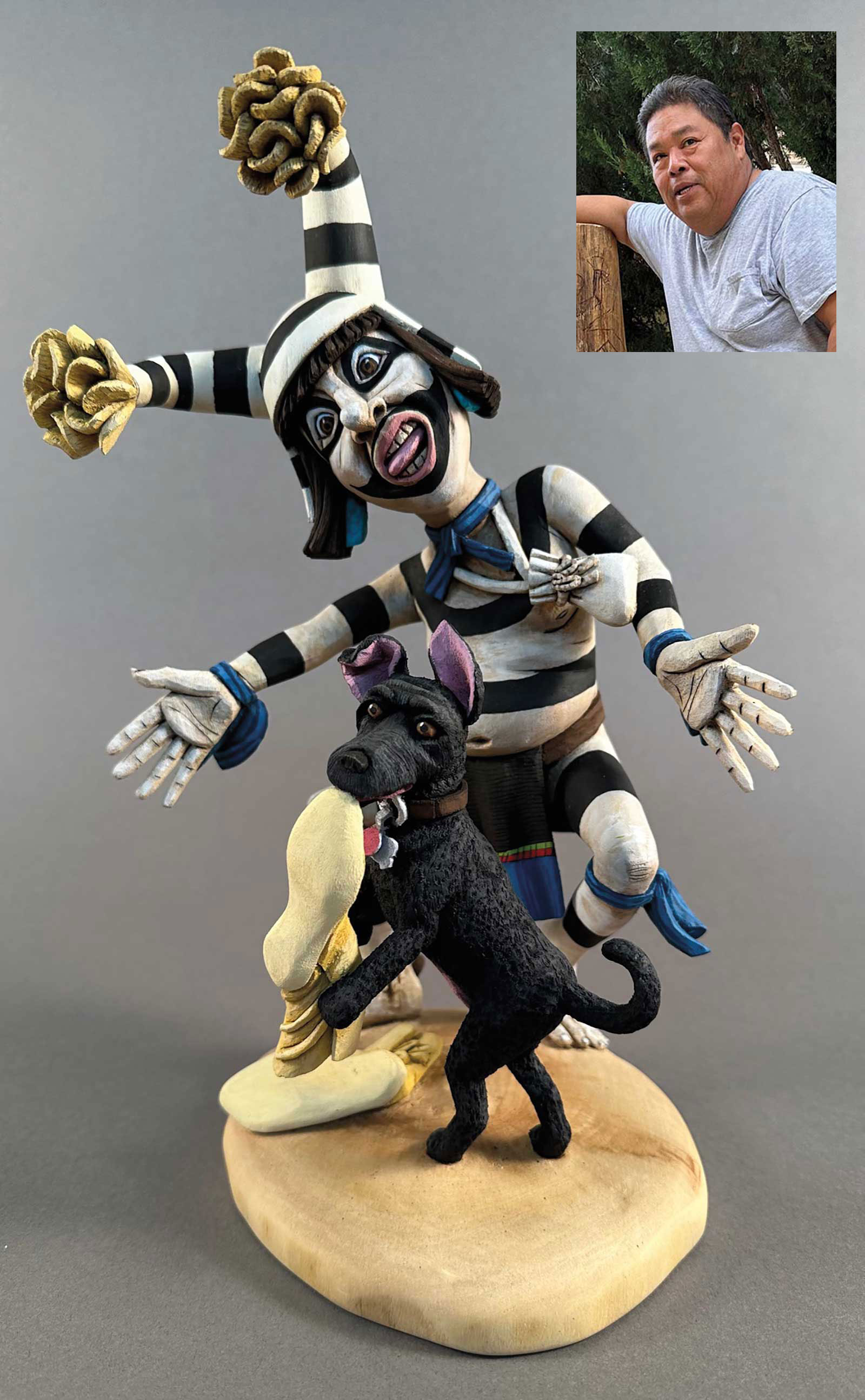
Robert Albert (Hopi)
Booth No. H-10
A 37-year veteran to pueblo carving, Robert Albert has many years of experience that help guide him and his clever designs. His first involvement with the Heard Museum was in the 1980s, when he was encouraged to keep working. “Although I carve katsinum once in a while, the primary subject I’ve become known for are koyalas, First Mesa Tewa clowns,” Albert says. “I enjoy their humor and funny situations that they find themselves in. Since there are no rules to what they can do, I find endless subject matters to provoke humor in my work. I try to depict them telling a story that reflects today’s society and its trends and problems. After all, that is the burden of the clowns, to show us who we are and show the faults that need to be corrected.”
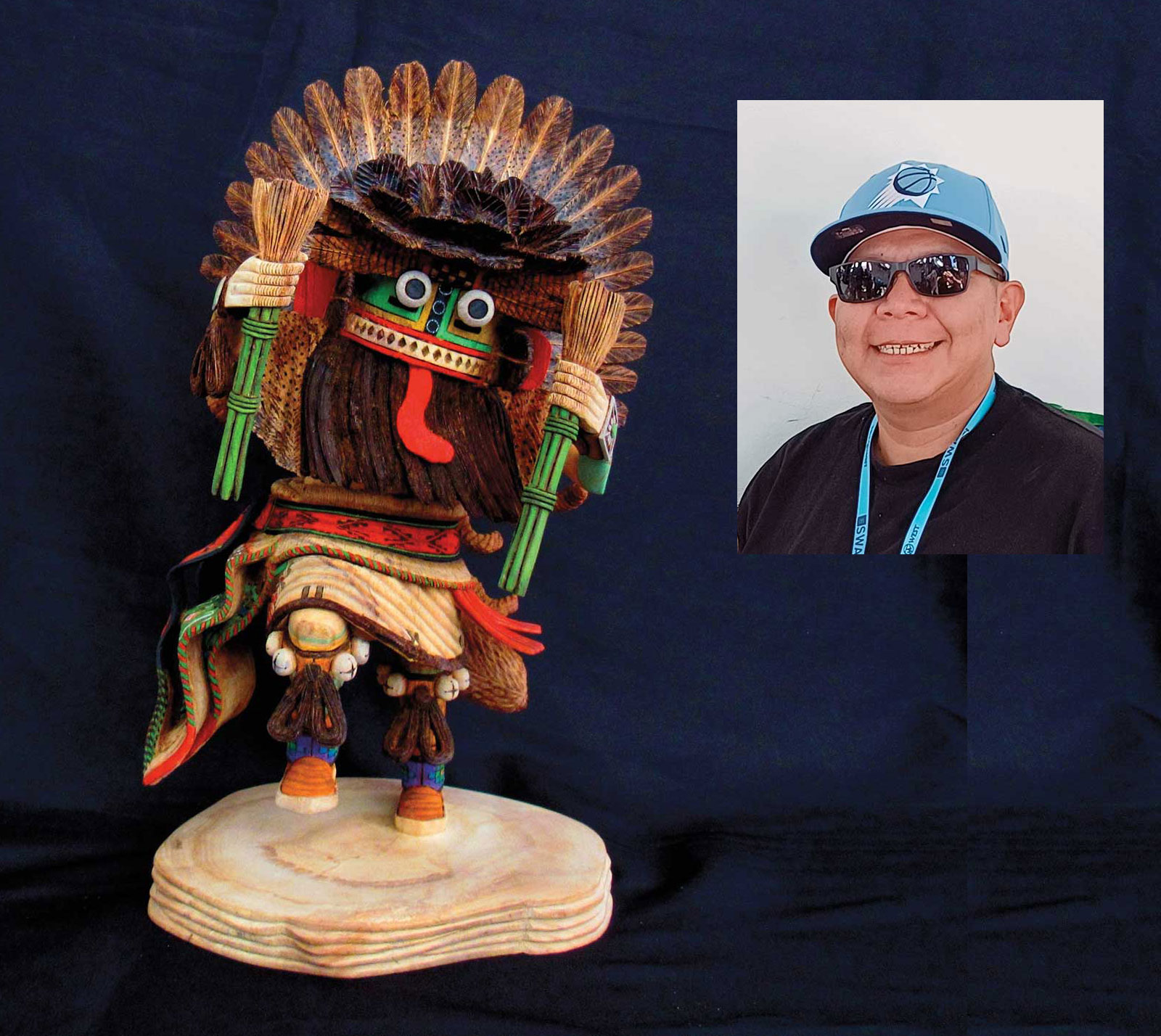
Donald Sockyma (Hopi)
Booth No. G-05
A regular at many of the top markets in the country, Donald Sockyma brings heart and superb technique to his carvings. One of his newest pieces is a large work with complicated parts that span out from the piece. When completed, the carvings should wow collectors and marketgoers. “The piece is called a Dawa Katsina, [showing a figure] sending an eagle in flight to bring messages and prayers to the Gods for each and every one of the Creator’s children,” Sockyma says. “The eagle is thought to be the only being that can reach the heavens for prayers and why the feathers contain much power and strength.”
≠≠≠≠≠≠≠≠≠≠≠≠≠≠≠≠≠≠≠≠≠≠≠≠≠≠≠≠≠≠≠≠≠
Sculpture
From the towering wooden totems of the Northwest Coast to palm-sized Zuni fetishes made of stone, the forms, styles and mediums of Native American sculpture are as multifarious and unique as the tribes themselves. However, Indigenous sculpture often incorporates animal and spirit symbolism representative of a powerful connection to the natural world. It depict ancestors and mythological beings. And it contains references to cultural beliefs and everyday life tied to the artist’s lineage. Carvings can serve a variety of purposes, including use in rituals, storytelling and commemoration.
Artists to Look For
Claudia Peina-Kallestewa (Zuni), Robert Weahkee (Zuni), Leon Misak Kinneeveauk (Inupiaq), Jayne Quam (Navajo (Diné)), Nelson Tsosie (Navajo (Diné)), Alvin K. Marshall (Navajo (Diné)), Dee Edaakie (Zuni), Loren Tsalabutie (Zuni), Joseph Begay (Navajo (Diné)), Gibbs Othole (Zuni)
Behind the Scenes
Jared DeCelles (Gros Ventre/Assiniboine)
Booth No. D-51
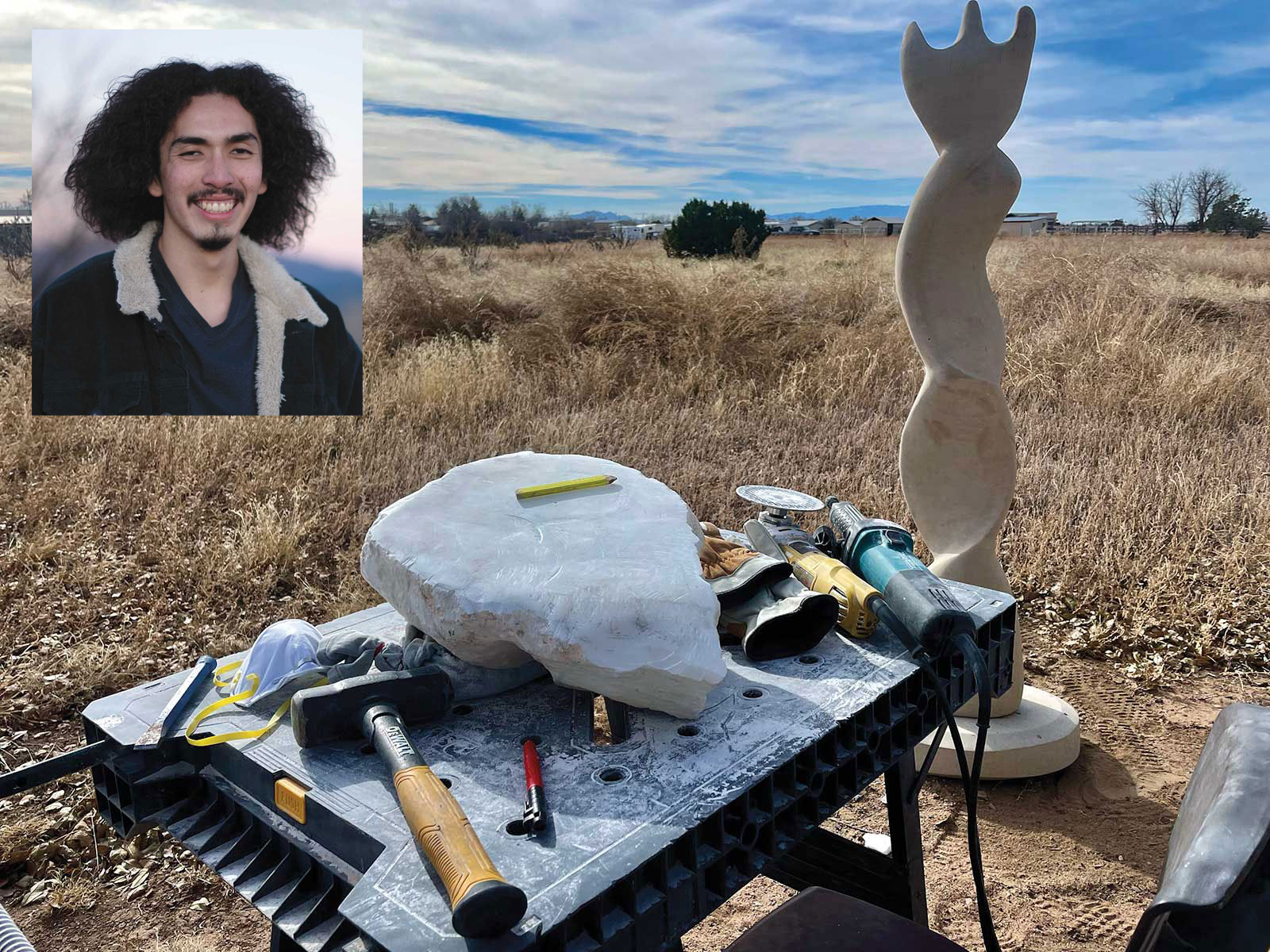
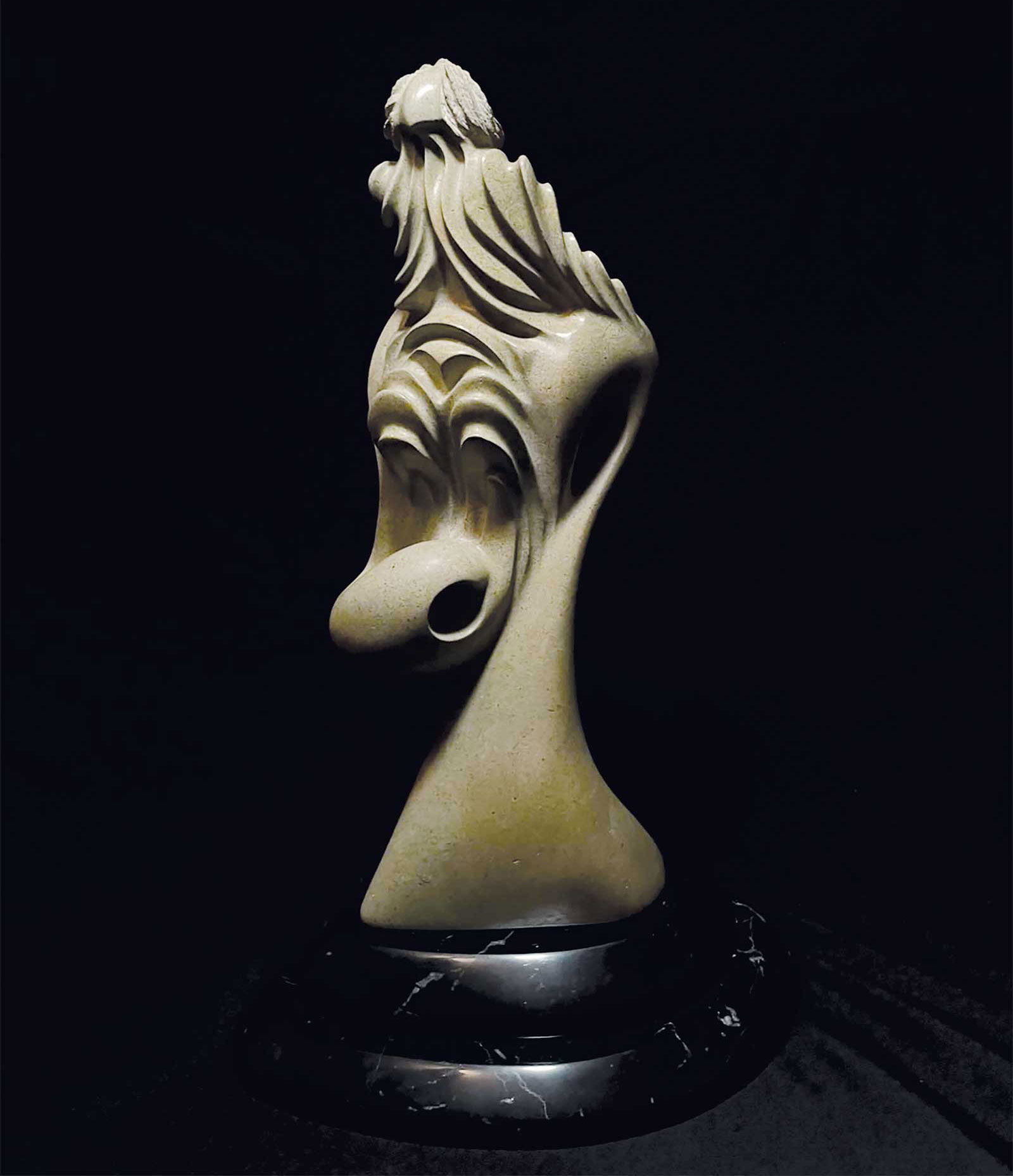
In his outdoor workspace, Jared DeCelles is in the process of designing a new sculpture for the Heard Museum Indian Fair & Market. A large assortment of tools are used in his process, including hammers, chisels and grinders, tools that are essential to his process in the beginning stages of a sculpture. “In my work I use flowing lines and forms to represent different parts of the human experience, using the emotions and energies that come with it,” says Jared, who is the son of sculptor Jon DeCelles. “Showing these feelings in stone is a way to give life to these experiences through different perspectives, forms, colors, and stories. Being a part of the Heard Indian Fair & Market is always an incredible opportunity to share my work and connect with great artists and people.”
Jon DeCelles (Gros Ventre/Assiniboine)
Booth No. D-51
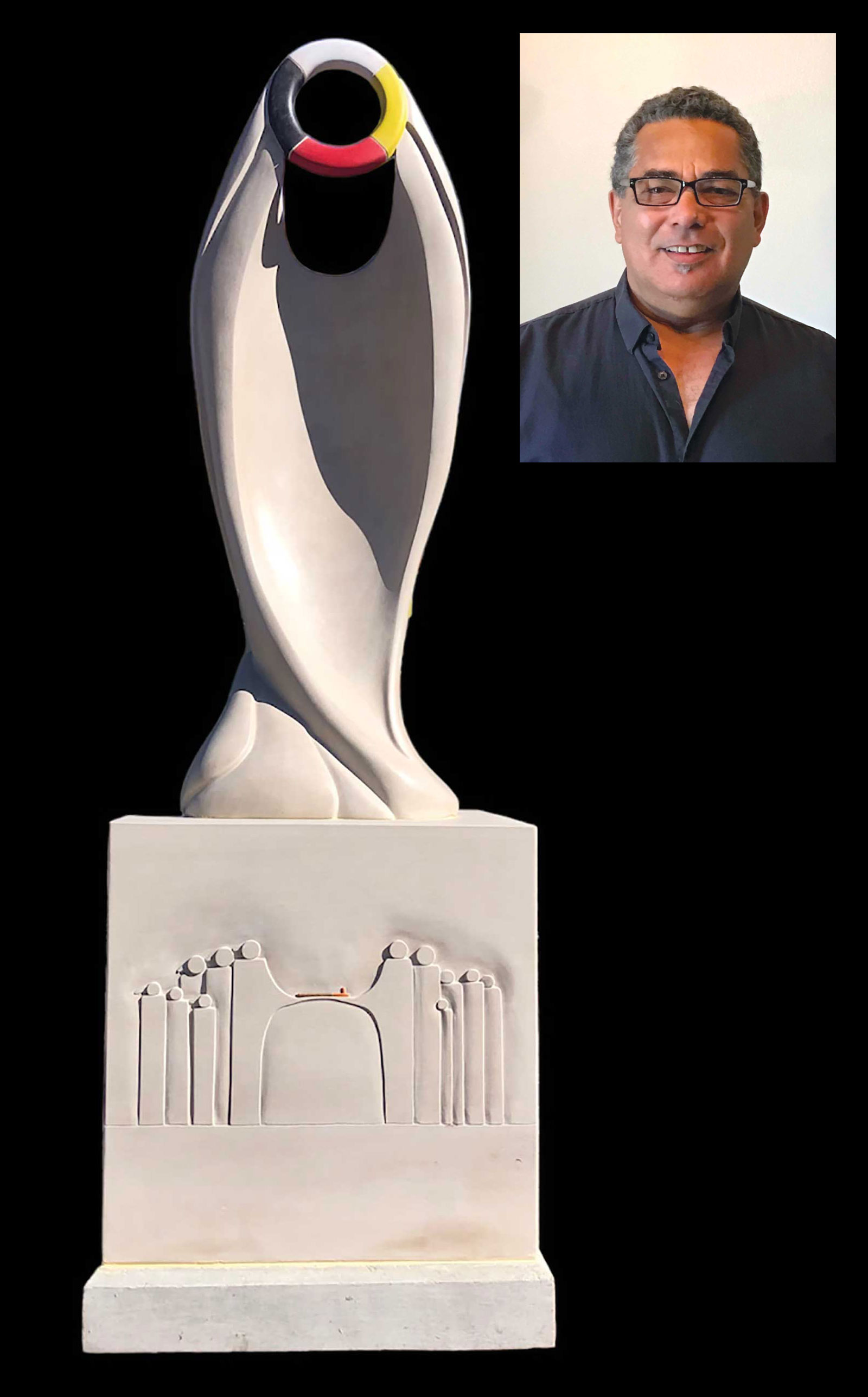
Jon DeCelles made his first sculpture when his first wife gave him small pieces of stone. All he had to carve with was an old steak knife, which he used to craft a small head. “When I began thinking and praying of how to represent the purpose of All American Indian Days [an annual festival that took place in Sheridan, Wyoming, from 1953 to 1984] through sculpture, it occurred to me, what better way than with the spirit of our grandfather stone to help share the [event’s] message,” he shares. “I saw the spirit of stone presenting the sacred hoop to the world. The hoop would represent the message of unity, understanding and racial harmony sent out in the four sacred directions. This special sculpture honors all those that worked so hard to share that message.”
Randall Beyale (Navajo (Diné))
Booth No. I-17
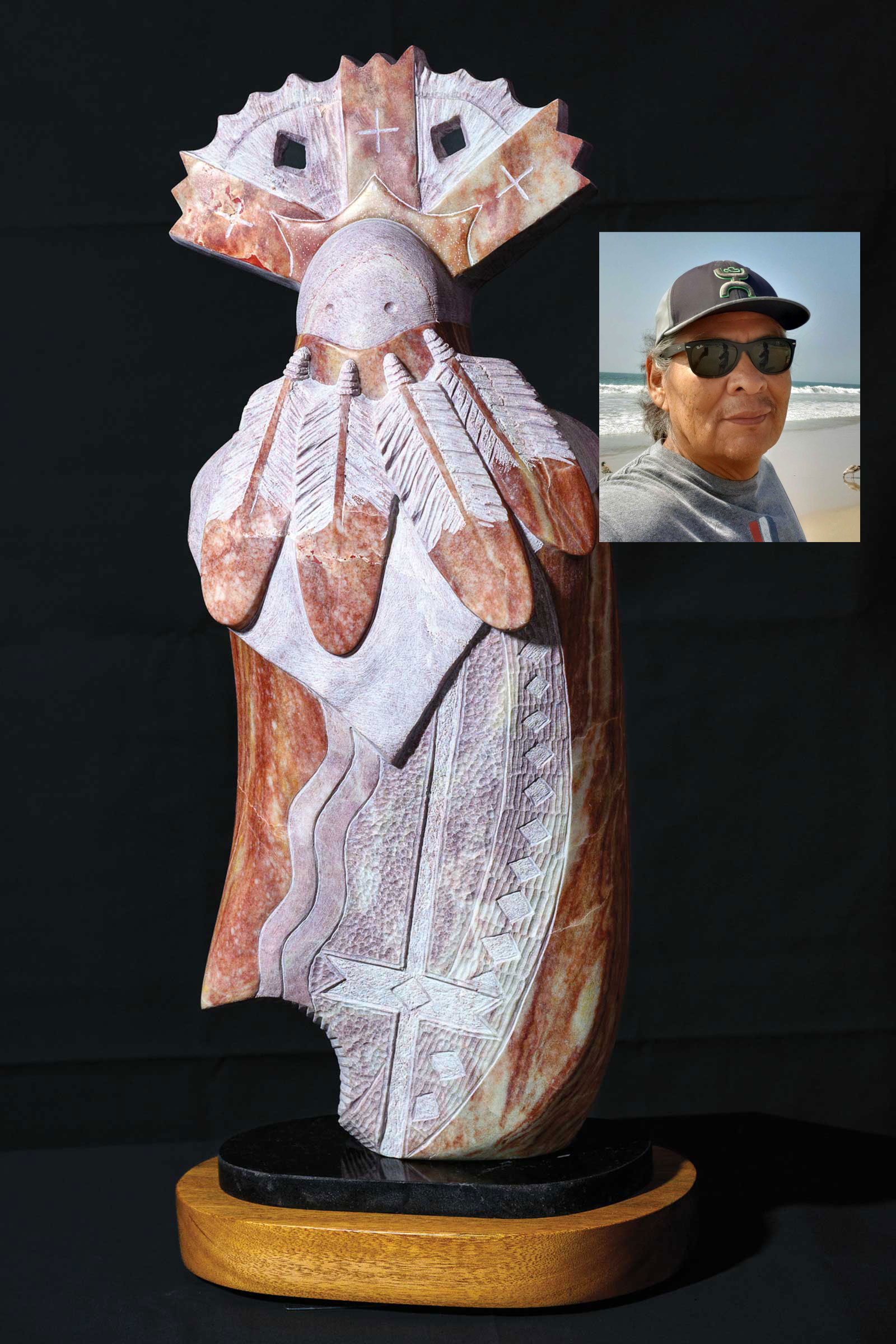
Randall Beyale’s pieces are inspired by his culture and traditions. An award-winning artist, his sculptures bring forth the spirit of every stone, each one telling a unique story. His piece Gatekeeper, made out of raspberry alabaster from Utah, embodies his impression of the Apache crown dancers. “I was inspired by their presence while I was at a sunrise dance ceremony,” he explains. “My sculptures are my impression of all tribes. I try to capture moments of the beauty, grace and strength of our culture and traditions.” Beyale works in other stone and has made bronze sculptures out of the stone originals.
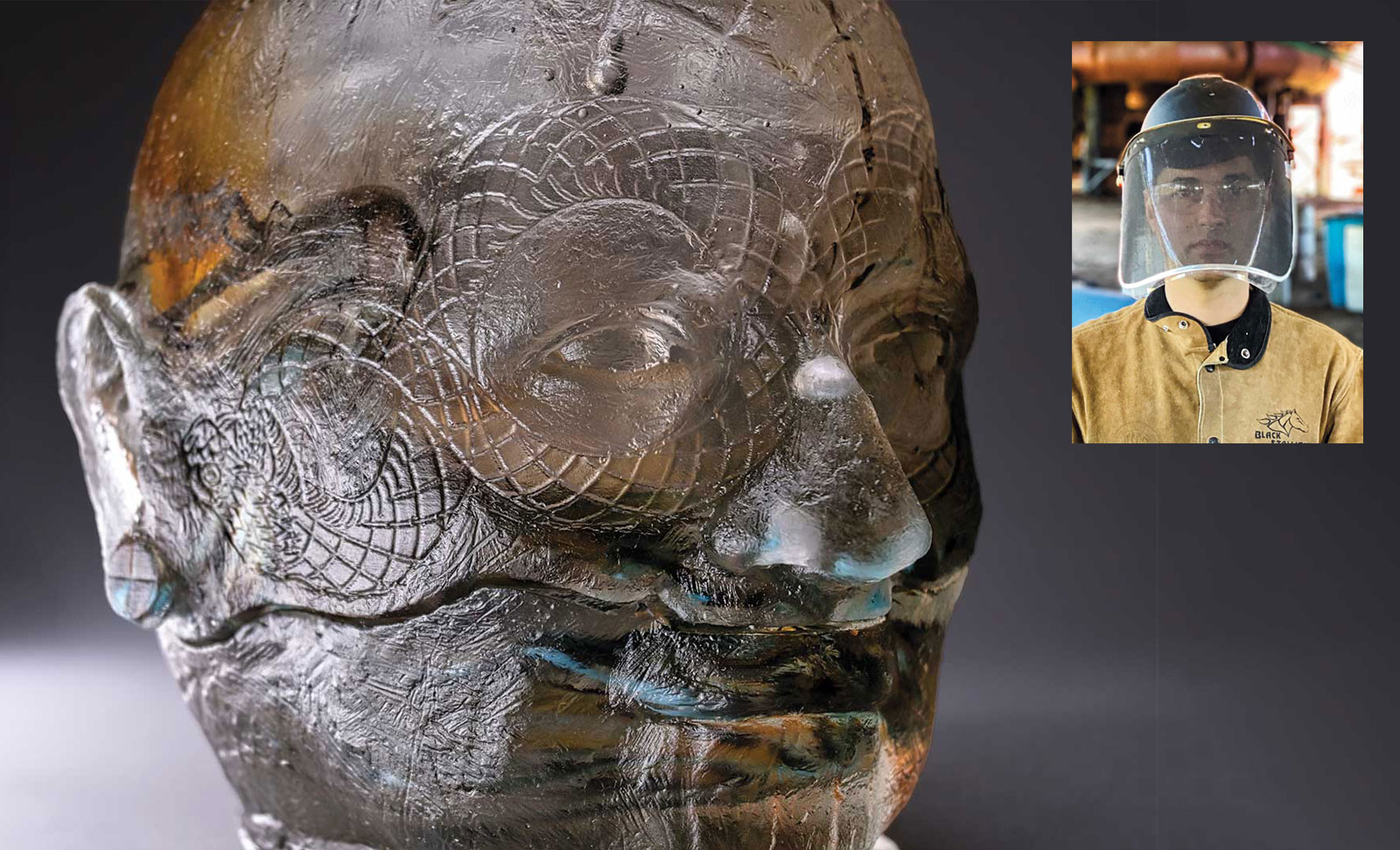
Addison Karl (Chickasaw/Choctaw)
Booth No. D-29
A gifted visual storyteller, Addison Karl aspires to create the kind of artwork that he has always longed to see in museums, galleries and private collections. “Into these fiery maws, a carefully concocted blend of silica sand, soda ash, and limestone, mingled with the ghosts of glass past—the cullet—is offered,” he says. “In this place where the dust collects, this is not mere preparation but a sacred act, an orchestration of elements to achieve clarity and color that whispers of the sea and sky. The batch, cradled in shovels or mechanical arms, descends into the fiery abyss. The furnace, now a crucible, embraces its charge, a tender yet relentless embrace.”
≠≠≠≠≠≠≠≠≠≠≠≠≠≠≠≠≠≠≠≠≠≠≠≠≠≠≠≠≠≠≠≠≠
Weavings & Textiles
While weaving has a significant presence within the Navajo (Diné) community—with the belief that Spider Woman taught the Navajo the artform—there’s evidence to suggest that weaving was also predominate among the Pueblo people. Regardless of its beginnings, the art of weaving—and the use of symbol, design and color—has a rich history that is carried throughout the work of many Native American artists today. Collectors will find an abundance of textile options by prominent artists at the 2025 Heard Indian Market. Within this section, you will find exceptional highlights that will be available to purchase at the Phoenix market this year.
Artists to Look For
Tyrrell Tapaha (Navajo (Diné)), Marlowe Katoney (Navajo (Diné)), Mae Mallahan (Navajo (Diné)), Tyler Glasses (Navajo (Diné)), Akema Honyumptewa (Hopi), Venancio Aragon (Navajo (Diné)), Rosie Taylor (Navajo (Diné)), Florence Manygoats (Navajo (Diné)), Rena Begay (Navajo (Diné)), Alisa Peacock (Navajo (Diné))
Behind the Scenes
TahNibaa Naataanii (Navajo (Diné))
Booth No. B-48
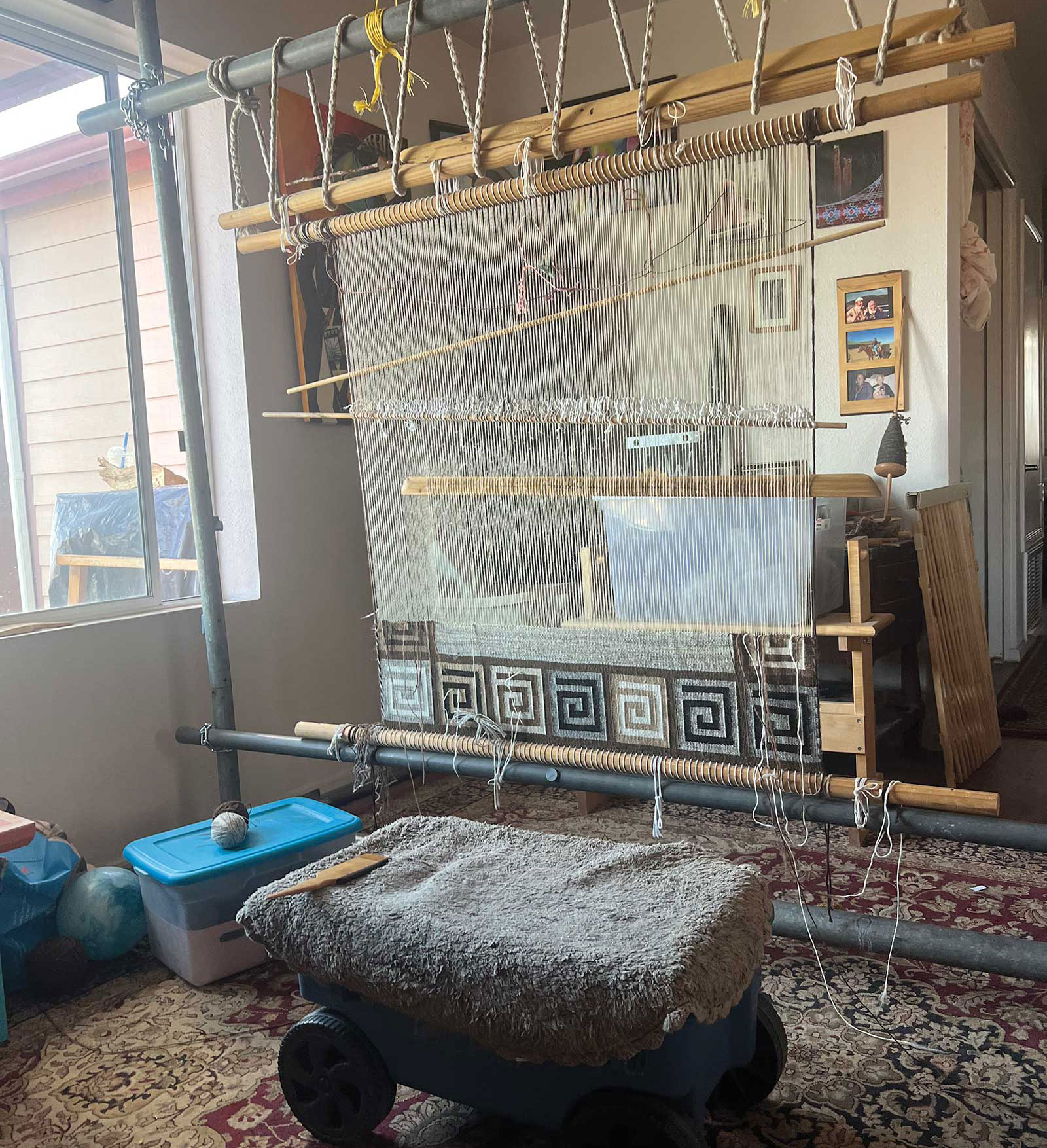
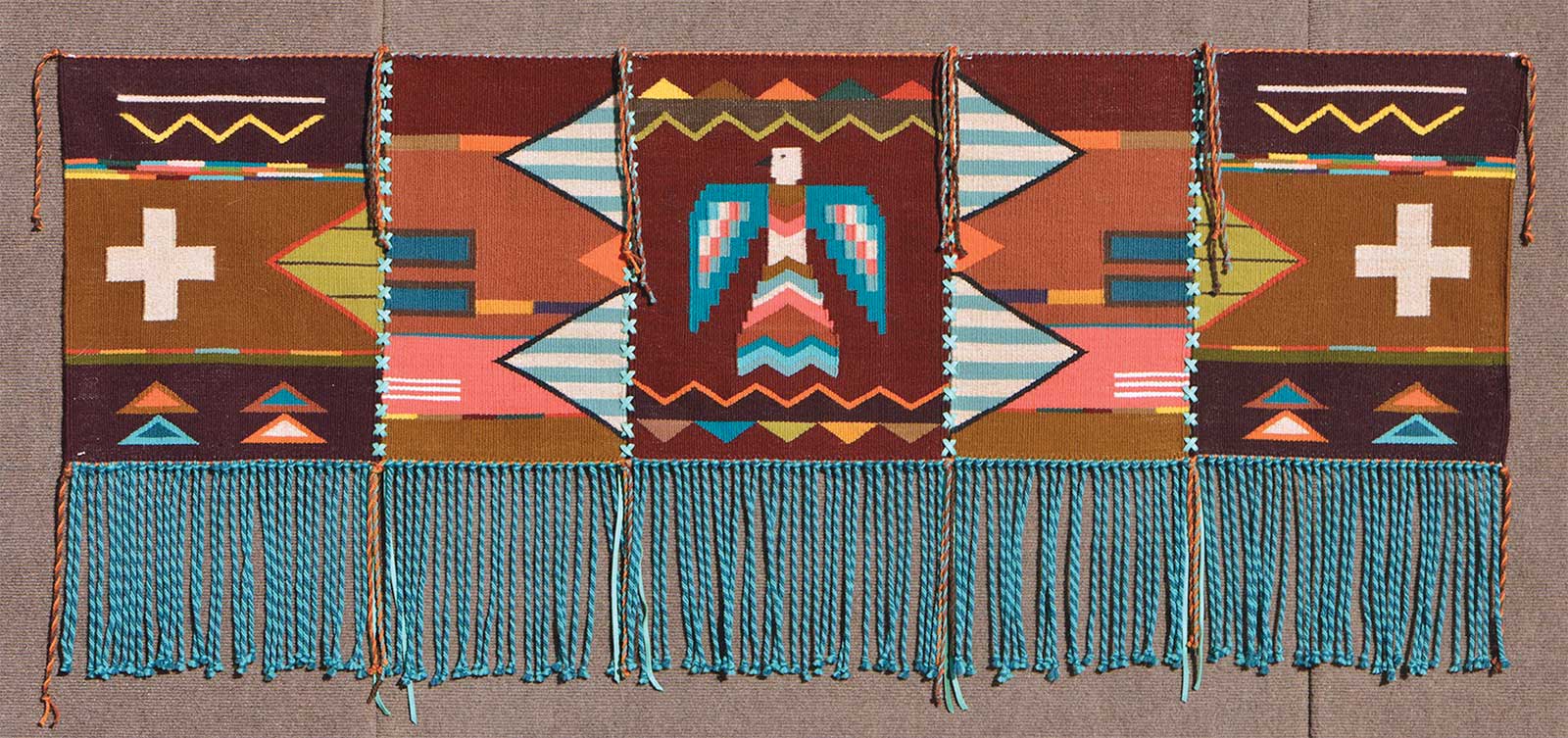
Navajo artist TahNibaa Naataanii is influenced by historical utilitarian weavings, the beautiful array of sunset colors, the landscapes, her beloved sheep, community and her ancestors. “The latter allows me to honor their work by creating utilitarian goods that can be used today—sometimes by imitation, and other times by innovation,” says the artist. “Imitation and innovation have been hallmarks of our culture, and I honor these complimentary forces today. Thus, their weaving of such utilitarian goods such as ponchos/sarapes, shoulder blankets and saddle blankets have inspired me to weave my own creation titled TahNibaa Shawl.”
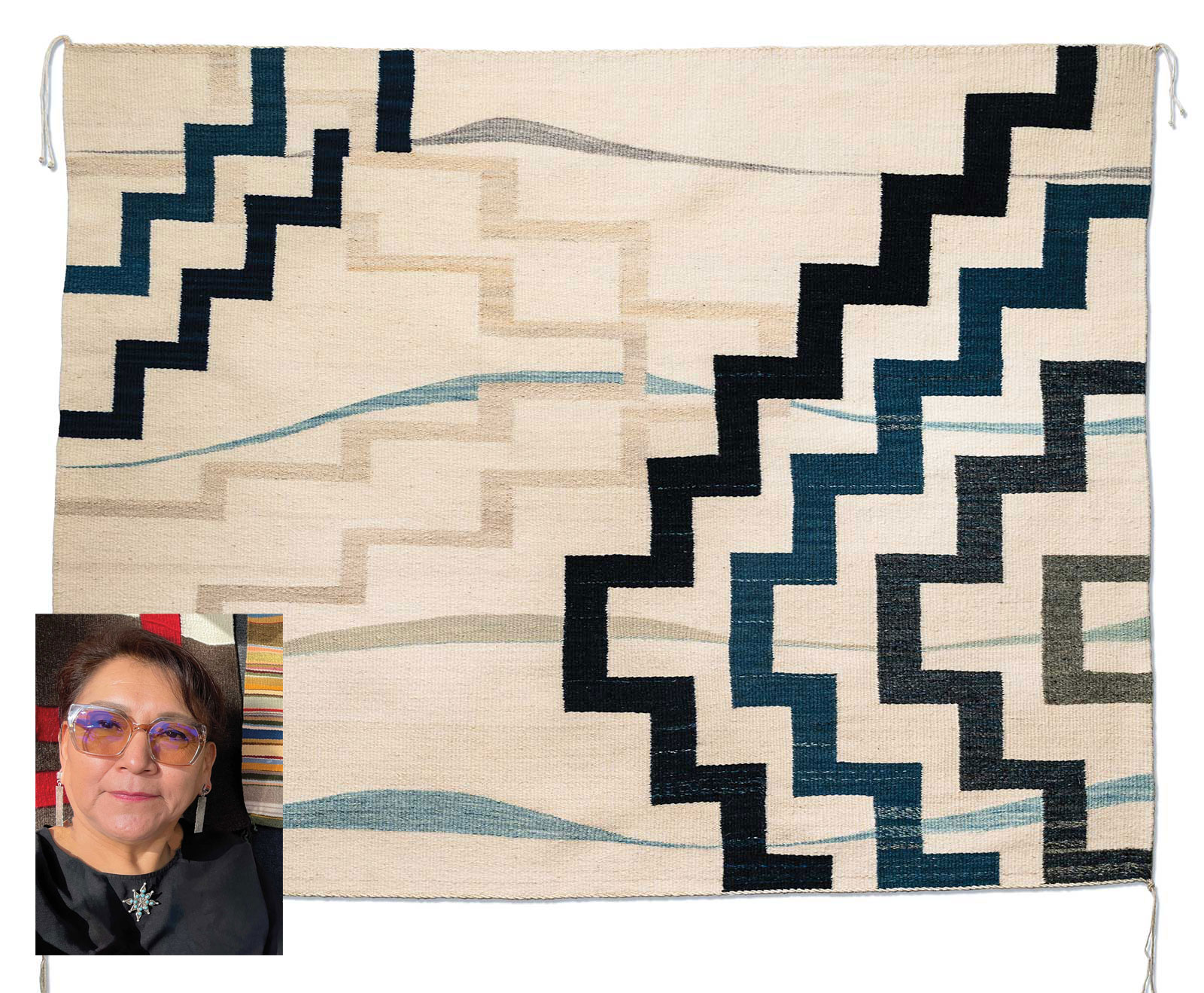
Berdina Y. Charley (Navajo (Diné))
Booth No. E-02
Born and raised on the Navajo Reservation, Berdina Y. Charley’s traditional upbringing has deeply inspired her weaving journey. “Weaving has been an integral part of my life,” she says, “not just as a craft but as a means to connect with my heritage and surroundings. My creations draw directly from the environment around my home, incorporating the vibrant colors of the landscapes and the mesmerizing formations of the mesas. Each piece tells a story, reflecting the beauty and spirit of my homeland.”
Jeff Benally (Navajo (Diné))
Booth No. B-02
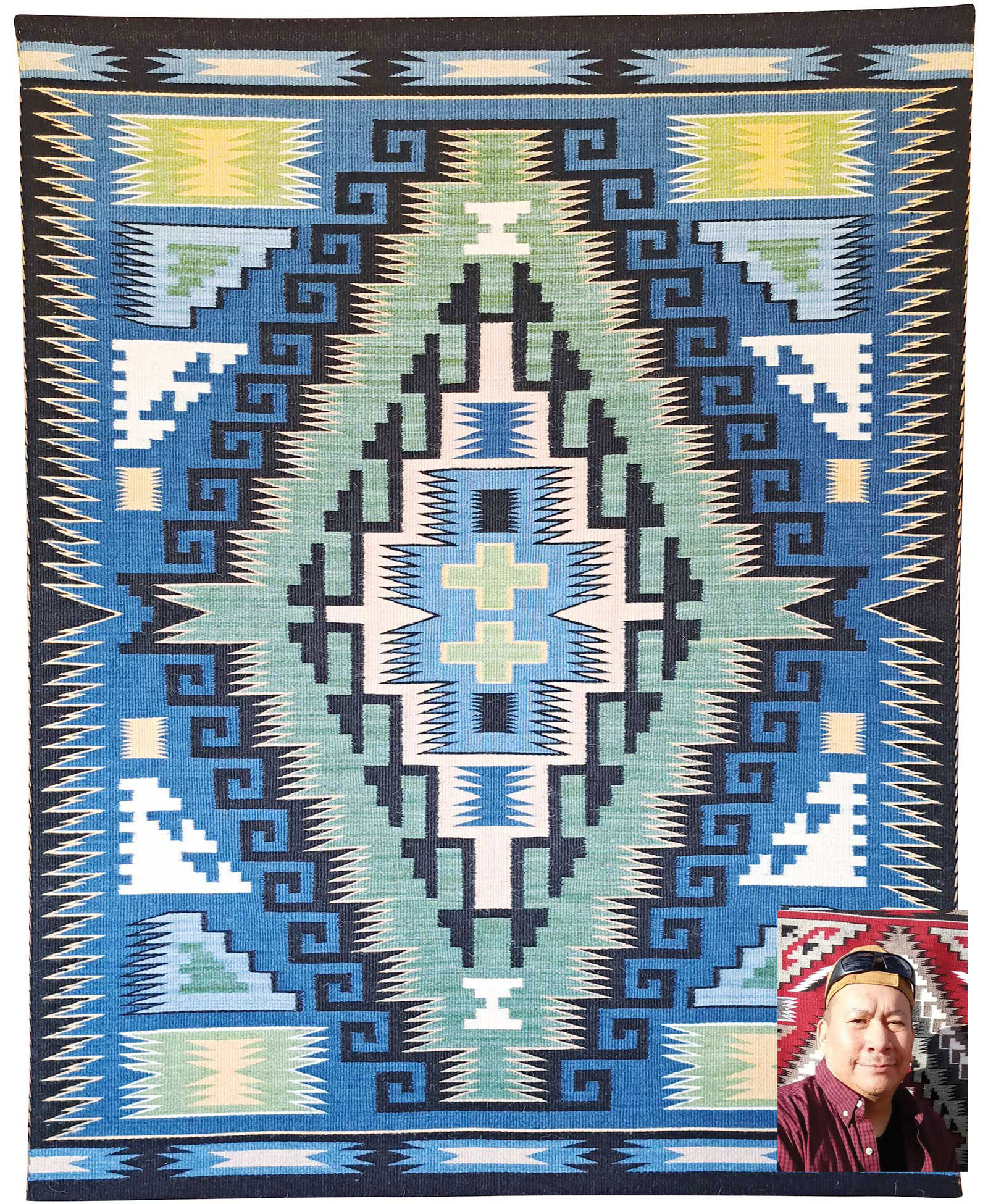
Artist Jeff Benally started weaving in 1994 after being inspired by his mother and grandmother’s dedication to creating Navajo textiles. “I continue to be motivated to weave,” he says, “becoming increasingly aware that this rich tradition is slowly being lost. I’m currently exploring different styles and colors while preserving this tradition for future generations.”
Jane Hyden (Navajo (Diné))
Booth No. C-38
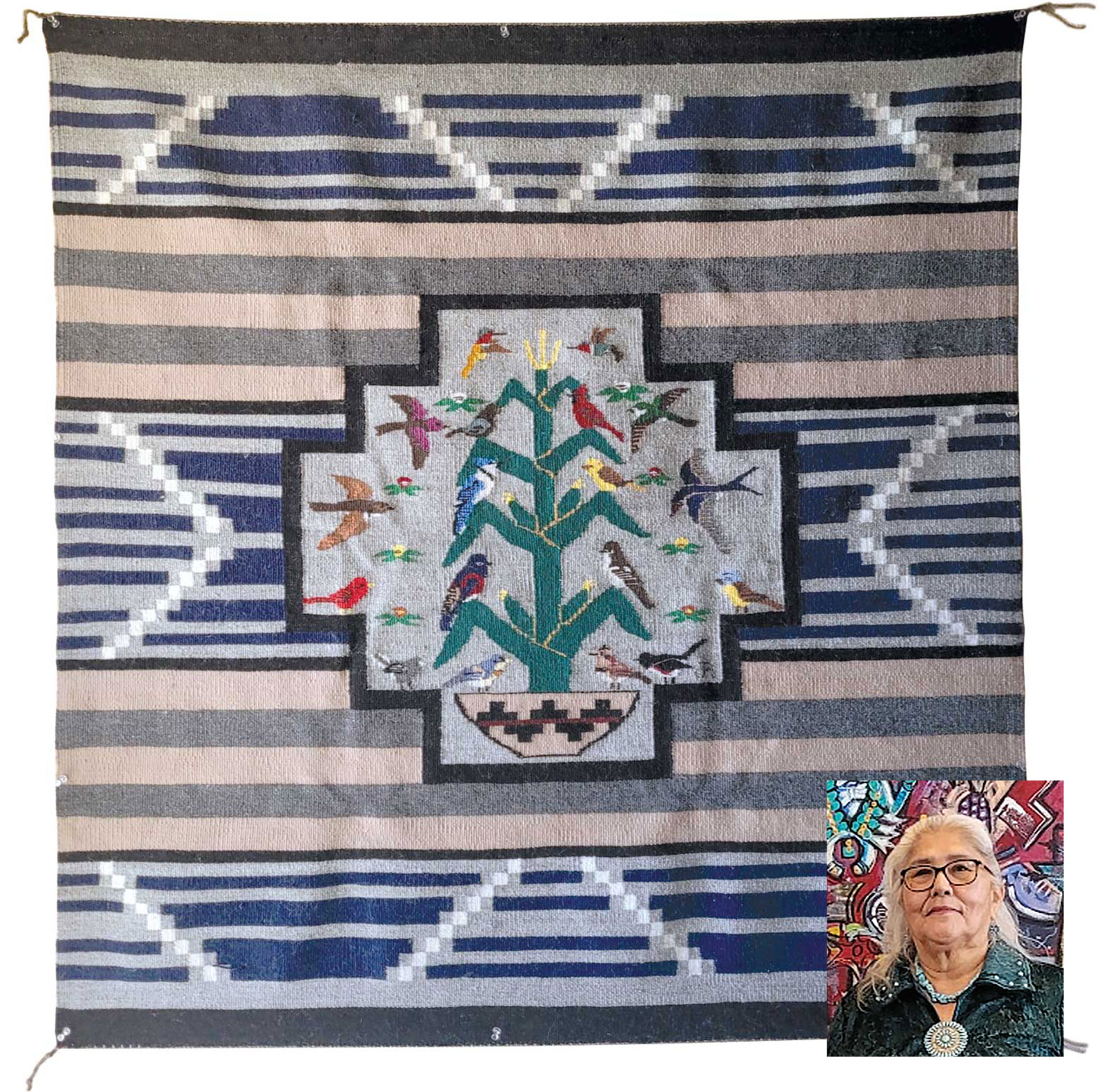
Hyden learned to weave the storm-pattern design from her mother, Louise A. Nez, and pictorial design from her grandmother, Laura Y. Nez. “I’ve been weaving now for about 45 years,” she explains, “and I’ve sold my rugs at trading posts, auctions and at the annual Heard Indian Market. “I am very proud of the work I put into each weaving I create (rugs/dresses). I love to present my love of art weaving when I see an individual’s interest or appreciation in my work.”
≠≠≠≠≠≠≠≠≠≠≠≠≠≠≠≠≠≠≠≠≠≠≠≠≠≠≠≠≠≠≠≠≠
Diverse Arts
Of all the classifications at Heard Indian Market, diverse arts is the most dynamic, offering a wide range of pieces created in a plethora of unique ways. For instance, the category is reserved for artists that like to shape-shift between a wide range of mediums, materials and styles. They are often the innovators across multiple genres, including fashion, carving, painting and so much more. Whichever avenue they may take, there is sure to be a little something for everyone. In this section dedicated to the remarkable category, you will find several highlights that will be at the 2025 fair.
Artists to Look For
Rubia Buck (Dakota/Ghanaian), Cyndy Milda (Sioux), Lily Hope (Tlingit), Joyce Growing Thunder (Fort Peck Assiniboine/Sioux), Glenda McKay (Athabascan-Cook Inlet Region), Kelsey Kayquoptewa (Hopi), Marsha Hedrick (Oklahoma Choctaw), Rain Scott (Acoma), Jaymie Campbell (Anishnaabe), River Webb (Nez Perce/Sac/Fox)
Behind the Scenes
Salisha Old Bull (Salish/Crow)
Booth No. C-35
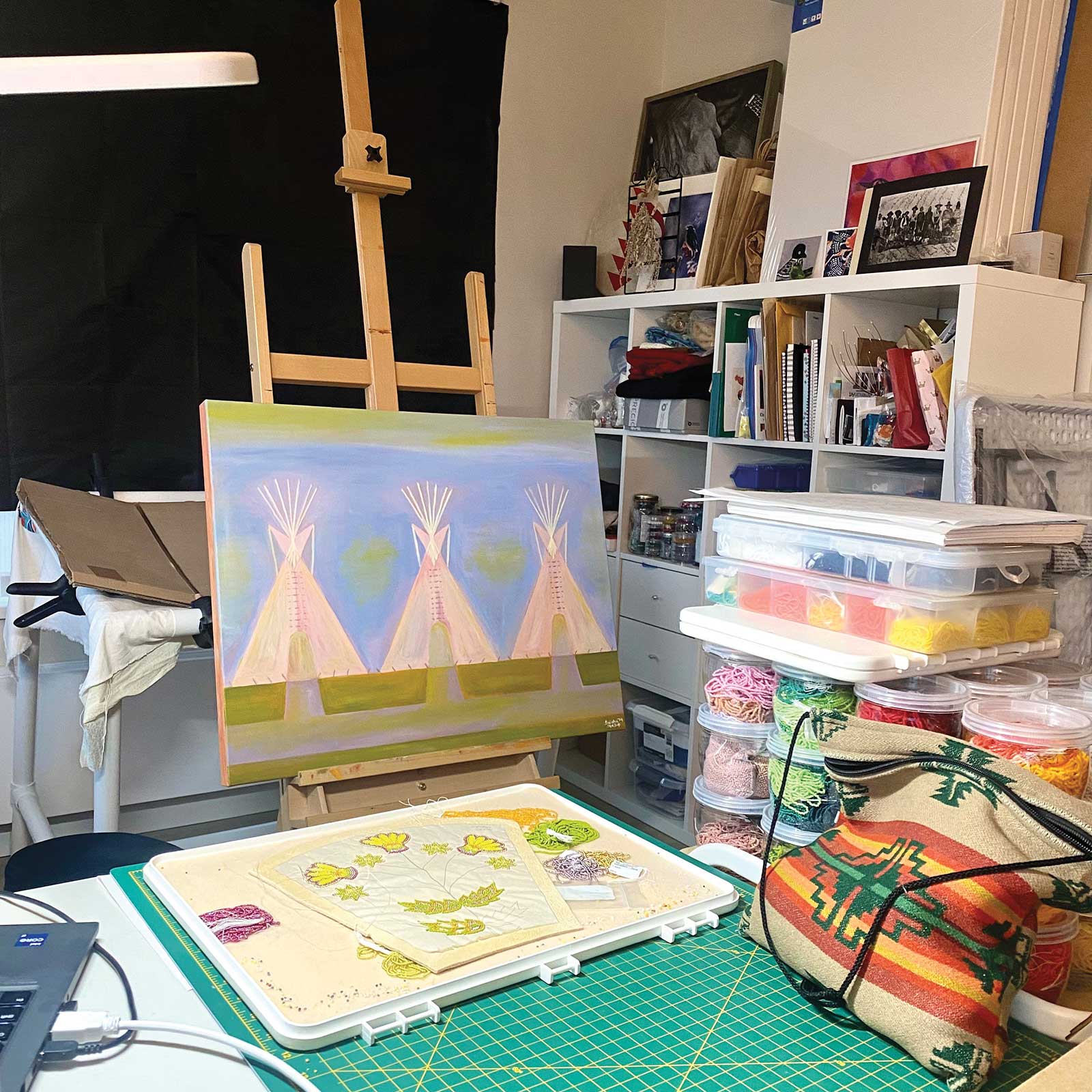
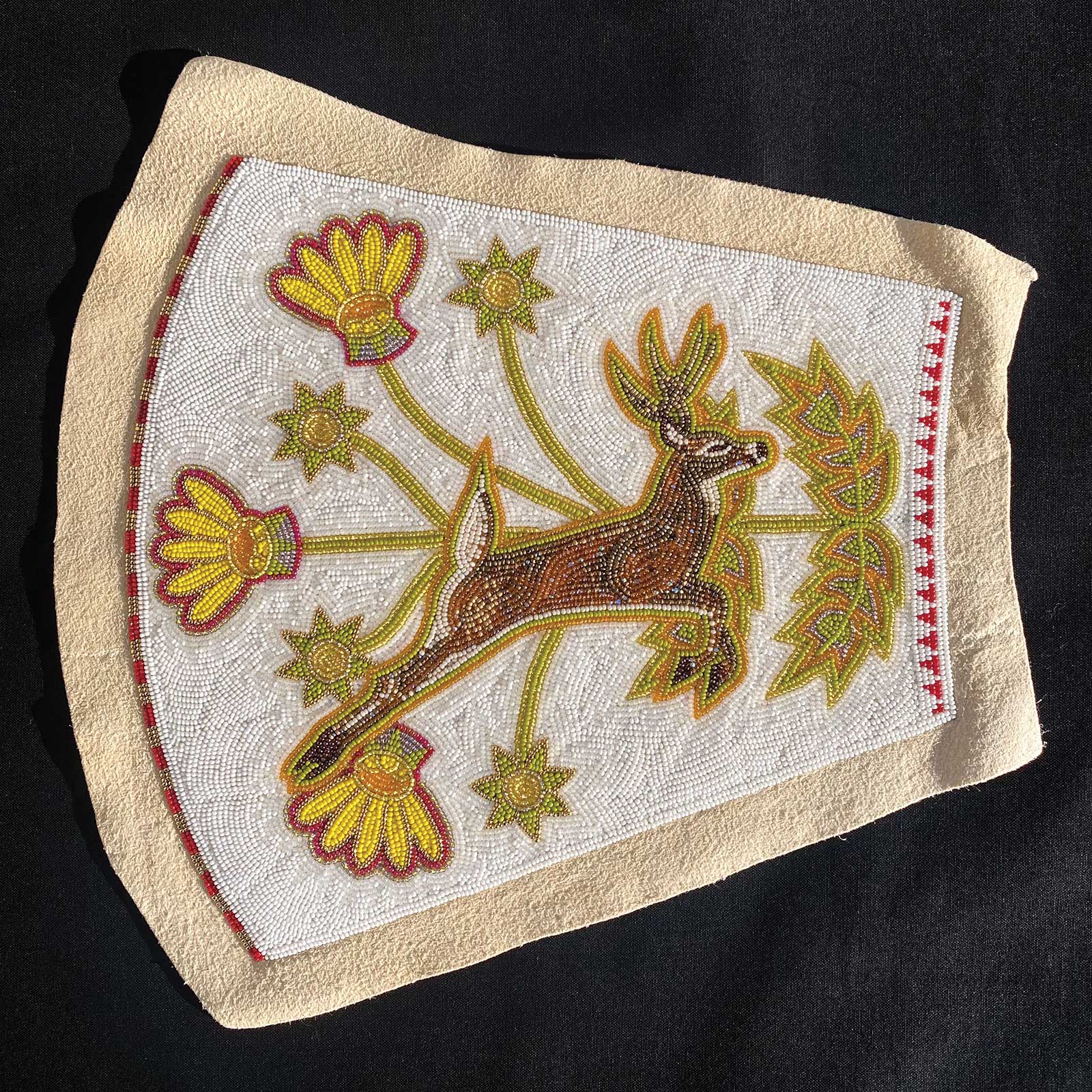
Capturing cultural teachings within beadwork imagery is inspiring and gives artist Salisha Old Bull a tangible sense of contributing to carrying on tradition. “Some of the teachings are almost lost but to find them and record them with beads is unique, and I hope to empower others to continue to learn about their environment,” she says. “The land holds our memories and it’s worth encouraging a strong and positive way of life.”
Leslie Bitsie (Navajo (Diné))
Booth No. M-02
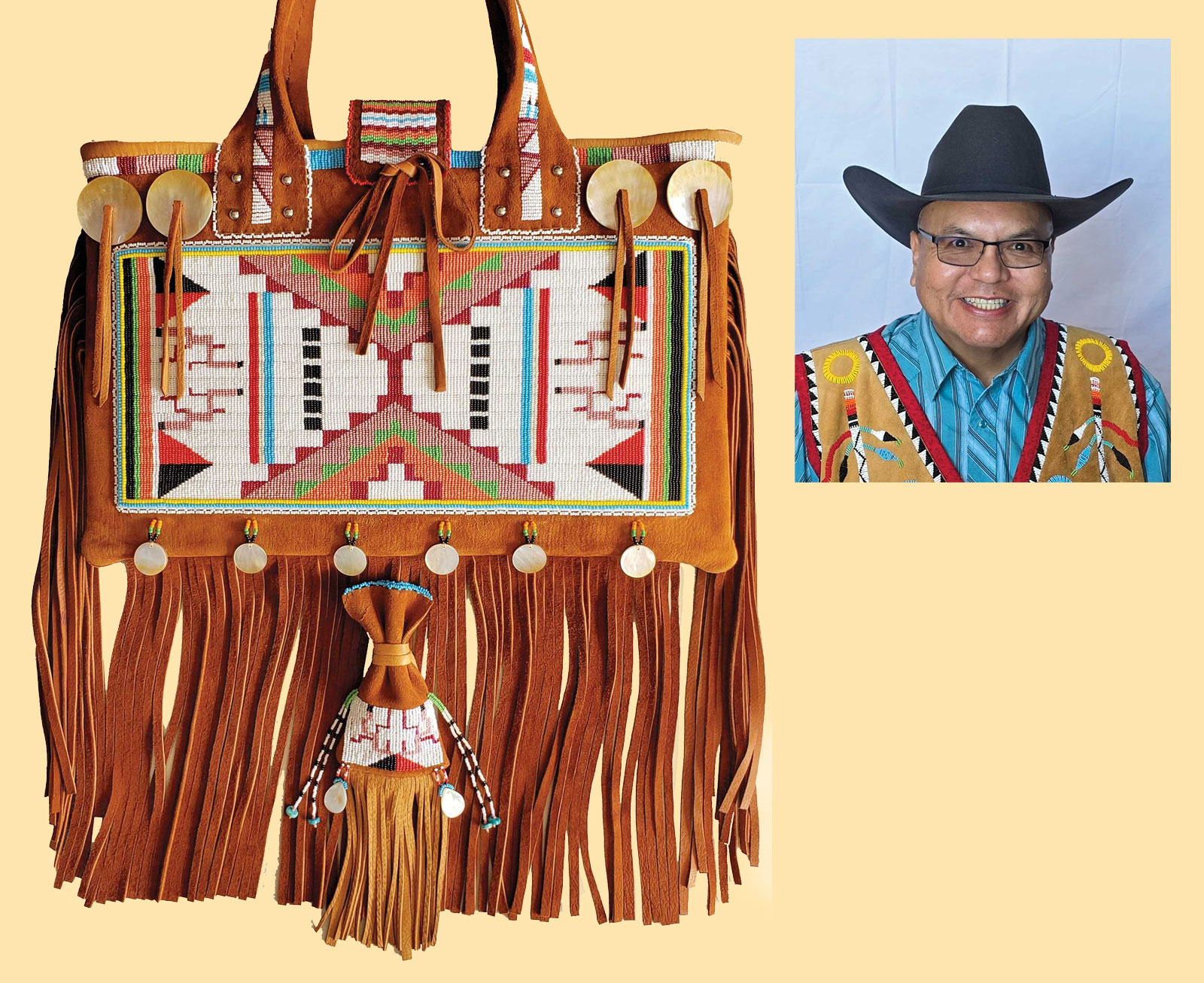
“Navajo beadwork is rooted in spiritual practices,” notes artist Leslie Bitsie, when speaking about works like Fancy Purse with Navajo Deity Story in Beadwork. “My late parents/four grandparents taught me this teaching. With that as my foundation, I am inspired by their experiences as told to me when I was very young. I am also inspired by nature and Navajo ceremonial colors and its deep connection to the order of life. In Navajo culture, to create hand made things requires one to ensure high quality and aesthetic. The Navajo label ‘good and beautiful’ is inherent to a well learned Navajo maker. With 44 years of beading, I bead to bring beauty and goodness into the world.”
Deana Ward (Choctaw Nation)
Booth No. C-28
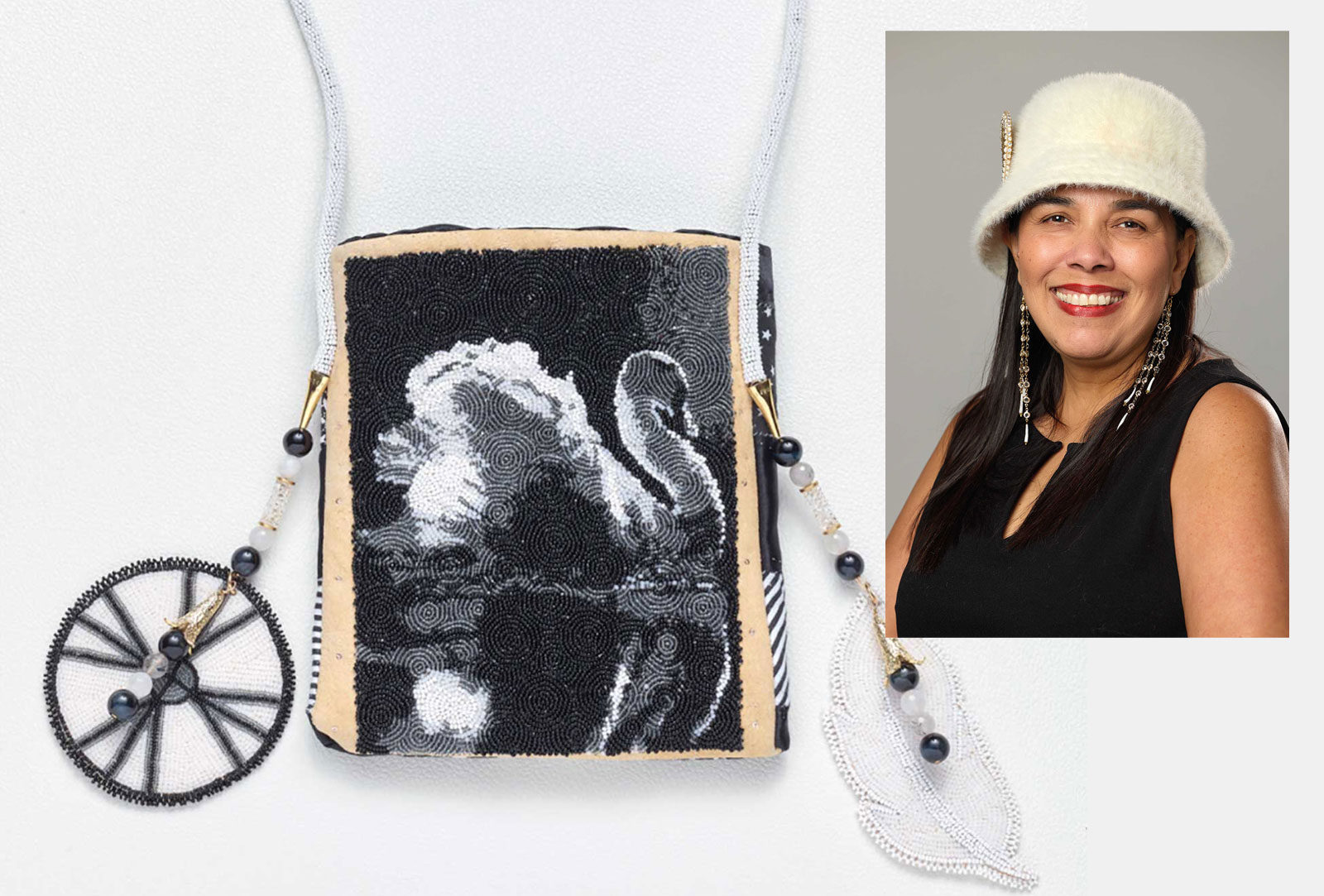
Why does artist Deana Ward make art? Typically, because she has something to say. “I see something that bothers me or maybe something is inspirational, and this stimulus makes me want to conceptualize what it would look like as a piece of art,” she says. “Most inspiration comes from my childhood. I grew up in a multi-generational home where the Choctaw language was spoken. A lot of Choctaw culture was handed down to me, and I want to ensure this knowledge is passed down to my descendants. Beadwork is a wonderful vehicle to help keep my culture intact.”
Elias Not Afraid (Apsaalooke (Crow))
Booth No. L-05
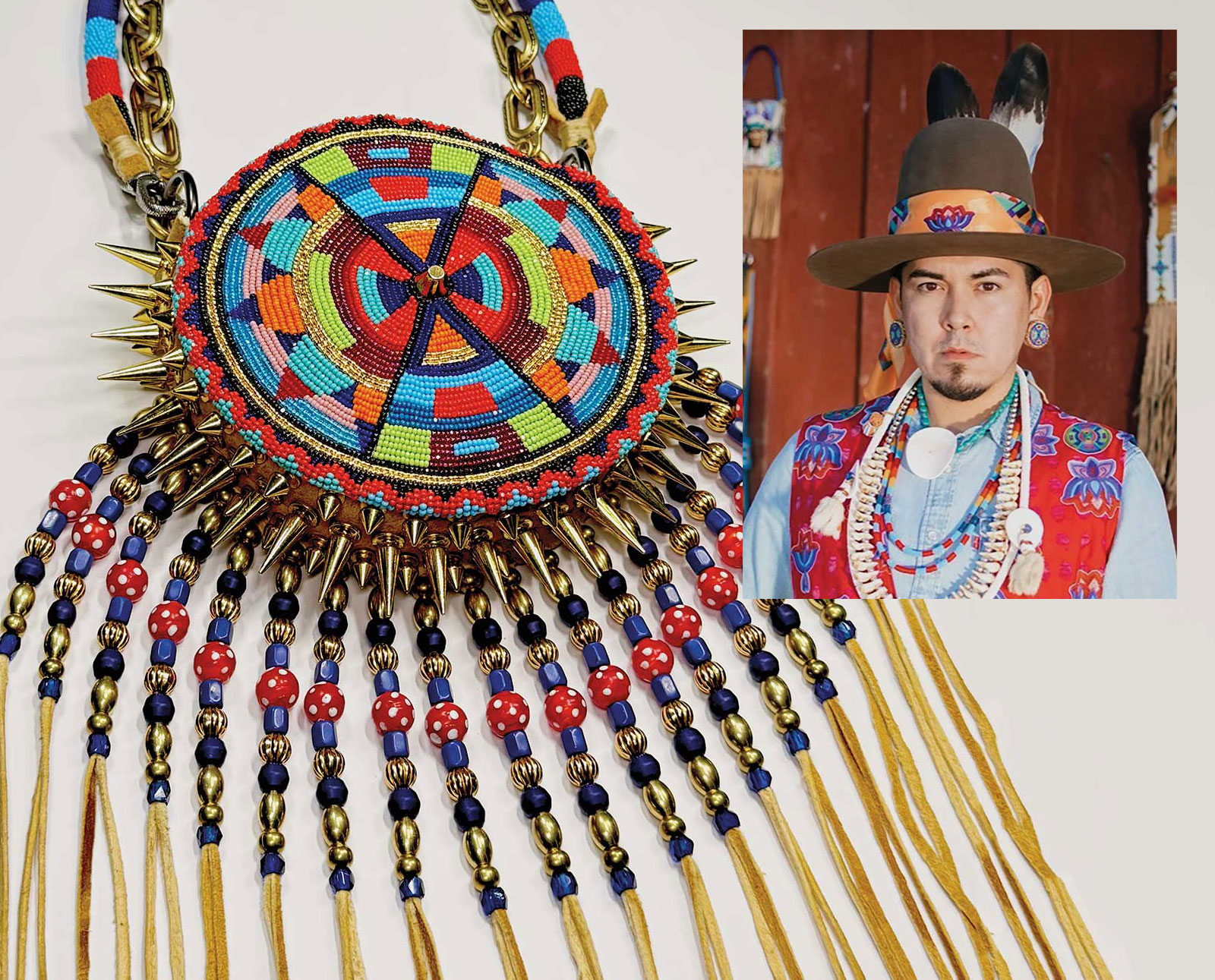
The inspiration behind Elias Not Afraid’s artwork comes from looking at various photos of Apsaalooke beadwork from museum online archives. [I also find inspiration from the] punk/grunge look, powwows, old Western/early reservation fashion, and I’m also inspired by other bead artists,” he shares. His beaded bag titled Don’t F**k Around #4, is made with smoked deer hide, glass beads, metal spikes, a chain link/beaded handle and antique venetian trade beads.
≠≠≠≠≠≠≠≠≠≠≠≠≠≠≠≠≠≠≠≠≠≠≠≠≠≠≠≠≠≠≠≠≠
Basketry
Meticulous, agonizingly slow and requiring a vast amount of patience, basketry is a challenging medium, but one that is always well represented at the annual Heard Museum market in Phoenix. As challenging as baskets can be, when done at the highest level, they can sing. Potawatomi botanist and author Robin Wall Kimmerer said it best: “The marvel of a basket is in its transformation, its journey from wholeness as a living plant to fragmented strands and back to wholeness again as a basket. A basket knows the dual powers of destruction and creation that shape the world. Strands once separated are rewoven into a new whole. The journey of a basket is also the journey of a people.”
Artists to Look For
Ronni-Leigh Goeman (Onondaga Nation), Sally Black (Navajo (Diné)), Kelly Church (Grand Traverse Band of Ottawa & Chippewa Indians), Carol Emarthle Douglas (Northern Arapaho/Seminole Nation of Oklahoma), Carrie Hill (St. Regis Mohawk), Donald Johnston (Qagan Tayagungin), Wilmetta Kayquoptewa (Hopi), Loa Bilhamneex Ryan (Tsmsyen), Theresa Secord (Penobscot Nation), August Wood (Salt River Pima)
Behind the Scenes
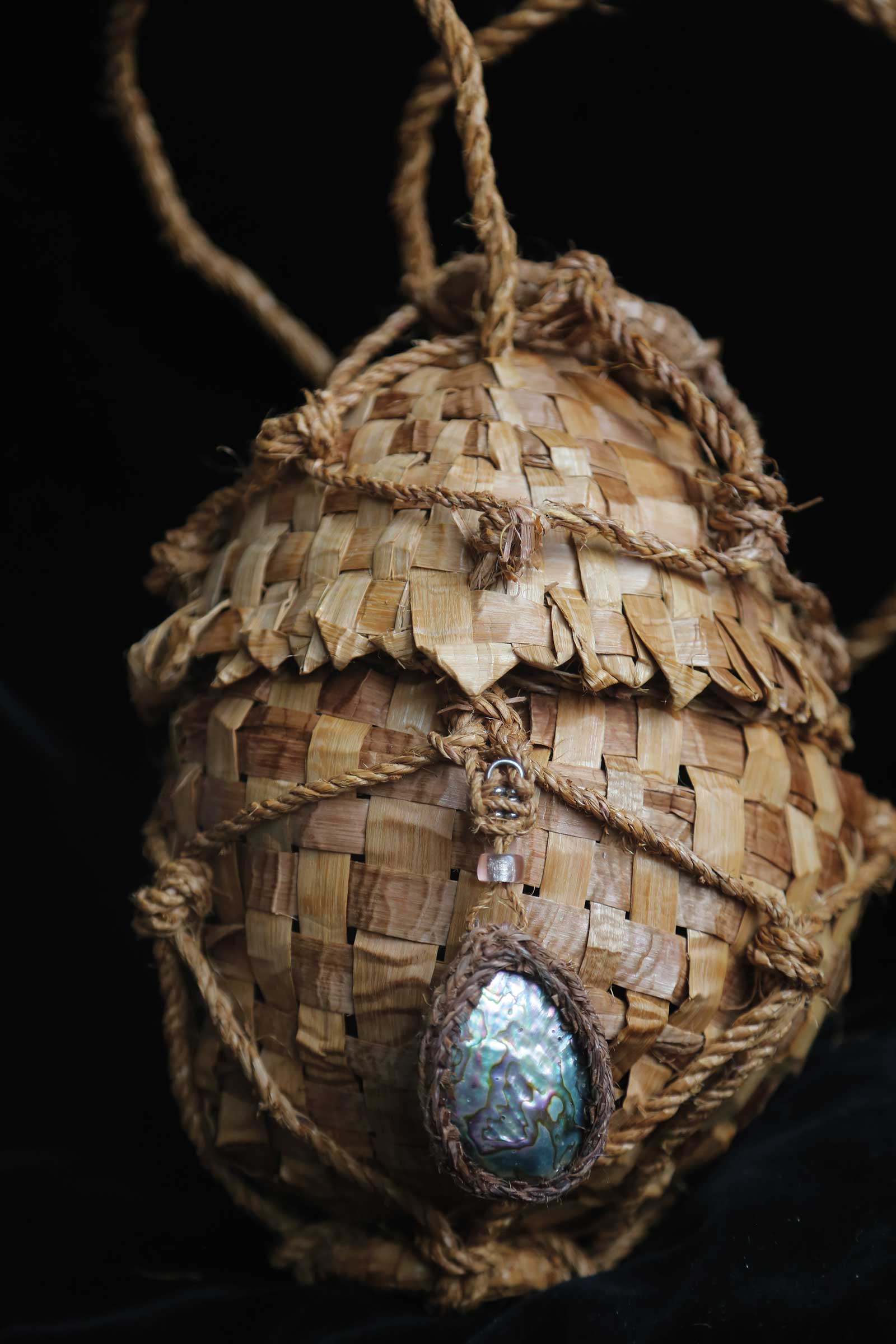
Jacinthe Demmert (Haida)
Booth No. B-19
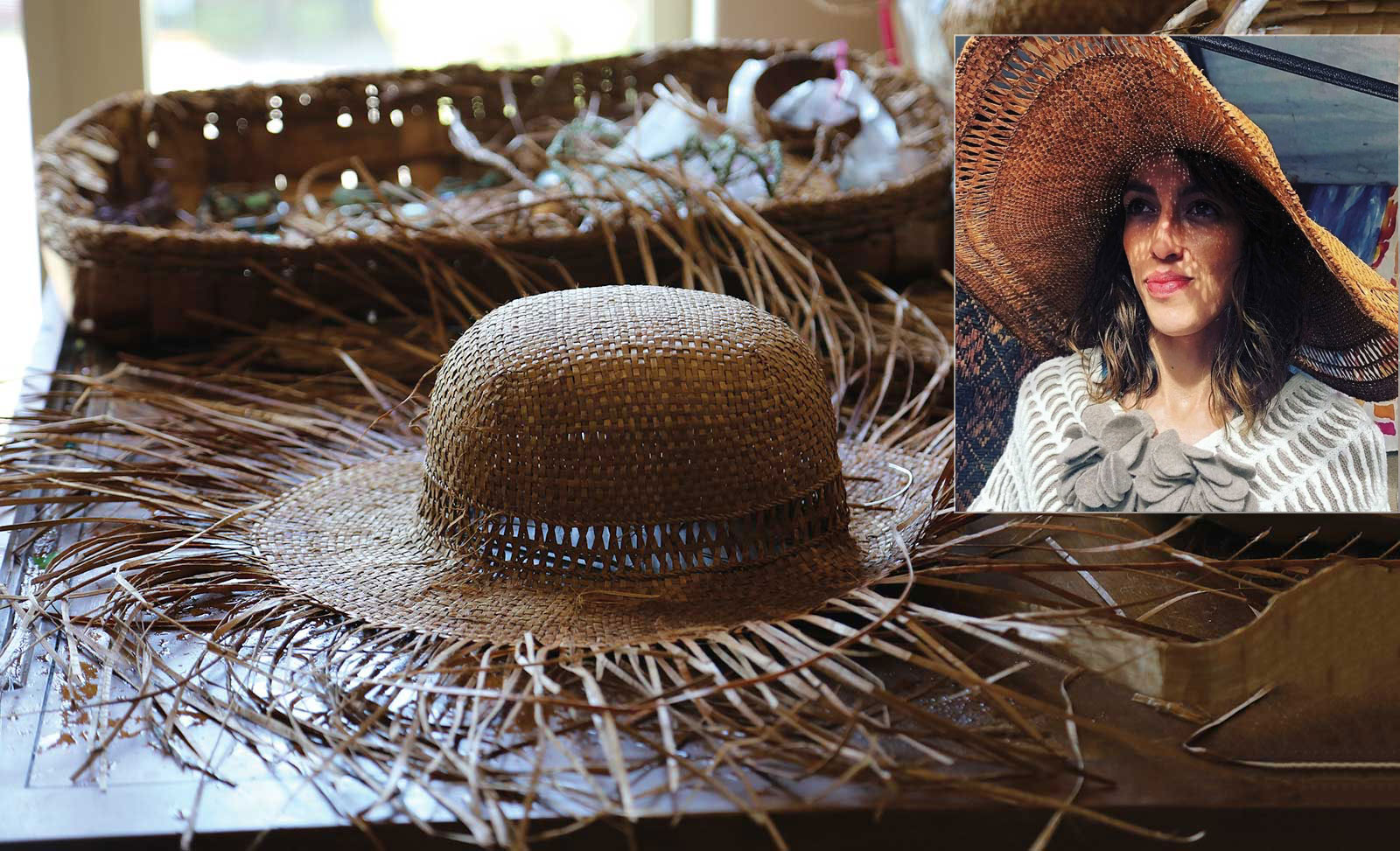
Jacinthe Demmert takes natural fibers from the Pacific Northwest and turns them into magnificent vessels that speak to her cultural heritage. Her work incorporates the weaving of fibers, but also formline and wood carving. “Recently, I have been transforming cedar bark into wearable art,” Demmert says. “I have developed a collection that includes hats and handbags, which I plan to showcase at the Heard Market this year. I have also crafted woven jewelry and small baskets to complement the collection.”
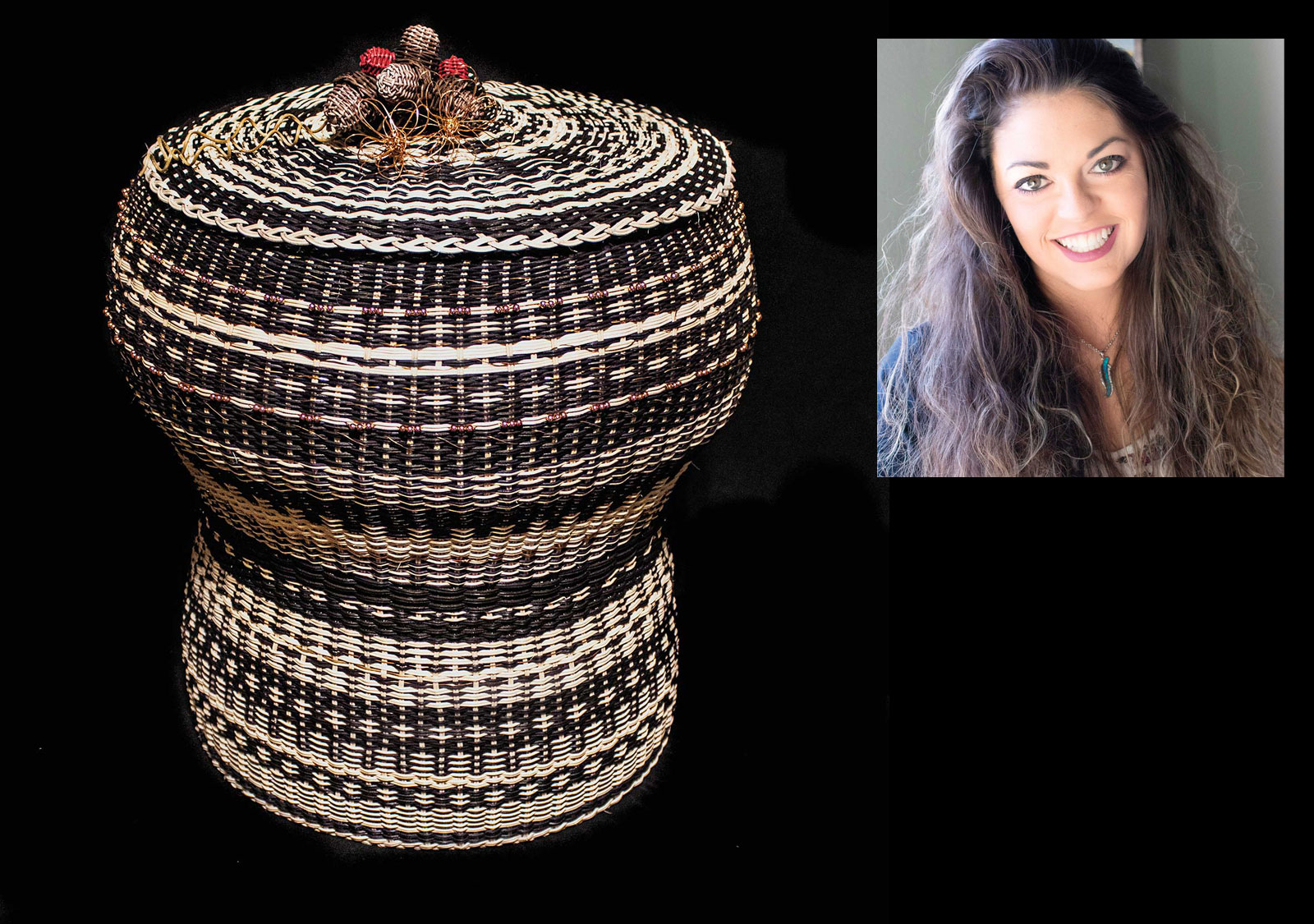
Talisha Lewallen (Cherokee)
Booth No. C-07
Award-winning basket maker Talisha Lewallen creates her impressive pieces to preserve the cultural legacy of family and friends who have been part of her life. She brings a variety of techniques to weave baskets decorated with impressive features, including elaborate arrangements on the lids. “I create traditional Cherokee double-wall baskets using contemporary materials, blending cultural heritage with modern expression,” Lewallen says. “Each piece reflects the beauty and strength of our traditions, reimagined for today. I look forward to showcasing original contemporary Cherokee double-wall baskets at the Heard Indian Art Market.”
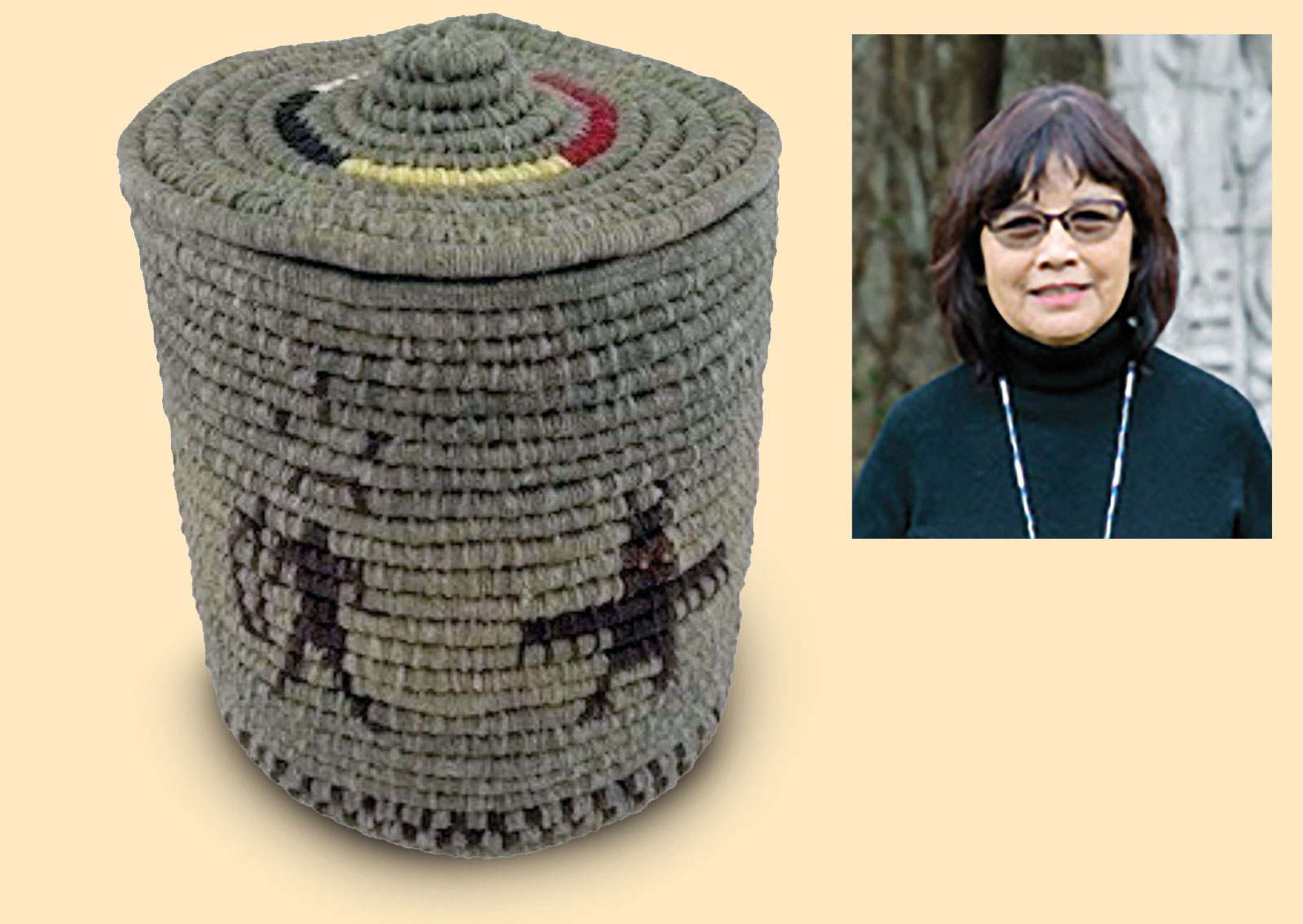
Laura Wong-Whitebear (Colville/Sinixt)
Booth No. L-08
Laura Wong-Whitebear merges two distinct styles of basket to create her own unique creations. They are colorful, exemplify her expert designs and represent her heritage. “Through the art of basket weaving, I create pieces that blend tradition and contemporary designs,” the artist says. “As a fiber arts artist I weave with contemporary materials. My work reflects a deep appreciation for heritage and tradition. Every weave tells a story: one of resilience, creativity and connection of my Chinese and Native American heritage. I include pieces of wearable art (my miniature Klickitat basket necklaces). I invite you to come and explore my collection of art.”
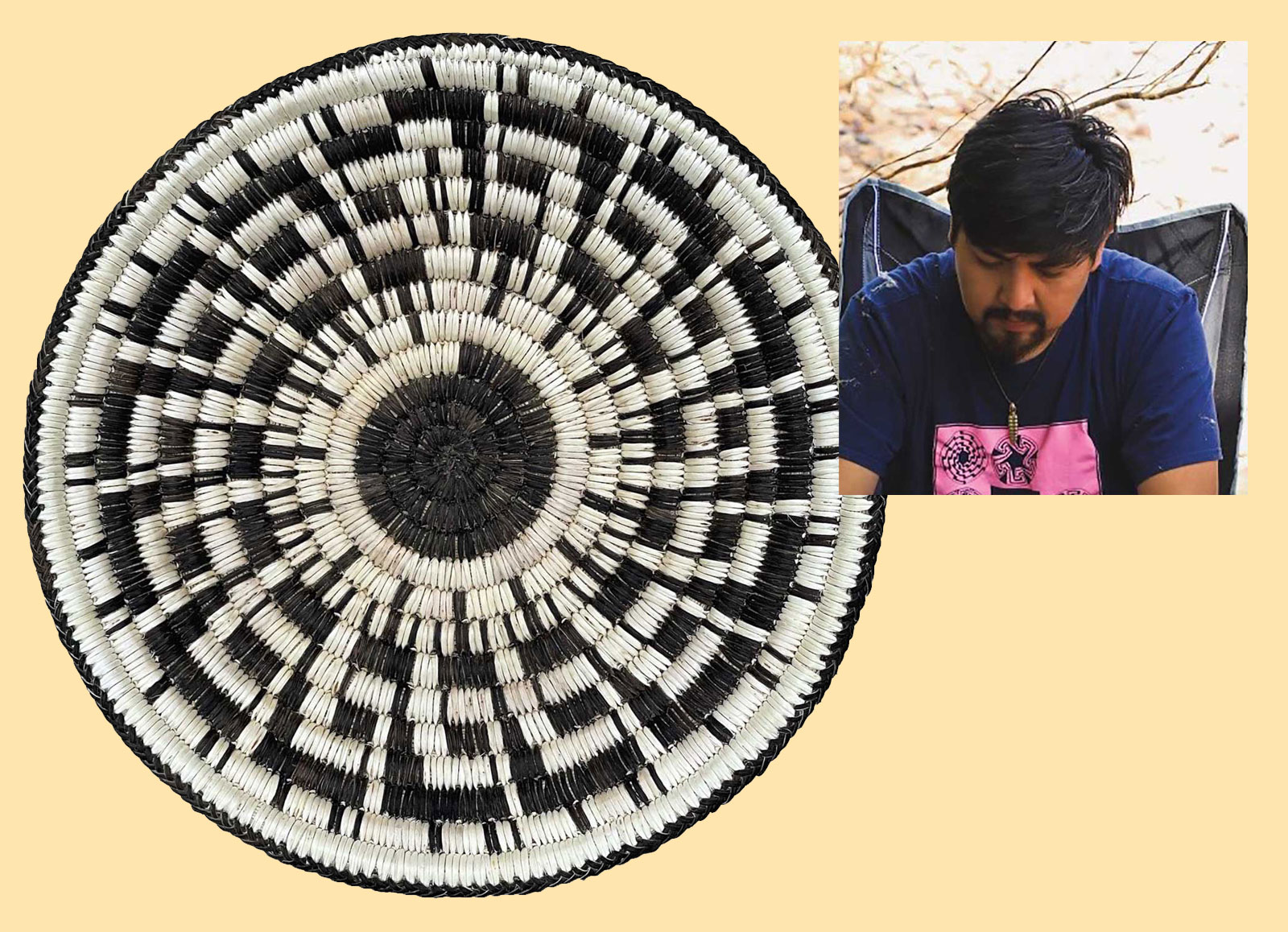
Joshua Yazzie (Gila River Indian Community)
Booth No. Demo-08
After studying under Sally Antone from the Ak-chin Community and Rikki Francisco from the Gila River Indian Community, Joshua Yazzie has entered the art market with an exceptional amount of experience and skill. “I started off using the common Tohono O’odam material like yucca, beargrass and devils claw then switched using willow, cattail and still devils claw,” Yazzie says. “I will be selling two baskets and some pottery pieces that depict the traditional home for all O’otham communities, the Olas Ki (round house). My baskets are original designs but are heavily influenced by the legacy of Akimel O’otham basketry. I also teach basket weaving to the people of my community in the hope that they too will find their passion, identity, self-love and acceptance.”—
Powered by Froala Editor


