Now on view through April 12, 2025, at the Wheelwright Museum of the American Indian in Santa Fe, is the first solo museum exhibition celebrating the innovative vision of Hopi carver Mavasta Honyouti. Carved Stories by Mavasta Honyouti features 30 recent works by the artist and 16 low-relief panels that were used to illustrate his children’s book Coming Home: A Hopi Resistance Story, released in November 2024.
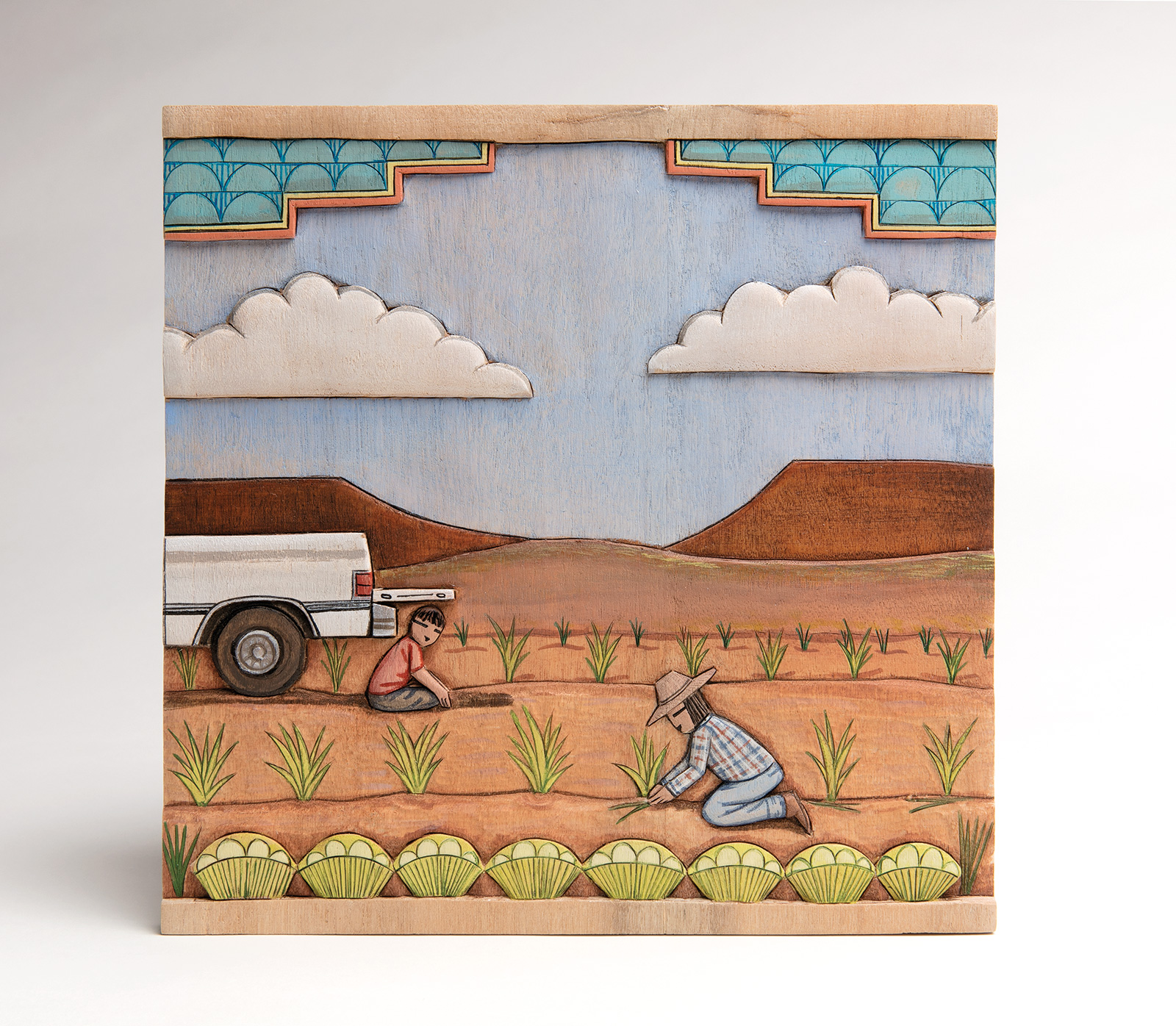 Panel #1, acrylic on cottonwood, 8 x 8”
Each plaque in the series reads like a page in a book and is a visual re-telling of the traumatic experiences of Clyde Honyouti, the artist’s grandfather, in an off-reservation federal boarding school in the 1920s, interwoven with scenes of Honyouti’s fond childhood memories of his grandfather.
Coming Home begins with Honyouti’s recollection of working with and watching his grandfather in their corn field. “This panel comes from memories of my childhood,” writes Honyouti about one of the first reliefs in the story. “I knew our field was important to my family because it was where we would come together, and everyone was involved. My dad and uncles would get together to plant, and I would see every one of my relatives. I would see them again when it was time to harvest the crops. In between, it was just Kwa’a [Honyouti’s grandfather]: he was there every day, at every stage. When I would go with him, I’d watch him. I realized how important every single stalk or plant was to him. Because of his care, patience and love, we always had a bountiful harvest.”
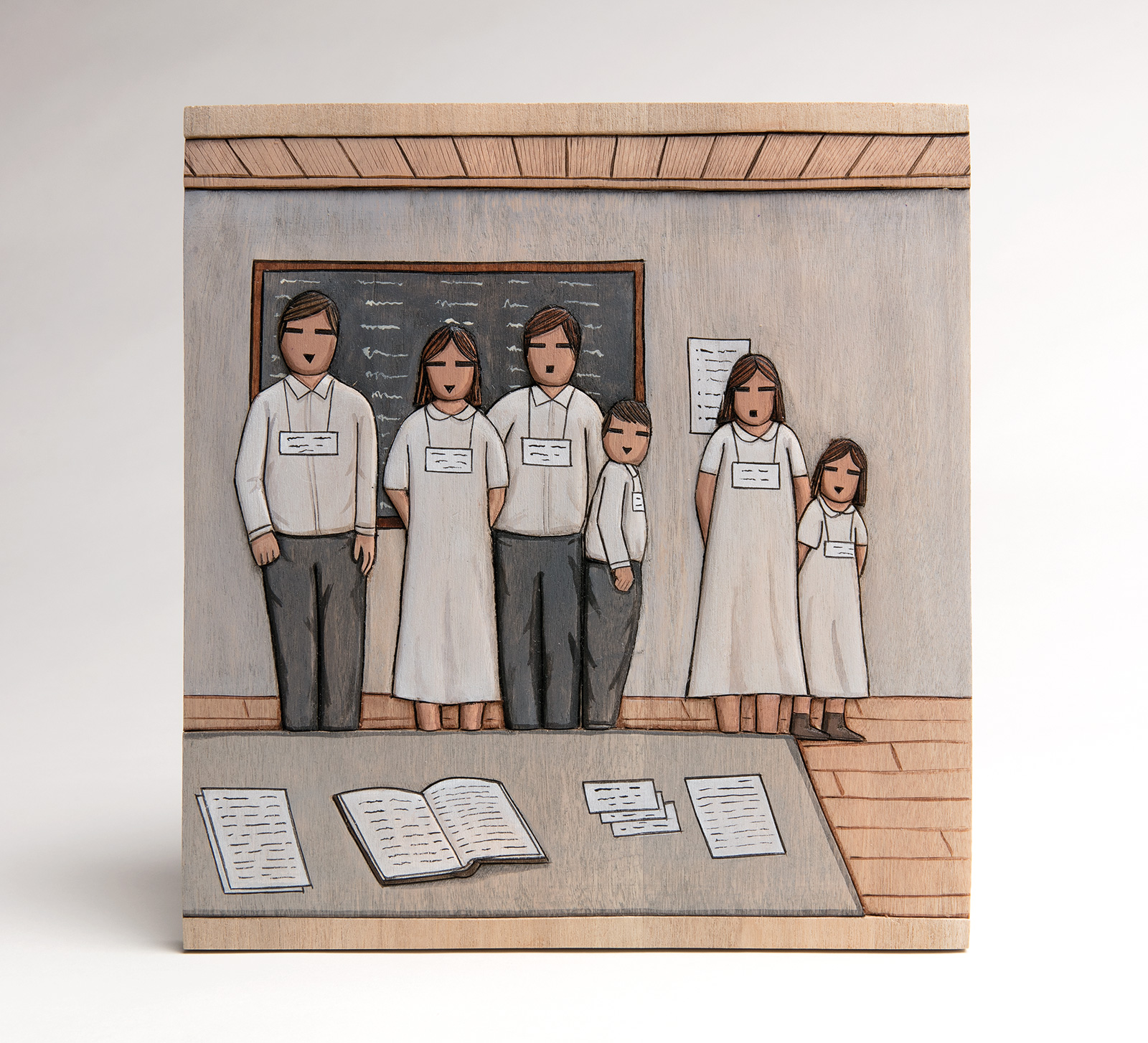 Panel #9, acrylic on cottonwood, 8 x 8"
Then the story dives into his grandfather’s first encounters at the boarding school. “He received a new name during his time there,” says Honyouti, who depicted the inhumane treatment in Panel #9, in which the children wear their new Christian names on tags around their necks. “I carry that name and so his experience is what I share with me wherever I go," he says. "I became an educator and have been teaching in Hopi schools throughout most of my career. I am in a position where my impact on my students can be impactful. I take on that responsibility so I do my best to give my students the tools necessary to navigate through our ever changing society using education as well as reminding them of their cultural knowledge that is shared.”
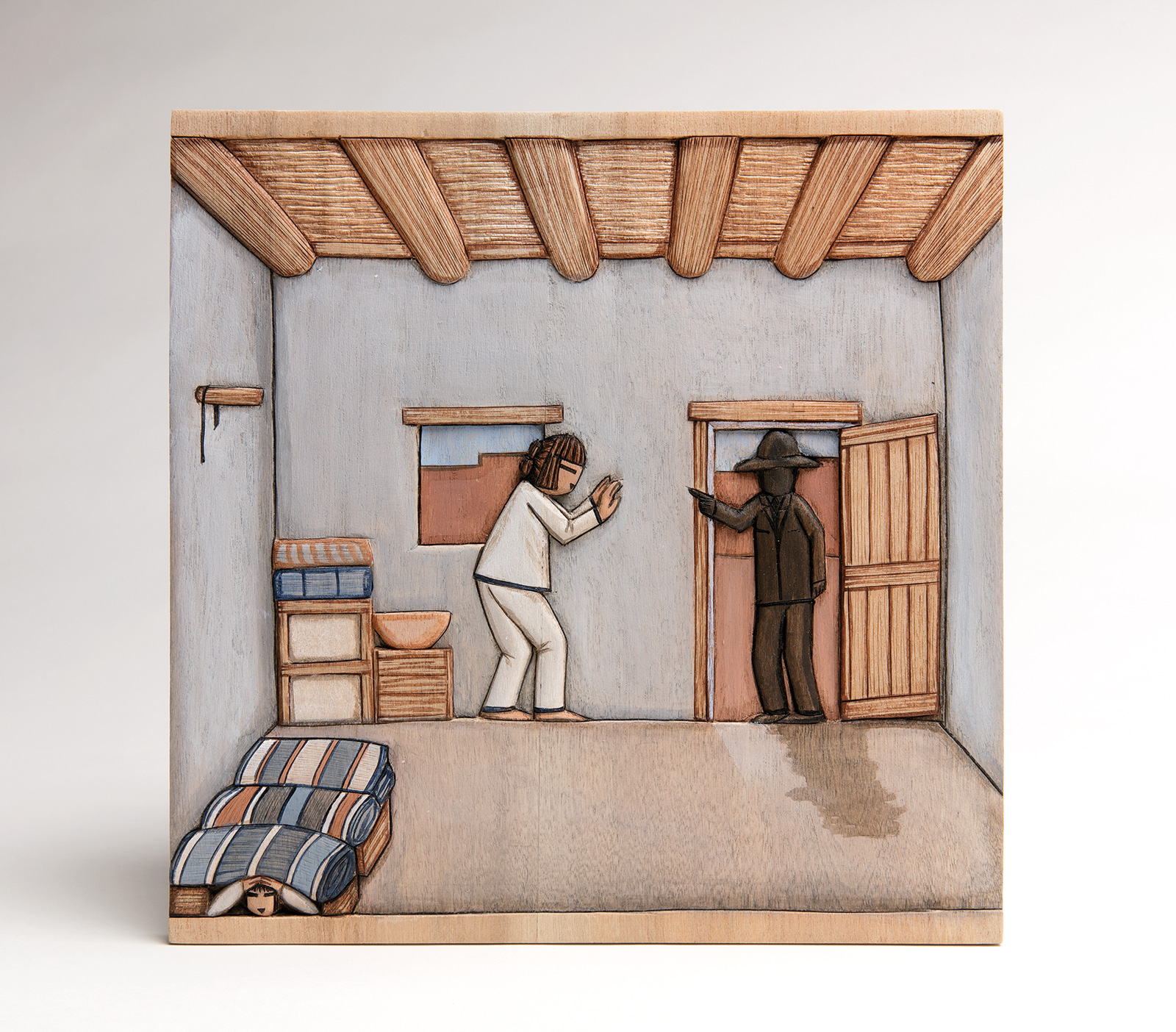 Panel #4, acrylic on cottonwood, 8 x 8"
Other carvings of darker scenes related to the forced displacement and assimilation of Native American children include Panel #4, in which parents try to protect their children from removal by the U.S. Government, proven futile in Panel #6, where a horse carriage drives away from the Hopi village where the children were separated from their families. Other panels show how children were punished for speaking their native Hopi language. In Panel #8, Honyouti created the effect of layered black and white photographs to illustrate how the boarding schools documented assimilation through photography.
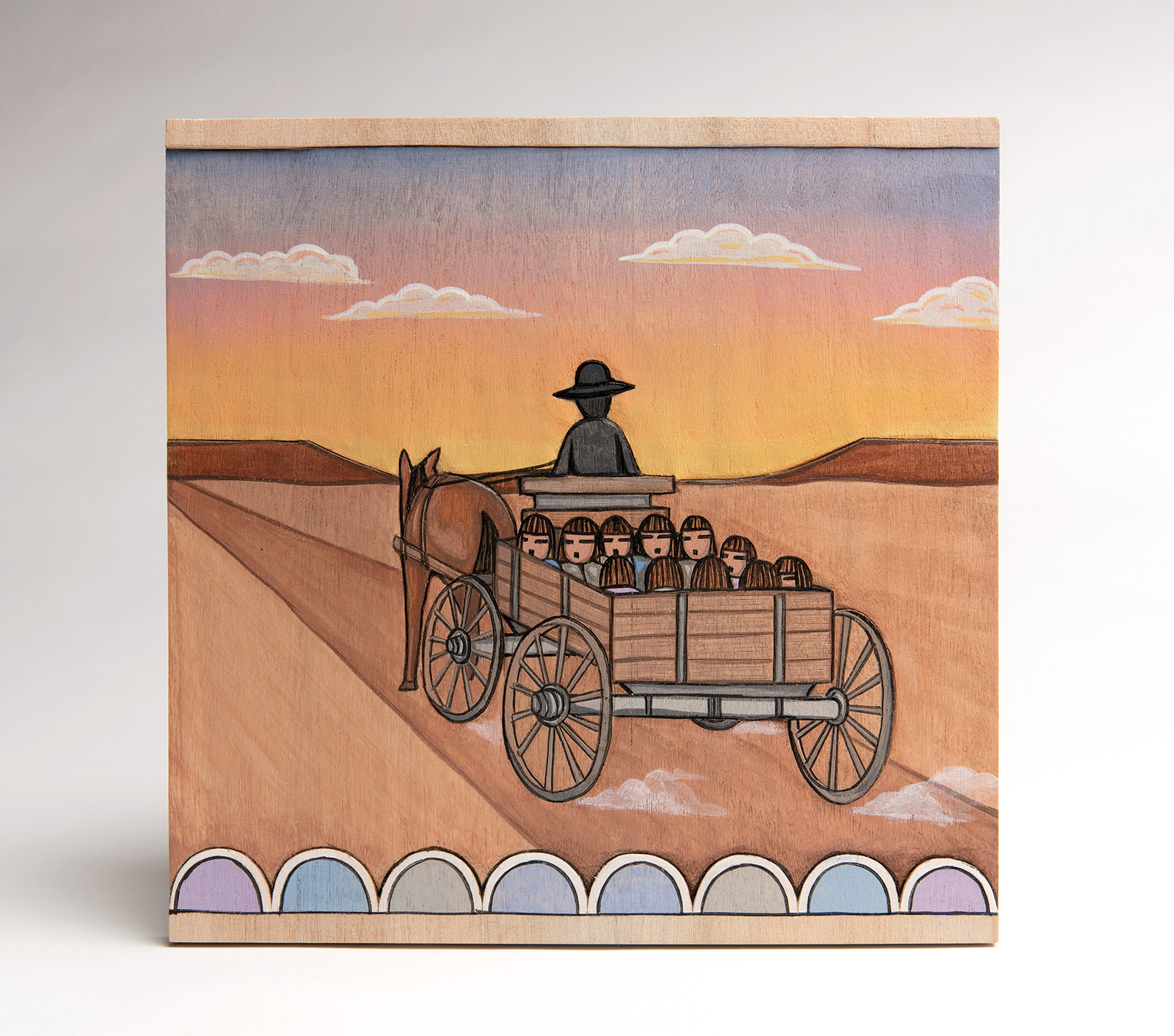 Panel #6, acrylic on cottonwood, 8 x 8"
“My Kwa’a’s story needs to be shared because people need to know what real experiences were like throughout history in this country, in this case, particularly with the Indian boarding school policies,” says Honyouti. “Perhaps it can help with healing and restoring generational trauma caused by the boarding schools. What is significant is that this story is from one person’s experience. Just imagine if every child throughout that era was able to tell their own stories from their own perspectives.”
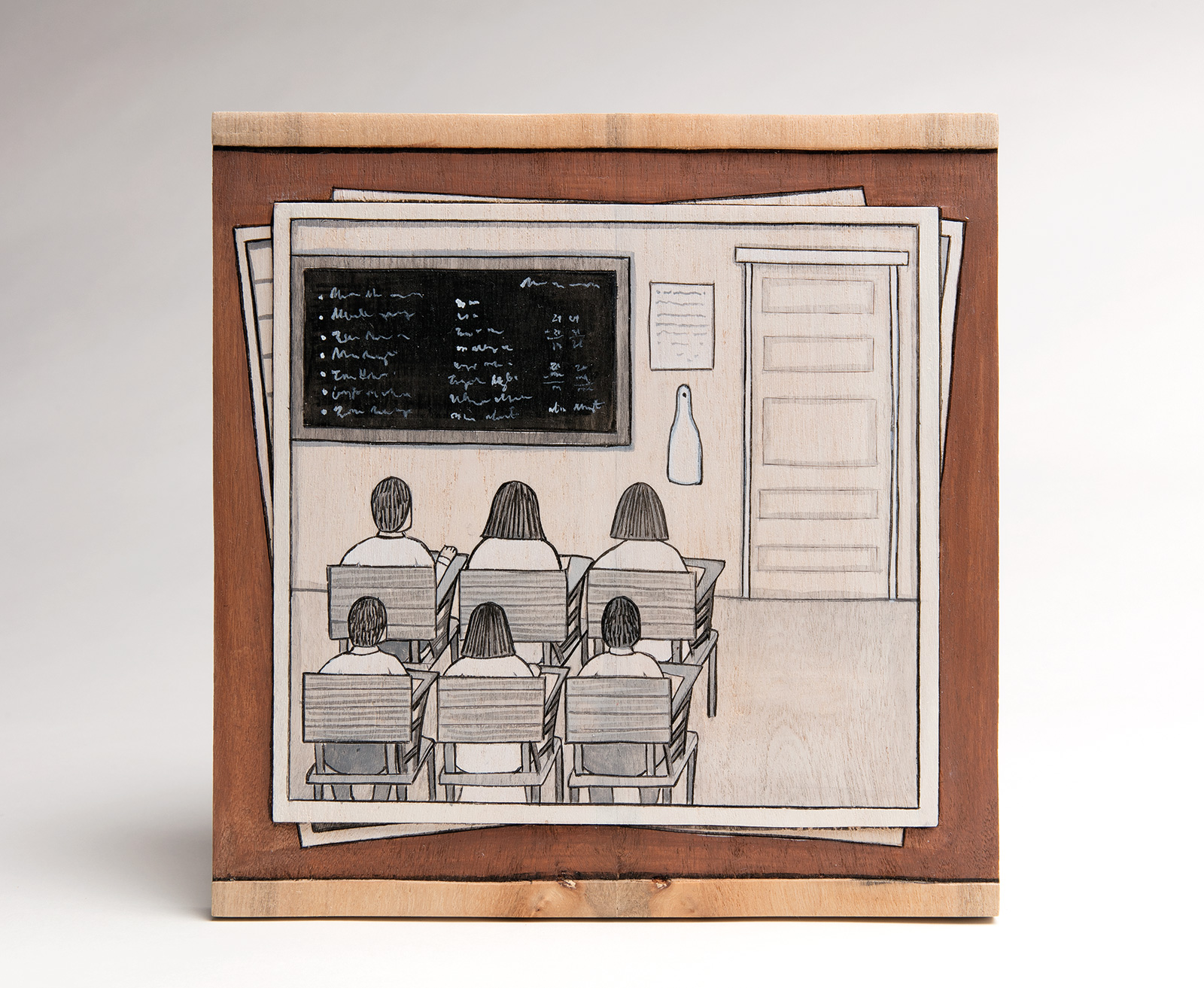 Panel #8, acrylic on cottonwood, 8 x 8"
Curator Will Riding In (Pawnee/Santa Ana Pueblo) says, “The exhibition Carved Stories by Mavasta Honyouti, is loosely based on the book. I incorporated some personal insight about the plaques and historical narrative. I felt personally connected to this story because both my maternal and paternal grandparents attended Indian boarding schools. I think many Native peoples will be able to relate to the series.”
Wood carving is a generational art form in Honyouti’s family. He learned to carve from his father, who learned from his father. “I try to incorporate their carving styles into my own work and that is how I honor their contributions to what I am able to do,” says Honyouti. Panel #3 shows Honyouti’s grandfather carving during their lunch breaks. “He had a pocket knife and a piece of paako (cottonwood root) that he would work on,” says Honyouti. “He made his carvings out of a single piece of paako.”
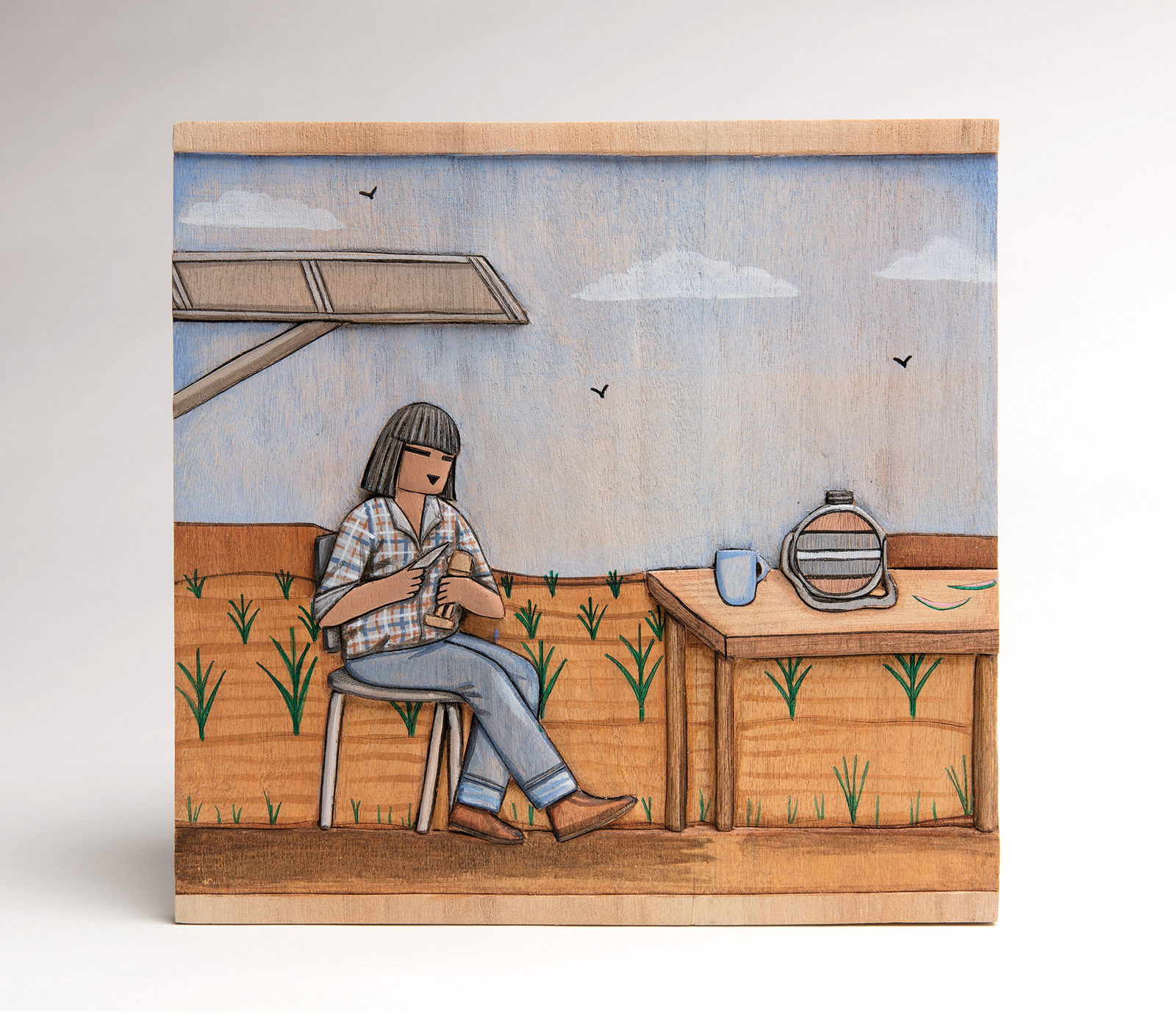 Panel #3, acrylic on cottonwood, 8 x 8”. “I can picture my Kwa’a with a smile on his face, beaming with pride. I imagined his favorite place to be was in his field. This plaque exemplifies the results of all his work. He is happy standing in the middle of a bountiful harvest. He carried on generations of knowledge and understanding of a covenant made from ancient times. He fed his loved ones the life he tended to with his hands. Those seeds were passed on to us and we continue that cycle every year.” — Mavasta Honyouti
Despite the heartbreaking stories surrounding the Indian boarding school experience, a sense of sweetness pervades the series, the darkness buoyed by Honyouti’s deep affection for and appreciation of his grandfather, Hopi culture and their agricultural way of life, and the simple, but powerful, beauty of his carvings.
“The central idea is that of resilience and that amidst adversity, holding onto what is meaningful can guide us forward, appreciating our history and creating optimism for the future,” says Honyouti.
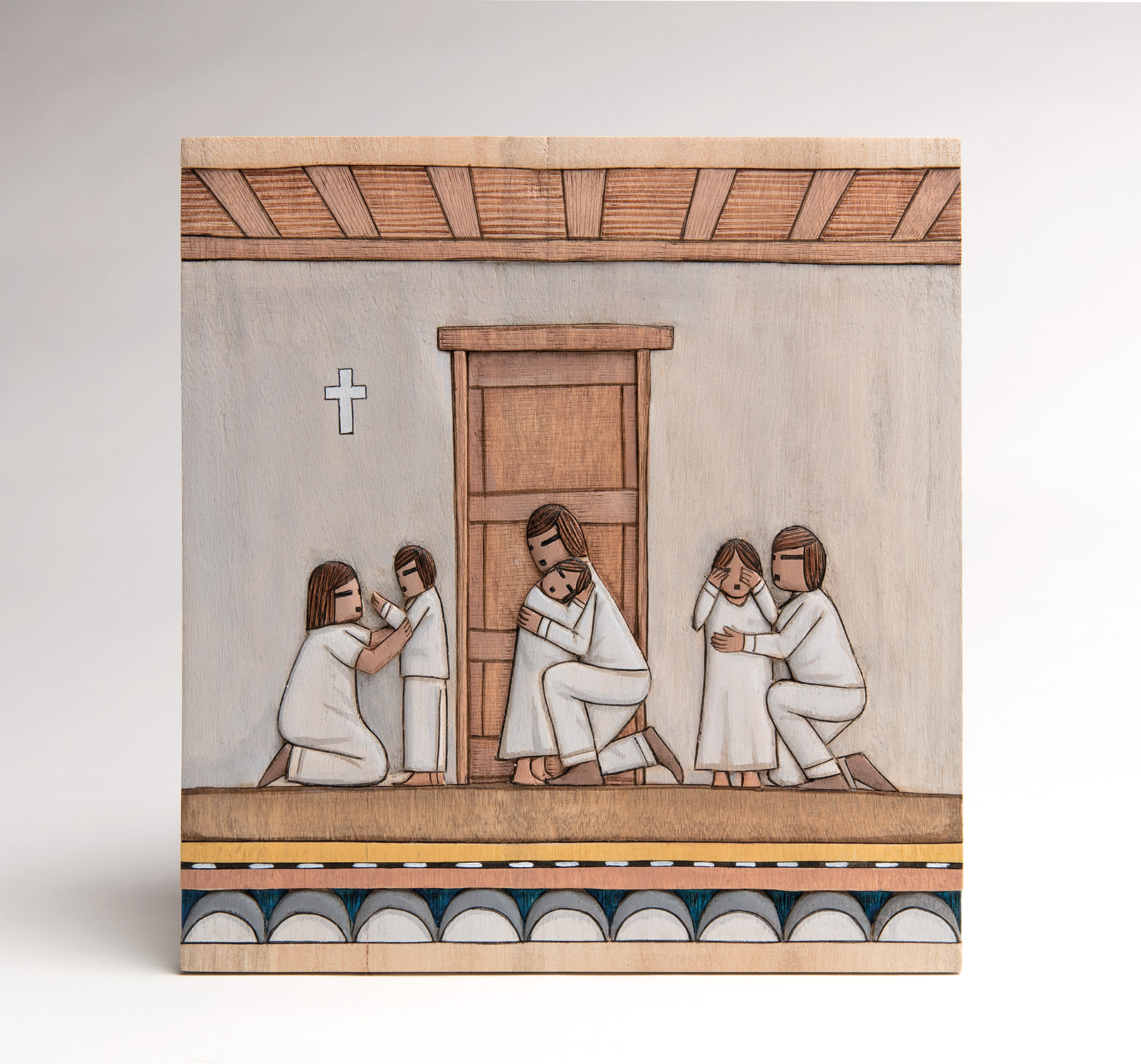 Panel #11, acrylic on cottonwood, 8 x 8". Being far away from home many children dealt with an array of unsettling emotions. Older students would often comfort the younger ones when they were sad, homesick or scared.
“That idea is [represented in] the very last panel where Kwa’a is standing in his field of bountiful harvest. From his hardships he overcame as a child, his simple life as a farmer taught us through his work the importance of patience, strength and love.”
In addition to the 16 panels that formed the basis for Coming Home, and are now part of the Wheelright Museum’s permanent collection, the exhibition examines the various styles and mediums Honyouti works in, including sculptural, low-relief carving, paintings on wood and digital drawing. In addition, a few works by his father Ron Honyouti, brother Kevin Honyouti, and uncle Richard Honyouti’s works are also in the exhibition.
Through April 12, 2025
Carved Stories by Mavasta Honyouti
Wheelwright Museum of the American Indian
704 Camino Lejo, Santa Fe, NM 87505
(505) 982-4636, www.wheelwright.org
Powered by Froala Editor


