Silver bracelet cuffs first made by Southwestern Indian silversmiths have enduring design appeal. Pieces from the first 70 years of construction display classical qualities that Native jewelry makers employ to this day. A look at seven early Navajo and Pueblo bracelet forms from a private collection makes it possible to see how construction, materials and patterning come together. These characteristics reveal why the beauty of these seminal bracelet designs lies in their structure.
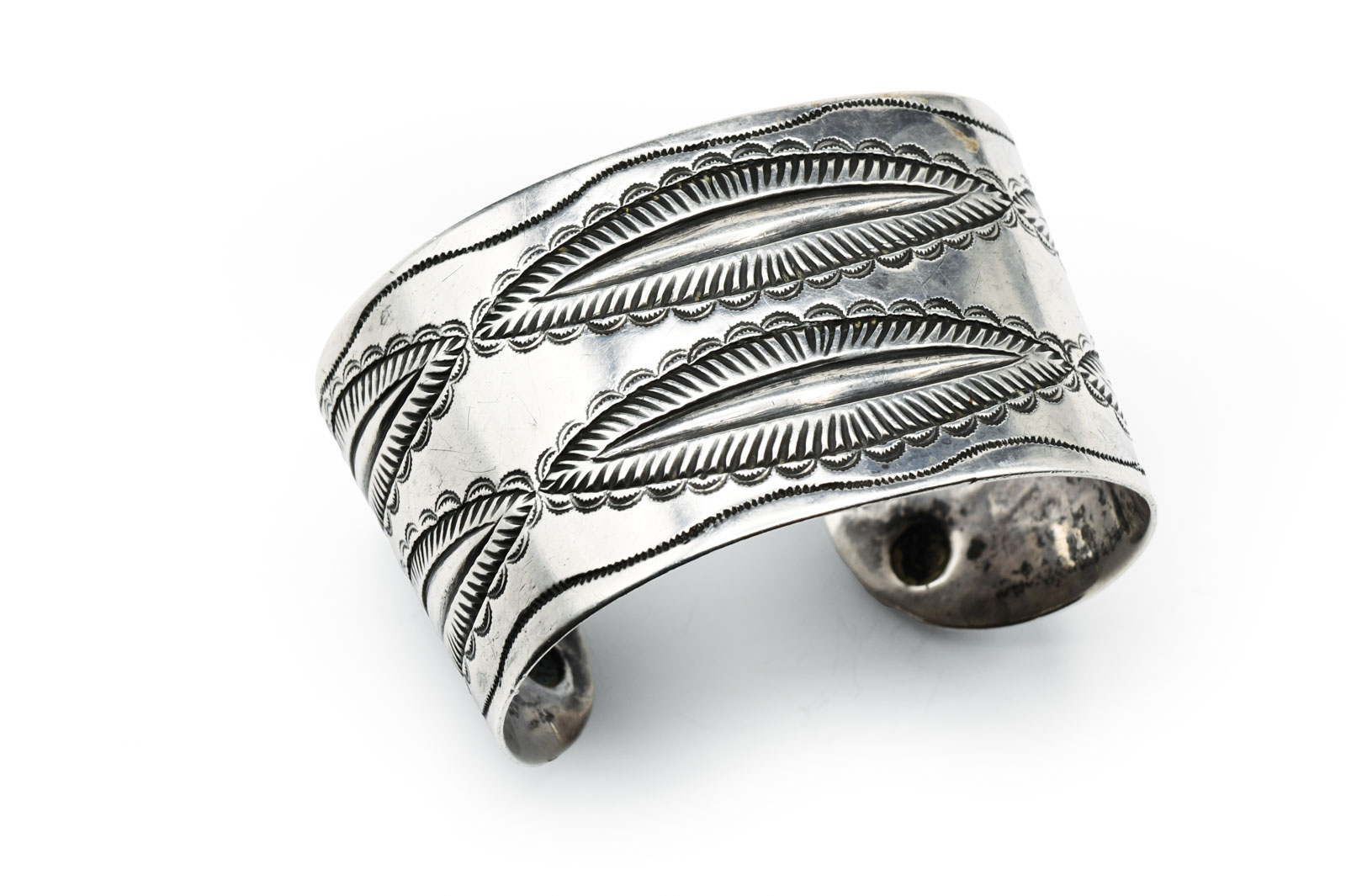 Figure 1 Wide silver cuff with early stamping, ca. 1890.When John Adair began interviewing Navajo smiths in the late 1930s, he learned that the designs each artist made on their jewelry came wholly from their imaginations. Yet there were cultural connotations embedded in their visual choices, whether from the number of stones set, to representations of the natural world on surface decoration. Historic-era bracelet design was mostly abstract, relying on its compositional elements for expression.
The Native peoples of the American Southwest lived in a geologically rich area. Deserts provided the sand to make modeled halves into which metal could be poured, then the temporary, sand-cast mold was broken to remove the cast form. Additionally, volcanic activity long ago left deposits of porous tufa stone into which a patterned mold could be carved, metal poured in, creating a durable mold and cast design. These two regional techniques, along with hand-hammered silver, offered creative opportunities for robustly constructed adornment.
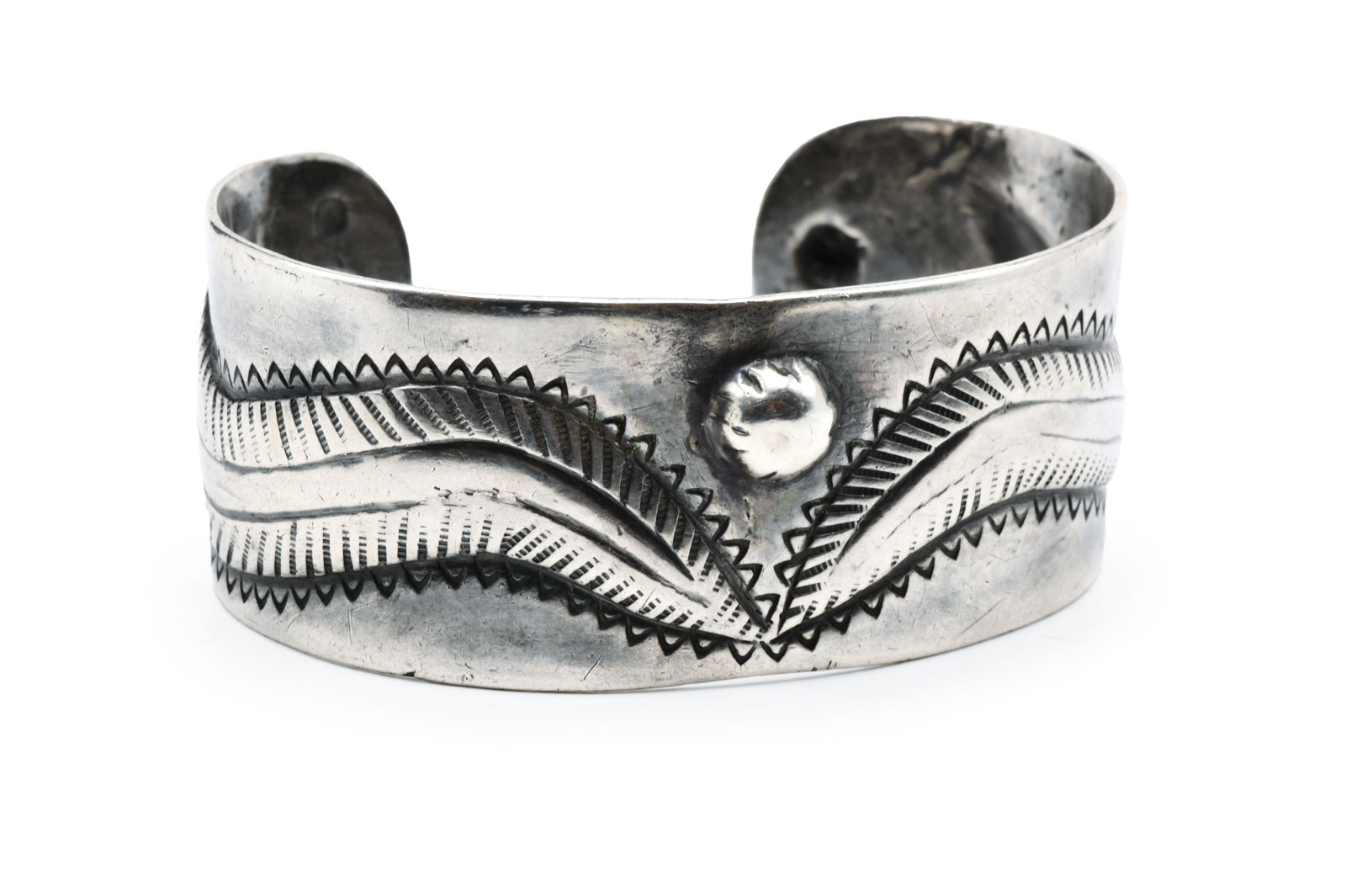 Figure 2 Silver bracelet with flat repoussé, late-19th century.Viewing these silver bracelets in chronological order, their features steadily develop into more sophisticated ornamentation. Silver ingots, blocks or bars of the metal, were used before sheet silver came into commercial production around 1910; some smiths even continued to work with ingot silver after that time. The silversmiths’ intentions were clear: to enhance the wearer through a powerful alignment of metal and stone. Pre-1900 bracelets are highly sought after, since many examples haven’t survived; most went to burials with their owners or were melted down. Others went into museum permanent collections.
The first two examples are both late 19th century pieces with archetypal characteristics: they were hammered plain silver bands with decorative elements made by stamping and chiseling. The first of the two wide silver cuffs is decorated by a gracefully curved organic design. The stamping on the second piece is similar, its surface enlivened by a roughly shaped molten central ball—soon to transform into neat “raindrops” or “shots.”
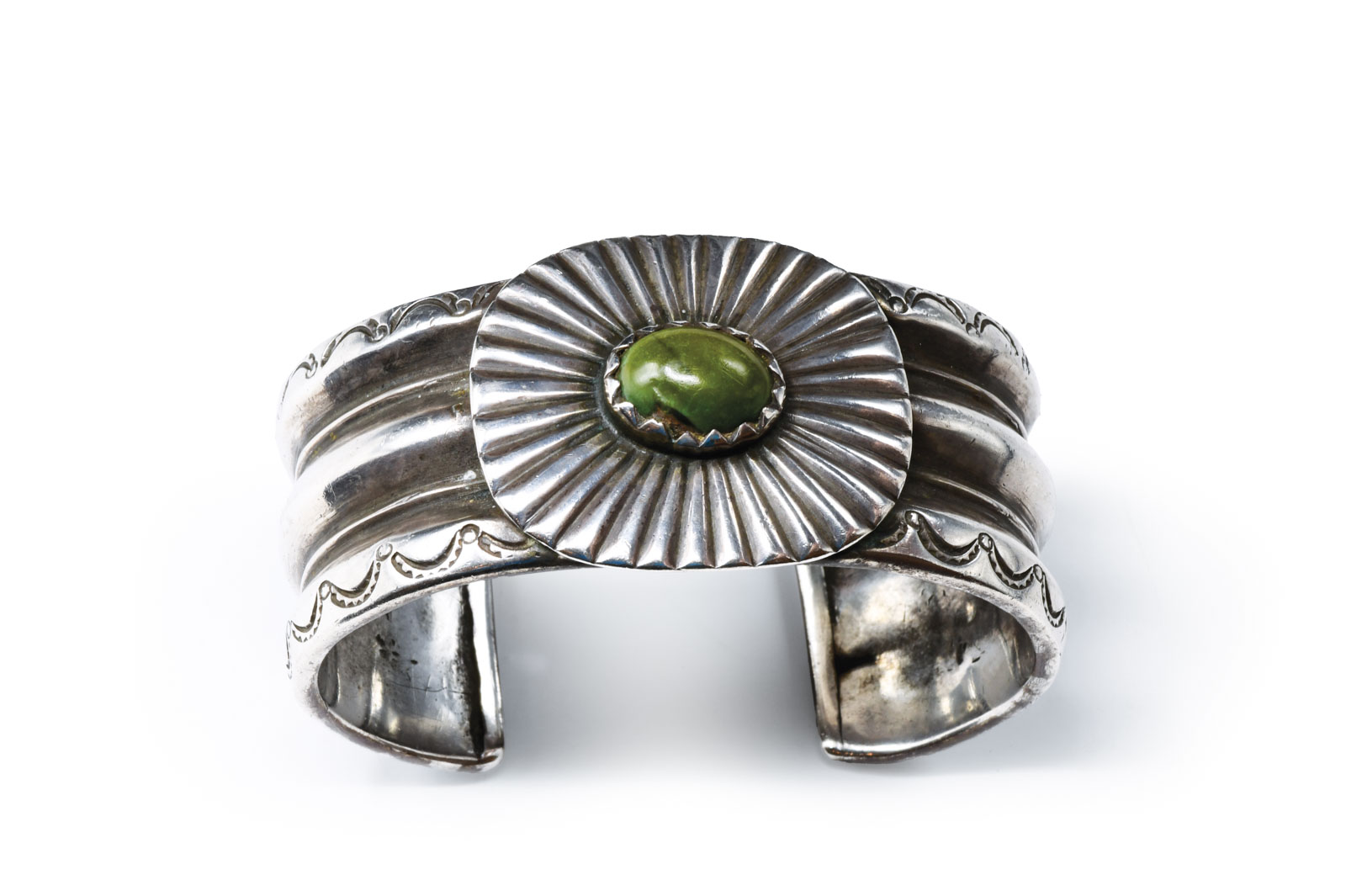 Figure 3 Cast ingot silver cuff with chiseled and filed plate and set natural turquoise stone, first quarter of the 20th century.The third bracelet can be dated reliably to the first quarter of the 20th century. Improved metalcraft materials and tools introduced in this period directly impacted construction and design. Three physical elements come together. The cast ingot silver cuff has graceful, curved ridges, with only the two outer bands neatly stamped in a repetitive abstract design. The cuff shape supports a soldered central plate with filed and chased lines. In the center of this appliqué is a handsome oval natural Cerrillos turquoise stone set in a neat sawtooth bezel. This contrasting symmetry in line for band and plate is a trademark of early 20th-century patterning.
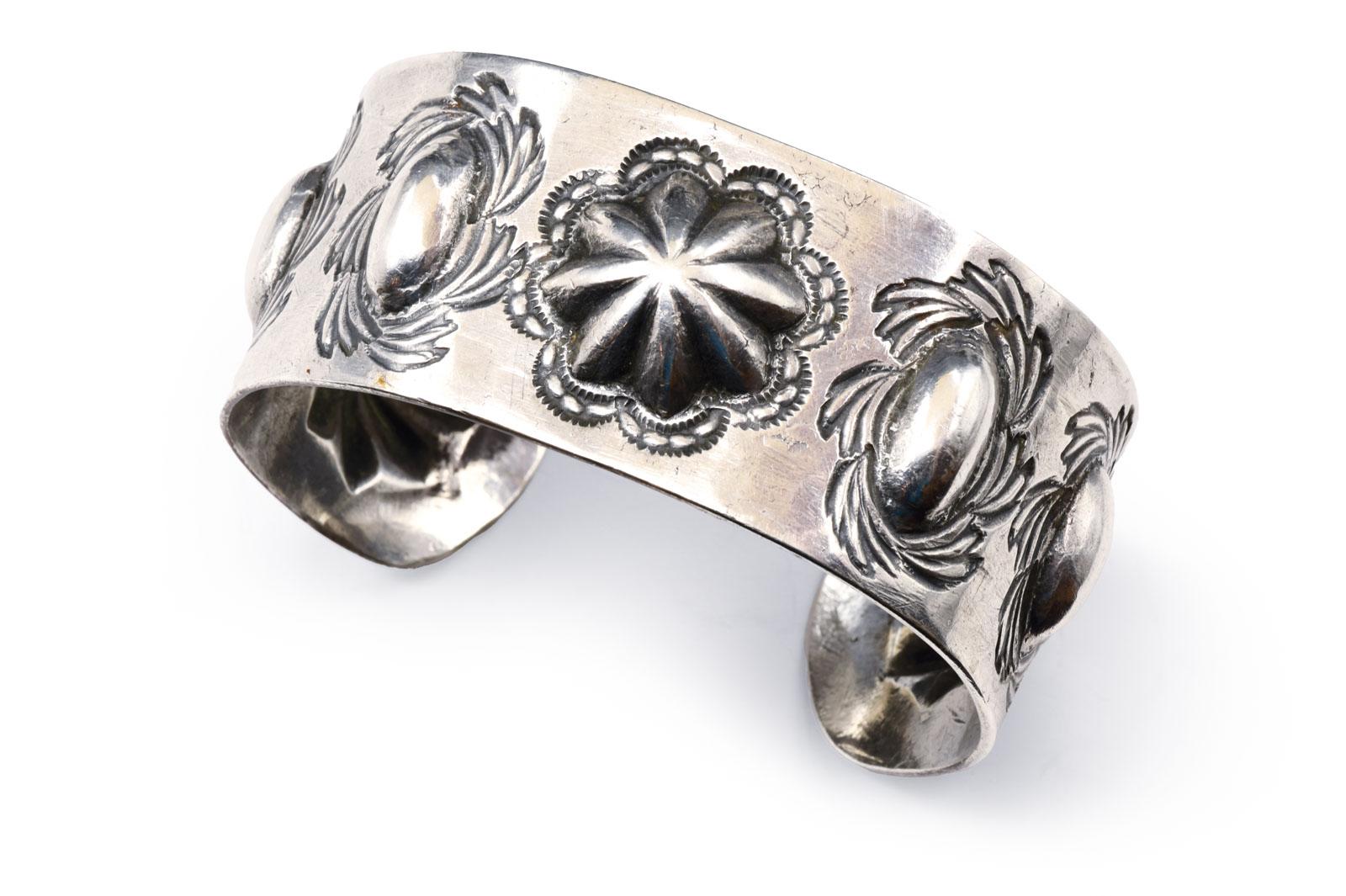 Figure 4 Hammered ingot silver bracelet with raised repoussé and domed button centers, first quarter of 20th century.The fourth cuff, also made of hammered ingot, comes also from the same period as the last bracelet. It shows fully developed raised repoussé, known locally by Native smiths as “bump ups.” This surface enlargement is a natural extension of spatial decoration, bringing textural variety to the bracelet’s surface. Stamped designs frame the repoussé. Adding to the variety are domed button centers providing visual contrast and tone. These varied designs successfully add interest to the cuff’s overall patterning.
Well-arranged cast row bracelet designs arrived in the late 1920s and 1930s, featuring an orderly lineup of identical stone settings. These materials were usually natural turquoise, or could be garnets, malachite, and petrified wood. Our fifth example is signed by Juan De Dios, one of Zuni’s most notable silversmiths. His sturdy and symmetrical cuff is punctuated by raindrops that have been carved and cast into the mold. The row bracelet design became popular from its first conception. Over the years, row bracelets would grow even more sleek and well- balanced, often with plain bezels giving emphasis to the stonework.
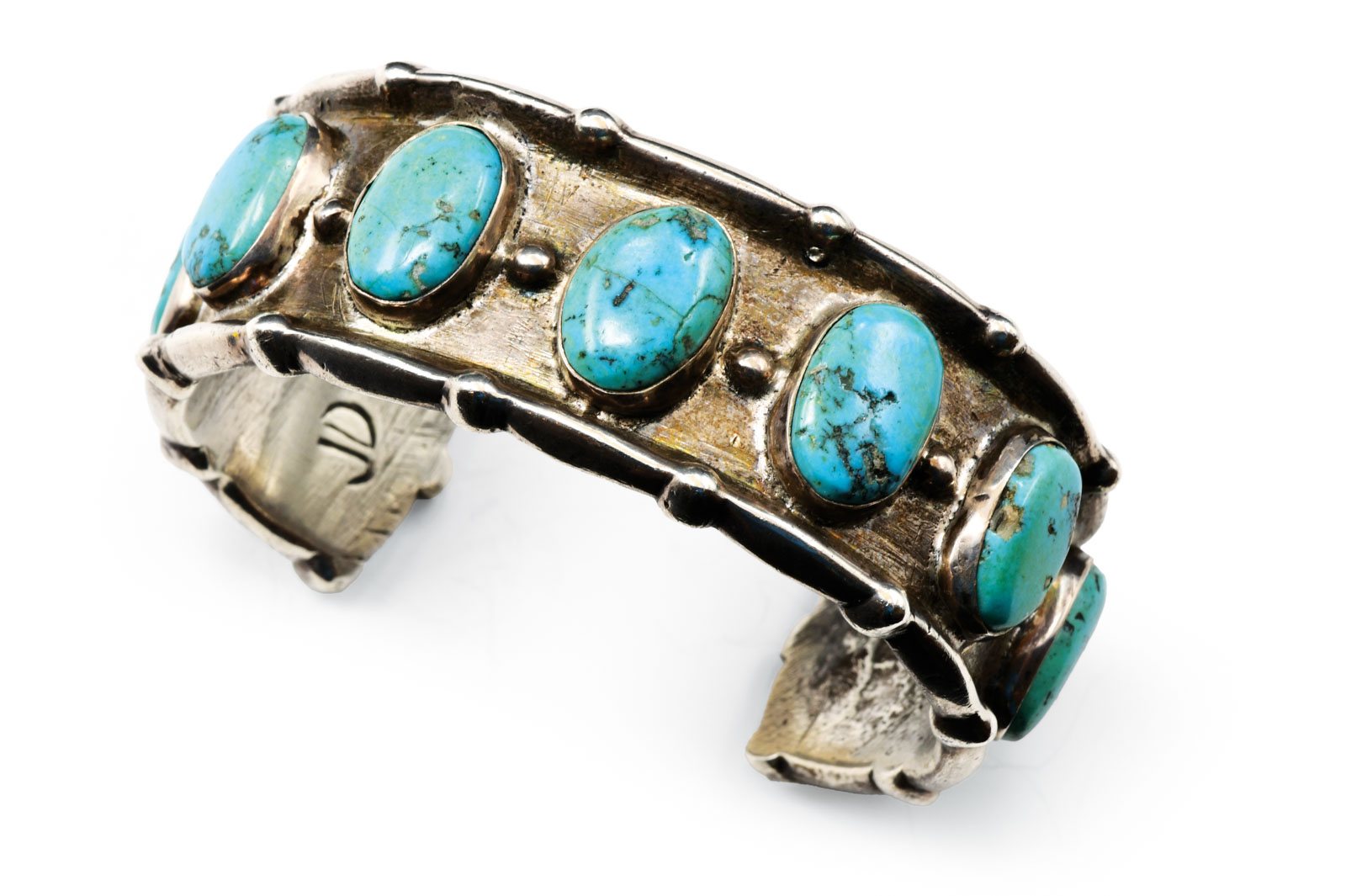 Figure 5 Early cast row bracelet signed by Juan De Dios, 1920s–1930s.
Navajo cast silver cuffs grew more sculptural in the 1920s. Texture and proportion were desirable aesthetic goals, as seen in the sixth bracelet. A plate was applied over the initial cast work to establish a central straight row of stones in bezels. The overall composition, however, has a more dramatic effect by the framing rows of multiple “spider” stones in bezels. This bracelet’s boldness in physical style shows maturation in stylistic design features.
A bracelet by another notable silversmith, Della Casa Appa—widely believed to be the first Zuni woman silversmith—displays the growing complexity and refinement of the 1930s and 1940s. Her cuff is carinated, or keeled, into three segments which act as a framework for her elegant turquoise puzzle pieces. The effect is still abstract, but the rectangles, triangles and two shapes that resemble skycaps, hint at the more complicated stonework figural designs taking shape in these decades.
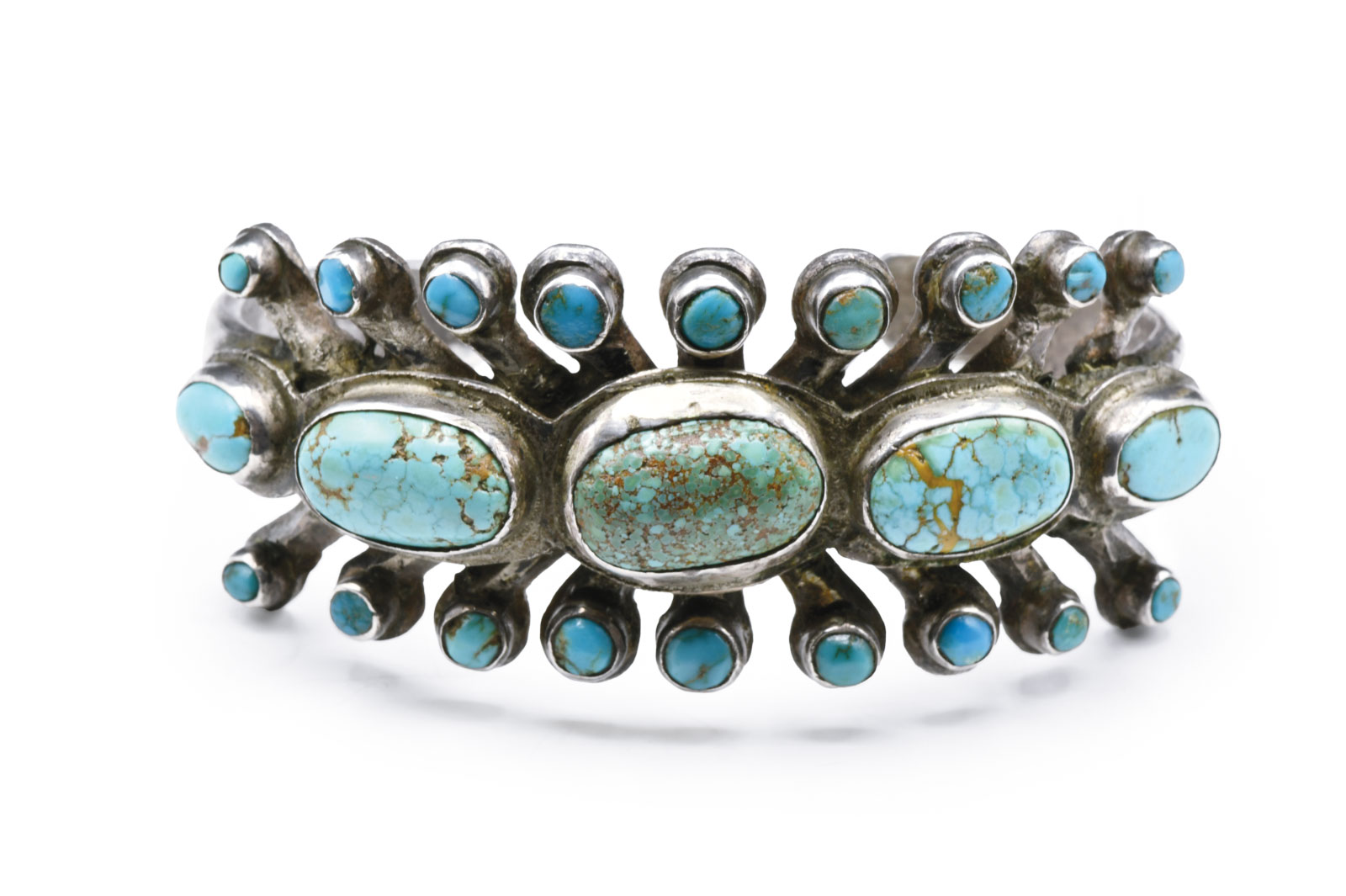 Figure 6 Navajo cuff cast with applied plate and sculptural “spider” stones, 1920s.
What these seven cuffs have in common is that they became part of a “traditional” style. Their various elements, such as radiating lines and raised surface decoration, serve as visual signposts, showing how textural depth grew in complexity over the decades. Mid-twentieth century museum experts, individuals like Harry P. Mera of the Santa Fe Laboratory of Anthropology, created categories for handmade bracelets; anxious to ensure that commercialism wouldn’t taint Native aesthetics, Mera and others used terms like “classical” and “traditional” to praise specific “old-style” traits.
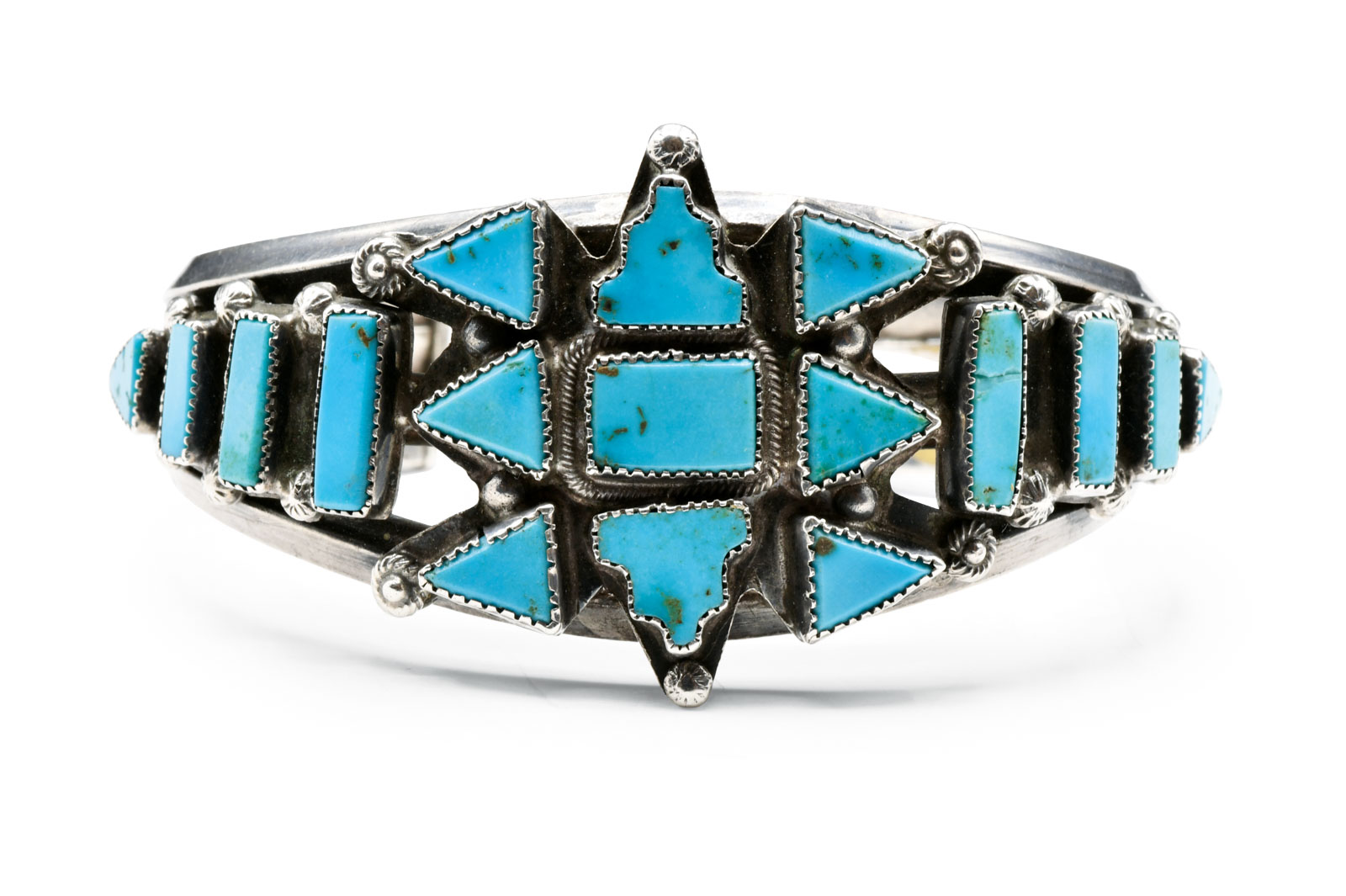 Figure 7 Signed bracelet by Casa Della Appa (Zuni Pueblo) with carinated band and turquoise set in shaped stones, 1930s-1940s.
What makes these seven collected bracelet examples so interesting is how their makers chose certain aesthetic solutions to emphasize beauty and power. These bracelets were built to explore new facets of surface decoration, textural diversity, and how to better integrate silver and stonework. Collectors, dealers and experts agree that antique era (pre-1945) bracelets are both unique and influential in design. Historic Southwestern Indian silver and stone jewelry was all about experimentation and the search for tangible beauty.
For more information on historic bracelets, see the author’s book: Southwestern Indian Bracelets: The Essential Cuff. Aglen, PA: Schiffer Publishing Ltd., 2015.
Paula A. Baxter, a former curator and adjunct professor from New York, is an independent design historian living in Scottsdale, Arizona. Her photographer is longtime husband Barry Katzen. Her sixth book, Navajo and Pueblo Jewelry Design: 1870 to 1945, was published in fall 2022. She’s working on a sequel which will cover the years 1946 to 2025, and will include Indigenous jewelers who aren’t Navajo or Pueblo but live and work in the American Southwest. This book, Baxter says, will have “lots of contemporary Native voices.”
Powered by Froala Editor


