
Eugene Tapahe learned about Diné tradition and the spirit of the land from his grandmother. “She would tell me stories and important things about nature,” he relates. “It stuck with me and shows up in my new work with soil and land.” His acclaimed work in landscape photography features locations sacred to Native people.
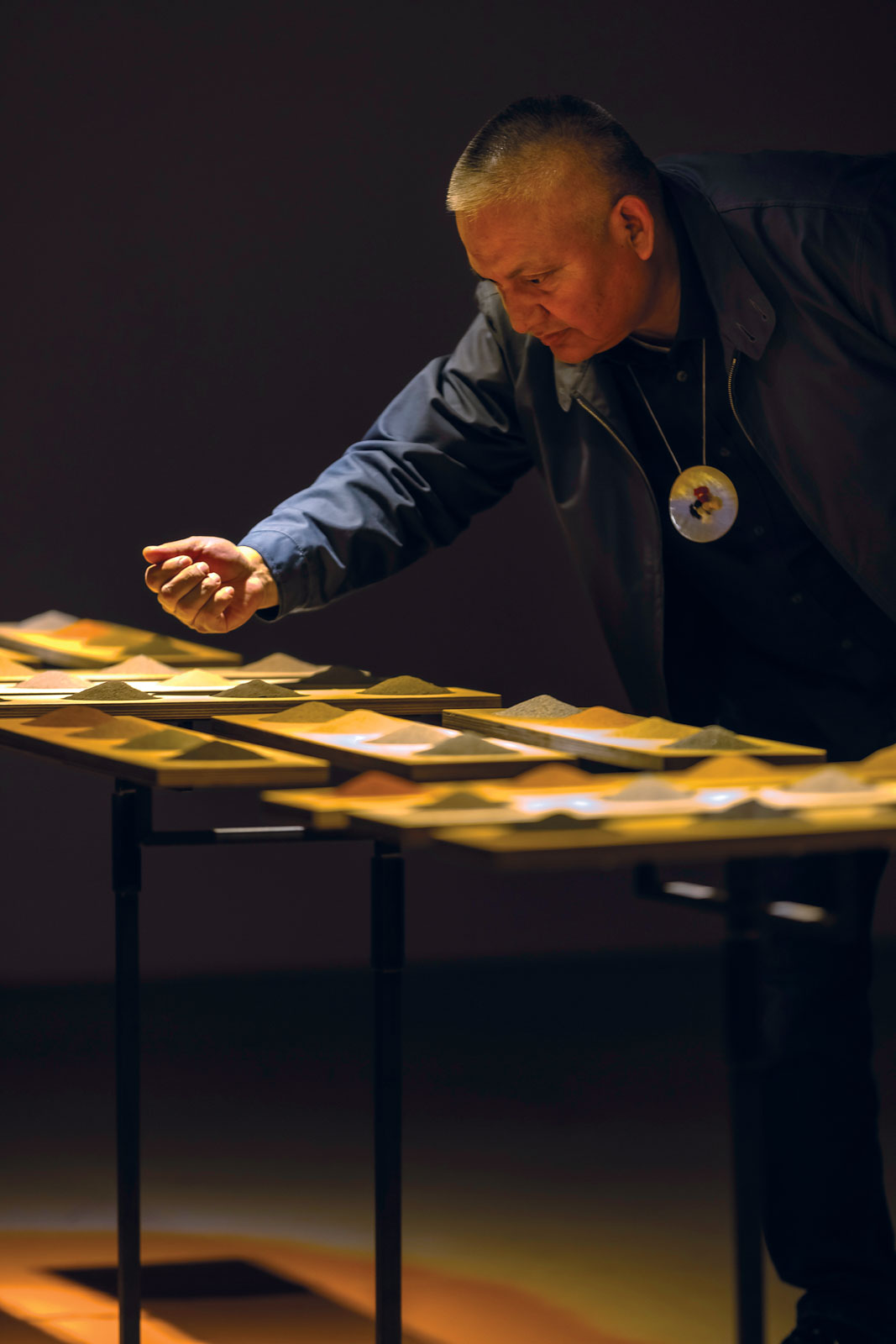 Eugene Tapahe distributes soil samples for his installation Kéyah.Kéyah: Our Home by Eugene Tapahe will be shown from January 24 to April 26, 2025, at the Brigham Young University Museum of Art in Provo, Utah.
The exhibition grows out of his BYU master’s thesis from earlier this year. In the abstract of his thesis he writes, “The land where I grew up gives me a sense of purpose and belonging. It embodies the Navajo concept of hózhó, which represents harmony, beauty and balance. Being in tune with this spiritual connection inspires me to bring people together through art and healing. I use natural materials like sand, sage, cedar, tree twigs, and yellow and blue cornmeal to create my art. To maintain the spirituality of my work, I employ traditional and ritualistic harvesting methods passed down from generation to generation. These techniques are deeply connected to the land and are essential to my identity as an artist who continues to navigate between the traditional and contemporary worlds.”
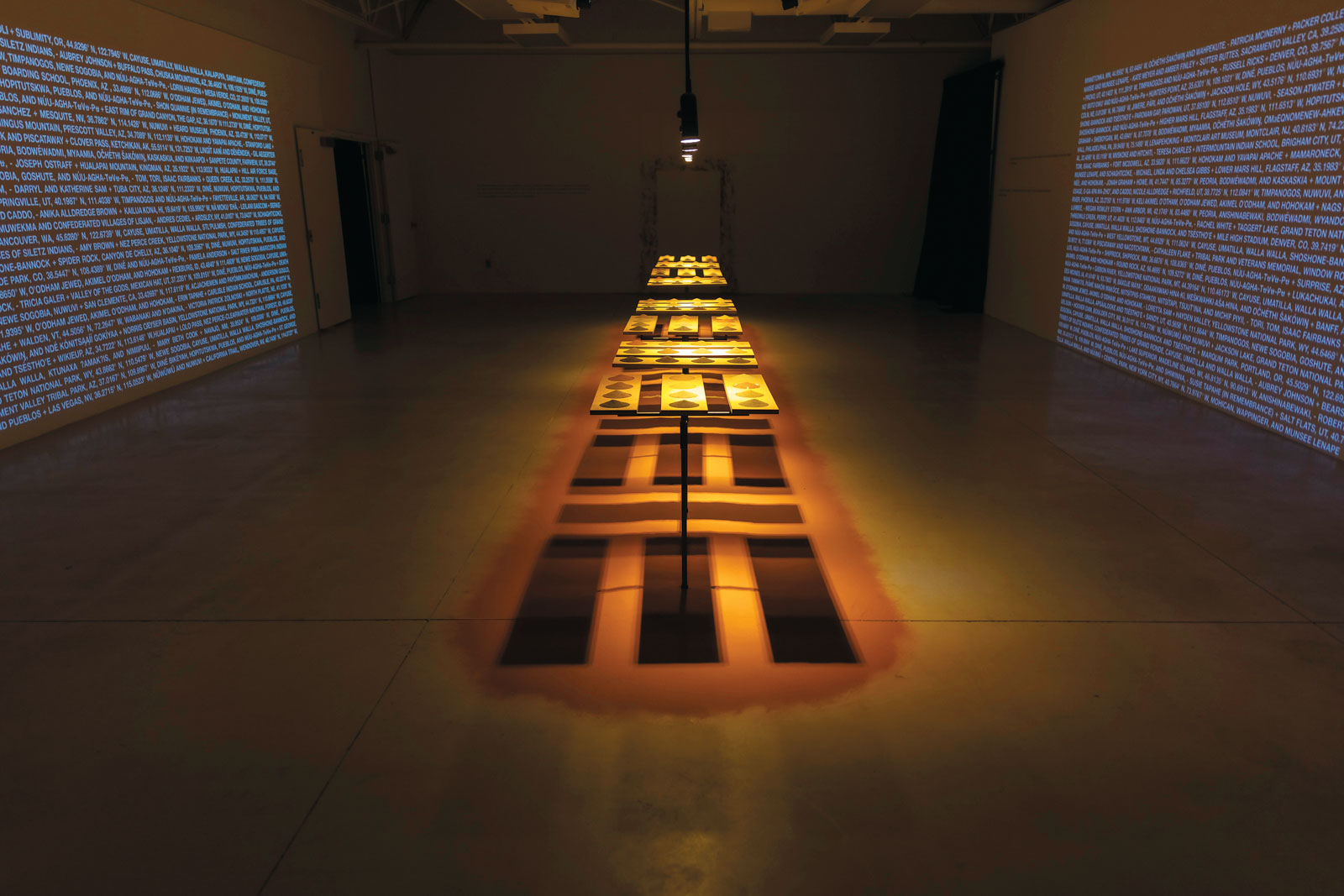 Eugene Tapahe (Navajo (Diné)), Kéyah, 2025, mixed media installation, 30 x 72 x 336". Courtesy the artist. Kéyah is an installation of soil samples Tapahe collected himself and samples he solicited in an online announcement. He says, “This project unites people from the United States and Canada to acknowledge and honor the Indigenous land caretakers. It consists of soil samples to represent the diversity of people, places and communities. The project emphasizes the importance of the land to all of us and promotes unity and healing.”
He asked people to gather soil from “a place that is meaningful and memorable to you. It could be a birthplace, a vacation spot or even your backyard.” He then encouraged them “to identify the name(s) of the Native tribe, band or nation that originally lived in your location.”
“A lot of people had no idea what land they were on,” he comments.
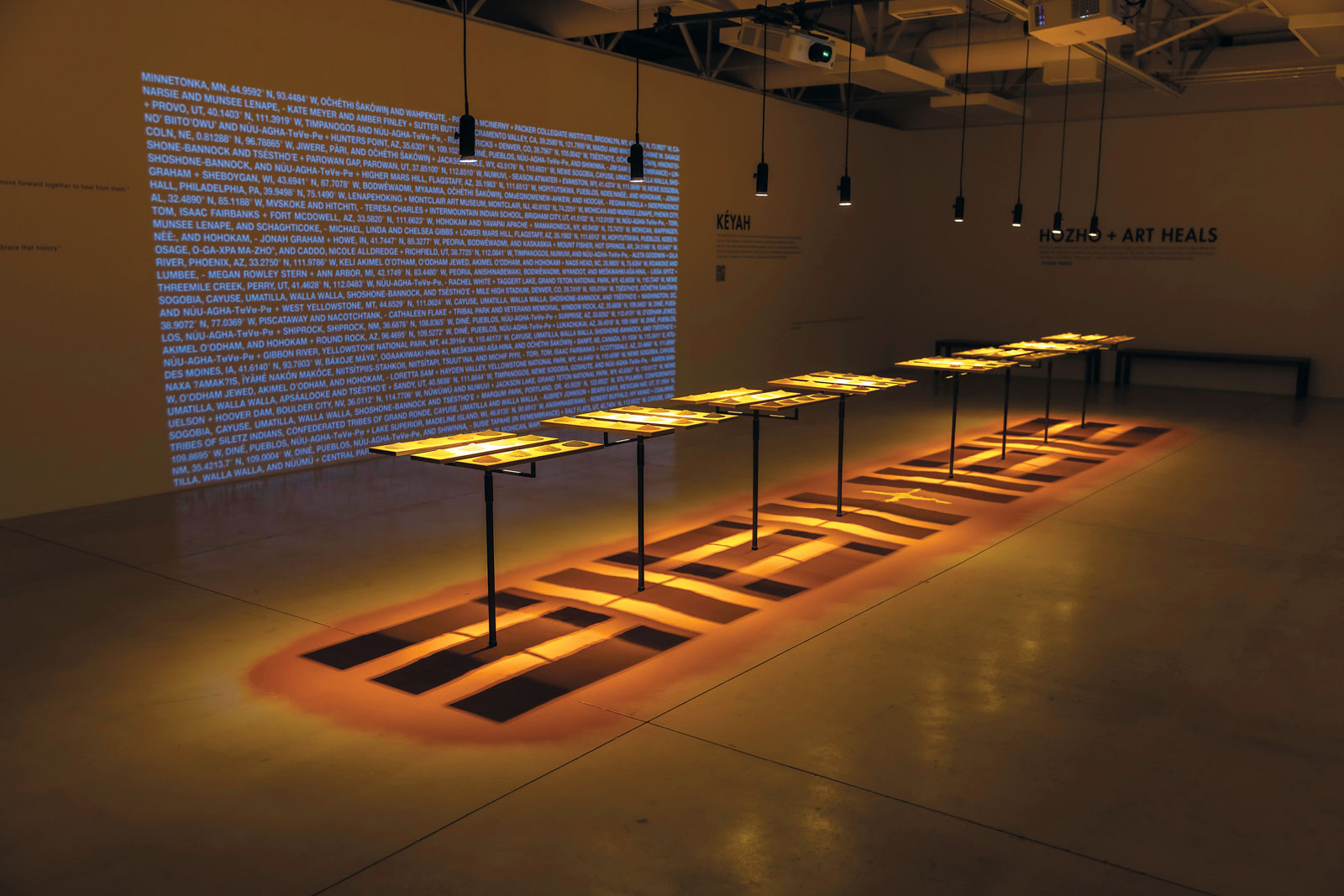 The shadows of Kéyah resemble Navajo weavings.He and his daughters ground and washed the soil to remove any contaminants. The 96 samples began to reveal their natural color and scent, which permeates the exhibition gallery. The names of the collectors, locations and GPS coordinates are projected on the wall.
Tapahe poured the samples onto individual circles mounted on display stands he designed to cast shadows that recall Diné weavings. The installation is accompanied by a recording of gentle rain and of his wife saying a blessing to the land in Navajo.
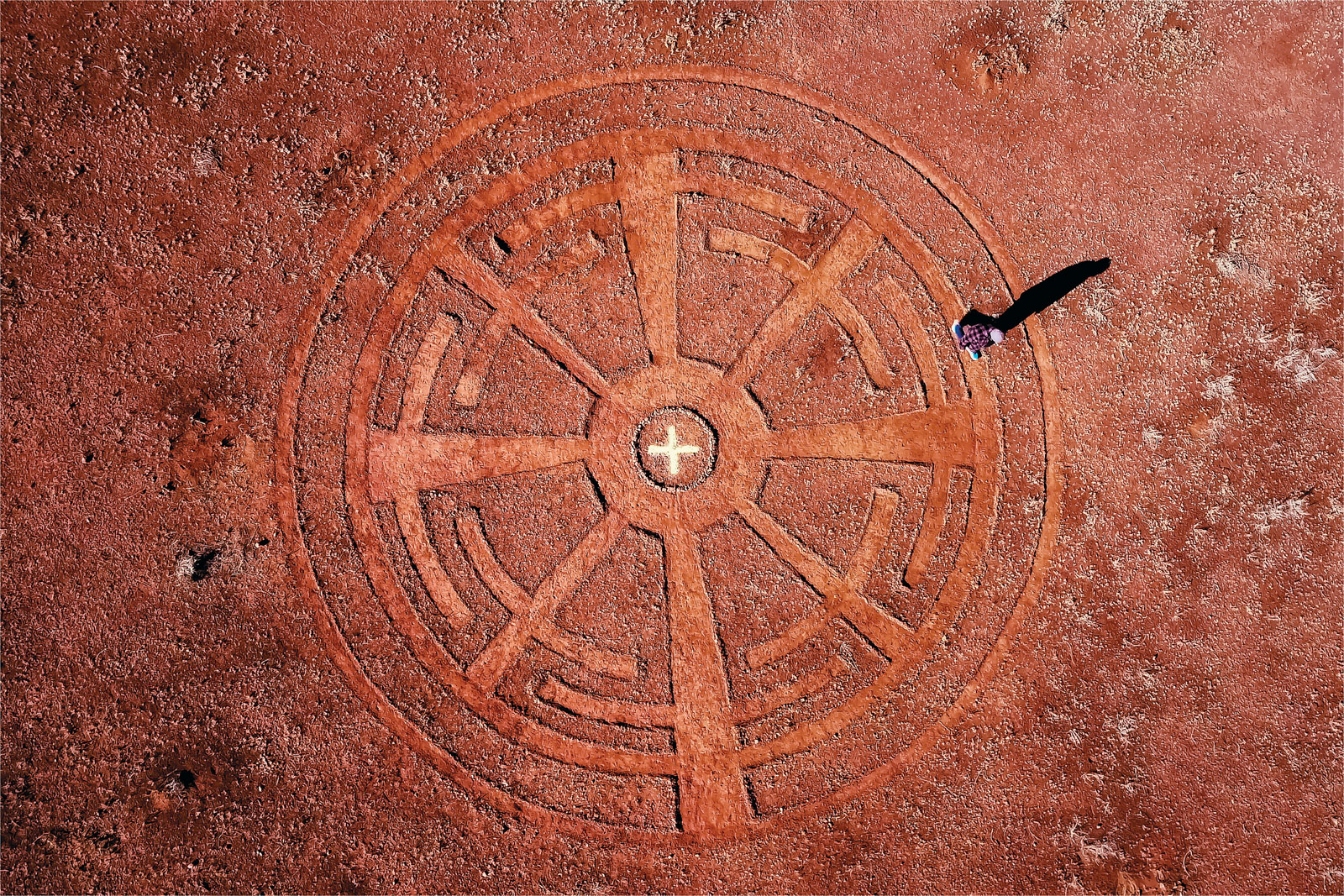 Eugene Tapahe (Navajo (Diné)), Shi Kéyah, The Offering, original land art installation in Monument Valley, AZ, Native land of the Diné (Navajo), 2023, 50 x 50"
Also in the exhibition is a video of his creating Kéyah Yił, an earthwork in Monument Valley. He says, “The video installation is a tribute to my ancestral connection with the land. I walked a meditative and ritualistic pattern on the land, following the sacred directions of east, south, west and north. The spherical installation I created represents the continuous motion of the earth’s wind, land, water and climate.”
January 24-April 26, 2025
Kéyah: Our Home by Eugene Tapahe
BYU Museum of Art
North Campus Drive, Provo, UT 84602
(801) 422-8287, moa.byu.edu
Powered by Froala Editor


